

1. INTRODUCTION
Carbon major companies are responsible for over 30% of global industrial greenhouse gas (GHG) emissions, and arguably control ‘the future of the planetary climate system’.Footnote 1 Carbon major companies are producers of oil, natural gas, coal and cement.Footnote 2 A number of these entities are transnational, non-state actors. Despite their tremendous contribution to global emissions, they are not regulated through stringent, top-down, transnational emissions limits, but are instead governed largely by disclosure-only requirements and market-based or voluntary corporate social responsibility (CSR) mechanisms. This article argues that company law and theory, as well as commercial norms such as shareholder wealth maximization, foster an environment in which companies are not compelled to significantly reduce their GHG emissions.
High-emitting, transnational companies have arguably been afforded much more freedom to emit than nation states. Such differentiated treatment for private environmental governance regimes has questionable legitimacy, considering not only the large volume of emissions produced by the companies themselves, but also (in the case of fossil fuel-centred companies) the nature of their products. Heede’s quantitative analysis of historic fossil fuel and cement production records of 90 leading investor-owned, state-owned and nation-state producers of oil, natural gas, coal and cement concluded that 63% of cumulative worldwide emissions of carbon dioxide (CO2) and methane from 1854 to 2010 were attributed to these ‘carbon major’ entities.Footnote 3 Cumulatively, investor-owned companies are responsible for 315 gigatonnes of equivalent CO2 (GtCO2e) of emissions, compared with 312 GtCO2e emitted by nation states.Footnote 4 As a result, emissions from carbon major companies rival those of nation states. In addition, half of man-made CO2 and methane emissions have been produced since 1984,Footnote 5 which indicates that corporate emissions levels are not abating. Carbon major companies have accumulated considerable financial benefits from these emissions.Footnote 6 Heede’s analysis points to a wealth-based, as opposed to a state-based, approach to climate responsibility.Footnote 7 While international law is primarily state-based, his analysis argues for the shifting of perspective from nation-state responsibility to corporate responsibility.Footnote 8 His approach aligns with a more ‘decentred’ understanding of regulation, where responsibility may be imposed outside the traditional nation-state concept of regulation.Footnote 9 Yet, the analysis of the mechanisms employed to mediate corporate emissions demonstrates that these carbon majors are not being mandated to reduce their emissions either by domestic regulation or by transnational, ‘decentred’ regulatory mechanisms. Unlike states, these companies are not subject to regulatory emissions limits, but are instead governed largely by disclosure-only requirements and market-based or voluntary CSR mechanisms. Transnational companies have historically been subjected to self-regulatory mechanisms, and have opted for private environmental governance regimes, and voluntary mechanisms such as CSR. These mechanisms are not incentivizing carbon majors to reduce their emissions. This article argues that such differentiated treatment of carbon major emitters is anchored in company law requirements, as well as the commercial theories and norms which have come to dominate corporate approaches to climate change.
This article examines the role and adequacy of the mechanisms currently employed to mediate corporate emissions from five UK-based carbon major companies, and focuses on the pervasive impact that UK company law, transnational ‘law and economics’ theory, as well as commercial norms, have had on efforts by carbon major companies to reduce their GHG emissions. Through an examination of transnational regulatory regimes to which these companies are subject, including the European Union (EU) Emissions Trading Scheme (ETS), and a number of voluntary CSR and sustainable investment initiatives, this article analyzes the climate change pledges and emissions of BP Plc, Royal Dutch Shell Plc, BG Group Plc, National Grid Plc, and Centrica Plc. A number of the pledges and emissions are related in the companies’ environmental and sustainability reports produced under the United Kingdom (UK) Companies Act 2006 (Strategic Report and Directors’ Report) Regulations 2013.Footnote 10 This article investigates the interactions between UK law and EU mechanisms, as well as private environmental governance regimes, and focuses on the pervasive and subversive impact that company law and theory has had on corporate climate activities to date.
The second section of this article explores the role of company law and theory in relation to these five carbon major entities. The third section briefly examines what environmental regulatory mechanisms require of these entities. The fourth section summarizes the activities of the five carbon major entities, the reporting of their emissions and the mechanisms they have chosen to deal with climate change, as well as the external pressures they confront, such as the sustainable investment movement. The fifth and final section examines the barriers and challenges facing carbon major entities and focuses, in particular, on the impact of corporate law and theory, as well as commercial norms, on wider climate regulatory efforts and on the activities of this select group of carbon major companies. Of course, the onus to reduce global emissions does not rest on companies alone; a comprehensive examination of global mitigation responsibilities would also need to cover the impact of supply and consumption patterns, responsibilities facing consumers of fossil fuels, and the effects of capitalism generally. Such issues are beyond the scope of this article and are potential subjects of further research.
2. COMPANY THEORY, NORMS AND LAW
The concept of regulation is a dynamic one, and there is no universal definition of the term. Black has developed a concept of ‘decentred’ regulation, which is ‘untethered’Footnote 11 from the state. Her approach adopts a more complex, nuanced and transnational approach to regulation than the traditional state-centred approaches, in that it assumes that neither the state nor any other single actor has sufficient knowledge or oversight to resolve complex regulatory problems.Footnote 12 While the outer contours of this broader concept of regulation may be unclear, it would apply to transnational self-regulation mechanisms which are employed by the carbon major companies analyzed here. Heyvaert has developed a definition of transnational environmental law as ‘essentially law at the boundaries’,Footnote 13 positioning it between hard law and soft governance, and the public and private spheres.Footnote 14 She identifies the EU as a classic supranational institution which has developed transnational environmental law that targets private actors,Footnote 15 and her approach would include market-based mechanisms such as the EU-ETS.
Regulation is a political outcome, resulting from a negotiated process. Regulation can be exploited either at its formative stage through powerful lobbying groups which can act on behalf of companies,Footnote 16 or at its post-enactment stage, through lack of monitoring and enforcement. Companies such as Shell and BP have been accused of heavily influencing governments’ climate change policies.Footnote 17 Regulation is often cited as a means to correct certain market failures,Footnote 18 and in this case the negative externality of corporate GHG emissions. Cheffins and Reynolds note that state intervention through regulation has both efficiency justifications, and non-economic or equity justifications.Footnote 19 The ‘law and economics’ movement, which has dominated corporate law theory for some time, views the company in private terms, as a nexus of contracts between private actors. These so-called ‘contractarians’, for the most part, insist that mechanisms other than corporate regulation are preferable to mediate any negative social outcomes of corporate activities, as regulation generally constrains competitiveness and economic growth.Footnote 20
2.1. Conflict between Shareholder Wealth Maximization and the Climate Crisis
Law and economics theories view the firm as a privately ordered nexus of contracts, with a minimal or no role for state intervention or regulation.Footnote 21 One of the major normative goals of the law and economics movement is to increase social welfare through the maximization of profits.Footnote 22 They therefore often see transactional cost reduction and, consequentially, increased profits as the primary goal of the firm. It is unclear, however, whether this means increasing shareholder profits or the value of the firm. Shareholder primacists often conflate the two, sometimes using shareholder value as the determinant factor.Footnote 23 It is also unclear whether the focus of shareholder primacists is on long-term or short-term profitability.Footnote 24 Although there is some conflicting evidence, many theorists argue that shareholder primacy and the shareholder wealth maximization norm has led to a focus on short-term profits to the detriment of the long-term value of the firm.Footnote 25 The focus on short-term profitability is often incompatible with environmental concerns and, generally, with a concern for long-term issues that may affect society and the company, such as climate change.
The contractarian approach privileges shareholders as the primary constituents of the company to the detriment of the interests and values of other stakeholders.Footnote 26 It focuses on shareholder wealth maximization as the most important function of the company, and can therefore lead to a myopic focus on short-term profitability, the economic commodification of the environment, and the encouragement of negative externalities such as GHG emissions.Footnote 27 It diminishes the role of public regulation and the judiciary, and reframes company law as almost an entirely default, voluntary arrangement. It diminishes the concept of the firm as an entity capable of serving a variety of interests.
The Company Law Review Steering Group reports, which led to the UK Companies Act 2006, identified strongly with a contractarian and largely economic understanding of company law.Footnote 28 As a result, the theory has had a strong influence on UK company law, in particular directors’ duties as codified in section 172 of the Companies Act 2006.Footnote 29
2.2. The UK Companies Act 2006
UK law prior to the Companies Act 2006 did not reflect or even mandate the shareholder primacy norm. Instead, case law mostly afforded significant deference to a director’s discretion, allowing directors to make the interests of the shareholders subservient to those of the company as an entity.Footnote 30 This ‘entity approach’ afforded directors the flexibility to consider, and even prioritize, environmental concerns over shareholder profits, if that ultimately benefited the company as a whole. Section 172 of the Companies Act 2006 marked a sharp break in this approach and encapsulated the ‘enlightened shareholder value’ theory of company law. This section established that the primary duty of the directors is to promote the success of the company for the benefit of its members, thereby codifying the shareholder primacy approach.Footnote 31 The Act continues with a non-exhaustive list of other concerns, including the requirement that directors should consider impacts on communities and the environment. However, it is clear that under section 172 directors must consider non-shareholder concerns only when the pursuit of those interests would promote the success of the company.Footnote 32
Shareholder wealth maximization therefore undergirds UK company law requirements, and is in direct contravention with the efforts of companies to reduce emissions where those efforts are not profitable. This commercial norm, as well as legal requirements positing the shareholder as the primary constituent for corporate concern, acts as a subversive pressure on non-company law regulations, including transnational efforts to reduce corporate global emissions.
3. ENVIRONMENTAL REGULATIONS
Climate change is a complex, transboundary, and therefore global issue. Firms and other regulated entities may practise a type of ‘regulatory arbitrage’ by exploiting the differences between national regulatory environments to their advantage,Footnote 33 potentially leading to less stringent regulatory efforts at the state level. As a result, in the arena of climate change, states may be constrained not only by the costs of abatement at the domestic level but also by international competitiveness concerns of carbon leakage.Footnote 34 These dual concerns may constrain states when they enact specific domestic regulation on climate change.
The UK took an innovative approach to regulating climate change through the adoption of the Climate Change Act 2008. The Act introduced a requirement for the UK government to draw up binding, nationwide carbon budgets. It triggered extensive regulatory reform, including energy market reform, to implement its share of EU reduction targets.
3.1. The UK Climate Change Act 2008
The aim of the Climate Change Act is to meet a target for the reduction of GHG emissions by 2050 to at least 80% lower than the 1990 baseline.Footnote 35 Carbon budgets must be in line with EU and international obligations,Footnote 36 and therefore incorporate a transnational element. So far, three carbon budgets have been established, set out in the 2009 Low Carbon Transition Plan.Footnote 37 While it is clear that the carbon budget up to 2020 can be achieved, the longer term target of an 80% reduction by 2050 will be more challenging to meet,Footnote 38 and it is ‘highly uncertain’ whether post-2020 targets can be achieved.Footnote 39
The Climate Change Act does have provisions which address companies directly, but only in relation to reporting requirements. Section 85 requires the Secretary of State to make regulations pursuant to section 416(4) of the Companies Act 2006, requiring directors to report such information as may be specified regarding GHG emissions from their corporate activities. Section 416(4) allows the Financial Reporting Review Panel to monitor and amend the accounts of large public and private companies. In addition, the Companies Act 2006 (Strategic Report and Directors’ Report) Regulations 2013 require mandatory reporting by public companies. However, the efficacy of the regulations on corporate activities is unclear as they do not require the use of a coherent methodology for reporting.Footnote 40 Companies may set their own targets, on the basis of either absolute reductions or intensity targets, and report on their compliance. The Department for Environment, Food and Rural Affairs (DEFRA) has found that while many Financial Times Stock Exchange (FTSE) companies report figures on emissions or energy use, there was a lack of quantitative data compared with qualitative data.Footnote 41 The regulations, therefore, have not become a significant or direct driver of emissions reductions within companies in the short term.Footnote 42
3.2. The UK Energy Act 2013
The Energy Act 2013 led to sweeping energy market reform, with the objectives of achieving secure, reasonably priced and low-carbon sources of energy for the national market. These reforms included a contract for difference (CfD) to secure minimum purchase prices through long-term investment contracts of 15 years for renewable energy, and the establishment of Emissions Performance Standards (EPS) to limit annual CO2 emissions from new fossil fuel power stations.Footnote 43 The EPS acts as a regulatory backstop to effectively prevent the build of new coal-fired plants without carbon capture and storage (CCS) technology attached to them.Footnote 44 Government documents have noted that the use of CCS will allow coal and gas to continue to play a role in the energy mix in the medium term.Footnote 45 As a result, existing coal-fired power plants will be grandfathered into the EPS system until 2018 at a minimum.Footnote 46 The carbon price mechanism was not included in the Act but in national budgets, and its levels were frozen in 2014, possibly in response to political pressure to keep electricity affordable.Footnote 47 In addition, energy intensive industries are exempted from the CfD, meaning that they are not subject to any carbon price incentives to switch to renewables. This is counter-productive, as energy intensive industries are the very sectors that must move towards renewable sources in order to transition away from fossil fuels.
While the UK has a comparatively long history of energy and climate change regulation, national legislation does not currently place stringent requirements directly on companies to reduce their GHG emissions. Only coal-fired plants are required to be phased out.Footnote 48 Corporate and market-based efforts are therefore the primary mechanisms used by companies in the effort to reduce GHG emissions. Backman, Verbeke and Schulz provide a useful framework to analyze resource-based climate change investments by firms, and found that while European FT500 firms make greater investments than their North American counterparts, these investments still do not trigger reductions in actual carbon footprints.Footnote 49
4. CORPORATE CLIMATE CHANGE STRATEGIES AND EFFORTS
The approaches of large companies towards climate change are of key importance, not only because they are carbon major emitters and have access to significant amounts of fossil fuel reserves and resources,Footnote 50 but also because their activities and existing technologies can determine the direction of future regulation on climate change.Footnote 51 Two thirds of all anthropogenic GHG emissions result from the energy sector,Footnote 52 and carbon major companies can be important actors in the transition to a low-carbon economy. The actions that energy companies take in relation to their GHG emissions are fundamental to global climate change efforts.
The research in this article is based on annual environmental or sustainability reports of each of the five carbon major companies, where publicly available. Also, subject to availability, CDP reports (formerly, Carbon Disclosure Project reports) were examined, together with specific corporate policies, statements or strategy papers on energy outlooks or climate change, as well as external analyses of corporate climate change policies. For some companies, reports dated back to the 1990s.Footnote 53 For others, a period of ten years or less is covered.Footnote 54
4.1. The History and Evolution of the Companies’ Climate Efforts
The following paragraphs sketch a brief overview of the climate change approaches of the five carbon major companies analyzed in this article.
BP Plc
BP Plc (originally the Anglo-Persian Oil Company and then British Petroleum) is an integrated oil and gas company which has been operating in the UK from the early 1900s. It currently employs over 85,000 people worldwide, mainly in Europe and the United States (US). Lord John Browne was the Chairman from 1995 to 2007 and spearheaded BP’s environmental marketing campaign in the 1990s, which centred around the advertising campaign ‘Beyond Petroleum’. Until the mid-1990s, many of the ‘big carbon’ entities such as utilities, coal, oil, and gas companies denied the science around climate change and opposed government controls on GHG emissions, largely through the Global Climate Coalition.Footnote 55 Lord Browne was the first member of the Coalition to break with this approach in 1997. Under his leadership, the company launched a GHG emissions reduction target and an internal carbon trading scheme in 1998. In 2005, the company made a commitment to invest US$8 billion in renewable energy by 2015. The target was met by 2013. Tony Hayward succeeded Lord Browne as Chairman in 2007.Footnote 56 Hayward distanced the company from the environmental advertising campaign in order to focus on the core business of oil distribution and extraction, and pursued a short-term, bottom-line approach.Footnote 57 Under his leadership, the GHG emissions reduction and the renewable energy investment targets expired. To date, neither have been renewed.Footnote 58
Royal Dutch Shell Plc
Royal Dutch Shell Plc,Footnote 59 the parent of a global group of energy and petrochemical companies which employs more than 92,000 people in over 70 countries,Footnote 60 acknowledges the global challenge that climate change poses, and followed BP Plc’s departure from the Global Climate Coalition in 1998.Footnote 61 The company has expanded rapidly into natural gas operations, which now make up half of Shell’s total global production.Footnote 62
Shell’s leadership has not been as vocal on its environmental credentials as Lord Browne was at BP, perhaps because Shell has a more complex corporate structure and follows a more collective decision-making process.Footnote 63 As a result, responsibility for climate change remains more diffused. In the mid-1990s, the company faced strong criticism over its decision to sink the Brent Spar storage tanker in the North Sea, and over its operations in Nigeria following the execution of human rights leader Ken Saro-Wiwo.Footnote 64 Consequently, the company focused its efforts on CSR initiatives.Footnote 65
BG Group Plc
BG Group Plc is a smaller company, but is still considered one of the ‘big six’ oil and gas companies. It employs over 6,000 people worldwide. Exploration and production make up the core of its business, and it has production sites in the UK and worldwide. The company’s initial production sites were located in the UK and Europe, but BG Group has been expanding its operations overseas to explore new shale and coal seam gas fields, particularly in the US and Australia.Footnote 66 The company acknowledges both the risks of climate change to its business operations and its direct contribution to climate change. However, corporate documents consistently stress the lower carbon emissions of natural gas than of coal or oil, and the flexibility of natural gas and liquefied natural gas (LNG) as a base load energy supplier to complement the intermittency of renewable energy.Footnote 67 There is no general mention of the carbon intensity required to access shale gas fields, which are extraction areas on which the company is currently focusing. BG Group was acquired by Royal Dutch Shell in early 2016.Footnote 68
National Grid Plc
National Grid Plc is an international electricity and gas company based in the UK and the north-eastern US. The company employs over 23,000 people.Footnote 69 It is also the systems operator of Great Britain’s electricity system and its networks distribute gas to over 11 million homes and businesses in the jurisdiction. The company has been appointed as the delivery body for energy market reform (EMR). In this role, it administrates the capacity market and CfD schemes on behalf of the UK Department of Energy and Climate Change (DECC) and provides analyses of these schemes to decision makers.
Centrica Plc
Centrica Plc is Britain’s largest energy supplier, operating in the UK as British Gas. It stores gas through Centrica Storage.Footnote 70 The company considers itself to play a pivotal role in tackling climate change by varying both how energy is generated and how it is consumed. Centrica acknowledges the risks that climate change may entail for its physical assets, which include coastal nuclear power stations.Footnote 71 The company emphasizes trust and its reputation in relation to climate change.Footnote 72 Centrica established a strategic priority of providing energy for a low-carbon world,Footnote 73 and plans to achieve this strategic priority by assisting its customers in cutting their emissions, investing in low-carbon sources of energy and reducing their own carbon footprint.Footnote 74 The company claims to focus on the energy ‘trilemma’: how to achieve energy security, affordability, and reduced GHG emissions.Footnote 75 As a result, it acknowledges that any commitments to climate change abatement must be balanced against the other two competing priorities.
4.2. Reporting of Emissions
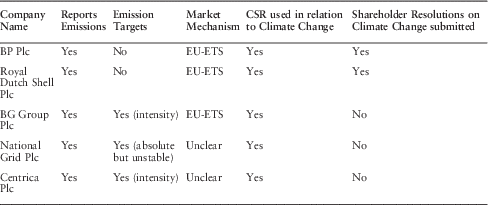
All energy companies reviewed report their GHG emissions, although in varying levels of detail. Three companies (BG Group, National Grid, Centrica) have formal commitments to reduce their GHG emissions. The regulations, therefore, have set a minimum floor for compliance for these companies.
The UK Companies Act 2006 (Strategic Report and Directors’ Report) Regulations 2013 require publicly traded companies to report their GHG emissions, a requirement with which all five energy companies under review comply. The regulations do not require a specific or coherent format of reporting, which makes it difficult to compare emissions both within the same company over time, and between companies. The regulations require reporting of Scope 1 and 2 emissions, but only recommend the reporting of Scope 3 emissions. Consequently, some companies report Scope 1 and 2 emissions only. Most importantly, the regulations do not require that companies reduce their GHG emissions, only that they report them. As a result, companies may voluntarily set their own targets on the basis of absolute reductions or intensity targets, and report on their own compliance. Three out of the five companies analyzed have set GHG emissions reduction targets (BG Group, National Grid, Centrica). Two of the three sets of targets are intensity, rather than absolute, reduction targets.
Summary of Emissions Reporting

With the exception of National Grid, no company has currently established absolute GHG emissions reduction targets. While BP did establish such targets in 1998, they were not renewed after 2010 as they were deemed to be ‘no longer practical and useful in driving emissions reductions at the plant and operational level’.Footnote 76 BG Group also established absolute targets in 2007, but decided not to renew them on the ground that the business was anticipated to grow substantially in the next five years. It can be assumed that the company did not want emissions targets to constrain growth.
4.3. Participation in Market Mechanisms
The EU ETS is the largest regional carbon trading mechanism, and was motivated by the emissions trading mechanism in the Kyoto Protocol.Footnote 77 The scheme aims to internalize the social cost of GHG emissions so that market prices reflect their actual cost. In turn, this is designed to incentivize investment in low-carbon technologies and therefore lead to a low-carbon society in the EU by 2050.Footnote 78 The scheme covers approximately 11,500 power stations and half of the EU’s CO2 emissions.Footnote 79
When the EU ETS was designed, it assumed an upward trajectory of emissions which was reflected in the initial supply of permits on the market. The recession of 2008–09 led to a reduced demand for allowances.Footnote 80 In addition, at the end of the second trading period from 2008 to 2012, there were leftover permits available to be banked in the third trading period (2013–20).Footnote 81 This created an oversupply of permits available in the market, causing the price of carbon permits to crash. It is anticipated that the price of carbon will remain below €10 per tonne of CO2 equivalent (tCO2e) until the end of the third trading period concluding in 2020.Footnote 82
Summary of Corporate Emissions Trading Activities
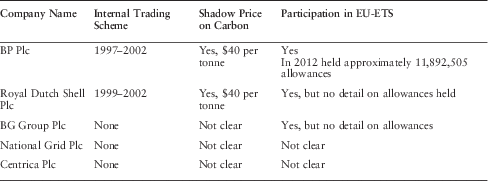
Three of the five companies analyzed participate in the EU ETS and are members of the UK Emissions Trading Group, an industry-led association which informs and represents companies subject to the EU ETS.Footnote 83 However, there is a general lack of transparency within this mechanism; it is difficult to determine how many permits each company has acquired, and how many tonnes of GHG emissions this has allowed them to emit.
Six of the major oil and gas companies issued an open letter to the Executive Secretary of the United Nations Framework Convention on Climate Change (UNFCCC)Footnote 84 and the President of the 21st Conference of the Parties (COP-21) on 29 May 2015. The Chairmen of BP, Royal Dutch Shell and BG Group were signatories. The companies stated that they required clear, stable, long-term ambitious policy frameworks, preferably global in nature, in order for their companies to do more on climate change. In particular, they called for a price on carbon and the option to eventually connect national trading systems with an international system.Footnote 85 These companies cite a clear preference for market mechanisms through a pricing and trading scheme in order to be incentivized to reduce their GHG emissions.
The lack of ambition in emissions targets at both the international and European level, coupled with the free allowances of permits, has led to an over-supply of permits which has kept the price of carbon below a level that would incentivize businesses to make emissions reductions. While pressure from non-governmental organizations (NGOs) can sustain some level of corporate engagement in carbon trading, the carbon markets on their own, as a result, have largely failed to ensure GHG emissions reductions.Footnote 86 Market mechanisms included in both the Kyoto Protocol and EU ETS have been largely unsuccessful to date in stabilizing GHG emissions and ensuring significant emissions cuts by companies.Footnote 87
4.4. Use of Corporate Social Responsibility and Other Voluntary Mechanisms
Corporate social responsibility (CSR) constitutes a business-initiated response to perceived shareholder exclusivity, and attempts to align profits with socially responsible behaviour.Footnote 88 CSR is often referred to as providing companies with the ‘social licence to operate’.Footnote 89 It is derived from the stakeholder approach to the corporate objectiveFootnote 90 and the sustainable development agenda.Footnote 91 Kagan, Thornton and Gunningham note that some companies operate beyond the requirements of regulation as a result of the confluence of pressures of various licences.Footnote 92 These include the licence to operate (consisting of shareholder return requirements as well as social harm), the regulatory licence (consisting of regulatory compliance requirements), and the social licence (consisting of various stakeholder pressures on the company).Footnote 93 Often, only the regulatory and social licences will demand emissions reductions from companies,Footnote 94 and these efforts will be constrained by economic concerns if management recommends non-incremental activities.Footnote 95
All five companies positioned GHG emissions reductions at the parent level within some sort of CSR administrative grouping or approach. At Centrica, the board-level Corporate Responsibility Committee analyzes the group’s environmental risks. BG Group’s approach to climate change is incorporated in its ‘Business Principles’, which set out the group’s core standard of ethical conduct, and the company’s responsibility to people and the environment. Royal Dutch Shell positions its ‘core values’ of honesty, respect and integrity as the basis of its eight ‘General Business Principles’ (which include health, safety, and the environment).Footnote 96 The group’s Corporate & Social Responsibility Committee was formed in 2005 and monitors the group’s adherence to its business principles.
In addition, a number of the companies reviewed mentioned their social and operational licences in their annual reports. Centrica was concerned that damage to its reputation as a low-carbon supplier of energy would impact on its social licence to operate.Footnote 97 BP noted that its licence to operate was earned through real benefits delivered to the communities in which it operates.Footnote 98 Shell positioned its ability to grasp the challenge and opportunities of climate change as integral to its ‘licence to grow’.Footnote 99 When BG Group’s GHG emissions rose in 2013, it put in place a ‘Licence to Operate’ scheme in order to satisfy its stakeholders,Footnote 100 although the scheme did not include concrete absolute GHG emissions reduction pledges.
All of the companies analyzed are members of the UN Global Compact (UNGC); however, very few documents were created to demonstrate their compliance with the UNGC principles, and it was not clear to which of the principles they subscribed. Most companies merely provided links to their existing sustainability reports and their CDP Information Requests, where available. The UNGC does not, therefore, currently require companies to do anything more than employ existing, business-as-usual, voluntary initiatives.
Most of the companies reviewed do report their GHG emissions under the CDP initiative. BG Group, however, was the only energy company to be listed in the CDP Carbon Performance Leadership Index.Footnote 101 BG Group’s documents have been in compliance with the Global Reporting Initiative (GRI) guidelinesFootnote 102 since 2008,Footnote 103 and 90% of BP’s emissions were verified by the International Standard on Assurance Engagements (ISAE3000) of the International Auditing and Assurance Standards Board (IAASB)Footnote 104 (a CDP project). Royal Dutch Shell and National Grid take into account the ISO 14001 norm of the International Organization for Standardization (ISO);Footnote 105 Centrica subscribes to the GHG Protocol developed by the World Resources Institute (WRI) and the World Business Council on Sustainable Development (WBCSD),Footnote 106 and to the GRI Sustainability Reporting Guidelines.Footnote 107
Several companies have either signed up to or formed new voluntary initiatives such as the World Bank initiative, Zero Routine Flaring by 2030,Footnote 108 or the Oil and Gas Climate Initiative launched by the UN Secretary General in September 2014, which provides an industry-driven platform for companies to voluntarily share technical solutions to climate change.Footnote 109 Despite these recent initiatives, and the emphasis that the analyzed companies place on the importance of CSR, it remains a voluntary mechanism to address environmental damage, including GHG emissions. Any responsibilities under CSR are ethical and non-binding.
4.5. The Sustainable Investment Movement
The sustainable investment movement has developed largely as a result of an increased appreciation by investors of the risks of climate change. It was born out of the socially responsible investment (SRI) movement, which includes both ethical and economic value considerations.Footnote 110 A number of definitions of sustainable investment have emerged.Footnote 111 The European Sustainable Investment Forum (EUROSIF) defines sustainable investment as ‘any type of investment process that combines investors’ financial objectives with their concerns about environmental, social and governance (ESG) issues’.Footnote 112 Institutional investors can adopt a variety of sustainable investment strategies, such as including ESG factors in the investment process, as well as shareholder activism through the use of shareholder resolutions, and engagement with management.Footnote 113 Passive investment strategies could involve screening potential investments for ESG factors.Footnote 114 The three main actions investors take on ESG issues include shareholder resolutions, mandated disclosures through public listing agencies, and voluntary disclosure initiatives.Footnote 115 A number of institutional investors are taking the lead in mainstreaming these initiatives. Together, they constitute a transnational network that attempts to re-orient the behaviour of investors and companies regarding climate change.Footnote 116
A significant risk facing investors in fossil fuel companies is that of ‘stranded assets’. Fossil fuel reserves could become stranded as a result of regulation, carbon pricing and the transition to renewable energy. Investors in these companies have become rightly concerned about the issue of stranded assets and consequential impacts on the value of their investments. Investors, through shareholder resolutions, have begun to systematically request increased disclosure from fossil fuel companies regarding the underlying value of the assets of these companies in the context of climate change, including fossil fuel reserves. Shareholder resolutions posed at the 2015 annual general meetings of both BP and Royal Dutch Shell were adopted with almost unanimous support from their shareholders. The resolutions requested more details of climate risk disclosure, including asset portfolio resistance benchmarked against the International Energy Agency (IEA) energy scenarios.Footnote 117 Despite these developments, carbon major entities are resistant to the idea of stranded assets. Ben van Beurden, the CEO of Royal Dutch Shell, stated in the company’s response to the 2015 shareholder resolution:
Our view is that the stranded assets theory ignores the realities of our industry and it risks distraction from the real issues around energy transition needs. … If there is no further investment in oil production, the gap between supply and demand could be 70 million barrels per day by 2040.Footnote 118
While the SRI and sustainable investment movement has grown tremendously, and the divestment campaign has increased awareness of the role of investors in climate change, the levels of ambition in the movement vary. It has not currently delivered any revolutionary change within the financial sector,Footnote 119 although the movement does demonstrate that a large number of institutional investors are taking climate change seriously. If the movement leads to general market-based recognition of the risks of continued investment in fossil fuel companies,Footnote 120 it has the potential to tackle the commercial barriers of shareholder wealth maximization which currently impede more aggressive corporate action on climate change.
5. BARRIERS AND CHALLENGES
An examination of national and transnational mechanisms and initiatives reveals the various levels of regulatory requirements to which carbon major entities are subjected. Their activities reveal their preference for largely voluntary initiatives and market-based mechanisms, and in doing so reveal the limitations of existing regulations.
5.1. Limits of Regulation
Despite the progressive nature of legislative efforts in the UK jurisdiction through the Climate Change Act 2008, the Energy Act 2013, and the Companies Act 2006 (Strategic Report and Directors’ Report) Regulations 2013, a closer examination reveals their limitations. The Climate Change Act has no provisions which directly mandate the reduction of GHG emissions from carbon major companies. The EPS in the Energy Act 2013 requires only that coal-fired plants be phased out, and exempts energy intensive industries from the CfD. The Companies Act 2006 (Strategic Report and Directors’ Report) Regulations 2013 contain no requirement for a specific or coherent format of reporting, and do not require emissions reductions from companies.
5.2. Constraints of Trading Mechanisms
The EU ETS appears to be the most used mechanism to date by the companies examined, but as a result of system design, and perhaps inherent problems with market mechanisms,Footnote 121 the EU ETS has not been effective in spurring on low-carbon innovation.Footnote 122 There is also a general lack of transparency in the system in that it is difficult to determine how many permits each company has actually acquired, and what impact, if any, the purchase of the permits has had on their GHG emissions. Three of the five companies examined have advocated strongly for a price on carbon instead of regulatory mechanisms requiring a reduction of GHG emissions. While two of the companies examined apply a shadow price on carbon, this policy has not detracted from initiatives by these same companies to access hard-to-reach, and more expensive oil and gas reserves such as shale oil and gas seams. An informal carbon price, therefore, currently does not appear to effectively disincentivize carbon major companies from expanding their production to high-emitting resources.
5.3. Inadequacy of Voluntary Measures
Both the UNGC and the CDP reporting format seem to be very popular with the companies examined. The UNGC does not require companies to do anything more than employ existing voluntary initiatives. The CDP is a private, voluntary initiative which encourages more detailed disclosure of GHG emissions, and may have prepared the companies for compliance with the Companies Act 2006 (Strategic Report and Directors’ Report) Regulations 2013. The CDP initiative does not, however, require companies to reduce their GHG emissions.
All companies analyzed employ CSR initiatives in one form or another. Many have a CSR committee to analyze environmental risks and activities. It is difficult to quantify the output of CSR and compliance with voluntary codes, or their contribution to sustainable development and environmental goals.Footnote 123 Voluntary mechanisms often lack coherence, and can be manipulated by companies by choosing their own baselines and methodologies for monitoring and enforcement.Footnote 124 This criticism of CSR is borne out by the examination of the companies analyzed. When reporting increases in GHG emissions, a number of companies referred to some type of CSR licence as a potential tool to address the problem, but failed to identify how, if at all, this CSR initiative would contribute to actual reductions in GHG emissions. There seems to be no concrete connection between CSR initiatives and activities which might direct, or cause, GHG reductions.
5.4. General Trends
None of the companies reviewed are subject to regulatory requirements to reduce their GHG emissions; nor do any currently have absolute GHG emissions reduction targets except for National Grid, but those commitments are unclear. The main regulatory tool to which the companies are subject and which may motivate reductions in GHG emissions, is the EU ETS, but there is a general lack of transparency on their level of participation and levels of credits and transfers obtained. It appears that most carbon major companies view formal regulatory action to reduce emissions as a risk to their business and prefer the market mechanism of pricing carbon over stringent regulatory action.
Instead of emissions reductions, the companies (with the exception of National Grid) appear to prefer voluntary initiatives, including reporting initiatives such as the CDP. While many of the companies have experimented with voluntary targets, and in the case of BP with a trading scheme, cost and growth constraints take precedence. Companies appear to rely heavily on energy efficiency measures which are deemed to be cost-effective, and invest in research and technology to capture existing emissions. BG Group has created technology hubs for carbon management, and focuses heavily on CCS;Footnote 125 Royal Dutch Shell supports the future use of CCS.Footnote 126
The trend towards sustainable investment does give cause for hope. Institutional investors are increasingly worried about the potential of stranded assets, and some shareholder resolutions and certain management engagement strategies have successfully put pressure on carbon majors to increase disclosure. The new Task Force on Climate-Related Financial Disclosures advocates a more coherent approach by companies on climate risks and consequential disclosures, and may provide new incentives to investors to take action on climate change.Footnote 127
5.5. Influence of Company Law, Company Theory and the Shareholder Wealth Maximization Norm
The approach of the five carbon major companies towards climate change bears out the influence of company law, company theory and the shareholder wealth maximization norm. The companies see their oil and gas resources as a necessary and significant part of the energy future for several decades to come,Footnote 128 even though they acknowledge that they are tapping mature fields, accessing hard-to-reach hydrocarbons, and engaging with the controversial shale gas industry. While natural gas is generally considered to be a useful bridge to a low-carbon future, experts have stated that its use should decline between 2020 and 2030.Footnote 129 However, many carbon majors view natural gas as a destination, rather than merely a bridging, fuel. BP estimates that fossil fuels will make up two-thirds of the energy mix by 2035,Footnote 130 and Royal Dutch Shell estimates that fossil fuels could still meet 65% of global energy demand by 2050.Footnote 131 The acquisition by Shell of BG Group was opposed by shareholder pressure group Follow This on the basis that Shell was acquiring ‘stranded assets’ through its purchase of a natural gas company.Footnote 132 Many companies did not agree with the position that their reserves may become ‘stranded assets’ if we are to meet the global goal of well below 2°C set out in the Paris Agreement.Footnote 133
Without having GHG emissions reduction targets or providing a long-term vision on climate change, carbon majors are not planning to divest from fossil fuel exploration, extraction and exploitation, but in many cases to increase production of fossil fuels, which will increase their GHG emissions. This is a necessary consequence of the shareholder wealth maximization principle, which stipulates that growth can be achieved through expansion, thereby increasing profits. This theoretical model of the company is in direct contradiction with the efforts required by these companies to reduce global GHG emissions.
An external review committee’s review of Shell’s 2014 Sustainability Report encapsulates the deep ambiguity which pervades many of the companies’ reports concerning climate change. It states:
While the report explains Shell’s present strategy in the context of the energy transition, it does not yet present a long-term vision with goals that make clear how Shell envisions its future role. Are future energy solutions including renewables perceived as a threat to Shell’s business model or does Shell welcome and support the future they herald? How and in what time frame will Shell’s capital investment evolve from today’s fossil fuel predominance?Footnote 134
Most carbon major companies reviewed cite the importance of sustainability, yet sustainability is often pegged to the success of the business.Footnote 135 Although many of the reviewed companies call their annual reports ‘sustainability reports’, none mention profit-sacrificing activities, and future efficiency goals are linked to short pay-back periods. This is broadly consistent with the shareholder wealth maximization model that favours short-term profit making over long-term risk management. The deep ambiguity over climate change evidenced in these reports is understandable given that ambitious action on climate change could threaten the profit-based business models of carbon major entities. Current company law requirements do not incentivize or even support such companies in making the difficult decisions necessary to transition away from their fossil fuel-based business models. Relying on Black’s wider definition of decentred regulation, commercial norms and the profit-based business model have become strong, social, regulatory normsFootnote 136 which dominate the approaches of carbon majors to the regulation of climate change, and subvert the efforts of environmental regulation.
Summary of Companies’ Approaches to Climate Change
6. CONCLUSION
Having examined a variety of regulatory mechanisms, it is clear that these energy companies, while citing concerns about climate change, are not making dramatic efforts to reduce their GHG emissions. This is partly because they are subject to very few regulatory requirements to reduce their emissions. Domestic regulation imposes disclosure-only obligations on these companies. Consequentially, all five companies report their emissions, but only one company has absolute GHG reduction targets. These companies cite clear preferences for market-based and voluntary initiatives such as CSR. Their preferences are demonstrated by their activities; CSR initiatives are the most relied upon mechanism by these companies, and at least three of them also employ a market-based mechanism. These types of mechanism are not incentivizing carbon major companies to plan for a long-term transition away from fossil fuels. While all of the companies analyzed discuss and recognize the importance of climate change, none of them have long-term plans on how their business operations might change in order to dramatically reduce their GHG emissions and contributions to climate change. Shareholders in only two of the five companies have submitted resolutions on climate change, but this trend may increase as a result of the Paris Agreement.Footnote 137 Many companies anticipate that their traditional fossil fuel activities will continue to play a significant role in the energy future. In a sense, this is understandable as their business model, strongly influenced by the shareholder wealth maximization norm and section 172 of the UK Companies Act 2006, is predicated on global emissions continuing to grow. The results of this analysis are consistent with the differentiated regulatory treatment of transnational companies highlighted above. Although these carbon major companies are responsible for and have benefited from large volumes of emissions, and their emissions rival those of nation states, they are not subject to domestic or transnational emissions reduction regulations. Such differentiated treatment of carbon major emitters is anchored in company law requirements, as well as the commercial theories and norms which have come to dominate corporate approaches to climate change.
The law as it stands does not do enough to incentivize carbon major companies to implement the deep emissions cuts that are necessary. Despite recent regulatory innovations in an arguably progressive jurisdiction on climate change, an examination of national legislation and transnational mechanisms employed by or imposed on five carbon majors reveals both the weakness of regulatory measures and CSR and the relative inactivity of the companies themselves. Merely requiring companies to report their emissions does not ensure that they will reduce them. In the absence of strong regulatory requirements to reduce GHG emissions, CSR has attempted to fill the regulatory void. In this instance, it is arguable that the law has absented itself from the problem of corporate emissions and, by extension, climate change. Heyvaert notes that while law and regulation have a vital role to play in resolving the climate challenge, these tools are essentially conservative forces designed to promote stability and consistency.Footnote 138 The climate challenge may require radical changeFootnote 139 from these carbon major actors, a feat that law may be inherently unsuited to tackle. Company law and theory, combined with commercial norms, are in fact subverting the effectiveness of environmental regulation.
Reform of both company law and traditional environmental regulation may be required to solve the problem of rising corporate emissions. Indeed, the very purpose of the company may need to be rethought.Footnote 140 The shareholder wealth maximization norm should be moderated by concerns for sustainable developmentFootnote 141 as well as natural planetary boundaries.Footnote 142 New theoretical norms of the company, focusing on the long-term viability of the entity itself instead of the short-term profits of its shareholders, would aid in transitioning to a more climate-friendly model of the company.Footnote 143 Models which incorporate social enterprise approaches, such as the community interest company (CIC)Footnote 144 and benefit company,Footnote 145 may also provide useful alternatives which allow companies to strive for sustainable value.Footnote 146 CICs were established in the UK as for-profit companies where the profits had to be utilized to benefit the community. Benefit companies were established in the US with expanded fiduciary duties for directors to take into account both shareholder and stakeholder interests, as well as public benefits. While imposing such climate-friendly constraints upon areas such as company law and financial markets may initially appear radical, Richardson notes that if this type of action is not imposed, we may face even more draconian options in the future.Footnote 147
Further avenues of research could include investigating the viability of these company models or their adaptation to suit carbon majors, increasing the synergy between company law and environmental regulatory efforts, as well as conducting a comparative analysis of the impact of Anglo-American corporate theory on US-based carbon major entities. By insisting that corporate activities be respectful of natural planetary boundaries, company law coupled with environmental regulation might ensure that the corporate business model of profit maximization does not marginalize our future.



