


Introduction
Knowledge about HIV and level of HIV-related stigma has been considered the main indicators of the community’s readiness to combat and bring the HIV epidemic to an end (National AIDS Trust, 2014; Burke, Fleming, & Guest, Reference Burke, Fleming and Guest2014; Plantin, Wallander, & Mannheimer, Reference Plantin, Wallander and Mannheimer2015). Thus far, it has been well-acknowledged that poor HIV-related knowledge gives way to the stigmatisation of people living with HIV (PLHIV) (National AIDS Trust, 2014; Shamu et al., Reference Shamu, Khupakonke, Farirai, Slabbert, Chidarikire, Guloba and Nkhwashu2020; Genberg et al., Reference Genberg, Hlavka, Konda, Maman, Chariyalertsak, Chingono, Mbwambo, Modiba, Rooyen and Celentano2009; Gurmu & Etana, Reference Gurmu and Etana2015). Contrary, higher knowledge level could motivate individuals to have positive attitudes and become more tolerant and supportive of people or peers in that community (Godin et al., Reference Godin, Belanger-Gravel, Eccles and Grimshaw2008; Godin & Kok, Reference Godin and Kok1996; Fabrigar, Petty, Smith, & Crites, Reference Fabrigar, Petty, Smith and Crites2006; Baartman & de Bruijn, Reference Baartman and de Bruijn2011). Studies examining the effectiveness of stigma reduction programmes aiming to increase the knowledge about HIV suggest that the transformation of attitudes towards PLHIV often develops along with the rise of HIV-related knowledge (Mak, Mo, Ma, & Lam, Reference Mak, Mo, Ma and Lam2017; Sengupta et al. Reference Sengupta, Banks, Jonas, Miles and Smith2011). These findings support the Theory of Planned Behavior, according to which changes in attitudes are associated with changes in (health) behaviours (Godin, Belanger-Gravel, Eccles, & Grimshaw, Reference Godin, Belanger-Gravel, Eccles and Grimshaw2008; Godin & Kok, Reference Godin and Kok1996). Moreover, the effects of such programmes are far-reaching when coupled with other strategies, such as the inclusion of PLHIV in the communities (Mak et al., Reference Mak, Mo, Ma and Lam2017; Sengupta, Banks, Jonas, Miles, & Smith, Reference Sengupta, Banks, Jonas, Miles and Smith2011).
In addition to knowledge, previous studies found that factors associated with stronger positive attitudes towards PLHIV include older age, female gender, better social status, positive attitude, and tolerance towards key populations at increased risk of acquiring HIV (sex workers, injecting drug users, and gays and lesbians) and less frequent risky behaviours (Stephenson, Reference Stephenson2009; Kingori, Nkansah, Haile, Darlington, & Basta, Reference Kingori, Nkansah, Haile, Darlington and Basta2017; Korhonen, Kylma, Houtsonen, Valimaki, & Suominen, 2012; Adrien, Beaulieu, Leaune, Perron, & Dassa, Reference Adrien, Beaulieu, Leaune, Perron and Dassa2013).
Of all countries in Southeastern Europe, Serbia still has the highest incidence of HIV (Cousins, Reference Cousins2018). Of all Serbia, the northern Kosovo province is especially vulnerable to HIV spread because the infrastructure and the entire regulatory system had to be rebuilt after the ethnic conflict between Serbs and Albanians. Due to the fact that the ethnic tensions are still ongoing, foreign military and non-governmental organisations continue to be present in this region. These circumstances favour migrations, unemployment, access to affordable psychoactive substances and alcohol, and the development of sex industry which enables the spread of HIV (Institute for Students’ Health Care, 2020; Institute of Public Health of Serbia, 2017). Even though the available records suggest that the HIV epidemic is not that extensive in Kosovo, high-risk groups (men who have sex with men, sex workers, and injecting drug users) still acquire HIV 5 times more often than people in the general population (>5% vs. <1%) (Romanian Harm Reduction Network, 2006).
Moreover, over the past 2 decades, the incidence of newly diagnosed PLHIV has been rising among young adults aged 20–29 years (Institute for Students’ Health Care, 2020; Institute of Public Health of Serbia, 2017). This age corresponds to the age of university student population, which suggests that people in this population group are not as aware of HIV in-depth as they should be. This renders the research about knowledge and attitudes towards PLHIV in university student population relevant in order to understand the problem and improve prevention and educational strategies for young adults.
While previous studies examined the association between HIV-related knowledge level and attitudes towards HIV (Kingori et al., Reference Kingori, Nkansah, Haile, Darlington and Basta2017; Korhonen et al., Reference Korhonen, Kylmä, Houtsonen, Välimäki and Suominen2012; Nubed & Akoachere, Reference Nubed and Akoachere2016; Thanavanh, Harun-Or-Rashid, Kasuya, & Sakamoto, Reference Thanavanh, Harun-Or-Rashid, Kasuya and Sakamoto2013), there is a lack of studies which adopted less conventional analytical approaches. Quantile regression is generally rarely used in HIV research (Shim & Kim, Reference Shim and Kim2020) and not once to assess the association between knowledge about HIV and attitudes towards PLHIV. Nevertheless, the application of quantile regression could allow for a more detailed investigation of the dynamics between these two aspects in HIV research and discriminate in which population group interventions could be more or less effective. The study objective was to examine the association between HIV-related knowledge level and attitudes towards PLHIV in a sample of university students from the northern Kosovo province using the quantile regression approach.
Methods
Setting
The study was carried out during the summer semester (February to June) of the academic year 2013–2014 at the University of Pristina temporarily seated in Kosovska Mitrovica, northern Kosovo province. The University of Pristina temporarily seated in Kosovska Mitrovica is the only educational institution in Kosovo that provides high education in Serbian language. The University encompasses 10 schools: health care (medicine, dentistry, and nursing), art, economy, law, natural sciences (biology, geography, mathematics, physics, and chemistry), technical sciences (technology, construction, and engineering), social sciences (philosophy, sociology, psychology, and languages), agriculture, sports, and pedagogy. University teaching activities and curricula correspond to those in the Republic of Serbia as the Serbian ethnic group (roughly 30,000) predominantly settles in the town of Kosovska Mitrovica. All ten schools that comprise the University with more than 5,000 undergraduate students were included in the study.
Participants
Students attending the first and fourth study year were invited to participate in the study. All 10 schools within the University were listed in alphabetical order and contacted by the researchers to arrange for the time of questionnaire distribution. Recruitment of students was carried out during mandatory lessons on two working days (Mondays and Thursdays) that were randomly chosen (picking papers with printed days of the week from a bag) to distribute the questionnaires. The time period in which the survey was organised was one week per school. All mandatory lectures scheduled for the survey day, within each school, were included. Participants were approached in all available classrooms as classrooms were considered optimal location to take the survey, because students were able to fill in the questionnaires privately on their own seat without being disturbed. The questionnaires were distributed after the compulsory classes had ended, while students were still in the classroom. Study authors provided a detailed explanation about the study and the questionnaire, highlighting that the survey was anonymous and voluntary. Students who did not want to participate in the study were free to leave the classrooms after the lecture had ended. At least one of the researchers was present in classrooms all the time in case students had any questions. After giving their informed consent to participate, the students completed the questionnaire anonymously. Because presence in the lessons was mandatory, researchers were able to include virtually all students from the respective classes.
A total of 1,225 students were invited to take part in the survey. A total of 82.02% responded and filled in the questionnaire. The study sample represented approximately 28.9% of all 3,524 first- and fourth-year students at the University. The informed consent for participation was obtained prior to taking the survey. Ethical approval was granted by the Ethics Committee of the School of Medicine, University of Pristina, temporally seated in Kosovska Mitrovica (Approval No. 09-1608-1, issued on October 29, 2013) (Milic et al., Reference Milic, Dotlic, Stevanovic, Parlic, Mitic, Nicholson, Arsovic and Gazibara2021a; Milic et al., Reference Milic, Dotlic, Gazibara, Parlic, Nicholson, Mitic, Lazic and Stevanovic2021b).
Instrument
A questionnaire derived from the project ‘Strengthening HIV Prevention and Care for the Groups Most Vulnerable to HIV/AIDS’ (Grant no. SER-809-G04-H and SER-809-G05-H; project funder the Global Fund for the Fight against AIDS, Tuberculosis and Malaria) (UNAIDS, 2014; The Global Fund, 2019; Ministry of Health of Serbia, 2013) was used to collect relevant data. The questionnaire was adapted to suit the student population by adding several questions about the place of residence while attending university, going to nightclubs, and consumption of alcohol and use of illicit drugs.
Items were grouped according to clusters that logically related to one another. The first part was focused on students’ socio-demographic data (six items). The second part examined specific sources of information that students had used to learn about HIV (six items).
The third part explored students’ knowledge about HIV transmission. Possible answers to all 14 items were ‘yes’, ‘no’, and ‘I do not know’ and students were asked to circle only one answer per item. The answers about HIV-related knowledge were scored so as to obtain one summary score. One point was assigned to each incorrect answer, two points were assigned for being unsure and three points were assigned to each correct answer. The knowledge score (KNS) varied from a minimum of 14 to a maximum of 42, with higher scores indicating a better knowledge about HIV. KNS was categorised as wrong knowledge (all incorrect answers, KNS=14), low knowledge (most unsure answers), and adequate knowledge (KNS≥28; most correct answers).
The following sections of the questionnaire examined different positions and experiences with HIV and PLHIV such as whether students had previously taken the HIV test, student’s interest in being tested for HIV, and self-perceived risk for contracting HIV. Furthermore, the students were asked whether they previously had contact with PLHIV and whether they would change the level of contact after learning about one’s HIV status. Additionally, students were asked about their opinion on high-risk groups for contracting HIV (persons who inject drugs, gays and lesbians, and sex workers).
The next part explored students’ attitudes towards PLHIV. Possible answers to all 17 items were ‘I agree’, ‘I do not agree’, and ‘I am not sure’. Only one answer could be circled for each item. One point was assigned for expressing negative feelings, two points for not being sure what to think or feel, and three points were assigned for expressing positive attitude to PLHIV. By summing each point for the 17 items in this part of the questionnaire, the Attitude score (ATS) was obtained. The ATS values ranged from 17 to 51. Higher scores indicated a stronger positive attitude towards PLHIV. ATS was categorised as negative (all negative feelings, ATS=17), indecisive (most unsure feelings), and positive (ATS≥35; most positive feelings).
The final part of the questionnaire examined whether the students engaged in health risk behaviours: going to nightclubs; consumption of alcohol; illicit drug/opioid use; number of sexual partner in the past 12 months; condom use at last sex; condom use with casual (non-committed) partner; and having sexually transmitted diseases in the past 12 months (Milic et al., Reference Milic, Dotlic, Stevanovic, Parlic, Mitic, Nicholson, Arsovic and Gazibara2021a; Milic et al., Reference Milic, Dotlic, Gazibara, Parlic, Nicholson, Mitic, Lazic and Stevanovic2021b).
Statistical analysis
Data distribution was estimated using the Kolmogorov-Smirnov test. Variance analysis (ANOVA) and the Kruskal-Wallis-KW χ2 test were used to test the differences between the continuous and the categorical descriptive variables. The correlation between the variables (questionnaire items) was tested by Spearman’s correlation coefficient.
To examine the association of HIV knowledge (continuous knowledge score) with attitudes towards PLHIV (continuous attitude score), the quantile regression analysis was performed. The quantile regression provides a more comprehensive analysis of the independent variables at different points of the conditional distribution of the outcome variable. This means that several separate linear regressions are performed for each quantile of the distribution of the dependent variable. The dependent variable (outcome), ATS, was divided into the following quantiles (Q) in quantile regression analysis: Q0.10, Q0.25, Q0.50, Q0.75, and Q0.90. The independent variable (exposure) was the KNS.
First, the univariate, unadjusted model was tested to examine the association between KNS and ATS. Then, univariately all the covariates (i.e. items collected by the questionnaire) were tested. Each covariate presented an independent variable and dependent variables were ATS and KNS, respectively. Finally, models were adjusted for parameters that showed univariate association with both the exposure (KNS) and the outcome (ATS). All statistically significant (p < 0.05) or marginally significant (p < 0.25) variables were included in the final model (gender, age, field of study, having paid work during schooling, interest in taking the HIV test, previous contact with PLHIV, contact after knowing one’s HIV status, self-perceived risk for HIV, and opinion about gays and lesbians). Quantile regression analysis was performed in Stata 14 software. All other analyses were done in SPSS, version 21.
Results
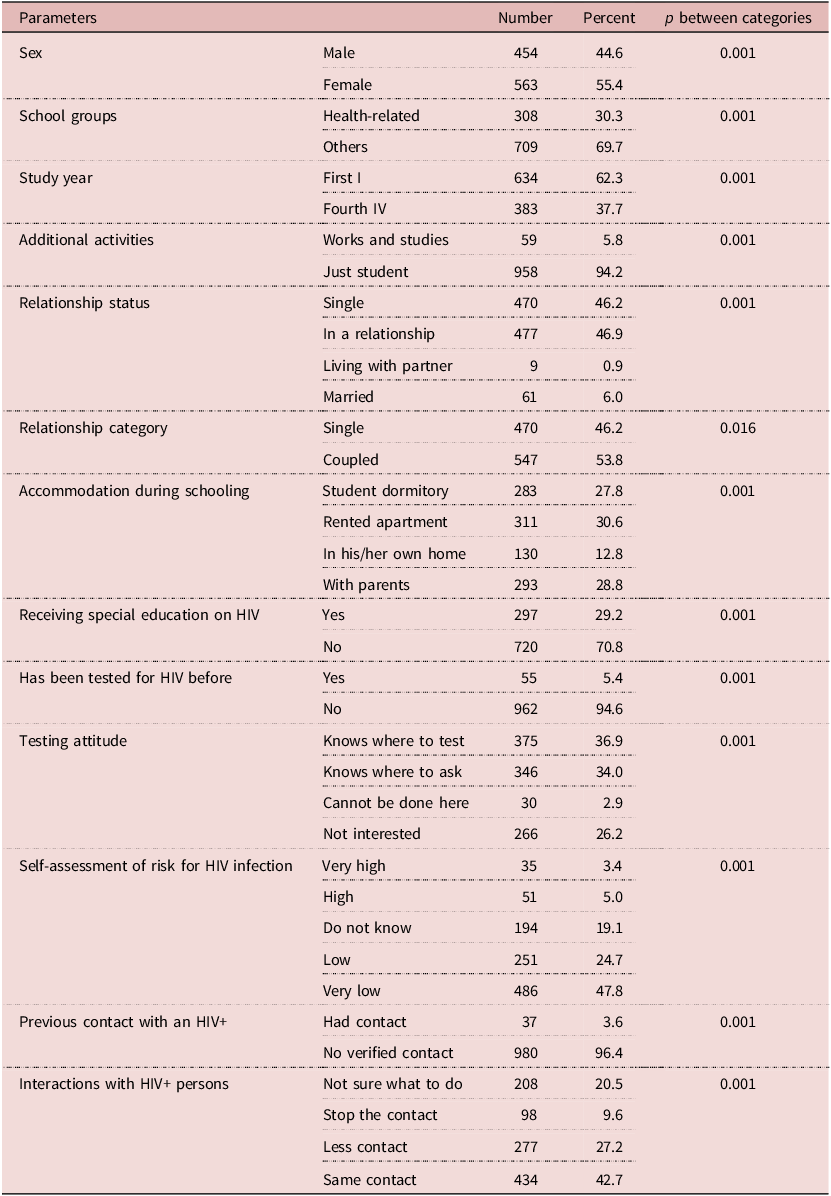
The study included 1,017 students, out of which 44.6% were male and 55.4% female, 30.3% studied health-related disciplines, and 62.3% were in the first faculty year. The mean ± standard deviation (SD) age of examined students was 21.3 ± 3.5 years. Description of the study population is presented in Tables 1 and 2.
Characteristics of Investigated Students
Opinion about HIV High-Risk Groups and Risky Behaviours of Students

Knowledge about HIV and attitudes towards PLHIV
The mean ± SD KNS of students was 32.8 ± 3.3. The majority of students (89.6%) had adequate knowledge, while only 10.4% demonstrated low HIV-related knowledge. In this study, there were no students who had wrong HIV-related knowledge. The mean ± SD ATS of students was 39.07 ± 4.45. The majority of students (83.9%) had a positive attitude, while 16.1% were indecisive towards PLHIV. In the study sample, none of the students had a negative attitude towards PLHIV.
The observed KNS and ATS significantly correlated with one another (ρ = 0.383; p = 0.001). Students who had positive attitude towards PLHIV also more often had adequate HIV-related knowledge.
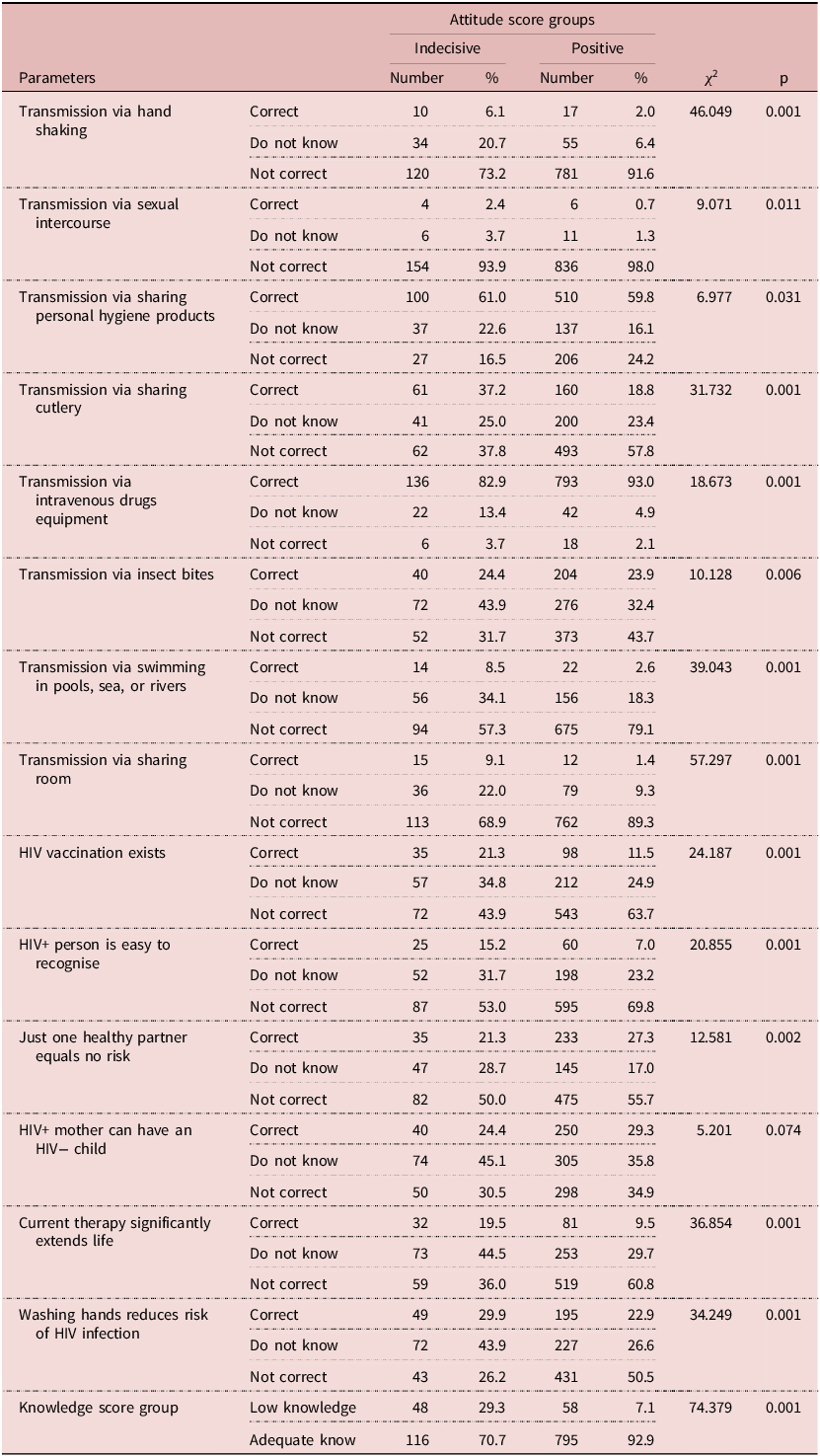
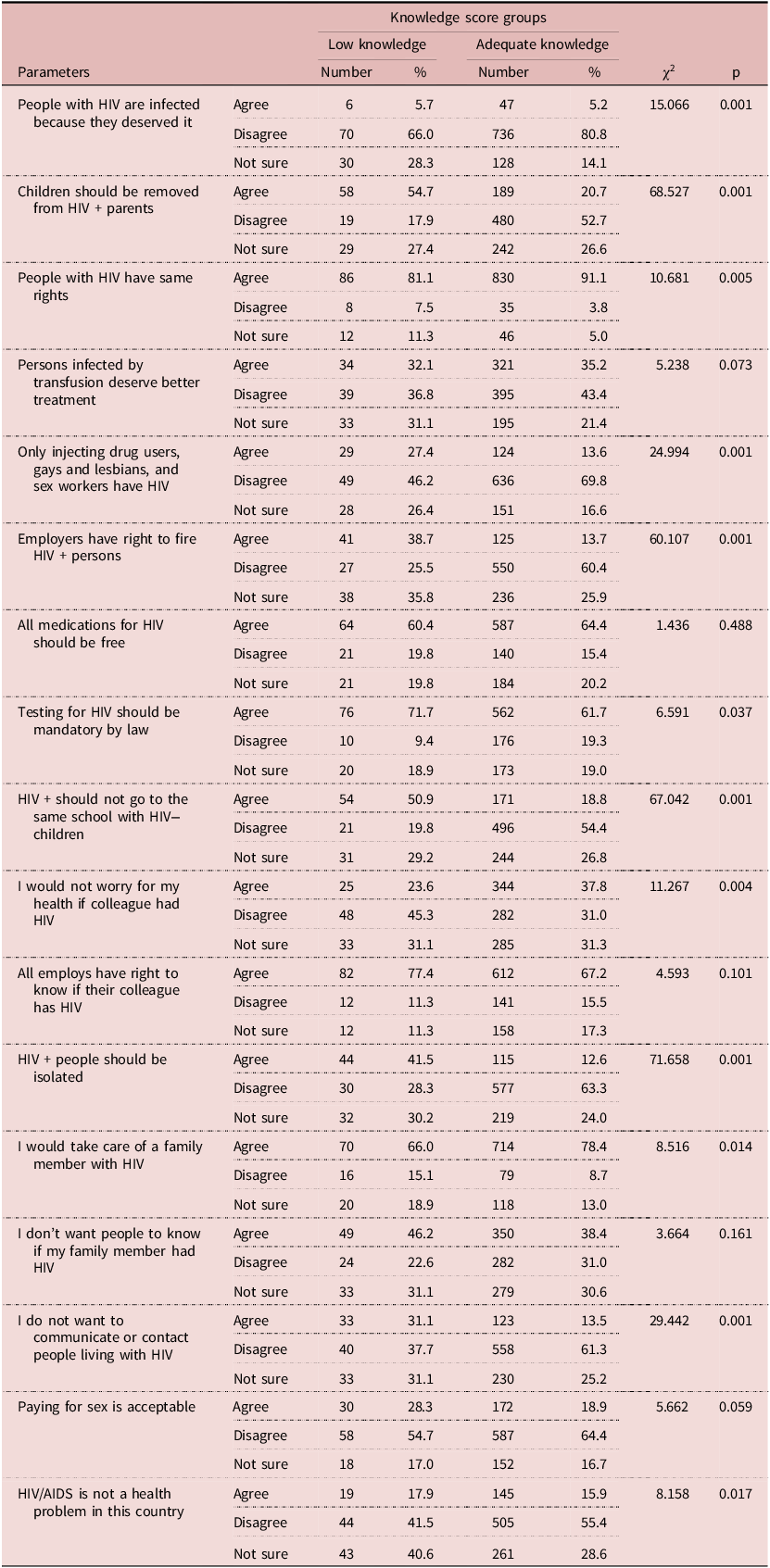
Significant differences in ATS groups were registered for all items included in the KNS except for item regarding HIV transmission from mother to child (Table 3). On the other hand, there were no significant differences in five out of 17 items included in ATS according to KNS groups. Namely, among students with low and adequate knowledge, no significant difference was observed in the attitude regarding the need for better treatment of persons who were infected with HIV through transfusion, the need for free HIV medications, public disclosure of HIV status of family member, and paying for sex (Table 4). However, students with adequate HIV-related knowledge more often had a positive attitude towards PLHIV compared to those with lower HIV-related knowledge. Students with adequate HIV-related knowledge correctly disagreed with the statements that people infected with HIV deserved it, that people should not communicate with PLHIV, that HIV/AIDS is not a health problem in Serbia, and that only injecting drug users, gays and lesbians, and sex workers have HIV. They also did not support the attitudes that children should be separated from HIV-positive parents, that PLHIV should be isolated at work and children in schools, that HIV testing should be mandatory by law, that all employees have the right to know whether their colleague has HIV, and that employers have the right to fire PLHIV. On the other hand, students with adequate HIV-related knowledge compared to those with lower knowledge were more likely to agree with the attitude that PLHIV should have the same rights as healthy people and that they would care for a family member with HIV, but they were indecisive about the statement that they would not worry about their health if a colleague had HIV (Table 4).
Differences in Items Comprising Knowledge Score in Regards to Attitude Score
Differences in Items Comprising Attitude Score in Regards to Knowledge Score
Results of the quantile regression
Through the use of quantile regression, it was observed that the exposure to a higher KNS modifies and reshapes the distribution of ATS, i.e. whether exposure effects are consistent across quantiles. In this way, deeper and extended quantitative evidence on the association of KNS and ATS was obtained and compared to the conventional analysis based on mean values that may miss, underestimate, or overestimate the effect of input factors on the tail of the distribution. In this way, it was determined which groups of students can benefit the most from health promotion interventions. In the unadjusted quantile regression model, a positive association between KNS and ATS was observed across all quantiles (Q0.10–Q0.90) (Table 5). However, in the adjusted quantile regression model, a negative association between KNS and ATS was observed in the lowest quantile (Q0.10) of the ATS. This may suggest that students who had a higher level of knowledge about HIV also felt paradoxically indecisive towards PLHIV. In all other quantiles (Q0.25–Q0.90), a higher KNS was associated with having stronger positive attitudes towards PLHIV with the strongest association in Q25 and Q50. Not being interested in HIV testing or not knowing that testing is possible in Kosovo was associated with less supportive attitudes towards PLHIV, and the magnitudes of these associations were higher at lower quantiles compared to higher ones. One’s position to stop the contact after learning one’s HIV-positive status was associated with less supportive attitudes towards PLHIV across all quantiles (Q0.10–Q0.90). As the students’ position changed from stopping contact after knowing one’s HIV status to reducing contact and then maintaining the same level of contact, in the same way, the coefficient B gradually changed from a negative (smaller magnitudes of association) to a positive one, significantly in the Q25 and Q50 quantiles (Table 6).
Quantile Regression Model: Association between Knowledge Score about HIV and Attitude Score Towards People Living with HIV-Unadjusted Model

Quantile Regression Model: Association between Knowledge Score about HIV and Attitude Score Towards People Living with HIV-Adjusted Model
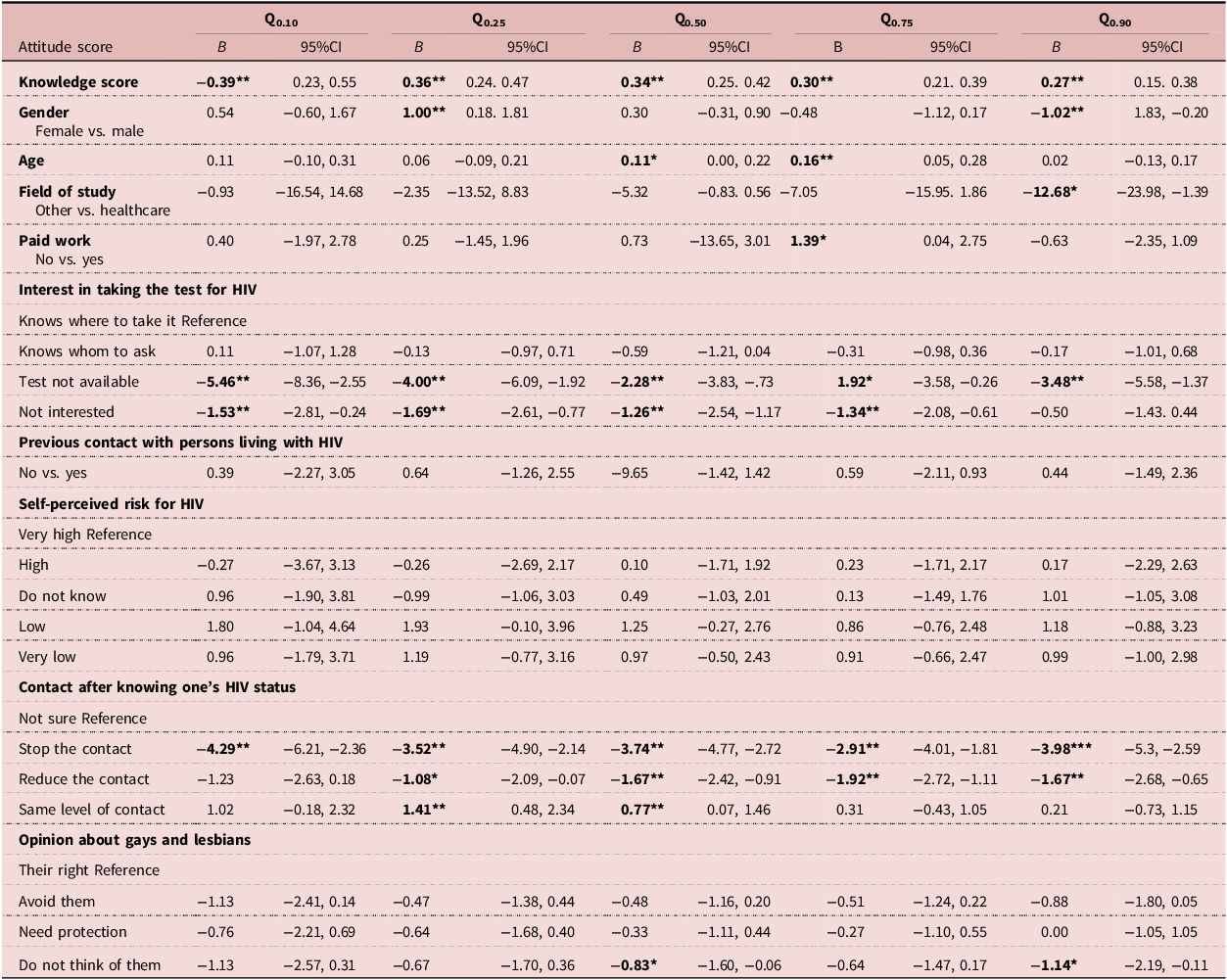
Legend: Bold values denote statistical significance (**p < 0.01; *p < 0.05); B – unstandardised coefficient, CI – confidence interval. Relationship status and sources of information (internet, university lecturers, friend) were not associated with the Attitude score.
Discussion
The quantile regression approach applied in this study has not previously been used to examine the influence of HIV-related knowledge on attitudes towards PLHIV. The quantile regression is commonly considered a versatile method to inform researchers about complex relationships between various factors (Lachos et al., Reference Lachos, Chen, Abanto-Valle and Azevedo2015). It is especially useful in studies where outliers may arise, because it is resistant to their influence. Quantile regression can provide a deeper insight into rather weak or nonlinear associations as it models the entire conditional distribution. For this reason, the results of this study add novelties to the body of evidence about this relationship, particularly regarding the lowest and highest quantiles of the attitude score.
Evidence suggests that the increasing level of knowledge about HIV leads to the development of positive attitudes towards PLHIV as well as reduction of HIV-related stigma and discrimination (Nubed & Akoachere, Reference Nubed and Akoachere2016; Thanavanh et al., Reference Thanavanh, Harun-Or-Rashid, Kasuya and Sakamoto2013; James & Ryan, Reference James and Ryan2018; Mahajan et al., Reference Mahajan, Sayles, Patel, Remien, Sawires, Ortiz, Szekeres and Coates2008; Herek, Capitanio, & Widaman, Reference Herek, Capitanio and Widaman2002). The observed quantile regression model surprisingly showed that having higher knowledge about HIV was associated with indecisiveness, i.e. hesitant attitudes towards PLHIV in the lowest quantile of the ATS distribution. Increasing level of HIV-related knowledge, however, was associated with stronger positive attitudes in all other quantiles, especially in the Q25 and Q50. Based on these findings, it can be anticipated that the introduction of specialised educational programmes about HIV could have the greatest effect among people who have indecisive attitude (those distributed around the middle quantiles of the ATS) as well as among people who already had positive attitudes towards PLHIV. In efforts to reduce the HIV-related stigma, knowledge about HIV seems to be the most important contributor, although the direction and the strength of the association between these two factors may be strongly influenced by social factors (Stephenson, Reference Stephenson2009; UNAIDS, 2014; Earnshaw et al., Reference Earnshaw, Smith, Chaudoir, Lee and Copenhaver2012). The most successful interventions aiming to reduce the HIV-related stigma included both individual (changes of knowledge and behaviour) and community-level activities (supporting women’s role in a society) (Thapa et al., Reference Thapa, Hannes, Cargo, Buve, Peters, Dauphin and Mathei2018). Therefore, the role of university students who could be actively involved in the activities that promote tolerance and inclusion of PLHIV as well as prevention of HIV should be emphasised.
Previous studies found that raising knowledge about HIV is overall effective, but not sufficient to tackle the HIV-related stigma (Stephenson, Reference Stephenson2009; Earnshaw, Smith, Chaudoir, Lee, & Copenhaver, Reference Earnshaw, Smith, Chaudoir, Lee and Copenhaver2012; Turan et al., Reference Turan, Budhwani, Fazeli, Browning, Raper, Mugavero and Turan2017; Visser, Makin, Vandormael, Sikkema, & Forsyth, Reference Visser, Makin, Vandormael, Sikkema and Forsyth2009). The findings in this study suggest that persons who had lower ATS or expressed greater level of stigma may not benefit from specialised programs aimed at raising HIV awareness and education. In fact, these might even be counteractive. Persons who, overall, have negative attitudes towards PLHIV could perceive HIV-related education as coercion and, therefore, increase their level of stigmatisation because PLHIV are in focus. Several studies did not confirm the association between higher HIV knowledge and lower level of HIV-related stigma (Serlo, Reference Serlo2008; Nyblade et al., Reference Nyblade, Pandey, Mathur, MacQuarrie, Kidd, Banteyerga, Kidanu, Kilonzo, Mbwambo and Bond2003). It is suggested that social factors like gender, race/ethnicity, sexual orientation, and academic status may be observed as the association mediators that might have a more significant role in shaping specific attitudes than basic knowledge (Kingori et al., Reference Kingori, Nkansah, Haile, Darlington and Basta2017). The change in social, cultural, and religious norms requires support from the entire community at large (Stephenson, Reference Stephenson2009; Earnshaw et al., Reference Earnshaw, Smith, Chaudoir, Lee and Copenhaver2012; Turan et al., Reference Turan, Budhwani, Fazeli, Browning, Raper, Mugavero and Turan2017; Visser et al., Reference Visser, Makin, Vandormael, Sikkema and Forsyth2009). In these circumstances, it might be more effective to influence the change in environmental factors, such as implementation of anti-discrimination laws, supporting women and their role in the communities, transformation of taboos associated with HIV and high-risk groups for contracting HIV, foundation of support groups, and inclusion of key populations in the mainstream culture (Schweitzer et al., Reference Schweitzer, Diskovic, Krongauz, Newman, Tomazic and Yancheva2023; Galli, Borderi, & Viale, Reference Galli, Borderi and Viale2020).
People living in regions with high HIV prevalence tend to be more knowledgeable about HIV transmission, which was found to reduce the levels of HIV-related stigma (Du, Chi, & Li, Reference Du, Chi and Li2018). Association of higher knowledge with stronger positive attitudes across higher quantiles in this study was expected, as Kosovo province is regarded as a high-risk area for HIV transmission (Milic et al., Reference Milic, Dotlic, Stevanovic, Parlic, Mitic, Nicholson, Arsovic and Gazibara2021a; Milic et al., Reference Milic, Dotlic, Gazibara, Parlic, Nicholson, Mitic, Lazic and Stevanovic2021b). Nevertheless, it was observed that the strength of this association becomes weaker with having stronger positive attitudes, suggesting that when individuals have higher knowledge levels, its impact on attitudes is positive, but not as strong. Possible explanation might come from a potential oversaturation in person’s interest and receptiveness for further knowledge on the matter. Consequently, it seems that when people already have a high knowledge they should only occasionally receive updates. Nevertheless, continuous education is always preferable and crucial for hesitant individuals who have indecisive attitudes. Exposure to periodical education campaigns could be useful to transform their indecisive attitudes into positive ones. Moreover, perhaps somewhat weaker association in the top quantiles may also reflect higher openness and acceptance of individuals irrespective of knowledge about HIV and not just loss of concern for repetitive information. This should be explored in more detail in further research.
In addition to knowledge, lack of interest in HIV testing and one’s position to stop the contact after learning a person’s HIV-positive status were observed as factors associated with less supportive attitudes towards PLHIV. The negative association was particularly strong in the lower quantiles of ATS distribution, suggesting that those students who were not interested in issues surrounding HIV were more likely to stop contact with a newly diagnosed PLHIV. Interest in HIV-related issues depends on the perception of HIV risk, which is related to having information about the problem (Zizza, et al., Reference Zizza, Guido, Recchia, Grima, Banchelli and Tinelli2021). Students’ HIV testing history and stigma appear to be largely mediated by HIV knowledge (James & Ryan, Reference James and Ryan2018). Not having previous contact with PLHIV was previously shown to be associated with greater HIV-related stigma. Thus, the results of this study support the evidence from literature (Tesic, Kolaric, & Begovac, Reference Tesic, Kolaric and Begovac2006; Lau & Tsui, Reference Lau and Tsui2005; Brown, Macintyre, & Trujillo, Reference Brown, Macintyre and Trujillo2003). In a study conducted among young Korean men, it was observed that in the 25th quantile the attitude score towards HIV infection was the most negative and that those who had no experience with people living with HIV had more stigmatising attitudes (Shim & Kim, Reference Shim and Kim2020). In a population where the likelihood of contact with an HIV-positive person is low, social media and the mainstream can spread stories such as basketball player Earvin ‘Magic’Johnson’s statement that he was infected with HIV through heterosexual intercourse to reduce the stigma associated with homosexuality and show that anyone can become infected with HIV (Casey, et al., Reference Casey, Allen, Emmers-Sommer, Sahlstein, Degooyer, Winters, Wagner and Dun2003).
A prior study from the Balkan region suggested that having previous contact with PLHIV and lower levels of homophobia were associated with stronger positive attitudes towards PLHIV (Dunjic-Kostic et al., Reference Dunjic-Kostic, Pantovic, Vukovic, Randjelovic, Totic-Poznanovic, Damjanovic, Jašovic-Gašic and Ivkovic2012). It was found that the association between not having interest and opinion regarding gays and lesbians and weaker positive attitude towards PLHIV was across the middle quantiles of the ATS distribution. Overall, it seems that students who had indecisive attitude towards PLHIV could be the most likely to change their attitudes as opposed to individuals who had already formed strong negative attitudes and are, therefore, more resistant to change. Academic setting has been deemed as the most appropriate environment in which interventions to reduce HIV-related stigma are also the most effective. This is likely due to the social climate among the students and building new social circles among the university students (Haffejee, Maughan-Brown, Buthelezi, & Kharsany, Reference Haffejee, Maughan-Brown, Buthelezi and Kharsany2018). Workshops organised at the University could be the most suitable way to introduce individuals from the high-risk groups in order to reduce the HIV stereotypes.
This study has several limitations. Self-reported data, particularly those about sensitive topics, are open to information bias. Moreover, another limitation could be the fact that this research was conducted in the university student population which may affect generalisability. Obtained results should be confirmed on the general population in further studies. Potential limitation of this study may also be a delay in data reporting. This study is an integral part of a larger investigation about the knowledge, attitudes, and behaviours of university students in North Kosovo about HIV. Because the doctoral dissertation of the first authors is based on this large investigation, the publication of data had to be postponed until the entire investigation was completed and all the results were analysed and evaluated. However, because social and political circumstances in northern Kosovo have not noticeably changed in recent decades (sex education is not included in school curricula), findings from this study likely reflect the present circumstances. The associations observed in this study were based on a cross-sectional study design; therefore, inference about causality remains limited. As observed associations could be more complex, further qualitative studies should be performed to better understand the subtle motives for attitudes towards PLHIV.
To conclude, this study was the first to apply the quantile regression to identify complex association between HIV-related knowledge and attitudes towards PLHIV. Association of higher HIV-related knowledge with stronger positive attitudes towards PLHIV was confirmed in almost all the quantiles. Still, some students remain indecisive despite being knowledgeable about HIV. This phenomenon should be explored in qualitative studies to understand their feelings and beliefs. Only after this research it is possible to better understand the reasons behind students’ indecisiveness and be able to address them through public health interventions.
Acknowledgements
This research was conducted in the framework of Marija Milic’s PhD thesis at the Faculty of Medicine, University of Pristina, temporarily settled in Kosovska Mitrovica, Kosovska Mitrovica, Kosovo, Serbia, under the guidance of Prof. Jasmina Stevanovic MD, PhD.The researchers are grateful to all the students who participated in this study.
Disclosure Statements
Funding statement
This research received no specific grant from any funding agency, commercial entity, or not-for-profit organisation.
Competing interests
The authors have no conflicts of interest to declare.
Ethical standard
The authors assert that all procedures contributing to this work comply with the ethical standards of the relevant national and institutional committees on human experimentation and with the Helsinki Declaration of 1975, as revised in 2008. Ethical approval was granted by the Ethics Committee of the School of Medicine, University of Pristina, temporally seated in Kosovska Mitrovica (Approval No. 09-1608-1, issued on October 29, 2013).


 Open access

