





Introduction
Stigma is defined as a personal attribute that is deeply discrediting, resulting in a person or group being discounted (Goffman, Reference Goffman1963). Public stigma can personally impact people with lived experience (PWLE) of a mental health condition and there is a global call to end mental health stigma (Thornicroft et al., Reference Thornicroft, Sunkel, Alikhon Aliev, Baker, Brohan, el Chammay and Winkler2022; Thornicroft, Sunkel, & Milenova, Reference Thornicroft, Sunkel and Milenova2024).
The term personal stigma encompasses three stigma experiences: perceived, experienced, and internalized stigma (IS) (Brohan, Slade, Clement, & Thornicroft, Reference Brohan, Slade, Clement and Thornicroft2010). Perceived stigma is the perception of stigmatizing attitudes from others and the degree to which a PWLE believes others view them this way (LeBel, Reference LeBel2008). Experienced stigma refers to discrimination i.e., the direct unfair and unjust treatment of another person across one or many life domains (Thornicroft, Brohan, Rose, Sartorius, & Leese, Reference Thornicroft, Brohan, Rose, Sartorius and Leese2009). IS is a personal reaction to public stigma where stigma becomes assimilated into self-identity (Corrigan & Watson, Reference Corrigan and Watson2002). Internalization of stigmatized beliefs (e.g. incompetence) or emotions (e.g. shame) can erode self-esteem and result in PWLE questioning why they should try to achieve desired life goals (Corrigan, Larson, & Rusch, Reference Corrigan, Larson and Rusch2009). For people with psychosis, IS is associated with an increase in psychological difficulties including depression and suicidality, and a reduction in overall wellbeing including personal recovery (Eliasson, McNamee, Swanson, Lawrie, & Schwannauer, Reference Eliasson, McNamee, Swanson, Lawrie and Schwannauer2021).
A mental health condition is not immediately recognizable on meeting a person and disclosure decisions can be difficult. Secrecy, shame, and social withdrawal may become coping mechanisms and create disclosure dilemmas (Corrigan, Sokol, & Rusch, Reference Corrigan, Sokol and Rusch2013; Vauth, Kleim, Wirtz, & Corrigan, Reference Vauth, Kleim, Wirtz and Corrigan2007). Psychosis is one of the most stigmatized mental health conditions (Wood, Birtel, Alsawy, Pyle, & Morrison, Reference Wood, Birtel, Alsawy, Pyle and Morrison2014) and has been subject to pernicious stereotyping in the media (Bowen, Kinderman, & Cooke, Reference Bowen, Kinderman and Cooke2019) making disclosure particularly challenging (Pyle & Morrison, Reference Pyle and Morrison2013).
Three meta-analyses have shown promise for psychosocial interventions that are designed to reduce IS; however, the evidence base is in its infancy and requires methodically robust studies (Luo, Li, Yang, Chen, & Zhao, Reference Luo, Li, Yang, Chen and Zhao2022; Tsang et al., Reference Tsang, Ching, Tang, Lam, Law and Wan2016; Wood, Byrne, Varese, & Morrison, Reference Wood, Byrne, Varese and Morrison2016). Many IS interventions have been designed to be delivered by professionals, but this may pathologise IS. A peer support worker (PSW), who has lived experience of a mental health condition, may be better placed to deliver stigma interventions as they are credible role models who can directly challenge the legitimacy of stereotypes within a mutual and non-hierarchical relationship (Pyle, Pilling, Machin, Allende-Cullen, & Morrison, Reference Pyle, Pilling, Machin, Allende-Cullen and Morrison2018). A number of meta-analyses have indicated that peer support (PS) may be an effective approach to reducing the harmful effects of stigma, including reducing IS and disclosure distress (Burke, Pyle, Machin, Varese, & Morrison, Reference Burke, Pyle, Machin, Varese and Morrison2019; Sun, Yin, Li, Liu, & Sun, Reference Sun, Yin, Li, Liu and Sun2022; White et al., Reference White, Foster, Marks, Morshead, Goldsmith, Barlow and Gillard2020), and improving stigma related variables of recovery, empowerment (White et al., Reference White, Foster, Marks, Morshead, Goldsmith, Barlow and Gillard2020), and self-efficacy (Burke et al., Reference Burke, Pyle, Machin, Varese and Morrison2019).
One peer-led approach is The Honest Open, Proud (HOP) program, which is a group-based intervention that aims to aid mental health disclosure decision making. Whilst stigma can make disclosure decisions challenging (Rüsch & Kösters, Reference Rüsch and Kösters2021) a successful disclosure can increase access to supportive relationships and reduce social stigma (Corrigan & Matthews, Reference Corrigan and Matthews2003). HOP considers disclosure a personal decision that may change over time and a decision that should be made by carefully balancing potential benefits and costs of disclosure (Scior, Rüsch, White, & Corrigan, Reference Scior, Rüsch, White and Corrigan2020). A meta-analysis of five HOP RCTs evaluated effects on three outcomes: stigma stress, which is the extent to which a person perceives stigma-related harm to be greater than their coping resources (Rüsch et al., Reference Rüsch, Corrigan, Wassel, Michaels, Olschewski, Wilkniss and Batia2009), IS and depression. Results showed a significant medium effect size for reduced stigma at end of treatment and a significant small effect size for reduced IS at follow-up (Rüsch & Kösters, Reference Rüsch and Kösters2021). Whilst HOP shows promise, the evidence base remains limited and some HOP trials have experienced recruitment challenges, which may be attributable to the group nature of the intervention (Rüsch & Kösters, Reference Rüsch and Kösters2021). Whilst group delivery of HOP is well established, a significant adaptation in delivery mode from a group to individual delivery should carefully consider the potential for any adverse effects not previously assessed or accounted for in HOP protocols. Psychological intervention trials have come under scrutiny regarding the accuracy and transparency of adverse events reporting (Duggan, Parry, McMurran, Davidson, & Dennis, Reference Duggan, Parry, McMurran, Davidson and Dennis2014) and transparent details of adverse event definitions, identification methods and rates should be provided in psychosocial intervention trials.
The UK's National Institute for Care Excellence (NICE) Guideline CG178 recognizes the need to address stigma for people with psychosis and makes a specific research recommendation to evaluate the effectiveness of peer support interventions (National Institute for Health and Care Excellence, 2014). This study aims to investigate the feasibility of a randomized controlled trial (RCT) of HOP for people with psychosis, adapted for individual delivery by PSWs in the UKs National Health Service (NHS).
Methods
Study design
We did a multicenter parallel group, single-blind, two-armed, feasibility RCT recruiting individuals at two UK NHS Trusts (Greater Manchester and Northeast London) with 2.5 (end of treatment) and 6-month follow-up. This trial was approved by the South Central–Berkshire-B REC on 27 June 2021 (reference: 21/SC/0232). The study protocol was approved by an independent Trial Steering and Data Monitoring Committee (TS/DMC) and is available in the appendix (pp. 2–20).
Participants
Eligible participants were aged 16+; help-seeking; met ICD-10 F20-F29 Schizophrenia spectrum diagnosis criteria, or were in receipt of Early Intervention in Psychosis services; under the care of mental health services; at least moderate levels of disclosure distress as operationalized as a score of >3 on a single disclosure distress scale (DDS) (Rüsch et al., Reference Rüsch, Abbruzzese, Hagedorn, Hartenhauer, Kaufmann, Curschellas and Corrigan2014); and at least moderate levels of IS operationalized as a score of ⩾3 on at least one of the IS domains on the Semi-structured Interview Measure of Stigma (SIMS) (Wood, Burke, Byrne, Enache, & Morrison, Reference Wood, Burke, Byrne, Enache and Morrison2016). All participants provided informed consent before their participation in the trial.
Exclusion criteria were primary diagnosis of alcohol or substance dependency; diagnosis of moderate to severe learning disability; diagnosis of organic psychosis; non-English speaking where this prevented providing informed consent or completing questionnaires validated in English; and immediate risk to self or others determined by the NHS care team. We did not exclude participants based on comorbid psychiatric diagnoses.
Participants were recruited from NHS mental health services providing care to people with experience of psychosis. A broad approach was taken to recruitment and where possible all potentially eligible service users within a service were offered the study. A broad definition was used to define a referral, which was classed as verbal permission from the service user for their basic contact and eligibility details to be shared with the research assistant (RA). The eligibility check on the DDS and SIMS was completed by the RA at the baseline assessment, which typically took place in the participant's home or via a remote method such as the telephone or videoconferencing.
Remote working practices were required in response to the covid-19 pandemic, including remotely delivered assessments or intervention for participants at elevated risk from covid-19. Participants were required at consent to specify their preferred mode of intervention delivery (in-person or remote). Participants allocated to the intervention arm received the mode specified at consent unless a covid-19 factor prevented this i.e. a participant contracting covid-19 and isolating.
Randomization and masking
Participants were randomly allocated in a 1:1 ratio to receive the intervention plus treatment as usual (TAU), or TAU alone. Allocation was randomly assigned via a secure and web-based system developed by the Clinical Trials Unit (Centre for Healthcare Randomised Trials [CHaRT]; Aberdeen UK). Randomization was in permuted blocks of random size and was stratified by center and baseline preference for intervention delivery mode. Randomization was independent and concealed at the individual level and follow-up assessments were completed by RA's blind to the randomization outcome.
Procedures
For this study, the name HOP was amended to ‘Let's Talk’ following consultation with PWLE. Participants allocated to the intervention were offered up to 10 sessions over a 10-week window, with the option of one booster session before the 6-month follow-up. Sessions were typically once a week. Participants were offered flexibility regarding assessment or intervention appointment date, time, and venue, this included the offer of a home visit where risk reasons did not prevent this. The intervention was manualized and structured around a workbook. The manual promoted a flexible and collaborative approach and whilst the progression through the workbook was linear, a participant could prioritize or return to a particular section of the workbook. Central to the manual were peer principles (Gillard et al., Reference Gillard, Foster, Gibson, Goldsmith, Marks and White2017). Full details of the intervention can be found in the appendix (appendix pp. 21–23). Following each session, PSWs self-assessed completion of workbook strategies and adherence to peer principles using the Principle Based Fidelity Index (Gillard et al., Reference Gillard, Banach, Barlow, Byrne, Foster, Goldsmith and White2021). With consent, sessions were audio recorded and independently rated using an adapted version of the HOP fidelity scale (Corrigan et al., Reference Corrigan, Sokol and Rusch2013; Rüsch et al., Reference Rüsch, Abbruzzese, Hagedorn, Hartenhauer, Kaufmann, Curschellas and Corrigan2014) (appendix pp. 24–35). Supervision was provided to PSWs in group format on a weekly basis by a peer specialist and a clinical psychologist.
Outcomes
Our primary outcomes were recruitment, retention to follow-up at the primary endpoint (2.5 months) for two proposed primary outcomes and intervention attendance. We applied three-stage progression criteria to determine feasibility; we agreed with the Trial Steering and Data Monitoring Committee our a priori criteria.
We collected baseline self-report demographic data. The method used to collect gender identity data was self-report. We did not collect assigned sex at birth as we determined this was not required for the interpretation of the study results. We specified two candidate primary outcomes for a definitive trial based on the HOP efficacy literature; these were total score on the SIMS (Wood et al., Reference Wood, Burke, Byrne, Enache and Morrison2016) and stigma stress (Rüsch et al., Reference Rüsch, Corrigan, Wassel, Michaels, Olschewski, Wilkniss and Batia2009) at end of treatment (2.5 month follow-up). The SIMS has 11-items covering the following domains: perceived stigma (1 item), experienced stigma (1 item), and internalized stigma (IS; 8 items). The first item ‘understanding of stigma’ is not scored. The IS items cover the impact of perceived and experienced stigma on self-esteem, safety behaviors/avoidance, relationships, experiences of psychosis, treatment, positive impacts of stigma, and personal recovery. Items are scored between 0 (not present) to 4 (severe). The SIMS is a valid and reliable measure to assess change in stigma experienced by people with psychosis (Wood et al., Reference Wood, Burke, Byrne, Enache and Morrison2016). Factor analyses revealed a one factor solution of total stigma (sum of all 10 items that are scored). For our study, we present the SIMS total and the perceived, experienced, and internalized stigma subtotals. The interview format confers the advantage of establishing a meaningful conversation about stigma and we consulted our service user reference group (SURG) regarding the choice of IS outcome and the SIMS was the preferred choice for this reason.
All secondary outcomes were collected at baseline, 2.5 month and 6-month follow-up. In addition to stigma stress and SIMS we collected: disclosure distress using a single item question (Rüsch et al., Reference Rüsch, Abbruzzese, Hagedorn, Hartenhauer, Kaufmann, Curschellas and Corrigan2014), service user defined recovery (Process of Recovery Questionnaire [QPR] (Law, Neil, Dunn, & Morrison, Reference Law, Neil, Dunn and Morrison2014), depression (Calgary Depression Rating Scale (Addington, Addington, & Schissel, Reference Addington, Addington and Schissel1990), social interaction anxiety (Social Interaction Anxiety Scale [SIAS] (Mattick & Clarke, Reference Mattick and Clarke1998), empowerment (Rogers Empowerment Scale [RES] (Rogers, Chamberlin, Ellison, & Crean, Reference Rogers, Chamberlin, Ellison and Crean1997)), quality of life (Manchester Short Assessment of Quality-of-Life [MANSA] (Priebe, Huxley, Knight, & Evans, Reference Priebe, Huxley, Knight and Evans1999), service utilization using the economic patient questionnaire (Davies et al., Reference Davies, Barnes, Jones, Lewis, Gaughran and Hayhurst2008) and health status using the EQ5D-5L (Bobes, García-Portilla, Sáiz, Bascarán, & Bousoño, Reference Bobes, García-Portilla, Sáiz, Bascarán and Bousoño2005). We also collected data on two potential mediators of internalized shame (Internalised Shame Scale [ISS] (Cook, Reference Cook1987)) and the Self-Esteem Rating Scale [SERS] (Lecomte, Corbiere, & Laisne, Reference Lecomte, Corbiere and Laisne2006). A measure of psychosis symptoms was not included since this was not determined to be a potential outcome for a future trial. Our SURG have recommended that for a stigma intervention trial inclusion of a psychosis measure would be inconsistent with the intervention content and the aims of the study (Morrison et al., Reference Morrison, Burke, Murphy, Pyle, Bowe, Varese and Wood2016).
Safety outcomes were adverse and serious adverse events by study team report and thoroughly screening each participants electronic patient records from point of consent to trial exit. We provide complete definitions of adverse events in the study protocol in the (appendix pp. 13–14). We collected acceptability data via qualitative interviews with participants and peer support workers and will report elsewhere.
Statistical analysis
A sample size of 60 participants (30 per treatment arm) was determined to be sufficient to inform sample size estimates for a future trial (Browne, Reference Browne1995) as well as the feasibility aims of the trial. To allow 20% attrition, we intended to randomize 75 participants. A priori progression criteria were agreed with our independent TS/DMC and funder as follows: recruitment of at least 80% of the planned population (green), 60–79% (amber), or less than 60% (red); retention of participants within the study with end of treatment data on the semi-structured interview measure of stigma and stigma stress with at least 80% (green), 60–79% (amber), or less than 60% (red); and at least 80% of receiving at least two sessions of the Let's Talk program (green), 60–79% (amber), or less than 60% (red).There was no formal power calculation to detect treatment differences, given the focus was not on hypothesis testing. The analysis followed a pre-specified statistical analysis plan approved by the committees/DMC, and published on the Clinical Trials Unit (CTU) here: https://www.abdn.ac.uk/hsru/what-we-do/trials-unit/statistical-analysis-plans-611.php.
Statistical analyses were based on intention-to-treat. Safety was analyzed based on treatment received (as treated), which was defined as receiving at least one session of the intervention. Progression criteria was summarized using descriptive statistics for the number of participant referrals, recruitment rate, retention of participants for SIMS and stigma stress, and number of Let's Talk sessions attended. Descriptive statistics are reported for safety data, number of participants receiving allocated interventions, frequency of delivery of intervention strategies, peer fidelity index, loss to follow-up, and hospital admissions. Session data is also reported by mode of delivery. Descriptive data from baseline and follow-up assessments were summarized as the mean (s.d.) or medians (IQR) for continuous data and frequencies and percentages for categorical variables. Outcomes were analyzed using repeated measures, mixed-effects regression models correcting for baseline score and time as categorical fixed effects with center and participant as a random effect. We used all available data with missing baseline data imputed with center-specific mean, and treatment effects were estimated at each time point with a treatment-by-time interaction. Results are presented as mean differences (MD) and 95% confidence intervals (CIs) and using standardized mean differences. All analyses were done in Stata (version 17) (StataCorp, 2019). The study was prospectively registered on 8 August 2021, on the ISRCTN registry, https://doi.org/10.1186/ISRCTN17197043.
Role of funding source
The Let's Talk study was funded by the UK National Institute for Health Research (NIHR200460). The funder of the study had no role in study design, data collection, data analysis, data interpretation, or writing of the report.
Results
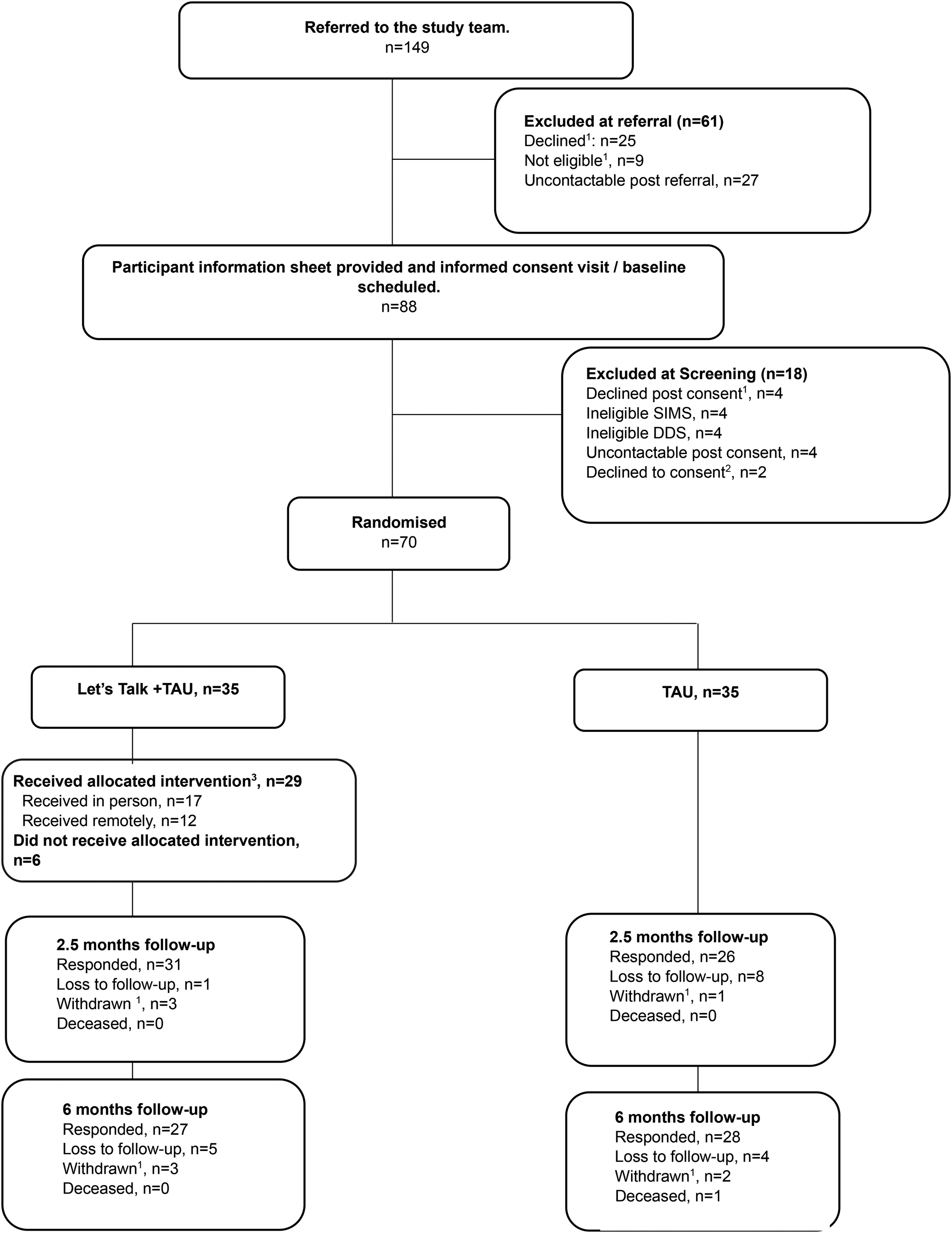
Between 1 September 2021, and 31 January 2023, 149 patients were referred to the study. The first participant was recruited on 20 October 2021, and the last on 31 January 2023, and the final follow-up data was collected on 19 July 2023. Of the 88 patients screened, 70 participants were randomized, 35 to intervention and 35 to TAU (Fig. 1). Baseline participant characteristics are shown in Table 1 and were balanced between groups. The mean age at baseline was 36.5 (s.d. 12.4) in intervention and 38.7 (17.4) in the TAU arm. In the intervention arm, 21 participants (60%) were male, with 17 males (49%) in TAU.
The CONSORT diagram. 1 reasons are shown in appendix p.36; 2 no reason provided; 3 defined as ⩾2 sessions attended. .
Baseline characteristics
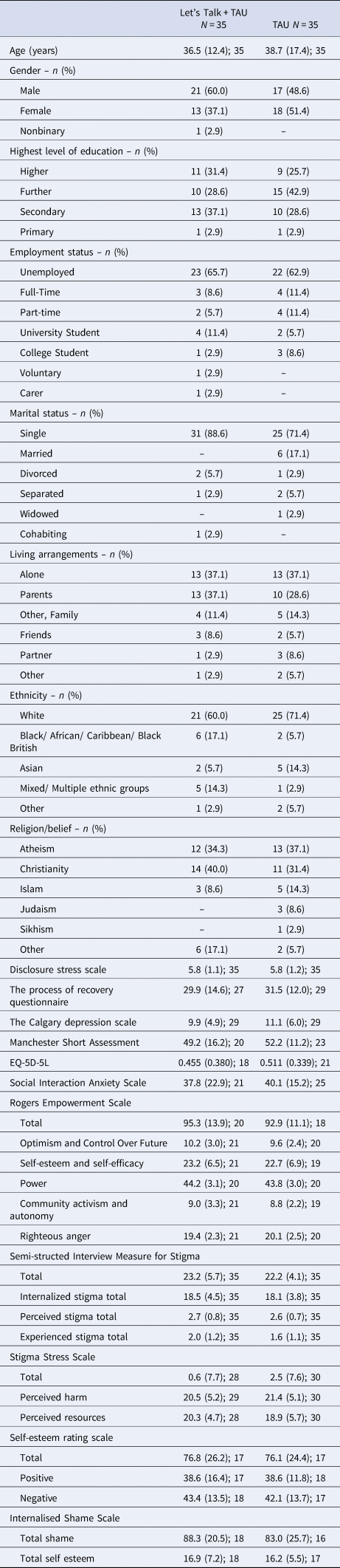
Data are n (%); mean (s.d.).
Feasibility and safety outcomes
Our recruitment rate was 93% of the target sample size of 75 participants. Referral to randomization rate was about 2:1, with 25/149 (17%) referred individuals declining to take part, and two (1%) declining to consent (appendix p. 36). Referrals were slightly higher from Early Intervention in Psychosis services (91; 61%).
At end of treatment (2.5-month follow-up), 57 (81%) participants were retained for the semi-structured interview measure of stigma and 52 (74%) for stigma stress (Fig. 1). There were seven masking breaks (i.e. randomly assigned group revealed); six in the intervention arm and one in TAU.
Of those allocated to intervention, 29/35 (83%) received at least two sessions, which was defined as the minimal amount to meet adherence. Of those who allocated to the intervention arm 23/35 (66%) attended at least half of the total number of sessions available with a median of seven [IQR 2–8] sessions attended. Reasons for attending less than half the sessions available can be found in appendix (p.37). Median time to first session from randomization was 16 days [IQR 13–22], and 16/33 participants (48%) received a booster session. Full details of treatment received are in Table 2. Details of the peer fidelity index across all sessions and hospital use are shown in (appendix p.38)
Treatment received and session data for those allocated to Let's Talk plus TAU
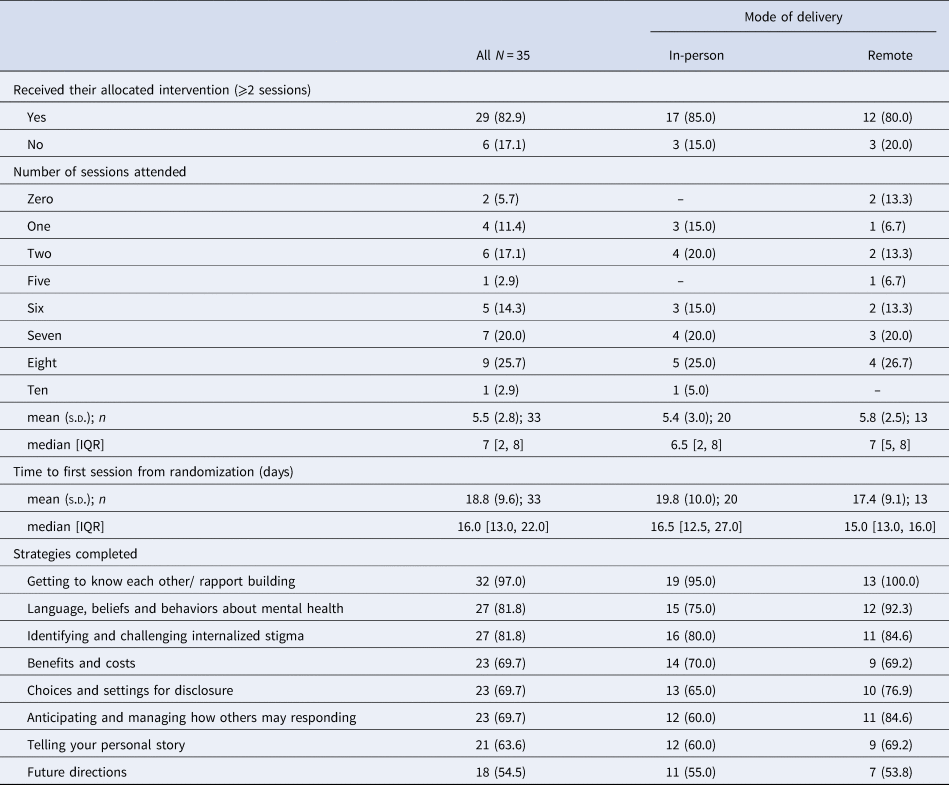
Values are numbers (percent) unless otherwise stated.
The as-treated analysis of safety, defined as attendance of at least one session of the intervention, are reported in Table 3. Safety by intention-to-treat is presented in appendix p.46. As-treated analysis showed 7/33 participants in intervention (21%, 14 events) and 6/37 in the TAU arm (16%, 9 events) had either a serious adverse event (SAE) or an adverse event (AE). For SAE's, 6/33 participant (18%, 9 events) in intervention and 3 participants (8%, 6 events) in the TAU arm. There was one death in the TAU arm due to a physical condition. Of the 15 SAEs, one event categorized as potentially life-threating self-harm, was deemed partially related, the participant and care team reported the event occurred following an increase in distressing psychosis symptoms, but that some of the research assessment questions were upsetting. This occurred on one occasion (at baseline) and the participant agreed to complete all subsequent assessments with no further adverse events in relation to the assessment. Across the 182 completed assessments the incident of SAEs arising from the assessment questions was 0.5%. For the AEs, all events were expected and unrelated.
Serious and adverse events by treatment received
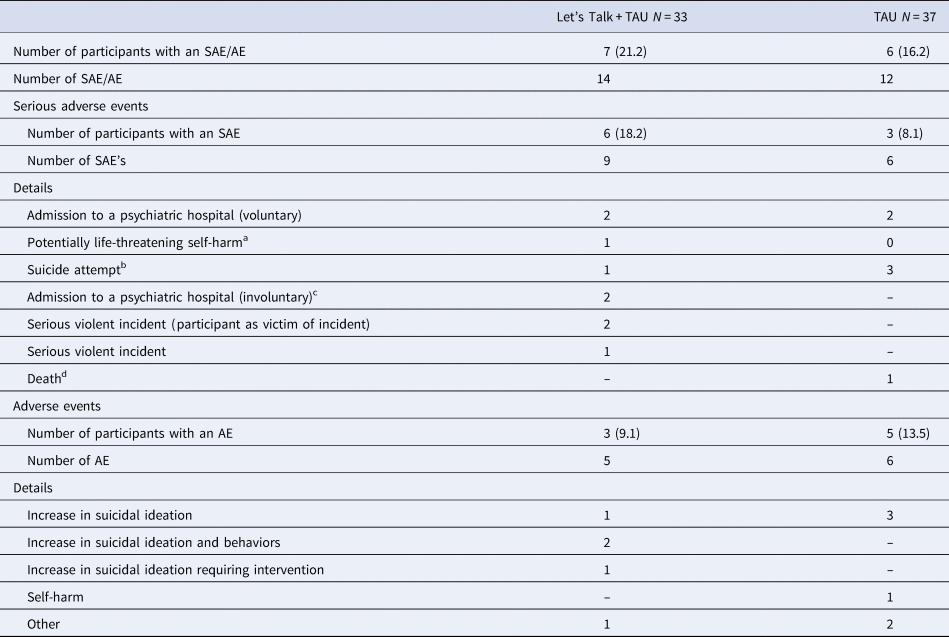
Values are either n (percent) or n.
Treatment received is defined by at least one session of the allocated intervention.
a This occurred post randomization but before the first intervention session.
b The event occurred before randomization.
c One event occurred post consent but before completion of a baseline assessment, participant later completed the assessment and was allocated to intervention.
d Physical health condition.
Secondary outcomes
All secondary outcomes are reported fully in the appendix (pp. 38–39). The intervention was beneficial for one of the candidate primary outcomes at end of treatment; for total SIMS the mean difference (MD) was −3.31 (95% CI −6.03 to −0.59) favoring the intervention. For stigma stress total the MD was −2.33, (95% CI −6.65 to 1.99), favoring intervention. Results were similar at 6-months. Figure 2 shows the effect sizes for the two candidate primary outcomes of total SIMS and stigma stress, and other key secondary outcomes of personal recovery, depression, and social anxiety.
Forest plot of effect sizes Cohens d.

Discussion
To our knowledge, this is the first feasibility RCT of individually delivered HOP for people with psychosis. Recruitment was feasible and attrition was low (<20% at end of treatment; 21% at 6-month follow-up). Completion rates suggest that the SIMS is a feasible outcome measure, and we propose it confers the advantage of assessing all three dimensions of personal stigma whilst engaging a participant in a meaningful conversation regarding their stigma experiences. Finally, uptake of the intervention was high. Taken together, the findings indicate feasibility for a future, larger trial and we make full recommendations for the design a future trial in Table 4.
Lessons learnt, challenges faced and recommendations for a definitive trial: trial feasibility data
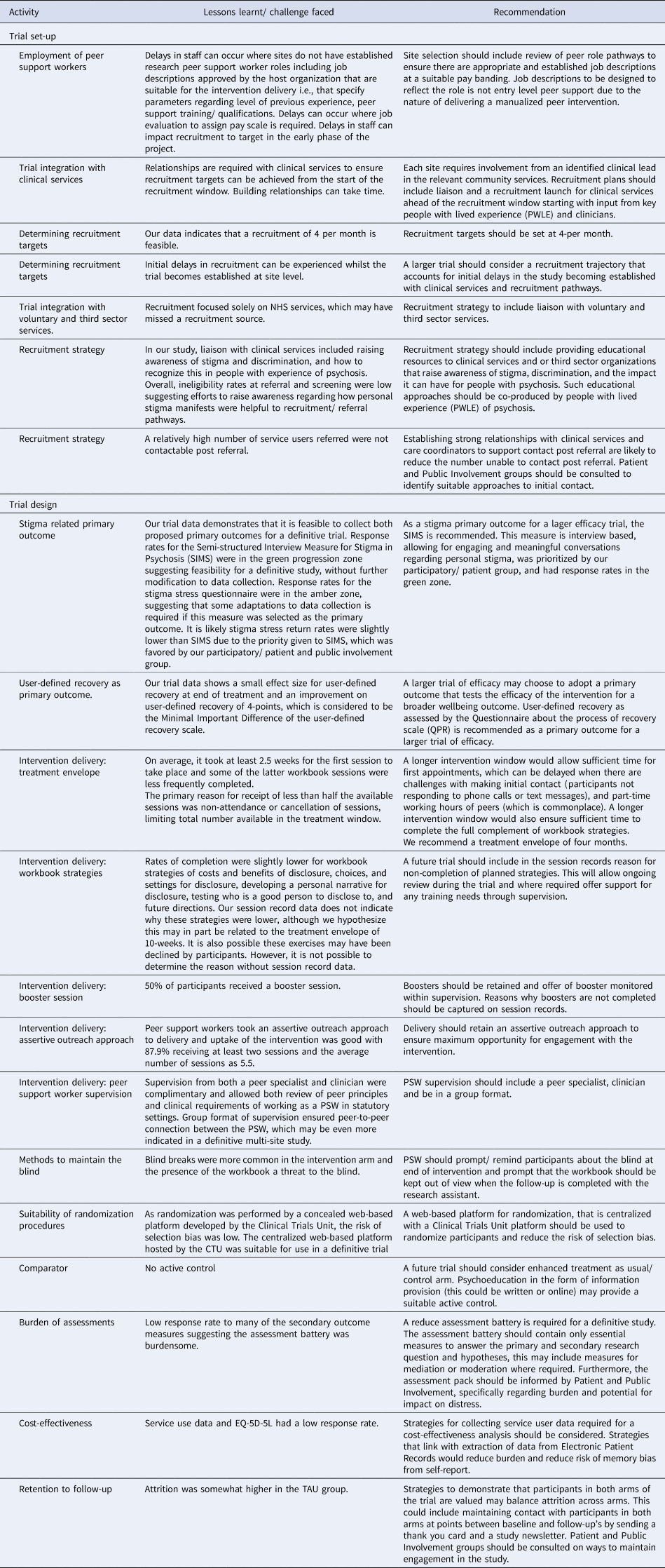
Our trial took a rigorous approach to adverse event monitoring and as-treated SAE data shows nine SAEs in the intervention group v. six in the control. However, two SAEs in the intervention group took place before randomization and one event was prior to first intervention session and no intervention had been received at the time of event. As such, our adverse event data indicates that the adaptation of HOP from group to individual delivery was safe.
The most delivered intervention strategies were establishing the peer relationship, developing a shared understanding of stigma and mental health identity, and challenging IS beliefs. Around two thirds of participants allocated to the intervention received the strategies of: benefits and costs of disclosure, choices, and settings for disclosure, anticipating and managing how others may respond to disclosure, and personalized approaches to sharing psychosis experiences. Broadly, self-rated fidelity scores indicate the intervention was consistent with principles of peer support (Gillard et al., Reference Gillard, Banach, Barlow, Byrne, Foster, Goldsmith and White2021). Principles most frequently endorsed were mutuality, reciprocity, and valuing experiential experience. Our data suggests minimal difference between in-person or remote delivery for completion of workbook strategies, or delivery consistent with peer principles.
Our preliminary data on the clinical effects of Let's Talk for stigma show moderate effect sizes at end of treatment for IS and total stigma, and large effect sizes for IS and total stigma at 6-month follow-up. Group HOP has been shown to have a small effect size for IS (Rüsch & Kösters, Reference Rüsch and Kösters2021). Our findings regarding stigma stress broadly align with the literature as we observed a small effect size for stigma stress at end of treatment and follow-up. HOP trials have demonstrated a moderate effect size on stigma stress at end of treatment and a small effect size on stigma stress at 3–4-week follow-up (Rüsch & Kösters, Reference Rüsch and Kösters2021).
Regarding the potential clinical effects on user-defined recovery (Law et al., Reference Law, Neil, Dunn and Morrison2014) our data show a small effect size at end of treatment on the QPR which aligns with the literature regarding the effects of peer support on personal recovery (White et al., Reference White, Foster, Marks, Morshead, Goldsmith, Barlow and Gillard2020). The Minimal Important Difference (MID) for the QPR is a four-point increase on the scale (Dehmahdi et al., Reference Dehmahdi, Law, Pyle, Byrne, Jones, Peel and Morrison2021). We observed a mean difference of four points at end of treatment, indicative of clinically meaningful benefit for user-defined recovery that is worth evaluating in a larger trial.
Whilst our trial confirms it is feasible to use the SIMS as a primary outcome in a future trial, the observed effects of the intervention on user-defined recovery are noteworthy and may suggest that recovery is an appropriate primary outcome for a future trial. The absence of assessment of this important outcome by existing IS intervention studies has been recognized (Thornicroft et al., Reference Thornicroft, Sunkel, Alikhon Aliev, Baker, Brohan, el Chammay and Winkler2022) and both PLWE of psychosis and UK national guidelines consistently prioritize user-defined recovery as a core outcome for people with psychosis (National Institute for Health and Care Excellence, 2014). A definitive trial should embed mediation and moderation tests to evaluate the mechanisms of change and if recovery was elected as a primary outcome a candidate mechanism of change would be IS, which has been shown to be negatively related to recovery (Eliasson et al., Reference Eliasson, McNamee, Swanson, Lawrie and Schwannauer2021).
The primary limitation is that the study was not powered to detect clinical effects and results should therefore be interpreted cautiously. The primary challenge to delivery was covering the full workbook content in the allocated 10-week intervention window. In some cases, we experienced a delay in time to first session and the key driver for attending less than half the available sessions was non-attendance/cancellation of sessions by the participant. We recommend a future trial extend the number of sessions available and provide a longer intervention window. Our study does not demonstrate which elements of the intervention are most effective, or whether the intervention confers more benefit for specific groups, and a future trial should consider a process evaluation to address these questions. TAU for participants included care from a mental health team and so it is not possible to exclude the potential for any observed benefits to be attributable to support offered within these services, although it is important to note that both arms of the study received TAU. Whilst 16% of referred participants declined an informed consent visit and 18% were uncontactable after referral, we consider this a result of the broad v. targeted approach to recruitment taken for this study. Based on service user consultation we did not include a measure of psychotic experiences; this may limit the ability to determine the relationship between psychosis symptoms and stigma or describe symptom severity in the study population. The SIMS has been used in one other stigma intervention trial (Morrison et al., Reference Morrison, Burke, Murphy, Pyle, Bowe, Varese and Wood2016) and this may limit comparison to other stigma intervention studies; other self-report stigma measures are available. Finally, we did not formally assess the practicality of the intervention (Bowen et al., Reference Bowen, Kreuter, Spring, Cofta-Woerpel, Linnan, Weiner and Fernandez2009).
Given the demonstration of feasibility and encouraging observed reduction in IS and increase in user-defined recovery we conclude that a definitive test of efficacy or effectiveness of the Let's Talk intervention is required.
Supplementary material
The supplementary material for this article can be found at https://doi.org/10.1017/S0033291724002605
Acknowledgements
This study is funded by the NIHR Research for Patient Benefit Scheme (NIHR200460). The views expressed are those of the authors and not necessarily those of the NIHR or the Department of Health and Social Care. We would like to thank the participants who took part in this study, the sponsor Greater Manchester Mental Health NHS Foundation Trust (GMMH), the Psychosis Research Unit (PRU) Service User Reference Group, the members of our joint Trial Steering/ Data Monitoring Committee (Professor Steven Gillard, Zach Howarth and Kim Lee), the Research and Innovation teams at GMMH and Northeast London NHS Foundation Trust, the Clinical Research Network for support with recruitment and the clinical teams at participating NHS Trusts.
Authors’ contributors
The Let's Talk Research Group
All authors engaged in study design, management, and delivery, and contributed to drafting of this manuscript. MP was the chief investigator, wrote the first draft of the manuscript and trial managed the study. PC was the original developer of HOP. MP, PC, LW, SPi, GM, WJ, RH, JL, SPe and AM conceived the study design and acquired funding. WJ and RH led the Patient and Public Involvement. SPi, EM, RH and JL led training and supervision of the PSWs. GM, KK, RB, and ED contributed to the acquisition of intervention delivery and fidelity data. LW was the Principal Investigator for the Northeast London site. JH and JS did the statistical analysis and GM verified the data analysis. All authors had full access to all the data in the study. MP, JH, JS, and GM accessed and verified the data and take responsibility for the integrity of the data and the accuracy of the data analysis. All authors contributed to critical review and editing of the manuscript and had final responsibility for the decision to submit for publication.
Ethical standards
The authors assert that all procedures contributing to this work comply with the ethical standards of the relevant national and institutional committees on human experimentation and with the Helsinki Declaration of 1975, as revised in 2008.
Competing interests
All authors have conducted funded research into treatments for psychosis or mental health stigma and discrimination research. APM has received royalties for CBT manuals and practices CBT in the NHS. PC is the original developer of HOP.
Data sharing
Deidentified participant data will be available with publication in anonymized form from the corresponding author (melissa.pyle@gmmh.nhs.uk) on reasonable request, subject to review and contract with Greater Manchester Mental Health NHS Foundation Trust.


 Open access

