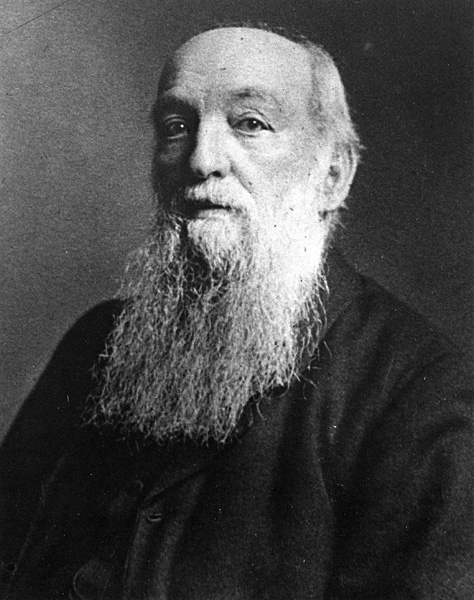


John Robert Mortimer (1825-1911) is one of the least known and understood of all those nineteenth-century pioneers associated with the birth of modern British archaeology (Figure 1). However, when compared with other key contemporaries — Greenwell, Pitt-Rivers, and the like — he appears very different. Mortimer was the perennial outsider, prevented by the circumstances of his lowly birth and education from transcending the rigid boundaries of nineteenth-century English society. Despite his undoubted talent and immense achievements he never gained acceptance or recognition from that small group of upper and upper-middle class professionals who formed the national archaeological elite of the day.
John Robert Mortimer, 1825-1911 (photograph: Stephen Harrison Collection).

Mortimer was born on 15 June 1825 at Fimber, in the East Riding of Yorkshire (for early background, see Reference HicksHicks 1978). Although from farming stock, his parents were only one generation removed from the rural poor. He received little in the way of formal education, and even this was disrupted by frequent illness and occasional work on the family farm. Leaving school in 1839, he was set to work in the fields alongside his father. Largely uneducated, then, his later achievements are all the more remarkable.
Beginning in archaeology
It was not until 1851 that his interest in archaeology was seriously awakened, when he visited the Great Exhibition and the British Museum (Reference HicksHicks 1978: 28). Here began his journey in search of the past, a commitment that was to become all-consuming, eventually giving him identity and liberating him from his class.
Following this visit, Mortimer and his younger brother Robert trawled the fields around Fimber for geological specimens and prehistoric artefacts (Reference SheppardSheppard 1911). Over the next decade or so, many thousands of objects were acquired, and displayed in purpose-built cabinets at their home.
Beginning in the late 1850s and running parallel to the collection of surface finds, John and Robert began to survey upstanding prehistoric barrows and linear earthworks (Reference HarrisonHarrison 1996). This shift of emphasis reflected a deepening interest, a desire to move beyond the collection of surface finds to a consideration of the monuments with which they were associated.
By 1860 a prolonged period of agricultural prosperity had enabled Mortimer to establish a corn, seed and manure business, first from the Fimber farm and then, after 1869, from Driffield — the regional agricultural centre. This venture would, he hoped, allow sufficient time and income to pursue his archaeological investigations. And, for a short period, it did.
John and Robert's careers as excavators began on 4 May 1863, with the opening of a mound at High Towthorpe, near Fimber. Between 1863 and 1911, John, and his brother Robert (until the latter's death in 1892), were responsible for the excavation of over 350 Neolithic, Bronze Age and Iron Age barrows, together with a handful of Romano-British and Anglo-Saxon cemeteries. These were published in a synthesis of their lives' work (Reference MortimerMortimer 1905).
Barrow digging
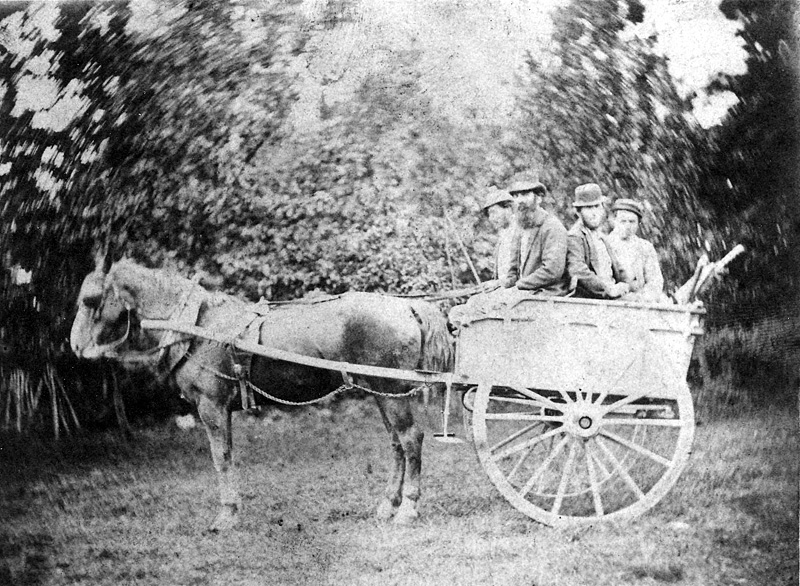
Most of the diggings took place between 1863 and 1879, reflecting the flourishing of Mortimer's business between those years (Figure 2). Financing the archaeological work depended entirely on the continued success of the business, and it is clear that he was using a large part of his annual profits to this end. Unfortunately, the late 1870s and early 1880s marked the onset of a severe agricultural depression. Not having the necessary financial reserves, the business went into decline, culminating in 1887 in John's bankruptcy and public humiliation (Reference HarrisonHarrison forthcoming). Mortimer's utter self-absorption, inflexibility and self-indulgent attitude towards his archaeology brought about this disaster, which effectively ended his career as a self-financing barrow-digger; others would finance over half of the 74 excavations undertaken between 1887 and 1911 (Figure 3).
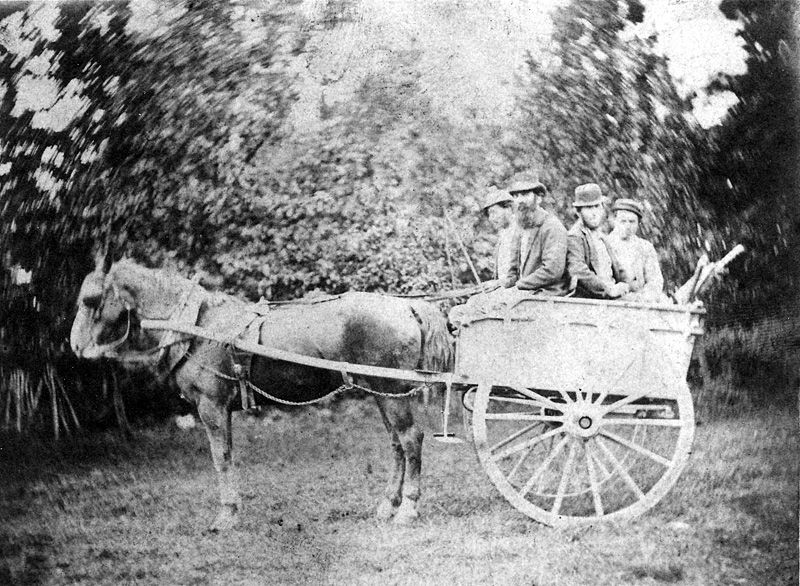
Going digging, c.1865. J.R. Mortimer sits in the front of the dog cart, facing the camera; immediately behind him, is his brother Robert (1829-92). The individual seated behind Robert is thought to be Thomas Hebb, Mortimer's long-time archaeological foreman (photograph: Stephen Harrison Collection).
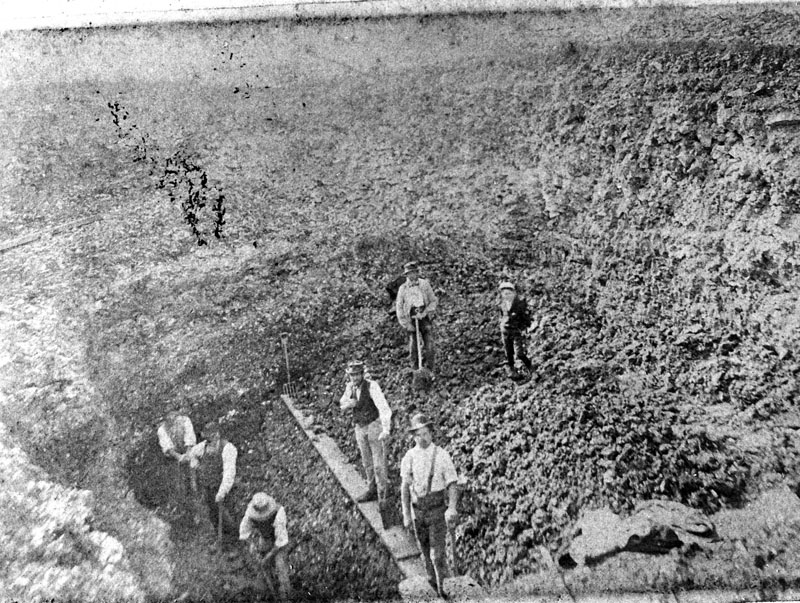
The 1890 excavation of the great Neolithic round barrow of Duggleby Howe (Mortimer Barrow 273). J.R. Mortimer is the middle figure on the left. The boy, extreme right, is thought to be the 14-year-old Thomas Sheppard, later to become first curator, and then first director, of Hull Museums. This six-week long excavation was financed by Sir Tatton Sykes of Sledmere (photograph: Stephen Harrison Collection).
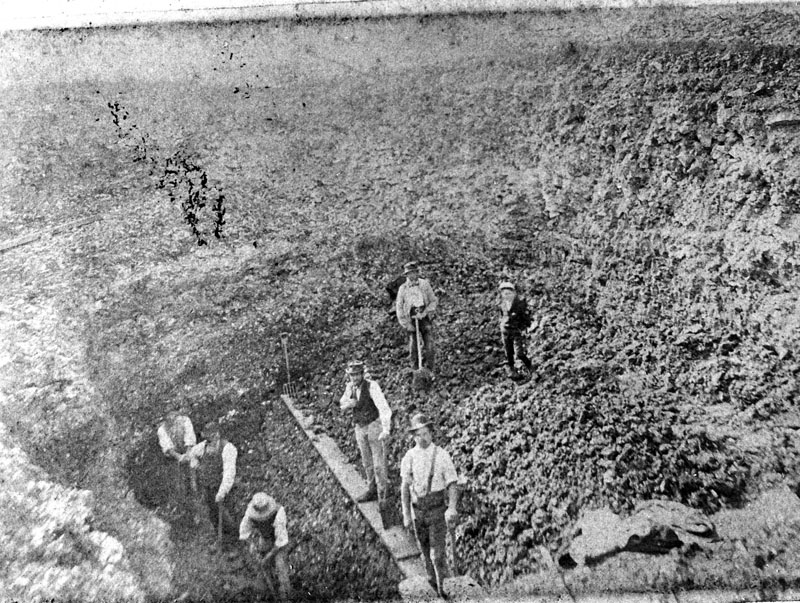
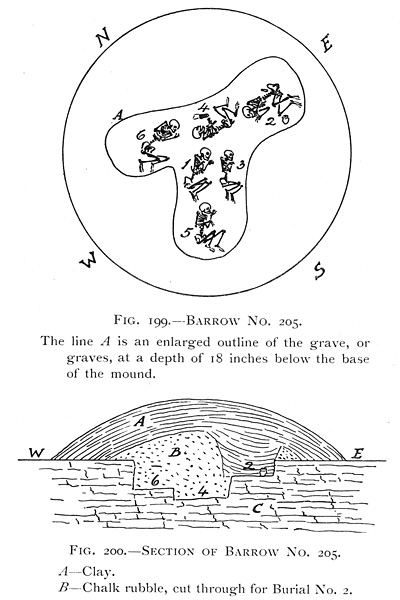
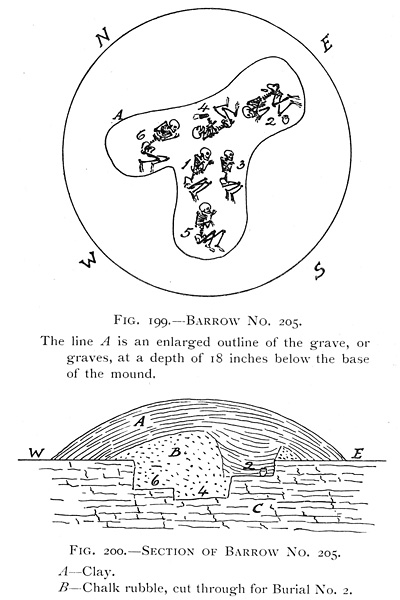
Mortimer's methodology was far in advance of the day (Reference MortimerMortimer 1905): large areas were excavated, detailed notes were made on each excavation, stratigraphical relationships were noted, structures within and under barrows were described and interpreted, and mound composition and structure was commented on. He had soil and other samples and human skeletal remains scientifically analysed, took plaster casts of postholes, and photographed aspects of his excavations (Figure 4). Finds were securely provenanced to site level and, often, to context as well, and he went to great lengths to retain the integrity of individual grave assemblages.
Site plan of Mortimer Barrow 205, Acklam Wold Group. Many of the published excavations are accompanied by un-scaled sketch site plans, which are essentially post-hoc creations, probably based on now lost field notes and sketches; modern re-excavation of some Mortimer sites has demonstrated that they are of uncertain reliability (Reference MortimerMortimer 1905: 88).
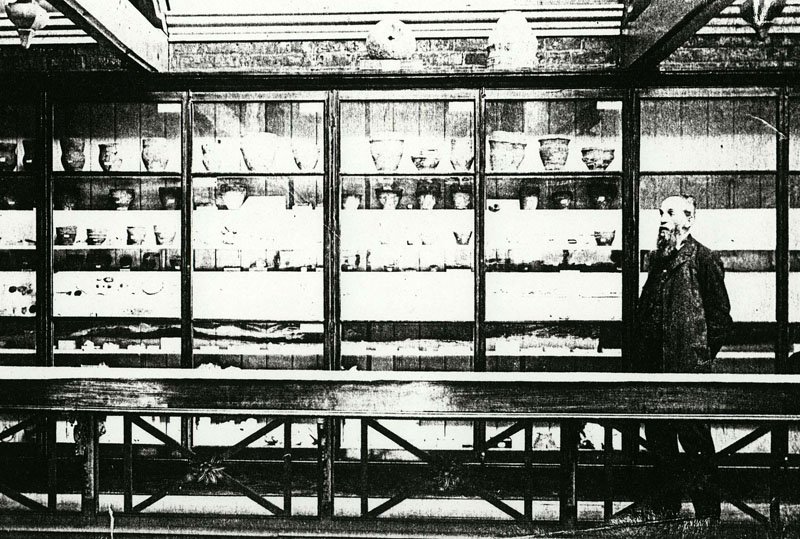
During these years an important collection of cultural material was assembled and publicly displayed, from 1878 until John's death in 1911, in a purpose-built museum in Driffield (Figure 5; Reference ColeCole 1891; Reference MortimerMortimer 1898). Throughout his lifetime, Mortimer was committed to the twin notions that his collection should remain intact and within the East Riding (Reference MortimerMortimer 1898: 141). Following his death, it was bought in 1913 by Colonel G.H. Clarke and presented to the City of Hull, where it now forms the nucleus of the East Riding Museum of Archaeology, providing a nationally important collection of material relating to British prehistory (Reference HarrisonHarrison 2001).
Undated photograph of J.R. Mortimer in the gallery of the Driffield Museum of Antiquities and Geological Specimens (photograph: Stephen Harrison Collection).

Publication
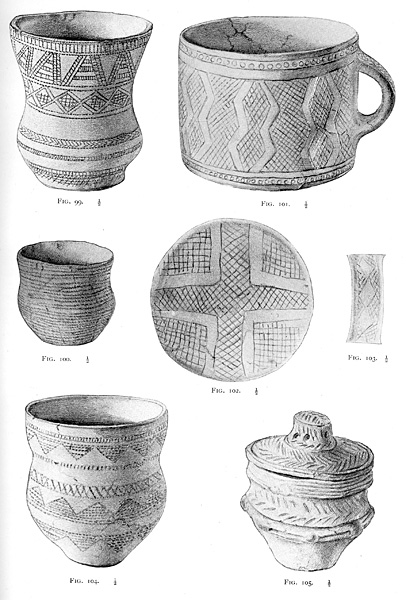
The results of the barrow explorations were published in 1905 as Forty years' researches in British and Saxon burial mounds of East Yorkshire. This monumental book, profusely illustrated by John's artist daughter Agnes (Figure 6), remains an indispensible textual archive and catalogue to the archaeology of East Yorkshire, and an essential starting point for all archaeologists interested in the region.
A sample page of Agnes Mortimer's engaging illustrations that accompany her father's great work (Reference MortimerMortimer 1905: pl. XIII).

Conclusion
Mortimer was no dilettante collector of antiquities. Entirely self-taught, he was, when compared with many of his contemporaries, a thorough and competent excavator, who, almost single-handedly, brought together a vast body of primary data. His archaeology was based on the methodical recording and interpretation of facts, representing a shift from a priori deduction to inductive analysis. For him, as for other practitioners, artefacts assumed a new and significant role as documents of the past. The central thread running through Mortimer's archaeological work was the reconstruction of a prehistoric past for Britain. In doing this, he, along with other leading prehistorians, helped to move archaeology into the mainstream of intellectual life. As a constructive and creative figure in archaeology's formative phase, he is of immense importance, and can take his rightful place as one of the founding fathers of modern British archaeology. His life is of particular significance: John Robert Mortimer was an early example of an individual of limited means inspired solely by encounters with sites and objects, rather than the intellectual pretensions of the better known nineteenth-century practitioners.
Note
The author is engaged in writing what will be the first full-length biography of John Mortimer and may be contacted at stephen2564@btinternet.com.