


In the field of patients with eating disorders, there have been numerous randomised controlled trials (RCTs) evaluating the effectiveness of psychological treatments for bulimia nervosa. These studies provide strong evidence for the efficacy of cognitive-behavioural therapy (CBT) (for example, Reference Fairburn, Norman and WelchFairburn et al, 1995; for a review see Reference Fairburn, Clark and FairburnFairburn, 1997) and to a lesser degree inter-personal therapy (Reference Fairburn, Norman and WelchFairburn et al, 1995). Behaviour therapy (Reference Schmidt and MarksSchmidt & Marks, 1989) and family therapy for bulimia nervosa (Reference Russell, Szmukler and DareRussell et al, 1987) have also been evaluated. By contrast, there are very few RCTs of psychological treatment for anorexia nervosa.
Psychotherapies in anorexia
Of the few RCTs for anorexia nervosa most have focused on adolescent patients, and suggest that family therapy is an effective treatment for the condition in that age group (Reference Russell, Szmukler and DareRussell et al, 1987; Reference Robin, Siegel and MoyeRobin et al, 1995; Eisler et al, Reference Eisler, Dare and Russell1997,Reference Eisler, Dare and Hodes2000). The benefits of family therapy with adult patients have been less clear. Russell et al (Reference Russell, Szmukler and Dare1987) showed some advantages for older patients with a non-specific individual supportive therapy which had been used as a control treatment in that study.
Attempts to demonstrate effectiveness of CBT in anorexia nervosa (for example, Reference Channon, De Silva and HemsleyChannon et al, 1989) have as yet yielded only equivocal results.
In an important study, Crisp et al (Reference Crisp, Norton and Gowers1991) compared: (a) 4 months' in-patient treatment; (b) out-patient individual and family therapy; (c) out-patient group therapy; and (d) a control — a one-off assessment. The authors recognised methodological problems (Reference Gowers, Norton, Yeldham, Hardoff and ChigierGowers et al, 1988): a tendency to avoid the in-patient treatment and to seek alternative treatment by the control group. The clearest finding was the benefit derived by any of the three active treatments as opposed to the one-off evaluation session.
Psychoanalytic psychotherapy has long been used as a treatment for eating disorders in centres where it was the main source of theory and practice in psychotherapy (cf. Reference SoursSours, 1980; Reference JohnsonJohnson, 1991). Hamburg (Reference Hamburg and Werne1996) has suggested that there is clinical support for the use of long-term psychoanalytic psychotherapy for some patients with anorexia. The only published RCT of psychodynamic treatments, however, is a pilot study in which a brief, structured psychodynamic psychotherapy (cognitive-analytic therapy — CAT) was compared with an educational, behavioural therapy, and although there were benefits from both treatments there were no differences in end-of-treatment outcome (Reference Treasure, Todd and BrollyTreasure et al, 1995).
This paper presents the results of a controlled trial evaluating two individual psychodynamic treatments and family therapy in comparison with a control ‘routine’ treatment.
METHOD
The study was in the form of a RCT of three specialised therapies — family therapy, focal psychodynamic psychotherapy and CAT — which were compared with a ‘routine’ control treatment. A stratified randomisation procedure — the minimisation method (Reference PocockPocock, 1983) — was used to control for the age of onset and the duration of the illness, the presence of bulimic symptoms and marital status.
The initial assessment was blind to the treatment to which the patients would be allocated. At the follow-up assessments, the patients' experiences of therapy were explored at the end of the interview, and therefore the follow-up research clinician was not blind to the treatment. All research assessments were conducted by either C.D., I.E. or L.D., none of whom was involved in the subsequent treatments. At assessment one research clinician saw patients on their own, while another saw them with their family (either a partner or parents and occasionally siblings). The patients were invited to come for the assessment and to bring those whom they considered as their family. The patients were aware of the nature of the study and gave informed consent to receive treatment as part of a research trial.
Patients
Sequential referrals to the out-patient eating-disorder service in a psychiatric teaching hospital (the Maudsley) were included provided they met the trial entry criteria, which were as follows:
-
(a) inclusion criteria: the patients had to satisfy diagnostic criteria of DSM—IV (American Psychiatric Association, 1994) for anorexia nervosa (restricting or binge—purging types) and had to be 18 years of age or older at the time of entry to the trial;
-
(b) exclusion criteria: patients were excluded if their mental or physical state at assessment was considered so dangerous as to require urgent admission to hospital, e.g., a serious suicidal risk, extremely low weight (usually a body mass index (BMI) <12 kg/m2), hypoglycaemia, syncope or severe electrolyte depletion (potassium less than 2.5 mMol/l; sodium less than 130 mMol/l).
Assessment
The patients were interviewed using the standardised psychiatric interview devised by Morgan & Russell (Reference Morgan and Russell1975), which enabled comparability with preceding studies (Reference Russell, Szmukler and DareRussell et al, 1987; Reference Crisp, Norton and GowersCrisp et al, 1991), and the whole procedure was video-recorded. The Morgan—Russell interview probes five areas of the patient's state, all rated on a scale from 0 (worst possible) to 12 (best possible). The five areas are: (a) MR—A: ‘Nutritional’ status, aggregating scores on dietary restriction, worries about food and shape and current body weight; (b) MR—B: ‘Menstrual’ scale; (c) MR—C: ‘Mental State’ scale; (d) MR—D: an aggregated ‘Psychosexual’ scale, including current activities, sexual partnership status, interest in sexuality, ambitions in sexuality, wish, eventually, to have a child; (e) MR—E: ‘Socio-economic’ scale, the mean of five sub-scores on relationship with family, emancipation from family, capacity to confide, capacity for group leisure, capacity to work/study full time. The mean of the five-scale scores constituted the Morgan—Russell Average Score (MR—Ave). The patients were weighed and their height measured, and their BMI calculated. Further necessary physical examination or investigation was undertaken.
Patients were given more detailed accounts of the four possible treatments; their questions about the implication of the study were explored and their signed consent was obtained.
After the individual assessment, the patients were seen with their family or partner. At this interview, the research clinician confirmed that the patient had agreed to the randomisation, and opened a sealed envelope in which the patient's randomly allocated treatment was contained. The patient and partner or family were informed of this.
Treatments
Focal psychoanalytic psychotherapy
This treatment has been described in detail elsewhere (Reference Dare and GabbardDare, 1995; Reference Dare, Crowther, Szmukler, Dare and TreasureDare & Crowther, 1995) as a standardised form of time-limited psychoanalytic psychotherapy. The time limitation and standardisation distinguish the treatment from much current psychoanalytic psychotherapy practice, which is one reason why little empirical investigation of the treatment has been undertaken. The therapist takes a non-directive stance, gives no advice about the eating behaviour or other problems of symptom management, but addresses: (a) the conscious and unconscious meanings of the symptom in terms of the patient's history and of their experience with their family; (b) the effects of the symptom and its influence upon the patient's current relationship; and (c) the manifestation of those influences in the patient's relationship with the therapist in the present and as it controls the patient's desire to get benefit from therapy (a focus on the transference).
The therapy derives from the focused, short-term psychoanalytic psychotherapy of Malan (Reference Malan1976). Three therapists conducted all the treatments. They were a psychologist, a doctor and a social worker by primary clinical training, had had family therapy training and were experienced in psychodynamic psychotherapy. They had all had personal psychotherapy and experience of supervised psychoanalytic psychotherapy. They were supervised for an hour and a half a fortnight by a training analyst with long experience in the psychotherapy of patients with eating disorders. The therapy sessions lasted 50 minutes and occurred weekly for 1 year (number of sessions: mean=24.9; s.d.=13.0).
Family therapy
This has been extensively described in the form for which it was evolved in the treatment of anorexia nervosa in adolescence (for example, Reference Dare, Eisler, Szmukler, Dare and TreasureDare & Eisler, 1995). Family therapy with adult patients with eating disorder (as well as with adolescents) was used in previous studies (for instance, Reference Russell, Szmukler and DareRussell et al, 1987; Reference Eisler, Dare and RussellEisler et al, 1997). Family therapy addresses the eating disorder as a problem of family life affecting all family members. With adolescents, the parents can often be helped to take a very active role to oppose the anorectic eating habits but this is not usually the case with adult patients. The focus with this age group is, rather, the elimination of the eating disorder, as far as is possible, from its controlling role in determining the relationship between the patient and the other family members (see also Reference Dare and HolmesDare, 1991).
The sessions were 1 hour to 1 hour 15 minutes in duration, and were scheduled by negotiation between once a week and once every 3 weeks. In its modification for this study the therapist saw the patient with partner or spouse or parents for the majority of sessions but a ‘dose’ of individual contact at a maximum of one in three attendances was allowed by the protocol. Even on the occasions when the patient was seen alone, the focus on family relationships remained. The three therapists who undertook the psychoanalytic therapy also delivered the family therapy. Supervision of the family therapy was in the form of a bi-weekly 90 minute group directed by an experienced family therapist/psychiatrist (number of sessions: mean=13.6; s.d.=8.6).
Cognitive—analytic therapy (CAT)
This is a treatment that combines elements of cognitive therapy and brief, focused, psychodynamic psychotherapy (Reference RyleRyle, 1990; Reference Treasure, Todd and BrollyTreasure et al, 1995). The patients are helped to evolve a formal, mapped-out structure of the place of the anorexia in their experience of themselves and their early and current relationships. This is written down in the form of a diagram, which can be modified over the course of the treatment. It is designed to help the patients gain a multi-faceted understanding of themselves and hence manage their feelings and relationships and eliminate the need for the anorexia nervosa to function as it has done.
During the CAT, some contact between parents and/or the partner of the patient regularly took place, and their relationship to the therapy and patient was a topic of therapy. The transference relationship was brought into the CAT diagram and explored in sessions. The therapy sessions lasted 50 minutes, occurred weekly for the first 20 weeks and were then monthly for 3 months. The therapists were a group of four members of the Eating Disorder team, supervised by a psychiatrist/psychotherapist experienced in the CAT method (number of sessions: mean=12.9, s.d.=70).
‘Routine’ treatment
The ‘routine’ treatment was not the same as the supportive psychotherapy in previously reported studies (Reference Russell, Szmukler and DareRussell et al, 1987; Reference Eisler, Dare and RussellEisler et al, 1997). It was designed to be a low-contact, out-patient management, the usual practice of an eating disorder service in which specific psychotherapies are not used. The patients attended 30-minute sessions with a trainee psychiatrist, in the second or third year of general training, undertaken as the sub-speciality placement. Specific information about the nature and consequences of anorexia nervosa was given, supportive encouragement towards a more regular, sustainable and healthy diet was offered, and regular monitoring of weight and physical status was undertaken. Crucially, the psychiatrists seeing the patients in this control treatment were supervised weekly by a senior clinician in the field (G.R.) (number of sessions: mean=10.9, s.d.=0.5). A serious disadvantage of the 1-year ‘routine’ treatment was the relative inexperience of the psychiatric trainees, and the interruption when trainees/therapists left the unit after 6 months to continue their training rotation.
Follow-up
During the research assessment before randomisation to therapy the patients were told of the importance of follow-up and the need to undertake a further research assessment 1 year later. Despite this, the 1-year assessment was incomplete, as 61 (73%) came for follow-up interview and 22 patients failed to attend (and one patient died). For those failing to attend, some follow-up information was obtained by a combination of telephone interviews with the patient, the general practitioner and a parent, with the patient's permission. By these means, outcome data with regard to weight, persisting symptoms, and social and occupational activity were obtained on a further 9 patients (11%). For the intention-to-treat analyses the weight recorded by therapist at the time of the last session was used. For all other variables, baseline data were used where no follow-up information was available.
Statistical procedures
The data analysis used STATISTICA for Windows (1999, Statsoft Inc.). Outcome data are presented for the complete sample on an intention-to-treat basis (n=84) and a sub-sample (n=65) consisting of those who engaged in treatment (that is, excluding those who dropped out of treatment within the first 2 months) and completed the follow-up assessment. Categorical data were analysed using the Fisher exact probability test. Outcome on continuous data was analysed using an analysis of covariance controlling for initial scores. Before and after comparisons for the whole group of patients are also reported, using t-tests for dependent samples.
RESULTS
Initial status
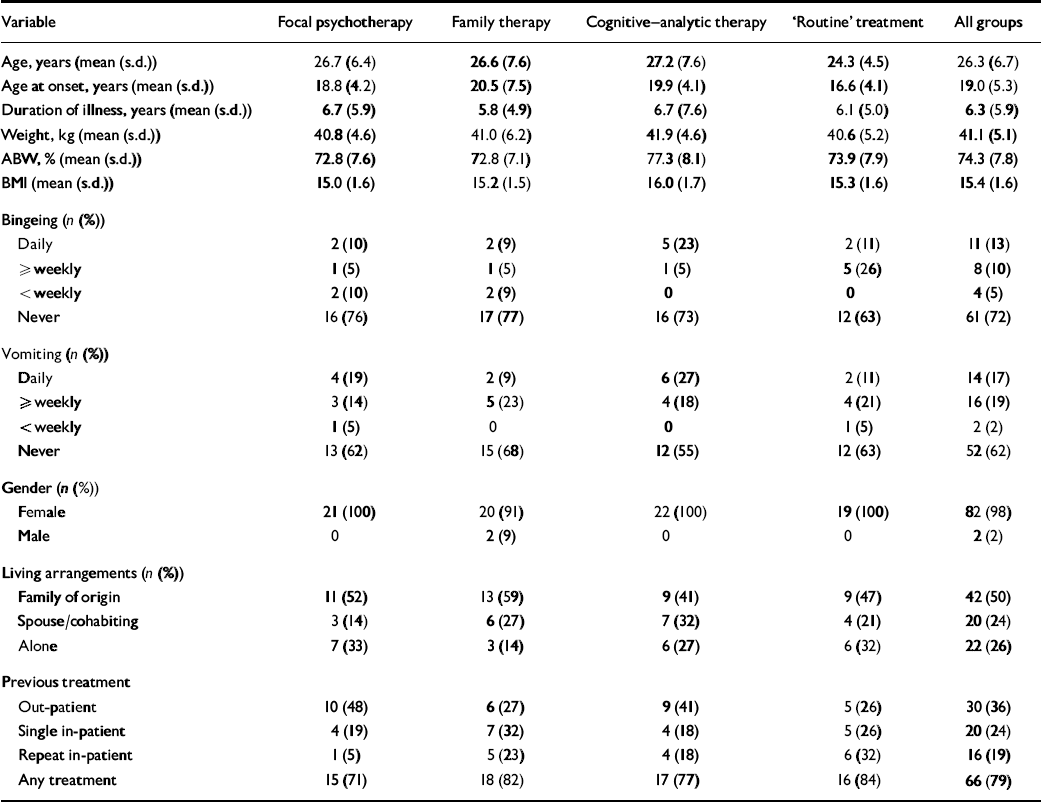
Table 1 gives the basic data for the patient group at the time of admission to the study. The patients were on average 26.3 years old and had been ill for a mean of 6.3 years. Most were severely underweight: mean BMI=15.4; s.d.=1.6; mean average body weight (ABW) for height=74.3%. Two patients of the 84 were male. Table 1 shows that bingeing and purging behaviours were quite frequent in the whole group of patients, 19 bingeing weekly or daily and 30 vomiting weekly or daily. Sixty-three were single, 15 married and 6 divorced. Forty-two lived with their parents or another family member, 20 with a marital or common law partner and 22 lived alone. Sixty-six patients (79%) had had previous treatment for their eating disorder. Nearly half the sample (43%) had been treated as in-patients, sometimes requiring repeated admissions (19%). There were no statistically significant differences on any of the above variables between the four treatment groups.
Table 1 Data of patients when first seen
| Variable | Focal psychotherapy | Family therapy | Cognitive-analytic therapy | ‘Routine’ treatment | All groups |
|---|---|---|---|---|---|
| Age, years (mean (s.d.)) | 26.7 (6.4) | 26.6 (7.6) | 27.2 (7.6) | 24.3 (4.5) | 26.3 (6.7) |
| Age at onset, years (mean (s.d.)) | 18.8 (4.2) | 20.5 (7.5) | 19.9 (4.1) | 16.6 (4.1) | 19.0 (5.3) |
| Duration of illness, years (mean (s.d.)) | 6.7 (5.9) | 5.8 (4.9) | 6.7 (7.6) | 6.1 (5.0) | 6.3 (5.9) |
| Weight, kg (mean (s.d.)) | 40.8 (4.6) | 41.0 (6.2) | 41.9 (4.6) | 40.6 (5.2) | 41.1 (5.1) |
| ABW, % (mean (s.d.)) | 72.8 (7.6) | 72.8 (7.1) | 77.3 (8.1) | 73.9 (7.9) | 74.3 (7.8) |
| BMI (mean (s.d.)) | 15.0 (1.6) | 15.2 (1.5) | 16.0 (1.7) | 15.3 (1.6) | 15.4 (1.6) |
| Bingeing (n (%)) | |||||
| Daily | 2 (10) | 2 (9) | 5 (23) | 2 (11) | 11 (13) |
| ≥ weekly | 1 (5) | 1 (5) | 1 (5) | 5 (26) | 8 (10) |
| < weekly | 2 (10) | 2 (9) | 0 | 0 | 4 (5) |
| Never | 16 (76) | 17 (77) | 16 (73) | 12 (63) | 61 (72) |
| Vomiting (n (%)) | |||||
| Daily | 4 (19) | 2 (9) | 6 (27) | 2 (11) | 14 (17) |
| ≥ weekly | 3 (14) | 5 (23) | 4 (18) | 4 (21) | 16 (19) |
| < weekly | 1 (5) | 0 | 0 | 1 (5) | 2 (2) |
| Never | 13 (62) | 15 (68) | 12 (55) | 12 (63) | 52 (62) |
| Gender (n (%)) | |||||
| Female | 21 (100) | 20 (91) | 22 (100) | 19 (100) | 82 (98) |
| Male | 0 | 2 (9) | 0 | 0 | 2 (2) |
| Living arrangements (n (%)) | |||||
| Family of origin | 11 (52) | 13 (59) | 9 (41) | 9 (47) | 42 (50) |
| Spouse/cohabiting | 3 (14) | 6 (27) | 7 (32) | 4 (21) | 20 (24) |
| Alone | 7 (33) | 3 (14) | 6 (27) | 6 (32) | 22 (26) |
| Previous treatment | |||||
| Out-patient | 10 (48) | 6 (27) | 9 (41) | 5 (26) | 30 (36) |
| Single in-patient | 4 (19) | 7 (32) | 4 (18) | 5 (26) | 20 (24) |
| Repeat in-patient | 1 (5) | 5 (23) | 4 (18) | 6 (32) | 16 (19) |
| Any treatment | 15 (71) | 18 (82) | 17 (77) | 16 (84) | 66 (79) |
Engagement in treatment
Of the 84 patients recruited to the study, 4 failed to attend their first treatment session with the assigned therapist. Fifty-four patients completed the full year of treatment (focal 12; family therapy 16; CAT 13; ‘routine’ 13). Six people dropped out within the first 2 months of treatment (focal 2; family therapy 2; CAT 0; ‘routine’ 2) and a further 19 dropped out during the later stages of treatment (focal 5; family therapy 3; CAT 9; ‘routine’ 2). None of the differences between treatments in the rates of engagement was statistically significant.
A small number of patients (12 in total) required admission to hospital during the course of out-patient treatment (2 focal; 3 family therapy; 2 CAT; 5 ‘routine’), and one patient in the ‘routine’ treatment group died during the course of the study. Overall, the three specialist treatments were more likely to maintain patients in outpatient treatment than the ‘routine’ treatment (P=0.04, Fisher exact probability test).
Treatment outcome
Changes in the entire group at the end of 1 year
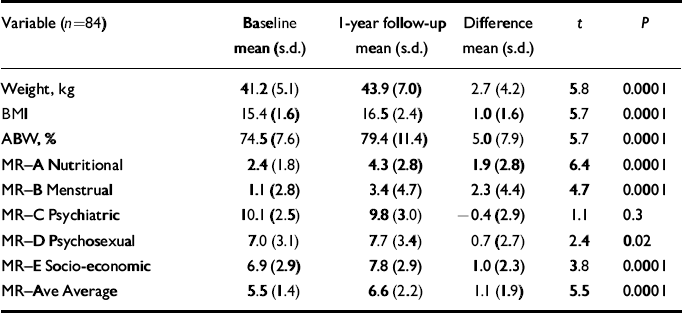
Table 2 gives the baseline and 1-year follow-up data for all patients (the data for weight gain exclude 1 patient, receiving CAT, who became overweight with a BMI=25.2). This exclusion, favouring as it did the control treatments, was considered properly conservative. The mean weight gains were relatively small and left the patients with a degree of undernutrition (mean BMI=16.5, s.d.=2.4). It is apparent that there are improvements on all measures, other than for the psychiatric assessment of overall mental state (MR-C). On this scale, the patients were rated, on average, as only midly disturbed. The least change in the other ratings was in the psychosexual adjustment scale (MR-D).
Table 2 Changes in clinical measures during the course of treatment (all patients)
| Variable (n=84) | Baseline mean (s.d.) | 1-year follow-up mean (s.d.) | Difference mean (s.d.) | t | P |
|---|---|---|---|---|---|
| Weight, kg | 41.2 (5.1) | 43.9 (7.0) | 2.7 (4.2) | 5.8 | 0.0001 |
| BMI | 15.4 (1.6) | 16.5 (2.4) | 1.0 (1.6) | 5.7 | 0.0001 |
| ABW, % | 74.5 (7.6) | 79.4 (11.4) | 5.0 (7.9) | 5.7 | 0.0001 |
| MR-A Nutritional | 2.4 (1.8) | 4.3 (2.8) | 1.9 (2.8) | 6.4 | 0.0001 |
| MR-B Menstrual | 1.1 (2.8) | 3.4 (4.7) | 2.3 (4.4) | 4.7 | 0.0001 |
| MR-C Psychiatric | 10.1 (2.5) | 9.8 (3.0) | -0.4 (2.9) | 1.1 | 0.3 |
| MR-D Psychosexual | 7.0 (3.1) | 7.7 (3.4) | 0.7 (2.7) | 2.4 | 0.02 |
| MR-E Socio-economic | 6.9 (2.9) | 7.8 (2.9) | 1.0 (2.3) | 3.8 | 0.0001 |
| MR-Ave Average | 5.5 (1.4) | 6.6 (2.2) | 1.1 (1.9) | 5.5 | 0.0001 |
Evaluation of each specific psychotherapy
There were no statistically significant differences between treatments on any of the Morgan—Russell clinical ratings. There were, however, differences in weight gain favouring the specialised treatments in comparison with the ‘routine’ treatment.
In the ‘routine’ treatment group nearly half the patients gained no weight at all, and only one-fifth of the group gained more than 10% weight. In the specialised treatment groups, between two-thirds and four-fifths of the patients gained weight and between 23% and 38% gained at least 10% weight. The difference in weight at 1 year (using initial weight as covariate) between the specialist psychotherapies and ‘routine’ treatment was statistically significant (F=5.1; P=0.03). There were also significant contrasts between focal psychotherapy and ‘routine’ treatment (F=5.4; P=0.02) and family therapy and ‘routine’ treatment (F=3.9; P=0.05). The difference between CAT and ‘routine’ treatment did not reach statistical significance.
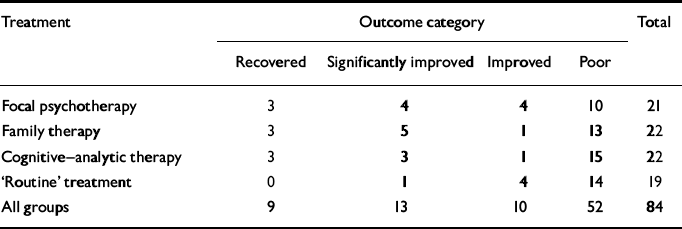
Table 3 gives the allocation according to the predetermined outcome categories:
Table 3 Outcome data at 1 year: data for all patients (categorised on an intention-to-treat basis)
| Treatment | Outcome category | Total | |||
|---|---|---|---|---|---|
| Recovered | Significantly improved | Improved | Poor | ||
| Focal psychotherapy | 3 | 4 | 4 | 10 | 21 |
| Family therapy | 3 | 5 | 1 | 13 | 22 |
| Cognitive—analytic therapy | 3 | 3 | 1 | 15 | 22 |
| ‘Routine’ treatment | 0 | 1 | 4 | 14 | 19 |
| All groups | 9 | 13 | 10 | 52 | 84 |
-
(a) Recovered: wt>85% ABW; menstruation returned; no bulimic symptoms.
-
(b) Significantly improved: wt>85% ABW; no menstruation and/or occasional bulimic symptoms (<weekly).
-
(c) Improved: wt>75% ABW and 10% wt gain and/or regular bulimic symptoms (≥weekly).
-
(d) Poor: wt<75% ABW; or wt gain <10% or frequent bulimic symptoms (daily).
(Categories (a) and (b) include all patients who no longer meet DSM-IV diagnostic criteria.)
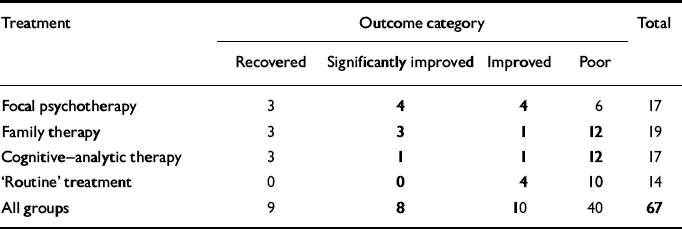
About a third of the patients in the three specialist psychotherapies no longer met diagnostic DSM criteria for anorexia nervosa (that is, their weight was >85% ABW) at the end of the 1-year treatment period, whereas only 5% of those in the ‘routine’ treatment group escaped from this diagnostic criterion (P=0.01). The differences were clearest for family therapy (P=0.02) and focal psychoanalytic psychotherapy (P=0.03). The difference between CAT and the routine treatment did not reach the criterion for statistical significance (P=0.07). The above analysis (done on an intention-to-treat basis) assumes that patients who did not engage in treatment and/or refused to take part in the follow-up assessment made no improvements during the year. As this is a very stringent assumption we repeated the analysis for the sub-sample of those who engaged in treatment for at least 3 months and on whom complete follow-up data were available (Table 4). The results are almost identical, reinforcing the finding about the greater effectiveness of the specialised treatments.
Table 4 Outcome data at 1 year: data for ‘engaged’ patients only (excluding treatment refusers, ‘early dropouts’ and those with incomplete follow-up data)
| Treatment | Outcome category | Total | |||
|---|---|---|---|---|---|
| Recovered | Significantly improved | Improved | Poor | ||
| Focal psychotherapy | 3 | 4 | 4 | 6 | 17 |
| Family therapy | 3 | 3 | 1 | 12 | 19 |
| Cognitive—analytic therapy | 3 | 1 | 1 | 12 | 17 |
| ‘Routine’ treatment | 0 | 0 | 4 | 10 | 14 |
| All groups | 9 | 8 | 10 | 40 | 67 |
DISCUSSION
Efficacy of psychotherapy
Three specialised psychotherapies are compared with a ‘routine’ treatment. Despite the limitations of the study (which we discuss below), clear findings emerge. This was a group of patients with a relatively poor prognosis (late age of onset, long duration of illness, history of unsuccessful treatment) but the majority engaged well in out-patient treatment. However, overall, more than two-thirds remained abnormally underweight at the end of treatment. Focal psychotherapy and family therapy were more effective in producing weight gain than the control treatment. It was not possible to differentiate clearly between the three specialised psychotherapies.
Specific population of patients
The relatively poor outcome of the majority of patients is not entirely surprising, given the nature of the patients. There are very few studies that can serve as a comparison in evaluating the results. Of the treatment evaluation studies in anorexia nervosa in adults, two (Reference Crisp, Norton and GowersCrisp et al, 1991) report only combined results for adult and adolescent patients, which makes direct comparisons with the current study problematic. Treasure et al (Reference Treasure, Todd and Brolly1995) studied 30 patients who received 20 sessions of either educational behaviour therapy or CAT. The subjects were similar to those in the current study in age and clinical features (degree of emaciation and frequency of bulimic symptoms) but had a slightly shorter duration of illness (4.7 years compared with 6.3 years) and had less previous treatment. The 1-year outcome results were better, in that two-thirds could be classified as having a good or intermediate outcome.
The only other comparison is with two of the subgroups from the Russell et al (Reference Russell, Szmukler and Dare1987) study (the early onset with long duration group and the late onset group). These were 36 patients who were part of a study in which in-patient treatment was followed by 1 year of family therapy or individual supportive therapy. They were similar in age but had a shorter average duration of illness (4.6 years). They were also significantly thinner when entering the study (65% ABW as opposed to 74% ABW), although at the time of entering out-patient treatment (namely on discharge from hospital) they were at near normal weight (89% ABW). At the end of the 1-year out-patient treatment their outcome was remarkably similar to that of the patients in the current study, both in terms of their weight and outcome categorisation.
Limitations of the study
Several aspects of this study were unsatis-factory. In the initial design of the study it had been anticipated that a minimum of 120 patients would be recruited to the project. Slow recruitment and funding problems resulted in only 84 patients taking part, and this problem was compounded by an incomplete follow-up, particularly in the control group. Changes in the referral pattern to the Eating Disorder Service, as it took on a regional and national role, meant that there were larger than expected numbers of subjects in the study with a poor prognosis, who gained only limited benefit from the treatments. While the differences between the specialised treatments and the ‘routine’ treatment was clear, the above factors reduced the power of the study to identify differences between the three psychotherapies. For this reason the conclusions have to be tentative.
Clinical implications
Patients with a relatively intractable anorexia nervosa may derive significant benefit from out-patient psychological treatments, and it is often possible to achieve this without resorting to hospital admission. It cannot be adduced that out-patient psychotherapy is the treatment of choice, for some patients in this group will require admission to hospital for life-saving reasons or because of lack of progress in out-patient treatment. It is possible that the addition of in-patient treatment could lead to a better treatment outcome, especially in terms of nutritional improvement. There is a clear need for considerably more research into treatments for anorexia nervosa. It is important that future research include more patients with a better prognosis so as to facilitate the identification of specific benefits of the treatments.
Clinical Implications and Limitations
CLINICAL IMPLICATIONS
-
▪ Adult patients with eating disorders treated on an out-patient basis can make useful treatment gains.
-
▪ Patients receiving specialised psychotherapy are more likely to remain in out-patient treatment than if they are offered routine out-patient treatment.
-
▪ Specialised psychotherapies are more effective than routine treatment.
LIMITATIONS
-
▪ The study had insufficient power to allow firm conclusions to be drawn about specific effects that might differentiate between the three specialised psychotherapies.
-
▪ A high proportion of the patients in the study had a long duration of illness and repeated attempts at treatment, and the results, therefore, may not be readily generalisable to those with a better prognosis.
-
▪ Long-term follow-up is needed to confirm the I-year outcome findings.
ACKNOWLEDGEMENTS
The authors gratefully acknowledge the financial support of grants from the Leverhulme Foundation and the Mental Health Research Fund, without which the studies reported here could not have occurred. Catherine Crowther supervised the psychodynamic psychotherapy. Dr Eia Asen supervised the family therapy and Dr Chess Denman and Claire Tanner supervised the cognitive—analytic therapy.




eLetters
No eLetters have been published for this article.