




Introduction
People with advanced cancer have increased life expectancy due to improvements in screening and treatment (Hashim et al. Reference Hashim, Boffetta and La Vecchia2016). Though advanced cancer is defined as being beyond curative treatment, some types of cancer can be kept under control and be regarded as chronic conditions (National Cancer Institute 2024a; 2024b). Living with advanced cancer generally impacts the quality of life, with physical function and fatigue being commonly affected aspects (Johnsen et al. Reference Johnsen, Petersen and Pedersen2009; Morgan et al. Reference Morgan, Currow and Denehy2017). As the disease progresses, people with advanced cancer experience challenges in managing and engaging in everyday activities (la Cour et al. Reference la Cour, Nordell and Josephsson2009; Morgan et al. Reference Morgan, Currow and Denehy2017; Wæhrens et al. Reference Wæhrens, Brandt and Peoples2020). Despite these challenges, they wish and need to continue to be engaged in meaningful everyday activities (Brose et al. Reference Brose, Willis and Morgan2023; von Post and Wagman Reference von Post and Wagman2019). This aspect may be captured in the concept of “occupational balance,” defined as the subjective experience of having the right amount and variation of everyday activities (Wagman et al. Reference Wagman, Håkansson and Björklund2012). People with advanced cancer, therefore, have needs that relate both to sustaining functioning as long as possible and getting relief from pain, concerns, and grief. Collectively, these complex needs call for interventions that integrate the principles of rehabilitation into palliative care, as recently highlighted by the World Health Organization (Maribo et al. Reference Maribo, Ibsen and Thuesen2022; World Health Organisation 2020; World Health Organisation. Regional Office for Europe 2023). Few intervention studies exist within the field, and while some have reported positive results, further research is needed to inform rehabilitation and palliative care services for people with advanced cancer (Bayly et al. Reference Bayly, Ahmedzai and Blandini2023; Gärtner et al. Reference Gärtner, Shabnam and Aagesen2023; Nottelmann et al. Reference Nottelmann, Jensen and Vejlgaard2019; Pilegaard et al. Reference Pilegaard, la Cour and Gregersen Oestergaard2018; World Health Organisation. Regional Office for Europe 2023).
Recent studies emphasize that people with advanced cancer want to prioritize positive experiences of enjoyment and meaningfulness in the time they have left (Raunkiær Reference Raunkiær2024; von Post and Wagman Reference von Post and Wagman2019). In line with this, they prefer support from health professionals that focuses on resources instead of decline and problems (Johnsen et al. Reference Johnsen, Eskildsen and Thomsen2017; la Cour et al. Reference la Cour, Gregersen Oestergaard and Brandt2020; Raunkiær Reference Raunkiær2024). This resonates with a salutogenic perspective, which focuses on factors contributing to health (Joensen et al. Reference Joensen, Lindahl-Jacobsen and Lindahl2023). Hence, a resource-oriented approach should be applied when developing rehabilitation and palliative care interventions for people with advanced cancer.
The Balance, Activity and Quality of Life Intervention was therefore developed to support people with advanced cancer through a resource- and activity-oriented approach that integrates rehabilitation into palliative care to (1) improve health-related quality of life, including dimensions of physical function and fatigue, and (2) manage and engage in everyday activities to improve occupational balance (Pilegaard et al. Reference Pilegaard, Timm and Birkemose2022).
A future full-scale evaluation of the newly developed intervention requires selecting outcome measures that can capture the possible changes of the intervention (Skivington et al. Reference Skivington, Matthews and Simpson2021). Thus, it is necessary to feasibility test the preliminarily selected outcome measures, including assessing the completion rates. The feasibility study may also contribute with important knowledge to adjust the intervention content and develop the program theory of how the intervention works (O’Cathain et al. Reference O’Cathain, Hoddinott and Lewin2015; Skivington et al. Reference Skivington, Matthews and Simpson2021).
The present study aims to feasibility test if the selected outcome measures of health-related quality of life, including physical function and fatigue, and occupational balance can capture any possible changes of the Balance, Activity and Quality of Life Intervention in people with advanced cancer.
Methods
Trial design
The feasibility study was conducted as a repeated-measurement study without a control group. The feasibility study was designed to allow exploration of uncertainties in need of clarification as preparation for conducting future pilot and evaluation trials (O’Cathain et al. Reference O’Cathain, Hoddinott and Lewin2015). The study was conducted in agreement with the Helsinki Declaration (Williams Reference Williams2008). The Region of Southern Denmark Data Agency approved the study (R. no. 21/13073 and R. no. 18/27843), and the study was registered at ClinicalTrials.gov (NCT04772690). Due to the nature of the study, approval from a scientific-ethical committee was not required.
Setting
The intervention was delivered at the research clinic of REHPA, the Danish Knowledge Centre for Rehabilitation and Palliative Care in May–June 2021 and again in October–November 2021. REPHA is part of Odense University Hospital, Denmark, and offers intervention stays for people with a life-threatening illness (Rasmussen et al. Reference Rasmussen, Jespersen and Backmann2020).
Participants
Inclusion was based on the following criteria:
- Adult (≥18 years) living in their own home.
- Advanced or chronic cancer.
- The experience of a need for support to manage everyday activities and improve the balance between necessary activities and activities that enable enjoyment and meaningfulness.
- Ability to participate in the intervention, complete questionnaires and participate in interviews.
- Independence concerning personal care, dressing, and eating.
- Ability to speak and understand Danish.
The term “chronic” was included in the inclusion criteria and subsequent material, because the co-production process involving a panel of the target group showed that chronic cancer better represented the stage of their disease. This was also confirmed by an oncologist employed at REHPA.
Participants were recruited through: (1) specialized palliative teams at hospitals, (2) general practitioners, (3) patient associations, (4) cancer counselling services, and (5) REPHA’s website and social media. Potential participants must be assessed first by a general practitioner or oncologist at the hospitals. This health-care professional would then refer potential participants to a responsible clinical healthcare worker at REPHA, who, in collaboration with the research group, decided if the inclusion criteria were met. If in doubt, an oncologist in the department was consulted. Oral and written informed consent was obtained from all participants.
Sample size
No requirements exist as to the number of participants needed in feasibility studies (Billingham et al. Reference Billingham, Whitehead and Julious2013). It was deemed that 20–30 persons were sufficient to feasibility test the selected outcome measures.
Intervention
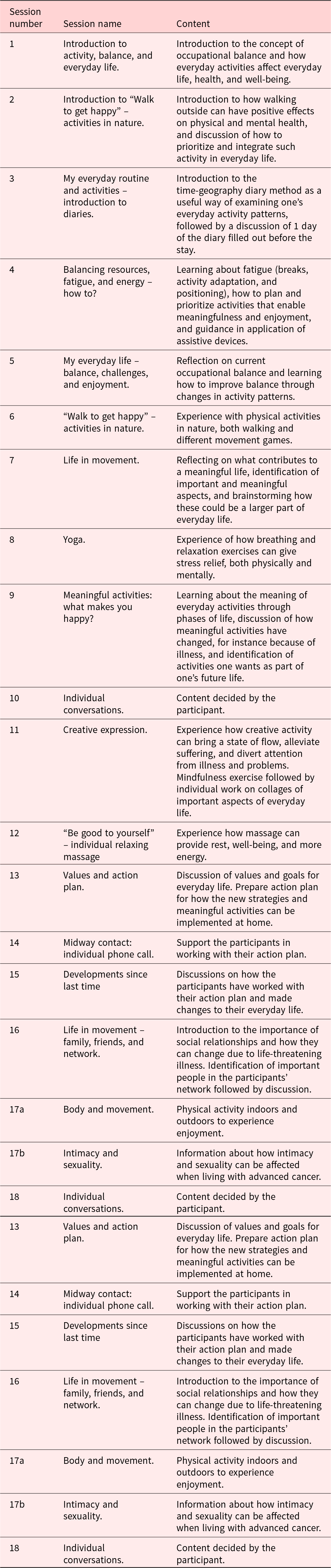
The Balance, Activity and Quality of Life Intervention aims to improve health-related quality of life, including physical function and fatigue, and occupational balance through a resource- and activity-oriented approach that supports positive experiences. According to the British Medical Research Council framework, the intervention was developed in a co-production process involving people with advanced cancer, professionals from REPHA and two professionals with expertise in community-based palliative rehabilitation and creative activities for people with advanced illnesses respectively. As part of the development, an intervention manual was produced together with professionals from REPHA (Pilegaard et al. Reference Pilegaard, Timm and Birkemose2022; Skivington et al. Reference Skivington, Matthews and Simpson2021). The intervention content was selected to maintain function and bring relief and diversion from suffering and distress. Thereby, the intervention integrated the principles of rehabilitation into palliative care to meet the needs of people with advanced cancer. The intervention consisted of 15 group-based sessions, ranging from 45 to 150 minutes, and 4 individual elements delivered by a multidisciplinary team consisting of an occupational therapist, a nurse, a social worker, and a physiotherapist, among others (Pilegaard et al. Reference Pilegaard, Timm and Birkemose2022). The intervention was delivered during a 5-day intervention stay and a 2-day follow-up intervention stay 6 weeks later. See Table 1 for the intervention content, and the protocol for more details (Pilegaard et al. Reference Pilegaard, Timm and Birkemose2022).
Intervention content

Data collection
Data were collected between April and December 2021. Sociodemographic data and outcome data concerning health-related quality of life, physical function, fatigue, and occupational balance were collected using questionnaires. The data were stored in REPHA’s research database. The questionnaires were sent out electronically at baseline (T1), end of the 5-day intervention stay (T2) and after 6 (T3) and 12 weeks (T4). Participants who were unable to answer the questionnaires electronically had the option of using a paper form. Two written reminders were sent 3 and 6 days after the deadline. If responses were still missing, participants were reminded by phone.
Outcome measures
The European Organisation for Research and Treatment of Cancer Quality of Life Questionnaire Core-30 (EORTC QLQ-C30)
The EORTC QLQ-C30 is a cancer-specific questionnaire consisting of 30 questions addressing function, symptoms, and health-related quality of life. Items 29 and 30 measure health-related quality of life using an ordinal scale ranging from 1 to 7. The ordinal data are transformed into a score ranging from 0 to 100, where higher scores equal higher health-related quality of life. Items 1–5 constitute a sub-scale measuring self-reported physical function. Answers are scored on an ordinal scale ranging from 1 to 4 (1 = not at all, 4 = very much). The ordinal data are transformed into a score ranging from 0 to 100, where higher scores equal higher level of functioning. Items 10, 12, and 18 comprise a sub-scale measuring self-reported fatigue. Answers are scored on an ordinal scale that ranges from 1 to 4 (1 = not at all, 4 = very much). The ordinal data are transformed into a score ranging from 0 to 100, where higher scores indicate symptoms that are experienced more intensely (Fayers et al. Reference Fayers, Aaronson and Bjordal2001). The EORTC QLQ-C30 is assessed to be valid, reliable, and associated with high response rates (Groenvold et al. Reference Groenvold, Klee and Sprangers1997).
The Occupational Balance Questionnaire
The Occupational Balance Questionnaire is a generic questionnaire that comprises a total of 11 items and provides an overall assessment of occupational balance based on the previous month. Each question is scored on an ordinal scale ranging from 1 to 4 (1 = completely disagree, 4 = completely agree). A sum score ranging from 11 to 44 is calculated. Higher scores indicate better occupational balance (Wagman and Håkansson Reference Wagman and Håkansson2014). The Occupational Balance Questionnaire has been found to be valid and reliable (Håkansson et al. Reference Håkansson, Wagman and Hagell2020).
Analyses
Baseline characteristics were described according to demography, educational level, job situation, and primary tumor site. Continuous, non-normally distributed data and ordinal data were described using medians and quartiles. Categorical and dichotomous data were described using numbers and percentages. Missing data were described through numbers and percentages. Changes in outcome scores were presented using box plots. Wilcoxon signed-rank test was used to test if changes in health-related quality of life, physical function, fatigue, and occupational balance from baseline to T2, T3, and T4 were statistically significant (p = 0.05). To determine how many participants reached a clinically relevant change of 5 points or more, a responder analysis was conducted for health-related quality of life, physical function, and fatigue (Fayers et al. Reference Fayers, Aaronson and Bjordal2001). Occupational balance was not included in the responder analysis as a cut-off value for clinically relevant change has not been established. Analyses were performed using STATA 17.
Results
Participants
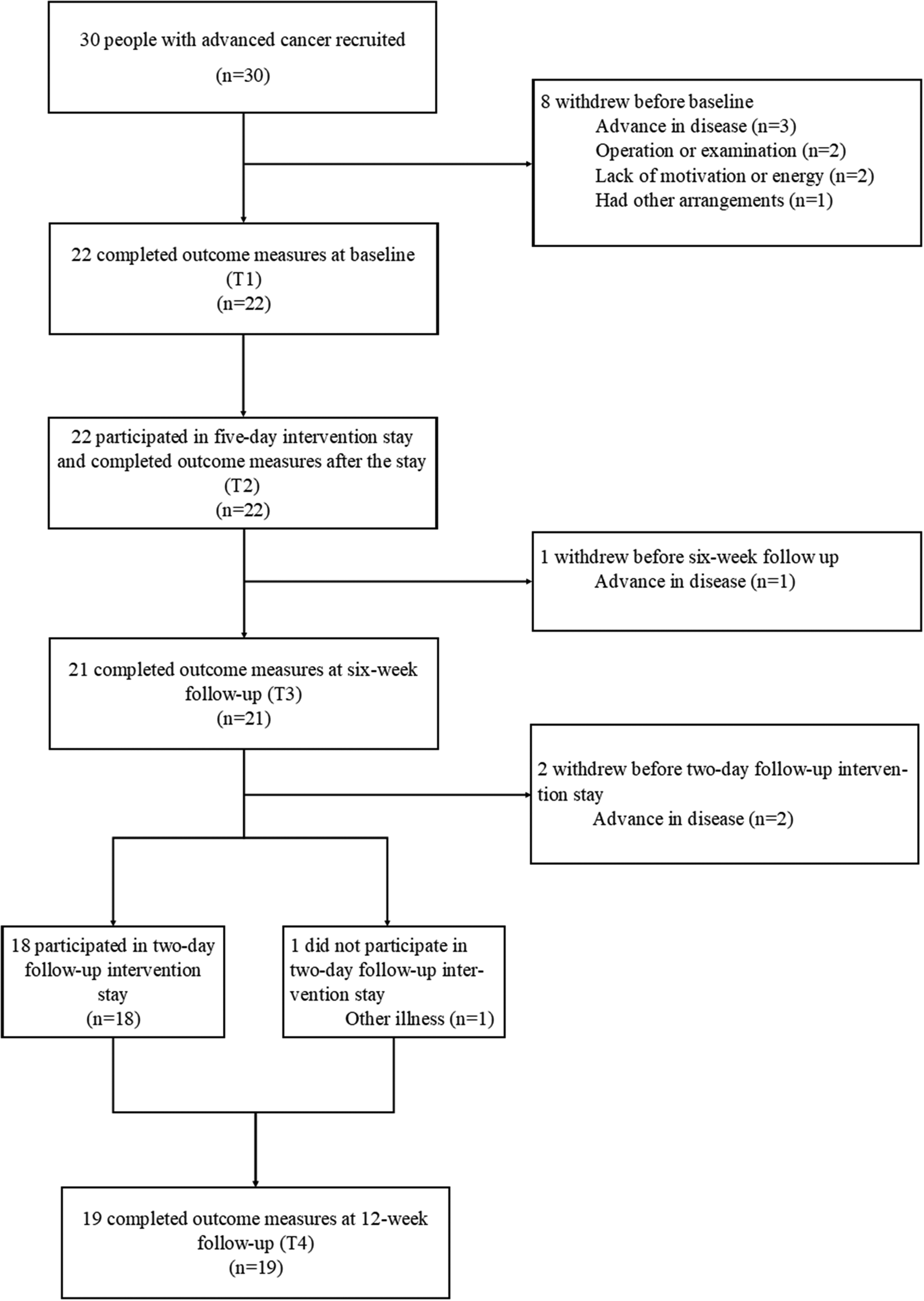
Of the 30 persons initially recruited, 8 withdrew before baseline resulting in total 22 included participants (Figure 1). As shown in Figure 1, 18 participants participated in the full intervention. Of the 4 participants who did not, 1 dropped out during the 6-week follow-up, 2 during the 12-week follow-up, and the 4th did not participate in the 2-day intervention stay, but only completed the outcome measures, resulting in a total of 19 participants completing all outcome measures. The 19th participant did not withdraw from the study, but other illness hindered participation in the 2-day intervention stay, and the participant was therefore regarded as having received a smaller dose of the intervention and included in the analysis.
Flowchart of study participation.

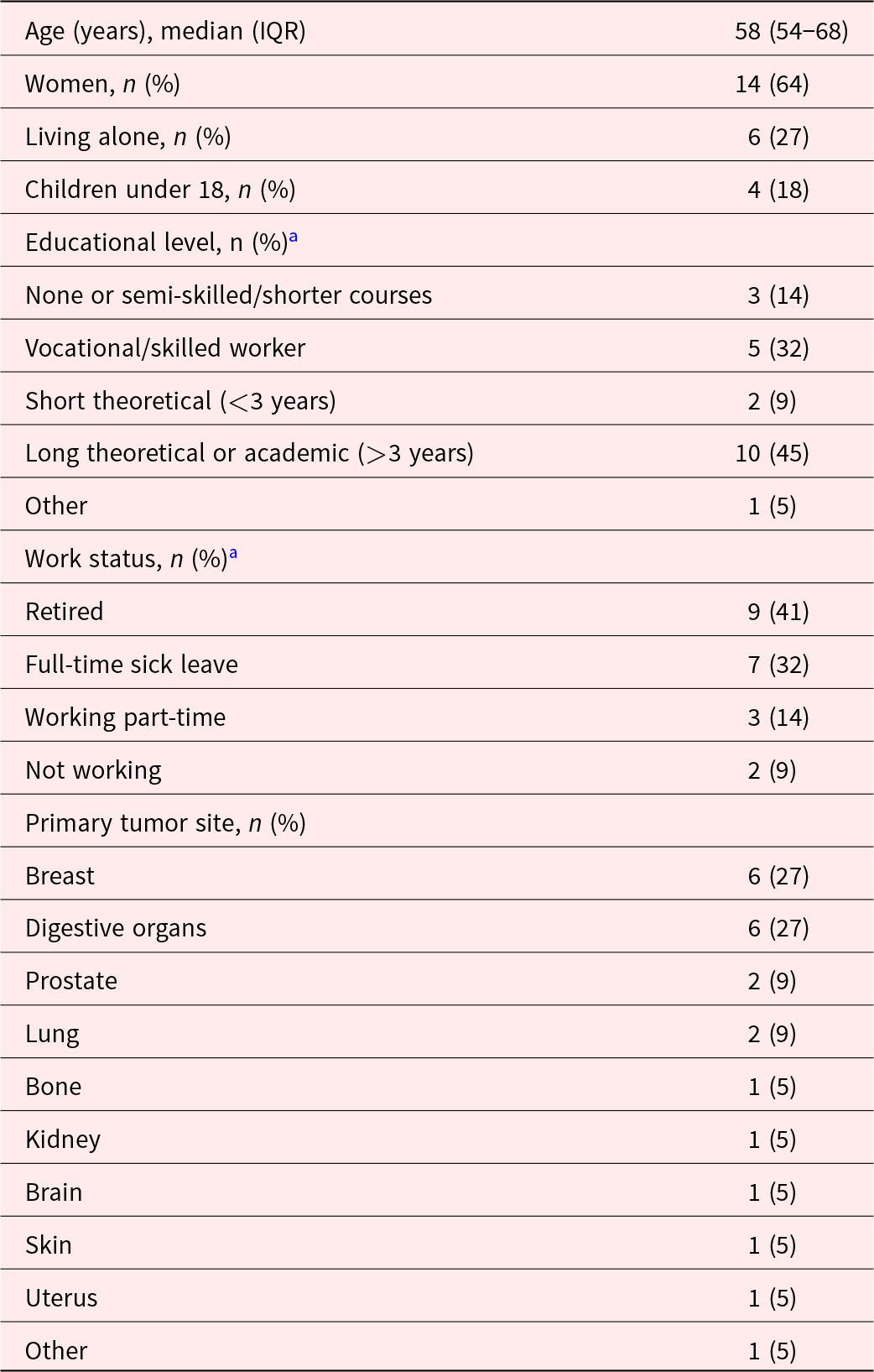
The participants’ baseline characteristics are presented in Table 2. The median age was 58 years, and participants were predominantly female who were living with someone. A few had children below 18 years of age, and they were generally well-educated with only 3 participants working. Cancer in breast and digestive organs were the most frequent cancer types (27%).
Participants’ baseline characteristics (N = 22)

IQR = interquartile range.
a Missing: n = 1.
Completion of outcome measures
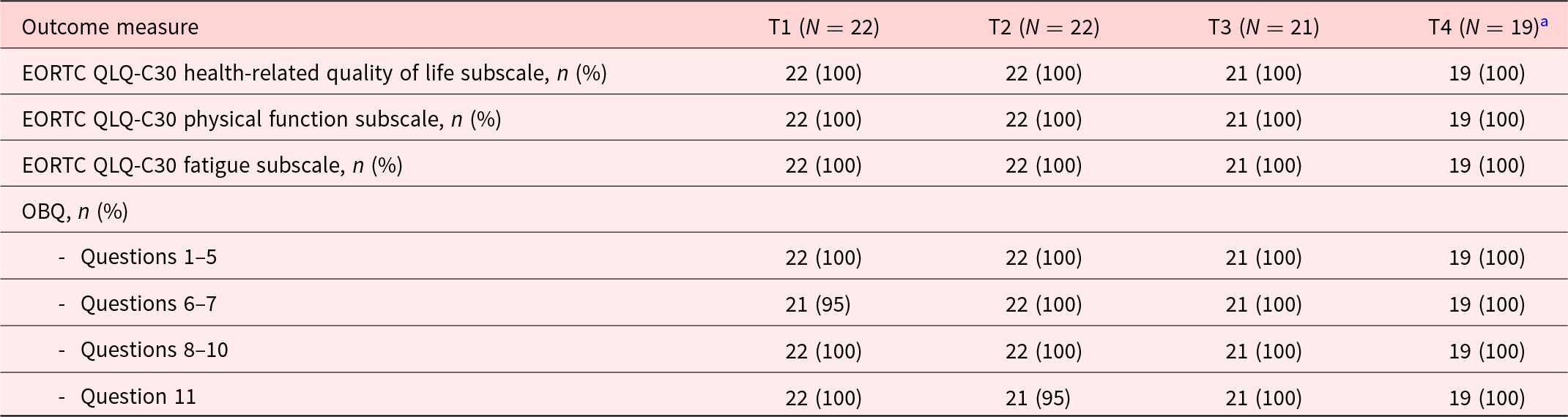
Missing data not due to drop-out were minor (Table 3). Item responses were 100%, except for 2 items of the Occupational Balance Questionnaire at baseline (T1) and 1 item of the Occupational Balance Questionnaire after the 5-day intervention stay (T2).
Participants completing outcome measures

EORTC QLQ-C30 = European Organisation for Research and Treatment of Cancer Quality of Life Questionnaire Core-30; OBQ = Occupational Balance Questionnaire.
T1 = baseline, T2 = after the 5-day intervention stay, T3 = 6-week follow-up, T4 = 12-week follow-up.
a 19 participants answered at T4 even though 18 participated in the 2-day intervention stay.
Changes in outcomes
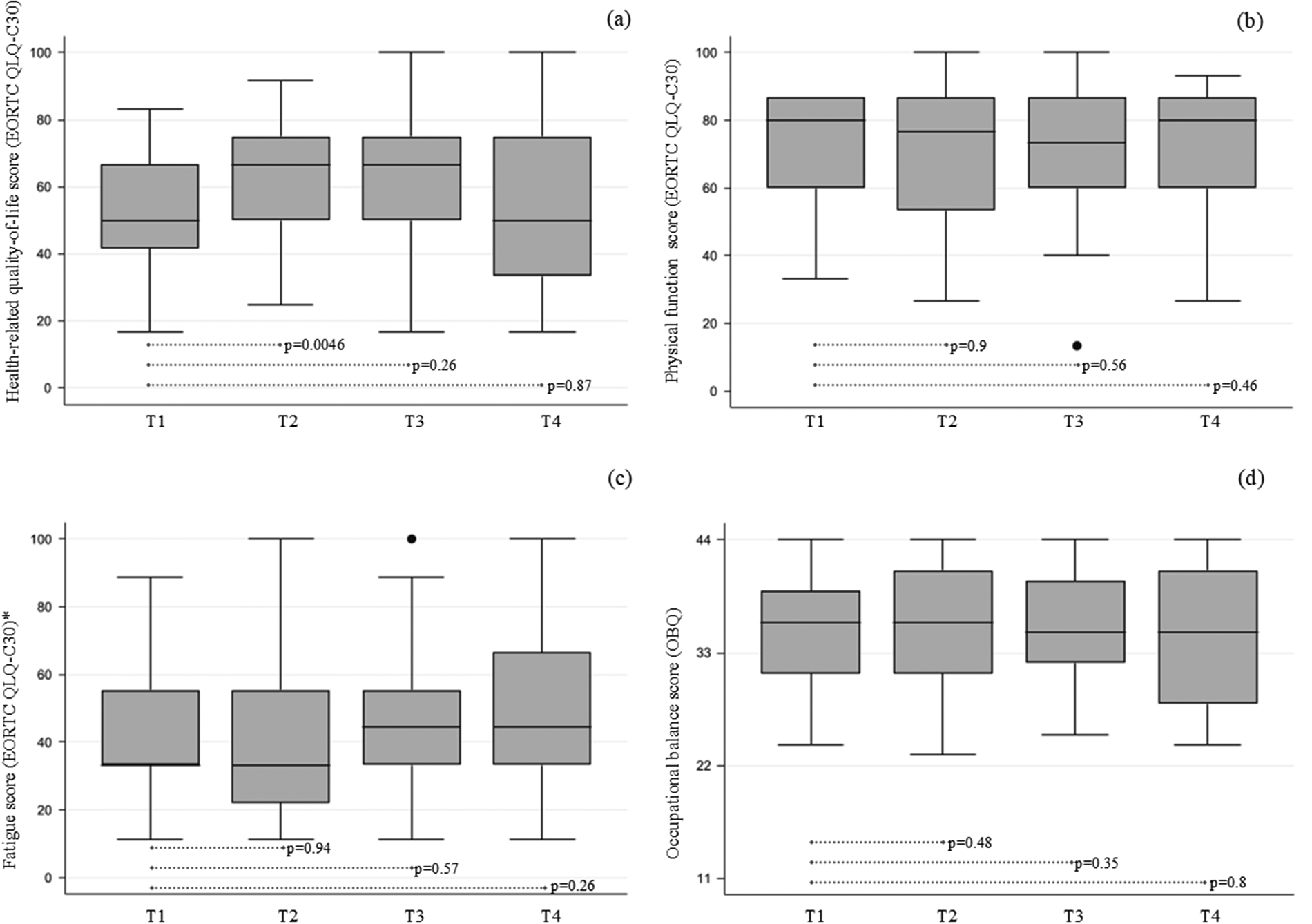
As presented in Figure 2, health-related quality of life was the outcome that changed the most during follow-up. From baseline to the end of the 5-day intervention stay, improvement in the median score was statistically significant (p = 0.0046). Improved scores were also evident at 6-week follow-up but were no longer statistically significant compared with the baseline scores. The median score dropped to baseline level at the 12-week follow-up. The median scores of physical function, fatigue, and occupational balance were almost constant at each time point, and changes compared with the baseline scores were not significant.
Outcome scores at each time point with p-values of change from baseline to each follow-up (Wilcoxon signed-rank test).

Responder analysis
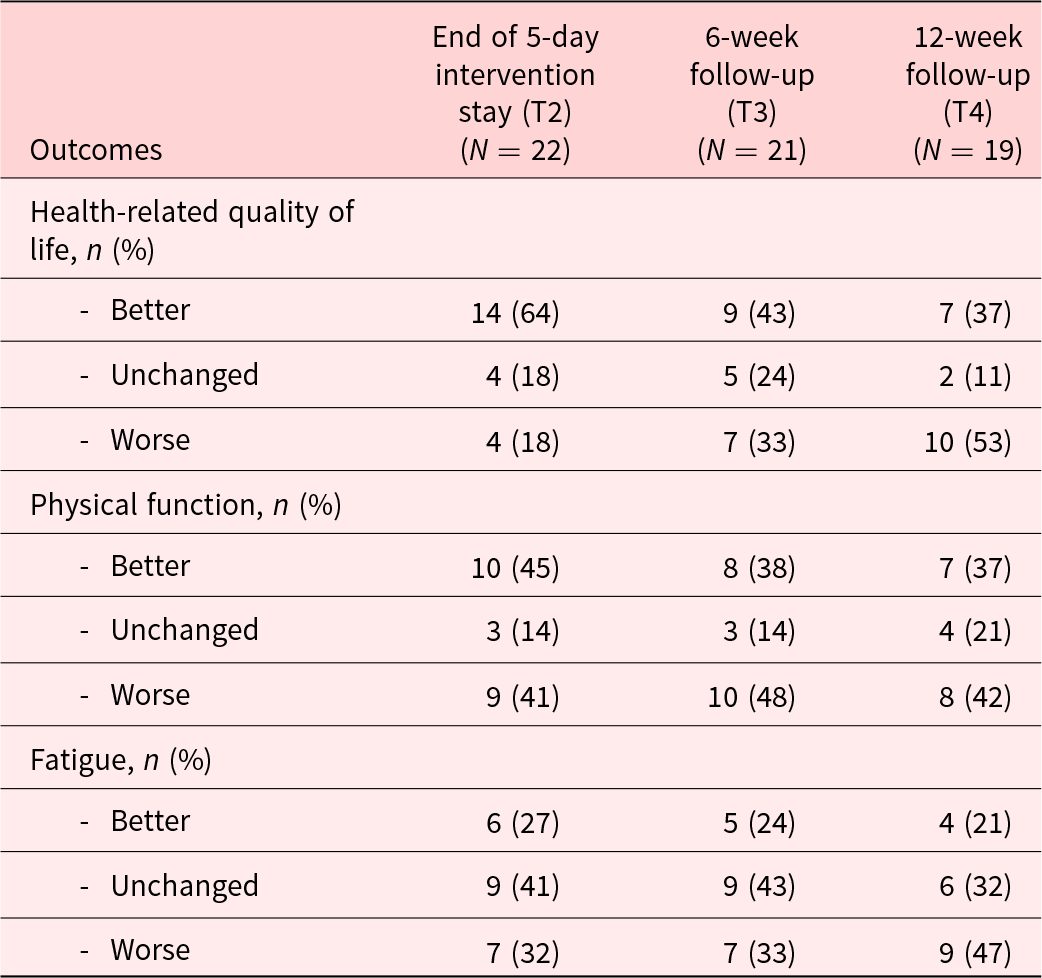
Fourteen participants (64%) had achieved clinically relevant improvements in health-related quality of life scores from baseline to end of the 5-day intervention stay (Table 4). At 6-week follow-up, fewer participants had been able to retain the positive changes; and at 12-week follow-up, the majority reported changes for the worse. Clinically relevant positive changes regarding physical function were achieved by 10 participants (45%) at the end of the 5-day intervention stay. As with the health-related quality of life measure, these positive changes declined over time. Most of the participants had unchanged scores regarding fatigue at the end of the 5-day intervention stay and at the 6-week follow-up, but at the 12-week follow-up, many showed clinically worse scores.
Participants reaching a clinically relevant change from baseline (T1)

Discussion
Major findings
The aim of this study was to feasibility test if the selected outcome measures of health-related quality of life, including physical function and fatigue, and occupational balance could capture any possible changes of the Balance, Activity and Quality of Life Intervention in people with advanced cancer. The outcome measure of health-related quality of life captured a statistically significant improvement in the median score after the 5-day intervention stay, with 64% of the participants reporting a clinically relevant improvement. Scores of physical function, fatigue, and occupational balance were relatively stable during the study and showed no statistically significant changes. All outcome measures were completed with minor missing data.
Significance of findings
In this feasibility study the outcome measure of health-related quality of life captured a statistically significant improvement in the median score, with 64% of participants reporting a clinically relevant improvement after the 5-day intervention stay of the Balance, Activity and Quality of Life Intervention. These results support the selection of health-related quality of life as a primary outcome measure to evaluate the intervention. The results are promising as they may indicate that the intervention was well composed to target this outcome. The intervention was targeted to improve health-related quality of life by enabling participants to engage in activities that could bring about positive experiences, such as walks in nature, creative activity, and social activities. Improvements in health-related quality of life were not evident at the 6- and 12-week follow-up. Possible explanations may include the counteraction of improvements by the progression of the disease. Alternatively, the 5-day intervention stay may have acted more as a retreat, bringing temporary relief from distress, rather than instigating sustained engagement in activities that improved health-related quality of life when the participants returned home. The findings of a recent study by a taskforce under the European Association for Palliative Care indicate that an activity-oriented approach such as that adopted in the present intervention is suitable for improving quality of life. The taskforce investigated what intervention components are considered to be effective by international researchers and health professionals when supporting people with palliative care needs. One of the intervention components identified in the study was the promotion of engagement in meaningful and/or purposeful everyday activities to improve quality of life (Wæhrens et al. Reference Wæhrens, Morgan and la Cour2023).
We explored possible changes in physical function and fatigue as dimensions of health-related quality of life and found that the scores regarding these outcomes were relatively stable during the study. The responder analysis showed that approximately half of the participants reported clinically relevant improvements in physical function after the 5-day intervention stay. This could indicate that these participants had positive experiences tapping into their resources through physical activities such as walks in nature and yoga. The other half of the participants reported worse physical function after the 5-day intervention stay, which suggests that they may have experienced the intervention as too strenuous or exhausting. Widespread scores indicate that the participants differed in physical function at baseline. This reflects a study of an intervention with a similar structure by Raunkiær, which found that it was important to adapt physical activity to the individual’s circumstances to avoid negative experiences (Raunkiær Reference Raunkiær2024). The experience of being confronted with declining function has been described as frustrating, confusing, painful and for some even terrifying, a reminder of illness and deterioration of the body, and as influencing one’s sense of self. (Morgan et al. Reference Morgan, Currow and Denehy2017; Raunkiær Reference Raunkiær2024). Although such experiences have been described as having a role in the process of adapting to new ways of being engaged in everyday life, a relatively short intervention stay is possibly not an appropriate setting as the adaptation process has been found to take time and be connected to the settings, both physical and social, in which everyday life takes place (Morgan et al. Reference Morgan, Currow and Denehy2017). Adapting activities in the intervention to avoid negative experiences of declining function is also important, considering the intervention’s resource-oriented approach to focus on positive experiences and that which is possible.
Baseline fatigue scores indicated that fatigue was not a main issue for many participants, nor were experiences of fatigue an inclusion criterion. As such, it is reasonable that the outcome measure of fatigue did not capture substantial changes during the study (Giesinger et al. Reference Giesinger, Kuijpers and Young2016).
Improving health-related quality of life in people with advanced cancer has been a challenge in previous intervention studies, but studies, such as those by Temel et al. and Nottelmann et al., have demonstrated that achieving improvements in health-related quality of life is indeed possible (Johnsen et al. Reference Johnsen, Petersen and Sjøgren2020; Nordly et al. Reference Nordly, Benthien and Vadstrup2019; Nottelmann et al. Reference Nottelmann, Groenvold and Vejlgaard2021; Pilegaard et al. Reference Pilegaard, la Cour and Gregersen Oestergaard2018; Temel et al. Reference Temel, Greer and Muzikansky2010). The improved scores in health-related quality of life that we found in the present study may be related to the social aspect of being together with peers. The participants in a study evaluating a palliative rehabilitation intervention for people with advanced cancer in an outpatient setting found that it was beneficial to spend time with people who shared their situation (Nottelmann et al. Reference Nottelmann, Jensen and Vejlgaard2019).
We found no improvements in occupational balance using the Occupational Balance Questionnaire. Although it was an inclusion criterion that participants had to report problems with balance in everyday activities, the baseline median score was 36 out of a maximum of 44 points, showing that the participants generally rated their occupational balance to be high (Wagman and Håkansson Reference Wagman and Håkansson2014). Because the Occupational Balance Questionnaire does not have an established cut off for imbalance, scores were not a part of the inclusion assessment. Furthermore, it is possible that the Occupational Balance Questionnaire, based on an average assessment of the previous month, is not sensitive enough to measure occupational balance in people with advanced cancer (Wagman and Håkansson Reference Wagman and Håkansson2014). Occupational balance has been explored by other researchers using a qualitative methodology. Such an approach may also be useful for investigating further if occupational balance is targeted by the present intervention (Nissmark and Malmgren Fänge Reference Nissmark and Malmgren Fänge2020).
Strengths and limitations
A strength of this study was the low drop-out rate after baseline and the high response rates, which indicate that the design successfully considered the frailty of the study population. Another strength was that the intervention was well described and based on a manual co-produced with the professionals who delivered the intervention, potentially minimizing uncertainty and misunderstandings about intervention content and delivery (O’Cathain et al. Reference O’Cathain, Croot and Duncan2019; Skivington et al. Reference Skivington, Matthews and Simpson2021). In the present study, we explored uncertainties regarding selection of the most appropriate outcome measures, and a feasibility study was therefore relevant to conduct (O’Cathain et al. Reference O’Cathain, Hoddinott and Lewin2015). The design had, however, some limitations. As no control group was included in this feasibility study, we cannot be sure whether the observed changes related to the intervention or other factors. Nonetheless, our results still indicate possible changes and can thus be used to select outcome measures and further develop the intervention. The intervention was delivered at the research clinic of REHPA, which required the participants to travel to the location and be away from home for several days. These factors could have caused selection bias, as potential participants who were, for example, too frail to travel, experiencing financial difficulties since transportation was self-payed, or could not be away from children living at home were not included. This may have affected the generalizability of the results.
Conclusion
The present study feasibility tested the outcome measures selected to evaluate the Balance, Activity and Quality of life Intervention. The outcome measure of health-related quality of life captured a statistically significant improvement in the median score after the 5-day intervention stay, with 64% of the participants experiencing a clinically relevant improvement. All outcome measures were completed with minor missing data. The results demonstrate that health-related quality of life is a promising primary outcome measure to capture the possible changes of the intervention in people with advanced cancer and may indicate that the intervention content succeeds in targeting this outcome. The findings can therefore inform the continued efforts to evaluate this resource- and activity-oriented intervention that integrates rehabilitation into palliative care in a municipal setting. The promising findings also indicate that a resource- and activity-oriented approach may be helpful when integrating rehabilitation into palliative care. Finally, the findings may inspire other research and clinical practice endeavoring to support people with advanced cancer.
Data availability statement
Data are saved on a secure server at the University of Southern Denmark.
Acknowledgments
The authors would like to thank the participants for their engagement in the study; Helle Timm, who, together with the last and second author conceived the original idea for the project, sought and obtained funding, and contributed to the design of the feasibility study; Heidi Klit Birkemose, Sandra Bakkegaard Dupont, and Dorthe Soested Joergensen for helping develop the intervention in collaboration with other professionals; REHPA’s research clinic for valuable input to the intervention and for providing the intervention; Birthe Kargaard Jensen and Tina Broby Mikkelsen for helping with recruiting participants and data collection; and Mette Kielsholm Thomsen for comments on the initial draft of the manuscript.
Author contributions
First author undertook data analysis in dialogue with the second author and wrote the manuscript in close collaboration with the second and last author.
Funding
The authors disclosed receipt of the following financial support for the research, authorship and/or publication of this article: this work was supported by The Danish Cancer Society [R53-A2783].
Competing interests
The authors declare none.
Ethical approval
The scientific-ethical committee decided that no approval was required for this study (S-20210013), and the Region of Southern Denmark Data Agency approved the study (R. no. 21/13073). All included participants provided written and oral informed consent.

 Open access

