


At an individual level the demographic and socio-economic correlates of mood disorders have been widely demonstrated. Prevalence of mood disorders is generally greater in women (an effect that persists into late adulthood) and in individuals who are widowed or divorced, unemployed, of lower social class or of limited educational attainment (Reference BurvillBurvill, 1995; Reference Lorant, Deliege and EatonLorant et al, 2003). Contextual (or area) effects are defined as community-level measures that are associated with individual health, independent of associations at the individual level (composition) (Reference Macintyre, Maciver and SoomanMacintyre et al, 1993; Reference Diez RouxDiez Roux, 1998; Reference Duncan, Jones and MoonDuncan et al, 1998). Although contextual effects have been demonstrated for a range of physical health outcomes (Reference Yen and SymeYen & Syme, 1999; Reference Pickett and PearlPickett & Pearl, 2001; Reference McKenzie, Whitley and WeichMcKenzie et al, 2002), their association with mental health outcomes has been more rarely studied and with mixed results (Reference Pickett and PearlPickett & Pearl, 2001). Mood disorder history data, available from a large community-dwelling UK cohort and linked to area of residence data, provide an opportunity to investigate through contextual and multilevel analyses the relative importance of area-level as opposed to individual-level demographic and socio-economic factors in the prevalence of mood disorder.
METHOD
During 1993–1997, the European Prospective Investigation into Cancer and Nutrition in Norfolk (EPIC–Norfolk), a large, population-based cohort study designed to advance understanding of nutritional and other determinants of chronic disease development, recruited participants by post through general practice age–gender registers (Reference Day, Oakes and LubenDay et al, 1999). During 1996–2000 an assessment of social and psychological circumstances, based upon the Health and Life Experiences Questionnaire (HLEQ; Reference Surtees, Wainwright and BrayneSurtees et al, 2000) was completed by a total of 20 921 participants, representing a response rate of 73.2% of the total eligible EPIC–Norfolk sample.
Dependent variables
The HLEQ instrument included a structured self-assessment approach to psychiatric symptoms representative of selected DSM–IV criteria for major depressive disorder and generalised anxiety disorder (American Psychiatric Association, 1994). The approach was designed to provide measures of emotional state for inclusion in a large-scale chronic disease epidemiology project (see Surtees et al, Reference Surtees, Wainwright and Brayne2000, Reference Surtees, Wainwright and Khaw2003 for further details) and to identify those EPIC–Norfolk participants thought likely to have met diagnostic criteria at any time in their lives. Where any psychiatric episode was reported, respondents were asked also to estimate its onset and (if appropriate) offset timings and to provide an outline of the history of the problem, including age at first onset and subsequent episode recurrence. The primary outcome measure investigated was the prevalence of current mood disorders, defined as an episode of either major depressive or generalised anxiety disorder, reported as ongoing or having offset within 12 months of the HLEQ assessment. In addition (and to provide some insight into contextual relationships with both recency and severity), some analyses are repeated for lifetime prevalence of either of these disorders and for the lifetime presence of key depressive symptoms, defined as a positive response to either of the following questions:
-
(a) ‘Have there ever been times in your life when you felt sad or depressed for 2 weeks or more in a row?’
-
(b) ‘Have there ever been times in your life when you lost interest in most things like your work or activities that usually give you pleasure, for 2 weeks or more in a row?’
Individual-level measures
Age, gender, social class, marital status, employment status and educational level were included as individual-level indicators of demographic and socio-economic status. Social class was allocated according to the Computer-Assisted Standard Occupational Coding (Reference Elias, Halstead and PrandyElias et al, 1993) as I (professionals), II (managerial and technical occupations), III non-manual and III manual (skilled workers), IV (partly skilled workers) and V (unskilled manual workers). For both men and women, social class was coded based on the male partner's current or prior occupation (or the female partner's occupation where information for the male partner was unavailable); if data were not available for either partner, social class could not be allocated. Marital status was coded in four categories (married/living as married, never married, widowed and divorced/separated). Current employment status was coded as those working (full or part-time) and not working (either unemployed or economically inactive), as previously defined by the Office for National Statistics (Reference Meltzer, Gill and PetticrewMeltzer et al, 1995). Educational attainment was coded in four categories: those with no formal qualifications; those with formal qualifications usually associated with a school age of 16 years; those with formal qualifications (or vocational equivalent) usually associated with a school age of around 18 years; and those with degree-level qualifications.
Area-level measures
Participants in the EPIC–Norfolk study were recruited from a defined geographical area within East Anglia, centred on the city of Norwich and the surrounding small towns and rural areas, that has little outward migration in the study age group (Reference Day, Oakes and LubenDay et al, 1999). Area of residence was defined according to the UK electoral register (electoral wards). In 2000, an overall index of multiple deprivation commissioned by the (then) Department of the Environment, Transport and the Regions (2000) was created for the 8414 electoral wards in England, derived from 32 variables in six domains: income; employment; health deprivation and disability; education, skills and training; housing; and geographical access to services. The index combined information from across the six domain scores, a higher score representing a more deprived area. These data were linked at the electoral ward level to individual-level data gathered through the EPIC–Norfolk HLEQ instrument.
Statistical analysis
Contextual analysis (standard logistic regression including covariates to represent both individual and area-level measures) was used to investigate the association between individual-level demographic and socio-economic factors, multiple deprivation (included as a categorical variable in quartiles) and current mood disorders. Results are presented as odds ratios, adjusted first for age (in 5-year bands) and gender, and second for age, gender, social class, marital status, employment status, educational attainment and multiple deprivation. As it was not possible to define social class for a sizeable subgroup of participants, this subgroup was included in adjusted analyses as an extra category (data not shown). Subsequently, multilevel models were used, with individuals at level 1 and electoral wards at level 2, to quantify the extent of residual area-level variation in sustained depressive symptoms and in life-time and current mood disorders. Residual variation at the individual and area levels is presented along with the percentage of variation at the area level, first unadjusted and then adjusted for age and gender. The models used were random intercept logistic multilevel models (Reference GoldsteinGoldstein, 1995) with no overdispersion. For these models, individual-level variation equals unity, and the proportion of variation at the area level is equivalent to the intraclass correlation coefficient and represents the degree of correlation between the health of individuals within the same electoral ward (Reference Subramanian, Jones, Duncan, Kawachi and BerkmanSubramanian et al, 2003). Analysis was performed in SPlus (Reference Chambers and HastieChambers & Hastie, 1992) and MLwiN (Reference Rasbash, Browne and GoldsteinRasbash et al, 2000). For the multilevel models, estimation was by second-order penalised quasilikelihood and Wald chi-squared tests were used as approximate tests of the significance of area-level variation (Reference Rasbash, Browne and GoldsteinRasbash et al, 2000).
RESULTS
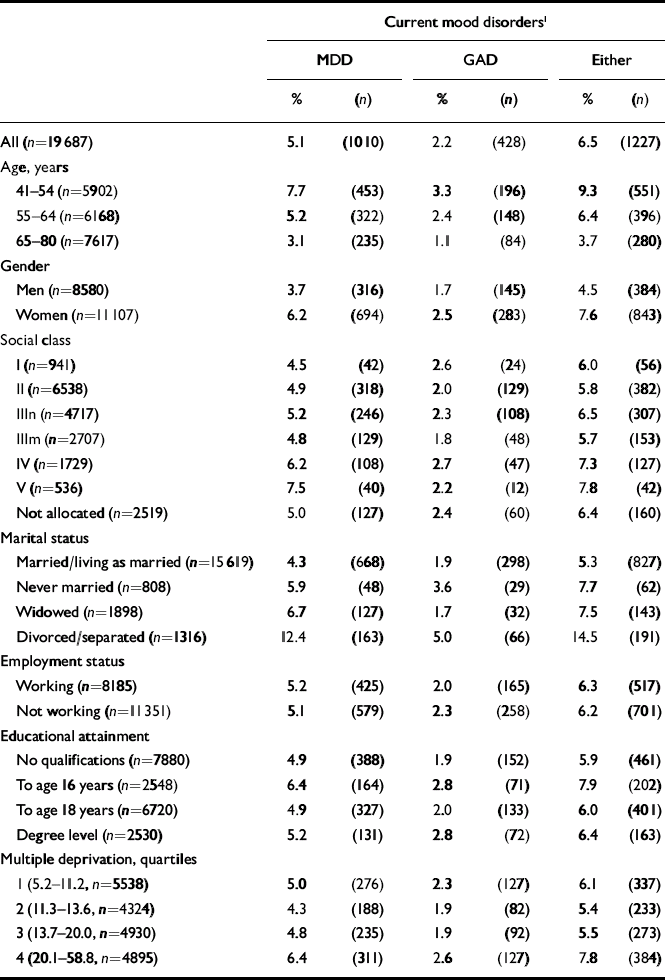
After the exclusion of participants for whom data were not linked at the electoral ward level, a sample of 19 687 individuals (94.1% of the HLEQ sample) was available for analysis, comprising 8580 men and 11 107 women aged 41–80 years. Table 1 shows the prevalence of current mood disorders within the past 12 months for the study participants by demographic and socio-economic characteristics. Overall, 6.5% (1227) reported current mood disorders (4.5% for men and 7.6% for women), with a greater number of participants reporting major depressive disorder (5.1%) rather than generalised anxiety disorder (2.2%). The prevalence of mood disorders was higher for participants who were women, were younger, were in the lowest social class, or who were divorced or separated. In addition, 17.1% of the study sample reported lifetime mood disorders (15.2% major depressive disorder and 3.7% generalised anxiety disorder) and 46.8% reported depressive symptoms (these data are not included in the table).
Prevalence of current mood disorders
| Current mood disorders1 | ||||||
|---|---|---|---|---|---|---|
| MDD | GAD | Either | ||||
| % | (n) | % | (n) | % | (n) | |
| All (n=19 687) | 5.1 | (1010) | 2.2 | (428) | 6.5 | (1227) |
| Age, years | ||||||
| 41-54 (n=5902) | 7.7 | (453) | 3.3 | (196) | 9.3 | (551) |
| 55-64 (n=6168) | 5.2 | (322) | 2.4 | (148) | 6.4 | (396) |
| 65-80 (n=7617) | 3.1 | (235) | 1.1 | (84) | 3.7 | (280) |
| Gender | ||||||
| Men (n=8580) | 3.7 | (316) | 1.7 | (145) | 4.5 | (384) |
| Women (n=11 107) | 6.2 | (694) | 2.5 | (283) | 7.6 | (843) |
| Social class | ||||||
| I (n=941) | 4.5 | (42) | 2.6 | (24) | 6.0 | (56) |
| II (n=6538) | 4.9 | (318) | 2.0 | (129) | 5.8 | (382) |
| IIIn (n=4717) | 5.2 | (246) | 2.3 | (108) | 6.5 | (307) |
| IIIm (n=2707) | 4.8 | (129) | 1.8 | (48) | 5.7 | (153) |
| IV (n=1729) | 6.2 | (108) | 2.7 | (47) | 7.3 | (127) |
| V (n=536) | 7.5 | (40) | 2.2 | (12) | 7.8 | (42) |
| Not allocated (n=2519) | 5.0 | (127) | 2.4 | (60) | 6.4 | (160) |
| Marital status | ||||||
| Married/living as married (n=15 619) | 4.3 | (668) | 1.9 | (298) | 5.3 | (827) |
| Never married (n=808) | 5.9 | (48) | 3.6 | (29) | 7.7 | (62) |
| Widowed (n=1898) | 6.7 | (127) | 1.7 | (32) | 7.5 | (143) |
| Divorced/separated (n=1316) | 12.4 | (163) | 5.0 | (66) | 14.5 | (191) |
| Employment status | ||||||
| Working (n=8185) | 5.2 | (425) | 2.0 | (165) | 6.3 | (517) |
| Not working (n=11 351) | 5.1 | (579) | 2.3 | (258) | 6.2 | (701) |
| Educational attainment | ||||||
| No qualifications (n=7880) | 4.9 | (388) | 1.9 | (152) | 5.9 | (461) |
| To age 16 years (n=2548) | 6.4 | (164) | 2.8 | (71) | 7.9 | (202) |
| To age 18 years (n=6720) | 4.9 | (327) | 2.0 | (133) | 6.0 | (401) |
| Degree level (n=2530) | 5.2 | (131) | 2.8 | (72) | 6.4 | (163) |
| Multiple deprivation, quartiles | ||||||
| 1 (5.2-11.2, n=5538) | 5.0 | (276) | 2.3 | (127) | 6.1 | (337) |
| 2 (11.3-13.6, n=4324) | 4.3 | (188) | 1.9 | (82) | 5.4 | (233) |
| 3 (13.7-20.0, n=4930) | 4.8 | (235) | 1.9 | (92) | 5.5 | (273) |
| 4 (20.1-58.8, n=4895) | 6.4 | (311) | 2.6 | (127) | 7.8 | (384) |
Study participants were resident in 162 different electoral wards with a mean of 121 participants per ward (median 81, range 1–850). Multiple deprivation scores in the range 5.2–58.8 place these 162 wards as ranked between the 7991st and 288th most deprived of the 8414 wards in England, a coverage of 91.5% of the population distribution of deprivation scores. Of the study participants, 90% were resident in wards with multiple deprivation scores in the range 7.4–37.2, corresponding to ward-level ranks of 7307 and 1321 (and a coverage of 71.1% of the population distribution). Table 1 shows that the 12-month prevalence of either major depressive disorder or generalised anxiety disorder was highest for participants living in the most deprived wards (highest quartile of deprivation scores). The proportion of participants in the non-manual social classes was higher (79.1% v. 63.3%) for those who were resident in the least deprived as compared with the most deprived wards, respectively (bottom and top quartiles, data not displayed).
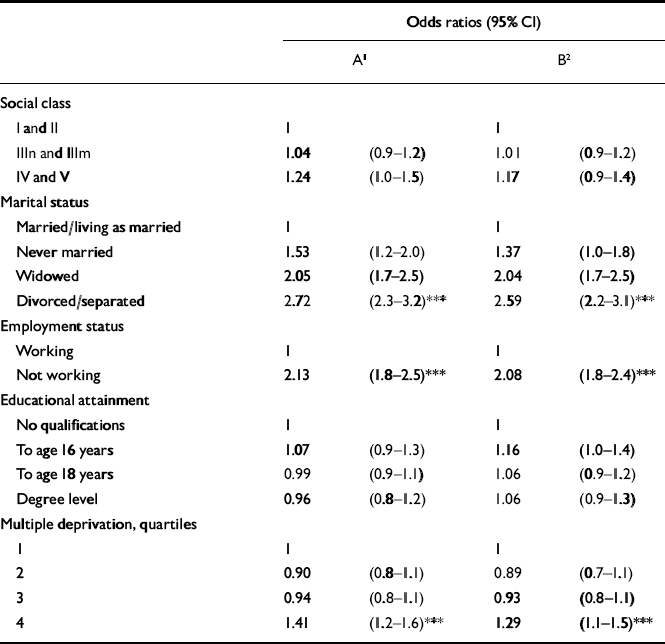
Table 2 shows the results of the contextual analysis of the association between individual-level demographic and socio-economic factors, multiple deprivation and current mood disorders. After adjustments for age and gender, an association was observed for multiple deprivation (P<0.001) such that participants resident in the most deprived wards (top quartile of deprivation scores) were approximately 1.4 times more likely to have reported current mood disorders than those resident in the least deprived wards (bottom quartile of deprivation scores). This association remained with further adjustment for individual social class, marital status, employment status and educational attainment (OR=1.3, P<0.001). In this model, marital status and employment status were strongly associated with prevalent mood disorders, and the magnitude of these associations was substantially greater than that for deprivation. Prevalence of mood disorders was 2.6 times higher in participants who were divorced or separated (compared with those who were married or living as married) and 2.1 times higher in those who were not working (compared with those who were working) at the time of HLEQ assessment. No association was observed for individual social class and educational attainment.
Contextual analysis of individual and area-level demographic and socio-economic factors and prevalence of current (12-month) mood disorders
| Odds ratios (95% CI) | ||||
|---|---|---|---|---|
| A1 | B2 | |||
| Social class | ||||
| I and II | 1 | 1 | ||
| IIIn and IIIm | 1.04 | (0.9-1.2) | 1.01 | (0.9-1.2) |
| IV and V | 1.24 | (1.0-1.5) | 1.17 | (0.9-1.4) |
| Marital status | ||||
| Married/living as married | 1 | 1 | ||
| Never married | 1.53 | (1.2-2.0) | 1.37 | (1.0-1.8) |
| Widowed | 2.05 | (1.7-2.5) | 2.04 | (1.7-2.5) |
| Divorced/separated | 2.72 | (2.3-3.2)*** | 2.59 | (2.2-3.1)*** |
| Employment status | ||||
| Working | 1 | 1 | ||
| Not working | 2.13 | (1.8-2.5)*** | 2.08 | (1.8-2.4)*** |
| Educational attainment | ||||
| No qualifications | 1 | 1 | ||
| To age 16 years | 1.07 | (0.9-1.3) | 1.16 | (1.0-1.4) |
| To age 18 years | 0.99 | (0.9-1.1) | 1.06 | (0.9-1.2) |
| Degree level | 0.96 | (0.8-1.2) | 1.06 | (0.9-1.3) |
| Multiple deprivation, quartiles | ||||
| 1 | 1 | 1 | ||
| 2 | 0.90 | (0.8-1.1) | 0.89 | (0.7-1.1) |
| 3 | 0.94 | (0.8-1.1) | 0.93 | (0.8-1.1) |
| 4 | 1.41 | (1.2-1.6)*** | 1.29 | (1.1-1.5)*** |
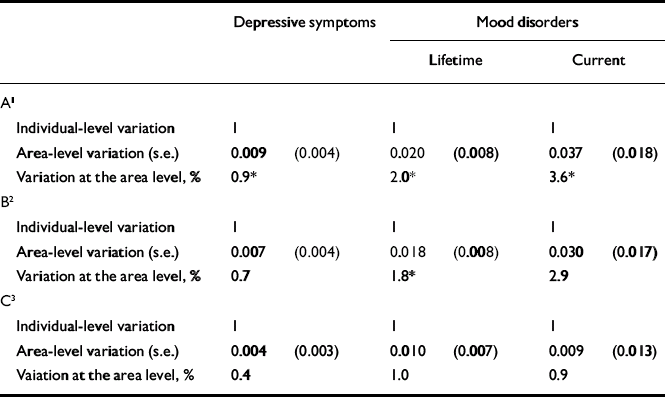
Table 3 shows the results of the multilevel analysis of residual individual and area-level variation in depressive symptoms (depressed mood or loss of interest) and lifetime and current prevalence of mood disorders. Unadjusted for any covariates, significant residual variation at the area level was observed for all three outcomes, with the amount of variation at the area level lowest for depressive symptoms (0.9% of total variation, P=0.03), greater for lifetime prevalence (2.0%, P=0.01) and greater still for current prevalence (3.6%, P=0.04). After adjustment for age and gender, the percentage variation at the area level was reduced and was significant only for lifetime prevalence (1.8%, P=0.03), although it remained higher for current prevalence (2.9%, P=0.07). No significant variation was observed at the area level with further adjustment for marital and employment status, and the amount of variation remaining at the area level was modest: 0.4%, 1.0% and 0.9% for symptoms, lifetime and current prevalence, respectively.
Multilevel analysis of residual variation at the individual and area levels in depressive symptoms and lifetime and current (12-month) mood disorders
| Depressive symptoms | Mood disorders | |||||
|---|---|---|---|---|---|---|
| Lifetime | Current | |||||
| A1 | ||||||
| Individual-level variation | 1 | 1 | 1 | |||
| Area-level variation (s.e.) | 0.009 | (0.004) | 0.020 | (0.008) | 0.037 | (0.018) |
| Variation at the area level, % | 0.9* | 2.0* | 3.6* | |||
| B2 | ||||||
| Individual-level variation | 1 | 1 | 1 | |||
| Area-level variation (s.e.) | 0.007 | (0.004) | 0.018 | (0.008) | 0.030 | (0.017) |
| Variation at the area level, % | 0.7 | 1.8* | 2.9 | |||
| C3 | ||||||
| Individual-level variation | 1 | 1 | 1 | |||
| Area-level variation (s.e.) | 0.004 | (0.003) | 0.010 | (0.007) | 0.009 | (0.013) |
| Vaiation at the area level, % | 0.4 | 1.0 | 0.9 | |||
DISCUSSION
An association was observed between area deprivation and current mood disorders that persisted after adjustment for individual-level demographic and socio-economic factors. However, the effect size was modest when compared with that of individual marital and employment status. Significant residual variation was observed at the area level, and the proportion of variation at the area level was found to increase with increasing severity and recency of disorder. However, this residual area-level variation represented only a modest proportion of total variation and was almost entirely accounted for by the individual-level socio-economic factors considered.
Multilevel models are recommended for the joint analysis of area (contextual) and individual factors (composition), in particular allowing residual variation to be taken into account and quantified at both the individual and area levels (Reference Duncan, Jones and MoonDuncan et al, 1998; Reference Diez RouxDiez Roux, 2000; Reference Pickett and PearlPickett & Pearl, 2001). However, standard regression methods with covariates constructed to represent both individual and area-level characteristics (contextual analysis) (Reference Diez Roux, Kawachi and BerkmanDiez Roux, 2003) are adequate when there is no interest in quantifying this variation and when the assumptions of independence are not violated (i.e. there is little or no residual area-level variation) (Diez-Roux, Reference Diez Roux2000, Reference Diez Roux, Kawachi and Berkman2003). In this paper we have presented both a contextual analysis to investigate the impact of area deprivation on prevalent mood disorders and a multilevel analysis to quantify the extent of residual variation at the individual and area levels.
Study limitations
The study has a number of important limitations that warrant further comment.
First, participation in EPIC–Norfolk involved extensive follow-up and included a request for detailed biological and dietary data. As a result, only around 45% of eligible participants were recruited into the study and the cohort, therefore, did not represent a truly random sample of the population. The response rate, along with the age range (41–80 years), social class distribution (predominantly non-manual) and type of geographical area (predominantly rural), may limit the generalisability of results. However, the EPIC–Norfolk cohort is representative of the general resident population of England in terms of anthropometric variables, blood pressure and serum lipid levels, although it has fewer current smokers (Reference Day, Oakes and LubenDay et al, 1999), and is comparable (age–gender standardised) with UK population norms in terms of physical and mental functional health (Reference Surtees, Wainwright and KhawSurtees et al, 2004). In addition, the deprivation scores from the 162 electoral wards in this study covered 90% of the range of deprivation scores for all 8414 electoral wards in England, although it remains possible that results will not be generalisable to residents of areas that are either extremely deprived or extremely affluent.
Second, the assessments of major depressive disorder and generalised anxiety disorder were based on a self-report questionnaire; however, previous work with the HLEQ-derived measure of major depressive disorder showed only a small amount of episode compression (clustering of episodes in the immediate pre-assessment period), and prevalence estimates and age–gender distributions were comparable with those obtained from interview-based assessment methods in UK and international studies (Reference Surtees, Wainwright and BrayneSurtees et al, 2000).
Third, the data used for this study were cross-sectional. Current measures of neighbourhood exposures may not be a good reflection of overall exposures, and we are unable to distinguish between social causation (area deprivation influences mental health) and residual selection (individuals’ mental health influences or limits their choice of area of residence) (Reference Kawachi and BerkmanKawachi & Berkman, 2003).
Fourth, the specification of areas is based on administrative boundaries (driven by practical considerations), which may not capture the relevant neighbourhoods and has no explicit theoretical justification (Reference Duncan, Jones and MoonDuncan et al, 1998). In addition, census-based area variables may not be the most appropriate area factors and may lead to underestimation of area-level effects (Reference Kawachi and BerkmanKawachi & Berkman, 2003).
Fifth, the investigation of area-level residual variation in multilevel models is limited by issues of statistical power: this depends on the number of areas studied, the average number of individuals within each area and on the type of model and method of estimation (Reference Duncan, Jones and MoonDuncan et al, 1998; Reference Diez RouxDiez Roux, 2000). For binary models current methods may underestimate the random effects (Reference Diez RouxDiez Roux, 2000). Although the size of the current study cohort is a major strength, the absence of significant residual variation at the area level (particularly for current mood disorders, for which end-points were rarer) may still reflect these limitations of power. However, in addition to significance, the multilevel model also provides an estimate of the proportion of variation at the area level, and this was found to be modest.
Implications of the findings
In agreement with previous work (Reference BurvillBurvill, 1995), our study demonstrated strong associations between individual marital and employment status and prevalent mood disorders. Although the evidence for a gradient in mental health by social class and educational attainment has been less consistently demonstrated, a number of studies have produced positive results (Reference Stansfeld and MarmotStansfeld & Marmot, 1992; Reference Lorant, Deliege and EatonLorant et al, 2003), whereas in our study no association was observed for these factors.
Few studies have investigated contextual effects and mental health outcomes, and even fewer have employed multilevel methods (Reference Pickett and PearlPickett & Pearl, 2001; Reference Silver, Mulvey and SwansonSilver et al, 2002). Previous studies have demonstrated contextual effects for psychiatric disorders such as schizophrenia and substance misuse (Reference Goldsmith, Holzer and ManderscheidGoldsmith et al, 1998; Reference Van Os, Driessen and GuntherVan Os et al, 2000; Reference Silver, Mulvey and SwansonSilver et al, 2002), whereas evidence for minor psychiatric problems and mood disorders has been mixed. Of studies based on cross-sectional measures of psychiatric symptoms, such as those using the General Health Questionnaire (Reference Goldberg and WilliamsGoldberg & Williams, 1988), some demonstrated contextual effects or regional variations (Lewis & Booth, Reference Lewis and Booth1992, Reference Lewis and Booth1994; Reference Weich and LewisWeich & Lewis, 1998; Reference Yen and KaplanYen & Kaplan, 1999; Reference RossRoss, 2000), but others reported negative results (Reference Duncan, Jones and MoonDuncan et al, 1995; Reference Reijneveld and ScheneReijneveld & Schene, 1998; Reference Weich, Holt and TwiggWeich et al, 2003). In studies that used assessments based on diagnostic criteria, neighbourhood factors were found to be associated with neurotic disorder (Reference Lewis, Bebbington and BrughaLewis et al, 1998), non-psychotic, non-organic disorders (Reference Driessen, Gunther and Van OsDriessen et al, 1998) and depression (Reference Silver, Mulvey and SwansonSilver et al, 2002), although a different study found no association for affective disorders (Reference Goldsmith, Holzer and ManderscheidGoldsmith et al, 1998).
Our study investigated area-level (contextual) effects for mood disorders through contextual and multilevel analysis, using an assessment designed to represent selected DSM–IV diagnostic criteria for major depressive disorder and generalised anxiety disorder and including details of lifetime episodes, and of time of onset and offset for the most recent episode (Reference Surtees, Wainwright and BrayneSurtees et al, 2000). We found evidence for contextual effects in relation to prevalent mood disorders (episodes within 12 months of assessment), but – in agreement with other multilevel investigations of minor psychiatric disorder – the proportion of variation explained at the area level was found to be small once important individual-level socio-economic correlates had been taken into account (Reference Duncan, Jones and MoonDuncan et al, 1995; Reference Reijneveld and ScheneReijneveld & Schene, 1998; Reference RossRoss, 2000; Reference Weich, Holt and TwiggWeich et al, 2003).
The joint investigation of area-level measures of social context and individual-level socio-economic status can provide a more complete understanding of the determinants of disease (Reference Diez RouxDiez Roux, 1998). Our study has provided evidence for a modest association between social context, represented by a measure of area deprivation, and prevalent mood disorders. Although the strength of these results is limited by issues of power and by definitions of area measures and area boundaries, our findings suggest that the magnitude of associations between measures of socio-economic status and prevalent mood disorders is greater at the individual level than at the area level.
Clinical Implications and Limitations
Clinical Implications
-
▪ Area deprivation is associated with prevalent mood disorders, independent of individuals’ socio-economic status.
-
▪ The proportion of variation in prevalent mood disorders at the area level is modest.
-
▪ The magnitude of associations between socio-economic status and mood disorders is greater at the individual level than at the area level.
Limitations
-
▪ The assessment of mood disorders was by self-report questionnaire, although prevalence estimates are comparable with those from interview methods.
-
▪ Results are based upon a cross-sectional analysis and therefore provide no insight into the direction of effects.
-
▪ Power to detect variation at the area level for binary outcomes remains limited even in a study of this size.
Acknowledgements
We thank the participants and general practitioners who took part in this study and staff associated with the research programme. EPIC–Norfolk is supported by programme grants from the Cancer Research Campaign and Medical Research Council with additional support from the Stroke Association, the British Heart Foundation, the Department of Health, the Food Standards Agency, the Wellcome Trust and the Europe Against Cancer Programme of the Commission of the European Communities.




eLetters
No eLetters have been published for this article.