


Poverty or low socioeconomic status (SES) during childhood is a well-known distal risk factor for subsequent criminal and substance misuse behaviours. Reference Wright, Caspi, Moffitt, Miech and Silva1,Reference Williams and McShane2 Recently, a Norwegian total population study found that children of parents in the lowest income decile were twice as likely to be convicted of a violent or drug crime compared with their peers in the fifth decile. Reference Galloway and Skardhamar3 Similarly, a number of longitudinal USA studies have linked low income levels with substance use disorders. Reference Sareen, Afifi, McMillan and Asmundson4,Reference McMillan, Enns, Asmundson and Sareen5 Nevertheless, these findings could potentially result from inadequate adjustment of familial risk factors. Reference Sariaslan, Långström, D'Onofrio, Hallqvist, Franck and Lichtenstein6 Behavioural genetic investigations have found that the liabilities for both violent offending and substance misuse are substantially influenced by shared genetic and, to a lesser extent, family environmental factors. Reference Frisell, Lichtenstein and Långström7,Reference Kendler, Sundquist, Ohlsson, Palmér, Maes and Winkleby8 Consequently, it has been proposed that quasi-experimental, genetically informative research designs that explicitly take such factors into account could be integral in elucidating the causal mechanisms further. Reference D'Onofrio, Lahey, Turkheimer and Lichtenstein9 A few smaller quasi-experimental studies have been performed to date and they suggest that the inverse associations between parental income during childhood and development of behavioural problems remain after such adjustments. Reference D'Onofrio, Goodnight, Van Hulle, Rodgers, Rathouz and Waldman10-Reference Jaffee, Strait and Odgers13 The generalisability of these findings is still questioned because of potential selection bias. Determining the causal nature of these associations is crucial to inform policy and clinical preventive efforts.
Method
Sample
We linked data from nine Swedish, longitudinal, total-population registers maintained by governmental agencies. The linkage was possible through the unique 10-digit civic registration number assigned to all Swedish citizens at birth and to immigrants upon arrival to the country. We were granted access to de-identified linked data after approval from the Regional Research Ethics Committee at Karolinska Institutet.
The following nine registers were used: (a) the Total Population Register (TPR) contained basic information (for example, gender and date of birth) for all individuals registered as inhabitants of Sweden; (b) the Multi-Generation Register supplied data that linked index individuals found in the TPR to their biological parents, thus enabling us to connect siblings; (c) the Medical Birth Register included pregnancy data with close to full coverage (>99%) of all births in Sweden since 1973; Reference Cnattingius, Ericson, Gunnarskog and Källén14 (d) the Education Register contained information on highest level of completed formal education; (e) the Cause of Death Register provided data on principal and contributing causes of death since 1958; (f) the Migration Register supplied data on dates for migration into or out of Sweden; (g) the Integrated Database for Labour Market Research (LISA) provided annual information on family disposable income and welfare recipiency since 1990 on all individuals 16 years of age and older who were registered in Sweden as of December 31 for each year; (h) the National Patient Register provided data on psychiatric in-patient care since 1973 (ICD-8, -9 and -10) 15-17 and out-patient care since 2001 (ICD-10); and (i) the National Crime Register supplied detailed information on all criminal convictions in lower general court in Sweden since 1973. Plea bargaining is not allowed and conviction data include all individuals who received custodial or non-custodial sentences; also those cases where the prosecutor decided to caution or fine. Only individuals age 15 or older are legally responsible in Sweden; hence, we were not able to study criminal offending prior to age 15.
A total of 594 127 children were born in Sweden between 1989 and 1993 and registered in the Medical Birth Registry. We chose to exclude children from multiple births (n = 14 670), those who had serious malformations at birth (n = 20 905) or who could not be linked to their biological parents (n = 3 956). Furthermore, we excluded data for children who had either died (n = 2 525) or emigrated from Sweden before they reached 15 years of age (n = 18 301). Last, we removed individuals with missing data on parental labour market exposures (n = 7603). Our final sample consisted of 88.6% of the targeted population (n = 526 167). The sample included 262 267 cousins and 216 424 siblings nested within 114 671 extended and 105 470 nuclear families.
Measures: exposure variables
Childhood family income throughout ages 1 to 15 years
We calculated mean disposable family income (net sum of wage earnings, welfare and retirement benefits, etc.) of both biological parents for each offspring and year between 1990 and 2008. Income measures were inflation-adjusted to 1990 values according to the consumer price index provided by Statistics Sweden (http://www.scb.se/en_/). Econometric researchers have long recognised that single annual income exposure measures generally suffer from substantial measurement error because of their inability to accurately depict long-term SES, often leading to attenuation bias. Reference Solon18,Reference Bjerk19 Therefore, annual variables were used to calculate the mean parental income throughout each offspring’s childhood (ages 1 through 15).
Early critics challenged the linearity assumption used by studies adopting continuous income measures by contending that criminality is largely confined to the lowest social strata, often referred to as ‘the underclass’ or ‘the poor’, with little to no difference being found between the strata in the mid to upper ranges of the income distribution. Reference Dunaway, Cullen, Burton and Evans20 Others have argued that the cause of the spurious correlations are because of separate mechanisms promoting deviant behaviours on both ends of the income distribution resulting in weak mean predictions. Reference Wright, Caspi, Moffitt, Miech and Silva1 We decided, therefore, to test potential non-linear effects by categorising our income measure in quintiles.
Confounders
Gender, birth year and birth order (dichotomous; first born and other) were included in all models. We also adjusted for highest parental education (divided into primary, secondary and tertiary level qualifications) and parental ages (five age categories; <20, 20-25, 25-30, 30-35 and >35) at the time of the first-born child and parental history of ever being admitted to hospital for a mental disorder (ICD-8/9: 290-315; ICD-10: F00-F99).
Measures: outcome variables
Violent crime was defined as a conviction for homicide, assault, robbery, threats and violence against an officer, gross violation of a person’s/woman’s integrity, unlawful threats, unlawful coercion, kidnapping, illegal confinement, arson, intimidation, or sexual offences (rape, indecent assault, indecent exposure or child molestation, but excluding prostitution, hiring of prostitutes or possession of child pornography). Reference Fazel and Grann21
In line with previous studies using Swedish total population data, Reference Kendler, Sundquist, Ohlsson, Palmér, Maes and Winkleby8,Reference D'Onofrio, Rickert, Långström, Donahue, Coyne and Larsson22 we used an omnibus measure of substance misuse consisting of convictions of any drug-related crimes (defined as crimes against the Narcotic Drugs Act (SFS 1968:64) or driving under the influence of alcohol and/or illicit substances) or having been diagnosed with an alcohol- or drug-misuse-related disease in in-patient or out-patient settings (ICD-8: 291, 303-4, 571, E853, E856.4, E859, E860, N980; ICD-9: 291, 303-5, 357.5, 425.5, 535.3, 571.0-571.3, E850, E854.1-2, E855.2, E860, N980; ICD-10: F10, G32.2, G62.1, G72.1, I42.6, K29.2, K70, K85, X41-2, X45, X61-2, X65, Y11 (with T43.6), Y12 (with T40) and Y15 (with T51)).
Statistical analyses
To account for time at risk, we calculated hazard ratios (HRs) with corresponding 95% confidence intervals for adolescent violent crime or substance misuse by fitting Cox proportional hazards regression models to the data. The participants entered the study at their fifteenth birthday and were subsequently followed up for a median time of 3.5 years. The maximum follow-up time was 6 years. Those who emigrated or died during follow-up were censored.
We fitted two separate models for the entire sample (n = 526 167) that gradually adjusted for observed confounding variables. Model I adjusted for gender, birth year and birth order, whereas Model II also adjusted for highest parental education, parental ages at the time of the first-born child and parental history of admission to hospital for a mental disorder.
To assess the effects also of unobserved genetic and environmental factors, we fitted stratified Cox regression models to cousin (n = 262 267) and sibling (n = 216 424) samples with extended or nuclear family as stratum, respectively. The stratified models allow for the estimation of heterogeneous baseline hazard rates across families and thus capture unobserved familial factors. Reference Liu23 This also implies that exposure comparisons are made within families. Reference Carlin, Gurrin, Sterne, Morley and Dwyer24 Model III was fitted to the cousin sample and adjusted for observed confounders and unobserved within extended-family factors. Model IV was fitted on the sibling sample and accounted for unobserved nuclear family factors and for gender, birth year and birth order.
Cousin and sibling correlations on the exposure variable were calculated based on a varying-intercepts, mixed-effects model where the intercepts are allowed to vary across families. Reference Gelman and Hill25 The magnitude of the variation was expressed as an intraclass correlation (ICC). Reference Merlo26 The ICC measures the degree to which observations are similar to one another within clusters; in this case cousins and siblings nested within extended and nuclear family clusters. The measure ranges between 0 and 1, where the latter implies that cousins and siblings have identical exposure values within families.
All models were fitted in Stata 12.1 IC for Mac.
Results
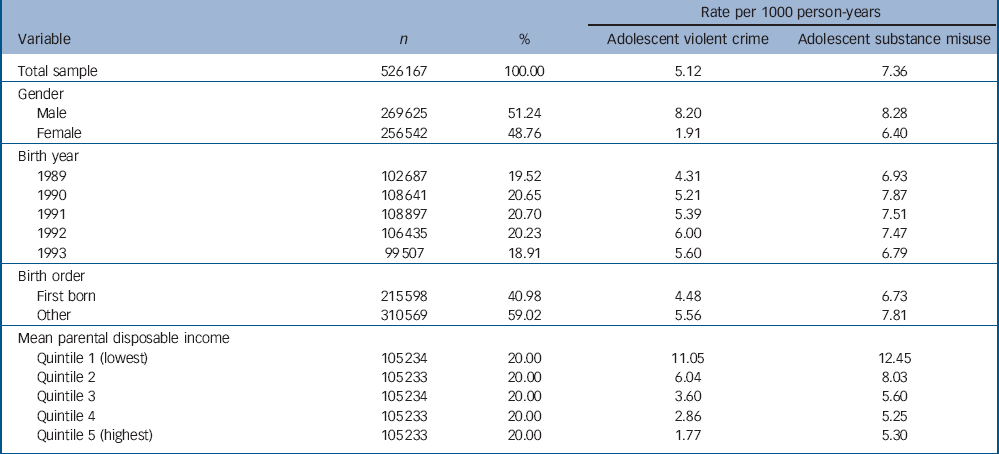
Demographic sample characteristics are presented in Table 1. Adolescent violent crime and substance misuse rates were inversely correlated with the childhood family income. As an example, children of parents in the lowest income quintile experienced a rate of 11.05 per 1000 person-years of being convicted of a violent crime while the same estimate was 1.77 for the children of parents in the highest income quintile.
Table 2 presents results from multivariable Cox regression models; children of parents in the lowest income quintile had an almost seven-fold increased hazard of being convicted of violent crime (crude HR = 6.78, 95% CI 6.23-7.38) and a two-fold increase of substance misuse (HR = 2.45, 95% CI: 2.32-2.58) in adolescence compared with peers whose parents were in the fifth quintile (Model I).
When we made adjustments for observed family-wide risk factors (Model II), the effects of childhood family income on violent criminal convictions were significantly attenuated but remained strong (HR = 3.93, 95% CI 3.59-4.30). Controlling for family-wide risk factors also affected the association with substance misuse (HR = 1.98, 95% CI 1.86-2.10). Model III expanded on Model II by also accounting for unobserved familial risk factors within extended families through cousin comparisons. This adjustment reduced the hazard ratios by 50% and 25% for adolescent violent crime and substance misuse, respectively. Finally, we studied the effects of unobserved familial risk factors within nuclear families using sibling comparisons (Model IV). The associations between childhood family income and the outcomes disappeared completely; hazard ratios were 0.95 (95% CI 0.44-2.03) for violent crime and 1.11 (95% CI 0.62-1.98) for substance misuse, respectively. This suggested that unobserved familial factors fully accounted for the increased hazard ratios found in previous models.
Table 1 Demographic characteristics for all children born in Sweden 1989-1993 that were included in a study of childhood family income (ages 1-15 years) and violent crime convictions and substance misuse during adolescence (ages 15-21 years)
| Rate per 1000 person-years | ||||
|---|---|---|---|---|
| Variable | n | % | Adolescent violent crime | Adolescent substance misuse |
| Total sample | 526 167 | 100.00 | 5.12 | 7.36 |
| Gender | ||||
| Male | 269 625 | 51.24 | 8.20 | 8.28 |
| Female | 256 542 | 48.76 | 1.91 | 6.40 |
| Birth year | ||||
| 1989 | 102 687 | 19.52 | 4.31 | 6.93 |
| 1990 | 108 641 | 20.65 | 5.21 | 7.87 |
| 1991 | 108 897 | 20.70 | 5.39 | 7.51 |
| 1992 | 106 435 | 20.23 | 6.00 | 7.47 |
| 1993 | 99 507 | 18.91 | 5.60 | 6.79 |
| Birth order | ||||
| First born | 215 598 | 40.98 | 4.48 | 6.73 |
| Other | 310 569 | 59.02 | 5.56 | 7.81 |
| Mean parental disposable income | ||||
| Quintile 1 (lowest) | 105 234 | 20.00 | 11.05 | 12.45 |
| Quintile 2 | 105 233 | 20.00 | 6.04 | 8.03 |
| Quintile 3 | 105 234 | 20.00 | 3.60 | 5.60 |
| Quintile 4 | 105 233 | 20.00 | 2.86 | 5.25 |
| Quintile 5 (highest) | 105 233 | 20.00 | 1.77 | 5.30 |
Table 2 Relative risks for adolescent violent crime and substance misuse as a function of childhood (ages 1-15) family income by quintilesFootnote a

| Adolescent violent crime, hazard ratio (95% CI) | Adolescent substance misuse, hazard ratio (95% CI) | |||||||
|---|---|---|---|---|---|---|---|---|
| Model I | Model II | Model III | Model IV | Model I | Model II | Model III | Model IV | |
| Quintile 1 (low) | 6.78 (6.23-7.38) | 3.93 (3.59-4.30) | 1.89 (1.40-2.56) | 0.95 (0.44-2.03) | 2.45 (2.32-2.58) | 1.98 (1.86-2.10) | 1.53 (1.24-1.90) | 1.11 (0.62-1.98) |
| Quintile 2 | 3.66 (3.35-4.00) | 2.50 (2.28-2.74) | 1.46 (1.09-1.95) | 0.81 (0.41-1.61) | 1.56 (1.47-1.66) | 1.39 (1.31-1.48) | 1.19 (0.97-1.45) | 1.31 (0.81-2.13) |
| Quintile 3 | 2.14 (1.95-2.36) | 1.61 (1.46-1.77) | 1.04 (0.78-1.40) | 0.76 (0.42-1.39) | 1.08 (1.02-1.15) | 1.02 (0.95-1.08) | 0.96 (0.79-1.18) | 1.12 (0.76-1.67) |
| Quintile 4 | 1.64 (1.48-1.81) | 1.34 (1.21-1.48) | 0.80 (0.60-1.06) | 0.64 (0.39-1.05) | 1.00 (0.93-1.06) | 0.96 (0.90-1.03) | 0.98 (0.81-1.17) | 1.09 (0.81-1.47) |
| Quintile 5 (high) | Reference | Reference | Reference | Reference | Reference | Reference | Reference | Reference |
a. Model I: adjusted for gender, birth year and birth order; Model II: Model I + adjusted for parental highest achieved education, age at birth and history of mental disorder; Model III: Model II + adjusted for unobserved within extended-family risk factors (through cousin comparisons); Model IV: Model I + adjusted for unobserved within nuclear-family risk factors (through sibling comparisons).
Sensitivity analyses
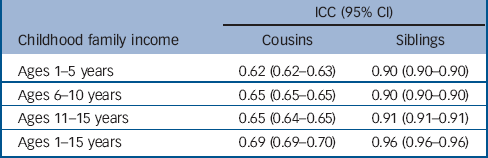
Sibling correlations for childhood family income were, expectedly, rather high (Table 3), suggesting that the within-family variability was somewhat limited. Consequently, we re-fitted models presented in Table 2 to the childhood family income exposure variables covering single-year age periods (online Table DS1). Sibling correlations for the latter were 0.57-0.74. Despite larger heterogeneity between siblings in these exposures, the results remained quite similar.
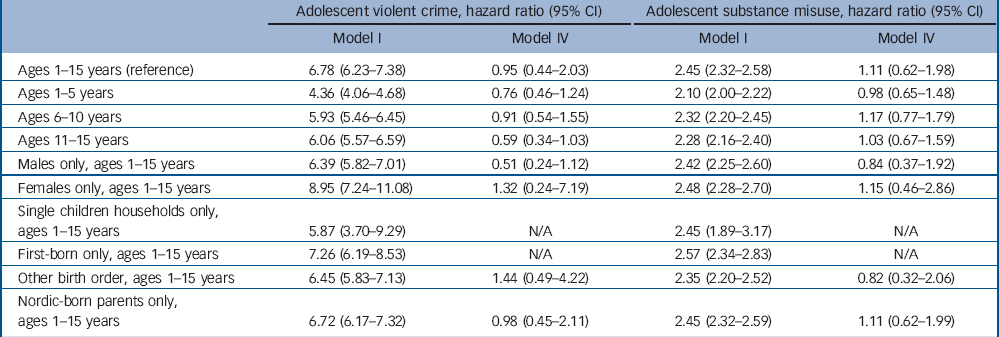
As suggested in Table 4, we could not find any period effects of the timing of exposures on substance misuse. The crude associations presented in Model I were high, but consistently appeared explained by familial factors (Model IV). Differences between estimates for male-only and total population samples were small. By contrast, the female-only estimates indicated low precision with wide confidence intervals, especially for violent convictions within families. The discrepancies across estimates for the different birth order subsamples and analyses excluding second-generation immigrants from non-Nordic countries and the total population sample were marginal.
The extent to which other non-linear categorisations (i.e. tertiles and deciles) of childhood family income had an impact on the results was tested and we found negligible differences (data not presented; available from the authors on request).
In addition, we explored whether results were explained by relatively low rates of our outcome variables by re-fitting models to the following alternative outcomes: (a) any criminal conviction and (b) any property conviction. Corresponding rates were 25.27 and 10.70 per 1000 person-years, respectively. The general pattern of effects found in the main analyses remained (online Table DS2), and the magnitudes of estimates were also very similar to those of models predicting substance misuse (seen in Tables 2 and 4).
Table 3 Cousin and sibling intraclass correlations (ICCs) of childhood family income exposure by age periods
| ICC (95% CI) | ||
|---|---|---|
| Childhood family income | Cousins | Siblings |
| Ages 1-5 years | 0.62 (0.62-0.63) | 0.90 (0.90-0.90) |
| Ages 6-10 years | 0.65 (0.65-0.65) | 0.90 (0.90-0.90) |
| Ages 11-15 years | 0.65 (0.64-0.65) | 0.91 (0.91-0.91) |
| Ages 1-15 years | 0.69 (0.69-0.70) | 0.96 (0.96-0.96) |
Table 4 Sensitivity analyses: relative risks as a function of childhood family income stratified by exposure age periods, gender, number of children in household, birth order and parental immigrant statusFootnote a
| Adolescent violent crime, hazard ratio (95% CI) | Adolescent substance misuse, hazard ratio (95% CI) | |||
|---|---|---|---|---|
| Model I | Model IV | Model I | Model IV | |
| Ages 1-15 years (reference) | 6.78 (6.23-7.38) | 0.95 (0.44-2.03) | 2.45 (2.32-2.58) | 1.11 (0.62-1.98) |
| Ages 1-5 years | 4.36 (4.06-4.68) | 0.76 (0.46-1.24) | 2.10 (2.00-2.22) | 0.98 (0.65-1.48) |
| Ages 6-10 years | 5.93 (5.46-6.45) | 0.91 (0.54-1.55) | 2.32 (2.20-2.45) | 1.17 (0.77-1.79) |
| Ages 11-15 years | 6.06 (5.57-6.59) | 0.59 (0.34-1.03) | 2.28 (2.16-2.40) | 1.03 (0.67-1.59) |
| Males only, ages 1-15 years | 6.39 (5.82-7.01) | 0.51 (0.24-1.12) | 2.42 (2.25-2.60) | 0.84 (0.37-1.92) |
| Females only, ages 1-15 years | 8.95 (7.24-11.08) | 1.32 (0.24-7.19) | 2.48 (2.28-2.70) | 1.15 (0.46-2.86) |
| Single children households only, ages 1-15 years | 5.87 (3.70-9.29) | N/A | 2.45 (1.89-3.17) | N/A |
| First-born only, ages 1-15 years | 7.26 (6.19-8.53) | N/A | 2.57 (2.34-2.83) | N/A |
| Other birth order, ages 1-15 years | 6.45 (5.83-7.13) | 1.44 (0.49-4.22) | 2.35 (2.20-2.52) | 0.82 (0.32-2.06) |
| Nordic-born parents only, ages 1-15 years | 6.72 (6.17-7.32) | 0.98 (0.45-2.11) | 2.45 (2.32-2.59) | 1.11 (0.62-1.99) |
a. Model I: adjusted for gender, birth year and birth order; Model IV: Model I + adjusted for unobserved within nuclear-family risk factors (through sibling comparisons). N/A: Not applicable.
Finally, we investigated whether the results were specific to the childhood SES exposure variable by re-fitting the models to an alternative indicator; parental welfare recipiency between ages 1 through 15. Individuals who receive means-tested welfare benefits in Sweden are not primarily characterised by their lack of financial means; they are a selected group with a wide range of psychosocial issues. Reference Stenberg27 The results nonetheless matched those exploring childhood family income (online Table DS3).
Discussion
Using traditional epidemiological methods, we found that low income in one’s family of origin was indeed associated with higher risk of violent offending and substance misuse during adolescence. However, the excess risks became marginal or disappeared completely when we gradually adjusted for familial risk factors of these associations by studying within-extended family and within nuclear-family estimates (with cousin and sibling controls, respectively). This held true when childhood SES was defined either as parental disposable income or welfare recipiency throughout child ages 1-15 years. Sensitivity analyses proved the results were robust across gender, ethnicity and age periods and were not influenced by limited within-family variability in the exposure variables.
Our finding that the associations between childhood family income and adolescent violent criminality and substance misuse are unlikely to be causal has been suggested in prior systematic reviews on SES and criminality. Reference Tittle, Villemez and Smith28-Reference Daniel, Hickman, Macleod, Wiles, Lingford-Hughes and Farrell31 On the other hand, smaller, US-based, quasi-experimental studies on behavioural problems have indicated causal effects. Reference D'Onofrio, Goodnight, Van Hulle, Rodgers, Rathouz and Waldman10-Reference Blau12 The diverging results may have at least two plausible explanations. First, outcome variables are not always directly comparable between studies; whereas we have focused on severe criminal offending and substance misuse, earlier studies addressed less severe antisocial behaviours and conduct problems. Second, it could be that Sweden’s comprehensive welfare state actually mitigates the possible adverse effects of growing up with limited material resources. Reference Aaltonen, Kivivuori and Martikainen32
Our results indicate therefore that prevention efforts that specifically aim to decrease rates of violent offending and substance misuse should target a wider range of familial risk factors than merely parental income. This recommendation is in line with contemporary research that defines early socioeconomic exposures as distal risk factors because of their lack of direct associations with delinquency and antisocial behaviours, whereas familial risk factors (such as the quality of the parent-child relationship, family dissolution and parental criminality) are instead viewed as proximal risk factors because they tend to explain the majority of the variance in such outcomes. Reference Sampson and Laub33,Reference Wikström, Oberwittler, Treiber and Hardie34 Further large-scale, genetically informative, quasi-experimental studies are thus going to be crucial in identifying and determining potentially causal familial predictors of violent criminality and substance misuse.
Strengths and weaknesses
In the largest study of childhood SES, adolescent violent crime and substance misuse to date (with a total population study of five birth cohorts of children born 1989-1993), we addressed and ruled out possible effects from various methodological weaknesses pointed out previously. Reference Wright, Caspi, Moffitt, Miech and Silva1,Reference Solon18-Reference Dunaway, Cullen, Burton and Evans20,Reference Jarjoura, Triplett and Brinker35 Measurement error was minimised by the use of well-defined, prospectively and objectively gathered family income measures spanning 15 years. Reference Bjerk19 The extensive 15-year exposure period made it possible to study potential temporal variability in effects, including both the timing and persistence of low childhood SES.
Three methodological considerations are important when interpreting the present findings. First, we cannot exclude potential bias from cohort effects that might have affected the associations between childhood family SES and outcome, because the included cohorts were infants or preschool children when Sweden underwent a major economic recession in the mid-1990s with quadrupling unemployment rates and substantially rationalised welfare programmes. Reference Bergmark and Palme36 We were unable to explore such bias because we did not have access to yearly parental income data prior to 1990. However, if anything, cohort effects bias may have led to an overestimation of unadjusted effects seen before accounting for unobserved familial risk factors.
Second, our approach of using nationwide registry data confined our analyses to arguably more severe cases that had been registered by the legal and clinical services for their actions. It is obviously an empirical question whether the results for non-diagnosed cases would be similar.
Third, the sibling-comparison design makes several important assumptions and requires a large sample size. Reference D'Onofrio, Lahey, Turkheimer and Lichtenstein9,Reference Lahey and D'Onofrio37,Reference Frisell, Öberg, Kuja-Halkola and Sjölander38 In principle, only sibling pairs discordant on both exposure and outcome contribute to the analyses. We identified 116 875 siblings in 56 551 families who were discordant for childhood family income (measured in deciles). Among these discordant siblings, 3195 were further discordant for violent criminal convictions and 5507 for substance misuse. Although they might seem small, these sample sizes are still larger than in most of the previous studies. Moreover, the sibling-comparison design assumes that the results of discordant siblings are generalisable to the total population. We found no income differences when comparing the discordant siblings to the total population; t(526 165) = 1.25, P = 0.21. Thus, our findings do not seem to follow from poor statistical power, neither does it seem that results from discordant siblings are not generalisable.
Implications
The present study highlights the importance of adjusting for unobserved familial risk factors when studying the impact of childhood SES on later adverse outcomes, such as violent crime and substance misuse; hence, claims of causal effects after only adjusting for observed covariates should be viewed with caution. We found strong inverse correlations that were explained fully by unobserved familial risk factors shared by children growing up in low SES households. Future research is needed to validate these results in other contexts and elucidate the nature of the mechanisms, including the relative contributions of genes and environments.




eLetters
No eLetters have been published for this article.