

Evolution in the Polls
What is evolution? The term might refer either to the fact that species have changed over the course of eons, or to the process by which this change has taken place, resulting in their exquisite adaptations and their outstandingly common features. All organisms are related to one another because they have descended from a common ancestor through natural processes that have produced new life forms from preexisting ones. It is important to note that evolution has been taking place on Earth for billions of years. Consequently, although it is still taking place now, much of the information about it comes from the past. Evolutionary scientists do not have a direct view of the past, but they can infer past events from what they currently observe. Overall, there is ample evidence for evolution in fossils, anatomy, biogeography, and DNA.
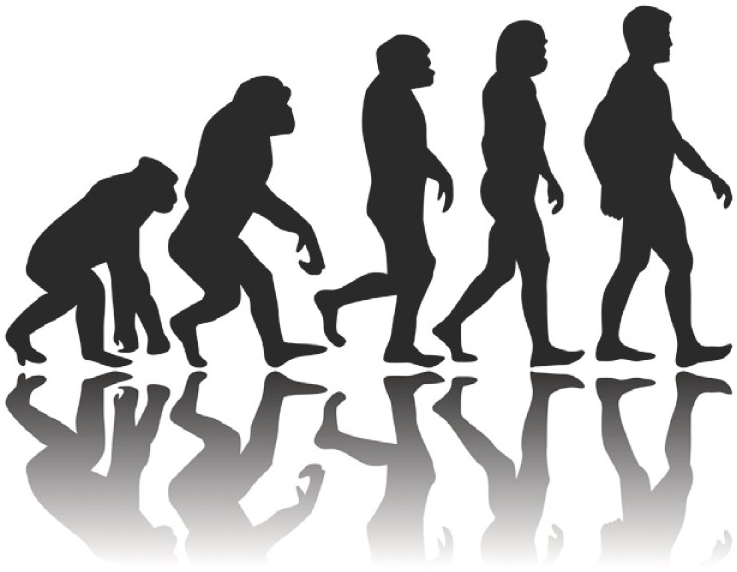
However, the idea of evolution in general and of human evolution in particular is usually misrepresented in the public sphere, with illustrations such as the one in Figure 1.1. There are two main problems with this representation of human evolution. First, it portrays evolution as a linear process in which each one of the species changes into another one. However, evolution is more accurately represented as a branching process, not a linear one. Second, this representation shows humans evolving from apes that exist today. This is misleading too, because a species cannot evolve from other contemporary species. What is actually happening is that humans and apes share common ancestors, from which they have evolved independently, like branches starting from a common shoot. But before explaining evolution in detail, it is interesting to consider its public image.
One of the usual misrepresentations of human evolution as a series of transitions among coexisting species.
The public acceptance of evolution has been the focus of various polls. Polls are a useful means to acquire a snapshot of what people think about various issues; some are conducted at the national level, whereas others are international. In the latter case, it is possible to compare attitudes and knowledge of people living in different countries, under the condition that the samples studied are representative of the respective populations. Organizations such as Eurobarometer, Gallup, Pew, Ipsos, and others are supposed to provide valid and reliable data on what people think about various topics. There are many interesting conclusions one can draw from such polls; however, this should be done with caution. There are at least three kinds of issues that one must keep in mind when considering the results of these polls. These are: (1) methodological; (2) conceptual; and (3) inferential.
Methodological issues have to do with whether the research questionnaires used actually measure what they are supposed to measure (validity), and with whether this is done in a reliable manner (reliability). To give a simple example, if I use my ruler to measure a length of 10.5 cm, I need to know if what I measure is indeed 10.5 cm (validity), and if I obtain this very same measurement every time I use this ruler (reliability). I write this chapter under the assumption that there are no such issues in the reports of Eurobarometer, Gallup, Pew, and Ipsos that I consider. This entails that I take for granted that the questionnaires used in the respective studies were correctly understood by the participants, who thus provided responses about the topics they were expected to think about and who would provide the same response on different occasions. However, it is possible that survey questions have been constructed in ways that potentially lead to biases and distortions of the actual views held by those surveyed. This can happen, for example, due to a focus on human evolution, which might make respondents feel uncomfortable – someone who chose a religiously justified answer might be concerned that they would be considered ignorant due to the lack of an opportunity to defend this choice and to present oneself as knowledgeable in this matter.
Conceptual issues have to do with the content of the questions; more specifically they relate to whether the concepts used are accurately defined, and to whether the questions cover all the relevant conceptual variation. For instance, in the “UK BBC Horizon: A War On Science” poll, participants were asked which of the following three statements best described their view of the origin and development of life:
The “evolution theory” says that humankind has developed over millions of years from less advanced forms of life. God had no part in this process.
The “creationism theory” says that God created humankind pretty much in his/her present form at one time within the last 10,000 years.
The “intelligent design” theory says that certain features of living things are best explained by the intervention of a supernatural being, e.g., God.
As it has been correctly pointed out, there is no choice that might refer to the views described as theistic evolution (evolution guided by God) and deistic evolution (evolution initiated by God without any further intervention). This entails that religious participants might have been forced to choose either the creationism or the intelligent design option, even though these options might not accurately reflect their own thinking. In this sense, this study might yield a higher number of creationists than there actually are.
Finally, what I have called inferential issues have to do with the inferences that one can or cannot make, and do or do not make, from the poll data. Whereas looking at participants’ responses to individual questions is often used as the basis for conclusions, I argue that one should rather look at participants’ responses to different questions of the same study, as well to questions of different studies, in order to make better-grounded inferences as to what participants think. For instance, a common conclusion from polls is that in highly religious countries the acceptance of evolution is lower than it is in more secular countries. Thus, one might be tempted to infer that the more religious a country is, the less accepted evolution will be. However, when one looks into the details, there is not a simple evolution/religion dichotomy, and what emerges is a more complicated picture. In this chapter, I focus mostly on conceptual and inferential issues, leaving the methodological issues aside, because I am interested in the conceptual content of the questions and in how the emerging results might be (mis)interpreted.
Some articles presenting results of evolution-focused polls around the world have attracted considerable attention. For instance, a 2006 article published in the prestigious journal Science compared attitudes in various countries to the statement that “Human beings, as we know them, developed from earlier species of animals.” Participants were asked whether the statement was true or false, whether they were not sure or did not know. It was found that about 25 percent of participants from Turkey and about 40 percent of participants from the USA considered the foregoing statement as true, whereas this was the case for more than 80 percent of participants from Iceland, Denmark, Sweden, and France. Another article, published a couple of years later – again in Science – reported on the findings of a study in predominantly Muslim countries, asking participants the following question: “Do you agree or disagree with Darwin’s theory of evolution?” Not many people agreed that Darwin’s theory is probably or almost certainly true: 16 percent in Indonesia, 14 percent in Pakistan, 8 percent in Egypt, 11 percent in Malaysia, 22 percent in Turkey, and 37 percent in Kazakhstan. Such findings seem to show a clear pattern: People in more religious countries are less likely to accept evolution than people in more secular countries, as well as that people in predominantly Christian countries are more likely to accept evolution than people in predominantly Muslim countries. However, if one looks at the details of these polls, there is more than that, as I show in the subsequent sections.
Evolution Polls in Europe
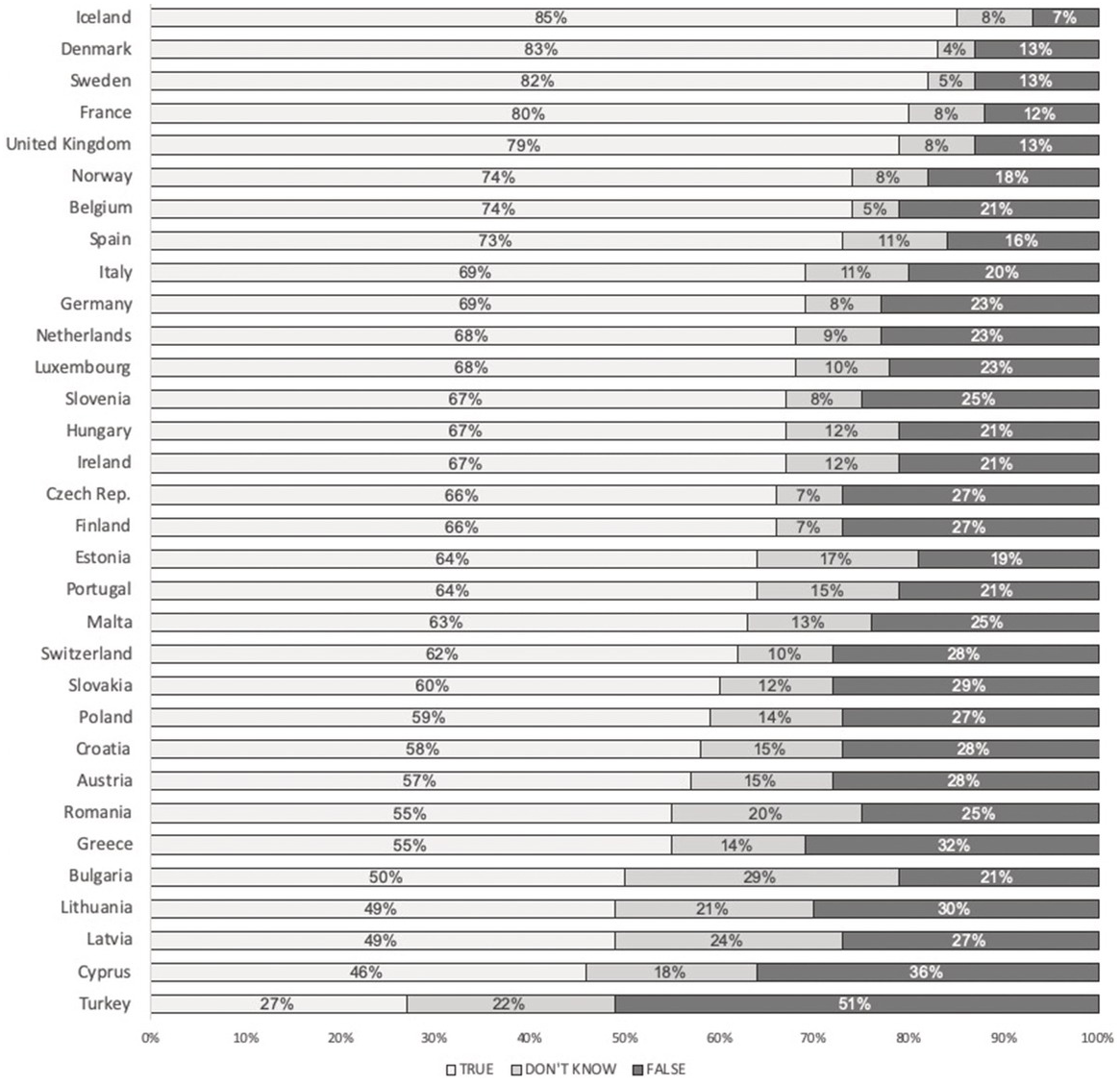
During January–February 2005, data from 32 countries were collected, through personal interviews, by the European Commission. The findings were published in the Eurobarometer survey 63.1 in June 2005 (this is where much of the data for the 2006 Science article previously discussed came from). The study involved participants from the 25 (at that time) member states of the European Union, as well as from Bulgaria, Romania, Croatia, Turkey, Iceland, Norway, and Switzerland. Two reports were released. The first one was titled Special Eurobarometer 224: Europeans, Science and Technology, and the other was titled Special Eurobarometer 225: Social Values, Science and Technology. One of the questions asked in the survey concerned the statement: “Human beings, as we know them, developed from earlier species of animals.” Participants were given the choices “true,” “false,” or “don’t know.” The findings are presented in Figure 1.2.
Acceptance of the idea “Human beings, as we know them, developed from earlier species of animals” in European countries and Turkey.
The first noteworthy issue is the content of the survey statement itself. Strictly speaking, the statement is incorrect because no species can “develop” from an earlier species. The term “development” is currently used in the life sciences to refer to individual life cycles and within-generation time spans. It is rather “evolution” that refers to populations and time spans across generations. Therefore, the statement should instead have been written as “Human beings, as we know them, evolved from earlier species of animals.” It is unclear whether replacing the verb “evolve” with the verb “develop” was done accidentally, or intentionally in order to refrain from using an evolution-related word. One might indeed argue that if using an e-word is a sensitive issue, one had better refrain from using it and replace it with less sensitive words. However, such a choice raises important conceptual issues. If you think about this, the word “development” implies a more goal-directed process than “evolution.” Stating that humans have developed from earlier species might be perceived to imply that this was an inevitable outcome; however, human evolution was far from inevitable.
Conceptual issues notwithstanding, what else do we see in Figure 1.2? There are multiple ways to look at the results. One is that the majority of participants in all European countries accepts the idea of humans originating from animal predecessors, an idea rejected by half of the participants in Turkey. This sounds like good news for Europe. However, if you look closely at the results, you will also see that between one in five and one in four people in most European countries reject this idea. If you add to these the number of people who do not know what to think, overall about one in three Europeans does not accept the idea of human origins from animal predecessors. One might still be pleased with these results though, especially given that in the same survey about one in three participants in the 25 EU countries agreed with the statement that “The Sun goes around the Earth” and that about one in five people agreed with the statement that “The earliest humans lived at the same time as the dinosaurs.” In other words, there are fundamental issues related to science literacy that do not have to do with the idea of evolution only. Some people may just be ignorant about science in general, and not antievolutionists.
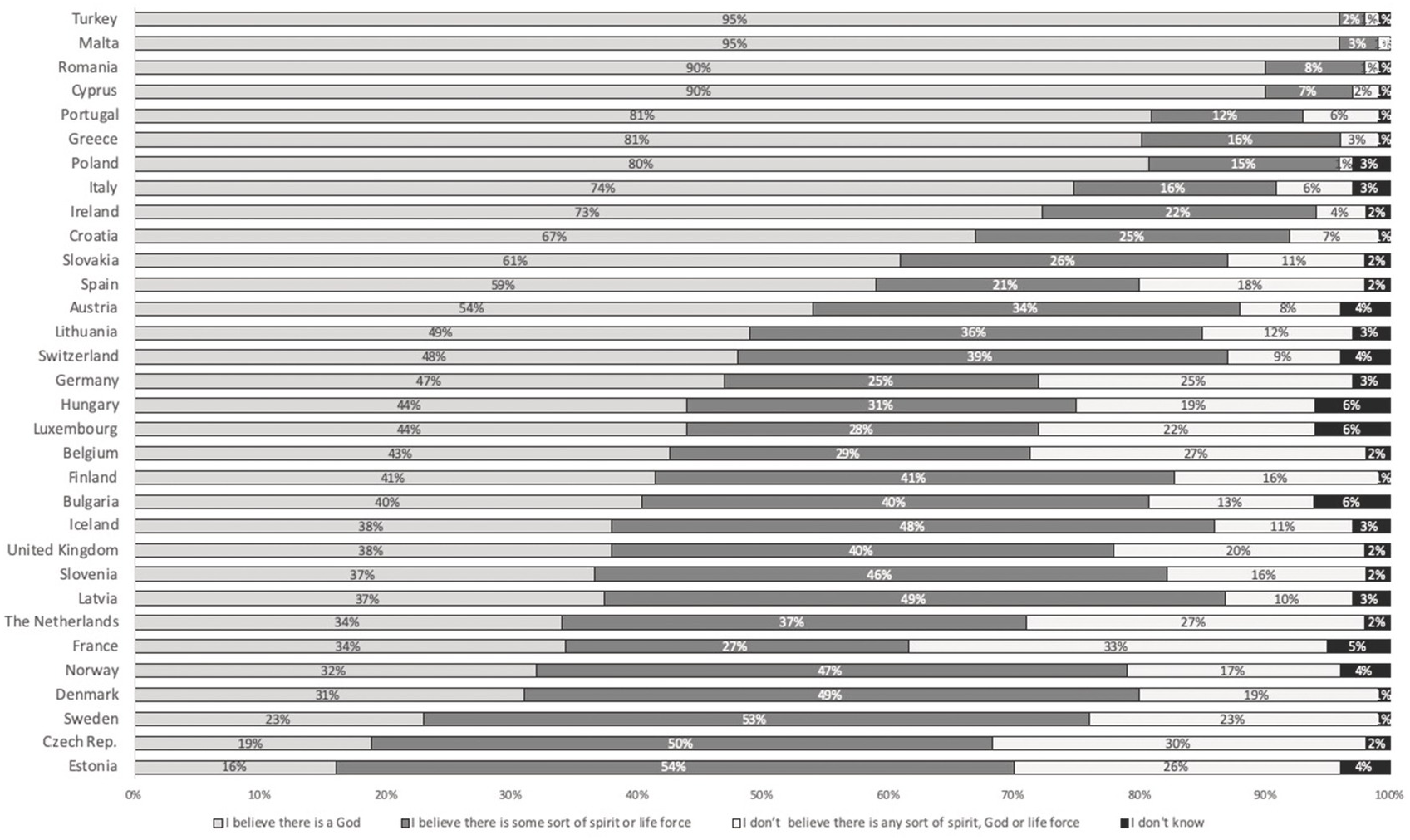
Nevertheless, a usual concern whenever there are people who seem not to accept the idea of evolution is that their religious worldviews may be responsible for this. Another question asked in the survey was the following: “Which of these statements comes closest to your beliefs?” Participants could choose among the following statements: “I believe there is a God”; “I believe there is some sort of spirit or life force”; “I don’t believe there is any sort of spirit, God or life force”; “I don’t know.” As is evident in Figure 1.3, there is variation in the belief in the existence of God in the various countries. However, some kind of spirituality is also quite widespread, and as a result less than one in three participants in all countries expressed their disbelief in the existence of God or some spiritual entity.
Belief in the existence of God or some sort of spirit or life force in European countries and Turkey.
A question then comes up naturally: Is there a connection between the belief in the existence of God and the low acceptance of evolution? Figure 1.4 presents together the results already presented in Figures 1.2 and 1.3 about the number of people who believe in the existence of God and the number of people who considered the statement that “Human beings, as we know them, developed from earlier species of animals” as being false.
Rejection of the idea “Human beings, as we know them, developed from earlier species of animals” and belief in the existence of God in European countries and Turkey.
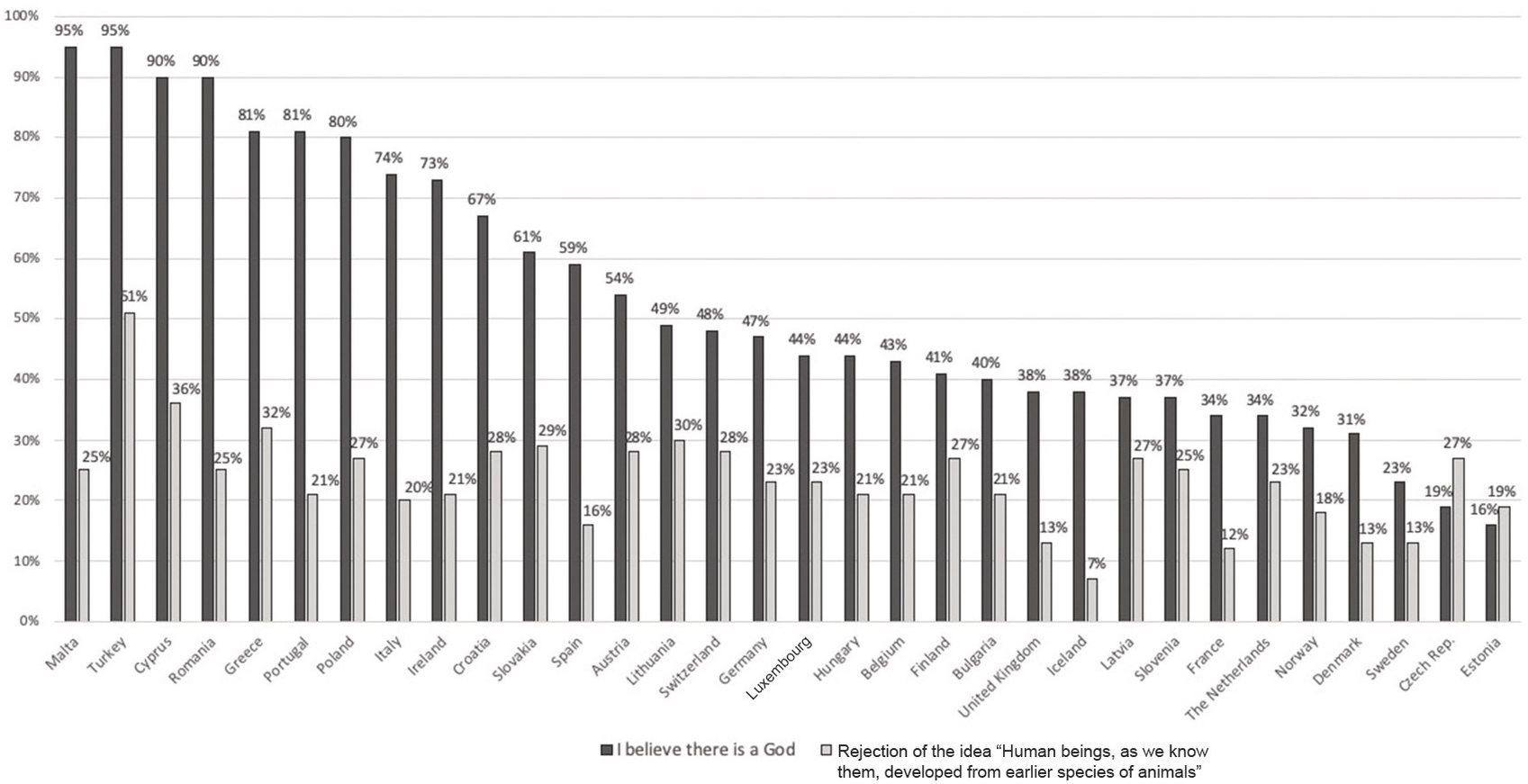
Two important inferences can be made from Figure 1.4. The first one is that not all people who believe in the existence of God also consider the idea of humans originating from animal predecessors as false. What is even more interesting, though, is that, with the exception of Turkey, the number of participants rejecting the idea of humans originating from animal predecessors is 20–30 percent in most countries, both in the more “religious” and in the less “religious” ones. The results were quite different in Turkey, which is also the only predominantly Muslim country. These findings support the conclusion that Christianity, which is the major religion in Europe, does not necessarily relate to opposition to the idea of evolution. However, the findings from polls in the USA provide a very different picture.
Evolution Polls in the USA
For a period of 37 years, between 1982 and 2019, Gallup has been conducting surveys in the USA, asking participants the following question: “Which of the following statements comes closest to your views on the origin and development of human beings?” Participants could choose one among the following options:
Human beings have developed over millions of years from less advanced forms of life, but God guided this process.
Human beings have developed over millions of years from less advanced forms of life, but God had no part in this process.
God created human beings pretty much in their present form at one time within the last 10 000 years or so.
Before discussing the results of this survey, it is worth considering for a moment the conceptual content of this question in order to better understand what it is really asking for. The first point to note is that the word “evolution” does not appear in this question. Rather, participants are asked about the “origin” and (as in the Eurobarometer survey) the “development” of human beings. As already explained, the word “development” is not the appropriate one in this context, but “origin” definitely is. Simply put, then, the question asked participants where human beings come from. One of the options was that God created humans in their present form during the last 10,000 years. Let us call this the “creationism” explanation. This is clearly an explanation that is not in agreement with the scientific findings that our divergence from our last common ancestor with apes took place a few million years ago. The other two options accept the idea of evolution over millions of years from other forms of life; however, they differ in whether God was involved in this process or not. In one of them, we are told that it was God who guided the process, and this can be described as “theistic evolution.” In the other case, we are told that God had no part in this process. This phrase leaves open whether or not God set the conditions for evolution to occur, an idea often described as “deistic evolution.” But as the statement is not explicit about this, and – most importantly – as the researchers themselves consider it as “the ‘secular’ viewpoint, meaning that humans evolved from lower life forms without any divine intervention,” we can refer to this as the “evolution” explanation. All in all, participants thus had to choose among a natural explanation (“evolution”) and two supernatural ones (“theistic evolution” and “creationism”).
What are the results? For 37 years, “creationism” has been the most popular explanation for the origin of humans in the USA, always being selected by more than 40 percent of participants. The only exception was 2017, when 38 percent of participants chose this explanation and another 38 percent chose the “theistic evolution” option. It must be noted that 2017 was the first time that these two options were chosen by the same number of participants. What must also be noted is that 2019 was the year when “evolution” reached the highest percentage ever, 22 percent. This is not much, but it is a lot better than the 9 percent that chose it when this survey began. Could this indicate a trend toward less acceptance of “creationism” and more acceptance of “evolution”? Perhaps, but this remains to be seen in subsequent polls. For now, more than 70 percent of people in the USA believe either that God created us humans or that God has guided our evolution (Figure 1.5).
Public acceptance of evolution in the USA during a period of 37 years.
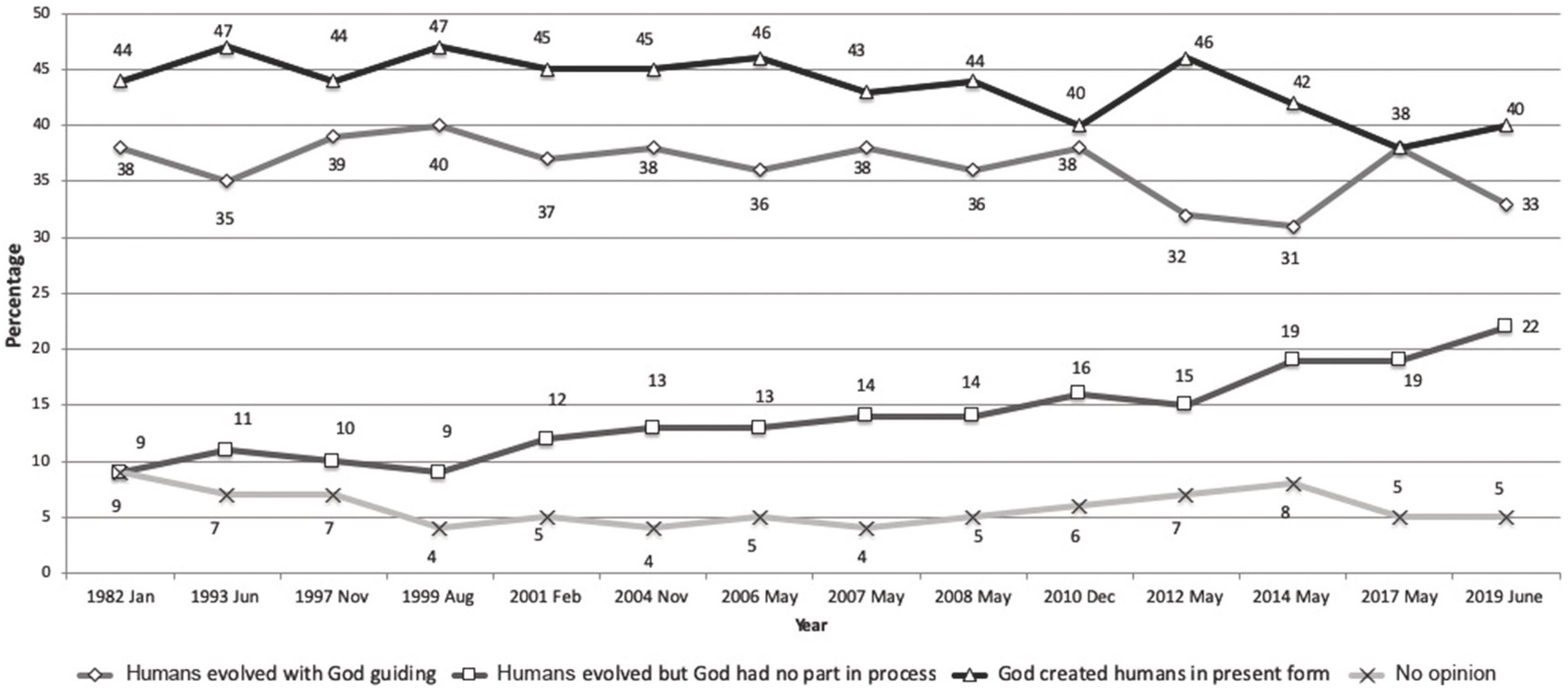
One might wonder why about three out of four people in one of the most advanced countries in science and technology in the world think that God either created humans or has driven our evolution. There are several facts to consider. For instance, the conclusion from the 2017 survey is that people with higher education are more likely to accept the evolutionary explanation for human origins and less likely to support “creationism.” In particular, among people with postgraduate education, 21 percent accepted “creationism” and 31 percent accepted “evolution,” whereas this was the case for 48 percent and 12 percent, respectively, of people with high-school education or less. However, the Gallup report noted that “even among adults with a college degree or postgraduate education, more believe God had a role in evolution than say evolution occurred without God.” Many would claim that higher levels of education might make one less likely to accept supernatural explanations and more likely to accept natural ones. However, there may be other reasons that about three out of four people in the USA currently seem to prefer responses that implicate God in human origins.
Let me explain. In addition to the Gallup poll, the Pew Research Center has also conducted surveys in the USA about evolution. Let us compare the Gallup and Pew surveys conducted in the USA between 2008 and 2014. I have arbitrarily put together surveys conducted in different years, but my aim is not to compare those but simply to show trends across time. Table 1.1 presents the exact wording of the choices made available to participants in the Pew and Gallup surveys. The findings of these surveys are presented in Figure 1.6.
| Type of question | Gallup | Pew |
|---|---|---|
| “Evolution” | Human beings have developed over millions of years from less advanced forms of life, but God had no part in this process. | Humans and other living things have evolved due to natural processes such as natural selection. |
| “Theistic evolution” | Human beings have developed over millions of years from less advanced forms of life, but God guided this process. | A supreme being guided the evolution of living things for the purpose of creating humans and other life in the form it exists today. |
| “Creationism” | God created human beings pretty much in their present form at one time within the last 10,000 years or so. | Humans and other living things have existed in their present form since the beginning of time. |
The percentages of participants of the Gallup and Pew surveys accepting “evolution,” “theistic evolution,” and “creationism.”
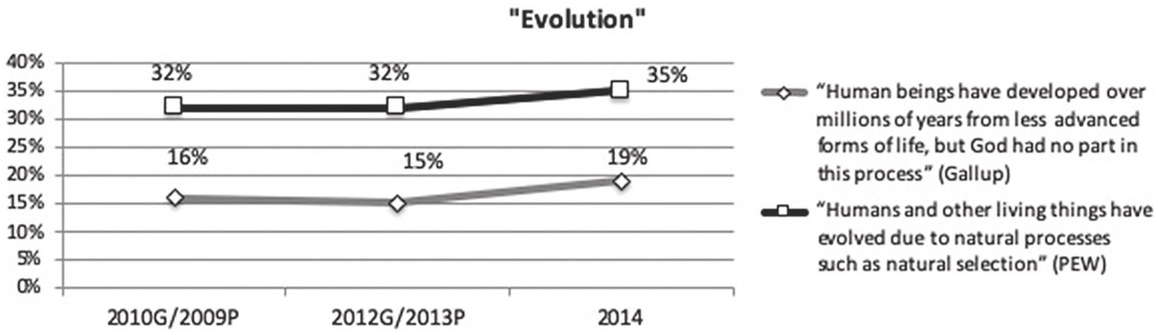
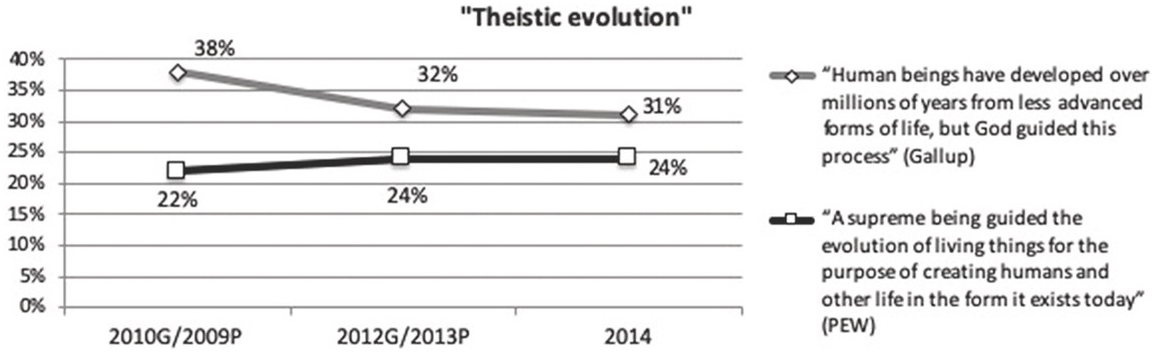

Even though both the Gallup and Pew polls practically provided participants with the same three options (“evolution,” “theistic evolution,” and “creationism”), the results in Figure 1.6 indicate two quite different situations. Assuming that all surveys involved a representative sample of the US population, one should not expect significant differences in participants’ responses to the two polls. However, this is not the case. On the one hand, twice as many participants selected “evolution” in the Pew polls compared to the Gallup polls. On the other hand, more participants selected “theistic evolution” and “creationism” in the Gallup poll compared to the Pew poll. But how is this possible? If the differences are not due to sample sizes or a biased sampling of participants, what could then account for them? There are actually two important issues, one conceptual and the other methodological.
The conceptual issue relates to the content of the phrases. Look carefully at Table 1.1 and compare the phrases therein. Do you see any difference? Well, the word “God” appears in all Gallup phrases but in none of the Pew ones; the term “supreme being” only appears in one of those. Demonstrating an effect of such differences in wording on participants’ responses would require an empirical study in which some participants from the same samples and responding under the same conditions would be given the Gallup phrases and others would be given the Pew phrases. Until this is done, I cannot establish that the differences in phrasing have an effect. However, the different results in the Gallup and Pew polls make plausible the assumption that this could be the case, and this is something worth investigating.
The methodological issue stems from the fact that, whereas all three statements were given to Gallup participants at the same time, this was not the case for the Pew participants. There, in contrast, participants were first asked which of the following phrases comes closer to their own view: “Humans and other living things have evolved over time” or “Humans and other living things have existed in their present form since the beginning of time.” Then, those who chose the first phrase were also asked if they thought that “Humans and other living things have evolved due to natural processes such as natural selection” or “A supreme being guided the evolution of living things for the purpose of creating humans and other life in the form it exists today.” But why might receiving all three options together or in two consecutive steps have an effect on participants’ responses?
The researchers at the Pew Research Center have actually tested this in a recent survey (April 23 to May 6, 2018). Participants were randomly assigned to one of two conditions: Half of them were asked a single question about evolution and were given three options: “Humans have evolved over time due to processes such as natural selection; God or a higher power had no role in this process”; “Humans have evolved over time due to processes that were guided or allowed by God or a higher power”; or “Humans have existed in their present form since the beginning of time.” The other half of the participants were asked about evolution in a two-step process: They were first asked if they thought that “Humans have evolved over time” or if “Humans have existed in their present form since the beginning of time.” Then, those who agreed with the idea of evolution were asked a second question, whether they thought that “Humans have evolved over time due to processes such as natural selection; God or a higher power had no role in this process,” or that “Humans have evolved over time due to processes that were guided or allowed by God or a higher power.”
The results were very interesting. Among those asked the questions in two steps, 40 percent chose “evolution,” 27 percent chose “theistic evolution,” and 31 percent chose “creationism”; in contrast, among the participants who were given all questions at the same time, only 18 percent chose “creationism,” whereas 33 percent chose “evolution” and 48 percent chose “theistic evolution.” The Pew researchers thus concluded that testing multiple ways of asking about evolution is necessary and important. They explained the higher acceptance of evolution in the one-step approach as being due to the fact that respondents were not put in the dilemma of creation or evolution, but could choose among all three options right from the start.
The one-step approach is actually the one that Gallup had been using over the years. It is then interesting to compare the most recent Gallup (June 3–16, 2019) and Pew (April 23 to May 6, 2018) polls (Table 1.2) using this approach.
| Type of question | Gallup | % | Pew | % |
|---|---|---|---|---|
| “Evolution” | Human beings have developed over millions of years from less advanced forms of life, but God had no part in this process. | 22 | Humans have evolved over time due to processes such as natural selection; God or a higher power had no role in this process. | 33 |
| “Theistic evolution” | Human beings have developed over millions of years from less advanced forms of life, but God guided this process. | 33 | Humans have evolved over time due to processes that were guided or allowed by God or a higher power. | 48 |
| “Creationism” | God created human beings pretty much in their present form at one time within the last 10,000 years or so. | 40 | Humans have existed in their present form since the beginning of time. | 18 |
A first thing to note is that the word “God” that could have made a difference in the Pew–Gallup comparison above now appears in two of the three Pew items as well. However, there are again important differences in the results. Is it because the two surveys took place a year apart? Perhaps. It is noteworthy that “creationism” is the most accepted view in the Gallup poll, whereas it is the least accepted one in the Pew poll. Is this the case because the phrase used in the Pew poll is the only phrase that does not contain the word “God”? It is hard to know. What is important is that there are important methodological and conceptual issues to consider in the interpretation of such surveys. As the Pew Research Center report concludes: “What may seem like small differences in question wording can have a major impact on survey estimates of the share of the public that believes in a naturalistic account of human development, a creationist view or something in between – an evolutionary process guided or at least allowed by God or a supreme being.”
Evolution Polls at the Global Level
In 2011, the research company Ipsos conducted a poll for Reuters which involved 18,829 adults from 23 countries. Two of the questions asked were the following:
1. Which of the following sentences best describes your personal beliefs about your God or Supreme Being(s)?
I definitely believe in God or a Supreme Being
I definitely believe in many Gods or Supreme Beings
Sometimes I believe, but sometimes I don't in God/Gods or Supreme Being/Beings
I’m not sure if I believe in God/Gods/Supreme Being/Beings
I don't believe in God/Gods/Supreme Being/Beings
2. There has been some debate recently about the origins of human beings. Please tell me which of the following is closer to your own point of view:
Some people are referred to as “creationists” and believe that human beings were in fact created by a spiritual force such as the God they believe in and do not believe that the origin of man came from evolving from other species such as apes.
Some people are referred to as “evolutionists” and believe that human beings were in fact created over a long period of time of evolution growing into fully formed human beings they are today from lower species such as apes.
Some people simply don’t know what to believe and sometimes agree or disagree with theories and ideas put forward by both creationists and evolutionists.
This poll raises important methodological, conceptual, and inferential issues. First of all, there is the methodological problem that the two questions above are two different kinds of questions. Question 1 is supposed to ask respondents what their beliefs about God are, but the choices given are actually about whether participants believe in God. In contrast, Question 3 is clearly asking people what their beliefs about evolution or creationism are, as people are asked to agree with one of these views or choose the option of being unsure. In short, Question 1 asks people whether they believe in God, whereas Question 3 asks them what they believe about the origin of humans. But is this an important difference? Yes, it is. Let me use an example to explain. On the one hand, a child might have beliefs about Santa Claus, such as that he is nice, generous, has a long beard, and wears red clothes without necessarily believing in Santa Claus – that is, without believing that Santa Claus really exists. On the other hand, a child might believe in the existence of Santa Claus without holding any specific beliefs about him. The case is similar for evolutionary theory. For instance, a biologist might have many beliefs about evolutionary theory – that is, understand it and consider it as a useful heuristic for making predictions and conducting experiments. However, that person might not actually believe in evolutionary theory – that is, esteeming and valuing it – because it conflicts with her deeply held religious convictions. Conversely, a student might believe in evolution – that is, accept that it is true simply because she has heard a prominent scientist saying it is true – without understanding it and thus holding beliefs about it.
A second problem is conceptual. Question 3 states that “the origin of man came from evolving from other species such as apes” and that “human beings were in fact created over a long period of time of evolution growing into fully formed human beings they are today from lower species such as apes.” The problem here is that these statements might be perceived to imply that humans evolved from the apes that exist today. However, this is not what evolutionary theory suggests; rather, what is suggested is that humans have a common ancestor with these apes, which was probably ape-like, but still different from the apes that exist today. Now, you might wonder, is this a big difference? Ape or ape-like, it is still an ape, isn’t it? Well, I think there is. To put it simply: Is it the same to say that you are descended from your first cousin, and that you and your first cousin have a common grandfather and grandmother? The former is impossible, the second is correct. Whether or not the cousin and the grandparents are apes is secondary.
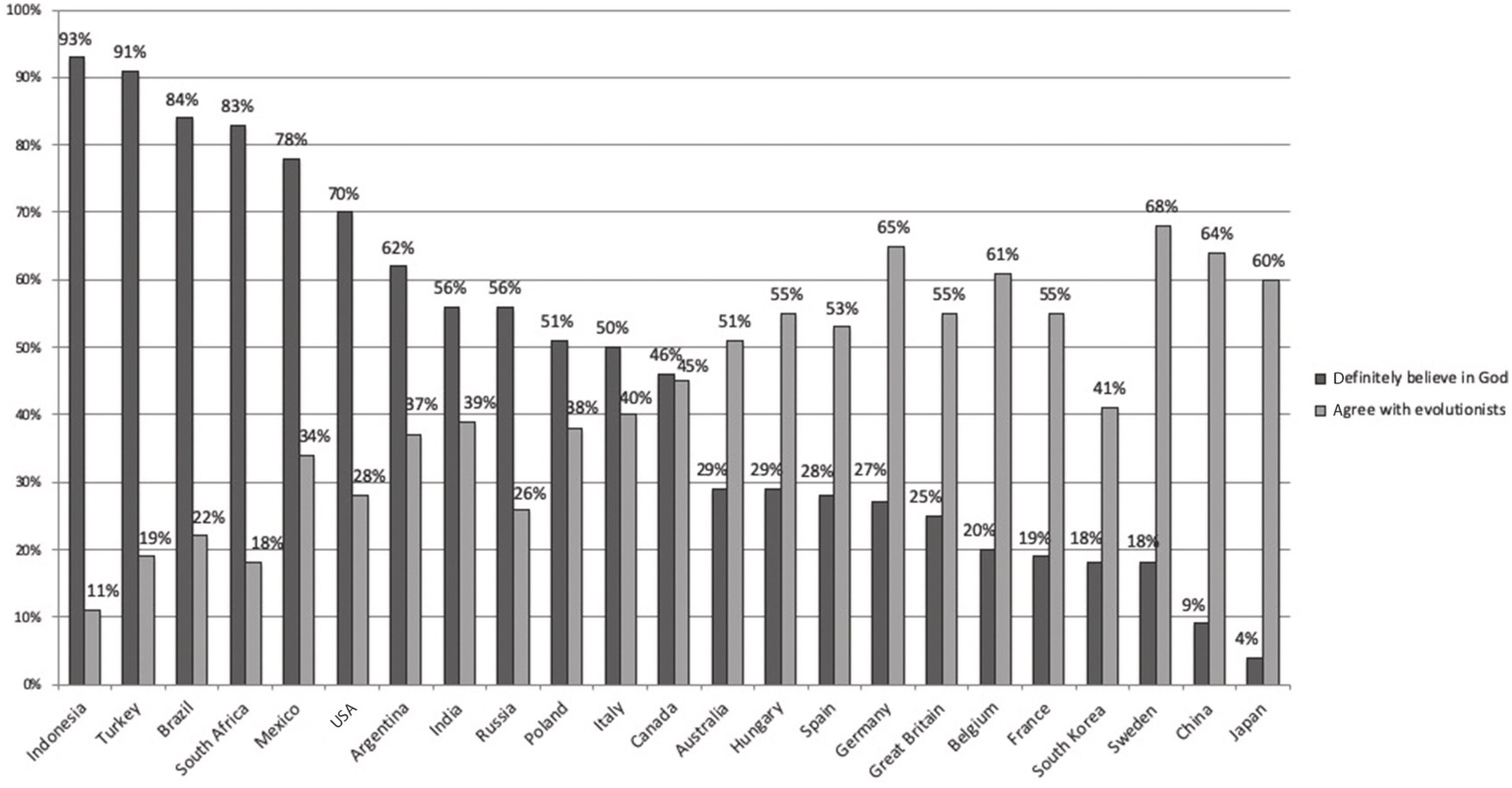
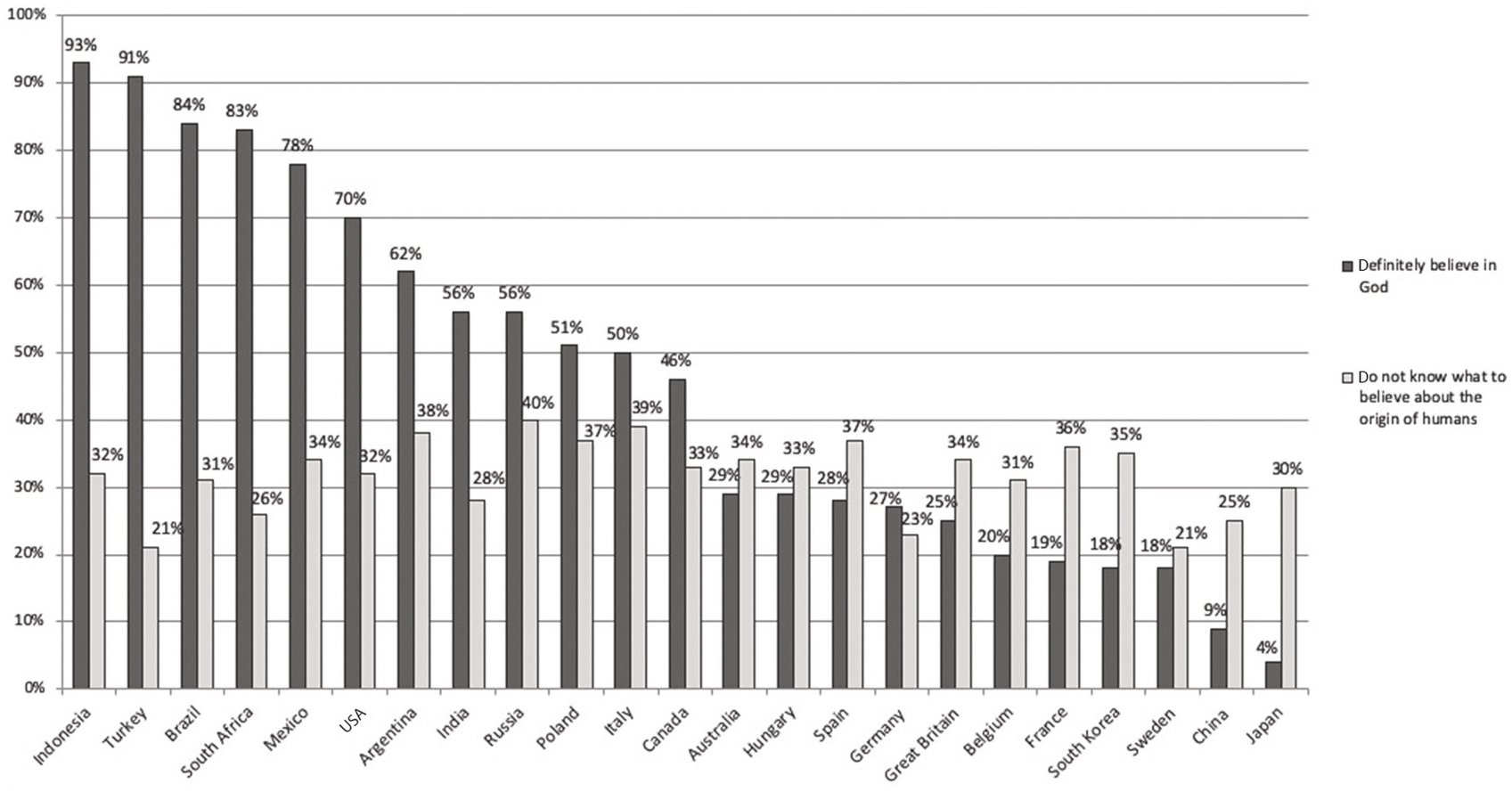
Let us now consider the findings of the Ipsos 2011 study and the respective inferential issues. Figure 1.7 presents how many people in each country definitely believe in God and agree with evolutionists. What emerges is the picture that the more “religious” a country is, the lower is the acceptance of evolution. The immediate inference, then, is that belief in God and acceptance of evolution are not compatible. There is certainly evidence for such a trend. However, given the methodological and conceptual issues discussed above, it is unclear whether this accurately reflects what people actually think. Furthermore, this is not the whole story. On the one hand, if one compares how many people believe in God and how many people agree with “creationists,” it becomes clear that in most cases there exist twice as many people who believe in God than there are people who agree with creationists (Figure 1.8). On the other hand, and perhaps most importantly, about one in three people in all countries, both in the “more religious” and in the “less religious” ones, are unsure about what to believe about evolution (Figure 1.9). Therefore, one should go beyond the typical evolution–religion dichotomy to consider those religious people who are not creationists and all those others who are unsure. These are the people who are more likely to understand and accept evolution, and to whom attention in science education and the public understanding of science should be paid.
The usual image found in polls is that there is a negative correlation between belief in God and acceptance of evolution.
There are fewer people who accept creationism than who believe in God; therefore not all religious people are necessarily creationists.

Those who were unsure about evolution were more or less equally distributed in “more religious” and “less religious” countries.
From all of the above there are two important take-home messages. First, it is far from simple and straightforward to figure out what people think or believe about evolution or religion. Second, even if we are confident that we have found what people believe, there many different kinds of inferences one can draw from the available data. Therefore, caution and thoughtfulness are required before one can reach conclusions. Of course, religious resistance to accepting evolution is a fact, and so it is worth looking into this issue in more detail.


