The year was 1942. The United States had entered World War II on December 8, 1941, following the Japanese attack on its fleet at Pearl Harbor. While the US government claimed to have joined the conflict to defeat the racist regimes of the Axis and to bring about the triumph of democracy in the world, there were places in America where racial hierarchy, whether explicit or not, contradicted this commitment to the founding principle of equality. At two military posts in particular, African Americans were trained in strict segregation under the command of white officers. These two all-black posts were anomalies in comparison to other army bases – all-white bases or segregated bases where whites and blacks trained in distinct spaces under the principle of “separate but equal” upheld by the Supreme Court in the 1896 Plessy v. Ferguson decision. The Army had not designed any specific regulations to govern the racial regime that was to be implemented at the two all-black posts.
No minority was as badly affected by army segregation as African Americans during World War II. While some separate units were created for Nisei soldiers, born in the United States to Japanese parents and distrusted by the Army for political reasons, Nisei women were authorized to join integrated units.1 With the exception of a few dozen scouts who served in separate units in the Army until the early 1940s, Native Americans fought alongside whites and served in all functions by virtue of the exceptional warrior qualities attributed to them.2 Only blacks were systematically assigned to separate units; only blacks were relegated to buildings specifically reserved for them in training camps. To be black in the US Army during World War II was to have a radically different experience from all other soldiers.
The first of the two all-black posts was located in Tuskegee, Alabama, a segregated city with a majority of black residents, close to the campus of the Tuskegee Institute, which was founded in the late nineteenth century by former slave Booker T. Washington. The institute’s mission was to educate African Americans and demonstrate their excellence and exemplary character to white society. In 1923, it fought to host the nation’s only Black Veterans Hospital; it then began to offer aviation courses, becoming the first black college in the country to provide such training to African Americans. When black activists finally succeeded, with the support of First Lady Eleanor Roosevelt, in forcing their way into the Air Force, against the resistance of top generals, it was Tuskegee again that delivered pilot training. The nearly 1,000 black airmen who flew in the skies over Alabama, before being deployed in powerful bombers to North Africa and then to Sicily, were celebrated by the African-American community as heroes and as symbols of victory over racial prejudice in the military. As former pilot Omar D. Blair stated in a 2012 interview, “we wanted to prove to people around the world and particularly the people in the United States of America that black people could do something besides unload boxes, that we could fly the most sophisticated aircraft and fix the most sophisticated equipment and [perform] all kinds of activities.”3 The men of Tuskegee finally came out of the shadows in 1995, with a film celebrating the exploits of the “freedom flyers.”4 During the war, however, the creation of this segregated squadron had been strongly condemned by the National Association for the Advancement of Colored People (NAACP), the nation’s oldest civil rights organization, which was founded in 1909. The NAACP had dubbed it the “Jim Crow squadron,”5 in reference to the southern laws that had institutionalized, a decade after the end of the Civil War, the strict separation of whites and blacks in all areas of social life and the exclusion of blacks from civic life.
As African-American airmen were flying in the skies over Alabama, the infantrymen of the 92nd and 93rd Infantry Divisions – the only two black units of divisional size in the US Army – were learning to fight in the Arizona desert near Fort Huachuca, the second of the two all-black posts. This former Indian War camp, created in 1877 and used until World War I as a base for monitoring the border with Mexico, is nowhere near as famous as Tuskegee and has been ignored by historians and documentary filmmakers to this day.
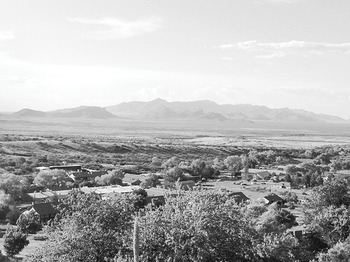
Nevertheless, a new chapter was opened in the history of the fort when the War Department decided, in 1942, to turn it into the largest black training camp in American history. The aim was to accommodate successively the Army’s only two African-American divisions, each composed of 15,000 men. Perhaps it is not surprising that Fort Huachuca has received less attention than Tuskeegee. After all, the infantry was a far less prestigious corps than the Air Force – the modern weapon par excellence. Moreover, unlike the Tuskegee airmen, the two divisions had clearly not distinguished themselves in combat: They were – unjustly – reproached for their unpreparedness and cowardice, first in the Pacific for the 93rd Division and then in Italy for the 92nd. The fact that the Huachuca experience continues to be ignored is also explained by its lower visibility. Lying on the margins of the country, isolated by a mountain range, the fort stands in a desert area of the western United States, not in the South where most African-American soldiers were trained during the war. The racial regime in Arizona was segregation as in the South, but blacks were proportionally far fewer in number and segregation was neither as entrenched nor as explicit.
Lying on both sides of the border separating the United States and Mexico, the borderlands – areas traversed by common natural elements, family ties, capital, ideas, and speeding trains – have always constituted a land of experimentation, one long forgotten by the national narrative. It is in the “Indian country” of the American West that the imperialist policy of the United States was imagined before it was applied as a model of colonial relations in the Philippines, Cuba, and Puerto Rico, thanks to the continuity of military strategy and command personnel.6 In this dynamic space with porous borders, however, the history of the United States has not merely been one of expansion, domination, or appropriation; it has sometimes taken unpredictable, changing, and ambiguous directions. As the historical lens shifts from the center to the peripheries, entanglements, accommodations, and subversions of US and Mexican state power come into view.7
At the end of the nineteenth century, racial hierarchies were shifting and uncertain at the US–Mexico border, and power relations between groups were extremely fluid and sometimes contradictory.8 It was thanks to a back and forth coming and going between Victoria and San Antonio that William Ellis, a millionaire born into slavery in Texas before the end of the Civil War, was able to cross the color line, passing sometimes as Mexican and at other times as American, and managed to cross social boundaries, becoming a successful entrepreneur and then a baron of the Gilded Age – as the post-Civil War period of prosperity is called. And it was in the cotton fields of the Tlahualilo hacienda south of the border that Ellis attempted a colonization experiment involving 800 African-American sharecroppers from Alabama and Georgia.9 Between El Paso and Juarez, the border also served as a refuge for African Americans fleeing the violence of Jim Crow, Chinese immigrants targeted in anti-coolie campaigns, and Mexicans threatened by poverty and dispossession under the Porfirio Díaz regime. In that zone, these three groups challenged the fixed and divisive ethno-racial and citizenship categories that the US and Mexican governments were trying to implement at the time.10 The borderlands were also sites of exception with respect to military technology and strategy. It was in this frontier zone that the US Army tested tanks, armored vehicles, and searchlights, before adopting them in its overseas operations in World War I. Even today, the border is a key site for the development of drones. Fort Huachuca has specialized in this type of technology and is now flown over by a helium-filled, white balloon that monitors the border day and night over several hundred miles. Lastly, it is in this land of exception near Mexico that an unprecedented racial experiment involving the concentration and training of an unparalleled number of African-American soldiers was attempted during World War II.
The pre-war racial consensus was both consolidated and challenged at Fort Huachuca. During the New Deal, southern Democrats, a key component of the coalition that brought Roosevelt to power and had de facto veto power over legislation in Congress, successfully filibustered all bills that aimed to prohibit lynching or to dismantle the Jim Crow regime. Key legislation of the New Deal excluded domestic servants and farm workers – two occupational categories in which blacks were overrepresented – from its scope of application. It also gave local authorities free rein to implement social and employment programs and thus preserve white domination. As a result, the racial hierarchies that had structured American society since the 1880s were left unchallenged during the New Deal, despite the shift of black voters to the Democratic Party, the President’s willingness to listen to his Black Cabinet, and the development of specific programs for blacks.11 In 1941, under pressure from African-American activists, the federal government was forced to declare illegal the employment discrimination practiced in the defense sector and in other industries involved in the national war effort.12 Yet, at the same time, the wartime Army reinforced internal segregation – in unit composition, in training, and in combat – because it saw this as the only acceptable way of incorporating larger numbers of African Americans into its ranks, in order to satisfy one of the pressing demands made by black activists and the black press. On the pretext that it was not a “laboratory,” it aligned the racial regime in its training camps with the segregation that existed in the South. At Fort Huachuca, both the post’s commandment and civilian authorities in Cochise County beyond the gates set up barriers – legal barriers and physical ones in the form of separation lines – because they feared the allegedly deviant behavior of black troops – drunkenness, hypersexuality – and their physical proximity. Faced with the rights claims of African Americans, especially officers who demanded the equality to which they were entitled by virtue of their rank, they felt the need to secure the white racial order through the spatial and functional reorganization of the old fort.
Within this enclosed camp, the racial consensus and racial prejudice were simultaneously put to the test. As in other military posts, black soldiers challenged white authority through a series of isolated acts and through organized acts of collective resistance. But the nature of this challenge was unique at Fort Huachuca because of blacks’ considerable numerical advantage, which was not fully neutralized by the asymmetry of authority between whites and African Americans. Moreover, the presence of an eastern black elite confident in its rights and talents allowed for an unprecedented experiment in racial integration in the medical field. When whites asked to be treated by black physicians, the military could no longer argue that physical proximity between the two races might cause trouble and instill fear in patients. While white commanders did resist the loosening of a racial system based on racist prejudice and degrading practices, old certainties fell away, and some of the civilian and military rules that had previously governed interactions between blacks and whites were no longer respected. The history of Fort Huachuca shows that the racial order, the foundations of which were consolidated at the beginning of the war, was fragile and could be challenged without necessarily resorting to violence. Indeed, despite the sometimes very high tensions, no mutiny or riot ever broke out at Huachuca – unlike the situation in many other training camps, including Camp Van Dorn in Mississippi and Fort Stewart in Georgia.13 This is probably why the unique history of Fort Huachuca has never been written, as if the absence of violence and deaths justified the disinterest of historians. Nevertheless, understanding what caused this unstable – racial, gender, and border – equilibrium to hold under pressure at first, and then to evolve in a direction that was unimaginable at the beginning of the war, can profoundly renew the interpretation of racial segregation within the US government.
This history of Fort Huachuca is not intended to be the final brick in a “total” history of training camps during World War II. In positioning myself at Fort Huachuca, at the level of the soldiers who made up the only two black divisions of the US Army, I want to approach the local “as a scale of observation whose use must produce specific effects of knowledge.”14 A detailed examination of this border fort, at once normal and exceptional, can yield a more accurate account of the complex nature of racial segregation in the military. The limit case of Huachuca allows us to see, as if through a magnifying glass, the difficulties that the Army encountered in articulating military hierarchy and racial hierarchy, its hesitations in the face of local situations that had been neither imagined nor foreseen, and the improvised arrangements that emerged from changing power dynamics, between the resistance of black soldiers and the fears of the surrounding white community. In the Arizona fort, segregation – of units, spaces, activities, and genders – was reinforced by the Army to accommodate three key demands of African-American organizations: to incorporate an unprecedented number of black soldiers, to accept African-American women as auxiliaries and nurses, and to grant new responsibilities to African-American officers. Intolerable for most, and clearly far from the ultimate goal of integration that was shared by all, segregation appeared to some as a second-best solution because it was presented by the Army as the only possible alternative to the exclusion of blacks from its ranks. As training progressed, this functional, spatial, and gender separation revealed itself to be highly ambiguous. On the one hand, it led to numerous abuses by white commanders, who held the ultimate authority. On the other hand, it created in some parts of the fort (the hospital, the Black Officers’ Club, the service clubs, etc.) a togetherness that was appreciated because it opened up new opportunities for blacks, who were no longer in competition with whites; it also enabled African Americans to take back control of some aspects of their lives, particularly in the areas of health, sports, and culture. Clearly, at Huachuca, segregation was not simply the opposite of integration. It gave rise to different racial regimes and even allowed for integration experiments – though, of course, this did not make it acceptable. Moreover, blacks were divided over the form that should replace the segregation regime instituted by whites. There was a reenactment of the opposition about the ultimate goal of the struggle that had long structured the African-American community: There were those who favored real integration, in which blacks and whites would live and serve side by side, and those who advocated for the takeover of spaces and institutions previously held in white hands alone.15
It is these contradictions and experimentations that warrant the study of Huachuca as an experiment in race relations within the Army. In his study of the Ungemach garden city in Strasbourg, Paul-André Rosental approached the site as an experiment that despite – or because of – its small size could “help to trace the contours of a phenomenon that is extremely difficult to grasp,” namely French eugenics in the twentieth century, and he used it as a “springboard” to tell an embarrassing, difficult history.16 In choosing the Ukrainian town of Buchach (formerly Polish Buczacz) to narrate the carrying out of genocide at the local level, Omer Bartov showed that there were no passive bystanders and that everyone, whether Polish or Ukrainian, was complicit to some degree in the killing of Jews. He thus renewed the historiography of the Holocaust.17 I would like my study of Huachuca, which draws on the sources closest to the field, to play a similar role for the history of race in the United States. To that end, I show how multiple racial regimes can coexist within a segregated space, and I highlight the paradoxes associated with the confrontation between different conceptions of interracial relations.18
While this history of Fort Huachuca is set in time of war and in the confines of the Army, it is also traversed by the ties that African Americans retained with the life they left behind: a geographical origin and the racial regime associated with it, a place in society, and friendship and family bonds that were violently broken. Although it focuses primarily on the racial regime in force in the Army, it also addresses all the other facets of black life, from African Americans’ insurance policy to their sexuality, health, family, and relationship to art and entertainment. The history of the black soldiers and women auxiliaries of Huachuca covers a relatively short period of time (1941–1945), but it is punctuated by a rapid series of events that took place far away from Arizona, even beyond national territory: the entry of the United States into World War II, the sequence of battles in the different theaters of operation, the evolution of Allied positions, the end of the conflict, and the death of President Roosevelt.
The history of Huachuca’s black soldiers is played out on different interconnected scales. The first is the micro scale of daily life at the fort. The second is the macro scale, namely the scale of the country – the War Department in the federal capital, where the rules governing the training of black troops were adopted, and areas with high concentrations of African Americans, mainly large cities and military bases, which saw the frequent eruption of race riots with effects on training conditions at Huachucha – and that of the different theaters of war, where the troops were deployed after their training in Arizona. Between the micro and macro scales lies the regional scale, which covers Huachuca’s relations with its direct environment, from the gates of the camp to the capital of Arizona and the border with Mexico. In short, the history of Huachuca will be told in a constant interplay of scales.19 To use the metaphor proposed by Carlo Ginzburg, the camera will move from close-ups to long shots.20
I therefore write this history as I would report on event sequences that succeed one another on a large animated map of the fort – in the manner of those old Paris metro maps on which diode bulbs lit up in turn – to record the activity of the actors who left traces on it. These lights can be external and can shine all the way from Fry, Bisbee, Tucson, Phoenix, or even Washington. When their intensity is sufficiently strong that they manage to illuminate the far south of Arizona, the narrative describes their effects on the troops in training. There are times when no light shines because archival traces are missing; the narrative then echoes the silence, the absences, before speeding up again. On the contrary, when the light signals left by actors, whether civilian or military, multiply, the narrative slows down to recount the events at length. The focus and pace of the narrative vary according to the depth and intensity of the remaining archival, photographic, and oral traces.
The military archives on segregation in the Army are very voluminous. Yet, the military justice and hospital records of Fort Huachuca, which would have been so useful to my work, were destroyed when the camp was closed in 1947. The personal archives and oral histories produced as part of the Veterans History Project, launched in the 1980s by the Library of Congress to preserve the experiences of American veterans, allowed me to compare overarching analyses of the Army with soldiers’ accounts of the war. I examined how the major black newspapers fostered racial pride with stories and portraits from Huachuca that acted as smoke screens concealing the segregation and discrimination practiced at the fort. These realities, I found, were barely mentioned or completely omitted as soon as threats were made to suspend free postage. During my research, I collected several photographs taken by soldiers, journalists, or amateurs that revealed situations or personal relationships about which the archives were silent. More than any written document, these photographs testified to the nature of the interactions between blacks and whites, at least as their authors wished to present them to the outside world – gestures of authority or obedience, body language showing complicity or discomfort. Army Signal Corps photographers were tasked with documenting training for educational purposes and with representing the preparation of soldiers as rewarding and effective;21 however, details that they had not noticed could slip back into the frames without them knowing it.
Microhistory maintains the illusion of being able to get close to the actors. Yet, during my research, I could hear the actors’ voices only in the form of surges or outbursts. Colonial history has shown that judiciary archives are often the only remaining traces for hearing the subalterns.22 Information on their lives, intimacy, and convictions can be found in the minutes of trials. At Huachuca, inspection reports and personal records produced by the martial court did shed light, via accounts of deviant acts, on the lived experiences of soldiers. But, to gain access to the soldiers’ voices, I had to pay to consult them one by one. Throughout the narrative, I draw on oral histories to convey the sensory and concrete dimension of the soldiers’ training and to recreate the relationships they formed at Huachuca. I also use the albums and scrapbooks of women auxiliaries (Wacs) and nurses as a visual equivalent of African-American women’s voices. On the photographs and postcards, one can see them reclaim their military experience and representation as black women within a white institution. A chance discovery of personal archives provided me with information on remarkable personalities and trajectories – the head of the black hospital, Midian Bousfield, some of his medical colleagues, the playwright Shirley Graham and Wac Irma Cayton (both of whom were in contact with numerous intellectuals and journalists), or the Wac artist Anna Russell. Thus, and paradoxically, the history of the fort is told mainly through the “female gaze” on military life, a life that is often considered as exclusively masculine and as productive of virility.
In contrast to the traditional narrative of World War II, the history of Fort Huachuca yields a dissonant, race-centered narrative. Although the narrative of “the good war” – the title given by radio journalist Studs Terkel to his oral history of the conflict, which became a best-seller after its publication in 198423 – has been called into question at least since the 1990s, it is still very much alive in popular culture and on the history shelves of bookstores.24 The war fought by the so-called heroic generation was presented as a crusade to defend democracy against the racist ideologies of the Axis powers, and it was said to have rebuilt the unity of the nation that had been shattered by the Great Depression. Moreover, the federal government was credited with pursuing and defending the general interest, particularly that of women and African Americans.25 Novels like Leon Uris’s Battle Cry (1953) and films like The Longest Day (1952) popularized the image of white brotherhood and male heroism in battle. Hollywood cultivated the illusion of racial harmony in the military by depicting fictional multicultural platoons in which Protestants, Catholics, Jews, Asians, and blacks fought side by side.26 However, as the historian Gary Gerstle has shown, World War II was both a “good war” and a “race war.” As such, it brought into conflict two American traditions: “civic nationalism” – based on a commitment to the political ideals of nationhood, equality, inalienable rights, and elected democratic government – and “racial nationalism” – grounded in an ethno-racial definition of America whereby the American people share the same blood and skin color. The war was also a time when American democracy was associated with the internment of Japanese Americans, the endorsement of racist beliefs and practices, and the organization of the military around the opposition between blacks and non-blacks.27 The racial history of the war inevitably troubles consensual and irenic accounts. At Fort Huachuca, where black soldiers trained without being able to demonstrate their heroism, the traditional narrative of the war is transformed. The memory of military segregation, which was repressed by the Army when it became a powerful tool for racial and social integration in the 1960s, returns to consciousness in this isolated place.
Through the lens of Huachuca, the racial segregation practiced in the Army during the war can be examined for its own sake and not just as a focus of resistance or struggle. The first history of black soldiers in World War II was an official history. Written in 1966 by Ulysses Lee, an employee of the Bureau of Military History, The Employment of Negro Troops was primarily concerned with the preparation of blacks for combat and the functions they served in a segregated setting.28 This seminal work did not perpetuate the reputation of African-American soldiers as bad fighters, but neither did it challenge it. The two unfortunate episodes involving the black infantrymen of the 92nd and 93rd Divisions – the first in the Solomon Islands and the second at the Gothic Line in Italy – did play a part in the Army’s decision to postpone racial integration, which had been contemplated at the end of the conflict. In reaction to the extremely harsh judgment of black troops, a counter-narrative later developed that emphasized the heroic acts of soldiers and officers who were decorated after the war (for instance, Vernon Baker, who received the Medal of Honor for his actions in Viareggio in April 1945) or of those who had served in elite segregated units: the 761st Tank Battalion, which cleared the way for the 4th Armored Division in Germany after the Battle of the Bulge; the 320th Battalion, which manned armed balloons off the beaches of Normandy on D-Day to counter the German Air Force; and the Tuskegee squadron of aviators. This struggle to rehabilitate the wartime deeds of black soldiers eventually moved from the theaters of operations to books and museums, where it continues to play out to this day – for instance, in the windows of the National Museum of African American History and Culture, which opened in 2016 in Washington, DC. By shifting the focus from the theaters of operation to the racial treatment of soldiers in training, the interactions of these men with civil society, and the place of women among them, my study departs from activist discussions about the manly heroism of soldiers. In this place of waiting and uncertainty, victories were won on the racial terrain, not on the battlefield; they were not the work of isolated heroes but that of organized groups of men and women who came together to challenge an unjust order.
Historians of race have often looked for the roots of the “long civil rights movement” – which, according to Jacquelyn Dowd Hall, began long before the heroic decade of the 1960s29 – in the conditions experienced by blacks during the war. Was World War II an accelerating moment in the long struggle for equality? Richard Dalfiume, one of the pioneering authors on the role of African Americans in the Army, has argued that “the seeds [of the civil rights movement] were indeed sown in the World War II years.”30 Yet, more than a time of conquest, the African-American military experience was a source of humiliation. Attempts at racial integration could be counted on the fingers of one hand, and the conditions of return to civilian life were also discriminatory because the GI Bill, the law designed to support returning World War II veterans, was applied in a racist manner.31 Kevin Kruse and Stephen Tuck have noted that, while the war resulted in a momentary decline in black activism, it also led to a renewed repertoire of actions in the struggle for racial equality.32 According to Thomas Guglielmo, a “martial freedom movement” developed that set up barriers against authoritarian and discriminatory policies within the Army, but it did not have the characteristics typically associated with the civil rights movement – striking actions, charismatic leaders, presence of women. In his view, this movement must be examined and understood “on its own terms – as a crucial period and type of black political struggle.”33 My study of Fort Huachuca, where acts of resistance took place with varying degrees of intensity, does precisely that: It examines segregation and the forms of opposition to it on their own terms, rather than taking sides in the historiographical debate on the origins of the civil rights movement or the memorial debate on the heroism of black troops.
The Arizona fort also offers a composite and therefore unique cross-section of the African-American community during the war. Social mixing, a well-known function of the Army, occurred naturally at the fort among black soldiers who were physically and psychologically very far from the combat zones – of which they knew little. At Huachuca, men from the South and the North of the country were forced to live in close proximity and left behind very different civilian lives. Those from the South were already familiar with legal segregation. Those from the North, who were generally more educated, more politicized, and more disoriented in Arizona, were experiencing segregation for the first time and were shocked by it. Different categories of people were brought together at the fort: northern workers and southern sharecroppers still reeling from the effects of the Great Depression, but also representatives of the “talented tenth” whom W. E. B. Du Bois described at the beginning of the twentieth century – that is, the 10 percent of African Americans prepared to occupy positions of leadership thanks to a good education.34 The medical officers at the black hospital belonged to the light-skinned “black bourgeoisie” identified by the African-American sociologist E. Franklin Frazier in the late 1950s.35 Many of the volunteer nurses and members of the Women’s Army Corps (WAC) had already had distinguished careers. In short, Fort Huachuca brought together in one place a very diverse group of people who reacted differently to the racism and segregation practiced in the Army. The available sources allow one to hear a great plurality of voices, each reflecting a singular experience of segregation and a unique response to it – resistance, rebellion, but also accommodation or resignation. Any attempt to reconcile the sometimes contradictory narratives of the Huachuca experience would amount to erasing the ambiguity of positions and situations.
In this history of Huachuca, I also pay particular attention to space as I seek to understand how the fort was organized and impacted by segregation – through the isolation of blacks from whites, the creation of partitions in existing buildings, and the allocation of supposedly equivalent places to whites and African Americans.36 By reading the sources and examining the photographs with careful attention to place, I try to recreate a space, both inside and outside the camp, characterized by a unique form of segregation because of the great imbalance between the few hundred white officers and the 15,000 black men. In the 1950s and 1960s, the traces of segregation disappeared almost everywhere in the United States, thanks to court rulings and civil rights legislation: “Colored” or “white” signs were removed, and places specifically reserved for blacks were closed down or used for other purposes. At Huachuca, the markers of segregation vanished as soon as the fort closed in 1947, before discrimination in the armed forces was officially abolished by Executive Order 9981 in July 1948. When the fort was reactivated in 1954, it was almost entirely white, and the former black-only buildings were either reallocated to soldiers in training or allowed to fall into disuse. Today, wartime segregation is invisible to the eye, except for those who know where to look.
This became obvious to me when I arrived at Huachuca, almost eighty years after the events that I wish to narrate. Indeed, as my research progressed, I realized that relying on congealed knowledge of the camp’s operation would prevent me from imagining what life and training had been like at the post. I therefore chose to consider Fort Huachuca as a site of investigation where present traces of the past can be found, thus drawing inspiration from the “archaeological approach” developed by Guillaume Lachenal. I went looking for “those traces that reenact the past via their present.”37 I did not search for witnesses, as the veterans of Huachuca were now very old and had left Arizona long ago. But I physically experienced the place in order to share sensations with those who had been stationed there during the war – the temperature contrasts, the burning sun, the discovery of unknown fauna and flora. At the foot of the Huachuca mountains, which block the passage to Mexico, I felt the isolation. I had imagined that I would wander freely around the fort, walking through it at my own pace to find answers to my questions. But while I was working at the Arizona State Archives in Phoenix in July 2018, I learned that it is difficult for a foreigner to enter the fort, as it has become a site of production of surveillance and intelligence technology. At Fort Huachuca, the US Army is now designing drones to monitor the border and the enemies of America – in Syria, Iraq, and everywhere else. I may have been a citizen of a friendly nation (although, two days before I entered the fort, President Trump declared at a NATO summit that Europe was an enemy entity), but I was seen as suspicious by virtue of being a foreigner. I therefore had to obtain entry clearance after an investigation. I obtained this authorization with great difficulty, but it did come with an escort who guided and accompanied me throughout my research: Stephen Gregory, a technician at the Fort Huachuca Museum. My luck was that Stephen is probably the person who best knows the history of the fort. The son of a military man, he was born at the black hospital and attended school at the fort. He returned to Huachuca as an adult because he could not stay away for long from the vast, cloudy Arizona skies. In his red jeep covered with dog hair and littered with empty Coke bottles, I discovered the hundreds of acres of barren land on which first the 93rd Infantry Division and then the 92nd trained during the war.
By experiencing the place physically, by crossing it end to end, I came to understand its organization. I discovered a real city – the third largest in Arizona during the war, with a population of up to 15,000 inhabitants – which functions independently with its offices, residential area, church, cemetery, playgrounds, schools, stores for customers in fatigues, hotels, and SUV fleet. I also learned about what distinguishes a military post from an ordinary city: the training grounds, the firing ranges, the ammunition and weapons stores, and the combat training areas. I observed, at the post and in its immediate vicinity, the interlocking effects of civilian law and military rule, which are key to understanding how the military authorities acted beyond their territorial scope during the war to address the fears and expectations of the surrounding white community. Seeing in real life how the town of Sierra Vista, formerly Fry, is literally glued to the fort and entirely organized around a boulevard that leads to the military enclave gave me a sense of how the two spaces, civilian and military, function in symbiosis today just as they did yesterday. I arrived with my head full of pictures of black units training in a camp at full capacity; I discovered a camp operating at a slow pace in the middle of the summer and saw that the men in fatigues were white. The only remaining trace of the Buffalo soldiers, the black men who fought the Indians and guarded the frontier until World War I, is a bronze statue of dubious proportions that has become the emblem of the fort. There is no trace left of the African-American soldiers who trained at Huachuca during World War II. The fort of today is not the palimpsest that I had hoped to find. This makes it all the more pressing to tell the history of this place which subverts the traditional narrative of conflict and race.