




Introduction
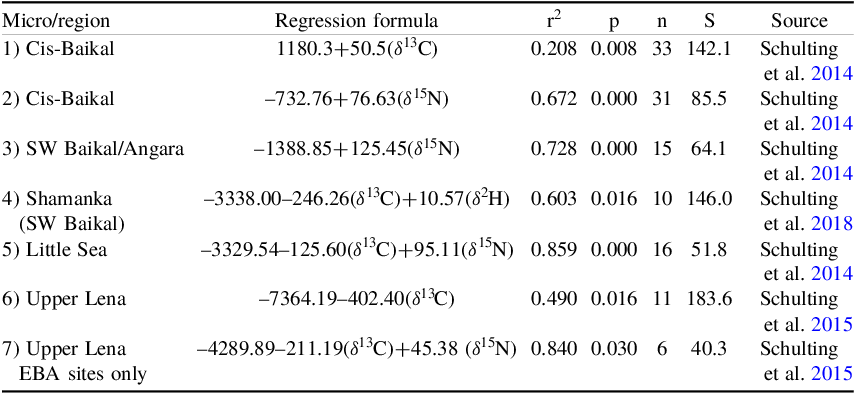
The waters of Lake Baikal and its surrounding rivers are known to have introduced significant freshwater reservoir effects into human consumers of aquatic resources. Using paired dates on humans and terrestrial fauna from the same graves, a number of regression equations have been developed for both Cis-Baikal (the western side of the lake) as a whole and its various separate microregions (Table 1) (Bronk Ramsey et al. Reference Bronk Ramsey, Schulting, Goriunova, Bazaliiskii and Weber2014; Schulting et al. Reference Schulting, Bronk Ramsey, Goriunova, Bazaliiskii and Weber2014, Reference Schulting, Bronk Ramsey, Bazaliiskii and Weber2015, Reference Schulting, Snoeck, Begley, Brookes, Bazaliiskii, Bronk Ramsey and Weber2018, Reference Schulting, Bronk Ramsey, Scharlotta, Richards, Bazaliiskii and Weber2022). The presence of different reservoir offsets, most notably in the region’s rivers, has the corollary that different regression equations might be required for individuals who moved from one microregion to another during the course of their lives. In such a case, the selection of different skeletal elements for analysis may lead to very different conclusions regarding both their radiometric age and their diet. This was thought to be the explanation for a discrepancy of ca. 350 14C years between radiocarbon dates on postcranial bone and dentine collagen from what was considered the same individual (Burial 42.02) at the Early Neolithic cemetery of Shamanka II, Lake Baikal, southern Siberia (Schulting et al. Reference Schulting, Bronk Ramsey, Scharlotta, Richards, Bazaliiskii and Weber2022).
Regression equations for FRE corrections on radiocarbon dates from Cis-Baikal and its microregions. Adjusted error range ( $\sqrt {{{\left( {s.d.} \right)}^2} + {S^2}} \;$
) is calculated using the ± error term associated with the 14C measurement (“s.d.”) and the standard deviation of the model’s residuals (“S”) (Weber et al. Reference Weber, Schulting, Bronk Ramsey and Bazaliiskii2016)
$\sqrt {{{\left( {s.d.} \right)}^2} + {S^2}} \;$
) is calculated using the ± error term associated with the 14C measurement (“s.d.”) and the standard deviation of the model’s residuals (“S”) (Weber et al. Reference Weber, Schulting, Bronk Ramsey and Bazaliiskii2016)

As detailed below, the dates obtained for a femur and rib were consistent with one another, combining to 6819 ± 21 14C BP, and were associated with mean stable carbon (δ 13C) and nitrogen (δ 15N) isotope values of –17.8‰ and 10.5‰, respectively. The dates obtained on post-weaning dentine from the first and third molars were also consistent with one another, but combined to 7165 ± 24 14C BP (Schulting et al. Reference Schulting, Bronk Ramsey, Scharlotta, Richards, Bazaliiskii and Weber2022). Moreover, while their mean δ 13C value of –17.1‰ was broadly comparable to that obtained on the bone samples, their δ 15N value of 15.8‰ was significantly higher. This introduced a very different correction for the freshwater reservoir effect (FRE), which in the Angara and Southwest Baikal region is based strongly on δ 15N values as a proxy for aquatic resource consumption. As this higher value was similar to other individuals from the Shamanka II cemetery, the implication was that this individual was local to the area from infancy to adolescence (the formation times of the first and third molars, respectively), but moved away after this to somewhere with a very different isotope ecology and FRE, before returning to the site not long before death and being buried there. In fact, the bone δ 15N value of 10.5‰ is an extreme outlier not only for the Shamanka II cemetery, but for much of the wider region (Weber et al. Reference Weber, White, Bazaliiskii, Goriunova, Savel’ev and Katzenberg2011, Reference Weber, Schulting, Bronk Ramsey and Bazaliiskii2016, Reference Weber, Ramsey, Schulting, Bazaliiskii and Goriunova2021, Reference Weber, Bazaliiskii and Jessup2024a).
In an effort to better understand this matter, further radiocarbon dates and stable isotopic data were obtained from the mandible, another rib, the atlas vertebra, and the os coxae of Burial 42.02. This was intended: 1) to confirm that a single individual was represented; and 2) if so, to assess whether elements with different turnover rates (e.g., femoral cortical bone versus rib) demonstrated variable δ 13C and δ 15N values reflecting a shift in residence between locations with different isotopic ecologies.
Shamanka II
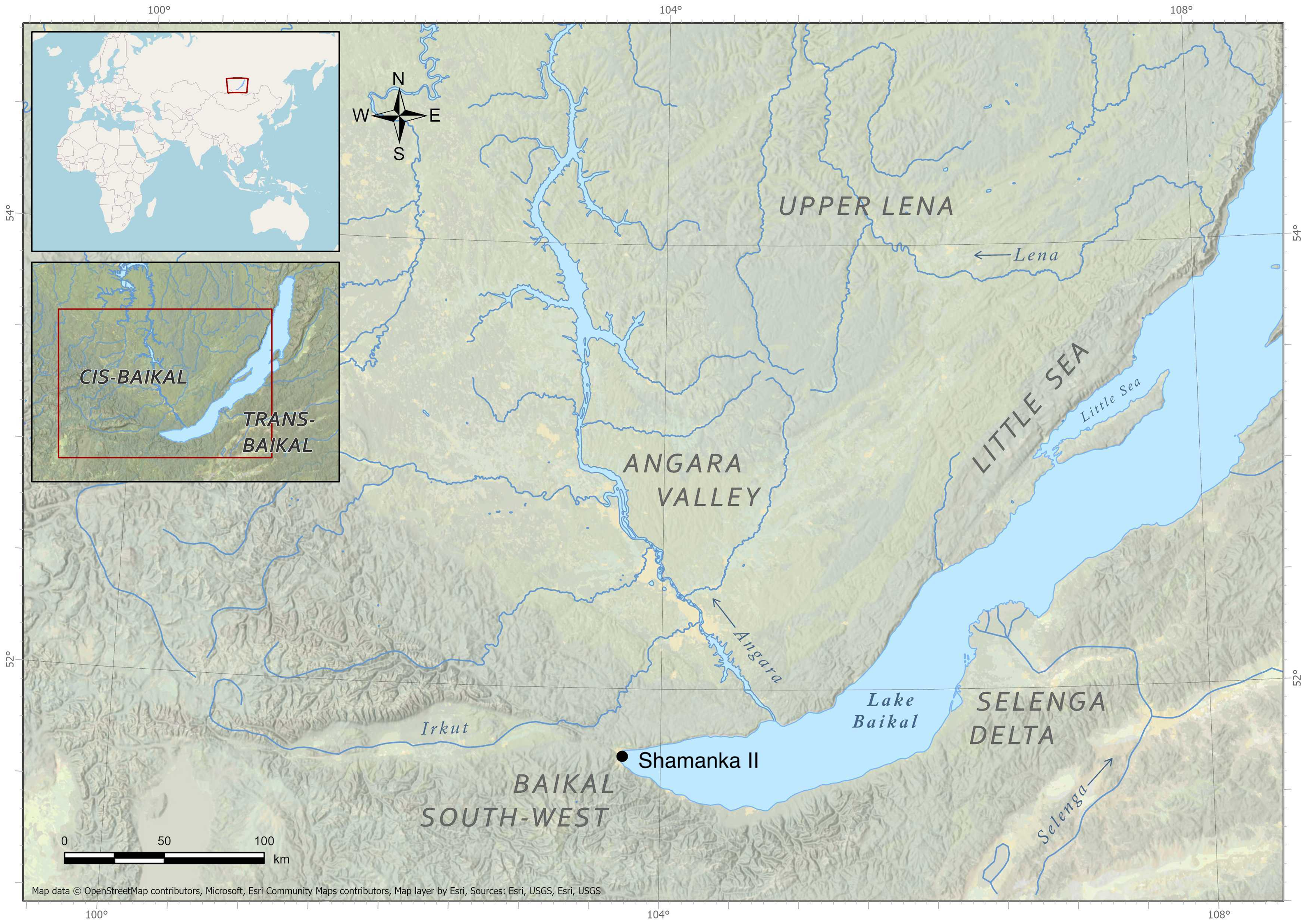
Shamanka II is one of the largest and the only fully excavated Early Neolithic (EN) cemetery known in Cis-Baikal (Figure 1). As is common for much of Eurasia outside of western Europe, the designation “Neolithic” here refers only to the presence of pottery; there are no domesticated plants or animals other than the dog. Excavated between 1998 and 2008 and in 2019, the site held 156 individuals in 97 graves (Weber et al. Reference Weber, Schulting, Bronk Ramsey and Bazaliiskii2016, Reference Weber, Bazaliiskii and Jessup2024a). The cemetery is located on a narrow peninsula jutting into Kultuk Bay in the southwestern corner of Lake Baikal. Once corrected for the freshwater reservoir effect, the EN burials can be placed into two distinct phases, with a Bayesian model dating Phase 1 to 7555–7170 cal BP (n = 98) and Phase 2 to 6925–6585 cal BP (n = 17) (95.4% confidence intervals, combining modeled “Start” and “End” dates employing trapezium distribution models, rounded to nearest half-decade; Weber et al. Reference Weber, Schulting, Bronk Ramsey and Bazaliiskii2016; see also Bronk Ramsey et al. Reference Bronk Ramsey, Schulting, Bazaliiski, Goriunova and Weber2021; Weber et al. Reference Weber, Ramsey, Schulting, Bazaliiskii and Goriunova2021).
Map of Lake Baikal and its microregions showing the location of Shamanka II (map by Karolina Werens).

Grave 42
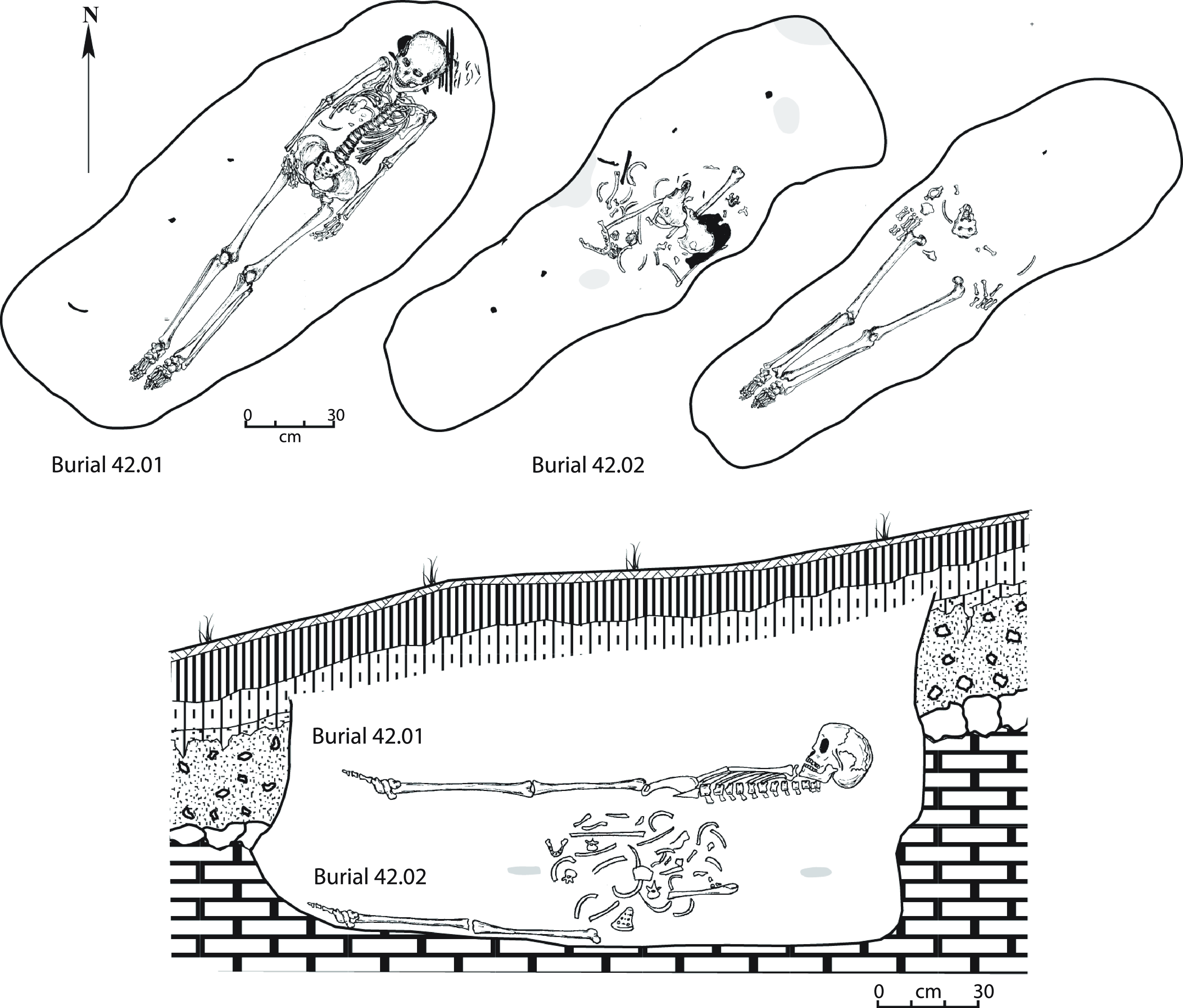
The focus of this paper, Grave 42, contained two individuals (Figure 2). The upper Burial 42.01 was well-preserved, complete and undisturbed, in an extended supine position with the head oriented to the northeast as is characteristic of the EN Kitoi mortuary tradition (Bazaliiski Reference Bazaliiski, Weber, Katzenberg and Schurr2010). Burial 42.02, by contrast, was heavily disturbed, but clearly had been also extended supine with the head likewise oriented to the northeast. The lower limbs were in anatomical position, and the pelvis and most of the bones of the upper body were disarticulated and scattered through ca. 40 cm of fill. The exceptions to this were the bones of the right hand, most of which were in articulation, while those of the left hand were only slightly displaced. The cranium was missing, but a mandible was present among the disarticulated remains. There was no duplication of elements, and all were consistent with a single adult individual (Lieverse et al. Reference Lieverse, Faccia, Waters-Rist, Antonova, Nasab, Haverkort, Purchase, Schulting, Moussa and Bazaliiskii2024 Footnote 1 ). All dates below are presented at 95.4% confidence.
Shamanka II, Grave 42 plan and section (created by Natalia Kasprishina, Andrei Tiutrin and Vladimir I Bazaliiskii, with modifications). Note that this differs from Figure 5 in Schulting et al. (Reference Schulting, Bronk Ramsey, Scharlotta, Richards, Bazaliiskii and Weber2022) which does not show the feet present for Burial 42.02.

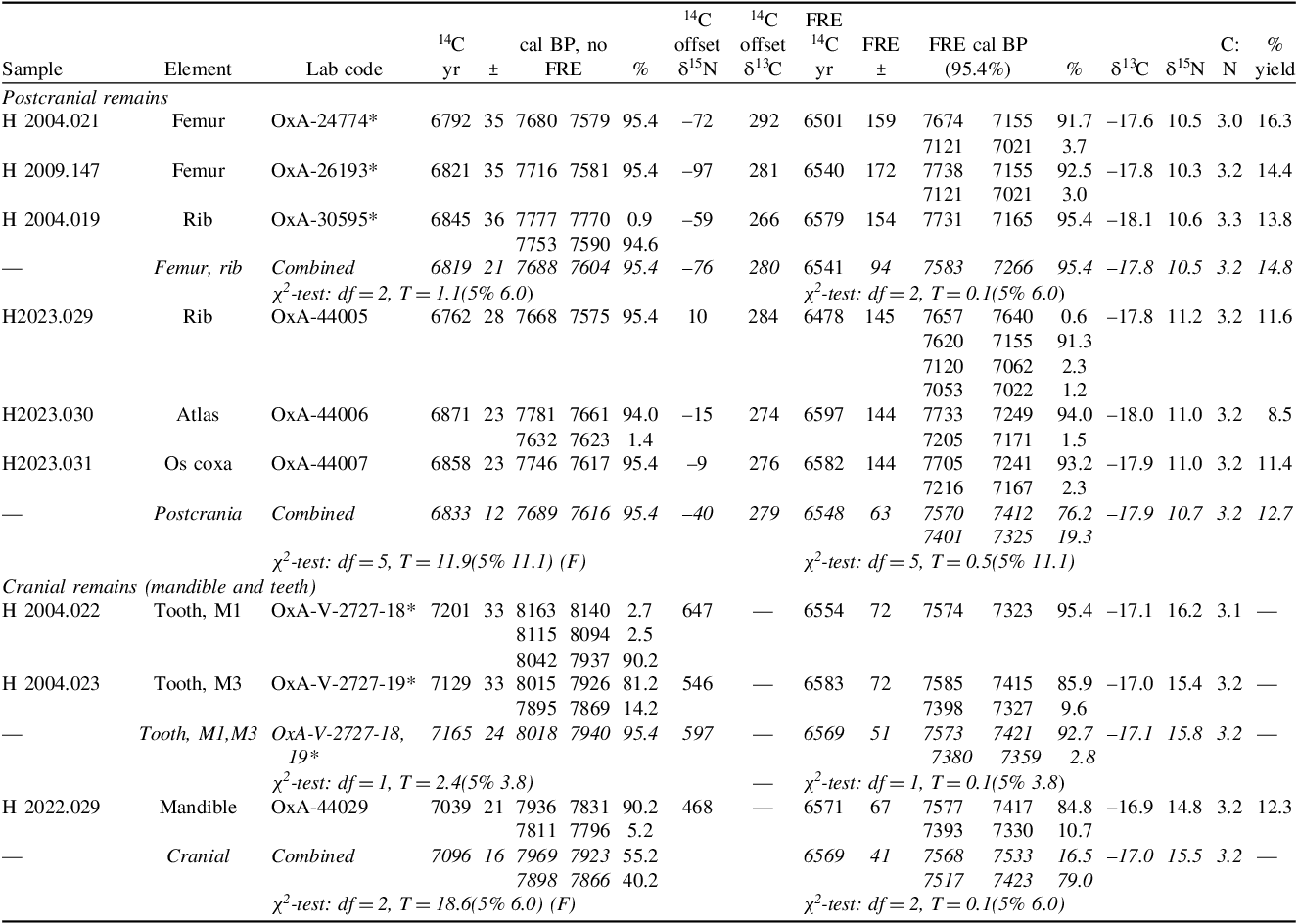
Burial 42.01 comprised a middle adult female (40−45 yr) dating to 6940–6564 cal BP (5921 ± 73 BP) once corrected for the FRE (OxA-26192: 6386 ± 34 BP), that is to Phase 2. Underlying this and clearly separated by intervening fill, Burial 42.02, an old adult female (50+ yr), has been previously dated to 7688–7604 cal BP (6819 ± 21 BP) (Figure 2). This is the weighted mean of three dates, two on a femur and one on a rib (χ2-test: df = 2, T = 1.1(5%, 6.0) (Weber et al. Reference Weber, Schulting, Bronk Ramsey and Bazaliiskii2016: Supplement 1). This date assumes no correction for the FRE because of the low associated δ 15N values (10.5 ± 3.2‰), which result in negative offsets, for which no mechanism is known (Table 2). However, the relatively high δ 13C values (–17.8 ± 0.3‰) suggest that fish from the lake may have contributed to the individual’s diet, as no other source of 13C-enriched foods consumed by humans is currently known in the region. In this case, it is possible to provisionally apply a correction equation for Cis-Baikal based only on δ 13C, resulting in a date of 7583–7266 cal BP (6541 ± 94 BP; χ2-test: df = 2, T = 0.1(5% 6.0)) (Table 2).
Radiocarbon and stable carbon and nitrogen isotope results for Shamanka II Burial 42.02. Asterisks (*) mark previously published results (Schulting et al. Reference Schulting, Bronk Ramsey, Scharlotta, Richards, Bazaliiskii and Weber2022; Weber et al. Reference Weber, Schulting, Bronk Ramsey and Bazaliiskii2016). FRE corrections use the regression equations for Cis-Baikal (δ13C only, postcrania) and SW Baikal/Angara (δ15N only, mandible and teeth) (Schulting et al. Reference Schulting, Bronk Ramsey, Goriunova, Bazaliiskii and Weber2014, Reference Schulting, Bronk Ramsey, Scharlotta, Richards, Bazaliiskii and Weber2022). Dates in italics are weighted means using the R_combine command in OxCal; those marked ‘F’ fail the χ2 test (Ward and Wilson Reference Ward and Wilson1978). Note that OxA-30595 was inadvertently switched at an unknown stage with OxA-30593 from another grave at Shamanka II (Gr 108.02), as was clear from their very different stable isotope values, which had been previously measured separately (Weber et al. Reference Weber, White, Bazaliiskii, Goriunova, Savel’ev and Katzenberg2011). They are correctly re-assigned hereFootnote a

a This swap was noted previously, and the dates and isotope values switched to match the correct graves, but the OxA- codes were not re-assigned at that point (Weber et al. Reference Weber, Schulting, Bronk Ramsey and Bazaliiskii2016, Supplement 1).
The first and third molars from the mandible associated with Burial 42.02 have been analysed sequentially to investigate this individual’s early life history (Scharlotta et al. Reference Scharlotta, Bazaliiskii, Kusaka and Weber2022). It was this that identified a discrepancy first in stable isotope results and next in 14C dates between the teeth and the postcranial remainsFootnote 2 . The much higher mean δ 15N values for the post-weaning dentine microsamples (16.1 ± 0.5‰, n = 25) led to the interpretation summarized above, with the individual presumed to have changed residence leading to very isotopically different diets in early and later life. As detailed in Schulting et al. (Reference Schulting, Bronk Ramsey, Scharlotta, Richards, Bazaliiskii and Weber2022), a number of post-weaning microsamples were combined from each tooth and radiocarbon-dated, leading to a combined, FRE-corrected date of 7573–7359 cal BP (OxA-V-2727-18,19: 6569 ± 51 BP). It was further suggested that the dates could be reconciled by the application of an FRE correction using the regression equation developed for Cis-Baikal using only δ 13C values (Table 1) (Schulting et al. Reference Schulting, Bronk Ramsey, Scharlotta, Richards, Bazaliiskii and Weber2022, their Fig. 6).
Materials and methods
For the new analyses reported here, bone samples were obtained from the following elements attributed to Burial 42.02: mandible, rib, atlas vertebra, and os coxae, all from the disturbed part of the skeleton (Figure 2). Samples were prepared following the standard protocols in place at the Oxford Radiocarbon Accelerator Unit (ORAU) in the School of Archaeology, University of Oxford (Brock et al. Reference Brock, Higham, Ditchfield and Bronk Ramsey2010). This includes the use of a 30kD ultrafiltration stage (Brock et al. Reference Brock, Bronk Ramsey and Higham2007). The new measurements were made on ORAU’s new MICADAS system. Stable carbon and nitrogen isotopes were measured separately in duplicate on a Sercon 20/22 Isotope Ratio Mass Spectrometer (IRMS) using the same collagen used for AMS 14C dating. An alanine standard was used for drift correction, and samples were calibrated with bracketing internal cow and seal bone standards referenced to international standards USGS40 and USGS41.
The dates on the postcrania were provisionally corrected for the FRE using the regression equation developed for Cis-Baikal using δ 13C only (eq. 1 in Table 1), given the abovementioned issues with their low δ 15N values: 14C offset = 1180.3+50.5(δ 13C). This correction is not normally applied because of its relatively poor predictive power, and hence greater uncertainty. The dates on the teeth and mandible were corrected for the FRE using the regression equation developed for the SW Baikal/Angara microregion: 14C offset = –1388.85+125.45(δ 15N) (eq. 3 in Table 1) (Schulting et al. Reference Schulting, Bronk Ramsey, Goriunova, Bazaliiskii and Weber2014; Reference Schulting, Bronk Ramsey, Scharlotta, Richards, Bazaliiskii and Weber2022).
The revised error terms are calculated as: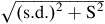 $\sqrt {{{\left( {{\rm{s}}.{\rm{d}}.} \right)}^2} + {{\rm{S}}^2}} $
, where s.d. refers to the error term associated with the radiocarbon date, and S refers to the standard deviation of the residuals on the regression equation (i.e., 142.1 yr and 64.1 yr for the δ
13C and δ
15N equations, respectively). Calibrations were undertaken in OxCal 4.4 (Bronk Ramsey Reference Bronk Ramsey2001, Reference Bronk Ramsey2021) using the IntCal20 curve (Reimer et al. Reference Reimer, Austin, Bard, Bayliss, Blackwell, Ramsey, Butzin, Cheng, Edwards, Friedrich, Grootes, Guilderson, Hajdas, Heaton, Hogg, Hughen, Kromer, Manning, Muscheler, Palmer, Pearson, van der Plicht, Reimer, Richards, Scott, Southon, Turney, Wacker, Adolphi, Büntgen, Capano, Fahrni, Fogtmann-Schulz, Friedrich, Köhler, Kudsk, Miyake, Olsen, Reinig, Sakamoto, Sookdeo and Talamo2020) and are reported at 95.4% confidence. Statistical tests were undertaken using SPSS v28.
$\sqrt {{{\left( {{\rm{s}}.{\rm{d}}.} \right)}^2} + {{\rm{S}}^2}} $
, where s.d. refers to the error term associated with the radiocarbon date, and S refers to the standard deviation of the residuals on the regression equation (i.e., 142.1 yr and 64.1 yr for the δ
13C and δ
15N equations, respectively). Calibrations were undertaken in OxCal 4.4 (Bronk Ramsey Reference Bronk Ramsey2001, Reference Bronk Ramsey2021) using the IntCal20 curve (Reimer et al. Reference Reimer, Austin, Bard, Bayliss, Blackwell, Ramsey, Butzin, Cheng, Edwards, Friedrich, Grootes, Guilderson, Hajdas, Heaton, Hogg, Hughen, Kromer, Manning, Muscheler, Palmer, Pearson, van der Plicht, Reimer, Richards, Scott, Southon, Turney, Wacker, Adolphi, Büntgen, Capano, Fahrni, Fogtmann-Schulz, Friedrich, Köhler, Kudsk, Miyake, Olsen, Reinig, Sakamoto, Sookdeo and Talamo2020) and are reported at 95.4% confidence. Statistical tests were undertaken using SPSS v28.
Results
The four new samples all yielded acceptable results in terms of quality control measures, specifically collagen yield (11.0 ± 1.7%) and C:N values (3.2 in all cases) (DeNiro Reference DeNiro1985; van Klinken Reference Van Klinken1999). While the three postcranial samples are broadly comparable in both 14C age and δ 13C and δ 15N values, the mandible clearly differs in both 14C age and isotopic values (Table 2).
Discussion
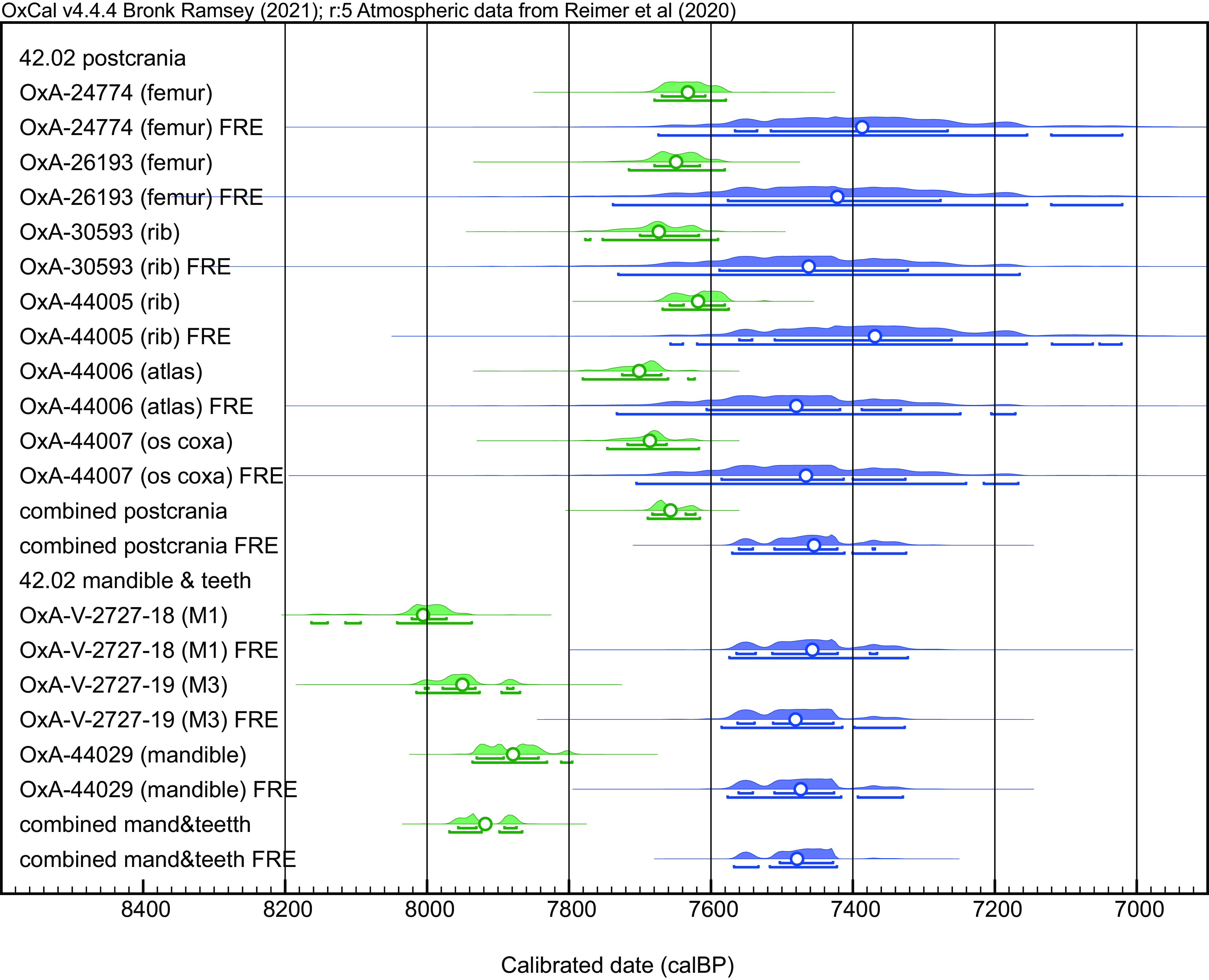
The new results offer an entirely different understanding of Burial 42.02. Rather than reflecting a shift in residence over the course of the individual’s life, with corresponding differences in isotope ecology and reservoir offsets as recently presented by Schulting et al. (Reference Schulting, Bronk Ramsey, Scharlotta, Richards, Bazaliiskii and Weber2022), it now seems clear that the mandible belongs to a different individual than the postcranial remains. When uncorrected for the FRE, the six dates on the latter narrowly fail to R_combine (χ2-test, df = 5, T = 11.9(5% 11.1)), due to the slightly more recent new result on a rib (OxA-44005: 6762 ± 28 BP). This most likely can be explained simply as a statistical outlier, as its stable isotope values do not stand out from the others as would be expected if a change in diet and concomitant change in reservoir offset were implicated. Moreover, the date is more recent rather than older, so that the FRE cannot be a factor. Excluding this date, the remaining five results can be combined to 6847 ± 13 BP (χ2-test, df = 4, T = 4.3(5% 9.5) calibrating to 7713–7617 cal BP. When corrected using the δ 13C regression equation, the substantially larger error terms allow all six dates to be combined to 6548 ± 63 BP (χ2-test: df = 5, T = 0.5(5%11.1)), calibrating to 7570–7325 cal BP.
The date on the atlas vertebra is particularly important, as it would have had a close association with the missing cranium. The agreement of its 14C age and stable isotope values with the other postcranial remains demonstrates that they all belong to the same individual, distinct from the individual represented by the mandible. This was unexpected, since, while the skeleton was disturbed, there was no indication from the skeletal inventory of the presence of more than one adult individual among the remains attributed to Burial 42.02. There was no cranium, but this is not uncommon among Early Neolithic burials across Cis-Baikal and was a feature of a number of other interments at Shamanka II itself (Weber et al. Reference Weber, Bazaliiskii and Jessup2024a). It seems to have been part of an extended mortuary practice to open some graves and remove the skull or just the cranium (i.e. leaving the mandible) after a period of some years (as inferred from the absence of cutmarks that would have been found had soft connective tissue still been present). Sometimes postcranial remains were removed as well. There are 14 cases at Shamanka II in which the mandible is missing but the cranium present, though none present a convincing candidate as a match for the Grave 42 mandible as regards 14C date and stable isotope values (i.e., within the 95.4% confidence interval for the former and within ±1‰ for the latter). In eight cases the cranium was missing but the mandible was present, and in an additional 32 cases (ca. 21% of the skeletons sufficiently preserved to assess) the entire skull was missing. The Grave 42 mandible may belong to one of these (though again there is no good match from 14C date and stable isotope values), or of course to another individual not represented in a grave.
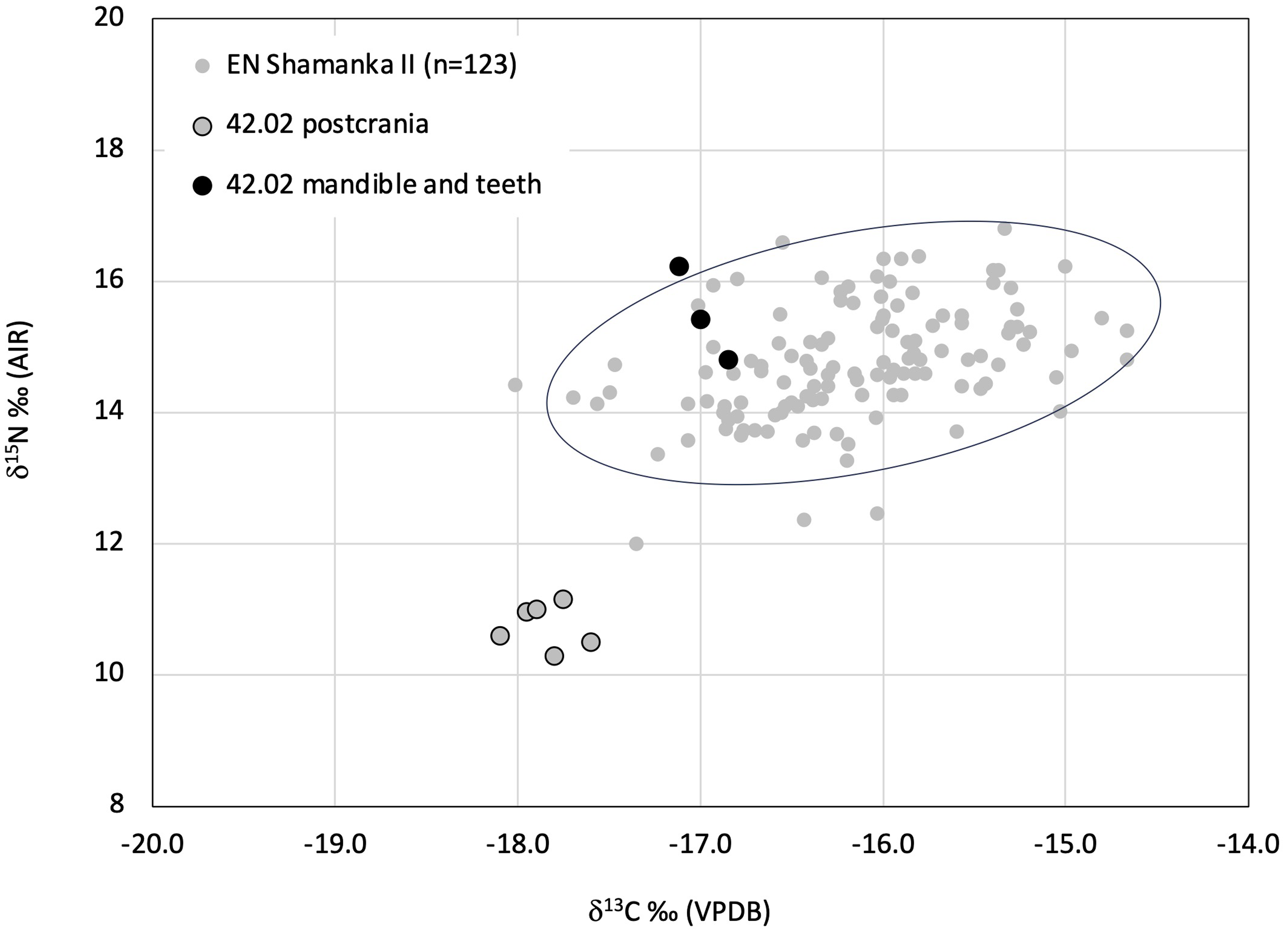
It is possible that opening the grave for the insertion of the overlying Burial 42.01, which was itself complete and undisturbed, was responsible for the disturbance of 42.02. Alternatively—and perhaps more likely given how widespread the practice was—there may have been an earlier episode of disturbance during which the skull was removed and, for reasons unknown, the mandible of another individual added, whether intentionally or, perhaps, incidentally given that stray human bones were sometimes encountered in the cultural layer and in a small number of other graves at the site (though more commonly in the fill than at the burial level) (Weber et al. Reference Weber, Bazaliiskii and Jessup2024b). In either case, there is the question of its origins. Belonging to Phase 1, the mandible is much older than Burial 42.01, so that it could not be contemporary with the later Phase 2 interment. Whether the mandible is contemporary with the postcranial remains of Burial 42.02 depends on the FRE for the latter. This is not straightforward. While the mean δ 15N value of 10.7 ± 0.3‰ could be interpreted as reflecting a largely terrestrial diet, this is not the case for the mean δ 13C value of –17.9 ± 0.2‰. The δ 15N value is an extreme outlier at Shamanka II (Figure 4), and indeed there is no currently known microregion in either Cis- or Trans-Baikal with this combination of isotopic values in the Early Neolithic. The only microregions with comparably low δ 15N values are the Upper Lena and Little Sea, in the latter case limited to those with a “Game-Fish” diet (Weber and Goriunova Reference Weber and Goriunova2013; White et al. Reference White, Schulting, Hommel, Lythe, Bronk Ramsey, Moiseyev, Khartanovich and Weber2020). But these populations date to the Late Neolithic and Early Bronze Age rather than to the Early Neolithic; in addition, in both microregions δ 13C values are lower than that of Burial 42.02. Thus, it is not known which, if any, of the FRE correction equations developed for Cis-Baikal are appropriate.
That freshwater resources featured in the diet is strongly implied by the δ 13C value, which is too high for a purely terrestrial diet. Nor is there any evidence for the consumption of C4 plants in the region at this time, which would only be present as a few wild grasses. Thus, this individual may have been an outsider who spent most of their life in another area with a different isotope ecology but unknown FRE. That said, hypothetically, it may have been possible to achieve the observed isotopic values by consuming terrestrial plants and game as well as low trophic level fish from the local area. While we currently lack an isotopic baseline for fish specifically from Kultuk Bay, values for littoral species such as grayling from the Little Sea show the combination of high δ 13C and relatively low δ 15N. We therefore provide estimated FRE corrections using the regression equation (eq. 1 in Table 1) for Cis-Baikal using only δ 13C values (Schulting et al. Reference Schulting, Bronk Ramsey, Scharlotta, Richards, Bazaliiskii and Weber2022). That the mean of the combined result for the postcrania (7455 ± 65 cal BP) is actually closely comparable to that for the combined teeth and mandible (7479 ± 43 cal BP) (Figure 3) could suggest that they are in fact broadly contemporary, even though not belonging to the same individual.
OxCal plot of the radiocarbon determinations for Shamanka II Burial 42.02, showing mean (circle) and 68.3% and 95.4% confidence intervals. Dates in green are uncorrected for the FRE; those in blue are corrected. For details see text.

Plot of δ13C and δ15N values for human collagen from Grave 42.02 in the context of all the other post-weaning age isotopic results from the Early Neolithic component of Shamanka II (n = 123; ellipse shows 95.4% confidence).

The minimal difference between the cortical and cancellous bone samples suggests that the individual interred as Burial 42.02 either moved to the Shamanka area not long before their death, or that they intentionally maintained a different diet either during their lifetime at Shamanka or after arrival. Nevertheless, there is some slight indication of a shift in diet as represented by the two measurements on cortical femoral bone, compared to the four measurements on elements with more rapid turnover rates (cf. Hedges et al. Reference Hedges, Clement, Thomas and O’Connell2007), with the latter showing lower δ 13C values but higher δ 15N values. The mean difference in δ 13C is only 0.22‰, while that in δ 15N is 0.52‰, which just fails to attain statistical significance (Student’s t-test, t = 2.772, p = 0.0502). That it even comes this close to rejecting the null hypothesis (α = 0.05) is highly suggestive given the small sample size and hence low statistical power of the test. As higher δ 15N values are typical of other individuals at Shamanka II, this raises the possibility that the individual interred as Burial 42.02 moved to the vicinity perhaps a year or two before they died, or, alternatively, changed their diet at this time. The lack of dentition attributable to this individual precludes the possibility of undertaking strontium isotope analysis on dental enamel to try to identify their possible geographic origins (cf. Scharlotta and Weber Reference Scharlotta and Weber2014; Scharlotta et al. Reference Scharlotta, Bazaliiskii, Kusaka and Weber2022), though osteon microsampling of the femoral cortical bone might provide insights into their earlier life history (Scharlotta et al. Reference Scharlotta, Goriunova and Weber2013).
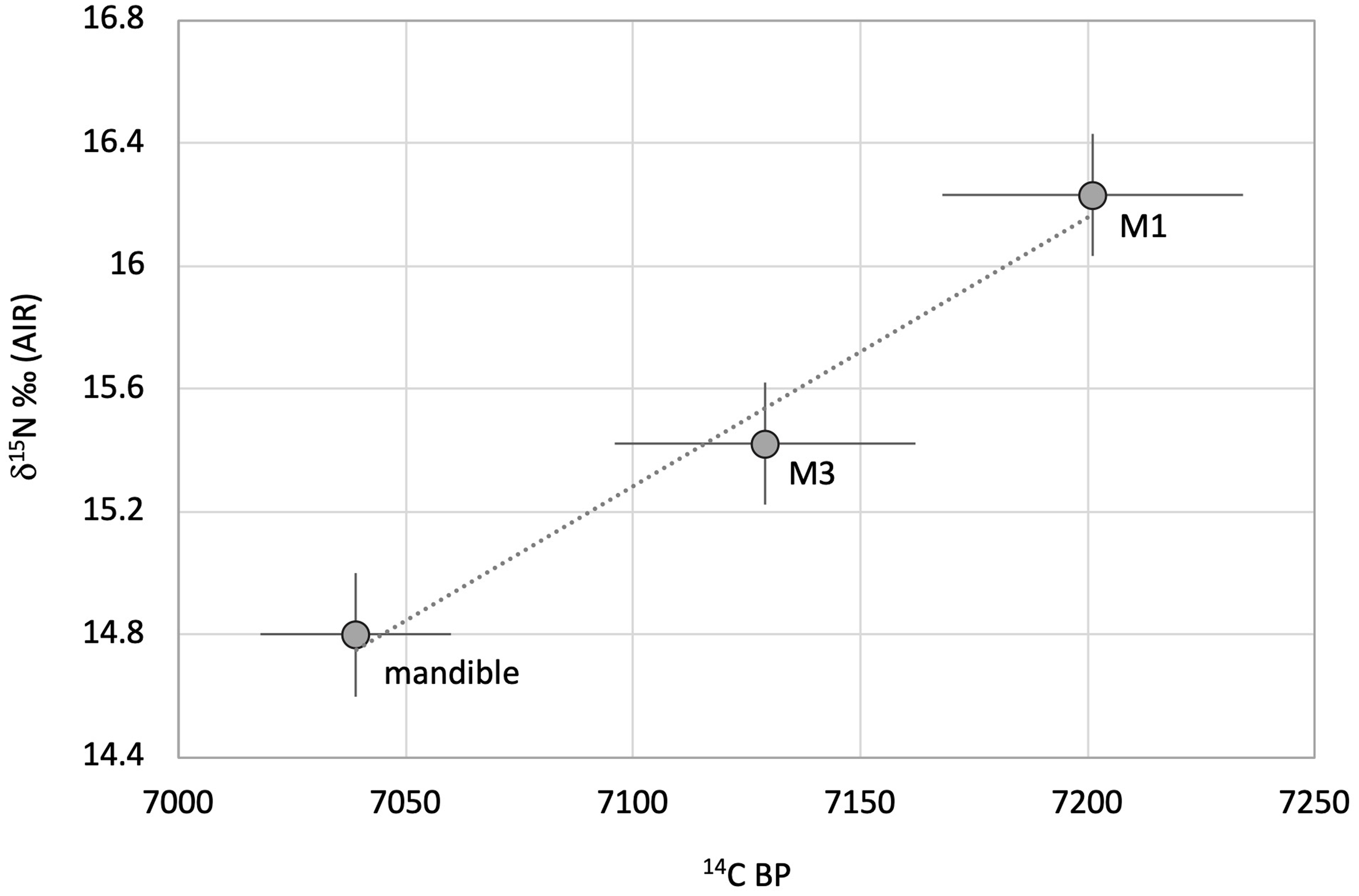
A final observation relates to the radiocarbon determinations and stable isotope values for the mandible and two molars. The FRE-uncorrected results for the first molar and the mandible differ by 162 14C yr, such that the three dates cannot be combined (χ2-test, df = 2, T = 18.6(5% 6.0)). While the δ 13C values of the three samples differ by only 0.2‰, there is a progressive decrease in δ 5N from 16.2‰ for the post-weaning section of the first molar, to 15.4‰ for the second molar, to 14.8‰ for the mandible (Figure 5). This may be interpreted as a shift towards a slightly more terrestrial diet between early childhood and adulthood. Given the FRE regression equation for the SW Baikal/Angara microregion, the difference of 1.4‰ between the first molar and the mandible in δ 15N predicts an offset of 176 14C yr (i.e., 1.4 times the slope coefficient of 125.45), which is in good agreement with the observed difference of 162 14C yr. This provides additional confirmation of the utility of the previously developed regression equations and confidence in their use.
Plot of uncorrected 14C determinations and δ15N values for M1, M3 and mandible in Grave 42 showing strong positive correlation. Error bars ± 1σ.

Conclusions
Although based only a single interment, this study presents a cautionary tale when interpreting varying 14C ages and stable isotope values from what was ostensibly a single individual. While the scenario originally presented for Burial 42.02 (Schulting et al. Reference Schulting, Bronk Ramsey, Scharlotta, Richards, Bazaliiskii and Weber2022) was entirely plausible given the known variability in isotope ecology and freshwater reservoir offsets in the Baikal region, in the end the explanation turned out to be simpler in one sense. Yet, in terms of mortuary behavior, the explanation is far more complex, involving the removal of the skull from the grave and the intentional or incidental inclusion of a mandible from another individual. This has an important corollary for the selection of skeletal elements for analysis. The frequent emphasis on cranial elements is entirely understandable, given the preferred status of their tissues for many biomolecular techniques (aDNA on the petrous bone or teeth; sequential analysis of dentine; strontium and oxygen isotope analysis of dental enamel, etc.), yet, as here, it cannot always be assumed that cranial and postcranial elements at a site belong to the same individual even when the osteological analysis is consistent with this. While the case we present here from Shamanka II is a highly unusual one (though see Hanna et al. Reference Hanna, Bouwman, Brown, Parker Pearson and Brown2012), the problem may be more widespread than realized in cases with multiple, commingled remains (cf. Charlton et al. Reference Charlton, Booth and Barnes2019). For Shamanka II specifically, a question may now be raised over other graves showing disturbance relating to the removal of the cranium, mandible, or both. The inclusion of a mandible from another individual would probably go unnoticed, as long as it matched the age-at-death assessment based on the postcranial remains. It is the large difference in the δ 15N values between the postcrania and the dentition that highlighted the case of Grave 42.02; in most other individuals at Shamanka II the stable isotope values would be too similar to raise any concern.
One means of mitigating against this potential issue is to use the same element for multiple analyses in cases in which any question arises over the remains representing a single individual, such as in disturbed multiple graves, or in contexts wherein the inclusion of stray human bones is possible. In practice, for much current bioarchaeological research involving concurrent analyses of the dentition and/or petrous bone, this means dating the mandible or cranium. However, in contexts in which disturbance is minimal and it is possible to securely identify individual skeletons, the dating of postcranial elements is still preferable as they offer greater choice for destructive analysis that minimizes information loss.
Although the major intra-individual differences in 14C age and stable isotope results posited for the postcranial and dental samples of Burial 42.02 have been discounted, the more subtle trend observed for the first and third molars and mandible illustrates the need to carefully consider sample selection when dealing with contexts in which variable freshwater (or marine) reservoir effects might be expected.
Acknowledgments
Funding for research presented in this paper was provided by the Baikal Archaeology Project and the Baikal-Hokkaido Archaeology Project (Social Sciences and Humanities Research Council of Canada, grant nos. 412-2011-1001 and 895-2018-1004). Many thanks to Karolina Werens for discussions concerning Grave 42.02.
Declaration of competing interests
The authors declare no conflicts or competing interests.


 Open access

