





The global prevalence of dementia is estimated to reach 131.5 million by 2050, Reference Prince, Wimo, Guerchet, Ali, Wu and Prina1 and the annual worldwide cost of dementia may rise to $2 trillion by 2030. Reference Prince, Wimo, Guerchet, Ali, Wu and Prina1 Older adults consistently cite quality of life (QoL) as more important than disease-specific outcomes, Reference Hoe, Katona, Orrell and Livingston2 and dementia can substantially impair the QoL of people with dementia (PwD). Reference Bowling, Rowe, Adams, Sands, Samsi and Crane3 The importance of identifying interventions that can improve the QoL of PwD is increasingly recognised. Dementia intervention trials have focused mainly on cognitive and neuropsychiatric outcomes. Reference Rosen, Mohs and Davis4 However, the number of dementia studies including QoL as one of their outcomes has increased recently. There is an urgent need for systematically reviewing available evidence for guiding evidence-informed clinical decision-making and policy development that are essential for improving QoL in dementia. Reference Whitehouse5
The World Health Organization defines QoL as ‘an individual’s perception of their position in life in the context of the culture and value systems in which they live and in relation to their goals, expectations, standards and concerns’. 6 The views of PwD are important when assessing QoL, so widely used dementia-specific QoL measures such as the Quality of Life in Alzheimer’s Disease (QoL-AD) Reference Logsdon, Gibbons, McCurry and Teri7 and the Dementia QoL measure (DEMQOL) Reference Smith, Lamping, Banerjee, Harwood, Foley and Smith8 are designed to be rated by both PwD and their carers. However, the results of self-reported and proxy-reported QoL measures may vary substantially. Reference Ready, Ott and Grace9 The concerns over reliability of self-rated QoL measures in those with severe cognitive impairment Reference Addington-Hall and Kalra10 have been addressed by QoL assessment instruments such as the QoL for PwD (QUALIDEM). Reference Bowling, Rowe, Adams, Sands, Samsi and Crane3,Reference Ettema, Droes, de Lange, Mellenbergh and Ribbe11 Moreover, assessing QoL in dementia is inherently subjective, and there is still a lack of consensus on which factors should be considered when measuring QoL of PwD. Reference Bowling, Rowe, Adams, Sands, Samsi and Crane3 Hence, a wide range of heterogenous tools have been developed for measuring QoL in dementia, and their results are often difficult to compare.
Two small reviews have assessed the efficacy of pharmacological Reference Cooper, Mukadam, Katona, Lyketsos, Blazer and Ames12 and non-pharmacological Reference Cooper, Mukadam, Katona, Lyketsos, Ames and Rabins13 interventions for improving QoL of PwD separately. They did not include non-randomised studies or studies that investigated combined pharmacological and non-pharmacological interventions. Only 35 studies that were published before 2012 were included in those two reviews in total. More than 250 relevant studies on this topic have been published within the past 12 years. The prior review on non-pharmacological interventions Reference Cooper, Mukadam, Katona, Lyketsos, Ames and Rabins13 reported group cognitive stimulation therapy (CST) as the only effective intervention for improving QoL of PwD living in care homes. It included only three CST studies and it could not conduct a meta-analysis. At least 20 studies that investigated the efficacy of CST in PwD have been published since then. Moreover, there has been a growing influence of technology in dementia care, and the recent studies have examined the use of innovative technologies such as companion robots Reference Moyle, Cooke, Beattie, Jones, Klein and Cook14 and telemedicine Reference Lai, Yan, Yu, Tsui, Chan and Yee15 for improving QoL of PwD. Furthermore, neuromodulation and alternative medicine interventions have not been included in any review. Reference Cooper, Mukadam, Katona, Lyketsos, Ames and Rabins13
Hence, we aim to conduct the first comprehensive systematic review combining evidence from all studies that investigated any pharmacological, non-pharmacological and combined interventions for improving QoL of PwD. We do not have any evidence-based recommendations for improving QoL in dementia at present. Conducting a comprehensive systematic review is an essential prerequisite for facilitating the development of guidelines that may help clinicians, patients, their families and policy makers to make informed decisions regarding QoL in dementia.
Method
Protocol
Our systematic review protocol has been registered with the International Prospective Register of Systematic Reviews (PROSPERO identifier CRD42021249446; https://www.crd.york.ac.uk/prospero/display_record.php?RecordID=249446). We have documented all protocol amendments in the PROSPERO database. Supplementary File 1 presents the Preferred Reporting Items for Systematic Review and Meta-Analysis (PRISMA 2020) checklist.
Search strategy
The following databases were searched initially from inception to 12 April 2021 by an information specialist (N.T.): Medline All, EMBASE, PsycINFO (all via Ovid), CINAHL Plus (EBSCOhost), Scopus, Web of Science Core Collection, Cochrane Library, Google Scholar and OpenGrey. We performed another round of systematic search of the nine databases for identifying eligible studies that were published until 20 June 2024. Our searches were restricted to papers available in English, and animal studies were excluded. The search strategy used a combination of free-text terms and relevant controlled vocabulary headings customised for each database, as well as advanced search syntax (truncation, Boolean logic AND/OR, and proximity searching) to ensure all relevant studies were identified. The search terms included the following themes, with synonyms to describe each: dementia, intervention and quality of life. Further details are presented in Supplementary File 2.
Eligibility criteria
All original research papers that evaluated the efficacy of at least one pharmacological or non-pharmacological intervention in people with any type of clinically diagnosed dementia were deemed eligible to be included in this systematic review, if they included the changes in QoL as one of their primary or secondary outcome measures and employed any quantitative measure for reporting their QoL results. Randomised controlled trials (RCTs), quasi-RCTs, non-RCTs, case series and case reports that met our eligibility criteria were included. We excluded studies that were not published in English, cross-sectional studies that cannot evaluate the efficacy of any intervention, reviews and opinions. We excluded studies that included participants without dementia and did not report QoL results of PwD separately.
Article selection
All identified abstracts were screened by a six-member review team using the Rayyan systematic review platform (Rayyan, Cambridge, MA, USA; see https://www.rayyan.ai/). Reference Ouzzani, Hammady, Fedorowicz and Elmagarmid16 Interrater agreement within the review team was good (multiple rater kappa = 0.78; Z = 36.22; P < 0.0001). An independent reviewer (N.T.) screened 10% of the abstracts again and confirmed the accuracy of the article selection process. We retrieved full texts of the potentially eligible abstracts, and their eligibility was assessed by a five-member review team. When the full text of a potentially eligible abstract was not retrievable, we requested the full text from the corresponding author by email. If the corresponding author did not respond within 14 days, then the abstract was excluded. Whenever there was disagreement regarding the eligibility of a study, the senior author (A.P.R.) independently reviewed it and resolved the disagreement through discussion with the review team. After we identified all eligible studies from our database searches, we employed backward citation analysis for identifying additional studies that met our eligibility criteria.
Quality assessment
Two reviewers (D.L. and E.C.) assessed the quality of all eligible studies by using the Quality Assessment Tool for Quantitative Studies. 17 Disagreements were resolved by discussion with the senior author (A.P.R.). Each study was assessed using the following domains: study design, selection bias, confounders, blinding, data collection method, withdrawals and drop-outs. Each domain was rated as strong, moderate or weak. The quality of included case reports and case series were assessed with the help of the CARE case report guidelines. Reference Riley, Barber, Kienle, Aronson, von Schoen-Angerer and Tugwell18 Quality concerns were highlighted. We did not exclude any eligible study because of its quality assessment score.
Data extraction
A three-member review team (D.L., E.C. and M.W.) started extracting the following data from all included studies from the first round of the systematic review on 29 June 2022, and from the second round of the systematic review on 15 August 2024: year of publication, investigated intervention(s), study design, setting, length of follow-up, prospective or retrospective study, sample size in each study arm, types and severity of dementia, mean age, gender and ethnicity of participants, QoL measure, statistical tests, reported P-values, effect sizes, mean difference between the study groups and their 95% confidence interval, multiple testing correction, correction(s) for confounder(s), interventions in comparison group, other concurrent treatments, type of qualitative data (if available) and study findings.
Data synthesis
Narrative synthesis was carried out using extracted data. We categorised investigated interventions into pharmacological, non-pharmacological and combined interventions, and organised the data under these headings. We deemed the study findings as statistically significant when reported P-values were <0.05. We established hierarchies of evidence by using the Oxford Centre for Evidence-Based Medicine (OCEBM) levels of evidence, version 2.1. 19 We then assessed the certainty of evidence by using the Grading of Recommendations, Assessment, Development and Evaluations (GRADE) framework certainty ratings, Reference Guyatt, Oxman, Vist, Kunz, Falck-Ytter and Alonso-Coello20 and those with higher ratings were given precedence when interpreting the results. When three or more studies had investigated the efficacy of an intervention for improving overall QoL or a specific QoL domain, we conducted appropriate meta-analyses. Then, we synthesised the information into summary tables according to the types of intervention and their levels of evidence.
Data analysis
We used descriptive statistics to summarise extracted data. We assessed multiple rater interrater reliability with Stata version 16.1 for Windows (StataCorp LLC, College Station, TX, USA; see https://www.stata.com/) and its ‘kap’ command. We conducted meta-analyses with Stata version 16.1 and its ‘metan’ command. We assessed the degree of heterogeneity with Higgin’s I Reference Hoe, Katona, Orrell and Livingston2 -statistic, and evaluated publication bias by using funnel plots. Standardised mean differences (SMDs) were used to synthesise continuous data.
Results
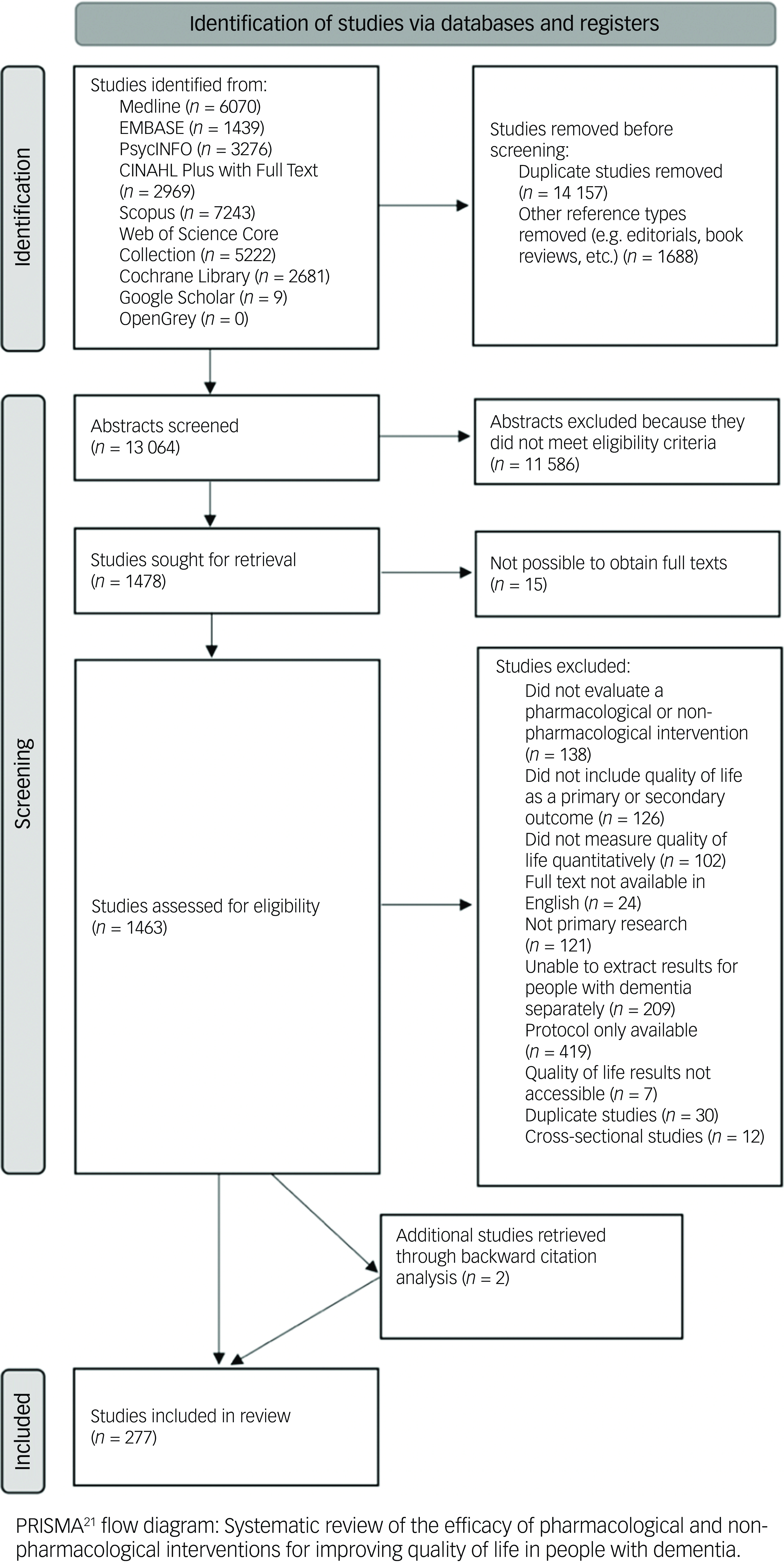
Figure 1 shows the PRISMA flow diagram presenting the article selection process of the first round of the systematic review. Reference Page, McKenzie, Bossuyt, Boutron, Hoffmann and Mulrow21 We screened 13 064 studies and identified 277 original research studies that met our eligibility criteria. Supplementary File 3 lists all 277 included studies. We screened 1325 studies and identified 47 more eligible studies in the second round of the systematic review. Supplementary File 4 lists those 47 included studies. A total of 54 different instruments were used to assess QoL of PwD. The most widely used instrument was the QoL-AD, Reference Logsdon, Gibbons, McCurry and Teri7,Reference Logsdon, Gibbons, McCurry and Teri22 which was used in 164 included studies. The DEMQOL and/or DEMQOL-Proxy Reference Smith, Lamping, Banerjee, Harwood, Foley and Smith23 were used in 34 studies, and the EuroQoL-5D (EQ-5D) 24 was used in 33 included studies. The QUALIDEM, Reference Ettema, Droes, de Lange, Mellenbergh and Ribbe11 Quality of Life in Late-Stage Dementia Scale (QUALID) Reference Weiner, Martin-Cook, Svetlik, Saine, Foster and Fontaine25 and Alzheimer’s Disease-Related Quality of Life (ADRQL) Reference Rabins, Kasper, Kleinman, Black and Patrick26 were used in 20, 16 and ten studies, respectively. Mean duration of follow-up in the included studies was 24.8 weeks, and the longest reported follow-up was 4 years. Supplementary Files 5, 5a and 6 present our quality assessment findings.
The Preferred Reporting Items for Systematic Reviews and Meta-Analyses (PRISMA) flowchart.

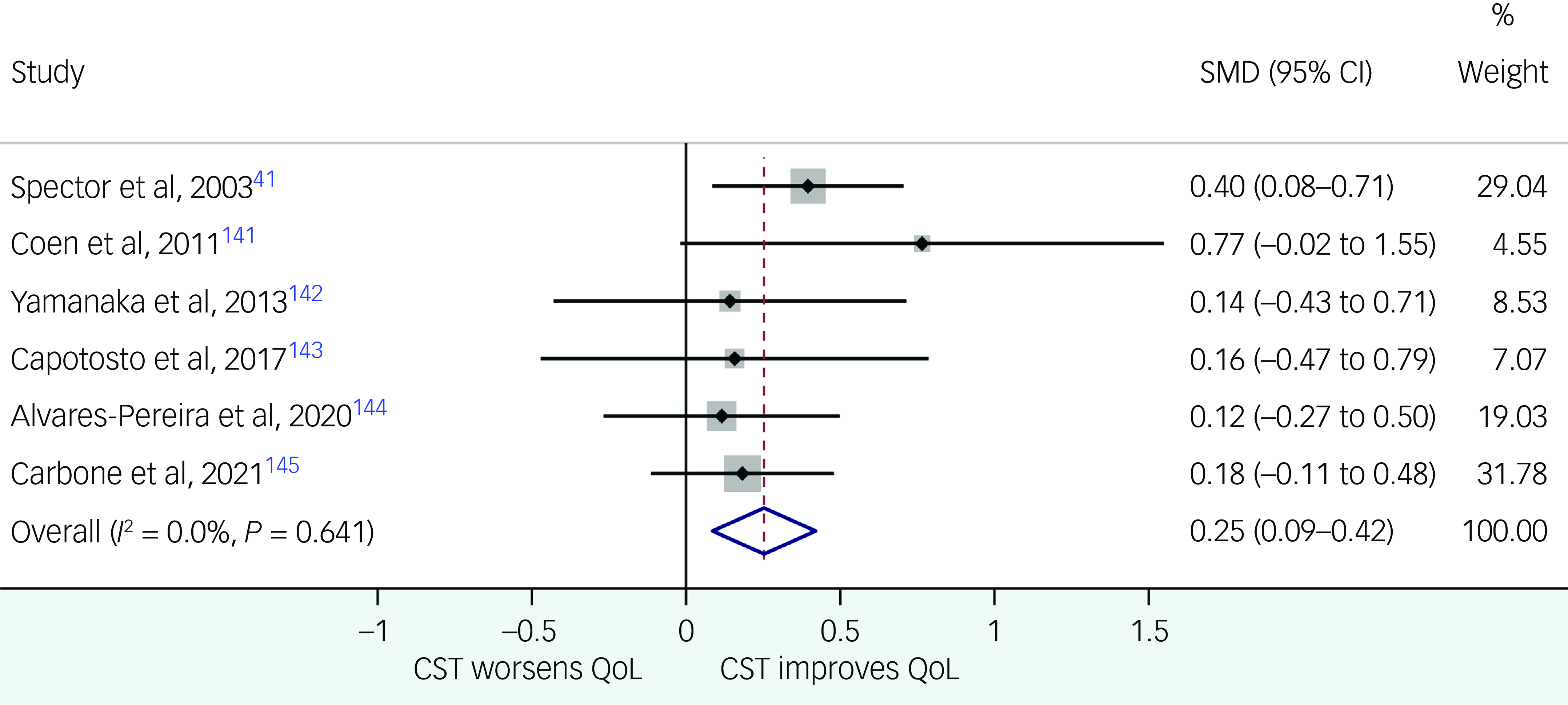
Fixed-effects meta-analysis of studies that investigated the efficacy of cognitive stimulation therapy for improving the quality of life of people with dementia. CST, cognitive stimulation therapy; QoL, quality of life; SMD, standardised mean difference.

Pharmacological interventions
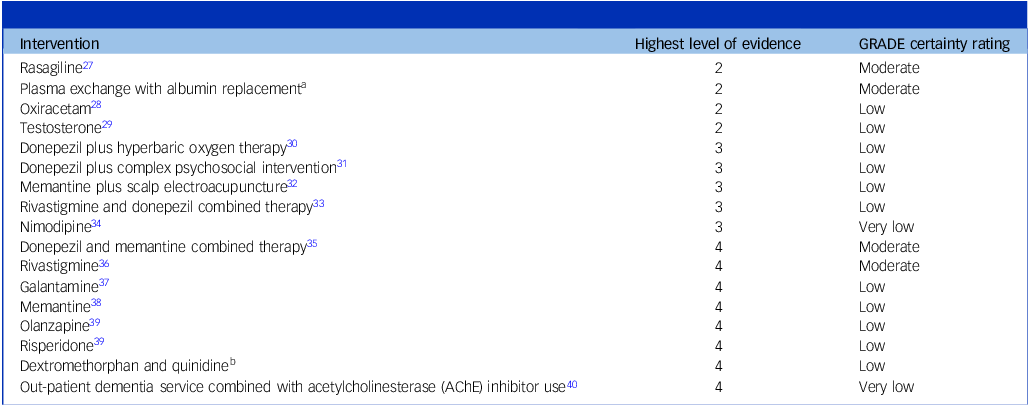
Table 1 summarises the current evidence supporting the use of various pharmacological interventions either on their own or combined with non-pharmacological interventions for improving QoL of PwD. None of them have level 1 evidence supporting their use for improving QoL.
Pharmacological or combined pharmacological and non-pharmacological interventions for improving quality of life in people with dementia

Oxford Centre for Evidence-Based Medicine levels of evidence 19 : 1 = systematic review of randomised trials; 2 = randomised trial or observational study with dramatic effect; 3 = non-randomised controlled cohort/follow-up study; 4 = case series, case–control studies or historically controlled studies; 5 = mechanism-based reasoning. GRADE of certainty ratings Reference Guyatt, Oxman, Vist, Kunz, Falck-Ytter and Alonso-Coello20 : high = the true effect is similar to the estimated effect; moderate = the true effect is probably close to the estimated effect; low = the true effect may be markedly different from the estimated effect; very low = the true effect is probably markedly different from the estimated effect.
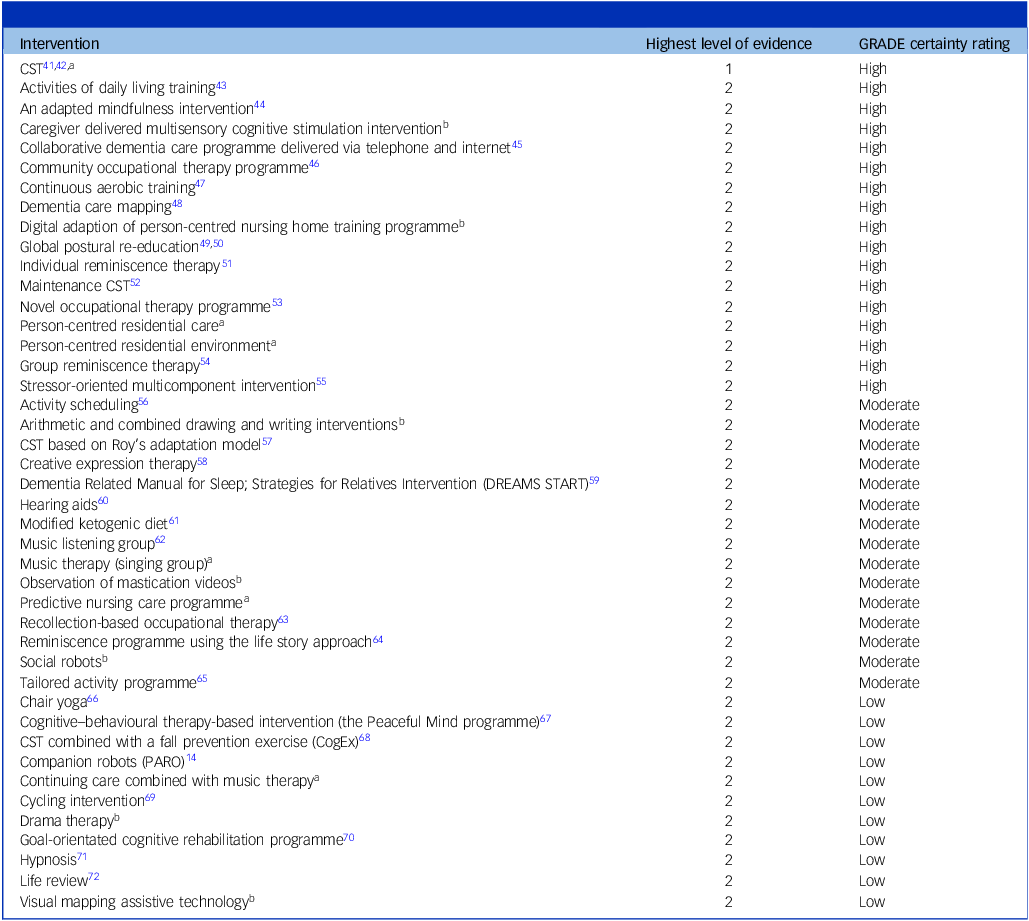
Non-pharmacological interventions that have level 1 or level 2 evidence for improving quality of life of people with dementia

Oxford Centre for Evidence-Based Medicine levels of evidence 19 : 1 = systematic review of randomised trials; 2 = randomised trial or observational study with dramatic effect; 3 = non-randomised controlled cohort/follow-up study; 4 = case series, case–control studies or historically controlled studies; 5 = mechanism-based reasoning. GRADE of certainty ratings Reference Guyatt, Oxman, Vist, Kunz, Falck-Ytter and Alonso-Coello20 : high = the true effect is similar to the estimated effect; moderate = the true effect is probably close to the estimated effect; low = the true effect may be markedly different from the estimated effect; very low = the true effect is probably markedly different from the estimated effect. CST, cognitive stimulation therapy.
Acetylcholinesterase inhibitors
Fifteen studies investigated the efficacy of acetylcholinesterase inhibitors (AChEIs) for improving QoL of PwD. Eight studies, including four RCTs, investigated donepezil monotherapy. None found statistically significant evidence supporting its efficacy. There is weak evidence supporting donepezil in combination with either rivastigmine Reference Zhang, Yu, Wang and Zheng33 or memantine. Reference Cao, Qian, Yu, Li, Mao and Han35 Two studies, including an RCT, investigated rivastigmine monotherapy. The RCT did not find evidence to support the use of rivastigmine to improve QoL, but a before-and-after study reported statistically significant increases in QoL-AD scores after treatment with rivastigmine transdermal patches. Reference Vagenas, Vlachos, Vlachou, Liakopoulos, Kalaitzakis and Vikelis36 Moreover, an RCT that compared galantamine and nimodipine combined treatment with galantamine and placebo in people with Alzheimer’s disease and cerebrovascular disease did not find significant difference in QoL between groups. Reference Caramelli, Laks, Palmini, Nitrini, Chaves and Forlenza37 However, when all galantamine-treated patients were analysed together, there was a statistically significant difference between before and after participant-rated QoL-AD scores. One RCT investigated high-dose tacrine, Reference Knapp, Knopman, Solomon, Pendlebury, Davis and Gracon73 which has been discontinued because of hepatotoxicity risk.
Memantine
Five studies investigated memantine and one of them supported its efficacy. A before-and-after study Reference Cheon, Park, Joe and Kim38 supported the use of memantine in alcohol-related dementia by reporting statistically significant improvement in QoL scores at 12 weeks follow-up. An RCT that compared memantine with placebo in people with Parkinson’s disease dementia (PDD) did not find a statistically significant difference in DEMQOL scores. Reference Leroi, Atkinson and Overshott74 Another RCT investigating people with PDD or dementia with Lewy bodies (DLB) compared memantine with placebo, and did not find a statistically significant difference in QoL-AD scores. Reference Larsson, Engedal, Aarsland, Wattmo, Minthon and Londos75 However, a retrospective medical records review reported significantly higher QoL scores in a combined donepezil plus memantine group compared with donepezil monotherapy when treating concomitant Alzheimer’s disease and chronic obstructive pulmonary disease. Reference Cao, Qian, Yu, Li, Mao and Han35
Antidepressants
Three studies investigated antidepressants, and none provided evidence for their efficacy for improving QoL. An RCT that investigated bupropion use in people with Alzheimer’s disease and apathy reported statistically significant improvement in QoL in the placebo group. Reference Maier, Spottke, Bach, Bartels, Buerger and Dodel76 Another RCT and a before-and-after trial investigated sertraline and venlafaxine, respectively, in people with Alzheimer’s disease and depression, and did not find a statistically significant improvement in QoL (Supplementary File 3).
Antipsychotics
Three studies investigated antipsychotic medications. The highest level of evidence available for olanzapine or risperidone monotherapy was level 4. A double-blind trial found statistically significant improvements in QoL scores in groups treated with olanzapine or risperidone, but the difference between groups was not statistically significant. Reference Fontaine, Hynan, Koch, Martin-Cook, Svetlik and Weiner39 Another RCT investigated quetiapine, risperidone and olanzapine, and none of them improved QoL at 36 weeks follow-up. Reference Sultzer, Davis, Tariot, Dagerman, Lebowitz and Lyketsos77
Other pharmacological interventions
Eighteen studies investigated other pharmacological interventions, and five of them reported statistically significant improvement in QoL. A placebo-controlled RCT reported statistically significant improvements in QoL-AD scores in people with mild Alzheimer’s disease (Supplementary File 4). Another placebo-controlled RCT reported statistically significant improvement in QoL scores after treatment with rasagiline in Alzheimer’s disease. Reference Matthews, Ritter, Thomas, Andrews, Lukic and Revta27 Another small RCT (N = 18) that investigated testosterone in people with Alzheimer’s disease reported statistically significant improvements in caregiver-rated QoL-AD scores. Reference Lu, Masterman, Mulnard, Cotman, Miller and Yaffe29 However, the participant-rated QoL scores did not differ significantly at follow-up. Moreover, an RCT that investigated oxiracetam in people with multi-infarct or mixed dementia reported statistically significant improvements in QoL over 12 weeks. Reference Bottini, Vallar, Cappa, Monza, Scarpini and Baron28 A non-randomised trial comparing nimodipine monotherapy with combined nimodipine and piracetam therapy in people with vascular dementia reported statistically significant benefit in all QoL domains in the nimodipine monotherapy group. Reference Zongfang, Wenjing, Zhaomin and Lei34 Furthermore, a large RCT (N = 1534) that compared treatment with semagacestat (a γ-secretase inhibitor) with placebo in PwD reported statistically significant worsening of QoL in the semagacestat group at 76 weeks. Reference Doody, Raman, Farlow, Iwatsubo, Vellas and Joffe78
Combined pharmacological and non-pharmacological interventions
Three out of five studies that investigated AChEIs in combination with non-pharmacological interventions reported statistically significant QoL improvements. A non-randomised trial found statistically significant QoL improvement in the group receiving donepezil and a complex psychosocial intervention including reminiscence therapy, when compared with donepezil monotherapy. Reference Meguro, Kasai, Akanuma, Ishii, Yamaguchi and Meguro31 Another non-randomised trial reported similar QoL improvements with donepezil combined with hyperbaric oxygen therapy, when compared with donepezil monotherapy, in people with PDD. Reference Fan and Zhou30 Moreover, a before-and-after study reported statistically significant improvements in QoL-AD scores of people with Alzheimer’s disease, when AChEI use was combined with out-patient dementia service use. Reference Ward and Ashaye40 A retrospective cohort study in vascular dementia compared memantine therapy with and without scalp electroacupuncture. Reference Yue, Han, Mao, Wu, Gao and Huang32 QoL improvements were statistically significant in both intervention groups when compared with a control group. However, another RCT did not find any evidence to support rivastigmine therapy combined with physical exercise for improving QoL. Reference Aguiar, Monteiro, Feres, Gomes and Melo79
Non-pharmacological interventions
Table 2 presents all non-pharmacological interventions that have level 1 or level 2 evidence supporting their use for improving QoL of PwD. Supplementary Files 7 and 8 list all non-pharmacological interventions that have level 3 or level 4 evidence, respectively, for improving QoL.
CST
CST is the most widely investigated non-pharmacological intervention, and it is the only intervention that has level 1 evidence for improving QoL of PwD. Reference Spector, Thorgrimsen, Woods, Royan, Davies and Butterworth41 Manualised group CST has been reported to significantly improve the QoL of PwD. Reference Spector, Thorgrimsen, Woods, Royan, Davies and Butterworth41 Our fixed-effects meta-analysis (Fig. 2; Supplementary File 9) combined data from six relevant RCTs, and confirmed level 1 evidence supporting the use of group CST (pooled SMD = 0.25; 95% CI 0.09–0.42; P = 0.003). The heterogeneity between these studies was not statistically significant (I 2 = 0.0%; χ 2 = 3.39; d.f. = 5; P = 0.64). We could not include ten more studies that investigated the group CST in PwD in our meta-analysis, because seven of them were single-group studies without controls, two of them did not report group-level changes in QoL scores and another study Reference Orrell, Spector, Thorgrimsen and Woods42 used data from the previous CST RCT participants. Reference Spector, Thorgrimsen, Woods, Royan, Davies and Butterworth41
Seven RCTs investigated other versions of CST. An RCT investigated CST intervention based on Roy’s adaption model, Reference Roy80 and reported statistically significant improvement in QoL. Reference Lok, Buldukoglu and Barcin57 Maintenance CST was investigated by two RCTs. One of them reported statistically significant benefits for self-rated QoL at the 6-month primary end-point, Reference Orrell, Aguirre, Spector, Hoare, Woods and Streater52 and the proxy-rated QoL scores were significantly higher in the maintenance CST group at 3 months follow-up. Another RCT did not find any effect on QoL following maintenance CST sessions. Reference Orrell, Spector, Thorgrimsen and Woods42 Individual CST was investigated by two RCTs, and both did not report significant differences in QoL between individual CST and control groups. Reference Gibbor, Forde, Yates, Orfanos, Komodromos and Page81,Reference Orrell, Yates, Leung, Kang, Hoare and Whitaker82 RCTs investigating virtual and mobile app versions of CST did not report significant differences in QoL (Supplementary File 4). Moreover, other RCTs studied CST combined with carer-training programmes Reference Cove, Jacobi, Donovan, Orrell, Stott and Spector83 and fall prevention exercises, Reference Binns, Kerse, Peri, Cheung and Taylor68 and neither reported statistically significant QoL improvements.
Physical exercise
Twenty-three studies, including 14 RCTs, investigated a wide range of exercise interventions. Two RCTs, which investigated cycling Reference Yang, Shan, Qing, Wang, Zhu and Yin69 and a continuous aerobic training intervention, Reference Enette, Vogel, Merle, Valard-Guiguet, Ozier-Lafontaine and Neviere47 reported statistically significant favourable QoL outcomes. Another RCT investigated the effects of a 6-month activities of daily living programme and an exercise programme on QoL, and reported statistically significant improvement on overall QoL by the activities of daily living programme. Reference Henskens, Nauta, Drost and Scherder43 Another intervention including aerobic walking and upper limb exercises reportedly led to significantly better QoL scores. Reference Abd El-Kader84 Furthermore, a small RCT compared the effects of chair yoga, a music intervention and chair-based exercise for improving QoL of PwD. Reference Park, Tolea, Sherman, Rosenfeld, Arcay and Lopes66 QoL-AD scores were significantly higher in the chair yoga group compared with the music intervention group at 12 weeks. A multicomponent exercise programme including aerobic activities, lower body strength training, exercises to improve balance and flexibility, and training caregivers significantly improved QoL of PwD over the 13-month study period. Reference Teri, Logsdon, McCurry, Pike and McGough85
Reminiscence therapy
Fifteen studies investigated various reminiscence therapy-based interventions. Six reported statistically significant QoL improvements. There is level 2 evidence for reminiscence therapy and level 4 evidence for intergenerational reminiscence therapy. An RCT investigated an 8-week reminiscence therapy programme and reported statistically significant QoL improvement. Reference Lök, Bademli, Selçuk-Tosun and Selçuk-Tosun54 Individual reminiscence therapy was investigated by two RCTs, and both supported its efficacy for improving QoL of PwD. Reference Perez-Saez, Justo-Henriques and Alves Apostolo51,Reference Serrani Azcurra64 Three before-and-after studies that investigated a computer interactive reminiscence and conversation aid intervention, Reference Astell, Smith, Potter and Preston-Jones86 a reminiscence therapy programme developed using programmes by Westerhof et al Reference Westerhof, Bohlmeijer and Valenkamp87 and Webster et al, Reference Haight and Webster88 and an intergenerational reminiscence therapy programme Reference Chung89 reported statistically significant differences in QoL scores. However, eight more studies that investigated other variations of reminiscence therapy did not find statistically significant changes.
Music therapy
Fifteen studies investigated music-based interventions. Six of them reported statistically significant positive QoL findings. Level 2 evidence was found for a group music listening intervention, a group singing intervention and a complex intervention consisting of dietary guidance, medication guidance, life guidance and music listening therapy (Supplementary File 3). The RCT that investigated the group music listening intervention, where participants were encouraged to discuss their emotions, thoughts and feelings evoked by the music, had the longest follow-up, and it reported statistically significant QoL improvements after 9 months. Reference Sarkamo, Tervaniemi, Laitinen, Numminen, Kurki and Johnson62 Moreover, a before-and-after study that investigated a video music therapy intervention showing traditional folk dances and folk music reported a statistically significant increase in QoL scores after 6 months. Reference Rubbi, Magnani, Naldoni, Di Lorenzo, Cremonini and Capucci90
Cognitive rehabilitation
Thirteen studies investigated various cognitive rehabilitation-based programmes. Six of them reported statistically significant QoL improvements. There is level 2 evidence supporting the use of goal-orientated cognitive rehabilitation in people with Parkinson’s disease and people with either PDD or DLB. An RCT reported statistically significant QoL improvement in the goal-oriented cognitive rehabilitation group after 6 months. Reference Hindle, Watermeyer, Roberts, Brand, Hoare and Martyr70 Four studies that investigated multicomponent cognitive rehabilitation programmes, including a non-randomised trial evaluating a multidisciplinary rehabilitation programme Reference Santos, Nunes, Stella, Brum, Yassuda and Ueno91 and a before-and-after study investigating a cognitive rehabilitation programme developed for community-dwelling PwD, Reference Cornelis, Gorus, Beyer, Van Puyvelde, Lieten and Versijpt92 found statistically significant QoL improvements. A non-randomised trial investigated a complex rehabilitation nursing programme including cognitive rehabilitation, and reported statistically significantly higher QoL-AD scores after 6 months. Reference Zhu, Yao, Shao, Sun, Ruan and Wang93
Occupational therapy
Eleven studies, including eight RCTs, investigated a variety of occupational therapy programmes, and four of them reported statistically significant QoL improvements. Two RCTs investigated community-based occupational therapy programmes. One of them examined a 5-week occupational therapy programme consisting of ten sessions, and reported statistically significantly improvements in Dementia Quality of Life Instrument (DQoL) Reference Brod, Stewart, Sands and Walton94 scores at 6 and 12 weeks follow-up. Reference Graff, Vernooij-Dassen, Thijssen, Dekker, Hoefnagels and Olde Rikkert46 The second RCT investigated another 5-week programme consisting of relaxation, personal activities, cognitive exercise and recreational activity, Reference Kumar, Tiwari, Goel, Sreenivas, Kumar and Tripathi53 and found statistically significant improvement in physical and psychological domain QoL scores. Another small RCT (N = 35) that investigated a recollection-based occupational therapy intervention reported statistically significant QoL improvement in PwD. Reference Kim63 Similarly, an RCT that investigated the effects of activity scheduling reported statistically significant improvement in QoL after 12 weeks. Reference Lai, Yan, Tsui and Yu56 However, a large RCT (N = 465) that investigated the Community Occupational Therapy Dementia UK version did not find QoL improvement. Reference Wenborn, O’Keeffe, Mountain, Moniz-Cook, King and Omar95 Similarly, an RCT that investigated a care home-based occupational therapy programme did not support its use after 12 weeks follow-up. Reference Wenborn, Challis, Head, Miranda-Castillo, Popham and Thakur96
Art therapy
Seven studies investigated art-based interventions, and three of them found statistically significant QoL improvements. A randomised waiting list controlled study that investigated an art museum-based intervention found statistically significant improvements in self-rated QoL. Reference Schall, Tesky, Adams and Pantel97 Two before-and-after studies that investigated a therapeutic visual art intervention Reference Shoesmith, Charura and Surr98 and the effects of visits to an art gallery with an art educator Reference D’Cunha, McKune, Isbel, Kellett, Georgousopoulou and Naumovski99 reported significant improvement in QoL of PwD.
Robot-aided interventions
Seven studies investigated the use of robots. Two of them reported statistically significant QoL improvement. RCTs investigating the use of a companion robot (PARO) and a social robot reported a statistically significant positive influence on participants’ QoL. Reference Moyle, Cooke, Beattie, Jones, Klein and Cook14 However, another RCT including a PARO robot group reported a statistically significant QoL decline in that group (Supplementary File 3). Two before-and-after studies that investigated robotic pet ownership Reference Hammarlund, Whatley, Zielinski and Jubert100 and the use of a service companion robot Reference D’Onofrio, Sancarlo, Raciti, Burke, Teare and Kovacic101 reported QoL improvements that were not statistically significant.
Other technology-aided interventions
Five studies assessed the efficacy of other technologies for improving QoL of PwD, and two studies reported statistically significant improvements. A large RCT (N = 655) examined a programme (The Care Ecosystem) for collaborative dementia care delivered via telephone and internet, and it reported a statistically significant decline in the control group when compared with the intervention group. Reference Possin, Merrilees, Dulaney, Bonasera, Chiong and Lee45 Furthermore, a small before-and-after study (N = 8) studied the effects of emisymmetric bilateral stimulation, a novel electromagnetic field brain stimulation, and found statistically significant improvements in both physical and mental QoL domains Reference Ware, Kosinski and Keller102 after 5 weeks follow-up. Reference Guerriero, Botarelli, Mele, Polo, Zoncu and Renati103 Studies that investigated a virtual reality-based training programme, Reference Coelho, Marques, Moreira, Soares, Portugal and Marques104 a wearable camera used as an external memory aid, Reference Silva, Pinho, Macedo, Moulin, Caldeira and Firmino105 an exergaming intervention, Reference Swinnen, Vandenbulcke, de Bruin, Akkerman, Stubbs and Firth106 vagus nerve stimulation Reference Merrill, Jonsson, Minthon, Ejnell, Silander and Blennow107 and a video communication app delivering weekly health services Reference Lai, Yan, Yu, Tsui, Chan and Yee15 did not find any evidence supporting their use for improving QoL of PwD.
Gardening
Five studies investigated gardening-based interventions. A before-and-after study that investigated the use of therapeutic gardening reported a statistically significant increase (12.8%) in mean QoL scores, and provided level 4 evidence supporting its use. Reference Edwards, McDonnell and Merl108 Moreover, participants in a feasibility trial investigating daily garden use experienced statistically significant improvement in the QUALIDEM domain of negative affect after 2 weeks follow-up. Reference van der Velde-van Buuringen, Achterberg and Caljouw109 However, the only RCT that investigated horticultural therapy for improving QoL of PwD did not find a statistically significant difference. Reference Yang, Kwan, Zhai, Xiong, Zhao and Fang110
Canine-assisted therapy
Four studies investigated the use of dogs for improving QoL of PwD. A before-and-after study that investigated personalised prescription of canine-assisted therapy reported significantly improved QoL scores 1 week after the intervention. Reference Nordgren and Engstrom111 An RCT examining a standardised canine-assisted therapy reported statistically significant QoL improvement in one facility and statistically significant QoL decline in another facility. Reference Travers, Perkins, Rand, Bartlett and Morton112 Furthermore, a before-and-after study that investigated a once-weekly canine-therapy programme found statistically significant QoL decline after 12 months follow-up. Reference Sanchez-Valdeon, Fernandez-Martinez, Loma-Ramos, Lopez-Alonso, Darkistade and Ladera113
Dementia care mapping
Dementia care mapping (DCM) is a person-centred multicomponent intervention that is based on Kitwood’s social psychological theory of personhood in dementia. Reference Kitwood and Bredin114 Five studies, including three RCTs, that investigated the interventions based on the DCM model as a process (as opposed to the DCM tool measuring QoL) were included in this systematic review. A large RCT reported statistically significant QoL improvement following DCM in PwD living in nursing homes. Reference Rokstad, Røsvik, Kirkevold, Selbaek, Saltyte Benth and Engedal48 However, two other RCTs did not find statistically significant differences in QoL scores. Reference van de Ven, Draskovic, Adang, Donders, Zuidema and Koopmans115,Reference Chenoweth, King, Jeon, Brodaty, Stein-Parbury and Norman116
Life story
Three studies, including an RCT, investigated life story-based interventions. The RCT showed statistically significant QoL improvement in the ‘life review’ group after 12 weeks. Reference Subramaniam, Woods and Whitaker72 The other two studies did not report statistically significant differences in QoL. Reference Subramaniam and Woods117,Reference Gridley, Brooks, Birks, Baxter and Parker118
Dance therapy
Five studies investigated dance-based interventions. Two of them reported statistically significant QoL improvement. A before-and-after study investigating a person-centred creative dance intervention reported statistically significant improvement in self-rated QoL after 8 weeks. Reference Koh, Low, Kam, Rahim, Ng and Ng119 Another small before-and-after study that investigated circle dancing reported QoL improvement in five out of seven participants with dementia. Reference Hamill, Smith and Röhricht120
Acupuncture
Two studies investigated the effects of acupuncture. A small (N = 16) before-and-after study reported an increase in QoL scores in people with vascular dementia receiving acupuncture every other day over 6 weeks. Reference Shi, Liu, Li, Zhu and Wang121 However, a follow-up RCT of a similar intervention by the same authors did not find statistically significant QoL improvement after 10 weeks follow-up. Reference Shi, Li, Yang, Liu, Guan and Wu122 A relatively large (N = 129) before-and-after study investigating acupressure reported statistically significant improvement in the Global Health Quality of Life Reference Goldberg, Gater, Sartorius, Ustun, Piccinelli and Gureje123 mood subscale in PwD. Reference Simoncini, Gatti, Quirico, Balla, Capellero and Obialero124
Mindfulness
A small RCT and a before-and-after study investigated mindfulness-based interventions. The RCT studied a group-based adapted mindfulness intervention for people with mild to moderate dementia living in care homes, and reported statistically significant improvement in QoL-AD scores, with medium effect size. Reference Churcher Clarke, Chan, Stott, Royan and Spector44 The before-and-after study investigated another adapted mindfulness-based group training for PwD and their caregivers. Reference Berk, Warmenhoven, Stiekema, van Oorsouw, van Os and de Vugt125 It reported a reduction in QoL following the intervention.
Early psychosocial intervention
Two large RCTs investigated early psychosocial counselling and support programmes in people with Alzheimer’s dementia. The larger RCT (N = 330) reported better QoL after 12 months. Reference Phung, Waldorff, Buss, Eckermann, Keiding and Rishøj126 However, both studies did not reveal any long-term effect of the interventions on QoL at 36 months follow-up (Supplementary File 3).
Global postural re-education
Two RCTs investigated global postural re-education, a physiotherapy method. Both RCTs reported statistically significant improvements in QoL of PwD. Reference Todri, Lena and Martinez Gil49,Reference Todri, Lena and Martinez Gil50
Other non-pharmacological interventions
A further 44 non-pharmacological interventions were investigated by a single study, which has not been replicated. Sixteen of them reported positive QoL outcomes in PwD. Among them, five studies investigated a heterogeneous range of complex non-pharmacological interventions. An RCT (N = 218) reported statistically significant improvement in QoL-AD scores by a stressor-oriented multicomponent intervention. Reference Yang, Yang, Zhang, Liu, Gan and Li55 A single-blind feasibility RCT investigating the Dementia Related Manual For Sleep: Strategies For Relatives Intervention (DREAMS START) reported statistically significant QoL improvement after 3 months. Reference Livingston, Barber, Kinnunen, Webster, Kyle and Cooper59 A small RCT investigated a tailored activity programme matching activities to the cognitive and functional capabilities, previous roles, habits and interests of the PwD. Reference Novelli, Machado, Lima, Cantatore, Sena and Rodrigues65 Caregivers reported statistically significant improvement in QoL of the PwD after 4 months follow-up. However, the study did not find such difference in the self-rated QoL scores. Supplementary File 10 presents the details of 19 studies, which reported statistically significant improvements in individual QoL domains, but not in overall QoL scores. Another small RCT investigated a cognitive–behavioural therapy based intervention, ‘Peaceful Mind’, and reported statistically significant improvements in QoL scores after 3 months, but this effect was not sustained at 6 months follow-up. Reference Stanley, Calleo, Bush, Wilson, Snow and Kraus-Schuman67 Three more large RCTs investigating complex non-pharmacological interventions, a liaison input programme for delivering personalised intervention packages, Reference Orrell, Hancock, Hoe, Woods, Livingston and Challis127 a complex intervention including actively approaching counselling and caregiver support groups, Reference Menn, Holle, Kunz, Donath, Lauterberg and Leidl128 and a human rights based intervention, Reference Kinderman, Butchard, Bruen, Wall, Goulden and Hoare129 did not find statistically significant QoL changes. Moreover, two before-and-after studies that investigated a programme combining caregiver training with residential respite stay Reference Gresham, Heffernan, Brodaty, Haapala, Biggs and Kurrle130 and a staff training programme for assisted living residences Reference Silva Serelli, Reis, Laks, Pádua, Bottino and Caramelli131 reported a statistically significant decline in QoL.
An RCT (N = 72) reported a statistically significant improvement in QoL indices, measured by the DCM tool, in PwD receiving essential balm oil aromatherapy. Reference Ballard, O’Brien, Reichelt and Perry132 An RCT investigating drama therapy has reported significant improvements in QUALID scores (Supplementary File 4). Another RCT found statistically significant improvement in QoL-AD scores in PwD receiving a ketogenic diet compared with those receiving normal diet. Reference Phillips, Deprez, Mortimer, Murtagh, McCoy and Mylchreest61 One more RCT compared creative expression therapy with standard cognitive training, and reported statistically significant QoL improvement after a month. Reference Lin, Chen, Li and Li58 Furthermore, a small RCT evaluated the interventions for improving QoL of people with Alzheimer’s dementia and age-related hearing loss, and reported significantly higher ADRQL scores at 12 months follow-up. Reference Adrait, Perrot, Nguyen, Gueugnon, Petitot and Collet60 Another small RCT (N = 18) investigated hypnosis and discussion therapy, and reported significantly better QoL of PwD receiving hypnosis after 21 months. Reference Duff and Nightingale71
Discussion
This is the first comprehensive systematic review summarising available evidence from 324 relevant studies for the efficacy of all pharmacological, non-pharmacological and combined interventions for improving the QoL of PwD. Two prior small reviews focusing on either pharmacological or non-pharmacological interventions included only 15 studies Reference Cooper, Mukadam, Katona, Lyketsos, Blazer and Ames12 and 20 studies, Reference Cooper, Mukadam, Katona, Lyketsos, Ames and Rabins13 respectively. This systematic review advances our understanding of the existing evidence on this field comprehensively, and provides a clear building block upon which future research and clinical guidelines can be developed. It presents the first meta-analysis on this topic that confirms level 1 evidence supporting the efficacy of group CST Reference Woods, Aguirre, Spector and Orrell133 for improving the QoL of PwD. Tables 1 and 2 list 46 interventions that currently have level 2 evidence supporting their clinical use. Nineteen more pharmacological and non-pharmacological interventions have level 3 evidence that warrant further research for refining their components and investigating their effectiveness.
Strengths of this systematic review are a comprehensive search of nine databases including grey literature, broad eligibility criteria, rigorous quality assessment, interrater reliability assessment and GRADE assessment of current evidence. We should acknowledge the limitations of excluding studies that were not published in English and studies that did not report QoL results of PwD separately. There was large heterogeneity among the included studies, because of the limited standardisation of various non-pharmacological interventions and the differences in population characteristics, dementia types, treatment settings, expertise of therapists, QoL definitions and QoL measurements. The degree of heterogeneity did not allow for conducting meaningful meta-analyses for synthesising available evidence for the efficacy of several non-pharmacological interventions, such as physical exercise, reminiscence therapy, cognitive rehabilitation and occupational therapy interventions. Moreover, important limitations of the included studies include small sample sizes, lack of power calculations, lack of appropriate control groups and short follow-up durations. Blinding is less feasible in non-pharmacological intervention trials than in pharmacological intervention trials. Lack of blinding might have led to more favourable reported QoL outcomes in included non-pharmacological intervention studies. Because of inconsistent reporting of rating procedures by many included studies, we could not ascertain whether reported QoL measures were rated by PwD and/or by their carers. Hence, we presented our findings without differentiating between self-rated and carer-rated QoL measures. Studies investigating specific types of dementia, especially non-Alzheimer’s dementia such as DLB or PDD, were sparse. Furthermore, there is still no consensus regarding how QoL should be measured in PwD, and the predictive validity of available QoL measurements remain uncertain. Reference Bowling, Rowe, Adams, Sands, Samsi and Crane3 Self-rated QoL measures are often influenced by the severity of cognitive impairment, associated neuropsychiatric symptoms and comorbid physical illnesses. Carer-rated QoL measures can be influenced by the degree of functional impairment, caregiving burden and available support systems. Reference Burks, des Bordes, Chadha, Holmes and Rianon134,Reference Tsang, Oliver and Triantafyllopoulou135
The National Institute for Health and Care Excellence (NICE) guidelines do not currently support any pharmacological intervention for improving the QoL of PwD. 136 Combined donepezil and memantine therapy, and monotherapy with rivastigmine, galantamine or memantine, have weak level 4 evidence for improving QoL of PwD and for continuing their routine clinical use. A few medications that can only be used with caution in PwD, such as antipsychotic medications, testosterone, rasagiline, nimodipine, dextromethorphan and quinidine, have similar level 4 or relatively better level 3 evidence for improving QoL. However, they do not have strong evidence for benefiting cognitive or neuropsychiatric symptoms of dementia, and there are safety concerns regarding their use in PwD. Hence, the current evidence do not support their routine use in PwD for improving their QoL. Combining non-pharmacological interventions with commonly used dementia medications can improve QoL outcomes. There is level 3 evidence supporting the combination of donepezil with complex psychosocial intervention, Reference Meguro, Kasai, Akanuma, Ishii, Yamaguchi and Meguro31 and memantine with scalp electroacupuncture, Reference Yue, Han, Mao, Wu, Gao and Huang32 for improving the QoL of PwD. There is an urgent need for further research investigating more combinations of approved dementia medications, neuromodulation and standardised non-pharmacological interventions. Moreover, large dementia clinical trials investigating pharmacological interventions often neglect the importance of including QoL outcomes, and their follow-up periods may not be long enough to detect clinically significant QoL changes. Future clinical trials should consider these issues for identifying better evidence-based pharmacological or combined interventions for improving the QoL of PwD.
Current NICE guidelines for the management of dementia 136 recommend offering group CST, and considering group reminiscence therapy, cognitive rehabilitation and occupational therapy for improving the well-being of people with mild to moderate to dementia. QoL including objective measures and physical factors is more comprehensive than subjective well-being, Reference Andrews and Withey137 and the current NICE guidelines do not provide any recommendation regarding QoL of PwD. This systematic review and our meta-analysis confirm level 1 evidence for offering group CST for improving QoL for PwD, especially those with mild to moderate dementia. As the pooled SMD was small, there is a need for further investigations combining group CST with other non-pharmacological or pharmacological interventions. Additionally, current evidence support offering reminiscence therapy, physical exercise, music therapy, cognitive rehabilitation, occupational therapy, art therapy and dance therapy interventions for improving the QoL of PwD. However, unlike the group CST, there are wide variations within these therapy programmes. Further research is needed for standardising these seven non-pharmacological interventions, refining therapy manuals and investigating their efficacy in different settings. This systematic review has identified several specific programmes, such as a community-based occupational therapy intervention, Reference Graff, Vernooij-Dassen, Thijssen, Dekker, Hoefnagels and Olde Rikkert46 continuous aerobic training, Reference Enette, Vogel, Merle, Valard-Guiguet, Ozier-Lafontaine and Neviere47 global postural re-education Reference Todri, Lena and Martinez Gil50 and an individual reminiscence therapy programme, Reference Spector, Thorgrimsen, Woods, Royan, Davies and Butterworth41 that have level 2 evidence and warrant further research. Moreover, the influence of technology on clinical management of PwD is increasing. The current evidence do not support routine use of any technology for improving the QoL of PwD. However, there is adequate justification for pursuing further research focusing on the efficacy of companion robots, Reference Moyle, Cooke, Beattie, Jones, Klein and Cook14 hearing aids and smart wearables, as well as household devices.
The common challenges pertaining to any non-pharmacological intervention or complex intervention clinical trial should be considered when interpreting available evidence and planning future research in this field. A well-standardised, clearly defined therapy manual will facilitate training therapists, reproducibility of research and future meta-analysis of results of different trials. However, this may increase training costs, and may limit the feasibility of the therapy in a different setting and in people with different types or levels of severity of dementia. Non-pharmacological intervention manuals should have well-defined therapy frameworks, describe specific methods and be adaptable by allowing trained therapists to choose activities from predefined lists that are appropriate to the needs of their patient population. Moreover, it is challenging to identify the key working component of a successful complex intervention, and to disentangle the true effect of a non-pharmacological intervention from the non-specific therapeutic effects during its delivery. Future clinical trials should avoid waiting list or no-intervention controls, and should consider comparing two or more active interventions. The therapy programmes that have level 2 evidence warrant further investigation for identifying their key working components and enhancing their efficacy. Furthermore, a large proportion of PwD reside in residential or nursing homes. Reference Stewart, Hotopf, Dewey, Ballard, Bisla and Calem138 It is important to develop interventions that are appropriate for use in these settings. This systematic review identified 18 studies that provided level 2 evidence for the use of various non-pharmacological interventions for improving the QoL of PwD living in nursing or residential homes. Reference Rokstad, Røsvik, Kirkevold, Selbaek, Saltyte Benth and Engedal48,Reference Moir, Cassidy-Nolan, Gough and Cassidy139 Training care home staff and promoting group participation may aid the implementation and cost-effectiveness of these interventions.
Our findings highlight the need for the following future research directives. First, working toward reaching better consensus on the domains of QoL and their measurement will reduce heterogeneity among future studies and will facilitate synthesis of their results. Future clinical trials investigating the use of various interventions in PwD should include QoL as one of their outcomes. Standardising the reminiscence therapy, physical exercise, music therapy, cognitive rehabilitation, occupational therapy, art therapy and dance therapy interventions and refining their manuals should be prioritised over developing novel therapy programmes. More studies investigating the efficacy of combined pharmacological and non-pharmacological interventions for improving QoL of PwD are warranted. Future non-pharmacological or combined intervention trials investigating PwD should include a priori power analyses and recruit adequate sample sizes for conducting subgroup analyses that are necessary for identifying key working components and for further refining of their intervention manuals. Future clinical trials investigating QoL of PwD should consider including appropriate health economic analyses. More qualitative research is needed for improving our understanding of the real-world effectiveness and acceptability of the identified evidence-based interventions for improving QoL of PwD. The evidence-based interventions should be adapted for the needs of people with specific types of dementia, especially non-Alzheimer’s dementia like DLB. And finally, they should be adapted for implementation in residential and nursing home settings, and their efficacy should be investigated in those settings.
In conclusion, individuals’ perspectives and their contexts are influential in determining their QoL. 6 This comprehensive systematic review shows that the quest for personalised interventions for improving QoL of PwD is not incompatible with the principles of evidence-based medicine. Reference Meyer and O’Keefe140 There is a plethora of interventions with at least level 2 evidence available for clinicians to offer for improving the QoL of PwD. The nature of these interventions emphasise the importance of multidisciplinary care and of including PwD and their caregivers in therapeutic decision-making and further research. The findings of this systematic review may facilitate such a collaborative multidisciplinary approach, and may help clinicians, PwD, caregivers and policy makers to make evidence-informed decisions for improving QoL. Developing evidence-based clinical guidelines is a long process, and it is beyond the scope of any systematic review. However, we hope that the findings of this systematic review will set the stage for achieving this important goal.
Supplementary material
The supplementary material is available online at https://doi.org/10.1192/bjp.2025.11
Data availability
The data that support the findings of this systematic review are available from the corresponding author, A.P.R., upon reasonable request.
Acknowledgements
We would like to thank the authors and participants of all included studies.
Author contributions
D.L. and A.P.R. wrote the systematic review protocol. N.T. compiled the search strategy and conducted the search. D.E. screened abstracts for inclusion in the systematic review. O.C. and J.M. screened abstracts and full texts for inclusion in the systematic review. M.W. screened abstracts and full texts for inclusion in the systematic review, and aided with data extraction. E.C. screened abstracts and full texts for inclusion in the systematic review, and performed data extraction and quality assessment. D.L. screened abstracts and full texts for inclusion in the review, performed data extraction and quality assessment, as well as data synthesis, and wrote the initial manuscript. A.P.R. provided necessary supervision, settled any disagreements over article selection and completed the meta-analysis. All authors were involved in critical revisions of the manuscript and approved the final submitted version of the manuscript.
Funding
This research was completed as part of the NIHR-funded Academic Foundation Programme undertaken at the University of Nottingham, Nottingham, UK. Apart from this, this research did not receive any specific grant from any funding agency.
Declaration of interest
None.


 Open access


eLetters
No eLetters have been published for this article.