



INTRODUCTION
Seasonal variations in infectious diseases have long been recognized as a critical issue in epidemiology. However, what causes such variations remains largely unclear [Reference Grassly and Fraser1]. Recent efforts have explored how one of the main potential factors, weather conditions, is associated with the ways that social contacts lead to the spread of infectious diseases. Although pre-existing studies have focused more on the seasonality of influenza epidemics in temperate climates, year-round influenza activity is present in some tropical areas [Reference Tamerius2, Reference Tamerius3]. Even during summers, when the temperature constantly averages above 30°C, influenza keeps transmitting in the tropics, probably because of special patterns of social contact in everyday life [Reference Viboud, Alonso and Simonsen4].
The relatively unexplored tropics, then, may differ from temperate areas in both cultural institutions (such as residential arrangements and school terms) and weather conditions that are closely linked to social contact patterns. As influenza causes a high burden to the whole population, particularly young children and the elderly, disease-control strategies need to take local contexts into account when determining both social and natural factors [Reference Nair5, Reference Chan6]. In this paper, we examine how contact patterns differ under various weather conditions in Taiwan, which is partly tropical and partly subtropical, and how such variations may be related to the transmission of influenza.
Earlier studies have shown how various weather conditions act as a direct driving force behind influenza epidemics. In an experiment on guinea pigs, for example, cold (temperature = 5°C) and dry (relative humidity, RH = 35%) weather conditions were two critical factors that increased the aerosol transmission of influenza, which became completely blocked when it was warm (30°C) or humid (RH ⩾80%) [Reference Lowen and Palese7–Reference Lowen9].
The efficiency of transmission also varies by other wide-ranging weather factors, such as absolute humidity, solar radiation, and precipitation. These factors affect influenza transmission because they may prolong the virus's survival, impede the human immune system, or enhance contact intensity among people [Reference Lowen8–Reference Willem10]. However, despite such universal effects of weather conditions on virus survival and immune systems, social contact patterns may respond differently to weather conditions between temperate and tropical regions, which has important policy implications.
Recent studies have started to use empirical contact data to explore such a linkage. A study conducted in Belgium [Reference Willem10], found that the number of contacts lasting longer than 1 h increased during weekdays, and when the temperature, precipitation, or absolute humidity of the air was low during the winter time. We follow this latter line of inquiry and examine how weather conditions may affect influenza transmission by means of shaping different contact patterns. Although previous studies have suggested that influenza epidemics in the tropics differ from those in temperate zones, it remains unclear how contact patterns pertinent to influenza transmission differ under various weather conditions in tropical and subtropical zones. To gain more reliable clues about this important issue, we used both comprehensive weather data and representative contact diaries collected from the whole population of Taiwan [Reference Fu, Wang and Chuang11].
Located across tropical and subtropical zones, Taiwan has a well-developed infrastructure of public health and rich macro-level data that facilitate the study of influenza [Reference Lu and Hsiao12, Reference Watt13]. Because the data on social contacts used in this paper were drawn from a nationwide survey, the findings can be generalized to the whole population. The survey also provides detailed demographic information that helps adjust for potential confounders on contact patterns in our model-based analyses. With such advantages, we aim to untangle how weather-associated contact patterns help explain the probability of influenza transmission within a population, particularly in tropical countries.
METHODS
Ethical statement
To address potential concerns about ethical issues, we took sequential steps to protect our survey participants. First, all field interviewers and research staff signed a confidentiality agreement not to disclose any personal information from the sample list, which was destroyed after the interviews. Second, for participants aged <9 years, we asked a parent or guardian to answer the questions on the child's behalf. Third, written informed consent was required from the participants prior to the interviews; for those aged <18 years, a parent or guardian supplied the written consent. Fourth, we maintained the anonymity of all individual survey results and kept no identifiable personal information (including the names listed in the contact diaries). Finally, we destroyed all the completed paper questionnaires after data cleaning [Reference Fu, Wang and Chuang11]. The study and further data analysis were approved by the IRB at Academia Sinica, Taiwan (AS-IRB-HS 02-13020).
Survey design
We adopted practices associated with previous large-scale social surveys in Taiwan to collect a representative survey sample of 24-h contact diaries from the whole population [Reference Fu, Wang and Chuang11, Reference Smith14, Reference Chang and Fu15]. In April–July 2010, we launched an in-person household survey to investigate Taiwan residents' knowledge and experiences regarding H1N1 influenza. To understand how contact patterns are linked to the transmission of influenza, we added contact diaries that were slightly revised from those in similar studies in Europe and Asia [Reference Edmunds16–Reference Mossong21]. For each physical contact and each face-to-face contact with at least three words spoken within 2 m (up to 40 persons because of the survey's space and time limitations), respondents recorded information about the location, duration, and initiation, among other contact features, of the contact. By providing no age limit to our sample, we targeted Taiwan's residents of all ages.
This representative survey was facilitated by three-stage probability sampling: first by selecting 34 out of Taiwan's 358 towns and cities, then by identifying two villages or precincts from each sampled town or city, and finally by randomly choosing 28–86 residents from each village or precinct. In this final stage, we relied on a computer file that recorded all residents listed in the Household and Population Register [Reference Fu, Wang and Chuang11]. We allowed no substitute respondents during the field interviews and finished the survey with 1943 24-h contact diaries, yielding a response rate of about 51·3%.
To ensure the representativeness of our sample, we employed the following measures before and after the survey. First, we checked the demographics of our targeted sample against those of Taiwan's population with a test of goodness of fit and found no significant differences in any of the distributions for gender, age group, or the interaction between gender and age group. Second, another test showed that our ‘completed sample’ did not differ from the ‘non-respondents sample’ in gender and region of residence, although younger people were underrepresented in the completed sample and the elderly were slightly overrepresented, a common problem in social surveys. We used a weighted sample to partly alleviate such a potential bias. Third, we investigated the reasons for non-response according to the standard definition employed by the World Association of Public Opinion Research (http://wapor.org/standards-definitions/). The non-response was due to ‘no contact with selected person’, ‘personal refusal’, as well as other reasons, such as untraceable addresses or no contact at the selected address.
In addition, we cross-checked several major indicators from our findings with both official records and results from similar studies. The records of Taiwan's CDC showed that about 72% of the population aged 7–18 years received a H1N1 vaccination during the 2009–2010 season [Reference Huang22], compared to 74% in our completed sample. Furthermore, our 24-h diaries recorded 12·5 contact partners per survey participant, which was only slightly higher than the 12·1 partners (with non-fleeting, face-to-face contacts) averaged in 4776 diaries from a comprehensive, long-term contact diary study in Taiwan [Reference Fu23]. Finally, in our completed sample, about 4·0% of the diaries reached the upper cut-off point of 40 partners, while in the long-term contact diary study, which employed no upper limit, about 5·2% showed ⩾40 partners. Even though setting an upper cut-off point may cause concern about censoring, such a low percentage should not affect estimates markedly.
Weather data and study cases
We collected daily weather data, including precipitation, average temperature, temperature range (the gap between high and low temperature), and absolute humidity, from the Central Weather Bureau, Taiwan. A total of 13 local weather stations were identified to cover the 34 townships where 1942 study cases (i.e. all but one of our survey respondents) were located. We matched all these study cases to the corresponding counties' or cities' weather stations with the weather conditions on the day when they reported contact diaries (from April to July 2010). To compare contact changes under various weather conditions, we defined four types of weather conditions by classifying the weather variables of temperature, humidity, and precipitation into two conditions (either high or low) as follows. Temperature was classified as high when the daily temperature averaged >28°C. The cut-off point was chosen according to Taiwan's environmental policies and guidelines for using air conditioning when the temperature reaches 28°C. Temperature range was treated as high when the daily temperature range was >6·5°C, which was the median of daily temperature ranges. Absolute humidity H (g/m3) was calculated by the following formula [Reference Owen and Terrill24]: H = 1000 × k × e v /(T + d), where k = 0·21 668, d = 273, e v is vapour pressure (hPa) and T is temperature (°C). The median of 19·9 g/m3 was chosen as the threshold for distinguishing high and low absolute humidity. High precipitation refers to days when the rainfall was at least 50 mm, which is the Central Weather Bureau's definition for ‘heavy rain’ in Taiwan [Reference Chen25].
Model-free estimate of contact change
Our contact diaries yielded data similar to those analysed by Willem et al. [Reference Willem10]. To better compare our findings from the tropical weather conditions with those temperate zones, we applied the same formulae to calculate relative changes in the average number of contacts and reproduction number R
0, and analysed how contact patterns varied by the weather conditions with these two measures. Willem et al. first divided the contacts of each respondent into several categories by the contacted person's age and then calculated both the mean contact number and the reproduction number. For each contact pattern, the mean number of contacts in age group j during one day reported by a respondent in age group i is estimated by $\hat m_{ij} $
in equation (4) of Willem et al. [Reference Willem10], which is expressed as:
$\hat m_{ij} $
in equation (4) of Willem et al. [Reference Willem10], which is expressed as:
 $$\hat m_{ij} = \sum\nolimits_{t = 1}^{T_i} {w_t^d\, y_{ijt}} /\! \sum\nolimits_{t = 1}^{T_i} {w_t^d,} $$
where T
i
is the number of participants in age group i, y
ijt
is the reported number of contacts made in the specific category by participant t of age group i with someone of age group j, and w
t
d
is the diary weight of participant t. The diary weights were calculated based on the participants' age and household size and the day of the week when the survey was taken. The weights were further constrained to a maximum of three to limit any single participant's influence [Reference Willem10]. The relative change in the number of contacts was then estimated by the ratio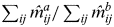 $\sum _{ij} \hat m_{ij}^a /\sum _{ij} \hat m_{ij}^b $
, where indices a and b refer to the contacts that took place under two different conditions along the same weather dimension. The relative change in the reproduction number in equation (7) of Willem et al. [Reference Willem10] can be simplified and estimated, with the assumption of the proportionality factor being constant, by the ratio of the maximum eigenvalue of Ca
to that of Cb
, where the element of the C matrix is
$\sum _{ij} \hat m_{ij}^a /\sum _{ij} \hat m_{ij}^b $
, where indices a and b refer to the contacts that took place under two different conditions along the same weather dimension. The relative change in the reproduction number in equation (7) of Willem et al. [Reference Willem10] can be simplified and estimated, with the assumption of the proportionality factor being constant, by the ratio of the maximum eigenvalue of Ca
to that of Cb
, where the element of the C matrix is $c_{ij}= (\hat m_{ij} /N_j+ \hat m_{ji} /N_i )/2$
and N
j
is the population size in age group j. We used a non-parametric bootstrap method to calculate 95% confidence intervals for the two measures of relative changes [Reference Goeyvaerts26]. We generated 10 000 bootstrap samples through resampling with replacements from the participants, stratified by age group. For each bootstrap sample, we re-calculated the diary weights and used the same procedures as those in Willem et al. to estimate the relative change. The 2·5th percentile and 97·5th percentile of the 10 000 bootstrapped relative changes are the lower and upper limits of the 95% bootstrap confidence interval, respectively.
$c_{ij}= (\hat m_{ij} /N_j+ \hat m_{ji} /N_i )/2$
and N
j
is the population size in age group j. We used a non-parametric bootstrap method to calculate 95% confidence intervals for the two measures of relative changes [Reference Goeyvaerts26]. We generated 10 000 bootstrap samples through resampling with replacements from the participants, stratified by age group. For each bootstrap sample, we re-calculated the diary weights and used the same procedures as those in Willem et al. to estimate the relative change. The 2·5th percentile and 97·5th percentile of the 10 000 bootstrapped relative changes are the lower and upper limits of the 95% bootstrap confidence interval, respectively.
Model-based estimate of contact change
To obtain better estimates of the relative change in the number of contacts, we proposed a model-based approach for controlling socio-demographic background and other individual characteristics collected in a questionnaire along with the contact diaries. In particular, we used the following variables for this purpose: household size, age, gender, region of the residence, a BIG-5 personality item (extraversion; we treated ‘being very extraverted and sociable’ as the base category, with three less extraverted and sociable groups as dummy variables), mental health (CMQ-12) [Reference Fu27], happiness, and school holiday (July). Because these background factors were also expected to influence social contact patterns [Reference Fu, Wang and Chuang11, Reference Fu28], controlling for them in a regression model allowed us to adjust potential confounders and achieve a better estimation of weather effects on the change in the average number of contacts.
In addition to the number of total contacts, all of the contacts were further divided by three criteria: membership (household, work/school, neither), contact duration (<15 min, 15–59 min, 1–4 h, >4 h), and the presence of physical contact (yes/no). Let Y i denote the number of contacts with a specific pattern for respondent i. To take the overdispersion of the count data into account, we first fitted the data with negative binomial regression models, in which the mean can be expressed by the equation:
 $$\eqalign{\log (\mu _i ) = & \alpha _0 + \alpha _1 \log (X_{i1} ) + \sum\nolimits_{\,j = 2}^8 {\sum\nolimits_{g = 2}^{G_j } {\alpha _{\,jg} I(X_{ij} = g)} } \cr & + \sum\nolimits_{l = 1}^5 {\beta _l B_{li} + \sum\nolimits_{l = 2}^5 {\gamma _l (B_{1i} \times B_{li} } } ).} $$
The first covariate, X i1, is household size. The other covariates, X ij , j = 2,…,8, are factors of G j levels, including age group (ages 0–10, 11–18, 19–64, ⩾65 years), gender, region of residence, extraversion, mental health (CHQ-12 score ⩾3 vs. <3), happiness, and school holiday. In the mean equation, I(·) is an indicator function, and α jg is the effect of level g compared to the baseline level 1of factor j. The second part of the mean equation is for modelling the weekday/weekend and four weather effects on contacts. We define dummy variables B 1i = 1 when the subject was interviewed on a weekday, B 2i = 1 if the daily average temperature was >28°C, B 3i = 1 if the daily temperature range was >6·5°C, B 4i = 1 if the daily absolute humidity was >19·9 g/m3, and B 5i = 1 if it was a heavily rainy day. The parameters of interest β l and β l + γ l for l = 2, …, 5 correspond to effects of the four weather conditions on the number of contacts during weekends and weekdays, respectively.
Because there were high proportions of zero counts in some contact patterns, we also fitted the data with zero-inflated negative binomial regression models, in which the mean count was multiplied by 1 minus the proportion of zero, and written as E(Y
i
) = (1 − p
i
)μ
i
. We modelled the proportion of zero by logit(p
i
) = λ
0 + λ
1
W
i
, where W
i
is the total number of contacts of respondent i. Vuong's non-nested test was used to determine whether the zero-inflated negative binomial model was better than the negative binomial model for each data reference [Reference Vuong29]. The relative change of mean contact number between days with high weather conditions and days with low weather conditions during weekends and weekdays were estimated, respectively, by $\exp (\hat \beta _l )$
and
$\exp (\hat \beta _l )$
and $\exp (\hat \beta _l + \hat \gamma _l )$
, where
$\exp (\hat \beta _l + \hat \gamma _l )$
, where $\hat \beta _l $
and
$\hat \beta _l $
and $\hat \gamma _l $
for l = 2, …, 5 were the estimated coefficients. Since the estimate of relative change is an exponential of the coefficient of the model, we used a non-parametric bootstrap method to generate a 95% confidence interval of relative changes based on 10 000 bootstrap samples. The original sample of participants was stratified by age group, household size, and weekend/weekday into 4 × 11 × 2 = 88 categories. We drew a bootstrap sample from each category independently and then pooled the obtained bootstrap samples of the 88 categories to form a whole bootstrap sample to calculate model-based relative change estimates. The 2·5th percentile and the 97·5th percentile of the 10 000 bootstrapped relative changes are the lower and upper limits of the 95% bootstrap confidence interval, respectively.
$\hat \gamma _l $
for l = 2, …, 5 were the estimated coefficients. Since the estimate of relative change is an exponential of the coefficient of the model, we used a non-parametric bootstrap method to generate a 95% confidence interval of relative changes based on 10 000 bootstrap samples. The original sample of participants was stratified by age group, household size, and weekend/weekday into 4 × 11 × 2 = 88 categories. We drew a bootstrap sample from each category independently and then pooled the obtained bootstrap samples of the 88 categories to form a whole bootstrap sample to calculate model-based relative change estimates. The 2·5th percentile and the 97·5th percentile of the 10 000 bootstrapped relative changes are the lower and upper limits of the 95% bootstrap confidence interval, respectively.
RESULTS
We used a sample of 1927 participants to conduct the analysis, excluding 15 participants whose contact's age was missing. The descriptive statistics of the four weather variables are shown in Table 1. The mean average daily temperature was 26·3°C between April and July, the mean daily temperature range was 6·4 °C, the mean absolute humidity was 19·4 g/m3, and the mean daily precipitation was 8·7 mm. Daily weather conditions were linked to the corresponding dates when the study participants were interviewed.
Descriptive statistics of weather conditions during the study period, April to July 2010.

s.d., Standard deviation.
The relative change in R 0 takes into account the number of contacts in different age groups, the population size of each age group, and the diary weight for each participant. The relative change in the number of contacts also takes into consideration the number of contacts and the diary weight for each participant. We first used the methods of Willem et al. [Reference Willem10] to estimate the model-free estimates of relative change in R 0 and the number of contacts between weekdays and weekends. The proposed model-based method was then applied to estimate the relative change in the mean number of contacts between weekdays and weekends, with the adjustment of demographics for the number of contacts of different contact types and durations.
As shown in Figure 1, the total number of contacts in the three measures of change were all significantly higher on weekdays than on weekends (model-free estimate of relative change in R 0 with a 95% confidence interval (CI): (1·94, 95% CI 1·42–2·58); relative change in number of contacts (1·34, 95% CI 1·14–1·44); and model-based estimated relative number of contacts (1·30, 95% CI 1·16–1·43). Respondents had 1·54 (95% CI 1·21–1·97) times as many contacts in workplaces or schools on a weekday as on a weekend day. We also found higher mean numbers of shorter contacts (<15 min, 15–59 min) on weekdays, compared to weekends, and more physical and non-physical contacts on weekdays. We compared the number of contacts on regular days to school holidays, and the results showed fewer work/school contacts (0·54, 95% CI 0·24–0·97) and slightly more other contacts (1·33, 95% CI 0·97–2·12) on school holidays.
Model-free estimates of the relative change in R 0, the relative change in the number of contacts, and the model-based estimated relative change in the number of contacts and 95% confidence intervals between weekends and weekdays.
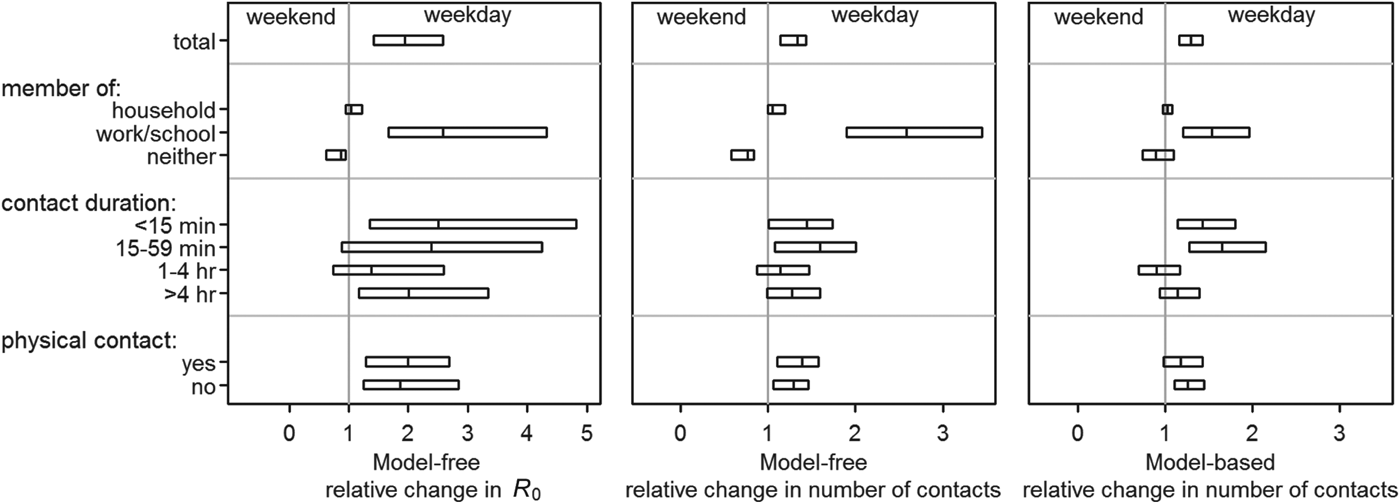
The model-free estimates of relative change in the number of contacts shown in the middle panel of Figure 1 reveal patterns close to those of the model-based estimates of the relative number of contacts. The R 0 ratios shown in the left panel of Figure 1 are similar to the results of the contact number ratios, i.e. transmission increased during weekdays. These findings are expected and reasonable, as more activities occurred on weekdays, and the results helped confirm the accuracy of our data and methods. Since some social contact behaviours were clearly different on weekdays and weekends, the data must be stratified by the day of interview to avoid confounding effects in calculating relative change in the number of contacts with the approaches in Willem et al. Our model-based approach can estimate both relative changes in the number of contacts between two weather conditions on weekdays and weekends from the fitted model.
We summarized the model-free estimated effects of temperature conditions on relative changes in R 0 and in the number of contacts as well as the model-based estimated relative changes of the number of contacts in Figure 2. From the fitted models with the adjustment of confounding factors, we found significantly more contacts that lasted 15–59 min on both weekdays (1·69, 95% CI 1·23–2·28) and weekends (1·54, 95% CI 1·03–2·40) with high temperature (>28°C). The model-free estimates showed that participants had more contacts with members outside the household and work/school on weekdays with high temperature. We also observed slightly more physical contacts on weekends with high temperature.
Model-free estimates of the relative change in R 0, the relative change in the number of contacts, and the model-based estimated relative change in the number of contacts and 95% confidence intervals between days with low and high daily average temperature. Low: daily average temperature ⩽28°C; high: daily average temperature >28°C.
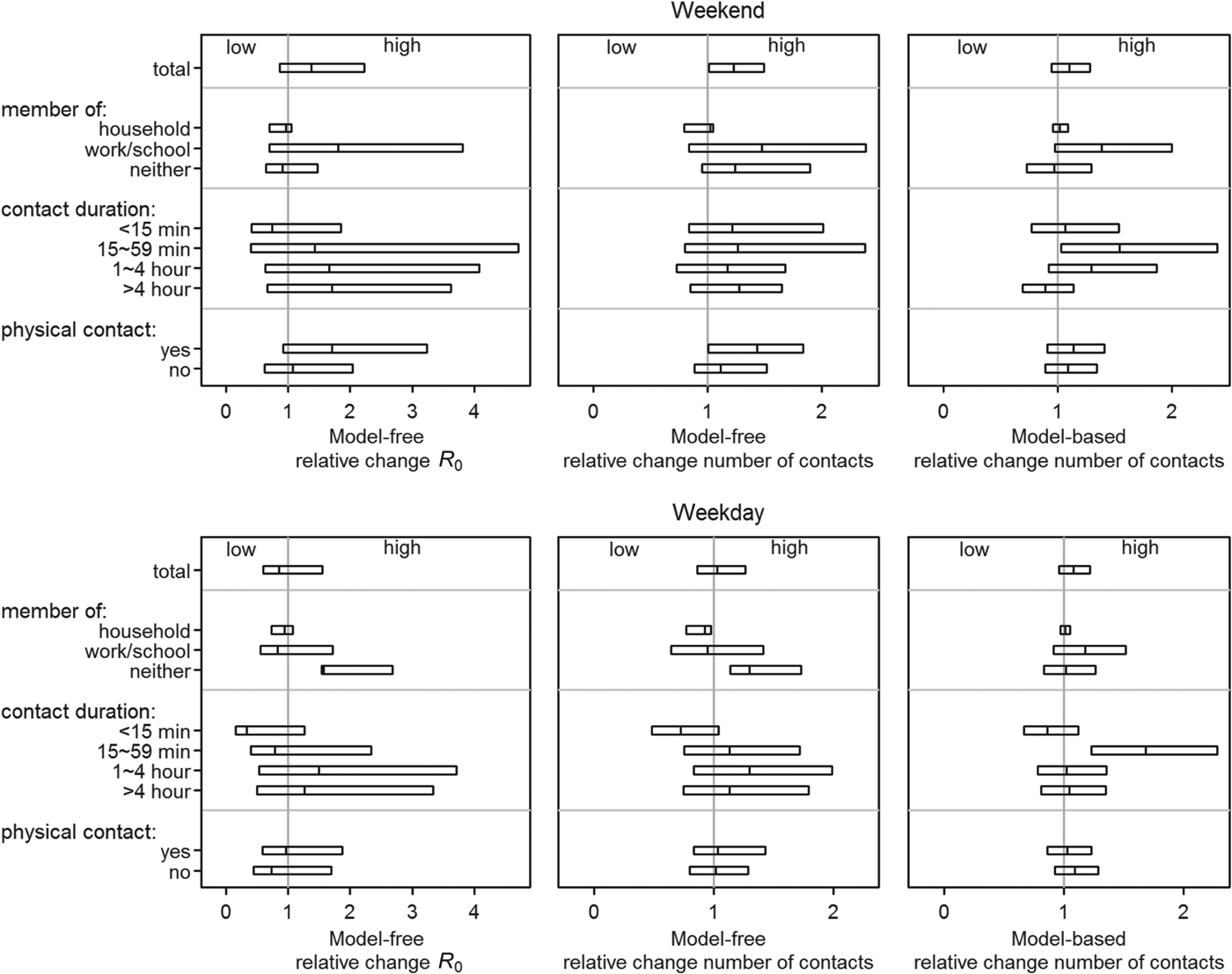
Figure 3 summarizes the effects of temperature range on contact patterns. On weekdays with a large temperature range (>6·5°C), the mean number of contacts with those outside the household and work/school was slightly higher. By contrast, on weekends with a large temperature range we found significantly more contacts with household members (1·05, 95% CI 1·00–1·11).
Model-free estimates of the relative change in R 0, the relative change in the number of contacts, and the model-based estimated relative change in the number of contacts and 95% confidence intervals between days with low and high daily temperature range. Low: daily temperature range ⩽6·5°C; high: daily temperature range >6·5°C.

Figure 4 shows the association between high absolute humidity (>19·9 g/m3) and contacts. The number of mid-range contacts (15–59 min) significantly increased on weekdays with low absolute humidity (0·71, 95% CI 0·54–0·90). On weekends with high absolute humidity, there were also significantly more contacts outside the household and work/school (1·31, 95% CI 1·03–1·66), as well as more contacts that lasted longer than 4 h (1·38, 95% CI 1·12–1·70).
Model-free estimates of the relative change in R 0, the relative change in the number of contacts, and the model-based estimated relative change in the number of contacts and 95% confidence intervals between low and high daily absolute humidity. Low: daily absolute humidity ⩽19·9 g/m3; high: daily absolute humidity >19·9 g/m3.

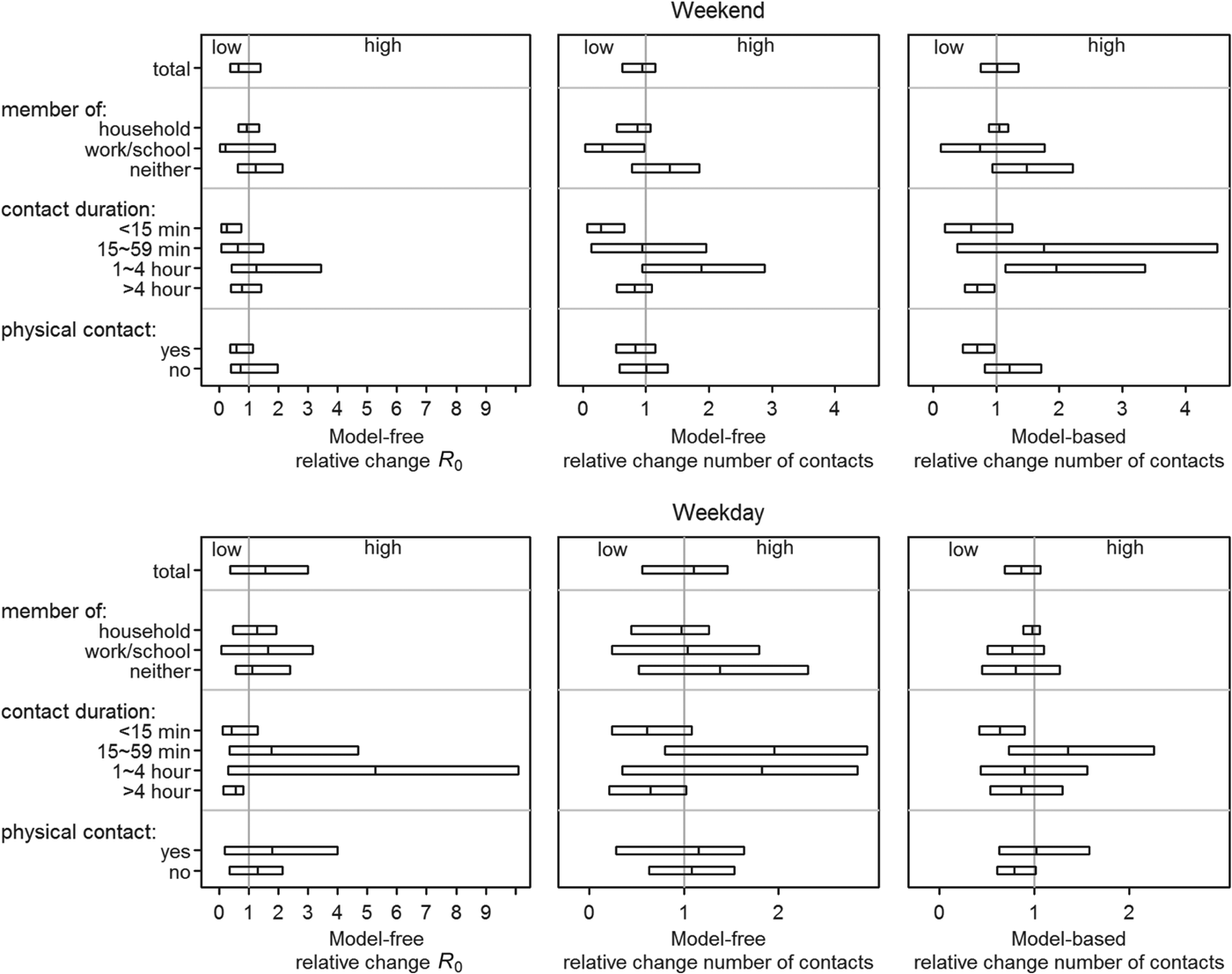
The estimated associations between heavy rain and contacts are given in Figure 5. Fleeting contacts, those lasting <15 min (0·63, 95% CI 0·42–0·90), were significantly less common on weekdays with heavy rain. The same pattern was observed on weekends. On weekends with heavy rain, contacts were less likely to be longer than 4 h (0·70, 95% CI 0·50–0·92) and physical contacts (0·69, 95% CI 0·46–0·97), and more likely to last between 1 and 4 h (1·95, 95% CI 1·14–3·36).
Model-free estimates of the relative change in R 0, the relative change in the number of contacts, and the model-based estimated relative change in the number of contacts and 95% confidence intervals between days without and with heavy rain. Low: daily precipitation ⩽50 mm; high: daily precipitation >50 mm.
In the regression models, we included eight covariates for each contact pattern in addition to weekday/weekend. To explain such background effects, we give here only the results for the total number of contacts (Table 2). Household size was significantly associated with all contacts. People living in a larger household had 13% more contacts than those living in a household half that size (1·13, 95% CI 1·08–1·18). The ratio of the mean number of contacts between schoolchildren aged from 11 to 18 years and children aged <11 years was 1·13 (95% CI 1·00–1·28). Elders had fewer contacts than young children (0·62, 95% CI 0·55–0·71). Males had slightly more contacts than females. Compared to individuals living in eastern Taiwan, residents living in other regions tended to have contact with more people. As expected, those who answered with the most positive categories on the items of extraversion had a significantly higher number of total contacts. However, those with a CHQ-12 score ⩾3, indicating probable common mental disorders (CMDs), also had a higher number of contacts, with a ratio estimate of 1·09 (95% CI 1·02–1·16). Those who were not at all happy had a lower number of contacts (0·63, 95% CI 0·45–0·86) compared to very happy participants. The number of total contacts decreased slightly (0·89, 95% CI 0·78–1·00) during school holidays. The number of contacts was significantly higher on weekdays (1·30, 95% CI 1·16–1·43).
The model-based estimates with 95% confidence intervals of the effects of the covariates in terms of the relative number of contacts obtained from the model for the total number of contacts

CI, Confidence interval.
We also tried education level and other BIG-5 personality items (which measure openness, conscientiousness, extraversion, agreeableness, neuroticism; OCEAN), with regular stepwise regression methods.
We tried other associated variables with regular stepwise regression methods. For demographic background, we also examined how contact patterns might vary on education level. Because education level was highly associated with age groups, and sometimes the two were even inseparable from each other (e.g. all those aged <11 years were either preschool or in elementary school), we did not include education level in the final model of Table 2. In addition, we tested how contact patterns were linked to different BIG-5 personality items and found extraversion to be the only significant personality item that led to a higher number of contacts. As a result, we kept only extraversion and dropped the items measuring openness, conscientiousness, agreeableness, and neuroticism.
DISCUSSION
Our survey began in April and ended in July, during late spring and early summer in Taiwan. The mean average daily temperature was as high as 26·3°C, and the mean average absolute humidity was as high as 19·4 g/m3. Such weather conditions are typical in Taiwan, while some other tropical countries are hotter and more humid than Taiwan. Although biological evidence has shown that high temperature and humidity tend to limit influenza virus transmission and viral activity [Reference Lowen8], influenza laboratory surveillance data have indicated an annual influenza epidemic in the tropics [Reference Moura, Perdigao and Siqueira30]. Thus, the transmission pattern and seasonality may be quite different between temperate and tropical zones. One hypothesis stated that direct or indirect social contact might be a possible major cause of influenza transmission in the tropics, instead of aerosol transmission, as in temperate countries [Reference Lowen and Palese7].
Although influenza is often transmitted by four modes, including aerosol, large droplet, direct, and fomite transmission, it has been difficult to differentiate precisely how each mode contributes to the transmission [Reference Read31]. In aerosol transmission, the infected person coughs and sneezes in a confined space, and the influenza virus remains suspended in the air, which in turn may cause subsequent infection [Reference Tellier32, Reference Noti33]. In fomite transmission, the influenza virus might be deposited on an inanimate object, from which it is picked up by contact by susceptible people [Reference Boone and Gerba34]. These two types of transmission need no direct personal contact and thus are hard to measure with the current design. As direct and droplet transmission require close contact as defined in this study, it is feasible to distinguish such contacts by dividing the contacts into physical and non-physical. Furthermore, contact intensity can be approximated by contact duration, and the frequency of contact plays a role in the dose–response relationship of the infection. According to our findings, physical contacts were more common under the low rainfall condition on weekends. By contrast, non-physical contacts increased on weekdays. The gap probably reflects the fact that physical contacts may occur more frequently in the household than at work or school.
The correlations between outdoor and indoor weather conditions, such as temperature and absolute humidity, were high [Reference Nguyen, Schwartz and Dockery35]. Not only are temperature and absolute humidity closely associated with human behaviour, but they may also contribute to transmission efficiency and influenza virus survival [Reference Shaman and Kohn36]. Although some laboratory experiments have shown that low temperature and low humidity result in higher influenza virus transmission, high temperature and high humidity yielded a higher number of contacts in our findings. The empirical results regarding weather conditions and contact patterns presented here may provide important information and implications for developing a more accurate and sophisticated simulation model and control policy.
In a study conducted in Belgium [Reference Willem10], the relative change in the number of contacts was significantly greater on weekdays than on weekends, except for contacts at home. The low temperature and low precipitation in winter seemed to increase the contact duration (>15 min) significantly. However, there was no clear pattern showing how weather conditions were related to social contact patterns because of the neutral estimated results.
To gain more comprehensive insights, we present the results of three different measures in Figure 1 to allow comparisons between contacts on weekdays and weekends. The relative change in R 0 provides the potential contact probability in the population, which could be applied to estimating the probability of influenza transmission in the population if an influenza virus indeed existed. Overall, the number of contacts was significantly higher on weekdays than on weekends. This finding was consistent with that of the study conducted in Belgium [Reference Willem10] and may give solid support for a social distance policy to help control influenza pandemics [Reference Caley, Philp and McCracken37]. The model-based method in estimating the relative number of contacts can directly fit individual data so that we can adjust for potential confounders. Overall, we found that contacts lasting for 15–59 min were more frequent on weekdays with high temperature and low absolute humidity, and on weekends with high temperature. Both fleeting contacts (<15 min) and physical contacts were less common on weekdays with heavy rain.
In addition to these weather conditions, some individual background factors also contributed to a higher number of contacts. Being a school-aged child, male, extraverted, happy, and living in a larger household size were all important factors that helped increase the number of contacts. It is of particular interest to find the positive correlation between those with a CHQ-12 score ⩾3 and the total number of contacts. In a 20-year longitudinal study in Taiwan, the prevalence of people with probable CMDs (CHQ-12 score ⩾3) reached 23·8% in 2010 [Reference Fu27]. The percentage was correlated with rates of unemployment, divorce, and suicide during the 20-year period. In our study, people with CMDs also had more social contacts, suggesting that such conditions may be associated with the stress that could result from being overloaded with excessive social contacts.
This study has some limitations, because it lacks a comparison group in the winter time. Seasonality is relatively clear in northern Taiwan, but not in southern Taiwan. Our study participants were distributed throughout Taiwan. In this sense, therefore, our estimation provides the baseline for contact patterns in non-epidemic as well as epidemic seasons.
Another limitation lies in the lack of more thorough verification checks of the self-reported contact diaries. Without direct verification, we were unable to address problems about underreporting and discordant rates, such as those found in Europe [Reference Read31, Reference Read, Eames and Edmunds38, Reference Smieszek39]. Based on the comparison tests of our completed sample and the key indicators from our survey results that are markedly similar to both official records and other recent diary studies in Taiwan, we are confident that our survey data are representative to a certain extent. Nonetheless, more cross-checking needs to be done with other means of contact recording, while the current state of the art in survey research prevents us from over-claiming data representativeness with respect to social contact patterns.
To conclude, certain weather conditions appear to be closely linked to social contact patterns in Taiwan. Fleeting contacts, for example, tend to diminish when it rains hard on weekdays, while physical contacts also decrease during weekends with heavy rain. Frequent social contacts on weekdays and under good weather conditions, including high temperature and low absolute humidity, all might facilitate the transmission of infectious diseases in tropical regions. Such variations in different climate zones should be taken into account when implementing policies to prevent infectious disease transmission in specific countries. To further reveal such regional differences, future studies in the tropics should extend the study period to cover winter as well as other seasons. The resulting greater number of variations should help clarify how seasonal weather conditions might be further associated with social contact patterns under various circumstances.
ACKNOWLEDGEMENTS
We gratefully acknowledge the Data Bank for Atmospheric Research, sponsored by the National Science Council, Taiwan, for providing the daily weather data, and the Centres for Disease Control, Department of Health, Taiwan for sponsoring the data collection of contact diaries (grant no. DOH99-DC-1004). We also thank Szu-Ying Lee and Tsuey-Hwa Hu for helping with the data analyses and manuscript preparation.
DECLARATION OF INTEREST
None.



