


1.1 Scene-Setting
Since its adoption in 2024, EU Regulation 2024/1083 has been thrust into a central position in European media regulation. The short title of the Regulation – European Media Freedom Act (EMFA) – is bold and ambitious; it is full of promise and potential. It seems to suggest the aim or possibility of creating a regulatory panacea for all sorts of threats to media freedom in Europe. But as always, the devil is in the detail, and in this case the devil is also in the more prosaic, longer title of the Regulation: ‘establishing a common framework for media services in the internal market and amending Directive 2010/13/EU [the Audiovisual Media Services Directive]’.Footnote 1 A reference to media freedom is thus absent from the longer, official version of the title. Instead, the emphasis is expressly on realizing the (objectives of the) internal market. The term ‘media freedom’ is also peripheral in the text of the Regulation proper: it appears only eight timesFootnote 2 (seven preambular referencesFootnote 3 and one solitary mention in the substantive part of the RegulationFootnote 4).
Is this simply a case of inadvertent misalignment between a title and an accompanying text, without any real consequences? Or is there something more at issue here? Could it be, say, a misfired attempt by the European Union (EU) legislator to infuse a new flagship regulation with a clarity and singularity of purpose that the text doesn’t actually have?
With such scant and mainly passing preambular references to media freedom, the question quickly arises whether the EMFA is substantively up to the primary task foisted upon it by its short title. Will it be able to hold the centre and become a centrifugal regulatory force for securing media freedom in Europe?
These questions beg further questions. Who or what are the media – the would-be beneficiaries of this strived-for freedom? With the blistering pace of technological change, the contemporary information and communications space is very much a multimedia or multiactor environment, or ecosystem. The media are in a shape-shifting phase, harnessing technological opportunities while working their way around a gamut of challenges. They are surrounded by a vast range of other actors, from individuals and small grassroots organizations to multinational tech companies with billions of worldwide users. This makes for a very crowded, noisy and converged online information and communications space. It is very difficult to delineate ‘media’ with the kind of precision needed for regulatory purposes.
And what does the EU mean by ‘media freedom’: what does the envisaged version of freedom entail? Is it a negative freedom – freedom of the media from interference and obstruction? Or is it a positive freedom – freedom of the media to carry out their activities and pursue and realize their own goals?
In this chapter, I set out to address these questions. The central argument that I will craft is quite straightforward. Put provocatively: the EMFA, despite its neon-light billing, is not the main act for the regulation of media (freedom) in Europe. It is one important act among other important acts, which together regulate the media and other actors in a multimedia ecosystem.
I will trace how contemporary media pass through different regulatory zones and examine the different rules that govern each zone and how the zones relate to each other. I will also situate these zones in a broader matrix of human or fundamental rights. But first of all, some conceptual scoping is in order, to clarify our understanding of changing notions of the media; media freedom; and media regulation. I will briefly chart the recent and ongoing evolution of the media, from analogue roots to generative AI futures, and note the fundamental rights and regulatory ramifications of technology-driven innovations. I will draw an analytical line from these conceptualizations through to the contemporary threats to media freedom that regulation urgently needs to address.
After pulling my central argument through this expansive terrain, I will arrive at the conclusion that we need much more than the EMFA, as currently calibrated, to ensure effective media freedom in Europe. A deeper understanding and enhanced operationalization of the existing human rights framework is a logical and necessary starting point.
1.2 Conceptualizing Media
For most of the twentieth century, the media were commonly understood as mass media, with the press (or print media), radio and television (or broadcast media), and film as their main constituent parts. Etymologically, ‘medium’ originates in a notion that is physical or technical: a means or channel or agency for communicating or diffusing information, news or other content to the public.Footnote 5 But as the mass media emerged, the term, in plural form or as a collective noun, acquired or had ascribed to it an additional layer of meaning. The meaning infused in the term ‘media’ came to include the editorial content as well as the technical aspect. The media were not just carriers of content, but creators and carriers of content. Television was not just a bunch of ‘wires and lights in a box’.Footnote 6 It was a medium that could broadcast consequential messages into the intimacy of the home, up and down countries, all around the globe. This made it a force to be reckoned with.
If there was ever a time when the media could be accurately described as a unified, homogeneous entity, it is long gone. Today, heterogeneity in the media is the order of the day. The unitary appearance and all-encompassing nature of the term ‘media’ masks a more complex range of different media types. Further rough-hewn categories could also be identified, in particular within broadcast media, such as public broadcasting/media, commercial media, ‘community’ media, local and regional media, transnational and international media. This brief, brushstroke typology already indicates that there are different media types with different objectives, target groups and levels of geographical reach. For many people, the term ‘media’ conjures up associations with news and journalism, but entertainment media, sports media and other themed media are also important scions. The tabloid media have also proved their staying power over the centuries.
And then, in the twilight of the last century, the internet (or online media) emerged alongside print and broadcast media and film. But were the new online media really media? Or were we simply reflexively projecting familiar frames on to novel actors?
The early years of the internet were characterized by excitement and enthusiasm – if not euphoria – at the apparent potential of this groundbreaking new medium. Nicholas Negroponte developed the idea of ‘The Daily Me’ – a curated newspaper, personalized according to individual preferences, and a clear break from the Fordist model of one-size-for-all that characterized the mass mainstream media.Footnote 7 Scholars such as Cass R. Sunstein joined in, with influential works such as Republic.com, which later tracked internet developments and evolved into Republic.com 2.0 and #Republic.Footnote 8 The internet developed in phased and accelerated ways.
The internet and social media have enabled users to participate in public debate and have helped to shift the traditional broadcasting pattern of one-to-many communication towards many-to-many communication.Footnote 9 This has led to a blurring of previously distinct boundaries between production and consumption of media; professionalism and amateurism; and the huge variety in types of media, media services and media content. Websites, blogs and social media allow the users ‘formerly known as the audience’Footnote 10 to publish content at low cost and with few barriers to market entry. Growing broadband access and affordable technical equipment enable individuals, organizations and (small) companies to produce and distribute types of content in ways that predominantly belonged to the domain of professional media enterprises.
These developments, sometimes informally referred to as ‘Web 2.0’ (a phase of development of the internet in which the technical architecture became more interactive), have led to an exponential growth of internet-based services, networks and applications offered by various platforms and other online actors. The internet quickly became the ‘archetypal “new medium”’, being ‘at the same time a mass medium and a medium of interpersonal communication’.Footnote 11 This prompted Manuel Castells to identify in 2009 an ‘historically new form of communication’: ‘mass self-communication’.Footnote 12 It is mass communication insofar as it has potential global reach; it is self-communication insofar as it entails self-generated and self-directed content, which users (recipients) can retrieve by self-selection.Footnote 13 The upshot of all this has been a proliferation of expressive and communicative opportunities for an increasing range of actors, which in turn benefits public debate and democratic deliberation.Footnote 14
These profound changes inevitably led to much soul-searching about the nature of media, media freedom and media regulation; a revisiting of time-honoured understandings and premises for media regulation.
The media, as traditionally understood, are typically media organizations with institutional structures and editorial policies, processes and responsibilities; they produce and disseminate content to the public on a regular basis. A definition forged by Karol Jakubowicz in 2011 has, in this author’s view, never been surpassed in terms of clarity and nuance. His definition ‘reflects this new notion of media and can be applied, for policy and regulatory purposes, both to traditional and new forms of media’:
Mass media are media organisations (regardless of their size, professional and economic status) that conduct regular communication activity, in a potentially interactive relationship with the users, by producing and/or assembling, in an editorial process and with respect for legal and ethical norms, content serving to inform, educate and/or entertain (and – especially in the case of the news media – to influence public opinion), assume full editorial responsibility for it and arrange for its periodic dissemination to the general public via appropriate delivery and distribution platforms.Footnote 15
Jakubowicz homes in on particular functions and features of mass media organizations which, taken together, give those organizations a distinctive character. He succeeds in creating and holding a regulatory space for mass media, as the winds of technological change swirl around public debate. Jakubowicz also had his finger on the pulse of media and internet developments and was ahead of the curve in his pioneering thinking on these matters. He charted, in 2009, three ongoing macro-level trends in the multimedia ecosystem, which he encapsulated under a ‘new notion of media’: (1) all media are new-media-to-be; (2) forms of media created by new actors; and (3) media or media-like activities performed by nonmedia actors.Footnote 16 These patterns/prognoses were subsequently borne out in practice, but what Jakubowicz did not account for – and could not have accounted for – was the speed with which the power dynamics in the multimedia ecosystem would change.
In the online environment, a new generation of gatekeepers has emerged and has a determinative influence over the (free) flow of information online. These new gatekeepers include various types of intermediaries and platforms, some of which have achieved positions of considerable dominance in one or more markets: for example search, social networking, micro-blogging, and so on.Footnote 17 Some authors have accordingly documented the platformization of society, a process by which online platforms have become an integral part of society. This has enabled platforms to ‘shape every sphere of life, whether markets or commons, private or public spheres’.Footnote 18 Specifically in the context of public debate, platformization has led to the dislodging of the mass media as the central institutional actors.Footnote 19 Platforms have become the new gatekeepers of freedom of expression online, controlling the flow of information and ideas that irrigate public debate.
Platforms’ gatekeeping role stems from their control of the range of services and networks they provide to users. Although platforms are typically private corporate actors, the fora they control are often used for informational and communicative purposes that characterize public debate. This gives them clear ‘discursive significance’ in society.Footnote 20 Platforms’ operative control of quasi-public discursive fora means that their actions and omissions can affect individuals’ right to freedom of expression and information in different ways. They set the rules for access to and use of their fora and they moreover enforce those rules, making them both ‘governors’Footnote 21 and ‘police’Footnote 22 of speech.
This has given rise to a paradoxical situation: much public debate nowadays takes place in networks, services and forums that are privately owned by ‘Big Tech’ companies which increasingly influence and control information flows and opinion-making processes. The media are no longer the primary powerbrokers. These new power paradigms in the multimedia ecosystem give rise to numerous new challenges for media freedom, which will be examined in Section 1.3.
1.3 Conceptualizing Media Freedom
Every generation has to reimagine and redesign its own freedom. This is also true of media freedom. Academic examinations of media freedom often start with an overview of where we have come from, where we are at and where we are heading. Such examinations, regardless of when they are written, tend to describe the historical moment in which they find themselves, on the cusp of a new regulatory era due to the advent and uptake of whatever the newest technology of the day is. The imminent future always seems to promise new opportunities, new challenges and new technological and regulatory complexities. We have seen this pattern of anticipation repeat itself in respect of the printing press, the telegraph, radio, television, cable and satellite television, digital broadcasting, the internet and all the services and applications it has progressively engendered. Now it is the turn of generative AI. Ithiel de Sola Pool captures this anticipation, awe and apprehension very well:
The characteristics of media shape what is done with them, so one might anticipate that these technologies of freedom will overwhelm all attempts to control them. Technology, however, shapes the structure of the battle, but not every outcome. While the printing press was without doubt the foundation of modern democracy, the response to the flood of publishing that it brought forth has been censorship as often as press freedom. In some times and places the even more capacious new media will open wider the floodgates for discourse, but in other times and places, in fear of that flood, attempts will be made to shut the gates.Footnote 23
History, including recent history, teems with examples of new technologies powering (democratic) revolutions, by opening up new possibilities for free expression and association. Information can prove incendiary; ideas can be experienced as incitement; and truth can topple tyrants. The media, by disseminating truthful information and ideas, often serve as the vectors of revolution and the course-changers of conflicts. From ‘the Crimean War to the fate of Crimea’ today,Footnote 24 the media have been reporting on war and conflict, using the newest technologies of the age – from the telegraph to Telegram. The media’s power to inform and mobilize the masses can elicit repressive responses from authoritarian regimes. The Arab Spring is a case in point. When Facebook and Twitter proved instrumental in coordinating the protests, the Tunisian government blocked access to certain channels, while the Egyptian government cut off all internet access nationwide.Footnote 25
The nexus between the media, technology and political and military power is just one example of a space where the media can exert far-reaching influence. But the media’s influence does not derive solely from their ability to reach and engage mass publics; their power is of a more complex constitution. The power of the media stems from their ability to set and destroy agendas; to influence political processes; to inform and misinform the public; to create and shape collective narratives, images and memories; to ensure the inclusion and participation of different groups in debates, or to exclude them.Footnote 26 This power of the media is alternately called information power, communicative power and opinion-making power. The media exercise their power in a variety of ways, such as by informing, defining, framing, emphasizing, persuading and stimulating to action.Footnote 27
On the strength of his unravelling of the different strands of media power, Roger Silverstone is well-poised to conclude that ultimately, ‘it’s all about power, of course, in the end’.Footnote 28 This holds true in media regulation, where there is a constant preoccupation with curbing the power of the media, or at least channelling their power to serve the public interest – as we will see in Section 1.4.
1.4 Conceptualizing Media Regulation
1.4.1 Evolving Trends in Media Regulation
Media and media regulation have traditionally been conceptualized as roughly bifurcating between print media and broadcasting. The latter branches out into radio and television (audiovisual) regulation. Until the turn of the century, much of the academic and policy attention for media regulation tended to focus on broadcast and audiovisual media. There are several explanations for this. First, broadcasting has traditionally been subject to more detailed regulation than the printed press and it is still subject to more specific regulation than online information and communication activities. Second, broadcasting has long been the dominant form of mass media and existing theoretical and regulatory approaches have remained stable, even if they have undergone considerable adaptation in keeping with technological and societal developments. Since the turn of the century, as internet use has become inexorably pervasive around the world, the focuses of academic and policy attention have evolved and are now better described as media-relevant rather than media-specific. Recent and current scholarship repositions media regulation in the context of the multimedia ecosystem,Footnote 29 and/or emphasizes the growing importance of new forms of media.Footnote 30
1.4.2 Selected Rationales for Media Regulation
There is a broad congruence in the leading academic works on broadcasting law, at least in respect of the rationales for regulating the (broadcast) media.Footnote 31 This allows us to distill a number of recurrent rationales. In light of the analysis in the previous section, it is somewhat surprising that the rationales we will discuss here are more concerned with the regulation of media freedom than regulation for media freedom.
1.4.2.1 Historical Rationales
To begin with, there are obvious historical reasons for media regulation. Ever since the invention of the printing press, successive waves of new media technologies have been accompanied by euphoria at the democratic potential of communicating with, and influencing, the masses, as well as despair at the disruptive potential for established orders and orthodoxies. Rulers and governments have consistently deemed it necessary to regulate the ability of the media to spread information and ideas widely and thus limit or control their power to influence public opinion. Once rulers lost their monopoly on the creation and dissemination of information, they also started to lose their censorial grip on public opinion.Footnote 32 A less cynical and more democratic or public-interest version of this ‘controlling’ rationale for media regulation is that the power of the media to influence public opinion should be regulated in order to ensure the free flow of information and ideas and the promotion of pluralistic public debate.
1.4.2.2 Technological Rationales
Another rationale fuses historical and technological reasons. In the past, scarcity of broadcast frequencies created a need to allocate the limited spectrum fairly and equitably. A variant on this rationale casts the ether as a public resource or public good, which should be used in a way that is of optimal benefit for the public, or in the public interest. Viewed through such an optic, ‘[w]hat is essential is not that everyone shall speak, but that everything worth saying shall be said’.Footnote 33 Structural regulation – including the allocation of broadcasting licences according to specified, objective criteria, must-carry and must-offer rules, prominence rules, and so on – is commonly used to advance or achieve these goals.
1.4.2.3 The Impact/Influence of the Media
The impact/influence of the media on public opinion-making processes is one of the most commonly heard rationales for media regulation. The hypodermic model of media effects has long been discredited, having been superseded by a more sophisticated understanding of media effects and audience reception. By way of brief overview, Denis McQuail identifies four models within media effects theory: direct effects; conditional effects (varying according to social and psychological factors); cumulative effects (gradual and long-term); cognitive-transactional effects (with particular reference to schemata and framing).Footnote 34 He notes that media effects can be measured in different terms: attitudinal; affectional/emotional; behavioural; cognitive; and sociocultural. The media can thus cause intended or unintended change; cause minor change (in form or intensity); facilitate change (whether intended or not); prevent change; or reinforce the status quo.Footnote 35 ‘Any of these changes may occur at the level of the individual, society, institution or culture’, according to McQuail.Footnote 36 These changes can moreover be realized in the short, medium or long term, or on a once-off or ongoing basis.Footnote 37
In light of these sophisticated insights into the impact and influence of the media, it is striking that the European Court of Human Rights uses much more limited insights and laconic explanations in its espousal of this argument. It tends to distinguish the audiovisual media from the print media due to the greater reach and impact of the former. The Court has often repeated that the programmes of audiovisual media ‘are often broadcast very widely’Footnote 38 and that ‘the audiovisual media have often a much more immediate and powerful effect than the print media’ because they ‘have means of conveying through images meanings which the print media are not able to impart’.Footnote 39 The Court repeats this assertion regularly, but without explaining its basis. This is problematic because the observation seems to rest, first, on a clear distinction between print and audiovisual media, which hardly exists in the context of highly converged media that seamlessly combine text, video and other types of content. This assertion also seems to rest on the ‘one-to-many’ mass media model that was dominant before the advent of the internet.
1.4.2.4 Legitimate Governmental Interests
The regulatory rationales canvassed so far involve governments restricting or facilitating the dissemination of different types of expression, information and content via the media. Governments also have a legitimate (but carefully circumscribed) interest to participate directly in public communication via the media. Public interest information from national authorities and public bodies (which necessarily excludes governmental self-interest) should, in specific circumstances, be disseminated via the media. Factual information about forthcoming elections or referenda, environmental issues, public emergencies involving national security or public health, are all examples of official information that needs to reach the public as widely as possible. The particular societal importance of such information was brought into sharp relief during the COVID-19 pandemic.
1.4.2.5 Economic and Market Interests
Media regulation may also aim to protect various economic and market-related interests, such as fair competition between different market players; the prevention of (abuse of) dominant market positions; consumer protection; and the freedom to establish and operate a media enterprise. Moreover, the basis of EU media regulation is to promote the objectives of the internal market; in other words to secure the free movement of media services within the EU.
1.4.2.6 Human Rights
It is possible to make a strong argument for media regulation from human rights, but this argument is under-theorized in existing literature even though it is easily extrapolated from international human rights instruments and relevant jurisprudence. This argument sees media freedom as a corollary of the right to freedom of expression. The media have an instrumental role in realizing the right to freedom of expression in practice and they also play a vital role in public debate. The public has the right to be informed on matters of public interest and the media have the corresponding task of informing them. This argument has been developed in piecemeal fashion by the European Court of Human Rights in its case-law on Article 10 of the European Convention on Human Rights and it will be explored in greater detail in Section 1.5. For now, it should also be noted in passing that notwithstanding the importance that the Court attaches to this argument, some authors are sceptical or critical about its merits.Footnote 40 Among their main objections is the argument that international human rights law was designed as a system of rights essentially intended to protect individuals against states’ interferences with their rights. The system is about protecting individuals (and groups) against abuses or misuses of (state) power. To extend these rights, including and in particular the right to freedom of expression, to media organizations – which are themselves often very powerful institutional actors – is to extend those rights beyond their individualistic purpose.
1.4.2.7 An Overarching Rationale: The Public Interest
All these rationales (and others) co-exist, complement each other and overlap in places. There is accordingly no need to choose between the various theories or to seek to ground media regulation in any single or ‘unitary principle’.Footnote 41 In fact, there are synergies between the different rationales and the totality of rationales is ‘stronger than the sum of its parts’.Footnote 42
Having said that, we can discern at least one central and recurrent theme across these rationales for media regulation: the need to regulate the power of the media in the public interest. As the media wield so much power, it stands to reason that they should have the higher normative goal of serving the public interest.Footnote 43 That the media should serve the public interest is a staple value or goal of media regulation and policy.Footnote 44 But it is difficult to define and operationalize the public interest: ‘the public’ is not a neat and unitary whole. Every public – or society – is made up of constituent groups, with shared and divergent characteristics, needs and interests.Footnote 45 The challenge for media regulation and policy is to create the space for media to cater to those different, sometimes competing, interests in a coherent way and in a way that serves the overall public interest.Footnote 46
In practice, this has led to the media being regulated from different perspectives: structural (access); behavioural (content and quality); and distributive (dissemination and reception). These regulatory perspectives are informed by considerations of pluralism and diversity and of market-oriented goals.
1.4.3 Revisiting Rationales for Media Regulation
It is necessary to revisit these rationales for media regulation in light of the changed realities of the contemporary multimedia ecosystem. It is pertinent to enquire whether and/or to what extent these rationales for media regulation are still relevant today and will continue to be relevant in the future. The age-old fear of the media’s power and their ability to influence public opinion and political moods is evergreen;Footnote 47 illiberal and autocratic regimes are quick and arrant in their attempts to muzzle public watchdogs.
The historical/technological argument derived from spectrum scarcity has waned steadily. Digital broadcasting is still very important in the present communications cornucopia. The internet may well be home to a plethora of information sources and communications opportunities, but (commercial, community and other types of) broadcasting licences are still much sought-after as they facilitate privileged access to the public.
The rationale based on the impact/influence of the media has also been affected by the availability of abundant content from other (online) actors and sources. The public’s ability to find and access media content is increasingly determined not only by the distribution strategies of the media themselves, but also by the amplification, selection and recommendation systems of non-media actors, the various and often very powerful online gatekeepers.
Governmental information and communication interests concerning the media have arguably remained constant; governments need the mainstream mass media to reach the public, but public communication strategies have been modernized and diversified. Public communication is now also pursued through a wide range of non-media actors and channels.
But if we look beyond the individual rationales for media regulation and focus, as we have done here, on how these rationales together are more than the sum of their parts and how they coalesce around the need to serve the public interest, we can see familiar concerns in less familiar technological circumstances. We can see major shifts in communication power and opinion power in the online environment, particularly from traditional media to (large) online platforms.
These tectonic shifts call for further reflection on the distinctive functions and features of the new non-media actors and consideration of whether and how they should be regulated. In the multimedia ecosystem we have already seen a shift in regulatory emphasis from structural and behavioural regulation of the media to distributive regulation. In other words, there is increased emphasis on how media content is disseminated and amplified, and the impact of new modes of dissemination and (de-)amplification on how users, individually and collectively, access, select and receive media content. This also entails a shift of emphasis from the media to other actors, in particular platforms, which play the role of online gatekeepers.
Given the prevalence of personalized and AI-generated or -promoted content in the multimedia ecosystem, there is in any case a greater need for transparency and accountability for content. Individuals, whether as citizens or consumers or users of online services, should be able to easily identify the origin and nature of content so that they can make informed decisions about whether and how to use it. This is likely to lead to a new regulatory emphasis on modalities for the verification and validation of content. In Section 1.5, we will examine how media regulation is operationalized at the European level; how structural, behavioural and distributive types of regulation are shaped by fundamental rights frameworks; and what room there is for a new generation of regulation to allow for greater verification and validation of content.
1.5 Operationalizing Media Freedom and Regulation
1.5.1 Regulatory Mapping and ZoningFootnote 48
The multimedia ecosystem is formally governed by a range of treaties, regulatory and policy instruments and self- and/or co-regulatory mechanisms. In addition, the influence of private ordering measures or governance actions by private actors, such as the media and especially online platforms and other actors, is also significant. It is important to differentiate between these instruments, mechanisms and measures. Some carry greater legal weight than others, and some are more media-centric than others. The interplay between them is often complex and always dynamic.
This set of formal rules and informal norms is known as media and communication governance. According to the Council of Europe’s Committee of Ministers,
‘media and communication governance’ refers to all types of formal rules such as statutory regulation, co-regulation, industry self-regulation and private ordering initiatives by individual media and platform providers, informal norms and technological solutions (for example, the design of algorithmic systems) at the national, supranational, transnational and international level that shape the production, dissemination and use of content in the public sphere.Footnote 49
The approach taken here endorses this expansive and nuanced understanding of media and communication governance, and building on it, proposes a multizonal model. The diagram in Figure 1.1 seeks to capture the different zones of media regulation, policy, self- and co-regulation and governance. The lines demarcating the different zones are deliberately porous, denoting the possibility to move from one zone to another and to combine instruments and mechanisms located in different zones. For instance, binding regulation that focuses on principles and goals may leave room for actors in a given sector to collectively develop detailed self-regulatory measures to operationalize those principles and achieve those goals. Similarly, media policy recommendations may encourage states to go beyond their legal obligations set out in international treaties.
Zones of media and communication governance in the matrix of human rights.
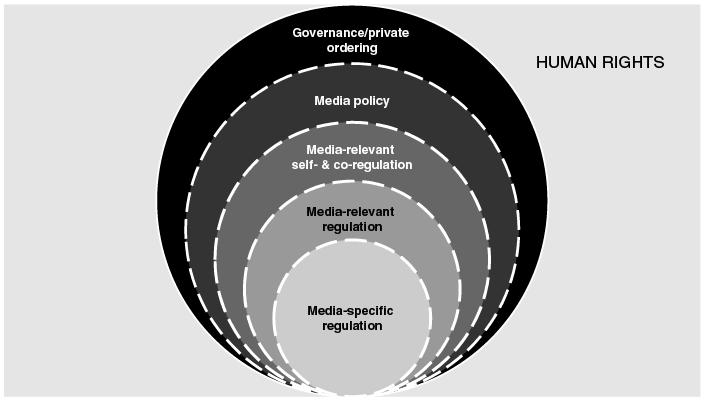
Figure 1.1 Long description
Diagram captures the different zones of media regulation, policy, self-regulation, and co-regulation, as well as governance. The lines demarcating the different zones are deliberately porous, denoting the possibility to move from one zone to another; to combine instruments and mechanisms located in different zones. For instance, binding regulation that focuses on principles and goals may leave room for actors in a given sector to collectively develop detailed self-regulatory measures to operationalize those principles and achieve those goals. Similarly, media policy recommendations may encourage states to go beyond their legal obligations set out in international treaties.
All zones of media and communication governance, both media-specific and media-relevant, are subject to European and international legal frameworks for the protection of human rights.
The following overview provides illustrative examples of the different types of regulation, policy and other measures.
Human/fundamental rights: European Convention on Human Rights, EU Charter of Fundamental Rights, International Covenant on Civil and Political Rights, Convention on the Rights of the Child, Convention on the Rights of Persons with Disabilities
Media-specific regulation: European Convention on Transfrontier Television, Audiovisual Media Services Directive, European Media Freedom Act, Treaty on the Functioning of the European Union Protocol (no. 29) on the system of public broadcasting in the Member States
Media-relevant regulation: Digital Services Act, Digital Markets Act, General Data Protection Regulation, Unfair Commercial Practices Directive, Platform to Business Relations Regulation, AI Act, Regulation on the transparency and targeting of political advertising, Satellite and Cable II Directive, Directive on copyright and related rights in the Digital Single Market, Council of Europe Framework Convention on the Protection of National Minorities, European Charter of Regional or Minority Languages
Media-relevant self- and co-regulation: Code of Conduct on Disinformation, Code of Conduct on countering illegal hate speech online +, International Federation of Journalists’ Global Charter of Ethics for Journalists, European Advertising Standards Alliance Charter
Media policy: declarations and recommendations of the Council of Europe’s Committee of Ministers, recommendations by the European Commission
Governance/private ordering: Private law terms of use/service, content moderation, technical measures, educational initiatives, and so on.
These instruments vary in terms of how specific their focus on the media is and in how much detail they regulate the media. The also vary in terms of their status; they include legally binding instruments, political recommendations, self- and co-regulatory codes and private ordering measures. This means that from a legal perspective, their importance varies.
International and European conventions and treaties set out obligations that are legally binding on all contracting State parties. Designated judicial or supervisory bodies oversee treaty implementation through case-law and/or a system of reporting by state parties.
Within the European Union, we can distinguish between different types of regulatory instruments: primary legislation such as treaties and secondary legislation. The latter takes different forms, as set out in Article 288 of the Treaty on the Functioning of the European Union:Footnote 50 regulations,Footnote 51 directives,Footnote 52 decisions,Footnote 53 recommendations and opinions.Footnote 54
In the Council of Europe system, declarations and recommendations adopted by the Committee of Ministers are political standard-setting instruments that address given themes. Recommendations are addressed to the forty-six Member States of the Council of Europe and offer detailed guidance on how to develop national approaches to the given themes. They are not legally binding, but they are politically influential.
Self-regulatory instruments are not typically legally binding; they are usually a set of professional rules governing a given sector that signatories are expected to abide by. Co-regulatory instruments are likely to have superior legal status to self-regulatory instruments, but that will depend on how they have been designed and the broader context in which they apply. Governance/private ordering relies on private law terms of use/service that are contractually binding on users and to which they have agreed.
A final observation in relation to the multizonal model concerns the processes and practices that inform regulation and policy governing the media. In recent years we have witnessed a growth in (specialized) monitoring and reporting that contribute to evidence-based law- and policy-making in the multimedia ecosystem. Leading examples at the European level include the Platform to promote the protection of journalism and safety of journalists, the Media Pluralism Monitor, the European Commission’s Rule of Law reporting, the Media Freedom Rapid Response Monitor, the Euromedia Ownership Monitor, Digital News Reporting and the World Press Freedom Index.
These initiatives cannot easily be situated in any of the identified zones of regulation and policy. As they gain increased recognition as reliable sources of information and analysis, they are being increasingly used to shape regulation and policy at European and national levels. This is a valuable contribution to the quality of media-specific and media-relevant regulation and policy. Before examining each of these regulatory and policy areas in turn, we will first turn our attention to the broader regulatory matrix of European and international human rights.
1.5.2 The Matrix of European and International Human Rights Law
1.5.2.1 Institutional and Normative Scene-Setting
A fundamental conceptual feature of international human rights law is that ‘[a]ll human rights are universal, indivisible and interdependent and interrelated’.Footnote 55 International and European human rights instruments should therefore be seen as mutually reinforcing and continuously pushing for higher levels of attainment. Even the seminal Universal Declaration of Human Rights was initially conceived of as a set of minimum standards for the protection of human rights worldwide: a political stepping stone towards later, more full-bodied legal protection. There is thus broad congruence at the core of general human rights treaties, with theme-specific treaties often developing additional protective and promotional measures.
In Europe, the Council of Europe has long been the primary guardian of human rights. Its raison d’être is to protect and promote the holy trinity of human rights, democracy and the rule of law. The European Union’s engagement with human rights is more recent and has been developed in fits and starts, but we can still speak of a shared regulatory space for human rights in Europe. Whereas the Council of Europe and the EU have been described as twins separated at birth,Footnote 56 others have made a very forceful case for the EU to develop its own human rights ethos and agenda.Footnote 57
Fundamental rights are present in EU media law, but not centrally. There are historical, institutional and legal reasons for this. Historically and institutionally, the European Economic Community was primarily concerned with enhancing economic cooperation between Member States, and the consolidation of peace through trade. Increasingly over the years, the promotion of the goals of the single/internal market became central. Human rights have not been a main driver of EU law: despite advances and a certain amount of mainstreaming, ‘the EU’s dominant focus today remains economic’.Footnote 58 However, the Court of Justice of the European Union (CJEU) has significantly developed the protection of fundamental rights (to use the preferred terminology of the EU) in incremental fashion over the years.Footnote 59 The Court’s progressive development of fundamental rights jurisprudence was catalyzed by the EU Charter’s enhanced legal status post-2009: with the entry into force of the Treaty of Lisbon in 2009, it acquired the same legal status as the EU treaties.Footnote 60
The Charter of Fundamental Rights of the European Union is the EU’s primary legally binding instrument for the protection of human rights.Footnote 61 It is at the centre of judicial dialogue between the CJEU and national courts and it ‘stands at the apex of the hierarchy of EU norms’.Footnote 62 The Charter binds the EU’s institutions and EU Member States when applying EU law.Footnote 63 Insofar as the rights enshrined in the Charter correspond to those enshrined in the ECHR and which have been further developed by the ECtHR in its case-law,Footnote 64 the latter are in effect ‘carried over’ into the Charter regime.Footnote 65 It would make little sense, after all, to have divergent regimes for the protection of human or fundamental rights within Europe. Although the CJEU often does follow the ECtHR’s case-law, it also tends to be protective of the autonomy of EU law and its own autonomy in that regard.Footnote 66
The Charter also includes a number of relevant rights that are not (explicitly) enshrined in the ECHR and that are relevant for media freedom/regulation. They include the right to protection of personal data (Article 8), the right to conduct a business (Article 16), the right to intellectual property (Article 17(2)) and the right of access to services of general economic interest (Article 36). These newly recognized rights and explicit emphases must be factored into the balancing of human/fundamental rights, as relevant. As such, they serve to adjust and expand the parameters of the balancing exercise that has traditionally taken place in the context of the ECHR.
1.5.2.2 The Centrifugal Influence of Article 10 ECHR
Legally speaking, the conceptualization of the right to freedom of expression under Article 10 ECHR is the touchstone for all European (and national) regulation of media, platforms and other actors in the multimedia ecosystem. It is not only the central legal standard for the Council of Europe; its referential value extends to the EU. Article 11 of the Charter focuses on freedom of expression, making it the equivalent provision to Article 10 ECHR. Article 11 of the Charter should be interpreted consistently with Article 10 ECHR and relevant ECtHR case-law.Footnote 67 It is a more modern and succinct articulation of the freedoms set out in Article 10 ECHR. However, Article 11 of the Charter, unlike Article 10 ECHR, makes explicit reference to media freedom and pluralism, albeit in a weakly worded way (it uses ‘shall respect’ as opposed to, for example, ‘shall ensure’).Footnote 68 The ECtHR’s case-law interpreting Article 10 ECHR does, however, include focuses and principles on media pluralism.
The right to freedom of expression enjoys strong protection under Article 10 ECHR, but it is not unconditional or unlimited.Footnote 69 Article 10(1) sets out the broad scope of the right, comprising the freedom to hold opinions and to seek and impart information and ideas without interference by public authority and regardless of frontiers. It also countenances the possibility for states to regulate licensing for broadcast media and cinema: a precautionary clause informed by the abuse of mass media preceding and during the Second World War.
Article 10(2) clarifies that the exercise of the right is accompanied by duties and responsibilities. The nature and scope of those duties and responsibilities vary, depending on the role or position of the speaker in society and on the technical means used to disseminate their message. Thus a journalist will have heightened duties and responsibilities to provide accurate, fact-based reporting than ordinary individuals.Footnote 70 This is a logical consequence of the role of journalists as public watchdogs and purveyors of information and ideas to the public.Footnote 71 Similarly, flowing from their capacity as public representatives, politicians have a duty not to inflame public feelings in the context of electoral discussions on sensitive societal topics, such as immigration and integration.Footnote 72 The particular duties and responsibilities accompanying the use of different media or communications technologies will vary, depending on factors such as reach, amplification, dissemination and impact.Footnote 73 The greater the expected or actual impact, the more exacting the duties and responsibilities will be.
The exercise of the right to freedom of expression can moreover be limited in certain circumstances. A limitation on the right must always be prescribed by law and be necessary in a democratic society to achieve one or more of the purposes enumerated in Article 10(2) ECHR. A limitation should thus be necessary: ‘in the interests of national security, territorial integrity or public safety, for the prevention of disorder or crime, for the protection of health or morals, for the protection of the reputation or rights of others, for preventing the disclosure of information received in confidence, or for maintaining the authority and impartiality of the judiciary’. This list is intended as exhaustive, but some of the named grounds are open-ended, such as the ‘rights of others’. Any other ground for limiting the right to freedom of expression must be brought under one or more of the listed purposes.
In its case-law interpreting Article 10 ECHR, the ECtHR has elaborated a body of principles on media freedom and pluralism. A core principle is that the public has the right to be informed on matters of general interest and the media have the corresponding task to inform them.Footnote 74 The media, journalists and other public watchdogs benefit from various freedoms and privileges in order to effectively fulfil the roles ascribed to them in democratic society. Those roles are to disseminate information and opinions on matters of general interest widely, thereby contributing to opinion-forming processes; to act as public watchdogs, holding governmental and other powerful actors to account; and to provide shared fora for public debate.Footnote 75 The functional freedoms include editorial and presentational freedom;Footnote 76 protection of confidential sources;Footnote 77 and recourse to a degree of exaggeration and provocation.Footnote 78 The enjoyment of those freedoms is subject to the proviso that journalists, the media and other public watchdogs fulfil their duties and responsibilities: that is, that they abide by the (criminal) law;Footnote 79 adhere to professional ethics;Footnote 80 strive to provide information that is accurate and reliable;Footnote 81 and engage with different sides to a story.Footnote 82
Another core principle is that states are the ultimate guarantors of pluralism, especially in the audiovisual media sector.Footnote 83 The emphasis on that sector reflects the Court’s long-standing position that the audiovisual media are more powerful than the printed press, due to their reach and impactFootnote 84 (even if this rough distinction feels increasingly dated in an internet-dominated worldFootnote 85). This implies that states should put in place legislative frameworks to ensure true and effective pluralism in respect of the audiovisual media.Footnote 86 Public service media (PSM) can play an important role in this context and where states opt for PSM systems (this is not mandatory), they must ensure that the PSM have the remit to provide pluralistic content to the public.Footnote 87 As mentioned in the previous section, states furthermore have the positive obligation to foster a safe and favourable environment for everyone to participate in public debate without fear,Footnote 88 which means that not only mainstream media but also individual and minority voices should be heard.Footnote 89
These principles primarily concern the right to freedom of expression and media freedom, and they reflect the instrumental role of the media as actors in, and facilitators of, public debate. These principles formed the ‘acquis’ or backdrop to the Court’s later engagement with freedom of expression in an online context. Some of the principles remain relevant in the online multimedia ecosystem, whereas others have been adapted to make them relevant in a process that has been called ‘adaptive replication’.Footnote 90 The Court has also had to develop new principles to reflect technical features of the internet and societal use of internet-based services and applications. For instance: the internet is an indispensable source of information and forum for communication;Footnote 91 internet intermediaries are the ‘protagonists’ of online expression;Footnote 92 hyperlinks are essential for navigating the vast quantities of information online;Footnote 93 engagement with online content (for example, liking or commenting on the posts of others) is accompanied by duties and responsibilities and can give rise to liability;Footnote 94 the creation and control of online fora, in which others can participate, creates duties of care, in particular for online news mediaFootnote 95 and for politicians and especially regarding (manifestly) illegal content.Footnote 96
This extensive array of principles governs how media and platforms should conduct their activities in accordance with the right to freedom of expression. The principles offer high-level guidance about the obligations of states authorities, but they often lack prescriptive details. The principles are usually not self-executing; they require operationalization in national law and policy.
1.5.3 Media-Specific Regulation
While their freedom is shaped in the first place by fundamental rights frameworks, the media and platforms are also subject to comprehensive and detailed specific regulation at the EU level. Within EU regulatory frameworks, human rights values and objectives are an important thematic focus, but they are by no means the only thematic focus. Two key pieces of EU media-specific regulation are the Audiovisual Media Services Directive and the European Media Freedom Act, each of which will now be considered, in turn, from the perspective of its contribution to freedom of expression and/or media freedom, including in the online context.
1.5.3.1 The Audiovisual Media Services Directive
The Audiovisual Media Services Directive (AVMSD)Footnote 97 evolved from the former Television without Frontiers Directive (1989).Footnote 98 It covers traditional television broadcasting (linear audiovisual media services), on-demand (or non-linear) audiovisual media services and audiovisual commercial communication (i.e., television advertising, sponsorship, teleshopping and product placement).Footnote 99 It takes a graduated approach: different rules apply to the different types of service. Since the last major revision of the Directive in 2018, the providers of video-sharing platform services also fall under the scope of the Directive, insofar as they are covered by the definition of such services. The convoluted definition focuses on services
where the principal purpose of the service or of a dissociable section thereof or an essential functionality of the service is devoted to providing programmes, user-generated videos, or both, to the general public, for which the video-sharing platform provider does not have editorial responsibility, in order to inform, entertain or educate, by means of electronic communications networks … and the organization of which is determined by the video-sharing platform provider, including by automatic means or algorithms in particular by displaying, tagging and sequencing.Footnote 100
The AVMSD seeks to ensure a minimum level of harmonization across the EU of national legislation governing audiovisual media services, with a view to removing obstacles to the free movement of such services within the EU’s single or internal market.Footnote 101 The Directive’s central principles – the country of origin principle (Article 2) and the freedom of reception principle (Article 3) – help to obviate the need for double regulation and double supervision of cross-border audiovisual media services within the EU. To achieve its main aims, the Directive coordinates a number of areas: general principles; jurisdiction; incitement to hatred; accessibility for persons with disabilities; major events; the promotion and distribution of European works; commercial communications; and protection of minors.
The AVMSD is heavily conditioned by the goals and logic of the internal market. That the Directive has been framed primarily in economic or market terms has been the source of widespread criticism, due to the cultural component of audiovisual productions and the fundamental rights dimension. While the Directive does contain a number of provisions that support or contribute to freedom of expression and/or media freedom, those provisions are incidental to its overall purpose. As Vasiliki Kosta explains, internal market freedom of movement of services in the specific context of television broadcasting coincides with the more general principle of, and human right to, freedom of expression.Footnote 102 Given the EU’s competence to regulate the internal market and its lack of competence to regulate human rights, the trade-/market-centric legal conceptualization of the Directive prevailed.Footnote 103
Across its coordinated areas, the AVMSD seeks to ensure access for the general public to certain public-interest content – for example, events of major importance for society (Article 14) and short news reports on events of high interest to the public otherwise broadcast on an exclusive basis (Article 15) – and to ensure that programmes and services are accessible to persons with disabilities (Article 7). It seeks to ensure protection for minors and consumers. It creates transparency obligations to ensure that providers of audiovisual media services make certain (contact) data ‘directly and permanently available’ to users of the services (Article 5(1)). This strengthens the possibility to contact the providers of audiovisual media services and also to control the media, which are important safeguards for freedom of information. Member States may also require providers of audiovisual media services to make available information on their ‘ownership structure, including beneficial owners’ (Article 5(2); see also Recitals 15 and 16). Under Article 30, Member States are obliged to ensure the independence and operational capacity of national regulatory authorities. Member States must promote and take measures to develop media literacy skills (Article 33a). Even though the Directive is not prescriptive about the nature of the promotional and other measures, this is an important obligation as media literacy skills are widely viewed as a way of empowering individuals to navigate and use online media safely and with discernment.
These provisions in the AVMSD are best summarized as provisions that can contribute to freedom of expression and media freedom, insofar as they strengthen access to certain types of information and offer protection against harmful content, but that are not expressly concerned with ensuring freedom of expression and media freedom. However, seeing as the protection of freedom of expression and media freedom are not the aim of the Directive, we should temper our expectations and criticisms accordingly. We can hardly fault the Directive for not doing something it was never intended to do and which moreover does not fall squarely within its material scope. This is where a broader positional awareness is needed: an ability to relate to frameworks for fundamental rights protection and platform regulation.
1.5.3.2 The European Media Freedom Act
The EMFA was born into a media regulatory environment that had already been largely shaped at the centre by the AVMSD and at the edges by the Digital Services Act (discussed in detail in what follows). Even though the short title of the Regulation frames it as such, the Regulation is not in point of fact a full-fledged ‘European Media Freedom Act’. The EMFA does not actually have the ambition to provide a comprehensive approach to, or to be a ‘one-stop-regulatory-shop’ for, media freedom in Europe. Rather, the EMFA ‘lays down common rules for the proper functioning of the internal market for media services and establishes the European Board for Media Services, while safeguarding the independence and pluralism of media services’ (Article 1(1)). Its legal basis is – like the AVMSD and also not uncontroversially – Article 114 of the Treaty on the Functioning of the European Union, the so-called internal market clause.Footnote 104
The EMFA provides a regulatory response to various challenges and problems for media freedom within the EU, such as concentrations of media ownership threatening media pluralism and media capture and regulatory capture. More specifically, the EMFA was designed to address divergent national rules and procedures governing media pluralism; insufficient cooperation between national media regulatory authorities; patterns of interference with editorial decision-making; and a lack of transparency and fairness in the allocation of financial resources to the media.Footnote 105 The findings of the Media Pluralism Monitor and the European Commission’s Rule of Law Reports were relevant for identifying and analysing these challenges and problems.
The EMFA’s definitional point of departure is that ‘media service’ means ‘a service as defined by Articles 56 and 57 TFEU, where the principal purpose of the service or a dissociable section thereof consists in providing programmes or press publications, under the editorial responsibility of a media service provider, to the general public, by any means, in order to inform, entertain or educate’ (Article 2(1)). This definition is modelled on, but also broader than, the definition of audiovisual media services in the AVMSD.
The EMFA’s specific focuses include the right of recipients of media services to a plurality of independent media content (Article 3); editorial freedom and independence (Article 4), and the independence of public service media providers (Article 5); transparency and other duties of media service providers (Article 6); the independence and operational capacity (and modalities of cooperation) of national media regulators (Articles 7 et seq.); and the transparent and fair allocation of public funds for state advertising and procurement (Article 25). There are also specific provisions on the protection of journalistic sources and confidential communications, including a prohibition (with derogations) on using intrusive surveillance software (e.g. spyware) (Article 4).
Article 18 is noteworthy for the privileged position it instates for self-declared media service providers which use the services of very large online platforms (VLOPs). The provision allows media to declare that they, inter alia, are media service providers; comply with the transparency duties under Article 6(1); are editorially independent of Member States, political parties, third countries and entities controlled or financed by third countries; are subject to regulatory requirements for the exercise of editorial responsibility in (at least) one EU Member State; and do not provide AI-generated content without human or editorial review. When media service providers meet these cumulative requirements, they are entitled to somewhat preferential treatment whenever VLOPs intend to or actually do suspend services for, or restrict visibility of content from, a media service provider. When a VLOP intends to take a decision to suspend services or restrict the visibility of content on the grounds of incompatibility with its terms and conditions, the VLOP must communicate its intention, with a statement of reasons, to the media service provider, giving a general window of twenty-four hours to reply to the communication. If the VLOP then proceeds to take such a decision, it must inform the media service provider without undue delay. In short, the procedural ‘privilege’ instated under Article 18 is one of privileged advance and timely notifications of its consequential decisions for media service providers. It creates a narrow window of opportunity to argue the case for non-interference with public interest content and to try to prevent VLOP decisions to suspend services or restrict the visibility of content.
Like the AVMSD, the EMFA protects specific parts of a more comprehensive vision of media freedom. Its most salient focuses are, however, more readily identifiable as relating to media freedom than the relevant focuses in the AVMSD. A safe and favourable environment for freedom of expression and media freedom may well be part of the backdrop to the EMFA, but it does not feature centre stage.
1.5.4 Media-Relevant Regulation
Moving beyond media-specific regulation, other regulation can also be relevant for the media, for example if it provides for access to the media for specific groups in society; prescribes or promotes particular types of (public interest) content; or influences the dissemination of media content. Media-relevant regulation can thus be relevant in structural, behavioural or distributive terms. In this section, three regulatory instruments will be used to develop this point. The first focus will be a brace of Council of Europe treaties dealing with minority/linguistic rights, with relevant provisions for the media. The second focus will be on the EU’s Digital Services Act (DSA),Footnote 106 the primary regulation for online platforms. The interplay between the DSA and the EMFA is important inter alia due to the media’s growing reliance on VLOPs to ensure the widest possible dissemination of their content.
In addition to the ECHR, the Council of Europe has a number of treaties whose core focus is not media-specific but which nevertheless contain important media-specific provisions, in particular the Framework Convention for the Protection of National Minorities and the European Charter for Regional or Minority Languages. The most important provisions in both treaties as well as their implementation are often wrongly overlooked in law and policy discussions on the media.
1.5.4.1 Framework Convention for the Protection of National Minorities (FCNM)
The FCNM guarantees a range of rights for persons belonging to national minorities.Footnote 107 Article 9 is the most important provision for ensuring the production, accessibility and findability of public interest content for persons belonging to national minorities. But Article 6 creates space for public interest content about minorities that is of wider benefit to society.
Article 9 FCNM could be seen as an adapted version of Article 10 ECHR that incorporates some minority-specific emphases. Its main provisions can be essentialized as follows.
Article 9.1 – Linguistic freedom and non-discriminatory access to media.
Article 9.2 – Licensing of radio, television or cinema must be non-discriminatory and based on objective criteria.
Article 9.3 – Freedom to create and use print media without hindrance; possibility to create and use own broadcast media outlets.
Article 9.4 – States must adopt adequate measures to facilitate minorities’ access to media and to promote tolerance and permit cultural pluralism.
Article 9.3 provides for content made by minorities for minorities, whereas Article 9.4 caters for content that is relevant for the broader relationship between minorities and other groups in society.
Article 6 FCNM also addresses the broader societal dynamics. Under Article 6.1, States Parties ‘shall encourage a spirit of tolerance and intercultural dialogue and take effective measures to promote mutual respect and understanding and co-operation among all persons living on their territory, irrespective of those persons’ ethnic, cultural, linguistic or religious identity, in particular in the fields of education, culture and the media’.
1.5.4.2 European Charter for Regional or Minority Languages (ECRML)
The driving aim of the ECRML is to protect and promote regional or minority languages in Europe and to ensure their continued vitality.Footnote 108 The rights of users of those languages are an important corollary to this central aim. As regional or minority languages are a ‘threatened aspect of Europe’s cultural heritage’, they merit protection and promotion.Footnote 109 The Charter thus focuses on non-discrimination in the use of regional or minority languages and developing measures to actively support regional or minority languages.Footnote 110 One focus area for such measures is the media (Article 11).
Article 11, in keeping with the overall approach of the Charter, sets out a cascading list of commitments for states to undertake, including public service radio and television; radio and television generally; the production and distribution of audio and audiovisual works; newspapers; funding for the media/audiovisual production; support for training of journalists and media professionals; and structured representation of regional or minority language speakers in bodies with responsibility for freedom and pluralism of the media.
1.5.4.3 The Digital Services Act
The Digital Services Act (DSA) and its sister regulation, the Digital Markets Act (DMA),Footnote 111 together form the centrepiece of the EU’s digital strategy.
The main aim of the DSA is to contribute to the proper functioning of the internal market for intermediary services. It sets out harmonized EU-wide ‘rules for a safe, predictable and trusted online environment that facilitates innovation and in which fundamental rights enshrined in the Charter, including the principle of consumer protection, are effectively protected’ (Article 1(1)). The DMA regulates the actions of large online platforms that act as gatekeepers with a view to creating a fairer online business environment for users and consumers. The regulation does not specifically address the media.
The DSA essentially incorporates the framework for the conditional exemption from liability of providers of intermediary services, previously developed in the E-Commerce Directive. This framework (Chapter II, Articles 4–10), also known as the ‘safe harbour’ regime, is built on the premise that the providers of intermediary services should not, in principle, be held liable for illegal content of third parties on their services, provided they lack knowledge of the illegal nature of such content, and upon obtaining such knowledge act expeditiously to block access to it. The DSA introduces a ‘Good Samaritan’ clause (Article 7), under which service providers will not be deemed ineligible for the liability exemptions when they voluntarily, diligently and in good faith take investigations and/or action to tackle illegal content in compliance with EU and national law. Member States are not allowed to impose general monitoring or active fact-finding obligations on service providers for the purpose of ascertaining illegality (Article 8). The thinking behind this approach is that such general monitoring obligations would likely increase the risk of over-removal of content, and thus private censorship, in order to avoid liability for not having acted to block access to illegal content.
The overall systématique and some specific focuses of the DSA contribute to the overall regulatory shaping of freedom of expression online in Europe. The explicit reference to the EU Charter in relation to the aims of the DSA is a useful starting point. A string of other references, sometimes underscoring freedom of expression and media freedom and pluralism among other rights and freedoms, form a recurrent focus.
Chapter 3 of the DSA, entitled ‘Due Diligence Obligations for a Transparent and Safe Online Environment’, is a mainstay of the Regulation. The obligations apply cumulatively to all providers of intermediary services (Section 1.1), and there are additional obligations for providers of hosting services, including online platforms (Section 1.2); additional obligations for providers of online platforms (Section 1.3) and for providers of online platforms allowing consumers to conclude distance contracts with traders (Section 1.4); and additional obligations for providers of VLOPs and of very large online search engines (VLOSEs) to manage systemic risks (Section 1.5).
All providers of intermediary services are required to provide points of contact for (i) national and EU authorities (Article 11) and (ii) recipients of their service (Article 12); indicate in their terms and conditions any restrictions to the use of their service and information on policies, procedures, measures and tools for content moderation, as well as information on their internal complaint-handling system (Article 14); and conduct (annual) transparency reporting (Article 15). Of significance is the requirement for all providers of intermediary services, when applying or enforcing their terms and conditions, to have ‘due regard to the rights and legitimate interests of all parties involved, including the fundamental rights of the recipients of the service, such as the freedom of expression, freedom and pluralism of the media’ and the other rights and freedoms enshrined in the Charter (Article 14).Footnote 112
Hosting providers, including online platforms, have an additional obligation to put in place ‘notice-and-action’ mechanisms: easy-to-access, user-friendly electronic mechanisms ‘to allow any individual or entity to notify them of the presence on their service of specific items of information that the individual or entity considers to be illegal content’ (Article 16(1)). Notifications via such mechanisms are deemed to give rise to actual knowledge or awareness where they ‘allow a diligent provider of hosting services to identify the illegality of the relevant activity or information without a detailed legal examination’ (Article 16(3)). This would render the hosting provider ineligible for the exemption from liability under the safe harbour regime. Hosting providers must process notices received via these mechanisms and take decisions on the information to which the notices relate ‘in a timely, diligent, non-arbitrary and objective manner’ (Article 16(6)). Hosting service providers must communicate a clear and specific statement of reasons to any affected recipients of the service if its decision entails restrictions due to a finding that the reported content is either illegal or incompatible with their terms and conditions. Such restrictions are:
(a) any restrictions of the visibility of specific items of information provided by the recipient of the service, including removal of content, disabling access to content, or demoting content; (b) suspension, termination or other restriction of monetary payments; (c) suspension or termination of the provision of the service in whole or in part; (d) suspension or termination of the recipient of the service’s account (Article 17(1)).
VLOPs and VLOSEs (i.e., the largest digital services, which have an average of more than 45 million monthly active users in the EU) must comply with the most detailed and far-reaching due diligence obligations.Footnote 113 This is because of the sheer scale of their operations and the systemic nature of their influence on the online environment. VLOPs and VLOSEs are required to ‘diligently identify, analyse and assess any systemic risks’ in the EU arising from ‘the design or functioning of their service and its related systems, including algorithmic systems, or from the use made of their services’ (Article 34(1)). They must conduct such risk assessments at least once a year. The envisaged systemic risks include, first, the dissemination of illegal content via their services (Article 34(1)(a)). Second is ‘any actual or foreseeable negative effects for the exercise of fundamental rights’ (Article 34(1)(b)). Several fundamental rights are highlighted: for example, freedom of expression and information, including the freedom and pluralism of the media. The third systemic risk is ‘any actual or foreseeable negative effects on civic discourse and electoral processes, and public security’ (Article 34(1)(c)). The fourth and final listed example concerns ‘any actual or foreseeable negative effects in relation to gender-based violence, the protection of public health and minors and serious negative consequences to the person’s physical and mental well-being’ (Article 34(1)(d)).
An integral part of the risk assessment is to determine how specific factors influence any of the envisaged systemic risks: ‘(a) the design of their recommender systems and any other relevant algorithmic system; (b) their content moderation systems; (c) the applicable terms and conditions and their enforcement; (d) systems for selecting and presenting advertisements; (e) data related practices of the provider’ (Article 34(2)). VLOPs and VLOSEs must use their risk assessments to devise ‘reasonable, proportionate and effective mitigation measures, tailored to’ the identified systemic risks, while having particular regard for the impact of strategies on fundamental rights (Article 35). To enable public/academic scrutiny of how VLOPs and VLOSEs conduct their risk assessments, Article 40 provides for important mechanisms to access that they hold. It is possible under Article 40(12) for researchers meeting stipulated criteria to apply directly to a VLOP or VLOSE for access to public data. Article 40(4)–(11) sets out a process that enables researchers who have been vetted by a Digital Services Coordinator, and deemed to meet the stipulated criteria, to request access to non-public data held by a VLOP or VLOSE.
The risk-centric approach (risk assessment and risk mitigation) is one of the major legal innovations of the DSA. It is more circumspect than the expansive ‘safe and favourable environment’ approach embraced by the European Court of Human Rights and the Council of Europe.
1.5.5 Self- and Co-regulatory Codes
Various self- and co-regulatory instruments and mechanisms operate in the penumbra of legally binding frameworks. Increased reliance on such instruments and mechanisms can be seen as one of the main ongoing shifts in the geometry of European regulation.Footnote 114
Self-regulation is a system of governance within a given sector in which the actors in the sector collectively draw up and oversee the implementation of professional or ethical rules for the sector. The state is not involved in any capacity. Self-regulatory rules often take the form of codes of ethics, conduct or practice and they are typically not legally binding. They are specific to the sector but subject to general law. Sectors that have extensive experience with self-regulation and that are also relevant to the media include journalismFootnote 115 and the advertising industry.Footnote 116
In the early 2000s, various forms of co-regulation (or regulated self-regulation) began to emerge. This was part of a wider trend towards so-called lighter touch regulation, which meant that states would be less hands-on in their approach to regulation. In practice, this means that states exercise their regulatory responsibilities jointly with actors from the sector. The collaboration between the state and sectoral actors is the distinctive feature of co-regulation.
Self- and co-regulation, with the flexibility they offer, are seen as suitable means of regulating certain aspects of media, internet and mobile technologies, for instance in Article 4(7) AVMSD. In the context of the DSA, voluntary codes of conduct at EU level are seen as a way of contributing to the application of the Regulation, particularly when it comes to ‘the specific challenges of tackling different types of illegal content and systemic risks’ (Article 45(1)). Such codes of conduct can provide detailed guidance on the rather open-ended provisions on limiting systemic risks by providers of VLOPs and VLOSEs. ‘In the case of systematic failure to comply with the codes of conduct, the Commission and the Board may invite the signatories to the codes of conduct to take the necessary action’, as stipulated in Article 45(4). These explicit and formal references to codes of conduct – such as the codes on hate speech and disinformation, which are also mentioned in Recital 106 – reinforce or, rather, enhance their (legal) status.Footnote 117
The Code of Conduct on Countering Illegal Hate Speech Online + and the Code of Conduct on Disinformation are most relevant; both reference and follow European human rights law.Footnote 118 The Code on hate speech was initially developed in 2016 under the auspices of the European Commission and signed by leading tech companies. It was revamped as the Code + in January 2025. The Code on disinformation was developed in a similar fashion in 2018 as the Code of Practice on Disinformation and was revamped as the Strengthened Code of Practice in 2022. Both Codes comprise extensive lists of commitments for signatories, designed to effectively counter illegal online hate speech and disinformation, respectively. The Code on hate speech was integrated into the DSA regulatory framework in January 2025; the Strengthened Code on disinformation in February 2025 (at which point it became the Code of Conduct on Disinformation). This means that, among other things, adherence to the codes may be considered as an appropriate risk mitigation measure for signatories that have been designated as VLOPs or VLOSEs under the DSA.
The aim of these self- and/or co-regulatory codes is to close the sectoral responsibility gap that was opened by the erstwhile prioritization of market growth over fundamental rights protection in the early years of the internet. They contain detailed provisions that address pressing aspects of illegal and harmful content online. One of the advantages of these codes is that they reflect good insights from signatories. They also have nominal buy-in from Big Tech, which is crucial to the success of the venture, even if participation appears to have been due to political pressure rather than intrinsic motivation and altruism. Without uptake by leading industry players, the codes would be dead letters.
Nevertheless, critical questions need to be asked about the effectiveness of the monitoring mechanisms and their actual impact. The codes are surely contributing to detailed engagement by online platforms with recognized problems, but voluntary commitments are usually much more palatable to multinational corporations than hard legal obligations with (hefty) financial sanctions for non-compliance. As long as the commitments are voluntary, the nature and extent of Big Tech’s engagement remain largely on their own terms. While it is important to make these critical remarks, it is also important to acknowledge the function that these codes fulfil in the broader regulatory and policy system.
1.5.6 Media Policy
1.5.6.1 Council of Europe: Committee of Ministers
Over the years, the Committee of Ministers of the Council of Europe has addressed numerous media-specific and media-relevant recommendations to the (now forty-six) Member States of the organization. While these recommendations are not legally binding, they are politically influential. They often respond to topical issues at the intersection between technology and society and provide detailed advice to Member States on how to strengthen national legislation, policies and practices from a human rights perspective. Table 1.1 presents an overview of the most relevant recommendations since 2016. The most recent media-specific recommendations form a coherent whole, clearly inspired by the positive obligation of states to create and seek to achieve a safe and enabling environment for public debate.Footnote 119
| Media-specific recommendations | Media-relevant recommendations |
|---|---|
| Recommendation CM/Rec(2016)4 of the Committee of Ministers to Member States on the protection of journalism and safety of journalists and other media actors | Recommendation CM/Rec(2016)5 of the Committee of Ministers to Member States on Internet freedom |
| Recommendation CM/Rec(2018)1 of the Committee of Ministers to Member States on media pluralism and transparency of media ownership | Recommendation CM/Rec(2018)2 of the Committee of Ministers to Member States on the roles and responsibilities of internet intermediaries |
| Recommendation CM/Rec(2022)4 of the Committee of Ministers to Member States on promoting a favourable environment for quality journalism in the digital age | Recommendation CM/Rec(2018)7 of the Committee of Ministers to Member States on Guidelines to respect, protect and fulfil the rights of the child in the digital environment |
| Recommendation CM/Rec(2022)11 of the Committee of Ministers to Member States on principles for media and communication governance | Recommendation CM/Rec(2020)1 of the Committee of Ministers to Member States on the human rights impacts of algorithmic systems |
| Recommendation CM/Rec(2022)12 of the Committee of Ministers to Member States on electoral communication and media coverage of election campaigns | Recommendation CM/Rec(2022)13 of the Committee of Ministers to Member States on the impacts of digital technologies on freedom of expression |
Recommendation CM/Rec(2016)4 focuses on the protection of journalism and the safety of journalists and other media actors.Footnote 120 It aims to secure the outer ramparts of public debate and emphasizes the very important gender and digital dimensions of security issues. It is structured around four pillars: prevention, protection, prosecution and promotion of information, education and awareness-raising. Different measures are recommended for each pillar and together they form a comprehensive range of legal and practical lines of action to effectively protect journalists and other media actors.
Recommendation CM/Rec(2018)1 focuses on media pluralism and transparency of media ownership.Footnote 121 It aims to strengthen the structural aspects of public debate. The Recommendation sets out various ways in which states can fulfil their positive obligation to ensure pluralism in the audiovisual media sector, for example by ensuring that different media types contribute to overall media pluralism, with a special role for public broadcasting/media and community media. The Recommendation also explores various ways to improve the production and dissemination of diverse content through media and online platforms and how to support initiatives aimed at strengthening media pluralism. Moreover, it makes detailed, concrete recommendations on how to regulate media ownership, control and concentration, and on how to enhance the transparency of media ownership, organization and financing. It suggests various ways in which media literacy and education can play an important role in operationalizing transparency.
Recommendation CM/Rec(2022)4 aims to promote a favourable environment for quality journalism in the digital age.Footnote 122 It focuses on the qualitative aspects of public debate, with an emphasis on funding, ethics and quality, and education and training. The Recommendation’s commitment to quality journalism can also be seen as a commitment to the epistemic and democratic values that underpin public debate. The Recommendation is complemented by the more specifically focused Committee of Ministers’ Declaration on the financial sustainability of quality journalism in the digital age.Footnote 123
Recommendation CM/Rec(2022)11 aims to improve policy and governance aspects of media and communications.Footnote 124 It does so by setting out two sets of principles, namely (i) procedural and (ii) substantive principles for media and communications governance. The procedural principles concern 1. Transparency and accountability; 2. Openness and inclusiveness; 3. Independence and impartiality; 4. Evidence-based and impact-oriented governance choice; and 5. Agility and flexibility. The substantive principles concern free communication in the public sphere, production, dissemination and use.
Recommendation CM/Rec(2022)12 deals with a specific issue, the role of the media in election time.Footnote 125 The public watchdog role of the media is an important safeguard for the transparency and fairness of elections.
These recent recommendations build on a large number of earlier recommendations on the role and independence of public service broadcasting, freedom of expression and political debate, and the rights and freedoms of journalists.
The media-relevant recommendations, for their part, are a cluster of texts focusing on different aspects of internet freedom, the roles and responsibilities of internet intermediaries and the human rights impacts of algorithmic systems and digital technologies. The two last-named recommendations take their place on a longer list of recommendations that examine the impact of different online technologies on human rights: that is, search enginesFootnote 126 and social networking services.Footnote 127 The recent batch of recommendations also includes a focus on the rights of the child in the digital environment, covering the right to freedom of expression and to access information, as well as the right to be protected from harmful online content.Footnote 128 In an increasingly converged digital environment, all of these recommendations are of relevance for the media, in particular for the interplay between the media and other online actors.
1.5.6.2 EU: European Commission
For its part, the EU – or more specifically, the European Commission – has adopted a trinity of recommendations that have similar focuses to, and travel largely in the same direction as, three of the Council of Europe Committee of Ministers’ recommendations. They concern: protection and safety of journalists (2021),Footnote 129 protection of editorial independence and transparency of media ownership (2022)Footnote 130 and protection against strategic lawsuits against public participation (SLAPPs) (2022).Footnote 131 While thematically congruent with the Committee of Ministers’ recommendations, they also put forward their own emphases and angles.
Each of these recommendations positions itself in the broader instrumental and institutional architecture of the EU, but they also demonstrate an awareness of, and make (a few) references to, relevant ECtHR case-law and relevant recommendations by the Committee of Ministers, notably CM/Rec(2016)4 and CM/Rec(2018)1.Footnote 132 Unlike the Committee of Ministers’ recommendations, the European Commission’s recommendations contain specific reporting requirements and timelines for states. This provides firmer reporting structures and possibilities for monitoring and follow-up by the Commission than the Committee of Ministers’ moral appeals to the goodwill of states to implement their recommendations effectively and to report on measures taken. CM/Rec(2016)4 does envisage a far-reaching review process, but it lacks oversight and enforcement machinery.
1.5.6.3 Synthesis
As we have seen in this overview, the focuses of the Committee of Ministers’ recommendations span various aspects of media freedom and a favourable environment for public debate in an evolving multimedia ecosystem. In the Section 1.6 we will see that those same focuses can meet the various levels of threats to media freedom and robust public debate head-on.
1.5.7 Governance and Private Ordering
As discussed in Section 1.2, platforms and other online actors are typically private or commercial entities with their own business models. They are, in principle, free to establish their own terms of use and implement their own content moderation practices (private ordering). These practices include blocking, removing, promoting, recommending, downranking and shadow-banning content.Footnote 133 Platforms and other online actors can also determine in their terms of use what may and may not be said and what content may or may not be distributed within their services. Users must consent to such conditions in order to access the platform or services. Indeed, users have little choice in this matter: acquiescence with terms of use is required if they wish to effectively participate in public debate, which is increasingly conducted via the quasi-public forums controlled by dominant online platforms. Platforms must, however, always respect human rights and fulfill their corporate social responsibility with due diligence.Footnote 134
Content moderation, shaped by platforms’ terms of use, is an increasingly important form of governance in the multimedia ecosystem.Footnote 135 A useful distinction can be made between ‘governance by platforms’ (e.g. through content moderation) and ‘governance of platforms’ (e.g. in the sense of formal regulation such as the DSA).Footnote 136
1.6 Threats to Media Freedom
The previous sections have explored changing notions of media, media freedom and regulation of media (freedom). We have seen that this is very expansive and uneven terrain. It is at times difficult to see the proverbial wood for the trees. But we have also seen how various reporting and monitoring mechanisms help to shed light on what is happening on the ground: the barrage of threats to media freedom. The big-picture view of threats to freedom of expression and media freedom is overwhelming. This is due to the sheer number and volume of the threats: their relentless nature and their intensity.Footnote 137
The Platform to promote the protection of journalism and safety of journalists, the alert-based monitoring system of longest vintage in Europe, has developed a categorization of threats that is quite useful for analytical purposes. It groups threats as follows: attacks on the physical safety and integrity of journalists; detention and imprisonment of journalists; harassment and intimidation of journalists; impunity (for crimes against journalists); and other acts having chilling effects on media freedom. Whereas most of the categories focus on journalists, the final category opens up space for a wider documentation of threats to media freedom. Examples include restrictive legislation; censorship and interference with editorial freedom; threats to the confidentiality of journalists’ sources; breaches of digital security; and illegal surveillance or interception of journalists’ communications (data). Other monitoring mechanisms are more overtly concerned with threats to media freedom, such as media capture and threats to media pluralism.Footnote 138
The overall picture painted by the various monitoring mechanisms is consistent: freedom of expression, journalistic independence and media freedom and pluralism all face a range of threats, which pound them at different levels and with different levels of intensity. The media are not alone in bearing the brunt of these threats; the wider target is public debate. The threats target participants in public debate; the underlying epistemic values of public debate; the structures and modalities of public debate; the scope and content of public debate; and the ecosystemic health of public debate. If media freedom is to be meaningful, then it must be protected against this onslaught of threats to public debate.
If we cast a critical gaze on the capacity of the different zones of regulation, policy and governance to effectively protect the media and journalists and other media actors against this gamut of threats, we will reach some uncomfortable conclusions. Media-specific and media-relevant regulation, self- and co-regulation and private ordering all offer precious little physical or psychological protection to journalists and other media actors facing threats or attacks. These same zones offer only piecemeal protection against threats to the structures, content, quality and epistemic underpinnings of public debate. A more holistic or systemic approach is needed to effectively counter the different types of threats to media freedom. Such an approach is provided in the fundamental rights matrix and in the policy zone, neither of which imposes enforceable legal obligations directly on platforms and other powerbrokers in the multimedia ecosystem.
1.7 Conclusions
The EMFA will likely now become the default or go-to reference point for the regulation of media freedom in Europe. If this scenario becomes reality, the European Commission will have been successful in its attempts to manifest its new Regulation as the Protector of Media Freedom in Europe. Such a scenario would be misleading and regrettable, as the EMFA’s capacity to provide effective protection to the media is rather circumscribed. It does little to secure media freedom against the barrage of threats and attacks pummelling the media, as organizations and as a collectivity, and the journalists and media actors who contribute to media activities. By mandating states to ensure that journalistic sources and confidential communications are effectively protected, the EMFA mirrors relevant state obligations under Articles 8 and 10 ECHR. The weakened prohibition on the use of spyware against journalists does not push the needle. The EMFA’s provisions on editorial independence and autonomy, including for public service media, do contribute to the media’s freedom to carry out their editorial missions and fulfil their public watchdog role in democratic society. But that contribution, too, is modest – it does not, substantively, go beyond existing protections in other zones of regulation.
In practice, the EMFA will likely be blown over by the sheer volume, variety and severity of threats and attacks against the media and against journalists and other media actors. Securing media freedom in Europe cannot be just (about) an act; it demands a systemic approach. This means not simply reaching for the much-heralded new regulation, faute de mieux. It requires casting the analytical net wider and deeper; it requires making concerted use of the possibilities offered by the different zones of media regulation, policy and governance.
Across the different zones, we have seen that the most detailed protection for media freedom takes the form of high-level principles in the fundamental rights matrix, and the form of recommended operationalizing measures in the media policy zone. Together these two zones are the scene of the main media freedom ‘act’ in Europe. It is essential that the principles and practices developed there also inform how the EMFA is implemented and used in practice: that there is more movement between the regulatory zones, so that the main ‘act’ can inform the supporting ‘act’.
A key premise of fundamental rights principles, in particular freedom of expression, is that rights and principles endure through, and are responsive to, technological and societal change. Media freedom principles, developed on the back of the right to freedom of expression, can also be enjoyed mutatis mutandis by other actors who perform similar functions in public debate. This inevitably leads to questions about the continued need for specific regulation of the media. A basic premise for (media) regulation is that there needs to be maximum clarity about the objectives of the regulation; the object(s) of the regulation; and the manner and kinds of regulation. In other words, there needs to be maximum clarity around the why, the what and the how of media regulation. Such clarity can be very elusive in a dynamic and diffuse multimedia ecosystem, where the media have to continuously assert and guard their own freedom among many other actors, large and small, all vying for space, attention and influence.
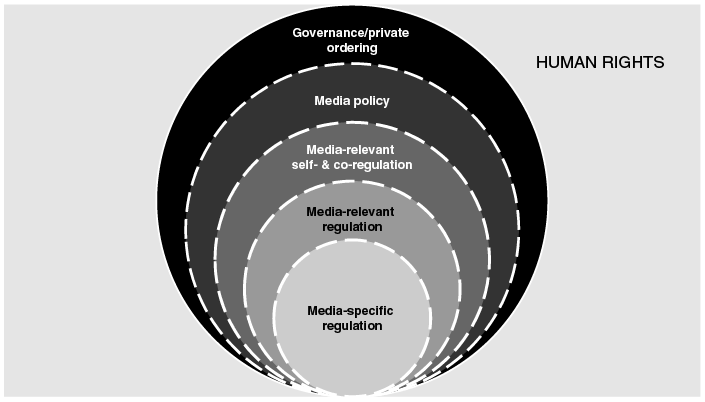

 Open access