


Perceived corruption is one of the most pressing societal problems, undermining political trust (Morris & Klesner, Reference Morris and Klesner2010), reducing foreign investment (Arndt & Oman, Reference Arndt and Oman2006), and stimulating corruptive behaviour (Čábelková & Hanousek, Reference Čábelková and Hanousek2004; Dong, Dulleck, & Torgler, Reference Dong, Dulleck and Torgler2012). Recent research has identified a number of important antecedents for perceived corruption. These antecedents include both individual factors such as age (McCann & Holt, Reference McCann and Holt2009), socioeconomic status (Charron, Reference Charron2015; Olken, Reference Olken2009) and lay beliefs (Bai, Liu, & Kou, Reference Bai, Liu and Kou2014; Tan, Liu, Huang, Zhao, & Zheng, Reference Tan, Liu, Huang, Zhao and Zheng2016), and institutional factors such as GDP (Ata & Arvas, Reference Ata and Arvas2011), decentralisation (Fisman & Gatti, Reference Fisman and Gatti2002; Lessmann & Markwardt, Reference Lessmann and Markwardt2010) and collectivism (Davis & Ruhe, Reference Davis and Ruhe2003; Mazar & Aggarwal, Reference Mazar and Aggarwal2011; Seleim & Bontis, Reference Seleim and Bontis2009). However, the role of environmental factors on perceived corruption has previously been overlooked. Inspired by research on embodied cognition (e.g, Huang, Reference Huang2014; Schnall, Benton, & Harvey, Reference Schnall, Benton and Harvey2008; Zhong & Liljenquist, Reference Zhong and Liljenquist2006), we postulated that polluted air increases perceived corruption.
We tested this clear sky effect, which is compatible with the canon of embodiment, especially the moral cleanness metaphor and the power height metaphor. On one hand, the moral-cleanness metaphor links physical and moral cleanliness. A growing body of studies has demonstrated that morality is related to cleanliness (Huang, Reference Huang2014; Lee & Schwarz, Reference Lee and Schwarz2010, Reference Lee and Schwarz2011; Schnall et al., Reference Schnall, Benton and Harvey2008; Zhong & Liljenquist, Reference Zhong and Liljenquist2006), and immorality is considered dark (Meier, Robinson, & Clore, Reference Meier, Robinson and Clore2004; Sherman & Clore, Reference Sherman and Clore2009). Similarly, corruption is linguistically linked to dirtiness (Nuijten, Reference Nuijten2004; Olson & Carroll, Reference Olson and Carroll1992), darkness (Aguilera & Vadera, Reference Aguilera and Vadera2008), and a lack of transparency (Transparency International, 2013).
On the other hand, sky is the metaphor for height and the symbol of power. Previous research has demonstrated that evaluations of a power can be increased by information about high vertical positioning in space (Giessner & Schubert, Reference Giessner and Schubert2007; Schubert, Reference Schubert2005). Thinking about the abstract concept of power may automatically activate the spatial up–down image schema (powerful up; powerless down; Zanolie et al., Reference Zanolie, Dantzig, Boot, Wijnen, Schubert, Giessner and Pecher2012). Furthermore, this power height metaphor is also supported by evidence from language. In the West, the powerful are addressed as ‘your highness’. In Chinese history, an emperor was regarded as the Son of Heaven (天子). Given that officials and government represent power, they are linked to the sky above.
Embodied theory and relevant empirical research suggest that dirtiness, darkness, and opacity are connected with corruption, and the sky is connected with government. Haze is perceived to darken the sky and defile the atmosphere. In particular, the major indexes of haze, dust, and smoke particles obscure the clarity of the sky (Barker, Reference Barker, Craik and Zube1976; Bickerstaff & Gordon, Reference Bickerstaff and Gordon2001; Hyslop, Reference Hyslop2009). Therefore, haze, corruption, and government are interrelated. However, the gaseous pollutants, such as sulfur dioxide (SO2) and nitrogen oxides (NO), are not easily perceived (Barker, Reference Barker, Craik and Zube1976). Taken together, evidence from embodiment implies that haze alone could increase the perception of government corruption (Hypothesis 1).
It has been demonstrated that the embodiment effect can be amplified by body consciousness (Schnall, Haidt, Clore, & Jordan, Reference Schnall, Haidt, Clore and Jordan2008). Bodily consciousness refers to the ability to detect subtle changes in bodily systems, including muscles, skin, joints, and viscera (Miller, Murphy, & Buss, Reference Miller, Murphy and Buss1981). If embodiment played a role in the association between haze and perceived corruption, we could expect that participants with higher bodily consciousness would be more likely to perceive an increase in corruption when they perceive physical pollution (hypothesis 2).
Haze is perceived in an embodied manner. In particular, haze elicits bodily stress responses (Bickerstaff & Gordon, Reference Bickerstaff and Gordon2001; Hyslop, Reference Hyslop2009), including respiratory symptoms (Dockery & Pope, Reference Dockery and Pope1994), asthma and allergy (Brauer et al., Reference Brauer, Hoek, Smit, de Jongste, Gerritsen, Postma and Brunekreef2007). Recent psychological research on embodiment reveals that visceral states influence psychological processes (Barsalou, Reference Barsalou2008; Niedenthal, Barsalou, Winkielman, Krauth-Gruber, & Ric, Reference Niedenthal, Barsalou, Winkielman, Krauth-Gruber and Ric2005; Risen & Critcher, Reference Risen and Critcher2011). Therefore, based on embodiment, we could expect that bodily responses act as the mediator variable in the relationship between haze and corruption perception (hypothesis 3).
To examine these hypotheses, we employed multiple methods, including archival analyses and experiments, in this research. Archival analyses investigated the relationship between haze and corruption perception at city and country levels. These correlational analyses were further coupled with experiments at the individual level to allow causal claims. We thereby determined whether and how haze accounted for changes in corruption perception. More specifically, we explored the relationship between haze and corruption perception in five studies. Studies 1, 2, and 3 aimed to explore the relationship between haze and corruption perception (Hypothesis 1). In Studies 1 and 2, we examined the correlations between various air pollutants and their concentration (i.e., particulates and gaseous pollutants) and corruption perception at city and country levels, respectively. In Study 3, we sought to extend the correlational results reported in Studies 1 and 2 by manipulating perceived haze and measuring corruption perception at an individual level. Studies 4 and 5 sought to further identify the moderator and mediator that can be interpreted as providing empirical support for embodiment.
STUDY 1: CITY-LEVEL ANALYSIS
Studies 1 and 2 explored the association between air pollution and perceived corruption by using archive data. We expected various air pollutants to be related to corruption perception if environmental degradation was fuelled by corruption. However, we expected only perceivable air pollutants to be related to corruption perception if corruption perception was related to environmental degradation resulting from embodied cognition.
To control the effects of cultural and political factors on corruption perception, the data from Study 1 were collected at a city level within a single country (China). We used archival data concerning actual air pollutant emissions. Haze often occurs when dust and smoke particles accumulate in relatively dry air; therefore, concentrations of dust and smoke particles, rather than SO2 or NO (a mixture of a binary compound of oxygen and nitrogen) emissions, are major indicators of haze.
Method
Data regarding corruption, economy, and air pollution were drawn entirely from published sources. Cross-sectional analysis was performed using two independent data sets: (1) the 2011 Corruption Perceptions Index scores from 36 major Chinese cities (Song & Cheng, Reference Song and Cheng2012), which were recoded so that higher scores means higher levels of corruption perception; and (2) each region's 2011 per capita gross domestic product and air pollutants, including dust and smoke particles and SO2 and NO emissions, from the National Bureau of Statistics of China Database (data.stats.gov.cn/workspace/index?m=fsnd).
Results and Discussion
We performed general linear model analysis to examine the association between air pollution and perceived corruption. We standardised all variables for ease of comparison. With the economy controlled for, SO2 (p = .36) and NO (p = .18) emissions were not related to corruption perception. In contrast, dust and smoke-particle concentration were positively associated with corruption perception, β = .55, t(31) = 2.34, p < .05, semipartial r = .387.
A unique connection between particles and corruption perception was indicated by the finding that SO2 and NO did not exert similar effects. These findings refuted the economic viewpoint that all air pollutants (SO2, N2O, and dust and smoke particles) are associated with corruption perception (Cole, Reference Cole2007; Welsch, Reference Welsch2004). In contrast, the findings indicated that only air pollution involved in physical perception — haze — was associated with corruption perception. This supported our explanation of the association between air pollution and corruption perception.
STUDY 2: COUNTRY-LEVEL ANALYSIS
Although Study 1 yielded an initial evidence for a unique relationship between haze and perceived corruption, the results were limited to China during 2011. Study 2 sought to replicate the unique relationship between haze and corruption across time at a country level. We analysed longitudinal data from 56 countries in a two-level linear growth model (within countries over a 7-year period). As dust and smoke particles were the major sources of haze, concentrations of particulate matter of less than 10 microns in diameter (PM10), rather than emissions of of nitrous oxide (N2O), carbon dioxide (CO2) or other greenhouse gases, were considered major indicators of haze.
In this study, we controlled for the economy, culture, and government size because these variables have all been linked to corruption perception in cross-national analyses (e.g., Cole, Reference Cole2007; Davis & Ruhe, Reference Davis and Ruhe2003; Welsch, Reference Welsch2004).
Method
Data concerning corruption, air pollution, economy, and culture were drawn entirely from published sources. We used the following three independent data to perform a cross-national analysis: (1) the 2004–2010 Corruption Perceptions Index developed by Transparency International (www.transparency.org/research/cpi/), which were recoded so that higher scores means higher levels of corruption perception; (2) the 2004–2010 per capita gross domestic product, and government size and air pollution indicators including PM10 concentrations, N2O, CO2, and other greenhouse gas emissions at a country level, from the World Bank (data.worldbank.org/indicator); and (3) culture scores, including power distance, individualism, masculinity, and uncertainty avoidance, from the Values Survey Module (www.geerthofstede.nl/vsm2013).
Results and Discussion
To determine whether greater amounts of air pollution were associated with higher corruption perception within countries over time, we ran several linear growth models in hierarchical linear modeling (HLM) with fixed effects. This approach is preferable to standard regression because each country's consumer price index (CPI) was measured over several years, which resulted in two levels of error variance (country and year), and HLM is able to separate these (Snijders & Bosker, Reference Snijders and Bosker1999). Understanding how the total variance was partitioned across the levels provides insight into the degree to which year-level variance of air pollution (Level 1) and country-level variance of air pollution (Level 2) influenced the year-to-year CPI. In our analysis, years were nested within countries. We standardised all variables for ease of comparison. Masculinity and uncertainty avoidance were not significant predictors of high corruption perception (ps >.75); therefore, they were not included in all of the models.
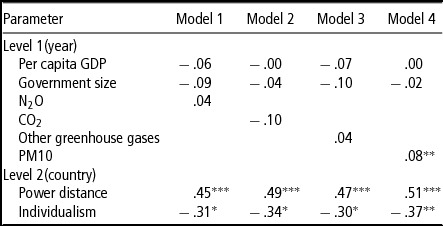
Table 1 shows the results of this analysis. Within countries, haze (PM10 concentration) was a significant predictor of differences in perceived corruption over time, t(417) = 3.23, p < .01, while N2O (p = .38), CO2 (p = .23), and other greenhouse gases (p = .14) were not.
Linear Growth Model of Air Pollution and Perceived Corruption
Note: *p < .05; **p < .01; ***p < .001.
We used a multilevel framework to determine whether air pollution accounted for changes in perceived corruption while controlling for economic and cultural factors. Within countries, haze pollution positively predicted perceived corruption, while N2O and CO2 pollution did not. Again, our findings refuted the notion that corruption generally increases environmental pollution (Damania et al., Reference Damania, Fredriksson and John2003). Instead, they supported the embodied view that only visible pollution, haze, is correlated with corruption perception.
STUDY 3: THE EFFECT OF HAZE ON CORRUPTION PERCEPTION
Although Studies 1 and 2 yielded evidence of an embodied cognition explanation of the relationship between haze and corruption perception, the results were obtained at a group level. To determine whether the relationship between these two constructs existed at an individual level, we conducted Studies 3, 4 and 5. In Study 3, we sought to determine whether priming participants’ feelings concerning haze would cause them to perceive the government as corrupt.
Studies 3, 4 and 5 were performed in accordance with the Declaration of Helsinki on Biomedical Research Involving Human Subjects. The protocols were approved by the Ethics Review Committee at the School of Psychology, Beijing Normal University. All participants provided informed consent, and were free to withdraw from the study at any time.
Method
Participants
Fifty-two individuals (26 males) between the age of 18 and 34 (M age = 21.8, SD age = 2.90 years) participated in the experiment. Participants were randomly assigned to the haze (n = 26) or neutral condition (n = 26) in a between-participants design.
Materials
Haze manipulation
To activate feelings concerning haze, participants in the haze condition were instructed to recall a time during which it had been hazy and record the feelings they had experienced at the time, in writing. Participants in the neutral condition did not receive this instruction.
Perceived corruption
The overall perception of unethical behaviours was measured using the Ruch and Newstrom (Reference Ruch and Newstrom1975) Ethics Scale, in which participants rated the extent to which 17 behaviours observed in the country's civil servants are unethical. Responses were provided using a 7-point Likert-type scale ranging from 1 (none of them) to 7 (all of them). The scale contains six corruption items, including two pertaining to bribery (e.g., accepting gifts/favours in exchange for preferential treatment) and four pertaining to embezzlement (e.g., using organisational services for personal use). Cronbach's αs in the current sample were .93 for the overall scale and .89 for the six corruption items.
Procedure
Participants were informed that the survey consisted of several independent studies with different goals. Aside from the inclusion or exclusion of the instruction to recall feelings experienced on a hazy day, as described above, the survey was identical in both conditions and consisted of the Ethical Perception Scale, demographic questions, and a suspicion check. The participants then received a gift and underwent funnel debriefing.
Results and Discussion
We performed several one-way ANOVAs to examine the effect of priming (haze condition vs. neutral condition) on the perception of corruption and unethical behaviour. The results showed a significant effect of haze priming on the perception of corruption (bribery and embezzlement), F(1, 50) = 12.11, p <. 01, η2 = .20. Participants in the haze condition perceived a higher level of corruption (M = 5.41, SD = 0.23) relative to that perceived by those in the neutral condition (M = 4.40, SD = 0.15). The results also revealed a significant effect of haze priming on the perception of unethical behaviour, F(1, 50) = 12.04, p <. 01, η2 = .19. Participants in the haze condition perceived a higher level of unethical behaviour (M = 5.00, SD = 0.16) relative to that perceived by those in the neutral condition (M = 4.17, SD = 0.18).
The results of Study 3 confirmed and extended the findings of previous studies by demonstrating a causal effect of haze priming on corruption perception. The findings also indicated that inducing feelings regarding haze increased overall perception of unethical behaviour, suggesting that the effect of haze priming was not limited to the perception of corruption and applied to that of various immoral conducts. This is consistent with the moral cleanness metaphor (Barsalou, Reference Barsalou2008; Landau, Meier, & Keefer, Reference Landau, Meier and Keefer2010).
STUDY 4: THE MODERATING ROLE OF BODY CONSCIOUSNESS IN THE LINK BETWEEN ACTUAL HAZE AND PERCEIVED CORRUPTION
In Study 4, we sought to determine whether the embodiment effect could explain the link between haze and perceived corruption (Hypothesis 2). In addition, Study 3 used an experimental haze manipulation; therefore, to improve the ecological validity of the findings, it was important to replicate the results using actual hazy weather.
Method
Participants
One hundred and four individuals (50 males) between the age of 17 and 26 (M age = 21.3, SD age = 2.03 years) participated in the experiment. Three participants guessed the experimental purpose and two did not follow the instructions, leaving 49 and 50 participants in the hazy and clear weather conditions, respectively.
Materials
Haze manipulation
The experiments were conducted from March 28 to April 7, 2014. During these 11 days, there were no news events involving corruption, and the weather alternated between hazy and clear (see Table 2). Particle pollution data were collected at multiple points in Beijing and updated in real time, allowing us to maintain awareness of the latest haze situation. We did not conduct experiments on April 2, 4, and 6 because of the changeability of the pollution situation on these days. We recruited 13 participants on each of the remaining 8 days. Among 104 participants, every 13 shared the same haze situation. In other words, we had eight levels of haze, which is not enough for analysis. Therefore, in search of the effect of haze, we categorised the weather as either hazy or clear according to data published on China's National Air Quality Monitor Net (http://www.cnpm25.cn/city/beijing.html). When the air quality index (AQI) for particle pollution was below 100 according to the standards for pollution (U.S. Environmental Protection Agency, 2014), we classified the weather as clear. When the air quality index for particle pollution was above 100, we classified the weather as hazy. There were four hazy days (March 28 and 31, and April 1 and 7) and four clear days (March 29 and 30, and April 3 and 5).
Daily Average AQI from March 28 to April 7, 2014

Note: AQI fluctuated up and down 100. It is not appropriate to classify these days to hazy or clear day.
We recruited 13 participants per day to control individual differences. We categorised the weather as either hazy or clear according to data published on China's National Air Quality Monitor Net (http://www.cnpm25.cn/city/beijing.html).
Manipulation check
Participants rated their feelings concerning haze by answering the following questions, using 7-point Likert scales: (a) ‘What is the color of the sky today?’ Responses ranged from 1 (blue) to 7 (gray); (b) ‘How hazy is it today?’ Responses ranged from 1 (not at all) to 7 (extremely hazy); and (c) ‘How necessary is it to wear a mask today?’ Responses ranged from 1 (not at all) to 7 (extremely necessary).
Perceived corruption
A questionnaire adapted from the corruption perception measure developed by Transparency International (2013) was used to assess perceived corruption. The questionnaire included 14 key questions concerning local residents’ perceptions of various aspects of urban corruption (e.g., officeholders can exploit their offices for private gain as they see fit without fear of legal consequences or adverse publicity). Cronbach's α in the current sample was .81.
Body consciousness
The Private Body Consciousness Questionnaire (Miller et al., Reference Miller, Murphy and Buss1981) was used to assess body consciousness and included five items (e.g., ‘I am sensitive to internal bodily tensions’). Cronbach's α in the current sample was .72.
Procedure
Participants were approached on hazy or clear days. We recruited participants via face-to-face encounters in five teaching buildings at the same university in Beijing at one of four times (9:00–10:00 am, 12:00 am to 1:00 pm, 3:00–4:00 pm, and 6:00–7:00 pm). The timing of the surveys was matched between conditions. Men and women were selected in random order.
Participants were informed that the survey consisted of a number of independent studies with different goals. The survey was identical in both conditions and consisted of the Corruption Perception Scale, Body Consciousness Scale, a haze manipulation check, demographic questions, and a suspicion check. The participants then received a gift and underwent funnel debriefing.
Results and Discussion
Participants’ feelings concerning haze were analysed using a two-way ANOVA with weather (hazy vs. clear) and body consciousness (low vs. high) as between-subjects factors. Participants reported significantly higher haze ratings on hazy days (M = 4.51, SD = 0.18) relative to those reported on clear days (M = 2.00, SD = 0.18), F(1, 95) = 96.56, p <. 001, η2 = .50. Therefore, participants’ responses agreed with actual haze data. The main effect of body consciousness and the haze × body consciousness interaction on haze rating were non-significant (ps > .36). Therefore, feelings concerning haze were not affected by body consciousness.
General linear model analysis was performed to examine the effect of haze on perceived corruption. For ease of comparison, we standardised all of the variables. Corruption perception was then examined via multiple regression analysis involving weather (hazy = 1, clear = −1) and body consciousness and their interaction. The main effect of body consciousness did not reach conventional levels of significance (p = .07). The effect of hazy weather was significant (B = 0.17), t(95) = 2.21, p < .05. In addition, the haze × body consciousness interaction was significant (B = 0.26), t(95) = 3.40, p < .01, ΔR 2 = 0.10.
To clarify the effects of body consciousness further, we employed the dichotomous score for body consciousness (used by Schnall et al., Reference Schnall, Benton and Harvey2008) for moderation analysis. A two-way ANOVA was performed with weather (hazy vs. clear) and body consciousness (low vs. high) as between-subjects factors. The main effect of body consciousness was non-significant (p = .32). As predicted, the main effect of hazy weather was significant, F(1, 95) = 4.75, p < .05, η2 = .05. Participants in the hazy weather condition perceived the government as more corrupt (M haze = 4.55, SD haze = 0.81) relative to those in the clear weather condition (M not haze = 4.23, SD not haze = 0.76). The haze × body consciousness interaction was also significant, F(1, 95) = 5.87, p <. 05, η2 = .06 (see Figure 1). For those with high levels of body consciousness, haze increased levels of perceived corruption, F(1, 95) = 10.28, p < .01, η2 = .10, M haze = 4.83, SD haze = 0.15, M not haze = 4.12, SD not haze = 0.18. However, for those with low body consciousness, haze did not affect perceived corruption (p = .86).
The effect of the interaction between haze and body consciousness on perceived corruption.
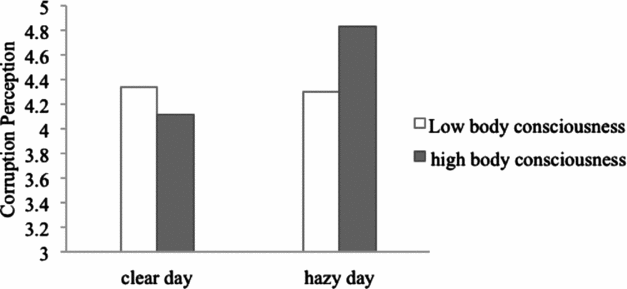
We replicated the causal effect of haze on the perception of corruption using an ecological haze manipulation. Participants in the hazy weather condition perceived the government as more corrupt relative to those in the clear weather condition. We also extended this finding via theoretically predicted embodiment: the association between haze and perceive corruption was limited to participants who were most likely to attend to their own visceral reactions. Participants with high levels of body consciousness in the hazy weather condition perceived the government as more corrupt relative to those in the clear condition, whereas participants with low body consciousness were not affected by hazy weather. The moderation data suggests that haze increased perceived corruption via an embodied process.
STUDY 5: THE MEDIATING ROLE OF BODILY STRESS RESPONSES
In Study 5, we improved upon Studies 3 and 4 in two ways. First, Study 5 used a more rigourous manipulation of haze. In Study 3, perceived corruption in hazy conditions is compared with conditions in which no cue is presented. However, haze manipulation in pollution studies is similar to weather manipulations’ metacognitive affect within information studies (Schwarz & Clore, Reference Schwarz and Clore1983). The question remains: Is haze different from bad weather? In order to redress this lacuna, we developed Study 5, in which perceived corruption in hazy conditions is compared with a condition in which feelings and/or remembrances of a cloudy day were elicited.
Second, Study 5 provided more solid evidence for embodiment by determining the mediating role of bodily stress responses (Hypothesis 3). It is possible that haze may increase negative affect, which drives judgments about corruption. This alternative would be consistent with an affect as an information theoretical position (Schwarz & Clore, Reference Schwarz and Clore1983). However, if an embodied process is occurring, it may be possible to find a psychological mediator affected by the physical pollution manipulations. In sum, the purpose of Study 5 was to rule out an affect as an information theoretical position, and to provide further support for an embodiment explanation.
Method
Participants
Forty-four participants (21 men; M age = 28.6 years; SD age = 9.2 years) voluntarily participated in this study. Participants were randomly assigned to one of two conditions: the haze condition (n = 23) or the control condition (n = 21).
Materials
Haze manipulation
Participants in haze versus control condition received a form that instructed them to recall when it was hazy versus cloudy and to indicate the lighting quality on hazy versus cloudy days. The perceived lighting quality was assessed using 7-point Likert scales (Johansson, Pedersen, Maleetipwan-Mattsson, Kuhn, & Laike, Reference Johansson, Pedersen, Maleetipwan-Mattsson, Kuhn and Laike2014). A total of six items were used. They were ‘drab–clear’, ‘subdued–brilliant’, ‘dark–light’, ‘shaded–glaring’, ‘mild–sharp’ and ‘unfocused–focused’. Cronbach's α of the light quality scale in the current sample was .90.
Consequentialist versus ethical emotions
The scale from Böhm (Reference Böhm2003) was used to measure four types of emotion: prospective (hope, worry, fear, hopelessness) and retrospective (sadness, regret, sympathy) consequence-based emotions, and other-related (disgust, anger, outrage, contempt, disappointment) and self-related (guilt, shame) ethics-based emotions. Participants rated how intensely they felt each of these 14 specific emotions when it was hazy/cloudy on 7-point rating scales, ranging from 1 (not at all) to 7 (very much). Since these four measures were highly correlated within participants (rs > .55, all ps < .01), we averaged the four types of emotion to create an overall measure negative emotion.
Bodily stress responses
The scale from Beck, Epstein, Brown, and Steer (Reference Beck, Epstein, Brown and Steer1988) was used to measure bodily stress responses. A sample item was: ‘I experienced trembling (e.g., in the hands).’ Participants rated how intensely they experienced each bodily stress response on hazy days on 7-point rating scales, ranging from 1 (not at all) to 7 (very much). Cronbach's α in the current sample was .84.
Corruption perception
We used a measure of corruption perception based on a prior trust scale (Craig, Niemi, & Silver, Reference Craig, Niemi and Silver1990). A sample item was ‘Unless we keep a close watch on them, many officers will look out for personal interests rather than for all the people’. Two items in the original measure that did not seem suitable for our present purposes measured corruption perception. Thus, these two items were omitted. They are ‘When government leaders make statements to the American people on television or in the newspapers, they are usually telling the truth’ and ‘Most of the people running our government are well-qualified to handle the problems that we are facing in this country’. Participants used 7-point Likert scales to enter their responses (1 = strongly disagree, 7 = strongly agree). Cronbach's α in the current sample was .76.
Procedure
Participants were told that they would finish two supposedly unrelated surveys: a haze-related survey and a social attitude survey. All materials were presented in a questionnaire. The questionnaire starts with the haze survey (including haze manipulation, the emotions and bodily stress responses) and is followed by the social attitude survey (corruption perception ratings). The final part of the questionnaire consists of questions concerning demographical information. None of the questions indicated the experiment's true purpose. The participants were then given a gift and a funnel debriefing.
Results and Discussion
Main Effect of Haze
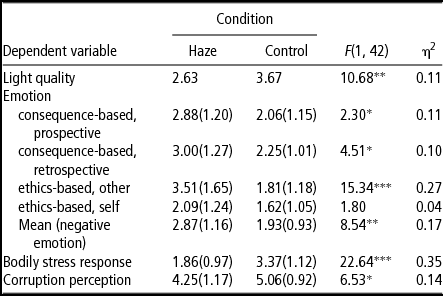
Descriptive statistics and significance tests are presented in Table 3. As expected, participants’ reported lighting quality varied by condition. In particular, reported levels of lighting quality were lower in the haze condition compared with the control condition. Haze priming increased three types of emotion (prospective–retrospective, consequence-based emotion and other ethics-based emotion), while it had no effect on self ethics-based emotion.
Means for Dependent Variables as a Function of Condition in Study 5
Note: *p < .05, **p < .01, ***p < .001; Standard deviations are given in parentheses.
Also as predicted, participants reported greater corruption perception in the haze priming condition than in the control condition. We observed the same pattern of results for bodily stress responses: participants were more likely to experience bodily stress responses in the haze priming condition than in the control condition.
Predicting Corruption Perception From Emotions and Bodily Stress Responses
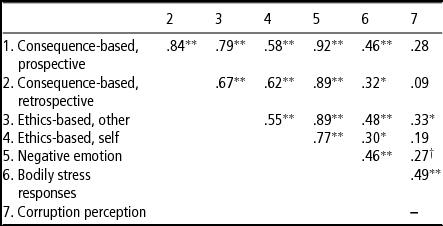
Bivariate correlations among emotions, bodily stress responses, and corruption perception are reported in Table 4. As predicted, the increase in bodily stress responses was associated with the increase in corruption perception. Also as expected, bodily stress responses were significantly associated with each of the four types of emotion. Among the four types of emotion, only one was significant for corruption perception, other-related ethics-based emotion (e.g., anger). In addition, negative emotion was marginally significantly associated with corruption perception.
Correlations Among Emotions, Bodily Stress Responses and Perceived Corruption
Note: † p < .08, *p < .05, **p < .01, ***p < .001.
Mediation Analyses
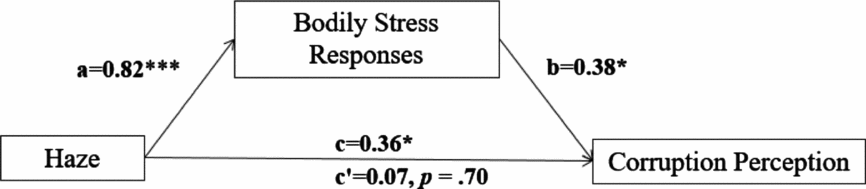
Next, we conducted mediation analyses (Baron & Kenny, Reference Baron and Kenny1986) to test whether bodily stress responses explained the relationship between the haze and increased corruption perception. As shown in Figure 2, the effect of haze prime was reduced to non-significance, from B = 0.36, t(42) = 2.17, p < .05, to B = 0.07, t(41) = 0.39, p = .70, when bodily stress responses were included in the model; and greater bodily stress responses were associated with higher corruption perception, B = 0.38, t(41) = 2.46, p < .05. A bootstrap analysis showed that the 95% confidence interval (CI) for the size of the indirect effect is [0.03, 0.54], excluded zero, which suggested a significant indirect effect (MacKinnon, Fairchild, & Fritz, Reference MacKinnon, Fairchild and Fritz2007).
Testing the mediating role of bodily stress responses.
We also included other ethics-based emotion as a potential mediator. This allowed us to test the alternative hypothesis that the effect of haze on corruption perception could be explained by negative emotions. Neither haze, B = 0.29, t(41) = 1.59, p = .12, nor other ethics-based emotion, B = 0.13, t(41) = 1.17, p = .25, were associated with corruption perception in the multivariate model. Consequently, other ethics-based emotion was not a significant mediator, 95% CI = [-0.03, 0.27]. Furthermore, controlling for these emotions, the mediating effect of bodily stress responses was still significant (Figure 3).
Testing the mediating effect of bodily stress responses while controlling negative emotions.
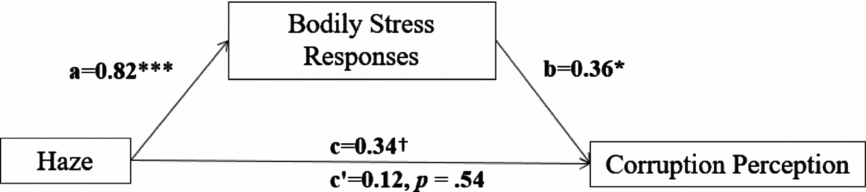
These results suggested that haze increased corruption perception through bodily stress responses. By measuring bodily stress responses caused by air pollution, Study 5 provided a stronger evidence for embodiment.
Although three types of emotions (prospective consequence-based emotion, retrospective consequence-based emotion, and other ethics-based emotion) were increased by haze, none of them mediated the link between haze and corruption perception. Furthermore, the mediating effect of bodily stress responses held when we controlled simultaneously for emotions.
General Discussion
The results of the five studies indicated that haze was associated with perceived corruption. At city (Study 1) and country (Study 2) levels, haze was positively correlated with perceived corruption, while other air pollutants were not. More importantly, at an individual level, participants reported higher levels of perceived corruption subsequent to recalling feelings concerning haze (Studies 3 and 5) or experiencing hazy days (Study 4). Furthermore, Studies 4 and 5 provided empirical support for embodiment as a mechanism linking haze and corruption. On the one hand, body consciousness — a personal trait known to encourage embodied cognition — amplified the relationship between haze and perceived corruption (Study 4). On the other hand, the effect of haze on corruption perception was mediated by bodily responses (Study 5). Therefore, embodied cognition was an important psychological process underlying the association between haze and perceived corruption.
Our results cast doubt on the widely accepted assumption that perceived corruption adequately reflects the reality of corruption (e.g., Song & Cheng, Reference Song and Cheng2012; Transparency International, 2013; Charron, Reference Charron2015). In Study 3, half of the participants were asked to recall haze experiences, and the other half were not asked to recall anything. Our findings indicate that participants who recalled haze experiences reported higher levels of perceived corruption relative to that reported by those who did not recall anything. The findings of Study 3 indicated that the perception of haze increased levels of perceived corruption. In Study 4, during the 11 days when we recruited participants, there were no news events involving corruption, and the weather alternated between hazy and clear. Accordingly, the actual official corruption level should have been the same on the hazy and clear days on which we recruited participants. Further, we controlled the influence of personal extraneous variables by randomly recruiting participants on hazy and clear days. If perceived corruption reflected actual corruption levels accurately, participants in both weather conditions should have reported the same level of perceived corruption. However, our results showed that participants who experienced haze reported higher levels of perceived corruption relative to those who experienced clear air. Further, the effect was large in Study 3 (η2 = .20), medium in Study 4 (η2 = .05), and large in Study 5 (η2 = .14), according to Fritz, Morris, and Richler (Reference Fritz, Morris and Richler2012). We do not intend to question the methodology of any perceived corruption measurements; rather, we argue that perceived corruption may not reflect real corruption levels accurately because it is partly influenced by visible pollution.
Our findings suggest that physical environment could be one of the factors that drive errors in assessing society. Previous researches have demonstrated the errors in perceiving the levels of social class mobility (Chambers, Swan, & Heesacker, Reference Chambers, Swan and Heesacker2015; Kraus, Reference Kraus2015; Kraus & Tan, Reference Kraus and Tan2015) and official corruption (Abramo, Reference Abramo2008; Olken, Reference Olken2009). Embodied cognition posits that people represent abstract concepts using physical perceptions such those of brightness and colour (Barsalou, Reference Barsalou2008). If the physical environment activates these physical perceptions, the related abstract concepts (e.g., social perception) are also activated.
These findings also advance our understanding of embodied cognition by investigating a moderator, body consciousness. In Study 4, the link between haze and corruption perception was limited to those who are most likely to attend to their own visceral reactions. This moderated effect suggested that individual awareness of visceral reactions might contribute to embody cognition.
It remains unknown whether the clear sky effect is universal or culturally specific. On the one hand, Study 2 found a relationship between haze and corruption perception across countries. Although the results of Study 2 were purely correlational, it suggests that the relationship between haze and perceived corruption is universal. On the other hand, previous research has demonstrated the cultural variability of embodiment (Lee & Schwarz, Reference Lee and Schwarz2012). Studies 3 and 4 were conducted in China. Further, the effect of haze on corruption perception is consistent with Chinese folklore. In Chinese culture, clear sky (青天) is used metaphorically to indicate political transparency. For example, Bao Zheng (999–1062), a government official known for his probity and integrity during the reign of Emperor Renzong in China's Song Dynasty, acquired the nickname ‘Clear Sky Bao’. In the contemporary period, Clear Sky Bao (包青天) has become the hero of numerous TV series, video games, comic books, and crime fiction in the Chinese-speaking world (Hegel, Reference Hegel2010; Svensson, Reference Svensson2005). Similarly, Master of Clear Sky (青天大老爷) refers to the justice and integrity official in Chinese folklore. If the effect of haze on perceived corruption requires the availability of Chinese folklore, then the clear sky effect would be more pronounced in the Chinese-speaking world.
Some limitations of the present research must be pointed out. First, the aspect of the physical environment used in our studies was relatively subtle. Environmental pollution is a many-faceted phenomenon, and it is hard to explore the effects of all subtypes of environmental dirtiness on corruption perception. Would a dirty polluted stream, or some other form of dirtiness, increase corruption perception? Second, the operationalisation of pollution might be one way to strengthen the case for embodied cognition, relying on the metaphorical link between physical purity leading to moral purity. Third, in Study 4, we dichotomised the air quality index because it did not meet the statistical requirement for a continuous variable. We must admit that dichotomising this continuous variable discards information. Fourth, in this research, limited attention was given to corruption intention and behaviour. Bai, Liu, and Kou (Reference Bai, Liu and Kou2014) demonstrated the link between belief in a just world and corruption perceptions: they found that corruption intentions can be decreased by belief in a just world (Bai et al., Reference Bai, Liu and Kou2016). We found a link between haze and corruption perceptions. Along similar lines, could clean sky perceptions decrease corruption intention? Future research may benefit from exploring these questions.
Regardless of all these limitations, our findings could have practical, important policy implications for governments struggling with high perceived corruption and environmental problems. Our findings show the political value of air quality. As Treisman (Reference Treisman2000) stated, regardless of the accuracy of perceived corruption, it could exert consequences as serious as the corruption itself. For example, corruption perception erodes institutional trust (Chang & Chu, Reference Chang and Chu2006; Morris & Klesner, Reference Morris and Klesner2010). The current results imply that politicians need to pay attention to environmental problems if they want to increase in the public's trust in them.
Acknowledgments
The authors would like to thank Professor James Liu and the anonymous reviewers for their constructive comments on the earlier versions of the paper. The authors gratefully acknowledge the financial support provided by Beijing Social Science Foundation (13ZHB027), the Program of the Co-Construction with Beijing Municipal Commission of Education of China, and the National Natural Science Foundation of China (31571145).



