


There is a widespread belief among professionals working in the field that in boys there is a causal link between involvement in sexual activities with an older person and subsequently becoming an adult perpetrator of child sexual abuse. However, there is little empirical research evidence for this belief. Hence, it is of considerable social, clinical and theoretical importance to ascertain to what extent perpetrators of sexual abuse have themselves been victims; also, if there is a link, to explore the underlying psychodynamics.
Background
The incidence of child sexual abuse is usually based on retrospective recall by adults in studies mostly emanating from the USA (Reference Smith, Bentovim, Rutter, Taylor and HersovSmith & Bentovim, 1994). Estimates of prevalence are bedevilled by differences of definition and methods of study and are closely tied to the population source of the information. In his original study Finkelhor (1981) reported that 19% of females and 9% of male college students had been sexually abused as children. In the UK, Baker & Duncan (Reference Baker and Duncan1985), using a Mori poll of those aged 15 years and older, calculated that 12% of women and 8% of men had had sexually abusive experiences. However, even such population surveys are open to criticism of either having used flawed methods or not being representative of the general population (Reference MarcoweMarcowe, 1988). Wyatt & Peters (Reference Wyatt and Peters1986), investigating methodological differences, demonstrated that low rates tended to be based on questionnaire surveys using broad questions. Higher rates were obtained from focused, direct interviews. Other studies have demonstrated that where less restrictive definitions are used allowing the inclusion of exhibitionism and/or touching, very high rates of abuse were reported in women (59%) and less than half of this in men (27%); when more restrictive definitions were used, the rates fell dramatically (Reference Kelly, Regan and BurtonKelly et al, 1991). Based on the above, a cautious estimate of sexual victimisation in the male general population would be about 10%.
Incest and paedophilia
Originally, the legal definition of incest applied to vaginal intercourse between a male and female whom the offender knew to be his daughter, granddaughter, sister or mother — and did not include stepfathers or adoptive fathers or actions other than vaginal intercourse (Reference Smith, Bentovim, Rutter, Taylor and HersovSmith & Bentovim, 1994). In clinical practice, the definition has been modified by including sexual contact which occurred within the nuclear family, giving rise to the dichotomy of intrafamilial abuse (incest) and extrafamilial abuse (paedophilia). Consequently, there was confusion about sexual abuse by stepparents and adoptive parent abusers. Paedophilia has been defined as a “perversion in which an adult has a sexual interest in children with paedophiliacs having certain fundamental features in common” (Reference Glasser, Bluglass and BowdenGlasser, 1990). However, just as incest does not imply homogeneity neither does paedophilia, and ambiguity in this term can lead to differences in usage. Another long-held belief is that incest and paedophile offenders are distinct (Reference Cooper, Cormier, Bluglass and BowdenCooper & Cormier, 1990; Reference Glasser, Bluglass and BowdenGlasser, 1990), together with an associated tendency to support community-based treatment for the incest offender but to view the paedophile as more dangerous. Conte (Reference Conte, Hollin and Howells1991) contests this belief on the basis that about half of fathers and stepfathers, referred for treatment at clinics for having abused children outside the home, had at the same time been abusing their own children (Reference Abel, Becker and Cunningham-RathnerAbel et al, 1988).
The ‘victim-to-victimiser’ cycle
Hilton & Mezey (Reference Hilton and Mezey1996) point to the belief that there is a progression from victim to victimiser, as child sexual abusers often report a history of sexual victimisation. This is particularly common in paedophiles “whose preferred targets are boys” (Reference KnoppKnopp, 1984). Hilton & Mezey make some further points: first, that the more deviant the patient population, the higher the rates of past victimisation; second, that the choice of victims is dependent on the victims' physical characteristics, including age; and third, that there is often a tendency to abuse the victim in a way that replicates the offender's own experience of abuse. However, Hilton & Mezey argue that the hypothesised ‘victim-to-victimiser’ cycle does not account for presumed protective factors that appear to inhibit the development of expression of subsequent abusive behaviour, nor does it explain why most sexual abusers are male and most victims are female. Finally, it is notable from reviews of literature on victims and perpetrators that little research has been undertaken into perpetrators who were not previously victims (Reference Carson, Council and VoltCarson et al, 1989; Reference Mullen, Martin and AndersonMullen et al, 1993; Reference Hilton and MezeyHilton & Mezey, 1996). Researchers have tended to lump all perpetrators together, irrespective of their experiences as a victim.
Carmen et al (Reference Carmen, Rieker and Mills1984) report gender differences in the subsequent behaviour of victims of sexual abuse: male survivors more often direct their reactions externally, whereas female survivors are more likely to internalise feelings and express them in self-destructive behaviour. Further, in male survivors the problems include confusion and anxiety over sexual identity and inappropriate attempts to assert masculinity (Reference Watkins, Bentovim, Mezey and KingWatkins & Bentovim, 1992).
Perpetrators: background factors
Bentovim & Boston (Reference Bentovim, Boston, Bentovim, Elton and Hildebrand1988) summarised some family and social background factors of sexual abusers. Often the characteristics identified were present in only a small percentage of cases. Those present in more than 10% of their sample included alcohol misuse (15%), violence (22%), unemployment (16%), absence of other adults at home (16%), marital problems (43%) and sexual problems that were either deviations or dysfunction (13%). Such factors, when present, were likely to influence the nature and quality of parenting and care and thus, indirectly, the perceptions that the subjects build into their internal world concerning the nature of parent figures and relationships.
Finkelhor (1984) has focused on both individual and social factors in an attempt to understand the perpetrator's role in sexual abuse. He suggests four stages: the first stage focuses on those factors that motivated a sexual interest in children; the second, the overcoming of internal inhibitions against such motivations; the third, the overcoming of external inhibitions to abuse; and finally, those child factors that help the perpetrator to overcome the child's resistance to being abused.
While some aspects of the nature of child sexual abuse have been highlighted, particularly in regard to victims, rigorous studies on perpetrators in the UK are few. Many studies are limited by their failure to distinguish between paedophilia and incest and because of the poor quality of the psychological evidence. Further, in typical forensic circumstances, salient psychological information may not be available because certain subjects will be wary of authority and therefore likely to deny or suppress such information. In many cases, the offenders will use conscious denial, suppression or other psychological subterfuges when confronted with the seriousness and legal implications of their behaviour. However, it is less likely that these defences would be employed in a forensic psychotherapy clinic setting where confidentiality was protected. For this reason, it was helpful that clinical material from a large cohort of offenders referred for assessment or therapy at a health service psychotherapy clinic could be studied as there was a better possibility of valid information emerging about the internal psychological world of such offenders.
METHOD
Study population
The material originates from a UK forensic psychotherapy service located in north London which has, for over 60 years, provided a psychotherapeutic service for sexual deviants and offenders. It is a National Health Service Trust out-patient facility providing a tertiary service that accepts referrals from anywhere in the UK. Referrals came from: medical services (about 47%); psychotherapists and psychologists (11%); social services (about 5%); probation services (about 20%); solicitors (4%); other professional agencies (3%); and self or family referrals (about 9%). A unique set of clinical material has been collected on 25 000 patients, most of whom (especially those treated more recently) have been subjected to skilled psychoanalytical enquiry and, where appropriate, therapy. The clinical material had been carefully archived. The cohort for this study comprised a random selection of 843 subjects who attended the clinic in the 6 years 1985-1990.
Case note review
The case notes were prepared by clinicians all working in the same theoretical system, with the same concepts and using broadly the same definitional criteria for the concepts. The case records, which were usually quite comprehensive, in part in narrative form, were examined for demographic, familial, psychopathological or psychological anomalies. For the purposes of this research a series of forms were devised for collecting demographic data, data about sexual activities, sexual dysfunction and deviations, offending, experiences of child sexual abuse and/or violence, early life experiences, psychodynamics and psychopathology. In order to ensure uniformity of subsequent codings and to facilitate agreement between coders, a parallel glossary containing definitions of terms and concepts was prepared and supplemented by guidelines for rating and coding of the features identified.
Definitions of incest and paedophilia
For the purposes of the current study, incest was defined as any sexual act carried out within the patient's family, including any substitute parents as well as uncles, aunts, grandparents or first cousins. Paedophilia was defined as including a contact sexual act which was carried out with any child outside the patient's family by an adult who had a sexual interest in children. Finally, a narrow definition of sexual abuse was employed (which broadly follows that of Baker & Duncan (Reference Baker and Duncan1985)) where a sexually mature individual involves dependent developmentally immature children and adolescents in contact sexual activity (breast, oral, anal or vaginal). Diagnostic decisions about whether abusers should be classified as paedophiles or incest perpetrators were based on disclosure during clinical assessments, information contained in social service, probation and general practitioner reports and often psychological assessments.
Definitions of psychopathology
As the subjects had not been interviewed in a standard way, an operational decision was needed for coding. The presence of significant psychopathology in the index subject was described in some detail and usually labelled and the operational decision was that all such material be coded in a categorical form of ‘present’ or ‘absent’. However, demographic details covering the families of origin of the index subjects were not always available and could not be coded in this way. Thus, information on emotional care and on loss in childhood could be coded only on the basis of actual descriptions and so was available for 559 (75%) and 653 (87%) of male subjects, respectively.
Consensus and reliability
Definitions of concepts and coding of ratings were achieved by consensus between the research methodologist (I. K.) and the research coordinator (M. G.). Preliminary training and piloting were necessary to ensure adequate agreement between the supervising consultant psychotherapists and the two research fellows, and also between the two fellows. Subsequently, reliability checks were undertaken on 20 sets of case notes selected randomly and coded independently by the two fellows. Main event categories proved more reliable and provided more usable information than subcategories or on occasions when the data were cast in an ordinal form. The two fellows agreed on the coding of homosexuality for five subjects and its absence in the other 15, and similarly agreed on previous non-sexual convictions for six subjects. Where features were common, such as whether the subject lived with his or her natural mother, heterosexual intercourse, separation from or loss of parents, or poor parental maternal care, all gave 90 or 95% agreement. However, negative or hostile attitudes to the subject proved to have moderate agreement and reliability and were not used in subsequent statistical analyses. Of the 25 items checked for reliability, values of κ were good (>0.75) in 36%, fair to good (0.40-0.75) in 36% and poor (<0.40) in 28%. For the less commonly occurring main features (e.g. presence of paedophilia and incest) diagnosis was achieved by consensus with M. G. and D. C. Interval checks were undertaken to ensure that there was no drift.
Statistical analysis
Univariate statistical analyses
As the number of female perpetrators was so small, no statistical analyses were possible and analyses were confined to males. Although for males, most demographic data were available for some variables, for example, cohabitation status of the subject, victim/perpetrator status, gender, there were variable degrees of completion in relation to others (age, 99%; occupational class, 88%; current employment, 86%; natural parents' living circumstances, 87%; memories of maternal emotional care, 75%; and only 67% for educational qualifications). These lower rates for educational qualifications were due to definitional differences across counties. For the purposes of this paper univariate analyses of data were undertaken using χ2 tests and odds ratios with 95% confidence intervals.
Multivariate analyses
Multivariate analyses demand a common set of data; thus, when maternal emotional care was used as an independent variable, with 747 male subjects, the data set was reducted to 559 males; similarly for natural parents' living circumstances, the data set reduced to 653.
Issues addressed
These included: (a) the extent to which patients who were victims became perpetrators; (b) whether perpetrators had previously been victims; (c) whether different types of victim experiences were associated subsequently with different types and rates of perpetrator activities; and (d) male/female differences.
RESULTS
Characteristics of the study sample: gender and age
Of the 843 subjects in the study sample, 747 (88.6%) were male and 96 (11.4%) were female.
Perpetrator group
Twenty-seven per cent of the sample (227 subjects) were found to be child abusers and 616 (73%) were not. The abuser group was composed of 225 men (30% of all male subjects) and two women (2% of all female subjects). All 99 incest perpetrators were male (13% of all male subjects). Paedophile perpetrators numbered 161 (19% of all subjects), comprising 159 men (21% of all male subjects) and two women (2% of all female subjects). The abusers can be subdivided into incest-only perpetrators (n=66 men), paedophilia-only perpetrators (n=128, 126 men) and those who perpetrated both incest and paedophilia (n=33 men). Of the 225 male perpetrators, 159 (71%) perpetrated paedophilia, 99 (44%) perpetrated incest.
Victim group
One hundred and seventy-six subjects (21%) were victims of sexual abuse, comprising 135 men (18% of all male subjects) and 41 women (43% of all female subjects). The 135 male victims can be subdivided into 47 incest-only victims (6% of all male subjects), 76 paedophilia-only victims (10% of all male subjects) and 12 who suffered both incest and paedophilia (2% of all male subjects). Similarly, the 41 female victims can be subdivided into 29 incest-only victims (30% of all female subjects), five victims of paedophilia (5% of all female subjects) and seven of both (7% of all female subjects). Thus, the proportions of the paedophilia victims are similar between the male and female samples: 12% (n=88) for males and 13% (n=12) for females. In contrast, 8% (n=59) of males and 38% (n=36) of females were victims of incest. Within the group of 135 male victims, 59 (44%) suffered incest and 88 (65%) suffered paedophilia. Of the 41 female victims, 36 (88%) suffered incest and 12 (20%) were victims of paedophilia.
Age of sample
The mean age of the sample at the time of interview was 31.2 years (95% CI 30.44-31.92 years). There were no significant differences in age between males and females. Of the total sample, 164 (19%) were aged 21 years and under; 613 (73%) were aged 22-49 years; 53 (6%) were 50 or over; 13 (2%) had no listed age. The majority of the subjects (n=666, 79%) were mature adults, with the implication that their personalities and ways of functioning were established, and with the further implication that they were unlikely to change ‘spontaneously’. They were not in a state of flux, as would be the case in children and adolescents.
Social background of the study sample
Victim group
Fifty per cent of victims and 59% of non-victims had never married but the differences were not significant. There were no significant differences between victims and non-victims in academic qualifications or occupational class; 61% of incest victims and 66% of paedophilia victims were employed or self-employed; 55% of victims and 64% of non-victims had academic qualifications at GCSE level or higher; 18% of victims had professional or intermediate occupations and 60% were in skilled or semi-skilled jobs, compared with 25% and 51%, respectively, for non-victims. Similarly, there were no significant differences between victim types in relation to current employment, civil status, academic qualifications or occupational class; employment or self-employment; 67% of incest victims and 76% of paedophilia victims had never married; 58% of incest victims and 46% of paedophilia victims had academic qualifications at GCSE level or higher; 15% of incest victims had professional or intermediate occupations and 63% were in skilled or semi-skilled jobs, compared with 20% and 59%, respectively, for paedophilia victims.
Perpetrator group
Fifty-six per cent of the perpetrators had had some relationship (married, cohabiting, separated, divorced), in contrast to 39% of the non-perpetrators (χ2=19.2; P<0.001; odds ratio=2.0; 95% CI 1.45-2.72). Significant differences were observed between incest perpetrators and paedophilia perpetrators: 44% of paedophiles had been married or cohabited (ever) compared with 79% of incest perpetrators (χ2=29.9;P<0.001; odds ratio=4.57; 95% CI 2.59-8.05). The child abuse perpetrators had poorer educational qualifications than the non-perpetrators (51% of perpetrators and 66% of non-perpetrators had educational qualifications at GCSE level or higher) (χ2=14.9,P<0.015; odds ratio=1.86; 95% CI 1.36-2.56). There were no differences in current employment levels between perpetrators and non-perpetrators but steady employment was more common in perpetrators (61%) than non-perpetrators (48%) (χ2=10.3; P<0.01; odds ratio=1.7; 95% CI 1.22-2.31).
Family background of perpetrators
Almost one-third (33%) of perpetrators' parents were married compared with almost a half (50%) of non-perpetrators' parents (χ2=18.6;P<0.001; odds ratio=2.04; 95% CI 1.47-2.83). Fifteen per cent of incest perpetrators came from professional or intermediate classes and 63% were classed as skilled or semi-skilled, compared with 20% and 59%, respectively, for paedophilia perpetrators.
Sexuality and sexual practices of the study sample
Homosexuality
For the purposes of this paper, homosexuality included self-reported adult homosexual practice; sexual experimentation between adolescents of the same gender in the school years was excluded. Of the 544 male subjects with no evidence of homosexuality, 185 (34%) were perpetrators; of the 203 male subjects who were homosexually inclined, only 40 (20%) were perpetrators; the differences were significant (χ2=14.4; P<0.001; odds ratio=2.1; 95% CI 1.42-3.10).
Pornography
It is commonly asserted that perpetrators of child sexual abuse are often frequent users of pornography and the question arises about whether the current data support this assertion. This was studied by comparing the use of pornography by perpetrators and non-perpetrators. Of the 225 male perpetrators, 10 used pornography compulsively; of the 552 non-perpetrators, only eight used pornography in this way (4.4% v. 1.5%; χ 2=5.7; P<0.01; odds ratio=2.9; 95% CI 1.16-7.63).
Transvestism
Of the 658 males who were not transvestites, 219 (33%) were perpetrators; only six of the 89 (7%) male transvestites were perpetrators. The differences proved highly significant (χ2=26.2; P<0.001; odds ratio=6.90; 95% CI 3.00-16.5).
No significant associations were found between perpetrator status and voyeurism, fetishism, obscene phone calls, sexually deviant acts or polymorphous perverse behaviour.
Cycle of sexual abuse
Gender
Of the 41 females attending the forensic psychotherapy service who were victims of sexual abuse, only one (about 2%) was also a perpetrator; however, of the 135 male victims, 79 were perpetrators (59%; χ2=86.4;P<0.001; odds ratio=27.36). Twenty-four male subjects reported having been sexually abused by females, 23 of whom were identified as female relatives and one other was not stated. Seven of the 24 were also abused by male relatives. Of these 24 males, 19 (79%) went on to become perpetrators of sexual abuse. Of the 111 male subjects abused by males, 60 (54%) became perpetrators (χ2=5.1; P<0.05; odds ratio=3.2, 95% CI 1.13-9.29). This indicates that abuse of males by female relatives may be more likely to contribute to the male victim becoming an abuser than abuse by male relatives or persons outside the family.
Male victim-to-victimiser cycle
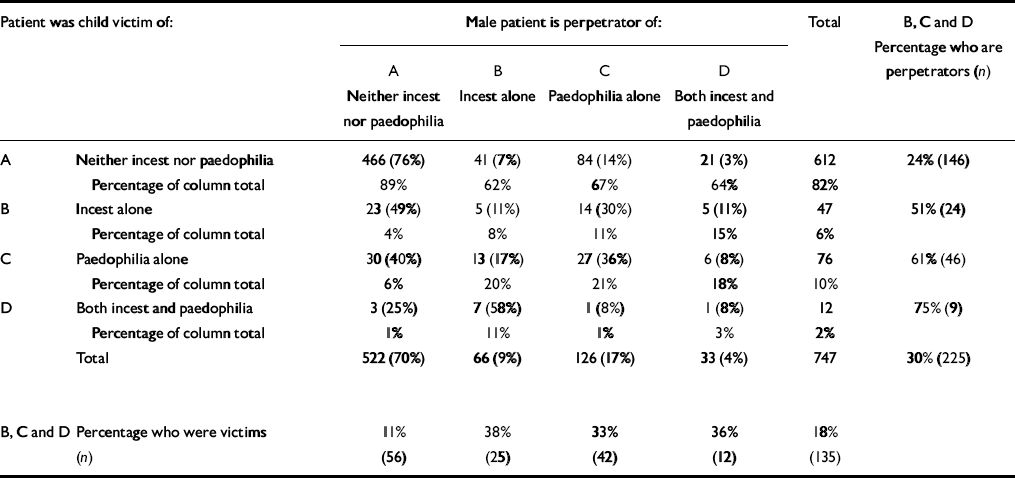
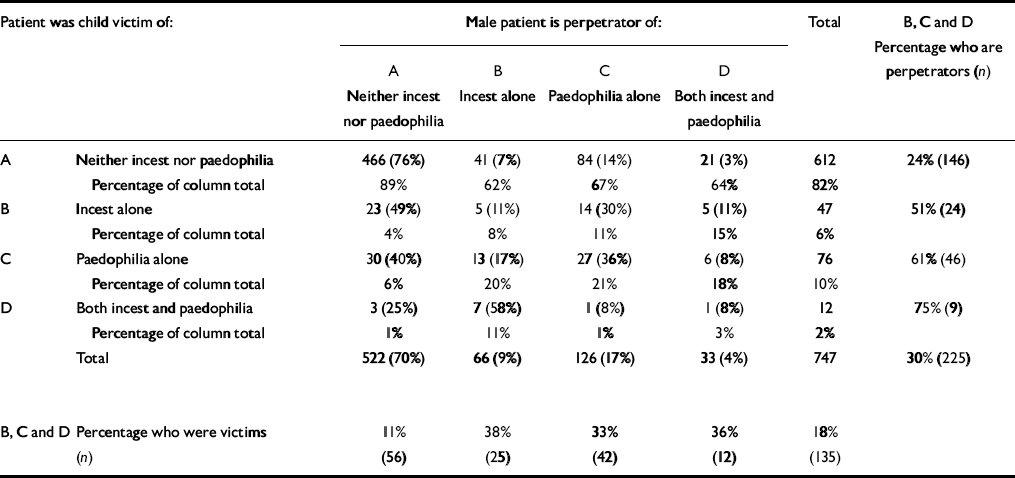
Table 1 provides information about 747 male attenders at the forensic psychotherapy service. One in four (24%) of those who were not reported victims of child sexual abuse are perpetrators, one in two (51%) of the reported victims of incest alone and six in ten (61%) of reported victims of paedophilia alone are also perpetrators, whereas three in four (75%) of reported victims of both incest and paedophilia are also perpetrators.
Victim-to-victimiser cycle: males
| Patient was child victim of: | Male patient is perpetrator of: | Total | B, C and D Percentage who are perpetrators (n) | ||||
|---|---|---|---|---|---|---|---|
| A | B | C | D | ||||
| Neither incest nor paedophilia | Incest alone | Paedophilia alone | Both incest and paedophilia | ||||
| A | Neither incest nor paedophilia | 466 (76%) | 41 (7%) | 84 (14%) | 21 (3%) | 612 | 24% (146) |
| Percentage of column total | 89% | 62% | 67% | 64% | 82% | ||
| B | Incest alone | 23 (49%) | 5 (11%) | 14 (30%) | 5 (11%) | 47 | 51% (24) |
| Percentage of column total | 4% | 8% | 11% | 15% | 6% | ||
| C | Paedophilia alone | 30 (40%) | 13 (17%) | 27 (36%) | 6 (8%) | 76 | 61% (46) |
| Percentage of column total | 6% | 20% | 21% | 18% | 10% | ||
| D | Both incest and paedophilia | 3 (25%) | 7 (58%) | 1 (8%) | 1 (8%) | 12 | 75% (9) |
| Percentage of column total | 1% | 11% | 1% | 3% | 2% | ||
| Total | 522 (70%) | 66 (9%) | 126 (17%) | 33 (4%) | 747 | 30% (225) | |
| B, C and D | Percentage who were victims | 11% | 38% | 33% | 36% | 18% | |
| (n) | (56) | (25) | (42) | (12) | (135) | ||
The next step is to look back comparing perpetrators with non-perpetrators and to calculate the percentage who were previously victims: where the subject is a perpetrator of neither incest nor paedophilia, then one in nine reported themselves as victims of child sexual abuse; if the subjects were perpetrators, then one in three reported themselves as victims.
Is there specificity to a particular type of perpetrator and victim circumstance? Only one in ten of those who were reported victims of incest alone subsequently perpetrate incest. Over three in ten of those who were reported victims of paedophilia alone subsequently perpetrate paedophilia. Of those who were reported victims of both, less than one in ten subsequently perpetrate both.
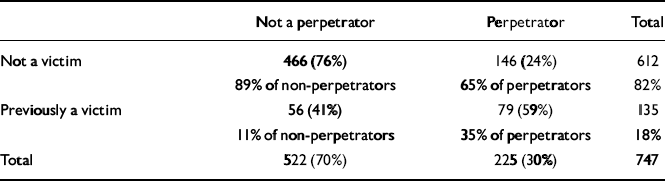
The data can be simplified by the collapse of the cells (see Table 2), where the crucial issue is the strength of any association between being a victim and becoming a perpetrator. Looking forwards, among this forensic sample, previously being a reported victim gives rise to a subsequent rate of 59% for perpetrating sexual abuse. When looking backwards, only 35% of perpetrators overall had previously been a reported victim of abuse.
Victim-to-victimiser cycle summarised: male subjects
| Not a perpetrator | Perpetrator | Total | |
|---|---|---|---|
| Not a victim | 466 (76%) | 146 (24%) | 612 |
| 89% of non-perpetrators | 65% of perpetrators | 82% | |
| Previously a victim | 56 (41%) | 79 (59%) | 135 |
| 11% of non-perpetrators | 35% of perpetrators | 18% | |
| Total | 522 (70%) | 225 (30%) | 747 |
Victim-to-perpetrator cycle and memories of parenting
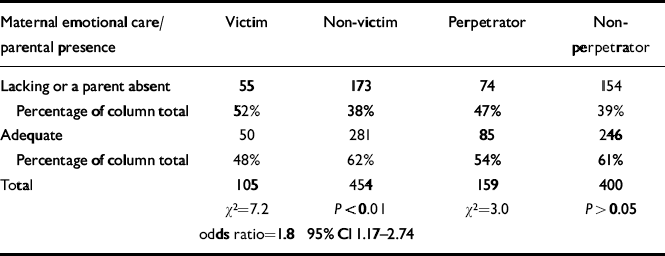
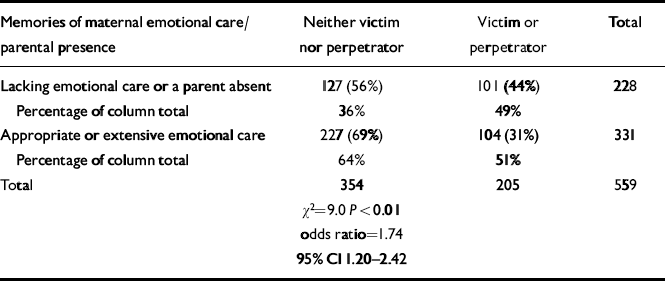
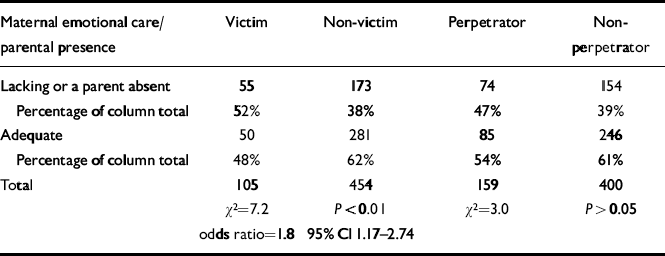
Information was available on 559 subjects concerning recollections of maternal emotional care in the following categories: lacking, appropriate, or excessive. For purposes of this analysis the last two categories were combined, as preliminary analyses had indicated that their patterns within and between groups were broadly similar. A specified absent mother constituted an additional type of adversity. No adversity (neither poor maternal emotional care nor absent mother) was given a coding of zero and either adversity was coded as one. The findings (Table 3a) show that victims, when compared with non-victims, are significantly more likely to have been exposed to poor maternal emotional care and/or an absent parent in childhood. There were no significant differences in adverse parenting between perpetrators and non-perpetrators. Table 3b shows that those who are neither victims nor perpetrators had significantly less early life adversity.
Victim/perpetrator status and memories of parenting: male subjects
| Maternal emotional care/parental presence | Victim | Non-victim | Perpetrator | Non-perpetrator |
|---|---|---|---|---|
| Lacking or a parent absent | 55 | 173 | 74 | 154 |
| Percentage of column total | 52% | 38% | 47% | 39% |
| Adequate | 50 | 281 | 85 | 246 |
| Percentage of column total | 48% | 62% | 54% | 61% |
| Total | 105 | 454 | 159 | 400 |
| χ 2=7.2 | P<0.01 | χ 2=3.0 | P>0.05 | |
| odds ratio=1.8 | 95% Cl 1.17-2.74 |
Clarifying victim and perpetrator status: male subjects
| Memories of maternal emotional care/parental presence | Neither victim nor perpetrator | Victim or perpetrator | Total |
|---|---|---|---|
| Lacking emotional care or a parent absent | 127 (56%) | 101 (44%) | 228 |
| Percentage of column total | 36% | 49% | |
| Appropriate or extensive emotional care | 227 (69%) | 104 (31%) | 331 |
| Percentage of column total | 64% | 51% | |
| Total | 354 | 205 | 559 |
| χ 2=9.0 P<0.01 | |||
| odds ratio=1.74 | |||
| 95% Cl 1.20-2.42 |
The finding (see Tables 3a,b) that victims were significantly more likely than non-victims to have been exposed to poor maternal care and/or an absent parent in childhood raises questions about the relative contribution of the different early life experiences to becoming a perpetrator in adulthood. One way of addressing this question is by using logistic regression with perpetration of sexual abuse in adulthood as the dependent variable and the early life experiences and their interactions included as independent (or predictor) variables — and using backward selection to identify the relevant components of the Wald statistic as the selection criterion. The following independent variables were included: victim of incest or paedophilia; perpetrator of incest or paedophilia (data set n=747); poor maternal emotional care and/or absence of a mother to provide that care (data set n=559); and loss (data set n=653). The loss variable was represented by one of the following criteria — parental divorce, separation or death.
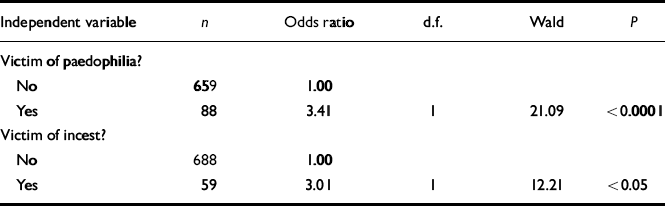
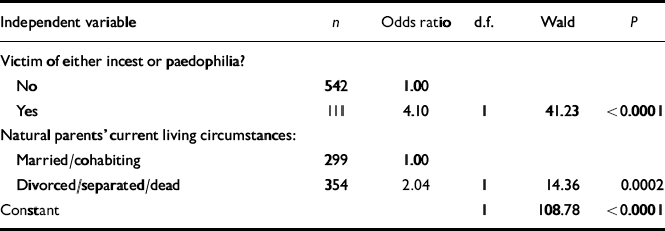
A salient issue is whether it was possible to predict, specifically and separately, subsequent incest perpetrators from variables reflecting previously being a victim of incest or paedophilia and poor emotional care in childhood. With logistic regression analysis, maternal emotional care was not selected as a significant predictor and the analysis was rerun excluding it as an independent variable on 747 male subjects (Table 4a). Both being a victim of paedophilia (P<0.0001) and being a victim of incest (P<0.05) proved significant predictors. There were no significant interactions and the model predicted 87% of outcome. A similar picture emerges when attempting to predict perpetration of paedophilia but the model only predicted 78% of outcome. Prediction is improved substantially if the dependent variable is not specified, that is, perpetration of either incest and/or paedophilia: the independent variable ‘victim of paedophilia’ has an odds ratio of 4.63, a Wald of 40.75 andP<0.0001; for ‘victim of incest’ the odds ratio=3.1, Wald=15.5 and P<0.0001. Similarly, the theme of loss, represented by the subject's parents' living circumstances was explored (Table 4b). The logistic regression was undertaken on those 653 subjects with complete data. The independent variables were being a victim of sexual abuse (not specified) and loss. The dependent variable was perpetration of abuse, not specified. Both victim experience and loss experience proved highly significant predictors and the model predicted 74% of the outcome.
Logistic regression analysis with subsequent perpetration of incest as dependent variable for 747 male subjects
| Independent variable | n | Odds ratio | d.f. | Wald | P |
|---|---|---|---|---|---|
| Victim of paedophilia? | |||||
| No | 659 | 1.00 | |||
| Yes | 88 | 3.41 | 1 | 21.09 | <0.0001 |
| Victim of incest? | |||||
| No | 688 | 1.00 | |||
| Yes | 59 | 3.01 | 1 | 12.21 | <0.05 |
Logistic regression analysis with perpetration of incest and/or paedophilia as dependent variable for 653 male subjects
| Independent variable | n | Odds ratio | d.f. | Wald | P |
|---|---|---|---|---|---|
| Victim of either incest or paedophilia? | |||||
| No | 542 | 1.00 | |||
| Yes | 111 | 4.10 | 1 | 41.23 | <0.0001 |
| Natural parents' current living circumstances: | |||||
| Married/cohabiting | 299 | 1.00 | |||
| Divorced/separated/dead | 354 | 2.04 | 1 | 14.36 | 0.0002 |
| Constant | 1 | 108.78 | <0.0001 |
DISCUSSION
Findings from the social background data
There were no salient differences in the background data of victims and non-victims, or between the different victim types. However, the background data serve as indicators of the social functioning of child abuse perpetrators compared with the remainder of the patient population. The pattern of civil status, for example, can be seen as an indicator of the ability to sustain extended family relationships. A significantly higher percentage of perpetrators reported a cohabitation relationship than of non-perpetrators. However, it would be wrong to infer that perpetrators were more psychologically capable of engaging in sustained relationships than the non-perpetrators, as 34% were incest perpetrators, where a family relationship was a sine qua non; and certain paedophiles will seek a relationship with a woman with children. There were no differences in employment levels between perpetrators and non-perpetrators; however, since a large proportion of the non-perpetrators had committed other offences or had other sexual deviations or perversions, marked differences between the two groups being compared would not be expected. Steady employment was more common, but not significantly so, in perpetrators (61%) than in non-perpetrators (48%). This trend merits brief comment. It may be that child abusers, particularly those considered suitable for referral to a psychotherapy clinic, need to be seen to be leading normal lives in order to be in a position to carry out their acts, whether it be within the family or in social settings (for example as school-teachers, scoutmasters and so on). This may be facilitated by the extensive use of splitting — this is a mechanism whereby apparently contradictory attitudes can coexist (Reference GlasserGlasser, 1988).
Findings from sexuality and sexual practice data
The admitted frequent use of pornography is significantly higher in the perpetrator group. About one in five of homosexuals in the current series was a perpetrator of abuse, but the rate is significantly higher in those subjects who were not homosexuals, where one in three was a perpetrator. Transvestites were seldom perpetrators of sexual abuse.
Relationship with gender
While 41 (43%) of female subjects were previous victims of sexual abuse, only one of the victims became a perpetrator of sexual abuse (2%). However, the highest likelihood of a male victim becoming a perpetrator was associated with being abused by a sister or mother.
Is there a cycle of sexual abuse in males? Summary of our findings
Of the male cohort (n=747), 18% (n=135) were victims and 30% (n=225) were perpetrators. It is a reported high-risk population for both experiences of childhood sexual victimisation and adult perpetrator behaviour, with risk being much higher for the latter. Nevertheless, 82% were not victims of child sexual abuse and 70% were not perpetrators of child sexual abuse (see Table 1).
Victim experience: looking forwards — the link between being a victim and becoming a perpetrator
Of all reported victims 59% were also perpetrators (79 of 135). The rate varied according to the victim's experience:
(a) 24% of the reported non-victims were perpetrators (146 of 612);
(b) 51% of reported incest victims were perpetrators (24 of 47);
(c) 61% of reported paedophile victims were also perpetrators (46 of 76);
(d) 75% of those who reported that they were victims of both incest and paedophilia were also perpetrators (9 of 12).
Perpetrator behaviour: looking backwards from perpetrators to victims
In relation to perpetrator behaviour:
(a) 11% of non-perpetrators reported themselves as victims (56 of 522);
(b) 35% of the perpetrators reported themselves as victims (79 of 225): 38% of incest perpetrators, 33% of paedophiles and 36% of perpetrators of both incest and paedophilia.
Conclusions from these data
This analysis of data deriving from a male cohort attending a forensic psychotherapy clinic for antisocial and sexually deviant subjects gives rise to some comments and conclusions. It would seem that there are at least two subgroups of adult perpetrators of child sexual abuse — a smaller one which had previous (self-reported) childhood victim experiences (n=79) and a larger one which did not (n=146) — it is only for the smaller group that the notion of a cycle of sexual abuse can be considered. In this high-risk cohort, derived from a forensic psychotherapy out-patient population, the risk of being a perpetrator is enhanced by prior victim experiences, doubled for incest, more so for paedophilia, and even higher for those exposed to both paedophilia and incest. This suggests that, in this selected sample, the experience of being a victim of paedophilia may have a more powerful causative influence in giving rise to the subject becoming a perpetrator than does incest, and the joint experience of being exposed to both paedophilia and incest has the most powerful effect. However, when seeking causal links, the focus should be on multifactorial origins, but with the expectation that some factors will be more powerful than others. Although the data do not provide strong support for a cycle of sexual abuse encompassing a substantial proportion of male perpetrators, prior victimisation may have some effect in a minority of perpetrators, and can be viewed as one mediating factor which enhances the probability of subsequent perpetrator behaviour.
There is some controversy about the extent to which males who have been victims repeat the abuse in the next generation: the review by Bolton et al (Reference Bolton, Morris and Maceachron1989) suggests that it is only a minority of males who do so, and our findings have to be placed in perspective in relation to the literature. There is also little or no evidence of a cycle in the general population (or in females). Murphy & Smith (Reference Murphy, Haynes, Smith, Briere, Berliner and Bulkley1996) and Reference Widom and AmesWidom & Ames (1994) argue that there is little evidence in extreme samples. It can be argued that a cycle of sexual abuse is a phenomenon that is tied to a special subgroup of a clinical forensic psychotherapy population but only becomes evident when the subjects are willing to reveal their earlier experiences and admit to their perpetrator behaviour. Another possibility is that some sexual perpetrators may feign sexual victimisation in order to gain sympathy, preferential treatment or therapy.
What is the nature of specificity?
Another way of looking at the data is to see whether there is specificity in the cycle consisting of previously being a victim of one type of abuse and subsequently being a perpetrator of that type. The evidence for this is slight in relation to reported incest alone (21%), whereas with paedophilia the link is more substantial — being a reported victim of paedophilia is strongly linked with being subsequently a perpetrator of paedophilia, alone or jointly with incest, with the combined rate being 43%. When exploring specificity, it is helpful to establish subsequent perpetrator rates when the patient is a victim of neither incest nor paedophilia. In these circumstances, 10% of subjects become perpetrators of incest and 17% become perpetrators of paedophilia (see Table 1).
Other mediating factors
What about other factors? There has already been comment on the pathogenicity of the relatively rare experience of sexual abuse of males in childhood by adult women. Condy et al (Reference Condy, Templar and Brown1987) support the notion that this is an important contributing factor. What about factors which ‘protect’ the victim from becoming a victimiser? Being female is one such characteristic.
The literature suggests that sexual abuse perpetrators were more likely to have been exposed to high levels of parental coldness or poor care (Reference Bolton, Morris and MaceachronBolton et al, 1989). In the current study, the contribution of poor maternal affection to becoming a perpetrator of sexual abuse proved not significant. A possible reason for this is that the total cohort is a forensic clinical one with perpetrators and non-perpetrators subject to a similar range of social and family adversities. In contrast, an index of ‘loss’, albeit unrefined, proved a significant predictor both in univariate and multivariate analyses. Loss was a ‘compound category’ relating to the civil state of the subjects' parents, comprising death, divorce or separation on the one hand and being married or cohabiting on the other. The effective constituents of the compound are likely to include as well a host of other contributory factors such as those reported in studies of the cycle of violence (Reference WidomWidom, 1989; Reference Widom and AmesWidom & Ames, 1994), for example: physical abuse leading to family separation or disintegration; dysfunctional family relationships; and parental psychiatric illness. What are the possible mechanisms? The literature suggests that subjects exposed to parental separation or loss experiences are at risk of making insecure attachments as they may have missed out on quality experiences with attachment figures in early childhood. The crucial issue is to what extent prior insecure attachments may contribute to sexual abuse victims becoming more vulnerable to the development of deviant sexual relationships.
The cycle of child sexual abuse and a review of the literature from a psychodynamic perspective
The cycle of child sexual abuse as represented in the popular literature and by some professionals in clinical practice hypothesises that most offenders were previously victims and that being a victim is a common cause of subsequent sexual abuse of children.
The notion that most offenders were previously victims has been questioned: a number of reviewers have asserted that there are few empirical data to support the widely held belief in a cycle of sexual abuse (Reference Widom and AmesWidom & Ames, 1994; Reference Murphy, Haynes, Smith, Briere, Berliner and BulkleyMurphy & Smith, 1996). We reviewed the literature and examined the findings from the present study to ascertain whether or not they could make a contribution to this debate. Although at least 10% of the male general population are victims (Reference Baker and DuncanBaker & Duncan, 1985; Finkelhor et al, 1990), Murphy & Smith (Reference Murphy, Haynes, Smith, Briere, Berliner and Bulkley1996) argue that it is highly unlikely that 10% of the male population become sex offenders. Further, while females are victimised at even higher rates than males, very few become offenders. The latter point is supported by data from the current study where, in a deviant population, only 2% of female victims became offenders. Rather, Murphy & Smith advance the view that offenders who were previously victims may be different. What is the other evidence? Hanson & Slater (Reference Hanson and Slater1988) reviewed 18 studies to summarise percentages of sexual offenders who were previously victims. Including only those studies with reasonable sample sizes, they report a rate of 20-30%. A history of sexual abuse was associated with higher levels of overall sexual deviancy, increased psychological disturbance and increased likelihood of coming from more dysfunctional families. They too conclude that offenders who were victims may be different. Freund et al (Reference Freund, Watson and Dickey1990) report similar rates of 20-29% of prior victim experiences in offenders against children compared with 11-14% for their three different control groups. This is broadly in agreement with the findings of the present London study, that 35% of perpetrators and 11% of non-perpetrators report having been victims.
Data about adolescent sexual offenders have been summarised by Murphy et al (Reference Murphy, Haynes, Page, O'Donohue and Geer1992): Ryan et al (Reference Ryan, Lane and Davis1987) report prior victim rates of 33% and Gomes-Schwarz (Reference Gomes-Schwarz1984) of 38%. Murphy & Smith conclude that overall the empirical data suggest that around 30% of child molesters report having been sexually abused as children; and although this is higher than in the general population, it is not as high as sometimes suggested in the literature and does not suggest a necessary link between victimisation and offending. These rates are lower than those reported in the current study (see Table 1 — average of 35%) as compared to the more rigorous USA studies. There are two possible explanations.
First, in adolescence the reported victim rates may be underestimates, since some adolescents may find it difficult to admit being victims of abuse because of the perceived stigma attached to being abused (Reference Murphy, Haynes, Page, O'Donohue and GeerMurphy et al, 1992). Further, as much of the data reported in the literature were collected during initial evaluations, it is possible that, if collected later when therapeutic relations had been established, the rates might have been even higher. This has implications for the current study.
Second, Lipovsky & Kilpatrick (Reference Lipovsky, Kilpatrick, O'Donohue and Geer1992) cite Briere et al (Reference Briere, Evans and Runtz1988) as one of the empirical studies that included a large number of male victims in comparison with non-victims and female victims. Briere compared male and female victims who were seeking treatment and found no gender differences in the problems victims reported. However, males had experienced somewhat less severe abuse than females, leading the authors to conclude that either there are effects of abuse regardless of its severity or that males actually suffer more traumagenic effects from abuse than females do. Lipovsky & Kilpatrick allude to the cultural biases against males as victims and the stigmatisation that may be associated with the victimisation experience and this may have significant effects on the male victim's perception of himself and so may be associated with greater degrees of denial. However, denial was less likely in a forensic psychotherapy out-patient clinic.
Criminal consequences of childhood sexual victimisation
Widom, in her various papers (e.g. Reference Widom1989), reports on problem behaviours in adulthood of abused and neglected children grown up. The initial study was an attempt to determine whether adults who had been abused or neglected as children, subsequently had higher rates of arrests in adulthood for child abuse or neglect. Widom uses a prospective cohort design in studying a large sample of children exposed to child abuse and neglect compared with a matched control group. The source was county court records from a metropolitan area in the north-west of the USA from 1967 to 1971. Only cases of childhood abuse and neglect that had been validated and substantiated by the court were included in the samples. Neglect cases were those in which the court found the child to have no proper parent care or guardian, to be destitute, homeless or living in a physically dangerous environment. The subsequent adult criminal records were scrutinised for criminal charges filed against them. However, arrests for the above offences proved extremely rare. Nevertheless, the findings were interesting — as predicted by the ‘violence breeds violence’ hypothesis, males but not females who were abused or neglected as children were found to have significantly higher rates of violent crimes in adulthood. On the other hand, such adults (either males or females) were no more likely to be arrested for child abuse as adults than those in the non-abused control group. Widom concludes that while these findings confirm some aspects of the cycle of violence hypothesis, they contradict others. Thus, while being abused as a child may increase the risk of becoming an adult violent criminal, “the route is not straightforward or certain” and “not all children who grew up in a violent home become violent”. Widom cautions that with the exclusive reliance on official records the findings are not generalisable to unreported cases of abuse and particularly not to those dealt with unofficially.
A subsequent paper on specific consequences of childhood sexual victimisation (Reference Widom and AmesWidom & Ames, 1994) uses an identical prospective cohort design. The cohorts consisted of: (a) criminal court corroborated childhood sexual abuse victims; (b) cases of physical abuse; (c) neglect; and also (d) a control group recruited via county and school records; the cohorts were matched for age, gender, race and approximate family socio-economic status. The conclusions were that, compared with cases of abuse and neglect, early childhood sexual abuse did not increase specifically the individuals' “risk for later delinquent and adult criminal behaviour”. However, such victims as juveniles were at increased risk of arrest for being a runaway and as adults at higher risk of arrest for sex crimes than the controls — but this was true too for victims of physical abuse and neglect. Further, child sexual abuse victims were at a higher specific risk of prostitution as adults compared with either the abuse or neglect victim group or the control group regardless of gender.
Notably, across the four groups, the total number of adult arrests for prostitution was only 16; for rape and sodomy only 14. Adult arrests for any sexual crime totalled 48: (a) 4% (6 of 153) for the sexual abuse victim subgroup; (b) 6% (9 of 146) for the physical abuse victims; (c) 4% (22 of 609) for the neglect group; and (d) 2% (11 of 667) for the controls. None of the victims of child sexual abuse had arrests as an adult for incest, child molesting or contributing to the delinquency of a minor. In brief, childhood victims of sexual abuse were at increased risk of being arrested in general, and this included arrests for sex crimes, and were at specific risk for prostitution as an adult.
The findings of Widom & Ames (Reference Widom and Ames1994) have been construed as denying the notion of a cycle of child sexual abuse. Was their study adequate for this purpose? There are the limitations admitted by the authors:
“the cases included here may be considered as being at the extreme end of a continuum of sexual abuse… were detected and prosecuted, before child abuse reporting laws were passed. This means that these cases were skewed towards the lower end of the socioeconomic spectrum” (Reference GellesGelles, 1980).
The children were from multi-problem families, which may be at high risk for developing a number of problem behaviours (Reference Widom, Colten and GoreWidom, 1991). The results were based on official court records and so the findings do not include self-reported criminal behaviour. The abused and neglected group consisted of 908 substantiated cases of child abuse: physical (n=146), sexual (n=153) and neglect (n=609). This was a very high-risk sample of which only 17% appertained to child sexual abuse — and is followed by very low subsequent arrest rates for any sex crime. As arrests were determined by tight and narrow criteria, they were likely to underestimate actual subsequent perpetrator behaviour. Of the 42 subjects from groups b, c and d above committing sexual crimes in adulthood, it is unlikely that none had been exposed to prior sexual victimisation as a child. Lipovsky & Kilpatrick (Reference Lipovsky, Kilpatrick, O'Donohue and Geer1992) have cautioned about the drawing of conclusions from information concerning sexual abuse perpetrators, gathered primarily from convenience samples of subjects who had been identified through their involvement in some kind of criminal activity — that there are significant methodological problems in studies that examine incarcerated offenders who do not accurately reflect the general characteristics of sex offenders; and that the offenders whose criminal behaviour goes undetected may be different from those who are detected, prosecuted and subsequently incarcerated. These cautions are equally relevant to the Widom studies.
In summary, the Widom studies' findings are at variance with a series of other clinical studies that report that one-third of sexual offenders have a history of being a childhood victim (Reference GrothGroth, 1979; Reference Becker, Cunningham-Rathner and KaplanBecker et al, 1987; Reference Seghorn, Prentky and BoucherSeghorn et al, 1987). Moreover, Reference Seghorn, Prentky and BoucherSeghorn et al (1987) conclude that victimised molesters were more likely than non-victimised molesters to have had fathers with a criminal and/or substance misuse history or parents with psychiatric histories or sexual deviance within the family and a high incidence of childhood neglect. The accumulative evidence suggests cautions (including those of the authors) about generalisations that can be drawn from the studies.
Male victims of sexual abuse
This important theme has been reviewed by Lipovsky & Kilpatrick (Reference Lipovsky, Kilpatrick, O'Donohue and Geer1992) and some issues raised are relevant to the current paper; particularly that there has been relatively little empirical research that has directly investigated the long-term effects of child sexual abuse on male victims. Of importance is that current knowledge may not reflect accurately patterns in male victims — for instance it is known that abuse of males is seriously underreported (Finkelhor, 1984). This touches on the reluctance of disclosure of victimisation by males, which may be the result of significant cultural biases against males as the victims; or because males perceive themselves as being self-reliant individuals who should be capable of preventing abuse from occurring (Finkelhor, 1984); or because males may have a psychological response to abuse which may foster a strong sense of self-blame in male victims (Reference Johanek and SgroiJohanek, 1988).
Some theories to explain a postulated victim-to-abuser cycle
Araji & Finkelhor (Reference Araji, Finkelhor and Finkelhor1986) review empirical data to discover what support exists for theories that attempt to explain why adults become sexually interested and involved with children. They select paedophilia as the overall term to refer to the occurrence of an adult having “a conscious sexual interest in prepubertal children”.
After drawing attention to the crucial need to recognise that explanations of the subject need to be multi-factorial, they divide the explanatory theories into four basic categories: emotional congruence — why the adult has an emotional need to relate to a child; sexual arousal — why the adult becomes sexually aroused by a child; blockage — why alternative sources of sexual and emotional gratification are not available; and disinhibition — why the adult is not deterred from such an interest by normal prohibitions.
The review suggests that: (a) the best experimental research had been directed toward establishing that those who perpetrate sexual abuse do show an unusual pattern of sexual arousal towards children, although no substantial theory at that time existed about why this was so; (b) a number of studies had concurred that molesters were blocked in their social and heterosexual relationships; (c) alcohol was well established as a disinhibiting factor that plays a role in a great many sexual abuse offences; (d) one study gives support to the ‘emotional congruence’ notion — that children, because of their lack of dominance, have some special meaning for paedophiles; and (e) there was evidence that many perpetrators of sexual abuse were themselves victims of abuse when they were children.
However, point (a) is self-evident; (b) and (c) apply to many deviant activities, sexual and criminal, and therefore offer no specific perspective to guide the clinician or theoretician; the study referred to in (d) is regarded as promising, but Araji & Finkelhor comment that the methodology is somewhat vaguely described and may allow for some degree of investigator subjectivity. The current paper specifically concerns itself with theme (e) — the links between being a victim and becoming a perpetrator of child sexual abuse.
Recent theories
Garland & Dougher (Reference Garland, Dougher and Feierman1990) offer a number of theories to explain the victim-to-abuser cycle. The first, which is of relevance to the current study, is psychodynamic and is heavily based on the work of Stoller (Reference Stoller1976). The argument goes as follows — that emotionally deprived youths who are seduced by an adult will bond with that adult and identify with him or her. Mediating factors are adult fantasies about perversion which are symbolic attempts to gain mastery over weakness and passivity in remembering the childhood relationship. The second is a cognitive—behavioural theory in which deviant sexual arousal is conditioned through masturbatory fantasies paired with orgasm. In this model, early sexual experiences (with an adult or another child) supply the material for these masturbatory fantasies and the learned behaviour. Positive reinforcement consists of the masturbatory orgasm, through which the deviant sexual outlet becomes imprinted. Garland & Dougher go on to argue that the above experience prevents the youth from entering the normal developmental phase of peer sexual outlet with the masturbatory fantasy, finally resulting in the adult being fixated on his ideal first relationship. These two theoretical explanations are not necessarily incompatible. Third, Garland & Dougher suggest a number of possible explanatory processes. One relates to family dysfunction and suggests that the boys exposed to emotional deprivation and isolation are at risk for developing ego inadequacies which could impair social learning. Further, family dysfunction can lead to isolation and alienation from his own family, which can hinder the boy from acquiring conventional sex role models (for instance failing to identify with his father's role). Another relates to the combination of identification with the adult abuser and imprinting of the fantasised relationship through frequent orgasmic masturbation which may provide the level of imprinting that gives the paedophile such obsessive and powerful motivation. Finally, Bolton et al (Reference Bolton, Morris and Maceachron1989) have documented reviews that suggest that becoming an abuser is an attempt to overcome the powerlessness of previously being a victim. This attractive explanatory theory is a variation of the notion of ‘identification with the aggressor’ and the current data add to the empirical support for such a theory. However, such views do not accord with a tight notion of causality, which demands that such a preceding sexually abusive experience should be both a necessary and sufficient condition, as exemplified by a very high proportion of male victims abused by males going on to become abusers and a rather low rate of non-victims becoming abusers.
Hence, the essential problem with the explanations given by Garland & Dougher (Reference Garland, Dougher and Feierman1990) and others is that they neglect the centrality of the sadomasochism in the experience of child sexual abuse. The bond with the adult perpetrator, from a psychoanalytic view, is not based on a fixation on an ideal first relationship or “the lost, idyllic relationship” (see below) but is based on identification with the aggressor as a means of turning the traumatic passive experience into an active one as the perpetrator. Further, the current study and its theoretical foundation directly contradict the cognitive—behavioural view that deviant sexual behaviour receives positive reinforcement through the victim's experience of being abused. When the rage and aggression aroused by the victim's experience of being abused (not mentioned by Garland & Dougher) cannot be safely expressed directly, they become sexualised as a means of allowing their modified and covert expression. The sexualisation may be used as a means of preventing the threatening perpetrator from being dangerously violent — and later, as a means of dealing with the traumatic experience; it is reversed in the carrying out of acts of abuse of children.
Other theoretical views about mechanisms
Although there is not necessarily empirical evidence to support them, a number of notions or suggestions have been advanced based on reviews of the literature. For instance, according to Garland & Dougher's (Reference Garland, Dougher and Feierman1990) review, evidence suggests that some children and adolescents participate willingly in sexual behaviour with the older individual, and this may be particularly characteristic of emotionally deprived children, as well as of homosexual male adolescents. In addition, there is some evidence from reviews that some paedophiles are fixated on children of specific ages and the sudden termination of the loving relationship by the adult partner may be a profound trauma for the boy, which interferes with ego development and “leaves him fantasising forever about the lost, idyllic relationship”.
Protective factors
Finally, Prendergast (Reference Prendergast and Prendergast1993) focuses on sexually abused males who do not enter the victim-to-abuser cycle. Prendergast lists a series of factors derived from his own case material which appear to be protective of such sexually abused males and which future research should address, as having great relevance to clinical practice:
(a) good self-esteem;
(b) the availability of other important adults in the child's life besides the abusers, including an adult with whom he or she could discuss the abuse, and also real friends with whom he or she could discuss anything;
(c) religious education stressing positive development and forgiveness rather than sin and damnation;
(d) success in schoolwork, sports or other activities — activities which reflected the pride of the parents;
(e) personality, strengths and social situation of the child that enabled him or her to have long-term goals rather than day-to-day short-term goals;
(f) monitoring by the child's parents which had reduced the possibility of frequent abuse;
(g) fairly good sexual knowledge at the outset of the seduction, so that any sexual pleasure was less likely to ensnare the child in a downward spiral of guilt.
Some psychoanalytical considerations in understanding the victim-to-perpetrator cycle that emerge from clinical practice
The ‘core complex’ of the paraphilias
Incest and paedophilia perpetrators had been studied and monitored by M. G. over a long period. This constitutes one form of psychoanalytical multiple single-case study research and a salient concept that emerges is the core complex (see below). Glasser (Reference Glasser and Rosen1996) approaches the understanding of the psychodynamics of the various forms of child abuse by considering them as perversions. He regards the perversions as a distinct nosological group sharing an important complex of interrelated feelings, ideas and attitudes. He refers to this as the core complex because it is at the centre of the psychological structure of the perversions, is fundamental to it and influences all its ingredients. Its components, which persist from infancy even when later developmental stages modify their manifest appearance, consist of the following.
There is a pervasive and enduring longing for an intense and most intimate closeness to another person, amounting to a ‘merging’, a ‘union’. This longed-for state implies complete gratification with absolute security against any dangers of deprivation or obliteration. However, the ‘pervert’ is convinced that such closeness inevitably involves a permanent disappearance of his existence as a separate, independent individual into the other person whom he perceives to be entirely psychologically acquisitive and consuming. The ‘pervert's’ reaction to the annihilatory danger of intimacy is: to withdraw into himself with the result that his relationships assume a narcissistic character, this in turn leaving him vulnerable to a sense of isolation, low self-esteem and depression; and to react with “self-preservative aggression” (see Reference GlasserGlasser, 1988) aimed at negating the annihilatory person. Since, however, this person is the one with whom he desires union, he protects this person from destructive intention by sexualising his aggression, thus converting it into sadism. It is for such reasons that the characteristic ways in which the ‘pervert’ relates to others is invariably narcissistic and sadistic, and always precludes true intimacy.
Perpetrators of child sexual abuse
Many perpetrators of child sexual abuse fall into the nosological category of the perversions and the features discussed above can consequently be observed in them. They relate to the objects of their desires — the children — fundamentally narcissistically, treating them as extensions of themselves and their interest only existing as far as they meet their needs (Reference GlasserGlasser, 1988). Further, despite their frequent protestations to the contrary, there is a fundamental sadism in their engagements with their victims (see Reference Groth, Burgess, Groth and HolmstromGroth, 1978; Reference Marshall and ChristieMarshall & Christie, 1981; Reference Browne and FinkelhorBrowne & Finkelhor, 1986).
Both the paedophile and the incest perpetrator relate to their victims narcissistically, but this is more clearly seen in paedophilia. In incest the relationship is not so exclusively narcissistic: the inter-relations of the whole family are involved and the abusive act, therefore, has a different impact. However, it should be noted that the incest perpetrator brushes aside the incest barrier while the paedophile usually does not.
Since he shares so many psychodynamic features with other perpetrators, it may well be asked what leads the perpetrator to ‘choose’ child sexual abuse. The factors involved, both internal and external, are obviously multiple and too elaborate for consideration in this brief account. The actual experience of being abused frequently plays the role of the final organiser of the perpetrator's orientation and personality, as this and other studies show. This view is supported by the frequent clinical finding that the abuser's target age-group is usually limited to the age when he was himself abused. The abusive act is a traumatic one — however cooperative the victim might appear to be — and the change from being the passive victim to the active perpetrator, making use of the mechanism of identification with the aggressor, is the way in which some victims repeatedly attempt to master the trauma. The use of psychological mechanisms, particularly splitting and denial, which enable the abuser to believe he is being benevolent when he is being abusive, are further characteristics which the victim acquires through his identification with the perpetrator.
Why are incest victims less likely to become perpetrators than victims of sexual abuse outside the family?
The answer to the question is complex and multi-faceted. One aspect that must be considered is the qualitative difference between the abusive act within the family and the act of abuse outside the family. Incest often involves the collusion of the non-perpetrating parent or siblings and, in this sense, occurs in an inclusive system. Psychological preparation for an incestuous act occurs within the family as a kind of familial psychological foreplay. For instance, it is not uncommon for generational boundaries to be eroded by the father, who takes his daughter as a replacement for his wife at an emotional level before he uses his daughter sexually. Thus, incest victims may have had their social needs met within a family culture which supports incestuous behaviour. Incest often takes place in a pervasive, all-embracing sadomasochistic dynamic that is part of the ongoing life of the child in the family. Consequently, the sense of betrayal at the time of the abusive act is not as likely to be as traumatic as it is when the abuse occurs with someone outside the family.
Sexual abuse outside the family involves only the perpetrator and the victim and, in this sense, may be less inclusive than incest. Some victims of paedophilia are likely to suffer from deprivation, rejection or physical abuse within the family and to be looking for their social needs to be met outside the family (see Table 3b). They are, thereby, easily drawn into intimate relationships with strangers or friends of the family who are seen as gratifying emotional needs that have gone unmet within the family. Such victims of abuse outside the family often feel helpless, unprotected, rejected or abandoned by the family and, as such, ‘beyond the pale’. This adds to the victim's sense of isolation and increases the dependency upon the paedophile and this, in turn, intensifies the feeling of shock and betrayal during sexual abuse.
Although the victim of paedophilia may be ‘groomed’ and ‘nurtured’ by the perpetrator, abuse is more likely to occur as a series of isolated events, unlike the more pervasive atmosphere of an incestuous family. In the absence of familial psychological foreplay and collusive family atmosphere, the victim of a paedophile is likely to feel more unprepared and betrayed than someone who has been abused within the family. Hence, it is likely that there would be a greater need by the paedophilia victim to defend against the consequences of a more severe early trauma by identifying with the aggressor (the perpetrator of the abuse) and, in turn, becoming an abuser. In summary, the victim of paedophilia may be more dependent upon identification with the perpetrator than the victim of incest, who is less isolated and has other family members (e.g. collusive or passive participants) with whom to identify.
Cautionary note
The large pool of subjects of this study consists of an unusual clinical population referred to a tertiary forensic psychotherapy out-patient centre and so they are not representative of the wider population of victims and perpetrators of child sexual abuse. For this reason caution is advised in viewing and interpreting the reported associations. However, the size of the population gives some confidence that the identified significant link between being a victim and a perpetrator of sexual abuse in a sub-sample of the subjects is unlikely to be due to chance. It is a retrospective case note review where the subjects were assessed for clinical purposes but the data were not gathered systematically. It is argued that the case notes were prepared by clinicians all working in the same theoretical framework, with the same concepts and broadly using the same definitional criteria, with codings made under strict conditions so as to ensure consistency of decisions about the presence and absence of the specified features. Further, the data-gathering did not rely entirely on the subjects' accounts and memories of their early life, as often there were helpful medical, social service and probation reports. The operational decision to assume that nonreporting of psychopathology constitutes non-existence is open to question, as there were no checks about denial or abusive behaviour. Although this may be true for some, it is argued that subjects of this study were more likely to disclose intimate personal details of their prior sexual experiences and current sexual behaviour under the confidential conditions of a forensic psychotherapy clinic (in the 1980s) rather than in the current climate where subjects are likely to use denial in the face of the greater concerns of society and the present tighter legal rules.
Clinical Implications and Limitations
CLINICAL IMPLICATIONS
• Our data support the notion of a cycle of child sexual abuse in a minority subgroup of male perpetrators attending a specialist national forensic psychotherapy centre.
• There was no evidence of a cycle of abuse in the female attendees.
• Although the numbers are small, abuse by a female during childhood appears to be a risk factor for a cycle of abuse in males.
LIMITATIONS
• The subjects of this study derive from an unusual, selected clinical population and are not representative of the wider population of victims or perpetrators of child sexual abuse.
• The retrospective case note review methodology is open to questions regarding unsystematic recording of the data and recall bias.
• Systematic checks were not available about denial of abusive behaviour. However, it is argued that the subjects were more likely to disclose intimate personal details under the confidential forensic psychotherapy conditions of the 1980s than in the current social and legal climate.
Acknowledgements
This research was supported by a grant from the North East Thames Health Authority and a small grant from the Sobell Foundation. We are also grateful to Dr Ronald Doctor, Dr Stephen Grosz and Mr Richard Brooke for their generous help in the early stages of the research. We express our appreciation to Deborah de Wet for her secretarial contribution. Finally, we are indebted to the North London Forensic Psychotherapy Centre for access to their records and continuing support for the research. I. K. was supported by a Leverhulme Emeritus Fellowship.





eLetters
No eLetters have been published for this article.