


1. Introduction
Collaborative design technologies are used in industry to support geographically dispersed designers (Madathil and Greenstein et al., 2017). Technology integration in the design workflow has long been a fundamental necessity for the successful completion of the design process on a global scale (Reference SprowSprow, 1992). Companies like Electrolux Group and Nokia Corporation (Reference TarkiainenTarkiainen, 2001) have found value in these technologies with the global expansion of their design capabilities. This trend across the sector allows many benefits and ultimately reduces the design development costs (Reference BuckleyBuckley, 2009). Within the design research community, there is a particular interest in developing solutions to support design ideation and communication including dynamic communication platforms (Reference HsuHsu, 2013), data-sharing solutions (Reference Borsato, Peruzzini and StjepandićBorsatoet et al., 2015) and collaborative design software (Reference Shen, Barthès and LuoShen et al., 2015) with design specific functionality that has become prominent in design practitioners’ digital tools. Despite the development of novel tools and functionality of technology to support the distinct stages of the design process (Reference Pereira, Sousa and SoaresPereira et al., 2013) and acceptance for remote working as a result of the global pandemic (Reference Adekoya, Adisa and AiyenitajuAdekoya et al., 2022), collaboration across the globe remains a challenge (Reference Byrne, Brandt and PortByrne et al., 1993).
This research project reveals insights into the perspectives of industry and student designers design practice in two distinctive temporal modes: synchronous, real-time collaboration, and asynchronous, non-real-time collaboration. While collaborative design technologies employ synchronous design, the complexities of global time zones often pose considerable hurdles (Tang et al., 2010). Each approach carries its unique set of advantages and challenges, making them situational preferences for individual designers, their respective collaborators and organisational restrictions. Building upon the literature, an experimental approach is employed to uncover factors that impact the temporal differences in collaboration modes. Within the discussion the opportunities to enhance design efficiency for geographically dispersed designers during the detailed design phase are revealed with new conclusions and recommendations for the research and design community.
2. Literature review
The use of technology to facilitate Computer-Supported Collaborative Work (CSCW) commenced as early as the 1980’s (Grief, 1988), and a natural development was the evolution of these technologies supporting collaborative design. Software applications, such as, Computer-Aided Design (CAD) and Computer-Aided Manufacturing (CAM) bolstered design capabilities (Reference KrouseKrouse, 1980).
However, a notable hindrance emerged in the form of a lack of standardisation among different software providers, obstructing effective collaboration among multidisciplinary teams (Shen et al., 2008).
These modern technologies utilised for collaboration can serve multiple different purposes across the design process, where it is imperative that the suitable tools are selected for the appropriate function. Collaborative tools including internet based collaborative design platforms have been designed to cater for the initial conceptualisation phase of the process (Reference Li, Yu, Wang and LiuLi et al., 2010). Where an area which has been explored less is design collaboration during the detailed design phase (Reference Wilson and ZamberlanWilson and Zamberlan, 2015). Traditionally, the detailed design phase involves influence from several project stakeholders, however the work carried out can be dominated by individual designers (Al-Salam, 2021) where collaborative design is somewhat scarce. Although collaborative frameworks and technologies have demonstrated their immense value across other parts of the design process, (Reference Mamykina, Candy and EdmondsMamykina et al., 2002) there remains an opportunity to develop an array of tools and methods, effectively addressing the differing areas of the design process.
The prevailing belief in collaborative design is that collaborative technologies enhance a designer’s experience in multidisciplinary teamwork. Chandrasegaran et al., Reference Chandrasegaran, Ramani, Sriram, Horváth, Bernard, Harik and Gao(2013), suggests this for real-time, synchronous collaboration, however there is an opportunity to explore if this theory applies to asynchronous collaborative methods and its impact on designers.
The evolution of web communication platforms has heralded an upsurge in the number of designers seamlessly working remotely while actively collaborating (Reference Ozturk, Avci and KayaOzturk et al., 2021). Consequently, this shift has unlocked the potential for remote collaboration across different geographical locations, where both synchronous and asynchronous methods can be employed by organisations and designers.
Despite advances in technology, common teamwork issues still arise. Frequently, disagreements over proposed solutions arise from conflicts in opinion (Reference Chiocchio, Forgues, Paradis and IordanovaChiocchio et al., 2011). Similarly, A study by Mortensen and Hinds Reference Mortensen and Hinds(2001), proposes that conflict within geographically dispersed teams does not consistently lead to heightened levels of team conflict, however, the difficulties of virtual collaboration across diverse geographic locations intensify these conflicts. This raises the question whether synchronous or asynchronous modes influence conflict for designers collaborating across different geographic locations.
Additionally, global teams face the challenge of differences in cultural and educational backgrounds as well as differing levels of industry experience (Reference Fuge, Tee, Agogino and MatonFuge et al., 2014). A study conducted by Dike Reference Dike(2013) found that diversity amongst collaborative teams provides benefits for an organisation on the final design solution where teams of differing educational backgrounds can provide the best results. Mannix and Neale Reference Mannix and Neale(2005), explored the influence of diversity within organisations presents a compelling argument: “research reveals no consistent, positive main effects for diversity on work-group performance”. This statement lays the foundation for investigation, given the differing perspectives and research findings in this area, suggesting the possibility of uncovering results that align with either Dike’s findings or the conclusions drawn by Mannix and Neale.
Culturally diverse teams, facilitated by technology in collaborative design, are evolving across differing geographical locations. Gautam and Blessing Reference Gautam and Blessing(2007) highlight the advantages of cultural differences, while Halskov and Christensen Reference Halskov and Christensen(2018) caution about potential challenges in mutual understanding affecting collaborative team dynamics. Previous experiences can also impact team dynamics; Marzano Reference Marzano(2004), and Tamir Reference Tamir, Birenbaum and Dochy(1996), find a positive link between experience and project success, echoed by Lee et al., Reference Lee, Anderson, Kim and Ballard(2014), who notes the potential compromise in outcomes when assigning designers with limited prior knowledge to collaborative projects. Although, most research in this field has focused on students’ collaboration for practical reasons (Reference Siewiorek, Finger and SmailagicSiewiorek et al., 2022), shifting the focus to industry professionals can provide a more comprehensive understanding of collaborative design processes and enables insightful comparisons with less experienced students.
Outsourcing work to different locations can be advantageous for organisations seeking to optimise costs and product or service quality while gaining access to foreign markets (Reference WeidenbaumWeidenbaum, 2005). Not only for the act of designing, but also in the later industrial activities where manufacturing is commonly outsourced to Asian countries due to their rapidly expanding economic markets and cost-effective, efficient manufacturing methods (Reference Feng and LuFeng and Lu, 2011).
A primary challenge in collaborating with international partners stems from the differences in time zones, often requiring virtual collaboration beyond standard business hours (Reference O’Leary and CummingsO’Leary and Cummings, 2007).
The importance of synchronous methods, such as video conferencing, becomes apparent as crucial tools for effectively coordinating teams operating in diverse time zones. The real-time interaction they facilitate, as emphasised by Tang et al., (2011), becomes crucial when navigating the constraints of a limited window for collaboration. On the other hand, the reliance on asynchronous methods, epitomised by the use of email, appears to be more of a pragmatic response to the challenges posed by diverse time zones (Reference Anderson, Chandrasekaran, Davis-Blake and ParkerAnderson Jr et al., 2018; Reference SiemensSiemens, 2010). That being said, research dedicated to analysing asynchronous collaboration methods across different time zones consistently highlights challenges related to inefficient communication (Reference Nordio, Estler, Meyer, Tschannen, Ghezzi and Di NittoNordio et al., 2011) and the struggles faced by collaborative designers in advancing their solutions (Reference Jarrell, Neubert and HalkiasJarrell et al., 2020). Tudor and Radford-Davenport (2015) agree with this analysis highlighting additional drawbacks, such as the potential hindrance to timely task completion by designers. Additionally, Piri and Lassenius further this perception on the restrictive nature of asynchronous methods across time zones, raising valid concerns about their impact on relationship development and trust-building with colleagues (Piri and Lassenius, 2009). While asynchronous methods may offer flexibility, they come at the cost of progressing design work.
A review of the state-of-the-art literature highlights a gap in current research knowledge regarding a comparison of real-time, synchronous computer-supported collaborative design with non-real-time, asynchronous computer-supported collaborative design, emulating collaboration across different time zones. Furthermore, the research aims to explore if there are differences in the experiences of students and industry practitioners, a topic with limited prior research as there has been a focus on students experiences in the past. Finally, there’s a lack of research regarding the impact of temporal modes during the detailed design phase of a project.
3. Methodology
An experiment was envisioned which aims to answer the following research questions:
-
RQ1: Can collaboration across time zones be effective for designers and what role does technology play in this?
-
RQ2: Is there a measurable difference in the experiences of industry professionals and students when collaborating in different temporal modes?
-
RQ3: What are the challenges of global collaboration during the detailed design phase and how to overcome these challenges?
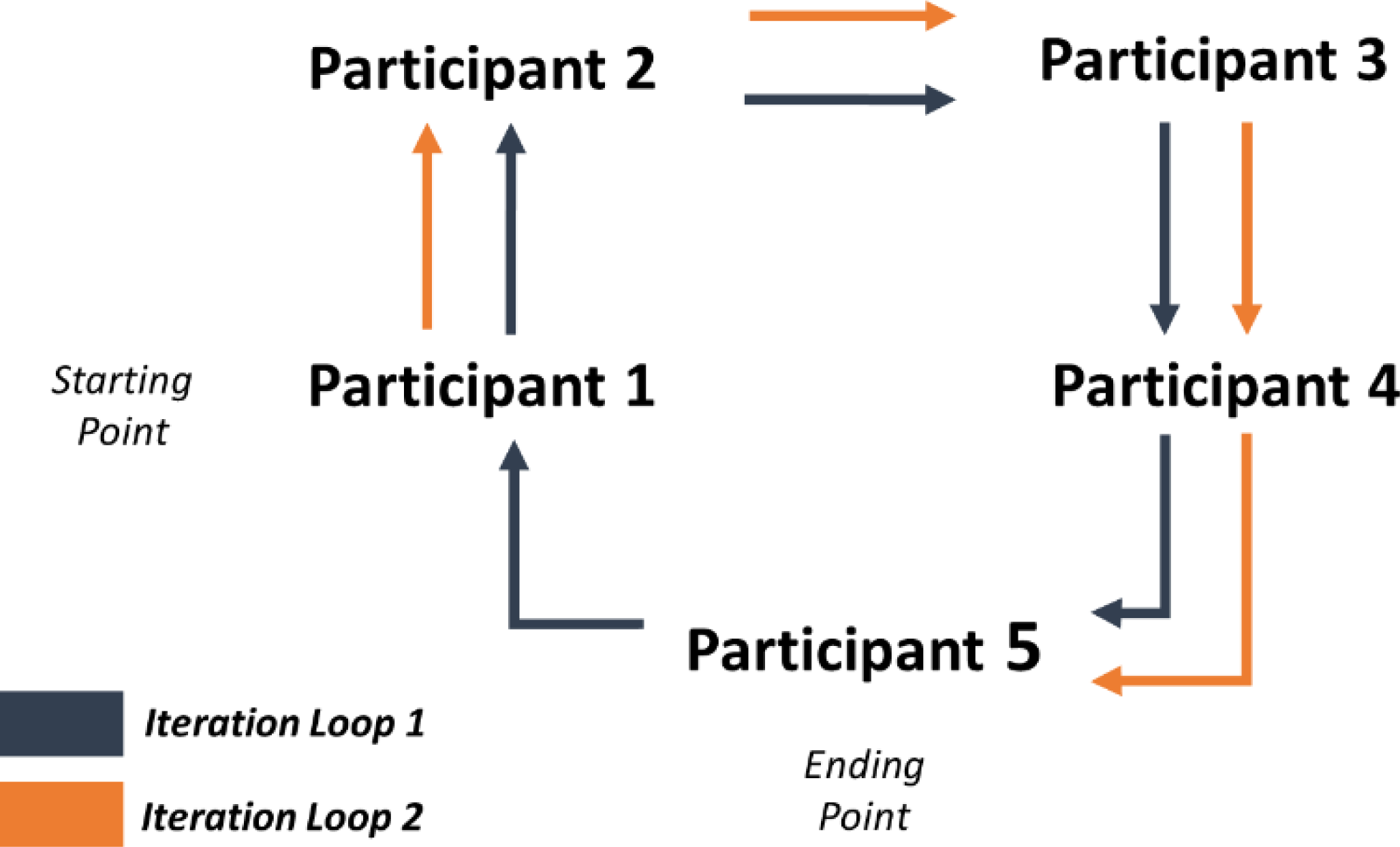
Ten participants took part in this experiment in two groups, five senior master’s students from the University of Strathclyde and five industry professionals with varied design backgrounds to ensure comprehensive insights. Industry participants had two to five years industry experience in the areas of structural engineering, geotechnical engineering, design consultancy and graphic design. An overview of the experimental process is included as Figure 1.
Experiment procedure

Task 1 replicated a design scenario which involves synchronous collaboration, where five designers collaborate on the detailed design phase of a product (Figure 2). The group of students and group of industry professionals were given the same task and instructions. Each designer was asked to sketch and annotate on a domestic product (a toaster) with the aim to evaluate and improve the design.
Experiment idea iteration order

Designers had five minutes each to individually sketch or annotate the product idea in a collocated space before passing it to the next designer. They did not communicate between ideation sessions. This time constraint allowed each participant to influence the design while maintaining a sense of urgency, representing real-time collaboration. The process followed a loop, emulating a standard design iteration where after each turn, designers presented their work to the next participant, facilitating group discussion and input. This cycle continued for a second round, allowing for continuous iterations and the option to edit previous work or introduce new ideas.
Task 2 simulated asynchronous collaboration, resembling work across different time zones. The same task and instructions were provided to both groups this time with the domestic product (a vacuum cleaner). Designers worked independently in a distributed space, collaborating solely through sketches or annotations on the design documentation. Participants were requested to return their designs within two days.
Both tasks share similar requirements tailored for each product, simulating the detailed design phase. To focus on detailed design aspects, participants were asked to focus on making annotations related with two design for X (DfX) principles, design for functionality and design for aesthetics. These were chosen to suit the expertise of the professionals involved in the study.
3.1. Questionnaire design
After each task, the participants were given a questionnaire collecting qualitative and quantitative data to answer the research questions. The questions were:
-
Task 1
1. Describe your experience of collaborating on the detailed design process for this task?
2. What could have made the collaboration between the designers more efficient and a better overall experience for this task?
3. Have you done detailed design on a product before?
4. How easy did you find collaborating on detailed design of this product in Task 1?
-
Task 2
1. Describe your experience of collaborating on the detailed design process for this task in comparison with Task 1?
2. Which study worked better for you and why?
3. What could have made the collaboration between the designers more efficient and a better overall experience for this task?
4. Which study did you find easier to collaborate on; Task 1 or Task 2?
5. How easy did you find collaborating on the detailed design of this product in Task 2?
4. Results
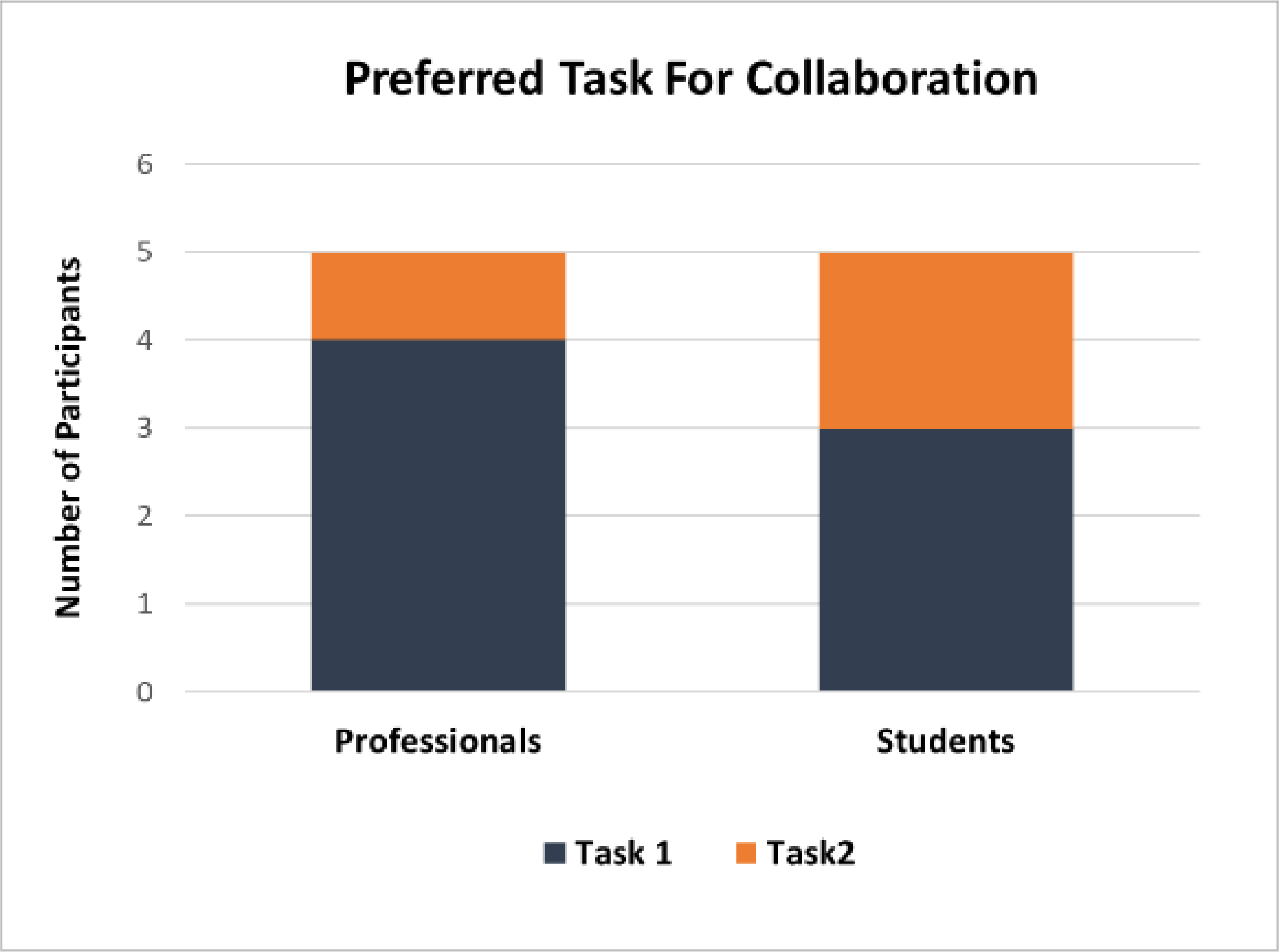
In response to Task 2 question 2, the majority of the industry professional participants preferred Task 1 (4/5), compared with three student participants (3/5). Considering both groups collectively, there is a clear inclination towards Task 1 (Figure 3), indicating a prevailing preference for the synchronous design collaborative experience.
Preferred task for collaboration - professionals vs students

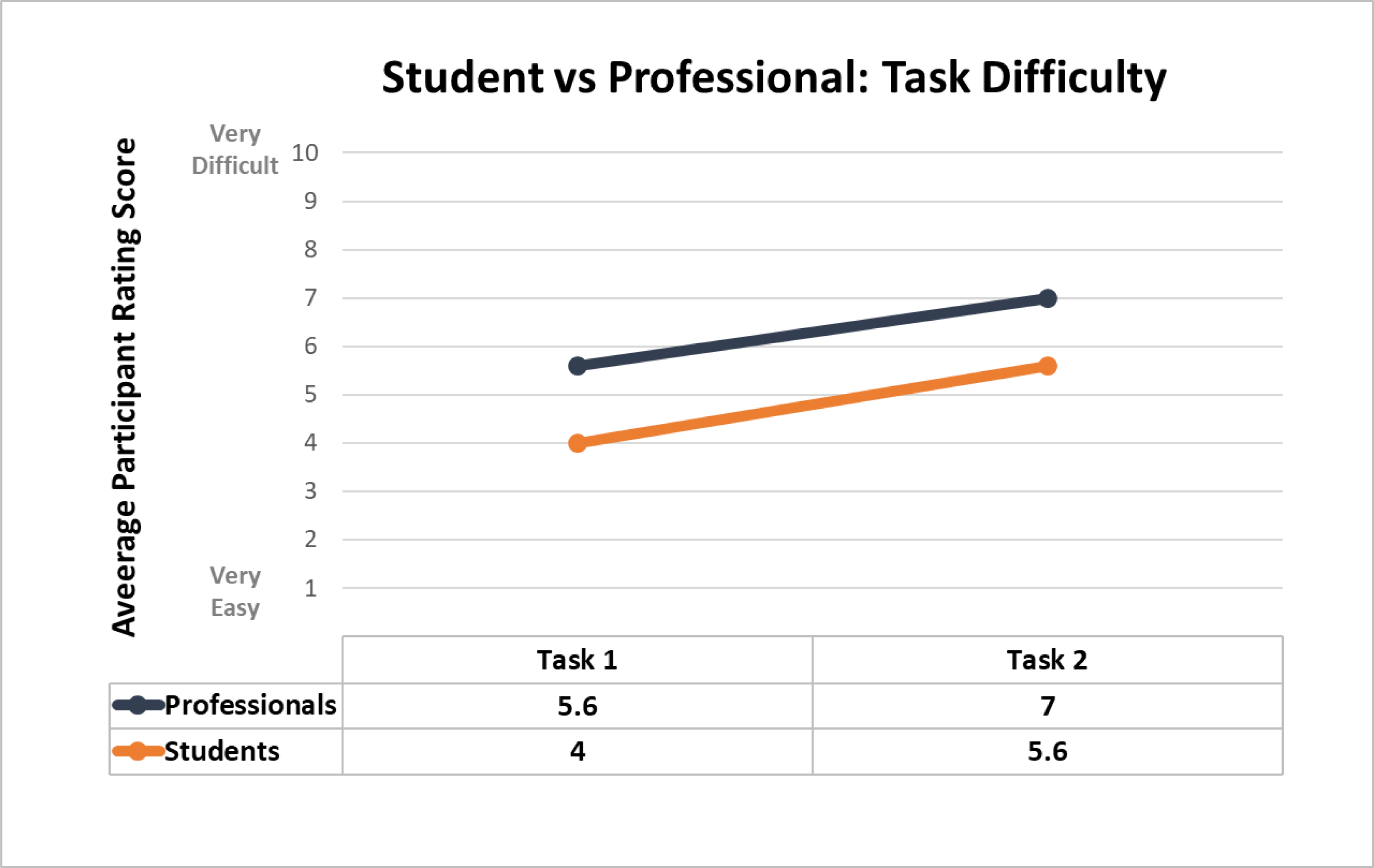
Participants rated Task 1 and Task 2 on a 1 to 10 scale in response to Task 1 Question 4, and Task 2 Question 5. Where 1 was ‘Very Easy’ and 10 was ‘Very Difficult’. Students found Task 1 of average difficulty (4), compared with Task 2 of average difficulty: (5.6). Industry professionals rated Task 1 of average difficulty (5.6), compared with Task 2 of average difficulty: (7). Indicating a consensus that Task 2, posed a significantly greater challenge to both groups of participants. The results also highlight that the professionals perceived both tasks as more demanding than students (Figure 4).
Task difficulty rating - professionals vs students

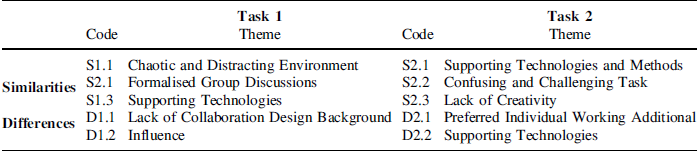
Furthermore, the survey included written questions aimed at prompting qualitative feedback for each of the three research questions. The responses yielded intriguing insights, revealing key themes (Table 1) agreed upon by participants within each group or by both groups.
Key themes from study

5. Discussion
This study reveals new knowledge and suggests avenues for further research on collaborative design across time zones. Despite limitations in emulating cross-time zone collaboration, both qualitative and quantitative research highlighted challenges, especially in asynchronous collaboration, the method simulating cross-time zone collaboration.
5.1. RQ1: can collaboration across time zones be effective for designers and what role does technology play in this?
Task 2, embodying an asynchronous approach, emerged as a common challenge for both students and professionals, underscoring challenges in collaboration. the majority of participants preferred the synchronous experience. Qualitative feedback aligned with the quantitative data, where both groups explained synchronous design was a more enjoyable collaborative experience. A student’s perspective captured this sentiment: “Communicating directly with other designers really helped the flow of designing.” However, a conflicting argument for synchronous design revealed that some participants from each group acknowledging the collaborative challenges arising from numerous designers offering diverse inputs creating a chaotic process (S1.1). The unpredictable environment during the synchronous task aligns with the preference of some participants for independent work, as offered by the asynchronous experiment. Individual designer preferences were revealed, with some valuing the autonomy of individual work (D2.1). Notably, designers who enjoyed the asynchronous mode typically engage in remote design work, similar to the asynchronous task’s scenario. This raises the question: Would a study with in-person designers in collaborative teams yield comparable results, given similar tasks? Previous research would suggest similar results.
Both groups acknowledged challenges working asynchronously identifying areas for technology development, or methods to enhance collaboration (Figure 4). Both students and professionals agreed that both tasks would benefit from greater awareness of supporting technologies and specific digital design methodologies. Suggestions included tools like Microsoft Teams and SharePoint (S1.3 and S2.1). Professionals supported these recommendations and proposed additional tools including Padlet (D2.2). Professionals’ input reflects their industry experience with various technologies, suggesting a belief in the benefits of global collaboration. Their mention of standardised formats highlights challenges faced during detailed product design, aligning with the research of Shen et al,. (2008) stressing the critical need for standardisation in design collaboration. This resonates with professionals’ first-hand experience in the detailed design process, where one participant expressed the following: “ideas that were produced were lost by the time it came back round”, emphasising the difficulty without a standardised format. This issue could be alleviated by embracing digital design methods and specialist designed tool.
Example of collaborative outputs

The comparison between synchronous and asynchronous design collaboration produced expected results, with both groups preferring the synchronous method, aligning with research indicating designers’ preference for real-time collaboration. However, the results didn’t fully support the synchronous mode, emphasising the importance of designers’ personal preferences for effective collaboration. Acknowledging individual preferences is crucial in design projects, as designers may need specific methods and tools, influenced by their subjective approach to tasks. Participants’ technology suggestions highlight the inherent subjectivity of design across the industry, a key consideration in interpreting study findings.
5.2. RQ2: is there a measurable difference in the experiences of industry professionals and students when collaborating in different temporal modes?
Professionals perceived both tasks as more difficult than the student designers, perhaps due to their experience with the detailed design process. Despite their prior knowledge, students also found Task 2 more challenging, highlighting the difficulty of asynchronous methods in collaborative design.
Both groups suggested a common improvement for both tasks through formal group discussions (S1.2). The synchronous mode allowed free collaboration, while Task 2 restricted communication, representing asynchronous methods used by organisations across time zones. Both students and professionals acknowledged the need for formalised communication methods such as those developed Gopsill et al,. Reference Gopsill, McAlpine and Hicks(2012), highlighting that industry experience does not eliminate the necessity for structured collaboration.
In Task 1, the students exhibited a more individualistic approach, possibly due to their regular use of structured design methods with other students. The professionals, despite lacking structure, enacted a collaborative group dynamic, reflecting their regular collaboration in their job roles.
Professionals using the DfX structure for the first time (S2.2) confusing and challenging, in contrast to students, who faced challenges in collaboration rather than methodology.
A notable distinction between students and professionals lies in their interpretation of the task. Students, with a shared educational background, supported students with a shared understanding of the design task that the multidisciplined group of industry professionals did not have. In contrast, professionals, with diverse educational and professional backgrounds, acknowledged potential gaps in understanding the detailed design phase, as emphasised by a quote from one professional: “people did not consider the design that came before - maybe we did not understand what the detailed design phase was”. Professionals, tended to focus on specific DfX areas in their job role based on their expertise (D1.2). Unexpectedly, they strictly adhered to one area, unlike students who comfortably addressed several DfX requirements despite not being an expert in any. This emphasises the notion that industry experience may not seamlessly translate if designers lack comprehensive background knowledge in a specific project or area.
5.3. RQ3: what are the challenges of global collaboration during the detailed design phase and how to overcome these challenges?
Despite students having a more favourable experience collaborating on the detailed design phase in both tasks, both students and professionals encountered challenges through collaboration. A shared difficulty in both groups was the lack of creativity in Task 2 compared to Task 1 (S2.3). One professional participant emphasised this, stating, “Working in solitude on a task which has collaboration at its core felt like it defeated the purpose and eradicated any benefits that working as a unit can often bring”. This underlines a preference for synchronous collaboration.
The study aimed to explore the transfer of product design to manufacturing, emphasising practical working principles and creative solutions rather than conceptualisation. While students were more familiar with a structured design process, the assigned tasks might not have capitalised on the diversity of expertise of the student participants to effectively carry out detailed design (D1.1).
This study highlights that the absence of collaboration in the detailed design phase likely results from challenges arising when teams work on the same product requirements, especially in asynchronous collaboration.
Although the study didn’t show improved detailed design through synchronous collaboration, implementing novel technologies could enhance the process by streamlining the structured detailed design phase (D2.2).
5.4. Limitations of the study
A limitation of this study lies in the limited number of participants, constrained by participant availability and the time to conduct the study. To ensure a balance in the data, the same number of students as industry participants were included. This exploratory study has indicated that further research would clarify theories that a larger investigation across time zones could answer.
The study faced limitations related to participant types, including a narrow age range, 22 to 27 years old which is not representative of the current workforce. A more comprehensive study would involve participants of diverse age groups collaborating with professionals, considering potential differences in experience. This might also include a comparison of new and established teams. Additionally, while assessing the impact of cultural backgrounds on student and professional experiences, minimal cultural diversity was observed, given the common language, English, and residence in Scotland. Future studies would benefit from assembling a more diverse participant group to explore potential impacts and elicit varied technological suggestions across tasks.
6. Conclusions
This study aimed to uncover challenges faced by designers when employing asynchronous methods for collaboration across diverse time zones. To achieve this, a research methodology was devised, involving an extensive review of literature encompassing collaborative design. The initial phase included a broad examination of research papers, progressively narrowing down to relevant ones, which revealed a distinct knowledge gap. This gap is specifically related to the comparative analysis of synchronous versus asynchronous collaboration methods for designers operating in different time zones.
Furthermore, the literature review brought to light a lack of research exploring the distinctions between students pursuing design-related degrees and professionals engaged in the design industry. Consequently, the study focussed on the collaboration dynamics of these two groups during the detailed design phase of a product.
An experimental framework was developed, encompassing two collaborative design exercises that covered the detailed design phase of two different household products. The first task focussed on synchronous collaboration, while the second was centred around asynchronous methods. Two distinct groups were formed, comprising design students and professionals from the design industry.
The outcomes of this research unveiled converging perspectives between design professionals and students on the challenges associated with collaboration across time zones using asynchronous methods. Notable areas of agreement include difficulties in design interpretation and the absence of structured communication. The first-hand experiences suggested by the participating designers mirror the challenges documented in prior research within this domain.
A noteworthy finding emerged from the comparison of students to professionals, revealing that the level of industry experience has a negligible impact on the ability to excel in a design task that is new to the participant. Where both groups unanimously acknowledged the difficulty of collaborating on the detailed design phase of a product. This highlights the existing successful standard procedures organisations adopt, where experts specialising in different fields intricately detail sections of a product before collaboratively ensuring cohesion in the final design.
This work adds novel insights by comparing synchronous versus asynchronous collaboration across time zones and pinpointing technologies tailored to the detailed design process, based on participants’ recommendations.



 Open access

