

INTRODUCTION
“The spirit of UBUNTU, that profound African sense that we are human only through the humanity of other human beings – is not a parochial phenomenon, but has added globally to our common search for a better world”. (Mandela, Reference Mandela2010: 133)
The aim of this research is to explore challenges and opportunities confronting members of the Sudanese refugeeFootnote 1 community based in the Local Government Area (LGA) of Blacktown, a suburb in Sydney, Australia. It sets out to explore social initiatives along with key elements that are considered essential to supporting a business opportunity focused on finding employment for unemployed female members within this community. Using an interpretive ethnographic approach (Manson, Reference Manson2003: 91), this study includes data from both primary and secondary data sources. Individuals from a supporting not-for-profit organisation were interviewed to provide greater insight into challenges and opportunities that could potentially benefit these female Sudanese refugees. This study seeks answers to the following questions:
A. What type of social initiatives related to reducing unemployment, have the potential to benefit female members of the Sudanese refugee community based in Sydney, Australia?
What are key considerations to the development of a business opportunity in support of this community?
This paper is structured as follows: first, the nuances of Australia's humanitarian policy, the history and current status of the Sudanese community in Australia, along with the context of the challenges facing female members of this community are explored. The methodology explained, followed by a review of the relevant elements for the formulation of business considerations for Sudanese women refugees in this context. Next, the not-for-profit organisation known as SAIL (Sudanese Australian Integrated Learning) involved in this community, along with the interview findings, are described in detail. The discussion integrates the contextual issues and the research findings with an overview of the business opportunities for these refugees. Last, further research directions and the limitations of the study are summarised.
CONTEXTUAL UNDERSTANDING OF CHALLENGES
Australia's Humanitarian Program (AHP)
Australia is a nation of ~22.3 million people, and since 1945 has granted ~7 million permanent migration visas. Thus, ~45% of all Australians today were born overseas or have at least one parent born oversees (DIAC, 2010a). This immigration policy is made up of two distinct components (DIAC, 2010b). The first, which has an economic objective has seen Australia's annual intake of immigrants increase significantly over the past 10 years: from ~81,000 in 2000 to 169,000 in 2010 (DIAC, 2010b). The second component is focused on granting visas based on humanitarian needs (DIAC, 2010b).
The AHP currently has an annual allocation of ~13,500 humanitarian visas with about 50% through referral by the United Nations High Commissioner for Refugees (UNHCR), and the balance through AHP (DIAC, 2010b; UNHCR, 2012). Visas under this system are classified as either onshore protection, for people who already reside in Australia (e.g., asylum seekers), or offshore resettlement, for people who do not reside in Australia. Under the offshore resettlement component of AHP, the subclass-202 visa (Global Special Humanitarian Program Visa) was introduced in 1981, and established to provide a humanitarian response for relatives of refugees, who were not classified as refugees by the UNHCR, but were subject to substantial discrimination resulting in a gross violation of their human rights within their home country (DIMA, 2001; DIAC, 2010b; Commonwealth of Australia, 2011).
Acknowledged as a world leader for having established one of the best refugee settlement programmes (ROCA, 2009; UNHCR, 2009), AHP's objective is to enable refugees to effectively re-establish themselves within the Australian community (DIAC, 2010b). The services under this programme that are usually offered to refugees for a period of up to 6 months after arrival: assistance with searching for accommodation; providing basic household goods; counselling to victims of torture and trauma; providing information concerning the cultural, social and legal aspects of living in Australia; and 510 hours of free English tuition. In addition, funding is allocated to programmes focused on strengthening the relationship between refugees and the community: 24-hr free translating and interpreting services; with funding grants available to not-for-profit agencies delivering programmes assisting resettlement.
A critical review of AHP
In 1981, the Refugee Council of Australia (RCOA) was formed to promote the adoption of policies specifically supporting humanitarian entrants, and commended Australia for its role in international protection. However, Australia needs to consider a more holistic approach to refugee resettlement to encourage greater synergy between government departments and to shift the approach from one of ‘care and maintenance’ to recognising refugees as a ‘resource, rather than a burden’ (RCOA, 2009: 8). The effectiveness of the existing programme – specifically in relation to the subclass-202 visa – has been challenged as some settlement services are considered inappropriate or ineffective. There is also a financial burden and emotional distress placed on both the applicant and their sponsors, who often continue to support the subclass-202 visa recipient after arrival in Australia (Pittaway, Muli, & Shteir, Reference Pittaway, Muli and Shteir2009; RCOA, 2009). Although this visa provides significant benefits, as it helps ‘rebuild links broken by war and persecution and contributes to the strengthening of new and emerging communities in Australia’ (RCOA, 2008: 17), it does not entitle entrants on this visa to all services offered by AHP, and requires entrants to be fully sponsored and fund their own travel (RCOA, 2008; 2009).
Refugees under this visa usually arrive in Australia with significant debt and often this results in them having to live with their sponsors. In most cases, the sponsors were also refugees who arrived earlier and are also struggling with the challenges of resettlement. The impact of this situation places a burden on the refugee and their sponsor, as well as Australian society, as these entrants predominantly settle in the same geographic location creating conditions of extreme disadvantage as they tend to live in ‘overcrowded conditions’ with some ‘subjected to exploitive conditions, sometimes verging on debt bondage’ (RCOA, 2008: 18). In addition, it is suggested that access to additional support ‘would help address the dangers of power imbalances and potentially exploitative relationships between proposers and entrants… especially… for women’ (RCOA, 2008: 30).
These critical observations raise concerns about how much this lack of support of humanitarian entrants potentially contributes to a high risk of vulnerability for those settling in areas of Australia already classified as having significantly disadvantaged communities. On the whole, this burden culminates in a wide number of challenges: poverty; housing stress and overcrowding; homelessness; discontinuation of schooling; bad credit ratings, etc. (RCOA, 2008).
The focus of this paper is on one group of humanitarian entrants. These are the Sudanese from Africa who predominantly settle in groups in major Australian cities and struggle with societal integration and finding permanent employment. A brief history of their situation helps build the context of this racially and linguistically diverse people in their new land, and sets the framework for business opportunities for one sector of this community.
History of the Sudanese people
Sudan, in the northern part of Africa has struggled to unify its territories amidst a turbulent past of invasion, occupation and the slave trade (Collins, 1976). Sudan is the largest country in Africa (CIA, 2009) and includes unique cultures within a single territory. Although Arabic is the official language, the ethnic complexity is underpinned by as many as 400 other languages and dialects (DIAC, 2007). Ethnicity of the ~45 million Sudanese is generally grouped into four categories: 52% considered Africans; 39% Arabs; 6% semi-nomadic; and the remaining 3% classified as foreigners (DIAC, 2007; CIA, 2009).
In 1983, a civil war displaced as many as 4 million Sudanese and resulted in more than 2 million deaths over a 20-year period. A separate conflict in 2003 displaced about 2 million people and caused up to 400,000 deaths (DIAC, 2007; CIA, 2009). South Sudan separated from Sudan to become an independent country on 9 July 2011 (SSRA, 2009).
Challenges confronting Sudanese in Australia
Since 1991, an estimated 28,417 Sudanese have relocated to Australia (Figure 1). Of this number, 26,347 have been granted visas under AHP, with just over 65% issued subclass-202 visas, that is, the Global Special Humanitarian Program Visa (Figure 2). A major challenge faced by Sudanese refugees with this visa is their level of English proficiency, with the majority (~78%) classified as either having nil or poor English (Figure 3). Since English is the national language of Australia, it is a fundamental requirement for integration into the wider community and for finding long-term gainful employment.
Sudanese by migration stream, since 1991, adopted from Settlement Reporting Facility (DIAC, 2011)

Sudanese by visa subclass, adopted from Settlement Reporting Facility (DIAC, 2011)
Sudanese by English proficiency for visa subclass-202, adopted from Settlement Reporting Facility (DIAC, 2011)
A study of the settlement patterns of Sudanese people within Australia demonstrated a preference for location within metropolitan areas, with most settling in New South Wales and Victoria (Figure 4). The preference for humanitarian entrants to settle in the same geographic locations is believed to be due to dependency on family and community networks who offer the support needed to overcome limited access to accommodation, information, services and due to the financial burden of travel loans (RCOA, 2008; Phillips, Reference Phillips2010). Within New South Wales, Blacktown is the most popular settlement location with an estimated 2,481 Sudanese, of which 1,313 have the subclass-202 visa (Figure 5).
Sudanese by Australian state, adopted from Settlement Reporting Facility (DIAC, 2011)
Sudanese in Blacktown, by visa subclass, adopted from Settlement Reporting Facility (DIAC, 2011)
Blacktown's support of the Sudanese community
Blacktown, which is said to have inherited its name from ‘a native institute established at Plumpton in the 1820s to teach local aboriginals European ways’ (Australian Air League, 2008), is situated ~35 km from Sydney's Central Business District with an estimated population of over 290,000 (City Council of Blacktown, 2011). It is recognised as the largest growing LGA in New South Wales in 2009, with cultural diversity represented by an estimated 184 countries with ~156 languages (City Council of Blacktown, 2010; 2011). There is a shortage of services supporting new and emerging communities in Blacktown, in particular: Sudanese; Afghani; Iraqi; Liberian; Iranian; and Sierra Leoneans (City Council of Blacktown, 2009).
Employment challenges facing the Blacktown Sudanese refugee community
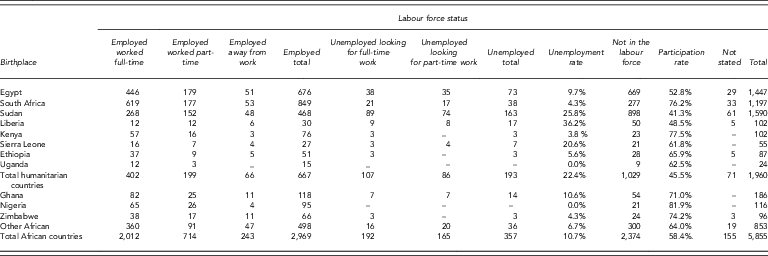
The Australian Human Rights Commission's (AHRC) study on human rights and social inclusion issues affecting African Australians found that ‘finding paid work is considered vital to the successful settlement and integration into the Australian community’ (AHRC, 2010b: 10). The ability of refugees to find employment is crucial as ‘[l]abour market participation is known to be a key factor affecting the settlement of refugees’ (Bloch, Reference Bloch2000: 75). This imperative for successful integration raises concern when considering the latest Australian census data (2006; Table 1), indicates an estimated 25.8% unemployment rate for Sudanese in Blacktown. Although these statistics are not current, for the purpose of this study, this high unemployment rate is considered indicative of the present situation for three reasons: first, because of some of the significant challenges faced by refugees within this local community (Blacktown, 2009); second, the indication that there is insufficient services supporting this community (Blacktown, 2009) and finally, the fact that Blacktown's LGA is identified as one of 20 Priority Employment Areas within Australia (Commonwealth of Australia, 2010). Priority Employment Areas are considered as the most ‘vulnerable to unemployment during economic down turn’ (Commonwealth of Australia, 2009: 2).
2006 census of population and housing: country of birth by labour force status, for persons aged 15+ years, for African communities who usually reside in the city of Blacktown (Australian Bureau of Statistics, 2006)
Numerous reports highlight the challenges confronting refugees in finding employment within Australia (Colic-Peisker & Tilbury, Reference Colic-Peisker and Tilbury2006; Casimiro, Hancock, & Northcote, Reference Casimiro, Hancock and Northcote2007; RCOA, 2008, 2010; Blacktown, 2009; Pittaway & Muli, Reference Pittaway and Muli2009; SAIL, 2009; AHRC, 2010b). These include a report submitted to the AHRC from Sudanese members of a not-for-profit organisation located in Blacktown, that emphasised the ‘lack of English’ and the need for ‘work experience’ as two major obstacles to finding employment (SAIL, 2009: 5–10). The lack of English proficiency is not only seen as a ‘significant barrier to employment’, but also a challenge to successful resettlement as it contributes to feelings of ‘isolation and a lack of belonging’ (Casimiro, Hancock, & Northcote, Reference Casimiro, Hancock and Northcote2007: 60–61).
Further to this, there is a perception that being African in Australia limits opportunities because of employer discrimination as ‘(they) have lied about job availability and given jobs to non-Africans’ (SAIL, 2009: 6). Employment practices based on racial discrimination among Australian employers is not seen as uncommon (Colic-Peisker & Tilbury, Reference Colic-Peisker and Tilbury2006). In fact, Colic-Peisker and Tilbury (Reference Colic-Peisker and Tilbury2006) suggest that there exists a segmented labour market in Australia that confines African refugees to jobs typically within the secondary labour market. These are mainly ‘low-status, low-paid, dead-end, insecure jobs and, in many cases, also physically taxing and unhealthy’ jobs, which employ refugees regardless of their level of qualification(s) (Colic-Peisker & Tilbury, Reference Colic-Peisker and Tilbury2006: 217).
Proof of qualification is also seen as a major obstacle to finding employment, especially as ‘University degrees gained while in Sudan are not generally recognised in Australia… Sudanese must often find employment skills courses to gain recognised qualifications’ (SAIL, 2009: 10). Some refugees do have relevant qualifications and work experience, however, they may not have documents to support their claim. In addition, qualifications awarded elsewhere may not be recognised in Australia and consequently many require re-certification before employment, which is usually cost prohibitive for the refugee (AHRC, 2010b; RCOA, 2010). Even after overcoming the obstacle of completing the necessary training for employment, members of the Sudanese community are confronted with difficulties as ‘they [Sudanese] have been told that they must have work experience to be considered for employment’ (SAIL, 2009: 10). It is also suggested, for those humanitarian entrants who arrive in Australia with some level of qualification or work experience, that although their employability improves, their ability to find work at the relevant level does not improve over time, despite updating their qualifications (Colic-Peisker & Tilbury, Reference Colic-Peisker and Tilbury2006).
Sudanese community members have also suggested that there is a low level of success finding employment through the Federal government's Job Services Australia network of agencies (JSA-agencies); instead refugees have reported having greater success through word-of-mouth (SAIL, 2009). Reports of the JSA-agencies being unable to effectively support the refugee community are not new (Torezani, Tilbury, & Colic-Peisker, Reference Torezani, Tilbury and Colic-Peisker2006; RCOA, 2010).
The ‘lack of ability for women in the Sudanese community to find employment can put additional strain on their families’ and ‘[i]f there were more opportunities and services to assist women obtaining employment, then heavy financial pressures faced by refugee families may be reduced’ (SAIL, 2009: 6–10). This is supported by the recent statement by the Nobel Peace Prize Committee: ‘We cannot achieve democracy and lasting peace in the world unless women obtain the same opportunities as men to influence developments at all levels of society’ (2011). In addition to the burden of finding employment for refugees, and specifically for Sudanese women, are the challenges associated with available childcare and limited public transportation, as well as the costs of obtaining an Australian Driver's Licence (SAIL, 2009; RCOA, 2010).
In response to these challenges faced by humanitarian entrants in gaining work in Australia, the RCOA undertook a study of the barriers in an attempt to find solutions to this issue. One of their recommendations was the development of a National Refugee Employment Strategy to target ‘meaningful’ and ‘sustainable’ employment for all refugees with ‘initiatives tapping into the entrepreneurial spirit of former refugees through social enterprise and small business development’ (RCOA, 2010: 3–5). The process of integration involves all of society (Ager & Strang, Reference Ager and Strang2008), including business and that ‘while government should lead, integration involves public bodies, community and religious leaders, the education system, voluntary organisations, employers and trade unions and all sectors of society’ (O'Neill, Reference O'Neill2001: 97).
Business opportunities for a social purpose
One of the possible solutions to this situation is to identify business opportunities for the Sudanese women. The aim is to combine a measure of value such as in social entrepreneurship while undertaking for-profit activities (Dees, Reference Dees1998; Pomerantz, Reference Pomerantz2003; Seelos & Mair, Reference Seelos and Mair2004; Spear, Reference Spear2006; Martin & Osberg, Reference Martin and Osberg2007). Although there is a perspective that social entrepreneurship provides opportunity to ‘stimulate ideas for more socially acceptable and sustainable business strategies and organisational forms’ (Seelos & Mair, Reference Seelos and Mair2004: 241), there is much controversy surrounding the value of embracing this type of approach (Davis, Reference Davis1973; Zahra, Gedajlovic, Neubaum, & Shulman, Reference Zahra, Gedajlovic, Neubaum and Shulman2009). On one extreme, there are suggestions that this is not an effective solution for unemployment, because it shifts responsibility of reform – needed to overcome society's problems as a whole – by lessening government responsibility in favour of pressuring individuals to ‘conform to values determined by social entrepreneurs on behalf of the community’ (Cook, Dodds, & Mitchell, Reference Cook, Dodds and Mitchell2003: 68). To another extreme, others believe social entrepreneurship has the potential to better serve the needs of future generations through ‘new collaborative efforts that are in the corporations’ own economic interest, while at the same time creating social value for those who need it most’ (Seelos & Mair, Reference Seelos and Mair2004: 246). Yet again, there are others who focus on the benefits to the local community by defining ‘Social entrepreneurship as a locally based enterprise hiring local people, boosting self-employment, and forming economic alliances with local for profits and not-for-profits’ (Pomerantz, Reference Pomerantz2003: 26). Although it is outside the scope of this study to expand on the debate defining social entrepreneurship, the differing views in the literature provide a valuable contribution to this study as they draw attention to implications of business opportunities by requiring careful consideration for both short-term and long-term effects of any opportunities introduced into a community.
METHODOLOGY
Overview
Governed by the focus of this study, which essentially seeks to explore challenges and opportunities confronting unemployed female members of the Sudanese refugee community, an interpretive ethnographic approach was used as the phenomenological method. The reason for adopting this qualitative approach was to make use of a method that ‘provides insights about a group of people and offers us an opportunity to see and understand their world’ (Boyle, Reference Boyle1994: 183), but also make use of an ‘interpretive approach’, which aims to extract meaning through exploring ‘people's individual and collective understandings’ (Manson, Reference Manson2003: 56). Using this approach provided an ‘insider view’ into the challenges and potential opportunities identified by members of a not-for-profit organisation established to support the Sudanese refugee community. The interview participants involved in this study were members of SAIL ‘The Sudanese Australian Integrated Learning Program’, who work with the refugees, but are not Sudanese refugees themselves.
Established in 2001, this ‘volunteer-run, not-for-profit, secular organisation… provides free English tutoring and community services to the Sudanese Australian community’ (SAIL, 2011). This organisation is funded by private donors and ~450 volunteers, to provide support to over 500 members of the Sudanese community in Sydney, Melbourne and Perth.
The interview participant group was identified as informed experts on the activities of SAIL and selected from the most senior members within two SAIL campuses in Blacktown and the adjacent suburb of Seven Hills. Each of the four participants had been with SAIL for between 3 and 10 years, with the amount of time each participant volunteered varying significantly from 2 to 3 hr/week to as many as 25 hr/week. This group are all ‘typical’ Australians; one male and three females, with three in the age group 25–30 years, and the other over 50 years old. All have held various positions at SAIL, including governing activities associated with effective coordination and management of activities.
The methodology developed for this study was completed in three interactive stages: Secondary Data Selection and Analysis; Primary Data Collection and Analysis; and Business Opportunity Considerations (Figure 6). Although each stage is diagrammatically represented as having a sequential flow, the activities of each stage were executed in an iterative manner with the data collected in each stage reviewed in the light of the findings of any previous and subsequent stage(s).
Research methodology
Throughout this study, the review of literature and analysis of data was an ‘ongoing process’ (Richards, Reference Richards2005) that employed a variety of approaches to ‘provide greater breadth and depth to our understanding’ (Benoit & Holbert, Reference Benoit and Holbert2008: 615). This was combined with data triangulation (Denzin, Reference Denzin1970) to continuously verify results through ‘checking findings against other sources and perspectives’ in an attempt to ‘reduce (any) systematic bias’ (Patton, Reference Patton1990: 563) ‘that comes from single-method, single-observer, single-theory studies’ (Denzin, Reference Denzin1970: 313). For example, when examining data relating to AHP from the DIAC's website, other sources were also considered, for example, RCOA and UNHCR.
The data collected in this study was analysed using an abductive approach. This refers to the iterative way in which a combination of deductive logic and inductive reasoning were applied to the data (Ezzy, Reference Ezzy2002; Manson, Reference Manson2003; Atkinson & Delamont, Reference Atkinson and Delamont2005; Krippendorff, Reference Krippendorff2013). Abduction applies theory to the data, followed by interpreting patterns from within the data allowed for ‘some curious circumstance, which could be explained by the supposition that it was the case of a general rule’ (Peirce, Reference Peirce1965: 642), to be adopted as the ‘general social processes or ‘rules’ that may apply to particular observations’ (Ezzy, Reference Ezzy2002: 14). Once these rules were recognized, they were ‘tested through more rigorous deduction and induction’ (Ezzy, Reference Ezzy2002: 14) in order to extend greater certainty to the claim of the data. Finally, for each stage of the research, data were reviewed in order to identify key business elements from theory that related to business opportunities (Ardichvili, Cardozo, & Ray, Reference Ardichvili, Cardozo and Ray2003; Johnson, Christensen, & Kagermann, Reference Johnson, Christensen and Kagermann2008). In addition, business elements that emerged from the secondary and primary data were also identified, and then combined with theory in order to develop the business opportunities for consideration.
Stage 1: Secondary data selection and analysis
This stage focused primarily on gathering the secondary data necessary to lend context to the challenges confronting the Sudanese refugee community based in Blacktown. Data were from disparate sources: academic literature; organisational websites and publications; Government websites and databases; media articles; and the Australian Bureau of Statistics. This stage was exploratory and lent greater clarity to qualifying the research questions.
The decision to select SAIL for this study was also part of this stage of research. Secondary data on SAIL were gathered to provide context to the underlying principles and strategic intent governing this organisation. One of the author's involvement with SAIL as a volunteer over the past two and a half years years provided the advantage of being able to leverage existing relationships within the organisation where trust had already been established through a number of strong contacts. Further to this, the authors’ desire to focus on female unemployment within the Sudanese refugee community was largely influenced by involvement with members of this community that attend SAIL. A recent study on social inclusion issues affecting African Australians (AHRC, 2010b) held representation from members of the Sudanese community that attend SAIL, and this also influenced the decision to focus on this social issue.
Using NVivo 8 (QSR International, 2008), secondary documents were analysed for potential themes found in the academic literature. Once themes were identified, they were coded and tagged with descriptive comments (Charmaz, Reference Charmaz1995). Examples of such themes included: ‘limited support for Australian humanitarian entrants’ and ‘limited employment for refugees with low English proficiency’. Next, this information was reviewed to identify other themes that emerged from the data itself, and then coded. This combination of deductive and inductive reviewing of the data was used in an iterative fashion throughout this study.
Stage 2: Primary data collection and analysis
This stage supported the development of a set of questions formulated to take into account the issues relating to unemployment for females, along with challenges of a lack of Australian work experience among Sudanese refugees. These themes relating to unemployment were initially influenced by information in the AHRC study on human rights and social inclusion issues affecting African Australians (AHRC, 2010a). The interviews included open-ended questions in order to ‘enable the researcher to understand and capture the points of view of other people without predetermining those points of view’ (Patton, Reference Patton1990: 21), focusing on the identified challenges and potential opportunities confronting the community. The following questions formed part of the interviews: What would you consider a potential service or opportunity that may be extended to the Sudanese refugee community in order to support the need to gain practical Australian work experience? Why?; Do you believe that some of these ideas may be integrated as an essential service to be provided by SAIL?; What in particular allows/disallows this service from being integrated with SAIL's existing program?
Data were collected during the latter half of 2011 through a series of in-depth exploratory interviews with key informants in SAIL, aimed at leveraging their knowledge, experience and ideas relating to the challenges of this community. Interview participants were selected based on their leadership role within SAIL in Blacktown (including their contribution to decisions on funding allocation).
These interviews provided the interviewer with detailed data that would otherwise be inaccessible through general enquiry (Yin, Reference Yin2009) as information gathered from these interviews was not intended to be used as a generalisation of challenges and opportunities, but rather to gain insight into those social initiatives and business elements considered critical by the decision makers in SAIL that could then aid the future developments in support of female members of this community. Following each interview, field notes were compiled with these entries recorded in a reflective journal. The purpose of these notes were to lend greater context to each interview by appreciating ‘individual and collective meanings’ of participant views, through providing greater accuracy to the interpretation of meaning by being ‘clear on the distinction between what the interviewees said’ and what was ‘interpreted’ (Rubin & Rubin, Reference Rubin and Rubin2005: 204).
First, the content of the transcripts were analysed using themes from the academic and other literature, and then emerging themes (such as ‘lack of English proficiency’, ‘program logistical issues’, etc.), arising from the data itself were identified. Lastly, the transcripts were reviewed as a whole to further analyse and code for the emergence of collective themes. Finally, further analysis and coding was performed on the relationships between the individual and collective themes emerging from the transcripts (Strauss & Corbin, Reference Strauss and Corbin1990). Throughout this process, the notes and transcripts from each interview were compared and reviewed several times in order to identify information inherent within the data.
Stage 3: Business opportunity considerations
The final stage of this methodology was exploratory forming part of this research pilot that will frame a more in-depth study in the next phase of this research. Information collected in the previous stages was reviewed with a focus on selecting the data identified as key business elements because of their association with business opportunity concepts (Spear, Reference Spear2006; Bradach, Tierney, & Stone, Reference Bradach, Tierney and Stone2008; Johnson, Christensen, & Kagermann, Reference Johnson, Christensen and Kagermann2008). The purpose of this review was to identify key considerations in relation to the future development of a business opportunity. This involved a three-step process: first, identify business elements; second, identify themes; and third, formulate key considerations based on the association between identified elements and themes.
Identify business elements
The first step in identifying business elements focused on a review of secondary data collected in Stage I in order to ascertain those elements associated with business opportunities. All journal entries and field notes compiled throughout each stage of this study were reviewed for relevant data and then a list of business elements was refined by selecting only data associated with themes related to business opportunities (Ardichvili, Cardozo, & Ray, Reference Ardichvili, Cardozo and Ray2003; Shepherd & DeTienne, Reference Shepherd and DeTienne2005; Johnson, Christensen, & Kagermann, Reference Johnson, Christensen and Kagermann2008).
Data association and formulation of business considerations
Following the identification of business elements related to business opportunities that could aid unemployed Sudanese women refugees in Blacktown, the next step was to formulate considerations based on these data. The business elements that were identified (such as ‘perceived social value’), were cross-checked against themes coded from the data gathered in Stage 2 (such as ‘programs must align with community intentions’), in order to find associations that may be key considerations in relation to potential business opportunities. As it is beyond the scope of this study to debate business concept definitions, the connections between data for this stage of the study are based on a loose association of terms for the purpose of exploration.
Once the links between key business elements and emerging themes within the data were made, the key considerations were formulated. For example, ‘the level of community engagement is often used to determine the social value of a business opportunity’. These considerations were checked against theory related to business opportunity development and community programme development (Dees, Reference Dees1998; Guclu, Dees, & Anderson, Reference Guclu, Dees and Anderson2002; Ardichvili, Cardozo, & Ray, Reference Ardichvili, Cardozo and Ray2003; Johnson, Christensen, & Kagermann, Reference Johnson, Christensen and Kagermann2008; Westoby, Reference Westoby2008), in order to determine if a similar view was held and to aid identification of constraints and limitations.
FINDINGS AND DISCUSSION
The information gathered from the secondary data was used to develop the research questions for this exploratory study. Theory identified in the academic papers was integrated with the information emerging from secondary data for the interview questions. These interviews captured the opinions of members of SAIL who have actively engaged in working with the Sudanese community and provided the basis for identifying social initiatives related to providing employment for females of this community. They also provided the basis for identifying key considerations for the future development of business opportunities.
Employment challenges and opportunities for this Sudanese community
A. What type of social initiatives related to reducing unemployment, have the potential to benefit female members of the Sudanese refugee community based in Sydney, Australia?
Considerations around initiatives in support of business opportunities for the Sudanese refugee community attending SAIL in Blacktown, were ‘…more and more it's about how can we find employment for these families’ (SAIL Interviewee, 2011). All interview participants considered English language proficiency as one of the greatest challenges facing these Sudanese women. Based on the information received from the interview participants, three major themes emerged. This identified where attention needs to be placed when considering the potential opportunities that could offer the best access to employment.
Utilising existing skills
Emphasis was placed on the need to ‘start looking for other opportunities’ by using ‘people's skills that they have, that do find a niche in the market’ (SAIL Interviewee, 2011). In particular, ‘areas in the market place where… language can be less, less of an issue’, and can utilise skills such as ‘farming and cooking’; ‘artistic skills’; ‘exploring what kind of informal home-based work might be available to them [Sudanese women]’ to assist in starting a small business (SAIL Interviewee, 2011). These skills were considered to be ‘mainly cultural’ and as a consequence, there was a belief that ‘using skills that they [Sudanese women] already have, even if they get paid for it, is still only going to take them to a certain point’ and will limit the prospect of the Sudanese women gaining ‘long-term… job opportunities’ (SAIL Interviewee, 2011).
Other suggestions focused on establishing a ‘program which can aim to create jobs’ (SAIL Interviewee, 2011). However, this type of initiative was more capital intensive and required the support of external business management skills to assist with activities like establishing a café or restaurant that would support a ‘system approach where you have people [Sudanese]… growing the vegetables, farming the vegetables, bringing them in [to the restaurant], cooking African specific sort of foods’ and providing a unique cultural experience with ‘the art that's exhibited there [in the restaurant], the talks that are given there, the singing… song and dance’ (SAIL Interviewee, 2011). There is a view that the ‘disconnect between Sydney [Australian community] and the African population, the refugee population in the greater Sydney area is huge’. An initiative of this nature is particularly important because it not only provides employment but also has the added benefit of providing an opportunity to ‘bridge the gap between… the middle class urbanite [Australian]… and… the people [Sudanese] working in it [restaurant]’ by offering a place of ‘cultural exchange’ (SAIL Interviewee, 2011).
Developing new skills
All participants emphasised the need for the women to receive more opportunities to develop their English skills as this was considered a significant barrier to employment for these women. The English courses provided by the Australian government was considered ‘in themselves they're great’, however, the ability of these Sudanese to take advantage of these courses was limited by ‘the logistical issues around getting to the course’ and because ‘childcare costs are prohibitive’ (SAIL Interviewee, 2011). Studies have shown that, in relation to the average population, people with ‘poor English proficiency were about three times more likely to be excluded’ from employment (Ziguras, Reference Ziguras2006: 216).
There was also a belief that new skills gained through computer training programmes, were essential because ‘most jobs these days will require some basic computer skills’ and ‘often, to search for jobs you need computer skills’ (SAIL Interviewee, 2011). The ability to ‘put together a decent resume’ was also considered an important skill that required proficiency in both English and computer skills. Further, there is a perception that the JSA-agencies lack the ability to support members of the Sudanese community with a low-level of English, as ‘those agencies [JSA-agencies] they're not used to dealing with people at the beginner level of English and their response is always go away and learn English’ (SAIL Interviewee, 2011). An initiative that supported the development of new skills, through the combined delivery of both English and computer training, was considered very important in being able to support this community since ‘obviously, language and computer skills are required on every job’ (SAIL Interviewee, 2011).
Utilising a combination of existing and new skills
Lastly, being able to find opportunities which could effectively utilise both existing skills and developing new skills was considered ‘a great thing psychologically’ for the Sudanese women, because by combining a skill ‘that they can do very well already, and know they can do very well, with something they need to learn’ was thought to be ‘really important to support existing skills in terms of confidence building’ and gaining employment (SAIL Interviewee, 2011). Of particular interest was exploring opportunities towards obtaining a ‘translator certification course’ for women with a higher level of language proficiency (SAIL Interviewee, 2011). This idea was considered particularly beneficial as it provided the opportunity of ‘combining an existing skill with a new skill’, for a higher level of employability.
Findings from this study reveal three types of social initiatives related to unemployment, which have the potential to benefit female members of the Sudanese refugee community: social initiatives that develop new skills (i.e., English language, computer skills); utilise existing skills (i.e., farming, cooking, and artistic skills); or combine new and existing skills (i.e., translator/interpretation skills). In addition, these findings draw attention to significant needs and constraints: logistical issues; level of employment; community engagement; long-term job opportunities; and unique cultural experience. These needs and constraints provide valuable insights for the development of a business opportunity in support of this community.
Potential business opportunities for this Sudanese community
B. What are key considerations to the development of a business opportunity in support of this community?
Any opportunities provided for employment must engage the community leaders, and follow ‘appropriate protocols for communicating with them’ (SAIL Interviewee, 2011). This is to ensure that any initiative in support of the Sudanese refugee community is aligned with the intentions of the community itself, as ‘they've got plans, employment plans, programs and things like that… for their community’ (SAIL Interviewee, 2011). It is with the contextual understanding of the challenges facing this community and the insight gained from the findings of the interview process, that the focus is discussed in the following sections. To guide discussion, this study makes use of aspects of business concepts as well as theories on opportunity identification and development (Ardichvili, Cardozo, & Ray, Reference Ardichvili, Cardozo and Ray2003; Morris, Schindehutte, & Allen, Reference Morris, Schindehutte and Allen2005; Johnson, Christensen, & Kagermann, Reference Johnson, Christensen and Kagermann2008).
Does the community believe the ‘opportunity’ is capable of delivering value?
For an opportunity to be considered worthwhile, it is important that the ‘commitment to addressing a particular social need must be shared by enough key stakeholders to give the proposed venture some initial viability’ (Guclu, Dees, & Anderson, Reference Guclu, Dees and Anderson2002: 4). The social initiatives identified in this study highlight key considerations such as long-term employment and the need for the Sudanese community to play an active role in deciding whether the opportunity will provide enough value. Research has shown that social initiatives, which are undertaken without adequate understanding and support from the community being impacted, will suffer ineffectiveness in achieving their social aim (McFalls, Reference McFalls2007; Westoby, Reference Westoby2008).
Based on the interview data, a key consideration was whether the community was more inclined to pursuing either opportunity that utilise their existing skills or whether they are more inclined towards a programme that accelerates learning in support of developing new skills – or a combination of both. An interesting observation emerging from these approaches was the impression that social initiatives making use of existing skills seemed more inclined towards creating new opportunities in the employment market. However, programmes that focused on providing new skills – or combining new and existing skills – were linked to existing opportunities in the employment market.
The implications of these three approaches need careful consideration to ensure that stakeholders are aware of the short-term and long-term gains for the women and the community, and to identify which alternative may best serve the anticipated social outcomes. For example, if greater emphasis is placed on the immediacy of utilising existing skills, is there a risk that this will impede the communities’ ability to take advantage of employment opportunities in the long term and consequently marginalise them towards a secondary labour market (Colic-Peisker & Tilbury, Reference Colic-Peisker and Tilbury2006)? On the other hand, if greater emphasis is placed on utilising existing skills there is the possibility that introducing a ‘unique cultural experience’ may stimulate demand that introduces new opportunities into the Australian market.
Does the ‘Opportunity’ satisfy a real customer need?
Although the effective engagement of key stakeholders is a crucial consideration, equally compelling is the requirement to identifying an opportunity that has the potential to satisfy a real customer need (Bhave, Reference Bhave1994; Johnson, Christensen, & Kagermann, Reference Johnson, Christensen and Kagermann2008). It is essential that consideration be given to the unique capabilities and constraints of unemployed Sudanese female refugees, as this is a resourcing condition imposed on the development of a new business opportunity. Based on this condition, it becomes necessary to explore existing skills within this particular community in order to appreciate their unique source of advantage, or to identify what new skills may need to be developed in order to deliver customer value (Morris, Schindehutte, & Allen, Reference Morris, Schindehutte and Allen2005).
For example, utilising the unique capabilities of the women in the community to establish a café or restaurant was seen as a source of advantage, as it had the potential to offer a unique cultural experience through food, art and performance, which could link to the wider Australian community. It is this cultural diversity that delivers a unique set of capabilities, which is referred to as the source of advantage relating to the opportunity. The source of advantage for the opportunity requires careful consideration as it underpins the value for the customer, which is understood to be the most important element of the business opportunity (Johnson, Christensen, & Kagermann, Reference Johnson, Christensen and Kagermann2008).
Are the risks associated with the opportunity insurmountable?
The constraints and limitations associated with an opportunity require a process of on-going evaluation from the time the opportunity is realised through its development and implementation (Ardichvili, Cardozo, & Ray, Reference Ardichvili, Cardozo and Ray2003). Consideration needs to be given to the potential lack of business skills and lack of services provided to these Sudanese women, with particular focus on business management and co-ordination, communication, childcare and transportation, as these challenges may make a potential opportunity prohibitive. It is also important that these challenges are reviewed for the possibility of a potential strategy that may assist in supporting a higher probability of success of an identified opportunity (Ardichvili, Cardozo, & Ray, Reference Ardichvili, Cardozo and Ray2003). Outcomes of this discussion emphasise fundamental questions related to community value, customer need and opportunity risk that need to be carefully explored in the larger project to follow this pilot before a business opportunity is pursued.
FUTURE CONSIDERATIONS
Although the aim of this study was to enable greater insight into the challenges and opportunities confronting female members of the Sudanese refugee community, the intention is also that this research will frame a more in-depth future study. The following identifies possible areas for future research.
The results suggest that a large number of Sudanese humanitarian entrants settling under the subclass-202 visa (i.e., Global Special Humanitarian Program Visa) do not necessarily receive the full humanitarian support offered to holders of subclass-200 visa (i.e., a full refugee visa). There is an opportunity for future research by comparing the resettlement and employment differences between Sudanese humanitarian entrants living in Blacktown's LGA that settle under these different visa types.
The observation that programmes that make use of existing skills create new employment opportunities, whereas programmes that focus on providing new skills or a combination of new and existing skills, were inclined to seeking out existing employment opportunities, has the potential of being an emerging theme. This observation may also be explored through further research that may provide insight into the best opportunity for employment of female Sudanese women refugees.
Colic-Peisker and Tilbury (Reference Colic-Peisker and Tilbury2006) suggest that a segmented labour market confines African refugees to jobs that are typically within the secondary labour market (such as cleaning, factory work, etc.). Based on this finding, there is opportunity to study the impact of a targeted English language programme aimed at a selected group of female Sudanese refugees to determine if this more intense language programme elevates the employment level of this group by providing opportunities in a more favourable sector of the labour market. In addition to this, there is an opportunity to leverage the previously mentioned work by Colic-Peisker and Tilbury (Reference Colic-Peisker and Tilbury2006) in association with findings from van Tubergen (Reference van Tubergen2011), which suggest that refugees who make use of their personal networks are more inclined to end up in secondary labour market jobs.
Further research in this area may explore the extent to which the personal networks of Sudanese refugees in Blacktown's LGA are used to find work, and whether these networks influence this group's focus on employment within the secondary labour market, and in the long run, limit their opportunities. Future research within this specific area will need to take into account considerations relating to the reported ineffectiveness within the government's job network agency (i.e., JSA-agencies), in order to understand if this is a factor contributing to these refugees being more inclined to jobs in the secondary labour market.
CONCLUSIONS
The high rate of unemployment and the low level of English skills of the Sudanese refugees suggest that in the short term, utilising existing skills should be the initial approach to tackling unemployment for females within this community. This then provides the potential to create new opportunities within the employment market by training the Sudanese in new skills. It is hoped that by participating in employment this will facilitate integration of the Sudanese into the wider community through cultural exchange.
The framework of support in Blacktown, Western Sydney remains inadequate in its support of emerging communities, in particular the Sudanese refugee community. The establishment of a National Refugee Employment Strategy along with the enhancement of social support networks (that include all of society i.e., government, business, groups, and individuals), are necessary to effectively support employment opportunities for refugee communities in Australia (O'Neill, Reference O'Neill2001; Ager & Strang, Reference Ager and Strang2008; RCOA, 2010).
Limitations and assumptions
Limitations of this research centred on the fact that this was a single pilot study with a limited time frame for completion. A single case study always has limitations for generalisation, yet will provide rich insights. This study is a ‘revelatory case’ (Yin, Reference Yin2009) and has addressed an area of research that has not been examined to date. This case tends to be a revelatory case ‘when an investigator has an opportunity to observe and analyse a phenomenon previously inaccessible to social enquiry’ (Yin, Reference Yin2009: 48), for example, Liebow's (Reference Liebow1967) study Tally's corner, on unemployed African American men.
The limited timeframe restricted the number of SAIL members available for an interview. In addition, the lack of direct consultation with members of the Sudanese refugee community, limited this study to examining secondary data and interviews consisting of the perceptions of volunteers. This is a useful starting point for extending this study.
Although the literature reviewed for this paper acknowledges the difference between these types of entrants, the findings of these academic publications and government reports were not explicit in their use of the specific visa categories. In addition, each nation has their own criteria and codes for refugee entrants (note: subclass-200 and subclass-202 visas are categories unique to Australia). As a result, there was some inability by the authors to directly compare humanitarian entrants as reported in literature, as the requirements for each nation – and even within a nation such as Australia – varied on a number of dimensions.
Future research
This study concludes with a preliminary recommendation that placing emphasis on utilising existing skills would benefit the female members of the Sudanese community. Future research would be to increase the number of SAIL members who are interviewed to gain a greater understanding of the perspective(s) of volunteers working with Sudanese refugees. In addition, the next stage should include interviews with the Sudanese community in order to capture their opinion and perceptions. The increased number of participants in this research should provide a greater level of nuanced understanding of the unemployment challenges within this community.
The next step would be to repeat this study with Sudanese communities located in other metropolitan areas in Australia. A multiple case study approach would provide more rigor to the research. If the findings are similar across these communities, this would establish that this struggle for employment and the type of opportunities that provide the potential for alleviating this issue is a common theme for female Sudanese refugees in Australia.
Using this expanded approach to the research would provide confirmation (or disconfirmation) of the conclusions drawn from this preliminary study. Increased data would help determine the viability of a business opportunity intended to benefit female members of this community: Does the community believe the opportunity is capable of delivering value?; Does the opportunity satisfy a real customer need?; and Are the risks associated with the opportunity insurmountable?
Final remark
It is through the spirit of UBUNTU that exists within the philosophy of those volunteers who have been dedicated to SAIL for many years, that a greater depth of understanding of humanity has been achieved. ‘Thank you’ most sincerely, for your endless source of inspiration.
Acknowledgements
The authors would like to acknowledge the support and generosity of the SAIL volunteers who have contributed to this study and have been a source of inspiration in gaining a greater depth to understanding of humanity and the philosophy of UBUNTU. We would also like to thank our reviewers for the detailed feedback which has been insightful and enhanced the final outcomes of this paper.