




Introduction
The arrival of a new form of communication technology is usually accompanied by the promise of a more connected, unified world. Yet, history repeatedly shows that these technologies often create new lines of fracture, forcing communities to confront difficult questions of truth, trust, and authority. This article explores this paradox through a study of Chinese Hui Muslim communities in the early twentieth century as they grappled with the possibilities and perils of modern media in unifying the observance of Ramadan.
Ramadan, also known as the holy month, is the ninth month of the Islamic calendar. Conventionally, time-sensitive information about the lunar cycle is critical for Muslims’ observance of Ramadan, which begins and ends with the sighting of the crescent moon. While seemingly a straightforward practice, in traditional China, Muslims across the vast expanse of the country would not commence fasting at the same time. The lunar cycle meant Muslims inevitably saw the crescent moon on different dates in China. Theoretically, however, Muslims could adjust their Ramadan timing according to reliable moon-sighting reports from other regions.Footnote 1 However, in imperial China, it was difficult for Muslims in different regions to share the news of a crescent moon sighting in a timely manner. Consequently, they developed various local temporal traditions to commence and end Ramadan.
By the early twentieth century, against the backdrop of a modernizing China increasingly influenced by ideas of national unity, reform-minded Chinese Hui Muslim intellectuals began to express a desire for a unified observance of Ramadan by Hui Muslims across the nation.Footnote 2 These intellectuals looked to modern communication technologies, such as print periodicals and the telegraph, in the hope that the rapid dissemination of moon-sighting information would enable a standardized temporal practice for Ramadan observance and thus foster a greater sense of unity within the diverse Hui Muslim communities.Footnote 3
However, as On Barak’s and Elisabeth Köll’s recent work on technology and temporalities demonstrates, the introduction of modern communication technologies into Egypt and China did not lead to the seamless adoption of standardized, Western-style concepts of time. Instead, the integration of technology was mediated by existing social, cultural, and religious frameworks, often leading to unexpected outcomes and highlighting underlying tensions. In Egypt, the introduction of new technologies and Western temporal concepts resulted in unique Egyptian experiences of time that subverted the modernist emphasis on speed and punctuality, which On Barak terms ‘countertempos’.Footnote 4 Elisabeth Köll reveals that while railroads introduced concepts of Western-style time keeping, punctuality, and standardization into China, the adoption of these new concepts was slow and faced resistance. Challenges arose from existing regional differences and the varying levels of state control. As a result, traditional Chinese temporal practices coexisted with Western ones for an extended period in modern China, exemplified by the continued use of the Chinese lunar calendar alongside the solar calendar for different purposes.Footnote 5
Drawing on the insights of On Barak and Elisabeth Köll, this article argues that the implementation of new communication technologies in the context of Ramadan moon sightings in China did not lead to a simple homogenization of temporal practice regarding Ramadan. Instead, the rapid dissemination of moon-sighting news paradoxically exposed the varying levels of trust in new information sources among Hui Muslims and deepened communal fissures, transforming a matter of calendrical observance into a public contest over religious and social authority.
Scholars have paid attention to the relationship between religion and communication technology during China’s modern transition. However, the focus of the existing scholarship is on how religious groups and practitioners appropriated and contributed to the spread of communication technologies, especially modern printing technology and media, to advocate for their agendas.Footnote 6 A critical historical change brought about by modern communication technologies was the alteration of the information landscape, which granted people, including lay religious practitioners, faster and easier access to time-sensitive information. However, easier access to information did not necessarily increase the levels of trust in the information itself or the technologies and messengers that transmitted it.
This raises a crucial question: how do communities negotiate authority when new technologies disrupt established information hierarchies? While scholars like Barak and Köll have shown that technology’s effects are not uniform, the precise social dynamics of this contestation—specifically the role of fragmented trust in mediating struggles for authority—remain underexplored. This article addresses this gap by examining the struggle of Hui Muslim intellectuals to standardize Ramadan during the Republican period, a process that forced communities to confront a fundamentally divisive question: who and what to trust, and thus who had the right to lead, in a new and bewildering information landscape.Footnote 7 The answer would be plural, for trust was not monolithic. Consequently, the introduction of modern communication technologies precipitated not unity, but a crisis of authority within Chinese Hui Muslim communities.
Ramadan and Chinese Hui Muslims as a distinct group of people
Hui Muslim intellectuals’ twentieth-century struggle for Ramadan temporal uniformity was preceded by a long history of moon-sighting disputes in imperial China that served a fundamentally different social function. Between the seventeenth and nineteenth centuries, temporal diversity regarding Ramadan was an institutionalized feature of Hui life, a mechanism through which local communities defined their unique ritual identities. In an era before modern communication, these differences were managed not through national coordination but through localization, most notably with the erection of ‘moon steles’ (yuebei; 月碑), which publicly inscribed a specific congregation’s temporal rules on stone and asserted a form of local ritual sovereignty.Footnote 8 This system produced a variety of distinct temporal traditions. Among the most common were a strictly observational practice of ‘seeing the moon to begin, seeing the moon to end’ (jian yue bi, jian yue kai;見月閉、見月開); a fixed-date method known as ‘the old third day’ (lao chusan; 老初三) that prioritized predictability; and a hybrid approach that syncretized with the dominant Chinese lunar calendar, starting the fast on ‘the second day of a big month, the third day of a small month’ (dayue chu’er, xiaoyue chusan; 大月初二、小月初三).Footnote 9 Each tradition represented a different choice regarding the balance between prophetic precedent, communal stability, and pragmatic accommodation. Choosing when to begin Ramadan was thus an act of affiliation with one local congregation and its particular customs, reinforcing the boundaries between the multiple, often co-located, Hui communities that characterized the imperial landscape.Footnote 10 This patchwork of accepted, localized temporalities—each with its own internal logic and legitimacy—would become a problem for many Hui intellectuals later as they struggled to redefine the Hui, no longer as a collection of different local communities, but a unified national group.
From the late nineteenth century onwards, reform-minded Hui Muslim intellectuals began to adopt an ethnic lens to examine the diverse temporal traditions regarding Ramadan observance among Hui Muslim communities. They increasingly subscribed to an identity that held that the Hui were a distinct and unified group of people within the Chinese nation-state, and therefore argued that they should observe Ramadan together. The idea that Hui Muslims across the vast nation were a distinct group of people became more and more popular as China’s national crisis deepened.
Hui Muslim intellectuals wanted to mobilize their coreligionists, similar to the mobilizations of the broader Han population that their Han intellectual counterparts undertook using ethnic and racial notions.Footnote 11 After the establishment of the Republic of China in 1911, the state recognized the existence of Huizu 回族, through the concept of wuzu gonghe (Five Peoples under One Union; 五族共和). Hui Muslim intellectuals bitterly debated with one another whether they (Hui Muslims) were the Huizu in wuzu gonghe. Some argued that Hui Muslims were Han Chinese who believed in Islam; others claimed that Huizu encompassed all Muslim groups in China, including Uyghurs, and that Hui Muslims were a part of this inclusive ethnicity; still others insisted that Hui Muslims were ‘an ethnicity unto themselves’, exclusive of the other Muslim groups in China.Footnote 12 Despite varying opinions on whether Hui Muslims constituted an ethnic group known as Huizu, Hui Muslim intellectuals agreed that they were a distinct group of people. Even for those Hui Muslims who argued they were Han, believing in Islam effectively distinguished them from other Han.
However, the more the Hui Muslim intellectuals identified with the idea that Hui Muslims were a distinct group, the more distressed they became by the inability of their fellow Muslims across the nation to uniformly commence the holy month of Ramadan. For example, an editorial in Yuehua 月華in 1931 lamented that even Hui Muslims in the same city—Beijing—were unable to break the fast together. Yuehua was one of the most influential modern-style Muslim magazines in Republican China.Footnote 13 The editorial acknowledged that there were differing opinions among Beijing Muslims in 1931 regarding when to break the fast. The author was uninterested in judging which opinion aligned more closely with religious doctrine, but rather emphasized that Muslims should agree on one approach to ensure they broke the fast together. In the end, the author remarked, ‘Those who sincerely revere the sage [Muhammad], upon witnessing this state of division, one wonders how heartbroken they must be.’Footnote 14
In the twentieth century, reform-minded Hui Muslim intellectuals increasingly viewed the diversity of temporal traditions regarding Ramadan as a sign of their community’s backwardness and, therefore, as a problem that needed to be resolved. Ma Jian (1906–1978) was a Hui Muslim student who had studied at Egypt’s Al-Azhar University between 1931 and 1939.Footnote 15 In a public speech that he delivered in Egypt in 1935 to introduce Chinese Islam, Ma Jian claimed that Hui Muslims lagged behind their fellow citizens in many respects. Internal division was a significant reason for the lack of progress among Muslims. The inability to enter Ramadan at a unified time was, in turn, presented as foremost among the ten major causes of internal division within the Muslim community.Footnote 16
The editors of Yuehua shared Ma Jian’s ideas regarding Ramadan dates. They insisted that Hui Muslims should begin and end Ramadan at the same time, without disputes, because, they claimed, this was Prophet Muhammad’s requirement. Moreover, Eid al-Fitr (the Festival of Breaking the Fast) was a major Islamic holiday that attracted attention from non-Muslim citizens in China. Any inconsistency in breaking the fast among Muslims inevitably invited ridicule from non-Muslims, leading to further disrespect towards Muslims and Islam.Footnote 17
In the twentieth-century Muslim world, reform-minded Chinese Hui Muslim intellectuals were not alone in perceiving the lack of unified Ramadan dates as an issue to be addressed. In Muslim-majority countries, the state often played an active role in standardizing these dates.Footnote 18 In contrast, the Chinese government did not consider the standardization of temporal practices regarding Ramadan to be a critical issue. Consequently, Chinese Muslim intellectuals placed trust in the transformative potential of modern communication technologies. For instance, after listing the ten major causes of internal division within the Muslim community in his public speech in Egypt, Ma Jian called on Islamic academic institutions in China to study those causes and spread their rulings through modern-style periodicals, particularly the magazine Yiguang 伊光.Footnote 19 Established in 1927 in Tianjin, with the purpose of ‘serving as the eyes and ears of the nation’, Yiguang regularly presenting its readers with news, both domestic and foreign, related to Islam.Footnote 20 Ma Jian affirmed that Yiguang was sent free of charge every month to Islamic schools and renowned mosques across China, and was held in high esteem by Hui Muslim scholars. Thus, Ma Jian hoped that publishing rulings on religious activities in Yiguang, including those concerning the dates of Ramadan, would convince Hui Muslim scholars to accept them and thereby foster unity among Hui Muslims.Footnote 21
Other Hui Muslim intellectuals anticipated that the telegraph would be the communication technology to unite Hui Muslims for Ramadan. Historians have demonstrated that the telegraphic system in China between the late nineteenth and early twentieth centuries had many limitations. The service was often slow, unstable, and expensive, and the messages that were dispatched through the wire were therefore typically short and concise to manage costs. At times, recipients might not have accurately understood the sender’s intended meaning.Footnote 22 However, the limitations of the telegraphic service did not prevent historical actors from envisioning the positive changes that this communication technology would bring to Chinese society.
For instance, in 1934, Hu Shiwen, a Muslim intellectual, published an article discussing the issue of using the telegraph to report moon-sighting results. Hu was well aware of the limitations of the telegraph in China at the time, such as the necessary brevity of messages. Therefore, moon-sighting telegrams would not contain details such as the direction and shape of the moon that other news reports could include. Hu also noted that sending telegrams was particularly expensive in China. Yet, in Hu’s view, the high cost of sending telegrams would ensure the reliability of the moon-sighting messages transmitted; as he postulated, who in their right mind would spend a substantial amount of money on sending false moon-sighting information? In the end, Hu envisioned that with the help of the telegraph, one region’s moon-sighting results would be quickly transmitted to every corner of China, allowing Muslims across the entire country to observe Ramadan together.Footnote 23
Undoubtedly, new technologies like newspapers and the telegraph enabled geographically distant Muslims to report the sighting of the Ramadan crescent moon to one another. However, reform-minded Hui Muslim intellectuals had not anticipated the varying degrees of trust that different Muslims placed on such moon-sighting news reports, as well as on the technologies and messengers that transmitted them. This scenario occurred many times in Republican China, especially in the early 1930s, and it exposes the previously unexamined dynamic between technology and religion in this period.
The Ramadan of 1931 in Guangzhou and the trustworthiness of print media
The year 1931 witnessed reform-minded Hui Muslim intellectuals in several major Chinese cities striving to improve local temporal practices related to the observance of Ramadan. In Guangzhou, the intellectuals achieved some success thanks in part to the relatively small size of the city’s Muslim community. However, even within this small community, some Muslims remained sceptical of modern print media’s trustworthiness—an assumption the intellectuals took for granted—making it challenging to implement reforms to local temporal traditions.
In 1931, Muslims in Guangzhou were looking for the crescent of Ramadan on the evening of 19 January (the 29th day of Sha’ban, the Islamic month that precedes Ramadan), as Muslims around the world typically would do.Footnote 24 That evening, Guangzhou Muslims did not spot the moon, so they began fasting on 21 January.Footnote 25 Meanwhile, Muslims in Shanghai also searched for the crescent of Ramadan on 19 January, and saw it;Footnote 26 they thus began Ramadan on 20 January.Footnote 27 As a result, in 1931, Guangzhou Muslims began Ramadan one day behind Shanghai Muslims. Despite the difference, the actions of the Muslims in both cities were in accordance with Islamic doctrine.
According to the Hadith, if Muslims see the crescent on the 29th day of Sha’ban, then the next day is the first day of Ramadan, and they should start fasting. If they fail to see the crescent, then the next day is the 30th day of Sha’ban, and the following day becomes the first day of Ramadan.Footnote 28 Therefore, in 1931, when Guangzhou Muslims did not spot the moon on the evening of 19 January, 20 January became their 30th day of Sha’ban, and 21 January was their first day of Ramadan and fasting. On the other hand, because Shanghai Muslims saw the crescent on 19 January, their month of Sha’ban then ended on that date, and 20 January became their first day of Ramadan.
Had communication between the Muslim communities in Guangzhou and Shanghai been difficult, the different starting days of Ramadan in the two cities might not have caused any serious issues. However, by the early 1930s, Muslims in Guangzhou and Shanghai could no longer ignore each other. Since the late nineteenth century, as various new technologies of movement and communication, such as the telegraph, telephone, trains, steamships, cars, and even airplanes, were gradually introduced into China, it became increasingly easy for people and information to travel between different cities. As a result, a newspaper or other print periodical published in one city could be transferred to another city within a relatively short period of time, making any news contained in that publication timely and relevant.
On 21 January 1931, students at the Shanghai Private Islamic Teachers School published the first issue of their magazine, Yisilan xuesheng zazhi (Islamic Student Magazine; 伊斯蘭學生雜志).Footnote 29 The primary mission of this magazine was to provide students with opportunities to practise essay writing; therefore, in principle, it did not accept submissions from the public.Footnote 30 However, this did not mean that the student editors understood their magazine as an internal publication that was not intended for external distribution.
In twentieth-century China, students in China’s modern-style schools tended to feel that they bore the main responsibility for awakening their compatriots and modernizing their country. The students at the Shanghai Islamic Teachers School were all Muslims, but they shared other Chinese students’ sense of responsibility towards the people and the country. They also felt that they had a special responsibility to awaken their fellow Muslims in China. Therefore, in addition to providing a forum for students to practise essay writing, the student editors of the Islamic Student Magazine set about promoting Islamic doctrine, education, and patriotism as part of their magazine’s mission, as well.Footnote 31 To fulfil this mission, they believed that their periodical should be available to Muslims in other regions. Thus, although the funds for running the magazine were limited, students in Shanghai still sent the first issue to major Islamic institutions around the country, via the postal service, hoping they would support their modernizing mission.Footnote 32
Coincidentally, the first issue of the Islamic Student Magazine was published just as Ramadan in Shanghai began. In its final notice in the Announcements section, the magazine included the following statement, ‘The crescent moon had been sighted in Shanghai on 19 January of the solar calendar. There may be people in other places who have not seen the moon, so we hereby report [this information].’Footnote 33 Accordingly, fasting for Ramadan in Shanghai began on the next day, 20 January. The straightforward language in the news report suggested that the student editors of the Islamic Student Magazine expected that once Muslims in other places learned about Shanghai’s moon-sighting news, they would immediately accept it and adjust their Ramadan schedules according to that of Shanghai. This straightforward account at least reached Muslim communities in major Chinese cities like Guangzhou, Xi’an, and Beijing.Footnote 34 However, the complicated reactions that the news elicited were perhaps beyond the wildest imagination of the student editors in Shanghai.
When the first issue of the Islamic Student Magazine arrived in Guangzhou, Muslims in that city had been fasting for more than half a month. Nevertheless, Shanghai’s moon-sighting news was still relevant, for as long as Ramadan in Guangzhou was not yet over, the end date of Ramadan could be adjusted.Footnote 35 But the question of whether Guangzhou Muslims should change their Ramadan schedule was a matter taken seriously by local imams. On 24 February 1931, the imams of the five mosques in Guangzhou gathered to debate not the reliability of the moon-sighting news report in the Islamic Student Magazine, which they took for granted, but how to proceed now that they had received an ‘accurate’ report from Shanghai.Footnote 36
Guangzhou, at the time, only had five mosques. Therefore, the five imams’ decision would affect the lives of all Muslims in the city.Footnote 37 The imams argued that Islamic scriptures contain both the directive that ‘if the crescent moon is sighted in one location, the moon-sighting report from that location should be accepted by other places’ and the requirement to ‘begin fasting with the sighting of the crescent and end fasting with the sighting of the crescent’. The latter requirement seemingly mandated Muslims to start and end Ramadan according to their own observations of the moon. However, similar to their contemporary reform-minded Hui Muslim intellectuals, the five imams held the belief that Muslims in different regions should observe Ramadan uniformly. They claimed that the requirement of beginning and ending fasting with the sighting of the crescent moon was intended for all Muslims, not just those in a specific region. In other words, if Muslims in one region were the first to sight the crescent, it meant that all Muslims had sighted the crescent, and all Muslims must accept the first viewers’ moon-sighting report and begin fasting.Footnote 38
It is beyond the parameters of this article to determine whether the five imams’ arguments were indeed in line with Islamic doctrine. They were convinced that they were right, and concluded that Guangzhou Muslims must accept the moon-sighting news report in the Islamic Student Magazine and regard Shanghai’s first day of Ramadan (20 January) as their own first day of Ramadan. Since Guangzhou Muslims had started their Ramadan fasting on 21 January, one day after Shanghai Muslims, the imams’ choice to accept the moon-sighting report from Shanghai meant that they undertook to persuade their fellow Muslims to end their fasting one day earlier than the original schedule. This was hardly an easy task. In particular, some Muslims expressed scepticism about something the imams had taken for granted—the trustworthiness of the moon-sighting report in the Islamic Student Magazine.
Nonetheless, the five imams chose to trouble themselves with this difficult task because they were eager to reform the religious temporal practices of Muslims in Guangzhou. In the early twentieth century, like many other Muslim and Han Chinese intellectuals, Guangzhou Muslim intellectuals believed that they were responsible for awakening and transforming their fellow Muslims in order to save China and Islam. They formed organizations and published periodicals like Tianfang xueli yuekan (Islamic Academic Monthly; 天方學理月刊) and Mumin (Muslims; 穆民) to push for reform.Footnote 39 For example, in 1929, an article commemorating the first anniversary of the publication of the Islamic Academic Monthly emphasized that the editors of the magazine should adopt a fearless spirit in breaking the bad habits of Hui Muslims in order to fulfil the magazine’s mission.Footnote 40 In 1931, when the imams reached the conclusion that Islamic doctrine required them to accept the moon-sighting news report from Shanghai, local Ramadan practice in Guangzhou had become one of the ‘bad habits’ that tested the reforming spirit of the imams.
Responding to this test of their zeal, the five imams distributed leaflets and posted notices urging their fellow Muslims in Guangzhou to accept the new Ramadan dates that they had set.Footnote 41 Since Guangzhou only had five mosques at this time, the imams had significant public influence in the Guangzhou Muslim community. Despite this, many Guangzhou Muslims remained sceptical. First, they claimed that due to the geographical differences between Guangzhou and Shanghai, they would inevitably see the crescent moon at different times and, therefore, should not accept each other’s moon-sighting reports. Second, before the early 1930s, it was rare for Hui Muslims in one city to accept moon-sighting news reports from another city. Why start now? asked the incredulous Muslims. Third, and most significantly, even if the Guangzhou Muslim community was to accept another region’s moon-sighting reports, the sceptical Muslims challenged the very legitimacy of the imams’ chosen medium, questioning whether a modern-style student magazine could possess the sacred authority required for a moon-sighting report. This was not merely a question of reliability; it was a fundamental dispute over what constituted a valid source of religious truth in the modern age, setting the imams’ reformist agenda against the congregation’s deep-seated notions of piety and tradition.Footnote 42
The five imams had not anticipated such a strong dissenting voice from their congregation, nor could they ignore it, as it had become a challenge to their authority. Therefore, Imam Yang Ruisheng, who participated in the meeting at the Huaisheng Mosque, published an essay in the reform-minded Islamic Academic Monthly to rebut oppositional views. To counter the idea that Muslims in Guangzhou should not accept Shanghai’s moon-sighting report due to geographic differences, Yang Ruisheng claimed Islamic doctrine emphasized that Muslims around the world were one family and should strive to enter the month of Ramadan together. Thus, Imam Yang argued, once the crescent moon had been sighted by Muslims in one location, Muslims in other locations should follow suit and commence their fast, unless the distance between the two locations was excessively great. According to Imam Yang, only when the east–west distance exceeded a month’s journey (yi yue zhi cheng; 一月之程), or the north–south distance exceeded 10,000 li, was there no need to accept each other’s moon-sighting reports.Footnote 43 Obviously, the distance between Guangzhou and Shanghai was not ‘excessively great’.
However, if, according to Imam Yang, Guangzhou’s Muslims were required by doctrine to accept Shanghai’s moon-sighting report, and vice versa, it became even more necessary for him to explain why this had rarely been practised until the early twentieth century. In facing this dilemma, Imam Yang admitted that there were certain local traditional ways by which to determine the dates of Ramadan. For instance, in Guangzhou, some Muslims always started and broke the Ramadan fasting on the third day of the lunar month, regardless of whether the crescent moon had appeared. However, Yang stated that this local temporal practice was contrary to Islamic doctrine, and it had not been corrected only due to past disagreements and mutual suspicion among Muslims. Now, though, Yang held the belief that it was his responsibility as an imam to enlighten his fellow Muslims about the principles of moon sighting and reporting, in order to correct past mistakes. Finally, as for the critical concern over whether a news report in a modern periodical was a religiously appropriate venue for a moon-sighting report, Imam Yang dismissed this as a question stemming from religious ignorance.Footnote 44 Essentially, Yang was using the Guangzhou imams’ religious authority to counter the challenge to the authority of modern print media.
The dispute over Ramadan in 1931 Guangzhou demonstrates that the adoption of communication technology is not a straightforward technical process but a social one, fundamentally shaped by who people choose to believe, what media they deem legitimate, and how information is validated. While the reform-minded Guangzhou imams took the Islamic Student Magazine’s reliability for granted, their congregation’s scepticism revealed a distrust not just of distant information, but of the modern medium itself. The question of whether a student-run periodical could possess the sacred authority traditionally held by local observation lay at the heart of the conflict. This profound scepticism towards the legitimacy of modern print media was not unique to Guangzhou Muslims. As the same moon-sighting report from Shanghai reached the city of Xi’an, it provoked an even more explicit and vociferous debate, forcing one reform-minded imam to undertake the immense social labour of trying to build technological authority in the face of ‘fake news’ accusations.
Fake news or credible information? The Ramadan of 1931 in Xi’an
Due to limited sources, the dispute over the reliability of the moon-sighting report in the Islamic Student Magazine in Guangzhou can only be examined indirectly. In comparison, the Ramadan of 1931 in Xi’an revealed a deep-seated scepticism about the trustworthiness of modern print media in the minds of many. In 1931, Muslims in Xi’an were looking for the crescent of Ramadan on the evening of 19 January, as were their counterparts in Shanghai and Guangzhou. Like the Muslims in Guangzhou, Xi’an Muslims did not spot the moon that evening, so they began fasting on 21 January, one day behind Shanghai Muslims.Footnote 45 Soon, the Islamic Student Magazine arrived in Xi’an and brought with it the news of the moon-sighting.
As mentioned above, due to the lack of funding, the student editors of the Shanghai Islamic Teachers School only mailed their magazines to major Islamic institutions, hoping those institutions would support their modernizing agenda. The Shaanxi Islamic Association (Shaanxi Huijiao gonghui; 陝西回教公會) in Xi’an was one of those that received the first issue of the Islamic Student Magazine.Footnote 46 The association was founded by local lay Muslim elites, particularly merchants, for the promotion of local modernizing projects, such as the founding of several modern-style primary schools in Xi’an in around 1930.Footnote 47
The student editors of the Islamic Student Magazine most likely saw an organization devoted to local modernization projects as a natural ally in their efforts to reform Muslim communities. Therefore, they sent the Shaanxi Islamic Association the first issue of the magazine in the hope that the association would spread the information in their magazine, including the fact that Shanghai had seen the crescent moon on 19 January. By the time the magazine reached the Shaanxi Islamic Association, Xi’an Muslims had already begun fasting. The association, however, shelved the student publication and took no action.Footnote 48 This inaction suggests that even an organization promoting modern education did not necessarily want to intervene in a matter of local religious temporality.
Eventually, the Islamic Student Magazine found an ally not among lay Muslim elites but religious practitioners in Xi’an. About two weeks into Ramadan in Xi’an, an imam named Xiao Yuqing of the Sajinqiao Mosque got his hands on another copy of the Islamic Student Magazine at the Twelfth Primary School in Xi’an and was surprised to find out about the moon-sighting news report in it.Footnote 49 He was surprised not because it was his first encounter with the information that Xi’an had begun observing Ramadan a day later than Shanghai, but because this detail appeared as a news report in a modern-style magazine. Previously, Imam Xiao had learned through other channels that the crescent moon might have been sighted in Shanghai and Henan on 19 January. A few merchants returning from Shanghai and Hankou brought back the news about the moon sighting in Shanghai in 1931. However, Imam Xiao had regarded it as a rumour. Meanwhile, an Islamic association in Henan had sent a letter to Xi’an attesting that more than 20 people had seen the crescent on 19 January. Once again, Xiao questioned the credibility of the information, noting the absence of an address for the association on the envelope and the lack of a signature or seal on the letter.Footnote 50 Oral transmission and letters were relatively traditional channels of communication, but Imam Xiao did not place much trust in them.
By contrast, Imam Xiao took the reliability of the moon-sighting news report in the modern print media (the Islamic Student Magazine) for granted and wanted Xi’an Muslims to accept it. He held the conviction that when Muslims in one city received a reliable moon-sighting report from another city, they should accept it and break their fast at the same time as the other city. However, by this time, Xi’an Muslims had been fasting for half a month. Asking them to break the fast at the same time as Shanghai would mean asking them to fast one day less according to their original schedule, which was not easy. This was also the challenge that the five Guangzhou imams had faced. Imam Xiao understood that he needed the support of the Muslim public in Xi’an to alter the city’s fasting schedule. Therefore, he informed the Shaanxi Islamic Association about his findings and opinion. No doubt, Xiao believed this public-spirited association would support him.Footnote 51
Imam Xiao’s anger and frustration were palpable when he discovered that the Shaanxi Islamic Association had received the Islamic Student Magazine and yet had deemed it unnecessary to take any action. To Imam Xiao, the observance of Ramadan on proper dates was a sacred duty, a divine command that demanded the attention and action of all Muslims. The receipt of a moon-sighting report should have prompted immediate public discussion among all concerned parties. Xiao accused the association of behaving like an exclusive ‘private club’ (sihui; 私會) rather than fulfilling its responsibilities as a true ‘association’ should (gonghui; 公會).Footnote 52
Disappointed by the Shaanxi Islamic Association, Imam Xiao Yuqing appealed directly to eight major mosques in Xi’an. However, only three of them—one of which was Xiao’s own mosque—agreed to accept Shanghai’s moon-sighting news report. The majority of Xi’an’s Muslims did not respond to Xiao’s appeal. Moreover, some Muslims vehemently opposed Xiao’s attempt to alter the city’s fasting schedule. The opposing Muslims made three counterarguments. First, the geographic locations of Shanghai and Xi’an were so distant that the cities would see the moon at different times. Second, they claimed that there were no clear requirements in the Islamic classics for Muslims to accept moon-sighting reports from other cities. Third, and most notably, the opposing Muslims launched a direct attack on the very communication technology that reform-minded Muslim intellectuals like Imam Xiao relied upon, namely newspapers and magazines.Footnote 53 They claimed that these were all propagandistic in nature, and would disseminate information that was often inconclusive, misleading, or outright fake to serve their agendas. Consequently, Xi’an Muslims should not consider the moon-sighting news in the Islamic Student Magazine as reliable.Footnote 54
The three counterarguments were troubling to Imam Xiao Yuqing. Word began to spread in Xi’an that breaking fast at the same time as Muslims in Shanghai was religiously inappropriate. As a response, on the new date of breaking the fast, Imam Xiao posted a long essay at the gates of the three mosques, defending himself and his followers.Footnote 55 This long essay deserves in-depth scholarly discussion. First, Imam Xiao Yuqing wrote a paragraph to explain why geographical and doctrinal reasons could not be used to justify the rejection of the moon-sighting report from Shanghai. Xiao stated that, based on his study of several Islamic classics, if Muslims in one area did not see the crescent moon but received a reliable moon-sighting report from other regions, they should accept the report, and start and break their fast according to the report. Xiao acknowledged that the moon may appear at different times in different areas, but he insisted that reliable reports of moon sightings from different places should be accepted by Muslims in different areas regardless.Footnote 56
However, the opposing Muslims’ charge of ‘fake news’ forced Imam Xiao to do more than simply defend the reliability of a single report. He had to construct an entirely new framework for establishing trust in a remote, mass-produced medium. Imam Xiao’s detailed defence, in essence, was an attempt to build a new kind of technological authority, one based on the perceived integrity of the magazine’s mission, its editors, and its professional quality. This case, therefore, offers a rare insight into the social labour required to make new technologies authoritative.
Imam Xiao Yuqing stated that the Islamic Student Magazine was not an ordinary news outlet, but a self-identified religious periodical with the mission of promoting Islamic doctrine. Given its purpose, Xiao insisted that the magazine must have attached more importance to the reliability of the information that it published in comparison to ordinary publications; otherwise, the magazine would not have been able to spread Islamic teachings.Footnote 57 Xiao here appealed to the religious faith of Xi’an Muslims to argue for the magazine’s credibility.
The overarching purpose of a magazine does not inherently ensure the accuracy of each individual piece of information that it contains. Therefore, Imam Xiao then endeavoured to demonstrate that a tangible group of individual Muslims was accountable for the veracity of the 1931 moon-sighting news report. Xiao pointed out that the report appeared in a section titled ‘Announcements of Our Magazine’. This meant, in effect, that all of the magazine’s student editors were guarantors of the reliability of the report. Meanwhile, like the editors, the contributors to the magazine were all Muslim students from the Shanghai Islamic Teachers School. In Imam Xiao’s view, those contributors thus became endorsers of the accuracy of the moon-sighting news. There were nearly 30 contributors in the first issue of the Islamic Student Magazine, and Xiao argued that it was hard to doubt a moon-sighting news report that was endorsed by all of them.Footnote 58
Moreover, editors and contributors were not the only groups of individuals who were responsible for a magazine’s credibility. The Islamic Student Magazine relied on financial donations from Muslim merchants in Shanghai who were passionate about promoting Islam.Footnote 59 Imam Xiao argued that sighting the Ramadan crescent moon was a sacred matter. If the magazine falsely reported the moon appearing in Shanghai, this would represent a severe religious offence. The donors to the magazine would certainly not stand by while their money was spent irresponsibly on religious matters.Footnote 60
As if he were concerned that the Xi’an Muslims might doubt the integrity of such donor-merchants, Imam Xiao further pointed out that Shanghai, where the Islamic Student Magazine was published, was a gathering place for talent. This included contemporary outstanding Muslim intellectuals, such as Da Pusheng and Ha Decheng, who were proficient in both the Islamic classics and Chinese literature. They were, he argued, rare talents of Chinese Islam, not comparable to those who were ‘stubborn and decayed’.Footnote 61 Here, Xiao was clearly using praise for Da and Ha to implicitly criticize those Xi’an Muslims who opposed him. Xiao inferred that if the crescent moon had not appeared in Shanghai on 19 January, and the magazine falsely reported it, Da Pusheng and other honourable Shanghai Muslim intellectuals would have already pointed out this grave mistake.Footnote 62
Finally, Imam Xiao asked Xi’an Muslims to look at the content of the Islamic Student Magazine, which consisted of three main sections: translations, essays, and news briefs. Its language was accessible, and its discussions were broad and aligned with modern trends.Footnote 63 In other words, the people running the magazine were dedicated and professional. Thus, he argued, the credibility of their moon-sighting news report should not be questioned in bad faith. In the end, Imam Xiao Yuqing appealed to his fellow Xi’an Muslims to trust the Islamic Student Magazine and not to isolate themselves and resort to ignorant tactics in an era of civilization and progress.Footnote 64 Here Xiao was suggesting that accepting the reports in modern periodicals was equal to accepting modern civilization.
Imam Xiao Yuqing had meticulously constructed a case for the trustworthiness of a modern print medium, the Islamic Student Magazine. He appealed to the magazine’s religious mission, the collective witness of its 30-plus editors and contributors, the financial oversight of its devout merchant donors, and the reputational guarantee of famous Shanghai intellectuals like Da Pusheng. In essence, Imam Xiao attempted to graft traditional markers of authority—personal reputation, collective testimony, and elite endorsement—onto a modern, distant, mass-produced medium. However, Imam Xiao was ultimately unable to convince a large portion of the Xi’an Muslims to disregard their Ramadan tradition. This outcome demonstrates that the authority of a new communication technology is not inherent but must be actively and painstakingly constructed—a process that can easily fail when the source is perceived as socially or geographically distant.
In the cases in Guangzhou and Xi’an, reform-minded Hui Muslim intellectuals accepted the reliability of the news report in the Islamic Student Magazine and used it to promote changes in temporal practices in their communities. However, intellectuals who were traditionally favoured by the information hierarchy were not always at the forefront of using and promoting new communication technologies. Sometimes, ordinary Muslims demonstrated a greater receptivity to certain news and new technologies, subverting the information hierarchy and compelling Muslim intellectuals to follow suit.
The Ramadan of 1931 in Beijing and the telephone
In 1931, Muslims in Beijing began their Ramadan fasting on 21 January. However, that they all conformed to this date came about more by accident, rather than reflecting the Beijing Muslim community’s homogeneity—in fact, quite the opposite was the case. In that year, there was a disagreement among Muslims in Beijing regarding which day to search for the crescent moon of Ramadan, even though they lived in the same city. According to Islamic doctrine, Muslims should look for the crescent of Ramadan on the 29th day of Sha’ban. But in 1931, some Muslims in Beijing asserted that the 29th day of Sha’ban was 19 January, while others argued that it was 20 January. As a result, they disagreed with each other regarding which day to search for the crescent moon. On 19 January, there was no sighting of the moon, but there was on 20 January.Footnote 65 Those Muslims who searched for the crescent on 19 January started fasting on 21 January because it had not been sighted on 19 January. Those who considered 20 January to be the 29th day of Sha’ban also started fasting on 21 January because the crescent was sighted on 20 January.
When the news that Muslims in Shanghai had sighted the crescent moon on 19 January spread to Beijing, it disrupted the superficial tranquillity of the Beijing Muslim community, setting off bitter debates. Like Muslims in Guangzhou and Xi’an, Muslims in Beijing found out that they had started fasting a day later than Muslims in Shanghai, Shandong, Henan, and Liaoning (20 January) some time after the beginning of Ramadan.Footnote 66 The editors of the Islamic Student Magazine had sent their magazine from Shanghai to Beijing, as a student of the Beijing Chengda Teachers School mentioned that he had read it.Footnote 67 However, on the basis of the available materials it cannot be ascertained whether the magazine’s moon-sighting news report was where Beijing Muslims learned about the beginning date of Ramadan in Shanghai. Nevertheless, the Islamic Student Magazine certainly stimulated the spread of Ramadan-related news in China, raising Beijing Muslims’ awareness of the divergence in the dates of Ramadan.
However, unlike in Guangzhou and Xi’an, in Beijing, no reform-minded imams took the lead in demanding acceptance of other cities’ moon-sighting reports. In fact, at the beginning of Ramadan, Beijing’s Dongsi Mosque received a telephone call from Gansu’s Xishan Mosque and learned that Muslims in that mosque had sighted the crescent moon on 20 January, but chose not to accept the report.Footnote 68 This was not because the mosque was too conservative to trust news arriving via a new communication technology like the telephone, but instead related to the precarious status of the reformist wing of the Muslim community in the Republican era.
At the time the Dongsi Mosque was the campus of the Chengda Teachers School, and Ma Songting, Chengda’s director of general affairs, was the mosque’s imam.Footnote 69 Ma Songting was also a renowned reform-minded imam,Footnote 70 and the mission of Ma’s Chengda Teachers School was to modernize Chinese Islam.Footnote 71 Therefore, it can be argued that in 1931 the Dongsi Mosque was dominated by reform-minded Muslim intellectuals. Nevertheless, it ignored the moon-sighting phone call as the priority of reform-minded imams like Ma Songting was to maintain the uneasy unity of the Muslim community. They understood that, at the time, accepting other regions’ moon-sighting reports was still uncommon among Hui Muslims, and acting rashly would only provoke doubts and disputes among their constituents.Footnote 72 More importantly, the traditional information hierarchy favoured imams, whether they were reformists or not. When imams did not act on moon-sighting news, the congregation typically could not do so either.
Therefore, despite the news that Muslims in many other places began their fast on 20 January, it seemed that Beijing Muslims were still on track to break their fast according to their original schedule. This meant that they began to search for the crescent moon again on their 29th day of Ramadan (18 February 1931) to decide when to break their fast.Footnote 73 This practice was in accordance with Islamic teachings. On the 29th day of Ramadan, if Muslims can see the crescent, then the next day is the day of Eid al-Fitr and the first day of Shawwal (the tenth Islamic month). If Muslims cannot see the crescent, then the next day is the thirtieth day of Ramadan, and the day after that is Eid al-Fitr.Footnote 74
The absence of elite intellectuals’ leadership did not mean that all Beijing Muslims ignored the moon-sighting news from other regions. Muslims in Shanghai and many other regions sighted the crescent moon on 19 January. Thus, their 29th day of Ramadan was 17 February, one day earlier than that of Beijing. Without instructions from imams, several Muslim clerks working for the Beijing Yiwenzhai Jewellery Store wanted to verify the accuracy of the moon-sighting news from other regions by looking for the crescent from the store’s building.Footnote 75 Their assumption was that the crescent moon of Ramadan appeared at the same time across China. If they could see the crescent on 17 February, that meant the crescent must have appeared in Beijing on 19 January, the moon-sighting news of regions like Shanghai was trustworthy, and Muslims in Beijing should break their fast on 18 February, instead of 19 or even 20 February.
On the evening of 17 February, the weather in Beijing was clear, and looking up towards the southwest, the clerks saw a moon as thin as a line. To these clerks, this meant they had sighted the crescent moon, which verified the news that regions like Shanghai had sighted the crescent on 19 January. Next, the store clerks reported their findings to major mosques in Beijing, hoping that they would adjust the date to break the fast.Footnote 76 Like Imam Xiao Yuqing in Xi’an, the store clerks held the belief that the schedule of Ramadan was closely related to the public interest of the Muslim community. And they, as Muslims, had the obligation to make sure that those dates were accurate, even though they might just be lay Muslims.
Reform-minded imams in Beijing did not initiate the effort to review Beijing’s Ramadan schedule based on the moon-sighting news of other regions. Imam Ma Songting even deliberately ignored a point-to-point moon-sighting phone call. However, the evening of 17 February witnessed a dramatic subversion of the traditional information hierarchy. A small group of lay store clerks, armed with a telephone, effectively bypassed the established authority of the city’s imams. By rapidly disseminating their own moon-sighting report through that communication technology, they, albeit temporarily, created a new, independent node of authority that forced the religious elite to react.
Some of the four store clerks who originally sighted the crescent moon went to mosques to report their findings in person.Footnote 77 According to a survey in 1937, Beijing had 46 mosques in total, all of which were built before 1926,Footnote 78 which means that in 1931, Beijing had at least 46 mosques. If, on the evening of 17 February, information could only travel from person to person in Beijing, it would have taken a while before the whole city learned the news. Yet, the store clerks’ moon-sighting news was extremely time-sensitive. If their sighting was reliable, Muslims in Beijing needed to change their Ramadan schedule immediately and stop fasting the next day (18 February).
Facing this time-sensitive challenge, some of the clerks in the Yiwenzhai store took to the telephone to inform Beijing mosques of the moon-sighting news.Footnote 79 Phone calls accelerated the circulation of the moon-sighting news. Consequently, on the evening of 17 February, it was hard for imams and lay Muslims alike in Beijing to ignore the report of the moon sighting from the Yiwenzhai store. For instance, Ma Songting, the imam of the Dongsi Mosque, heard the news during a phone call from the store, rather than through in-person interactions with the clerks.Footnote 80 Imam Ma had ignored a moon-sighting report a few weeks prior, but he understood that doing nothing about the clerks’ report was not an option, as the news was spreading like wildfire in Beijing. At the same time, Imam Ma was still cautious. He did not wish to disturb the fragile unity of the Beijing Muslim community during Ramadan due to hasty decision-making. Therefore, after ending the phone call with the store clerks, Ma Songting personally went to the jewellery store to investigate and verify the news.Footnote 81
There, Imam Ma Songting found out that the first of the four young Muslim clerks, around the age of 20, was a young man with the surname Zhao. Ma Songting specifically inquired about Zhao’s character from the imam of the area where the store was located. The response he received was that Zhao was the most honest and reliable person in the store and that he actively participated in religious activities such as fasting and worship. Subsequently, Ma visited the location where the moon was observed and asked each of the four clerks about the circumstances of their moon sighting, including the shape of the crescent moon and the time and place of the sighting. The statements of the clerks were all consistent, with no contradictions. To testify that what they said was true, the store clerks also complied with Ma Songting’s request to recite the Shahada, the formal declaration of faith, which states: ‘There is no God but Allah and Muhammad is his Prophet’.Footnote 82
After the investigation, Ma Songting found that the moon-sighting report from the Yiwenzhai clerks was trustworthy according to Islamic doctrine. However, he did not immediately adjust the date of his mosque’s Eid al-Fitr. What he least wanted to see was a split among the Muslims in Beijing over the timing of Eid al-Fitr. He hoped that his fellow Muslims would either all accept the moon-sighting report or not at all. Therefore, Ma Songting began to inquire about the attitudes of other mosques in Beijing, mainly by telephone, due to time constraints. Soon, Ma learned from phone calls that several mosques, including the influential Niujie Mosque and Jiaozihutong Mosque, had decided to accept the clerks’ report and break the fast on 18 February. Ma Songting also consulted with the leader of the China Islamic Association for Progress (Zhongguo huijiao jujinhui; 中國回教俱進會) via telephone.Footnote 83 Established in 1912 by Beijing Muslim elites, at the time the Association for Progress was one of the largest Muslim associations not just in Beijing but in all of China.Footnote 84 The association’s leadership held that since the report of the store clerks was credible, Muslims in Beijing should accept it.Footnote 85
At this point, Ma Songting concluded from all of his phone calls that the ‘majority’ of Muslims in Beijing had deemed the moon-sighting report of the Yiwenzhai clerks to be trustworthy, and he needed to follow suit to avoid dividing the community. Only then did he decide to have the congregation of his Dongsi Mosque stop fasting and hold the ceremony of breaking the fast the next day.Footnote 86 However, the ‘majority’ perceived by Imam Ma represented only those Muslims in his social and communication network. The possession of telephones served as a significant indicator of the boundaries of Imam Ma’s circle of communication. This meant that on the evening of 17 February, Imam Ma was unable to reach many Beijing Muslim leaders. When he chose to trust and accept the moon-sighting report from the Yiwenzhai store, he was probably unaware of the great controversy this same report had sparked within the Beijing Muslim community on the same evening.
The core of the controversy was whether the Yiwenzhai store clerks could be trusted to accurately report the sighting of the crescent moon. In fact, at the beginning of the Ramadan of 1931, some clerks from the Beijing Yibao Store were said to have seen the crescent on 19 January but dared not report it.Footnote 87 The Yiwenzhai store clerks were young lay Muslims with limited religious training, and the schedule of Ramadan was of high religious significance. As such, many Muslims in Beijing did not trust the store clerks and even disparaged them, believing that they should not meddle with the issue of moon sightings.Footnote 88
Many Beijing imams also considered the moon sighting by the Yiwenzhai store’s lay Muslim clerks as a challenge to their authority and pushed back with harsh criticism. The atmosphere in Beijing’s Muslim community became so intense that the editors of Yuehua felt compelled to defend the Yiwenzhai clerks. The editors argued that those who announced the sighting of the crescent moon should not be attacked, as observing the moon was a common duty among Muslims, not a privilege exclusive to a few religious leaders. Despite the support of reform-minded intellectuals, in the end, only seven mosques accepted the store clerks’ report and changed their fasting schedules,Footnote 89 meaning that the majority of the mosques did not accept the moon-sighting report. Meanwhile, those mosques that rejected the Yiwenzhai clerks’ report did not break their fasting on the same day either: some did it on 19 February, while others chose 20 February.Footnote 90 In the end, Muslims in the same city celebrated Eid al-Fitr on three different dates in 1931.
The differing levels of trust in new information sources further fragmented the temporal landscape among Beijing Muslims. This division saddened the reform-minded Muslim intellectuals who aspired to foster Muslim unity in China. Imam Ma Songting described the division as a ‘great regret’.Footnote 91 The question then became how to unite the Hui so that they could observe Ramadan together in the future. One essay discussing the 1931 Ramadan controversy in Yuehua stated: ‘We need not dwell on what has passed, but we must study and discuss what lies ahead.’Footnote 92 Placing hope in the future was understandable, as the spread and advancement of communication technologies over time could foster stronger connections within the Muslim community. But would what lay ahead be better?
The Ramadan of 1934 and third-party information
The development of new technology not only facilitated faster communication between two locations but also made it more convenient to discuss information received from third parties. Whether to trust this third-party information posed a challenge for Hui Muslims. By the end of 1933, another Ramadan was approaching. In that year, Muslims in Chengdu, Sichuan province, searched for the crescent moon on 18 December. Due to bad weather, they did not find the moon and set 20 December as Chengdu’s first day of Ramadan. However, the next day (19 December), a Muslim from the nearby town of Jinquanchang went to Chengdu to personally report the news that Muslims in the town had seen the crescent moon on the 18th. He asked the imams in Chengdu to accept his report so that Muslims in Chengdu and the surrounding areas could begin Ramadan together. However, not a single imam in Chengdu agreed to do so. Muslims in Chengdu thus began fasting on 20 December. On 9 January 1934, approximately 21 days after Chengdu entered Ramadan, a Muslim merchant by the name of Yang Lantian received a letter from a friend in Shanghai. The letter revealed moon-sighting news not from Shanghai, but from a third location—Beijing, where the crescent had been sighted on 17 December 1933, suggesting that Ramadan should have begun on 18 December in Chengdu, rather than on the 20th.Footnote 93
In the early twentieth century, letters mailed via China’s postal system were still the primary communication technology through which people in Chengdu acquired information about the outside world. Historian John Alekna’s recent study of the May Fourth Movement in Chengdu revealed that the movement only started to have a real impact there when the first mail containing the news of the movement arrived from Beijing in mid-May. Until that point, there was ‘simply not enough information’ about the movement to cause a sensation in Chengdu.Footnote 94 At the turn of 1934, it took Yang Lantian over 20 days to receive a letter containing brief and second-hand information about Ramadan in Beijing. However, this information, albeit brief, was still relevant, as Muslims in Chengdu had not yet celebrated Eid al-Fitr, and it was enough to cause a sensation among the Chengdu Muslim community.
Even though Yang Lantian (1883–1972) only had second-hand information on the moon-sighting result in Beijing, because the information was from a friend in Shanghai, he took it seriously. This was related to Yang’s background. Although he was a merchant in Chengdu, Yang Lantian was born and grew up in Songjiang (today part of Shanghai). In 1908, supported by his brother-in-law and an influential Muslim merchant in Shanghai, Ma Jinqing (1880–1946),Footnote 95 Yang travelled up the Yangzi River to do business in Chengdu, which primarily involved transporting fashionable goods from Shanghai to Chengdu for sale while also bringing Sichuan’s local specialties back to Shanghai. Thanks to his astute management, Yang made considerable profits. In 1912, he even relocated his entire family to Chengdu.Footnote 96 Given Yang’s background and business model, it was evident that he had many trusted friends and business partners in Shanghai. Upon learning of the moon sighting in Beijing from his friend in Shanghai, Yang’s first reaction was not to fact-check the third-party information but to reveal it to the Muslim public in Chengdu.
Yang Lantian was a devout Muslim. Having achieved significant success in business, he frequently engaged in religious charitable activities.Footnote 97 By 1934, he was also serving as the chair of the board of his neighbourhood mosque, the Chengdu Sishi Mosque. Yang took the letter to the imam of the Sishi Mosque, asking him to accept the moon-sighting report, even though it was a second-hand one. Uncertain of how to proceed, the imam of the Sishi Mosque sought advice from Imam Ma Guquan of the Chengdu Huangcheng Mosque,Footnote 98 founded in 1666 and one of the largest mosques in Sichuan.Footnote 99 Born into a family of imams in Sichuan, Imam Ma Guquan presided over the Huangcheng Mosque for an extended period, ultimately spanning more than three decades. Many imams in Sichuan were his disciples,Footnote 100 and as such, when imams in Sichuan encountered difficult issues, they often turned to him for advice. Imam Ma Guquan did not accept the moon-sighting report of Yang Lantian’s friend. However, Yang insisted that the information in his friend’s letter was reliable. He and several other Muslim merchants even began planning to organize Eid al-Fitr by themselves.Footnote 101
In the meantime, it is likely that Yang Lantian sought confirmation from other friends in Shanghai regarding the exact moon-sighting dates in Beijing, as his friend’s letter was the subject of scepticism. With Ramadan in Chengdu nearing its end, the telegraph became his primary means of seeking timely information from Shanghai. On the morning of 16 January 1934, 28 days after Chengdu entered Ramadan, Yang received a telegram from Shanghai stating that Eid al-Fitr was going to be celebrated on 17 January, potentially two days earlier than Chengdu. By noon on 16 January, Yang had received another telegram from Shanghai, claiming that the crescent moon had indeed been sighted in Beijing on 17 December 1933.Footnote 102 The telegraph had finally joined the arena of reporting moon-sighting results, albeit with results from a third location.
In hindsight, the telegraph system in early twentieth-century China was far from perfect. In 1933, Beijing Muslims searched for the crescent moon of Ramadan on two different dates: 17 December and 18 December. And they also started fasting on different dates.Footnote 103 This information was lost in the moon-sighting telegrams received by Yang Lantian. Still, Yang had faith in those telegrams and acted accordingly. He was convinced that the Ramadan schedule in Chengdu required adjustment, but felt pessimistic about his chances of persuading Chengdu’s imams to embrace his perspective. Consequently, Yang decided to sidestep the imams, including the one at his Sishi Mosque, and instead host the Eid al-Fitr ceremony in his private residence with fellow Muslims who shared his view. Religious leaders of the Shisi Mosque were horrified when they got wind of Yang Lantian’s plans. They feared that allowing Muslims to organize Eid al-Fitr at private residences would end the mosque’s authority and tear the community apart. The imam of the Shisi Mosque was now inclined to accept the moon-sighting telegram from Shanghai, and he immediately went to the Huangcheng Mosque to urge Imam Ma Guquan to convene a citywide meeting of Muslims to collectively receive the moon-sighting telegram from Shanghai. Yang Lantian also sprang into action again, campaigning vigorously in the hopes of persuading Chengdu’s Muslim community to break their fast early. Ultimately, however, Imam Ma Guquan remained unmoved.Footnote 104
As unified action among the city’s Muslims was unlikely, the imam of the Shisi Mosque decided to accept Yang Lantian’s viewpoint and proceeded to hold Eid al-Fitr for the Muslims in his neighbourhood on 17 January, ahead of other mosques in Chengdu. This move was seen by other imams in Chengdu as a challenge to Imam Ma Guquan’s authority, and they vehemently denounced the Shisi imam as treacherous.Footnote 105 The Shisi imam was torn between his peers and his congregation as his dilemma represented a direct clash between two competing logics of authority. On one side was Imam Ma Guquan, whose power was rooted in traditional religious scholarship and local institutional hierarchy. On the other was the merchant Yang Lantian, whose influence derived from modern, geographically extensive commercial networks and firm trust in new communication technologies. The Shisi imam’s eventual decision to side with Yang reveals the potent challenge that this new, technologically mediated form of authority posed to the established religious order. On the other hand, Yang’s ultimate failure to sway the entire city demonstrated the resilience of traditional religious authority. Neither form of authority was absolute. Thus, the outcome was not replacement, but another instance of fragmentation.
The divisiveness of Muslim communities revealed by the Ramadan of 1934 prompted the editors of Yuehua to lament that an ‘insurmountable barrier’ had seemingly formed between Muslims in China.Footnote 106 Yet, just as in 1931, Yuehua’s editors understood that ‘The past is gone, and regret is of no use; the only thing to strive for is improvement in the future.’Footnote 107 The question of how to strive for future improvement, however, remains open to debate. One certainty is that technological advancements, despite their seemingly unifying influence, cannot alone overcome the resilience of local temporalities.
Conclusion
The fraught Ramadan observances in Guangzhou, Xi’an, Beijing, and Chengdu during the 1930s reveal a consistent pattern: the introduction of modern print media, telegraphy, and telephony did not resolve temporal diversity; instead it entered the public arena to contest authority. From the scepticism towards a modern student magazine in Guangzhou and Xi’an to the bottom-up challenge enabled by the telephone in Beijing and the clash between personal networks and local religious order in Chengdu, these case studies demonstrate that the central conflict was not over technology, but over authority. The hope that technology would unify the Hui community, a dream of reform-minded intellectuals like Ma Jian and Hu Shiwen, shattered when it encountered a harsh reality. Instead of resolving disputes, new communication technologies forced a difficult and divisive question upon the community: in an age of mass information, whose crescent moon, and whose authority, should one ultimately follow? Given that Hui Muslims’ trust fragmented along lines of faith in the communication technology, the messenger, and the information itself, it naturally follows that there would be different answers to this question, which in turn prevented the seamless imposition of a standardized temporality regarding Ramadan.
Today, nearly a hundred years later, communication technologies have seen unprecedented development in China. Yet, local temporal practices regarding Ramadan have not been eliminated. As late as 2022, Muslims in China still did not have unified Ramadan dates. In 2022, the China Islamic Association (Zhongguo Yisilanjiao xiehui; 中國伊斯蘭教協會) regarded 3 May as the date of that year’s Eid al-Fitr.Footnote 108 While major Muslim regions like Xinjiang, Ningxia, and Yunnan did break their fast on 3 May, the Muslims of Qinghai province followed a different schedule,Footnote 109 celebrating 2022’s Eid al-Fitr on 2 May.Footnote 110 Even those provinces that observed Eid al-Fitr on 3 May often only did so because this date was confirmed by their respective provincial Islamic associations. On 1 May 2022, the Yunnan Islamic Association announced that it had not seen the crescent of Shawwal and had not received reliable moon-sighting reports from other regions, and so Yunnan ended Ramadan on 2 May and observed Eid al-Fitr on 3 May.Footnote 111
It is interesting that the Yunnan Islamic Association claimed that it did not receive ‘reliable’ moon-sighting reports from other regions on 1 May. By 2022, nearly everyone in China owned a smartphone and was using the social networking platform WeChat. With the assistance of algorithms, the news of the sighting of the Ramadan crescent could instantly and accurately reach all Muslims across China. It was likely that, in 2022, the Yunnan Islamic Association received a vast number of moon-sighting reports. However, the association deemed that no outside reports were reliable, so Yunnan broke fast according to its observation of the moon cycle in 2022. Similar to Muslims during the Republican period, Muslims in China today continue to exhibit differing levels of trust in new forms of communication.
China is not alone in lacking standardized national dates for Ramadan observance. In Iraq in 2024, Sunni and Shia Muslims began their fast on different dates.Footnote 112 In Pakistan, some Muslims have rejected the confirmation of moon sightings received via telephone, often resulting in them observing Ramadan on different dates to other Muslims in the country.Footnote 113 In the southern Kashmir region administered by India, for years Muslims there relied on moon-sighting news from Radio Pakistan, the country’s national public radio broadcaster, to determine the start of Ramadan. However, in 2024, many prominent Muslims in southern Kashmir came together to establish an independent committee to look for the crescent moon of Ramadan. This change was not due to difficulties in receiving broadcasts from Radio Pakistan but instead stemmed from a desire to disassociate the Ramadan practice between Kashmir and Pakistan.Footnote 114
The enduring fragmentation of Ramadan temporal practices in China and many other regions reveals a core dynamic of modern life: communication technologies may facilitate connections, but they do not automatically create consensus or community. Instead, by multiplying the sources of information and potential authority, they often illustrate and deepen pre-existing social fissures. They force societies into fraught, public negotiations over not only what is true, but who gets to decide. Understanding this complex interplay of technology, trust, and society is essential in an era where new digital tools continue to promise global unity while often delivering more profound and complex forms of division. The question of ‘whose crescent moon to follow’ is in fact a central challenge of our interconnected world.
Acknowledgements
I would like to thank Mohammed Alsudairi for his encouragement to submit this article to this Forum. I am also deeply grateful to the two anonymous reviewers of Modern Asian Studies; their valuable comments significantly improved this manuscript. Earlier versions of this article were presented at the Third Hong Kong Young Scholars Research Forum on History and Literature and the AAS-in-Asia 2024 conference in Yogyakarta, Indonesia. I thank the participants at both venues for their insightful feedback.
Funding statement
Research for this article was supported by a grant from the Research Grants Council of the Hong Kong Special Administrative Region, China (Project No.: PolyU 15602324) and the Start-up Fund from the Hong Kong Polytechnic University (Project No.: P0045936).
Competing interests
The author declares none.
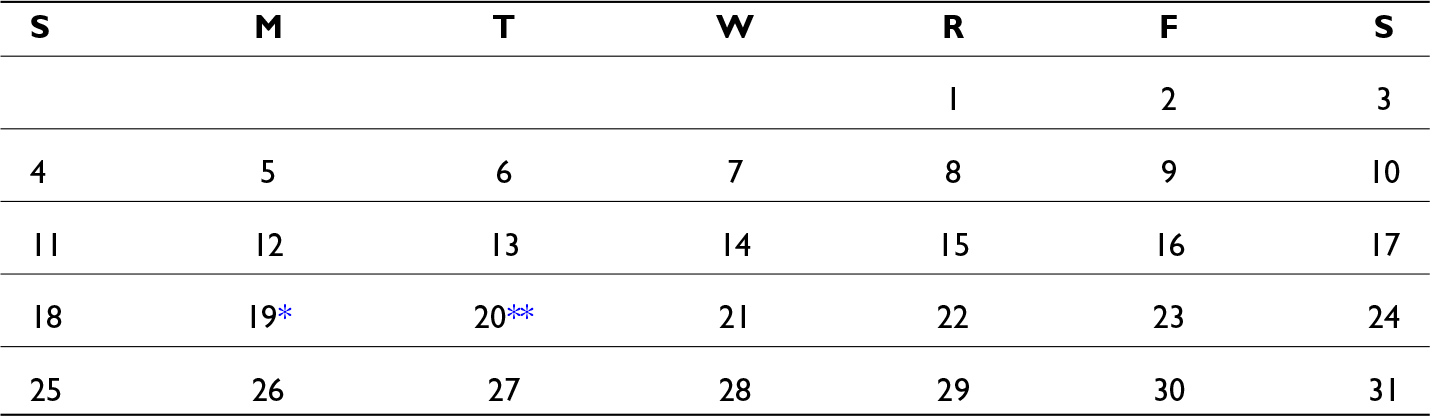
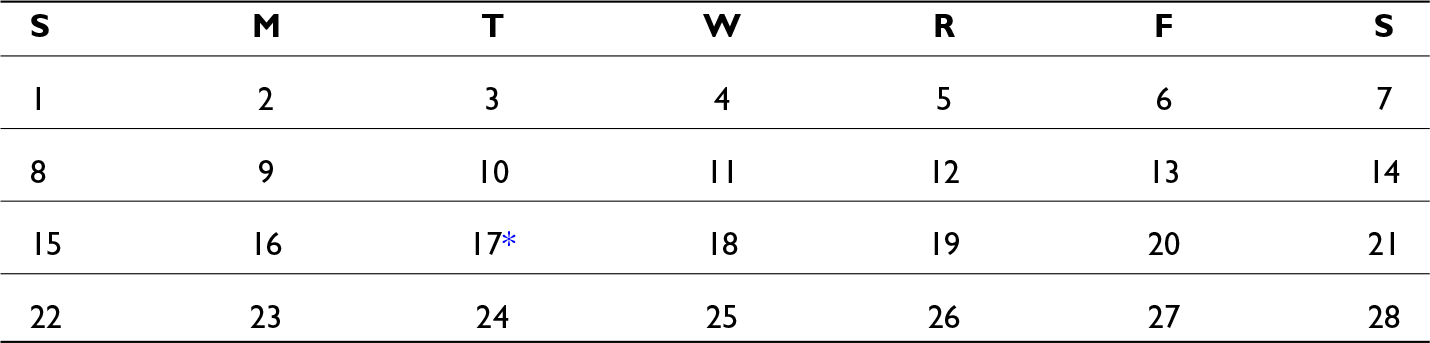
Appendices: Important months mentioned in the article
January 1931

* Shanghai Muslims spotted the Ramadan crescent.
** The first day of 1931 Ramadan in Shanghai.
February 1931

* The 29th day of 1931 Ramadan in Shanghai
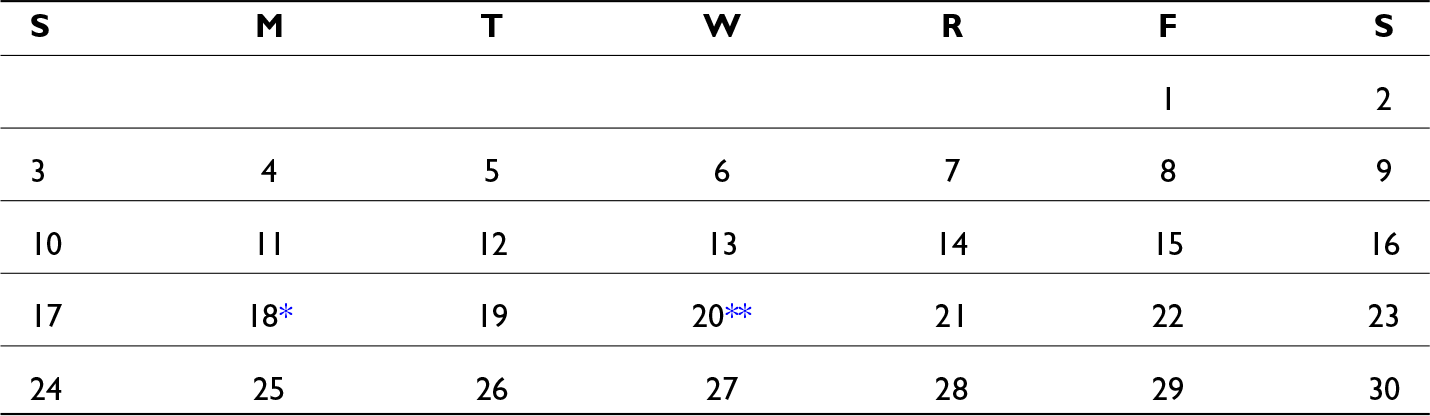
December 1933

* Chengdu Muslims failed to spot the Ramadan crescent.
** The first day of 1933–1934 Ramadan in Chengdu.
January 1934


 Open access

