



Introduction
Millions of people suffer from mental or emotional disorders (MED) worldwide [World Health Organization (WHO), 2008]. It is important to state that mental health problems and physical diseases are connected, where they can be either the cause or the consequence (WHO, 2008). By the year 2030, depression will likely be the second leading cause of disease burden in the world (WHO, 2008).
Most people with MED receive care in the primary health care (PHC). Even those individuals who are not in treatment have easier access to PHC than to specialized mental health services. However, only 49% of all PHC patients with MED are detected, and only about half of these are properly handled (Wittchen et al., Reference Wittchen, Mühlig and Beesdo2003). It is clear that the diagnosis and adequate treatment of patients with MED in PHC could have a huge socio-economic impact, both individually and collectively. This is currently one of the most important global challenges to public health (Üstün and Sartorius, Reference Üstün and Sartorius1995; WHO, 2008).
One strategy that should be highlighted to provide better care for MED patients in PHC and that is stirring interest in the world is shared care (SC) (in Brazil, it is given a specific term: Matrix Support) (Archer et al., Reference Archer, Bower, Gilbody, Lovell, Richards, Gask, Dickens and Coventry2012). SC is a concept that does not apply to a fixed model. It allows the inclusion of different programs. In general, one can conceptualize mental health SC as the clinical management of patients with MED carried out by PHC professionals in close collaboration with mental health professionals in primary care. Studies show beneficial effects of SC for MED patients (Gask and Croft, Reference Gask and Croft2000; Goldberg, Reference Goldberg2003; Bower and Gilbody, Reference Bower and Gilbody2005; Gilbody et al., Reference Gilbody, Bower, Fletcher, Richards and Sutton2006; Kates and Mach, Reference Kates and Mach2007; Katon et al., Reference Katon, Lin, Korff, Ciechanowski, Ludman, Young, Peterson, Rutter, McGregor and McCulloch2010; Cunha and Campos, Reference Cunha and Campos2011; Richards et al., Reference Richards, Hill, Gask, Lovell, Chew-Graham, Bower, Cape, Pilling, Araya, Kessler, Bland, Green, Gilbody, Lewis, Manning, Hughes-Morley and Barkham2013; Gonçalves et al., Reference Gonçalves, Mari, Bower, Gask, Dowrick, Tófoli, Campos, Portugal, Ballester and Fortes2014). Because of the great diversity of interventions, it is necessary to evaluate the effectiveness of each SC model.
In Brazil, the SC model Matrix Support is integrated with the Brazilian primary care national plan of Family Health Strategy (FHS) (in Portuguese: Estratégia de Saúde da Família). FHS is a relatively new community-based specific PHC that started back in 1994. Each FHS team covers an area of ~1000 households (maximum of 4000 people) (Ministério da Saúde, 2016b). Currently, there are around 82 million Brazilians under the care of FHS teams, which corresponds to roughly 40% of all nation’s population (Ministério da Saúde, 2016a).
The effectiveness of the Brazilian mental health SC was assessed by two qualitative studies in the same city (Campos et al., Reference Campos, Gama, Ferrer, Santos, Stefanello, Trapé and Porto2011; Onocko-Campos et al., Reference Onocko-Campos, Campos, Ferrer, Corrêa, Madureira, Gama, Dantas and Nascimento2012) and by a pilot quantitative study with a small number of patients, followed for one year (Moscovici et al., Reference Moscovici, Azevedo-Marques and Zuardi2016). Although these initial studies indicated the beneficial effects of mental health SC, further studies with rigorous methods are still needed to confirm its effectiveness.
The present study aimed to compare the impact on MED prevalence among people from areas covered by health units with FHS, FHS with SC (FHS+SC), and with the Brazilian Traditional Care (TC). It is worth mentioning that all areas of this study had, in some way, an interaction with a medical school.
Method
Study location
The study was conducted between May and December of 2013 in Ribeirão Preto (RAO), a municipality situated in the northeast of the state of São Paulo, with ~670 000 residents and a per capita annual income of approximately US$ 10 000 (Instituto Brasileiro de Geografia e Estatística, 2010). In total, three areas of the city were selected for the study area, and all of them have PHC somehow connected to the Ribeirão Preto Medical School – University of São Paulo (RPMS). There is a distinct health strategy in each area, namely: FHS, FHS+SC, and TC.
Description of teams and health strategies
A Brazilian FHS team includes at least one family physician or general practitioner, one nurse, one nurse technician, and four to six community health workers (CHW). All FHS residents are registered in the health unit, and their households regularly receive visits from CHW. Each CHW is in charge of a maximum of 750 people (or 150 families), and they have to visit each family at least once a month. Usually, a FHS team has six CHW and a limit of 4000 people in the coverage area (Ministério da Saúde, 2016b).
At the time of the study, the FHS+SC units had access to mental health specialists, who performed weekly consultation/liaison activities and provided specialized care in the FHS health unit facilities. These mental health specialists spent only a small part of their working hours seeing patients directly, an activity performed preferentially by family physicians.
Family physicians of both the FHS and FHS+SC teams had their training in family and community medicine specialization at RPMS. This training included 40 seminars of mental health (2 h each seminar), psychiatric emergency internship in a general hospital, and participation in weekly counseling or liaison meetings with psychiatrists and/or mental health nurses (which also included joint consultation). The goals of the seminars were to provide education on psychiatric disorders and to integrate mental health into a patient-centered/bio-psychosocial approach (Binotto et al., Reference Binotto, dos Santos, Lourosa, Sant’Anna, Zanetti, Forster and Azevedo-Marques2012).
At the time of this study, both areas of FHS (FHS and FHS+SC) had two teams each. The teams had, each one, around 2000 people in their coverage area and were composed of one family physician, one nurse, two nurse technicians, and four CHW.
The TC unit saw people from its area based on demand, and its staff was composed of two general practitioners, two pediatricians, one OB/GYN, two nurses, and five nurse technicians. They did not have specific mental health training during their specializations. It is important to point out that this TC health unit had five CHW, even though it did not function as an FHS. At the time of data collection, the TC health unit coverage area had ~6000 people.
Subjects
The study observed 1545 local residents over 18 years old and of both genders, who participated in this study as volunteers. All subjects lived in the area covered by one of the three healthcare strategies. Severe cognitive impairment cases were excluded from the sample. The participants were randomly selected from a household geographical information system. Every participant signed an informed consent form, as the study had been approved by the local ethical committee.
Instrument
The Mini-Screening of Mental Disorders (Mini-SMD)
The screening tool Mini-SMD is composed of nine items that assess four main diagnostic categories: depression, anxiety, alcohol and/or substance abuse, and psychotic disorders. This screening instrument is not, in a certain way, a new tool, but actually a compilation of well-established instruments. Explaining better, Mini-SMD was developed by the merge of four previously validated instruments: four items from PHQ-4 (Kroenke et al., Reference Kroenke, Spitzer, Williams and Lowe2009), one item from AUDIT – item 3 (Meneses-Gaya et al., Reference Meneses-Gaya, Zuardi, Loureiro, Hallak, Trzesniak, de Azevedo Marques, Machado-de-Sousa, Chagas, Souza and Crippa2010), one item from CUDIT – item 1 (Annaheim et al., Reference Annaheim, Scotto and Gmel2010), and three items from the APSS (Kelleher et al., Reference Kelleher, Harley, Murtagh and Cannon2011). Mini-SMD was validated in a PHC population (Bolsoni, Reference Bolsoni2015). In this study, receiver operating characteristic curves considering the presence or absence of any MED diagnosed by the MINI interview in Portuguese, validated in a Brazilian population (de Azevedo Marques and Zuardi, Reference de Azevedo Marques and Zuardi2008), showed an area under the curve of 0.836. Considering a cut-off point >3, the Mini-SMD showed a sensitivity of 0.8 and specificity of 0.75. The concurrent validity was evaluated in relation to the Dartmouth Primary Care Cooperative Research Network (COOP-WONCA) charts – item feelings, a measure that showed similar psychometric characteristics as the Self-Reporting Questionnaire (SRQ-20) and World Health Organization – Five Well-Being Index (WHO-5) (de Azevedo Marques and Zuardi, 2011).
We also used a questionnaire that aimed to obtain the following data: gender, age, and socio-economic level. Socio-economic level was evaluated by the Brazilian Economic Classification Criteria (Brazilian Association of Research Companies, 2016), which uses an operational criterion based on existing goods in the households. The original five levels were grouped into three main categories to facilitate analysis.
Procedure
A total of 20 students from RPMS performed the interviews (using the Mini-SMD and collecting socio-demographic data). All students were trained and instructed with general information about the study (three workshops, with a total of 6 h). Each student received an equal sample of households randomly selected to be visited in the three areas. At the time, they did not know to which health service the household had access.
An electronic version of the Mini-SMD and a socio-demographic datasheet were developed, allowing the students to use tablets and/or smartphones to collect data. All data were recorded offline and sent online afterwards to a common spreadsheet. In the field, interviewers sought the assigned addresses. When they failed to find residents in three different attempts, they visited the home immediately to the right. At first contact, students introduced themselves and provided information about the survey. They recorded all household members’ names and their most convenient time to answer the interview. On that same visit, residents at home signed the informed consent form and were individually interviewed. Others not present were interviewed at subsequent visits (preferred time for residents), with prior appointment by phone. All residents of the selected households who met the inclusion criteria and agreed to participate were interviewed.
Statistical analysis
The χ 2 test was used to compare the population’s age and gender across study samples in each area. Univariate binary logistic regression analysis was used to determine the effect of the area and socio-demographic variables (gender, age, education, marital status, employment status, and socio-economic level) on the occurrence of MED (Mini-SMD estimate: positive when score >3). Variables with P<0.10 (between 0.06 and 0.10 were interpreted as having borderline statistical significance) were included in a multiple logistic regression model (adjusted OR). Results are reported as unadjusted (crude) and adjusted odds ratios with a 95% CI. The statistical analysis was performed using the SPSS 20.0 software (IBM Corp., 2012).
Results
Participants
A total of 1545 subjects were interviewed: 487 people from the area with FHS, 549 from the area with FHS+SC, and 509 from the area with TC. Comparing the number of people from the study samples and actual population in relation to gender and age, the samples did not differ significantly regarding gender. However, in the FHS and TC areas, there was a higher percentage of subjects older than 60 years (Table 1).
Comparisons of age and gender between study samples and actual population in the three areas
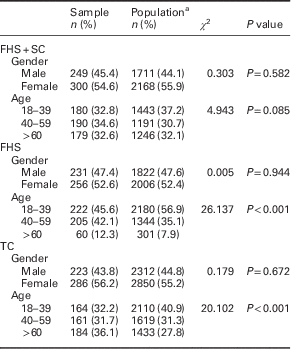
FHS=Family Health Strategy; SC=shared care; TC=traditional care.
a Data obtained from Primary Care Information System 2012 (in Portuguese: Sistema de informação da Atenção Básica)
Estimated prevalence
Table 2 shows the frequency of MED diagnosis and associations between MED and the following variables: area of residence, gender, age, education, marital status, employment status, and socio-economic level.
Frequency of mental or emotional disorders diagnosis and associations
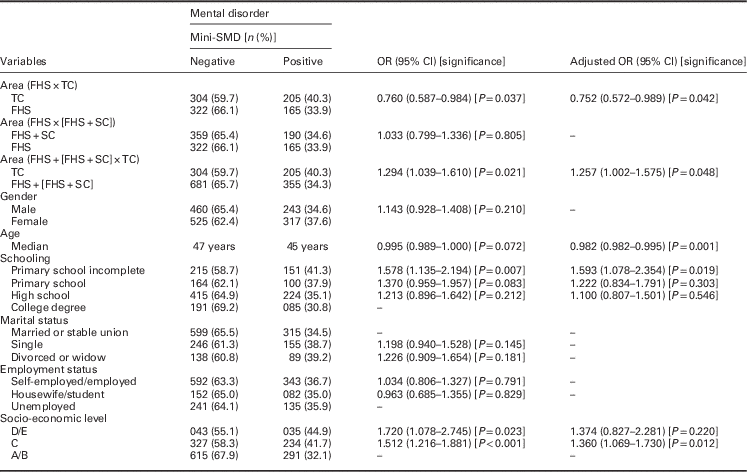
OR=odds ratios; CI=confidence intervals; Mini-SMD=Mini-Screening of Mental Disorders; FHS=Family Health Strategy; TC=traditional care; SC=shared care.
The comparison of the FHS area versus the TC area showed a significantly higher number of MED in the latter. There was no significant difference when the FHS area with SC was compared with the FHS area without SC. Also, the two FHS areas together compared with the TC area showed a significantly lower prevalence of MED. The crude odds ratios were also significant for education and socio-economic level and with a trend towards significance for age. Variables with significant crude odds ratios or with a tendency towards significance were retested with a model of multiple logistic regression that included the variables area, age, education, and socio-economic status, confirming significance.
These results suggested that residing in the areas with FHS coverage was associated with lower prevalence of MED, even when this association was adjusted for the influence of age, education, and socio-economic status. In this study, SC did not significantly influence the prevalence of MED in the FHS covered area.
The mean score of the Mini-SMD in the two FHS areas (3.18) compared to that of the TC area (3.56) was significantly lower (T=1.953; P=0.05), suggesting that residents in FHS areas had lower symptoms of MED.
Discussion
The present study showed that areas assisted in primary care with the FHS model of care (either with or without SC) showed a significantly lower percentage of MED when compared with a TC area. The logistic regression analysis confirmed that living in an area assisted by this particular model of care influenced the prevalence of MED significantly, even when results were adjusted for variables that also significantly affected prevalence, as was the case for age, education, and socio-economic status. The influence on prevalence may be a consequence of an attenuation of symptoms (as suggested by the lower Mini-SMD mean score), leading to failure to reach the diagnostic threshold.
However, the Brazilian model of SC studied did not influence the prevalence of MED in the samples of this study. This observation contradicts the most consistent observation in the available literature, which points to the beneficial effects of SC in the progression of patients with MED (Gilbody et al., Reference Gilbody, Bower, Fletcher, Richards and Sutton2006; Archer et al., Reference Archer, Bower, Gilbody, Lovell, Richards, Gask, Dickens and Coventry2012; Moscovici, Reference Moscovici2013; Moscovici et al., Reference Moscovici, Azevedo-Marques and Zuardi2016). A few factors could explain this contradiction. First of all, to our knowledge, this was the first time a cross-sectional study used prevalence of MED as the outcome measure for evaluating the efficacy of SC. It is possible that the outcome measures mostly used in previous papers (ie, progression of MED in cohort studies) did not have a similar behavior to the prevalence of MED. In support of this hypothesis, a pilot longitudinal study evaluating patients with MED for a period of 12 months showed lower severity of symptoms in patients who were followed by FHS+SC teams when compared to patients from FHS teams without SC (Moscovici, Reference Moscovici2013; Moscovici et al., Reference Moscovici, Azevedo-Marques and Zuardi2016). Second, family physicians in the two areas covered by FHS (with and without SC) received their training in family and community medicine specialization at the same institution (RPMS), which had in their program a more extensive and complete mental health training. It is possible that this specific training overshadowed the impact of mental health SC in FHS and may be an obstacle for the generalization of our results.
Anyway, FHS with family physicians with proper mental health training seems to influence the prevalence of MED in the areas under their care. We noticed a lack of studies regarding the evaluation of SC in FHS, especially studies that quantitatively assessed outcomes of primary care patients.
Our study has other limitations. First, the Mini-SMD was developed to be a brief screening tool. It is not a diagnostic instrument, although it has shown satisfactory psychometric characteristics regarding sensitivity and specificity. We were careful to describe our findings as an ‘estimated’ prevalence. Second, we only evaluated people from areas with health teams somehow linked to the University of São Paulo. All five health units from the three areas evaluated had the presence of medical and nursing students from this university. Third, we were not able to assess the work performed by the CHW, since this was a population study outside the health units.
In conclusion, our FHS model – which includes the participation of family physicians with specific training in mental health seems to be a good strategy to: (a) promote mental health; (b) prevent MED, and; (c) lower the severity of symptoms, leading to failure to reach the diagnostic threshold of MED. Also, in this FHS model, the presence of SC did not influence the prevalence of MED. However, the peculiar characteristics of FHS in the present study might have masked the impact of SC. Our findings can support health authorities in designing future public health policies, including the increase of FHS coverage and encouraging adequate mental health training for family physicians.
Acknowledgments
The authors acknowledge the valuable advice from Prof. Afonso Dinis Costa Passos and the help of primary care professionals of the health units studied.
Financial Support
This study received grants from Fundação de Amparo à Pesquisa do Estado de São Paulo (FAPESP no. 2011/50740-5). AWZ is a recipient of productivity grants from Conselho Nacional de Desenvolvimento Científico e Tecnológico (CNPq).
Conflicts of Interest
All authors declare no conflicts of interest.
Ethical Standards
Study and consent forms were approved by the Research Ethics Committee of the University Hospital of the Ribeirão Preto Medical School – University of São Paulo (HCFMRP-USP) under process number 151906.
Availability of data
All data from this article are available through the corresponding author, including spreadsheets and signed consent forms.



