


1. Introduction
The latest technological advances in the field of machine learning (ML) and generative artificial intelligence (AI), open up a wide range of new opportunities for assisting and supporting engineering tasks in product development. This manifests itself in a variety of different approaches and a new generation of software tools under the umbrella term “Generative Engineering and Design” (GE&D). Those tools differ in their functionality and systematics, in their areas of application, and thus in the opportunities they offer for establishing new processes and methods in engineering. Despite their potential, however, the integration of AI-supported digital engineering methods and tools into current product development processes is not yet widespread and is only at the beginning of industrial application (Reference Gerschütz, Sauer, Kormann, Nicklas, Goetz, Roppel, Tremmel, Paetzold-Byhain and WartzackGerschütz et al., 2023). Therefore, the task is to redesign product development processes, systematically analyze the capabilities of new technologies in the process, adapt development methods, and integrate appropriate GE&D tools.
While the established CAD software vendors are expanding their proven software environments to include GE&D functionalities, new market actors have also gained market share in recent years. One rather new approach is the use of block and function-oriented low-code programming environments. In terms of design automation, these solutions can be used to automatically integrate various authoring tools in the process to exchange and process data. By simply varying the input parameters or automatically initiating parameter changes, geometric variations of the design can not only be generated but also automatically simulated to find the optimal design with respect to the design parameters. This provides enormous potential for the generation of synthetic ML training data sets which are required for applications in early engineering phases since real data is not available in this stage.
Modal analysis is a foundational approach in engineering for characterizing the dynamic behavior of structures and mechanical systems by identifying their natural frequencies as numerical values and mode shapes as fields of displacement vectors. This analysis is especially critical in applications like automotive engineering, where vehicles such as cars and trucks must withstand vibrations, shocks, and varying loads encountered during daily use on-road or off-road (Reference Mallick and MallickMallick, 2021). These dynamic loads significantly influence the design of components and full-body structures, affecting not only their durability but also driving behavior and noise levels. In engineering practice, vibration modes result from a modal analysis simulation are usually evaluated by engineers. Based on the inspection of a visualization of the displacement field, they have to decide for example, if the mode is expected to be critical or not or whether a bending or torsional mode is the dominant effect.
Given the critical role of modal analysis in engineering, the research presented in this paper aims to assist engineers through the development of an automated, ML-based approach for the classification of vibration modes for a specific industrial use case. This is the initial phase towards a holistic concept that can assist engineers based on the geometry in modal analysis and generating design alternatives. The contribution focuses on evaluating the applicability and performance of ML methods, with an emphasis on deep learning models, to accurately classify vibration modes derived from modal analysis. This exploratory study seeks to uncover the potential and limitations of such approaches, as well as their scalability, using truck frame structures as a case study. A central objective is to establish a seamless and automated workflow, starting from CAD modelling and extending through to the classification of vibration modes, to streamline the integration of advanced data-driven techniques into engineering practices.
2. State of the art
2.1. Modal analysis
Modal analysis is a key technique in structural dynamics used to investigate the vibration characteristics of a system. Each structure exhibits inherent vibration modes, where specific deformation patterns occur at distinct frequencies. This analytical approach helps determine the system’s inherent dynamic properties, which manifest as natural frequencies, mode shapes, and damping properties, providing insight into how structures respond to dynamic loads (Reference Fu and HeFu & He, 2001). It enables engineers to predict how structures will respond under operational conditions, ensuring designs are resilient to dynamic stresses while optimizing performance. Free undamped vibrations, which occur without external forces or energy dissipation, can be categorized into longitudinal, transverse, and torsional vibrations (Reference Magnus, Popp and SextroMagnus et al., 2016). The number of nodes in a structure corresponds to the number of its degrees of freedom. As the number of nodes increases, the structure can exhibit higher-order natural oscillations (Reference Brommundt and SachauBrommundt & Sachau, 2022).
One approach in practice to evaluate the modal vibrations of a system is the finite element analysis (FEA). FEA uses computer simulations to create a virtual model of the structure and predict its dynamic behavior (Reference Fu and HeFu & He, 2001). In practice, modal analysis is carried out using FEM programs. These enable the visualization and animation of the vibration behavior of mechanical structures. In engineering practise, the design process for dynamically loaded components, such as truck structures is highly iterative and based on manual steps. Several key stages and engineers’ decisions are part of the design process, which provide potential for assistance and optimization. After the engineer has created the initial model, meshing and boundary conditions are applied. Then the quality of the model is checked and if this check fails, the process must be repeated. Once the model passed the quality check, a modal analysis is performed. The results of the modal analysis are manually evaluated and categorized based on the vibrations and criterial frequencies by the engineer. Based on the analysis results, the process is either continued or adjustments to the component design are required. Adjustments require the entire process to be repeated through all iterations (Bhise et al., Reference Bhise, Dabhade, Pagi, Veldandi and Chodankar2017; Madhu & Venugopal, Reference Madhu and Venugopal2014).
To assist this process and identify the vibration modes in combination with machine learning that does not rely on image analysis, Reference Abubakar, Mehrabi and MortonAbubakar et al. (2020) presented a new method to improve the efficiency of vibration mode identification of turbomachinery blades using artificial neural networks (ANN). The results show that the ANN successfully identifies the correlation between natural frequencies and vibration modes without extensive signal analysis. Another application of neural networks in modal analysis was presented in Reference Hu and WuHu and Wu (2022). The authors presented an approach to predict the vibration modes of bridge structures using neural networks, specifically an autoencoder and a convolutional neural network (CNN). The main objective of this paper is to develop a method that quickly and accurately calculates the vibration modes in early stages of development, overcoming the limitations of traditional methods such as the FEA. This demonstrates the suitability of neural networks, in particular a combination of autoencoders and CNNs, for predicting bridge modes based on design parameters. In another contribution, Parthasarathy et al. Reference Parthasarathy, Seo and Kapania(2024) explored the possibility of using machine learning in combination with Zernike moment descriptors according to Wang et al. Reference Wang, Mottershead and Mares(2009) to classify vibration modes. The authors developed an ML framework to classify tire vibration modes, such as bending and torsion. The extracted Zernike Annular Moments features were then used to train machine learning models. This framework reduces the manual effort in the analysis of tire vibration modes.
In summary, the presented recent research contributions show increasing support by ML approaches in order to both increase the degree of automation and to recognize complex and nonlinear data relationships more efficiently for modal analysis. Another aspect that stands out in most ML approaches to modal analysis is the creation for a specific use case.
2.2. Machine Learning and PointNet
Machine learning (ML) refers to the use of algorithms and models that serve to recognize patterns in data, learn from them and make predictions or decisions based on this learning. These systems analyze data to reveal relationships and patterns, enabling them to perform tasks without explicit programming for each individual case. The learning process is guided by mathematical optimization, which allows the model to identify the best possible mapping between input and output data (Reference MaheshMahesh, 2020). One approach to machine learning is supervised learning, which involves training an algorithm on a labelled dataset to build a model capable of making predictions on new, unseen data. In this context, classification is a specific type of supervised learning method where the goal is to assign input data to predefined categories or classes. This makes classification a widely applicable technique for predictive modelling problems, where the task is to predict a categorical label based on input features.
The typical workflow for solving problems with machine learning consists of three successive phases: Data understanding and preprocessing, model building and training, and validation and interpretation (Reference SarkerSarker, 2021). First, real data is collected, annotated and prepared through preprocessing steps such as cleaning and normalization. Visualizations and simple analyses help to develop a better understanding of the data. In the second step, a suitable deep learning model is selected and trained. The focus here is on optimizing the model parameters and regular validation in order to avoid overfitting. Finally, the model performance is analyzed using various test methods. The interpretation of the results provides insights into the data patterns and enables conclusions and model improvements.
The results of a modal analysis can be represented as 3D-points with vectors for the displacement and therefore serve as input values for a training process. A neural network architecture specifically developed for the direct processing of 3D point clouds is PointNet (Reference Charles, Su, Kaichun and GuibasCharles et al., 2017). The conversion of point clouds into regular 3D voxel grids (Maturana & Scherer, Reference Maturana, Scherer and Burgard2015; Wu et al., Reference Wu, Song, Khosla, Yu, Zhang, Tang and Xiao2015) or two-dimensional image collections (Reference Qi, Su, Niessner, Dai, Yan and GuibasQi et al., 2016; Reference Su, Maji, Kalogerakis and Learned-MillerSu et al., 2015), as has often been done in practice to date, leads to an unnecessary increase in complexity and an increased volume of data. PointNet, on the other hand, works with point clouds in their native format, preserves the original structure and uses the permutation invariance of the points. In the default setting, each point is only represented by its three coordinates (x, y, z). Additional dimensions can be added using further local or global features. For example, if the points are marked with different colors, the RGB values can be taken into account as an additional dimension (x, y, z, r, g, b).
3. Concept for the automated classification of modal analysis results
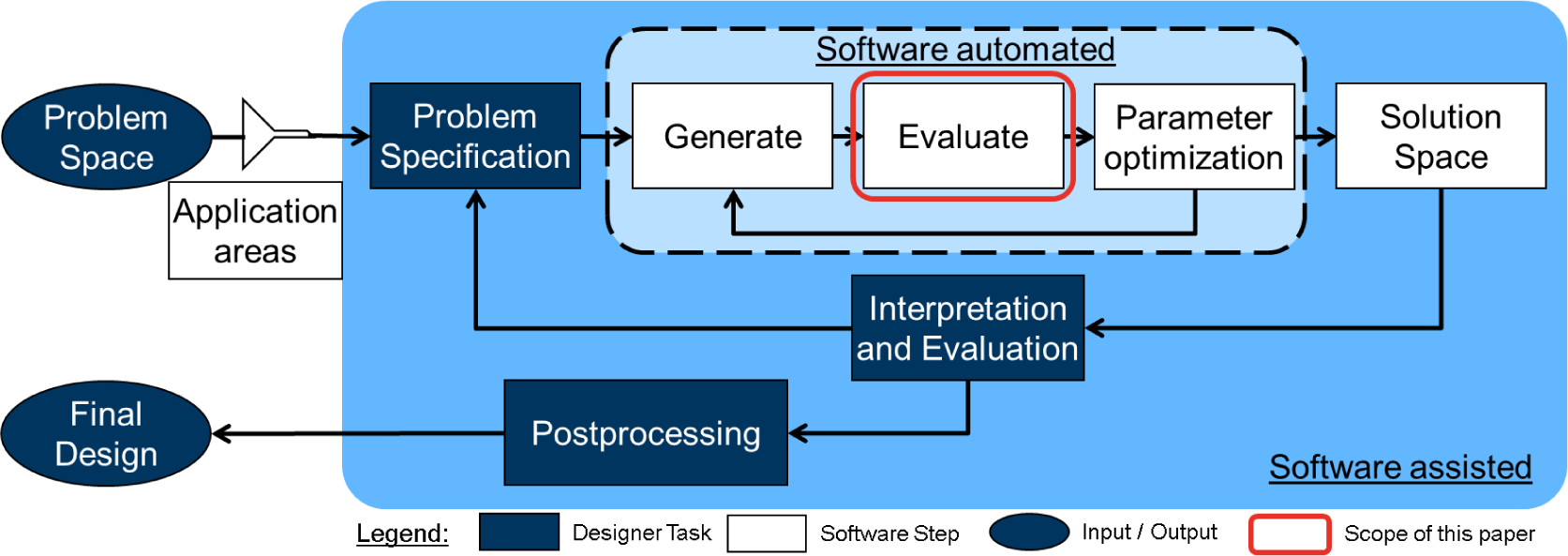
The state of the art made evident that modal analysis is a relevant step in the development of dynamically stressed components and assemblies. The process in today’s product development is characterized by manual, iterative steps. Despite the progress made, automated classification and assistance in the design of vibration-loaded components remains a challenge. The background idea of the approach presented in this paper is to develop an interactive engineering assistance system that supports the modeling and design of product components that are substantially affected by dynamic effects such as vibrations. The concept for the system is based on the computational design synthesis according to Cagan et al. Reference Cagan, Campbell, Finger and Tomiyama(2005), adapted and specified in Köring et al. Reference Köring, Gerhard and Neges(2025) for GE&D processes. This procedural model is based on the engineer’s problem specification, which is forwarded to a software internal problem-solving process (see Figure 1). This automated process iteratively generates and evaluates results and optimizes relevant parameter to return a valid solution space to the engineer. For the software internal process, the system must therefore be capable of performing the individual steps by itself. In a first step, this article focuses on exploring the feasibility of a new approach to classify vibrations based on ML as a part of the software automated evaluation. The illustration shows the model and highlights the considered phase.
Assignment into the procedural model for GE&D [comparable to Köring et al. Reference Köring, Gerhard and Neges(2025)]

The evaluation step in the process of modal analysis is based on the designed geometry and the results of the modal analysis with its eigenfrequencies and vibrations. Since the results are still evaluated manually by the engineers, this paper initially focuses on an automatic approach to classify vibration modes using an existing machine learning model. The final workflow for this step is intended to be able to perform a modal analysis based on geometry input parameters and boundary conditions, which can then evaluate and document the results in terms of bending and torsion. For this purpose, a workflow is set up to create the training data and train the model (see Figure 2). Based on a parametric CAD-Model as an input, inside an automatic process the input parameters for many variants are imported and used for CAD generation of the variants. These variants are evaluated through a FEA to generate the synthetic data set. This accelerates the first step of “data understanding and preprocessing” in the ML workflow. The manual data preprocessing and manual labelling for training the model follows. The PointNet approach is then trained with the generated data and the model capability is checked and verified, analogous to the machine learning process. Depending on the results, either a fully trained ML-Model is developed, or the model must be trained again. The data set may also need to be adapted or extended.
Workflow to train the automated classification of three-dimensional vibration modes

4. Implementation
The selected structure for the study is a truck frame structure in combination with various cross members. The frame structure consists of a combination of longitudinal beams and cross members and is characterized by a high degree of adaptability due to its modular design, which enables a large number of model variants. The position of the vibration shapes in the frequency band within a vehicle family also exhibits a high degree of variation. To ensure that the real vibration modes are recorded as comprehensively as possible, a simplified modeling of the frame structure is sufficient.
Importing geometry parameters and parametric CAD design. For implementation, two model series with their variants are initially used to train the ML model. Each series comprises around 25 variants, which differ in terms of their geometry and cross member combination. The dimensions of these geometries differ mainly in the length between 7 and 12 m, while the width varies between 0.7 and 1 m. The height is constant at 300 mm (see Figure 5 for largest variance). Although the real CAD models of the individual variants are available, their individual modal analysis results, which could have been used directly for training, are missing. Instead, Design Automation in tools such as Synera enables parametric generation and simulation of the individual simplified CAD model variants (Synera GmbH, 2024). The overall frame structure geometry is generated on the basis of imported parameter values.
FE-Analysis. The modal analysis is carried out using FE-simulation. The individual process steps are also implemented in the workflow. The first step involves meshing the overall structure. In order to optimize computing time and performance, especially during meshing and simulation, some geometries are designed as shells. The use of shells instead of solid elements for these geometries, significantly reduces the computational effort. In addition, a contact element is defined between the solid and shell elements, as these are originally meshed as individual parts. The meshing is followed by the modeling and definition of the mounts and support geometries. The static definition of the degrees of freedom takes place on the front axle and second axles. Once all the necessary model elements and framework conditions have been defined and created, an FEA model is created, which is calculated using an FEA solver, in this case the “OptiStruct” solver from Altair (Altair Engineering Inc., 2024). During the modal analysis, a frequency interval between 3 and 32 Hz is specified, as the most relevant vibration modes of the truck frame structure can be expected within this interval, which also leads to a reduction in the calculation time of the solver.
Data Preprocessing. To generate and label the data, based on the PointNet implementation, the nodes of the FE mesh are reduced and approx. 2,000 nodes and vectors are extracted for each variant randomly. The extracted point and vector coordinates are saved together for each mode variant in an Excel spreadsheet. The saving process as well as the writing and exporting of each Excel file is also automated in Synera. The labeling process is then carried out manually. The engineer decides whether the vibration mode corresponds to bending or torsion. Based on this decision, the Excel spreadsheet created with the point and vector coordinates is exported accordingly for bending or torsion. For the first test of the model training, 222 bending and 102 torsion variants are initially used.
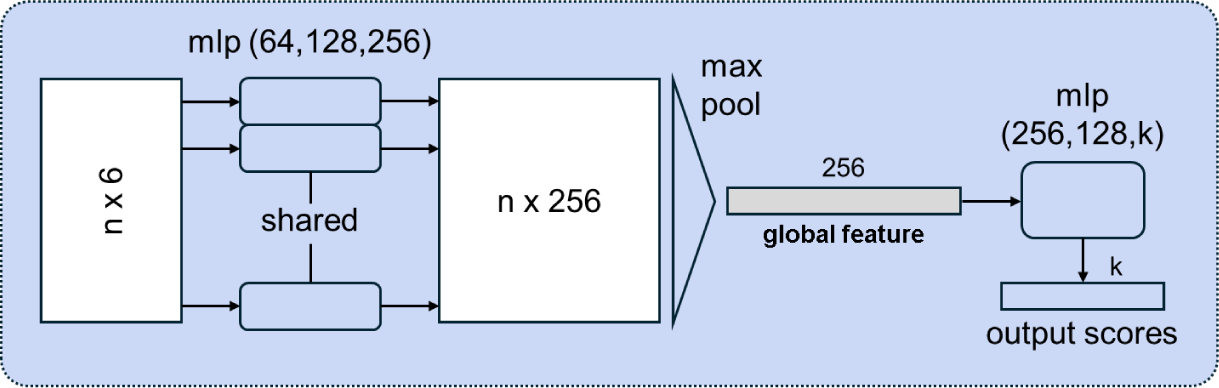
Model training. For the model training, the key idea of the PointNet approach is adapted and adjusted for the classification of vibration modes (see Figure 3). Here, the original finite element mesh nodes are used as origin points, while the coordinates of the respective deformation vectors serve as additional dimensions. The aim is to investigate whether the PointNet model is able to distinguish between bending and torsion with this input information. To fulfill the purpose of this paper, only a part of the overall architecture of Charles et al. Reference Charles, Su, Kaichun and Guibas(2017) is used. The architecture process ends with the generation of the class scores. The resulting probabilities provide information on the probability with which the point cloud can be assigned to the bending or torsion classes. The structure of the architecture is as follows:
Adapted version of the model architecture

The script includes functions for loading the training data, preparing the data, training the model and validating it. The data set is split into training and validation sets, with 80% of the data used for training and 20% for validation. The epoch number 20 is retained from the original model. However, an early termination function is implemented to stop the training if the validation losses do not improve over several epochs. The verification is executed in the next chapter.
5. Results
The learning process of ML-models is very complex, making it difficult to understand and explain from the outside. One reason is the characteristics of neural networks that different weighting values and interactions between the neurons and layers arise with each of their training runs. To ensure that the model performance and training results to be assessed and evaluated are consistent and do not vary significantly, several training runs are carried out. This section describes the model performance and presents the results for different test data.
5.1. Model performance
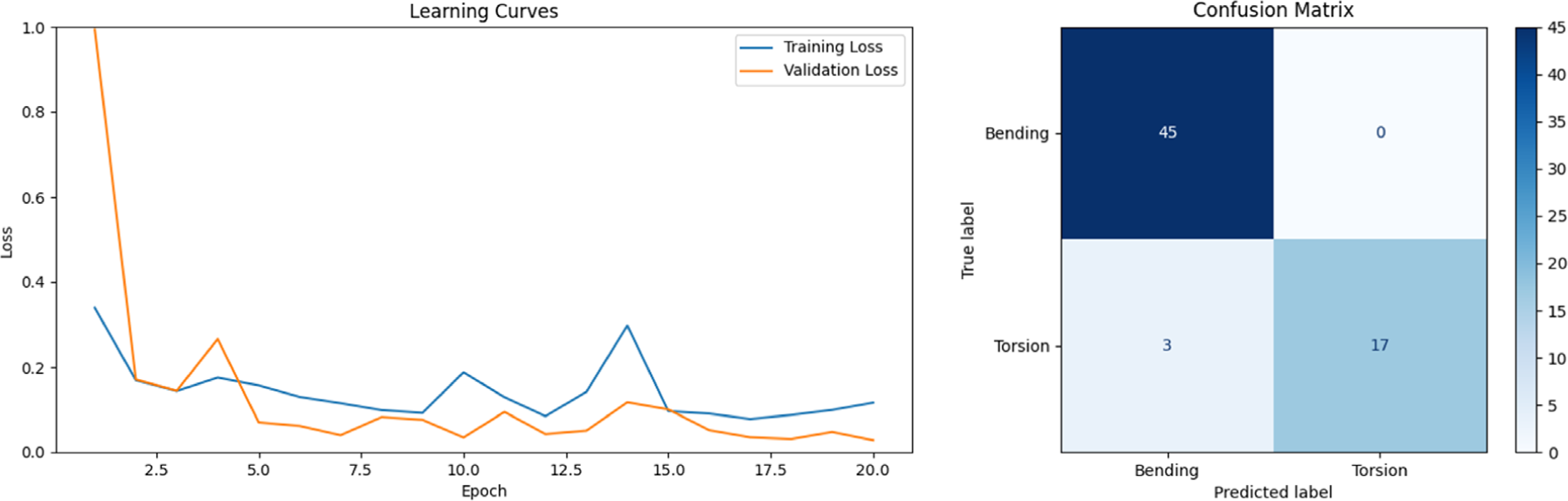
The Figure 4 shows the progression of the training and validation loss over the epochs. These learning curves show that the losses in the first epochs have a rapidly decreasing tendency. During training, a continuous decrease of the training loss could be observed, with one exception at the 13 epoch, where a slight one-time higher increase in loss is observed. The model then reacts by quickly adapting and decreases the loss again in the next epoch, indicating that the model fits the training data increasingly better. The validation loss shows a parallel decrease. Overall, the training and validation loss remains at a low level. After a number of approximately five epochs, it was found that the model performance varied slightly within a small accuracy interval between 93 % and 98 %. This leads to the conclusion that the model has a generalization capability for the geometry of truck frames and is not overly adapted to the training data. The use of regularization techniques such as dropout and L2 regularization has further enhanced this effect. In other trainings, the introduction of an early-stopping function allows for an early termination of the training as soon as the performance on the validation dataset showed no further improvement (epoch 15 instead of 20). This can prevent overfitting of the model. Further training runs show similar results. In the confusion matrix from the test set, for comparison between the predicted and the actual classes, accuracies of 98% are achieved. Further training runs show similar accuracies of over 93%. For the subsequent analysis, evaluation and validation using other test data sets, the model with the highest accuracy is used.
Model performance and confusion matrix from test set

5.2. Test data
In order to further analyze the model performance and to find out the strengths and limitations of the model, studies are conducted in different combinations and with different objectives to further validate the model, but also to test the scalability and flexibility. The validation data points and examples used during training were randomly selected from the training examples generated in Synera. The first step is to further validate the model using point clouds from the same two series. The difference to the known training data for the model is that the new test point clouds contain a new constellation of points and vectors. In a second step, the geometry of new series is generated for testing. The aim of these two steps is to examine the model’s handling of new point clouds, whereby a known basic geometry and then a slightly modified basic geometry, which is defined by a newly introduced construction series, are considered first. In a third step, new geometries and different dimensional scales are generated. In all tests, the frequency interval is slightly extended in the modal analysis. This generates additional new higher-order mode shapes that the model does not recognize from the training data.
5.2.1. Known-training data
For this test, new example variants are generated that contain bending and torsion modes. As a result, only two examples of the new mode variants or point and vector clouds were misclassified, resulting in an overall accuracy of 96%. A detailed examination of the individual orders of probability shows that the classification of the bending and torsion modes of known order (first and second) from the training data set was successful for all examples. The stated classification confidence for this category was always above 90% and mostly even between 98% and 99%. Furthermore, a tendency can be observed that the classification of bending vibrations is generally more reliable than that of torsional vibrations. This is manifested in the output probabilities, where torsional examples are often classified with a probability between 78% and 98%, while bending examples are classified with a significantly higher probability, in most cases over 95%. This discrepancy can be attributed to the fact that the model was trained with twice as many bending examples as torsion examples. A model with a halving of the bending examples and thus a similar number of bending and torsion examples shows that although the classification reliability for torsion shapes was improved, there was an increase in incorrect classifications for bending modes. Even for higher order modes unknown from the training dataset, the model shows overall high performance and accuracy, especially for bending modes. A lower performance of the model in terms of accuracy can be observed for the classification of unknown higher order torsional modes.
To investigate the adaptability of the model regarding modifications to the basic geometry - specifically the frame structure - a further series of frames is generated and analyzed. A geometry with fewer cross-members is used here, whereby most variants of this series also have comparatively smaller dimensions (see Figure 5). The generated bending and torsional vibrations were correctly classified with an overall accuracy of 91% across the entire test data set. The prediction accuracy for known vibration shapes was always above 98% for both bending and torsional vibrations. This proves that the model can correctly classify similar modes despite a change in the basic geometry. The model therefore shows a certain flexibility with regard to the frame configuration. In general, there is also a fluctuation in the model accuracy for new vibration modes that are not part of the known modes from the training data set.
Example geometries and dimensions of the structures

5.2.2. Test with new geometry structure
To test the generalization, a test data set is created with new geometries that differ in their geometric design and/or dimensions from the frame structure used for training. The aim of this test is to analyze the flexibility of the model regarding major structural changes. In order to limit the focus to the structural change, new vibration modes are excluded and only modes similar to those from the training set are considered in the evaluation. Furthermore, vibration modes of higher orders are considered again. The test geometries include long rectangular plates, long solid cylinders and a scaled frame structure.
The test results of the long plate- and cylindrical-shaped bodies show a high performance of the model. The vibration shapes in this category were classified correctly and precisely throughout. In contrast, the performance of the model reveals deficits that manifest themselves with scaled frame structures. For geometries with about 10 % of the length of the previous variants, a non-accurate behavior of the model can be detected. Although the resulting bending and vibration shapes are comparable to the known ones, the model cannot distinguish the vibration shapes correctly.
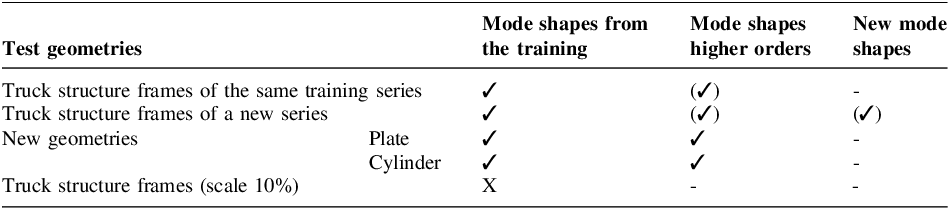
The results are shown in the Table 1 above. The mark ✓ means that the model was able to distinguish bending shapes from torsion shapes with a high accuracy rate (>98%) and classification confidence (~95%) for the respective test geometry and mode shape category. The check mark in brackets (✓) indicates an accuracy of approx. 70–90%. For the category combinations marked with x, the model showed very low performance or was unable to distinguish the vibration modes. Combinations not treated are marked with (-).
Overview of model performance with different test geometries

6. Discussion
To understand the model behavior, the point indices are identified and graphically represented as key points, which contain the most relevant information from the entire point cloud for each of the 256 dimensions of the resulting global feature vector of the PointNet. These key points therefore contribute the most to the formation of the global vector. An example of such graphical mappings is shown in the Figure 6 with the corresponding simulated mode for a torsion.
Example of a graphical representation of the key points

A visual analysis of the key points clarifies that a higher deformation of the structure results in a higher density of the recorded key points in the region of the original point cloud. This observation can also be made for the other frame variants and vibration modes. With regard to the frame geometry, the aforementioned points can be found predominantly on the two symmetrical U-profiles, particularly on their long sides and extremities and, depending on the cross-member configuration, also between the U-profiles. This implies that most frame modes exhibit a certain symmetry in their vibration shapes and patterns. Although different dimensions of the frame, in particular different lengths in the x-direction, are taken into account in the training, the height in the z-direction and the widths in the y-direction remain in the same interval for most of the training examples. This suggests that the almost constant or repeating y- and z-coordinates of the points along the total length play a role in the learning process of the model. In this respect, it is to be expected that the model anticipates a similar order of magnitude of these values as well as a certain continuity along the length of the point cloud entered. These geometric characteristics can be observed to some extent for long cylinders and plates. The cylinders have a similar length to the frame and a similar order of magnitude can also be observed for the diameter. Since the displacement vectors for model shapes known from the training data are also similar to the frame, five out of six dimensions of the input data remain in the same order of magnitude and spatial distribution as in the training data set. The same can also be observed for two-dimensional, long plates. The only geometric innovation is the height of the two-dimensional plate. This is zero and is therefore considerably smaller than the height of the frame structure. However, the ratio of height to length can be regarded as relatively low for both structural geometries. The displacement vectors considered in the model test have a similar shape to those of the frame. Consequently, the order of magnitude of five out of six dimensions in the case of the long plate remains essentially unchanged compared to the training data. In contrast, for the 10% scaled geometry, the results showed that despite the identical geometry, the model is not able to differentiate the vibration modes. Instead, all shapes were classified as bending with high confidence and without doubt. As a result of the smaller scaling, the point and vector clouds are denser for these bodies and with the same number of points (2000). The bending and torsion patterns are closer together within the geometry, i.e. the displacement vectors are distributed more compactly along the short geometry length. This effect can be adjusted by normalizing the values from the displacement to size ratio.
Overall, the model performs particularly well for frame geometries. From the training data set, the model extracted geometry patterns as well as the point distribution in space in specific coordinate intervals. In addition, the model was able to interpret the additional dimensions for each point in the point cloud, i.e. the displacement vector coordinates, and use them for the classification decisions. Furthermore, the model demonstrated a certain flexibility with respect to the detection of frame structures of unknown series and novel vibration modes. However, the model can only identify global vibration patterns. The local vibrations or displacements of several vibration modes that occurred in some cases posed a challenge for the model and impaired its accuracy and classification reliability.
The observed model performance for long geometries, such as simple cylinders and plates, demonstrates that the model is not limited to the known structure, but rather a certain generalization with respect to the overall geometry can be observed during validation, although this is not the case for every geometry topology. The observed behavior can be explained by various factors, including the presence or absence of specific symmetries and/or dimensional relationships within the geometry design. Considering the previous limitations, the model can show acceptable performance as long as the scale of the geometry dimensions and their ratios, for example between length, width and height, are similar to the frame geometry. Since the data set for the training is relatively small, the model can be used as an assistant for classification in the labelling process of further series. In this assisted manual stage, the model provides a prediction while the human makes the final decision on the label. This extension of the model training, especially of torsional vibration, should tendentially lead to an improvement in performance. The improved performance results can increase confidence in the model.
7. Conclusion and outlook
The presented work investigated whether and to what extent a machine learning approach is suitable for the automatic classification of vibration modes after a modal analysis and built a continuous workflow for this purpose. In contrast to existing work that uses machine learning to support existing analytical and mathematical approaches to classify modes, this exploratory work adapted and customized an existing deep learning model - PointNet - to detect and classify bending and torsional vibrations in three-dimensional space. The core idea was to investigate whether an artificial neural network is able to successfully interpret the combination of input information (3D points + displacement vectors) and recognize patterns for different vibration shapes.
As no finished training data was available, the data was generated synthetically in a first step and implemented in a continuous automation of CAD design, FE and modal analysis and the creation of the training set in a continuous workflow. After preprocessing and labelling the data manually, the adapted architecture of the Point-Net model was trained with the created training set. Finally, the model performance was verified after training before the model was tested with different test geometry categories. The approach of classifying vibration modes from a modal analysis using an artificial neural network was largely successful based on the adapted version of the Point-Net model and the training dataset used, as shown by the test results and evaluations. The results can be used to accelerate the initial design phase for new model series of truck frame structures.
The results of this study open up several perspectives for the implementation of an assistance system for modal analysis. The first step is to implement a normalization to overcome the problem with different dimensions. In addition to the performance of the model, the training data set must be enhanced, whereby the model can be used as an assistant and the application possibilities of the model architecture can be extended for further practical application scenarios. Furthermore, the local vibrations of substructures within the overall structure that occur in practice with more complex structures must be identified and classified as well as the mode shapes of higher orders. Furthermore, the extension of the current work is to investigate how ML can be used to support engineers in making recommendations for structural improvements. This overall can decrease the lead time during early development stages even more, if engineers receive instant feedback on a design.




 Open access

