

On Tuesday, March 24, 1579, a Spanish magistrate arrived at the lakeshore. Acting on an order from the viceroy, he set out in a canoe for the small island community of Santa María Magdalena Michcalco, located near the great causeway dividing Lakes Xochimilco and Chalco. The short journey took him from the deeper pool at the dock facilities into a maze of narrow canals. The waterways traversed dozens of rectangular artificial gardens that rose above the lake’s shallow waters. Local, indigenous farmers cultivated these horticultural plots all year round, and if not preparing maize for one of their half dozen annual harvests, they would have been tending to their crops of chiles, squash, tomatoes, and other vegetables. Stretching into the distance with the many gardens were water willows whose root systems, partially visible from the canoe, held together the edges of the aquatic gardens. From the small canals, the magistrate, propelled along by an oarsman, would have passed into larger routes, including perhaps the main royal canal, before Michcalco came into view in the watery distance.Footnote 1
Two days earlier, on the Sunday morning, the magistrate’s notary and scribe had paid a visit to the imposing church in the village’s parish seat, another island town, named San Pedro Cuitlahuac, where the indigenous community had just celebrated mass with the Dominican friar. Congregated there were the governor, other Native American officials, and the citizens of the parish’s communities. It was to these assembled individuals that the scribe, speaking through the interpreter, delivered the news that a Spanish resident, Bernardino Arias de Ávila, wanted to acquire two parcels of land and a house lot in Michcalco. On the following Tuesday, the officials announced, the magistrate would conduct an inspection to determine if the village’s lands had indeed fallen vacant, as Bernardino had claimed.
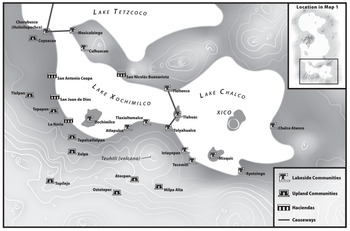
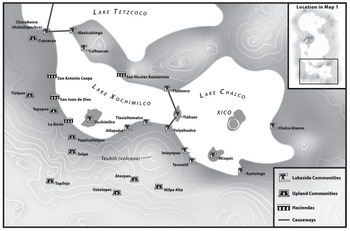
The news would have been met with immediate consternation. Cuitlahuac (also known as Tlahuac; see Map 0.2) and the villages like Michcalco in its jurisdiction were suffering the third year of what would become, by its end two years later, one of the most devastating epidemics in the history of the Americas. With innumerable people succumbing to disease, lands across Mexico had fallen vacant and remained uncultivated. Under medieval Castilian law, such unused land became the property of the crown. The monarch, or his representative – in this case the viceroy of New Spain – could then redistribute the land to those who would put it to productive use. Before redistributing the plots in Michcalco, though, the government had to ensure that the lands were indeed vacant and that their reallocation would not prove prejudicial to the community – hence the magistrate’s inspection scheduled for the following Tuesday.
Lakes Xochimilco and Chalco.
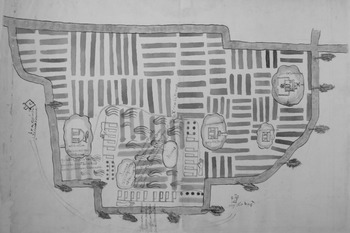
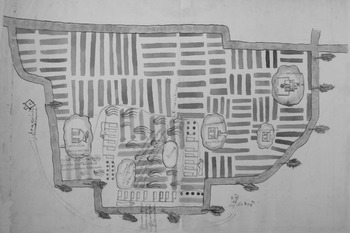
The Nahua officials quickly set about preparing a defense. As stipulated in the viceroy’s order, they summoned five individuals who could provide testimonies. They also produced a map that could help the colonial authorities identify the lands in question and better understand their situation. The map was included in the papers of the report (see Map 0.3). It depicted territory in the lake that was bounded on all sides by canals. Within the canals were dozens of the long, narrow raised garden plots of land. These gardens were lined up together in compact clusters, some of them parallel to one another, others arranged perpendicularly. The territory also encompassed six islands, shown as irregularly shaped ovals, of which the four that had structures drawn on them were Native communities. Santa María Magdalena Michcalco appeared on the left-hand side (the Nahuatl toponym, “the place of the fish house,” is indicated by the glyphs for house and fish). The lands in question were located immediately to the right of the village, in the area full of wavy reeds and between glyphs that signified units of measurement. An alphabetic gloss, added by a scribe, indicated that these were the plots of land to be inspected.
Map of Santa María Magdalena Michcalco, 1579.
While the map itself would have constituted valuable evidence, it was the Nahuas’ depositions that proved crucial to the outcome of the case. The witnesses all hailed from the nearby city of Xochimilco and one of its subordinate villages. These individuals, like those from nearby Michcalco and San Pedro Cuitlahuac, were Nahuas, which is to say the speakers of the Nahuatl language of central Mexico (commonly referred to as the Aztecs). The five men were all familiar with the lands in question, they declared under oath, and they knew that residents of the village had long sown and cultivated the lands peacefully and productively – or at least that had been the case until three years earlier when the cocoliztli epidemic broke out. Meaning sickness in Nahuatl, cocoliztli could refer to several diseases, although here it probably referred to typhus or a kind of hemorrhagic fever.Footnote 2 Such was the severe and ongoing loss of life, the Nahua witnesses noted, that the community had yet to reallocate the lands to the survivors. To redistribute them to Bernardino would be prejudicial and harmful, they averred. It would only add to the residents’ misery.
A key element in the defense of Michcalco’s lands had to do with their particular characteristics. As the Nahuas emphasized, the plots were not just any old parcels of land. Rather, as one witness testified, they were a kind of land known as a chinamitl.Footnote 3 The Nahuatl word meant “enclosure.” It was used to refer specifically to the thousands of aquatic gardens that rose out of Lakes Xochimilco and Chalco (these were gardens that were enclosed by the roots of the water willows). A derivative of this word, chinampa, is the one that has entered into common usage today.
The chinampas were a defining feature of the landscape and history of Xochimilco and its neighboring communities. (They can be seen in the geometrically ordered, thick gray lines on the map produced in this case). The chinampas not only represented a creative adaptation by Nahuas to the lake environment but they were also tremendously fertile and productive. The witnesses argued that the gardens had to remain in the hands of Michcalco because they were essential community resources. The making of the gardens took a great deal of time – one that spanned multiple generations, as Juan Damián noted. The witnesses further explained that the process of constructing the chinampas was time consuming and laborious because farmers first had to dredge and haul mud from elsewhere and then pile it on top of the new plot of land. They then had to build up the gardens by adding alternating layers of mud and what were called céspedes, beds made out of aquatic plants. Thanks to the nutrients from these plants, the productive chinampas enabled Nahua farmers to grow a great deal of maize and chiles and other crops. The chinampas, then, were a specific and distinctive kind of land, and the residents ought to be able to continue to benefit from their considerable investment. In effect, the witnesses concluded, giving the chinampas to Bernardino would be to squander them.Footnote 4
It is possible that the witnesses thought Bernardino Arias de Ávila might waste the land because he was an outsider and a Spaniard. One witness suggested as much.Footnote 5 Bernardino’s identity, though, may have been beside the point. If anything, Bernardino was actually fairly well integrated into life in the predominantly Nahua region. He was identified as a permanent resident of Cuitlahuac and he had apparently lived in the area long enough to have established social connections with other residents, be they Nahuas or individuals of Spanish and mixed ancestries. Some of these acquaintances testified on his behalf. More importantly, and in a pattern that emerged among many of the Spaniards who took up residence in the lake areas, Bernardino was particularly well versed in Nahua culture, so much so, in fact, that he knew Nahuatl. Remarkably, Bernardino penned a petition in Nahuatl, in his own distinctive hand, which he submitted to the Native officials of Cuitlahuac about his request for the lands.Footnote 6 In other words, Bernardino’s identity and relationship with the community may not have been the overriding issue. Rather, the specific, explicitly stated concern was that he intended to use the vacant chinampas for a purpose other than the ones for which they were intended. He preferred to raise goats and sheep on them. Bernardino himself acknowledged this. The problem was thus one of adhering to proper land use as practiced in the lake areas. The chinampas were gardens for growing vegetables and cereals, the argument ran. They were most certainly not for raising animals. To keep livestock on the lands would risk damage to nearby chinampas, the defendants and their witnesses pointed out, since the animals would either devour their crops or trample all over them. On a more fundamental level, though, the implication was that horticultural lands should not be used as pastoral ones. To do so would be to undermine local agricultural traditions – indeed, to undercut a key element of the lake area’s patrimony – and it would also undermine the hard work that had gone into the making of the chinampas in the first place. In the end, these arguments prevailed. On July 14, the viceroy upheld the defense of Michcalco’s lands and denied Bernardino’s application.Footnote 7
The case of Michcalco’s chinampas takes us to the main issues explored in this book. As an environmental history and an ethnohistory of the chinampa districts with the city of Xochimilco at their heart, Islands in the Lake argues that the complex interplay between lake-area residents and their natural surroundings – which themselves had been transformed through extensive, centuries-long human interventions – profoundly shaped the fortunes of Native peoples in their cross-cultural encounters and exchanges with ethnic outsiders under Spanish rule. Dynamic human relations with the lake environment were central to the post-conquest fortunes of Native peoples. The highly engineered lacustrine landscape and the uses to which it was put played vital roles in enabling Nahuas to protect their communities’ integrity, maintain their way of life, and preserve many aspects of their cultural heritage. The resilience of the Nahuatl language serves simultaneously as a hallmark of this continuity and as a means, thanks to the survival of an abundance of the native-language sources, for us to identify and trace patterns of change. At the same time as the chinampa districts’ ecology allowed for a wide array of economic continuities, demographic decline proved devastating. Ultimately, factors of demography came to affect the ecological basis of the lakes. By the end of the colonial period pastoralism and, by extension, new ways of using and modifying the lakes, had begun to make a mark on the watery landscape.
***
The contested ownership of Michcalco’s chinampas took place in one of the most distinctive and fascinating landscapes in the Americas. While the Basin of Mexico consisted of five interconnected lakes, the two southern ones, Lakes Xochimilco and Chalco, had long been important agricultural centers thanks both to their fresh waters and to the ingenuity and expertise of local residents. Far from existing in a pristine natural state, since ancient times Native peoples had modified these two shallow lakes with irrigation works so as to realize the twin goals of reducing the risk of crop failures and increasing the size of their harvests. In their turn, the modified lakes brought changes to Native communities since irrigation relied upon and encouraged yet more complicated forms of sociopolitical organization. As communities gradually converted the natural setting into an aquatic, agricultural landscape by digging ditches and constructing miles of dams and dikes, so the population grew in size and density, thereby encouraging and making possible yet more alterations to the lakes.Footnote 8 Eventually, the water management system came to affect all parts of the area’s hydrology, from the entrance of water into the lake system through precipitation, creeks, rivers, and natural springs to its exit via a narrow channel into Lake Tetzcoco, which lay to the north and at a lower elevation. At all points between its entry and egress, Native peoples had stored, redirected, and channeled water, ultimately regulating it so that, by the time of the founding of the Aztec Triple Alliance, in 1428, the peoples of Xochimilco, Cuitlahuac, Mixquic, and other lakeshore communities had converted much of the water into thousands of the artificial islands like the ones Bernardino Arias de Ávila coveted. The lakes, according to historians, geographers, and archaeologists, thus came to be a highly engineered landscape.Footnote 9
While chinampas existed elsewhere in the Basin of Mexico they were most prolific in Lakes Xochimilco and Chalco. There the local residents became so closely associated with the aquatic gardens that the Nahua annalist and historian don Domingo de San Antón Muñón Chimalpahin Quautlehuanitzin referred to them as the chinampaneca, or the chinampa people.Footnote 10 The term was common enough to appear in other accounts such as the Florentine Codex.Footnote 11 This label was not just one imposed by an outsider; in a variant form, the Nahuatl-speaking inhabitants of the area called themselves the chinampatlaca (tlaca also meant “people”).Footnote 12 While the residents of the southern lakes had an identity as chinampa cultivators, they also viewed themselves to be the distinct people of their own, autonomous city-states, or altepetl. These foundational units of social and political organization in central Mexico were typically the homes to specific ethnic groups, for which reason historians often refer to them as ethnic states rather than city-states. The residents of Xochimilco – which meant “the place of the flower fields” – thus identified themselves, in their Nahuatl-language sources, as the Xochimilca (as in “the people of the place of the flower fields”).Footnote 13 Similarly the inhabitants of Cuitlahuac were the Cuitlahuaca; of Chalco, the Chalca, and Mixquic, the Mixquica. These kinds of specific ethnic identity – deeply rooted as they were to their own communities – were common across Mesoamerica. It is notable, then, that the proclivity toward such micropatriotism among the Native inhabitants of the southern lakes overlapped with their wider identification with their famously bountiful system of agriculture.
The abundant harvests generated a great deal of wealth in and around the southern lakes. The chinampa districts were affluent and, unsurprisingly, became home to large, dense populations. By the time of the conquest – or, more accurately, the Spanish–Mexica War of 1519–1521 – the largest of the lakeside communities, the city of Xochimilco, was itself home to some 30,000 residents. (To put that into perspective, Castile’s most populous contemporary city, Seville, had 55,000 inhabitants).Footnote 14 Such was its prosperity that Xochimilco had impressive monumental architecture, its leading citizens owned opulent homes and had great stores of wealth, as Spanish conquistadors were quick to note, and Xochimilco’s ruling dynasties, of which there were three principal lineages, were among the most prominent in the Nahua world.Footnote 15
The impressive surpluses of the chinampa districts inevitably attracted the attention of the Aztec Empire. From its origins in the Triple Alliance between Tlacopan, Tetzcoco, and Tenochtitlan in and around Lake Tetzcoco, the Aztec Empire expanded to the south, making a concerted effort to conquer and subdue the chinampatlaca during the fifteenth century. As soon as the Aztecs incorporated the chinampa districts into their empire, they set about maximizing the food supply beyond simply extracting surpluses through tribute, significant though these riches were. The Aztecs also undertook an enormous land reclamation project in the southern lakes, as discussed in the first chapter. Their goal was to convert all of the lakes’ waters into chinampas. No longer would the chinampas be confined to the areas close to the shoreline. Achieving this new goal required harnessing imperial resources, mobilizing thousands of laborers, and in a great feat of engineering, constructing mile after mile of hydraulic engineering works that enabled the artificial islands to be built throughout all of the southern lakes, even in places that had previously been their deepest points.Footnote 16 The extensive network of barriers and channels fundamentally transformed the lakes into a vast expanse of artificial islands. When completed, the chinampa districts provided sustenance for as many as 150,000 people. They supported the rise of Tenochtitlan as one of the greatest cities of the early modern world and provided the foundation for the far-flung expansion of the Aztec Empire.Footnote 17
The collapse of the Triple Alliance and the defeat of Tenochtitlan during the Spanish–Mexica War did not mark a decline in the central significance of the chinampa districts to the region’s economy. Warfare did, however, bring substantial dislocations to the southern lakes and their chinampas. During the fighting, the Spaniards and their allies breached the causeways and destroyed other features of the water management system, thereby inundating the new, Aztec-era chinampas in the middle of the lakes. The original chinampa zone, though, which was closer to the shore, survived. In a further shift, after the demise of the Aztec Empire’s coordinated supervision of the lakes, under Spanish rule the maintenance of engineering works reverted to the altepetl level. The devolved authority for supervising and keeping up the dams and dikes and canals reflected one of the ways in which Nahuas enjoyed some measure of autonomy, at least when it came to controlling and preserving the lake environment.Footnote 18
The chinampas, then, continued to provide essential supplies of maize and vegetables to Mexico City. Xochimilco went on to figure prominently in the new colonial order. In addition to provisioning the capital and providing sizable tribute revenues, the altepetl was awarded as an encomienda, a grant of tribute and labor, to Fernando Cortés’s lieutenant, the conquistador Pedro de Alvarado. Xochimilco was the largest single encomienda in Mexico. Too great for any one individual, or so the crown worried, Xochimilco was swiftly escheated into the royal domain, whereupon it became an enduring single colonial jurisdiction and an important religious center for the Franciscans in their evangelizing efforts.Footnote 19 Reflecting its continued economic significance, in 1559 King Philip II granted Xochimilco the much-coveted and superior status of a city, making it one of the highest-ranking municipalities in Spain’s emerging global empire. The only other cities in the region were the polities of the former Aztec Triple Alliance.Footnote 20
For most of the colonial period, Xochimilco and the chinampa districts continued to flourish in many ways, notwithstanding the devastating loss of life from epidemic diseases. Because the colonial-era drainage project, the notorious desagüe, was designed to protect Mexico City from flooding by removing water from the northern part of the Basin of Mexico, the southern lakes retained their water levels. Nahuas could therefore preserve their hydraulic engineering works and continue to cultivate chinampas and use the lakes for transportation and commerce. Colonial-era observers themselves appreciated, at least to a certain extent, the ongoing, albeit relative prosperity of the chinampa districts. In 1746, a Spanish treasury official named Joseph Antonio de Villaseñor y Sánchez enthused about the economic dynamism of Nahua communities in and around Lakes Xochimilco and Chalco.Footnote 21 He noted that the historically opulent city of Xochimilco still flourished thanks to the continued cultivation of chinampas. Xochimilco’s heights of prosperity were further maintained by the many advantages afforded by canoe transportation, lively commerce, and vibrant craft traditions. Unlike other altepetl, a majority of the population remained employed as skilled artisans (or oficiales).Footnote 22 Xochimilco was hardly alone in its affluence. The nearby island town of Mixquic also had fertile lands, and many canoes passed through it carrying fruit, sugar, honey, and other foodstuffs. Ayotzingo, located further to the east, served as the main point of embarkation for grains coming from the province of Chalco, where everything needed to sustain life could be found. The Friday markets of Chalco Atenco attracted a great number of people from far and wide, and a multitude of canoes brought every kind of merchandise to customers. Villaseñor y Sánchez’s laudatory descriptions of the southern lake areas suggest that the area enjoyed significant ecological, economic, and social continuities through the 1740s. These continuities stood in stark contrast with other communities, such as Tetzcoco, where the lakes had all but dried up. Villaseñor y Sánchez offered a somber characterization of that city, which had ceased to be populous and affluent, he claimed, because of a decline in commerce.Footnote 23
As Villaseñor y Sánchez’s description of ongoing vitality suggests, the history of Xochimilco should make us pause and reconsider the wider complexities and trajectories of change for Nahua communities in the colonial period. Indeed, the history of Xochimilco and the chinampa districts offers an opportunity to reconsider some of the fundamental assumptions that have followed from all too persistent stereotypes, engendered by conquest and colonialism, about European cultural superiority. As many decades of ethnohistorical scholarship have so powerfully shown us, and as recent advances in the revisionist literature on the history of science have further demonstrated, the flows of knowledge and innovation around the early modern world were multidirectional, often overlapping, sometimes mutually constitutive between Native peoples, Africans, Asians, and Europeans.Footnote 24 The Spanish “conquest,” for instance, is still essentially misunderstood by many as a victory of superior European technology; the recent historiographical innovations of the New Conquest History are still challenging and undermining the entrenched, old narratives.Footnote 25 The history of the chinampa districts is one that further subverts and fundamentally challenges these and other enduring fallacies.
Some colonial observers themselves were immediately aware of the vital intellectual, scientific, and technological accomplishments of Native Americans. The creole scientist, José Antonio de Alzate y Ramírez, for instance, found a great deal to admire in chinampa cultivation. In the 1790s Alzate published a highly laudatory and detailed account of aquatic garden agriculture. He argued that the chinampas were not only a source of patriotic pride but also a vindication of the achievements of Mexico’s indigenous peoples. Alzate y Ramírez maintained that chinampa cultivation ought to be better known in other parts of the world because, if readers elsewhere were to adopt the novel and arguably superior farming techniques of the “Indians,” they would be sure to suffer fewer failed harvests and enjoy larger yields and greater prosperity. It is worth dwelling on the significance of his words. Here was one of the most important intellectuals of the age extolling the virtues of indigenous people’s inventiveness and industry at a time when Native peoples were commonly denigrated and dismissed for their supposedly inferior, backward technology. In contrast to the common idea of technological change being brought from Europe to the Americas, here was a Spaniard arguing that the rest of the world should harness indigenous expertise to alleviate hunger and prevent famine.Footnote 26
Modern scholars have largely concurred with Alzate y Ramírez’s assessment. The chinampas constitute one of the world’s most innovative systems of wetland agriculture. Since the gardens were ideally irrigated and so very fertile, farmers enjoyed bumper crops. A single hectare of chinampas could provide an impressive annual harvest of some 3,000 kilograms of maize, enough for a single farmer to feed as many as fifteen people. With such vast surpluses, a few thousand agriculturalists could support cities numbering in the tens of thousands. Not for nothing, then, have archaeologists reckoned that chinampa agriculture was one of the most productive kinds of farming devised before the advent of modern agriculture with its fertilizers and pesticides.Footnote 27
***
Just as the identity of the chinampatlaca – the chinampa people – cannot be separated from their unique and rich agricultural traditions, so the history of Xochimilco cannot be understood in isolation from its lacustrine environment or from its historical demography. Whereas the landscape and the ways people modified and used it provided a foundation for continuities in the colonial era, so catastrophic population collapse accounted for numerous discontinuities. For these reasons, Islands in the Lake seeks to provide an explanation for the contrasting experiences of continuity and ecological autonomy, on the one hand, and of crisis and upheaval, on the other.
To do this, the book offers the innovation of combining two historical approaches that have thus far remained distinct. The first is environmental history and the second, the New Philology, which is an important, revisionist branch of ethnohistory in which scholars analyze native-language sources to reveal the perspectives of Native peoples themselves, in their own words, about their experiences.Footnote 28 The merging of these approaches represents a new departure in the scholarship, one that makes it possible to discern how the interplay between colonial encounters and changing human relations with the natural world created, in Xochimilco and the chinampa districts, a distinctive historical experience that diverges in some ways from the patterns observed in other parts of central Mexico.Footnote 29
A key facet of Xochimilco’s history, the book argues, is that the lakes, and the ways local residents modified and used them, acted as a buffer against the disruptions of Spanish rule. The Nahuas succeeded in maintaining their communities’ economic vitality, social integrity, and cultural traditions insofar as they preserved lake conditions and protected their aquatic resources from the demands of colonial authorities. The buffer provided by local people’s uses of the lakes amounted to a kind of ecological autonomy. This concept has been elucidated most comprehensively by the historian John Tutino. Tutino identified ecological autonomy as a foundation for the revolutionary capacity of insurgents in both 1810 and 1910, when Mexicans took up arms, respectively, against Spanish rule and the dictatorship of Porfirio Díaz. In this context, ecological autonomy allowed the insurgents to act independently of established economic or political structures by provisioning themselves with subsistence crops and livestock while also being able to turn the tools of daily life into the weapons of guerrilla warfare. Tutino explains that such ecological autonomy was neither absolute nor unchanging. Rather, he shows that there have been contrasting historical periods in which it was either undermined, as with the catastrophic demographic decline of the sixteenth century, or reconsolidated, as for instance in the period from 1550 to 1630 when the Spanish monarchy escheated encomiendas, asserted royal control, and incorporated Native Americans into the empire as vassals. Vassalage provided indigenous people with certain rights, such as to the ownership of their lands and to self-rule within their communities, which reinforced their autonomy.Footnote 30
For Tutino, the resulting socioeconomic and political structures allowed for a modicum of ecological autonomy for rural communities. Indeed, this relative self-sufficiency has come to be seen as an essential feature of peasant societies, one that has made possible their resistance to destructive forces imposed by powerful outsiders. For Vera Candiani, such autonomy enabled indigenous communities in the northern lakes to push back against agents of the colonial administration who sought to drain Lakes Zumpango and Xaltocan and, as a result, undermine the integrity if not the viability of their communities. As Candiani notes, “religion, communal organization and integrity, town finances, cultural identity, and the entire fabric of social life were wrapped up in how lands, water, and the liminal space between them were used to meet food and subsistence needs.”Footnote 31
Following Candiani and Tutino, this book considers the history of Xochimilco and the southern lake areas in terms of their ecological autonomy. The foundations for such autonomy took various forms, both material and abstract. The material ones consisted of the chinampas themselves, the hydraulic infrastructure that controlled and regulated the lake waters, and also the tools and technology, including canoes, that made all this possible. The intellectual dimension of the Nahuas’ autonomy encompassed their knowledge and skills – within a wider cultural matrix – that made possible the making and the maintenance of the engineering works, the cultivation of the chinampas, the manufacture of canoes, and the broader preservation of the distinctive, amphibious way of life.Footnote 32 Ecological autonomy also endured because Nahuas retained control over local decisions about managing water and soil and because community leaders could recruit and organize skilled workers who built and maintained the complex hydrological works while also undertaking the necessary, labor-intensive soil excavations.
Other factors augmented Xochimilco’s ecological autonomy. The productivity of the chinampas and the value of canoe transportation proved important to a viceregal administration that was simultaneously eager to secure tribute income and anxious about the capital’s food supply. The government thus showed a willingness to protect the chinampa system from Spanish intrusion for much of the colonial period. Only in the second half of the eighteenth century did this change. By then, the rise of large, landed estates known as haciendas – which came to dominate the provisioning of Mexico City – brought about a shift in government priorities. For the Hapsburg period of Xochimilco’s history and for the early part of the Bourbon era, few Spaniards or other outsiders interfered in wetland agriculture, instead establishing farms in upland areas for dry-land agriculture and pastoralism.Footnote 33
By contrast, several factors undermined, if only partially, Xochimilco’s ecological autonomy. Principal among them was demographic collapse. The severe reduction of the population undermined the ability of communities to maintain the water management system. So much loss of life meant that lands and chinampas fell vacant.Footnote 34 At the same time, other severe disruptions followed from an unstable climate. Xochimilco, as with the Northern Hemisphere more broadly, experienced the deepening cold of the Little Ice Age, a period of global cooling during the long seventeenth century that brought wetter conditions and greater extremes of climate variability, including flooding. Added to these difficulties were others. The colonial government’s demands for tribute and labor, at a time of demographic contraction and climatic upheaval, created hardships and tensions within communities. Xochimilco’s political autonomy also went into decline as it faced closer scrutiny and intervention by outsiders. In the late Bourbon era, that intervention extended into the southern lakes’ hydrology.Footnote 35
The divergent and contrasting aspects of Xochimilco’s ethnohistory – between the continuities in human relations with the landscape and the dislocations and transformations wrought by demographic upheaval – call on us to question and reconsider complexities in some of the wider patterns and structures of colonial Latin American history. The continuities, as research presented in this book demonstrates, were manifold and striking: most conspicuously, the lacustrine environment remained almost unchanged for centuries; Nahua communities enjoyed a good degree of ecological autonomy; they retained control of their landholdings; haciendas were not as disruptive here as elsewhere; water-borne commerce continued to thrive; Nahuas remained demographically ascendant; few Spaniards or other non-Native peoples settled in the area; the process of mestizaje, or biological and cultural mixing, took place slowly and on a limited basis, and, as though Native residents were seldom exposed to Hispanic influences, their Nahuatl-language sources retained many of the qualities of older forms of expression, exhibiting as they did far fewer intrusions from Spanish than would typically be seen at this time. If anything, as Bernardino Arias de Ávila’s experience shows us, such cultural exchanges flowed in other directions, with Spanish settlers contending with Nahuas on the latter’s terms, at least to a certain extent, and necessarily adapting to Nahua culture. Put another way, a surprisingly great deal of Xochimilco’s heritage remained intact. As Charles Gibson concluded more than half a century ago, although Xochimilco was a large community, it nevertheless successfully “retained an Indian character.”Footnote 36
On the basis of all this, one might be forgiven for mistaking Xochimilco as somewhere remote and distant from the core areas of colonial rule when, in fact, it was but a dozen miles away from the viceregal capital, which is to say the administrative center and largest Spanish community in all of continental North America. Historians have long recognized a key distinction between core areas of colonial Latin America and their peripheries.Footnote 37 Xochimilco was clearly not located at the far reaches of the frontier. Nor did its history call into question this paradigm for understanding colonial Latin America’s past. But its history did exhibit some striking anomalies for a place situated at the center – incongruities that merit close inspection. Indeed, Xochimilco’s historical experience even stood out from other nearby communities in the Basin of Mexico. Islands in the Lake suggests that these discrepancies in historical experiences can be explained by the intricacy of shifting, intertwined, and mutually influential relationships between people and their lacustrine surroundings.
On the other hand, there could be no ecological autonomy when it came to the arrival of foreign pathogens. The population trends of the chinampa districts closely tracked with those observed elsewhere in the Americas in the decades and centuries after the arrival of Europeans, Africans, and, to a smaller extent, Asians.Footnote 38 The loss of life from diseases to which Native peoples had not developed any kind of immunity was immediate, swift, and devastating. Xochimilco’s population collapsed by about four-fifths within the first half century of contact with outsiders. Thereafter it continued to decline precipitously. The cocolitzli outbreak that had rendered the chinampas of Michcalco vacant may have been the last of the largest epidemics of the sixteenth century. But pestilence and any number of other viruses and bacteria continued to reduce the size of the Nahua communities until the middle decades of the seventeenth century, at which time they had been reduced to just a tenth of their original inhabitants.
The secondary effects of population collapse spread from the very viability of some communities to the reshaping of social structures in others. Across the lake areas, heightened conflicts over resources were deepened by demographic dislocations. The onerous demands of the colonial political economy – particularly in terms of tribute income, the provisioning of the capital, and levies of draft laborers – combined with population decline to upset local politics, undermine the ideological basis of Native authority, and destabilize the social hierarchy, aspects of which came to be fundamentally reconstituted. If people’s relations with the engineered landscape of the lakes provided a degree of stability and secured a certain amount of separation from colonial pressures, demographic decline, by contrast, brought instability and precious little respite from colonial exactions. Demographic upheaval provoked, in certain fragile moments, violence and flight, as when the population reached its nadir in the mid-seventeenth century. As a result, Xochimilco and the chinampa districts were less like a periphery and more a kind of intermediate space, neither completely a zone of refuge, akin to those mountainous and forested places where peoples might flee, nor entirely a shatter zone, those places where the onslaught of conquest and colonialism brought violence, crisis, and complex reconfigurations of lived experiences, among them displacement, dispersal, and transformation, sometimes through ethnogenesis.Footnote 39
In some respects, then, the colonial-era history of Xochimilco resembled the kinds of upheaval and transformation that historian Alfred Crosby described in his book Ecological Imperialism.Footnote 40 Crosby argued that European overseas expansion and settlement introduced a whole host of species to the Americas which undermined local ecosystems and remade parts of the Americas into “Neo-Europes,” just as they did in other parts of the world where European settlers came to predominate, as in Australasia. In Crosby’s telling, foreign species acted as advance parties of European colonization; that the foreign species thrived in the Americas, he argued, paved the way for European domination. To be sure, foreign biota and microbes brought fundamental changes to Xochimilco, most conspicuously in the case of epidemic diseases. But not all such introductions were necessarily deleterious or destructive, nor did they entail the wholesale substitution of native plants or animals. Rather, as Teresa Rojas Rabiela has noted, the introduction of European cultigens could instead serve to complement and enrich Nahua agriculture.Footnote 41 Similar processes of incorporation and adaptation, rather than substitution and displacement, can be observed in the introduction of livestock to Xochimilco, at least until the late colonial period when haciendas intruded ever further into the lakes in order to create cattle-ranching pastures. Accordingly, if one were to locate Xochimilco’s historical experience on a spectrum of change, it would likely be somewhere in the middle, although closer to ecological autonomy than to Crosby’s ecological imperialism. Xochimilco’s history thus aligns with recent scholarship that has emphasized adaptation and perseverance over destruction and transformation, as with Bradley Skopyk’s emphasis on Native people’s ecological creativity, particularly when it came to agriculture.Footnote 42
Perhaps Xochimilco and neighboring communities can best be understood as a particular kind of contact zone, one where cross-cultural interactions and exchanges took place in an aquatic environment that itself mediated and influenced the nature of colonial encounters. The lakes, swamps, chinampas, and waterways provided spaces where individuals of different ethnicities dealt with one another in a hybrid, modified landscape that tipped the balance of colonial power in multiple and unusual directions, some of which moved away from narratives of European domination and Native American dispossession and marginalization. In this way, the history of Xochimilco shared commonalities with the history of other aquatic territories, be they in the Amazon, Colombia’s Pacific coast region, the Great Lakes, or along the coast of New York and southern New England.Footnote 43
***
This book draws from several historiographical and methodological traditions. Its points of departure lie in the work of several pathbreaking historians. Charles Gibson, in his regional history of The Aztecs Under Spanish Rule – which covered the whole of the Basin of Mexico – identified some of the outlines of Xochimilco’s distinctive past. He provided frequent references to Xochimilco, which, while brief and offered in passing, nevertheless afforded us with tantalizing glimpses into certain key trends, especially the endurance of chinampa agriculture, the negligible development of Spanish estates, and the correspondingly limited rates of Spanish settlement. Beyond the few specific details about Xochimilco, Gibson’s landmark study advanced our appreciation for the environmental dimensions of the region’s history, although he did not describe his work in these terms. Much of the book’s treatment had to do with natural resources, and while he paid less direct and sustained attention to the landscape, Gibson did recognize the central importance of historical demography, a field that was gaining full traction at the time of his writing. The second scholar whose works have been essential to this book is Teresa Rojas Rabiela. Her studies stand out for having contributed to our knowledge of indigenous agriculture, chinampa cultivation, and some of the wider aspects of the indigenous economy. She also identified the eighteenth-century trend of haciendas expanding into the lakes, thereby upsetting the chinampa district’s hydrology.Footnote 44 In many respects, Islands in the Lake aims to amplify and elaborate on the findings of these two historians.
Just as Gibson established the contours of several generations of scholarship on central Mexican ethnohistory, so James Lockhart advanced the literature further by founding the New Philology. This revisionist scholarship placed an emphasis on the historical and philological analysis of native-language sources in order to perceive how indigenous peoples themselves conceived of and wrote about their lives. This approach often made it possible to glean new insights into the past while also offering perspectives that complemented or contrasted with the evidence found in Spanish-language sources. Lockhart’s methodology also provided a new means for identifying and charting key processes of linguistic and cultural change, showing how the Nahuatl language, for instance, incorporated, borrowed from, and adapted to Hispanic influences. In The Nahuas after the Conquest, Lockhart found much of interest in Xochimilco’s sociopolitical organization and its Nahuatl sources.Footnote 45 He was less concerned about environmental history, however, and the focus of his work and that of subsequent new philologists, including his students, typically lay elsewhere.Footnote 46 For this reason, many of the key works on environmental history as it pertained to ethnohistory were descended from different scholarly lineages.
These lineages consisted of three traditions in environmental history. The first has to do with changes in populations over time; the second, the related subject of human interactions with landscapes, and the third, the history of human responses and adaptations to changes in climate. The first two of these lines of inquiry can be traced back to historical geographers and demographers, led by Carl O. Sauer in the 1930s, at the University of California, Berkeley. Scholars there were among the first to attempt to calculate the size of pre-Columbian populations systematically and, from this basis, determine the scale of demographic decline of Native American societies after 1492.Footnote 47 The works of Sherburne F. Cook and Woodrow Borah came to define the field and set an agenda for subsequent studies in other regions.Footnote 48 Later studies also grew out of controversies about pre-contact population estimates, with some scholars arguing for more conservative, lower figures than Cook and Borah.Footnote 49 The study of demography remains ongoing, as does the scholarship on the role of epidemic diseases in the history of the Americas.Footnote 50
Initial scholarship on demographic decline emphasized the singular importance of foreign diseases as well as the particular susceptibility of Native Americans to them. For many years, historians attributed the high rates of mortality to virgin soil epidemics, which is to say those bacteria and viruses to which Native peoples had not been exposed previously and, as a consequence, to which they had little or no immunological defense. This explanation seemed highly plausible given the extraordinarily high mortality recorded in historical sources for many parts of the Americas (and for Xochimilco). Gradually, skepticism among scholars about Cook and Borah’s population numbers – and, therefore, for the subsequent population decline – contributed to reappraisals of the virgin soil theory. Scholars noted that mortality rates from single epidemics in the Americas may not have differed much from those seen in other parts of the world.Footnote 51 Ultimately, it seems that what proved so devastating for Xochimilco, as elsewhere, was the sheer number and frequency of the epidemics: according to this interpretation, before societies could recover from one epidemic they succumbed to the next, and, over time, the cumulative effect of these disease outbreaks was demographic collapse.Footnote 52
Revisionist scholarship has also contributed to the elaboration of new, more complex ideas about disease ecology that might further explain Xochimilco’s population losses.Footnote 53 This approach considers the origins and courses of epidemics in their wider environmental and social contexts. As Linda Nash has explained, historians began to follow in the footsteps of medical and epidemiological experts who sought to uncover the contributing factors in the outbreak, spread, and severity of diseases. Poor sanitary conditions and warfare, for instance, are commonly understood to have surrounded typhus epidemics. Scholars from a variety of disciplines thus began to investigate how malnutrition, sanitation, crowding in urban areas, the flight of refugees, climate change, and the role of flora and fauna provided opportunities for etiological agents to produce epidemics.Footnote 54 Such factors are harder to identify and trace in the sources from Xochimilco. Still, there are faint and scattered signs that colonial violence – for instance, of warfare and enslavement – may have contributed to the loss of life, as with other kinds of disruption, including famine.Footnote 55 Attention to disease ecology provides further clues as to why Native American populations did not recover after epidemics. A striking feature of Xochimilco’s demographic history was the lack of a demographic rebound, which is perhaps attributable to persistently low birthrates.Footnote 56 To these many contributing factors other have been added, among them changes in climate and landscapes.
Having identified shifts in land use as a consequence of demographic decline – for instance, through soil erosion – members of the Berkeley school, among others, paved the way for the historical study of landscapes. The field gained momentum through the work of Alfred Crosby who argued that processes of change unleashed by the Columbian Exchange often undermined Mexico’s ecosystems. Elinor Melville advanced this scholarship with her important examination of the Mezquital Valley, to the north of the Basin of Mexico. There she found that the introduction of sheep proved highly damaging to vegetation such that the landscape became drier, less biologically diverse, increasingly barren, and suitable for little else besides European livestock ranching.Footnote 57 While subsequent studies of ranching by Karl and Elisabeth Butzer and Andrew Sluyter, among others, have provided contrasting examples – showing stability or even the possibility of growth in vegetative cover – an emphasis on the degradation of landscapes remains a focus for environmental historians.Footnote 58 The history of Xochimilco’s landscape complicates this narrative since the changes, while attributable to ranching, had less to do with drought or desertification than with increasingly destructive floods in the late colonial period, when factors of climate variability were crucial.
Flooding serves as a strong reminder that Xochimilco’s history stands apart from the well-known narrative of desiccation caused by the Basin of Mexico’s drainage projects. The desagüe itself has long attracted attention from historians although only recently have there been dedicated environmental histories of it, as with Vera Candiani’s studies.Footnote 59 Candiani’s focus was on the agents of the desagüe – the scientists and administrators responsible for proposing and implementing the engineering works – as well as the propertied, upper class in Mexico City, which sought to control the environment by removing lake waters and opening up, at least theoretically, more land to generate wealth and, by extension, consolidate their position at the summit of the social order. At the same time, Candiani also contributed to long-standing scholarship on chinampas and the ways in which Native peoples harnessed and modified the watery landscape, as with the studies of Pedro Armillas and Rojas Rabiela.Footnote 60 Beyond these scholars, though, only a few have examined the colonial-era history of the chinampas, in part because archaeologists have been interested in the pre-Columbian past while other anthropologists have looked to present-day chinampa cultivation.Footnote 61
Water has long been an essential element in environmental histories, particularly in those arid regions where scarcity made it a precious resource.Footnote 62 Such scarcity also generated conflicts, as shown in Sonya Lipsett-Rivera’s analysis of water rights in Puebla. There, she found, water was bound up with wider ecological and political processes. Changes in land use, for instance, contributed to ecological degradation: deforestation, the use of plows in farming, and the disintegration of terraces led to higher rates of soil erosion, which degraded agricultural lands and reduced some of them to the kind of infertile hardpan known as tepetate.Footnote 63 A variation on these processes took place in Xochimilco where soil erosion led to sediment being deposited into the lakes in the eighteenth century, which further heightened the risk of flooding. Xochimilco also had another historical trend in common with Puebla. Both places underwent shifts in the control of water. For Lipsett-Rivera, Puebla’s history was initially characterized by a lack of centralized authority over water rights. That de-centralization persisted into the eighteenth century, when haciendas came to dominate the landscape and instituted a new irrigation regime. A similar trend applied to Xochimilco: the centralization of the Aztec Empire gave way to increased autonomy among individual altepetl until the late colonial period when haciendas and desagüe authorities asserted control over the area’s hydrology.Footnote 64
Unlike Puebla, though, the documents for Xochimilco do not emphasize eighteenth-century population growth, specifically, as having contributed substantially to increases in conflicts between Native communities, haciendas, and the colonial administration. For other parts of New Spain, such tensions grew out of sharper competition over and monopolization of water or land and eventually contributed to political violence and the insurrection against colonial rule led by the priest Miguel Hidalgo y Costilla in 1810.Footnote 65 For other scholars, though, including Georgina Endfield, eighteenth-century population growth exacerbated the vulnerability of certain regions and their inhabitants to the effects of climate changes.
Climate constitutes the third tradition within the field of environmental history that has influenced Islands in the Lake. With a growing appreciation of the role of climate changes in history, pioneering, recent work has shown that key trends in colonial Mexican history have been tied to people’s adaptations and responses to changing conditions. This was particularly the case during the Little Ice Age, one of the coolest phases in the past 11,500 years in the Northern Hemisphere that took place during the long seventeenth century, with the period from 1570 to 1677 serving as its “peak,” as Bradley Skopyk has noted. The trend toward a cooler, wetter climate can be attributed to a variety of factors, among them reduced solar radiation from fewer sunspots and atmospheric particles released through volcanic eruptions as well as to the El Niño–Southern Oscillation (ENSO) pattern.Footnote 66 The Little Ice Age did not simply lead to colder, wetter conditions, though. Skopyk identified the period from the 1550s as the “Colonial Mexican Pluvial,” which stood out as a time when greater climate variability led to significant fluctuations in extremes between cold, drought, and dampness. The effects of these anomalous conditions were far-reaching and, at times, profound. Sam White has shown that they thwarted European imperial endeavors in North America, particularly in places like New Mexico, where the bone-chilling cold and drought led to dire food shortages.Footnote 67 For Skopyk, they played a vital part in the historical experiences of Native peoples in the river systems in Teotihuacan and Tlaxcala. In these areas, local residents suffered the twin cataclysms of climate extremes and then, from the late 1690s, a dramatic rise in fluvially deposited sediment, or alluvium, which obstructed river channels, filled in wetlands, and upset hydrological systems, leading to new patterns of flooding and the degradation of agricultural lands. To these cataclysms, Native peoples responded creatively, Skopyk argues, shifting their agricultural systems according to changing ecological and climatic circumstances.Footnote 68
Climate fluctuations contributed significantly to Xochimilco’s history even if some of the Little Ice Age’s effects proved subtle and difficult to trace in the documentation. In the years from the 1610s through the early 1650s, for instance, Xochimilco and other nearby polities like Coyoacan fell behind in their tribute payments. They did so, arguably, because of persistent drought, cold, and the lower yields of harvests (at least in upland agriculture, if not in the lakes). While some climatic phenomena may be hard to detect in the historical sources and can only be inferred, thanks to the rich data provided in the Mexican Drought Atlas – a resource provided by the dendrochronologist David Stahle – patterns of moisture and dryness can be identified from tree rings. Evidence from these climate proxies shows that there were sharp spikes in moisture levels at certain moments: the timing of these spikes lined up almost exactly with instances of severe flooding in the lake areas during the early 1580s, the period from 1604 to 1607, and the 1810s.Footnote 69 In these disruptive moments, the climate undercut Xochimilco’s ecological autonomy.
Beyond climate variations, human interventions in the lacustrine environment could also have a profound impact on the severity of flooding. As Georgina Endfield has shown, societies may take actions that are designed to militate against deleterious climate conditions even though they sometimes end up intensifying them, sometimes inadvertently. Noting that floods, like droughts, are both social constructions as well as physical phenomena, Endfield and her colleagues revealed that water management programs, land use, and forms of conflict or cooperation, among other dynamics, played pivotal roles in making societies more or less vulnerable to climate extremes. In several case studies of the late colonial period, Endfield showed how adaptability itself emerged as a key factor in mediating and responding to adverse climate variations. While the southern lake areas were not among Endfield’s case studies, the situation there in the late colonial period corresponds to her findings. The expansion of haciendas into the lakes’ waters combined with changing land use and irrigation systems as well as the elaboration of competing engineering works all served to render chinampas and low-lying communities especially susceptible to severe damage from inundations. The vulnerability of Native American communities, moreover, was worsened by a shift in government policies; with a desire to protect the capital’s food supply, the agents of the desagüe project determined that hacienda lands in the lakes had to be protected. For this reason, and at the expense of lakeside communities, the authorities ordered that sluice gates to the haciendas’ pastures be closed.Footnote 70
While Islands of the Lake draws from and adds to these scholarly literatures on climate, landscapes, demography, and disease ecology, it also seeks to contribute to other recent trends in environmental history. These include the study of animals, which most often meant fish or cattle for Xochimilco, among other species, including sheep, goats, and locusts. Minerals and vegetables also played a secondary role in the area’s history. These included saltpeter, limestone, and volcanic rocks as well as pine forests, water willows, cedars, charcoal, and various kinds of grasses and reeds, among them tule and zacatl, this latter being a kind of straw that was used as fodder for horses and mules.
Beyond environmental history, the book also aims to contribute to the literatures on agrarian and legal history, as well as the scholarship on political economy. Mexican historians have furnished us with the best scholarship specifically about the altepetl of Xochimilco. In addition to Rojas Rabiela’s work, Ludka de Gortari Krauss produced a useful study of tribute and labor in Xochimilco during the sixteenth century, one that was concerned with older debates about the move from feudalist to capitalist economic relations of production and distribution. Rebeca Ramos has also examined matters of sociopolitical organization, as has Juan Manuel Pérez Zevallos, who has delved into matters of local government.Footnote 71 Indeed, Pérez Zevallos has been the most productive chronicler of Xochimilco in his series of short but well-illustrated books. Largely written as a chronological narrative for a general audience, his volumes nevertheless identify historical themes and trends while also providing insightful and useful analysis.Footnote 72 His uncovering of many sources has been of inestimable value, and this book owes much to the work of Pérez Zevallos and other local historians.Footnote 73
The book’s geographical coverage is, for the most part, that of Xochimilco’s colonial-era jurisdiction. This means the inclusion of villages in the lake areas, among them Santiago Tolyahualco and San Juan Ixtayopan, San Gregorio Atlapulco, and San Antonio Tecomitl, to name just a few. The jurisdiction also extended south into the piedmont and then the hills and finally the slopes of the Sierra de Ajusco range. In this upland region, which Spaniards called the montes, were large communities like Santa María de la Asunción Milpa Alta as well as the smaller villages of San Miguel Topilejo and San Pedro Atocpan, among others. While the book is concerned first and foremost with Xochimilco itself, information gathered from other lakeside communities such as San Pedro Cuitlahuac (later known simply as Tlahuac), San Andrés Mixquic, Santa Catarina Ayotzingo, and Chalco Atenco, has also been essential for understanding broader patterns of historical change. Each of these polities had much in common with Xochimilco. Some of them were once part of the Xochimilca territories. They were likewise located on the lakes, and their residents also practiced aquatic garden agriculture. Evidence from these communities provides a wider context in which to observe trends in Xochimilco and to draw conclusions. At times, their documentation helps to clarify certain points or to serve as a basis for comparison. Alas, insufficient documentary evidence survives for each of these communities on their own, which further explains their analysis in relation to Xochimilco in this book.
The specific geographical focus has allowed for the book’s long chronological scope, from the 1540s to the early 1820s. These parameters also reflect the nature of the documentary sources. For the period before 1540, the records are too fragmentary to support comprehensive analysis, and the last of the documents produced before Mexican national independence date to the beginning of the 1820s. The coverage of such a long period of time is warranted by the simple observation that, until the eighteenth century, haciendas remained marginal to the environmental and ethnohistory of the area. In the 1700s, however, haciendas began to encroach into the lake areas more frequently and extensively. During that century, the estates expanded beyond the shore. In doing so, they not only ushered in new kinds of land use but they also intervened in and, at times, altered and destabilized the aquatic landscape. For these reasons a history of Xochimilco in the Hapsburg era was one that differed in significant ways from that of the Bourbon era. Whereas sources from the former era suggested continuity, those from the latter demonstrated significant change.
The book draws from several kinds of primary sources. Xochimilco is blessed with a sizable corpus of more than 120 discrete Nahuatl-language documents produced between 1548 and 1795. Of these, there is a substantial collection of more than fifty testaments. Other Nahuatl sources include “primordial titles,” or community histories, and documents generated under the auspices of the ecclesiastical authorities, particularly the long runs of parish and confraternity records.Footnote 74 Although not enough to support a study based solely on them even if one were so inclined, especially for a history covering 300 years, the Nahuatl sources provide essential information not available in Spanish documents. Of these Spanish sources the book relies on a large number of administrative materials, particularly licenses, inspections, and numerous decrees about political and socioeconomic matters as well as the desagüe project, as it pertained to the southern lakes from the 1740s. Legal cases furnish some of the most extensive and abundant documentation. Of the extant lawsuits, Xochimilco is well represented in land disputes, civil litigation, and criminal records. There are also a few Inquisition cases. Information from administrative and legal sources has been further supplemented by contemporary chronicles and more mundane, quotidian documents such as notarial sources. Contractual documents, bills of sale, last wills and testaments, and other records of transactions were also written in Nahuatl.
***
The book consists of seven chapters. The first, on ecological and political landscapes, traces the intertwined rise from the distant pre-contact past of the modified lacustrine environment and lakeshore polities through the early Post-Classic period (ca. 900–1521 CE), when the Xochimilca, Cuitlahuaca, and Mixquica founded their altepetl on the lakeshore, until their incorporation into the Aztec Empire. Having synthesized the archaeological and ethnohistorical literatures for these early periods, the chapter moves on to cover the Spanish–Mexica War, which conquest accounts demonstrate as having had a vital hydraulic component. While the siege of Tenochtitlan has long been understood as a naval battle, in part, the analysis presented here follows the precedent of the New Conquest History in underscoring the vital contributions of Native participants to the conflict, particularly when it came to specialist knowledge of the Basin of Mexico’s hydrology, as well as strategic efforts to defeat the enemies by turning the engineering works against them. The chapter concludes by tracing continuities in Xochimilco into the mid-sixteenth century, especially with the survival of the altepetl and its foundation for colonial-era jurisdictions and the municipal corporation, a Spanish innovation that Nahuas readily adopted and made their own. In so doing, they preserved the modified lake environment even as they adapted to new colonial realities.
The second chapter turns to the history of chinampas and the rise of rural estates. The chapter examines the chinampas’ construction, cultivation, and distribution, particularly when it came to the marked dispersal of the holdings across the lake areas. As a result of these and other factors, the chapter observes the conspicuous absence of non-Native peoples as the owners of chinampas – and as parties in litigation over them – and establishes that, for the most part, the aquatic gardens remained firmly in the hands of Nahuas. That they remained Nahua property did not mean that chinampas remained free from controversies. Rather, they became a source of contestation within the indigenous community since claims of the communal, usufruct rights to chinampas rubbed up against efforts by the nobility to shore up their holdings through private ownership. In the sixteenth century, demographic decline and the competing demands of the colonial government, anxious about provisioning the capital during periods of scarcity, forced a restructuring of land tenure classifications. At the same time, Spaniards received grants to establish ranches away from the lakes where they and Nahuas both introduced livestock. As a consequence of all this, a distinctive historical geography came into being, with chinampas and intensive, small-scale horticulture in the lakes, and extensive pastoralism in the upland areas.
Similar, complementary spheres of activity also characterized the vibrant commercial sector of the economy as well as the busy transportation network that supported it. The third chapter, on transportation and commerce, demonstrates how canoes, navigating the region’s waterways, and pack animals, crossing its roads, enabled artisans and traders to reach local and distant markets. The transportation infrastructure also contributed to the ongoing vitality of exchanges in lake-area marketplaces. Crucial to the provisioning of Mexico City, canoes and the dock facilities of lakeshore communities became key resources in the wider political economy of the region even as haciendas increasingly replaced Nahua communities as the main source of the capital’s food supply by the early eighteenth century.
The next two chapters of the book move from the landscapes of the lakes and the tierra firme, or mainland, to their demography. The fourth chapter reconstructs the population history of the Nahua community in Xochimilco for the entirety of the colonial period. Having established the timing, rate, and extent of demographic change, the chapter traces the implications of population decline for social relations. The chapter argues that epidemics and subsequent interventions by the government in the tribute system, incomplete and unsuccessful though they were, represented an assertion of royal authority, one that provided opportunities for Nahua nobles and commoners to contest and renegotiate their relationships with each other and with the colonial administration. These changes proved to be especially threatening to the nobility. In response, the dynastic rulers sought to reassert their own political power within the altepetl, although their success owed much to the efforts of noblewomen in securing and harnessing economic assets to their families’ advantage. They also contracted valuable strategic marriage alliances that bolstered, if only temporarily, their families’ positions in the face of so much loss of life.
The ability of the nobility to shore up its position in the face of enduring demographic decline reached its limits in the mid-seventeenth century. At that time, Xochimilco’s ongoing financial troubles, which had their twin origins in population loss and the dislocations brought by climate extremes of the Little Ice Age, further destabilized relations across class lines, as did the depredations and rampant criminality of a ruling class that had become estranged from the old collective and reciprocal bonds of the community. Chapter 5, on crime and crisis in the seventeenth century, presents a microhistory of malfeasance and political violence to explain the passing of the old order in Xochimilco. The upheavals may have represented a local variation in what Geoffrey Parker has termed a “fatal synergy,” which is to say the unfortunate combination of climatic extremes and poor political decisions that exacerbated hardships in what was part of a wider, global crisis of the seventeenth century.Footnote 75 With the passing of the dynastic rulers, a new basis for political authority came into being. By the century’s end, a new cohort of officeholders came to dominate local government. Their ability to retain office increasingly came to depend on their good stewardship of the city’s finances and resources. Now that these new criteria determined the legitimacy of officeholders, lineage and ethnicity ceased to be key factors in local politics, which opened the way for non-Native peoples to assume positions of power and influence at a time when the city’s demographic composition became more ethnically complex.
The final couple of chapters explore the two dominant countervailing forces at play in the eighteenth century. On the one hand, significant changes came to the lacustrine environment in the eighteenth century. The sixth chapter examines how Native communities and haciendas adopted livestock rearing and, in particular, cattle ranching as a new economic activity within the lakes. Responding to the rise of the urban market for meat as well as the demographic decline within Native communities – which undermined the labor-intensive horticultural traditions of the lake areas – residents of the chinampa districts expanded into the waters of the lakes in new and destabilizing ways. Alongside the chinampas, many of which survived and retained their value, haciendas and Native communities now fashioned pastures from the swamps. As they pushed further into the lake, pastoralists instituted new environmental management practices and constructed new hydraulic engineering works of their own. At the same time, the colonial administration, responding to renewed fears of flooding in the capital, increasingly intervened in the southern lakes’ hydrology. These new forces for change, when combined with higher rates of rainfall because of renewed climate extremes, undermined both the ecological autonomy and the flood defenses of the Nahua communities, portending of wholesale environmental transformation if not ruination on the eve of Mexico’s Independence.
In contrast to that portrait of disruption and change, the book concludes by examining some striking cultural continuities. The final chapter reveals how Nahuatl documentary traditions retained much of their vitality and importance. The sources themselves underwent changes, in orthography and content, that amounted to departures from earlier forms of written expression. These changes reflected the autonomous local traditions of documentary production. At the same time, though, the sources from across Xochimilco’s jurisdiction also exhibited a remarkable degree of resilience and stability in their lexical and grammatical structures. Surprisingly, even by the end of the eighteenth century, the sources exhibited few of the common signs of Hispanic influence in which, typically, Native speakers could now be expected to incorporate not only Spanish nouns as loanwords in Nahuatl but also verbs, calques, particles, and other grammatical elements. All of these innovations remained conspicuously absent from Xochimilco’s Nahuatl records. Viewed from another perspective, Xochimilco not only remained a predominantly Nahua place at the end of the colonial period, in terms of demographic orientation, but it also successfully preserved many aspects of its rich and distinctive cultural heritage.