

The Greek inscription and other Seleucid finds in Nahavand
The chance discovery of an inscription in Nahavand in 1943 suggested the existence of a Greek temple (Figure 1). Based on the translation of the Greek inscription, the temple was built during the reign of Antiochus III (223-187 BC) (Reference RobertRobert 1949), in the place then referred to as Laodicea (Reference HakemiHakemi 1959). In 1949, five small bronze figures (Figure 2) were discovered by accident in the same area (Reference RahbarRahbar 1976). A little later, whilst visiting the area, Ghirshman happened to identify a Seleucid stone alter (Reference GhirshmanGhirshman 1963: 19) and in 1978, during a survey and sounding, Gh. Masumi discovered a stone column base in the same location (Masoumi 1978).
The Greek inscription discovered accidentally in Do-Khaharan, Nahavand, in 1943.

The bronze figure of a Greek God found in a chance discovery in 1949.

New investigations
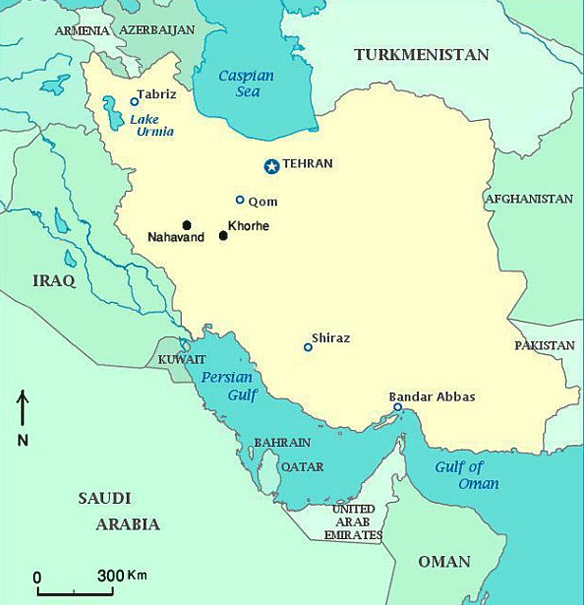
The location of Nahavand in western Iran.

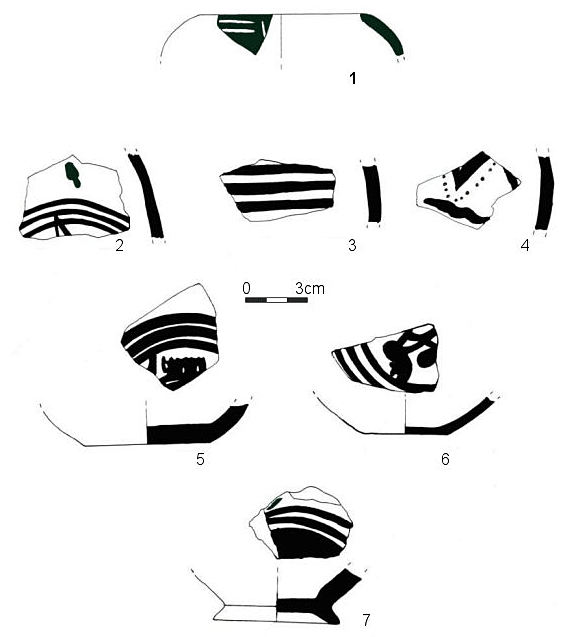
In 2005, the present authors revisited the site, which is located at Do-Khaharan, in the north-eastern part of the city (Figure 3). During surface survey, we discovered an Ionic column base and capital, in the yard of a house belonging to the Seleucid era (Reference RahbarRahbar 2005:19), and a plain stone shaft, bearing no decoration, which probably dates to the Sasanian period. Local people reported several engraved stones, a column drum, and columns bases which had been recycled in the foundations of walls or as steps. Although excavations were limited in this built-up area, 11 test trenches were cut, bringing to light potsherds, architectural fragments, graves, parts of columns and other stone objects (Rahbar & Alibaigi in press). The finds were all obtained from disturbed contexts. In some sondages the excavations continued to a depth of 450cm from the surface, but all layers were damaged and disturbed because of recent activities. The pottery included examples from the Seleucid (Figure 4), Parthian (Figure 5), Sasanian and Islamic periods.
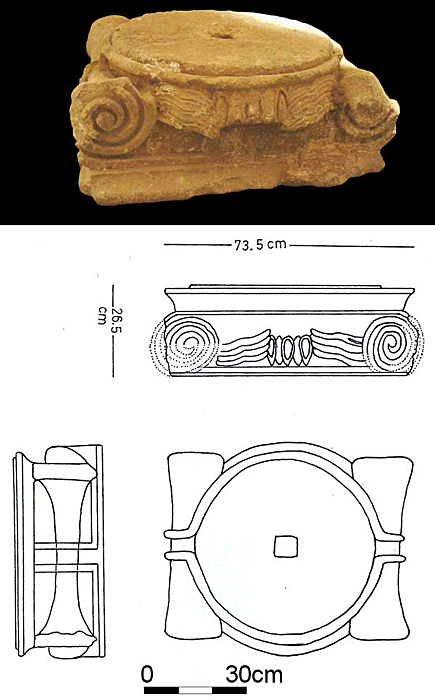
The most important find was an Ionic stone capital, now in Nahavand Museum. It is 73.5cm in diameter and 26.5cm in height and decorated by two volutes on two sides (Figure 6). A similar capital, found in Iran, came from a Parthian site in Khorhe (Reference HerzfeldHerzfeld 1941: 285, Fig. 384; Reference HakemiHakemi 1990: Fig. 17; Reference RahbarRahbar 2003: 68, Fig. 16) and another, found on the present border of Iran, came from the Oxus Temple in modern-day Tajikistan (Litvinsky & Pichikian 1998: Figs. 4-6).
The drawings of Seleucid potsherds, discovered through the excavation of various trenches.

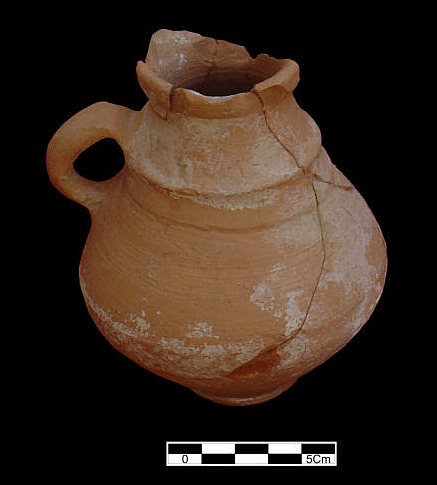
A small Clinky ware jug, found in trench no. 1.

Another important item was a column base which had been used as a mortar for many years and then abandoned in the corner of a house yard. It is a circular base, 60cm in diameter and 33cm in height (Figure 7). It is decorated by two rather large bold bands. It is very similar to the Ionic column base from Bisotun (Luschey 1996: 57, Tafel. 7, 2).
The sketch and image of the Ionic capital, discovered during survey in Do-Khaharan.

Ionic column base, found during survey in the yard of a Seleucid period house.

Conclusion
All the Seleucid finds from Nahavand, such as the Greek inscription, the stone altar, bronze figures of the Greek Gods, column bases, capital and potsherds were discovered in the same location at Do-Khaharan, indicating the most likely site of the Greek temple at Iranian Laodicea.
Acknowledgements
I would like to express my sincere appreciation to the late Dr M. Azarnoush, A. Torabi, A. Farzane, S. Nickrooz and all members of the field team.