


Introduction
Spirituality and religion are fundamental to many people's lives, health and wellbeing and are crucial for the effective delivery of holistic and person-centred care because they address issues of hope, meaning and purpose (Swinton, Reference Swinton2001). There has been a growing interest in spirituality within healthcare practice, research and policy, viewed now as an ethical obligation of professional care (Vermandere et al., Reference Vermandere, De Lepeleire, Smeets, Hannes, Van Mechelen, Warmenhoven, van Rijswijk and Aertgeerts2011). Within psychiatry, attitudes have changed as the profession has become more accepting of the spiritual and religious concerns of patients (Sims and Cook, Reference Sims, Cook, Cook, Powell and Sims2009). In 2015, the Executive Committee of the World Psychiatric Association accepted a position statement that the consideration of patients' spirituality, religious beliefs and practices and their relationship to the diagnosis and treatment of psychiatric disorders should be considered as essential components of psychiatric history taking, training and professional development (Moreira-Almeida et al., Reference Moreira-Almeida, Sharma, van Rensburg, Verhagen and Cook2016; Verhagen, Reference Verhagen2017).
Spirituality refers to the diverse and personal ways people seek meaning, purpose and connection in their lives (Gilbert, Reference Gilbert2011a). Spirituality is often understood in a broader and more personally-defined way than religion, which is described as a system of faith or worship which seeks to understand the world and includes a transcendent being or beings and a meta-narrative (Gilbert, Reference Gilbert2011b). There is however great scope and variability of both terms, for example, identifying spirituality and religion as synonymous or overlapping concepts, as contrasting or opposed, or defining spirituality as an over-arching term which includes both religious and non-religious expressions (Koenig et al., Reference Koenig, McCullough and Larson2001; Royal College of Psychiatry, 2011). This review includes all variations of these terms.
In many societies, mental health problems are of increasing concern and can result in higher rates of discrimination, poverty, disease and mortality, leading to significant economic consequences (Kessler et al., Reference Kessler, Aguilar-Gaxiola, Alonso, Chatterji, Lee, Ormel, Üstün and Wang2009; WHO, 2013; Isaksson et al., Reference Isaksson, Corker, Cotney, Hamilton, Pinfold, Rose, Rüsch, Henderson, Thornicroft and Evans-Lacko2018). An important development within mental health care policy and discourse internationally has been to focus attention on the stories and needs of people who experience mental health difficulties (Slade et al., Reference Slade, Leamy, Bacon, Janosik, Le Boutillier, Williams and Bird2012). This ‘recovery’ approach promotes person-centred and holistic interventions and understandings of mental health as well as the expertise of personal experience. Within this approach, biological and pharmacological frames of understanding are viewed alongside other aspects vital to recovery such as connection, hope, identity and meaning in life (Leamy et al., Reference Leamy, Bird, Le Boutillier, Williams and Slade2011).
Empirical research findings indicate a high prevalence of spirituality and religiosity among adults with severe mental illness (Bussema and Bussema, Reference Bussema and Bussema2007; Russinova and Cash, Reference Russinova and Cash2007) and that religion and spirituality can have both positive and negative associations with health. Systematic reviews of the academic literature, which have identified more than 3000 empirical studies investigating the relationship between religion, spirituality and health, provide substantial evidence that the majority of studies exploring this relationship demonstrate that spiritual and religious beliefs and practices result in positive mental, physical and social health outcomes (Koenig et al., Reference Koenig, McCullough and Larson2001; Koenig, et al., Reference Koenig, King and Carson2012). Research has also shown positive effects of spirituality and religion on various indicators of recovery from mental illness, for example, lower suicide rates (Jarbin and von Knorring, Reference Jarbin and von Knorring2004) and lower levels of depressive symptoms (Bosworth et al., Reference Bosworth, Park, McQuoid, Hays and Steffens2003).
The mechanisms by which spirituality and religion may facilitate mental health and recovery are varied and complex (Fallot, Reference Fallot2007; Webb et al., Reference Webb, Charbonneau, McCann and Gayle2011). For example, spirituality may offer a way to cope with symptoms and difficulties (Corrigan et al., Reference Corrigan, McCorkle, Schell and Kidder2003; Pargament, Reference Pargament and Folkman2011) by serving as a stress-buffering function (Webb et al., Reference Webb, Charbonneau, McCann and Gayle2011), instilling a sense of hope (Bussema and Bussema, Reference Bussema and Bussema2000) or offering a perspective of oneself outside the ‘sick role’ (Wilding et al., Reference Wilding, May and Muir-Cochrane2005). Religion and spirituality can also have challenging effects and associations such as spiritual struggles in which conflict can arise in relation to spiritual matters and which have been associated with poorer functioning (Exline, Reference Exline, Pargament, Exline and Jones2013). Additional negative effects include feelings of excessive guilt, abuse by religious advocates (Weaver and Koenig, Reference Weaver and Koenig2006), rejection or stigma from religious communities (Fallot, Reference Fallot2007) and religious content becoming intertwined with psychiatric symptoms (Clarke, Reference Clarke2010). Lomax and Pargament (Reference Lomax, Pargament, Cook, Powell and Sims2016) argue that because of the double-sided capacity of spirituality to both foster and impede mental health and wellbeing, there is a need for more knowledge and understanding of this concept's multi-dimensional, multi-functional and dynamic character.
Being spiritual and being diagnosed with a mental illness can serve as a double stigma (Lukoff, Reference Lukoff2007). Both service user narratives (e.g. Chadwick, Reference Chadwick2007; Basset and Stickley, Reference Basset and Stickley2010) and research repeatedly show that many people would like their spirituality and religious needs addressed within healthcare contexts (e.g. Mental Health Foundation, 2002) yet find this aspect tends to be ignored, dismissed or pathologised by professionals (Zinnbauer and Pargament, Reference Zinnbauer and Pargament2000; Halasz, Reference Halasz2003; Cook, Reference Cook2011). A ‘religiosity gap’ has been identified in empirical studies that show relatively lower levels of religious and spiritual beliefs among healthcare practitioners, and significant undervaluation of the importance of spiritual factors in recovery (Dein et al., Reference Dein, Cook, Powell and Eagger2010). Healthcare practitioners also report a lack of clear practical guidance about spirituality and barriers in knowledge, skills and confidence in addressing such needs (Fallott, Reference Fallot2007; Mooney, Reference Mooney2009). Within such contexts, spiritual needs may be frequently interpreted as mental illness, thereby shutting down further discussions about spiritual care (Greasley et al., Reference Greasley, Chiu and Gartland2001; Mental Health Foundation, 2002) and leading to a reluctance to engage with psychiatric services (Dein et al., Reference Dein, Cook, Powell and Eagger2010).
One of the difficulties clinicians may experience when working with service users' spiritual needs is that the relationship between spirituality and mental health problems can be complex. Research findings indicate the need for a more refined understanding of the interplay between spirituality and mental health and the careful exploration of this subject with people who experience mental health difficulties (Moreira-Almeida et al., Reference Moreira-Almeida, Koenig and Lucchetti2014).
Systematic reviews of qualitative studies are an emerging methodology aimed at providing comprehensive understandings of social phenomena across a diverse range of contexts and are increasingly viewed as high-level evidence to underpin clinical practice guidelines (Tong et al., Reference Tong, Palmer, Craig and Strippoli2014). To date, there are no qualitative systematic reviews that explore the experiences of spirituality and mental health difficulties. This review aims to systematise the spirituality and mental health care literature by identifying and discussing emerging themes within qualitative research studies of the experiences of spirituality among people with mental health difficulties.
Methods
Design
A qualitative systematic review was undertaken. The review protocol was pre-registered (PROSPERO:CRD42017080566). Protocol deviations were: extending Medline to include exploded terms to increase sensitivity, reducing duplicates in search terms and extending the date range to capture recent research.
Eligibility criteria
The inclusion criteria were: qualitative design; participants aged 18 years or over; current or previously diagnosed or self-reported mental health difficulties; self-defined spiritual or religious beliefs; peer-reviewed studies with the main focus on spirituality/religion; English language. To address the broad scope of this systematic review and a large number of studies found during an initial explorative search, we excluded those focusing on conditions, contexts, phenomena or groups of people which might produce results specific to those situations and warrant study in their own right. For a full list of exclusion criteria, see online Supplementary material 1.
Search strategy and information sources
A systematic search of seven electronic databases was conducted from inception to 21 September 2018: MEDLINE, PsycINFO, AMED (all accessed via Ovid), ASSIA (Proquest), CINAHL and ATLA (both EBSCO) and Web of Science (1900 onwards). Further sources were forward and backward citation searching, expert consultation and hand-searching (as a supplement to online database searching) of the following journals congruent with the search focus from 2000 to February 2018: Mental Health, Religion and Culture; Psychiatric Rehabilitation Journal; International Journal for the Psychology of Religion; and Journal for the Study of Spirituality.
A full search strategy for MEDLINE (Ovid, In-Process and Other Non-Indexed Citations 1946 to Present) including search terms used is shown in online Supplementary material 2. Following the search, all identified citations were collated and uploaded into Endnote and duplicates removed. Titles and abstracts were screened against inclusion criteria, with 400 screened independently and any disagreements resolved through discussion. Full texts of selected citations were assessed against inclusion criteria, with 10% also screened by an independent reviewer.
Data extraction and quality appraisal
The data extraction table is shown in online Supplementary material 3. The quality of studies was rated using the CASP checklist for qualitative research (Critical Appraisal Skills Programme, 2017). This is a clear and straightforward checklist comprising of ten questions relating to the design of the study. A second independent reviewer assessed a selection (10%) of the papers and any disagreements were resolved through discussion. As there is little evidence about decisions to exclude studies on the basis of their quality (Thomas and Harden, Reference Thomas and Harden2008) all studies were included.
Data analysis and synthesis
Study findings were synthesised using a thematic synthesis approach based on Braun and Clarke's (Reference Braun and Clarke2006) thematic analysis which involves six phases of generating codes and searching for and refining themes. The analysis was also informed by Thomas and Harden's (Reference Thomas and Harden2008) thematic synthesis which is specifically designed for bringing together and integrating the findings within a qualitative systematic review. The final themes were reviewed by a second independent researcher and discrepancies were resolved through discussion. In addition, the analysis and theme framework were discussed with the co-authors who have expertise in a range of research and scholarly backgrounds. To address reflexivity and enhance the credibility and trustworthiness of the research, an audit trail and a reflexive journal were kept throughout the research process.
Results
Study selection
Results of the search and screening processes are shown in Fig. 1.
Flow diagram of study search and selection process.
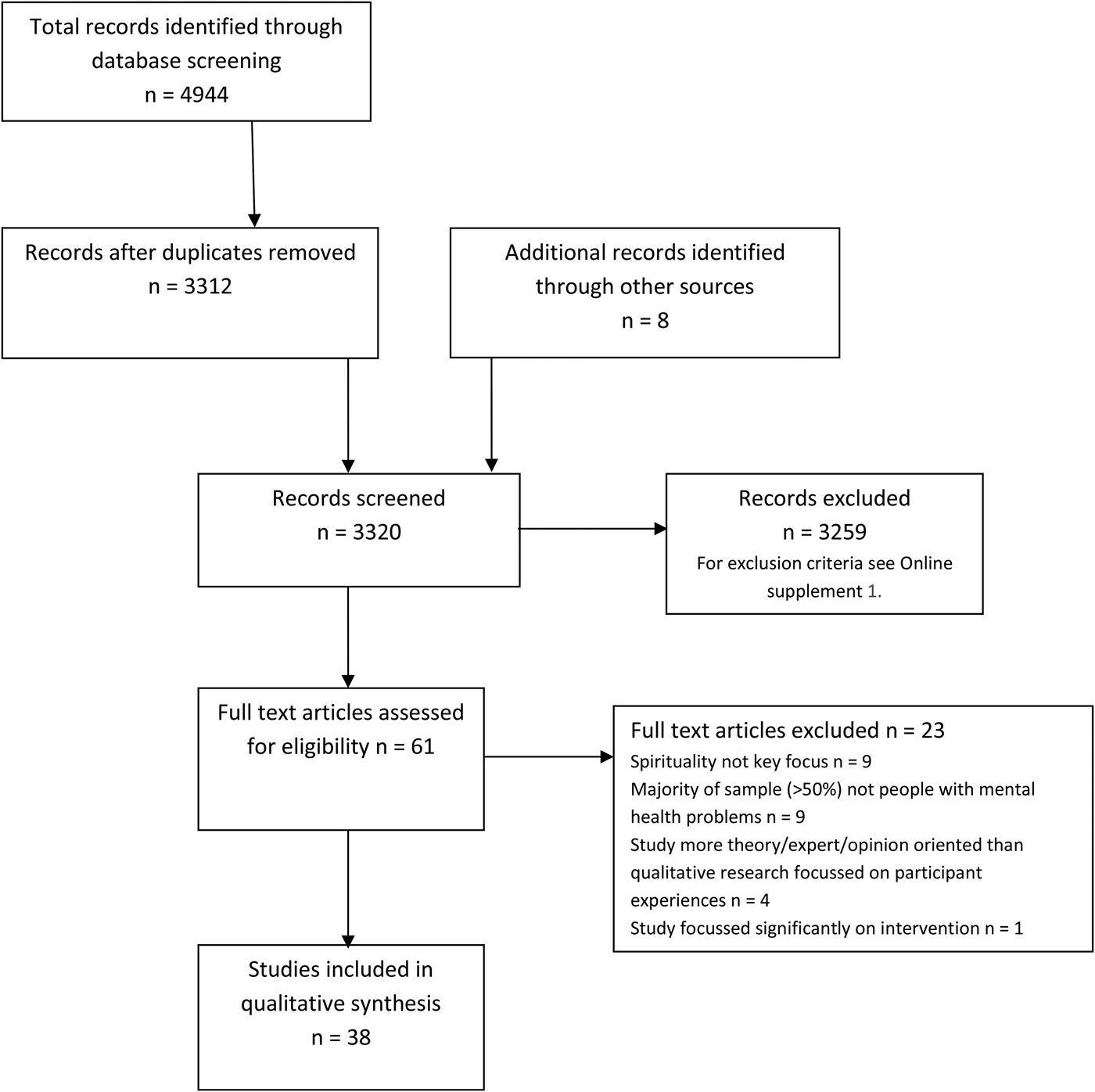
The data extraction table for the 38 included studies is shown in online Supplementary material 3. Included studies involved a total sample of 594 participants and came from 15 countries: USA (n = 10), UK (n = 7), Canada (n = 4), Australia (n = 3), two from each of Norway, Sweden and the Netherlands and one from each of Switzerland, Ireland, Saudi Arabia, Jordan, Brazil, India, Taiwan and Malaysia.
A broad range of religious and spiritual beliefs and affiliations were investigated including major religions, particularly Christianity and Islam. Many participants did not identify with one specific religion and used more flexible classification systems. They had experienced a range of mental health problems and severity of symptoms.
Quality appraisals for the different studies are shown in the data extraction table in the online Supplementary material. Studies were rated against each of ten questions and then allocated to low (0–4), medium–low (5–5.5), medium (6–6.5), medium–high (7–7.5) and high (8–10) quality. The majority of studies had a rating of 7 and above (23 studies). Although non-standardised, this assessment identified the majority of studies as well designed. Higher quality studies had more comprehensive themes and contributed most to the synthesis.
Results of thematic synthesis
Twelve initial themes were derived which were then reviewed against the data set, further refined and combined to form six overarching themes and nine sub-themes, described, along with examples, in Table 1.
Theme descriptions and illustrative quotes
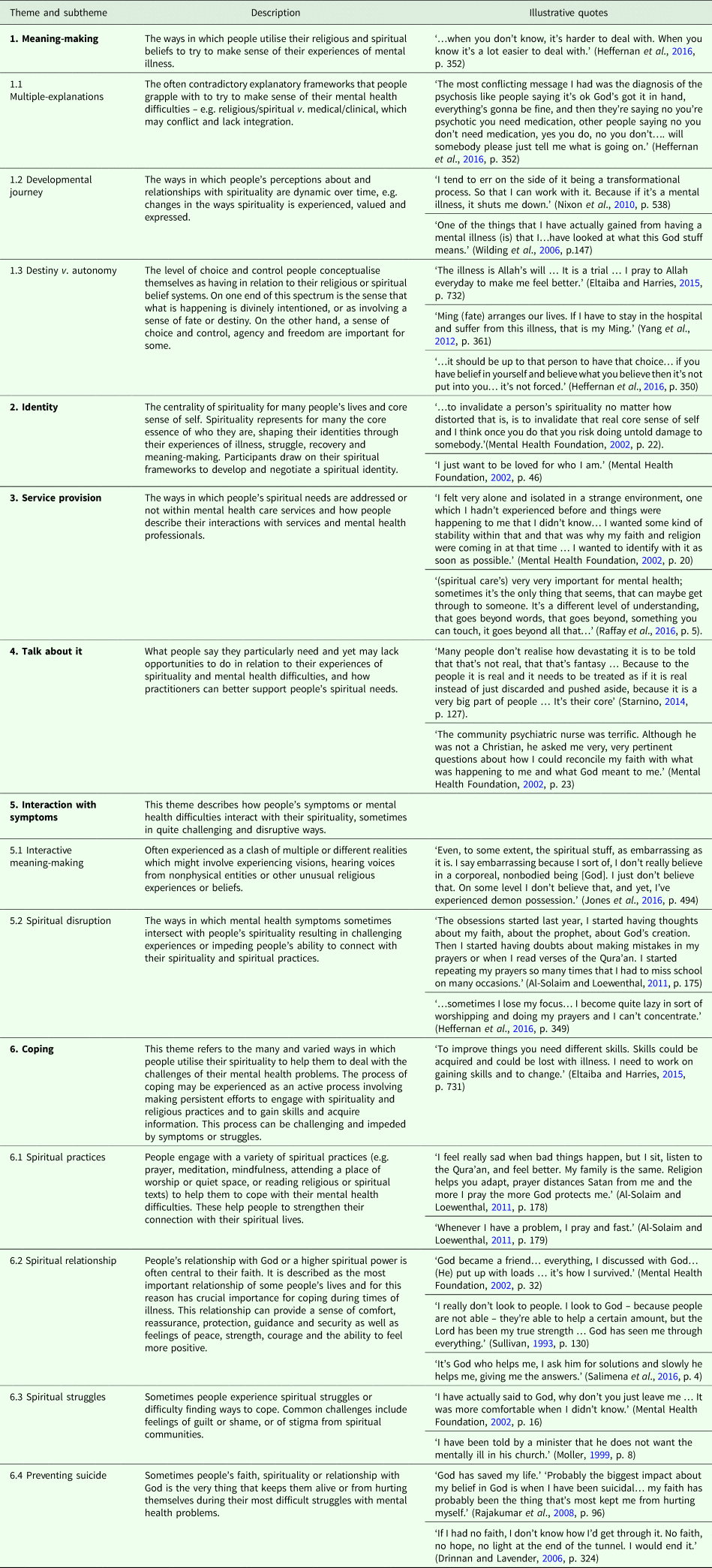
The six themes of Meaning-making, Identity, Service-provision, Talk about it, Interaction with symptoms and Coping form the acronym ‘MISTIC’ and are summarised briefly with their sub-themes below and in more detail in online Supplementary material 4.
Description of themes
Meaning-making
The theme Meaning-making refers to the ways in which people utilised their spiritual beliefs to try to make sense of their experiences of mental illness. This was one of the most frequently occurring themes, evident in 33 studies, and had three sub-themes, Multiple explanations, Developmental journey and Destiny v. autonomy.
The sub-theme of Multiple explanations describes the often contradictory explanatory frameworks that people grappled with to try to make sense of their mental health experiences (Heffernan et al., Reference Heffernan, Neil, Thomas and Weatherhead2016). Because of the lack of integration between conflicting views held by mental health services and religious organisations (Baker, 2010) participants sometimes struggled to arrive at an explanatory framework, which could in turn impede recovery. Within the sub-theme Developmental journey, some studies showed a change or maturation in the ways participants experienced, valued and expressed their spirituality over time (Wilding et al., Reference Wilding, Muir-Cochrane and May2006; Marsden et al., Reference Marsden, Karagianni and Morgan2007; Starnino and Canda, Reference Starnino and Canda2014). Many participants viewed their spirituality as a journey involving phases of confusion and doubts, insights and opportunities for transformation (Mental Health Foundation, 2002). A final sub-theme Destiny v. autonomy concerned the level of choice and control people conceptualised themselves as having in relation to their religious or spiritual belief systems (Smith and Suto, Reference Smith and Suto2012; Yang et al., Reference Yang, Narayanasamy and Chang2012; Eltaiba and Harries, Reference Eltaiba and Harries2015).
Identity
Identity was a prominent theme (mentioned in 20 studies) and refers to the centrality of spirituality to many people's lives. Participants drew on their spiritual frameworks to develop and negotiate a spiritual identity (Drinnan and Lavender, Reference Drinnan and Lavender2006; Wilding et al., Reference Wilding, Muir-Cochrane and May2006). Spirituality was seen as vital to life and enabled many participants to develop a healthier more empowered view of themselves (Wilding et al., Reference Wilding, Muir-Cochrane and May2006; Starnino and Canda, Reference Starnino and Canda2014; Heffernan et al., Reference Heffernan, Neil, Thomas and Weatherhead2016).
Service provision
The theme of Service provision was evident in 23 studies and relates to people's experiences of and interactions with mental health care services and professionals. The most commonly recurring experience under this theme was that participants felt their spiritual experiences were often dismissed, misunderstood or pathologised by professionals. Participants also expressed frustration at the lack of provision within services for their spiritual needs (Koslander and Arvidsson, Reference Koslander and Arvidsson2007) and talked about ways mental health professionals and services could provide them, for example, by offering access to safe and quiet spaces where they could engage in spiritual practices (Mental Health Foundation, 2002).
Talk about it
The theme Talk about it was highlighted in 13 studies and related to what participants said they sometimes needed most in relation to their experiences of spirituality and mental health and what practitioners could helpfully do to support them but often did not.
One of the greatest challenges that participants struggled with during the meaning-making process was having to negotiate their experiences in relative social and cultural isolation (Jones et al., Reference Jones, Kelly and Shattell2016). They wanted to talk to others to gain comfort and to understand the meaning of their ill-health in religious and spiritual terms (Mental Health Foundation, 2002; Macmin and Foskett, Reference Macmin and Foskett2004). They looked to healthcare staff to help them with this because the complex interplay between their spirituality and mental health could be difficult to interpret alone and doing so could have adverse effects on recovery (Ouwehand et al., Reference Ouwehand, Wong, Boeije and Braam2014; Heffernan et al., Reference Heffernan, Neil, Thomas and Weatherhead2016). However, some participants feared that their spiritual experiences would be interpreted as symptoms of mental illness (Macmin and Foskett, Reference Macmin and Foskett2004; Wilding et al., Reference Wilding, Muir-Cochrane and May2006). Participants found it helpful when practitioners listened, reassured and encouraged open discussions (Starnino, Reference Starnino2014).
Interaction with symptoms
Interaction with symptoms was a theme addressed by 18 studies. This theme describes how people's mental health difficulties or symptoms could interact with their spirituality, often in challenging or disruptive ways. Although a more complex theme, two distinctive sub-themes were identified. Firstly, Interactive meaning-making describes the ways in which the interaction between spirituality and mental health symptoms were connected with unusual experiences and the attempts to make meaning from these experiences. Secondly, Spiritual disruption describes how mental health symptoms could disrupt people's ability to engage in spirituality.
Coping
Coping was a prominent theme identified in 34 of the studies referring to the many ways people reported utilising their spirituality to deal with the challenges of their mental health problems. It has four sub-themes: Spiritual practices, Spiritual relationship, Spiritual struggles and Preventing suicide.
A variety of Spiritual practices helped participants to cope with their mental health problems with prayer having particular significance (Al-Solaim and Loewenthal, Reference Al-Solaim and Loewenthal2011; Eltaiba and Harries, Reference Eltaiba and Harries2015). People's Spiritual relationship, whether with God, a spiritual figure or a higher spiritual power was often significant for participants, being described as central to their faith or the most important relationship of their lives with crucial importance for coping during times of illness (Lilja, et al., Reference Lilja, DeMarinis, Lehti and Forssen2016; Hanevik et al., Reference Hanevik, Hestad, Lien, Joa, Larsen and Danbolt2017; Oxhandler et al., Reference Oxhandler, Narendorf and Moffatt2018). Heffernan et al. (Reference Heffernan, Neil, Thomas and Weatherhead2016) found that the role of a genuine reciprocal relationship with a spiritual figure was so essential that it influenced many other aspects of people's experiences and that recovery was impeded when the relationship was disrupted within hospital settings. Sometimes people experienced Spiritual struggles or difficulty finding ways to cope. Common challenges included feelings of guilt, shame or of stigma from spiritual communities. Perhaps the most striking sub-theme of coping, Preventing suicide, concerned how it was sometimes people's spirituality or religion which kept them alive during times of their most difficult struggles with mental health problems (Mental Health Foundation, 2002; Nixon et al., Reference Nixon, Hagen and Peters2010; Hustoft et al., Reference Hustoft, Hestad, Lien, Moller and Danbolt2013).
Discussion
This qualitative systematic review comprising a thematic synthesis of 38 studies from 15 countries and a range of belief systems and investigating experiences of spirituality in the context of mental health is the first of its kind. It presented six key themes characterising important experiences of spirituality among people with mental health difficulties. There was an amplificatory force to this review in its overlap with a previous systematic review identifying recovery processes comprising Connectedness, Hope, Identity, Meaning and Empowerment (the CHIME framework) (Leamy et al., Reference Leamy, Bird, Le Boutillier, Williams and Slade2011). Two CHIME processes map onto two key themes in this review: Meaning-making and Identity. This marks relatedness between the concepts of spirituality and recovery, which are both often defined in relation to finding meaning and purpose in life (Anthony, Reference Anthony1993; Gilbert, Reference Gilbert2011a).
Meaning-making and Coping were prevalent themes in this study. There is a sizeable literature on religious coping (e.g. Pargament and Raiya, Reference Pargament and Raiya2007; Lomax and Pargament, Reference Lomax, Pargament, Cook, Powell and Sims2016) but less investigation around meaning-making from a psychiatric perspective despite the importance it has for people with mental health difficulties (Huguelet, Reference Huguelet2017). Carl Jung was convinced that meaning, which he referred to as a ‘healing fiction’, had been underestimated in the approach to illness (Jung, Reference Jung1956) and David Tacey (Reference Tacey2013) argues that illuminating the processes of spiritual meaning-making may hold important keys to better understanding and assisting recovery of mental health difficulties. Existing spiritual development theories may illuminate the Developmental journey sub-theme of Meaning-making, such as faith development theory (Fowler, Reference Fowler1981) and the psycho-spiritual developmental framework (Culliford, Reference Culliford2014) which describes the process of spiritual growth as involving a renewed sense of meaning, often after encountering major adversity. Some authors argue that understanding and treating mental health difficulties as difficult stages in a natural development process can help facilitate recovery and spiritual development (Grof and Grof, Reference Grof and Grof1989; Crowley, Reference Crowley2006; Clarke et al., Reference Clarke, Mottram, Taylor, Pegg, Cook, Powell and Sims2016).
There is increasing evidence of the need for psychiatrists and other mental health professionals to become familiar with the language of spirituality within a healthcare context and the ways it enables meaning making and generates hope amidst some of the most challenging times in life (Swinton, Reference Swinton2001; Sims and Cook, Reference Sims, Cook, Cook, Powell and Sims2009). Some authors argue that the current bio-psycho-social model is insufficient for the holistic care of people who use mental health services and call for a bio-psycho-social-spiritual model (Hefti, Reference Hefti, Huguelet and Koenig2009). Acknowledging that religion and spirituality can be causing, mediating or moderating factors on mental health and can affect biological, psychological and social aspects of human life could assist clinical understandings of mental health difficulties as well as interventions which seek to meet an individual's holistic needs (Culliford and Eagger, Reference Culliford, Eagger, Cook, Powell and Sims2009).
Understanding mental health difficulties in religious or spiritual terms offers an alternative to a biological or psychological framework and can assist the development of new perspectives, motivation and direction in life (Wong-McDonald, Reference Wong-McDonald2007). Russinova and Blanch (Reference Russinova and Blanch2007, p. 248) argue that ‘the successful incorporation of spiritual approaches into clinical practice has the potential to contribute to the next quantum leap in the development of effective person-centred systems of care’. Integrating a spiritual framework in mental healthcare practice could ‘open the door to a new and deeper vision of recovery – one that has long been espoused by consumer/survivors’ (Blanch, Reference Blanch2007, p. 255). Fallott (Reference Fallot2007, p. 268) points out that the first task of mental health services is to become ‘spiritually informed’, building on our understanding of the roles that spirituality may play in mental health and recovery.
Implications for practice
This review provides evidence about the importance of spirituality for many people with mental health difficulties and the roles it plays in their lives. These are primarily supportive but can also bring challenges particularly as people grapple to make meaning out of their experiences, often in isolation. Spirituality is core to many participants' identity and often reported as vital in helping them to cope with their distress and even preventing suicide. It is important therefore that mental health services and professionals are aware of and actively prepared to address and support this dimension, a recommendation which was made in nearly all of the reviewed studies (n = 34). It is hoped that the MISTIC framework can support practitioners and others working in the field of mental health to do so and may be used to inform the development of spiritual assessment and interventions. To assist with the practical use and application of the MISTIC framework in clinical practice, Table 2 outlines clinical and practical considerations informed by the framework themes.
Clinical considerations based on MISTIC framework

Spiritual assessment and care calls for similar clinical skills that are required for effective clinical practice generally, such as sensitivity, openness and empathy, but also require a thoughtful integration of the spiritual dimension of the person's life into treatment in a person-centred rather than a one-size-fits-all approach (Lomax and Pargament, Reference Lomax, Pargament, Cook, Powell and Sims2016). These important considerations have led to an increasing literature around spiritual care, competence and assessment (e.g. Cook et al., Reference Cook, Powell and Sims2009; McSherry and Ross, Reference McSherry and Ross2010; Eager and McSherry, Reference Eagger, McSherry and Gilbert2011; Hodge, Reference Hodge2018) and the recommendation by The Royal College of Psychiatrists that patients' religious beliefs and spirituality should be sensitively explored and routinely considered as an essential component of clinical assessment (Cook, Reference Cook2013).
Study limitations and strengths
Qualitative systematic reviews are criticised for de-contextualising findings; however, to try to address this issue, Thomas and Harden's (Reference Thomas and Harden2008) suggestions were followed including providing structured summaries of research contexts (online Supplementary material 3). Although the study aimed to create a simple way of framing complex information, such a strategy will always risk missing out important components. For example, studies with specific topics that were excluded from the review such as ‘specific religious/spiritual phenomena’ and ‘suicide’ may have provided important additional themes and insights relevant to or diverging from the MISTIC themes. These topics could be important ones to explore in future studies.
Issues of researcher interpretation were addressed through transparency and reflexivity, being systematic throughout the research and data analysis process, and striving to be as representative as possible of the research participants' accounts. A key study strength is that it provides new and important evidence about experiences of mental health and spirituality in a way in which is difficult with individual small-scale qualitative studies. The study spans a range of countries, cultures, religious and spiritual beliefs systems and mental health diagnoses, thus providing a diversity of contexts that contribute to the transferability and rigor of the findings. Finally, the MISTIC framework simplifies what can be a confusing and complex area of understanding for clinicians, and has the potential to impact on evidence-based training, interventions and policy guidelines.
Conclusions and future developments
This study is the first qualitative systematic review to explore the experiences of spirituality among adults with mental health difficulties and revealed six key themes giving the acronym MISTIC. Future research is required to further refine the framework's applicability in clinical and training contexts and to create clear guidelines for this. The study offers a framework for developing holistic, strengths-focussed and person-centred approaches to mental health care, which have the potential to improve the quality of care and the experiences of people using mental health services.
Supplementary material
The supplementary material for this article can be found at https://doi.org/10.1017/S2045796019000234
Availability of data and materials
The complete list of articles analysed in this review and supplementary materials are provided in the online Supplementary material.
Author ORCIDs
K. Milner, 0000-0003-3273-9523; M. Slade, 0000-0001-7020-3434.
Acknowledgements
Snigdha Dutta contributed to the secondary assessment screening of initial titles and abstracts. Fiona Bath-Hextall informed the initial protocol development. Emma Young helped to develop and update the search strategy and assisted with the database search process.
Financial support
The review was funded by the Economic and Social Research Council (ESRC).
Conflict of interest
None.


 Open access

