


Introduction
Diabetes mellitus is, according to WHO (2005), a global public health problem and the latest prevalence reported in Sweden is 4.3% for women and 4.5% for men (Jansson et al., Reference Jansson, Andersson and Svärdsudd2007). Self-care is important in diabetes management and the person is trained to take control of the disease (WHO, 2005). Self-care is demanding and causes stress that could be decreased or increased, depending on the kind of social support given to and experienced by the person. Studies in different work environments have shown that high demands and low decision latitude lead to stress and frustration that cause impaired health (Karasek and Theorell, Reference Karasek and Theorell1990).
Level and effects of stress can be buffered with social support (Johnson and Hall, Reference Johnson and Hall1988; Karasek and Theorell, Reference Karasek and Theorell1990) that can protect people in crisis from a wide variety of pathological states and may also have a positive influence on recovery from illness (Cobb, Reference Cobb1976). Social support, and particularly emotional support, is considered the most important component of the concept of support, and clear correlations between limited social networks and poor health, eg cardiovascular diseases and mortality, have been found (Östergren, Reference Östergren1991).
Theoretical framework
Social support and social networks are presented as an interaction between human beings, can be defined quantitatively and qualitatively (Schaefer et al., Reference Schaefer, Coyn and Lazarus1981) and are grounded in a theory about social resources (Kahn, Reference Kahn1979; Johnson and Hall, Reference Johnson and Hall1988; Karasek and Theorell, Reference Karasek and Theorell1990). Social support encompasses three types of support: affect, affirmation and aid (Kahn, Reference Kahn1979; Kahn and Antonucci, Reference Kahn and Antonucci1980) and other functional interactions that exist between two or more persons on one occasion (Norbeck et al., Reference Norbeck, Lindsey and Carrieri1981). Social network is a structural concept that describes a person’s relation to the social environment, including family member, relatives, friends, etc., and comprises three components: social anchoring, contact frequency and social participation. Social anchorage describes the level of possession and anchoring in different formal and informal groups, and also the feeling of affinity in these groups. Contact frequency is strictly quantitative, how often the person meets people in the network. Social participation describes the person’s formal and informal activity in different groups in society (Östergren, Reference Östergren1991).
The dynamics of support have been studied using two conceptual models: one structural and the other functional. A structural model describes an individual’s network of relationships, whereas a functional model features an individual’s perceptions of the types and qualities of relationships (Cohen and Syme, Reference Cohen and Syme1985). Influenced by these descriptions and these models, Norbeck (Reference Norbeck1981) and Norbeck et al. (Reference Norbeck, Lindsey and Carrieri1981; Reference Norbeck, Lindsey and Carrieri1983) developed an instrument that measures three components of social support: affect, affirmation and aid. Furthermore, functional network properties (number, duration and frequency) and recent losses of network members are measured. According to this framework, people have a greater likelihood of positive health outcomes if they have adequate social support or have benefited from a successful intervention. How much social support is needed and/or is available is influenced both by demographic variables, such as age, sex, culture, etc., and by individual differences (Norbeck, Reference Norbeck1981).
Previous studies concerning social networks and diabetes mellitus
Social support may have an impact on whether the person will adhere to given advice, which might affect glycaemic control (Charron-Prochownik, Reference Charron-Prochownik1991; Eriksson and Rosenqvist, Reference Eriksson and Rosenqvist1993; Burroughs et al., Reference Burroughs, Harris, Pontious and Santiago1997) and self-care (Williams and Bond, Reference Williams and Bond2002) due to the individuals’ perceived level of self-efficacy (Toljamo and Hentinen, Reference Toljamo and Hentinen2001). A clear relationship has been found between denial of diabetes and limited social support (Toljamo and Hentinen, Reference Toljamo and Hentinen2001). Development trials of a model for systematic investigation of social support and demands on women with Type 2 diabetes have been conducted (Sarkadi and Rosenqvist, Reference Sarkadi and Rosenqvist2002) and group education aimed at developing social networks and social support for people living in rural areas has been investigated (Baker Morris, Reference Baker Morris1998). Evidence shows that the experience and understanding of diabetes vary and develop over time (Öhrn, Reference Öhrn2001), and the need for social support may vary during different phases of life (Simell and Åkerblom, Reference Simell and Åkerblom1997). Diabetes is a progressive disease and, over time, complications are likely to develop that might affect the individuals’ ability to function in daily life. Care of persons with diabetes is described in three phases: (1) the beginning, which demands significant resources, (2) treatment or maintaining, which lasts for a very long time and (3) the emotional hard phase, when possible complications appear (Simell and Åkerblom, Reference Simell and Åkerblom1997; Toljamo and Hentinen, 2001). In previous studies of beliefs about health and illness in persons with diabetic foot ulcers (Hjelm et al., Reference Hjelm, Nyberg and Apelqvist2002a; Reference Hjelm, Nyberg and Apelqvist2002b; Reference Hjelm, Nyberg and Apelqvist2003), it was shown that more men than women received support and complementary care in daily foot care from their spouse or partner. Women showed active self-care behaviour and more often searched for information for managing health, while men relied on support and help from health care staff. Support from others varied, depending on age, the older they were the more help and support from others, both professionals and next of kin, they received. Specific social support interventions, directed at spouse, family relatives, friends, peers and fellow patients, affect patient self-care and diabetes outcomes (van Dam et al., Reference Van Dam, van der Horst, Knoops, Ryckman, Crebolder and Van den Borne2005). What the most effective components are, or the optimal support with regard to what persons with diabetes want, remain unanswered questions.
The literature review showed that the concept of social support has scarcely been studied within the area of diabetes and no study focusing on the individuals’ own perception of what they define as social support, or what social support they need and desire, has been found. Questions posed after the literature review led to the aim of this study, which was to identify and describe the meaning of support – including need and desire of support – and its impact on the life-situation of persons diagnosed with Type 2 diabetes in relation to gender, age and duration of disease.
Methods
Social support is a complex concept and to capture its whole meaning a mixed method approach, combining qualitative and quantitative data, was used (Creswell, Reference Creswell2003). Qualitative data were collected by semi-structured interviews to reach ‘the actor’s point of view’ and allow the informants to guide the content within a frame of questions. The interview guide was exploratory, allowing for a nuanced and comprehensive understanding of the meaning and implications of social support (Patton, Reference Patton1990; Flick, Reference Flick1998). Quantitative data were collected using a self-report instrument designed to measure multiple dimensions of perceived social support, the Norbeck Social Support Questionnaire (NSSQ; Norbeck, Reference Norbeck1981; Norbeck et al., Reference Norbeck, Lindsey and Carrieri1981). The NSSQ measures three main areas of social support: affect, affirmation and aid, by using a Likert scale, 1–5 (the first six items scored 0–4, in order to ensure that 0 would mean ‘not at all’). The content of the domains in the questionnaire provides a framework for understanding concerning the participants’ own thoughts and experiences (Norbeck, Reference Norbeck1981; Norbeck et al., Reference Norbeck, Lindsey and Carrieri1981). The questionnaire has been translated into Swedish and validated with regard to language and Swedish circumstances (Berterö, Reference Berterö2000; Johansson and Berterö, Reference Johansson and Berterö2002; Reference Johansson and Berterö2003). The study was approved by the Ethics Committee of the University of Lund, and was carried out in accordance with the Helsinki Declaration and with written informed consent from the participants.
Sampling
A purposive sample of 40 Swedish-born men and women aged ⩾18 years and diagnosed with Type 2 diabetes was selected. In order to obtain a variety of experiences, persons of varying age, duration of diabetes and treatment of diabetes were chosen. Purposive sampling provided variation in the target population, which is useful in instances where a decision is made a priori to explore a wide range of variables that are likely to be important in understanding how such diverse factors configure a complex concept (Patton, Reference Patton1990; Flick, Reference Flick1998) such as social support.
Local setting and procedure
Diabetes care in Sweden is organized with care centred on either primary health care, the hospital, or both. Management of Type 2 diabetes is mainly provided in primary health care but patients in the studied area are referred to the hospital-based clinic when diagnosed for investigations and diabetes education. Subsequent care is in primary health care with referral to hospital-based clinics for management of complications and attendance of diabetes classes. The most specialized care is found at the university level where diabetes clinics also have responsibility for education and research.
Informants were recruited by staff at a specialized diabetes clinic at a university hospital. The clinic served persons with diabetes managed in primary health care and in outpatient clinics at the hospital who might also be attending weekly diabetes classes in a day-care ward at the hospital. Those interested in participating filled in a reply coupon that was forwarded to the principal investigator, who contacted them to set a time and place for the interview. The interviews were conducted by an experienced female diabetes specialist nurse (DSN), not involved in either the diabetes clinic or the management of the participants. An interview guide with three open questions was used: ‘Tell me about the meaning of the concept of support? How does this support affect your entire life-situation, considering that you have diabetes? What support do you think you need with regard to your diabetes?’
The interview guide was pilot tested with three people (included in the study) and functioned well. The interviews were held outside the clinic in secluded rooms. Before the interview started, written informed consent was obtained from the informant. The interviews lasted between 1 and 1.5 h, and were audiotaped. After the interviews the informants answered the structured questionnaire, NSSQ. Data collection was always undertaken in this order to avoid any influence on the informants’ perceptions of how to describe support/social support.
Data analysis
The interviews were transcribed verbatim and the text was analysed using qualitative content analysis (Flick, Reference Flick1998; Mayring, Reference Mayring2000) that aimed to discover and describe the variation in perceptions. In content analysis, analytical categories are often developed from different theoretical frameworks and applied to the data (Flick, Reference Flick1998; Mayring, Reference Mayring2000). In the present analysis, social support described by Norbeck (Reference Norbeck1981) and Kahn and Antonucci (Reference Kahn and Antonucci1980) provided a broad theoretical framework to assist the deductive–inductive analysis (Flick, Reference Flick1998). Data not deductively covered by this framework formed the basis for developing categories inductively from the data. The analyses were based on openness for variation in the data, and a search for regularities, contradictions, patterns and themes by comparing statements from different informants (Flick, Reference Flick1998; Mayring, Reference Mayring2000). By reviewing each line of the texts, topics were identified, and then the material was extracted and condensed into content categories (Flick, Reference Flick1998; Mayring, Reference Mayring2000). Investigator triangulation, ie analysis of the data by two researchers, was used in order to increase the trustworthiness of the findings by the two researchers (Patton, Reference Patton1990; Flick, Reference Flick1998) and showed strong agreement. When needed, findings were discussed until consensus was reached.
Statistics
Descriptive statistics were used to summarize the demographic variables, presented with median and range. All results are reported as means ± standard deviation of the mean (SD). Differences in the subscale and composite variable scores on the NSSQ as well as comparison of means of two independent groups were tested with ANOVA and Student’s t-test. The χ 2-test for categorical data was used to assess whether there was a significant association at the 5% significance level, between each of the measures assessing social support and functional network properties or when needed Fisher’s exact test for discontinuous variables (Altman, Reference Altman1994; Norbeck, Reference Norbeck1995) was used. Statistical analyses were made in Statistical Package for the Social Science (SPSS) version 12.
Findings
The study population comprised 24 men and 16 women aged 32–80 years (Table 1). Most were married or cohabiting and had children. About half of the group had retired and about one-third were employed (< 65 years). Duration of disease varied from 0.5 to 39 years.
Characteristics of participants

1Median (range).
Even though the sample was heterogeneous according to age and employment as well as duration of disease, the findings present a homogenous picture.
Meaning of the concept of support/social support
All informants, both men (M) and women (W), described in the interviews the meaning of the concept of support mainly in relation to informative and emotional support in managing diabetes. Support was experienced as feeling confident in the situation, through having opportunities to be in contact with persons with whom it was possible to discuss the situation and problems in self-care. In order to manage diabetes, there was need for informative support including both information on the disease and information on the different aids to facilitate self-care activities:
That is when you have a certain person that you can phone to ask about different things as concerning my diabetes and everything that can imply. And then to get help from her, that we can discuss what to do…it is very important also that you can feel secure and know where to turn if there should be something …in the beginning one is rather insecure about what it will mean …It was a lot…one got a lot of ‘insulin reactions’, before we achieved the right dose,…
(F, 57 years)
Women focused more on emotional support, predominantly expressed as having someone to talk to. Men, to a greater extent, discussed the need for information and material support such as the different kinds of technical aids available:
Support for me is when you have someone to talk to and someone who supports you, when you need to talk or when you feel ill.
(W, 32 years)
It is both staff and in terms of technical equipment.
(M, 55 years)
Situations when men experienced support concerned mainly emotional or informative support, in conversations with health care staff and in diabetes classes, and material support, in terms of equipment for self-monitoring of blood glucose:
The first support is to state what you have, it is a very good support…And then they (health care staff) have the knowledge, down here at the diabetes clinic where I have been to a five days’ diabetes class …both theoretical knowledge and …to transform it into practice, plus it was a great advantage to do it with several others.
(M, 58 years)
…and I have got such a machine (glucometer), I have been given three, and it is a very fine aid that one also has received.
(M, 72 years)
Women differed from men in their perception of support, more claimed lack of support. Those perceiving supportive situations mainly cited regular follow-up visits by a DSN or physician giving emotional and informative support. The support focused on regular contact and continuity:
…but calling a nurse (diabetes specialist nurse) where you know them well, they know what problems you have, you don’t need to tell them all again, that is a very big security. That is A and O in the whole treatment.
(W, 54 years)
The informants described non-supportive situations as being concerned with the relationship and communication with the physician. Men often described situations during admission to hospital and women described situations related to management in primary health care. Physicians who did not listen to the patient and whom the informants considered lacked competence in diabetes management were often described:
…when they admitted me to hospital for three days, this poor doctor (in his trainee programme) he was running like a mad and I talked to him for 4–5 min in three days, and on that you cannot adjust insulin. And he didn’t either…not with an untrained doctor… .
(M, 80 years)
…the health care centre. You get tired and leave it, you notice that they don’t have the knowledge, why am I going to sit here and expose myself, I get tired of it. I have pain in several parts of my body but they don’t bother and the values (blood glucose) go up and down. So I think knowledge in health care centres is very poor…I don’t know if they are stressed, or what but you need to have knowledge, at any rate, as well as interest … .
(W, 71 years)
Influence of support on the entire life-situation when one has diabetes
In the interviews, support experienced while being diagnosed with diabetes was expressed by women, irrespective of the duration of diabetes and the year when diagnosed, as limited or non-existent; negatively affecting their entire life-situation. Often the diagnosis had been made at health care centres in primary health care. Lack of informative support was expressed as lack of competence and limited knowledge about diabetes in health care staff, which was an all-pervading theme in the interviews. When being managed at diabetes clinics, particularly in hospitals, they experienced adequate support:
…I was at the health care centre and he said (the physician) …it was diabetes and I was stunned in the head by it. But I went back to work but I couldn’t understand what it was, I had nobody to talk to…after a while I tried to get to the hospital by myself. And I had a diabetes specialist nurse there and she was very good… .
(W, 74 years)
Some men stated they had been given informative support and material support in terms of medication from health care professionals when diagnosed with diabetes. However, several men described having just been given a diagnosis and then medical treatment:
I didn’t get any support there I just got information that I had diabetes, I was going to start with pills.
(M, 59 years)
Thus, many informants claimed lack of support when diabetes was detected. Surprisingly few have or have had contact with a DSN.
The most important persons identified as giving support were people in the closest network, such as wife/husband or children (popular sector). Men often combined this with staff in diabetes care (professional sector), in contrast to women, who rarely cited health professionals:
It is the closest (family). And my husband … .
(W, 67 years)
Wife, children in combination with professionals… .
(M, 58 years)
Support needed and desired when one has diabetes
In the interviews informants claimed that need for support was individual, varying and differing with regard to gender. Men were perceived to need more support than women, as women were considered to have better networks than men. Young people were stated to need more support than older, as they have less experience and are going to live longer. Women reported that young people worry less but have a greater risk of developing complications related to diabetes:
I think it is rather individual depending on how you are. There might be people that absolutely insist on support and a lot of support and then there are those who do not need any support.
(W, 45 years)
Women often have a support group among women… . So I think men need greater support than women.
(M, 46 years)
Yes, there is a substantial difference in the need for support. As younger people are going to live with it (diabetes) for a longer time, if she or he doesn’t learn how to manage diabetes, the effects will be so much more obvious…the great difference is that we have more or less left of life, or more or less responsibility in life to care for…
I think that older people worry. Younger take it more easily, even if they are going to live with it longer and risk for developing complications.
(W, 75 years)
Most women and half of the men claimed they needed more support because they had a chronic disease like diabetes. In both groups this was related to the experience of being healthy or ill:
If I hadn’t diabetes then I wouldn’t need any support, but if I have it then I have a greater need of it.
(M, 55 years)
…I experience myself as healthy, but you need to consider everything … I eat and drink …as I think and …like, but there is a kind of reservation…this with diabetes and people say you can live as usual and there is no problem, but there is…you can’t say it is the same as before… .
(W, 32 years)
The majority of men and half of the women felt that the need for support would increase over time due to being older and to development of complications. The rest of the women claimed decreased need of support over time:
As I have been informed and …noticed when admitted to hospital it seems to increase… complications that might develop … . So I think that the older you get… .
(M, 50 years)
I think it will decrease because one has learnt a lot… .
(W, 32 years)
Men mainly desired support from health professionals in diabetes care (physicians and DSNs) and emphasized the importance of competence in diabetes. Women mainly wished for support from the family (popular sector) although some talked about a combination of family and health professionals. The focus on desired support with regard to diabetes differed. Men desired professional and medical support in terms of adequate treatment and regular visits to physicians, while women discussed the need for information:
And then wished that one had some kind of follow-up, not just go to the doctor at the health care centre for control of blood sugar…more of continuing in the form of follow-up.
(M, 42 years)
…a diabetes specialist nurse that I could get into contact with…a dietician to ask about dietary habits…and my things…And the diabetes specialist also knows about medication…that one could call and get into contact with someone…and they could explain blood tests and such things … .
(W, 44 years)
Other things mentioned of importance in relation to the need for support in diabetes were professional competence in diabetology and the desire for information about ‘news’. Many expressed frustration over the risk of deterioration in quality of diabetes care due to lack of resources and the rising incidence of diabetes.
That there is knowledge in health care staff…and especially in doctors.
…day care is important…There are new things coming all the time…That one keeps informed.
(W, 32 years)
…What frustrates me is that health care has too much to do and too little resources and too many patients… .
(M, 59 years)
Self-reported social support and networks measured by NSSQ
Table 2 compares the mean NSSQ scores for men and women, which are broadly similar.
Means and standard deviations of scores on the Norbeck Social Support Questionnaire (NSSQ) (N = 40)

1Regarding total network, data missing from one informant.
However, the Pearson’s correlation shows that men scored significantly higher on emotional support, aid and network than did women (P = 0.021, 0.045 versus 0.026). More women than men were married, but there were no significant differences between social status and emotional support and social status and aid. Having children gave no significant difference regarding aid or emotional support. There were significant differences for those with grandchildren with respect to emotional support (P = 0.039), as in functional network properties (P = 0.047), but not in comparison with the subscale, aid.
An additional finding was that 20.0% of the informants had lost an important relationship in the previous year. The support estimated by the informants regarding these losses was from ‘quite a bit’ to ‘a great deal’ (m = 4.04) on a five-point scale, part of the NSSQ (see Methods).
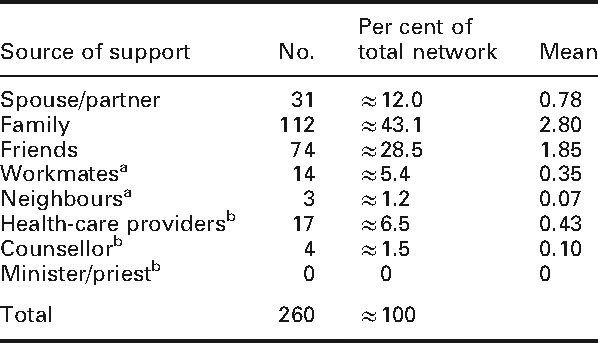
The informants answering the NSSQ (n = 40) listed a total of 260 people in their networks. The mean number of people in each network was 6.51. The size of the network ranged from 1 to 20 members. Relatives (spouse and family) and friends were listed most frequently, 55.1% and 28.5%, respectively (Table 3).
Social support (number of persons in personal network listed by the informants (N = 40))
aCould also be called non-professionals.
bCould also be called professionals.
Twenty-seven (87%) of the married and common law wives/husbands listed their spouses as the first person in their network. Informants reported an average of about three family members and about two friends in their network. The relationships lasted from less than six months (0.02%) to more than five years (87%).
Discussion
The concept of social support has received little attention in the area of diabetes and no previous investigations focusing on individuals’ perceptions of the content, need and desire for social support were found in the diabetes literature. The main results showed that all participants with diabetes, both men and women, described the meaning of the concept of support as mainly concerning informative and emotional support in managing the disease. In this study most women experienced support as limited or non-existent, especially when treated outside hospital/specialized care. In contrast, some men stated that they had been given informative support from health care professionals when diagnosed with diabetes. They also stated that the material support in terms of medication when diagnosed with diabetes was sufficient. Both men and women claimed the need for support to be individual, differing with regard to gender and age. Men were assumed to need more support than women, as women were considered to have better networks than men. Younger people were perceived to need more support in order to learn to live with the disease. The NSSQ measurement provided evidence that these persons with diabetes score low figures regarding total emotional support, total aid and total function. Men scored higher on emotional support, aid and networks than did women. The network size for most informants was small, which is less than that reported in previous studies using NSSQ (Norbeck et al., Reference Norbeck, Lindsey and Carrieri1983; Primomo et al., Reference Primomo, Yates and Woods1990; Berterö, Reference Berterö2000) but quite close to NSSQ findings from investigations of older persons with different chronic diseases (Penninx et al., Reference Penninx, van Tilburg, Kriegsman, Boeke, Deeg and van Eijk1999). Possible explanations for smaller social networks in subjects in this study, particularly women, compared to the population in general (Norbeck et al., Reference Norbeck, Lindsey and Carrieri1983) are their higher age or the disease either implying diminished network as a consequence of deteriorating health status, or the reverse, with negative influence on health by the limited network leading to development of diseases, eg, coronary heart disease (Östergren, Reference Östergren1991; Penninx et al., Reference Penninx, van Tilburg, Kriegsman, Boeke, Deeg and van Eijk1999; Zimmet and Alberti, Reference Zimmet and Alberti2006). Recent research has suggested that stress factors such as low decision latitude at work (Agardh et al., Reference Agardh, Ahlbom, Andersson, Efendic, Grill, Hallqvist, Norman and Ostensson2003) and social deprivation (Evans et al., Reference Evans, Newton, Ruta, MacDonald and Morris2000), often combined with limited social support (Östergren, Reference Östergren1991), are related to the development of diabetes. Thus, the buffering effect of social support is lost, the demands will increase and the control diminishes, negatively affecting health (Johnson and Hall, Reference Johnson and Hall1988; Karasek and Theorell, Reference Karasek and Theorell1990).
The results of this investigation showed that women experienced support as limited or non-existent while being diagnosed outside hospital/specialized care. This might be related to more women being treated with insulin, or a combination of drugs and insulin, indicating a more severe disease pattern posing higher demands on the individual and active self-care behaviour. Another explanation might be that the women, who have been shown in previous investigations of beliefs about health and illness, compared to men, take a more active and information-seeking approach in contrast to men who received more support from others and were satisfied with information given (Hjelm et al., Reference Hjelm, Nyberg and Apelqvist2002a; Reference Hjelm, Nyberg and Apelqvist2002b). The difference might also be related to the fact that more women were diagnosed outside hospital and specialized diabetes care, in contrast to men who were more often treated in hospitals. Previous studies have shown that competence in diabetes care has been experienced as low in staff working in Swedish primary health care (Hjelm et al., Reference Hjelm, Nyberg and Apelqvist2002a). Described perceived support was related, by the informants, to regular contact with competent staff, eg DSNs, while lack of perceived support was often related to poor communication, with physicians not listening to the patients or perceived as not being competent in diabetes care. Lack of support or limited support has been shown to have an impact on adherence to given advice and might affect glycaemic control (Charron-Prochownik, Reference Charron-Prochownik1991; Eriksson and Rosenqvist, Reference Eriksson and Rosenqvist1993; Burroughs et al., Reference Burroughs, Harris, Pontious and Santiago1997), self-care (Williams and Bond, Reference Williams and Bond2002) and denial of the disease (Toljamo and Hentinen, Reference Toljamo and Hentinen2001). The results in this study indicated low frequency of contact with staff specialized in diabetes care, with the exception of those being managed at the university hospital, who were content with care given. Thus, organizational matters with a lack of recommended management by diabetes care teams specialized in the area might explain the difference (Socialstyrelsen, 1999). The need and desire for support in this study was for regular check ups and contact with health care staff competent in diabetes care. Complaints about communication with physicians need to be considered and improved. Perceived lack of clear explanations might arouse emotions of anger and hostility (Vileikyte, Reference Vileikyte1999), increasing the level of stress and thus negatively influencing health.
In accordance with previous studies (Kahn and Antonucci, Reference Kahn and Antonucci1980), information and emotional assistance were claimed as the most important factors contributing to perceived social support, and this includes affect, affirmation and aid. Demographic variables such as age and gender did influence perceptions and individual differences were claimed by the informants. As previously shown, the need for support was perceived to be higher in young persons as the experience and understanding of diabetes develop over time (Öhrn, Reference Öhrn2001) and the need for support may vary during different phases of life (Simell and Åkerblom, Reference Simell and Åkerblom1997). Finally, it is important to consider the informant’s perceptions that social support is something individual.
A purposive sampling procedure with recruitment of informants diagnosed with Type 2 diabetes from an in-hospital diabetes specialist clinic was used and might be questioned, as the policy in Sweden, according to the national guidelines for management of these patients recommends management in PHC. However, the population found at this clinic gives a broad representation of persons with Type 2 diabetes, as most have their basic management of diabetes in PHC, and also have or have had contact with the clinic, eg by attending weekly diabetes classes initially when diagnosed and/or repeatedly in a day-care ward or are referred to the clinic for treatment of diabetes-related complications. The choice of this clinic gives a broad range of experiences that contributes to the strength of the study.
The trustworthiness of the results is further strengthened by the use of mixed methods, both qualitative and quantitative in data collection, the use of two researchers independently analysing data as well as the knowledge and pre-understanding of the researchers involved (Patton, Reference Patton1990; Creswell, Reference Creswell2003). The number of informants (40 persons) can be seen as limiting in relation to the statistical analyses (Altman, Reference Altman1994). However, the aim of using quantitative data for statistical analysis in this study was not to generalize results but, instead, provide contextual background information aimed at increasing the understanding of the content and meaning of the concepts support and social support. By using the principle of complementarity, a more complete understanding of the complex concept support/social support can be reached (Patton, Reference Patton1990; Creswell, Reference Creswell2003).
A further strength of the study is that the investigation was made from ‘the actor’s point of view’ or the emic perspective (Patton, Reference Patton1990). Such approaches provide for an increase in knowledge about individual beliefs and experiences, contribute to prevention of conflicting perspectives between lay persons’ and professionals’ beliefs and have the potential to improve adherence or compliance with given advice in diabetes care and thus promote health and prevent ill-health (Hjelm et al., Reference Hjelm, Nyberg and Apelqvist2000b; Reference Hjelm, Nyberg and Apelqvist2003).
Conclusions and recommendations
In conclusion, the experience of diabetes demands knowledge about managing the disease and self-care activities; thus, informative and emotional support is important in trying to gain control over the situation. The informants had a perceived lack of support, particularly when being diagnosed with diabetes, in contact with physicians and within primary health care.
The main implications of the study are the importance of giving adequate support, both emotional and informative, during the process of diagnosis of diabetes and ongoing over the long experience of diabetes. Information needs to be given in a manner that is understood and within an atmosphere where the individual is being listened to and feeling cared for. It is important to consider whether the person him/herself perceives that he/she has been given adequate emotional and informative support by competent staff and whether this support has increased the individuals’ capacity to manage their diabetes.
Acknowledgements
This work was supported by grants from The Swedish Diabetes Association (Svenska Diabetesförbundet) and the research profile AMER (Arbetsmarknad, Migration och Etniska Relationer (Labour Market, Migration and Ethnic Relations), University of Växjö, Sweden.



