


Adolescence encompasses profound biological, cognitive, social, and psychological transformations and is a period of heightened risk to psychological maladjustment (AIHW, 2011; Steinberg, Reference Steinberg2005). Over recent years there has been a delayed age at which adult social roles and responsibilities are adopted (Sawyer et al., Reference Sawyer, Afifi, Bearinger, Blakemore, Dick, Ezeh and Patton2012). The resulting protracted period of adolescence means that the amount and degree of transition experienced by modern adolescents is greater than before, resulting in increased risks for psychological and physical health (Gonzalez, Cassas, & Coenders, Reference Gonzalez, Cassas and Coenders2007).
Positive interpersonal relationships are fundamental for navigating the challenges of adolescence, with relationship experiences central to normative developmental processes and healthy psychosocial adjustment (Laursen & Mooney, Reference Laursen and Mooney2008). Parent and peer relationships are considered key for adolescents’ psychosocial functioning (Wilkinson, Reference Wilkinson2006) yet undergo significant changes during adolescence as parent–adolescent roles are renegotiated and best friendships and romantic relationships are established (Allen & Land, Reference Allen, Land, Cassidy and Shaver1999). Their influences on adolescent development are acknowledged, yet there is relatively little research documenting how changing networks of close relationships affect developing adolescents (Laursen & Mooney, Reference Laursen and Mooney2008).
In this study, we examine the relative associations of adolescent interpersonal relationships on psychological health in the context of individual differences in the history of close relationship encounters as represented by attachment expectancies. We focus on key figures in the adolescents’ network of close relationships (mothers, fathers, friends, romantic partners) and how aspects of attachment with these figures and the age of the adolescent are related to attachment styles and to psychological health indicators (depression and stress).
Attachment Theory
The central tenet underlying attachment theory is the presence of an innate attachment–behavioural system, influential across the lifespan, manifesting in behaviours that maintain proximity of an individual to their primary or secondary caregivers (Ainsworth, Reference Ainsworth1989; Rutter, Kreppner, & Sonuga-Barke, Reference Rutter, Kreppner and Sonuga-Barke2009). Attachment figures are defined by the selective orientation of four attachment functions (Proximity-seeking, Safe Haven, Separation Protest, and Secure Base) towards them and arranged in a hierarchy according to importance and ability to meet attachment needs (Doherty & Feeney, Reference Doherty and Feeney2004). Adolescence initiates a reorganisation of the composition of the attachment hierarchy whereby the attachment-behavioral system becomes more differentiated and diversified amid the search for partnerships with similar-aged peers (Ainsworth, Reference Ainsworth1989). Attachment functions are incrementally shifted from parents to peers during this process of attachment reorganisation, with romantic partners usually replacing parents as primary attachment figures in adulthood (Hazan & Zeifman, Reference Hazan, Zeifman, Bartholomew and Perlman1994).
Most research, however, does not focus on attachment networks but on individual differences in attachment security that arise from repeated interactions with primary caregivers. Over time, individuals are argued to construct cognitive models of the self and other based on these interactions that provide a template for future interpersonal interactions and related emotion regulation (Bartholomew & Horowtiz, Reference Bartholomew and Horowitz1991; Bowlby, 1969/Reference Bowlby1982; McCarthy & Maughan, Reference McCarthy and Maughan2010). These attachment models, or styles, influence current and future relationships and psychological adjustment, and comprise the main source of continuity between attachment experiences in infancy and attachment in adolescence and adulthood (Bretherton & Munholland, Reference Bretherton, Munholland, Cassidy and Shaver2008). There is a growing consensus that individual differences in these expectancies can be conceptualised along the two dimensions of ‘anxiety’ (preoccupation with relationships) and ‘avoidance’ (avoidance of intimacy; Brennan, Clark, & Shaver, Reference Brennan, Clark, Shaver, Simpson and Rholes1998; Crowell, Fraley, & Shaver, Reference Crowell, Fraley, Shaver, Cassidy and Shaver2008; Mikulincer & Shaver, Reference Mikulincer and Shaver2007).
Adolescent Attachment and Psychological Health
Researchers have traditionally adopted a different conceptualisation when considering adolescent attachment to that employed in the adult attachment literature. The focus with respect to adolescents has been on the quality of specific attachment relationships and their impact on adolescent psychological functioning rather than the assessment of attachment styles. The Inventory of Parent and Peer Attachment (IPPA; Armsden & Greenberg, Reference Armsden and Greenberg1987), for example, is by far the most commonly employed self-report measure of adolescent attachment (Wilson & Wilkinson, Reference Wilson and Wilkinson2012). Using the IPPA, a substantial body of research has linked attachment quality and adolescent wellbeing, and there is a consensus that the quality of both parent and peer relationships affect adolescent adjustment (Laible, Carlo, & Raefelli, Reference Laible, Carlo and Raffaelli2000; Wilkinson, Reference Wilkinson2004). However, there has been inconsistency regarding the relative importance of parental and peer relationships for various adjustment variables (Helsen, Vollebergh, & Meeus Reference Helsen, Vollebergh and Meeus2000). Further, interpretations of the IPPA as actually assessing attachment constructs have been called into question, with critics arguing that the IPPA does not assess attachment expectancies, or working models, but rather the general affective quality of attachment relationships (McElhaney, Allen, Stephenson, & Hare, Reference McElhaney, Allen, Stephenson, Hare, Lerner and Steinberg2009; Wilson & Wilkinson, Reference Wilson and Wilkinson2012). Attachment expectancies are important to measure because they purportedly comprise the main source of continuity between early representations of caregiver-child attachment security and current personality and interpersonal functioning (Bretherton & Munholland, Reference Bretherton, Munholland, Cassidy and Shaver2008), and have demonstrated direct influences on adolescent adjustment even within the context of relationship-specific attachment models (Klohnen, Weller, Luo, & Choe, Reference Klohnen, Weller, Luo and Choe2005; Zhang, Chan, & Teng, Reference Zhang, Chan and Teng2011).
Overall, the extant literature has been inconsistent about the relative importance of parent and peer attachment relationships for adolescent adjustment, with age effects reported in some studies. However, there is scant research identifying the effects of parents and peers within an evolving network of relationships and even less that investigates the effects of normative attachment reorganisation for adolescent wellbeing (Friedlmeier & Granqvist, Reference Friedlmeier and Granqvist2006). Among the exceptions, Rosenthal and Kobak (Reference Rosenthal and Kobak2010) demonstrated differences in attachment hierarchies between early adolescents, late adolescents, and college students, with individual differences in the placement of fathers and friends associated with internalising and externalising behaviours. Nominating friends and romantic partners as primary attachment figures was linked to increased risk-taking behaviours in early but not late adolescence for the latter, with peer nominations related to gender preferences (Nomaguchi, Reference Nomaguchi2008). In turn, Zhang and her colleagues (Reference Zhang, Chan and Teng2011) found the attachment reorganisation process to predict loneliness and positive affect independent of the effects of attachment styles and attachment support from parents and peers. Collectively, these studies underscore the importance of investigating multiple attachment figures, the potential moderating effect of age, and both normative attachment strength and individual differences in attachment models, to more comprehensively understand adolescent attachment and psychological health.
The Present Study
Based on the proposition that adolescents orient towards different attachment figures to fulfill various needs (Hazan & Zeifman, Reference Hazan, Zeifman, Bartholomew and Perlman1994), with multiple attachment figures important for promoting healthy adjustment (Laible et al., Reference Laible, Carlo and Raffaelli2000), the present study adopts a normative attachment strength approach in proposing that different attachment relationships will be associated with various aspects of adolescent adjustment (Friedlmeier & Granqvist, Reference Friedlmeier and Granqvist2006). Age effects are anticipated, with parental attachment more important for younger adolescents and peer attachment for older adolescents’ psychological health as attachment needs are incrementally reoriented from parents to friends and romantic partners (Wilkinson, Reference Wilkinson2006). Finally, this study simultaneously examines the influences of attachment anxiety and avoidance, and hypothesises that attachment expectancies will relate to adolescent psychological health independent of attachment strength, with attachment anxiety a better predictor than avoidance (Zhang et al., Reference Zhang, Chan and Teng2011).
Method
Participants
Participants were 522 high school student volunteers (170 males and 352 females) recruited from nine high schools in the Australian Capital Territory (ACT). Due to resource limitations, recruitment focused on Grades 7 and 8 for younger adolescents and Grades 11 and 12 for older adolescents, and students from Grades 9 and 10 (mid-adolescence) were omitted. Overall, ages ranged from 11.83 years to 19.17 years (M = 15.56 years, SD = 2.16). Participants (74.2%, n = 379) predominantly lived with both biological parents as reported by 79.8% of younger adolescents (n = 146) and 71.0% of older adolescents (n = 233). Based on joint parental occupational status, participants were of middle to upper socio-economic status. The majority of the participants (84.1%) identified themselves as Caucasian Australians.
Procedure and Measures
Public and private schools were contacted upon approval granted by the Australian National University (ANU) Human Ethics Committee and the relevant ACT Education Boards. Psychology and pastoral care coordinators of each school were then contacted if the school principal gave permission. Parental and participant informed consent were obtained through opt-in consent forms, with a questionnaire package including the following measures, administered to classes of students during normal school hours.
Attachment strength was assessed with the modified Attachment Network Questionnaire (modified ANQ; Doherty & Feeney, Reference Doherty and Feeney2004), a two-part measure identifying multiple attachment figures across attachment functions. Participants list parents, friends, and romantic partners and then nominate up to three individuals for two items assessing each of the four attachment functions. Individuals ranked first and second are given scores of 3 and 2 respectively, and those thereafter, a score of 1. A total attachment strength score is derived by averaging the sum of rankings across all functions for each category of person: mother, father, friend, and romantic partner (if applicable). Higher scores reflect greater attachment strength to an individual. Average internal consistency was high for the scales (Cronbach's α = .88).
Attachment expectancies (anxiety and avoidance) were assessed with the Experiences in Close Relationships–Revised–General Short Form (ECR–R–GSF; Wilkinson, Reference Wilkinson2011), a 20-item, self-report questionnaire with 10 items assessing attachment anxiety and 10 items avoidance in relationships. Items are statements of beliefs about relationships rated on a 5-point scale (1 = strongly disagree to 5 = strongly agree) and recoded as appropriate before summing. Higher scores reflect greater anxiety or avoidance in attachment relationships. Internal consistency was high for anxiety (Cronbach's α = .87) and avoidance (Cronbach's α = .86).
Romantic status was assessed with a single item and coded as either ‘No Romantic Relationship’ or ‘Romantically Involved’.
Two aspects of psychological health were evaluated. Depression was assessed with the short version of the Center for Epidemiological Studies Depression Scale (CES-D; Radloff, Reference Radloff1977), a 10-item, self-report questionnaire assessing the amount of depressive symptomatology experienced in the recent 4 weeks. Items are rated for their frequency of occurrence on a 4-point scale (1 = rarely or none of the time to 4 = most or all of the time). Scores are summed with higher scores reflecting more symptoms. Internal consistency was high (Cronbach's α = .90). Stress was assessed with a 16-item version of the Adolescent Stress Questionnaire (ASQ; Byrne, Davenport, & Mazanov, Reference Byrne, Davenport and Mazanov2007), adapted to assess overall stress experienced at home, in school, with peers, and about the future. Items are rated on a 5-point scale (1 = not at all stressful to 5 = very stressful) and scores summed with higher scores reflecting higher overall stress. Internal consistency was high (Cronbach's α = .86).
Demographics (i.e., gender, age, and ethnicity) were obtained with participants establishing their household members from nine choices (e.g., mother, step-mother or father's partner, grandparent/s). Participants also identified their parents’ occupations.
Results
Missing data identified on depression and stress ranged from 1.1% (n = 6) to 3.6% (n = 19). The group mode of all scores substituted for up to 10 missing values on any scale while regression was used to estimate and substitute missing values through missing values analyses (MVA) for scales exceeding 10 missing values. Preliminary checks revealed three multivariate outliers and eight adolescents who did not identify their romantic status. These were excluded from further analyses. The remaining 511 participants were categorised by years of schooling into either ‘Early Adolescents’ (Years 7 and 8) or ‘Late Adolescents’ (Years 11 and 12). There were 183 early adolescents with an average age of 12.84 years (SD = .52, 11.83 to 14.50 years) and 328 late adolescents whose ages ranged between 15.42 and 19.17 years (M = 17.14 years, SD = .63). The distribution according to gender (male vs. female) and romantic status (no romantic relationship vs. romantically involved) is presented in Table 1.
Distribution of Adolescents According to Cohort, Gender, and Romantic Status

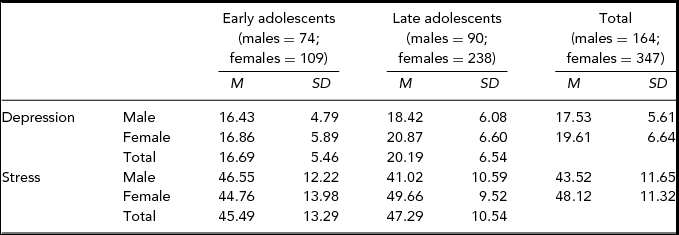
Table 2 presents the means and standard deviations for the psychological health variables (depression, stress). A two-way, between-subjects multivariate analyses of variance (MANOVA) was conducted according to cohort (early adolescents vs. late adolescents) and gender (male vs. female). A strict level of significance (p < .01) was adopted. Significant differences were found between early and late adolescents, F(3, 501) = 10.00, p < .001, Pillai's trace = .056, partial η2 = .056, and between the genders, F(3, 501) = 4.97, p = .002, Pillai's trace = .029, partial η2 = .029. There was a significant cohort by gender interaction, F(3, 501) = 3.88, p = .009, Pillai's trace = .023, partial η2 = .023. Follow-up F tests revealed that younger adolescents reported less depressive symptoms than older adolescents, F(1, 503) = 8.14, p = .005, partial η2 = .016. Adolescent females reported more depression, F(1, 503) = 9.26, p = .002, partial η2 = .018, and stress, F(1, 503) = 11.03, p = .001, partial η2 = .021, compared with males. Early and late adolescents significantly differed on stress according to gender, F(1, 503) = 9.36, p = .002, partial η2 = .018. Post-hoc t tests with Bonferroni adjustments revealed that late adolescent males reported less stress than early adolescent males, t(162) = 3.11, p = .002, with the opposite demonstrated among female adolescents, t(155.57) = −3.32, p = .001. Females indicated higher stress scores relative to males among late adolescents, t(326) = 7.10, p < .001, but early adolescent males and females shared similar self-reports of stress, t(181) = −.90, ns.
Means and Standard Deviations for Adolescent Depression and Stress According to Cohort and Gender
Correlation and Regression Analyses
Intercorrelations between the attachment and psychological health variables are presented in Table 3. Based on Cohen's (Reference Cohen1988) criteria, there was a moderate positive correlation between mother and father strength but strong to moderate negative correlations between the parental attachment ratings and the attachment ratings for friends and partners, indicating higher parental attachment was associated with lower peer attachments. Interestingly, higher partner scores, for those with a romantic partner, were moderately associated with lower friend attachment scores. The correlations between the relationship attachment scores and psychological health scores were variable, with more relationships with depression than stress. Anxious attachment was strongly to moderately associated with depression and stress while avoidant attachment was moderately related to depression but not stress. The correlation between depression and stress scores was moderate to strong but not so strong as to indicate a convergence on the same construct. Further, the pattern of correlations of the attachment variables with depression and stress differed and supported examining them separately as dependent variables. Intraclass correlations for depression (.111) and stress (.056) by school were examined in an intercept-only model in order to determine the effect of grouping by school sampled. While it cannot be ruled out that there may be some grouping effect, given these relatively small effect sizes and small sample sizes for some of the schools (e.g., n = 7), further analyses were conducted without considering this grouping.
Intercorrelations and Descriptive Statistics for Attachment and Psychological Health Measures
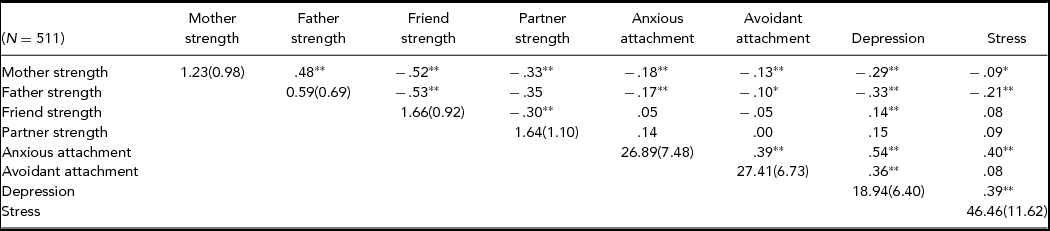
Note: Means and standard deviations are presented on the diagonal.
*p < .01, **p < .001.
To examine the relative contributions of attachment strengths (mother, father, friend, and romantic partner) and attachment dimensions (anxiety and avoidance) to predicting adolescent psychological health, hierarchical regression analyses (HMRs) were initially conducted separately for depression and stress for adolescents without (n = 341) and with romantic partners (n = 170). Demographics (age and gender) and the potential interaction of age with the attachment strength variable were also investigated. Predictors were included in a predefined order, beginning with the demographic variables, followed by the attachment strength variables, the interaction terms, and finally by anxiety and avoidance. Variables in the interaction terms were mean-centred (Jaccard, Turrisi, & Wan, Reference Jaccard, Turrisi and Wan1990) and interaction terms judged as significant based on R 2 change. If interaction terms were not significant, then standard multiple regression analyses (SMRs) were subsequently conducted to facilitate interpretation. Where significant interaction terms were found, another HMR was performed, entering only those significant interaction terms before the attachment dimension variables in the last step.
When predicting depression and stress among adolescents without romantic partners the initial HMRs revealed no significant interaction terms. Thus, Table 4 presents the results for the separate SMRs. Both the demographic variables and the attachment dimension variables significantly predicted depression and explained 47.4% of the variance in scores. In turn, gender, father strength, and anxiety explained 24.4% of the variance in stress. Anxiety was most predictive of both adjustment indices, with avoidance contributing to a lesser extent to depression. Between the two demographic variables, gender contributed to both outcomes while age only predicted depression. Of note, father attachment strength contributed to the variance in stress whereas mother and friend attachment strength were not predictive of the psychological health variables.
Multiple Regression Analysis for Variables Predicting Depression and Stress for Adolescents Not In a Romantic Relationship

Note: Depression R 2 = .47; Stress R 2 = .24.
*p < .05. **p < .01. ***p < .001.
Regression analyses for those adolescents with romantic partners revealed some significant interaction terms. With respect to depression (Table 5), gender was a significant predictor and continued to be so following the inclusion of the attachment strength variables in the second step where only mother strength related to adolescent depression. In step 3, gender and mother strength remained predictors with a significant age-by-friend strength interaction, explaining a further 2.8% of variance in depression. Mother strength became non-significant in the fourth step, with the inclusion of the attachment dimension variables explaining a further 18.8% of the variance in depression. For the final model, gender, the age by friend strength interaction, anxiety, and avoidance predicted 35.0% of the variance in depression.
Hierarchical Regression Analysis for Variables Predicting Depression Among Romantically Involved Adolescents
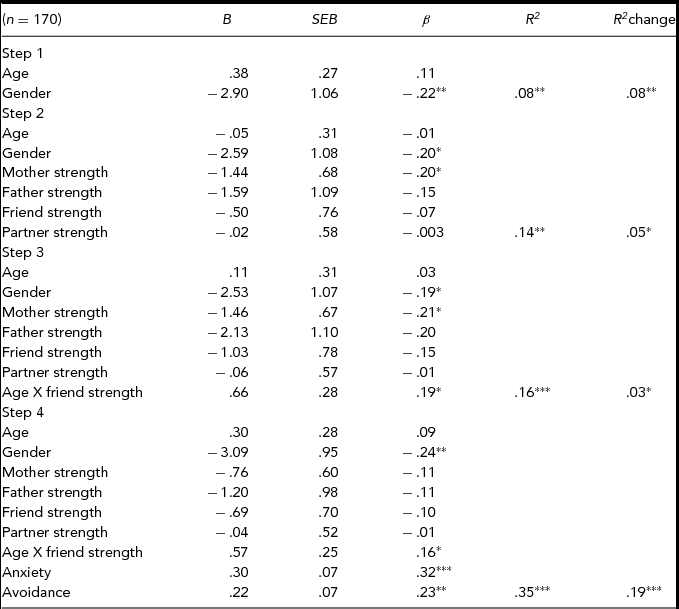
Note: *p < .05. **p < .01. ***p < .001.
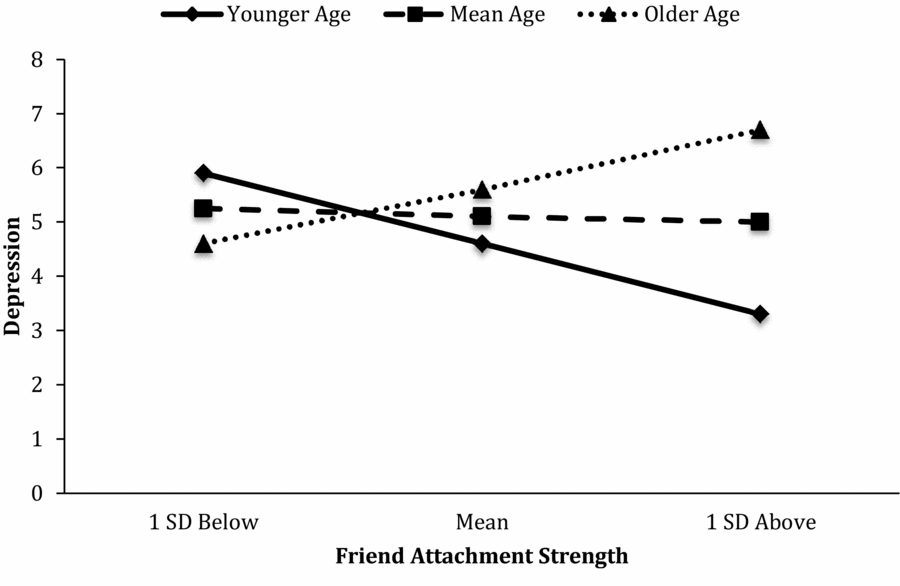
The interaction between age and friend strength is depicted in Figure 1. At lower levels of friend attachment strength (i.e., 1 SD below the mean), younger and older romantically involved adolescents reported an increase and a decrease in depression respectively. For younger adolescents in a romantic relationship, higher friend strength was associated with lower depression, but for older adolescents it seemed the reverse, with higher friend strength being associated with more depressive symptoms.
Two-way interaction between friend attachment strength (predictor) and age (moderator) in predicting depression among romantically involved adolescents.
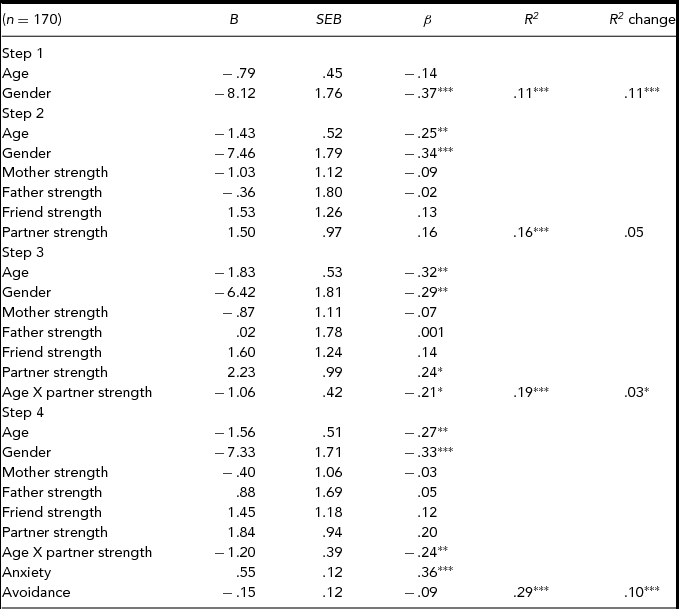
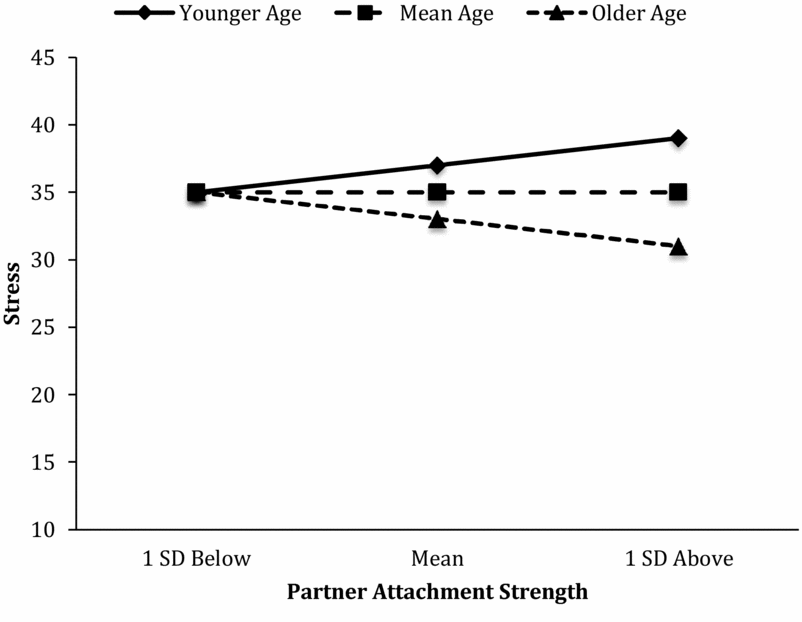
With respect to stress (Table 6), gender initially explained 11.3% of the variance, and age became significant in the second step with the inclusion of the attachment strength variables. However, none of the attachment strength variables were significant predictors. In step 3, partner strength and the age-by-partner strength achieved significance with the latter contributing a further 3.2% of variance in stress. Only anxiety significantly predicted stress, while partner strength became non-significant in the final step. The inclusion of the attachment dimensions additionally explained 10.2% of the variance. Age, gender, the age-by-partner strength interaction term, and anxiety contributed 29.0% of the variance in stress. As illustrated in Figure 2, the moderating effect of age on partner strength revealed that among younger, romantically involved adolescents, higher partner attachment strength was associated with increasing levels of stress, but for older, romantically involved adolescents, greater partner strength was associated with decreasing levels of stress.
Hierarchical Regression Analysis for Variables Predicting Stress Among Romantically Involved Adolescents
Note: *p < .05. **p < .01. ***p < .001.
Two-way interaction between partner attachment strength (predictor) and age (moderator) in predicting stress among romantically involved adolescents.
Discussion
The results of the present study convey some evidence of the complex interplay between adolescents’ attachment relationships and their psychological health. The relationships between normative attachment and adolescent psychological health were nuanced and complicated by factors such as the identity of the attachment figure, age, and romantic status. Consistent with Bowlby's (Reference Bowlby1969/1982) view that variations to the norm are detrimental for adolescent psychological health, attachment strength was found to demonstrate fewer associations with psychological health in the presence of individual differences in attachment expectancies. These findings underscore the importance of both different attachment relationships and attachment working models for psychological health depending on the developmental phase of adolescence.
Overall, older adolescents reported more psychological distress than younger adolescents, with adolescent females reporting more depression than males. In the case of stress, older females were significantly more stressed than older males. Attachment strength did not consistently predict adolescent psychological health. All attachment figures, excluding friends, initially predicted some variance in adolescent adjustment prior to accounting for attachment expectancies. Moreover, it was fathers who were uniquely predictive of stress among romantically uninvolved adolescents. Accordingly, their relative associations with adolescent psychological adjustment may reflect the roles that attachment to each figure performs rather than the amount of attachment needs being fulfilled.
While fathers are generally least used among attachment figures regardless of age, gender, or romantic involvement (Freeman & Brown, Reference Freeman and Brown2001), adolescents who do not use their fathers for attachment functions may be at risk of internalising and externalising behaviours (Rosenthal & Kobak, Reference Rosenthal and Kobak2010). Fathers facilitate independence, the ability to regulate overwhelming emotions when stressed, and aid coping with overstimulation (Hazen, McFarland, Jacobvitz, & Boyd-Soisson, Reference Hazen, McFarland, Jacobvitz and Boyd-Soisson2010). The importance of fathers in predicting stress might therefore be more pronounced during adolescence because developmental tasks, such as individuation from parents and the formation of supportive peer and romantic relationships, are highly stressful for many individuals (Howard & Medway, Reference Howard and Medway2004). Potentially, this explains why father attachment was not predictive of stress among romantically involved adolescents, as they may already have successfully navigated these developmental tasks.
Conversely, using peers for support-seeking and affiliative functions is suggested to facilitate the formation of attachment bonds with friends and is less problematic (Rosenthal & Kobak, Reference Rosenthal and Kobak2010). Friendships are characterised by proximity-seeking and safe-haven functions, and friends may function as ad-hoc attachment figures for safe haven and secure base functions without becoming a primary or secondary attachment figure (Waters & Cummings, Reference Waters and Cummings2000). Friends in this study may have served as ad-hoc attachment figures while providing support-seeking and affiliative functions, and hence have limited contributions to adolescent adjustment.
Whereas no moderating effect of age for parental attachment was found, age moderated the relationship between friend strength and depression, and between partner strength and stress among romantically involved adolescents. Early adolescents reported less depression with higher friend attachment but more stress if greater partner attachment was reported. Conversely, late adolescents experienced increased depression and lower stress when they reported more attachment to friends and romantic partners respectively. Early and late romantically involved adolescents also demonstrated similar stress levels, with lower partner attachment but higher and lower depression respectively with greater friend attachment. Although only partially supporting the hypotheses, these results support the importance of parental attachment figures within the expanding adolescent attachment network, and demonstrate that the importance of peers for adolescent psychological health is partially determined by that considered developmentally appropriate at each stage of adolescence.
A key developmental task in adolescence is the establishment of autonomy and decreased reliance on parents as attachment figures. A decline in utility but not in perceptions of availability of parents for attachment needs is considered normative as adolescents internalise expectations of parental availability and become less dependent on parents in various ways (Scharf & Mayseless, Reference Scharf and Mayseless2007). Aligned with an attachment reorganisation perspective, parents remain important attachment figures in adolescence even though attachment behaviours are likely directed towards them only in stressful or emergency situations (Steinberg, Reference Steinberg, Feldman and Elliott1990). Age may therefore fail to moderate the relationship between parental attachment strength and adolescent adjustment because adolescents continue to be assured of their parents’ commitment to them as attachment figures even while they reorient towards peers for attachment.
The development of romantic relationships is another hallmark task of adolescence. Romantic involvement can, however, have an impact on adolescent adjustment, depending on whether it is considered developmentally appropriate relative to one's peers. For early adolescents, romantic involvement can lower depression and enhance feelings of closeness with friends by eliciting discussion and advice seeking on romance and sexuality (Scharf & Mayseless, Reference Scharf and Mayseless2007). Yet romantic involvement in early adolescence can be stress provoking, whereby individuals reporting higher partner attachment might find their romantic partners unable to provide the desired social provisions (Furman & Wehner, Reference Furman, Wehner, Montemayor, Adams and Gullota1994). Moreover, early adolescents may lack the experience or coping skills required to manage stress in their romantic relationships and the accompanying social pressures that can tax their emotional and cognitive resources (Margolese, Markiewicz, & Doyle, Reference Margolese, Markiewicz and Doyle2005). Romantically involved early adolescents are also potentially more prone to depression if they report lower friend attachment, as they likely lack the mastery and competence necessary for establishing positive social interactions and reenact these negative interaction patterns in romantic relationships (Brendgen, Vitaro, Doyle, Markiewicz, & Buko, Reference Brendgen, Vitaro, Doyle, Markiewicz and Bukowski2002).
Late adolescents, however, may benefit from having higher partner attachment because they are already more experienced and competent in coping with stressors in their romantic relationships (Nieder & Seiffge-Krenke, Reference Nieder and Seiffge-Krenke2001). Romantic relationships in later adolescence are also potentially less stressful because they are more confident of their romantic partner's ability to provide the support and caregiving required to fulfill attachment needs (Shulman & Scharf, Reference Shulman and Scharf2000). However, romantic involvement could heighten depression among late adolescents reporting higher friend attachment by creating jealousy or resentment on either part of friend or romantic partner, which leads to conflict or social exclusion (La Greca & Harrison, Reference La Greca and Harrison2005). This may be particularly pronounced among older adolescents whose status or rivalry within the peer group is tied to the presence of romantic partners (Nieder & Seiffge-Krenke, Reference Nieder and Seiffge-Krenke2001).
Full support was demonstrated for the hypotheses regarding the unique relationships between attachment expectancies and adolescent psychological health. Anxiety was the largest predictor of depression and stress for all adolescents regardless of romantic status, with avoidance important to a lesser extent (excepting stress). These findings add to the extant literature indicating insecure attachment models as a risk factor for psychopathology and affirm previous research demonstrating the ways in which reliance on these secondary attachment strategies of affect regulation may differentially impact on multiple indices of adolescent psychological functioning (Mikulincer & Shaver, Reference Mikulincer and Shaver2007).
Similar to earlier research, anxiety was found more predictive of adolescent psychological health than avoidance. The profile that characterises attachment anxiety resembles more the patterns of cognition and expectations demonstrated in depression (Davila, Ramsay, Stroud, & Steinberg, Reference Davila, Ramsay, Stroud, Steinberg, Hankin and Abela2005), with hyperactivating strategies intensifying self-doubts and increasing vulnerability to rejection or abandonment (Mikulincer & Shaver, Reference Mikulincer and Shaver2007). Moreover, these hyperactivating strategies result in the magnification of threats with anxious individuals engaging emotion-focused coping strategies that lead them to interpret negative interpersonal events in terms of personal unworthiness or incompetence and to view their coping resources as inadequate (Margolese et al., Reference Margolese, Markiewicz and Doyle2005).
By contrast, the deactivating strategies adopted by attachment avoidant individuals enable them to distance themselves either cognitively or behaviourally from emotionally upsetting issues by diverting attention from threat cues or inhibiting elaborate encoding of information (Mikulincer & Florian, Reference Mikulincer, Florian, Simpson and Rholes1998). Their ability to engage in negative coping (Howard & Medway, Reference Howard and Medway2004) may help alleviate stress except when faced with chronic stress or under a cognitive load (Mikulincer & Shaver, Reference Mikulincer and Shaver2007). The lack of association between avoidance and stress demonstrated here may have resulted because the use of a self-report instrument was insufficient for conferring a cognitive load capable of diminishing avoidant adolescents’ ability to suppress stress-related thoughts.
Limitations and Future Directions
Attachment reorganisation instigates a complex restructuring in the meaning, functions, and composition of the attachment hierarchy (Rosenthal & Kobak, Reference Rosenthal and Kobak2010), and causal inferences about adolescent attachment and adjustment cannot be made from the cross-sectional design of this study. Future longitudinal studies should examine adolescent attachment over an extended period of time, preferably from the onset of adolescence to early adulthood, to elucidate the pattern of changing relationships for adolescent psychological health while accounting for the developmental stage of adolescence. Future research would also benefit from incorporating other indicators of attachment such as behavioural experiments or attachment priming that bypass concerns regarding cognitive accessibility of attachment figures and elicit less guarded responses than self-report questionnaires (Hazan, GurYaish, & Campa, Reference Hazan, Gur-Yaish, Campa, Rholes and Simpson2004). Further, adolescents have multiple attachment representations, with the related yet distinct relationship-specific attachment models of parents and peers previously shown to differentially predict adolescent adjustment beyond the influences of general attachment expectancies (Furman, Simon, Shaffer, & Bouchey, Reference Furman, Simon, Shaffer and Bouchey2002; Klohnen et al., Reference Klohnen, Weller, Luo and Choe2005). Investigating both general attachment expectancies and the more contextualised and relationship-specific attachment models will allow future research to more accurately discern the importance of interpersonal relationships for adolescent psychological health. These interpersonal relationships could have further implications for adolescent adjustment because of the increased diversity of family structures and rising divorce rates.
The current study only focused on two aspects of psychological health, depression and stress. While these ‘internalising’ constructs are well-established indicators of adjustment, it is important that future research examine ‘externalising’ symptoms such as substance use, aggression, and conduct issues. There is an established relationship between parental attachment relationships and these behaviours (e.g., de Vries, Hoeve, & Stams, Reference De Vries, Hoeve and Stams2016; Muris, Meesters, & van den Berg, Reference Muris, Meesters and van den Berg2003), yet the role of the broader attachment hierarchy is relatively unexplored. Further, the sample used in this study, while of reasonable size, could not be said to be randomly selected and is, on average, of higher socio-economic status than the broader Australian community. Thus, some caution is warranted in generalising these findings. Further research using larger and more representative samples would have considerable benefits in enhancing the generalisability of findings, particularly with respect to adolescents in romantic relationships, and allowing the use of techniques such as multilevel modelling (Muthén, Muthén, & Asparouhov, Reference Muthén, Muthén and Asparouhov2016) to explore differences across classes, schools, and socio-economic status.
Conclusion
Adolescence is a process, and the present study provides a snapshot of adolescent attachment relationships and their associations with psychological health. Adopting a normative attachment perspective allows for a better understanding of how the evolution of interpersonal relationships within the expanding attachment hierarchy may relate to the influences that specific attachment relationships have for adolescent adjustment. Parents — especially fathers — remain influential for adolescent psychological health, particularly as adolescents navigate the key developmental tasks that enable them to subsequently adopt the social responsibilities of adulthood. On the other hand, the influences that peers have on adolescent adjustment depend on the developmental stage of adolescence and the index of psychological health being assessed, rather than just the extent to which either friends or romantic partners fulfill attachment needs. Importantly, individual differences in relationship histories, as indicated by attachment expectancies, appear to contribute significantly to adolescent psychological distress. Interventions should account for both the individual variability present in adolescent development, and the external factors of interpersonal relationships and environmental contexts surrounding the adolescent. Through harnessing the potential of interpersonal relationships and recognising individual idiosyncrasies in adolescent development, interventions may be developed to ameliorate the prevalence of adolescent psychological distress.
Acknowledgments
The authors would like to acknowledge the support of the public and private schools in the ACT who assisted with this research.
Financial Support
This research was funded by a Research School of Psychology PhD Scholarship from The Australian National University (YLDG).
Conflicts of Interest
None
Ethical Standards
The authors assert that all procedures contributing to this work comply with the ethical standards of the relevant national and institutional committees on human experimentation and with the Helsinki Declaration of 1975, as revised in 2008.



