

Introduction
Scientists are rapidly developing and deploying a new type of magnetic resonance imaging (MRI) technology that is accessible and highly portable.Reference Kimberly1 Portable MRI (pMRI) technology promises to facilitate field-based and bedside MRI research and clinical use, and has the potential to engage rural, economically disadvantaged, and historically underrepresented populations in neuroimaging research.Reference Deoni2 However, pMRI research with new study populations raises pressing ethical, legal, and societal issues (ELSI) that need to be addressed.3
Portable MRI is not a single technology, but rather refers to a category of new scanners that vary in field strength (including ultra-low-field, low-field, and high-field), size, cost, and portability. Given their novelty and potential for rapid adoption producing transformative change, it is imperative to identify the most important ethical and legal issues early in their adoption cycle.
At present these technologies are still in development or have recently come to market. In the United States, Hyperfine, Inc. was created to develop ultra-low-field (ULF) MRI technology in 2014,4 with the Hyperfine Swoop system receiving FDA clearance in 2021.5 The National Institutes of Health (NIH) Brain Research Through Advancing Innovative Neurotechnologies (BRAIN) Initiative began funding research on Imaging Human Brain Function with Minimal Mobility Restrictions (1U01EB025153-01) in 2017, and the prototype machine supported by that grant was completed in 2023.6 The European Research Council first awarded an Advanced Grant for Portable and Sustainable Magnetic Resonance in 2020.7 This grant facilitated development of an open-source, compact, low-field MRI scanner kit that was shipped from the Netherlands to Uganda, where it was assembled locally.Reference Webb and Obungoloch8 The technology is developing rapidly.
This emerging technology raises a number of ELSI issues. To help identify the ELSI issues surrounding pMRI research and potential solutions, we surveyed expert stakeholders on ELSI challenges associated with pMRI.Reference Reed9 Stakeholder surveys are used regularly in bioethics analyses of emerging technologies to refine understanding of potential use cases, consider what ethical guidance is germane, and identify gaps in ELSI guidance.Reference MacDuffie, Ransom and Klein10 Here, our stakeholder survey was anticipatory in nature, as it was administered in 2022 when only a small number of pMRI machines were in research use. Our focus in the survey and in the article was new “highly portable” MRI such as the technology supported by the NIH BRAIN Initiative,11 as distinct from previous versions of traditional MRI in a trailer or on a flatbed truck.12 We use the term “portable MRI” (pMRI) to mean highly portable MRI.
The survey was developed with the input of an interdisciplinary Working Group (WG).Reference Shen13 During WG meetings we presented survey design and question wording, and incorporated WG feedback into revised versions of the survey. We also leveraged the WG’s expertise to identify potential survey respondents to add to our recruitment list. After the survey data were collected, the WG was presented with initial results, and the WG utilized that information, in conjunction with a survey of the general public (to be published separately), to inform the development of WG consensus recommendations on ethical conduct of pMRI research.14 As discussed in the consensus recommendations, expert stakeholders’ input is necessary but not sufficient for development of ELSI recommendations. Also critical is community-level input.15
An extensive literature on ELSI issues related to traditional fixed MRI research has emerged over the past two decades.Reference Illes16 Those issues include managing incidental findings (IFs),Reference Murphy and Weijer17 data sharing and data privacy,Reference Jwa and Poldrack18 communicating results to research participants,Reference Wilkenfeld, Orbell and Lingler19 the use of neuroimaging research for non-medical purposes such as legal evidence, and the use of artificial intelligence (AI) in MRI analysis.Reference Ienca and Ignatiadis20 That ELSI literature includes surveys to assess neuroscience researcher perspectives on open science practices,Reference Paret21 expert views on ethics issues related to incidental findings,Reference Phillips22 and disclosure of research results to research participants.Reference Shoemaker23 We designed our stakeholder survey to build on this existing knowledge base, and to guide the responsible development of pMRI technology and its deployment in research.
We invited a broad cross-section of professionals to participate in an online survey. Invitees were: (1) researchers using MRI or developing new hardware and software; (2) neuroethics and legal scholars; (3) neuroimaging and radiology industry professionals; (4) leaders in standard-setting professional organizations; (5) representatives from patient advocacy organizations; (6) insurance professionals; (7) experts in relevant legal issues such as HIPAA; and (8) relevant experts in regulation and relevant regulators themselves.
Our expert stakeholder respondents (N=114) identified multiple ELSI issues as important, with the most urgent being: (1) ensuring safety of the scan and scanning environment; (2) preparing for the possibility that research participants may receive inaccurate or alarming individual-specific results or incidental findings, without access to follow-up assessment and care; and (3) addressing the possibility that the pMRI research team may misinterpret or miscommunicate the results of the brain data. To address these concerns, stakeholders prioritized establishing clear thresholds for when to return incidental findings, and establishing mechanisms for quality assurance and quality control when acquiring MRI data in the field.
I. Methods
A. Overview
This stakeholder survey was part of a larger project on “Highly Portable and Cloud-Enabled Neuroimaging Research: Confronting Ethics Challenges in Field Research with New Populations,” funded by the NIH BRAIN Initiative (RF1MH123698). Design of the stakeholder survey was led by the project’s Principal Investigators (Lawrenz, Shen, and Wolf), with extensive input from the project’s interdisciplinary Working Group (WG). Over the course of the project, the WG included 15 members with expertise in neuroscience, neuroimaging, radiology, research ethics, community engagement, law, neurology, and artificial intelligence. The survey and data collection methods described below met criteria for exemption from institutional review board (IRB) review (Delphi Survey: UMN IRB #STUDY00010304; Stakeholder Survey: UMN IRB #STUDY00015699; Harvard IRB #IRB22-0987).
This project builds on two previous publications from our group that preliminarily identified ELSI issues associated with pMRI research.24 Based on the initial roster of ELSI issues discussed in those publications, we deployed a modified Delphi survey with our WG. First used by the RAND Corporation,Reference Dalkey and Helmer25 the Delphi method “is a systematic, intuitive forecasting procedure used to obtain, exchange, and develop informed opinion on a particular topic.”Reference Rayens and Hahn26 A modified Delphi approach has been used in bioethics research, including projects to identify key ethical and legal issues in genetics and genomics and in other areas of rapid technology development.Reference Wolf27 We utilized the Delphi process to refine the initial roster of ELSI issues for use in this stakeholder survey.28
The text of the stakeholder survey was then further developed by the PIs in consultation with the WG. Through an iterative process led by the PIs, the WG developed a list of potential ELSI issues, potential benefits to research participants, potential concerns, and potential solutions related to portable MRI research. This list was further reviewed by the PIs, who then developed text for a Qualtrics-based stakeholder survey (see online Supplemental Materials for full text of survey).29 Qualtrics, a web-based tool for administering surveys, has been used in many fields, including bioethicsReference Wangmo and Provoost30 and neuroethics.Reference Cancer31
B. Respondent Recruitment
We recruited expert stakeholders in fields relevant to pMRI research. From August 2021 - April 2022 our research team worked to create a recruitment database with 863 expert names and email addresses. English-speaking stakeholders were identified through systematic keyword searches in NIH RePORTER, PubMed, and Google Scholar; review of the 89 member organizations of the American Brain Coalition (ABC); review of conference presentations and leadership at over 20 relevant professional groups, including the American College of Radiology, International Society for Magnetic Resonance in Medicine, and Radiological Society of North America; review of neuroethics and neurolaw scholarship related to neuroimaging; review of industry leadership in neuroimaging (e.g., companies in the Medical Imaging & Technology Alliance); and snowball techniques using key informants to identify leaders in organizations that set standards governing neuroimaging technology and research. These methods allowed us to create a stakeholder database of individuals with experience across eight overlapping categories:
-
• Group 1: Researchers utilizing MRI and developing new MRI hardware and software;
-
• Group 2: Neuroethics and legal scholars publishing on topics relevant to ELSI analysis of pMRI;
-
• Group 3: Stakeholders in the neuroimaging and radiology industries, including corporate leadership, technology and business developers, compliance officers, ethics authorities, and legal counsel;
-
• Group 4: Leaders in standard-setting professional organizations in neuroimaging;
-
• Group 5: Representatives from patient advocacy organizations relevant to expansion of neuroimaging research;
-
• Group 6: Stakeholders in insurance (e.g., Board Members of the America’s Health Insurance Plans (AHIP), the national trade association for companies providing health care coverage, and Members of the Medicare Evidence Development & Coverage Advisory Committee (MEDCAC));
-
• Group 7: Experts in relevant legal issues beyond neuroethics (e.g., HIPAA, privacy law); and
-
• Group 8: Experts in relevant regulation and relevant regulators themselves (e.g., members of the FDA Neurological Device Panel, FDA staff members in relevant divisions, leaders at the Agency for Healthcare Research and Quality).
Between May and October 2022, one of the PIs (FXS) invited each identified stakeholder to participate anonymously in the survey. He sent a personalized email that included a link to the survey on Qualtrics. No compensation was provided to those stakeholders who participated. Of the 863 invitations sent, 114 stakeholders completed the survey — a response rate of 13.2%. This is similar to the 11% response rate in Illes et al.’s 2004 survey of neuroimagers on disclosure of incidental findings in neuroimaging research,Reference Illes32 the 17% response rate in Lombera et al.’s 2010 survey of neuroscience graduate program directors and training grant PIs,Reference Lombera33 and the 15% response rate in Benitez et al.’s 2014 study of neuroimaging training among neuropsychologists.Reference Benitez, Hassenstab and Bangen34
C. Sample Characteristics
The final sample, consisting of 114 stakeholders who completed the survey, included respondents from all eight groups listed in the previous section. Thirty-three percent (33%) of respondents indicated they had a background in the natural sciences (e.g., biology), 18% in the social sciences (e.g., public policy), 39% in law/ethics, and 21% in medicine (e.g., radiology). These numbers add to more than 100% because some respondents indicated a background in two fields rather than just one. 71% of respondents indicated they were primarily employed in academia, 11% in nonprofits (including patient advocacy), 8% in clinical research, 6% in government, 3% in clinical care, and 1% in the private sector. Regarding highest level of education, 71% held a PhD or DPhil, 16% held an MD, 7% held a JD, 5% held a Master’s degree, 5% held a Bachelor’s degree, and 2% held an MBA. The total percentage adds up to greater than 100% because some respondents had multiple degrees, e.g., MD and PhD, and we counted them in both categories.
The median age of the sample was 50 years old (M = 50.6, SD = 12.7) and participant ages ranged from 26 to 80 years old. The sample was 44% female and 56% male. With respect to self-identified race and ethnicity, 84% of the sample identified as White, 5% as Asian, 4% as Black, 4% as multi-racial, 2% as Hispanic/Latino, and 1% as Other. The sample was primarily U.S. based, with 81% of respondents located in the U.S. and 19% located outside it.
Although there may be some important group differences in survey responses — for example, respondents with a background in biology may have different views from respondents with a background in the social sciences — we did not conduct formal group comparisons due to the small Ns involved. Future work could investigate differences, including comparisons between stakeholders in the United States and those from other countries.
D. Survey Instrument
The full text of the survey can be found in the online Supplemental Materials.35 Invited stakeholders who clicked on the survey link read an information sheet and provided informed consent. Next, respondents provided information about their primary areas of expertise (selecting up to two) and their primary field of employment. For both questions, respondents could select from a list of response options or provide their own description.
The next set of questions concerned respondents’ relationship to pMRI technology and their familiarity with different types of brain imaging technology. The relationship question provided respondents with a list of nine options to describe their relationship to pMRI technology and asked them to select all options that were applicable to their own experience. The familiarity question asked respondents to indicate on a 5-point Likert scale how familiar they were with seven different brain imaging technologies: (a) traditional, fixed, high-field MRI; (b) high-field MRI in a large truck or trailer; (c) portable low-field and ultra-low field MRI; (d) magnetoencephalography (MEG); (e) Positron Emission Tomography (PET); (f) Functional Near-Infrared Spectroscopy (fNIRS); and (g) Electroencephalography (EEG).36
On the next screen, respondents were presented with a short vignette and graphic describing potential pMRI research use (Figure 1).
Presentation of Portable MRI Research Vignette to Respondents in the Stakeholder Survey

The vignette was intended to orient respondents to pMRI research and illustrate the possibility that pMRI research might be different from fixed MRI in important ways including geographic location, who is conducting the research, and practices (such as providing a brain health scan to participants).
Following the vignette, four sections of the survey elicited respondents’ attitudes about the use of this technology in research. In these sections we probed respondents’ views on “MRI research outside of a hospital setting with new, highly portable MRI technology.” The phrase “MRI research outside a hospital setting” was meant to capture both clinical research and non-clinical research, as both are actively underway with pMRI technology outside of hospitals. pMRI research is also taking place within hospitals, but in this survey, we wanted our respondents to focus on pMRI research occurring “outside a hospital setting,” as this raises potential issues such as how to manage incidental findings when discovered in research far from a medical center. The vignette text prompted respondents to think about pMRI at many locations, including outside a participant’s home.
The first three sections followed the same format: Respondents were asked to rate the importance of several items and then asked to select the most important item from that list. The first section focused on 10 potential ELSI issues associated with pMRI research (see Table 1 for the wording of each issue). Respondents were instructed to rate the importance of each issue using a 4-point Likert scale: (1) Not at all important, (2) Slightly important, (3) Moderately important, and (4) Very important. Then respondents were asked to identify which issue they thought was the most important to address. In the second and third sections, respondents did the same, but with a list of 7 potential benefits to research participants and 11 potential concerns that might arise in this kind of research (see Table 2 for the wording of each item). The response scale for the benefits items was the same as that for the ELSI issues. However, the response scale differed slightly for the concerns items: (1) Not at all concerned, (2) Slightly concerned, (3) Moderately concerned, and (4) Very concerned.
Wording of Survey Item on Potential Ethical, Legal, and Societal Issues.
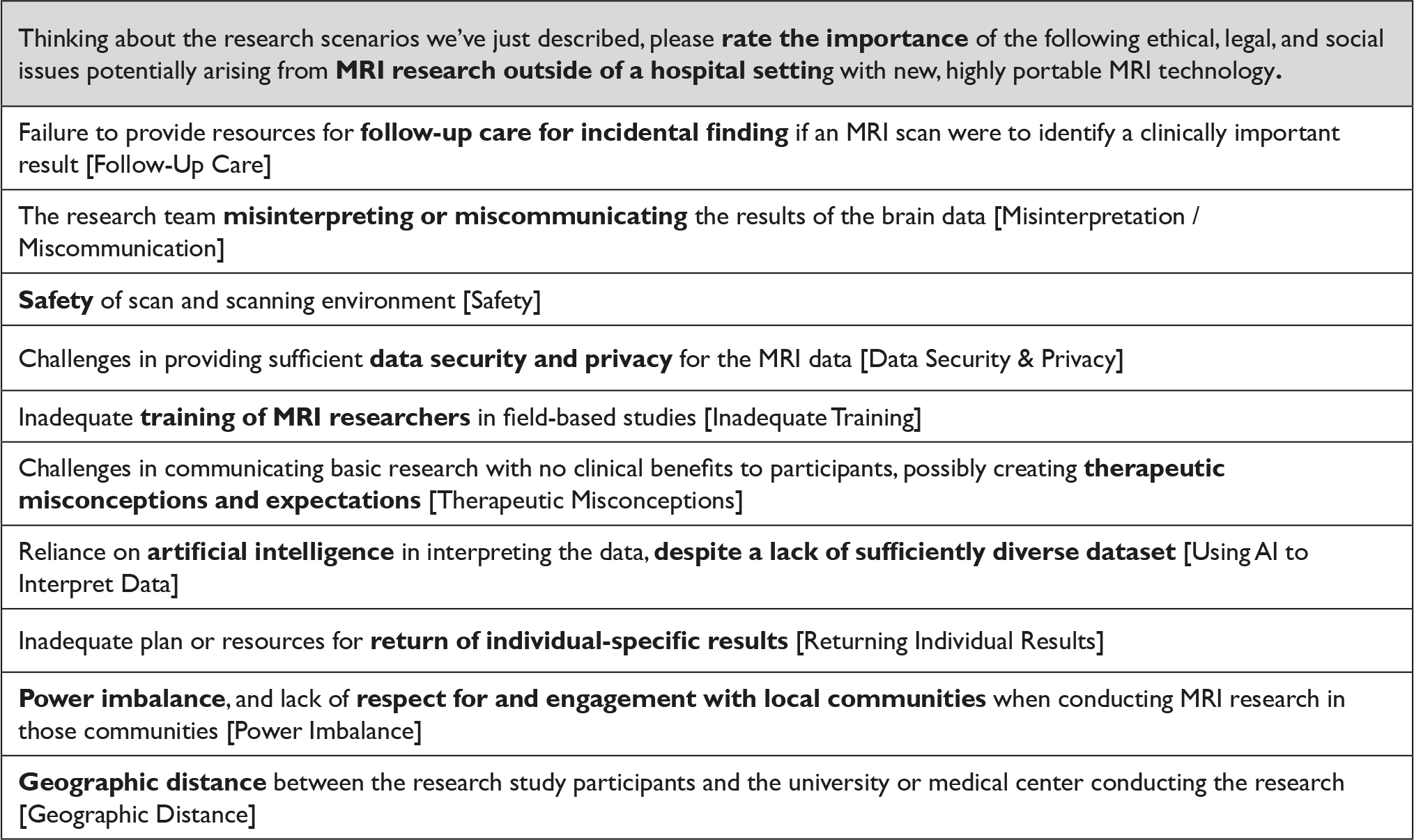
Note: Items were randomly presented to avoid order effects. Language bolding was in the original survey. Bracketed language [ ] was not included in the original survey; the bracketed language presents the labels for each item, as used in figures and tables in this article.
Wording of Survey Items: Potential Benefits and Potential Concerns.
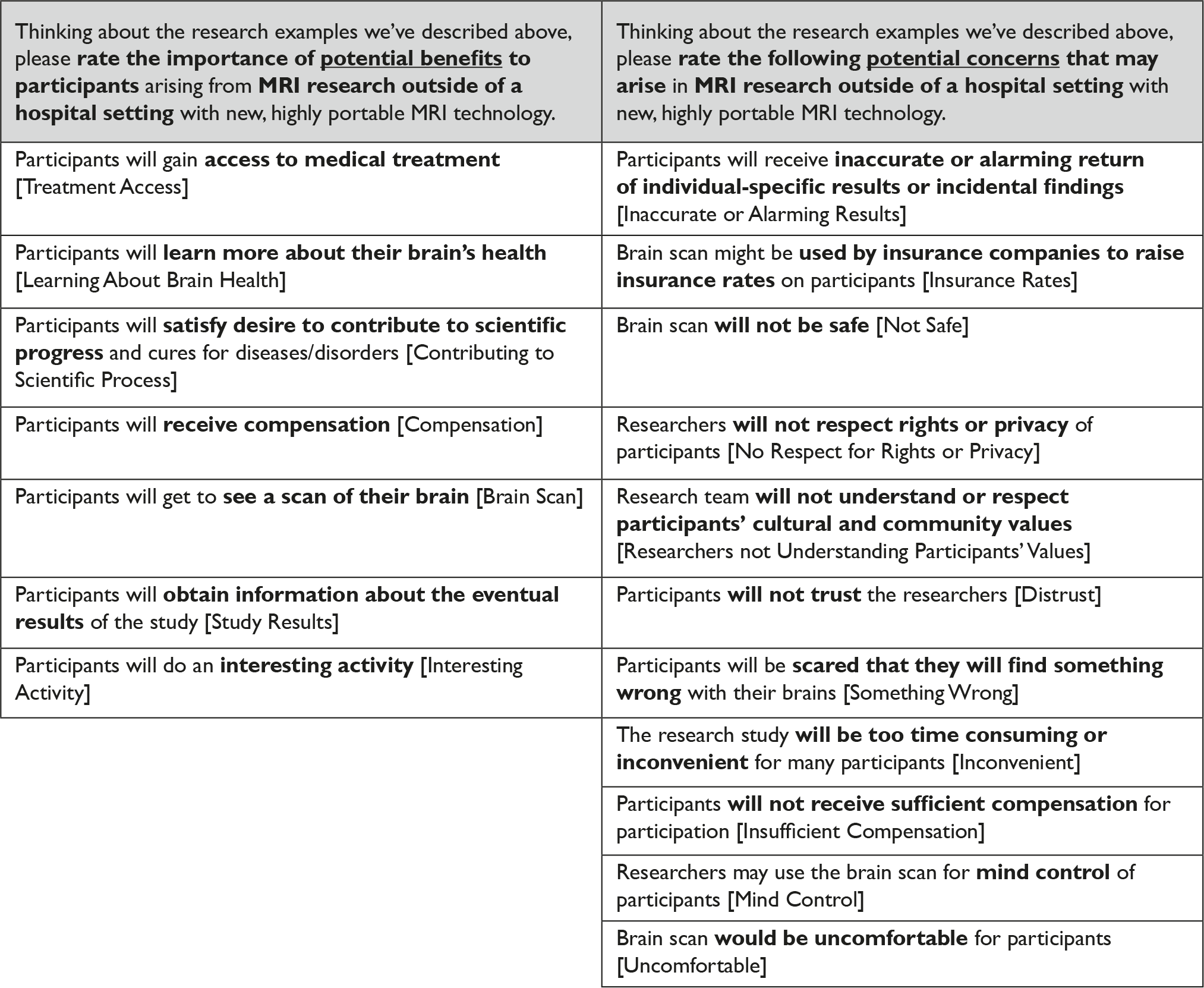
Note: Items were randomly presented to avoid order effects. Language bolding and underlining was in the original survey. Bracketed language [ ] was not included in the original survey; the bracketed language presents the labels for each item, as used in figures and tables in this article.
We included a broad range of potential concerns that might arise in pMRI research. We intentionally did not restrict the list to only those concerns that seemed most likely, as the point of the survey was to garner expert stakeholder opinion on the importance of a wide range of potential concerns. To illustrate, we probed whether our respondents saw disclosure of MRI research scans to insurance companies as a concern, recognizing that our expert stakeholder respondents might not view this as an important concern if they felt sufficient safeguards already deterred this practice. In addition, we included “mind control” as a potential concern because even though it may not be possible and expert stakeholders may not have that concern themselves, they may see it as a potential public concern arising from pMRI research in new populations.
The following section was similar to the previous three but did not include a “most important” question. Respondents were presented with a list of 19 potential solutions and asked to rate how helpful each solution would be (see Table 3 for the wording of each solution). Responses were measured using a 4-point Likert scale: (1) Not at all helpful, (2) Slightly helpful, (3) Moderately helpful, and (4) Very helpful.
Wording of Survey Items: Potential Solutions for Addressing ELSI Challenges.
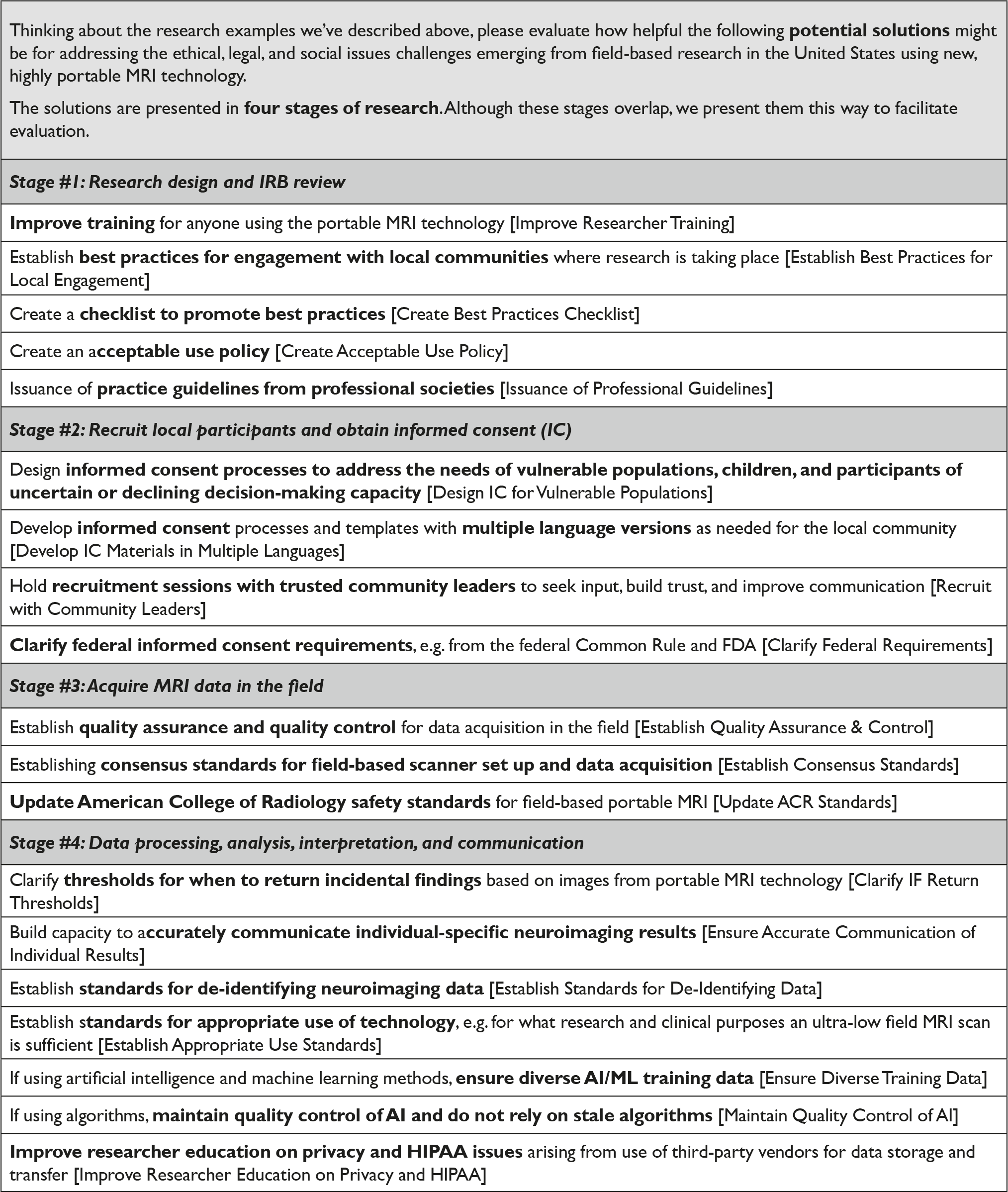
Note: Language bolding was in the original survey. Bracketed language [ ] was not included in the original survey; the bracketed language presents the labels for each item, as used in figures and tables in this article.
In the final section of the survey, respondents provided demographic information and were given the option to complete one open-ended question eliciting any further thoughts about pMRI research.
II. Results
The data from the anonymous stakeholder survey (N=114) were analyzed using STATA (version 15.1) [StataCorp, 2017].
A. Portable MRI is Relatively Unfamiliar, Even to Expert Stakeholders
We recruited established experts with relevant knowledge of neuroimaging research or neurotechnology. Consequently, 91% of the sample reported being at least somewhat familiar with traditional, fixed, high-field MRI. Yet only 38% of respondents were at least somewhat familiar with portable low-field and ultra-low field MRI ( Table 4 ) and 63% of the sample reported having no prior relationship to pMRI technology ( Table 5 ). The stark contrast in relative familiarity with pMRI as compared to fixed MRI speaks to the intrinsic challenge in anticipatory governance analysis. In this study we were querying stakeholders in 2022 about a technology that was only just emerging. When asked “Which best describes your relationship to highly portable MRI technology?” only 13% of respondents replied that they “evaluate the ethical implications of this technology.” Thus, for most of our survey respondents, questions about the ethical and legal challenges associated with pMRI were new considerations. Most stakeholders in this survey were not providing insights based on their experience with pMRI, but rather were imagining a future of pMRI research based on their previous experience with analogous technologies such as traditional, fixed MRI.
Stakeholder Respondents’ Familiarity with Brain Imaging Technologies, Including pMRI.
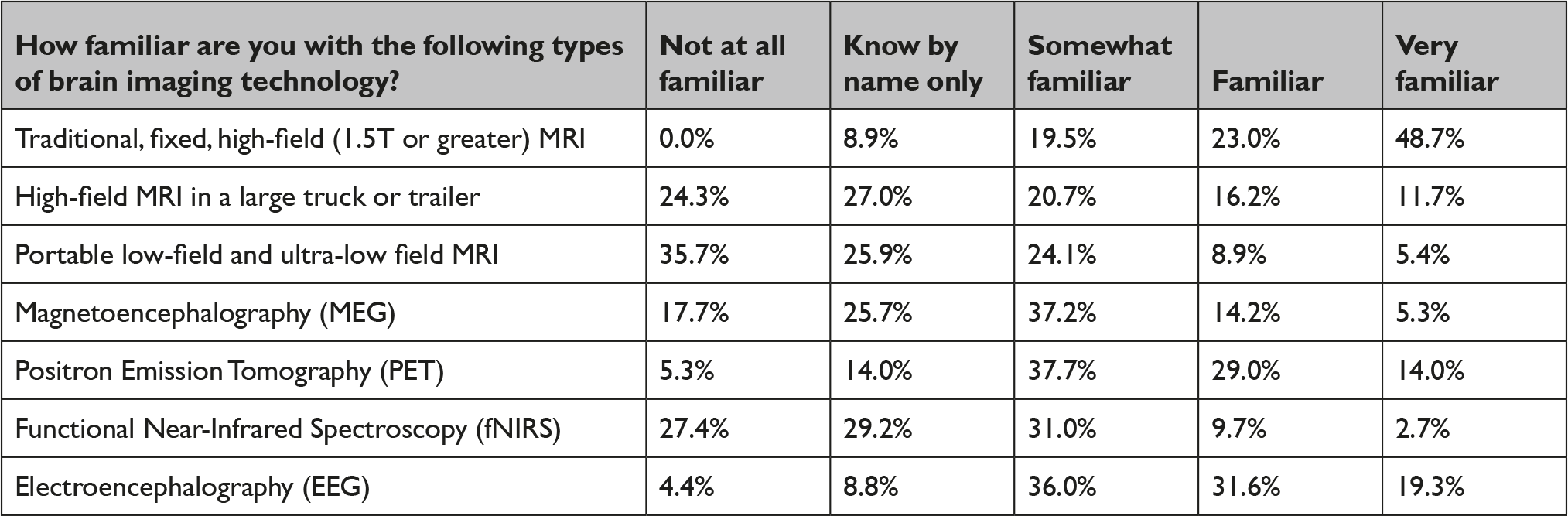
What to Notice in Table 4: Although 91% of the sample was at least somewhat familiar with traditional MRI, only 38% were at least somewhat familiar with pMRI.
Note: For each item, totaling the percentages for each response option may not add to exactly 100% due to rounding.
Stakeholder Respondents’ Relationship to pMRI.

What to Notice in Table 5: 63.2% of stakeholder respondents had no prior relationship with highly portable MRI.
Note: Respondents could select more than one response option for this question, thus the “Percentage Selected” column does not add up to 100.0%.
B. Stakeholder Respondents See Potential ELSI Issues Arising from pMRI Research as Important
Survey respondents rated all of the potential ELSI issues as at least slightly important, but there were a few differences in these ratings. Eight of the ten potential ELSI issues were rated as at least moderately important, with mean ratings above 3 ( Table 6 ). Of these issues, the three highest-rated issues were Follow-Up Care for research participants with concerning MRI findings (M = 3.55), Misinterpretation / Miscommunication of MRI results (M = 3.49), and Safety (M = 3.45). The ninth issue — a potential power imbalance and lack of respect for local engagement (Power Imbalance) — was rated important, but just below moderately important with a mean of 2.96. Geographic Distance was the least important issue for these stakeholders, but it was still rated as slightly important on average (M = 2.10).
Stakeholder Respondents’ Ratings of ELSI Issue Importance: Means, SDs and Percentage of Respondents who Selected Each Response Option.
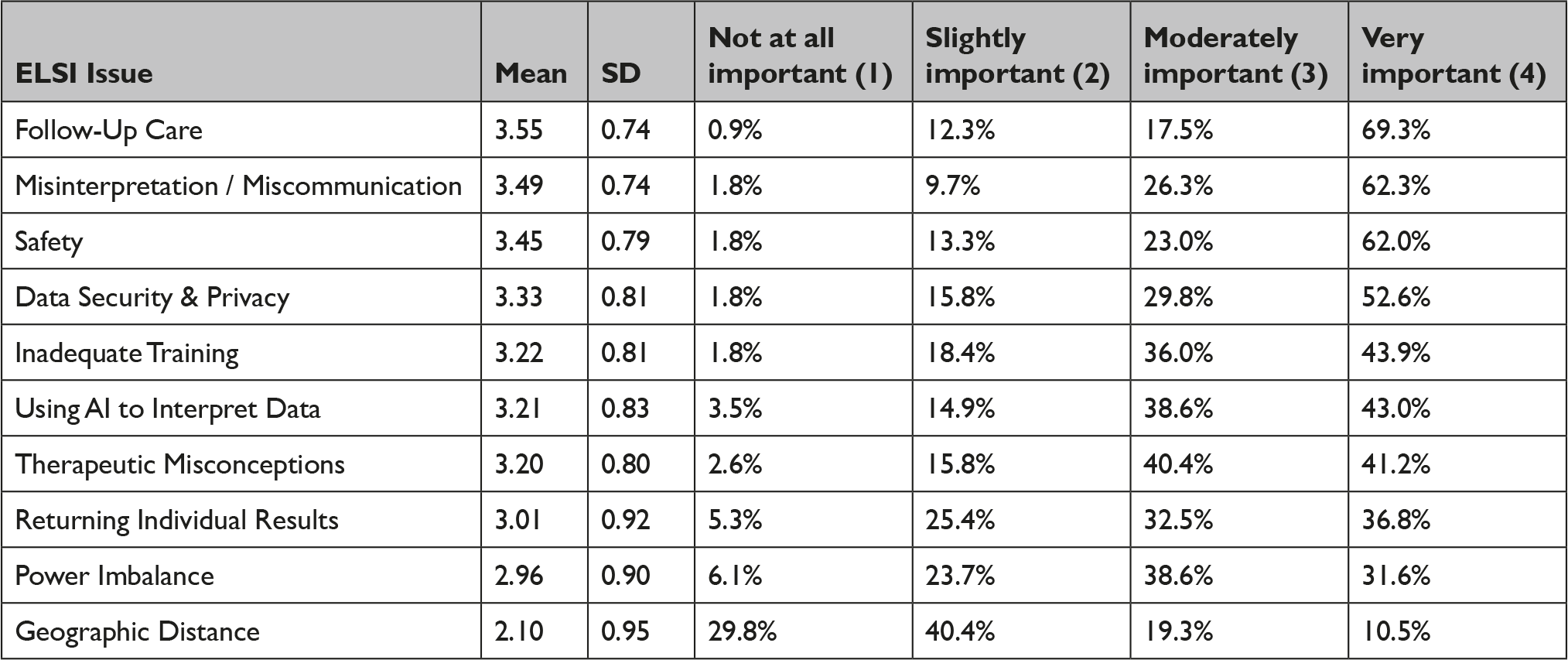
What to Notice in Table 6: All but two mean importance ratings were above 3 (Moderately important). Respondents found Geographic Distance the least important issue.
Note: For each ELSI item, totaling the percentages for each response option may not add to exactly 100% due to rounding.
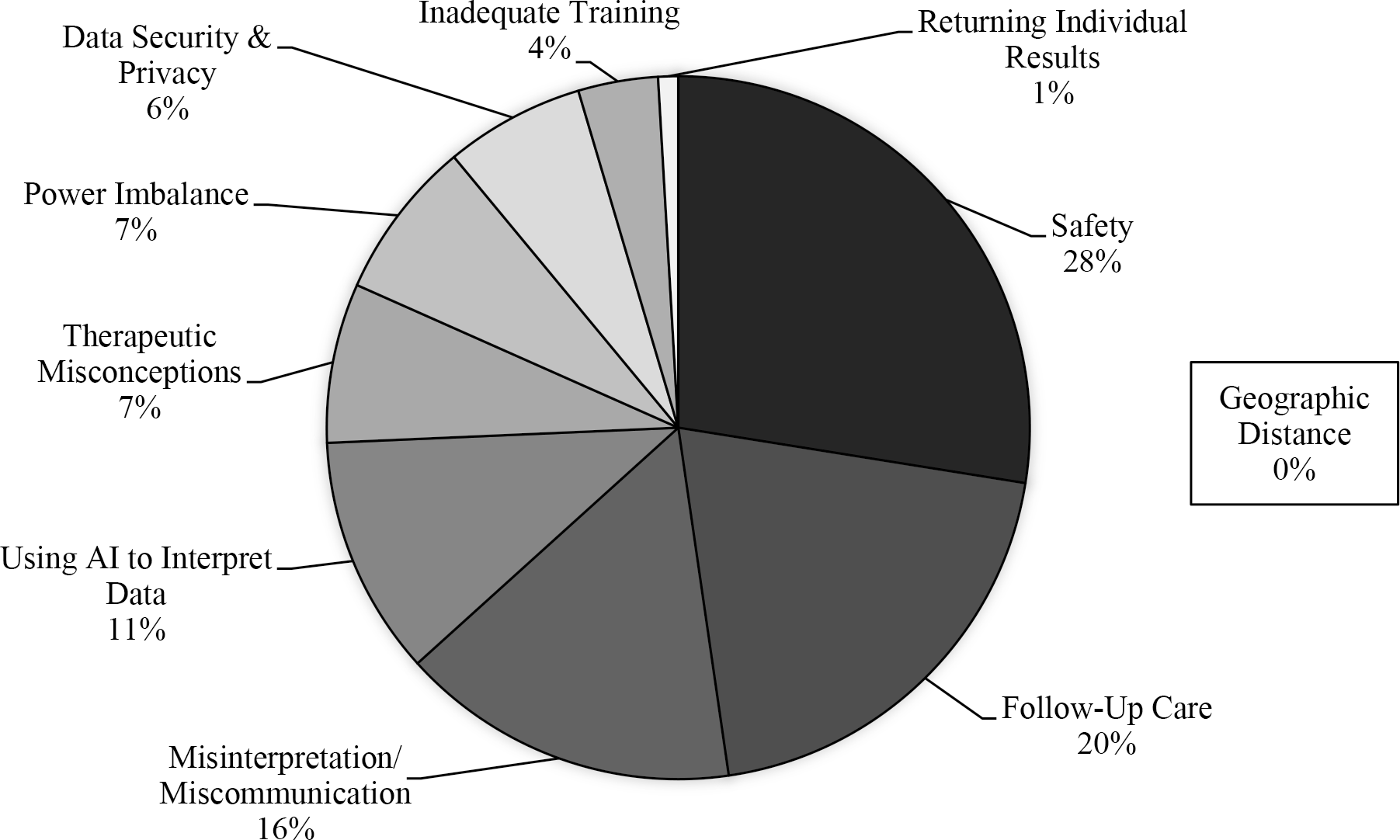
When asked to select the single most important ELSI issue to address (Figure 2), the three most frequent selections were Safety, selected by 28% of respondents, followed by Follow-Up Care (20%), and Misinterpretation / Miscommunication (16%). Additionally, in line with having the lowest mean importance rating, zero respondents selected Geographic Distance as the most important ELSI issue to address.
Percentage of Respondents Who Selected Each Potential ELSI Issue As the Most Important to Address
What to Notice in Figure 2: Safety was the most important ELSI issue to address for 28% of respondents, then Follow-Up Care (20%) and Misinterpretation/ Miscommunication (16%). The fewest respondents selected Inadequate Training (4%), Returning Individual Results (1%), and Geographic Distance (0%).
C. Stakeholder Respondents See Potential Benefits to Research Participants as Important
Respondents rated all potential benefits to research participants as at least slightly important, with one exception ( Table 7 ). Five of the seven mean ratings fell between 2 (slightly important) and 3 (moderately important), a contrast to the pattern that emerged for importance ratings of potential ELSI issues. The highest-rated benefit was gaining access to medical treatment (Treatment Access), which was also the only benefit rated as at least moderately important (M = 3.03). The next two highest-rated benefits — Learning About Brain Health (M = 2.72) and Contributing to Scientific Progress (M = 2.72) — had means below 3 (moderately important). The one benefit seen as not important was getting to do an Interesting Activity, which was the only benefit with a mean below 2 (slightly important).
Perceived Importance of Potential Benefits to Research Participants: Means, SDs, and Percentage of Respondents who Selected Each Response Option.
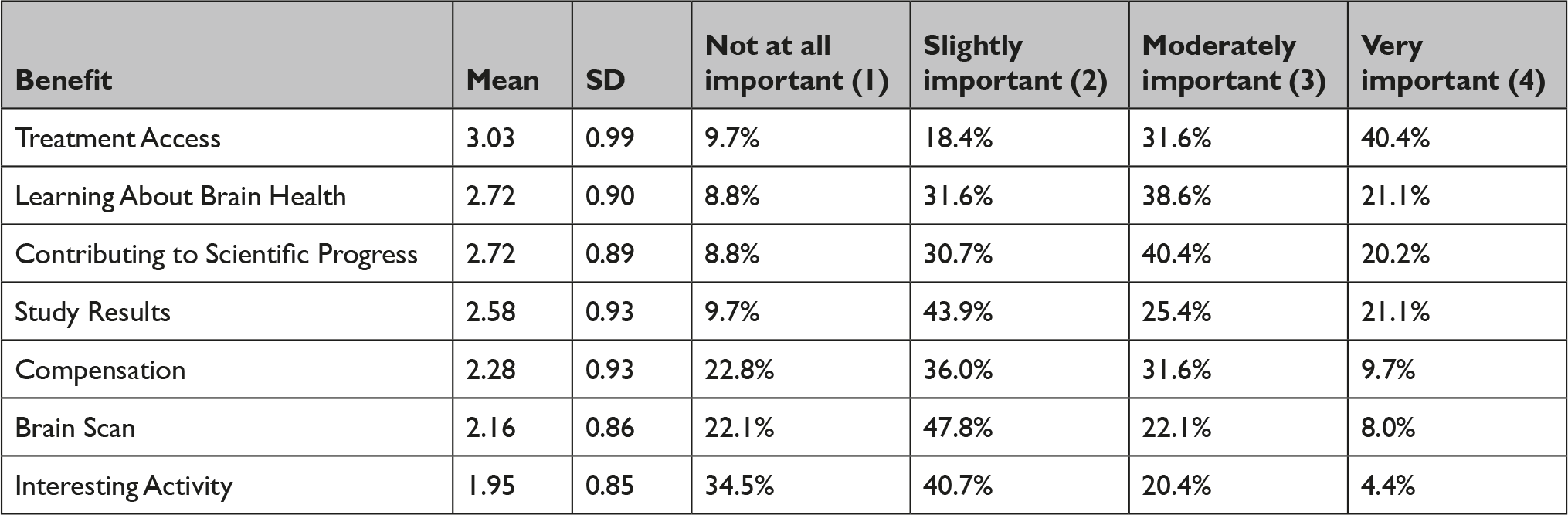
What to Notice in Table 7: The most important benefit to research participants, as rated by stakeholders, was Treatment Access while the least important was Interesting Activity. All other mean ratings were above 2 (slightly important) but below 3 (moderately important).
Note: For each Benefit item, totaling the percentages for each response option may not add to exactly 100% due to rounding.
When asked to identify the single most important benefit to research participants (Figure 3), the three most frequent selections were Treatment Access (35%) followed by Learning About Brain Health (27%), and Contributing to Scientific Progress (15%). The least frequent selection, Interesting Activity (1%), also had the lowest mean importance rating.
Percentage of Respondents Who Selected Each Potential Benefit as the Most Important to Participants
What to Notice in Figure 3: Treatment Access was selected as the most important to participants by 35% of respondents, followed by Learning About Brain Health (27%) and Contributing to Scientific Progress (15%). The fewest respondents selected Study Results (4.5%), Brain Scan (4.5%), and Interesting Activity (3%).

D. Stakeholder Respondents See Potential Concerns Arising in pMRI Research as Important
Stakeholder respondents were also asked to rate potential concerns that may arise in pMRI research outside of a hospital setting ( Table 8 ). Similar to the benefits ratings, most mean ratings for the concerns items fell between 2 (slightly concerned) and 3 (moderately concerned), but there were some exceptions. As with the potential benefits, just one potential concern had a mean rating above 3: participants receiving Inaccurate or Alarming Results (M = 3.05). The next highest-rated concerns — but below moderately concerned — were brain scans being used by insurance companies to raise rates (Insurance Rates; M = 2.85) and research teams not understanding participants’ cultural and community values (Researchers not Understanding Participants’ Values; M = 2.72). Three concerns — the portable brain scan being Uncomfortable for participants (M = 1.96), participants receiving Insufficient Compensation (M = 1.90), and researchers using pMRI for Mind Control (M = 1.34) — had mean ratings below slightly concerned. While 10% of respondents chose moderately concerned or very concerned for Mind Control, it is important to recall that we asked respondents to “rate the following potential concerns that may arise in MRI research outside of a hospital setting with new, highly portable MRI technology” and that this prompt could have been interpreted to include concerns that the expert thought the public might hold, even if the expert did not think the concern to be warranted. When we later asked the stakeholders to rate their most important concern, no stakeholders chose Mind Control.
Perceived Importance of Potential Concerns that May Arise in pMRI Research: Means, SDs, and Percentage of Respondents Who Selected Each Response Option.
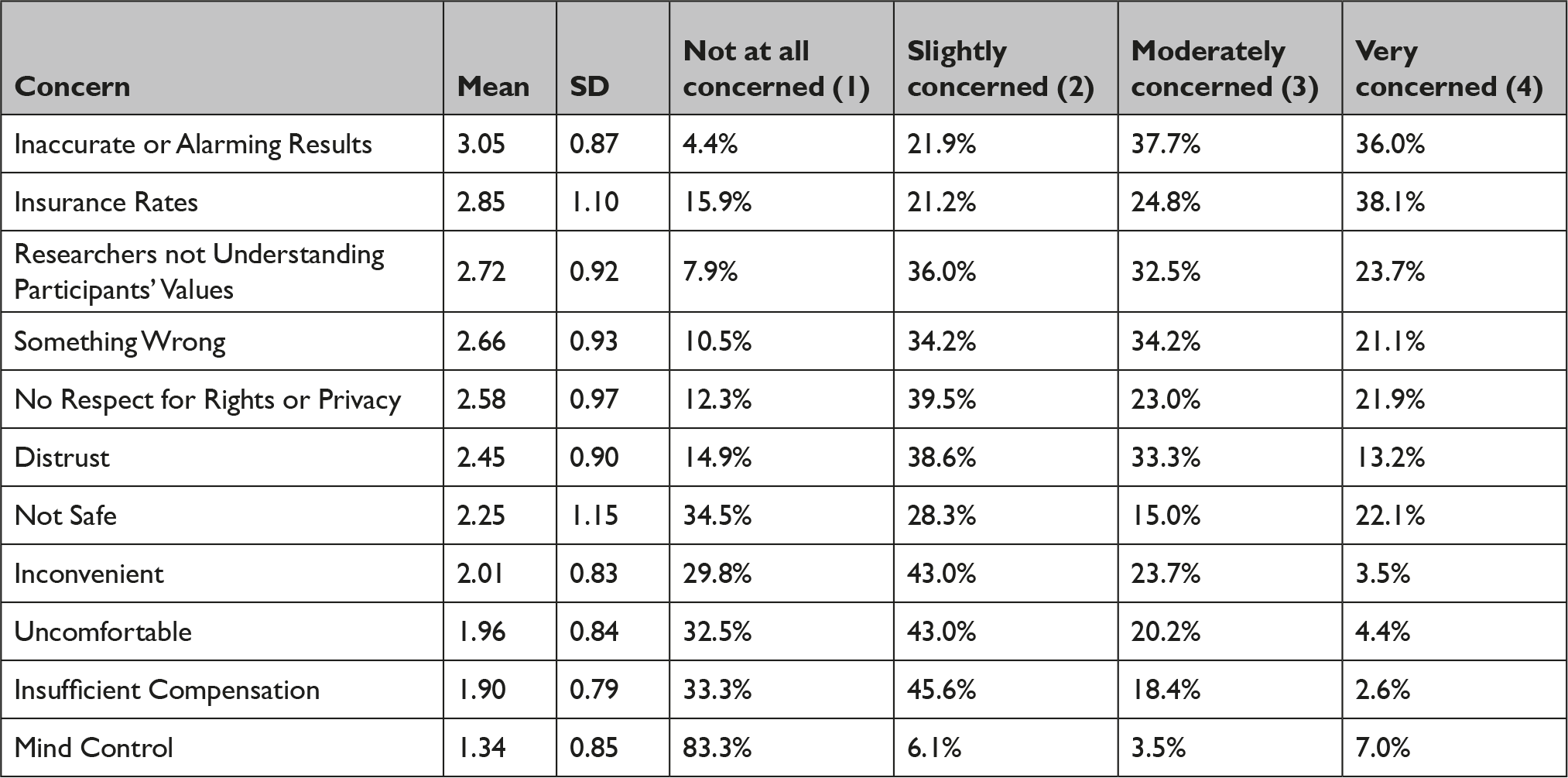
What to Notice in Table 8: Respondents were most concerned about Inaccurate or Alarming Results and least concerned about Mind Control. All other mean ratings were close to or above 2 (slightly concerned) but below 3 (moderately concerned).
Note: For each Concern item, totaling the percentages for each response option may not add to exactly 100% due to rounding.
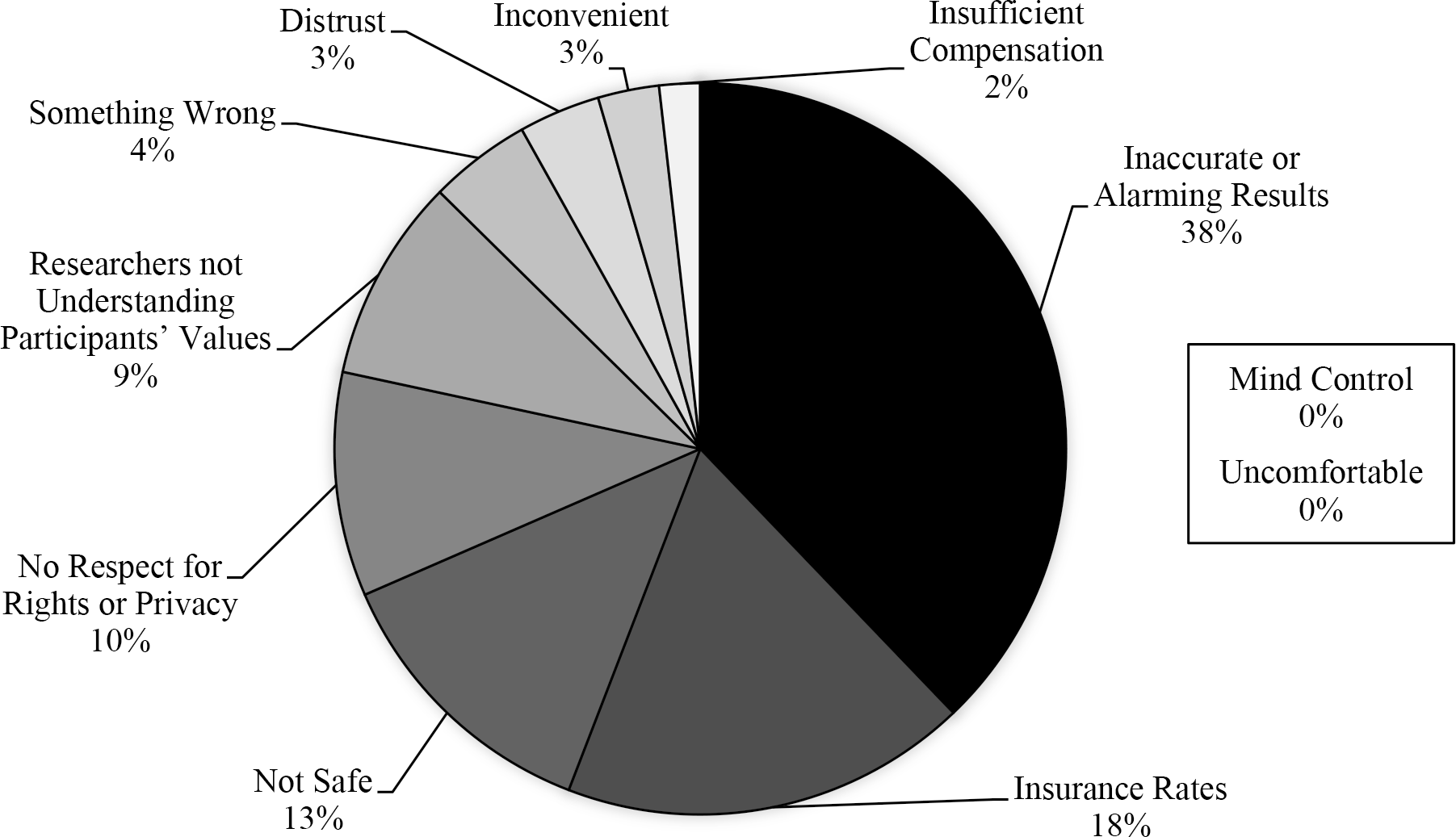
When asked to identify the single most important concern (Figure 4), 38% of respondents selected Inaccurate or Alarming Results, followed by Insurance Rates (18%) and Not Safe (13%). The two most frequent selections matched the two highest-rated concerns. Two concerns — Mind Control and Uncomfortable — were selected by zero respondents.
Percentage of Respondents Who Selected Each Potential Concern as the Most Important
What to Notice in Figure 4: Inaccurate or Alarming Results was selected as the most important concern by 38% of respondents, followed by Insurance Rates (18%) and Not Safe (13%). Zero respondents selected Mind Control and Uncomfortable.
E. Stakeholder Respondents See Proposed Solutions to Potential ELSI Issues as Helpful
Across the four stages of research — research design, participant recruitment and consent, acquiring data, and data processing and interpretation — stakeholder respondents saw all but one of the proposed solutions as at least moderately helpful in addressing pMRI ELSI challenges (i.e., had means above 3; see Table 9). However, the lone exception to this trend — issuance of practice guidelines from professional societies (Issuance of Professional Guidelines, in Stage #1) — had a mean rating of 2.99, suggesting it was perceived as closer to moderately helpful than slightly helpful.
Perceived Helpfulness of Potential Solutions to Address ELSI Challenges Emerging from pMRI Research: Means, SDs, and Percentage of Respondents who Selected Each Response Option.
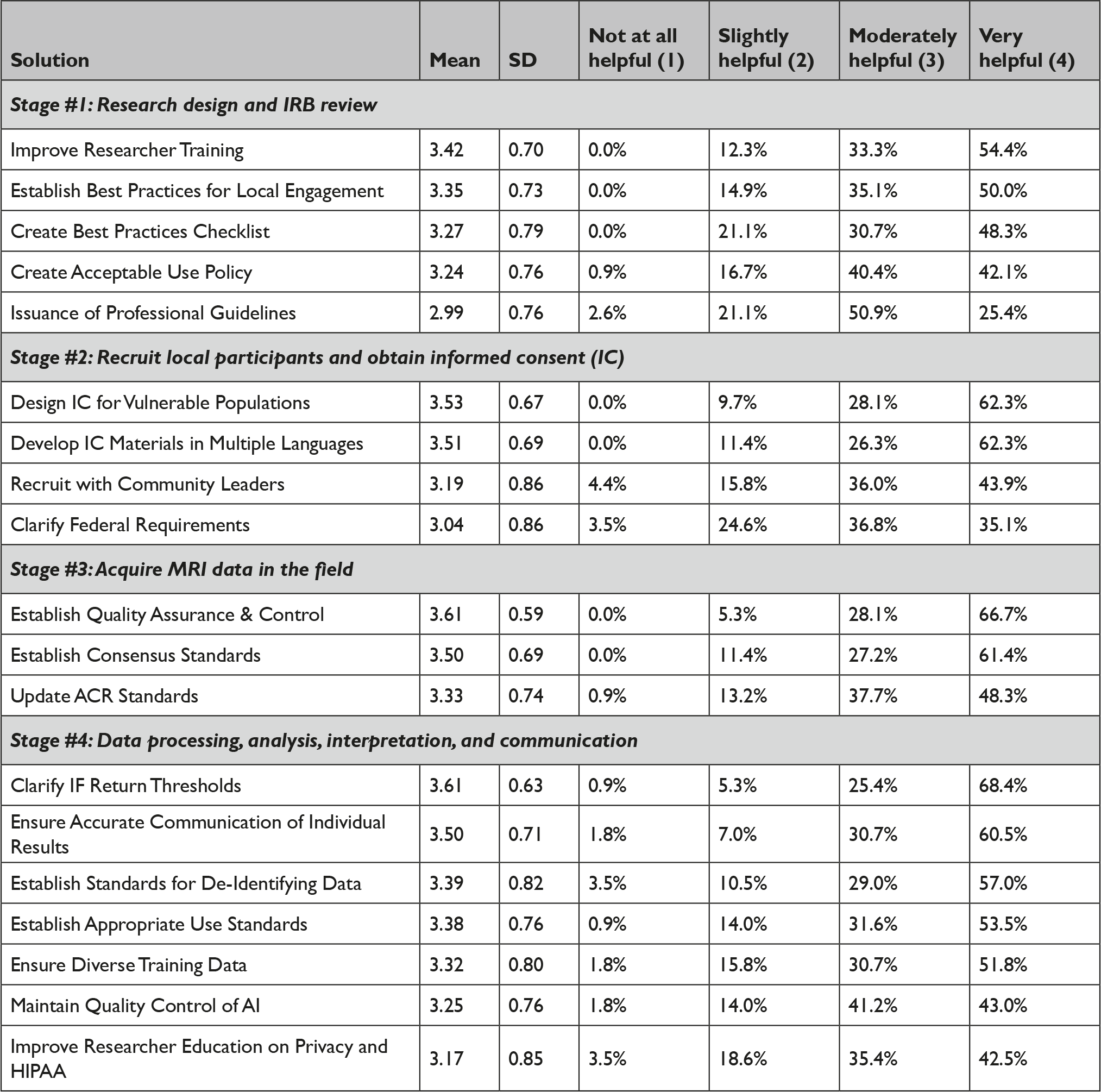
What to Notice in Table 9: All but one potential solution were rated, on average, as at least moderately helpful (M > 3.00). Very few respondents saw the potential solutions as not at all helpful.
Note: For each Potential Solution item, totaling the percentages for each response option may not add to exactly 100% due to rounding.
Key: IC = informed consent; IF = incidental finding; AI = artificial intelligence; ACR = American College of Radiology.
Respondents were not asked to select the single most important issue at each stage, but the means suggest that stakeholders thought certain solutions should be prioritized over others. At the initial research design stage, the highest-rated solutions were Improve Researcher Training (M = 3.42) and Establish Best Practices for Local Engagement (M = 3.35). At the participant recruitment stage, the highest-rated solutions were to design informed consent processes to address the needs of vulnerable populations (Design IC for Vulnerable Populations; M = 3.53) and develop informed consent processes and templates with multiple language versions (Develop IC Materials in Multiple Languages; M = 3.51). When acquiring MRI data in the field, stakeholder respondents emphasized establishing new quality control standards for pMRI (Establish Quality Assurance & Control; M = 3.61) and establishing consensus standards for field-based scanner set up and data acquisition (Establish Consensus Standards; M = 3.50). Finally, after data collection, stakeholders viewed it as most important to clarify incidental findings return policies (Clarify IF Return Thresholds; M = 3.61) and to build the capacity to accurately communicate individual-specific neuroimaging results (Ensure Accurate Communication of Individual Results; M = 3.50).
F. Limitations
This study has several limitations. First, we focused on ELSI issues arising in research use of MRI, not clinical use. Future research should explore both, as pMRI will be used in both spheres and in research designed to guide clinical applications. Second, while our response rate was comparable to similar survey studies in the literature, the response rate counsels caution in generalizing our results. Third, we recognize that the self-reported racial and ethnic diversity of our sample of respondents is limited. This likely reflects the demographics of our targeted groups, as it is well recognized that the racial and ethnic makeup of the neuroscience workforce does not adequately reflect the diversity of the general population.Reference Jones, Thorpe and Vishwanatha37 Fourth, familiarity with newer forms of brain imaging technology, especially pMRI, was limited in this sample of stakeholders. The relative lack of familiarity is unsurprising given that the data were collected in 2022, when pMRI was emerging as a research tool. Results may differ with a future sample that is more familiar with this new technology.
III. Discussion
Research with pMRI is already beginning and may increase rapidly, making it important to understand expert stakeholders’ attitudes about pMRI research so that appropriate ethical guidance can be developed. As noted in the Introduction, we recognize that ethical guidance should be informed by expert stakeholder input, but that additional input from communities involved in research and the general public is also critical.38
Stakeholder respondents in our survey recognized multiple potential ELSI issues as important, with the most urgent being: (1) ensuring safety of the scan and scanning environment; (2) failing to provide resources for follow-up assessment and care in the face of incidental finding(s), and (3) addressing the possibility that the pMRI research team may misinterpret or miscommunicate the results of the brain data. Similarly, respondents rated as helpful all of the proposed solutions in the survey, with many of the highest-rated solutions (e.g., establishing clear thresholds for when to return incidental findings) directly linked to the most important ELSI issues.
Additionally, stakeholder respondents identified many potential participant benefits (e.g., access to medical treatment) as important and many potential harms (e.g., participants receiving inaccurate or alarming results) as concerning. These stakeholder views are consistent with the WG’s analysis,39 and support the importance of developing ELSI guidance for pMRI researchers. Here we focus on five aspects of the stakeholder survey results that deserve particular attention.
First, as noted above, our stakeholders reported a relative lack of familiarity with pMRI as compared to fixed MRI. The difference between familiarity with fixed and portable MRI is striking because our expert stakeholders were identified based on their previous experience in neuroimaging, neuroscience, and neuroethics. This relative lack of familiarity with pMRI speaks to its novelty. These are early days for pMRI research and as we noted above, this points to a challenge intrinsic to ethical analysis of still-emerging technologies. It also suggests that more should be done to inform the neuroimaging research community, as well as clinicians, neuroethicists, and other stakeholders about emerging and potentially transformative pMRI technologies. This information should include discussion of how pMRI machines vary in design, how they differ from fixed MRI, and how they are likely to be used in research, including pMRI utilization of cloud platforms and AI technology. Strategies and materials should be developed for expert stakeholders, researchers, research participants, and the public. One tool we have developed to help catalyze attention to these issues and operationalize solutions is a Portable MRI Research ELSI Checklist.Reference Shen40
Information on the safety profile and clinical utility of pMRI is crucial for experts, researchers, participants, and the public, including how pMRI safety and utility may differ from fixed scanners with 1.5T or more powerful magnets. As discussed at length in consensus guidance produced by the Working Group associated with this project, new safety guidance is required for pMRI.41 This guidance will need to address differing safety concerns for different types of pMRI. For example, 1.5T pMRI machines will require many of the same safety protocols as 1.5T fixed scanners, including shielded rooms and screening participants for metal. By contrast, ultra-low field MRI at .064T will allow onlookers to be next to the scanner and will not require all of the same exclusions for metal. That said, low-field pMRI invites new safety considerations such as ensuring a steady power supply, safe transport, and secure storage.42 Safety concerns may also arise from new scanner placement options for pMRI (e.g., in a van or in a gymnasium), new types of researchers (e.g., citizen scientists who may lack sufficient safety training), and research occurring outside of institutions providing IRB and other research oversight.43
Second, our results emphasize the need to address problems linked to the return of incidental findings and individual-specific results, as well as misinterpretation and miscommunication of pMRI data. Expert stakeholders believed that failing to provide resources for follow-up care for incidental findings, and misinterpretation or miscommunication of results are among the most pressing issues to address, behind only safe scanning. Prioritizing issues related to return of results and incidental findings is consistent with our survey respondents’ strong concerns about participants receiving inaccurate or alarming individual-specific results. Researcher miscommunication or misinterpretation may lead to a failure to accurately convey results to participants and may unnecessarily cause participant alarm. Scanning with pMRI technologies may be especially susceptible to misinterpretation if researchers are not sufficiently trained in pMRI analysis, especially when low-field or ultra-low-field scanning requires imputation and when scan interpretation involves AI. The solution perceived as most helpful — improving researcher training — may mitigate the potential for misinterpretation and miscommunication of results.44
Even when individual-specific findings are accurately conveyed, participant access to follow-up care will be crucial. Stakeholder respondents thus saw access to medical treatment as the most important potential benefit to participants, which is linked to the issue of access to follow-up care. Two of the highest-rated proposed solutions — clarifying IF return thresholds and building the capacity to ensure the accurate communication of individual results — directly address these issues. This is consistent with the WG’s recommendations that “[r]esearchers should plan pathways to timely care in the event of IFs or concerning research results, regardless of the participant’s geographic location and insurance status” and that “research sponsors should support creation of a responsible plan and pathway, including with funding whenever possible.”45 Our WG’s consensus analysis endorsed the importance of planning for IFs,46 and the topic of incidental findings is discussed at greater length in this Symposium.Reference Wolf and Illes47
Third, our experts saw a clear need to develop informed consent processes and templates in multiple languages as needed for the local community, and to design informed consent processes to address the needs of vulnerable populations, children, and participants of uncertain or declining decision-making capacity. Indeed, these were the two highest-rated solutions for Stage #2 of the research process (recruiting participants and seeking informed consent). Carefully designed informed consent procedures are especially important when a technology like pMRI is new and unfamiliar. The stakeholders’ emphasis on the importance of informed consent procedures is consistent with the WG’s recommendations that the consent process include discussion of participants’ rights to control their data, if and how AI is being used by the pMRI system, privacy protections, IFs, pathways to care, and the distinctions between research and clinical use of pMRI.
Fourth, even though our survey focused on research use of pMRI, the respondents viewed pMRI research as a source of information on brain health and a way to access clinical care for research participants. Treatment access was selected as the most important potential benefit by 35% of respondents, and 72% viewed participants gaining access to medical treatment as moderately or very important. Similarly, 27% of the sample believed that participants learning more about their brain health was the most important benefit, with 59% viewing this benefit as moderately or very important. These results are somewhat perplexing because the vignette presented in the survey depicted use of pMRI in a research context, not in clinical care. Both the vignette, as well as the question prompt about benefits, expressly stated that we were asking about potential benefits to participants arising from “MRI research outside of a hospital setting” (bolding was in the original question wording).
These results are subject to multiple interpretations. First, the stakeholders’ responses could have reflected their awareness that in many studies research participants indicate they highly value information about their health and access to care.Reference Wolf and Green48 However, if expert stakeholders were instead indicating that the experts themselves saw providing health information and access to care as key benefits of pMRI research, that is more puzzling. While it could be that respondents conflated research and clinical use, giving rise to the therapeutic misconceptionReference Lidz and Appelbaum49 even among these expert stakeholders, the respondents may have recognized that even in a research study, pMRI could reveal incidental findings, which in turn could lead to follow-up care and treatment and provide participants information on their brain health. This interpretation is plausible since we prompted respondents to think about IFs. In addition, we prompted respondents to consider both clinical and non-clinical research. Clinical research may produce health benefits for at least some participants in the study. It is also possible that the description of “New uses” in the vignette (see Figure 1) — which mentioned that “this technology could be used in research, including… as a screening device in brain health checkups [or as …] as a monitoring device in an emergency room or battlefield setting” could have been interpreted instead as clinical use. Because most of the respondents had limited familiarity with pMRI, they may have assumed the clinical value of pMRI for diagnosing different brain disorders, rather than recognizing that this remains an area of active investigation.Reference Arnold50 Finally, it is also possible that our respondents interpreted the question about benefits to ask about long-term benefits and their answers reflected the expectation that pMRI research would eventually produce beneficial clinical advances in treatment. The bottom line is that special care should be paid to accurately articulating potential benefits of pMRI research, avoiding overclaiming, and curbing the potential confusion of research with clinical care in the context of pMRI research.
Fifth, our results point to the need for further exploration of how pMRI brain data might be used by insurance companies. When asked to rate the most important concern, 18% of respondents identified insurance companies’ use of pMRI brain scans to raise insurance rates on participants, making this the second most important concern for our stakeholders. In contrast to concerns about incidental findings and informed consent, which are commonly noted in the ELSI literature on neuroimaging research,51 heightened concern about insurance misuse of neuroimaging research is a new finding. Our stakeholders may be anticipating a future in which brain scans are much more common, and thus insurance use of those scans more likely. Further research is required to determine the mechanisms by which insurance firms would obtain this data, but our expert stakeholders recommended two safeguards that might be fruitful: establishing standards for de-identifying neuroimaging data and improving researcher education on privacy and HIPAA issues arising from use of third-party vendors for data storage and transfer.
Taken together the results of the stakeholder survey reaffirm the analysis of the Working Group in its development of 15 core recommendations for pMRI research in field settings, including an emphasis on addressing unique aspects of pMRI research incidental findings,52 improving education about pMRI,53 developing new safety guidelines for pMRI,54 and developing robust informed consent processes.55 The survey findings also confirm the need for the kind of operationalized guidance we offer in the Portable MRI Research ELSI Checklist and accompanying article.56
Conclusion
Although research with highly portable and accessible MRI is likely to expand rapidly in the coming years, evidence from our stakeholder survey indicates that even experts are not widely aware of this technology. With pMRI now being deployed for research use, we see an urgent need to inform researchers, clinicians, ethicists, policymakers, and potential participants (including patient advocacy groups) about the transformative changes enabled by pMRI — as well as the risks if ethical and legal challenges are not addressed proactively.
Further development of ELSI guidance on pMRI research for relevant stakeholders should be a priority. Focal concerns should include creating appropriate informed consent protocols, with an emphasis on addressing the potential therapeutic misconception, and creating plans for managing incidental findings with a clear pathway to clinical care. As suggested by the Working Group’s consensus recommendations, this ELSI guidance should be co-created with community leaders and patient advocates.
Acknowledgments
Research reported in this publication was supported by NIH/NIMH grant RF1MH123698 on “Highly Portable and Cloud-Enabled Neuroimaging Research: Confronting Ethics in Field Research with New Populations.” The content is solely the responsibility of the authors and does not necessarily represent the official views of NIMH or NIH. Thanks to Efraín Torres, Micaela Yarosh, and Frances Daniels for excellent research assistance. For input on the design of this survey we thank the Working Group of the NIH/NIMH grant RF1MH123698 on “Highly Portable and Cloud-Enabled Neuroimaging Research: Confronting Ethics in Field Research with New Populations,” whose members are listed at https://consortium.umn.edu/research/neuroscience/highly-portable-and-cloud-enabled-neuroimaging-research-confronting-ethics-challenges-field/. For grants management and administrative support, we thank Dori Henderson, Ph.D., and staff at the University of Minnesota’s Consortium on Law and Values in Health, Environment & the Life Sciences. Requests for access to the data that support the findings of this study will be considered as received.
Disclosures
The authors have no relevant disclosures.


 Open access

