

The Tigers of Leadenhall Street
In December 1803, while digging for new sewer lines at the Leadenhall Street entrance to the East India Company’s headquarters, workers hit upon something unexpected. Charles Wilkins, the orientalist, was called outside to investigate. Workers slowly dug out and around the object. It turned out to be a piece of mosaic Roman pavement – one of the first to be found and preserved in London – roughly 9 feet square and decorated at its center with a well-known scene from Greco-Roman mythology: Bacchus, dressed in purple and green robes, holding his wine cup and fennel frond, and reclining on the back of a growling tiger.Footnote 1 (See Figure 3.3.)
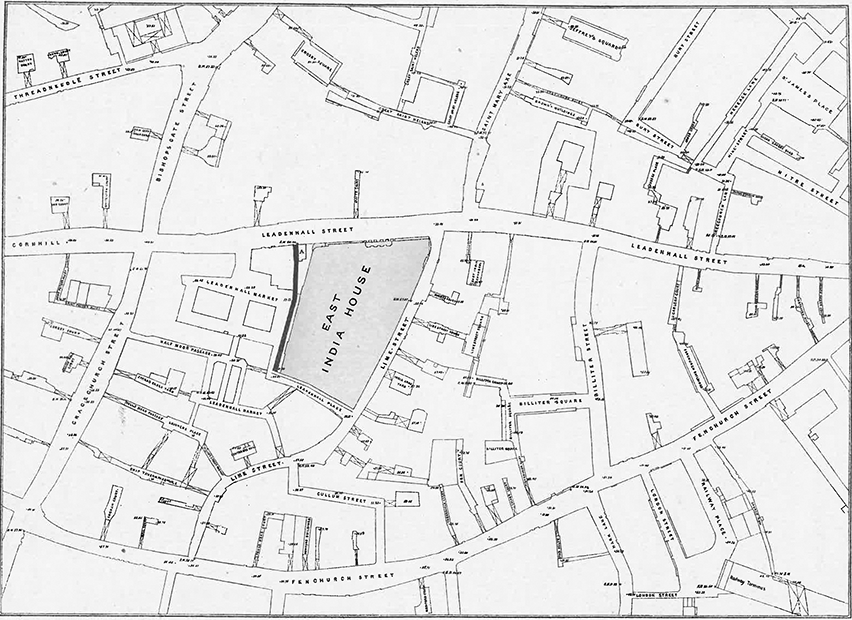
The sewer work was part of a major reconstruction of the Company’s headquarters at India House. This plot in the middle of the City of London had been the Company’s administrative and commercial base since the mid seventeenth century (see Figure 3.1). In 1798, after nearly five decades of steady territorial and commercial expansion in Asia, the directors had found they also needed to expand their office space. At that time, the Company employed around 55,000 individuals, with 30,000 of those based in London.Footnote 2 The new India House, completed in 1801, had consumed some of its old neighbors and now occupied nearly a full city block. What is now the site of the Lloyds of London skyscraper was then a sprawling five-story set of interconnected structures, gathered together behind a grand neoclassical façade. Just to the east of India House, across Whittington Lane, was the skin market, home to slaughterhouses, candlemakers, tanneries and leatherworks. The southern end of India House abutted the huge Leadenhall Market, one of the City’s oldest and largest centers for the sale of meat, vegetables and herbs. A few streets away in New Street and Cutler Street a massive new complex of Company warehouses was going up, covering five acres and twenty-five warehouses, each six stories high, and containing nearly 150 rooms. The warehouses were so impressive that foreign dignitaries often asked for tours.Footnote 3
Plan showing the site of the East India House within the City of London. Produced 1858–1860 in preparation for the demolition of India House.
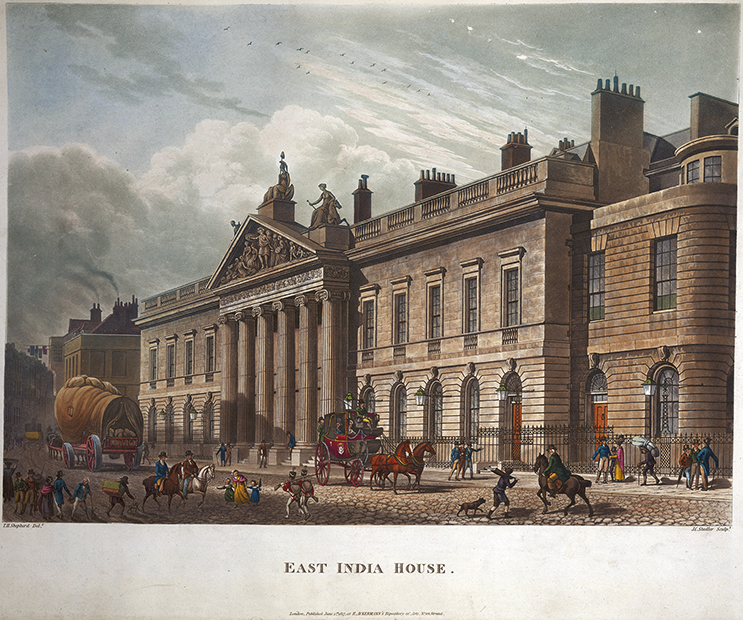
View of India House looking south down Leadenhall Street. From Ackermann’s Repository of Arts, June 1, 1817.
The remaining central design of the Leadenhall Street mosaic.
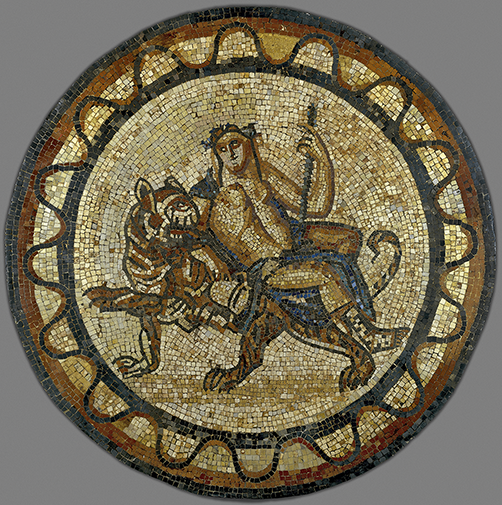
The old India House had a simple pilastered façade and a naval scene painted over the doorway. Now, drovers on the way to the market would herd cattle past a huge ionic portico.Footnote 4 The new building was much statelier, and it fully embraced the popular discursive parallels between the ancient Roman and new British Empire. Some observers were, in fact, disappointed with the lack of any “Asiatic” design for the home of not only the center of Britain’s Asian trade but also the seat of government of British India: “there is nothing relative to the eastern world that presents itself to observation,” one architecture critic complained. But others argued that “it would be too shocking to the London eye were the building totally ‘oriental.’”Footnote 5 How serendipitous, then, for a part of Roman Britain to be unearthed at the entrance, and for this particular scene to neatly tie ancient Rome and Asia together. Bacchus, or Dionysus, was closely connected in Greek mythology to Eastern conquest. Various stories (most famously the poem “Dionysiaca”) tell of Bacchus traveling to India. The god of fertility, wine, and reproduction, Bacchus romped around the subcontinent, battled local gods and armies, made alliances, and introduced his favorite food and drink. Eventually he made a triumphant return with a great procession of captured treasure, including a long train of exotic animals (hence the tiger in the mosaic).
This ancient, if not entirely reputable, representation of an imperial collector now became part of the world’s latest imperial collection. The Bacchus mosaic was carefully excavated and carried into India House. Behind the architectural unity of the grand classical façade, India House was a sprawling and top-heavy set of offices through which any decisions passed painfully slowly. The Court of Proprietors still elected the chairman, deputy-chairman and twenty-four directors. But the Board of Control, appointed by the Crown, now oversaw, on political matters, the Court of Directors. Crucially, the Court of Directors still controlled the vast majority of the Company’s patronage; that is, the issuing of new army and civil service positions in British India. Company writerships were highly sought after, and control of the patronage gave the directors a significant amount of political capital in Britain. A wide range of sometimes clashing political and economic interests were gathered together here. For one thing, the Company’s commercial functions encompassed both the interests of those whose profits depended upon the sale of goods and those whose profits depended upon the shipping of goods. In addition, the close ties between the Company and Parliament meant that the Company’s administration also reflected or imported traditional political divisions at play in British politics. The East India Company in 1800 was, in form, with its formal monopoly over the Eastern trade, a deeply conservative (trade protectionist, anti-reform, Tory) institution. At the same time, the growing strands of liberalism (free trade, pro-reform, utilitarian, Whig) of the early nineteenth century were also increasingly represented within the Company.Footnote 6
British India was by now divided into governorships of three geographically distinct presidencies at Madras (which also included all British Indian regions east of the subcontinent such as the Straits Settlements and the Company’s factories in Chinese treaty ports), Bengal and Bombay. The Crown, with the approval of the Company, appointed and, in theory, presided over the governors in charge of each presidency. The governor-general of Bengal was the highest-ranking official in British India and in many ways the supreme authority on the ground. But the Court of Directors could (and often did) criticize, censure, revise and revoke the decisions of the governor-general. At the same time, however, with communication between Britain and British India taking six months at least, the governor-general was also able to subvert, ignore or otherwise disrupt the instructions from India House.
Having passed under the portico, the Baccus mosaic was then carried into a large central atrium, from which extended a maze of hallways and rooms cobbled together around a central open yard. Most of the Company business was conducted in the great rooms off the central hallway downstairs from the library and museum. Within these offices, hundreds of clerks kept the paper machinery of the Company’s empire running. To the right was the Grand Court Room, where the proprietors (stockholders with large enough holdings to be able to vote on Company matters) met to debate and vote. The room was richly decorated, with “an uncommonly fine Turkey carpet covering the whole flooring” and a vast marble chimneypiece. There was a bas relief of Britannia sitting on a globe being attended by figures representing Asia and Africa, who offered to Britannia various gifts and commodities. Clocks, mirrors and mathematical instruments associated with navigation – a signal of how fundamental the science of navigation and surveying was to the Company’s interests – were hung on the walls. On the panels of the “uncommonly handsome doors” were six large paintings giving a panorama of views of the Company’s key ports in the late eighteenth century: Fort St. George (Madras), Bombay, St. Helena, the Cape of Good Hope, Fort William (Calcutta) and Tellicherry. All of the India House spaces, or the public rooms anyway, were a spectacle of the Company’s geographical reach.Footnote 7
Another centerpiece of the new India House was the “New Sale Room.” Because of their monopoly on trade east of the Cape of Good Hope, all goods brought from Asia to Britain were sold by auction in India House. The New Sale Room was theater-like, with stepped seating and a large staging area at the front. Like some of the new shopping arcades cropping up at the turn of the century, the room was equipped with natural lighting from a glass and iron ceiling, a technique also now used in the Company’s most important warehouses. The New Sale Room was also comfortably warm, heated “without any visible fire, the result of a subterranean conveyance of heat.” The pilastered walls displayed more scenes of Asia’s “commercial attributes.”Footnote 8
Within the new India House were many spectacular spaces, and displays of oriental curiosities and works of art were scattered around the hallways and committee rooms. But the new India House also had within it a new space intended in part to differentiate mere plunder from a more public-minded (so it was argued) kind of collecting: the “Oriental Repository.” It was here that Wilkins directed the mosaic to be moved. Up a set of stairs off to the left of the vestibule was the newly added library and museum space. Here, as one early visitor guide put it, “every book known to have been published in any language whatsoever is to be found here, relative to the history, laws or the jurisprudence of Asia,” as well as “an unparalleled collection of oriental manuscripts in all the Oriental languages,” including the only printed Chinese-language books in England.Footnote 9 The library was not large, about 60 feet long and 20 feet wide, and was well lit with large circular skylights and tall windows facing Leadenhall Street and Lime Street. Above an ornate mantlepiece hung a painting of “the Emperor of Persia a young man with a long black beard in magnificent jeweled dress.”Footnote 10 Recesses in the wall displayed busts of Robert Orme and Warren Hastings. But the main attraction were the walls covered in bookcases and shelving designed specially to house a great material variety of written forms: from “the smooth silky paper of India” to “the Malayan manuscripts … etched with a sharp tool upon the leaves of the palm tree, joined at the ends and made to open like a fan.” Still others “folded up in the ancient manner [and] extend several yards in length when opened.”Footnote 11 Two very personal items of Tipu Sultan’s – his personal copy of the Quran and a journal in which he wrote down his dreams – were on prominent display.
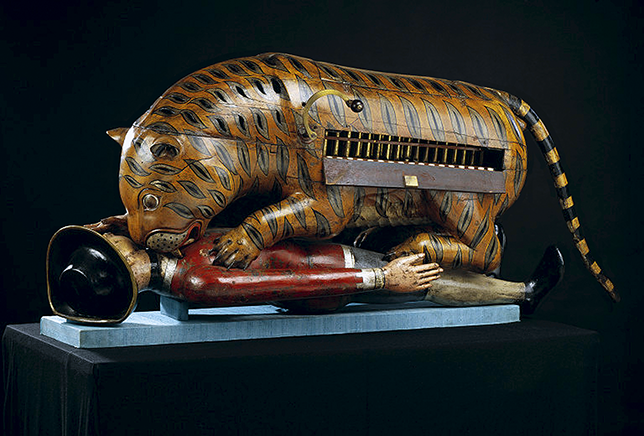
Adjoining the library was the museum, where the visitor guide reports seeing a stone covered in “Babylonian inscriptions,” a 2-foot-long fragment of jasper covered in carvings, antiquities from India, Chinese works of art including jade carvings, paintings and a massive silk lantern, and the Bacchus mosaic. A few years after the mosaic had been found, Bacchus would be joined by many more tigers, the loot from the storming of Seringapatam in 1799 finally having made its way back to India House. The solid-gold tiger-themed throne of Tipu Sultan, Britain’s great rival in southern India, had been broken up to be divided into customary prize payouts for army officers, but one of its solid-gold tiger heads did make it back to the museum. The most famous item from Tipu’s palace, however, was the celebrated “Musical Tiger” (see Figure 3.5).Footnote 12 Now in the Victoria and Albert Museum, Tipu’s tiger was like a mechanical Enlightenment version of the Bacchus mosaic, but with the political imagery inverted. It was a life-sized painted wooden automaton of a tiger (representing Mysore) atop a pale-skinned soldier in redcoat, which, when wound up, would growl and claw at the squealing, squirming soldier.
This chapter follows the creation and early growth of Company science in London. As we have seen, in the late eighteenth century, the Company’s new investments in education, knowledge management and institutions of science were largely focused on British India. But around the turn of the century, the foundation of the new library-museum and colleges in Britain would sharply redirect the growth of new Company-run initiatives for science and education back to Britain and crystalize that shift into a new set of institutions and priorities related to knowledge management. It was a shift that took full advantage of the Company’s legal monopoly on access to Asia’s knowledge resources. And it would begin with the stepwise incorporation into the administration at India House of the work of the orientalists, naturalists and collectors covered in the previous chapters. The London careers of a set of nabob-scholars – Robert Orme, Alexander Dalrymple and Charles Wilkins from Chapter 2, as well as William Marsden – illustrate how the early beginnings of Company science in London flourished at the porous boundary between individual and corporate ownership.
Incorporating the Nabobs
At a meeting of the Antiquarian Society in London in 1772, Matthew Mite, a wealthy former servant of the East India Company, offered a procession of new presents to the Society’s museum. The gifts included a piece of lava from Vesuvius and a box of natural history specimens, which contained “for the use of my country … a large catalogue of petrifications, bones, beetles and butterflies.” The piece of lava, given special attention by Mite, was collected as a sample of foreign natural production worthy of study for the “useful” aim of introducing and propagating volcanoes within the English landscape:Footnote 13
MITE: By a chymical analysis, it will be easy to discover the constituent parts of this mass, which by properly preparing it, will make it no difficult task to propagate burning mountains in England, if encouraged by premiums.
FELLOWS: Which it will, no doubt!
To this and Mite’s other contributions to “national knowledge,” the fellows responded enthusiastically (“What a fund of learning!” “Amazing acuteness of erudition!” “Let this discovery be made public directly!”).Footnote 14
Matthew Mite is the titular character in playwright Samuel Foote’s satire The Nabob, which brings together and skewers late Georgian fashionable culture (including natural philosophy) and imperial politics. First staged in 1772, The Nabob – then a derogatory for the nouveau riche among returned Company servants – follows the schemes of Mr. Matthew Mite, who has recently returned from India and is now exercising his new wealth to advance his social position.Footnote 15 Mite’s riches have enabled him to buy his way into the elite world of learning embodied by such new institutions as the Society of Antiquaries (f. 1751), parodied here.Footnote 16 This is just one part of Mite’s larger scheme to secure for himself a place among the aristocracy, who, for their part, regard him as no more than a thief and plunderer. After being accused by one such family of impoverishing India to acquire his ill-got wealth, Mite retorts: “I am sorry … to see one of your fashion concur in the common cry of the times; but such is the gratitude of this country to those who have given it dominion and wealth.” To which the patriarch replies: “I wish even that fact was well founded, Sir Matthew. Your riches (which perhaps too are only ideal) by introducing a general spirit of dissipation, have extinguished [here in Britain] labor and industry, the slow, but sure source of national wealth.”Footnote 17
Mite claims his individual riches are but part of a larger contribution to the nation’s wealth and strength; the old aristocratic family, however, claims the opposite: colonial exploits are disrupting England’s traditional and reliable patterns of commerce and political economy. Act III, at the Antiquarian Society, brings those issues to bear on Enlightenment learned culture, suggesting that the colonial “spirit of adventure” and the dubious collections brought home offer only an illusion of progress in knowledge. Mite’s visit to the Antiquarian Society mocks the idea that nabob-scholars and their curious collections are contributing useful knowledge to the nation. Picking out for ridicule the growing discourse of “improvement” among the learned societies at the time, Foote presents Mite and his Antiquarian Society as deluded with the self-image of the Society as an important resource for national utility and publicly useful knowledge.Footnote 18 But, in fact, Mite’s contributions are trivial, misdirected and distinctly useless. Mite’s ideas for economic “improvement” by way of foreign resource substitution (i.e. propagating volcanoes) are downright destructive.
The character Matthew Mite could plausibly have been based on any number of returning Company servants whose wealth and status was, in part, based on an engagement with learned societies and cultures of collecting.Footnote 19 As in Foote’s Nabob, such collecting was of a piece with the wider debate about just how valuable to the nation was the mass of private wealth captured in the Company’s recent wars. In the next section, we will see how, with the establishment of the new oriental repository at India House, the Company would step in and attempt to gain control of – or at least a stake in – this thriving world of private collecting of Asia in Britain. But the first steps toward instituting new spaces for science at the Company would involve the returned nabob-scholars we met in the last chapter. These figures played a crucial role in establishing both a new London-based orientalism and new London-based institutions of science at India House Robert Orme would become the Company’s first historiographer; Alexander Dalrymple, the Company’s first hydrographer; and Charles Wilkins, the first curator of the Company’s library and museum. Several would also become part of the circle of Joseph Banks (who, at the time The Nabob was staged, had just returned from the expedition of the Endeavour to the Southern Ocean with Captain James Cook. And Banks, in particular, would, through resource substitution schemes such as those satirized in The Nabob, bring orientalism and natural history to bear on schemes to improve Britain’s trade balance).Footnote 20
Increasingly, returning orientalists were able to find not only comfortable social networks but also, in the best cases, lucrative new positions in the home government at India House. To be sure, the majority of Company servants pursued more directly financially interested projects during their time in Asia. But personal collections generated significant financial as well as cultural capital and opened doors to new economic opportunities. One such nabob-scholar clearly explained his worldly interest in pursuing “disinterested” scholarship while stationed in Asia. William Marsden was born in Ireland to an Anglo-Irish family of bankers. He (like Orme) also went to Harrow, and he joined his brother as a Company writer at Fort Marlborough, the Company factory near Bencoolen (Bengkulu, Indonesia), at the age of sixteen. He spent nearly a decade in Sumatra, from 1771 to 1779. As he recalls this time in an autobiography, he spent much of those years devoting himself to “the Muses”: “what I had acquired of classical learning at school was not neglected, as after my arrival in Sumatra, I made translations of the Greek odes of Anacreon and Sappho.” And in fact, in the same year that The Nabob was staged in London, Marsden and his brother were staging Greek tragedies in a playhouse they had built in Bencoolen. But, as he continues, “my curiosity being ever awake to the objects around me, [t]he objects, indeed, of my literary pursuits were by no means of a confined nature. I had an ardent thirst for knowledge, both for its own sake and from the flattering, however distant, hope, of it enabling me to distinguish myself in the event of my future return to London.”Footnote 21 And so, to that end, he continues, “I seriously directed my attention to collecting materials for giving an account of the island.”Footnote 22
Marsden decided (or was forced by bad health) to return to England before having achieved the customary level of financial success, which, as he explains, was “until the annual savings from the emoluments of offices would accumulate to what is termed a fortune – that is, such a sum as, when invested English securities, would permit the owner to enjoy the conveniences of life, without further exertions on his part.”Footnote 23 Marsden’s understanding of the cultural capital and future financial possibilities of developing an expertise in Sumatra would have been unremarkable at the time. In both the colonial and the home-country context, many of this new class of well-off merchants, colonialists and industrialists participated in the growing number of scholarly clubs and societies all around Britain.
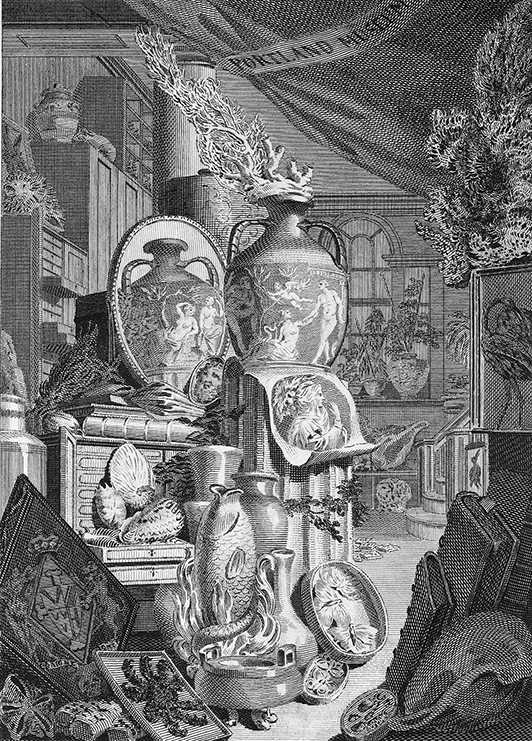
By the 1770s, returning employees of the Company were bringing huge quantities of goods from Asia, filling their homes and estates to such an extent that the material culture of empire became a defining feature of the English country home.Footnote 24 Often having made a very comfortable sum abroad, sometimes having captured vast riches, returning nabobs as well as families connected with shipping, banking and Company administration filled their homes with materials from the Asian trade and, increasingly, wartime plunder. This included weapons, cloth, jewels, utensils and paintings, but also manuscripts and cabinets filled with naturalia, as well as exotic plants and live animals. The ultra-wealthy Child family, for example, which had been involved in Company shipping and administration since the seventeenth century, maintained at their lavish Osterly Park estate extensive gardens as well as a “menagerie full of birds that comes from a thousand islands which Mr. Banks has not yet discovered,” as Horace Walpole put it.Footnote 25 The family of Edward Clive (son of Robert Clive) amassed back in England a vast “treasure,” as Lady Clive put it, of natural specimens, works of art and craft, and stuffed and live animals, many collected (some by the Clive daughters themselves) and others purchased or given as gifts to Lady Clive (Company officers were, by this time, barred from receiving personal gifts, but family members were a different story) while the family was on tour to the recently plundered kingdom of Mysore.Footnote 26 And even beyond those who had served the Company or been to Asia, cabinets of natural history and foreign works of art, especially textiles and tableware, were common in upper-class households.Footnote 27 The ultra-wealthy had, for example, their own glasshouses for exotic flora, “China rooms” to display porcelain collections, museum-like natural history displays and even menageries. For example, Margaret Cavendish Bentinck, duchess of Portland (who was an investor in the Company), put together the largest natural history collection in mid eighteenth-century Britain. The “Portland Museum” at Bulstrode was also home to a menagerie, aviary and large botanical garden (see Figure 3.4). The vast, well-curated collection would be auctioned off, after her death, in 1787.Footnote 28
Frontispiece to the auction catalog for the duchess of Portland’s museum, which then contained the largest natural history collection in Britain. Skinner and Co. (London, England) and John Lightfoot. A Catalogue of the Portland Museum, Lately the Property of the Duchess Dowager of Portland, Deceased: Which Will Be Sold by Auction by Mr. Skinner and Co. on Monday the 24th of April, 1786, and the Thirty-Seven Following Days … at Her Late Dwelling-House, in Privy-Garden, Whitehall: By Order of the Acting Executrix. [London], [Mr. Skinner and Co.], 1786.
Back in London, in the 1760s and 1770s, in the wake of the Company’s expansion after the Seven Years’ War, some of those individual collectors would parlay their private material gains into key positions within both India House and London’s wealthy philosophical circles. These collections would often initially occupy a “semiprivate” space in which they were owned by individuals but hired out in a newly formal way by the Company.Footnote 29 One such collection is that of Robert Orme, who returned permanently (some said fleeing – with Clive) to London in 1760 during the war. He was now well off by English standards but not nearly as rich as those of the great nabobs such as Clive himself. More importantly for the future trajectory of his career, Orme had returned to London with records and archives that allowed him to produce the first detailed account of the Company’s recent wars, together with a study of Bengal. He bought a house in Harley Street, where he installed his personal library and settled into the life of a nabob-scholar. He began work on what would become the History of the Military Transactions of the British Nation in Hindoostan. It was in its time regarded as the most authoritative and complete English work on “India” (a relatively new term, which Orme explains is distinct from the “East Indies”) and it was also the first account of the recent wars that had so radically extended the Company’s territorial reach.Footnote 30
Orme became a fellow of the Society of Antiquaries in 1769. That year, he was also appointed to the newly created position of historiographer to the Company, with a salary of £400. Although in some ways “the world’s first in-house corporate historian,” Orme’s own private library was most critical to his work.Footnote 31 Orme had a desk within the Examiner’s Office, but generally worked from home, surrounded by his massive collection. A few years later, in 1771, the directors, responding to complaints about the “confused and disorderly state” of Company records, established a new office devoted to document management.Footnote 32 The new Registrar’s Office was to take custody and arrange into a numbered catalog all books, papers and records. The office was also to oversee registering incoming and outgoing materials. With these two moves, and just in time for the coming debate over the Company’s charter renewal in 1773, the Company formally took over management of the production of its own history. The political importance of the Company historiographer was such that, after the charter renewal of 1773, part of the new Regulating Act, which increased Crown control of Company policy via the new Board of Control, was to allow the Board to also appoint another historiographer. Orme would thus soon be joined by the historian and philosopher John Bruce, a close ally of Henry Dundas, then president of the Board of Control.
The first volume of Orme’s History dealt with the years between 1751 and 1755, and a key duty of the new historiographer was to produce subsequent editions. It would not be until almost fifteen years later, in 1778, that Orme finally produced the next volume of his history. Some historians argue that his slow progress was largely due to his growing unease with the political events unfolding in India. As Orme wrote to a friend in 1767: “it is these cursed presents [i.e. gifts and bribes] that stop my history. Why should I be doomed to commemorate the ignominy of my countrymen, and without giving the money story [i.e. the question of corruption] that has accompanied every event since the first of 1757, I shall not relate all the springs of the action.”Footnote 33 In later years, Orme switched to less fraught territory, working on a history of the Mughal Empire, publishing Historical Fragments of the Mughal Empire in 1782. The “fragments” in the title points to the fact that, as Orme explains, for this project, back in England, Orme had very little manuscript Persian or Sanskrit material, yet the number of manuscripts and printed works about India now circulating in England still made such a study possible.Footnote 34
Alexander Dalrymple’s career followed a similar pattern as that of Orme, and was equally dependent upon his private library. After returning to London in 1764, Dalrymple established himself as an authority on the South Seas and the Southern Indian Ocean, joined the Royal Society and began advocating for further exploration of the Southern Ocean along with others who believed there was an as-yet-undiscovered major continent. The British government decided to support such exploration, to which the Company also gave £2,000. But when he lost out leadership of the expedition to James Cook, Dalrymple instead turned to the world of print. Dalrymple became a prolific editor and publisher of works related to seafaring, exploration and navigation in Asia. He began, as had Richard Hakluyt, with collected histories of voyages based on sources gathered from a wide chronological and geographical range. His first of these, An Historical Collection of the Several Voyages and Discoveries in the South Pacific Ocean (1770), brought together materials to make the case for there being an undiscovered continent to the south of Borneo and the Philippines. The subtitle declares the work’s value “Being chiefly a LITERAL TRANSLATION from the SPANISH WRITERS” and indicates, as Dalrymple elaborates in the introduction, that the work is not intended for popular enjoyment but for the information of the serious student of Eastern navigation. Distancing himself from the thriving travel writing genre, he presents the decision to produce a “LITERAL TRANSLATION” as a matter of unsparing scientific utility (and personal financial sacrifice): “the undress and uncouth sound of a literal translation is enough to frighten all readers except the very few who take up a book merely for information; but it was to these few I have devoted my labors.”Footnote 35 And he signals his authority on the subject by way of his own history as a ship captain and in the East India Company, which, crucially, gave him access to this very rare information and enabled him to form “a collection of all the discoveries in the South-Sea” during the Seven Years’ War.Footnote 36
Dalrymple also continued collecting after he returned to London in 1764. One contemporary describes him as a constant presence in certain bookseller shops and auction houses:
His yellow antiquarian chariot seemed to be immovably fixed in the street just opposite the entrance door of the long passage leading to the sale room of Messrs King and Lochee in King Street Covent Garden, and, towards the bottom of the table in the sale room, Mr. Dalrymple used to sit, a cane in his hand, his hat always upon his head, a thin slightly twisted queue and silver hairs that hardly shaded his temple. His biddings were usually silent, accompanied by the elevation and fall of his cane, or by an abrupt nod of the head.Footnote 37
Of his London shopping, Dalrymple notes in particular being able to acquire a “curious collection of Spanish memorials; these greatly elucidate the printed relations, which without having this assistance, must have remained unintelligible.”Footnote 38
Dalrymple’s History marked the start of a period of about three years in which he mined his own library to produce nautical and hydrographical charts and pilot guides about the China routes. His focus was on the area around Borneo, the Sulu archipelago (where for years he had advocated establishing a Company settlement at Balambangan) and the Philippines, based first on his own travels and later on the manuscripts and rare prints in his collection, becoming more of an editor than an author. In this period, the standard means of transferring nautical information was via manuscript copying. The Court of Directors was not entirely happy to have such routes and port descriptions published, and during a period when a Balambangan station was under active consideration, for example, they discouraged him from making the material publicly available.Footnote 39 Dalrymple was also in close contact with the French hydrographer D’Aprés de Mannevillette, and in 1772 sent him the six publications he had so far produced, sanctioning him to “make what use you please of the Charts I have sent you,” which D’Aprés did in later editions of his widely read Neptune Oriental.Footnote 40 Here Dalrymple found his focus: gathering, organizing, editing and publishing nautical works. His first set of charts comprised six drawn from a Dutch collection (of Van Keulen) and the rest from his own collection, producing in 1774 A Collection of Plans and Ports in the East Indies. This work also marked a new relationship between Dalrymple and the East India Company. Earlier tensions now dissipated, and Dalrymple now worked with an eye to gaining significant Company subscriptions for forthcoming works. The Company agreed, for example, to purchase fifty copies of A Collection of Plans and Ports in the East Indies.
In 1772, Dalrymple was formally re-hired by the Company as the Company’s in-house hydrographer. In 1777, his projects turned from his own collections to those at India House, examining ships’ logs and publishing charts on behalf of the Company. The Company hadn’t produced its own nautical charts since the early seventeenth century. By 1779, Dalrymple was receiving an annual salary of £500 for his hydrographic work. He still did most of his work at his home (in the household of his patron the former governor George Pigot). He also hired out engravers and printers and, when necessary, supplemented the Company’s annual £500 stipend for publication costs with his own funds.Footnote 41 But, beyond providing the Company with a required number of copies, he was allowed to do what he wished with the material and any further profit would be his.
By the mid 1780s, Dalrymple had produced hundreds of charts for the Company, based increasingly on the logbook collections at India House. He was also now selling collections of these to the public, packaging and repackaging the Company materials in an ever-changing number of forms. In 1791 he began his annual series The Oriental Repertory, which became a very widely used resource, a compendium of all kinds of travel and shipping information, updated route guides, charts, tables and so on. He had also been successful in getting the logs in more regular forms and in convincing captains to produce information of the kind he was seeking, including making use of new marine chronometers for longitude. In 1795, as tensions escalated between France and Britain yet again, the Admiralty followed the Company’s lead and began a program of organizing and processing its own vast archive of ships logs and miscellaneous charts. Dalrymple also became hydrographer to the Royal Navy, receiving the same salary from the state as from the Company. He would retain both positions until his death in 1809.
Not all Asian collections in London were being managed in semiprivate collaboration with the Company. There were plenty of much more independent collections being formed as well. Williams Jones, the puisne judge and orientalist in Calcutta, sent a significant collection of his manuscripts to the Royal Society in 1792 (the rest were retained by Lady Jones and eventually auctioned off with her library after her death in 1832).Footnote 42 In addition, the orientalist and administrator Henry Thomas Colebrooke, who was also Jones’s close associate and successor in the project to create a digest of Hindu laws, would also remain independent from the Company upon his return to London in 1815. Colebrooke instead founded in 1823 the Royal Asiatic Society (modeled on the Asiatic Society of Bengal). He had amassed an even larger collection than Jones, and though he left much of his library back in India with the missionary and printer William Carey (who had agreed to copy the lot and eventually ship the originals back to London), he also shipped about seven tons of books and manuscripts, over 2,500 items, then said to be the largest collection of material from Asia in Europe.Footnote 43
William Marsden, who also formed a great private library at this time, presents a different trajectory. After nearly a decade in Bencoolen, he resigned and returned to London, where he helped to run an agency house. He also spent a great deal of time and money collecting Asian coins and manuscripts within London, from booksellers and private library auctions. Marsden was, above all, a collector of information about languages, particularly the languages of present-day Austronesia. He published the first English history of Sumatra and the first English dictionary of Malayan. The study of languages encompassed both the extremely practical, with word lists and dictionaries that circulated constantly among ship captains and seamen, and the philosophical, in which language was considered a window onto the history of civilizations.Footnote 44 As the war with France took shape, Marsden also, like Dalrymple, joined the Admiralty as an undersecretary in 1795, becoming first secretary with a massive salary of £4,000 in 1807.
Along with Dalrymple and Rennell, Marsden also became part of the Company contingent of the naturalist Joseph Banks’s circle, joining his supper and breakfast clubs as well as being elected a fellow of the Royal Society.Footnote 45 Banks, for his part, facilitated Marsden’s philological research by passing on material related to languages that came into his hands.Footnote 46 Although his research interests never left South and Southeast Asia, Marsden did not court the Company for any official position – perhaps running an agency house provided him with sufficient financial independence. And perhaps this is why, as with Banks himself, the British Museum was much more his institutional base than was India House.Footnote 47 He even purchased a home in Bedford Square to be close to, as he put it, “my philosophical friends in Soho Square.”Footnote 48 In the last quarter of the eighteenth century, this area of London, about 2.5 miles west of India House, was the cultural center of the sciences, housing two of the most significant institutions: the British Museum and the Royal Society. Banks’s circle of influence also stretched further west to the botanical collections of the Chelsea Physic Garden, run by the Society of Apothecaries, the main suppliers of drugs to Company surgeons, and to King George III’s gardens at Kew. At his death, Marsden bequeathed his coin collection to the British Museum, and his library went to the newly founded King’s College (the Marsden library is now shared between King’s and the School of Oriental and African Studies [SOAS]).Footnote 49
All of these institutions were connected in various ways to science under the Company in London in this period. Materials from Asia would make their way via Company servants into Banks’s vast herbarium, the king’s gardens, the Royal Society’s repository and the cases and stores of the British Museum. Social and intellectual ties were strong: surgeons and naturalists returning from Company service were frequently elected to the Royal Society, sometimes becoming prominent members. As we will see, Banks and other members of the Royal Society were also at times part of Company deliberations on administrative matters, and the Company subscribed funds to some voyages of exploration that the Society promoted. It should also be noted that many wealthy members of the Royal Society and other naturalists and collectors also had financial ties to the Company as stockholders. The towering Glaswegian collector William Hunter, for example, sometimes funded his massive purchases through the sale of Company stock.Footnote 50
The New Library-Museum at India House
In 1798, the same year the Company first broke ground on the expansion of the new India House in the City of London, the directors announced their plan (see earlier) for a new “public repository.”Footnote 51
105. You will have observed by our dispatches from time to time that we have invariably manifested, as the occasion required, our disposition for the encouragement of Indian literature. We understand it has been of late years a frequent practice among our servants, especially in Bengal, to make collections of oriental manuscripts, many of which have afterwards been brought into this country. These remaining in private hands, and being likely in a course of time to pass into others, in which probably no use can be made of them, they are in danger of being neglected, and at length in a great measure lost to Europe as well as to India. We think this issue a matter of great regret, because we apprehend that, since the decline of the Mogul Empire, the encouragement formerly given in it to Persian literature has ceased, that hardly any new works of celebrity appear, and that few copies of books of established character are now made; so that there being by the accidents of time, and the exportation of many of the best manuscripts, a progressive diminution of the original stock, Hindostan may at length be much thinned of its literary stores, without greatly enriching Europe. To prevent in part this injury to letters, we have thought that the institution of a public repository in this country for oriental writings would be useful, and that a thing professedly of this kind is still a bibliothecal desideratum here. It is not our meaning that the Company should go into any considerable expence in forming a collection of Eastern books, but we think the India House might with particular propriety be the centre of an ample accumulation of that nature; and conceiving also that gentlemen might chuse to lodge valuable compositions where they could be safely preserved and become useful to the public, we, therefore, desire it to be made known that we are willing to allot a suitable apartment for the purpose of an oriental repository, in the additional buildings now erecting in Leadenhall Street; and that all Eastern manuscripts transmitted to that repository will be carefully preserved and registered there.
106. By such a collection, the literature of Persia and Mahomedan India may be preserved in this country, after, perhaps, it shall, from further changes and the further declension of taste for it, be partly lost in its original seats.
107. Nor would we confine this collection to Persian and Arabian manuscripts. The Shanscrit writing from the long subjection of the Hindoos to a foreign Government, from the discouragement their literature in consequence experienced, and from the ravages of time, must have suffered greatly. We should be glad, therefore, that copies of all the valuable books which remain in that language, or in any ancient dialects of the Hindoos, might through the industry of individuals at length be placed in safety in this island, and form a part of the proposed collection.Footnote 52
As first presented in the 1798 Dispatch, the primary aim of a Company repository was the “preservation” of an endangered “oriental literature.” The threat to India’s “literary stores” was described as threefold: first, according to the directors, very few new literary works of note were now being produced (the golden age of Persian and Arabic literature lay in the past); second (and echoing the argument in Foote’s Nabob that individual nabob wealth did not contribute to national wealth), the voracious private collecting and exportation of oriental manuscripts by Company servants was “thinning” the stock of original works in India (while at the same time this collecting was “not greatly enriching Britain”); finally, Sanskrit and other languages of pre- (and non-)Mughal India had “suffered greatly” under “foreign” (i.e. Mughal) rule. For all these reasons, so it was proposed, a safe harbor was needed in Britain for the literary and scientific material of the subcontinent.
Robert Orme had been making the case for a Company library at India House since at least 1792.Footnote 53 It is unclear how directly Orme was involved in the directors’ final decision to allocate space in the new India House for a repository. The dispatch’s depiction of an endangered Persian and Arabic and a long-oppressed “Shanscrit” is much the same as arguments made by Charles Wilkins in his introduction to the Bhagavad Gita. In its first expression the repository was conceived as a collection designed to intervene in and incorporate the private manuscript trade; there is no discourse of “improvement” here, or even of “usefulness” beyond the narrowly presented aim of “preventing further injury to letters.” The directors’ first vision of the repository was not, like that of the botanical gardens or the surveyor’s offices on the subcontinent, as a new arm of an improving mission. And it was also, in expecting to grow at “no great expence” and by way of donations, not much of a departure from the old outsourcing model of knowledge management. It was merely a signal of a willingness to take “public” but, in effect, corporate ownership of these materials. But in that little shift was the making of what would become an important new institutional space for Company science in Britain.
London newspapers immediately reported on the plans and developments for a repository at India House. In the same year that the directors announced their plans for the library and museum, The Oracle reported on some “presents” including “two chests containing some very valuable jewels” for the “Oriental Museum at the India House” as well as alerting readers that “a magnificent and extensive Library is to make a part of the additions to the India-House.”Footnote 54 Years before Tipu’s tiger arrived in London, the Morning Post had already learned that “a most curious piece of mechanism,” which was “proof (if any were yet wanting) of the deep hatred and extreme loathing of Tippoo Saib [sic] towards the English nation,” had been captured at Seringapatam and was to be shipped back to London (so the Post thought) to the Tower to go on display with other national war trophies.Footnote 55 (Tipu’s tiger also appears in the Times’s earliest reference to the “Company’s Museum” in an account of the visit of a Mamluk envoy, Elfin Bey, in 1803, when the group played “Rule Britannia” on the organ of the tiger.)Footnote 56
A year later, this modest idea had been spun into a plan for a small British Museum-like library and museum at India House. This new proposal was the work of Warren Hastings and Charles Wilkins, both of whom had returned to London in the mid 1780s. Wilkins had, as we now would expect, returned to London with a trove of Indological material he had collected while in India. He continued his translation work, publishing a book of Sanskrit fables, the Hitopadesha, in 1787, was elected to the Royal Society in 1788 and issued more sections of the Mahabharata in 1794 and 1795. A fire at Wilkins’s home in 1796 damaged much of his collections and destroyed all of his Bengali and Sanskrit typeface. Hastings had originally been called back to face accusations of corruption and mismanagement, and a subsequent trial of impeachment had dominated nearly a decade of intra-London Company politics. During the trial, which lasted from 1786 to 1795, Wilkins often attended court to speak in support of him. In addition, Kasinatha and the “Bengali Pandits of Benares” sent letters of support for Hastings, one with 112 signatures.Footnote 57
After Hastings was acquitted, he passed to the Court of Directors Wilkins’s proposal for “A Sketch of a Plan for an Oriental Museum proposed to be established at the India House.”Footnote 58 Wilkins’s proposal described a repository-like archive of “maps, charts, plans, views, manuscripts, printed books, coins, medals, statues and inscriptions.” But it also included three “cabinets”: “natural productions,” “artificial productions” and “miscellaneous articles.” Among the “natural productions” were the three categories of “Animal, Vegetable, and Mineral.” The general organization mirrored that of the British Museum, but the proposed items for collection were distinctly drawn from the world of the Company and its empire. Under “Animal” Wilkins included many highly sought-after items of trade and commerce, for example “animals, parts of animals, or produce of animals as are objects of commerce, and all in its natural state: the tusk of the elephant, the wool of the shawl goat, the musk in its bag, the cocoons of the different silk worms, lack [lac] with its colouring substance intact, the cochineal, and the edible birds’ nest.”
Wilkins does also suggest that the more typical specimens of natural history – stuffed or preserved animal trophies or large and merely “curious” animals offered as gifts – should also be found a place if they are “accompanied by an Abstract of its Natural history.”
In the curating of the “vegetable productions,” Wilkins suggests that the focus should be on the plants “whose produce is an article of commerce.” For example: “timber … for ship-building, [plants with] medicinal virtues or fragrant scents … sugar canes and tea trees, cotton plants … indigo and other plants used in staining and dyeing … oils, gums and resins which are the natural produce of the plants of Asia.” And all of these specimens should be well documented, accompanied by a “memorandum of its peculiar qualities, place of growth &c.”
Wilkins’s description of the “mineral productions” to be collected focuses, yet again, almost exclusively on known and economically significant materials:
that species of steel which is known at Bombay by the name of bat or coots [wootz] … bitumens and petroleums … it would be a curiosity to our chymists to see the saltpetre and fossil alkali in the native earth, unmanufactured, as well as the borax … precious stones, marble and alabaster … particular attention should be given to those stones, earths and clays as might be useful in our manufacture.
Similarly, it was British manufacturing and trade interests, and the intense importance of the textile trade to Company profits, that dominated the collection of “artificial productions” proposed by Wilkins. He suggests ambitiously to procure “generally samples of all the manufactures of Asia, and, particularly, every article in silk and cotton, in every stage from the cocoon and pod to the cloth ready for the market; of the different sorts of colouring substances prepared in India; of sugar and sugar-candy; of saltpetre and borax &c &c.” Importantly, Wilkins also proposed to form a collection of Asian technology: “models of the various machines and tools used in the manufactures of Asia should form a part of the Collection; and also of the implements of husbandry, and instruments used in their sciences, mathematical, astronomical, musical &c. &c.” Finally, in acknowledgment of the centrality of gifts and the place of treasure within India House, he also proposed a space for “miscellaneous articles,” which he describes as “Curiosities, chiefly presents, such as cannot conveniently be classed under any of the former heads.”
Wilkins’s description of an imagined Company museum was entirely unique to the nature of British interest in, and the state of Company knowledge relative to, Asia. His is an ideal collection produced by someone with detailed knowledge of materials of commercial interest to the Company and its customers. Unlike the directors’ initial description of a “repository,” intended merely for “preservation,” and unlike the curiosity cabinets of the wealthy amateurs, Wilkins repeats again and again the aim of collecting well-studied objects of interest to commerce and manufacturing; this is a plan for an industrial or economic museum forty years before the boom in economic museums would begin (see Chapter 7). Although similar in some ways to the British Museum model, the Company’s model of a museum was also clearly not an Enlightenment-style encyclopedic or universal collection. James Delbourgo has stressed how the growth of Hans Sloane’s collection (which would become the founding collection of the British Museum) illustrates how global trade “enabled the pursuit of universal natural history, aimed at gathering as much of the world’s variety as possible.”Footnote 59 The initial plan for the Company’s museum was, in contrast, specific to Asia, and with the apparent intention of gathering together not an ark of all of God’s creations, but a great warehouse of all of humankind’s material desires.
Hastings wrote enthusiastically to the Court of Directors, urging “the formation of a new and untried system for ingrafting the knowledge of India on the commercial persuits of the Company.”Footnote 60 Echoing the early orientalism of Jones and Wilkins, but somewhat at odds with the directly commercial character of Wilkins’s proposal, Hastings suggested that an “oriental museum” at India House would distinguish the Company from other trading companies (“men associated for the purposes of pecuniary gain”) and demonstrate a more enlightened corporate character. As Hastings puts it (and does so in the language of trade), the Company has “joined a desire to add the acquisition of knowledge (and wonderful will be the stores which the projected institution under such auspices will lay open to them) to the power, the riches, and the glory which its acts have already so largely contributed to the British Empire and Name.”Footnote 61
Wilkins’s original proposal for the repository had also included a request to fund a scholarly society devoted to “Eastern learning … and the cause of science in general.”Footnote 62 Based on the model of the Asiatic Society of Bengal (“a Society similar to that now flourishing in Calcutta”), Wilkins proposed that the Society’s meetings could be held in the India House repository, members would be allowed free use of the collection for their research and the Society would also run a printing office, with the ability to print “in the Oriental Characters” for use by both the Company and Society business, with the Society payments in effect funding the press office itself.Footnote 63 Apparently moved by at least part of Wilkins’s vision, the directors voted in favor of the repository portion of the proposal, although they declined to fund the scholarly society, and also voted to offer the new position of curator to Wilkins with a salary of £200 per annum.
Wilkins’s plan for the repository was well ordered, focused and comprehensive. But, for many years, the actual collection would be very different. In the first few years of the library and museum’s existence, its collections “grew” largely through the disgorging of materials – often curiosities and presents – from other rooms and shelves in India House. A new policy had, in November 1801, required all books and “articles of curiosity” dispersed throughout India House and Company warehouses to be deposited in the new repository.Footnote 64 Thus, for example, one director, Hugh Inglis, transferred to the museum a collection of rare books “of the Maharatta character” and a “silver image of the God Buddha or as he is called at Ava [Myanmar], Gowdona … with a curious Japanned [lacquered] Box.”Footnote 65 John Roberts, another director, deposited typeface for the Telegu language cut by Vincent Figgins. Wilkins himself presented a set of newspaper clippings. Then came a “Persian manuscript,” “a silver ring with a black stone bearing an inscription in Nagari Characters,” “A Crystal with an Arabick Inscription,” “A Manuscript dictionary and grammar in French and Tamul [sic] by Father Dominique Pondicherry from 1743” and an “Egyptian Idol” from the Chairman’s Office. From the Treasurer’s Office arrived “the Horn, or rather Tusk, of a fish said to have been found many years ago sticking in the bottom of an Indiaman.”Footnote 66 The same day, from the Secretary’s Office came a “curious ring, an opal set in gold” and an “Arabic manuscript on the small-pox printed at Cairo by the French,” as well as a set of books heavy on history and travel (i.e. “Dr Halde’s” Description of China [1738]), dictionaries (i.e. Richardson’s Persian Dictionary), and natural history and particularly botany (i.e. Hill’s British Herbal [1756], Dillenius’s Hortus Elthamensis [1732], Gerard’s Herbal [1633] and Grew’s Anatomy of Plants [1682]). That same day, seventy-five printed books were transferred from the Registrar’s Office to be cataloged by the library. The list included standard English reference works such as the journals of the House of Commons, volumes of Treatises and Charters, and Chamber’s Cyclopaedia. What might be called Company reference works were also well represented: Ben Marsden’s History of Sumatra, Nathaniel Halhed’s Code of Gentoo Laws, the East India Acts, Dalrymple’s South Sea Directory, Rennell’s Bengal Atlas. Recent works that the Company had subscribed for would have been deposited in the Registrar’s Office as well; thus the list also contained Symes’s Embassy to the Kingdom of Ava (1800), Vincent’s Periplus of the Erythrean Sea (1800) and a dozen other histories, travels and geographies printed in the previous decade.Footnote 67 And so it went for the rest of 1802 and into 1803. The whole building seemed to turn out its pockets, and into the library was swept everything that fell out.
On December 30, 1802, amid a pile of recently published books sent to the library from the Director’s Office, was one curious manuscript: “The Original Manuscript Record of Tippu [Tipu] Sultan’s Dreams.” This was among the first shipments of plunder from the siege of Seringapatam in 1799 to arrive at India House. It is also an exceedingly intimate relic of one of the greatest challengers to Company rule on the subcontinent, first cherished in the room where the Court of Directors’ met and, as we have seen, later put on display in a glass case in the library.Footnote 68 A month later, the Examiner’s Office deposited “Proceedings of a Jacobin Club at Seringapatam” and “a gold medal commemorating the fall of Seringapatam.”Footnote 69 Soon these items were joined by a trickle then a flood of materials plundered from Mysore, although what arrived at India House was only a fraction of what had been taken when the last of the Anglo-Mysore wars ended with the storming of Tipu Sultan’s palace. The day-book records for later 1802 to 1806 are missing, but when the entries pick up again, another large deposit is recorded from India.Footnote 70 The first waves of Mysore plunder enriched the India House collection in the form of manuscripts, rare books, the famous mechanical tiger (described earlier, Figure 3.5), war trophies and gold and jewels. In addition to what was considered Company booty, many valuable jewels, precious metals, household wares, works of art and military souvenirs would make their way in a semiorganized manner through the Company’s prize agents into private hands and hence back to family homes in Britain.Footnote 71 But, at least initially, the Company’s army retained in Calcutta the renowned royal library of Seringapatam. Far from a planned accumulation of examples of economically important materials as Wilkins had proposed, the early patterns of object accumulation in the museum followed the serendipitous patterns of wartime acquisition.
Tipu’s tiger, constructed in Mysore in the 1780s or 1790s. Now at the Victoria and Albert Museum (no. 2545 IS).
Wilkins was, however, somewhat intentionally shaping the printed book collection through regular book-buying trips. For the first decade or so, Wilkins preferred to shop at the Strand bookseller Francis Wingrave, who also counted among his devoted customers the Astronomer Royal Nevil Maskelyne. The first purchases for the Company’s library come in late 1801, just a few weeks after the library begins to register acquisitions. Again, the subjects are botanical; Wilkins purchased two of the most authoritative Indian herbals from a sale at the auctioneers Leigh and Sotheby’s: the twelve-volume Hortus Malabaricus and the Thesaurus Zeylandicus. In early 1802, Wilkins was stocking the new library with dictionaries (Johnson’s Dictionary, Ainsworth’s Latin Dictionary and Boyer’s French Dictionary, in addition to a Portuguese dictionary). A week later, Wilkins was back in the Strand, this time on a larger shopping spree, and this time focused on Dutch, French, Italian and Prussian works of science, including, for example, Foucquet’s Observations Astronomiques de Chinois, Manucci’s Storia do Mogor, Du Bec’s Histoire du Grand Tamerlanes, Palafox’s History of China, Kolbe’s Description of the Cape of Good, several accounts of voyages, Bayer’s Museum Sinicum and Rumphus’s Herbarium.Footnote 72
And so it went for the next three decades. The growing library purchased books in a wide range of subjects, but invested especially heavily in Asian languages, history, geography and natural history (especially botany).Footnote 73 The librarian generally had at his disposal a budget of £200–£300 per year (about the same as his base salary) and seems to have done his best to collect for the Company as many new publications on Asia or the Middle East that would be sold in Britain, as well as many from continental Europe, that he could get his hands on through his favorite booksellers. In the first decade or so, much of what Wilkins purchased were French or Dutch works, but from the 1810s onwards, as more and more British publications relating to Asia appeared, the buying trips became largely a matter of trying to keeping up with all that was being published about Asia or the Company itself in (primarily) London. Starting in the 1830s, Prussian works would also be purchased in increasing numbers.Footnote 74 In the 1820s, Wilkins shopped most often at Black and Company, and in the early 1830s also frequented Parbury and Company. But soon after William H. Allen and Co. opened a few doors down from India House on Leadenhall Street, it became the library’s main source for British and European printed books. W. H. Allen were also the booksellers through which the Company sold, in increasing numbers, their own publications (some printed in London, others in India). It also became a leading publisher of colonial material in general, including the Asiatic Journal and Monthly Register. In addition to growing through purchases, many more books were “deposited” in the library by other branches of the Company or by shipments from presidency offices. Hence, for example, when the Court of Directors agreed to support a new publication by subscribing for (i.e. pre-purchasing) multiple copies of the work, a few copies would usually be deposited in the library. And from the 1830s onwards, many more books began to arrive from abroad. Most importantly, the Committee of Public Instruction of the Bengal Government and the Calcutta School Book Society, both of which regularly published works in native language, would (when prodded by the Court of Directors) send copies of these in bulk to be deposited in the library, where they often would be reserved for use by another pair of new institutions closely connected to the library: the Company’s civil and military colleges.Footnote 75
The Company’s British Colleges
At the same time as Wilkins’s proposal for a library-museum was being considered by the Court of Directors, developments in India were forming that would eventually propel the Company’s plans for London-based institutions of science in new directions. The new governor-general of India, the Anglo-Irish aristocrat Richard Wellesley was setting in motion an ambitious set of plans to make Calcutta the center of Company education and training. After his successful defeat of the kingdom of Mysore, Wellesley’s next move was to reform the system of civil service education. Wellesley, himself a collector, especially of natural history drawings and paintings, set up a natural history museum and menagerie at Barrackpore in 1800 (with Francis Buchanan the first director). In the same year, much more ambitiously, he announced plans for a sprawling new college at Fort William in Calcutta.Footnote 76
Wellesley’s new college was symbolically and materially tied to the British defeat of Mysore. Wellesley wanted the college itself to stand as a perpetual monument to that victory, so he set a symbolic founding date of the same day as the fall of Seringapatam, May 4, 1800, even though the college was actually founded about four months later.Footnote 77 In a more direct material way, the vast and valuable library of Tipu Sultan, which had been captured along with the rest of the state treasury, was transferred to Fort William with the intention of making it the founding collection of the college’s new library. Wellesley envisioned the college as an extension of the “benevolent intent” of the British Empire, which rules “in the mild and benign spirit of the British constitution.” Its aims were to promote “the prosperity and happiness of the people” of British India by way of better training for the (at this point exclusively British) civil service.Footnote 78
Wellesley’s college plan was much more ambitious than what was then offered at the existing Calcutta Madrassa or other regional schools such as at Varanasi. At the time, the majority of writers, many of whom went to British India as young as sixteen, would be sent out with no special training. Company officers would start out as copying clerks, learning the business of Company administration on the job. They were given no special training in languages but were allowed a “Munshi allowance,” an extra sum of money that could be used to hire a native teacher. In 1798 Frank Gilchrist, author of A Hindustani Grammar and Dictionary, proposed to the Company directors that he be allowed to take on Company officers as students in exchange for the Munshi allowance. Out of Gilchrist’s plan came the first formal examinations; students of Gilchrist would from 1801 be given a standard examination, testing their knowledge of the laws and regulations of the Company as well as their proficiency in oriental languages.Footnote 79
Wellesley proposed to expand this slight and loosely structured system of education into a three-year residential college, where all newly arrived Company officers would be taught both “European” and “Asiatic” subjects. The list of subjects to be taught was extensive, including nine of the major languages of the subcontinent. It also included Greek, Latin, “Mahomedan law, Hindoo law … English law,” political economy, classics, history, geography, mathematics, botany, natural history, chemistry and astronomy.Footnote 80 Clearly many of these subjects fell under the then-expansive category of “useful knowledge” but Wellesley, who himself was educated at both Eton and Harrow and then Oxford, imagined the real utility of such an education was in the construction of habits and the shaping of the minds of Company servants. With chauvenistic venom, Wellesley claimed this was especially critical for the case of civil servants working in British India because the general environment of India was, so he argued, dangerously degraded and depraved:
[the students’] early habits should be so formed, as to establish in their minds such solid foundations of industry, prudence, integrity, and religion as should effectually guard them against those temptations and corruptions with which the nature of this climate and the peculiar depravity of the people of India will surround and assail them in every station, especially upon their first arrival in India. The only discipline of the service should be calculated to counteract the defects of the climate, and the vices of the people, and to form a natural barrier against habitual indolence, dissipation and licentious indulgence.Footnote 81
Wellesley had brazenly put this grand plan into motion without informing or receiving approval from the Court of Directors. And, upon finally receiving the communications of Wellesley’s plans in April 1801, the directors ordered the college – already up and running – to be immediately abolished and replaced by a much less ambitious school for language instruction only. A Wellesley biographer and admirer, writing in 1847, put the harsh decision down to a clash of sensibilities between the old corporation and its new role as state: “the men of mere facts, figures and money bags were not reasoned out of their predilection for the old routine of mere mercantile utility.”Footnote 82 But, in fact, the Court was not at all against such an ambitious education plan; it was only against basing it in Calcutta rather than in England. Wellesley’s vision for the education of the Company’s servants would indirectly form the foundation for a new education regime back in the home country. The Company’s stated reasons for closing Wellesley’s college were that the expense was far too great, there were too many professorships, the emphasis on European subjects was unnecessary and a better plan would in any case place separate colleges in each presidency. Unstated was the fact that, if civil service appointments were made by the governor-general after graduation from a college in Calcutta, this would greatly reduce the highly valued patronage power held by the Court of Directors. Furthermore, Wellesley had taken individual initiative one step too far.Footnote 83
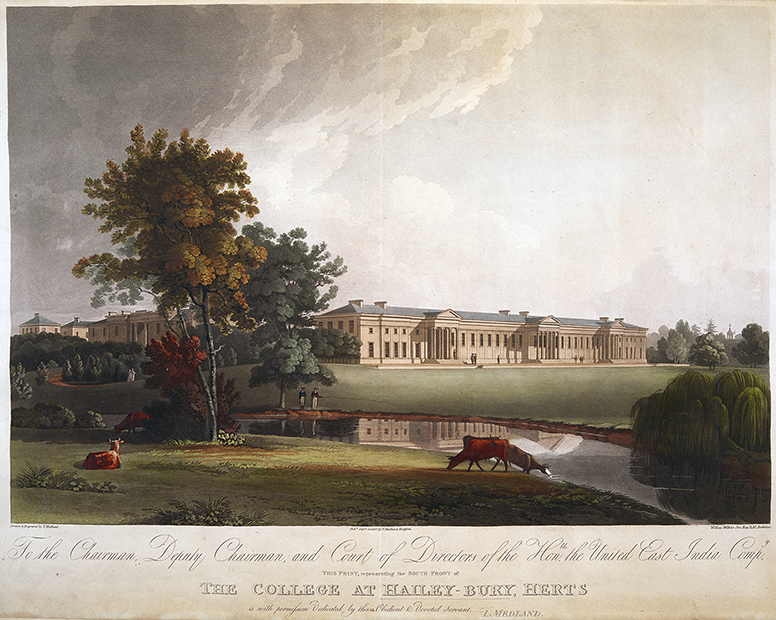
The Court’s decision to close Wellesley’s college was widely criticized in London by both critics and some supporters of the Company. The Board of Control and the Court debated the future of the college throughout 1802 and finally in September 1803 an agreement was reached. The college at Fort William was to focus on language training, for writers within its presidency only, and its funding was reduced by half.Footnote 84 Then, in 1805, in a public dispatch the Court of Directors announced the opening of a new college, to be located 30 miles north of London in Hertford, for the training of all civil servants headed to India.Footnote 85 The powerful Director and Clapham Sect evangelical Charles Grant was one of the driving forces behind the scope and scale of Haileybury, which he often referred to as his “child.”Footnote 86 It was to be temporarily located in Hertford Castle while the architect William Wilkins, who had previously worked on several Cambridge colleges, was commissioned to build a grand neoclassical college, complete with a vast interior quadrangle and an elegant dining hall.Footnote 87
Company professorships paid well, and they attracted and retained eminent scholars, virtually all of whom were clergymen and fellows of Cambridge colleges (the connection between Cambridge and Haileybury was tight, although after Haileybury closed in 1855, its successor in Indian civil service training would be the Oxford India Institute [f. 1875]). The first principal was Reverend Samuel Henley, a religious writer, Shakespeare scholar and fellow of Queen’s College, Cambridge.Footnote 88 Wilkins accepted the additional position (and pay) of examiner and visitor to the college. The curriculum was very similar to the one Wellesley had designed, with professors of mathematics; natural philosophy; classical and general literature; political economy and history; the general laws and policy of England; Persian, Arabic, Hindustani, Bengali and Sanskrit (and later Telugu); Hindu literature and the history of Asia; and drawing and penmanship. Of the first generation of Company professors, two of the most prominent were the political philosopher the Reverend Thomas Robert Malthus (whom the students took to calling “Pop” or “Old Pop,” i.e. Population Malthus), who taught political economy, and the Scottish orientalist and philosopher Alexander Hamilton, who taught Bengali and Sanskrit.Footnote 89 Charles Stewart, who had initially been appointed a professor at Wellesley’s college, returned to Britain in 1806 to teach Arabic, Persian and Hindustani. The Reverend William Dealtry, a Cambridge wrangler, friend of Grant and fellow Church Missionary Society co-founder, was appointed the first mathematics professor, along with another wrangler and future vicar Bewick Bridge. Yet another clergyman and Cambridge wrangler, Henry Walter, was hired to teach natural philosophy. The artist and engraver Thomas Medland was hired to teach drawing and oriental penmanship.Footnote 90
Sketch of Haileybury College, with cows and students in the foreground, by Thomas Medland, 1810.
On July 16, 1806, a large section of Tipu Sultan’s famed library finally arrived in Britain: 197 boxes of highly valuable Arabic and Persian manuscripts, plus a dozen especially rare volumes that Wellesley had suggested should be presented “to the King and Universities of the United Kingdom.”Footnote 91 This effectively represented the final dismantling and relocation of Wellesley’s vision for Company science from Calcutta to Britain. The supporters of Wellesley’s Calcutta plan had once hoped that it would “be rendered brilliant and dazzling” and “attract the notice of surrounding nations and attract the various literati.”Footnote 92 Now, to the satisfaction of India House, the centrifugal force of Haileybury College, together with the India House repository, would draw attention to London, to the British orientalists and the growing network of institutions of knowledge connected to the Company in Britain.
Despite the failure of Wellesley’s grand plan, however, later in the nineteenth century Calcutta would become a major center of education and intellectual output in the region.Footnote 93 But the growth of Calcutta’s scientific and educational capacity was also undoubtedly slowed by the pull of these Company resources back to Britain. Wellesley’s college continued in a different form, without dedicated buildings or housing for students, into the 1830s. Still, under the umbrella of language studies, the Calcutta College eventually employed over 100 native scholars. Its library would also grow immensely, eventually to become a founding collection for the first Calcutta Public Library. But the native teaching positions were subordinated to the heads of language departments, which were invariably held by Europeans. These positions were often held by collectors and orientalists such as William Carey, Frank Gilchrist and Henry Thomas Colebrooke. The college also fit awkwardly within the machinery of the Calcutta administration, and students attached to the college often fell into debt. Even the presidency government itself suggested abolishing it and returning to the Munshi system. In the Bombay presidency, no college was ever established, although the government occasionally floated the idea. The Court of Directors had asked the Madras government to propose a plan for a language college in 1802, and in May 1812 the College of Fort St. George opened. It had no professors (the examinations were conducted by Company writers and translators) but a large staff of Munshis.Footnote 94
With the establishment of the East India College at Haileybury, the Company had taken full control of the training of its servants.Footnote 95 It had done so without reducing the Court of Directors’ patronage power. And Haileybury, together with the library and museum at India House, would form a critical new institutional infrastructure for the growth of orientalist studies and all that entailed, including Asian-language printing capacity, translators and tutors, and manuscript and print libraries in Britain. In 1809 the Company expanded its educational landscape even further, establishing a separate training college for cadets joining its large private army. Previously, those entering the engineering or artillery branches of the Company’s army would have been trained either privately or at the Royal Military Academy Woolwich (f. 1741). Now they would spend two years at the Company’s Military Seminary in Addiscombe. The curriculum included mathematics, natural philosophy, chemistry, surveying, gunnery and fortification, as well as French, Latin and Hindustani.
All of this represented a vastly expanded role for India House in science and education.Footnote 96 Before the foundation of Haileybury, although outgoing servants were required to demonstrate proof of certain skills (legible writing and account or bookkeeping), the Company did not involve itself in providing those skills. The only Britain-based education provided by the Company was a period of internship required for junior servants starting out in the China tea trade: after 1789, writers elected for Canton were required to spend a year in London in order to observe the quarterly tea sales and, under a tea broker and the head warehouse keeper, be taught “knowledge of the different qualities of the Teas … [and] the nicer distinctions necessary to guide the buyers in their purchases.”Footnote 97
The directors had firmly asserted the Company’s interest in pulling both patronage power and the growing domain of British orientalism and Company science back into the orbit of London. But this new geography of Company science remained controversial for several more decades. In British India there was, initially, little interest in voluntarily feeding the growth of the institutions back in London. At a 1798 meeting of the Asiatic Society of Bengal, for example, the issue was raised whether the Society should endeavor to directly support the new India House repository by collecting materials for it. The motion was ridiculed and dismissed. In fact, in general, while wartime collecting and surveying was steadily yielding results, voluntary donations from Company servants in Asia were so slow to materialize that, in 1805, the directors sent out another public letter, once again soliciting donations: “As our Original views in establishing this library have by no means been abandoned, and we still entertain hopes, that the invitation held out to individuals in India … would be successful, if properly seconded by our supreme government, we again refer you to them, and desire that the subject may be entered into with alacrity and zeal.”Footnote 98
There were, to be sure, several very significant donations in the first few decades, but these would come from individuals who had already returned to Britain. The vast manuscript collection of Robert Orme finally came under Company control after his death in 1801 when his will left the collection to one of the directors. And, in 1819, Henry Thomas Colebrooke donated his well-known collection to India House.Footnote 99 The largest private individual donation to India House up to that time, Colebrooke’s collection was instrumental in establishing the India House library-museum as the most important repository of Asian materials in Britain, if not Europe. As Roseane Rocher and Ludo Rocher have argued, it was Colebrooke’s collection, which “surpassed all in size and scope,” that catalyzed a shift in the European center of orientalism from the National Library of France (and its largely missionary-sourced collections) across the Channel to Leadenhall Street.Footnote 100 Colebrooke’s donation cemented the authoritative status of the Company’s collections, but it also indicates how far the reputation of Company science had come by this time. Colebrooke was very active in London’s scientific networks and was deeply invested in promoting orientalist scholarship in Britain, but his relationship with the Company was always uneasy to say the least.Footnote 101 It is thus especially striking for such a prominent figure in British science to choose to support the fledgling India House library-museum in this way.
Still, by no means did all major Company collectors based in London follow suit. William Marsden’s collection was auctioned off at his death in 1836. When administrator and naturalist Sir Stamford Raffles died in 1826, his wife donated his large southeast asian collection to the Linnean Society and the new Zoological Society of London, which he and the Company naturalist Thomas Horsfield had been instrumental in launching. William Farquhar, while the British Resident in Melaka from 1803 to 1818, sent many specimens and drawings to the Asiatic Society of Bengal. After returning to Britain, he donated a valuable collection of natural history drawings to the Royal Asiatic Society in the 1820s.Footnote 102 Even the vast private collection acquired by Colin Mackenzie while surveyor-general (see Chapter 2) was not donated; instead, the Company had to purchase the materials – much of which controversially remained in India – from his widow for the eyebrow-raising sum of £10,000.
Meanwhile, Haileybury was off to a rocky start. The new college buildings boasted the largest quadrangle in England, but the structures were ridiculed in the press as quite possibly the ugliest in Britain. Pupil misbehavior was regularly reported in the press, and student “riots” in 1809 and 1811, during which students marauded around the school breaking windows, blowing horns, and otherwise terrorizing the staff, led to much handwringing and worry over the moral and ethical qualities of the future India administrators.Footnote 103 Yet the directors were seen to be lax in their punishment of disruptive students. Most expelled for misbehavior were readmitted a year later; evidence, according to critics, of corrupt patronage and the iron influence of the old “Indian families.” In other cases, students expelled for taking part in the rioting were still given a writership and sent off to India, and a parliamentary committee found in 1809 that a few writerships were still being sold by directors (in one case, a seat in Parliament was offered in exchange for a writership, though the exchange never seems to have happened). In all of these ways, as the Board of Control complained, the Company was not following its own new rules for education and the distribution of patronage.Footnote 104 If, as has sometimes been argued, Haileybury in the first decades was “the Directors’ public relations gimmick to protect its patronage,” in many ways the public relations part of the gimmick went terribly awry.Footnote 105 At the same time, however, with the high salaries for professors and unique resources including its connections to the Company’s library and museum, Haileybury was attracting and retaining prominent and influential scholars.
*
The Company’s investment in a new “oriental repository” came just as new threats to the Company’s monopoly were gaining traction. However, what seems even more consequential to the Company’s decision to establish the library, museum and colleges were two dimensions of a changing geography of knowledge resource accumulation within the empire: first, the now-flourishing domestic trade in manuscripts, antiquities and specimens, and second, Wellesley’s plan to make Calcutta a major new center of learning. These were both threats to the perceived authoritative status of India House and also represented new opportunities for the expansion of the domain of India House authority. Together, they drove the directors to intervene in and take more direct control over the political economy of knowledge between Britain and colonial India.
The growth of the Company’s repository may not have been off to a very strong start. Those generous donations that the directors had hoped would be tucked in among their tea and textile imports did not at first materialize. But grow it eventually did, and the rate of accumulation at India House would, as we will see in the next chapter, continue to accelerate over the next half-century. The discovery of Bacchus on his tiger would also turn out to be a very fitting prelude to the wartime plunder that would flow into India House from the Company’s successful campaigns during the Napoleonic wars. For the next half-century, Bacchus’s tiger and Tipu’s tiger were witness to the continual procession of material from Asia, some purchased or received as gifts, much of it plundered or collected in the context of wartime territorial expansion. In France, in the 1790s, Napoleon’s army went so far as to explicitly copy the Bacchic parades of wartime plunder, with crowds gathering to cheer the arrival at the Musée Napoleon of precious works of art, cabinets of rare natural curiosities, manuscripts and books, jewels and gems, and even live animals.Footnote 106 In the case of the East India Company, however, the wartime loot and plunder that would go on display at India House (and later at Britain’s other national museums) arrived with little fanfare. More and more, the unremarkable carts moving between the warehouses and India House were transporting crates of manuscripts, specimens, works of art and antiquities along with the textiles, tea and spices on their way to auction. Instead of crowds cheering, the steadily increasing flow of acquisitions was marked only by a carefully kept logbook of objects incoming and outgoing.
At some point in the next several decades, even the Bacchus mosaic would be taken down from the library and museum to make room for something else. The soot-filled basements, the dusty attics and the damp, open courtyards all became places where deposits for the library and museum would end up being stored – sometimes unopened and uncatalogued – over the next fifty years. The courtyards were where sculptures and other large metal or stone objects were deposited – left to the polluted air and fluctuating temperatures. The Bacchus mosaic appears to have been left largely forgotten in one of these yards for several decades. On some accounts this is when the pavement disintegrated, leaving only the central image of Bacchus and the tiger.Footnote 107 At some point one of Wilkins’s successors rescued it from the elements, had it fastened to a slab of slate and hung it in the old Tea Sale Room, now (in 1856) refashioned (much to the tastes of those who wanted India House to have a more “oriental” appearance) as a Mughal-style sculpture gallery. In its last installation at India House before eventually being donated to the British Museum (where it now resides), Bacchus and his tiger shared space with ancient Indian sculptures from the Amaravati temple complex in central India, fossils from the Siwalik Hills below the Himalayas and ghostly white plaster-casts of the faces of Tibetan and Nepali villagers.
The establishment of the Company’s library, museum and colleges in London represented an important turning point in the Company’s knowledge management. But as the fate of the Bacchus mosaic, and many other manuscripts and objects that passed into India House, makes clear, this is not a simple story of growing power-knowledge. Scholars once took the growth of information collection by nineteenth-century states as evidence of, or even synonymous with, the extension of modern forms of state authority. However, recent studies have emphasized a more complex relationship between state power and systems of knowledge. The growth of these London collections and colleges did not unproblematically establish new forms of authority or power. Rather, the new library-museum and colleges would become yet another site for ongoing contests among competing interests of the sciences, the Company and other commercial and colonial stakeholders. In consequence, as the century progressed, the growing tension between the advance of liberalism and the Company’s defense of its monopoly privileges would begin to be felt within Britain’s emerging new cultures of science.
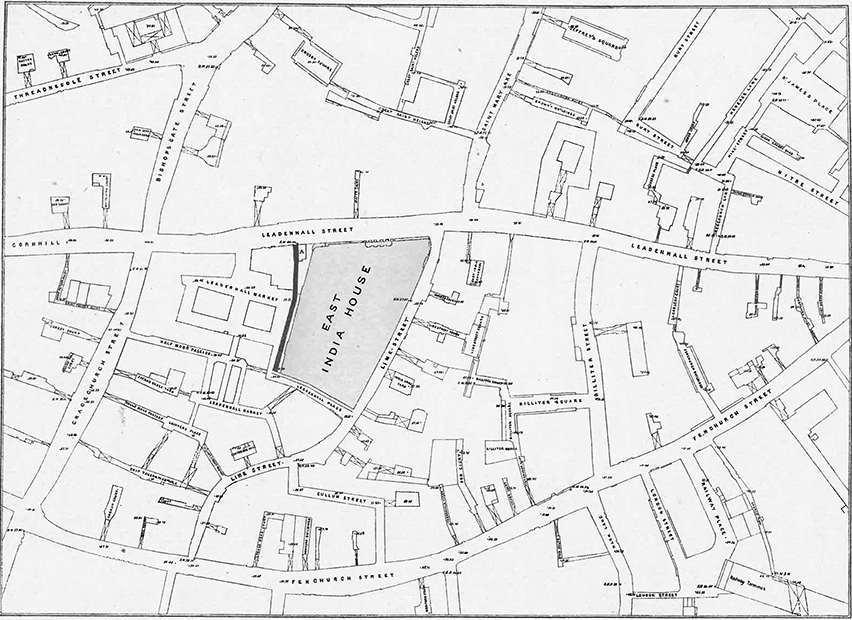
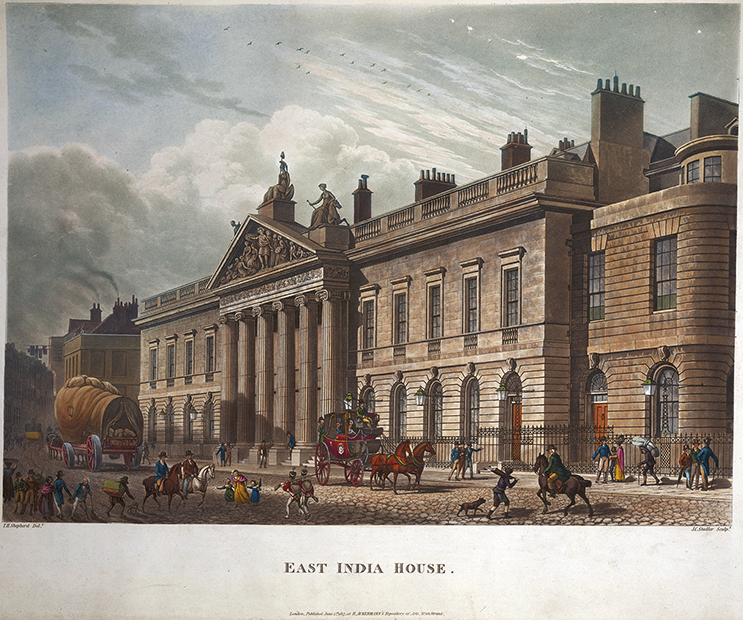
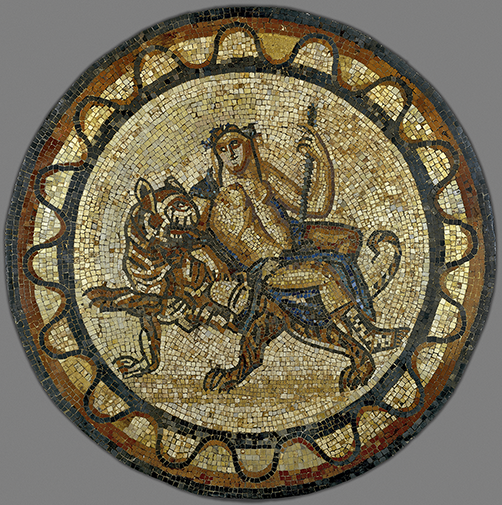
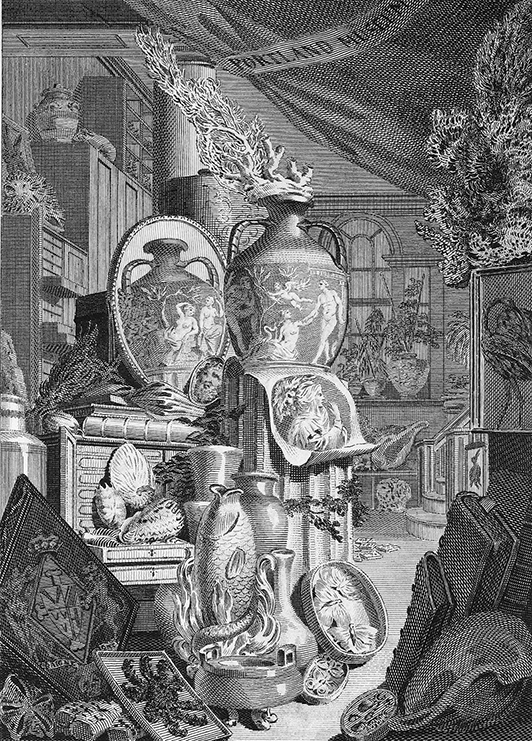
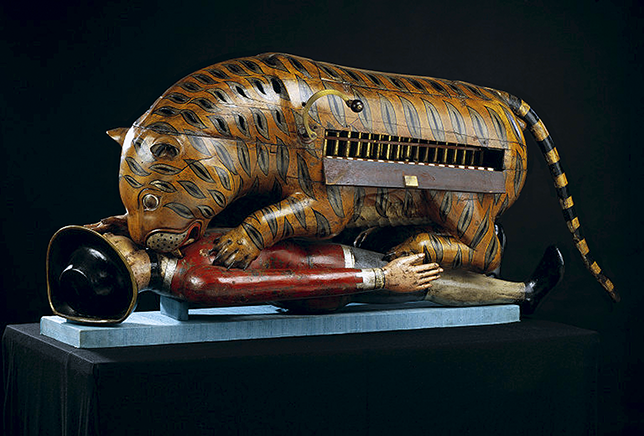
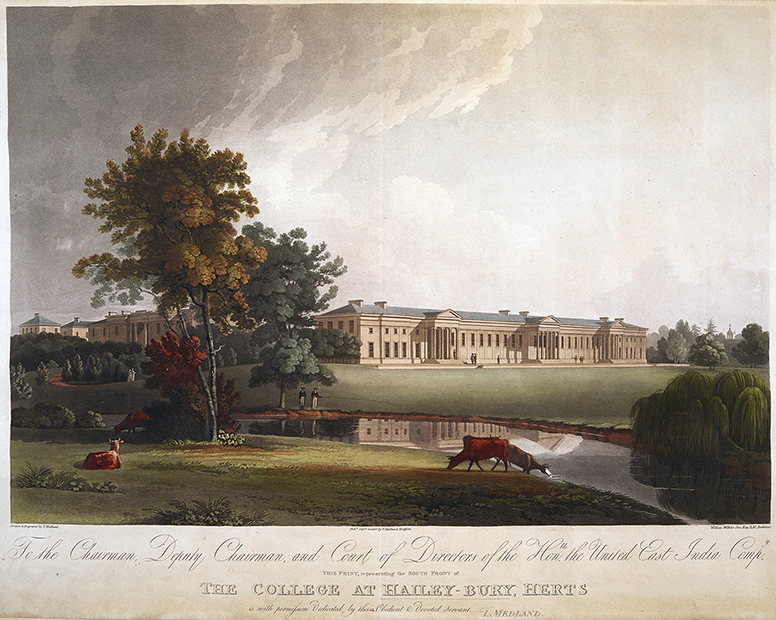

 Open access