




This article traces the cross-pollination of opera in Britain with four other genres: fantoccini, ballet, tableaux vivants and magic-lantern shows. I argue that the performance cultures of all these art forms were profoundly changed by society’s acceleration towards mass literacy; the change brought new audiences, repertoires and stage languages but was instrumental in ending the cross-pollination during the second half of the nineteenth century.
Between the 1770s and the 1830s–60s, the four genres enjoyed a symbiotic relationship with opera, borrowing narratives, characters, overtures, arias, choruses, entr’acte ballets and even personnel from opera. Reciprocally, operas at the King’s Theatre, Covent Garden, Drury Lane and regional theatres regularly incorporated these genres into their performances as discrete sequences; it was two-way traffic. The four genres were used either to tell specific parts of an opera narrative or simply to ornament the event as a whole. Three tableaux vivants had been included in Jean-Georges Noverre’s ballet interlude, Les petits rien (1767) which Niccolò Piccinni later incorporated into his opera, La finte gemelli (1778). Edward Nye noted the frequent use of tableaux in ballet-pantomime to replace the protasis of classical tragedy.Footnote 1
Magic lantern projections, especially phantasmagoria, span the period and were used in Steven Storace’s The Pirates (1792) and Edward Fitzball’s The Flying Dutchman (1826 at the Adelphi). With Fantoccini, the influence was more one-way: operas of all kinds as well as ballets were recreated in puppet form, but mixed human and puppet operas were comparatively rare until the twentieth century.Footnote 2 Britain’s operas readily incorporated other popular genres and techniques including melodrama, as Christina Fuhrmann shows in her discussion of Henry Bishop’s adaptations of Mozart.Footnote 3 Among the many adaptations of Weber’s Der Freischütz, a number contain both melodrama and lantern projections.Footnote 4 Acrobatics, mime and conjuring offer other examples of cross-pollination with opera, and space alone prevents discussion of these many other genres.
Prior to the mid-nineteenth century, the four genres had been a useful conduit whereby operatic ideas and performance styles could reach audiences who did not themselves attend operas, but from the mid-century onwards, this conduit gradually dried up. Similarly, opera in its broadest definition, including burlesques, Gaiety and Savoy operas, extravaganzas and pasticci as well as the grander canonical repertoires, made less use of ballets, tableaux vivants and magic-lantern shows as discrete sequences. On the rare occasions when tableaux, dancing or mime were incorporated, it was in ways emulating their use in spoken theatre. The causalities of this change are many and varied, and they range from artistic shifts that might be bracketed under Romanticism, to changes in audience composition and expectations. The interplay of these causes with new venues, enhanced licensing laws, and different organizational and touring practices offer an array of interconnected explanations.
This article traces just one: the influence of emerging mass-literacy on Britain’s performance culture. This is a little-discussed causality, but I argue that it was an unseen motivator precipitating many of the others. Its result was that audiences moved away from reading a performance as if it were a text, to more rapid and immediate forms of comprehension through more visual and musical modes of storytelling. The pace of storytelling increased in consequence. I propose that opera and the four genres responded to rising literacy in different ways: while the four genres felt an increasingly free hand to revise and reinterpret their traditional sources, opera developed an intensified conception of textual fidelity. Musicology has discussed the work-concept (Werktreue) for 30 years, and opera scholarship has dissected how this shift affected the artform in its broadest definition; my aim is not to reiterate this but to observe the change from the viewpoint of these four genres.
This journal’s commitment to interdisciplinary enquiry allows me to apply approaches current in communications scholarship to this phenomenon in musical history, but in doing so, I aim to avoid burdening the reader with possibly unfamiliar terminologies germane to that scholarship. Authors outlining its commonly-held views are given in the footnotes.Footnote 5 While the composition of all audiences was socio-economically heterogenous, and members possessed varying levels of literacy, it is the discernible influence on audiences of an increasingly literate culture that is considered, rather than audience composition itself. The article uses ‘elite’ and ‘popular’ not to imply homogeneity of income bracket or socio-economic identity of particular audiences, but to describe commonly held perceptions of genres, venues or performance contexts at the time.
The article uses the term ‘stage language’ to describe the means whereby a performance conveys a narrative to its audience, but also its strategies for bonding the audience, stimulating the necessary immersion, and the means through which the underlying emotional journey or political applications are understood. I have proposed elsewhere that evolutions in stage language from the seventeenth century onward are reflective of gradual increases in literacy, but undoubtedly, they also reflect many other social and cultural changes.Footnote 6
Certainly, the tilt in Britain towards mass literacy was interwoven with population growth, new interpretations of the self, reconstructions of masculinity and femininity, as well as more rapidly occurring changes such as consumer culture and the capacity to mass-reproduce images. The link between rising literacy and rises in the sophistication and reach of visual culture has long been recognized. Vanessa Schwartz wrote of Paris:
At the moment that practically universal literacy became a reality in France, so did the saturation of communication forms with images. … For ordinary people in the late nineteenth century, the word and the image were linked as never before.Footnote 7
Her point is equally true for cities in Britain. Many scholars have noted the rising visuality of performance culture from the early seventeenth century to the nineteenth. Gunter Kress and Theo van Leeuwen have examined the semiotic interconnections of this phenomenon.Footnote 8, Footnote 9 To evidence my argument, the study connects primary sources from each genre with modern secondary research to reveal common underlying patterns in their inter-genre relationships. No secondary source on any of the genres was written with the other genres in mind, so by bringing all five genres into proximity I aim to provide the reader with a new perspective on why as well as how these mid-century changes occurred.
Rising Literacy and Changes in Stage Language Prior to the Nineteenth Century
Between the development of printing in the sixteenth century and the point in the nineteenth century at which three quarters of the population of Britain can be said to have an extensive facility with literacy, increases were mostly gradual. There were only two dramatic spikes, one driven by the Civil Wars and the other by nineteenth-century education reforms. The seventeenth century saw a rise in literacy from approximately 30 per cent of about 4 million people in 1641 to 47 per cent of roughly 4.7 million by 1696, yet female literacy remained at around 5 to 10 per cent throughout the intervening decades, though what this statistic means is frequently debated.Footnote 10
The term proto-literate is apposite for describing late medieval and early modern literacy as it is applied to societies where the uses of literacy are still conditioned by orality in many contexts.Footnote 11 For most people in the middle ages, reading meant reading aloud and only gradually did vocalization give way to a silent internal process. Only after looking at symbols on the page and decoding them could the meaning be grasped, and these three actions occurred sequentially rather than at the ‘at-a-glance’ speed of a mass-literate society.Footnote 12 Latent in this process was the assumption that meaning was something hidden and needing to be extracted, an approach applied across many early-modern contexts. Theologians extracted prophetic messages for their own society out of ancient biblical texts; the civil authorities extrapolated treasonous intent from ostensibly innocent private correspondence.Footnote 13 Audience responses to early-modern mystery cycles, Elizabethan amphitheatre plays and Stuart court masques, was to view and hear, decode and then interpret them as they would a written text, or to visually decode them as they would a stained-glass window, tapestry or painting.Footnote 14 Mass literacy would change this profoundly.
Early modern stage language was characterized by formalized poses, gestures, stances and the positioning of hands, all of which the audience ‘read’.Footnote 15 Similarly, emblems sewn onto costumes carried specific meanings, and Thomas Shadwell’s ‘frontispiece’ shows that even ornamentations on Stuart backdrops and proscenium arches were intended to be decoded as kinds of text.Footnote 16
Despite the frequent setting of performances in remote or fictitious countries, or in the historical or classical past, a relationship with contemporary lived experience was provided through a spectrum of allusion, parallel and applicability. It was an approach which allowed for plausible deniability should the authorities be angered, but the spectrum of allusion was far more than a covert means for subversive political critique or irreverent humour: they were a means for making such stories relevant to lived experience, and provided ballast for what might otherwise have seemed light and escapist vessels. For this reason, as Robert D. Hume observed, allusions in early-modern stage language tended to be flagrantly obvious rather than subtle or hidden.Footnote 17 The widespread use of this approach over many generations shows how confident guilds, playhouses, courts and companies were that audience members of all ranks, literate or not, possessed the necessary skills to decode and unpack this stage language.
Following the spike in literacy occasioned by the Civil Wars, this kind of stage language was steadily modified between the Restoration period and the late eighteenth century. The most discernible changes were a shift away from stylization and an increasing concern for verisimilitude, but there was also an increase in visuality. This evolved in tandem with rising literacy and is marked by developments in scenography, special effects and in action sequences being more frequently depicted than described. These new strategies for immersion brought greater emotional engagement.Footnote 18
Adam Fox has shown how literacy was heavily gendered as male and orality as female during the seventeenth century.Footnote 19 This imbuing of literacy with a masculine identity, may partially account for the low statistic for female literacy. Rather than exclusion from the literate world alone, it may have been a conscious choice by women to retain and develop oral culture as their principal communication medium, with its greater retentive propensities.Footnote 20
When Italian opera arrived in 1700, it complemented male appropriation of literate culture in some ways, but was also perceived as potentially subversive of it, enough to cause consternation among some critics. Steeped in a literacy conditioned by a nascent rationalism, Protestant in hue, and which saw English patriotism as the principal purpose of English literacy, Addison, Steele, John Dennis and other Whig-leaning writers found much to be alarmed about in Italian opera. It was seen as inherently Catholic, feminizing and a throwback to oral culture; moreover, the stylization required in staging a story told wholly through singing ran counter to verisimilitude.Footnote 21 Elite women, however, were described as readily embracing the new genre, perhaps through having less of a sense of ownership of literate culture in the first place.Footnote 22
In the nineteenth century, literacy levels were systematically collected for the first time, though percentages were calculated from people signing their names on documents such as marriage licenses. By this method, the 1841 General Register Office suggested that approximately two-thirds of men and half the women in England and Wales had been taught to read and write in childhood. By this means, literacy was estimated at 62 per cent of the male population of England and Wales, roughly 9 million people, in 1800.Footnote 23 By 1858, the figure had risen only to 68 per cent of 18.5 million people, but in the lead-up to compulsory education in the 1870s, literacy was claimed to have risen to around 95 per cent.
As David Vincent and others have shown, this measuring of literacy by signatures alone means these percentages are highly optimistic: according to this measurement, by 1914 only one person in 40 out of a British population of 36 million could be argued to be non-literate. Twentieth-century scholarship adjusted these figures downwards and Vincent argues that, rather than a sudden spike, a steady increase continued. Vincent proposes that during the nineteenth century, each generation of children tended to be approximately only 20 per cent more literate than their parents.Footnote 24 Even middle-class families seem only to have achieved complete literacy throughout all their immediate members by the middle of the century.Footnote 25
Whether literacy is seen as a spike or a gathering of pace, a new mass-literate society emerged in consequence, reflected in more frequent and affordable newspapers, more socio-economic groups reading as part of their leisure time, a concomitant escalation in the print-runs of books and, finally, compulsory schooling. As Schwartz shows, the consumption of visual images rose accordingly, through photography, postcards and advertising posters.Footnote 26 New kinds of stage language emerged in most of Britain’s performance genres, and these replaced what was left of the earlier proto-literate traditions. Audiences no longer wanted to decode what they were seeing or hearing, preferring more instant comprehensibility. Reverence towards an original text became less important in the four genres, while new modalities for referencing lived experience turned allusion and parallel into ornaments rather than a central part of stage–audience communication. The new stage language adopted by canonical opera, however, differed strikingly.
For nineteenth-century music writers, texts often gained a greater value than their performance. Reformist opera critics who insisted on exact fidelity to the original score exemplify this, but libretti based on novels or spoken plays were also expected to be faithful to their original with little allowance for the difference in genre.Footnote 27 Fidelity was even expected towards received interpretations of a character: when a new prima donna or primo uomo appeared in roles at which previous singers had distinguished themselves, they were expected to emulate their interpretation. Character interpretations thus became a fixed tradition, often spanning two or three decades, and were passed on through a number of singers. At the same time, the four genres reinvented their stories with greater freedom and felt less need to display their literary derivation.
Fantoccini no longer sought to reproduce a famous opera performance with any fidelity to the original, despite retaining the title. The emphasis changed in ballet from dancing under the conditions of storytelling to storytelling under the conditions of dance. The meanings created by posing the body also changed as tableaux vivants moved away from embodying a work of art for audiences to interpret, to forming the interpretation themselves, and altering the work to do so. Magic lanterns, grudgingly, allowed the image to become the storyteller, rather than the caption or speaker. As visuality became heightened, spoken, sung or danced words were no longer the centre of gravity around which the storytelling moved, and in ballet and tableaux vivants, they could be wholly relegated to the programme notes.
Fantoccini
Operatic puppet shows called fantoccini were both popular and long-lasting; they were common across Italy and France and popular in Britain from the mid-eighteenth century up to 1914. Performances were given in specially constructed miniature theatres, and these could be elaborate, especially at royal courts. The puppeteers lay on a platform above the stage area called a bridge, while the singers who sang each puppet’s role stood behind the booth; the number of singers thus had to be limited to keep them out of sight, as shown in Figure 1a and b. That said, by the late nineteenth century William John Bullock’s company sported manipulators, orchestra, chorus and soloists numbering 20 people overall.Footnote 28 The puppets were usually wooden faced, around two feet high and controlled by strings from above, with a rod connecting heads to bodies.
(a) Late eighteenth-century Venetian fantoccini booth, printed by George Speaight, The History of the English Puppet Theatre (New York: John de Graff, 1955); (b) the same booth in the Victoria and Albert Museum.

Up to the mid nineteenth century, fantoccini were sufficiently esteemed for famous singers to perform in them. Michael Kelly mentions singing Dafne in Kane O’Hara’s puppetry Midas (1760) as a youth in Dublin: ‘It was quite the rage with all the people of fashion, who crowded nightly to see the gratuitous performance‘.Footnote 29 In his retirement, Gaetano Guadagni, who had sung to great acclaim in Gluck’s Orfeo, had a puppet company at his own theatre in Padua where he staged the opera regularly and sang the title role.Footnote 30 Prince Esterhazy had a troupe and a puppet theatre at Eisenstadt, described as the finest fantoccini in Europe, for which Haydn composed. At least four Fantoccini companies were based in London in the late eighteenth century and, in 1799, the Rebecqui, a fantoccini family, toured in Britain under the patronage of the Prince of Wales.Footnote 31 Performances in Britain were usually in Italian but French was increasingly used from the 1820s onwards.
Shared personnel between human performances and their puppet incarnations were many. Andrea Carnevale, deputy manager of the King’s Theatre under Giovanni Gallini between 1785 and 1788, was directly involved in selecting the King’s Theatre repertoire in 1788–89, but he also owned and directed the fantoccini troupe in Saville Row.Footnote 32 His colleague Leopoldo di Michele, a sometime bass singer at the King’s Theatre and later its music copyist, brought a fantoccini troupe over from Bologna in 1780, based at 22, Piccadilly. It was Michele who introduced Pergolesi’s operas to London’s fantoccini repertoire.Footnote 33
Cristina Grazioli notes that fantoccini theatres were usually situated very close to the opera houses themselves.Footnote 34 Hickford’s Rooms in Panton Street, Haymarket was very close to the King’s Theatre and surviving playbills show that they charged approximately half the price of human opera: 5 shillings for the boxes and 3 shillings for the pit. Performances at Panton Street were accompanied by an orchestra, smaller than that of the opera house itself, hidden behind the booth with the singers. They played the adapted score but also accompanied puppet orchestras when these were represented on the stage. There was a subscription system and, according to the actress, writer and puppeteer Charlotte Charke (1713–1760), the puppets occasionally sported diamonds loaned to them by the nobility.Footnote 35
Hickford’s Rooms were a long-standing venue for what might be called society puppetry, with performances going back to the 1740s, yet other fantoccini venues sprang up after the 1770s.Footnote 36 The Théâtre des Variétés Amusantes were hosted in Saville Row, and Haydn was present at a performance on 13 November 1791. It began at 8:00 pm and no less a person than John Mountain conducted the orchestra; Kelly notes that Mountain had led the orchestra at Covent Garden, where his wife Rosemond was a principal singer, before going on to lead that of the English Opera House.Footnote 37 The repertoire on this date offers a baseline from which we can see how much the bills would change in the mid-nineteenth century.
The puppets danced a Spanish fandango to begin the evening, and this was followed by an overture of Haydn’s and a concertante by Pleyel. There followed three one-act comedies, the first being a pantomime based on the commedia dell’arte, featuring Arlecchino, followed by a French comic ballet-interlude, Noverre’s Les petits riens (1778 version) with music by Sacchini and Paisiello. The top of the bill, ‘The favourite opera (5th time); was Niccolò Piccinni’s La buona figliuola (1760) which included music by Giordani and Sarti as well as Piccinni. The bill concluded with a ballet, ‘a Pas de deux a-la-mode de Vestris and Hillisberg’.Footnote 38
During the pantomime, Arlecchino left the stage and flew around the room on wires, bearing a lamp. Les petits riens had been created by Noverre in 1767, but it was re-scored by Mozart in 1778; Piccinni incorporated the ballet into his 1771 opera, Le finte gemelli, in 1778 and included Mozart’s scoring, although Mozart isn’t named on the 1791 bill, only the earlier composers. Yet given the prominence of Piccinni’s works in this bill it is more likely that the fantoccini used his Mozart-scored version of the ballet, rather than Noverre’s earlier version. This ballet also contained three tableaux vivants. La buona figliuola had been an original opera when Piccinni first set Carlo Goldoni’s libretto; it had been amended for performance at the King’s Theatre in November 1766, with Guadagni in the cast and, no doubt, saw further amendment at Covent Garden where it was sung in English a month later. This was probably the version adapted by the fantoccini.
Fantoccini bills could also offer a three-act opera, but frequently three separate one-act operas were offered. As well as puppet versions of the current repertoire at the King’s Theatre, they also staged much older pieces such as Pergolesi’s La Serva Padrona (1733); fantoccini were thus contributors to the canonization of certain operas.
Specific performances could be parodied but this did not necessarily mean burlesquing or satirizing; retelling the story through puppetry meant that nodal points in the narrative which had lain in the background could be brought to the foreground, and frictions in the narrative which went unexplored in the opera house, could be expanded in the puppet show. Parody was an opportunity to critique and comment on what was happening on the main stage, so there was an expectation that audiences were acquainted with the main stage performances. Fantoccini were thus a familiar companion horse within the operatic stable.
Yet fantoccini companies did not remain confined to these exclusive environments for long and took to the streets in the 1820s or earlier. Henry Mayhew recorded a long conversation with a fantoccini operator who identified this as the decade when fantoccini spread out from theatres in the exclusive parts of the capital to fairs, streets, market places, promenades and piers.Footnote 39 He named an otherwise unidentified Mr Gray from Scotland as the first owner/operator to do so, although Gray was unlikely to have been the only one.Footnote 40 Cruikshank’s illustration shows how the miniature palace was replaced in this context by booths, not unlike those of Punch and Judy (Figure 2).
George Cruickshank, ‘Candler’s Street Fantoccini’, 1827. Victoria and Albert Museum.

While fantoccini never lost the aura of being an elite kind of puppet show, in their street contexts they developed a different stage language which relied more on immediate visual recognition and less on explanation, this increased the pace of their storytelling. In some street contexts, they abandoned narrative altogether and presented deeply visual kinds of variety show, taking the one-trick single-entry characters that had peppered traditional fantoccini narratives and giving each a ‘turn’ successively.Footnote 41 This approach was also being taken in music-hall mixed bills. Above all, they discontinued the need for audiences to know the human performances in the opera house beforehand.
The new repertoire that emerged in street fantoccini, took advantage of working people’s increased access to literacy, either directly through schooling, or through someone in their immediate circle reading to them. Troupes created material specifically for this new market, ‘the new publics that appeared freely to inhabit the glitzy, sparkling and seductive spaces of consumption’ as Schwartz describes them.Footnote 42 Companies such as the French troupe, Théâtre du Petit Lazary in the 1820s could do this, while also creating repertoire that reflected the changing tastes of the elite. Petit Lazary created operatic adaptations of recent events such as L’ Attaque du Convoi (1828) and La Bataille de Cronstadt (1829), and this, I propose, was only viable because the expansion in literacy had made detailed knowledge of these events available through journalism and historical publications.
For more elite performance contexts, their repertoire included The Danaides (a parody of Salieri’s opera Les petites Danaïdes by de Chavagnac and Desaugiers) in 1829, and Grétry’s Richard Coeur de Lion (1828). These were all venerable operas by this point and speak to a continuing conservatism in fantoccini repertoire for elite contexts, from the use of Pergolesi in the 1780s onwards. Yet the 1820s was also the decade when fantoccini broadened their long-standing tradition of Italian-only material, further severing their similitude with the King’s Theatre. Petit Lazary brought adaptations of French puppet shows, burlesques and burlettas, and performed in a mixture of French and English. This was sometimes a macaronic nonsense mixture that was neither language, but still communicated effectively in popular contexts.Footnote 43
According to Mayhew, another result of this new popular incarnation was that the name of the genre changed to marionettes in the mid-century, initiated by a successful run at the Adelaide Gallery by the Royal Marionette Theatre.Footnote 44 The name fantoccini continued in use, and is seen in the bills of Lambert d’Arc and William Bullock up in the 1870s and 80s, but tends to be listed as a discrete item within a marionette programme and appears to consist of short rapid variety sketches.Footnote 45
The new stage language that emerged in the mid-century in fantoccini performances, for all kinds of audience, dispensed with the need for verbal exposition. Formerly, the proto-literate assumption that performances needed decoding or explaining had been realized by a character known as the Interpreter. This was a person who had stood before the stage but out of the audience’s line of vision and spoke after each act, ostensibly to explain to non-Italian speakers what was being sung, but also to explain which character each puppet represented. Jumps and lacunae in the narrative were also covered by the Interpreter’s exposition and they decoded the visual meanings. Street performances shifted to English alone in the 1840s and 50s, and the Interpreter’s role evolved from straightforward exposition into what George Speaight calls backchat between the Interpreter and the puppets.Footnote 46
The Royal Marionette Theatre in the 1850s preceded their performances with a metatheatrical sequence, where the manager, Mr Albany Brown, auditioned each of the puppets before granting them a role in his show, thus explaining to the audience who the characters were. Eventually, even this kind of exposition would be abandoned as new ways of conveying information within the narrative itself emerged, both visually and through dialogue.
This transition was staggered over time and the same troupe could take different approaches with different audiences, the performance context dictated how much of a story’s textual origin would remain and the extent of ‘reading’ that would be required by the audience. While the Royal Marionette Company performed successfully in both styles, troupes that clung too long to the older, more expositional, style soon found themselves losing audiences and receiving austere reviews. In the last decades of the century, the Colla company’s performances were criticized for being too long, too slow and too boring. In a review of their operatic fare in 1888, The Times remarked:
In our opinion these puppets will not draw all London […] and though the audience was evidently willing to be pleased it was also evident that they were frequently bored. […] It may be doubted whether a marionette performance can be made sufficiently attractive to successfully furnish a whole evening’s entertainment, especially when what dialogue there is, is delivered in a foreign tongue.Footnote 47
The Colla’s response to this review was to retire their Interpreter and conduct the story in pantomime instead.Footnote 48 Thus their performances shifted from verbal to visual.
After Mayhew, much of what we know of Britain’s puppetry in the second half of the century comes from George Speaight (1914–2005) who, in the 1950s, recorded much of the surviving primary source material about puppetry, some of which is no longer extant. Speaight was a meticulous, but not a modern, historian and his aims were avowedly nationalistic. Nevertheless, his collation of primary material on what was considered at the time an ephemeral entertainment genre provides researchers with reliable primary data.
The disconnection of fantoccini from opera after 1850 onwards is apparent from the proportion of operatic puppet shows created in the latter period. This is given in Speaight’s performances lists and supported in the journalistic record. Between 1770 and 1850, Speaight recorded the creation of nearly 100 operatic puppet shows, but between 1850 and 1914 he lists only 13 puppet shows deriving from operas and one grand ballet. Four of these derived from the international opera canon and nine derived from, or were influenced by, indigenous operas created earlier in the late eighteenth and early nineteenth centuries by Charles and Thomas Dibden, Michael Kelly, Edward Fitzball, Henry Bishop, and others.Footnote 49 The number of fantoccini operas created does not of course reflect the number performed, and it is likely that some staples from the earlier period remained in the repertoire up to the 1890s at least.
The four fantoccini that derived from canonical operas include two in 1852 by the Royal Marionette Company: Don Giovanni, or the Spectre on Horseback and La Sonnambula.Footnote 50 The Royal Italian Opera and Grand Ballet Marionette Company, along with its rival companies, gave Manzotti and Marenco’s 1881 ballet Excelsior in 1888, along with Meyerbeer’s Roberto il Diavolo. Middleton’s company created a show called Excelsior, or the Noble Spaniard and the Slave in 1874, which may derive from the same source, Manzotti’s ballet. Lastly, the Prandi Brothers offered Verdi’s Aїda in 1893.Footnote 51
Opera was replaced as source material for fantoccini by contemporary spoken theatre and famous novels in the later century and the heads used by the Barnard Troupe in Figure 3 are suitable for several literary stock characters. As reverence and fidelity towards the text became a public expectation in grand opera, puppetry sourced from plays show the appeal of humour that was irreverent towards its original text. Examples include The Sixth Act of Romeo and Juliet, The Arcadian Brothers and Roscius in Spirits, or the Rival Tenants (all 1852).Footnote 52 This is not to say that opera did not also create a thriving culture of parody in this period; centred at the Gaiety Theatre, the Savoy and others, operatic burlesques and parodies such as Faust up to Date (1888) and Carmen up to Date (1890) became common. London’s new culture of operatic parody reflected that shown by Clair Rowden to be a substantial feature of Parisian life in the same period.Footnote 53 Irreverent operatic parody had formerly been a fantoccini tradition and puppet ballad operas had mocked the Italian opera ever since Punch parodied the castrati by transforming his voice with a squeaker called a swazzle.Footnote 54 But from the mid-century onwards, as opera itself was creating a thriving tradition of operatic parody, fantoccini moved on to other sources.
Puppet heads from the mid nineteenth century belonging to the Barnard Troupe, in the Lanchester Marionette Collection, V & A, George Speaight Collection.

Another reason why opera became a less frequently-used source may have been that fantoccini were free to push at censorship boundaries – which print media were already testing – in areas where opera could not. Fantoccini had never been required to submit their material to the Lord Chamberlain’s Office, so their street performances were free to become starkly political. The Royal Marionette Theatre’s Poll Practice or the Secrets of Suffrage attacked electoral corruption and called for parliamentary reform, while The United Services, also 1852, was a critique of Louis Napoleon’s coup d’etat in France. Mainstage opera, and even the edgier adaptations, burlesques and parodies, provided less scope for probing political boundaries as operatic genres were carefully frisked by the Lord Chamberlain’s office for foreign smut and revolutionary subversion.Footnote 55
Again, the influence of newspapers is discernible in creating the audience for political puppet shows. Access to journalism, tracts and manifestos by audience members was necessary for politically minded audiences to be generated. Nevertheless, to appease nationalistic sentiment, references to recent events in the British news were often inserted into the narratives of continental material.Footnote 56 Rising literacy was thus the background motivator, unseen at the time, in severing the former symbiotic relationship between opera and fantoccini.
Ballet
Ballet experienced a similar change in stage language in the mid-nineteenth century, though its severance from opera took longer. While all forms of ballet told stories, dancing moved from being a stage language which required to be read or decoded towards movement which referenced the narrative, but focused on the beauty of human figures in motion and the emotions these precipitated.
Late eighteenth and early nineteenth-century ballet pantomime had ‘walked’ sequences, which were mimed rather than danced and were equated with recitative in opera. Some ballets were accompanied by choral singing in addition to the orchestration and Nicholas Charles Bochsa’s balletic staging of Beethoven’s sixth symphony in 1829 was a late example. Tableaux vivants were also incorporated into ballets as sequences distinct from those danced. Ballet narratives were usually classical myths deriving from popular school and university textbooks, but when they were given between the acts of operas they were known as divertissements, and these were often details, highlights or sections of epic narratives, rather than the whole story. By contrast, ballet d’action was an emphatically epic kind of ballet, choreographed with close regard to well-known plot details.
The mode of dancing in ballet d’action, as depicted in Figure 4, is analogous to Indian Kathak dance; in both, certain movements or poses held defined meanings and the story was followed by decoding the poses. In a close reading of Gennaro Magri’s 1779 treatise on dancing, Edward Nye describes a pas de bourrée fallito as being used to indicate grief, a salto dell’impiccato for drunkenness and so on.Footnote 57 Both Kathak and ballet were highly stylized with a premium put on clarity of gesture and facial expression that, when compared with what came later, left little room for personal expression by the dancer.Footnote 58 The parallel with reading was conspicuous even at the time: as reading in a mass-literate culture requires commonly shared orthographies and grammar systems, ballet pantomime required similar fixities for an audience to read the narrative As Jean-Georges Noverre expressed it:
Everything will be eloquent, each movement will articulate a sentence; each attitude will paint a situation; each gesture will reveal a thought; each look will declare a new sentiment.Footnote 59
Noverre’s ballet d’action, Médée et Jason, 1767. Gaëtan Vestris, centre, is performing Jason. Engraved in London by John Boydell, 1781. Copyright: USA Library of Congress, released under Creative Commons License.

The intention was to create an unanimity of interpretation by the audience, even though that audience was highly heterogenous in its composition, in terms of ages, genders, and socio-political backgrounds.
A new stage language replaced this approach to ballet as society neared mass-literacy; faster, more visual modes of comprehension were required, but verbalization continued to be excluded and even choral singing was discontinued. James Q. Davies notes that from the late 1820s onwards, ballet dancing began to unshackle itself from the requirement to be read with new modes of spectatorship taking its place. Ballet became more pictorial as a new relationship to the music emerged:
The danseuse’s body was increasingly moved by feeling. It became immaterial, and, at least in the sense of its aspirations, ‘musical’ […] Whereas in the early century the dancer had been accustomed to presenting her body to be ‘read’, by 1829 she increasingly began to recompose herself ‘musically’ i.e. to express inner feelings and emotions through the way she danced rather than semaphoring them through traditional poses which held agreed and understood meanings.Footnote 60
Up to the mid-nineteenth century, ballet scores were usually assembled using pasticcio methods: well-known musical sequences were reused repeatedly to convey specific narrative tropes. These were predominantly drawn from operatic scores but could also be borrowed from symphonies, sonatas and popular melodies. Marian Smith demonstrates that, like dancing poses, selected musical sequences held commonly understood dramatic meanings and thus provided a further code for understanding the narrative.Footnote 61 It formed a central part of the reading process. Quoting a critic in the popular Parisian La Revue musicale from 1835, Smith shows that this practice was welcomed: ballet accompaniments were expected to be pasticcio works so that that the dancing could be more readily decoded.Footnote 62
In the old days, they didn’t compose ballet music; they arranged it, compiled it. The arranger took motifs from operas or melodies – any well-known melody whatsoever, and adapted them to situations of the libretto […] the music, by means of the sense of the words which had supported the motifs and melodies, gave understanding to the pantomime.Footnote 63
That the original words of the source text needed to be recalled before the danced moment could be understood, I doubt. I propose instead that by the middle decades of the century the range of motifs and melodies selected had contracted into a comparatively small body of familiar sequences so that, together, they formed a collection of metaphors which audiences could be counted on to recognize. What was being recalled was not necessarily the original text, but other instances where this music had been used to convey a specific narrative moment. The same practice would recur in the scoring for twentieth-century cartoons where a few bars of Chopin’s Marche Funebre did not signal death but the certainty of losing a fight, and Mendelsohn’s wedding march indicated falling in love at first sight rather than a literal wedding; neither required a full recollection of the original context.Footnote 64
The examples given by Smith, discussed below, show tautology arias moving from opera to ballet. Beyond this, the same arias could travel widely among popular art forms, from puppet-theatre to magic lantern shows. Rodolphe Kreutzer’s ballet pantomime Clari (1820), used ‘Descends du ciel, douce hymenee’ from Salieri’s The Danaїdes, and this was used in later British and French operas, including Henry Bishop’s, as well as by the Théâtre du Petit Lazary in their fantoccini version. Similarly, the 1834 ballet, La Tempete (1834), used ‘Je sens mon coeur, qui bat, qui bat’ from Grétry’s Richard Coeur de lion (1784) for Lea falling in love, and this was also used by the Théâtre du Petit Lazary, much as Mendelsohn’s wedding march would later be used by Hanna-Barbera.
Ballet scores were usually created by leaders of the orchestra under the direction of the ballet master, and the pasticcio scores of François-Hippolyte Barthélemon (1741–1808) and Michael Rophino Lacy (1795–1867) contrast with the original scores of Adolphe Adam in the 1840s and 50s.
Up to the 1820s, French stagings of Barthélemon’s Judgement of Paris (1768), indicated to the audience that Paris was the person appointed by Jupiter to award the prize for the contest, through inserting ‘Enfant chéri des dames’. by François Devienne (1792).Footnote 65 Lacy, an adapter, translator and prolific pasticciere was leader of the ballet orchestra at the King’s Theatre in 1820, but worked at Drury Lane and Covent Garden into the 1830s. Along with other pasticcieri, he was instrumental (literally so) in creating a lexicon of borrowed music that conveyed the narrative tropes being represented by the dancers. Lacy’s score for La fête hongroise (1825), was probably based on Adalbert Gyrowetz’s 1821 divertissement, but contained much of his own composition; he also interpolated a Spanish cachucha, a ‘national’ dance with castanets. Its success meant that successive ballets needed only to interpolate a system or two of this, to convey an instant understanding of who a character was.Footnote 66 Fanny Elssler, a cadidate for the ballerina in Figure 5, made great use of it in Rossini’s La Donna del Lago in the 1830s.Footnote 67 Changes in terminology followed this practice and later in the century such insertions were renamed quotations.Footnote 68
New-style ballerina by John Deffett Francis, thought to be Fanny Elssler. 1830s. Creative Commons License.

Ballet, however, began to face the same critical pressure as opera from musical reformers in the press to discontinue such practices. Music critics such as James Davison at The Times, usually detested pasticcio and demanded original composition from both ballet and opera scoring.Footnote 69 Writers such as Richard Mackenzie Bacon, Thomas Alsager, Davison’s predecessor, and Edward Holmes felt that original composition channelled a composer’s ‘genius’ and was more authentic, more sincere, and more emotionally convincing. As well as an ideological stance, it was a reaction against what they felt was the overuse of an ever-narrowing canon of music from which ballet scores borrowed. Lacy’s career ran parallel with Adam’s but while he continued the traditional pasticcio approach, Adam preferred to create mostly original scores for each new commission he received. This certainly appealed to reformist critics, but the new approach opened up the problem of how audiences were to understand what they were looking at when the scoring was original.
Adam’s solution was to depend on motifs: recurring melodies which indicated specific, recurring dramatic themes, tropes or actions: the first iteration of a motif spelled out what it would mean for the rest of the narrative.Footnote 70 For Adam, the music and dancing merely suggested the story and the precise interpretation was devolved to individual audience members. Later in the century, choreographers such as Marius Petipa (1818–1910) consistently maintained a separation of ‘pure’ dance from narrative dance. Petipa favoured pure dance throughout his long career, inserting three divertissements into Sleeping Beauty’s four acts in 1890.Footnote 71 Eventually, the visual pleasure of watching movement superseded that of following a known story, and new original ballet scoring made new choreographic expressions possible when dancing to the music. This, in turn, meant that multiple interpretations became possible when viewing it, so although individual immersion was deepened, unanimity of interpretation by the audience as a whole was the price. This very modern devolution of interpretation was greatly approved of by music reformers, but not particularly welcomed by audiences themselves.
In Le Journal des debats, Smith shows that the arguments made in Paris against motifs were that they weren’t as great, musically, as the famous borrowed sequences that had been selected for their excellence, and so they often fell flat.Footnote 72 So long as ballets had even nominal narratives, an expectation persisted that the whole audience would share exactly the same understanding, a perspective which remained an entrenched part of what might be called the theatrical imaginary. La moniteur universel complained of Hérold’s La Somnambule:
We don’t expect music, […] an orchestra is the translation, the commentary […] M. Hérold […] has used some familiar motifs well to explain the situation, but he was too miserly with this natural and easy means of aiding the understanding of the spectator.Footnote 73
At first, the ballet masters of opera houses attempted to allay audience bewilderment by transferring the means of following the story to the programme. This represents an attempt to displace the reading process from the stage to hand-held texts, yet reading a text while trying to watch a performance is problematic for several reasons. By the time one found the part of the text explaining the sequence one had just seen, the ballet had moved on; moreover, programme notes tended to be written in florid and elevated language which often mystified rather than illuminated any connection between the story and the dancing. La Revue Musicale complained:
Today music is composed entirely according to the fantasy of the composers, and has as much need of explanation as the programme. What we have gained is that both are unintelligible.Footnote 74
In London too, Benjamin Lumley’s recollections imply that the older kind of storytelling was missed in the ballet. Writing of the 1851 season in his 1864 memoirs, he regrets the gradual replacement of narrative dance with movement-led dance:
In obedience to the prevalent fashion, it was the habit of the Maîtres de Ballet, about this time, to give their compositions as little plot as possible for listless brains to unravel, instead of taxing their own in the invention or arrangement of some story of interest, such as might serve to display the mimic powers of the artists and merit the name of a ballet d’action.Footnote 75
Push-back against original composition by ballet audiences and some critics allowed Lacy’s approach to ballet to continue. As with fantoccini, it was the theatrical context and kind of audience for which the ballet was being created that conditioned the approach, but the new composition did not entirely displace operatic borrowing in the second half of the century, as it did with fantoccini.
New ways of avoiding exposition were also explored in ballet-pantomime by using tableaux vivants differently. Nye argues that in the advice given by Gaëtan Vestris for the 1804 production of Noverre’s Médée et Jason, he proposed contracting the protasis of classical tragedy, where the exposition or synopsis of the action occurs, by the use of tableaux vivant.Footnote 76 In other words, dancers could be part of the set design as well as the cast. Tableaux allowed expositions to be summed up in a glance, rather than requiring long sequences of mimed language.
The earlier ballet had not just cross-pollinated with opera and tableaux, it also had a polysemous boundary with acrobatics or ‘tumbling’, although this had been dependent on the performance context. With a new generation of ballerinas such as Marie Taglioni, this evolved into a more understated athleticism where dancing en pointe, ambitious lifts, and the appearance of weightlessness and flight immersed the viewer and replaced reading and interpreting. It was this immateriality, to use Davies’s term, which drew emotional absorption from audience members as individuals, and is implied in the illustration above. Previously, the tricks of strength, balance or courage in tumbling or tight-rope walking had done the opposite: the audience were collectively focused on a display of skill.
In a review of a later performance of the ballet illustrated in Figure 4, the editor of the Correspondance littéraire, discussing the difference between stylized walking (mime) and dance, remarked:
The change between rhythmic walking to dance, and from dance to rhythmic walking is as essential to this performance as is, in opera, the change from recitative to aria and aria to recitative.Footnote 77
Pantomime dialoguée, and especially the air parlant, performed the functions of operatic recitative by conveying the more prosaic, narrative or expositional parts of the story. Their scoring was often composed to sound like recitative and was mimed rather than danced to the music, allowing ballet pantomime as a visual artform to use the same twofold approach to its storytelling that opera had used since Monteverdi. Yet gradually, ballet began to shed its recitative equivalents for much the same reasons that fantoccini retired their Interpreter: expositions and the clunkier details of narrative became superfluous in a society with faster, more industrialized communication systems. Just as ballet separated from opera, so the mimed parts of a ballet developed as a separate genre, mime. This is not to argue that pure mime and pantomime had not existed previously, but the discontinuation of dialoguee and parlant from ballet, allowed them to shed the parameters imposed on mime by opera and ballet, and develop independently. Eventually, these genres would shape the acting of silent cinema.
In France, Georges Wague (1874–1965) embodied the reaction against mime’s formerly logocentric approach characterized by the silent Pierrots of Jean-Gaspard Deburau (1796–1846) and Paul Legrand (1816–1898), which he saw as deriving from Italian Commedia exemplars.
The Italian tradition has one great fault that kills the rest. That is, it has at its disposition a fairly limited number of restrained movements of which many are purely conventional – a sort of mute alphabet. The public can’t understand these without being initiated. [It was] composed of a certain number of gestures each translating a common word that only well-versed spectators can understand.Footnote 78
The similarity with the change in ballet is striking, but in ballet it happened more than a generation earlier, with a further shift away from decoding in the scoring.
The symbiotic relationship between ballet and opera, which had lasted from the eighteenth century, came to an end only very gradually in the second half of the nineteenth century, and was a much gentler divergence than that of the fantoccini. The 1843 Act allowed ballet to be performed beyond the patent theatres, and it could soon be found in the new London theatres that had sprung up in the regency era, in regional Theatres Royal and London’s music halls. It would be inaccurate to put this on a par with fantoccini leaving the Haymarket and taking to the streets, as its audiences were predominantly literate and prosperous, but these new audiences increased the returns in staging ballet, and thus justified the commissioning of new ones.
Concomitantly, ballet at London’s patent theatres came under pressure. Her Majesty’s struggled to afford a full-time corps de ballet under Laporte’s management, and the Royal Italian Opera at Covent Garden could afford only a skeleton company.Footnote 79 Tastes were also changing: Queen Victoria desired that divertissements between the acts be discontinued for tragic operas in 1847, and by the 1850s they were increasingly dispensed with in comic ones too.Footnote 80 Composers and librettists also felt that dance sequences were better when written into the narrative than being a relief from it, and scored them accordingly. Such were Meyerbeer’s dances in Acts II and III of Les Huguenots and in Act III of Roberto il Diavolo.
The relationship of this to mass literacy is that the proto-literate pace of storytelling in which divertissements were embedded was felt to be too slow. Storytelling that allowed audiences time to chat and visit each other, take tea in their boxes, play card games, or watch divertissements in between the acts was not going at a cracking pace. Silent listening, dimmed auditoria and sustained immersion in the opera’s world were the desiderata of audiences rather than impositions by management and artists. Ballet d’action also changed, not only through innovations in the dancing, but as a result of longer and more complex ballets being commissioned and they now had whole evenings and new theatres in which to perform them.
It was a softer separation than that of fantoccini, though, as the continued interpolation of operatic music suggests. Rodney Stenning Edgecombe notes that original ballet scores such as those of Cesare Pugni (1802–1870) still made liberal use of operatic quotation and received ballet-score topoi. His score for Ondine, staged at Her Majesty’s in 1843 and choreographed by Jules Perot, contained instrumental variations of ‘Robert, toi que j’aime’ from Robert le Diable and from Oroveso weeping at his daughter’s plea from Bellini’s Norma.Footnote 81 Pugni’s scores could also evolve into pasticci over time: he reworked his Ondine score for St Petersburg in 1851, and two new variations were composed for Petipa’s revival there in 1867. La Esmeralda was also staged at Her Majesty’s in 1844, and Stenning Edgecombe shows that, thereafter, other numbers were regularly inserted into the score.Footnote 82 Petipa added one by Pugni in 1866 and another by Yuli Gerber in 1871; others followed, and in 1886 a complete revision of the score was made by Riccardo Drigo. Although the term itself was seldom used, both the choreography and score of a ballet could become pasticcio works over time, a practice occurring throughout the century.
Tableaux Vivants
Tableaux vivants in their modern form occur as early as the 1730s and continued into the twentieth century. In eighteenth-century elite contexts, performers recreated the composition of a well-known painting, sculptural assembly, frieze, or an episode in Greek or Roman history by holding a pose. Durations varied but while those of the celebrity creator of ‘attitudes’, Emma Hamilton, were almost certainly under half a minute, those by nineteenth-century commercial troupes could be up to four minutes.Footnote 83 After one pose the performers recomposed themselves to form another. While movement was the essence of dancing, that of tableaux was stillness and statue-like silence, so that while audiences viewed an image animated by living, breathing people, it was still as static as the original image created in paint or marble. They were real and unreal at the same time, embodying both the work of art itself, and the subject that work depicted. Movement was present in the transitions from pose to pose, and Goethe described these as being as interesting as the poses themselves.Footnote 84
Hamilton’s late eighteenth-century tableaux, or attitudes, were created for international circles of guests during her husband’s residency in Naples, and Novello’s nine illustrations convey her style of depiction. They were usually solo performances but with one or two extras, and her biographers describe these events as almost games, where the audience had to guess the story depicted as well as the work it derived from.Footnote 85 As a child, Adèle d’Osmond was an extra in some of Hamilton’s performances and Elena Stevens quotes her recollection of the experience from her memoirs:
One day she [Hamilton] placed me on my knees before an urn, with my hands together in the attitude of prayer. Leaning over me, she seemed lost in grief, and both of us had our hair dishevelled. Suddenly rising and moving backward a little, she grasped me by the hair … she was brandishing a dagger. The passionate applause of the artists who were looking on resounded with exclamations of ‘Brava, Medea!’ Then, drawing me to her and clasping me to her breast as though she were fighting to preserve me from the anger of Heaven, she evoked loud cries of ‘Viva, la Niobe!’Footnote 86
Novello’s third pose from the left on the top row, and second pose on the lower row (both Figure 6), may convey the emotion of these poses, but not the sequencing of d’Osmond’s performance. The sequencing at her event suggests that contrasts were being sought within a theme of motherhood: the murderous mother set against the protective mother. Peter M. McIsaac has argued that the impression of tableaux vivants as a capriccio succession of images from varying sources, stacked almost randomly together, may be incorrect. He argues that a narrative or coherent progression can be traced in many performances, giving the event as a whole a thematic unity, and this is hinted at in contemporary novels.Footnote 87
Pietro Antonio Novello, Lady Hamilton’s Attitudes, print, post-1791. Copyright: Victoria and Albert Museum.

Yet d’Osmond’s anecdote gives the impression that she was not included in any kind of rehearsal or even a planning discussion, perhaps the better to capture a ‘natural’ reaction on the child’s face. That such rehearsals happened on other occasions, either by Hamilton alone or together with her husband, Sir William, is not doubted. The audience’s vocal identifications occurred in what was something of a competitive arena, where one’s travels, education and taste (or lack thereof) were on display. Audiences may not always have been bereft of clues however; Goethe, who attended a performance of Hamilton’s attitudes, mentions Sir William standing discreetly out of the line of vision to assist the interpretation of what guests saw through a recitation of classical texts.Footnote 88 Although the august collector would not welcome the comparison, this sounds remarkably like the interpreter at fantoccini shows.
Such were tableaux vivants when performed in the private houses of the neoclassically minded, but professional tableaux vivant troupes proliferated in the 1820s and 30s, moving the artform out of the drawing room and into the commercial sphere, though private performances also continued throughout the period. Commercial troupes offered both venue-based and touring programmes, and appeared in popular theatres from Drury Lane to music halls and taverns, as Elena Stevens shows.Footnote 89 Like fantoccini, ballet and opera, audiences for tableaux expanded in social reach during the mid-nineteenth century and their repertoire changed in consequence; the influence of rising literacy can be seen in these new tableaux repertoires along with a distancing from opera.
Tableaux had to be read and interpreted in the same way as fantoccini and ballet up to the 1840s, with exposition being provided externally rather than in the visual experience itself. Music, discussed below, contributed to the process of identification and decoding, and comprehension in all three relied on knowledge of a pre-existing original. Mélanie Boucher and Ersy Contogouris also identify the relationship of tableaux with reading, noting Bernard Vouilloux’s observation that tableaux vivants ‘animate the still image by using an approach that is referential, intermedial, and often tied to literature’.Footnote 90
Public performances initially relied on decoding as much as they had in the drawing room: Raphael’s Dream, at Astley’s in 1830 and Drury Lane in 1834, is an example of continuity, but with Romantic rather than neoclassical content. It consisted of poses depicting Raphael’s works performed by the acrobat Andrew Ducrow while the actor, Edward Gomersal, played Raphael himself. The artist is in his studio recalling and dreaming of his many great works, providing not only the identification but also the interpretation of Ducrow’s poses. This was a more theatricalized variation on the role played by the interpreter in fantoccini, the air parlant in ballet and by Sir William Hamilton in his wife’s attitudes.Footnote 91 A musical interlude did occur, where a group of minstrels play Raphael to sleep, but music seems not to have been an integral part of Ducrow’s evening of tableaux.
Very different was Mademoiselle Lucie Duval’s touring Tableaux Vivans of 1849 and Madame Warton’s troupe at the Walhalla in Leicester Square.Footnote 92 These, together with similar troupes, demonstrate the influence of emerging mass literacy. Whereas guessing or calling out the identity of the image depicted had formerly been a means of audience participation, audiences were now told exactly what they were looking at through programme notes, and captions carried across the stage. Presumably non-literate audience members heard the identifications from others seated nearby. Yet a new means of audience participation was created through popular songs sung during the tableaux in which audiences were invited to join. Proto-literate decoding and identification were further dispensed with by the practice of adapting the original meaning of an image to a new one the audience were more likely to comprehend immediately.
Duval’s programme, the first half of which is shown in Figure 7, consisted of eight tableaux either side of the interval, 16 in all. They were drawn from a range of sources including William Hilton’s Cupid taught by the Graces, paintings by Rubens and Solomon Hart, the Borghese Vase and Roman history. There was also an item borrowed from the Walhalla troupe, just before the interval, James Barry’s A Grecian Harvest Home. Footnote 93 This is described ‘as originally produced by the Projector of the Walhalla Entertainment with Rustic Music in which the Audience are invited to join in the following Chorus’,Footnote 94 the chorus being Comus’s ‘Harvest home’ from Purcell’s King Arthur. There is a mismatch here between a subversive song about cheating the parson of his tithes and Barry’s decorous pastoralism, but a general theme of drunken bacchanals may have characterized the tableaux leading up to the interval, as revelry is also depicted on the Borghese Vase.
Tableaux programme from Newcastle by Madame Duval from 1849, Victoria and Albert Museum.

The intended reception cannot be recovered with certainty, but it seems that the aim was not to interpret the original images with historical accuracy or advance the author’s intention, but to bring the image within the lived experience of audience members. Resonances of current events and contemporary moralities shaped the performance of commercial tableaux.Footnote 95 It is perhaps relevant that Charles Macready had revived the original version of Dryden and Purcell’s King Arthur in 1842, stripping away its eighteenth-century accretions. At the Walhalla, Stevens notes that tableaux were also accompanied by ‘descriptive music’, but the evening also contained overtures, quadrilles, waltzes and polkas.Footnote 96 The purpose of the music changed from being a tool in decoding the tableaux, to guiding viewers’ emotional responses to them.
Music had always been an accompanying option for tableaux: Ariadne was a famous tableau of Hamilton’s, and Haydn had dedicated his cantata Arianna a Naxos to her. She sang the work at Eisenstadt, accompanied by Haydn himself in September 1800, so it is likely that this was the music she regularly used to accompany her series of tableaux on the subject. She was painted in this character by Élisabeth-Louise Vigée-Le Brun. Haydn presented Hamilton with at least two other cantatas during her visit from which accompaniments could have been drawn for other tableaux, all currently in the London Museum.Footnote 97 Beyond the cantata, elite tableaux vivants engaged with specifically operatic music in a number of ways.
In 1806, the operatic celebrity of the age, Angelica Catalani, was booked to sing at the King’s Theatre, London, but she travelled first to Madrid for a concert at the Royal Opera. The Spanish house attempted to recruit Hamilton to sing with her, and perform her celebrated attitudes accompanied by Catalani’s arias.Footnote 98 The plan came to nothing, but it shows that operatic arias were thought to go well with attitudes. Martha Feldman pointed out that arias were often sung on the forestage beyond the proscenium at the King’s Theatre. The singer thus had audience on three sides and their aria was marked by stylized gestures, or poses, which occurred at opportune points in the music.Footnote 99 Contemporary illustrations suggest Hamilton’s attitudes may not have been that different to operatic acting, save that she did not sing and pose at the same time.
Other intersections with opera include depictions of a narrative event as performed in an opera, rather than as depicted in art. These are harder to identify as poses depicting particular moments became common to visual art, tableaux and stage performance, so where a pose originated or who was emulating whom is hard to untangle. During the 1840s and 50s, Georgian neoclassical tableaux went out of vogue in aristocratic homes, perhaps in consequence of the wider commercial popularity of the genre. They were revived, however, in more Romantic incarnations in the 1860s. Performances were given by the Fifes at Mar Lodge in the Highlands, the Howards at Rutland Gate and the Freakes at Cromwell House. The Rutland Gate Album shows that while the subjects chosen for tableaux was based on painting and poetry, their poses and costumes echoed contemporary theatre performances.Footnote 100
Up to the 1830s key dramatic moments in operas had formed a fairly regular part of tableaux repertoire in commercial contexts too. Following the death of Walter Scott, for example, tableaux of dramatic moments in his fiction formed part of many mixed bills, and tableaux from Guy Mannering are discernibly shaped by Bishop’s opera and its derivative versions.Footnote 101 The posters and playbills of tableaux troupes in a commercial context seldom list an operatic scene in their programming after the 1840s, however.
While tableaux had always been incorporated into theatre, opera and ballet, and the music for such sequences had always been specially composed, Karen Harker argues that from the 1840s, the purpose of the music changed. It was no longer to conjure the historical period of the story, but to commit audiences to a specific emotional response to contemporary cultural or political messages embedded in the tableaux.Footnote 102 As an example, Harker gives the music composed for the tableaux inserted into Charles Kean’s and Henry Irving’s heavily edited versions of Shakespeare’s Henry VIII in 1855 and 1892 respectively.Footnote 103
These were exceptionally grand, hugely resourced, stagings and considerable research had gone into ensuring accuracy of detail in costuming, scenic depiction of exteriors and interiors, and even into the performers’ stances. Yet surprisingly, Harker shows that John Liptrot Hatton’s composition for a tableau of the ‘Coronation of Anne Bullen’ did not attempt to pastiche Tudor music. Instead Hatton provided Victorian marching band music, written in C major and 4/4, more semblative of regimental concerts in park bandstands than Tudor ceremonial.Footnote 104 The reason, Harker suggests, was to create a subliminal connection between the lavish coronation spectacle of England’s first Protestant queen, with Britain’s current imperial and religious identity. Using a familiar musical expression of that identity served to conflate time: Britain’s current military power was presented as having always been inherent in her past, a destiny nascent in historic moments such as these.Footnote 105
The nature of the cross pollination between opera and tableaux was substantially altered in the second half of the nineteenth century by these varied developments. Formerly, tableaux in both opera and ballet could almost be counted as part of the scenography, performers often assembled before the curtain rose at the beginning of an act, revealing a street scene, a royal court or an African village. The entr’act music continued to allow the audience gazing time so they could fully decode and absorb the image. Then, using specially composed music, the tableaux went through several poses to provide context and exposition for the new act. The tableau then dissolved by coming out of pose, though not out of character. The tableaux vivants in Henry VIII were not entirely static, processional entry and disassembly were depicted in motion and part of the sequence as a whole. But by the end of the century, tableaux vivants were anticipating cinema with coloured lighting and revolving stages. Stevens notes that cinematic dissolves using ever-thickening gauze was in use in 1891 by the Bissmire-Grimaldi troupe, a technique also used in magic lantern shows.Footnote 106
While arresting the movement at the end of an operatic scene, during a musical crescendo, continued as a staging technique beyond the 1890s, the incorporation of tableaux as a discrete sequence with especially scored accompaniment decreases from the 1870s onwards. A prime cause of this was the emergence of verismo in opera. This was also a factor in the disengagement of opera with magic lanterns, so the effect of verismo on both genres is discussed at the end of the next section.
Magic Lantern Shows
Known to exist since at least the seventeenth century, magic lanterns were long seen as ancestral, first to photography and then to cinema, but recent scholarship, such as that of Tom Gunning and Christopher Baugh has questioned the technological determinism inherent in this view.Footnote 107 Henry V. Hopwood, giving advice on the projection of moving images in 1899, for example, viewed cinematic techniques as long-standing and pre-existent.Footnote 108
Nor were magic lanterns cinema’s only ancestor, eighteenth-century shadow boxes and Philippe de Loutherbourg’s Eidophusikon animated sunsets over harbours, carriage journeys, shipwrecks and fictive worlds such as Milton’s Pandemonium. Most eighteenth-century landscapes were embedded in the aesthetics of the picturesque, and Tom Gunning notes that when movement was added to landscapes or seascapes, the animation was still contained within a frame, to be viewed by a static observer. Motion was thus delimited within painting tradition, and presented the experience of motion from the outside, the viewer admiring the mechanism rather than entering the landscape mentally and emotionally with full immersion.Footnote 109 Milton’s Hell was similarly represented as operatic scenography rather than attempting to immerse the viewer in their own fears.
Baugh argues that this approach was transmitted through various media across the nineteenth century, including magic lantern shows, so that it was taken by early cinema when filming landscapes a century later. The wind rippling through wheat fields, or trees waving in the wind, still but not static, might be seen as a new technologizing of painting rather than a precursor of the immersion aimed for by modern cinema.Footnote 110 Baugh suggests that the panorama was thus a game-changer in landscape films. Magic lanterns offered the same perspective: movement on the viewer’s side was not possible, so the animation of the image was the principal focus in the machine’s development.
Eighteenth-century magic lanterns had provided three-dimensional imagery by projecting onto smoke to create apparitions or onto gauze, by using three separate machines, and dissolves, cross-fades, sudden appearances and disappearances, were all conceived long before cinema.Footnote 111 Techniques for enlarging or diminishing the image or moving different sections of an image became possible as lanterns developed slipper slides, lever slides, masked slides, pulley slides and rack and pinion slides, all of which could create the effects of motion.Footnote 112
By the 1850s photographic positives could be transferred to glass plates and projected as slides; these projections used biunial or even triunial lanterns which allowed dissolves from one photograph to another; these became popular stage effects. In stage use, limelight replaced candles or oil lamps to give greater strength to large-scale projections.Footnote 113
Magic lanterns were deeply influential on opera, theatre, sermons, journalism and even novel-writing. Joss Marsh has shown how often Dickens’s visual effects are drawn from magic lantern shows.Footnote 114 Prior to the mid-century, Walter Scott’s The Lady of the Lake (1810), and Dickens’s The Story of Gabriel Grub or The Goblins Who Stole a Sexton (1837), were staged as readings illustrated by magic lantern images.Footnote 115 Projected moving imagery was one facet of the intensifying visual culture which accompanied mass literacy.
The association of magic lantern shows with music was a traditional one, and Francisco Frutos Esteban and Carmen López San Segundo note that most eighteenth-century illustrations of street lanternists contain an instrument.Footnote 116 Shows were frequently incorporated into operas, with projections being used to illustrate otherworldly moments or environments difficult to represent scenographically. In a manner typical of proto-literate performance culture, these special effects were given as a discrete sequence within the narrative. When Michael Kelly interpolated a chaconne by Niccolò Jomelli into his own scoring for The Castle Spectre in 1797, to accompany one of the ghost sequences, he intuited that a different kind of compositional voice was needed to separate off the projected sequence.Footnote 117 Describing it in his memoirs as ‘an experiment’, he recognized that the combined imagery and music was itself the interpreter in such sequences, rather than something that needed interpreting.
Steven Storace experimented with projection in his self-pasticcio The Pirates (1792), offering a whole projected divertissement of Hero and Leander. The association of this opera with magic lanterns continued into the next century with two arias from the opera being printed by J.B. Cramer in a booklet La Lanterna Magica, Divertimento for the piano forte and flute ad lib, on Two Favourite Airs from the Opera of The Pirates, composed and dedicated to Miss Moore, (1826).Footnote 118 Henry Langdon Childe (1781–1874) became a specialist in magic lantern projections within plays and operas, creating a projected phantasmagoria for The Pirates in 1828.Footnote 119 An illustration from 1797 depicts not only the style of phantasmagoria but the sensation they originally caused; not unlike audience responses to footage of an oncoming train a century later (Figure 8).
Etienne Robertson’s Phastasmagoria at the Cour des Capucines in 1797. Creative Commons License.

Gabriela Cruz, demonstrates that when Wagner was working on Der fliegende Holländer between 1840 and 1843, projections of the ghost ship were already a stage convention in spoken plays and musical pasticci; she cites Edward Fitzball’s The Flying Dutchman (1826 at the Adelphi) as an example.Footnote 120 In London, projections frequently replaced the singing in key moments of an opera, with the instrumental accompaniment continuing alone. The context for this practice was the development of melodrama, and Christina Fuhrmann shows that replacements of text by instrumentation had occurred in adaptations of Don Giovanni as early as 1817, when the Commendatore’s statue enters and drags the Don off to hell.Footnote 121 The advance towards mass literacy is detectable here, with visual effect and musical accompaniment becoming sufficient, and text only detracting from the impact. This was the probable rationale for the replacement of text by projection in Meyerbeer’s Robert le Diable (1832 in the Little Theatre, Haymarket) and L’Africaine (1865 at Covent Garden), Wagner’s Der fliegende Holländer (1870 in Drury Lane as L’Olandese Dannato), and Verdi’s Aïda (1876 at Covent Garden) among others.Footnote 122
As with the previous three genres, there was an elite public context for magic lanterns such as the opera, but also popular, domestic or community ones which expand in the middle decades of the nineteenth century. Unlike the previous genres, though, it was the popular contexts that retained the need for verbal interpretation, exposition, the use of captions, and a requirement for decoding the images shown for much longer (Figure 9). It was in operatic contexts that the visuality of lantern slides was left to speak for itself.
Stereopticon Projection at a public theatre in Philadelphia, USA; note the Interpreter. Victoria and Albert Museum.

In domestic or community contexts, projections were used extensively in non-narrative events, such as education and even religious services, so a more expositional approach is to be expected. Such were the lantern slides at the religious services given at Toxteth Workhouse in 1896, according to the Liverpool Mercury.Footnote 123 Yet copious primary source material exists on magic lantern shows in domestic or community contexts that are intended to entertain, and in these, it is a lack of communicative capacity within the slide images themselves which necessitated external interpretation. Sourcing people with instrumental skills was probably less difficult in the nineteenth century than sourcing slides that dispensed with the need for explanation.
Proportionality is difficult to identify here with any certainty, but Figure 10 comes from a set owned by the Wesleyan Methodist Sunday School Union, and was accompanied by the caption: ‘The babe is ill, and at his wailing cry, the mother shudders – hope has almost fled’.
Slide from A Terrible Christmas Eve by W. Rider and Co, 1894. Copyright: The National Science and Media Museum.

This emotion is not immediately obvious from the composition of the image itself, so the caption is essential. It is worth comparing this with a film still, a generation later, of Mary Pickford protecting ravaged orphans: no caption is needed to offer the emotional interpretation (Figure 11).
Still from Sparrows, 1926. National Film Registry. Copyright: Milestone Films.

Yet magic lantern technology continued to develop, and it overlapped with early cinema, rather than replaced it. The technology’s capacity to create motion pictures had reached a level of sophistication, even in community contexts, that often rivalled early cinema. In the 1900s, the popular desire among consumers was for music rather than language to combine with moving images in telling a story. As Esteban and San Segundo show, the technology to achieve this in the domestic setting was forthcoming:
In France, the ‘Luciphone’ made by the Lapierrre firm combined the magic lantern and the gramophone, and in Great Britain in 1894, Smith and Harman patented a device that made it possible to synchronize the melody of a music box with the exhibition of images using a magic lantern.Footnote 124
Ironically, by the time magic-lantern shows in community contexts had gained the sophistication expected by mass-literate consumers, opera had abandoned their use. A change in operatic storytelling, beginning in the 1870s, but characterizing the canonical output of the 1890s, and generally grouped under the term ‘verismo’, increasingly rejected special effects, otherworldly sequences or narrative moments that could not be depicted naturalistically. Bizet, for example, chose not to depict the bull-fight in Carmen, and Mascagni did not depict the villagers inside the church as a tableaux vivant in Cavalleria rusticana. As verisimilitude evolved into realism, playwrights as well as opera composers and librettists, sought to rid themselves of stage conventions which emphasized the unreality of theatre. The artificiality and stylization of both tableaux vivants and lantern projections were now felt to be too disruptive of audience immersion. Conducting the key business of life while singing was felt to be as far as the art form should go in the direction of unreality. A marked shift occurred toward stories which explored non-elite life, and which sought maximum immersion in the emotional journey of the characters. The new stage language that opera adopted to tell these new stories was incompatible with the stylizations in acting, tableaux and special effects used formerly.
In conclusion, mass literacy initiated new modalities of verbal as well as textual communication in daily life and the new stage languages used in performance by all genres reflect these new modalities in different ways. Formerly, the four genres had shared enough of a proto-literate stage language with opera to function as a conduit, supplying audiences who may not have had direct experience of the artform, or if they did, not of particular operas, with information on their narratives, music, dancing styles and conceptualizations. By the end of the period this conduit was firmly closed, not consciously or intentionally, but as a result of different directions of travel in each genre as they each sought wider socio-economic audiences, a more visual immediacy and more complete immersion in their stories.
Ironically, opera itself had enjoyed wider and more diverse audiences in Britain between the 1870s and 1914 than either before or since, largely due to the growth of national touring companies, as Paul Rodmell has argued.Footnote 125 Yet despite increased audience numbers, the operatic repertoire was contracting in Britain, partly due to the tightening up of performing rights and their increased expense, but also due to the difficulty in sustaining audiences for new and indigenous opera in the repertoire.Footnote 126 More and more people were seeing fewer and fewer operas, and Rodmell notes that this and other problems were the subject of much discussion at the turn of the century.Footnote 127
The disengagement of the four genres with opera, and vice-versa may have been a contributory factor in the malaise. While children’s puppet shows on television, including the London Marionette Theatre (1930), the Hogarth Puppet Cabaret (1937) and Muffin the Mule (1946) retained many tricks and tropes reaching back to the early fantoccini, those deriving from opera were not among them. Throughout the twentieth century, nineteenth-century Romantic ballet remained standard repertoire, but those with a pasticcio score drawn from operas went unrevived or were rescored.Footnote 128 The air parlant and other mimed sequences are still usually cut from ballets that once had them. Tableaux vivants disappeared from aristocratic households but continued in popular contexts and survive in unexpected ones today, ranging from street statues to performance art and circus acts, but only very exceptionally do they intersect with opera.Footnote 129 By the 1930s it seemed strange to think there had ever been any cross-pollination between opera and such different performance genres.
Unexpectedly perhaps, opera in the twenty-first century has re-incorporated all these genres: projection is an almost indispensable component of stage design, though the conceptualization of its purpose has changed as much as its technology. Ballet and tableaux make reappearances, both as part of Historically Informed Performance (HIP) and regie oper innovations. Puppetry appears in everything from Monteverdi to Chabrier’s L’etoile. A resurgence not unconnected, perhaps, with the changes a digital age has brought to our uses of literacy.
Dr Peter Morgan Barnes is a fellow at Bristol University and an art historian at the University of Wales, Trinity St David’s (UWTSD). His recent book, Pasticcio Opera in Britain: History and Context (Manchester University Press, 2024) went into paperback this year. In 2024/25, he authored Unsung Heritage: Neath Port Talbot’s Roman and Early Medieval Sites and Artefacts for Swansea University. Prior to an academic career he directed opera and wrote libretti.

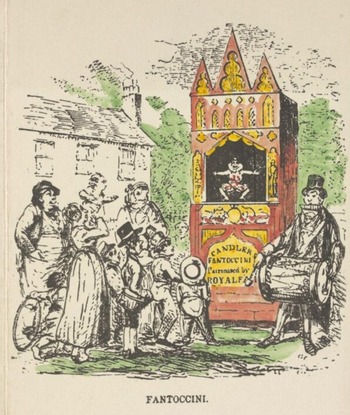
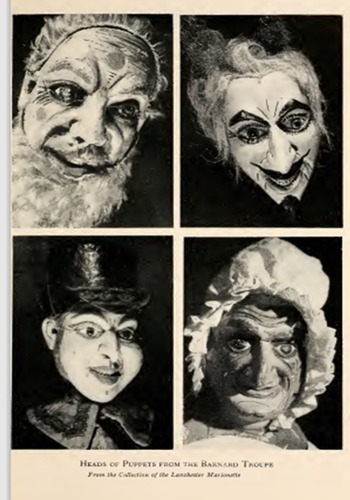
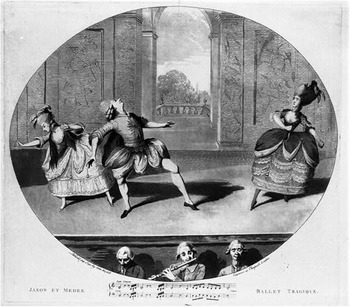

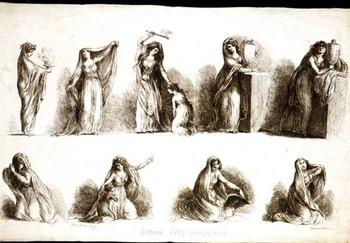


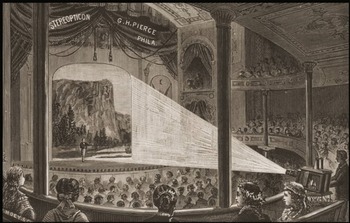
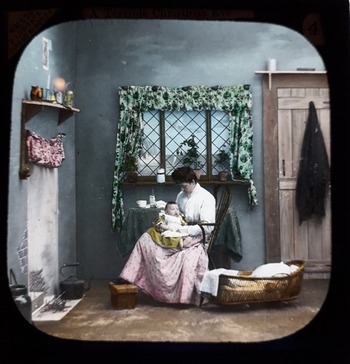
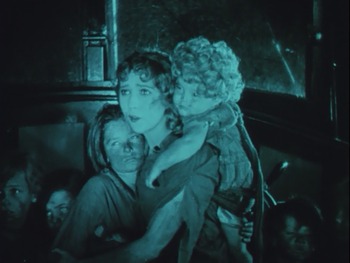

 Open access

