1 More than Facts Alone
In 2015, the Flint Water Crisis made national headlines as community members made public pleas regarding the quality of their water after the city’s water supply was switched to the Flint River. Twelve people died due to an outbreak of Legionnaires’ disease from the bacteria-filled water with reports noting that these deaths were likely undercounted. Additionally, tens of thousands of residents, including as many as 12,000 children, were exposed to toxic levels of lead for a year and a half (Denchak, Reference Denchak2024). The emotional advocacy of individuals such as Ariana Hawk and Melissa Mays captured people’s attention, who spoke out as mothers worried about the health of their families (Erwin, Reference Erwin2024). In her cover story in TIME Magazine, Hawk told the story of her two-year-old son, Sincere, who was covered in rashes due to being bathed in lead-filled water. Hawk said, “All we are asking for is you to take care of these kids, because they are our future, and if we don’t have a future, [then] what is there left for us” (Erwin, Reference Erwin2024). Mays recounts the horror of realizing that when she “was handing my kids the clear water, I was poisoning them” (DiFelice, Reference DiFelice2024). After partnering with local water quality experts, Mays filed the first lawsuit for health damages against the city of Flint for failure to treat the water and prevent harmful corrosion. The stories that Hawk, Mays, and many others told of the harm befalling their children resonated with people around the country appalled at the lack of government action (Thomas, Reference Thomas and Crick2020).
The power of motherhood as an identity to motivate action has been well-documented in research about science communication and environmental advocacy (e.g., Peeples and DeLuca, Reference Peeples and DeLuca2006; Murphy, Reference Murphy2017; Thomas, Reference Thomas2018, Reference Peeples and DeLuca2020; Onís, Reference de Onís2019). Jennifer Peeples and Kevin DeLuca (Reference Peeples and DeLuca2006), for example, analyzed “strategic motherhood” in a publication responding to toxic waste in the environment, linking its success in part to the use of a “feminine style” of communication (p. 65). Drawing on Karlyn Kohrs Campbell’s (Reference Campbell1989) work, Peeples and DeLuca (Reference Peeples and DeLuca2006) describe feminine style as a style of communication that women are socialized into that is characterized by “personal tone, disclosure of personal experiences, reliance on anecdotes and analogies as primary forms of evidence, … and encouragement of audience identification and participation” (p. 65). Although feminine style is not used exclusively by mothers, mothers can invoke a feminine style to advocate for causes and raise consciousness. For example, the Boston Women’s Health Book Collective used feminine style to elevate women’s voices about their own bodies and health (Hayden, Reference Hayden1997). Instead of repeating facts or drawing solely from traditional medical and scientific sources of information, mothers as science communicators use personal stories to create a sense of collective identity that invites audiences to occupy a similar positionality of caregiver, nurturer, and protector over future generations (Peeples and DeLuca, Reference Peeples and DeLuca2006).
Connecting to a topic through shared values and common identities is called “identification,” in which people can become persuaded through the process of recognizing similarities with one another (Burke, Reference Burke1950). For Kenneth Burke (Reference Burke1950), identification is the first step in influencing others as opposed to facts or knowledge. In some cases, relying solely on facts can be detrimental to one’s argument. For example, scientific topics such as climate change have become politicized to the point where additional information is often met with resistance. Studies have found that increases in climate information can lead to backfire effects, where people double down on their disbelief in climate change, motivated reasoning, where people reach a preferred conclusion despite presented evidence, and apathy, where people avoid engaging in the topic entirely (e.g., Hart and Nisbet, Reference Hart and Nisbet2012; Bloomfield et al., Reference Bloomfield, van Swol, Chang, Willes and Ahn2020; Ma and Hmielowski, Reference Ma and Hmielowski2022).
In controversial or polarized situations, attending to identification can help circumvent initial negative or apathetic responses (e.g., Jones and Crow, Reference Jones and Anderson Crow2017). Identification through the shared experience of motherhood can be powerful because of the identity’s ubiquity and near-universal recognition as an important interest group. Sara Hayden (Reference Hayden2003) argues that maternity appeals “tap into a common and powerful metaphor” of the “power of the mother within the family structure” (p. 211). Even if someone does not fully understand an issue, such as toxic water levels, they can understand the pain of mothers caring for sick children. Instead of relying solely on facts or technical information about water quality, the mothers of Flint advocated using “non-traditional, feminine sources” of information that emerged from their position as mothers to draw attention to an important health issue (Hayden, Reference Hayden1997, p. 130).
Mothers’ advocacy in the Flint Water Crisis demonstrates the importance of storytelling and identity to call attention to local crises and environmental problems. From contemporary disagreement over proper responses to the COVID-19 pandemic to controversies over the long-established processes of evolution, communication issues plague the domains of science, health, medicine, and technology. Where public discourse has stalled on scientific topics, storytelling and identity can reinvigorate attention and action. Considering the power that maternal appeals have on the political stage (Hayden, Reference Hayden2003), I focus on the identity of motherhood and how contemporary mothers have become influential science storytellers.
There are many storytellers who compete for our attention and adherence around scientific topics. The “rival stories” they tell present different projections of the world and our place in it, can draw upon different group memberships, and can have vastly different implications for public engagement with science (Fisher, Reference Fisher1984, p. 14). Rival storytellers to science can stem from a variety of political, cultural, religious, or social groups (Bloomfield, Reference Bloomfield2024). For example, in 2020, during the early stages of the COVID-19 pandemic, some Orthodox Jewish communities in New York did not follow prevention protocols and continued their religious practices of large gatherings, meaning that the community was hit hard by the virus’s spread (Goldberg, Reference Goldberg2020). In this case, medically based government mandates to lock down and socially distance were rivaled by oppositional knowledge from a religious community to maintain their practices of prayer gatherings.
An appreciation of storytelling and identity acknowledges the role that other sources of information play, such as religion and politics, in informing one’s acceptance of scientific conclusions. In other words, people’s experiences and group memberships influence the uptake of scientific information beyond what they might hear from technical and scientific sources. These competing sources of information can lead to gaps between scientific conclusions and public understanding on topics such as evolution, climate change, genetically modified organisms, and other topics. These gaps have long been explored as “problems” or “obstacles” to overcome, with the proposed solution oftentimes being to give the public more knowledge and information. This “information deficit model” approach to public understanding of science has been largely replaced in the literature with more interactive, engagement-based models that provide opportunities for acknowledging and incorporating multiple ways of knowing (Potochnik and Jacquart, Reference Potochnik and Jacquart2025).
It is important to note that storytelling and identity are also part of the scientific process (e.g., Fisher, Reference Fisher1994; Bloomfield, Reference Bloomfield2024). For example, when scientists write grants, they tell the story of their research experience to argue that they are the best people to perform the proposed research (Sohn, Reference Sohn2019). When scientists give presentations, they tell the story of the research process and their involvement in it. Philip Wander (Reference Wander1976) referred to these practices as “the rhetoric of science,” which describes the use of symbols and the presence of persuasion and influence within scientific practices. For example, Wander (Reference Wander1976) notes that successful scientific products “must convince [their] audience that the research topic is worthy of study, the appropriate tools were used, and used correctly, and that the researcher knew what he or she was doing” (p. 226). Although it is common for scientists to downplay the role of human decision-making within their practices (Ceccarelli, Reference Ceccarelli2018), human influence pervades all aspects of scientific discovery and communication.
Attempting to cull the influences of storytelling and to ignore the identities of scientists is itself a type of story about what knowledges the scientific community holds as valuable. Leah Ceccarelli (Reference Ceccarelli2001) argues that scientific discourse is the result of “both authorial cunning and institutionalized discursive practices” (p. 321, emphasis in original). Scientists, thus, are individual actors who produce communication as a “point of origin” of information (Campbell, Reference Campbell and Gross1997, p. 123) and are part of a social community that is highly disciplined by institutional norms. These norms often include an aversion to rhetorical techniques such as story in pursuit of objectivity (e.g., Katz, Reference Katz2013; Jones and Crow, Reference Jones and Anderson Crow2017).
In our polarized world plagued with compounding crises, it is perhaps more important than ever to cut through the noise of misinformation and information overload with clear, effective science communication. Instead of relying on information alone, science communicators can use stories to capture people’s attention and tap into identities to motivate new beliefs, understandings, and actions. In this way, science communicators can dig into the inherent narrativity and importance of identity within the scientific process while connecting scientific information to the values and concerns of the general public.
I am interested in the interconnections between stories and identity, specifically within scientific contexts. To illustrate this nexus, I explore current literature regarding their relationship in science communication. Then, I outline important identities that circulate in prominent scientific stories, such as those about environmental pollution, climate change, vaccination, and COVID-19. Continuing my introductory case study, I dive into the identity of mothers as science storytellers by separating gender and motherhood into their own category. This organization sets the foundation for deeper analysis in the following section about how the identity of motherhood emerges in activism around climate change and vaccination.
The Relationship between Stories and Identity in Science
When we encounter new information, it is filtered through our existing frameworks and understandings. The new information is evaluated against our previous beliefs and results in one of three choices: (1) rejecting the new information to stay loyal to our previous beliefs, (2) accepting the new information and breaking free from previous beliefs, or (3) bargaining with the new principles or “stretching” our previous beliefs to find compromise between them (Burke, Reference Burke1984). Option 1 is often the simplest – new information is not adopted and thus has no immediate effect or change on a person’s daily life.
Option 2 can be very difficult because our existing frameworks are cultivated throughout our lifetimes. Providing someone with new information may not simply be an incremental increase of new information, but a shattering of their worldview or their sense of self. For example, telling someone to “trust the science” about climate change may activate a religious identity that links scientific knowledge with evolutionary science, which challenges their faith (McCammack, Reference McCammack2007). Or, telling someone that medical science advises people to wear masks and quarantine at home may go against people’s beliefs in individualism, work ethic, and their notions of masculinity (BBC News, 2020; Paliewicz and Bloomfield, Reference Paliewicz and Bloomfield2023). It is rare for people to completely shift their mindsets because of how psychologically and emotionally taxing such changes can be.
Burke (Reference Burke1984) called option 3 “casuistic stretching,” to reflect how the adoption of new information leads to people stretching or compromising their old beliefs to make way for new ones. Another way to conceptualize casuistry is through the idea that people are torn between “competing duties or obligations” (Lynch, Reference Lynch2008). Paul Lynch (Reference Lynch2008) defined casuistry as people “maintain[ing] their moral obligations while at the same time remaining sensitive to circumstances,” such as believing that killing people is wrong but also understanding the exception of killing in self-defense. When casuistry occurs, it is hard to gauge what exactly from the old and the new beliefs will be retained and what will be stretched or modified, which can lead to uncertainty.
In analyzing religious responses to climate science in a previous publication, I identified “bargainers” as those who stretch scientific information to make the reality and severity of climate science fit their existing worldview of climate inaction (Bloomfield, Reference Bloomfield2019a). Instead of rejecting scientific information outright, bargainers tend to misconstrue or modify scientific information. For example, the Heartland Institute is a conservative think tank that argues that increased CO2 will lead to more efficient photosynthesis, which will lead to better crop yields and food security (Watts, Reference Watts2019). These conclusions are in stark contrast to evidence from scientific organizations that climate change will not benefit crops.Footnote 1 Because they draw upon scientific information and interpret it through their lens of climate skepticism, bargainers may seem more reasonable than those who reject scientific information outright despite still being damaging to public engagement with science.
Casuistic stretching can also lead to positive mindset shifts because it enables people to retain the familiarity of their worldview while making room for new information. Someone who does not believe climate change is a problem, for example, might stretch their perspective to be concerned if climate change is connected to something they deeply care about, such as their business, family welfare, or their community (Wang et al., Reference Wang, Leviston, Hurlstone, Lawrence and Walker2018). Susie Wang and colleagues (Reference Wang, Leviston, Hurlstone, Lawrence and Walker2018) found that people exhibit “strong emotional responses” when they perceive an “object of care” to be under threat from climate change, which “motivates caring about climate change itself, and in turn predicts [environmental] behavior” (p. 25). One shared value that researchers have explored linking to climate change is health. Studies find that framing climate change as a public health matter through discussing air and water pollution can lead to greater concern about climate change and support for climate mitigation policies (e.g., Petrovic et al., Reference Petrovic, Madrigano and Zaval2014; Kotcher et al., Reference Kotcher, Feldman, Luong, Wyatt and Maibach2021).
Identifying with one another can help to reduce the threat of receiving new information. In a series of studies, an interdisciplinary research team found that group members who identified two things they had in common before completing a climate consensus activity led to improved efficiency compared to group members who discussed an article with facts about climate change (Bloomfield et al., Reference Bloomfield, van Swol, Chang, Willes and Ahn2020; van Swol et al., Reference van Swol, Bloomfield, Chang and Willes2021). Instead of focusing on information and facts, which can make some people defensive, telling people to reflect on their similarities with others encourages positive feelings about the activity and their groupmates.
This research should not imply that facts or statistics should be abandoned. Indeed, information is the backbone of science communication because our primary goal is to educate. However, facts alone may not be enough to create connection between people and a topic; more often, people care about a topic because it directly impacts them, or they feel for those who are impacted. Identification is thus mediated through what is called “psychological distance” (Milfont, Reference Milfont, Corral-verdugo, Garcia-Cadena and Frias-Armenta2013). Because climate change can be seen as intangible or distant, appealing to more present and overt impacts can help bridge the psychological distance between audiences and the topic (Wang et al., Reference Wang, Leviston, Hurlstone, Lawrence and Walker2018).
Another way to close psychological distances between people and abstract scientific topics is through storytelling. Stories take an alternative psychological pathway that can foster emotional connections and motivate action (Slater and Rouner, Reference Slater and Rouner2002). There is evidence that narratives have immediate positive impacts on understanding, comprehension, and retention of information (Machill, Köhler and Waldhauser, Reference Machill, Köhler and Waldhauser2007; Busselle and Bilandzic, Reference Busselle and Bilandzic2009; Murphy et al., Reference Murphy, Frank, Moran and Patnoe-Woodley2011) that persist over time (Oschatz and Marker, Reference Oschatz and Marker2020), including for scientific topics. For example, narratives can improve responses to new biotechnologies (e.g., Yang and Hobbs, Reference Yang and Hobbs2020) promote pro-environmental attitudes and behavioral intention (e.g., Dahlstrom, Reference Dahlstrom2014; Sangalang and Bloomfield, Reference Sangalang and Bloomfield2018), improve health outcomes (e.g., Kim et al., Reference Kim, Bigman, Leader, Lerman and Cappella2012; Walter, Demetriades and Murphy, Reference Walter, Demetriades and Murphy2019), increase belief in the authenticity of scientists (e.g., Saffran et al., Reference Saffran, Hu, Hinnant, Scherer and Nagel2020), and improve hazard preparedness (e.g., Shanahan et al., Reference Shanahan, Reinhold and Raile2019).
In a meta-review of narratives’ use in science and health communication, Matthew Dudley and colleagues (Reference Dudley, Squires, Petroske, Dawson and Brewer2023) found that nearly 70 percent of studies demonstrated that narratives improved communication effectiveness when compared to nonnarrative or instructional forms of communication on topics such as tobacco reduction, cancer screening, environmental conservation, nutrition, and sexual health, among others. They concluded that stories are largely effective in communicating scientific information because they make information more accessible, increase attention to and retention of information, stimulate emotional connections, and delay the formation of counterarguments (Dudley et al., Reference Dudley, Squires, Petroske, Dawson and Brewer2023, pp. 8–9).
Science communication, therefore, is not only stating facts about a topic but is also about adapting the information to connect with who and what people care about, who they are and how they define themselves, and the social groups they belong to. To build on these broader conceptualizations of the relationship between stories, identity, and science, I now analyze specific stories and identities that influence science communication. I focus on topics of the environment and health due to the case studies of climate change and vaccination that are examined in the next section.
Important Identities in Science Storytelling
Storytelling and identity are intimately related. Walter Fisher (Reference Fisher1984) notes that the stories we tell about ourselves are connected to our notions of identity. He argues, “Any story, any form of rhetorical communication, not only says something about the world, it also implies an audience, persons who conceive of themselves in very specific ways. If a story denies a person’s self-conception, it does not matter what it says about the world” (Fisher, Reference Fisher1984, p. 14).
Stories call forth particular audiences who see themselves in the story, or as Fisher (Reference Fisher1984) describes it, who “dwell” within the story (p. 6). When stories challenge our fundamental notions of identity, they, and the information they contain, may be rejected. For example, I have previously argued that climate stories may be rejected because people consider themselves to be generally good, which is in opposition to climate stories in which people’s actions are blameworthy regarding environmental damage (Bloomfield, Reference Bloomfield2024). Additionally, narratives about debunked links between vaccines and autism may work to unite parents overcome with emotions such as “helplessness, resentment, bitterness, anger, and guilt that somehow their children’s condition was their fault” by shifting blame onto an identifiable cause (Hoppin, Reference Hoppin2016, p. 52). Stories can appeal to particular identities that can call forth additional stories to represent their experiences and attitudes.
In what follows, I outline some of the identities that influence science communication, engagement, and advocacy. Integral in analyzing these identities are the stories they tell and the worldviews they uphold. These descriptions are not meant to be exhaustive or generalizable across all members of these different groups, but to provide preliminary information about important relationships and factors within the science communication ecosystem. Survey data, scholarly literature, and examples from public discourse provide a foundational look at the various ways that identities and stories can intersect with scientific topics, which invite further examination of these relationships and how they influence science communication.
There are a variety of prominent and vocal identities within science communication, including political identities, religious identities, and demographic identities such as race, gender, class, sexuality, ability, and age. These identities overlap with one another; one is never only one identity, even if some are more salient than others in different circumstances. Discussing them separately is not meant to suggest that they operate in isolation, but to gather relevant literature that links these identities to scientific engagement and understanding.
Political Affiliation and the Economy
Political affiliation is an important identity marker, especially in our polarized world. The rise of fringe political beliefs disrupts political norms and reinvigorates important societal questions. For example, far-right political discourse includes Holocaust deniers who doubt the verified historical existence of concentration camps and the genocide of six million Jewish people during the 1930s and 1940s in Europe (Art, Reference Art2013, p. 128). This discourse may also promote ecofascist beliefs that tie environmental protection to (White) nationalism or reinforce exploitation of the environment as a societal good (Forchtner, Reference Forchtner2019). Laws and executive orders in 2024 and 2025 in the United States and Europe have conflated gender with biological sex, which goes against scientific and medical consensus that our understanding of sex is a spectrum rather than a binary (Ainsworth, Reference Ainsworth2015). It is at our own detriment that we ignore the role of politicians, public officials, and thought leaders as influential bridges between scientific topics and public engagement with them.
Scientific topics are subject to misinformation not only from political leadership but also from circulation in alternative news media and online spaces. Vaccine hesitancy, for example, is partially on the rise due to polarized political discourse from media pundits, where increased social media use, specifically following the accounts of US Republican politicians and right-wing influencers, has been associated with less confidence in the COVID-19 vaccine (Rathje et al., Reference Rathje, He, Roozenbeek, Van Bavel and van der Linden2022). Even when accounting for other factors, such as demographic, social, economic, and medical variables, Farrokh Alemi and Kyung Hee Lee (Reference Alemi and Lee2023) found that those affiliated with the US Republican party had lower vaccination rates than other groups, indicating that political leadership has possibly “played an organizing role in encouraging vaccine hesitancy” (p. 1).
An analysis of multiple polls conducted by the Brookings Institute found that party affiliation was the most important factor in COVID-19 vaccination rates (Galston, Reference Galston2021). Researchers found that more conservative individuals in the United States, Germany, and Brazil were less likely to follow health experts’ recommendations (Watson, Reference Watson2020; Naeim et al., Reference Naeim, Baxter-King, Wenger, Stanton, Speucha and Vavreck2021; Magnus et al., Reference Magnus, Dammann, Ziegler, Lüdecke and Dingoyan2024). Political narratives during the COVID-19 pandemic emphasized government overreach and infringement on individual liberties. Protests erupted around the world championing the right to work, to move freely, to gather, and to make health decisions without government intervention (BBC News, 2020; Paliewicz and Bloomfield, Reference Paliewicz and Bloomfield2023).
Willingness to vaccinate or follow other precautionary measures such as masking became a political identity marker in the age of COVID-19 (Neville-Shepard, Reference Neville-Shepard2021), but this was not always the case. Prior to 2023, the Pew Research Center found that support for vaccine requirements in schools was roughly even between Democrats and Republicans with majorities supporting them (86 percent and 79 percent, respectively; Funk et al., Reference Funk, Tyson, Kennedy and Johnson2023). After COVID-19, Democratic support remained high at 85 percent and Republican support tanked to 57 percent (Funk et al., Reference Funk, Tyson, Kennedy and Johnson2023). Even though political differences play a part in contemporary vaccine hesitancy, people experience vaccine hesitancy across political parties. Avnika Amin and colleagues (Reference Amin, Bednarczyk and Ray2017) studied moral values and vaccination beliefs, finding that beliefs in purity and liberty are the values most associated with vaccine hesitancy. While the values of purity and liberty can directly tap into conservative ideologies of individualism and religious teachings (Bloomfield and Willes, Reference Bloomfield and Willes2024), those values may also indicate a rejection of overly processed substances and unnecessary medical interventions in “crunchy” or “hippie” communities, which are typically associated with liberal ideologies (Carrion, Reference Carrion2018). Vaccination hesitancy, then, spans both sides of the aisle, but for different reasons.
Another polarized scientific topic is climate change, where conservative political and economic ideologies influence support for climate policies. The Pew Research Center reports that concern about climate change has increased for Democrats in the last decade (from 58 percent to 78 percent), but the share of Republicans who are concerned about climate change is near stagnant (from 25 percent to 23 percent) (Tyson et al., Reference Tyson, Funk and Kennedy2023). These findings indicate that while climate concern is growing overall in the United States, the gap between Democrats and Republicans is growing as well. Climate action has previously been a priority for US Republicans concerned about military bases under threat of sea level rise and the protection of natural resources (Nuccitelli, Reference Nuccitelli2019), but it is now largely associated with “radical” liberal and socialist policies, which are placed in opposition to economic progress (Morris, Reference Morris2021, p. 139).
Environmental protection policies may place regulations on businesses, such as how much pollution they emit or where they dump waste, which can lead to higher expenses. Consequently, conservative identities may associate climate policies with negatively impacting small businesses, or with global “new world order” conspiracies that seek to undermine Western influence (Tillery and Bloomfield, Reference Bloomfield2022). In her 2019 “How Dare You?” speech, Greta Thunberg (Reference Thunberg2019) denounced political leadership for believing in “fairy tales of eternal economic growth” at the expense of making progress to combat the real, tangible, and severe impacts of climate catastrophe.
Political stories of economic growth are narratives of neoliberalism, which pose powerful barriers to environmental action because they tap into concerns about economic stability and fears about economic sacrifices. Jen Schneider and colleagues (Reference Schneider, Schwarze, Bsumek and Peeples2016) called these fear-based narratives the “industrial apocalyptic,” which refers to “a set of rhetorical appeals that constitute the imminent demise of a particular industry, economic, or political system and the catastrophic ramifications associated with that loss” (p. 3). Neoliberalism values people as individual, economic actors, distrusts collectivism and economic sacrifice, and positions profits as the only rational choice (Brown, Reference Brown2015; Bloomfield, Reference Bloomfield2019b). Neoliberalism’s stories shift attention from the environment to the economy and appeal to the values of individualism and capitalism. Divides between the economy and the environment are not new, but neither are they deterministic; environmental progress can also mean economic strength (DeLuca, Reference DeLuca2001; Miller and Bloomfield, Reference Bloomfield2022). These arguments, however, are not as prominent as ones that position the environment and the economy as enemies (Bloomfield, Reference Bloomfield2019b).
Around the world and specifically in the United States, politics has become more polarized, affiliations more deeply rooted, and what had previously been considered extreme political beliefs have become more commonplace. One would hope that scientific information would not necessarily be evaluated based on political identity or economic philosophy. However, politicians and public figures regularly serve as powerful bridges who can mediate, translate, and potentially distort scientific information for public consumption.
Religious Adherence
Religion is an all-encompassing worldview that Hans Mol (Reference Mol1977) defined as the “sacralization of identity” (p. 1), making it one of the most binding identities one can hold. Some conceptualizations of religion place it in direct opposition to scientific knowledge, but others find religious beliefs to be compatible with scientific conclusions. John Evans (Reference Evans2018), for example, makes a convincing argument that religious people are not universally anti-science, but can be highly concerned about certain iterations of science and their implications. In other words, religious people may place trust in science as an institution but may be wary of specific scientific conclusions that challenge certain religious beliefs (Pew Research Center, 2017, 2019).
Stories about the relationship between science and religion can take many forms. One is a story of incompatibility, where science and religion are competing and mutually exclusive forms of information that cannot or should not be combined. Another story is that of compatibility, harmony, and unity, where religion and science can mutually inform the same or separate domains of life. Between compatibility and incompatibility are stories of stretching, where science and religion are seen as compatible in some circumstances and not in others.
Christianity remains the largest faith tradition in the United States and worldwide but is a slower growing faith globally than Islam (Nadeem, Reference Nadeem2022). While proportions of religiously unaffiliated (i.e., atheists and agnostics) are increasing in North America and Western Europe, population growth and religious adherence in sub-Saharan Africa and Southeast Asia mean that global percentages of religiously unaffiliated are expected to decline (Nadeem, Reference Nadeem2022). In some countries, the importance of religion is decreasing, while in other countries its importance is on the rise. For those who are religious, their faith plays an integral, guiding role in their identities, beliefs, and actions.
A Pew Research Center study in 2020 reported that Muslims and Hindus thought of religion and science as “overlapping spheres” and thus found them largely compatible (Thigpen et al., Reference Thigpen, Johnson and Funk2020). Muslims generally disagreed with evolutionary science, while Hindus saw evolution as compatible with their religious teachings (Thigpen et al., Reference Thigpen, Johnson and Funk2020). In that same study, Buddhist interviewees saw science and religion as informing very different domains of life and thus were not concerned about how particular scientific topics may impact their faith (Thigpen et al., Reference Thigpen, Johnson and Funk2020). Support for evolution as the explanation of human origins is 74 percent worldwide, with support in the United States below the median at 64 percent (Funk et al., Reference Funk, Tyson, Kennedy and Johnson2020). The National Center for Science Education (2020) explains that religious adherence and education levels are the primary factors contributing to these differences. For example, countries such as Singapore, Brazil, and Malaysia, that have high percentages of Christians and Muslims, are below the median in acceptance of evolution (Funk et al., Reference Funk, Tyson, Kennedy and Johnson2020).
Religious stories that rival evolution may stem from beliefs that evolutionary science wishes to eliminate religion or that scientific information cannot fully answer all of life’s questions regarding origins and morality (McCammack, Reference McCammack2007; Bloomfield, Reference Bloomfield2024). Similar stories of replacement emerge in climate discourses, where some argue that belief in climate change is itself a religion or “religious cult” that wishes to displace other faiths, primarily Christianity (Montford, 2023). One of the foundational articles about the relationship between Christianity and the environment was authored by Lynn White Jr. (Reference White1967), who argued that many Christian values are incompatible with ecology, noting: “What people do about their ecology depends on what they think about themselves in relation to things around them” which is “conditioned by beliefs about our nature and destiny – that is, by religion” (p. 16). While adherence to a religion is not always indicative of being anti-environmentalism, belief in Christianity and regular church attendance are negatively associated with pro-environmental beliefs (Gauchat, Reference Gauchat2012). Previous studies have also suggested that apocalyptic beliefs, such as Christian notions of the Second Coming of Jesus, negatively predict pro-environmental attitudes (Barker and Bearce, Reference Barker and Bearce2013).
Robin Veldman (Reference Veldman2019) attributes the Christian community’s reluctance toward climate action less to their faith tenets and more to their political affiliations and the media they consume. Many Christian denominations lean toward conservative (Lipka, Reference Lipka2016), and elections from 2000 to 2016 show that Republicans have sustained support from White religious groups, especially evangelicals and Protestants (Smith and Martinez, Reference Smith and Martinez2016). In the constellation of one’s identity, core beliefs such as religion and politics can become closely intertwined.
Conversely, other Christians use their faith as motivation for environmental protection (Prelli and Winters, Reference Prelli and Winters2009; Wilkinson, Reference Wilkinson2012; Bloomfield, Reference Bloomfield, Milstein and Castro-62Sotomayor2020). Creation care groups view environmental protection as intertwined with traditionally Christian values such as being “pro-life” in terms of protecting future generations (Bloomfield, Reference Bloomfield2019a). In addition to Christianity, other faiths have strong traditions of environmentalism and environmental advocacy. Islamic environmentalism has been around since the 1960s and celebrates principles of tawhid (unity of creation), khalifa (stewardship of God’s creation), and maslahah (intergenerational care) (Koehrsen, Reference Koehrsen2021; Alhinai and Ringer, Reference Alhinai and Ringer2025). In response to the 2011 Fukushima nuclear power plant accident, calls for greening Dharma, or the rearticulation of environmentalism into Buddhism, emerged (Dessì, Reference Dessì2013; see also Harris, Reference Harris1995). The Yale Forum on Religion and Ecology (2025) tracks statements from leaders of world religions from Indigenous Traditions to Jainism, demonstrating the broad inclusion of pro-environmental beliefs in a variety of faith traditions.
In the wake of the COVID-19 pandemic, many churches came out in support of protective measures such as lockdowns, promoting socially distant ways of worshipping and encouraging precautions such as mask-wearing (Majumdar, Reference Majumdar2022). Other religious groups, however, went against public health measures and filed lawsuits to protect the right to gather for religious purposes such as worship and funerals. One study found that Evangelicals who sought information about vaccines from their religious leaders were less likely to be vaccinated, but that they were also positively influenced by vaccine messaging from those leaders, marking the important role that clergy serve in sharing public health information (Guidry et al., Reference Guidry, Miller and Perrin2022).
A global study of religious identities and COVID-19 found that Muslim and Eastern Orthodox populations were less trusting of the vaccine, which the study authors attribute in part to disinformation and anti-Western discourse (Chakhunashvili et al., Reference Chakhunashvili, Kvirkvelia and Chakhunashvili2024). Religion-based disinformation includes claims that vaccine ingredients are not halal or that they violate religious teachings about the sacredness of the body, which online disruptors can use to sow hesitancy regarding vaccines (Guidry et al., Reference Guidry, Miller and Perrin2022; see also Bloomfield and Willes, Reference Bloomfield and Rice2024). For Muslim populations, their religious identity may also interact with race and ethnicity, as members of the Muslim faith tend to be minoritized populations that may harbor more distrust of government health interventions (Hansen and Pickering, Reference Hansen and Pickering2024). In Nigeria, religious leaders helped spread misinformation about COVID-19, characterizing it as a Western hoax or as something that could easily be cured by prayers or herbal teas (Amanambu, Reference Amanambu2020).
How people incorporate faith into their lives, to what extent, and regarding what topics is always in flux. While it may be tempting to generalize about how faith may set one against scientific topics, such an assumption would ignore the many ways that faith communities have advocated for science and found harmony between religious and scientific ways of knowing. Religion can, however, manifest as an obstacle to scientific understanding in some circumstances, so understanding religious beliefs is an important component of research into the public’s engagement with science.
Race, Class, and Social Identities
While people have, at least to some extent, agency over the political groups and faith communities we ascribe to, our demographics are largely out of our control. Identity markers such as race, gender, sexuality, class, and ability can influence our relationship to and engagement with scientific topics. Every person, therefore, is a conglomerate of various intersecting and fluctuating identities that create unique perspectives on life. People are never any single identity. Kimberlé Crenshaw (Reference Crenshaw1991) coined the term “intersectionality” within a legal context to refer to how people can be multiply marginalized by their identity positions. For example, Patricia Hill Collins (Reference Collins1990) proposed that Black women occupy a “matrix of domination” in being marginalized by both their race and gender in society. Being marginalized affects resources people have access to, their ability to advocate for systems-level changes, and the risks they are exposed to through climatic changes, pandemics, and industrialization.
Simply because people share demographic features does not mean that they will all think similarly. As Collins (Reference Collins1986) noted, while groups will have “certain commonalities of outlook” due to shared characteristics, the “diversity” of identity makers will result “in different expressions of these common themes” (p. 516). In recognizing this variation, we can also locate patterns and themes to get insight into expected or typical attitudes and behaviors toward science.
In terms of the environment, one’s race and geography can influence who is disproportionately affected by environmental damages (Holifield et al., Reference Holifield, Chakraborty and Walker2017; Sultana, Reference Sultana2022). The cause of environmental justice highlights how marginalized communities, such as people of color, low-income communities, and people who live in the Global South, are more likely to be exposed to toxic waste, pollution, and industrialization, which leads to negative health outcomes (e.g., Bullard et al., Reference Bullard, Mohai, Saha and Wright2008; Dickinson, Reference Dickinson2012; Bullard, Reference Bullard2018; Sultana, Reference Sultana2022). Indigenous communities are perhaps the quintessential community impacted by environmental exploitation, because they were displaced from their ancestral and sacred homes and were subject to the pollution of those lands through pipelines, nuclear waste dumping, and the shrinking of federal protections (Wildcat, Reference Wildcat2009; de Onís, Reference de Onís2018; Smith, Reference Smith2020; Estes, Reference Estes2024).
Danielle Endres (Reference Endres2012) called these areas “sacrifice zones,” which refers to “a sacrifice made by a small group to benefit the entire nation” through the exploitation of the land and its geologic resources (p. 334). In the wake of these sacrifices, either by building toxic waste dumps, running chemical and nuclear tests, or hosting military operations, nearby communities suffer consequences to their health as well as to their cultural and community well-being (Endres, Reference Endres2012; Na’puti and Bevacqua, Reference Na‘puti and Bevacqua2015).
The case study at the beginning of this section, the Flint Water Crisis, highlights racial inequities in environmental justice, because Flint’s population is more than 50 percent Black, nearly 7 percent multiracial, and nearly 5 percent Hispanic or Latino (US Census Bureau, 2024). Poorer areas are less able to mobilize resources and lobby against industry projects and governmental policy changes, so they are viewed as politically safer regions to dump waste or build factories (Mohai and Saha, Reference Mohai and Saha2015). In a project examining the demographic composition of communities where hazardous waste facilities were sited over thirty years, Paul Mohai and Robin Saha (Reference Mohai and Saha2015) concluded that facilities targeted communities of color to reduce the threat of NIMBYism (not in my backyard opposition to new development) often attributed to affluent White communities.
In addition to negative health outcomes, marginalized communities are often kept out of environmental decision-making. Indigenous communities are left out of fire management decisions on their lands (National Park Service, 2024), disabled activists are left out of conversations (Cram et al., Reference Cram, Law and Pezzullo2022) or are subject to ableist attacks (Allison, Reference Allison, Bloomfield and Castro-Sotomayor2025), and youth activists are infantilized and dismissed due to their perceived lack of political power (Thomas, Reference Thomas2023). Concentrating decision-making power in the hands of the (privileged) few means that voices go unheeded, diverse knowledges go unincorporated into decisions, and oppressive systems are reified.
Medical institutions have a long history of exploiting Black and Brown communities for medical experimentation and imposing mass sterilization on “undesirables,” which can understandably lead to their skepticism of institutionalized medicine (Stern, Reference Stern2021, p. 65; see also Lynch, Reference Lynch2019). This sordid history, however, is not the full picture. Susan Reverby (Reference Reverby2021) critiqued how blame for vaccine hesitancy in US African American and Latino communities is often reduced to the same “holy trinity of medical horror stories,” which are “Dr. J. Marion Sims’ use of slave women for gynecological experimentation, the 40-year study in Tuskegee of ‘untreated syphilis in the Male Negro,’ [and] the taking of Henrietta Lacks’ cervical cancer cells to begin the first reproducible cell lines” (p. 1). These horrific events have contributed to medical hesitancy, but the persistence of and the reliance on these narratives can also distract from the impact that lack of access to medical care can have on vaccination rates and health-seeking behaviors in Black and Brown communities (Reverby, Reference Reverby2021). For example, during the COVID-19 vaccine rollout, pharmacies were identified as distribution points, but this “well-intentioned effort did not account” for how many minoritized communities live in “pharmacy deserts” or are only serviced by independent pharmacies not linked into national distribution networks, thereby missing some communities in the process (Reverby, Reference Reverby2021, p. 2).
People with lower socioeconomic status, those who have limited experience with medical systems or have limited resources to access them, tend to have higher levels of vaccine hesitancy (Vlasak et al., Reference Vlasak, Dinero and Roitman2023). Interestingly, Dylan Vlasak and colleagues (Reference Vlasak, Dinero and Roitman2023) found that people with high socioeconomic status also have high rates of vaccine hesitancy, but they attribute this not to a lack of access or resources, but due to their systemic advantages that “can lead to decreased perceptions of disease risk and heightened feelings of superiority to public health authorities” (p. 1). Vaccine hesitancy, thus, cannot be simplified to one factor or be reduced to one type of community.
This discussion of race, class, and other social identities purposefully excludes gender in order to place it in conversation with motherhood under the next subheading. I distinguish them in order to highlight this project’s focus on the use of gender-based and maternal appeals in scientific contexts.
Gender and Motherhood
Women are often at the front lines of environmental movements because of their proximity to risk and vulnerability due to environmental changes (Sultana, Reference Sultana2022). Women tend to be caregivers across cultures, which means that they bear the burden of disaster response to changing climates, protecting households from toxicity, and creating safe environments for children during pregnancy and motherhood (Hays, Reference Hays1998; Yavinsky, Reference Yavinsky2012). Mothers feel increasing pressure to control their children’s exposure to environmental contaminants, create healthy and home-cooked meals, and create environment-friendly choices for their families (Mackendrick, Reference Mackendrick2014; Okopny, Reference Okopny2014; Kinser, Reference Kinser2017). These burdens often, but not exclusively, fall on women as the family’s primary caregiver.
Women are often oppressed by the same systems that prop up industrialization and environmental exploitation, such as capitalism, industrialization, and masculinity (Merchant, Reference Merchant1990; Mies and Shiva, Reference Mies and Shiva1993; Gaard, Reference Gaard2015). Cara Daggett (Reference Daggett2018) proposed that the combination of climate denial, racism, and misogyny, which she calls “petro-masculinity,” contributes to authoritative and oppressive ruling structures. Petro-masculinity encompasses masculine drives to exploit land and marginalized populations to “buttress[] white patriarchal rule” (Daggett, Reference Daggett2018, p. 25). Expanding on the relationship between gender and climate change, Paul Pulé and Martin Hultman (Reference Pulé, Hultman, Kinnvall and Rydstrom2019) outlined the concept of “industrial breadwinner masculinities,” which, similar to petro-masculinity, refers to intersections of neoliberalism and extractive capitalism against a feminized climate science and concern for the natural environment. These oppressive systems exploit, minimize, and ignore women and the environment in favor of capital.
On the topics of medicine and the body, structural racism and sexism in health care create inequitable access and treatment. Women, for example, are less likely to have pain medication prescribed to them, may have harder times getting treatment for symptoms, and may have serious health concerns dismissed (e.g., Thompson et al., Reference Thompson, Babu and Makos2023; Kwint, Reference Kwint2024). These inequities are further heightened for Black women, Indigenous women, and non-English-speaking women. For example, Dr. Susan Moore died due to complications from COVID-19 after posting a video on social media describing how she felt her doctors dismissed her concerns about her pain and potential treatment options, stating, “I maintain that if I was White, I wouldn’t have to go through that” (Andone, Reference Andone2020). In maternal mortality statistics, Black women die at a rate more than three times that of White women (Britt, Reference Britt2025), indicating structural disparities in medical treatment and health outcomes.
Intersections of race, class, and gender mean that certain women cannot draw upon maternal appeals with equal success. Hayden (Reference Hayden2016), for example, analyzed the critiques former US First Lady Michelle Obama received when she emphasized motherhood in her 2012 speech at the Democratic National Convention. Hayden (Reference Hayden2016) notes that Obama’s invocation of motherhood emphasized the power of Black motherhood against a White feminism that views “motherhood [as] profoundly oppressive to many women with children” (p. 16). Similarly pointing to intersectional motherhood, Rebecca Powell (Reference Powell2010) argued that the discourse of the good mother/bad mother is “fraught with hidden ideologies of class, race, and hidden rules” (p. 38). To be a good mother is to be “white, heterosexual, and economically secure,” while women of color and poor women are cast as “‘unruly’ mothers” who are not calm, nurturing, or caring (Dubriwny and Siegfried, Reference Dubriwny and Siegfried2021, pp. 3, 7; see also Bloomfield and Rice, Reference Bloomfield and Rice2023).
One of the benefits of outlining various identities in relation to science is the recognition of variation within groups and across topics. Faith communities may advocate for climate action while holding firm to their creationist beliefs. Folks on both sides of the aisle or at both ends of socioeconomic spectrum may hold skepticism toward vaccines. Marginalized communities may champion environmental justice but also may be wary of COVID-19 protocols. Although these insights are broad brush strokes based on gathered statistics, meta-analyses, and case studies, the diversity in thought and action, despite unifying demographic markers, signals how identities must be considered contextually to make sense of how they might function as barriers or opportunities for public engagement with scientific topics.
Conclusion
This section has laid a foundation for examining the importance of storytelling and identity in science communication, with a specific focus on how the two mutually inform one another. Scientific information is not just learned in a classroom or through a textbook, but is debated online, discussed with family members and friends, and imparted from cultural, political, and religious groups. These influences are part of the information ecosystem that we all navigate to inform our ways of thinking, acting, and moving through the world. Consequently, factors of identity, social influence, media consumption, and circulating narratives should be considered to hold equal influence, if not more influence, than formal, scientific channels.
The next section directly engages the identity of motherhood and the stories mothers tell in making sense of scientific information based on their gender and parental status. I apply an analytical approach informed by rhetorical theories of storytelling and identity to digital discourse from moms’ groups and advocacy organizations. From informal discussions on Facebook to advocacy organizations’ websites, the identity of “moms” can be leveraged to both support and challenge scientific information. Mothers are only one identity that makes claims to and gatekeeps scientific knowledge, but they are some of the earliest sources of information that people may encounter. Mothers also intersect other important identities such as race, culture, religion, politics, and age, which influence the sensemaking and decision-making aspects of motherhood.
In the next section, I track motherhood’s presence and deployment in the topics of climate change and vaccination to analyze how scientific information is mediated and filtered through the persuasive and compelling identity of mothers. Understanding the relationship between science learning, storytelling, and identities can bring awareness to scientists, science communicators, politicians, teachers, journalists, and members of the public to support public engagement with science, strengthen identification with scientific topics, and tell more engaging science stories.
2 Stories of Motherhood, Climate Change, and Vaccination
In 1980, Candance Lightner lost her daughter Cari in a car accident caused by a drunk driver. Spurred by her grief and a desire to discourage drunk driving through education and stricter laws, she founded Mothers Against Drunk Drivers (later changed to Mothers Against Drunk Driving (MADD)) later that year. Their mission statement was: “To aid the victims of crimes performed by individuals driving under the influence of alcohol or drugs, to aid the families of such victims and to increase public awareness of the problem of drinking and drugged driving” (MADD, 2024). This advocacy group tapped into the “power of parents” to advocate for children directly harmed by impaired driving and to discourage unsafe driving behaviors (MADD, 2024). While it is incredibly difficult to measure the success of social movements, MADD is credited with pushing for federal and state standards for blood alcohol content, minimum drinking ages, and increased penalties for repeat impaired drivers (Fell and Voas, Reference Fell and Voas2006). In their twenty-five-year retrospective of the organization, James Fell and Robert Voas (Reference Fell and Voas2006) argued that MADD has “been one of the most successful public-health grassroots citizen advocacy organizations in the United States in the past century” due to its legal advocacy and its awareness-raising campaigns (p. 195). MADD is an organization that draws from the ethos, or credibility and character, of parenthood, specifically motherhood, as part of its advocacy.
Similarly, One Million Moms (1MM) is a division of the American Family Association that aims to “give moms an impact … and let [entertainment decision-makers] know we are upset with the messages they are sending our children and the values (or lack of them) they are pushing” (About Us, no date). 1MM notes that they are open to everyone, even “singles” (presumably with no children), because the term “mom” unites all who “share our concern and are willing to get involved in the fight for the future of their children” (About Us, no date). For 1MM, motherhood is tied to Christian values and traditional family structures in addition to advocating for children, who are viewed as vulnerable to the influences of “questionable material in the media” (About Us, no date). This “trash” in the media includes profanity (even bleeped profanity or profanity-based puns), nudity or implied nudity, and queer relationships or affection, which are viewed as corrupting content that must be removed from media that children might consume. At the time of this writing, 1MM lists dozens of current campaigns that encourage members to sign their names to petitions that are then sent to the respective company or channel to remove or change content under the guise of protecting children.
Because children are viewed as vulnerable and not fully-fledged rational actors (Thomas, Reference Thomas2023), the identity of mothers or other parental figures can be used to speak for them and on behalf of them. Motherhood as a social role or profession tends to be stereotyped as most appropriate to dwell in the private sphere, an arena of interpersonal interactions, household maintenance, and childcare. Fatherhood, alternatively, stereotypically occurs most appropriately in the public sphere “of politics and commerce” and not in child-rearing (Palczewski, Reference Palczewski2005, p. 374). These “traditional” divisions of labor provide women with “authority and credibility” but also position women “disadvantageously within the gendered status quo” (Buchanan, Reference Buchanan2013, p. xvii).
While these divisions were common in the Victorian era in the Global North, they remain influential today in how people define men and women and the suitability of gendered behaviors. In the United States, for example, there has been progress in women’s representation in politics, but no woman has yet reached the office of the presidency, echoing long-standing exclusions of women from political life (Winfrey and Carlin, Reference Winfrey and Carlin2023). There exists a tension, therefore, in the authority of women over children and the household, while having less political agency in the public sphere, even on topics directly related to household safety and well-being. The mother identity can be uniquely powerful in making intergenerational arguments about the need to protect children and young adults. For Hayden (Reference Hayden2003), maternity can “legitimize[] women’s public relationships to the state, the community, and the workplace” and “justify [their] public activism” (p. 197). However, the expertise of motherhood may also come at the expense of having the extra time, energy, and attention to put toward public advocacy.
Being a “good mother” is an identity fraught with shifting societal and economic pressures as mothers must balance many household- and childcare-related tasks. Rhetorics of motherhood have tied maternal care to the amount of time and knowledge women dedicate to mothering. Sharon Hays (Reference Hays1998) introduced the idea of “intensive mothering,” or the cultural trend toward claiming that women should spend all their time and energy attending to their children’s needs and development. Mollie Murphy’s (Reference Murphy2017) analysis of Sandra Steingraber’s environmental rhetoric demonstrated that being a “good mother” also includes being environmentally knowledgeable and thus able to protect one’s family from environmental harm. Moms’ groups today may be concerned with removing plastics from a child’s environment, avoiding food dyes, and making meals from scratch. In a time where many gains have been made in progressive, feminist organizing, trends such as the “trad wife” persona have emerged that reject modern conveniences in favor of intense domestic labor (Zahay, Reference Zahay2022).
In this section, I explore the identities and narratives that emerge from moms’ groups, both formal organizations and informal social media groups, related to the scientific topics of climate change and vaccination. To analyze the mother identity and how it emerges across the topics of climate change and vaccination, I use the concepts of identification and narrative webs. These methods, which I detail next, provide insight into how mothers make sense of and communicate scientific information through their roles as parents and how motherhood may support or challenge scientific information.
Identification and Narrative Webs
Part of the persuasiveness of the motherhood identity comes from its ability to resonate with many people who are themselves mothers, have relationships with their mothers, or take on mothering or protecting roles. In this sense, we can say that audiences can easily “identify” with mothers on their shared substance, values, and priorities (Burke, Reference Burke1950). Kenneth Burke (Reference Burke1950) argued that “identification” is negotiated through consubstantiality, or the act of simultaneously understanding two objects as similar to each other and also recognizing the separate and unique qualities of both. Burke (Reference Burke1950) argued, “A is not identical with his colleague, B. But insofar as their interests are joined A is identified with B, or he may identify himself with B even when their interests are not joined, if he assumes that they are, or is persuaded to believe so” (p. 2).
For example, two mothers are not and cannot be the same person, but in the process of finding or realizing shared experiences and interests, they may be identified with one another. Identification is compensatory to division, which is a result of how each person retains their own unique identity even as they may feel connected to one another and part of larger group or societal membership. Without identification, Burke (Reference Burke1950) theorized that persuasion could not occur because there was no point of similarity from where the persuasive influence could originate. Identification is important because we can collaborate, cooperate, and find kinship together through our commonalities, such as a collective term that people ascribe to.
Burke (Reference Burke1945) described naming and labeling as imperative to the human condition: “These names shape our relations with our fellows. They prepare us for some functions and against others, for or against the persons representing these functions” (p. 4). By this statement, Burke is referring to how our names for ourselves and each other encourage particular actions and behaviors. For example, Burke (Reference Burke1950) notes that if you call someone evil or a criminal, you invite punishment and castigation rather than rehabilitation. Alternatively, if you call someone mistaken, you might be drawn to help correct them or set them straight. Tema Milstein (Reference Milstein2011) argued that kinship and identification can reach across species. She noted that on an orca whale watching tour, people fostered identification with the orca whales by naming the matriarch of the pod “grandmother” and referring to their pods as families, which fostered pro-environment sentiments (Milstein, Reference Milstein2011). Burke’s concept of identification provides a useful perspective to understand how narrative components such as characters may resonate with audience members.
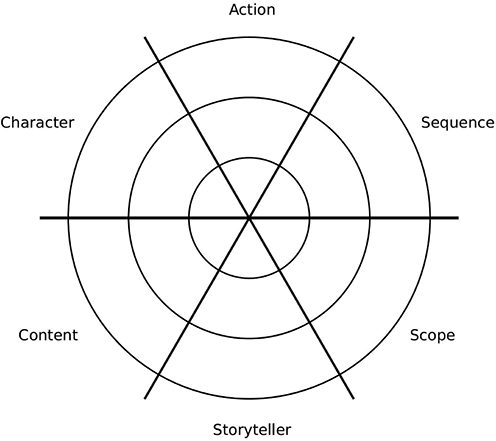
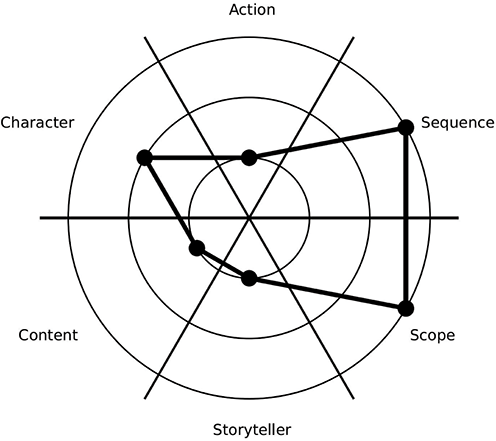
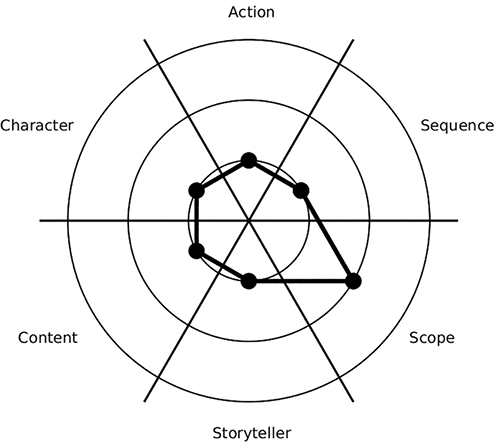
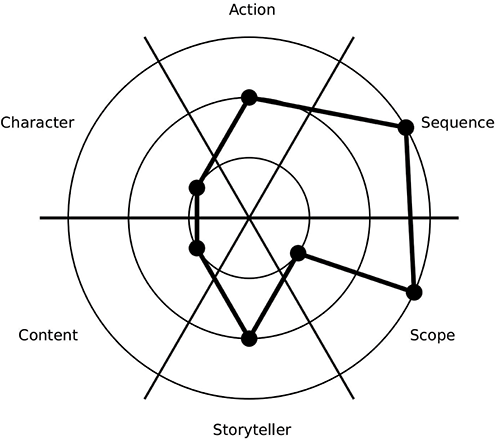
While Burke’s concepts are generally applicable to all forms of storytelling, there are also analytical tools that have been specifically developed for use in evaluating and interpreting stories about scientific topics. Narrative webs are a visual mapping technique that represents story features along a series of three rings and six wedges (see Figure 1; Bloomfield, Reference Bloomfield2024). Narrative webs do not express narrative as a binary (story/nonstory) or as a unidimensional scale (more to less story-like), but as a web of interrelated components that can be evaluated for their relevance and specificity to a target audience. The term “web” refers not only to the shape of the map but also to how stories are embedded in “worldly webs” of relations and cultures (Bacchilega, Reference Bacchilega2015, p. 32). The narrative web is not prescriptive of how narratives should be told but is a tool to help evaluate and compare the available narrative opportunities within a given communicative event. In this sense, narrative webs are designed to capture the “relevance of narrating for humanity” while being flexible enough to account for “different regions, periods, genres, or social strata” that may change a narrative’s acceptance by an audience (Marzolph and Bendix, Reference Marzolph and Bendix2014, p. 2).
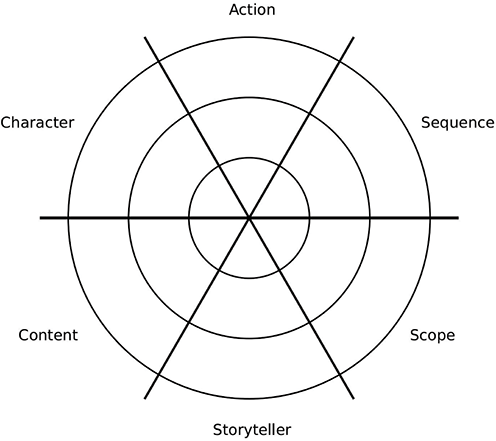
Figure 1 A blank narrative web showing the six wedges (character, action, sequence, scope, storyteller, and content) and the three rings (micro, meso, and macro).
Narrative webs consist of “wedges” that represent the narrative features of character, action, sequence, scope, storyteller, and content. The character wedge captures the people, organizations, more-than-human life, and other entities that perform the actions in the story. The action wedge captures events that occur and the unfolding of the plot. The sequence wedge refers to the chronology of events and whether the story is told in the past, present, or future. The scope wedge refers to the setting of the story, including temporal and spatial considerations but also cultural, social, and historical contexts. The storyteller wedge denotes the originator, communicator, and channel through which the story is shared. The content wedge refers to the topics within the story, such as its scientific information, morals, and values.
Each wedge spans the web’s three rings – micro-ring, meso-ring, and macro-ring – which refer to a wedge’s specificity and alignment with narrative expectations. Mapping a wedge on the micro-ring indicates that a narrative feature is specific, concrete, and relevant to the story’s audience. Mapping a wedge on the macro-ring indicates that a narrative feature is broad, abstract, and generalizable. Mapping a wedge on the meso-ring indicates a middling specificity between the two or that the wedge contains components of both the micro- and macro-ring. When we plot features on the rings, we can connect them to reveal a shape called a narrative constellation. The shape of the constellation provides a visual cue for how specific or abstract the story is. Specific, concrete stories are generally clustered around the micro-ring, while broad, abstract stories are generally mapped on the macro-ring. A narrative web analysis affords critics an understanding of the specificity and abstractness in a story and opportunities for tailoring a story to different audiences.
The analysis is organized by narrative features, with issues of identification primarily falling under the character and action wedges. Failing to identify with characters in a story or not being able to see oneself in stories told by official scientific sources may contribute, in part, to mothers wanting to tell their own stories and rewrite their role in the narrative. The other wedges provide context and support by being the time and place in which characters act, the source of the information about the characters, and the values and information they convey. Consequently, all of the wedges are analyzed as parts of the overarching narrative of motherhood and scientific information.
I selected a variety of groups to represent maternal science appeals about climate change and vaccination. Because scientific discourse, especially in digital spaces, is diffuse and varied, it is necessary for critics to construct their object of study from “fragments” of various sources (McGee, Reference McGee1990). Groups that represent climate change include Science Moms, Mothers Out Front,Footnote 2 Mountain Mamas, and Moms Clean Air Force. The selected groups that represent vaccination include VaxTruth,Footnote 3 National Vaccine Information Center,Footnote 4 Faithful Free Momma,Footnote 5 and A Shot in the Dark. These groups are not meant to be exhaustive of all advocacy groups related to motherhood on these topics, but to highlight themes, patterns, and differences in how motherhood influences communication about scientific topics. The corpus of data I analyzed included website information, news coverage of the groups, social media pages, posted videos, and downloadable publications. To analyze the collected fragments of digital discourse, I organized the analysis under three wedge pairs: character and action, sequence and scope, and storyteller and content.
It is important to note that these groups have varying relationships with mainstream science. Climate change motherhood is primarily appealed to in order to support scientific conclusions about the severity of human-caused climatic changes. In vaccination-focused groups, motherhood is appealed to in order to mobilize mothers against medical advice that vaccines are safe and effective. Both of these topics are counter to dominant behaviors; climate mothers challenge inaction around environmental protection, while anti-vaccine mothers challenge vaccine requirements. Both topics, therefore, specifically invite mobilization on one side of the issue.
Of the different sides across the two topics, pro-climate messages and anti-vaccine messages are more closely related to the mothering role of protecting children. Our changing climate directly affects the well-being of future generations, and anti-vaccine discourse focuses on parents’ control over their family’s health. Anti-climate discourses do not uniquely draw on notions of motherhood and instead center arguments based on economics, religion, or politics (Veldman, Reference Veldman2019; Bloomfield, Reference Bloomfield2024). While pro-vaccine discourses are concerned with children’s health, there has not been as strong of an impetus to mobilize as mothers to support vaccination in the same way that anti-vaccine mothers organize against the status quo. However, in our current political moment of shifting discourses around vaccines and a rise in the spread of infectious diseases (Cirruzzo and Payne, Reference Cirruzzo and Payne2025; Ortiz-Prado et al., Reference Ortiz-Prado, Suárez-Sangucho and Vasconez-Gonzalez2025; Schering, Reference Schering2025), particularly in the United States, there may be more of a need for pro-vaccine mothers to join the conversation in the future as advocates for vaccine access (Abels and Ramirez Uribe, Reference Abels and Ramirez Uribe2025).
It is not my goal to denigrate any particular group, but to highlight how the identity of mothers can be deployed both to challenge and uphold scientific conclusions. Climate change moms uphold scientific conclusions that climate change is severe and human-caused (e.g., Lynas et al., Reference Lynas, Houlton and Perry2021). Anti-vaccine moms challenge scientific conclusions that consistently report vaccination’s safety and efficacy (e.g., Gidengil et al., Reference Gidengil, Bidwell Goetz and Maglione2021). One implication of the analysis of storytelling and identification in these discourses, consequently, is how the similarities and differences in the deployment of motherhood appeals could inform other scientific topics and how motherhood appeals can be used to counter science skepticism.
Mothers and Other Characters
The character and action wedges on the narrative web refer to the people or things in a story who are behaving, acting, interacting, and contributing to the plot. When we analyze the characters and actions within a story, we are interested in how characters are portrayed and the agency afforded to them, or their capacity to act in given circumstances. In the stories told about climate change and vaccination by mother-based advocacy groups, mothers take front stage as heroes (or potential heroes) for their children’s well-being and their futures.
Many studies have looked at the role of characters in improving narrative engagement and effectiveness. Some US-based studies have found that identification with characters improved narrative persuasion, enjoyment of the narrative, the complexity of reflection on the story, and the story’s influence on attitudes and beliefs (e.g., Slater and Rouner, Reference Slater and Rouner2002; Igartua, Reference Igartua2010; Hoeken et al., Reference Hoeken, Kolthoff and Sanders2016). For example, Elizabeth Shanahan and colleagues (Reference Shanahan, Reinhold and Raile2019) found that audiences had more positive attitudes toward narratives that invited them to be the heroes in the story. Other cultures, such as Indigenous cultures, more regularly use anthropomorphized nonhuman animals or more-than-human creatures in their stories, making connections with audiences not necessarily through the presence of humans, but through ancestral, interconnected, and spiritual understandings of life (Palleiro, Reference Palleiro2019).
In the stories of climate change and vaccination, mothers are characterized as caring for their particular causes due to their parental status. For example, Mothers Out Front (2024) described themselves as “Founded and led by moms, Mothers Out Front brings the unique voice of mothers to the climate movement.” Mothers Out Front also note that “There’s no such thing as a typical Mothers Out Front leader. We’re unified by the drive to protect all children.” The name “Mothers Out Front” places mothers in a central, lead role within the narrative in a topic where they are dismissed or ignored. Science Moms (2025a) discuss the unique connection between moms and climate advocacy, noting that “our action on climate change … [is] an extension of being a mom” because climate advocacy and motherhood both work to “protect the future.”
The groups emphasize the power of moms as forces for good. A consistent theme was the characterization of motherhood as a form of energy that can be harnessed to manifest change. VaxTruth profiled specific mothers, calling them “unstoppable” and “powerhouses” working to protect children (Piper-Terry, Reference Piper-Terry2025b). The Moms Clean Air Force (2025b) use the term “force” in their name as a play on the military segment of the Air Force. Mothers Out Front (2024) describe the force of mom power: “Mom power is a form of energy and resilience giving every ounce of yourself to become an unstoppable force of love for the next generation.” They continue by noting, “We believe that there is no more powerful force than women mobilizing to protect their children” (Mothers Out Front, 2024).
If mothers alone are powerful, they are even more so in a group. Many groups emphasize “empowerment” and highlight how their advocacy can “empower” other moms. VaxTruth argues that anti-vaccine advocates work “tirelessly” to “help educate and empower parents” (Piper-Terry, Reference Piper-Terry2025b). Science Moms (Reference Moms2025b) referred to the strength of mothers when “all of us moms [are] joining forces” to tackle climate change. Similarly, the moms of VaxTruth “band together and … work together” to empower mothers to make choices for themselves about vaccination (Piper-Terry, Reference Piper-Terry2025a). Mountain Mamas explicitly expand the label of “mother” to include a diversity of people. They note, “Mamas include trans women, non-binary people, cis women, and any other person who finds themselves identifying in some way with the incredible label of ‘mom’” (Mountain Mamas, 2023).
Mothers’ collaborative power even spans the aisle, as the mother identity transcends politics for many of the advocacy groups. Moms Clean Air Force refer to themselves as “Mompartisan,” because “protecting children’s health is a nonpartisan issue” (Browning, Reference Browning2024). Science Moms (2025a) describe themselves repeatedly as a “nonpartisan group,” likely to differentiate themselves from climate change’s more liberal associations. Instead of being divided by politics, the motherhood identity is a transcendent, unifying force.
Mothers are the primary but not the sole characters performing actions in science stories. Other characters in the story are invited to be a part of the groups’ activism who are in supportive roles to the mothers’ advocacy or are the receivers of the mother’s advocacy. While the mothers are fully realized as “agents” within the narrative, the other characters are typically “co-agents” to their acts (Burke, Reference Burke1945). For example, the power of mothers is complemented by other guardians, primarily fathers. The Moms Clean Air Force acknowledge that their group is 1.5 million members strong, specifically, “We are a community of 1.5 million moms and dads united against air pollution” (Moms Clean Air Force, 2025b, emphasis added). In their strategic plan, Mothers Out Front (2022) declare that they aim to bring together not only mothers but also “all those who care about children,” further widening the potential members in their advocacy work. Mothers Out Front’s (2025) new website lists the group as not only mothers but also “caregivers.” The Sierra Club (no date) had a now-defunct initiative called “Climate Parents” that was described as uniting “parents, grandparents and families mobilizing for clean energy and climate solutions” who are joined together by “love for our kids,” additionally extending the idea of climate advocacy to all parents, guardians, or caregivers.Footnote 6
Anti-vaccine groups and advocates include fathers through the use of general terms such as parents and families. VaxTruth, for example, describes the group by saying, “we are parents of vaccine-injured and vaccine-killed children” and notes that “young parents are never told that they have the right to say NO” (emphasis in original), expanding the relevant characters to also include fathers and other parental figures (Piper-Terry, Reference Piper-Terry2025a).
Children are characters in the narrative who benefit from the actions of mothers but they do not take actions themselves. Children in the narratives can be biological children or children in general who mothers care about. In terms of climate change, children are described as “grow[ing] up in” environments that are under threat by climatic changes (Science Moms, 2025a). Children will inherit the Earth, so mothers must “preserve the planet for our kids” (Science Moms, 2025a). Children are described as “the next generation” who are “vulnerable” to actions taken (or not taken) in the present (Mothers Out Front, 2024).
The narratives of motherhood include particular actions that mothers take during their advocacy (both for and against science), such as fighting, working, protecting, caring, giving, taking a stand, launching, harnessing, amplifying, loving, resisting, questioning, and uniting. Some of these words are gender-coded as stereotypically feminine behaviors such as giving, loving, caring, and protecting. Others are more active, masculine, and advocacy-oriented, such as taking a stand, launching, resisting, and fighting. The National Vaccine Information Center, which is run by mother and advocate Barbara Loe Fisher (Reference Fisher2022), evoked a masculine, military frame in describing mothers as being “on the front line” in their family’s vaccine decision-making. VaxTruth identifies their fighting spirit as rooted in love: “We love each other, even when we’ve never met, and even though many of us would never have been friends if not for the one thing that unites us: our children’s voices” (Piper-Terry, Reference Piper-Terry2025a). The varied use of actions demonstrates the marrying of the mother identity with the strength of activists who work tirelessly to support their causes and challenge existing structures that ignore their concerns.
Marcella Piper-Terry (Reference Piper-Terry2025a), the primary contributor to VaxTruth’s substack, describes her personal journey as a parent and someone with previous experience in the medical field. Regarding her actions, she writes, “I work. I research and I write. I advocate. I travel. I speak. I listen.” Angela, of Faithful Free Momma and Injecting Truth, provides a similar list of actions in an Instagram post, describing how she “watched, read, learned, realized, [and] discovered” more about vaccines (Injecting Truth, 2025b). These impressive lists of actions raise the credibility of anti-vaccine moms who must compete with scientific and medical experts. Instead of one action, anti-vaccination moms perform multiple actions in quick succession, describing a copia of actions to advocate for their children’s health to rival those of health professionals.Footnote 7
Anti-vaccination mothers define themselves, in part, by the actions they do not take, namely, the action of not vaccinating. Anti-vaccination groups call on mothers to consider the irreparable damages that vaccines cause, thus delaying action. As Heidi Lawrence (Reference Lawrence2016) has argued, appeals to the irreparable are persuasive because they stoke fears of events that “however unlikely, cannot be recovered if they come to fruition” (p. 205). For example, Piper-Terry (Reference Piper-Terry2024b) argues that mothers should delay vaccination decisions until they are “as well-informed as possible. The ramifications of making the wrong choice can last a lifetime.”
The actions that mothers take (or do not take) are directly tied to protecting children, building safer and healthier communities, and working against the “counter-agents” or villains in the story (Burke, Reference Burke1945). For Mothers Out Front (2024), the status quo of climate inaction needs to “achieve systemic change in order to transition from harmful fossil fuels to clean and renewable energy sources.” Mothers Out Front (2024) describe both toxic environments and “toxic politics” as threats to their children’s lives. Most climate-based moms’ groups did not label a specific enemy but used more abstract language to note that society needs to make changes. For example, Science Moms (2025a) simply name “climate change” as the enemy that is “taking the places we love.” Science Moms (Reference Moms2025b) also make references to “fossil fuels” and “pollution” as things to be avoided or minimized, but there is no explicit source of these issues outlined as an enemy to fight.
For anti-vaccine advocates, medical experts and pharmaceutical practices overly restrict the actions mothers can take, so constitute enemies within their narratives. Groups and accounts that labeled a specific villain – primarily anti-vaccine groups – tend to use more forceful and aggressive terminology, such as presenting mothers as fighters, resisters, and “warriors” because they are battling a system they feel is harming their children (Injecting Truth, 2025d). For example, VaxTruth views mothers as “the resistance, fighting together against the tyrannical forces that harmed our children, and that are continuing to harm other babies and children around the world” (Piper-Terry, Reference Piper-Terry2025a). VaxTruth frames doctors, pharmaceutical companies, and the medical establishment as enemies intent on harming children. VaxTruth characterizes medical enemies as unduly coercive: “They [young parents] are often pressured, manipulated (using psychological tactics taught to doctors for this very purpose), and even threatened if they fail to comply” with vaccine schedules (Piper-Terry, Reference Piper-Terry2024a). VaxTruth further argues that the force doctors use to push vaccinations should be called “medical rape” (Piper-Terry, Reference Piper-Terry2024a). This phrasing links vaccination to other prominent women’s causes of bodily autonomy and sexual assault, further invoking the gendered nature of mothers as women.
Across all of the groups and websites, mothers are framed as heroes working together, sometimes with other parents or allies, to protect children from harmful practices, named or unnamed. There are many similarities across the two scientific topics, such as climate moms seeing themselves as a powerful force combatting climate action, and anti-vaccine moms presenting themselves as warriors challenging medical elites. Instead of minimizing the role of mothers, these groups share an investment in the power of motherhood, especially as an inclusive, collective, and transformative force. Climate moms participate in actions that align with scientific consensus on the reality and severity of climate change; anti-vaccine moms reject scientific consensus about the safety and effectiveness of vaccines.
The groups thus differ in terms of who the mother-heroes are fighting against, or the villains of the story, and from where their advocacy originates – scientific information or not. While climate change mother groups rarely name an enemy they are fighting, anti-vaccination mother groups have a concrete view of the sources of danger to their children. Clearly naming heroes, villains, and other characters helps emphasize the micro-ring of the character wedge, creating opportunities for identification and shared interests with mothers and other caregivers as opposed to the abstract nature of macro-ring characters common to science communication (Bloomfield, Reference Bloomfield2024).
Places, Communities, and the Future
The sequence and scope wedges encompass the narrative’s setting. The sequence wedge refers to the ordering of events and whether the events stretch into the past or the future. The scope wedge covers the breadth of the setting in space and time. When telling a story, one may make a choice to limit or expand the scope to provide certain contextual information, which Burke (Reference Burke1945) called a story’s “circumference.” Imagine a person tells a story of someone killing someone else to argue that they should be convicted of murder. One might imagine a limited circumference that ignores contextual details or mitigating circumstances that might aid the storyteller in justifying a guilty verdict. Alternatively, the same story told with a larger circumference could provide context that the person was defending themselves from an attack after a warring country invaded their land. This larger circumference can transform that same person from a criminal into a war hero. Consequently, a broader or narrower scope are rhetorical choices that can influence whether an audience accepts or rejects the story. In narrative web terms, a smaller circumference would be mapped on the micro-ring, while a more expansive, broad circumference would be mapped on the meso- or macro-ring, depending on the scale.
Climate moms tend to move between the specific and the general in both time and space. For time, climate moms emphasize the future in advocating for a healthier planet for current and future generations. Science Moms (2025c) argue that they work to “protect our kids’ future” and to “preserve the planet for our kids.” The word “preserve,” in particular, gives a sense of maintaining the current quality of the planet through time. Mothers Out Front (2025) also discuss the future in arguing that what we do today “impacts [our children’s] health today and a livable climate for them tomorrow.” Connecting the present to the future, Mothers Out Front (2024) argue that “we must seize this moment with urgency” to avoid “reach[ing] a tipping point beyond which we cannot recover.” Future action is thus concretized by framing the importance of action now to avoid an inhabitable future. Mountain Mamas (2023) similarly connect the present to the future by arguing that we should “Take action today on the public lands, clean air, and climate crisis issues that are important to us, our families, and our future” (emphasis removed). Focusing on the future of climate through reducing air pollution, Moms Clean Air Force (2025b) are motivated to achieve “a safe, stable, and equitable future where all children breathe clean air.”
Climate moms include a range of spatial scales within their stories, by which they move from the more specific everyday actions of motherhood to broader political goals that extend nationwide. Science Moms (Reference Moms2025b), for example, advise mothers on “switching to clean sources” of energy in their homes to save money and the planet. Their “climate change solutions” page argues that moms can install solar panels, switch to an electric vehicle, and swap out gas stoves for electric stoves to “cut back big on your monthly [bills], while also giving our kids a healthier planet” (Science Moms, Reference Moms2025b). These scopes are situated in the micro-ring because they focus on individual households.
Expanding the scope from one’s home to a meso-ring of local community, Mountain Mamas present mothers as powerful voices within a region, specifically the Rocky Mountains. Mountain Mamas (2023) describe themselves as “guided by our commitment to organize, inspire, and activate Mamas across the Rocky Mountains to advocate for our climate, clean air and water, and public lands.” Their advocacy is primarily located in the Colorado and Montana areas, with their listed “wins” related to regional legislation to protect public lands. Similarly, focusing on a meso-scope at the regional level, Mothers Out Front (2024) note that they “drive campaigns at the local and state levels” to “shift the political landscape, creating conditions for the kind of transformational change necessary for protecting our kids, our communities, and our democracy.”
Expanding the scope even further to the macro-ring, Moms Clean Air Force portray mothers as national advocates who can work within the political system to enact change. In listing the various actions that moms can take, Moms Clean Air Force (2025a) widen the scope of mom activism to include “Signing petitions, making phone calls and writing emails to legislators, and sharing your personal stories with your lawmakers can help advance policies that will benefit our children’s health and put us on a path to climate safety.” On the Moms Clean Air Force website, visitors can sign petitions at the federal level to encourage Congressional representatives and the White House to take particular actions, such as defending the Environmental Protection Agency or cutting climate pollution. Mothers Out Front also operate on macro-ring scopes by describing how they not only care about their biological children but also advocate for “children everywhere [to] thrive.” Many of the climate mom organizations referred to “all children” or “children everywhere,” meaning that the caregiving actions of mothers extend across scopes to include worldwide care for youth and future generations.
Temporal scopes in anti-vaccine discourse are firmly in the micro-ring, focusing on the time frame of making vaccine decisions during a doctor’s office visit, pregnancy, and the vaccine timeline, which span the first few years of a child’s life. Piper-Terry (Reference Piper-Terry2025a) of VaxTruth notes that she and other mothers make decisions at “2 months, 4 months, 6 months, and 12–15 months” and even “within 12 hours of birth.”Footnote 8 She further argues that “After giving birth, you will have two months in which to do additional research before you will be pressured to give your infant his or her first big round of vaccines at the ‘well-baby check-up’” (Piper-Terry, Reference Piper-Terry2025a). The micro-ring sequence in this phrasing is used as a pressure tactic to influence parental decision-making. Candace Owens (Reference Owens2024a), in the first episode of A Shot in the Dark, also discusses the pressure and “duress” that parents feel under a time crunch. It was not common in anti-vaccine moms’ discourse to emphasize the future or focus beyond familial decision-making and doctor–patient interactions in the present or immediate future.
When larger, meso-ring time frames did emerge, anti-vaccine moms were more likely to discuss the recent past, framing the number of vaccines now as more than what was given in the past or framing the number of illnesses today as more prevalent than the past. For example, the National Vaccine Information Center noted, “back then [in 1978] infants and children were getting half as many vaccines as they do today.” Faithful Free Momma posted an image with the text, “Baby boomers had measles, mumps, and chickenpox. Today’s kids have autism, learning disorders, type 1 diabetes, asthma, allergies, eczema, and autoimmune disorders. Something has changed. Shouldn’t we be asking why?” (Injecting Truth, 2025c). The caption for this image reads: “if measles, mumps, chickenpox are so deadly … [they] should have wiped out most of our parents and grandparents” (Injecting Truth, 2025c). Even looking into the past, this post’s narrative only extends two generations back in making a fallacious argument that successful treatment of measles in the past means that vaccines have not been effective.
Anti-vaccine groups focus on how moms should make decisions in the present to defend their families, narrowing spatial and temporal scopes to the present, immediate moment within their households. Mentions of the future were primarily limited to messages aimed at prospective parents who may have a decision to make soon about vaccination. Although not the majority discourse, there were some larger spatial scopes in anti-vaccine groups’ legal advocacy. When anti-vaccine moms discuss regional or federal scopes, it is primarily in terms of how understanding laws can be used to help families navigate vaccine mandates. For example, Piper-Terry (Reference Piper-Terry2023) writes, “there are exemptions in every state. Go here to find the law in your state [link to a National Vaccine Information Center page].” The National Vaccine Information Center has pages on its website dedicated to “parental rights” and “informed consent” that include information on how to apply for vaccine exemptions (Fisher, Reference Fisher2015). This group, similar to some of the climate moms, provided motivation for mothers to “let our elected representatives know that we want them to put legal boundaries on the authority that doctors and public health officials wield in our society” (Fisher, Reference Fisher2018).
Most often, the scope of the anti-vaccine mothers’ stories is firmly rooted in the micro-ring of individual families and personal decision-making. Federal scopes are viewed negatively by anti-vaccine parents who reject “herd immunity” or the “greater good” as harmful to the family unit (Bloomfield, Reference Bloomfield2024). For example, Piper-Terry (Reference Piper-Terry2023) summarizes what she feels is a common refrain from medical agencies: “The benefits of vaccination to society outweigh the risks of serious adverse reactions to those relatively few people who suffer them.” In other words, anti-vaccine moms characterize the scientific story of vaccines as considering individual ills to be collateral damage in the name of protecting a broader, societal scope. Piper-Terry (Reference Piper-Terry2023) instead tells parents to focus solely on themselves and their family in their decision-making:
the U.S. government agencies who are in charge of investigating this stuff just really couldn’t give a rat’s you-know-what about whether or not your child might be more vulnerable to vaccine-injury than his or her peers. That’s why it is up to you to investigate prior to vaccination, and to make informed decisions about whether or not vaccines are advisable for your particular child. Those decisions should be made based in part on your own family history.
Piper-Terry narrows the scope to individual families and rejects broader frameworks that she feels would erase individual choice. Focusing on individual choice, especially for one’s children and family, tells a micro-ring scope narrative that ignores public health trends and societal impacts. Even though its name indicates a macro-scope, the National Vaccine Information Center’s (2024) tagline is “Your health. Your family. Your choice,” which locates action and decision-making solely in the family.
The sequence and scope used within narratives from mom groups varied across climate change and vaccination. For climate moms, advocacy was described as happening across a range of spatial scopes, from their kitchen to the national political stage. Alternatively, anti-vaccine moms focused their advocacy on individual decision-making about children’s health, narrowing the scope to the family unit. In terms of temporal dimensions, climate moms were interested in the future – their children’s future, the planet’s future – while anti-vaccine moms were focused on the here and now of their children’s health and well-being.
Storytellers and Values
Although the storyteller and the characters in stories can sometimes be the same, the storyteller wedge more specifically attends to the motivations and qualities of the source of the narrative’s content and information. For example, the storyteller wedge can include how the story interacts with and is characterized by other storytellers, such as casting doubt on scientific storytellers from a science skeptical source. Walter Fisher (Reference Fisher1994) refers to the confidence an audience has in a storyteller as the story’s “characteriological coherence” (p. 24). A story’s characteriological coherence is made up of an audience’s assessment of the ethos of the storyteller which Fisher (1994) defines as the storyteller’s “intelligence, integrity, and goodwill” and the audience’s assessment of the “values she or he embodies and would advance in the world” (p. 24). Speaking directly about scientific discourse, Fisher (Reference Fisher1994) evaluates the quality of the storyteller based on whether their “word warrants attendance, if not adherence” (p. 24). Without a captivating, credible, and trustworthy storyteller, the content, value, and meaning of the story may be disregarded. Pamela Pietrucci and Leah Ceccarelli (Reference Pietrucci and Ceccarelli2019) also draw upon the three components of credibility, which they describe as good sense, virtue, and “goodwill,” and apply them to scientific discourse, arguing that scientists can be held to these standards just as other public speakers are.Footnote 9
In the case of climate change and vaccine arguments coming from mother-based advocacy groups, there is varying ability for them to draw upon formal expertise. Aristotle outlines how ethos is a quality attributed to speakers from within their speech or communication “and not from the audience’s preconceived ideas about the speaker” (cited in Braet, Reference Braet1992, p. 311). Instead of focusing on the presence or absence of credentials or degrees, examining the credibility, expertise, and trustworthiness of mothers-as-rhetors must occur through how they present themselves as experts or authorities on the scientific topic.
Some mom groups embrace formal credentials such as the Science Moms, while most other groups locate the credibility of mothers in something more intangible. Anti-vaccine moms, for example, evoke goodwill through the identity of the friend or confidante who is looking out for other mothers and can thus be trusted (Braet, Reference Braet1992, p. 311). Lindal Buchanan (Reference Buchanan2013) argued that mothers deploy a “maternal ethos” that draws upon stereotypes and dominant assumptions about gender that can make women’s activism in public spaces more “familiar [and] reassuring” (p. 118). Appeals to motherhood’s credibility are persuasive in that they are “embedded within an overarching system of gender [and reflect] prevailing beliefs about sex and sexuality, femininity and masculinity, reproduction and children” as to be “instantly recognizable” (Buchanan, Reference Buchanan2013, p. 116). In other words, more complicated topics and intersections of values and ideas can be “flattened” or simplified through the motherhood identity (Buchanan, Reference Buchanan2013, p. 118).Footnote 10
Most mom groups did not differentiate roles within the identity of motherhood, but Science Moms (2025a) refer to themselves as a “group of scientists (who are also moms!).” This phrasing puts the scientist identity front and center on the home page with motherhood as a secondary unifying characteristic. This phrasing is echoed on Science Moms’ (2025c) “Who We Are” page, which calls its members a group of “climate scientists and mothers.” This discursive phrasing separates the two identities instead of viewing them as united (Milstein, Reference Milstein2011). Alternatively, moms who are not scientists are described by Science Moms (2025c) as “everyday moms” who “aren’t confident in their knowledge about climate change or how they can help.” Because the Science Moms (2025a) “have collectively spent decades studying our earth and what human activity is doing to it,” they are empowered to share that knowledge with everyday moms who, it is implied, do not have that expertise and experience. Science Moms present themselves as credible storytellers on the topic of climate change because they have scientific backgrounds and training, but may sideline other, nonexpert moms in the process.
This division also emerges on the Science Moms’ website, which describes how climate scientists and mothers act, where climate scientists “know” things, while mothers “care” about things. To compare, one Science Moms (2025a) testimonial notes, “As moms, we care about our children and the environment they grow up in,” and another states, “As a scientist, I know by the time she takes her first breath, 9 billion more tons of carbon pollution will be in the air” (emphasis added). Science Moms present the identities of “scientist” and “mom” as united under the moniker of Science Moms, but each identity comes with distinct characteristics in which only the scientist component of the identity is infused with credibility and expertise. The identity of “science mom,” therefore, is reserved for people who have formal scientific training and wish to help other moms to “demand climate change solutions” by “demystify[ing] climate science” for them (Science Moms, 2025c). Visitors to the website may not feel that they are invited to be part of the Science Moms (2025a) if they do not meet formal criteria of expertise but might instead identify with the position of “everyday moms” who can benefit from the expertise of others.
Other groups present mothers as expert storytellers without having formal scientific credibility by evoking motherhood as its own unique expertise. These advocates portray themselves as having access to a particular form of knowledge reserved just for mothers. These appeals to motherhood’s unique characteristics were especially apparent in anti-vaccination discourse. In episode 1 of A Shot in the Dark, Owens (Reference Owens2024) talks about how a parent’s “gut instinct when it comes to parenting is supreme. I think especially if you are a mom.” She refers to how “God has designed us [mothers] in a way where we are just so attached to our children” that mothers immediately and completely know what is best for them (Owens, Reference Owens2024). Faithful Free Momma similarly refers to a “mom gut” that told her “something was wrong” at her son’s pediatrician appointment (Injecting Truth, 2024b). For Faithful Free Momma, the mom gut communicates important information about their children’s health. She argued on her two duplicate accounts: “We are given instincts for a reason, when something feels off it’s probably because it is. Don’t let anyone try to convince you you’re not capable of making the best decisions for you [sic] children” (Injecting Truth, 2024b) and wished happy Mother’s Day “to the mothers who questioned the system and honored their instincts” (Injecting Truth, 2025d).
Researchers who have studied anti-vaccine rhetorics describe this type of motherhood as the “intuitive mother,” which places motherhood and medical expertise as oppositional ways of knowing about children’s well-being (Baker and Walsh, Reference Baker and Walsh2023). While this motherhood appeal was more common in vaccine skeptical discourse, climate change groups also refer to the unique capacities of mothers. Mountain Mamas (2023), for example, note how, “whether by nature or nurture, we are all women who feel called to be the caretakers of our places and our people,” indicating that some women, by virtue of being women, are inclined to caregiving.
Anti-vaccine mothers tend to eschew the need for formal credentials in order to make health decisions. In a post on January 26, 2025, Faithful Free Momma assures her followers that “you don’t need to be an expert to do your own research – just the ability to read and critically think.” She further defines “do your own research,” a common refrain in anti-vaccine mothers’ discourse (Carrion, Reference Carrion2017), as “reading package inserts,” “reading books,” “watching lectures,” “listening to podcast[s],” and “watching documentaries” (Injecting Truth, 2025a). Similarly, Owens (Reference Owens2024) describes the point of her podcast, A Shot in the Dark, as, “I’m on a journey to ask the questions that it feels like we’re not supposed to ask, to look at the data that we’re not meant to see. I mean I’m not an expert, I’m not a doctor, I’m not a scientist, but I am a mother” (Owens, Reference Owens2024).
Piper-Terry, of VaxTruth, also distinguishes her knowledge as a mother as superior to her prior experience in the medical field. Piper-Terry (Reference Piper-Terry2024b) has a master’s degree in psychology and was planning to pursue a PhD before abandoning additional schooling to stay at home with her child, who she believes is vaccine injured. Regarding her own credibility, she argues,
Just because I am a mom and just because my daughter was injured, that does not mean I lost my skills. Quite the opposite. It means my skills have been laser-focused on one issue for the last several years. When people refer to me as being “anti-vaccine” and when they tell you “Marcella Piper-Terry is not a credible source,” you can decide whether or not to listen. That’s not my call. It’s your choice to make.
By asking questions and doing their own research, anti-vaccine mothers empower themselves to interpret information and go against scientific consensus and medical data. Although scientists are usually deemed the question-askers who engage in “organized skepticism” to test and verify new information (Merton, Reference Merton1973), science skeptics often flip this association, where scientists are the ones failing to ask questions or do further research (Ceccarelli, Reference Ceccarelli2011), leaving it to skeptics to pick up the perceived slack.
It is science skeptics, such as anti-vaccine mothers, who better embody practical judgment by performing their own “unbiased” research they accuse scientists of abandoning. In a previous paper, Denise Tillery and myself (Reference Tillery and Bloomfield2022) named these persuasive strategies as appeals to “hyperrationality,” where science skeptics position themselves as more rational, or based in evidence and critical thinking, than credentialed scientists. While the term was originally coined in reference to climate skeptics, vaccine skeptics also use this strategy to emphasize the credibility of mothers over medical experts who are perceived to be closed off from considering anti-vaccination arguments.
Anti-vaccine mothers claim that the Centers for Disease Control, medical elites, and the pharmaceutical industry have been influenced by money, which “corrupts” their ability and motivation to accurately interpret medical evidence (Cloud, Reference Cloud2020; Bloomfield et al., Reference Bloomfield, Tillery, O’Gwynn and Cloud2025). On Faithful Free Momma’s Instagram account, for example, she repeatedly writes the word “science” as “$cience,” stylized with a dollar sign instead of an “s” to highlight her accusations that scientists have “everything to profit” by providing vaccines to children (Injecting Truth, 2024a). Piper-Terry (Reference Piper-Terry2024b) repeats this financial influence by noting that “The CDC [Centers for Disease Control] makes a lot of money off of the sale of vaccines.” Piper-Terry (Reference Piper-Terry2024b) argues that motivation is an important part of trustworthiness: “When you are thinking about what sources to rely on, there are some things to consider, and bias is the first thing. Think about what someone has to gain from what they are saying. Parents who are posting about vaccine dangers are trying to prevent other parents from making the same errors in judgement that we have made.” As compared to medical experts, anti-vaccine mothers have “nothing to gain” from their advocacy (Injecting Truth, 2025b).
Anti-vaccine parents frame themselves as having pure and uncorrupted motives and are thus to be trusted to act in their audience’s best interest, embodying the quality of goodwill.
Mothers as storytellers value their children, their families’ health and well-being, and the ability to make choices they feel are best for their family. These values stem from their views of themselves as experts with unique knowledge that empowers them to look out for their family’s best interests, locating their content wedges on the micro-ring. Moms value their intuition and base their decisions on what they feel is the best scientific information (whether that aligns with mainstream scientific conclusions or not). Because climate moms center scientific accuracy and their own experiences, the storyteller wedge for their narratives can be mapped on the micro-ring. Similarly, the stories of anti-vaccine moms can also be mapped on the micro-ring of storyteller. While their lack of empirical evidence makes them less credible, the specificity of their identities as truth-tellers against corrupt forces crafts a persuasive and resonate, even if not scientifically accurate, storyteller.
Conclusion
To compare the narrative webs of climate moms and anti-vaccine moms, I use an exemplar group from each to highlight their similarities and differences (see Figures 2 and 3). The groups profiled here share the characters of mothers as empowered who take concrete actions to protect the co-agents of children. Because many of the groups are explicitly mother-focused groups or were started by mothers, it is no surprise that characters are a prominent part of the stories these groups tell. Unlike stories told by mainstream or official scientific institutions, which tend to downplay the role of characters performing actions (e.g., Ceccarelli, Reference Ceccarelli2018; Bloomfield, Reference Bloomfield2024), these groups highlight characters as empowered heroes advocating for change. Mothers are described in the narratives as taking specific actions to advocate for their causes. From the more general advocacy of standing up for their values to the more specific actions of saving money from Science Moms or not vaccinating from VaxTruth, the characters in these stories have clear options, are empowered, and regularly act as individuals and as a collective. Based on the narratives that the mothers’ groups tell, the character and action wedges can generally be mapped on the micro-ring or meso-ring, depending on whether specific moms are profiled or mothers are treated as a collective.
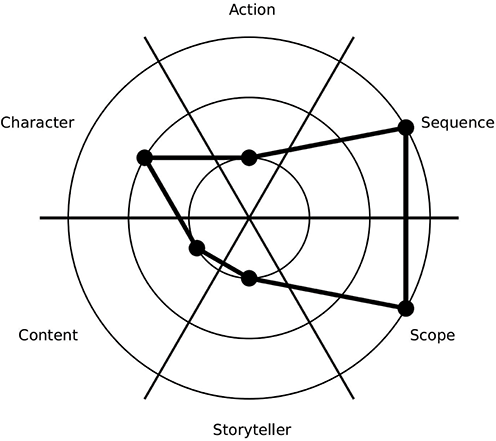
Figure 2 Mothers Clean Air Force narrative web mapped with a meso-ring character wedge, a micro-ring action wedge, a macro-ring sequence wedge, a macro-ring scope wedge, a micro-ring storyteller wedge, and a micro-ring content wedge.
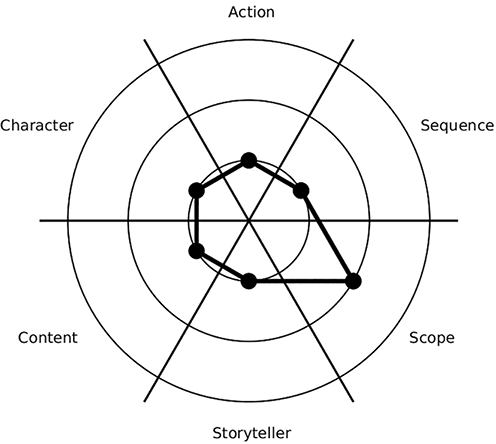
Figure 3 VaxTruth narrative web mapped with a micro-ring character wedge, a micro-ring action wedge, a micro-ring sequence wedge, a meso-ring scope wedge, a micro-ring storyteller wedge, and a micro-ring content wedge.
Some of the climate moms locate mothers’ actions as primarily based in the home, but the majority of the climate mom groups position mothers in public, political, and advocacy-based roles, indicative of appealing to motherhood as a rhetorical strategy to mobilize support (Hayden, Reference Hayden2003; Peeples and DeLuca, Reference Peeples and DeLuca2006). Anti-vaccine moms, conversely, rarely mentioned macro- or meso-ring scopes and instead focused on the micro-ring of family. Climate and anti-vaccine moms differ in their use of sequence. Climate moms focus more on the future (i.e., the macro-ring of sequence), while anti-vaccine moms emphasize the present and recent past (i.e., micro- and meso-ring of sequence).
While all the mom groups emphasize the unique power of moms as experts over their families, some groups differentiate mom expertise from formal scientific credibility, either to emphasize the credibility of science (e.g., Science Moms) or to downplay its role in familial decision-making (e.g., VaxTruth). The storytellers position themselves as caring about their audience, voicing their concerns, and embodying the quality of goodwill, which makes them trustworthy. While anti-vaccine moms focused on goodwill and care toward other parents making difficult decisions, climate moms emphasized the power of practical judgment (phronesis) and making decisions informed by science. The content of the stories is also immediately relevant and important to audiences in terms of children’s health and well-being.
Comparing various groups and profiles across the topics of climate change and vaccination shows prominent similarities, stemming from the shared focus on motherhood. These comparisons also reveal important differences in how motherhood is enacted and put into conversation with scientific information, other caregivers, potential actions, and relevant scopes of space and time. These similarities and differences provide potential insights into how the identity of motherhood can be mobilized through communication strategies to support science-based and science-informed parenting practices by starting from the common ground of a shared identity.
3 Telling Engaging Stories and Connecting through Identity
Being a mother is hard enough, but during the COVID-19 pandemic in the early 2020s, mothers had to make important and urgent health decisions for their children. Mothers had to decide whether to vaccinate their children, whether to travel, whether to mask, whether to wipe down groceries, and whether to have their children attend school in person or virtually, among other decisions. Prospective mothers had to negotiate getting vaccinated themselves to provide protection for their unborn children and whether to have home births if hospitals could not accommodate support partners. The novelty of the virus meant that many decisions were made with the current-best but constantly shifting medical advice.
During COVID-19, mothers often had to balance work with childcare and were more likely to take on childcare duties than fathers while teleworking (Barroso and Horowitz, Reference Barroso and Horowitz2021). Interestingly, the Pew Research Center noted that these disparities were not created by COVID-19 but simply amplified by it (Barroso and Horowitz, Reference Barroso and Horowitz2021). Inabilities to balance work and childcare responsibilities during COVID-19 have led to some women leaving the workforce. The Institute for Women’s Policy Research found that it took three years after the government shutdown for mothers’ rate of employment to match pre-COVID-19 levels (Rollins, Reference Rollins2025). While three years may not seem like a long time, delaying entry into or advancement in the workforce can lead to a more than $250,000 loss in lifetime earnings due to not collecting a salary, not accumulating experience and thus promotions, and having gaps in employment records (Abel and Deitz, Reference Abel and Deitz2020). Mothers, who may feel they are primarily responsible for their family’s health and well-being (Hays, Reference Hays1998), encountered an added stressor of managing COVID-19 risks in addition to general household maintenance.
As a first-time mother who had my son in October 2023, I was dealing with a new COVID-infected world where health risks were heightened and paranoia was high. I, like many mothers, sought out information about what would be best for my son’s health, such as restricting visitation from unvaccinated family members, continuing to mask on public transportation, and delaying air travel until after he had received some protection through vaccination. These were decisions I had to make while still working full time at my university and splitting childcare responsibilities with my husband due to reduced daycare classroom sizes and expanding waitlists. For many of us, these decisions were considered life and death, especially with young children particularly susceptible to the virus.
Given that these tensions are most likely only going to increase with compounding crises (Gupta et al., Reference Gupta, Rouse and Sarangi2021), this section provides practical strategies for strengthening climate change and vaccination communication through crafting compelling stories and connecting through identity. To engage the public in controversial, polarized scientific topics, science communicators must explore alternatives that recognize the whole person. Unfortunately, there is no one communication strategy, appeal to identity, or narrative form that will persuade all people at all times. Instead, we must tailor our messages based on the circumstances, audience, purpose, and content of our communication. The tool of narratives webs and the concept of identification can provide starting points from which communicators can adjust their messages as needed.
Because I have focused on mothers in my analysis, I have identified a particular audience among many to receive tailored narrative and identity messages as an example of connecting with identity-based communities in scientific topics. However, mothers are not the only identity important to climate change. Consequently, I also consider other potential identities that could foster identification on scientific topics such as climate change and vaccination, namely, daughters and aunts/aunties. I also consider the role of scope, sequence, storyteller, and content as complements to the identity of mothers and their actions. I close the section by speaking directly to parents, guardians, and other caregivers about how they can talk to their children about these topics and take actions in line with current scientific reasoning.
Narrative Webs
Narrative webs are most effective when they have at least two narrative wedges mapped on the micro-ring (Bloomfield, Reference Bloomfield2024). Micro-ring placements give audiences something concrete to hold onto, while enabling variety in terms of meso-ring and macro-ring placements on the other wedges. Stories that are too abstract may be forgotten, ignored, or seen as irrelevant by audiences. Stories about motherhood, therefore, can provide a framework for telling compelling stories based on the presence of micro-ring, concrete characters, and micro-ring content tied to the value they place on children. Moving through all six narrative features provides insight into the potential effectiveness of motherhood-based storytelling.
Character and Action Wedges
Mom advocacy groups tend to have the character and action wedges mapped on the micro- or meso-ring. This placement reflects the groups’ focus on individual mothers or mothers as a collective group who have the ability to perform concrete actions. The main characters are often specific, concrete individuals, and some may even be profiled or provide testimonials. Climate moms are less specific about the villains or what mothers are fighting against, while anti-vaccination moms name their foes explicitly. The similarities in how the characters of mothers are described and profiled within the climate change and vaccination narratives are striking. All the groups draw from an essence of motherhood that they locate in mothers’ identities as “caregivers,” nurturers, champions, and advocates.
Mapping the character and action wedges on the micro-ring can be an effective way to ground science communication in an identity relevant to one’s audience and to invite audiences to take specific actions regarding the content of the message. People generally know and understand parenting relationships, even if they are not actively a part of one themselves, so the familiarity of mothers and their motivations can be a concrete way to talk about more abstract scientific ideas. To emphasize the heroic nature of mothers and the urgency of their actions, climate moms can borrow a lesson from anti-vaccine moms and be more specific about what forces threaten their children’s futures.
Issues of climate change and vaccination pertain to stereotyped “women’s issues,” because they affect the running of households and the caregiving of children. A changing climate imperils future generations and causes negative health impacts through air pollution, heat exposure, and extreme weather events (Ahdoot et al., Reference Ahdoot, Baum, Cataletto, Hogan, Wu and Bernstein2024). Vaccination involves decision-making within the family unit, and mothers are more likely to be the parent interacting with pediatricians (Ranji et al., Reference Ranji, Frederiksen, Salganicoff, Hamel and Lopes2021). In this same vein, mothers can be important characters in other scientific controversies that involve household maintenance and family care, such as genetically modified foods or community pollution.
Not all invocations of micro-ring and meso-ring identity are equally effective. While many people are mothers or understand mothering relationships, it is a relatively narrow identity that hails a particular gender and parental status. Other identities can create opportunities for identification with larger and more diverse groups. Instead of motherhood, for example, science advocacy groups can call on the more gender-inclusive term of parents or caregivers. Parental figures, such as fathers, can certainly identify with the behaviors stereotypically associated with mothers, especially in current generations where fathers are taking on more of the parenting duties (e.g., Schulz, Reference Schulz2024). Identities such as fathers should be explored in future work, but I focus here on ones related familially and by gender to mothers: daughters and aunts. Both invite a particular gender identity but offer a more expansive opportunity for identification than motherhood alone.
Daughters
Framing climate change and vaccination through the identity of daughters creates a broader identity appeal than mothers. Women are generally all daughters, even if they do not see themselves as part of a family unit or if they do not identify with that label. Scholars have argued that “close female bonds” such as those of mothers and daughters have been largely dismissed in patriarchal culture, but they are integral to people’s, primarily women’s, identity formation (Hirsch, Reference Hirsch1981, p. 202; see also Rich, Reference Rich2021).
On the topic of climate change, some women reject their potential for motherhood, such as members of the BirthStrike Movement (2025) who choose “to forgo having children to protect them from worsening social, economy, and environmental conditions.” The identity of mothers, therefore, may not foster identification with people who see procreation (or the lack thereof) as an advocacy tool. Alternatively, viewing Earth as Mother Nature and women as daughters and offspring of our environment may be more appealing. Through the character of the daughter, Mother Earth is a caregiver but also needs nurturing and comforting herself as she is exploited and harmed by pollution, extraction, deforestation, and warming. Groups such as Daughters for Earth (2024a) describe themselves as “women who are at the forefront of protecting and safeguarding Mother Earth [and] increase awareness about the vital role that [women] play in climate solutions and mobilize daughters around the world to take proactive steps to protect our planet.” In this sentence and in others on their website, Daughters for Earth (2024b) do not repeat the identity of daughters but instead use “women,” such as emphasizing the value of “women-led climate solutions.” Using women and daughters interchangeably emphasizes the communal link that women share as progeny of the Earth and offers a broader opportunity for identification than solely biological mothers.
On the topic of vaccination, framing women as daughters reminds anti-vaccination mothers that they were once children themselves who received vaccinations from parents concerned about their health. For those who do not attribute personal adverse effects to their own vaccine experiences, they themselves are counterarguments to fears of vaccine side effects. The framing of daughters can also prompt consideration of the family unit in ways that reverse the power dynamic between parents and children. In other words, children are often seen as non-agents or only co-agents within narratives, lacking agency and political power (Thomas, Reference Thomas2023).
Telling a story from a daughter’s perspective (or a child in general) may shift the perspective from a mother’s decision-making to the consequences a child may undergo without vaccine protection. For example, stories can have children as characters who have suffered disease or even death, such as the two unvaccinated children who died in Texas of measles in 2025 during the state’s outbreak of the virus (Texas Department of State Health Services, 2025). Children can also be storytellers of their own narratives, such as Ethan Lindenberger, who testified in front of a US Senate Committee about having to catch up on vaccinations after his mother refused to vaccinate him as a child (Global News, 2019). These stories can reframe unvaccinated children as wronged characters who were not adequately protected by parents and who worked to change their vaccination status once legally able to advocate for themselves.
Aunts and Othermothers
We can also frame climate change and vaccination through the identity of aunts or aunties. Aunt is a gendered but also racialized term in the Black community that refers to the sisters of parents (literally) or extended friends and family figures who act as caregivers (figuratively). Patricia Hill Collins (2025) refers to these categories as “bloodmothers” and “othermothers,” such as “grandmothers, sisters, aunts, or cousins” who may take on “child-care responsibilities for one another’s children” (p. 178). Othermothers may also include “fictive kin,” or non-biologically related friend networks who also participate in “community-based child care” (Collins, Reference Collins, Hardy and Wiedmer2005, p. 179). Caregivers participate in what Oyèrónkẹ́ Oyěwùmí (Reference Oyewumi2001) calls “co-mothering,” which embraces “an ideology of shared nurturing” (p. 3).
Grandparents, for example, are biologically related kin who may provide childcare and familial support for their grandchildren. The European Grandparents for Climate (2025) is a collective representing over a dozen grandparent-based climate groups across the continent, including Out Children’s Climate (United Kingdom), the Norwegian Grandparents’ Climate Campaign (Norway), and Grands-Parents pour le Climat (France). Organizations such as Activist Grannies (Finland) and Omas for Future (Germany) encourage grandmothers to “share their life experience and wisdom” in order to “save our planet as a good place to live for our grandchildren” (Kurunmäki, Reference Kurunmäki2025).
The nuclear family unit is often associated with White middle-class families. Consequently, centering the nuclear family “ignores the familial experiences” of many people and fosters a narrow “vision of family life” that “detracts from social ties to broader communities,” which help sustain those with fewer economic resources (Gerstel, Reference Gerstel2011, p. 1). In some communities, such as Black, Latino, and queer communities, multigenerational and extended families are the norm, where practices of shared caregiving mean that a combination of biologically related, chosen, or cohabitating guardians may provide support, resources, guidance, and love to youth (e.g., Weston, Reference Weston1997; Gerstel, Reference Gerstel2011; Robinson, Stone and Webb, Reference Robinson, Stone and Webb2023). While discourses of motherhood may center the biological female-gendered parent, the roles of the “aunt” and the “othermother” acknowledge the shared, community role of raising children. More than just obligation to one’s genetic offspring, embracing diverse manifestations of kinship and caregiving offers interrelationships, networks, and collective responsibility that may appeal to more varied audiences.
In the realm of action, Phemelo C. Hellemann and Thoko Sipungu (Reference Hellemann and Sipungu2024) verb the identity of “aunt” by referring to how “aunting” is a way of behaving and taking action in the world through “feminine agency” (p. 4, see also Ellingson and Sotirin, Reference Ellingson and Sotirin2010). The term “aunt,” therefore, can celebrate caregiving across familial and biological lines, creating inclusive kinship where people can participate regardless of parental status. Aunting can be a call to specific actions and behaviors that are aligned with the best knowledge of current science plus a caregiver’s intuition. We can thus invite all people, whether biological, familial, or kinship aunts, othermothers, or caregivers, to “aunt” as a form of environmental stewardship and vaccination advocacy.
In climate change storytelling, aunts can be called upon as characters within stories to communicate the value of protecting all children through staving off the impacts of climate change. To “aunt” within a climate story is to advocate for children’s welfare, make environment-friendly decisions in the household, and participate in local and national advocacy. In vaccination storytelling, aunts can be sounding boards and provide insight through informal channels, which may be less intimidating than those offered by medical experts. Some studies demonstrate that extended family members can directly influence parents’ vaccination decisions and may be more influential in cultures that value intergenerational family involvement (Karthigesu et al., Reference Karthigesu, Chisholm and Coall2018). A story about an aunt discussing vaccination with a sibling or friend, for example, could encourage parents to discuss vaccination decisions with their loved ones. To aunt within a vaccination story is to share concerns about the health of children and prompt vaccinate decision-makers to consider medical advice.
Sequence and Scope Wedges
Mother-based advocacy groups differ in their use of sequence and scope across the topics of climate change and vaccination. Mothers who are climate advocates position the scope of where motherhood occurs as spanning micro-, meso-, and macro-rings; actions can be as narrow as changing out kitchen appliances and as broad as attending protests and signing federal petitions. For anti-vaccination mothers, their advocacy is far more limited to the private sphere of the household and rarely strays into the public sphere of political advocacy, occupying a micro-ring scope. In terms of sequence, both climate change and vaccination topics evoke concern for the here-and-now, but climate change emphasizes intergenerational arguments about future environmental conditions. A pattern thus emerges where climate change narratives have more variety in their sequence and scope, while vaccination narratives tend to focus more on the micro-ring. This pattern aligns with previous research on how science-based narratives are typically broader and more abstract than science’s rival stories of climate skepticism and anti-vaccination (Bloomfield, Reference Bloomfield2024).
It is not inherently bad or ineffective for a story to have meso- and macro-ring sequences and scopes, but their presence may be alienating or confusing for audiences. Certainly, a narrative about a mother working to protect her own family in the present or recent past is simpler to understand than national or global scales of action that may extend many years into the future. To balance the broader sequences and scopes, narratives can emphasize specific characters, actions, storytellers, and content (i.e., map some of the other wedges on the micro-ring) to help ground the story. Storytellers can experiment with other rings, especially if the character of mother functions as an anchor on the micro-ring.
Instead of only mapping a wedge on a single ring, stories can incorporate what Elizabeth DeLoughrey (Reference DeLoughrey2019) calls “telescoping,” where a story operates through “multiscalar” recognition of broad, abstract spaces and more specific, localized places or across periods of time (p. 2). In her book, DeLoughrey (Reference DeLoughrey2019) demonstrates how allegorical narratives can help to localize the “abstraction [of climate change] at a global scale” while still retaining both scales (p. 3). The idea of telescoping shares some qualities with Traditional Ecological Knowledges regarding “Seven Generation Thinking,” which is an Indigenous philosophy that one should keep the next seven generations in mind when moving through and interacting within the world (e.g., Fish et al., Reference Fish, Squires, Petroske, Dawson and Brewer2023; Kaagegaabaw, Reference Kaagegaabaw2023; Wildcat, Reference Wildcat2023).Footnote 11 This philosophy has been applied to ecological thinking and various disciplines of science due to its relevance to sustaining a flourishing planet and population by considering future generations’ well-being.
When telescoping into the future, storytellers can use specific people in the present to ground the story, thereby employing a micro-ring and macro-ring scope in the same narrative (see Figure 4). Climate mom narratives place the local, mundane actions of cleaning laundry or cooking dinner into a larger framework of political advocacy, which “telescopes” between the micro-ring and macro-ring spatial scopes. For example, the testimonial videos on the Science Moms website contain micro-ring scopes in sharing concerns about their children’s well-being. At the same time, the testimonials address planet-level changes to the environment. The goal, therefore, is not to shrink climate change to only being a concern at the individual level, but to ground the story in specific experiences for audiences to relate to and identify with before increasing the story’s circumference. Giving audiences smaller, more concrete ways to get involved (e.g., switching from gas to electric stoves) can create comfort for some, while pairing those actions with broader invitations to activism (e.g., attending a protest) can engage those more comfortable acting within larger scopes.
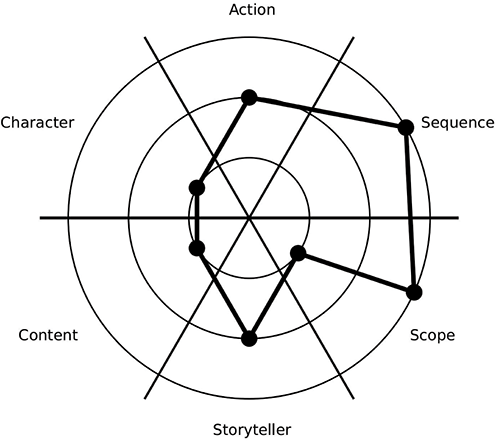
Figure 4 An example of a map that shows telescoping between the micro-ring and macro-ring on the scope wedge.
Because anti-vaccination stories told by mothers tend to operate at the micro-rings of scope and sequence, it may be helpful to mirror that narrative form in promoting vaccination. For example, vaccination discourses can shift from being focused on “the greater good” and “herd immunity” to emphasizing protection for individual children and families. Vaccination stories tend to focus on anecdotes of purported vaccine-injured children (Shelby and Ernst, Reference Shelby and Ernst2013), so matching those with alternative testimonials and stories can work to counteract their potency.
One way of telescoping within vaccination stories would be to follow the lineage of a particular family, thereby expanding the temporal scope while still grounding the discussion in the lives of specific people. For example, someone could share a story of a family where a grandparent contracted polio, leading to the importance of parents vaccinating their children against it today. A vaccination story could look from the present to the future, noting how vaccinating children today means they will have a better chance to grow up and have children of their own, who, we hope, will have fewer diseases to navigate if we can functionally eliminate them through vaccination (Makati Medical Center, 2021).
Storyteller and Content Wedges
All of the mom groups championed the power of the mother and their unique skills, abilities, and values. However, climate groups positioned their expertise as mothers operating alongside more formal, credentialed experts, while anti-vaccination mothers emphasized the superiority of “mother knows best.” Anti-vaccination mothers were clearly telling stories to combat experiences of feeling silenced, overwhelmed, and dismissed for having concerns about their children’s health. So, one factor to address is how to communicate the value of mothers and their unique expertise with instead of against scientific expertise.
Science communication that discredits the expertise of motherhood or their position of acting agents over their families will likely deter anti-vaccination mothers who are trying to reclaim power and control. Messages should, consequently, empower mothers to expand the sources of their personal research, acknowledge their autonomy and decision-making power, and create invitations to act instead of issuing commands. One communication strategy is to embrace Science Moms’ framing of “everyday moms” aligning themselves with credentialed experts (who also happen to be moms) to make the best decisions. This type of framing would likely resonate with moms who already trust scientific experts and are looking for concrete actions to take to align their parenting with scientific conclusions. However, this framing may deter anti-vaccination moms who see themselves as experts and doubt the expertise of medical professionals.
An alternative is to portray everyday moms as their own experts with unique knowledge that complements more formal expertise. For example, sharing testimonials from mothers who are happy and satisfied with vaccinating their children, mothers who have children they are unable to protect through vaccination, or mothers who regret not vaccinating their children. The website Voices for Vaccines (2025) has a “Why I Vax” page that encourages people to upload photos and share stories about their vaccination decisions. These narratives, including those posted by mothers and doctors, personalize vaccination experiences and encourage individual decision-making on the micro-ring. Sharing messages that pair medical expert testimony with parental expert testimony could demonstrate a broader conceptualization of expertise and enable mothers to see themselves as expert storytellers over their family experiences while still respecting the expertise of medical authorities.
Such a conceptualization of credibility (or ethos) could be called parenthos or mathos, to represent the expertise of parents (parens in Latin) or mothers (mater in Latin). Instead of equating or conflating parental expertise with more formal scientific expertise, we can create spaces for both types of expertise to be valued within relevant spaces and circumstances. A doctor’s ethos, for example, can provide up-to-date information on likely illnesses and treatments on a broader scale, which are important starting points for creating courses of action to ensure a child’s well-being. Parenthos, alternatively, can provide specific knowledge of a particular child’s medical history, attitudes, and behaviors to contextualize the treatment plan. Combining both forms of credibility, and giving each their appropriate arenas to operate within, can help transform a potentially fraught or combative dynamic into a collaborative and mutually respectful one.
Mothers can be empowered storytellers by inviting them to be active participants and interlocuters with pediatricians and medical professionals. Unlike anti-vaccination groups who encourage confrontation at doctors’ visits, mothers can be invited to engage in conversation, ask questions, and share their concerns. This messaging would, of course, require additional time and care from medical professionals to acknowledge and work with vaccine-skeptical parents. Pediatricians could embrace parenthos by valuing mothers as their own form of experts and connecting with them on the shared value of protecting their children’s health. This is not to imply that all doctors are dismissive of patient concerns, but that this is a feeling that some mothers have upon visiting pediatricians that we can work to correct.
Narrative-Based Strategies for Parents and Caregivers
I hope to raise a child who has positive associations and experiences with scientific topics, so I am personally and professionally invested in examining strategies and resources to make those conversations simple, fun, and lifelong. Stories are a productive tool for parents and caregivers to begin connecting children to these important topics, because they foster imagination, transfer knowledge, and help the mind grow and develop (e.g., Mackenzie, Reference Mackenzie1989; Quintero, Reference Quintero2010). Children already regularly receive information in narrative forms, so it is likely that stories will also be effective vehicles for their engagement with scientific topics (e.g., Martin and Miller, Reference Martin and Miller1988; Banister and Ryan, Reference Banister and Ryan2001). Similar to how I have argued for the value of storytelling in science communication among adults, I also propose storytelling strategies for engaging children and young adults in scientific topics. In addition to existing resources available for helping children understand topics like climate change (e.g., Shugarman, Reference Shugarman2020), I offer two narrative strategies of science-based media and experiential activities to help children engage with scientific topics.
Children’s Books and Media
Children’s media programming and school curricula are often story-based, where children learn how to read and about the content within the story. Presenting climate change and vaccination to children, therefore, can start through the incorporation of environmental and health themes in children’s literature and media consumption from a young age. Through the content in different media forms, children can begin to develop awareness and understanding of topics that can be built on through personal experiences and deeper exploration when they are older.
On the topic of climate change, there has been an upswing in children’s environmental books in the last decade (Jovillar, Reference Jovillar2025), where children can hear from the perspective of the Earth (e.g., The Wild, Reference Zommer2023, Yuval Zommer), learn about different cultures’ relationships with the environment (e.g., We Are Water Protectors, Reference Lindstrom2020, Carole Lindstrom), and explore ways to become environmental advocates (e.g., The Mess That We Made, 2020, Michelle Lord). These books are suitable for children as young as preschool-aged, providing caregivers and teachers with the opportunity to introduce environmental themes early and often. Incorporating environmental themes into children’s educational materials has been demonstrated to positively influence youth’s environmental knowledge and behavior, indicating that entertainment education “programs for youth could [lead to] a population shift in science-informed engagement in the issue of climate change” (Flora et al., Reference Flora, Saphir, Lappé, Roser-Renouf, Maibach and Leiserowitz2014, p. 419).
Caregivers interested in fostering pro-vaccination attitudes can introduce their children to general knowledge about health and medicine. There are children’s books that address what to do when people are sick such as When I Get Sick (2022) by Dagmar Geisler, which discusses germs, viruses, vaccines, hospitals, and doctor’s offices. In addition to the micro-ring characters of children, children’s books often include meso-ring anthropomorphized animal characters to keep children engaged. How Do Dinosaurs Get Well Soon? (2003) by Jane Yolen, for example, demonstrates the value of doctor’s offices, eating well, and resting through dinosaur characters who are sick. Familiar characters who appear across book series can also help create a sense of identification and comfort as the characters face new challenges, such as The Pigeon Needs a Bath! (2014) by Mo Willems, which is an installment of The Pigeon book series that has over a dozen titles.
Parents and caregivers are already likely familiar with the power of books to introduce concepts to children. In addition to having them in the home, parents can encourage schools to acquire them or make visits to their local library to explore books on scientific topics. While reading, caregivers can point out the characters and their actions, connecting them to the child’s experiences or prompting them to consider the same behavior. For example, “look, this character is doing [action], you like to do [action], too!” or “What would happen if you copied [character’s name] and did [action] as well?” Depending on the age of the child, the caregiver and child could act out particular scenes. In reading Bea Gets a Checkup with my two-year-old, I make my hand into a light fist and say, “boop” while tapping him on the leg to mimic Bea’s shot. After three or four times reading the book, he began to mimic the behavior on himself and me, finding it very funny to make the “boop” noise, which familiarizes my son with the process and makes the shot less frightening. Caregivers can also take books to relevant locations, such as outside for nature-based books or to the doctor’s office for health-based books. Changing one’s setting to match that of the book can promote feelings of familiarity and make even potentially rare situations (such as doctor’s office visits) more tangible for children. In this way, we can marry the first strategy with the second: experiences as narratives.
Experiential Activities
In addition to media, children can experience nature firsthand through time outdoors – from one’s own backyard to local parks and zoos to hikes through woods and mountains and time at the beach. A child’s experience at one of these places or in an activity becomes a story that caregivers can refer to as points of comparison, common experiences, and fond memories. These activities might happen as part of a child’s school curriculum through recess and field trips. However, even if school curriculum includes nature-based activities, that does not necessarily mean that the experiences are being directly linked to climate change and sustainability, due to fears of parent response or loyalty to curriculum standards (Ginsburg and Audley, Reference Ginsburg and Audley2020). Caregivers, therefore, can supplement school-based experiences with conversations about how nature can be protected and how it is under threat.
On a trip to a museum, for example, children can learn about dinosaurs and how there are none of them left due to a meteor changing their environment. The comparison to dinosaurs can open children to understanding more contemporary animals that are in danger of becoming extinct as well, such as species of orangutans, tigers, and rhinos. Trips to the zoo or reading books about these animals can complement the discussion by enabling children to learn more about what it means to be endangered (Milstein, Reference Milstein2009). Emphasizing similarities between humans and nonhuman animals can be a useful starting point for fostering human-nature (or humanature) identification (Milstein, Reference Milstein2011). Then, children can apply these same concepts of being extinct to plant life, such as learning about the endangered status of redwood and giant sequoia trees, thereby moving from content they care about to less familiar and less similar topics.
In learning about potential environmental consequences, one might expect a child to respond with, “why?” Such questions open the door to linking changing environments, weather patterns, and temperatures to human and more-than-human survival. Caregivers can explain how pollution in the air and water makes the Earth sick. Depending on the child’s age and the current knowledge, caregivers can add specificity such as that environmental pollution comes from industries, cars, agriculture, and other human behaviors. Caregivers can also add that the Earth being sick means that temperatures are more extreme, weather events are more likely, and other consequences. An important component of explaining these environmental changes is to emphasize that there is still time to “slow down the changes that are taking place” and that the future “is still within our control” (Shugarman, Reference Shugarman2020, p. 9). We certainly do not want our children to be discouraged or to feel they are powerless. To concretize those actions, caregivers can walk children through their day and talk about how behaviors such as turning off light switches, turning off taps, swapping out appliances, recycling containers, starting a compost, among many others, contribute to saving the environment. These experiences will begin to foster identification between children and more-than-human nature, sparking curiosity, interest, values, care, and empowering them to action.
Similar to spending time outdoors, caregivers can familiarize children with medical facilities and health treatments, such as having children accompany them on errands to the pharmacy or explaining medicine or vitamins that caregivers take. Children like to mimic behaviors that adults participate in, so explaining why caregivers take certain actions for their own health can impart the importance of those behaviors. For example, after seeing me put on my facial sunscreen every day before we leave the house, my son wanted to put some on himself. Substituting my sunscreen for a child-friendly version, my son and I now do our sunscreen routine together, while I explain how it keeps our skin healthy and safe from the sun. Although not directly related to vaccines, instilling an interest in health and taking care of our bodies is transferable across medical topics and lays the foundation for comparison between experiences. For example, one could say, “in the morning we use sunscreen to protect our faces, and when we go to the doctor we get vaccines to protect our body.”
When children get vaccinations, caregivers can explain the need for and benefits of the shot ahead of time so children can ask questions. Caregivers can prepare children by telling them the story of the appointment, whether at a doctor’s office, pharmacy, or community health district. For example, “when we get to the doctor’s office, we’ll see the fish (my son’s pediatrician has a fish tank in the waiting room), then we’ll get measured, read books while we wait for Dr. Carrie, then we’ll be really brave while we get our shot, we’ll say, ‘all done,’ and then we’ll have fruit snacks afterward!” This future narrative depicts what the appointment will look like so children can understand the appointment’s sequence of events, and anticipate the fun, celebratory resolution.
During the appointment, caregivers can help make the shots fun by using a distraction technique (e.g., blowing bubbles, singing a special doctor’s visit-related song, reading a doctor’s visit-related book, or discussing a reward the child will get for completing the shots). If children are worried about the pain of the vaccination, they can be reminded of how quickly the pain has passed previous times they received a vaccination or how a prior time they hurt themselves was more painful than the shots will be. Providing these points of reference can help children have concrete, lived experiences to compare to. Using a repeated catchphrase such as “wow, it’s over,” or “all done” for my son, can provide an end point to celebrate how brave they were in getting the shot. A colorful and fun bandage, a favorite snack, or a small toy can also help mark the occasion with positive associations.
Many caregivers reading these strategies may already be saying, “that’s fine, but it won’t work for my child.” This is a fair critique, as all children, just as all adults, are individuals for whom universally proposed strategies may not work. Whenever possible, therefore, people should approach my advice here and other advice they receive, with the parenthos to adjust, adapt, and tailor to fit the needs of their child and their situation. Perhaps one lives in an urban environment and would need to get creative about where one finds “nature.” Perhaps one has a limited income where trips to paid attractions such as museums may be out of reach. Perhaps one needs to make sure of public libraries, free services such as Dolly Parton’s Imagination Library,Footnote 12 or a book-sharing community group to get access to a wider range of books. Some children may love dinosaurs, while others may not. Some children may prefer active play to reading or may prefer time outside to indoors. Incorporating characters and content that children love into their stories and experiences can help spark further interest in scientific topics, which is why tailoring to each child is very important.
Other Scientific Topics
One of the narrative wedges is content, which relates to the topics captured within the purview of the story, including any scientific information, facts, statistics, and values. A story’s content may even incorporate the presence of rival stories, which serves to acknowledge how some scientific topics, such as climate change and vaccination, are controversial. It is important to note that these topics are controversial not because there is confusion among experts as to climate change’s existence, cause, and severity or as to vaccination’s safety and effectiveness, but because there is public concern and opposition to scientific conclusions on these topics. Concern and opposition are, in part, understandable, as mothers balance an enormity of competing values and information, coupled with echo chambers and a plethora of less-than-credible storytellers offering promising alternatives (Bloomfield, Reference Bloomfield2024).
While this Element has focused on climate change and vaccines as incredibly important and controversial scientific topics, there are many other scientific topics that caregivers, such as mothers, must navigate. Similar to climate change and vaccination, scientific controversies often focus on content that is most pressing to the health and well-being of children and families. There are many additional scientific topics that could be given full-length treatment, but I briefly summarize two here that are also pressing concerns for contemporary mothers. Grouped loosely under what I call “crunchy mom issues,” I address two current controversies over sunscreen and fluoride.
After I gave birth to my son, I searched online for “mom groups” that I thought would provide support to me as a first-time mom. Many of the names included terms such as “crunchy” to indicate a general approach to mothering that is skeptical of perceived elite scientific and medical knowledge (Saikiran et al., Reference Saikiran, Nuvvula and Challa2021). While “crunchy” has been used in the past as a term to describe a more liberal, “hippie” lifestyle, the term can now refer to more conservative-oriented mothers who avoid processed foods, vaccines, hospital births, and formal schooling in favor of homecooked meals, holistic remedies, home births, and homeschooling. These mothers may encourage other parents to avoid pediatrician offices or provide scripts to help them skirt medical interventions or school vaccine mandates (Bloomfield and Willes, Reference Bloomfield and Willes2024). “Crunchy mom issues” is thus my catchall phrase for current parenting practices that reject substances and practices that are perceived as harmful or toxic because they are not “natural.”
In these groups, the term “crunchy” is sometimes paired with the term “silky” to refer to parenting that is easier and smoother, such as allowing children screen time and fast food (on occasion). A parenting style that combines features of crunchy and silky practices is referred to as “scrunchy” parenting (Saikiran et al., Reference Saikiran, Nuvvula and Challa2021). Instead of crunchy referring to granola, vegetables, and other crunchy foods associated with more liberal, eco-conscious people, crunchy now indicates an approach to parenting that is more difficult or full of obstacles. Conversely, a silky parenting style takes advantage of convenient, modern products and tends to follow “the advice of established medical authorities” (Saikiran et al., Reference Saikiran, Nuvvula and Challa2021, p. 16). In this sense, the crunchy label has shifted from more liberal politics to conservative ones that share a “distrust of the government and yearn[] to escape conventional society” (Jerina, Reference Jerina2024). Consider, for example, the Facebook groups called “Caffeinated Crunchy Christian Moms,” “Sort of Crunchy: MAGA [Make America Great Again] Moms,” and “MAHA [Make America Healthy Again] Scrunchy Moms (uncensored),” which emphasize conservative political and religious values through the crunchy/scrunchy identity. Less important than the specific political and religious affiliation is the likelihood that such affiliated groups may challenge accepted scientific knowledge and spread scientific misinformation.
Crunchy moms may eschew the use of sunscreen, following the naturalistic fallacy that human-made sun protection is harmful or unnecessary because it is not natural. Controversies over sunscreen largely emerge from health-based social media influencers, who either propose no sun protection at all or far less effective alternatives such as coconut oil. Sunscreen is one of the best tools to prevent skin cancer by protecting the skin from the sun’s harmful UV radiation. Some social media influencers, however, are encouraging their followers to “stop wearing sunscreen” because they falsely say that “the sun does not cause skin cancer” (as quoted in LaMotte, Reference LaMotte2024). These influencers encourage time in the sun with no skin protection, pointing to the benefits of sun exposure and the purportedly toxic ingredients within sunscreens. Scientific research consistently demonstrates that skin cancer is incredibly dangerous, is caused by sun exposure, and can be limited through wearing sunscreen and other protective measures such as wearing long-sleeved clothing and hats (Pikul, Reference Pikul2025). However, worrisome findings that some sunscreen ingredients can be absorbed into the bloodstream have increased fears that all sunscreen should be avoided (LaMotte, Reference LaMotte2020).
This controversy is incredibly important for parents who are deciding whether or not to apply sunscreen to their children, what type of sunscreen, and how frequently. Instead of abandoning sunscreen altogether, which can put one’s child at risk of increased sun exposure, caregivers can opt for mineral-based sunscreens (e.g., those that use zinc oxide), which avoid ingredients still undergoing safety studies, such as oxybenzone (LaMotte, Reference LaMotte2020). When discussing this controversy, people should be careful not to dismiss caregivers’ concerns about their children’s health and safety. Instead, those values can be appealed to by highlighting how the sun is a “known carcinogen” backed up by decades of research (Pikul, Reference Pikul2025). Additionally, people can share stories of those who have developed cancer from outdoor exposure or tanning beds. Offering mineral sunscreens and those specifically tested for children’s safety can be a way to transform a caregiver’s worries into science-based decision-making.
Controversy over fluoride has a long history since its introduction into the United States’s drinking water in the 1940s. Initial opposition to fluoride emerged from people who were passionate about the perceived threat to children’s health (Johnson, Reference Johnson2016). As is true of the cyclical nature of many scientific controversies (Goodnight, Reference Goodnight2005), concerns over fluoride have recently resurfaced as part of the MAHA movement that argues that fluoridated public drinking water poses “unreasonable risk” (Borst and Wittenberg, Reference Borst and Wittenberg2025). Some studies provide evidence that overconsumption of fluoride can cause health issues such as tooth damage (through fluorosis) and drops in intelligence (US Department of Health and Human Services, 2025). Importantly, these studies measure fluoride consumption well above what is considered acceptable or safe in the United States, making them weak comparisons for potential risks of fluoride intake in public drinking water (US Department of Health and Human Services, 2025).Footnote 13 While many people can be exposed to enough fluoride for healthy teeth through dentist visits and toothpaste, many low-income communities that do not have regular dental care or consistent access to toothpaste rely on public water fluoridation to protect their teeth, making public water fluoridation one of the “most effective and safest public health interventions ever introduced” in the United States (Schwarcz, Reference Schwarcz2024).
Due to its association with the MAHA movement, addressing the fluoride topic may be particularly fraught with political biases and loyalties. When having conversations about such topics, people should be careful to approach the topic not from a place of politics but a place of shared values and concerns. Connecting through content can help to shift the conversation away from an “us vs. them” polarized mentality to what is best for the children involved. Including stories such as personal experiences, podcast interviews with experts, or news stories can help to make a weighty scientific topic more accessible and tangible. When I took my son to his first dentist’s appointment, she immediately asked if we were using fluoride toothpaste to brush his teeth at night. When I said that we were using a toothpaste we got as a baby shower gift, she encouraged me to check whether it was fluoridated or not, because she could already see that his eight teeth were showing some early signs of damage. Sure enough, when I rushed home to check I saw that the tube we had been using since his bottom two center teeth emerged was emblazoned with an “all-natural” label on the front, which the back panel clarified meant fluoride-free. Now, we have been using a fluoridated toothpaste and the dentist notes that the damage is all but gone. Sharing these experiences or helping others to parse information about fluoride can help support healthy decisions for their family.
Other scientific topics may use similar strategies to tell engaging stories, emphasize the value of children’s health, and work to pair parenthos with traditional scientific credibility. With a world of information online and increasing feelings of precarity in a changing, postmodern world, we may sympathize with caregivers who are uncertain about which actions are best for their families. Instead of denigrating or patronizing them for inaction, it is important to recognize the competing forces, rival stories, and overwhelm of information that is incredibly difficult for us all to sift through. Ultimately, I hope that the power of storytelling and fostering identification can help uncertain or skeptical parents see their identity as caregivers as aligned with scientific information for the benefit of their children, the planet, and our collective future.
Conclusion
This section offered communication strategies for science-based storytelling to connect with particular identities, primarily mothers and other caregivers. In addition to strategies for strengthening the stories of climate change and vaccination based on the narrative web framework, the section also provided suggestions for parents and caregivers on how to communicate scientific information to current and future generations. Scientific topics such as climate change and vaccination are oftentimes difficult to broach with friends and family, let alone children who may not have the appropriate level of education or understanding to fully grasp their implications.
And yet, we must talk about these topics to our children – the next generation in whom we promote care for the Earth, more-than-human others, ourselves, and one another. Open communication is a key factor in people’s knowledge and concern about science, because hearing about it early and often is an important way to counteract misinformation and apathy. For the topic of climate change in particular, giving children time in nature, prompting human–animal interactions, and fostering extra-educational experiences are important to cultivating eco-awareness (e.g., Milstein et al., Reference Milstein, Alhinai and Castro-Sotomayor2017; Marras Tate, Reference Marras Tate2023; Milstein, Reference Milstein2024). For vaccination, teaching children about health should encompass regular doctor’s checkups and following vaccination schedules in addition to information about nutrition, exercise, and sexual health, which are typically regular parts of school curricula.
There are many other scientific topics that mothers must navigate in raising children, especially in a modern society that, in providing the luxury of many options, can also produce overwhelm and uncertainty. The good news is that many choices have relatively minor consequences and come down to personal preference, assuming one has a choice between these options as opposed to having bodily, financial, or other restrictions. For example, parents must decide whether one wants to breastfeed, use formula, or combo-feed (Castillo-Hegyi and Segrave-Daly, Reference Castillo-Hegyi and Segrave-Daly2024); how much screentime children should get; and whether one wants to enroll in public, private, or homeschool. Other decisions are much more immediately impactful to personal and public health, such as whether to vaccinate, wear sunscreen, or attend pediatrician well-child visits. Other decisions have longer-term and far-reaching impacts, such as whether we raise environmentally conscious future adults who will take personal, collective, and political action to protect our planet.
The stories we tell are important because they reflect ourselves – what we value, what we hope our audience will care about, and what we view as appropriate and achievable actions. They are also important because of who is listening. Our audience is affected by us and shape their attitudes in keeping. This is especially meaningful for audiences over whom we have some semblance of influence, such as children. The power of mothers, parents, stewards, guardians, othermothers, and caregivers must be valued and respected in alignment with and as a part of medical and environmental knowledges. Together, we can foster an interest in and care for scientific topics to ensure a healthy planet and society for future generations through the power of identity and story.
Emma Frances Bloomfield is Associate Professor of Communication Studies at the University of Nevada, Las Vegas, who studies science communication. She has published two books, Science v Story: Narrative Strategies for Science Communicators (University of California Press, 2024) and Communication Strategies for Engaging Climate Skeptics: Religion and the Environment (Routledge, 2019).
Angela Potochnik
University of Cincinnati
Angela Potochnik is a Professor of philosophy and Director of the Center for Public Engagement with Science at the University of Cincinnati. Her research addresses the nature of science and its successes, the relationships between science and the public, and methods in population biology. She is the author of Idealization and the Aims of Science (Chicago, 2017) and coauthor of Recipes for Science (Routledge, 2018), an introduction to scientific, Science and the Public (Cambridge, 2024), methods and reasoning.
Melissa Jacquart
University of Cincinnati
Melissa Jacquart is an Assistant Professor of philosophy and Curriculum & Pedagogy Director for the Center for Public Engagement with Science at the University of Cincinnati. Her research focuses on epistemological issues in the philosophy of science, philosophy of astrophysics, feminist philosophy, philosophy and education, and public engagement with science. She is a 2022–2023 Whiting Public Engagement Fellow.
Editorial Board
Kelly Joyce, Drexel University
Kostas Kampourakis, University of Geneva
Luisa Massarani, SciDev.net
Rae Ostman, Arizona State University
Shobita Parthasarathy, University of Michigan
Dione Rossiter, University of California, Berkeley
About the Series
This interdisciplinary series draws from a broad range of research and professional expertise to guide theory and practice of public engagement with science, including science communication, formal and informal science education, community participation in scientific research, science policy, and other interfaces between science and the public.