


Work is underway on revising DSM–IV–TR 1 and ICD–10 2 with plans for DSM–V to be published in 2012 and for ICD–11 to be completed by 2014. Although the descriptive categorical:approach followed by both the DSM and ICD has come under fire by researchers (e.g. Parker, Reference Parker3 Van Praag, Reference Van Praag4 Clark et al Reference Clark, Watson and Reynolds5 and Hyman) Reference Hyman6 and clinicians (e.g. McHugh), Reference McHugh7 there is general agreement that these classification systems have proven enormously beneficial to the field of psychiatry by virtue of defining a common language that allows clinicians to communicate more effectively with one another and researchers to reliably define diagnostic samples for study. Their value in facilitating communication is undercut, however, by the fact that for most categories, the DSM–IV and ICD–10 definitions are not the same. Reference Andrews, Slade and Peters8 These definitional differences go beyond mere appearance; most studies which have investigated diagnostic concordance by applying both DSM–IV and ICD–10 criteria to the same individuals have found differences in case identification ranging from minor to significant. Reference Pohjasvaara, Mantyla, Ylikoski, Kaste and Erkinjuntti9–Reference Yutzy, Cloninger, Guze, Pribor, Martin and Kathol45 Given the importance of international research collaboration, the coexistence of two similar but distinctly different classification systems impedes international communication and research efforts. Furthermore, the fact that variations in criteria-set wording lead to the same disorder being defined differently in different countries undermines the credibility of the entire diagnostic process.
Both the American Psychiatric Association (APA) and the World Health Organization (WHO) have called for the harmonisation of DSM–V and ICD–11. The research agenda for DSM–V, Reference Rounsaville, Alarcon, Andrews, Jackson, Kendell, Kendler, Kupfer, First and Regier46 points out that ‘many large and small differences persist at both the syndrome and criterion levels’ (p. 13) in DSM–IV and ICD–10 and notes that ‘trivial differences in criteria wording, threshold numbers of symptoms, or exclusion criteria’ (p. 14) can have a large impact on diagnostic concordance. The authors recommended that the next revision process include steps to achieve the goal of ‘minimizing (if not eliminating) future differences between the two systems’ (p. 15). The WHO has put these recommendations into practice by forming a DSM–ICD Harmonization Coordinating Group comprised of members of the DSM–V Task Force and the International Advisory Group for the Revision of ICD–10 with the charge to ‘facilitate the achievement of the highest possible extent of uniformity and harmonization between ICD–11 mental and behavioral disorders and DSM–V disorders and their diagnostic criteria’. 47
The effort required to harmonise DSM–V and ICD–11 depends on the extent of the differences between the DSM–IV and ICD–10 definitions. Although studies, field trials and papers have focused on the diagnostic concordance for dementia and other cognitive disorders, Reference Pohjasvaara, Mantyla, Ylikoski, Kaste and Erkinjuntti9–Reference Wancata, Borjesson-Hanson, Ostling, Sjorgren and Skoog12,Reference Erkinjuntti, Ostbye, Steenhuis and Hachinski14,Reference McCauley, Boake, Pedroza, Brown, Levin and Goodman40–Reference Laurila, Pitkala, Strandberg and Tilvis42,Reference Naik and Nygaard48–Reference Kopelman and Fleminger51 substance use disorders, Reference Grant23,Reference Howard, Cottler, Compton and Ben-Abdallah25–Reference Hasin, McCloud and Endicott30,Reference Pollock, Martin and Langenbucher44,Reference Hasin, Harzenbuehler, Keyes and Ogburn52,Reference Rounsaville53 psychotic disorders, Reference Jager, Bottlender, Strauss and Moller15,Reference Pillmann, Haring, Balzuweit, Bloink and Marneros16,Reference Lindstrom, Widerlov and von Knorring20,Reference Stompe, Ortwein-Swoboda, Ritter, Marquart and Schanda22,Reference Armenteros, Fennelly, Hallin, Adarns, Pomerantz and Michell31,Reference Bertelsen54 mood disorders, Reference Vilalta-Franch, Garre-Olmo, Lopez-Pousa, Turon-Estrada, Lozano-Gallego and Hernandez-Ferrandiz13,Reference Turkcapar, Akdemir, Orsel, Demirergi, Sirin and Kilic21,Reference Paykel55–Reference Lopez-Ibor, Frances and Jones58 anxiety disorders, Reference Andrews and Slade17,Reference Slade and Andrews18,Reference Starcevic and Bogojevic24,Reference Steinberger and Schurch43,Reference Lopez-Ibor59 somatoform disorders, Reference Fink, Hansen and Oxhoj19,Reference Yutzy, Cloninger, Guze, Pribor, Martin and Kathol45 sexual dysfunctions, Reference Hatzimouraticix and Hatzichristou60,Reference Vroege, Gijs and Hengeveld61 childhood disorders Reference Sorensen, Mors and Thomsen32,Reference Kopra, von Wendt, Nieminen-von Wendt and Paavonen36–Reference Rowe, Maughan, Costello and Angold39 and personality disorders, Reference Ottosson, Ekselius, Grann and Kullgren33–Reference Perez Urdaniz, Vega Fernandez, Martin Navarro, Molina Ramos, Mosqueira Terron and Rubio35 to date there has been no comprehensive effort to examine diagnostic differences across entire classification systems.
This paper aims to facilitate the DSM–V/ICD–11 harmonisation process by identifying diagnostic differences in the two systems and designating whether or not the differences are conceptually based. Some of the criteria-set differences in DSM–IV and ICD–10 are substantive and reflect different conceptual approaches to classification. Harmonisation of such differences is likely to be especially challenging as it will require that either the DSM–V or ICD–11 work group relinquish its diagnostic approach in favour of the other group's approach. On the other hand, many differences in DSM–IV and ICD–10 definitions are not conceptually based but instead represent different ways of operationalising the same underlying diagnostic constructs. Efforts to harmonise these non-conceptually based differences are comparatively more straightforward.
Method
Diagnostic criteria sets for disorders that appear in both ICD–10 Diagnostic Criteria for Research 62 and DSM–IV–TR, 1 and thus would be the main focus of the harmonisation effort, were compared on a disorder-by-disorder basis to determine to what extent their definitions differ. (A comprehensive 70 page annotated guide to all of the ICD–10/DSM–IV definitional differences that was prepared as a result of this analysis is available as an online supplement to this paper.) Based on this comparison, disorders were divided into three categories: those disorders whose DSM–IV and ICD–10 definitions are essentially identical; disorders whose definitional differences reflect divergent conceptual perspectives between the DSM–IV and ICD–10 systems; and disorders whose definitional variations are not conceptually based and thus appear to be unintentional.
Definitional differences were categorised as conceptually based if they fit one of the following three scenarios. First, some definitional differences are manifestations of well-known divergences between the ICD–10 and DSM–IV approaches to the classification of certain disorders. For example, DSM–IV and ICD–10 adopt very different approaches to the diagnosis of individuals whose problematic substance use does not meet criteria for substance dependence. Reference Hasin, Harzenbuehler, Keyes and Ogburn52 The ICD–10 diagnosis of harmful use focuses on the damage caused by substance use to the individual's physical or mental health. The DSM–IV diagnosis of substance abuse focuses instead on various negative consequences of substance use (i.e. recurrent use resulting in a failure to fulfil role obligations, recurrent use in physically hazardous situations, recurrent substance-related legal problems or continued use despite social or interpersonal problems caused by the effects of substance use).
Second, some differences were construed to be conceptually based because of explanatory statements in the ICD–10 clinical diagnostic guidelines 2 or DSM–IV–TR text 1 that indicate the underlying conceptual basis for the criteria. For example, the definition of ICD–10 bulimia nervosa differs from its DSM–IV counterpart by virtue of requiring ‘intrusive dread of fatness’, which in DSM–IV is considered an essential feature only of anorexia nervosa. The ICD–10 clinical guidelines provide a conceptual basis for this difference by explaining that ‘the term [bulimia nervosa] should be restricted to the form of the disorder that is related to anorexia nervosa by virtue of sharing the same psychopathology’(p. 178). 2
Finally, some definitional differences were so extensive that they defined different diagnostic constructs and thus were inferred to be conceptually based. Compare, for example, the DSM–IV v. ICD–10 definitions of acute stress disorder. The DSM–IV reserves this diagnosis for severe dissociative reactions to a severe trauma whereas ICD–10 allows a much wider range of responses, from mild anxiety symptoms to severe dissociation. This fundamental difference in the scope of the reaction to the stressor was construed to indicate an underlying conceptual difference between the two systems. When doing the analysis, if no conceptual basis for a difference could be identified, it was assumed that the diagnostic difference was not conceptually based.
Results
Of the 176 diagnostic criteria sets for disorders that appear in both DSM–IV and ICD–10, only one disorder, F95.0/307.21 Transient tic disorder, has identical DSM–IV and ICD–10 definitions. Appendix 1 lists those disorders (39 criteria sets, 22% of the 175 non-identical sets) whose definitional differences were judged to be conceptually based; with the conceptual basis noted in the right hand column. Appendix 2 lists the remaining disorders (136 criteria sets, 78%) whose differences were judged not to be conceptually based. Those disorders whose differences were judged to be particularly minor and thus relatively easy to harmonise, are noted with an asterisk.
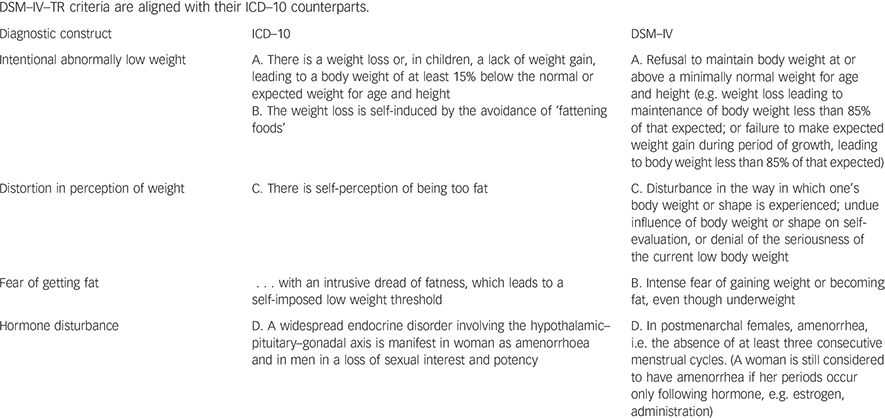
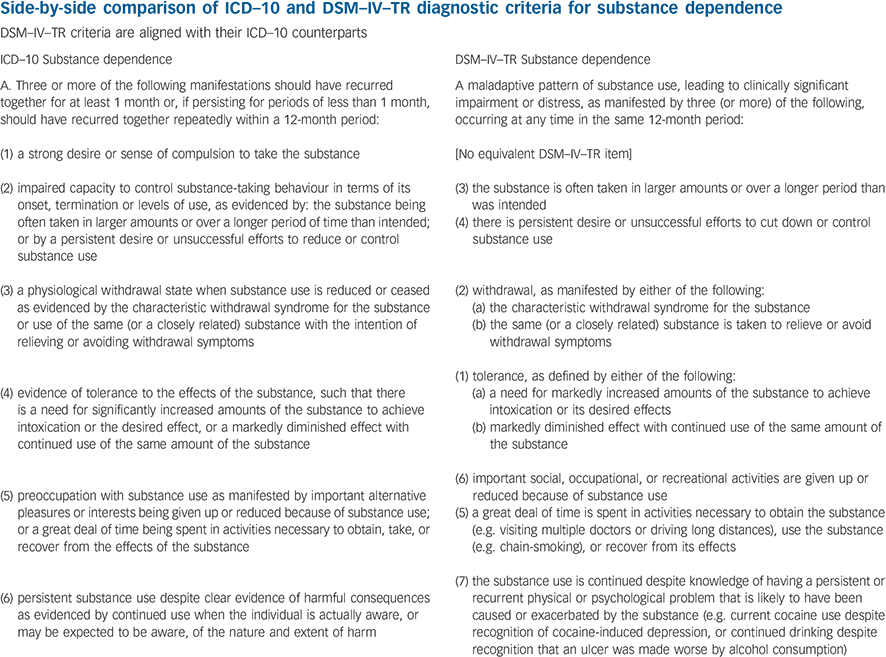
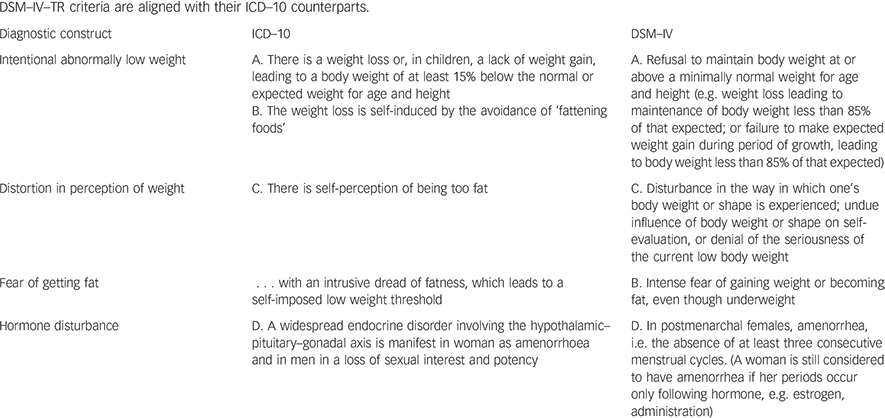
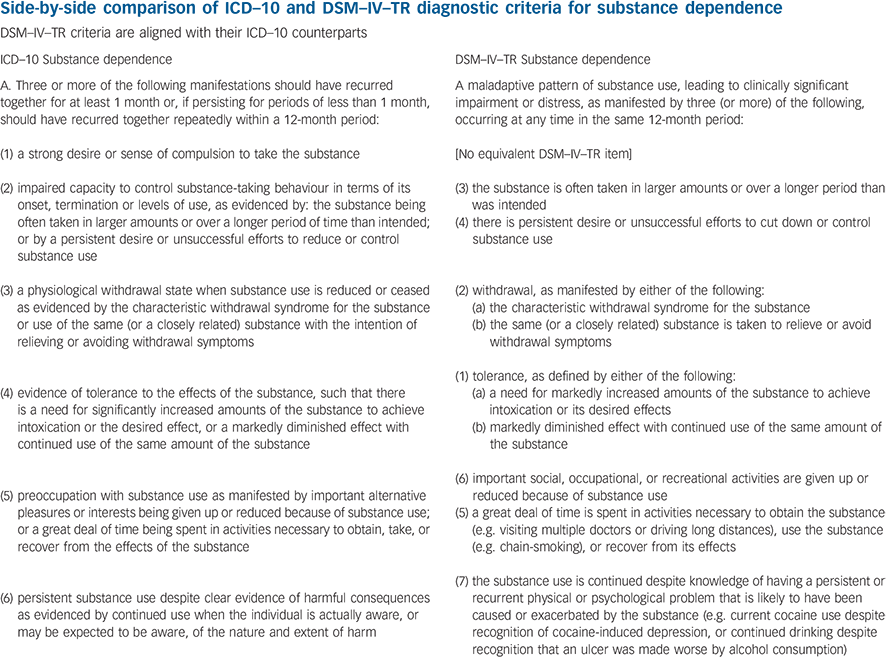
There were a number of types of non-conceptually based differences. Most often, differences reflected different ways of operationalising the same diagnostic construct. For example, although both the DSM–IV and ICD–10 definitions of anorexia nervosa require a severe disturbance in body image, the ICD–10 criteria set requires a ‘self-perception of being too fat’ whereas DSM–IV offers three possible manifestations of problematic body image (Appendix 3). Commonly, DSM–IV and ICD–10 criteria sets include different lists of items, different ways of grouping the symptoms together and different ways of setting the diagnostic thresholds. For example, although both ICD–10 and DSM–IV substance dependence require a minimum of three symptoms, the ICD–10 list has only six items to choose from, one of which, ‘strong desire or sense of compulsive use’ does not appear anywhere among the seven items in the DSM–IV list (Appendix 4). There were also numerous differences among diagnostic criteria in terms of required duration, frequency or persistence that have no known empirical basis. For example, DSM–IV delusional disorder requires a minimum of 1 month of delusions whereas ICD–10 requires a minimum of 3 months. Finally, for virtually every criteria set that included exclusionary criteria, there were differences in both the wording of the exclusion and in the list of those disorders being excluded. Compare, for example, the exclusionary criteria for hypochrondriasis. In ICD–10, the diagnosis is excluded if the symptoms occur ‘only during any of the schizophrenic and related disorders (F20–29, particularly F22) or any of the mood disorders (F30–F39)’ (p. 107). 62 In contrast, DSM–IV provides two exclusion criteria: ‘The belief is not of delusional intensity (as in Delusional Disorder, Somatic Type) and is not restricted to a circumscribed concern about appearance (as in Body Dysmorphic Disorder)’ and ‘the preoccupation is not better accounted for by Generalized Anxiety Disorder, Obsessive-Compulsive Disorder, Panic Disorder, a Major Depressive Episode, Separation Anxiety, or another Somatoform Disorder’ (p. 507). 1
Discussion
According to the results of the disorder-by-disorder comparisons presented here, the task of harmonising DSM–V and ICD–11 is likely to be quite challenging: the definitions for all but 1 out of the 176 disorders that appear in both classifications are different. The goal of harmonising DSM–V and ICD–11, however, is not necessarily to make the two systems completely identical. As noted by Kendell in a 1991 paper:
it is almost inevitable that the DSM classification of mental disorders differs from that of the WHO. The ICD is a comprehensive classification of all… diseases and related health problems for use by a wide range of health professionals in countries of very varied sizes, cultures, and resources. The APA's classification is designed to meet the needs of one, or perhaps two, professions – psychiatrists and clinical psychologists – in a single country. (pp. 299–300) Reference Kendell63
Although such considerations might justify the inclusion of a disorder in one system and not the other, it does not provide a justification for having definitional differences between disorders included in both systems. Acknowledging that European and American psychiatrists have historically taken divergent approaches to certain diagnoses, Kendell also argued that there may be some advantages in having different definitions for at least those disorders which are conceptualised differently in the two systems:
If there are to be differences at all, let them be substantial. That would at least provide the research community with a choice between two genuinely different alternatives… The worst outcome of all would be for the DSM–IV and the ICD–10 to be littered with trivial differences in phraseology and casual differences in the way in which different groups of disorders are subdivided and defined, none of which are rooted in important conceptual differences. (p. 299) Reference Kendell63
According to the analysis of definitional differences, however, over three-quarters of the definitional differences fall into Kendell's latter group of ‘trivial’ and ‘casual’ differences. Most of these differences are a consequence of the process by which the DSM and ICD criteria sets were created. Rather than being based on empirical data, the DSM and ICD diagnostic criteria for the most part represent the different ways different groups of experts translated diagnostic constructs into operationalised criteria sets. Working independently, the DSM and ICD committees inevitably produced criteria sets that differed in arbitrary ways. Consider, for example, the diagnostic criteria for anorexia nervosa. Both DSM and ICD conceptualise the condition as deliberate weight loss to abnormally low levels, motivated by a fear of fatness and characterised by distortions in body image and hormonal disturbances. Each system, however, has operationalised this diagnostic construct in different ways, resulting in a number of trivial differences in the criteria sets (Appendix 3).
Harmonisation of these types of differences should be an especially important priority in the DSM–V/ICD–11 development process. Studies that have compared the impact of such casual definitional differences on prevalence rates reveal that even small differences in wording can lead to significance rates of diagnostic discordance. For example, criterion A for generalised anxiety disorder in DSM–IV and ICD–10 appears to be almost identical. The ICD–10 requires ‘a period of at least six months with prominent tension, worry and feelings of apprehension about every-day events and problems’ (p. 95) 62 whereas DSM–IV requires ‘excessive anxiety and worry (apprehensive expectation) occurring more days than not for at least 6 months about a number of events or activities’(p. 476), 1 the main difference being the inclusion of the word ‘excessive’ in the DSM–IV criterion. An epidemiological study that examined the diagnostic concordance of the DSM–IV and ICD–10 definitions of generalised anxiety disorder Reference Slade and Andrews18 showed that of the 201 participants who met ICD–10 diagnostic criteria for generalised anxiety disorder, 144 (72%) did not meet criterion A in DSM–IV, resulting in a significant diagnostic discordance.
Limitations
Given the paucity of information documenting the rationale for the criteria-set wording and diagnostic algorithms in both DSM–IV and ICD–10, my decisions about whether diagnostic differences are conceptually based v. non-conceptually based were inherently subjective, especially for those differences judged to be conceptual because their definitional differences were so extensive. Although I am probably as informed as anyone about the diagnostic issues underlying the DSM–IV and ICD–10 revision processes, a different person might have come up with different judgements. Moreover, the proportion of non-conceptually based differences may have been overestimated given that differences were categorised as conceptually based only if some conceptual basis could be discerned. In any case, determining the precise boundary between conceptually based and non-conceptually based differences is less important than establishing the principle that differences arising from different conceptual perspectives are likely to be more challenging to harmonise than those differences that appear to be unintentional by-products of how the systems were created.
Another limitation is that the analysis of ICD–10/DSM–IV differences was based entirely on an examination of differences in the wording of the criteria sets and thus may have either overestimated or underestimated the diagnostic significance of the definitional differences when applied to actual patient populations. For example, consider a hypothetical disorder in which the ICD–10 and DSM–IV cross-sectional symptomatic criteria are identical but for which ICD–10 requires onset before age 3 whereas DSM–IV requires onset before age 7. If in actual fact 50% of individuals who meet the symptomatic requirements have an age at onset between ages 3 and 7, this seemingly minor definitional difference would result in major diagnostic discordance that would have been underestimated given the apparently trivial nature of the wording difference. On the other hand, if in actual fact all cases with this symptomatic presentation were to begin by age 2, then the two definitions would be functionally identical, and the analysis would have overestimated the diagnostic significance of the age at onset difference.
Harmonisation strategies
Faced with two sets of non-identical definitions, how might the DSM/ICD harmonisation group proceed? Proposals for changes to DSM–IV and ICD–11 based on the results of literature reviews, secondary data analyses and field trials should theoretically be identical given that the DSM–V and ICD–11 revision groups will be relying on more or less the same shared empirical database. From 2002 to 2007, prior to the start of the DSM–V and ICD–11 revision processes, the APA and WHO, with funding by the Natitional Institute of Mental Health, National Institute on Alcohol Abuse and Alcoholism and National Institute of Drug Abuse, co-sponsored the ‘Future of Psychiatric Diagnosis’ research-planning conference series, which reviewed the scientific literature and identified areas needing further study (e.g. Widiger et al and Saunders et al). Reference Widiger, Simonsen, Sirovatka and Regier64,Reference Saunders, Schuckit, Sirovatka and Regier65 Furthermore, the APA and WHO will most likely pool the results of their empirical review efforts. Therefore, it should be possible for the DSM–V and ICD–11 working groups to coordinate their efforts so that proposals for new disorders have entirely identically worded criteria sets. However, given that most changes to DSM and ICD criteria sets aim to fix problematic criterion items while leaving the remaining criteria unchanged, the fact that both groups are working from the same empirical foundation will still leave most disorders unharmonised.
In terms of harmonising those DSM–IV and ICD–10 criteria that would otherwise be left unchanged in DSM–V and ICD–11, ideally the choice of which of the two systems has the ‘superior’ criteria set for a particular disorder would depend on empirical evidence demonstrating that one criteria set was either more valid, more clinically useful or at least more reliable than the other. The Research Agenda for DSM–V called for such studies as part of its recommended research programme for reducing the gaps between DSM–V and ICD–11: ‘when differences are substantial, define a research strategy to assess the comparative validity and reliability of ICD and DSM disorders and criteria… In particular, more information is needed on the comparative validity of alternatively defined disorders, particularly pertaining to clinical course, including response to treatment’ (p. 15). Reference Rounsaville, Alarcon, Andrews, Jackson, Kendell, Kendler, Kupfer, First and Regier46
Unfortunately, despite calls for studies to compare the validity of the DSM–IV and ICD–10 definitions, Reference Bertelsen66 only a handful of studies have actually compared the systems' definitions using external validators such as course, Reference Jager, Bottlender, Strauss and Moller15 outcome, Reference Lee, Schachar, Chen, Ornstein, Charach and Barr37,Reference Lahey, Pelham, Chronis, Massetti, Kipp and Erhrhardt38,Reference Laurila, Pitkala, Strandberg and Tilvis42 associated disability Reference Slade and Andrews18 or biological markers. Reference Fink, Hansen and Oxhoj19 Given this lack of an available empirical foundation, for the most part DSM–V and ICD–11 harmonisation will have to rely primarily on a ‘negotiated expert consensus’ process in which representatives from the DSM–V and ICD–11 work groups work together to hammer out differences between the two systems.
Three basic harmonisation strategies present themselves. One approach is to select one of the two systems in toto to be the starting point for a future unified classification. A second approach involves constructing new common DSM–V/ICD–11 criteria sets that draw on the best items (in terms of reliability, validity and/or clinical utility) from the various constituent parts of the DSM–IV and ICD–10 criteria sets. A third approach involves, for each disorder, selecting either the DSM–IV or the ICD–10 criteria set in its entirety to become the harmonised DSM–V/ICD–11 definition. For a particular disorder, the decision to choose either the DSM–IV or ICD–10 criteria set could be based on various mutually agreed criteria, such as empirical evidence of superior validity, reliability or clinical utility. Although there are very few studies that have compared the two systems head to head, studies have been conducted that demonstrate the validity and/or clinical utility of certain diagnoses within a diagnostic system. For example, the three severity subtypes of ICD–10 depressive episode have been shown to be clinically useful with regard to predicting risk of relapse and risk of completed suicide. Reference Kessing67 In the absence of informative empirical data, other criteria could be used, such as a preference for a polythetic (e.g. three out of seven items required) over a monothetic (e.g. A plus B plus C) criterion-set structure, or the existence of a large body of treatment research based more on one system's definition than the other. For many if not the majority of disorders, however, the choice of DSM–IV v. ICD–10 is likely to be arbitrary and could reasonably be resolved by something as random as a coin toss.
Each of these approaches has its advantages and disadvantages. Although choosing one system in its entirety has the advantage of simplicity, it disregards the fact that the two classifications serve different constituencies and ignores the considerable political and financial obstacles involved in persuading either the APA or WHO to abandon its classification system. Reference Cooper68 The second approach, which entails constructing new hybrid criteria sets, offers the potential advantage of allowing the harmonised criteria sets to offer the best features of their constituent parts (for example, combining ICD–10 criterion A for generalised anxiety disorder, which may be more reliable and valid by not requiring that the anxiety be ‘excessive’, with the simpler DSM–IV criterion C, which requires 3 out of a list of 6 symptoms rather than ICD–10's 4 out of 22). A significant disadvantage is that it would result in the creation of entirely new untested criteria sets that differ from both of their predecessors. The third approach, adopting for each disorder either the DSM–IV or ICD–10 criteria set in its entirety, has the advantage of being less disruptive in that the harmonised DSM–V/ICD–11 criteria sets would maintain continuity with either the DSM–IV or ICD–10 definition.
Prospects for harmonisation
Despite the enormity of the harmonisation task, given the timing of the DSM–V and ICD–11 revision efforts and the APA's and WHO's decision to establish a harmonisation coordinating group from the outset, the prospects for a successfully harmonised DSM–V and ICD–11 are more hopeful than they were for past efforts. Prior attempts to harmonise DSM–IV and ICD–10 were doomed to fail because of a lack of synchrony in their developmental time lines. Two meetings were convened during the ICD–10/DSM–IV revision processes in which the respective work groups met face to face with the goal of minimising diagnostic differences. The potential to make the systems identical was seriously constrained, however, by the fact that the ICD–10 development process had a substantial head start over DSM–IV. The first formal ICD–10 planning meetings occurred in 1983 so that by June 1987, only 1 month after the publication of DSM–III–R, draft ICD–10 diagnostic guidelines were already being circulated. By the time the DSM–IV work groups first convened in 1989, the ICD–10 categories, basic text and diagnostic guidelines had already been settled by the International Revision Conference.
This time around, the DSM–V and ICD–11 revisions processes are much better synchronised: they have started their work at about the same time. Neither system will be in a position to have to ‘undo’ already finalised versions in order to achieve harmonisation. Other factors that increase the odds for a successful harmonisation process include the appointment of international experts (some of whom are part of the ICD–11 revision process) to the DSM–V work groups and the appointment of the Chair of the ICD–11 International Advisory Group to the DSM–V Task Force.
Despite these measures, a number of significant obstacles remain. Although both APA and WHO have maintained that DSM–V/ICD–11 harmonisation is an important shared goal, the nuts and bolts of the harmonisation process have yet to be elucidated. The DSM–V and ICD–11 work groups have started their deliberations by focusing their efforts on identifying and fixing problems in DSM–IV and ICD–10 disorder definitions respectively, with the goal of trying to make their system's definitions more valid and clinically useful. One lesson that can be learned from the prior effort to harmonise DSM–IV and ICD–10 is that harmonisation efforts that occur too late in the process, i.e. after the work groups have already made their preliminary recommendations for change, are likely to fail. Once work group members invest their time and energy to produce suggested changes, as happened with the ICD–10 drafts, it will be much more difficult to persuade them to dispense with their improvements for the sake of international harmony. The only strategy that is likely to lead to success is for harmonisation efforts to occur at the beginning of the process so that the work groups can use the existing empirical database to improve the harmonised definitions. Harmonisation efforts can be piloted by starting with the more minor differences (i.e. those disorders in Appendix 2 indicated by an asterisk) and then proceed to the more challenging differences. The default position adopted by the work groups should be to make every effort to harmonise all non-conceptually based differences in the DSM–V and ICD–11 criteria sets. All differences that remain should be substantive and intentional.
Implications
Given the widespread definitional differences in DSM–IV and ICD–10, the task of harmonising DSM–V and ICD–11 will require hard work and compromises on both sides. Furthermore, unless the goal of harmonisation is prioritised early on in the development process, it is unlikely to become a reality. Despite these challenges, the APA and WHO have a unique opportunity to remedy a problem that has plagued international psychiatric classification since 1948, the year of publication of ICD–6, 69 the first edition of the ICD that included a section for the classification of mental disorders. Moreover, this may truly be the last chance for the APA and WHO to achieve DSM/ICD harmonisation, at least until that point in the distant future when the classification of mental disorders is based on objective tests rather than on descriptions of symptoms. The current model for revising the DSM and ICD is to conduct a revision process at certain intervals in which every disorder in the classification is potentially open for revision. It is likely that the APA will switch to a model in which changes are made to the DSM on an ongoing basis in response to scientific advances. Reference Sussman70 Consequently, this may be the last time in history in which both classification systems are simultaneously open to the possibility of system-wide harmonisation efforts. Given the importance of international communication and collaboration, it is an opportunity that must not be squandered.
Appendix 1
Disorders with conceptual differences (39 criteria sets; 21% of total with differences)
F06.3 Organic mood disorder
ICD–10 requires that mood symptoms conform to one of the syndromal patterns in the mood disorder section (e.g. major depressive episode) whereas DSM–IV requires ‘prominent and persistent disturbance in mood’ predominating in the clinical picture.
F06.4 Organic anxiety disorder
ICD–10 requires that anxiety meet the full criteria for either panic disorder or generalised anxiety disorder whereas DSM–IV requires only that there be ‘prominent anxiety, panic attacks, obsessions, or compulsions’ that predominate in the clinical picture.
F07.0 Organic personality disorder
DSM–IV requires ‘persistent personality disturbance that represents a change from the individual's previous characteristic personality pattern’ of any kind; ICD–10 requires three out of a list of six specific types of changes (e.g. reduced ability to persevere with goal-directed activities, emotional changes etc.)
F1x.1 Harmful use/abuse
ICD–10 harmful use requires evidence that substance use is responsible for physical or psychological harm whereas DSM–IV substance abuse is a pattern of recurrent use resulting in failure to fulfil role obligations, recurrent use in physically hazardous situations, recurrent substance-related legal problems or continued use despite social or interpersonal problems caused by effects of substance.
F1x.72 Substance-induced residual affective disorder
Parallels differences in the definitions of F06.3 organic mood disorder (i.e. meeting full duration and symptom requirements for mood syndrome v. prominent, persistent and predominating in the clinical presentation.)
F20 Schizophrenia
Differences in minimum required duration (1 month of symptoms in ICD–10 v. 6 months in DSM–IV)
F23 Acute and transient psychotic disorders (five criteria sets)
ICD–10 includes four disorders (some with duration of up to 3 months) that differ based on types of psychotic symptoms (i.e. with or without symptoms of schizophrenia) and course (i.e. whether or not they are polymorphic). In contrast, DSM–IV includes only one disorder for psychotic presentations with a duration of at least 1 day but less than 1 month, regardless of type or course of the psychotic symptoms.
F25 Schizoaffective disorder
ICD–10 requires ‘an approximate balance between the number, severity, and duration of schizophrenic and affective symptoms’ whereas DSM–IV specifically requires that delusions or hallucinations occur for at least 2 weeks in the absence of prominent mood symptoms and that the mood symptoms are present for a substantial portion of the total duration of the illness.
F30.0 Hypomania
Unlike ICD–10, DSM–IV does not consider a single hypomanic episode as qualifying as a mental disorder.
F30.2 Mania with psychotic symptoms
ICD–10 excludes those delusions or hallucinations that are ‘completely impossible’ or ‘culturally inappropriate’ and hallucinations that are in the third person or are giving a running commentary whereas DSM–IV allows delusions or hallucinations of any kind.
F31 Bipolar affective disorder (eight criteria sets)
Unlike ICD–10, DSM–IV does not allow recurrent hypomanic episodes to qualify for a diagnosis of bipolar affective disorder. Furthermore, unlike DSM–IV, ICD–10 does not discriminate between bipolar type I and bipolar type II.
F32.0–F32.2 Mild, moderate, severe depressive episode (three criteria sets)
DSM–IV allows a diagnosis of depression occurring in the context of a grief reaction only if it is particularly prolonged or severe. ICD–10 has no such restriction.
F32.3 Severe depressive episode with psychotic symptoms
ICD–10 excludes those delusions or hallucinations that are ‘completely impossible’ or ‘culturally inappropriate’ and hallucinations that are in the third person or are giving a running commentary whereas DSM–IV allows delusions or hallucinations of any kind.
F40.0 Agoraphobia
ICD–10 defines agoraphobia as a cluster of specific situations that are feared or avoided (i.e. crowds, public places, travelling alone, travelling away from home) whereas DSM–IV conceptualises it as occurring secondary to panic attacks or panic-like symptoms.
F42 Obsessive–compulsive disorder
ICD–10 differentiates between obsessions and compulsions based on whether they are thoughts, ideas or images (obsessions) or acts (compulsions) whereas DSM–IV differentiates between them based on whether the thoughts, ideas, images or acts cause anxiety or distress (obsessions) or whether they prevent or reduce anxiety or distress (compulsions).
F43.0 Acute stress reaction
In ICD–10, the category covers a wide range of symptoms (from anxiety to dissociation) after exposure to trauma whereas DSM–IV requires a dissociative response.
F45.2 Hypochondriasis/body dysmorphic disorder
ICD–10 provides a single criteria set that applies to both hypochondriasis and body dysmorphic disorder, which are separate disorders in DSM–IV.
F48.1 Depersonalization–derealization disorder
ICD–10 has a single category ‘depersonalization derealization syndrome’ for presentations characterised by either depersonalisation or derealisation whereas the DSM–IV category requires depersonalisation.
F50.2 Bulimia nervosa
ICD–10 requires ‘intrusive dread of fatness’, which in DSM–IV is considered to be an essential feature only of anorexia nervosa.
F60.2 Dissocial personality disorder
DSM–IV conceptualises this as an adult continuation of conduct disorder whereas in ICD–10 a history of conduct disorder is not required.
F64 Gender identity disorder (three criteria sets)
ICD–10, as did DSM–III–R, defines three separate disorders: ‘gender identity disorder of childhood’, ‘dual-role transvestism’ and ‘transsexualism’, all of which are included under the single DSM–IV category gender identity disorder.
F91 Conduct disorder/oppositional defiant disorder
ICD–10 conceptualises oppositional defiant disorder as a mild form of conduct disorder whereas in DSM–IV these are two distinct disorders.
F94.1 Reactive attachment disorder of childhood and F94.2 Disinhibited attachment disorder of childhood
The corresponding category in DSM–IV, reactive attachment disorder, is conceptualised as causally related to pathogenic care.
Appendix 2
Definitional differences without an apparent conceptual basis (136 criteria sets; 78% of total with differences)
The 50 disorders indicated with an asterisk have particularly minor differences.
-
• F0 Dementia
-
• F00 Dementia of the Alzheimer's type (three criteria sets)
-
• F01 Vascular dementia (four criteria sets)
-
• F02 Dementia due to other general medical conditions (five criteria sets)
-
• F04 Amnestic disorder*
-
• F05 Delirium
-
• F06.0 Organic hallucinosis*
-
• F06.1 Organic catatonic disorder*
-
• F06.2 Organic delusional disorder*
-
• F06.7 Mild cognitive disorder
-
• F07.2 Post-concussional disorder
-
• F1x.0 Acute substance intoxication (ten criteria sets)
-
• F1x.2 Substance dependence
-
• F1x.3 Substance withdrawal (seven criteria sets)
-
• F1x.4 Substance withdrawal delirium
-
• F1x.5 Substance-induced psychotic disorder
-
• F1x.6 Substance-induced amnesic syndrome*
-
• F1x.73 Substance-induced dementia
-
• F20.0 Paranoid subtype of schizophrenia*
-
• F20.1 Hebephrenic subtype of schizophrenia
-
• F20.2 Catatonic subtype of schizophrenia
-
• F20.3 Undifferentiated subtype of schizophrenia*
-
• F20.4 Postpsychotic depression of schizophrenia
-
• F20.5 Residual subtype of schizophrenia
-
• F20.6 Simple schizophrenia (simple deteriorative disorder in DSM–IV)
-
• F21 Schizotypal (personality) disorder
-
• F22.0 Delusional disorder
-
• F24 Induced delusional disorder*
-
• F30.1 Mania without psychotic symptoms
-
• F32.x1 Somatic syndrome for major depressive episode
-
• F33 Recurrent depressive disorder (5 criteria sets)
-
• F34.0 Cyclothymia
-
• F34.1 Dysthymia
-
• F38.00 Mixed affective episode*
-
• F38.10 Recurrent brief depressive disorder
-
• F40.1 Social phobia
-
• F40.2 Specific phobia
-
• F41.0 Panic disorder
-
• F41.1 Generalized anxiety disorder
-
• F43.1 Posttraumatic stress disorder
-
• F43.2 Adjustment disorders
-
• F44.0 Dissociative amnesia*
-
• F44.1 Dissociative fugue*
-
• F44.2/F44.4/F44/5/F44.6 Dissociative/conversion disorder (four criteria sets)
-
• F44.81 Multiple personality disorder (dissociative identity disorder in DSM–IV)*
-
• F45.0 Somatization disorder
-
• F45.1 Undifferentiated somatoform disorder
-
• F45.4 Persistent somatoform pain disorder
-
• F50.0 Anorexia nervosa
-
• F51.0 Nonorganic insomnia*
-
• F51.1 Nonorganic hypersomnia*
-
• F51.2 Nonorganic disorder of the sleep-wake cycle*
-
• F51.3 Sleepwalking*
-
• F51.4 Sleep terrors*
-
• F51.5 Nightmares*
-
• F52.0 Lack or loss of sexual desire*
-
• F52.1 Sexual aversion*
-
• F52.2 Failure of genital response*
-
• F52.3 Orgasmic dysfunction*
-
• F52.4 Premature ejaculation*
-
• F52.5 Vaginismus*
-
• F52.6 Dyspareunia*
-
• F54 Psychological and behavioral factors associated with disorders or diseases classified elsewhere
-
• F55 Abuse of nondependence-producing substances
-
• F60 General criteria for personality disorder*
-
• F60.0 Paranoid personality disorder
-
• F60.1 Schizoid personality disorder
-
• F60.3 Emotionally unstable (borderline) personality disorder
-
• F60.4 Histrionic personality disorder
-
• F60.5 Anankastic personality disorder
-
• F60.6 Anxious (avoidant) personality disorder
-
• F60.7 Dependent personality disorder
-
• F63.0 Pathological gambling
-
• F63.1 Pathological fire setting*
-
• F63.2 Pathological stealing*
-
• F63.3 Trichotillomania*
-
• F65.0 Fetishism
-
• F65.1 Fetishistic transvestism
-
• F65.2 Exhibitionism*
-
• F65.3 Voyeurism*
-
• F65.4 Pedophilia
-
• F68.1 Factitious disorder*
-
• F70–
-
• F79 Mental retardation*
-
• F80.0 Specific speech articulation disorder
-
• F80.1 Expressive language disorder*
-
• F80.2 Receptive language disorder*
-
• F81.0 Specific reading disorder*
-
• F81.1 Specific spelling disorder (disorder of written expression)
-
• F81.2 Specific disorder of arithmetic skills*
-
• F82 Specific developmental disorder of motor function*
-
• F84.0 Childhood autism*
-
• F84.2 Rett's syndrome*
-
• F84.3 Other childhood disintegrative disorder*
-
• F84.5 Asperger's syndrome*
-
• F90 Hyperkinetic disorders
-
• F93.0 Separation anxiety disorder*
-
• F94.0 Elective mutism*
-
• F95.1 Chronic motor or vocal tic disorder*
-
• F95.2 Combined vocal and multiple motor tic disorder [de la Tourette's syndrome]*
-
• F98.0 Nonorganic enuresis*
-
• F98.1 Nonorganic functional encopresis*
-
• F98.2 Feeding disorder of infancy and early childhood (rumination disorder)
-
• F98.3 Pica of infancy and childhood*
-
• F98.4 Stereotyped movement disorder*
-
• F98.5 Stuttering*
Different operationalisations of the anorexia nervosa construct in DSM—IV—TR and ICD—10
| DSM—IV—TR criteria are aligned with their ICD—10 counterparts. | ||
| Diagnostic construct | ICD—10 | DSM—IV |
| Intentional abnormally low weight | A. There is a weight loss or, in children, a lack of weight gain, leading to a body weight of at least 15% below the normal or expected weight for age and height | A. Refusal to maintain body weight at or above a minimally normal weight for age and height (e.g. weight loss leading to maintenance of body weight less than 85% of that expected; or failure to make expected weight gain during period of growth, leading to body weight less than 85% of that expected) |
| B. The weight loss is self-induced by the avoidance of ‘fattening foods’ | ||
| Distortion in perception of weight | C. There is self-perception of being too fat | C. Disturbance in the way in which one's body weight or shape is experienced; undue influence of body weight or shape on self-evaluation, or denial of the seriousness of the current low body weight |
| Fear of getting fat | … with an intrusive dread of fatness, which leads to a self-imposed low weight threshold | B. Intense fear of gaining weight or becoming fat, even though underweight |
| Hormone disturbance | D. A widespread endocrine disorder involving the hypothalamic—pituitary—gonadal axis is manifest in woman as amenorrhoea and in men in a loss of sexual interest and potency | D. In postmenarchal females, amenorrhea, i.e. the absence of at least three consecutive menstrual cycles. (A woman is still considered to have amenorrhea if her periods occur only following hormone, e.g. estrogen, administration) |
Side-by-side comparison of ICD—10 and DSM—IV—TR diagnostic criteria for substance dependence
| DSM—IV—TR criteria are aligned with their ICD—10 counterparts | |
| ICD—10 Substance dependence | DSM—IV—TR Substance dependence |
| A. Three or more of the following manifestations should have recurred together for at least 1 month or, if persisting for periods of less than 1 month, should have recurred together repeatedly within a 12-month period: | A maladaptive pattern of substance use, leading to clinically significant impairment or distress, as manifested by three (or more) of the following, occurring at any time in the same 12-month period: |
| (1) a strong desire or sense of compulsion to take the substance | [No equivalent DSM—IV—TR item] |
| (2) impaired capacity to control substance-taking behaviour in terms of its onset, termination or levels of use, as evidenced by: the substance being often taken in larger amounts or over a longer period of time than intended; or by a persistent desire or unsuccessful efforts to reduce or control substance use | (3) the substance is often taken in larger amounts or over a longer period than was intended |
| (4) there is persistent desire or unsuccessful efforts to cut down or control substance use | |
| (3) a physiological withdrawal state when substance use is reduced or ceased as evidenced by the characteristic withdrawal syndrome for the substance or use of the same (or a closely related) substance with the intention of relieving or avoiding withdrawal symptoms | (2) withdrawal, as manifested by either of the following: (a) the characteristic withdrawal syndrome for the substance (b) the same (or a closely related) substance is taken to relieve or avoid withdrawal symptoms |
| (1) tolerance, as defined by either of the following: (a) a need for markedly increased amounts of the substance to achieve intoxication or its desired effects (b) markedly diminished effect with continued use of the same amount of the substance | |
| (4) evidence of tolerance to the effects of the substance, such that there is a need for significantly increased amounts of the substance to achieve intoxication or the desired effect, or a markedly diminished effect with continued use of the same amount of the substance | |
| (6) important social, occupational, or recreational activities are given up or reduced because of substance use | |
| (5) preoccupation with substance use as manifested by important alternative pleasures or interests being given up or reduced because of substance use; or a great deal of time being spent in activities necessary to obtain, take, or recover from the effects of the substance | (5) a great deal of time is spent in activities necessary to obtain the substance (e.g. visiting multiple doctors or driving long distances), use the substance (e.g. chain-smoking), or recover from its effects |
| (7) the substance use is continued despite knowledge of having a persistent or recurrent physical or psychological problem that is likely to have been caused or exacerbated by the substance (e.g. current cocaine use despite recognition of cocaine-induced depression, or continued drinking despite recognition that an ulcer was made worse by alcohol consumption) | |
| (6) persistent substance use despite clear evidence of harmful consequences as evidenced by continued use when the individual is actually aware, or may be expected to be aware, of the nature and extent of harm |




eLetters
No eLetters have been published for this article.