

1. INTRODUCTON
One of the reasons for starting this project was the fact that many research studies of accidents at sea indicate that collisions are one of the most frequent types of marine accidents. A European Maritime Safety Agency (EMSA) publication (Overview of marine casualties and incidents; EMSA, 2014) presents casualty statistics on ships flying the flags of EU Member States, accidents in European territorial seas and internal waters or wherever there are European interests involved. According to the above overview, loss of control is the most frequent event (27% of the total number of marine accident casualties), followed by collisions, contacts and groundings (an average of 18% for each of those events). The Marine Casualties Report 2000–2010 by the Norwegian Maritime Directorate (2011) analyses accidents of ships flying the Norwegian flag and accidents in Norwegian territorial seas and internal waters and states that in the distribution of accident types for cargo ships, groundings and collisions are the most prominent type of marine accidents. According to International Union of Marine Insurance (IUMI, 2015) Casualty and World Fleet Statistics, which analyses Lloyds List's publication of serious and total losses of vessels larger than 500 Gross Tonnes (GT) from 2000 to 2014, collisions and groundings represent the second most frequent type of accidents, with only machinery failure representing a higher proportion. The most frequent reason for vessel collisions is the failure to observe the Collision Regulations (COLREGs). By using a specially designed questionnaire the authors examined the knowledge and understanding of COLREGs by nautical students/navigating cadets and experienced navigating officers. The purpose of this research was to identify misunderstandings of the Rules by nautical students/navigating cadets and deck officers and to improve the process of learning COLREGs in the nautical study programmes. One of the reasons for taking up this research was to improve understanding and proper application of COLREGs because it has been noticed that nautical students learn the Rules by heart, but when they are asked to apply the Rules on the navigational simulator or during practical training on board, it has been observed that they often fail to understand the concept and practical application of some of the Rules. Also, when analysing the navigating officer study programmes conducted in maritime training centres involved in lifelong education and training, which are attended by experienced seafarers, it has been noticed that even navigational officers with years of experience on ocean-going vessels occasionally fail to understand some of the Rules or parts of them.
The questionnaire was designed so as to test understanding of the Rules in order to identify which parts of the Rules are misunderstood. Also, the questionnaire was administered in several European countries to include various methods of teaching the Rules in these countries in the research. An online survey enabled licensed navigational watchkeeping officers from all over the world to participate. Regardless of the learning method applied, the results of the questionnaire confirmed the existence of skill gaps both in the case of nautical students/navigating cadets and of experienced navigating officers across the world. After identifying the skill gaps, proper teaching methodology can be applied. The new teaching methodology will be applied and the results will be verified in order to see if the understanding of the Rules is improving.
2. LITERATURE REVIEW
By reviewing the literature that analyses marine accidents from all over the world, it is possible to investigate the causes of those accidents. In this paper, the authors have analysed the collisions of oceangoing vessels and causes of those collisions from 1978 to 2013 and examined whether the causes of collisions are linked with the education of navigating cadets.
Hwang (Reference Hwang2002) stated that many COLREGs rules are qualitative and can only be used after quantifying the situation in which they occurred. The author concludes that this in practice causes some difficulties for sailors in the implementation of the COLREGs.
The analysis presented in Acar et al. (Reference Acar, Ziarati and Ziarati2008), which is based on the research of accidents from 1998 to 2003, reveals that 85% of all accidents are either directly initiated by human error or are associated with human error by means of an inappropriate human response. The authors note that mistakes are usually made not because of deficient or inadequate regulations but because the regulations and standards that do exist are often ignored. In the same paper the authors state that the International Maritime Organization Maritime Safety Committee (IMO MSC) clearly indicates that the causes of many of the accidents at sea are due to deficiencies in the education and training of seafarers or because of disregard of current standards and regulations.
Based on the accidents rates in shipping and the IMO implementation record, Knudsen and Hassler (Reference Knudsen and Hassler2011) conclude that accidents in shipping continue to occur partly due to the fact that it is not possible to eliminate risks completely, and partly because existing global regulations are not implemented effectively.
Through the “M`AIDER” project, Ziarati et al. (Reference Ziarati, Ziarati and Acar2011) reviewed accidents at sea resulting in several recommendations to identify the related skill gaps. This team also analysed the data provided by the P&I club for 2007 (Ziarati et al., Reference Ziarati, Ziarati and Acar2012), pointing out that of eight different types of accidents, collisions are the most frequent type (see Figure 1).
Maritime accident types (Source: Ziarati et al., Reference Ziarati, Ziarati and Acar2012).

Goossens and Glansdorp (Reference Goossens and Glansdorp1998) analysed the accidents that occurred in three navigation areas: North Sea area (from 1978 to 1995), Ems estuary including port of Delfizil (from 1993 to 1995) and Western Scheldt (from 1985 to 1995). In the analysed period, 702 accidents occurred, and 50% of the accidents were collisions.
A Bridge watch keeping safety study conducted by the Marine Accidents Investigation Branch (MAIB) (2014) analyses accidents from 1994 to 2003, where 55% of all accidents were collisions, which is shown in Figure 2. The study also shows that 19% of the vessels involved in collision were completely unaware of the presence of the other vessel before the collision, 24% of them became aware too late, whereas 57% of them were aware of the actual presence of the other vessel. Results are shown in Figure 3.
Incident type analysed from 1994 to 2003 (Source: MAIB, 2004).
Watch keeper aware of other vessel prior to collision (Source: MAIB, 2004).
A maritime accident review conducted by the EMSA (2010) analysed accidents which occurred from 2007 until 2010. This report indicates that the total number of all the accidents, including collisions, is falling. However if the number of collisions is compared with other types of accidents it can be seen that collisions constitute 40% of all the accidents.
Another safety review (Allianz Global Corporate & Specialty, 2014) analysed the causes of total loss from 2002 to 2013. This review reveals that in the specified period collisions constitute 10% of the accidents causing total loss of the ship, and they are the fourth out of ten reasons for the loss of ship (see data shown in Figure 4).
Causes of total loss by accident type from 2002 to 2013 (Source: Allianz Global Corporate & Specialty, 2014).
A study by Tsz (Reference Tsz2008) analysed accidents from 2001 to 2005 in Hong Kong waters. The study shows that 54% of all the accidents were collisions.
Macrae (Reference Macrae2009) analysed collisions which occurred due to non-observance of COLREGs. Due to human factors, i.e. non-compliance and interpretation of errors, most collisions occur because of failure to notice other vessels, mainly due to night-time conditions, distractions and insufficient experience. Also failures include faulty diagnosis of the other vessels' speed or heading and ambiguous information obtained from visual and electronic bearings.
In his book Craig (Reference Craig2005) states that studies have demonstrated that Rule 19 is in general poorly understood by many watchkeeping officers. He also cites one comprehensive study from 1990 which concluded that 80% of the encounters between radar-equipped vessels in restricted visibility “will be conducted by personnel with a totally erroneous view of the requirements of the Rules”. He also cited research results presented by Syms (Reference Syms2003) at the U.S. Merchant Marine Academy, in which the author reports errors up to 90% in some collision avoiding situations. Captain Syms's conclusions were based on the results of questionnaires returned by 438 practicing mariners in 1990, and confirmed by similar, but more limited, sampling in 2002.
A study by Mohovic et al. (Reference Mohovic, Baric and Itkovic2013) analysed maritime accidents in the Croatian part of the Adriatic Sea. In the analysed time period, from 2005 to 2011, there were a total of 492 accidents. This research analyses all types of vessels and found that collisions were the second most frequent type of accident, after grounding. The analysis shows that most of the vessels involved in collisions were pleasure craft, followed by fishing vessels and merchant vessels.
3. IDENTIFICATION OF EDUCATION AND TRAINING NEEDS
The International Regulations for Preventing Collisions at Sea 1972 (COLREG) are a set of rules to be followed by navigation officers to avoid collisions at sea. It is one of the most important international conventions that all seagoing officers must possess full knowledge of, as well as having the skills needed to apply them correctly. Navigational officers obtain knowledge of COLREGs through the system of nautical education and training. However, research shows inconsistencies occurring in nautical students/navigating cadets or navigational officers in the level of understanding of COLREGs.
This has been the reason for conducting the ACTs research project (Avoiding Collisions at Sea) with the purpose of identifying and analysing skill gaps in the understanding of the Rules and aiming to create an online course for nautical students/navigating cadets and seafarers to fully understand and correctly interpret the COLREGs.
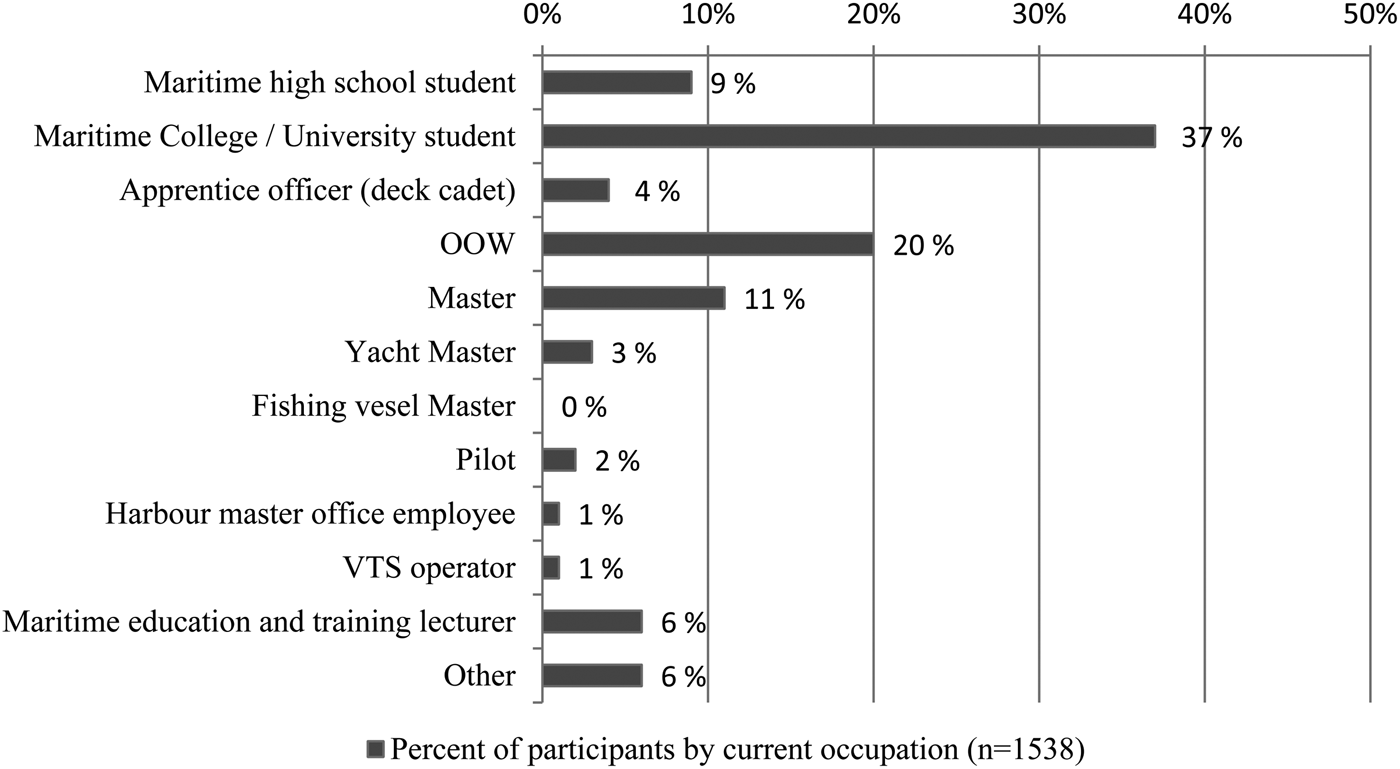
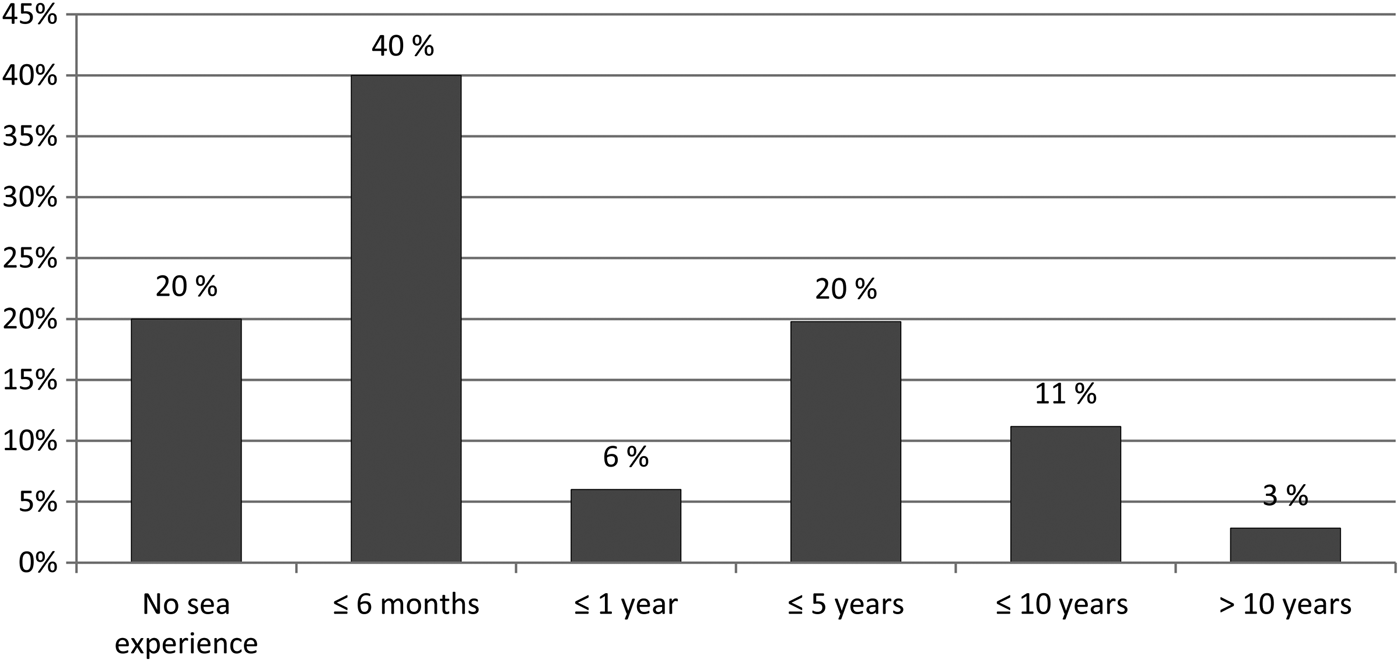
To gather data regarding the understanding the COLREGs, a survey was conducted using a questionnaire (the questionnaire is available at following link: http://limesurvey.c4ff.co.uk/index.php?r=survey/index/sid/613743/lang/en). The questionnaire method was chosen because it enables testing of specified target groups, making it possible to test a large number of respondents. It also enables reliable verification of collected responses and simple data analysis. The questionnaire was prepared by lecturers and assistants at the Faculty of Maritime Studies Rijeka (Department of Nautical Sciences). They are also holders of the Master Mariner Certificate or STCW Certificate for Officers in Charge of a Navigational Watch, with many years of seagoing experience. The aim of the questionnaire was to identify knowledge gaps and deficiencies in the application of the Rules. The survey was designed to determine which rules are difficult to understand and which rules are most frequently broken in practice. The questionnaire was prepared in accordance with the methodology of survey analysis, and to gather more representative results, the questionnaire was prepared in cooperation with the Department of Psychology at the University of Rijeka. The questionnaire was distributed between January and March 2014 by all project partners in their countries. Within this period the questionnaire was completed by 1538 participants (46% professional seafarers, 36% maritime academy and maritime university students, 18% persons holding an officer license for various types of ships/boats like pleasure craft) from 68 different countries. The percentage of the participants by their current occupation is shown in Figure 5, with the percentage of the participants by seagoing experience shown in Figure 6.
Percentage of participants by their current occupation.
Percentage of participants by seagoing experience.
To be more appropriate for survey across different groups, the questionnaire was prepared in three forms: one for students, one for professional seafarers (licensed watchkeeping officers) and one for non-professionals (persons holding a licence for pleasure craft, small fishing vessels, etc.).
The questionnaire was composed of four groups of questions:
1. General questions for identifying the target group of respondents (12 questions).
2. Questions for testing the level of understanding and the degree of correct application of COLREGs (34 questions) (Figure 7).
3. Questions for testing the opinion and actions of seafarers (12 questions) (Figure 8).
4. Optional questions for teachers and lecturers at maritime colleges (4 questions).
Example of a question that has an answer involving the COLREGs.
Example of a question testing the opinion and actions of seafarers or students.
The questionnaires for different target groups of participants only varied in the first group of questions. The questionnaire was made in electronic form and accessible via the Internet. The time to answer the questionnaire was unlimited and participants could use relevant COLREGs literature because the aim of this research was to test understanding of the Rules.
Simultaneously with the questionnaire, collisions research was conducted using the MAIB accident reports for collisions in the period 2006–2012. A total of 14 collisions were analysed in order to obtain information concerning the collision location, visibility and time of day. Also, the research of collisions was expected to answer the question of which actions taken by the OOW were not in compliance with the Collision Regulations. The ultimate aim of this research was to isolate, in the collision databank, the Rules which were violated most frequently as compared to those that the questionnaire identified as being hard to understand.
The questionnaire results were analysed using basic statistical tools like attributive series analysis because the questions were testing understanding of the Rules and because the results offer an immediate answer as to whether or not the participant understands a specific Rule. Much more effort was made to gather results in particular groups in order to obtain qualitative conclusions. To validate the results of the questionnaire, workshops were organised.
The workshops were organised in all of the partners' countries and research results were presented. The workshops' objectives were the following: to present the results of the research, conduct a discussion of the obtained results, determine the reasons behind the obtained results for each Rule, conduct a discussion on the methods of learning the Rules, determine the best method of learning the Rules, and to determine the best way to use the results of the project for the purpose of lifelong learning. Workshops were attended by 102 participants of which 28 were lecturers at maritime academies and universities, 20 holders of Master Mariner certificates, 11 holders of STCW Officer of the Navigation Watch certificate, seven representatives of government authorities, nine representatives of shipping companies, four pilots, four VTS operators, 14 representatives of skippers and companies involved in yachting businesses and five members of various professional associations related to shipping. In the first part of the workshops, results of the questionnaire were presented and, following the discussion, participants gave their comments and opinion. In the second part of the workshops, ten questions were asked about how to improve COLREGs training. All of the comments, opinions and answers from all workshops were recorded. After analysing and comparing all workshop results it was noticed that the comments, opinions and answers of all workshops participants from different partners' countries were very similar. In accordance with the workshop participants' opinions there appeared a strong need to implement new methods of learning and teaching of COLREGs.
The questionnaire results, collision cases research and conclusions of workshops discussions clearly indicate the existence of problems in understanding and application of COLREGs.
4. QUESTIONNAIRE RESEARCH RESULTS
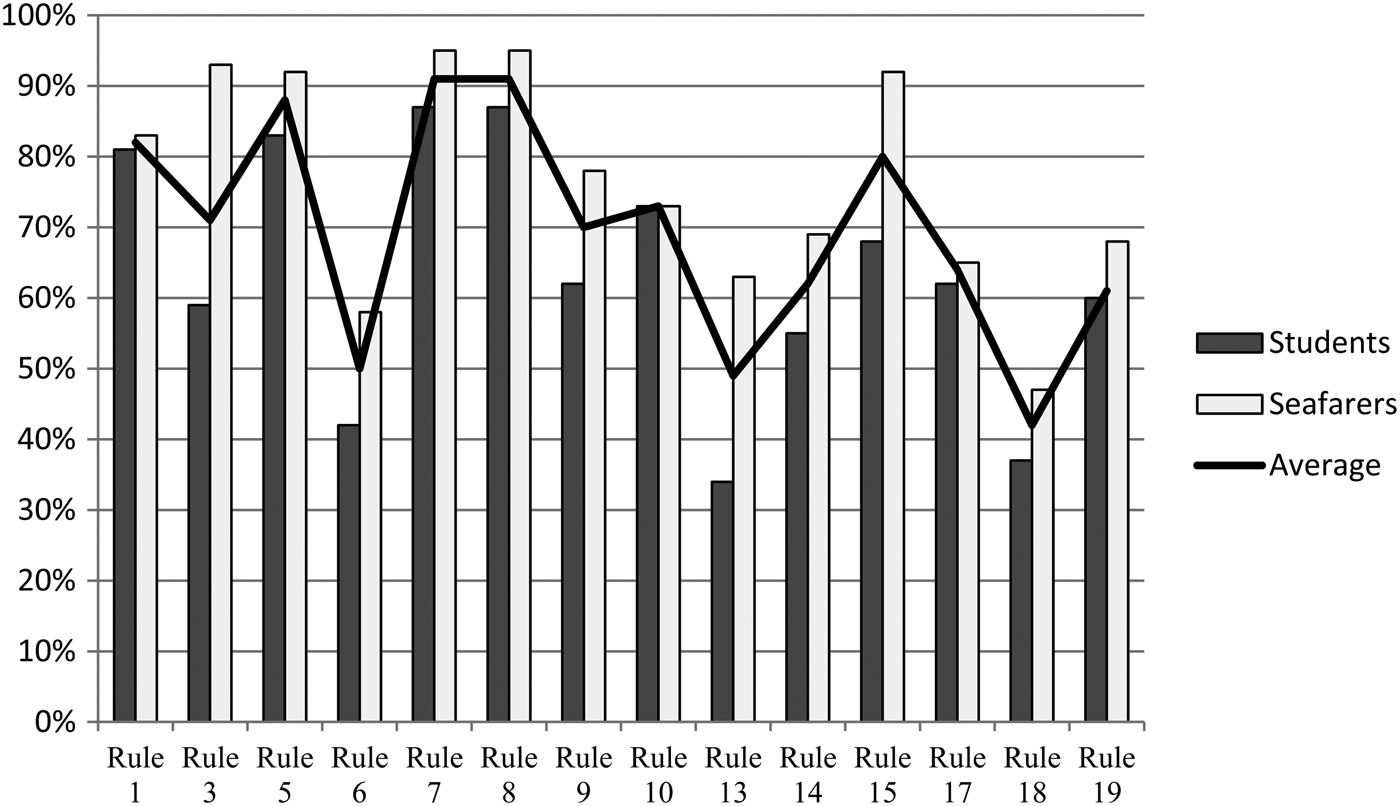
The data gathered from the questionnaire represents understanding of the Rules, which means that the watchkeeping officer is capable of applying the knowledge of the Rules in a real-life situation. In Figure 9, the results for students and licensed watchkeeping officers are presented. In this Figure, the Rules that are hard to understand are Rule 6 (Safe speed), Rule 10 (Traffic separation schemes), Rule 13 (Overtaking), Rule 14 (Head-on situation), Rule 17 (Action by stand-on vessel), Rule 18 (Responsibilities between vessels) and Rule 19 (Conduct of vessels in restricted visibility).
Percentage of correct answers by each Rule.
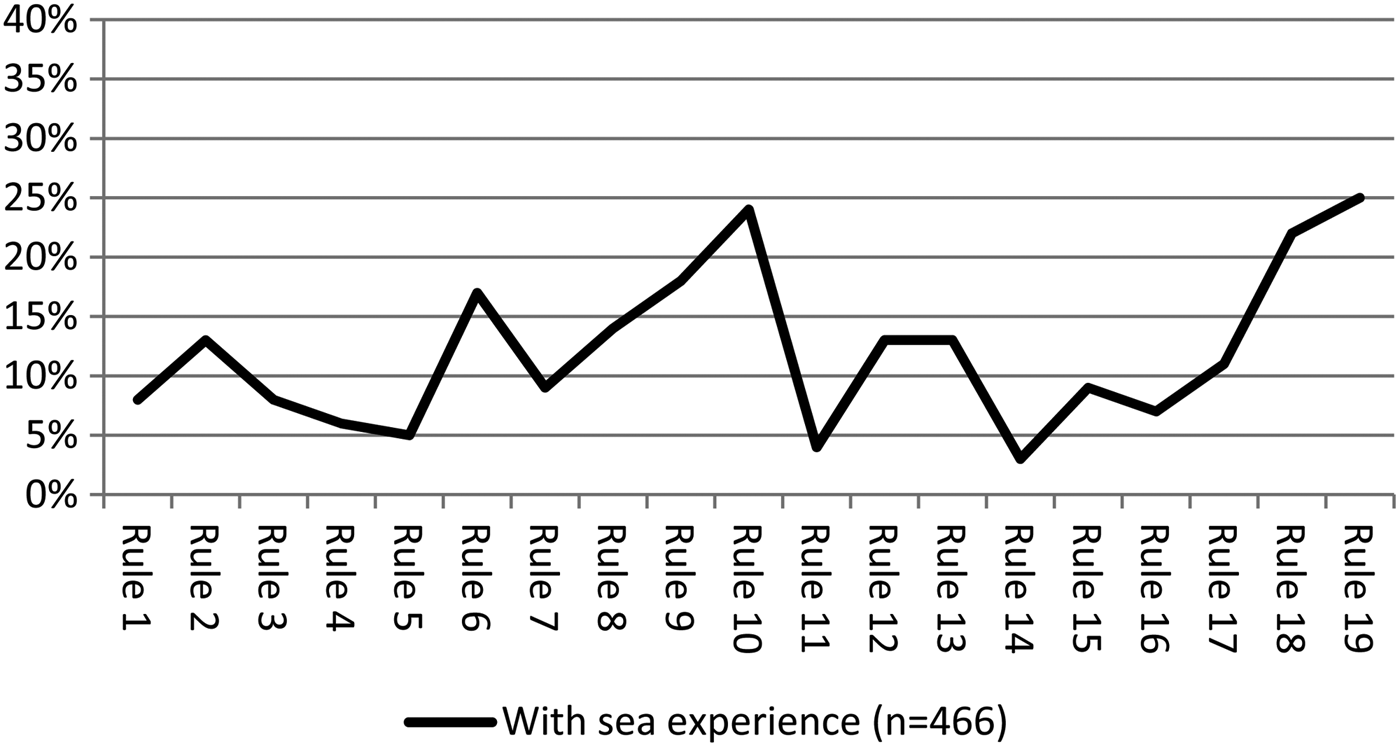
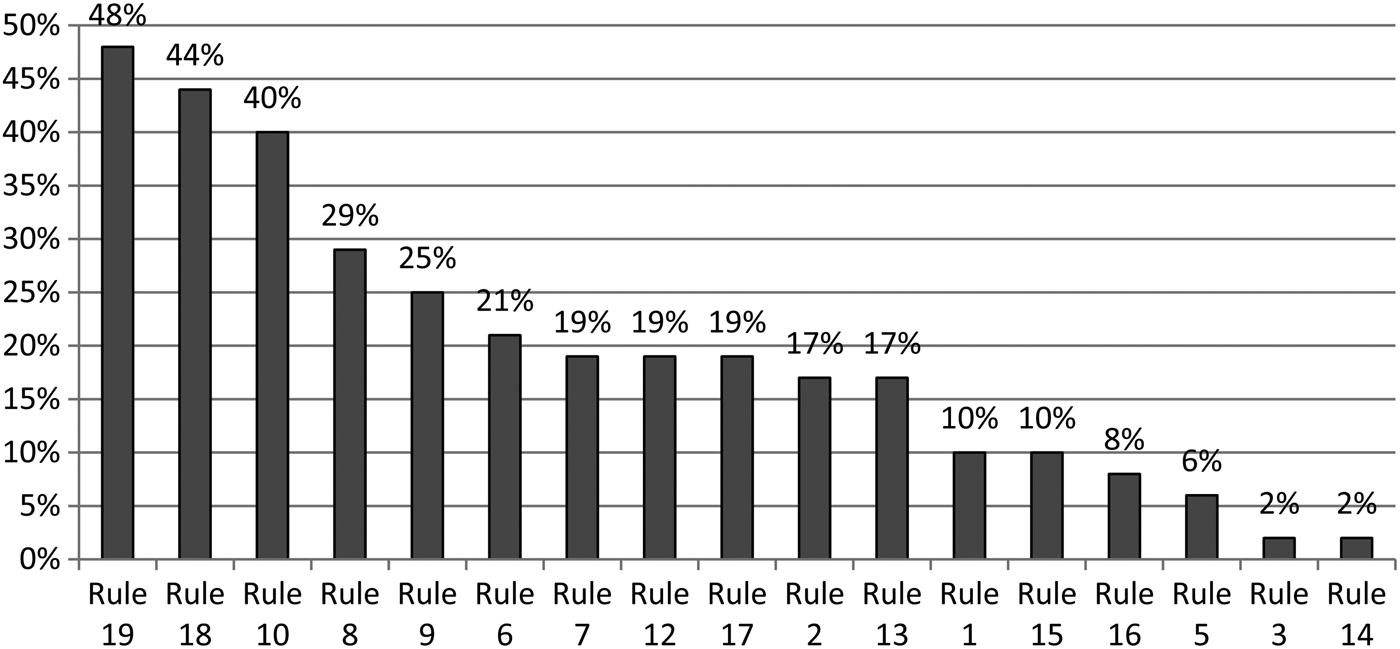
In the part of the questionnaire for testing licensed seafarers' opinion, one of the questions was “Which rules are hardest to understand?”, where participants could pick Rules which, in their opinion, are hard to understand. The results are shown in Figure 10. It can be seen that these results are in correlation with the results in Figure 9.
Percentage of answers by each Rule for question: “Which Rules are hardest to understand?”.
In the part containing the questions for lecturers, one of the questions was to grade the interpretation of the Rules by their students. In the opinion of 63% of the lecturers, students have difficulties in interpreting the meaning and application of the Rules.
Also, one of the questions for the lecturers was to rank the Rules which, in their opinion, are hardest to understand by their students. In their opinion those are: Rule 19 (Conduct of vessels in restricted visibility), Rule 18 (Responsibilities between vessels), Rule 10 (Traffic separation schemes), Rule 8 (Action to avoid collision), Rule 9 (Narrow channels) and Rule 6 (Safe speed) (Figure 11).
Percentage of answers by each Rule for question: “Rules which are most difficult for students to understand”.
From these results it can be seen that the lecturers have noticed gaps in students' knowledge and understanding of the above Rules. Also, licensed watchkeeping officers' answers confirm that they do not fully understand all of the Rules regardless of their experience (Figure 10). However, in accordance with the research results, only 34% of the seafarers tried to fill those gaps in the Rules knowledge by participating in additional COLREG training courses.
5. DISCUSSION
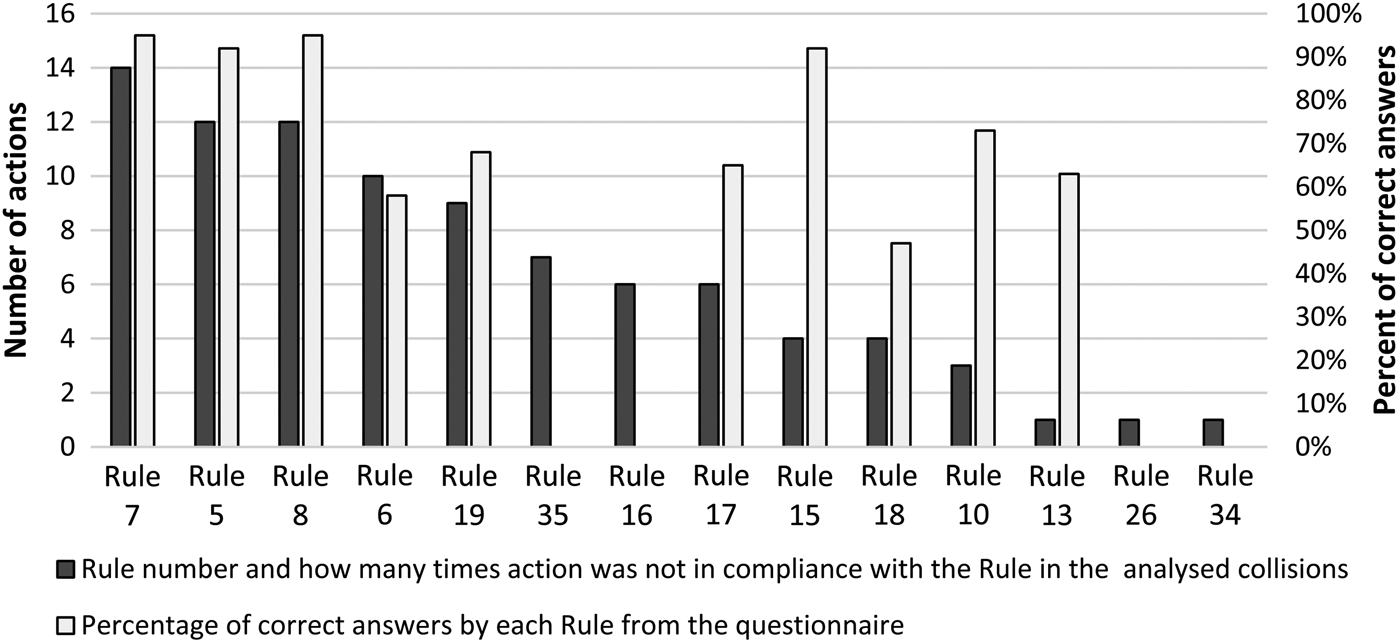
For the purpose of research, it was necessary to compare the results of the questionnaire, opinions of the participants of the workshops and the results of collisions database provided by the MAIB. Reasons for collisions had been identified through the investigation of the MAIB collisions database, where collisions from 2006 to 2012 were analysed. In the analysed time period the MAIB investigated 14 collisions of seagoing vessels. Figure 12 shows which Rules were broken in the analysed collisions and the percentage of correct answers for each Rule in the questionnaire.
Comparison of Rule number and how many times action was not in compliance with the Rules in the analysed collisions and percentage of correct answers by each Rule from the questionnaire.
In the case of questions concerning Rule 7 (Risk of collision), Rule 5 (Look-out) and Rule 8 (Action to avoid collision) there is a score of over 90% of correct answers. When analysing the collision cases from the MAIB database it can be seen that those are collision rules most frequently broken or neglected. Therefore, a logical question is imposed: how it is possible that the generally best understood collision rules are at the same time the rules that are most neglected and breached? The reason for this phenomenon is the fact that the MAIB database gives the results of the collisions submitted to investigation. And, once a collision occurs, the Rules that are most frequently broken are Rule 7 and Rule 8, and very often Rule 5. So, it seems irrelevant whether the Officer of the Watch more or less understands these Rules, because in a real collision situation those are the rules that are most likely to be broken.
Rule 6 (Safe speed) and Rule 19 (Conduct of vessels in restricted visibility) are breached in 60% of the analysed cases and have recorded a score of correct answers under 70% in the questionnaire. These Rules are very important in cases of poor visibility. They were broken in 14 analysed collision cases. 50% of the examined collisions occurred in poor visibility. Also, in the questionnaire, licensed seafarers marked these two Rules as hard to understand (Figure 10).
Rule 17 (Action by stand-on vessel) and Rule 18 (Responsibilities between vessels) are hard to understand by seafarers and are broken in 40% of the collisions. Rule 17 is a special problem in the cases when the give-way vessel does not take action to avoid collision and watchkeeping officers are in doubt as to what action to take, although Rule 17 is very clear in this particular case. Rule 18 also causes misunderstanding because it is necessary to take into consideration Rules 9 (Narrow channels), 10 (Traffic separation schemes) and 13 (Overtaking) before applying Rule 18.
By analysing the results from the questionnaire research, data from the collision investigation and conclusions from the workshop, it is noticeable that the Rules should undergo some minor changes or updates in accordance with evolving technology. Also, the existing rules have to be interpreted precisely so that they are understood in the same way by everyone.
The research results show that the Rules that have a priority over other Rules have to be clearly decided and watchkeeping navigation officers should be able to apply them without difficulty. It is very important to establish a common understanding of an individual rule using new Guidelines and standardising the education, training and assessment of COLREGs through the IMO Model Course on COLREGs.
As far as the understanding of the Rules is considered, some of the participants of the workshops concluded that the official translations of COLREGs in multiple languages could be made, but appropriate explanation of the Rules seems to be far more important. Also a global online test on COLREGs would be strongly supported and recommended. The test should be taken in English and in the mother tongue.
6. CONCLUSION
The questionnaire results showed that nautical students/navigating cadets as well as practising licensed navigational watchkeeping officers generally lack a full and complete understanding of the Collision Rules. The results of the study were confirmed by means of the comparison of collision investigation and questionnaire results. Research was conducted in several European countries, which makes it more relevant because different teaching methods were included in the survey and all those methods showed the same deficiencies. By acknowledging these deficiencies it is possible to identify knowledge gaps and to improve the learning process. On-going work on the ACTs project includes developing new teaching methodology which will take into consideration the survey results and will try to improve the teaching methodology by using scenarios created for each Rule. These scenarios will help students and practising watchkeeping officers to understand each Rule and apply it in a proper way. Also, by using the radar screen view, bridge view, electronic chart view and bird's eye view in the created scenarios, nautical students/navigating cadets will witness the results of non-complying with COLREGs as well as the results of proper application of COLREGs. The main purpose of those scenarios is to show students how the collision avoidance looks in practice and what to expect in real-life situations. The next step is to see if those scenarios will be helpful and to what extent. If the teaching methods are efficient, and students will understand the Rules better in the future, the final result could result in the decrease of collisions at sea. Further progress on the ACTs project can be followed on the web page: www.ecolregs.com.