


The growing awareness that the brain possesses more plasticity than most of the other organs in the body allows us to begin to conceptualise a neurobiologically informed perspective on psychotherapy that reflects the dynamic nature of the interaction between genes and the environment. Imaging studies of psychotherapy, animal and human studies of the interplay between the brain and the environment, genetic studies of personality, and research on memory are all paving the way for a new understanding of the biological underpinnings of psychotherapy. This paper reviews a portion of the relevant literature that helps us construct such a model, and argues for the continued relevance of psychotherapy in an era of extraordinary strides in neuroscience.
BACKGROUND
As we contemplate the shape of psychiatry in the 21st century, one of the greatest risks we face is reductionism. Specifically, psychiatry is at risk of becoming a house divided against itself, with psychosocial specialists in one camp and neuroscientists in another. While we know that mind and brain are inseparable, our literature and our practice do not always reflect that.
Related to this unfortunate tendency toward dichotomisation is a widely held but poorly supported view of treatment: namely, that psychotherapy is a treatment for ‘psychologically based’ disorders, while ‘biologically based’ disorders should be treated with medication. This view is related to a Cartesian dualism that splits people into a mind and a brain. While the two constructs represent domains that have their own languages and can be separated for purposes of discussion, they are always integrated. What we call ‘mind’ can be understood as the activity of the brain (Reference AndreasenAndreasen, 1997), although the complexity of one's unique subjectivity is not easily reducible to chemistry and physiology. Mental phenomena arise from the brain, but subjective experience also affects the brain.
The irony of our resistance to integrating the mind and the brain is that we now stand on the threshold of a sophisticated understanding of the interaction between the brain and the environment, which could lead to truly integrative treatment strategies.
MIND, BRAIN, ENVIRONMENT, GENES
Intensive study of the genetic contributions to psychiatric disorders have led investigators to the conclusion that neatly predictable Mendelian patterns of inheritance do not apply to mental illness. Different forms of expression and incomplete penetrance are typical of the major disorders, suggesting that environmental and developmental factors must interact with genes to produce psychiatric illness. Indeed, the study of the plasticity of the brain has shown that once genes are activated by cellular developmental processes, the rate at which those genes are expressed is highly regulated by environmental signals throughout life.
Environmental impact on gene expression
Experimental animal models have been of considerable heuristic value in understanding the mechanisms involved in gene-environment interaction. In a series of innovative experiments with the marine snail Aplysia, Kandel (Reference Kandel1998) has demonstrated how synaptic connections can be permanently altered and strengthened through the regulation of gene expression connected with learning from the environment. In this organism the number of synapses doubles or triples as a result of learning. Kandel postulates that psychotherapy may cause similar changes in brain synapses. In the same way that the psychotherapist conceptualises representations of self and objects as malleable through psychotherapeutic intervention, Kandel notes that the structure of the brain is dynamic and it possesses plasticity. If psychotherapy is regarded as a form of learning, then the learning process that occurs in psychotherapy may produce alterations of gene expression and thereby alter the strength of synaptic connections. The sequence of a gene, or the template function, is not affected by environmental experience, but the transcriptional function of the gene -the ability of a gene to direct the manufacture of specific proteins — is certainly responsive to environmental factors and regulated by those influences.
Studies with other mammals have also demonstrated the plasticity of the brain in response to environmental input. Rats raised in a social environment that requires complex learning to survive have significantly greater numbers of synapses per neuron as compared to rats raised in isolation (Reference Greenough, Black and WallaceGreenough et al, 1987).
The impact of environmental factors on gene expression explains why there are phenotypic differences between identical twins and discordance for such illnesses as schizophrenia. Heritable characteristics of children influence the kind of parenting they receive, such that two children in the same household may experience a profoundly different environment. In an elegantly designed study of genetic and family contributions to psychopathology in adolescence, Reiss et al (Reference Reiss, Hetherington and Plomin1995) studied 708 families: 93 families with at least two same-sex adolescent siblings who were monozygotic twins, 99 families with dizygotic twins, 95 families with ordinary siblings, 181 families with full siblings brought from a previous marriage into the current marriage by the mother, 110 cases with full siblings in step-families, and 130 families with genetically unrelated siblings in step-families. Conflictual and negative parental behaviour directed specifically at one adolescent account for almost 60% of variance in adolescent antisocial behaviour and 37% of variance in depressive symptoms. The study suggested that the idea of the ‘non-shared family environment’, which has repeatedly surfaced as an important factor in research on the pathogenesis of mental illness, often refers to parenting behaviour directed specifically at one child. In other words, children in the same family may have quite different interactions with their parents and quite different outcomes.
The individual's genetic endowment influences the type of parenting he or she receives, and this development input from parents and other figures in the environment may, in turn, influence the further read-out of the genome. Reiss et al (Reference Reiss, Hetherington and Plomin1995) also noted that aggressiveness in parents interacted with a tendency to yield to the child's coercion, so that parenting was inconsistent. The brain is obviously not a blank slate, and the impact of environmental factors is constrained by the basic genetic endowment of the individual. Nevertheless, environmentally derived activity appears to drive the development of dendrites so that they conform to cognitive schemes for the construction of mental representations. Gene-environment interactions become a reverberating ‘hall of mirrors’ that cannot be easily dissected. Neural connections between the cortex, the limbic system and the autonomic nervous system become connected into circuits in accordance with specific experiences of the developing organism. Hence emotion and memory circuits are linked together because of consistent patterns of connection due to stimuli in the environment. This developmental pattern may be summarised as “cells that fire together wire together” (Reference SchatzSchatz, 1992, p. 64).
Stressors in the environment may also be influential in triggering genetic vulnerability to illness in adults. In a study of major depression in twins, Kendler and his colleagues (Reference Kendler, Kessler and Neale1995) followed 2164 pairs of female twins for an average of 17 months. Recent stressful events were the most powerful risk factor for an episode of major depression; genetic factors were substantial but not overwhelming. Those with the lowest genetic risk had only a 0.5% probability of depression onset per month if they were not exposed to a life event. If a severe life stressor occurred, their probability of a depressive episode increased to 6.2%. Those with the highest genetic risk had only a 1.1% probability in the absence of a stressor, but the risk escalated to 14.6% if a stressor was present. Genetic factors appeared to alter the sensitivity of individuals to the depression-inducing effect of stressful life events.
Relational changes and the brain
Preliminary evidence from other species indicates that social cues available in the environment may influence the way in which a specific neurotransmitter affects the organism. In crayfish, investigators identified a neuron whose response to the neurotransmitter serotonin differs dramatically depending on the animal's social status (Reference Yeh, Fricke and EdwardsYeh et al, 1996). This particular neuron controls the tail-flip reflex in cray-fish, which is relevant to the fight-flight response. In a dominant animal, serotonin makes the neuron more likely to fire; but the same neurotransmitter suppresses firing in subordinate animals. The response to serotonin is not permanently encoded. If the animal's social status changes, the effect of serotonin on the neuron also changes. For example, when two previously subordinate crayfish were placed together, one would eventually become dominant. When this animal was tested later, the neuron's response to serotonin was consistent with that in dominant animals (i.e. serotonin stimulated the tail-flip reflex rather than suppressing it). These findings lead us to speculate that the perception of one's place in a relationship may influence the activity of neurotransmitters and their effect on the brain.
Alterations in relationships have also been shown to produce lasting biochemical changes in rhesus monkeys (Reference SuomiSuomi, 1991). Infant rhesus monkeys separated from their mothers developed behavioural abnormalities that suggest a variant of social anxiety. These infants could overcome their behavioural abnormalities when exposed to peers who were raised by their own mothers; but the difficulties returned when stressful or novel situations were encountered. In Suomi's research the infants reared by the peers still had higher levels of cortisol and adrenocorticotrophic hormone (ACTH) in response to separation and lower cerebrospinal fluid levels of noradrenaline. They also had higher levels of 3-methoxy-4-hydroxyphenylglycol (MHPG).
An even stronger demonstration of how interactions with nurturing figures in the environment can influence genetic vulnerability emerged from a related investigation in Suomi's laboratory. About 20% of the infants in the monkey colony who were reared by their mothers nevertheless reacted to brief separations with increased cortisol and ACTH, depressive reactions and exaggerated noradrenaline turnover. This vulnerability appeared to be genetic. However, when unusually nurturant mothers within the monkey colony were placed with these infants, the inborn vulnerability to separation anxiety disappeared. These monkeys ultimately rose to the top of the social hierarchy in the monkey colony, suggesting that the ‘supermothers’ helped the young monkeys develop their innate sensitivity so as to allow them to be more attuned to social cues and respond to those cues in a way that was advantageous to them.
Mild trauma has also been studied in primates and appears to produce specific biochemical and behavioural changes. Rosenblum & Andrews (Reference Rosenblum and Andrews1994) randomly assigned infant monkeys either to normal mothers or to mothers temporarily made anxious by an unpredictable feeding schedule. Those with anxious mothers showed diminished capacity for normal social interaction and were socially subordinate. However, the changes did not manifest themselves until adolescence, confirming the psychoanalytic notion that disturbances in early phases of development can produce psychopathological changes later. These behavioural changes were also associated with serotonergic and noradrenergic alterations. Because genetic influences were controlled by random assignment, the findings suggest that distraction and anxiety in the mother were central to the changes identified.
Windows in time
Research data of this nature suggest that there are ‘windows in time’ when a gene is dependent on a certain type of environmental influence to determine its expression. Recent investigators have been finding similar ‘windows’ in human development for periods of major structural change in brain formation: early childhood (15 months to 4 years), late childhood (6-10 years), puberty and mid-adolescence (Reference Ornitz and LewisOrnitz, 1996). Several research teams have postulated interactions between childhood trauma and structural brain maturation. Pynoos et al (Reference Pynoos, Steinberg, Ornitz, Yehuda and McFarland1997) have suggested that trauma induces changes in neuromodulation and physiological reactivity, manifested in anxiety associated with traumatic expectations and increased attention to external stimuli to detect danger. Perry et al (Reference Perry, Pollard and Blakeley1995) argue that early childhood trauma can alter midbrain, limbic and brainstem structures through use-dependent modification secondary to extended alarm reactions. They also note that cortical development may be retarded by experiences of neglect and deprivation early in life, thus limiting cortical modulation of limbic, brainstem and midbrain responses to fear and danger.
Bremner et al (Reference Bremner, Randall and Vermetten1997) showed that the left hippocampal volume in adults with post-traumatic stress disorder who had experienced childhood physical and sexual abuse was dramatically reduced when compared to that in matched controls. It may well be that traumatic experiences during unstable periods of brain development can produce a form of regression to an earlier stage of neural function and structure (Reference Pynoos, Steinberg, Ornitz, Yehuda and McFarlandPynoos et al, 1997). Preliminary data obtained by Putnam & Trickett (Reference Putnam, Trickett, Yehuda and McFarland1997) from a longitudinal study comparing sexually abused girls to non-abused controls indicate that those girls who were abused had altered regulatory dynamics of their neuroendocrine systems, different neuroendocrine responses to stressors, and hypersecretion of corticotrophin-releasing hormone (CRH) that induced an adaptive down-regulation of CRH receptors in the anterior pituitary.
IMPACT OF PSYCHOTHERAPY ON THE BRAIN
The implications for psychotherapy of this view of the interaction between the genetic/biological substrate and the environment are complex and exciting. Family therapy is able to help alter the way in which parents respond to the heritable characteristics of their children so as to positively influence genetic expression. Moreover, the learning about oneself that occurs in psychotherapy may in itself influence the structure and function of the brain, as Kandel (Reference Kandel1998) suggests. This model allows us to broaden our understanding of psychiatric interventions by regarding all of them as having a biopsychosocial nature. In other words, medications have a ‘psychological’ effect in addition to their impact on the brain, and psychotherapeutic interventions affect the brain in addition to their ‘psychological’ impact.
When used in the treatment of obsessive—compulsive disorder, both behaviour therapy and fluoxetine appear to produce similar decreases in cerebral metabolic rates in the head of the right caudate nucleus (Reference Baxter, Schwartz and BergmanBaxter et al, 1992). The local cerebral metabolic rates for glucose can be measured by positron emission tomography (PET), and they are found to have the same response in reaction to the two different treatments.
Researchers in Finland showed that psychodynamic therapy may have a significant impact on serotonin metabolism (Reference Viinamäki, Kuikka and TiihonenViinamäki et al, 1998). At the beginning of 1 year of psychotherapy, a 25-year-old man suffering from borderline personality disorder and depression was imaged by single photon emission computed tomography (SPECT). Another man with similar problems also underwent imaging but did not receive psychotherapy or any other treatment.
Initial SPECT imaging showed that both men had markedly reduced serotonin uptake in the medial prefrontal area and the thalamus, when compared with 10 healthy control subjects. Repeat SPECT imaging showed that the man who had received 1 year of psychodynamic therapy had normal serotonin uptake, while the control patient who did not receive psychotherapy continued to have markedly reduced serotonin uptake. Since the patient who received psychotherapy did not take medication in conjunction with the therapy, the finding suggests that the dynamic therapy itself may have normalised the serotonin metabolism.
Cognitive—behavioural therapy appears to cause biological changes in people with panic disorder. In such people, panic attacks can be triggered by lactate infusion. However, a study by Shear et al (Reference Shear, Fyer and Ball1991) has demonstrated that induction of panic by lactate can be effectively reversed through successful cognitive therapy. In other words, panic disorder sufferers in whom, before starting therapy, attacks were precipitated by injection of lactate no longer responded in that manner after therapy.
Cognitive therapy also appears to influence thyroid hormone levels in sufferers from major depression (Reference Joffe, Segal and SingerJoffe et al, 1996). Patients who responded to cognitive-behavioural therapy showed striking decreases in their levels of thyroxine (T4), while the non-responders showed increases in T4. Another study of depressed patients found that the biological changes in sleep architecture produced by cognitive therapy are identical to those produced by antidepressant medication (Reference Thase, Fasiczka and BermanThase et al, 1998).
Recent provocative research on cancer patients also suggests that psychotherapy and meaningful supportive relationships can influence brain functioning. Spiegel et al (Reference Spiegel, Bloom and Kraemer1989) reported a controlled study in which sufferers from metastatic breast cancer were randomly assigned to group psychotherapy or a control group. Those in group psychotherapy lived an average of 18 months longer than the controls. In a study of patients with malignant melanoma, Fawzy et al (Reference Fawzy, Cousins and Fawzy1993) divided them into either a support group or a control group. They found the death rate was lower, and remissions were longer, among members of the support group than in the control group. This impact was highly significant even though the support group lasted a mere 6 weeks.
PROCEDURAL AND DECLARATIVE MEMORY
In his classic paper, Remembering, Repeating, and Working-Through (Reference Freud and Strachey1914), Freud stressed that what the patient does not remember will be repeated in the relationship between patient and analyst. In other words, the patient's mode of relating to the analyst will provide a wealth of information about the patient's unconscious conflicts and internalised object relations. Memory research now enables us to translate Freud's concept of what emerges in the transference relationship (to the analyst) into more contemporary terms. Early attachment relationships are internalised and encoded as procedural memory (Reference Amini, Lewis and LannonAmini et al, 1996). What is ordinarily referred to as transference is, in part, related to procedural memory. What unfolds in the relationship with the therapist is the patient's stereotyped, automatic, habitual mode of object relatedness shaped by attachment relationships in the first years of life. These relational configurations encoded in procedural memory are also implicit because they operate outside conscious awareness. In a similar vein, defence can be conceptualised as a form of procedural knowledge that becomes encoded in the regulation of affective states associated with internalised object relations.
Amini et al (Reference Amini, Lewis and Lannon1996) suggest that psychotherapy is a new attachment relationship which is able to restructure attachment-related implicit procedural memory. Stored prototypes can be modified by new interactions with the therapist which are internalised by the patient. This model requires an affectively engaged therapist, because implicit affective learning depends on a vivid affective experience of the therapist.
Therapists are often disappointed when they see former patients and ask them what they feel was of most benefit to them during the years they were in psychotherapy. Much to the dismay of the therapist, patients often do not remember any of the psychodynamic formulations or interpretations that the therapist carefully constructed to provide insight. Instead, they remember a joke the therapist told, a belly laugh they shared, a moving moment of emotional connection, or a glance exchanged between therapist and patient when a special form of closeness was felt. Lyons-Ruth et al (1998) view these moments in therapy as a form of implicit relational knowing when something emotionally reparative transpires without involving the realm of insight or cognitive understanding. These investigators think such moments are a crucial part of the mode of therapeutic action.
In addition to these non-interpretive aspects of psychotherapy, the therapist may also provide a great deal of insight from observations of the patient's characteristic patterns of implicit relatedness. Much of the work of psychoanalytic therapy involves providing a perspective that is outside the patient and therefore different from the patient's own subjective impressions. Immersed in the transference—countertransference dimensions of the therapeutic interaction, the therapist begins to sense what type of characteristic relationship patterns occur in the patient's life. By pointing out to the patient his/her unconscious tendency to be deferential, antagonistic, or monopolising of the conversation, the therapist gradually makes them aware of their implicit modes of relatedness. The patient also becomes aware of the impact of their behaviour on others and the way in which it evokes characteristic reactions. This awareness may bring the patient a much greater sense of mastery, so that they are able to reflect on these patterns before automatically activating them in future relationships.
It would be an oversimplification, however, to suggest that all transferential processes are purely based on procedural memory. Transference is far more complicated. Declarative memory, involving such phenomena as beliefs and expectations, is also involved in the transference to the therapist. Some of these beliefs and expectations operate outside conscious awareness and therefore are implicit declarative memories. A therapist who asks for clarification, for example, may be viewed as doubting the patient's credibility because the patient unconsciously is convinced that no one will validate their internal experience. The therapist may note this repetitive pattern of feeling hurt when clarification is requested. By pointing out the patient's tendency to react to questions as critical challenges, the therapist may help them begin to understand implicit or unconscious beliefs about others that may not square with the other person's internal experience. This form of interpretive understanding makes implicit declarative memories more available for conscious reflection. The mastery gained through this insight may assist the patient in developing improved object relations and greater self-esteem.
COMBINING MEDICATION AND PSYCHOTHERAPY
To observe that psychotherapy may make changes in the brain does not imply that medication is no longer needed as a psychiatric intervention or that psychotherapy can alter all biological substrates. With increasing advances in genetic and neuroscience research, we are beginning to gain greater sophistication in targeting certain areas of psychopathology with pharmacotherapeutic interventions and others with psychotherapeutic approaches. A useful example of this combined approach of medication and psychotherapy is the approach to personality disorders.
Cloninger et al (Reference Cloninger, Svrakic and Pryzbeck1993) have constructed a psychobiological model of temperament and character that consists of four dimensions of ‘temperament’ and three dimensions of ‘character’ (see Table 1). On the basis of extensive genetic research, these investigators have determined that the four dimensions of temperament — novelty seeking, harm avoidance, reward dependence and persistence — are 50-60% heritable (independently of one another), manifest themselves early in life, and involve preconceptual biases in perceptual memory and habit formation. The other 40-50% of personality is determined by character variables, including self-directedness, cooperativeness and self-transcendence. These dimensions of character are shaped by family influences, and mature in adulthood, influencing personal and social effectiveness by insight learning about self-concepts.
Development of personality
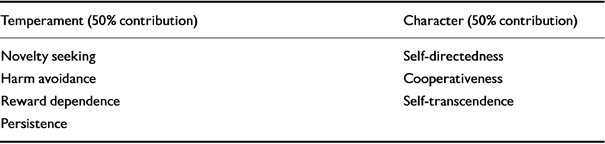
| Temperament (50% contribution) | Character (50% contribution) |
|---|---|
| Novelty seeking | Self-directedness |
| Harm avoidance | Cooperativeness |
| Reward dependence | Self-transcendence |
| Persistence |
The presence or otherwise of a personality disorder is determined by character variables. In fact, all personality disorders show low scores in self-directedness and in cooperativeness. Temperament variables tend to be influential in determining the subtype of personality disorder, as well as susceptibility to Axis I emotional disorders.
Making the distinction between temperament and character may be essential for effective treatment planning. Temperament tends to be highly stable over time, and is fairly unresponsive to psychotherapy, while character is malleable, develops throughout adulthood, and may respond favourably to psychotherapeutic interventions. Hence understanding these distinctions can help the psychiatrist design a treatment plan that uses medications such as the selective serotonin re-uptake inhibitors (SSRIs) to target impulsivity and affective lability, which are temperament constructs, while using psychotherapy to approach problems in the patient's self-directedness and object relations (cooperativeness). Using combined treatments in this neurobiologically informed manner may be critical to effective treatment.
This evidence regarding the impact of psychotherapy on the brain and the mutual impact of environment and genes opens up new lines of investigation that may enhance our understanding of psychopathology and treatment. These include: (a) the mechanisms of action of psychotherapy, (b) the interrelationships between the mechanisms of action of psychotherapy and medication, (c) a clearer understanding of pathogenesis itself and the malleability of some components of the pathogenetic mechanisms of major psychiatric disorders, and (d) preventive measures that may alter the way that parents interact with their children and thus influence genetic expression of inheritable vulnerabilities. The concept of windows in development may lead to interventions designed to promote gene expression associated with healthy, adaptive functioning and others designed to militate against the damaging influence of trauma and neglect.
CLINICAL IMPLICATIONS AND LIMITATIONS
CLINICAL IMPLICATIONS
-
▪ Family therapy that modifies parent—child interaction may be able to alter gene expression in the child.
-
▪ Psychotherapy and medication may affect the brain similarly in certain disorders.
-
▪ Medication may target temperament in personality disorders while psychotherapy may affect character.
LIMITATIONS
-
▪ The studies of brain changes in psychotherapy are preliminary and require replication.
-
▪ We do not yet know if the findings of some of the animal studies are applicable to human subjects.
-
▪ The action mechanisms of psychotherapy at the brain level are largely speculative at this time.




eLetters
No eLetters have been published for this article.