


Invasive weed management in non-crop areas (primarily rangeland and pastureland) remains a significant challenge throughout the United States (Duncan et al. Reference Duncan, Jachetta, Brown, Carrithers, Clark, Ditomaso, Lym, McDaniel, Renz and Rice2004; Evans and Young Reference Evans and Young1970; Kelley et al. Reference Kelley, Fernandez-Gimenez and Brown2013; Kyser et al. Reference Kyser, Wilson, Zhang and DiTomaso2013; Mangold et al. Reference Mangold, Parkinson, Duncan, Rice, Davis and Menalled2013). Rangeland and pastures comprise about 42% (400 million hectares) of the total land area in the United States, and invasive plants in these areas cause an estimated loss of $5 billion annually (Pimentel et al. Reference Pimentel, Zuniga and Morrison2005). Cultural practices contributing to the establishment and spread of invasive plants include disturbance and overgrazing by domestic livestock (Davies et al. Reference Davies, Bates and Boyd2016; Porensky et al. Reference Porensky, Derner, Augustine and Milchunas2017), purposeful introduction for agriculture and horticulture, unintentional introduction via contaminated seed, and climate change (DiTomaso et al. Reference DiTomaso, Masters and Peterson2010; Varanasi et al. Reference Varanasi, Prasad and Jugulam2016).
Invasive weeds that infest rangeland and other non-crop areas can have significant negative ecological impacts, including depleting soil moisture and nutrients, reducing forage production, reducing plant diversity and community productivity, altering fire frequency, and reducing the value of recreational land (Beck et al. Reference Beck, Zimmerman, Schardt, Stone, Lukens, Reichard, Randall, Cangelosi, Cooper and Thompson2008; DiTomaso et al. Reference DiTomaso, Masters and Peterson2010; Knapp Reference Knapp1996; Watson and Renney Reference Watson and Renney1974; Whisenant Reference Whisenant1990). Invasive weeds are frequently designated as noxious because of these impacts. Many of these invasive plants are prolific seed producers and exert high propagule pressures on invaded sites. Propagules can spread by multiple dispersal mechanisms, including mechanical (vehicles and contaminated machinery), wildlife and livestock (ingested or entangled with coat hair), and human recreation (Sheley et al. Reference Sheley, Marks and County1999). Once established, several noxious weeds have extensive taproot systems that allow them to extract moisture and nutrients from deep within the soil profile (DiTomaso Reference DiTomaso2000; Gerlach and Rice Reference Gerlach and Rice1996). This can result in rapid shifts in the dominant native plant communities (James et al. Reference James, Evans, Ralphs and Child1991).
Of the more than 300 rangeland weeds in the United States, downy brome (Bromus tectorum L.) and Dalmatian toadflax [Linaria dalmatica (L.) P. Mill.] have emerged as two of the most widespread and problematic, with average annual spread rates of 14% and 19%, respectively (DiTomaso Reference DiTomaso2000; DiTomaso et al. Reference DiTomaso, Masters and Peterson2010; Duncan et al. Reference Duncan, Jachetta, Brown, Carrithers, Clark, Ditomaso, Lym, McDaniel, Renz and Rice2004). Disturbance favors these particular invasive plants, so they commonly invade degraded areas such as roadsides, abandoned crop fields, gravel pits, clearings, and overgrazed rangeland (Beck Reference Beck2009). Downy brome, an invasive winter annual grass, has rapidly spread throughout many regions of the United States, displacing native vegetation and altering fire frequency and intensity (Knapp Reference Knapp1996; Whisenant Reference Whisenant1990; Zouhar Reference Zouhar2008). Duncan et al. (Reference Duncan, Jachetta, Brown, Carrithers, Clark, Ditomaso, Lym, McDaniel, Renz and Rice2004) estimated that more than 22 million hectares of the western United States are infested with downy brome. Dalmatian toadflax, an escaped ornamental, is a short-lived herbaceous perennial plant (Alex Reference Alex1962) that is most commonly found in semi-arid areas on coarse-textured, gravelly soils (Alex Reference Alex1962; Robocker Reference Robocker1970). It is a self-incompatible species, which contributes to its high level of genetic variability (Kyser and DiTomaso Reference Kyser and DiTomaso2013; Wilson and Turner Reference Wilson and Turner2005). Dalmatian toadflax produces large amounts of seed that can remain viable in the soil for approximately 10 yr (Robocker Reference Robocker1970). Once established, high seed production along with aggressive vegetative propagation enables Dalmatian toadflax to spread rapidly and to dominate and persist (Wilson and Turner Reference Wilson and Turner2005). Other non-crop, broadleaf weeds that have major economic and ecological impacts include diffuse knapweed (Centaurea diffusa Lam.), musk thistle (Carduus nutans L.), curly dock (Rumex crispus L.), common mullein (Verbascum thapsus L.), halogeton [Halogeton glomeratus (M. Bieb.) C. A. Mey.], horseweed [Conyza canadensis (L.) Cronq.], and common teasel (Dipsacus fullonum L.) (DiTomaso Reference DiTomaso2000; Duncan et al. Reference Duncan, Jachetta, Brown, Carrithers, Clark, Ditomaso, Lym, McDaniel, Renz and Rice2004; Rose et al. Reference Rose, Hild, Whitson, Koch and Van Tassell2009). There are currently limited management options that provide long-term control of these weeds.
Management Implications
Native plant communities that provide wildlife habitat and important ecosystem services are negatively impacted by invasive weeds. Many of these invasive weeds are prolific seed producers, which makes the soil seedbank the primary mechanism responsible for rapid re-establishment. Long-term control of many weed species has been difficult, due to limited management options and budget constraints. Short-term control does not provide the time necessary for the re-establishment of the native plant community, so there is often an open niche for re-establishment or secondary invasions to occur. Although herbicides are a commonly used management tool, there are limited herbicide options that provide the long-term control necessary to deplete the soil seedbank of invasive weed seed and allow recovery of co-occurring desired species. An herbicide with residual activity would be desirable for control of germinating seedlings, and while aminocyclopyrachlor, aminopyralid, and picloram have residual activity, their residual activity is less than indaziflam. The results presented here provide evidence that indaziflam could be used alone or in combination with broadleaf herbicides to potentially extend control up to 4 yr after treatment. For invasive winter annual grasses such as downy brome, indaziflam could be applied alone preemergence; however, having limited postemergence (POST) activity, indaziflam would need to be used in combination with other broadleaf herbicides to control actively growing rosettes in the fall or spring. Indaziflam’s residual activity could provide the necessary time for desired co-occurring species to re-establish. Indaziflam represents an interesting opportunity to influence rangeland plant community assembly in areas affected by invasive species that dominate native rangelands primarily by their high propagule pressure. Indaziflam could be used in conjunction with other methods to shift the advantage from exotic invaders with high propagule pressure back toward natives and other desirable vegetation. Because indaziflam is a unique mode of action (cellulose-biosynthesis inhibitor) for non-crop weed management, a combination of indaziflam with other modes of action in a single treatment could also be used for resistance management. Although additional research is necessary to verify these findings under field conditions, this study supports our previous indaziflam work with downy brome.
Among the available control strategies for invasive weed control in non-crop areas (mechanical, cultural, biological, and chemical), herbicides are the primary method for controlling invasive weeds (DiTomaso Reference DiTomaso2000; Mangold et al. Reference Mangold, Parkinson, Duncan, Rice, Davis and Menalled2013). Synthetic auxin or growth-regulator herbicides such as aminocyclopyrachlor (Method®), aminopyralid (Milestone®), and picloram (Tordon®) are commonly recommended residual broadleaf herbicides, while imazapic (Plateau®) has been the primary herbicide for downy brome control (Kyser et al. Reference Kyser, Wilson, Zhang and DiTomaso2013; Mangold et al. Reference Mangold, Parkinson, Duncan, Rice, Davis and Menalled2013; Sebastian and Beck Reference Sebastian and Beck2004). Several other herbicides, including glyphosate (Roundup®) and rimsulfuron (Matrix®), have been used for short-term downy brome control (Kyser et al. Reference Kyser, Wilson, Zhang and DiTomaso2013). None of these herbicides have provided long-term control of invasive weeds when used alone, resulting in rapid reinfestations (DiTomaso et al. Reference DiTomaso, Masters and Peterson2010; Mangold et al. Reference Mangold, Orloff, Parkinson and Halstvedt2015; Sebastian et al. Reference Sebastian, Beck, Sebastian and Rodgers2012).
Lack of residual control and resulting seedling recruitment could be attributed to the chemical properties of these herbicides (Sebastian et al. Reference Sebastian, Beck, Sebastian and Rodgers2012). Aminocyclopyrachlor, aminopyralid, imazapic, and picloram are all water-soluble herbicides (ability of an herbicide to dissolve in water) with values ranging between 2,200 and 207,000 mg L−1. Another indicator of an herbicide’s hydrophilicity or lipophilicity can be estimated by its log Kow (octanol/water partitioning coefficient). The herbicides mentioned earlier have a range of log Kow (pH 7) values (−2.87 to 1.18) which are characteristic of hydrophilic compounds. Because aminocyclopyrachlor, aminopyralid, and imazapic are water soluble, their leaching potential is high, ultimately decreasing the herbicide concentration available in the soil solution for plant uptake beyond the initial year of application (Oliveira et al. Reference Oliveira, Alonso, Koskinen and Papiernik2013). A study conducted by Oliveira et al. (Reference Oliveira, Alonso, Koskinen and Papiernik2013) also showed desorption hysteresis with aminocyclopyrachlor and picloram, suggesting the herbicide that is sorbed to soil is resistant to desorption and irreversibly bound.
Another factor to consider for long-term control of invasive plants is the soil seedbank. The longevity of weed seeds in the soil for the species mentioned earlier are all >2 yr (Burnside et al. Reference Burnside, Wilson, Weisberg and Hubbard1996; Rector et al. Reference Rector, Harizanova, Sforza, Widmer and Wiedenmann2006; Robocker Reference Robocker1970; Robocker et al. Reference Robocker, Williams, Evans and Torell1969; Sheley et al. Reference Sheley, James and Michael1998; Weaver Reference Weaver2001). Therefore, new herbicides should be evaluated that have decreased leaching potential and provide the soil residual control necessary to deplete the soil seedbank. Residual control for multiple growing seasons would also provide native perennial plants a competitive advantage for re-establishment (DiTomaso et al. Reference DiTomaso, Masters and Peterson2010; Patrick and Wilson Reference Patrick and Wilson1983; Rose et al. Reference Rose, Hild, Whitson, Koch and Van Tassell2009).
Indaziflam (Esplanade®, Bayer CropScience) is a new herbicide with the potential to provide residual control of germinating seeds of annual, biennial, and perennial weeds. Previously, indaziflam has been used primarily for total vegetation management (e.g., roadsides, railroads, power substations, oil pads); weed control in turf; and established citrus, grape, and tree nut crops (Brosnan et al. Reference Brosnan, Breeden, McCullough and Henry2012; de Barreda et al. Reference de Barreda, Reed, Yu and McCullough2013; Jhala and Singh Reference Jhala and Singh2012; Kaapro Reference Kaapro2012). Indaziflam is a cellulose-biosynthesis inhibitor (Brabham et al. Reference Brabham, Lei, Gu, Stork, Barrett and DeBolt2014; Environmental Protection Agency 2010), representing a unique mode of action for non-crop areas, with residual soil activity and broad spectrum preemergence (PRE) control (Sebastian and Nissen Reference Sebastian and Nissen2016; Sebastian et al. Reference Sebastian, Sebastian and Beck2014, Reference Sebastian, Sebastian, Nissen and Beck2016b). As previously mentioned, the range of water solubilities (2,200 to 207,000 mg L−1) and log Kow (−2.87 to 1.18) values of aminocyclopyrachlor, aminopyralid, imazapic, and picloram result in herbicide dilution in the soil profile and short-term soil residual activity; however, indaziflam is more lipophilic, with a water solubility of 3.6 mg L−1 and a log Kow of 2.8 (pH 7). The recommended non-crop use rates are relatively low for indaziflam (73 to 102 g ai ha−1), and comparable with imazapic (70 to 123 g ai ha−1), aminocyclopyrachlor (70 to 140 g ae ha−1), and aminopyralid (53 to 123 g·ae·ha−1); however, picloram is recommended at higher use rates (140 to 1,121 g·ae·ha−1). Indaziflam’s residual downy brome control was evaluated by Sebastian et al. (Reference Sebastian, Sebastian, Nissen and Beck2016b), and indaziflam treatments provided better residual downy brome control 2 and 3 yr after treatment (YAT) compared with imazapic, glyphosate, and rimsulfuron. Indaziflam has not previously been evaluated for PRE control of other noxious weeds for use in non-crop areas. Indaziflam is currently restricted to sites not grazed by domestic livestock, and further studies are needed to establish a grazing tolerance (D Spak, Bayer CropScience, Research Triangle Park, NC, personal communication).
Based on previous field and greenhouse research, indaziflam appears to have several attributes that could be used to enhance invasive plant management; therefore, a field study was established to determine whether tank-mix treatments combined with indaziflam provided longer residual Dalmatian toadflax and downy brome control than aminocyclopyrachlor, imazapic, and picloram applied alone. This would corroborate results presented by Sebastian et al. (Reference Sebastian, Sebastian, Nissen and Beck2016b) that indaziflam applied alone increased residual downy brome control, while further evaluating the residual control on the seedlings of an additional invasive weed, Dalmatian toadflax. The second objective of this study was to conduct a greenhouse bioassay to compare PRE control with aminocyclopyrachlor, aminopyralid, and indaziflam of nine additional weeds found on rangeland and other non-crop areas. These three herbicides all have relatively low recommended field use rates; therefore, this experiment allowed us to directly compare PRE control of the nine species evaluated.
Materials and Methods
Herbicide Efficacy Field Trial and Experimental Design
In 2010 a field trial was conducted to evaluate the effectiveness of herbicides for long-term downy brome and Dalmatian toadflax control. The experiment was conducted at only one site; however, the results provide the framework for the subsequent greenhouse experiment. The field experiment was located in Longmont, CO (40°14'57.53''N, 105°12'35.46''W) on Rabbit Mountain Open Space. Immediately before treatments were initiated (June 2010), visual percent canopy cover estimates were conducted across the study site to estimate pretreatment cover of downy brome, Dalmatian toadflax, and native co-occurring species. The canopy cover of actively growing downy brome and Dalmatian toadflax at peak standing crop (June 2010) was approximately 85% and 30%, respectively. Perennial grasses (<10% canopy cover) included primarily western wheatgrass [Pascopyrum smithii (Rydb.) Á. Löve], and native forbs and sub-shrubs (~20% canopy cover) included Louisiana wormwood (Artemisia ludoviciana Nutt.), fringed sagebrush (Artemisia frigida Willd.), common sunflower (Helianthus annuus L.), sulphur-flower buckwheat (Eriogonum umbellatum Torr.), and hairy false goldenaster [Heterotheca villosa (Pursh) Shinners]. The soil at the study site is Baller sandy loam (loamy-skeletal, mixed, superactive, mesic Lithic Haplustolls), with 1.5% organic matter (OM) in the top 20 cm (U.S. Department of Agriculture, Natural Resources Conservation Service 2014). The average elevation is 1,725 m (5,660 ft). Mean annual precipitation based on the 30-yr average (1981 to 2010) at the study site was 363 mm, and the mean annual temperature was 9.1 C (Western Regional Climate Center 2013). Precipitation was close to the 30-yr average in 2010, 2011, and 2014. A statewide drought occurred in 2012, and average total precipitation decreased 134 mm. In 2013 the site received above-average precipitation with an additional 110 mm above the 30-yr average (Community Collaborative Rain, Snow, and Hail Network 2015).
Herbicide treatments (Table 1) were applied in summer at two application timings: June 20, 2010, when Dalmatian toadflax was in the flowering growth stage, and August 11, 2010, during Dalmatian toadflax regrowth; however, no downy brome had emerged when these applications were made. Therefore, we considered these applications to be PRE with respect to downy brome. Herbicide treatments were applied to different plots at the two application timings. The 13 herbicide treatments (including a nontreated) were applied to 3 by 9 m plots arranged in a randomized complete block design with four replications and are listed in Table 1. All treatments were applied with a CO2-pressurized backpack sprayer using 11002LP flat fan nozzles at 187 L ha−1 at 207 kPa. All treatments included 1% v/v methylated seed oil.
Herbicides and rates applied in evaluating the dose–response of eight annual, biennial, and perennial weed species.

a All treatments included 1% v/v methylated seed oil.
b At the June 2010 and August 2010 application timings, Dalmatian toadflax was in the flowering and regrowth stages, respectively, while both application timings were PRE for downy brome.
Visual percent control evaluations were conducted in June of each year (2011 to 2014). Control evaluations were estimated by comparing visual estimates of Dalmatian toadflax and downy brome cover in the treated plots (using the entire 3 by 9 m plot area) compared with the nontreated plots. Plots with 0% canopy cover received a 100% control rating, while plots with 100% canopy cover received a 0% control rating. Perennial grass canopy cover estimates were also conducted the final year of the study (June 2014).
Greenhouse Experiment: Comparing Aminocyclopyrachlor, Aminopyralid, and Indaziflam PRE Weed Control
Based on the results of the field research, we designed a greenhouse experiment to determine whether the extended Dalmatian toadflax and downy brome control provided by indaziflam in the field was due to increased residual seedling control. This experiment was designed to compare indaziflam’s PRE efficacy with two herbicides commonly recommended for annual, biennial, and perennial weed control in non-crop areas (aminocyclopyrachlor and aminopyralid). Aminopyralid was used in this greenhouse bioassay in place of picloram, because the average recommended use rate for indaziflam is comparable to the average aminopyralid use rate. This allowed for direct comparisons between herbicides on an active ingredient basis for aminopyralid, aminocyclopyrachlor, and indaziflam. The two species evaluated in the field experiment (Dalmatian toadflax and downy brome) were also included in the greenhouse experiment, along with seven additional species (diffuse knapweed, musk thistle, curly dock, common mullein, halogeton, horseweed, and common teasel). Species were chosen because they are all commonly found in natural areas and open spaces in Colorado, seed is readily available and grows well under greenhouse conditions, and they represent all the major growth habits (annual, biennial, and perennial).
For the greenhouse bioassay, seeds were collected in Larimer and Boulder counties and stored at −4 C until planting. The nine different species were planted separately at a constant depth of 0.5 cm in 13 by 9 by 6 cm plastic containers filled with an Otero sandy clay loam field soil (coarse-loamy, mixed [calcareous], mesic Aridic Ustorthents) with 3.9% OM and pH 7.7. Seeding densities were adjusted based on germination percentages from a preliminary greenhouse test to reach a target density of 40 plants per pot. Plants were maintained in a greenhouse with a 25/20 C day/night temperature with natural light supplemented with high-intensity discharge lamps to give a 15-h photoperiod. Plants were subirrigated as needed and misted overhead daily to reduce soil crusting.
The greenhouse experiment was a completely randomized factorial design with seven herbicide rates and a nontreated with three replicates per treatment (rates [8] by replicates [3] by species [9] by herbicide [3] for a total of 648). The experiment was conducted December 10, 2016, and repeated February 16, 2016. A preliminary greenhouse study was conducted for each herbicide and species to determine a range of doses that would best fit a logistic regression. It is not unusual for both PRE and POST herbicides to provide control at lower than labeled rates in the greenhouse with ideal environmental conditions, so it was not surprising to us that herbicide doses for the regression analysis were much lower than recommended field use rates. Rates used in the dose–response are listed in Table 2. Herbicides were applied PRE using a Generation III research track sprayer (DeVries Manufacturing, Hollandale, MN) equipped with a TeeJet 8002 EVS flat-fan spray nozzle (TeeJet Spraying Systems, Wheaton, IL) at 187 L ha−1 at 172 kPa.
Species, herbicides, and rates applied in greenhouse studies evaluating the dose–response of nine annual, biennial, and perennial weed species.

a All treatments were applied PRE.
Plants were harvested at the soil surface approximately 4 to 5 wk after treatment depending on the growth stage of each species. Weights were recorded after samples were dried for 5 d at 60 C. Percent dry weight reduction was calculated relative to the nontreated control plants for each treatment.
Data Analysis
For the herbicide efficacy field experiment, repeated-measures ANOVA was used to determine the effects of herbicide treatments on long-term Dalmatian toadflax and downy brome control (2011 to 2014). Percent control data were first analyzed in SAS v. 9.3 using Proc MIXED, with YAT defined as the repeated measure (SAS Institute 2010). A Tukey-Kramer adjustment was performed, and the factors included in the model were treatment, timing, year, and all possible interactions. Dalmatian toadflax and downy brome control response variables were analyzed separately, and main effects and interactions were tested at the α=0.05 significance level. Before analysis, all response variables were arcsine square-root-transformed to meet the assumption of normality. To determine herbicide impacts on residual Dalmatian toadflax and downy brome control, the significant treatment by year interaction was evaluated using the Proc GLIMMIX method and the LINES statement. This provided comparisons of least-squares means across years (P≤0.05). Nontransformed means are presented in all figures.
Data from the greenhouse dose–response experiment were first analyzed using the PROC MIXED method in SAS v. 9.3 with treatment as a fixed effect and experiment and replicate as random effects (SAS Institute 2010). Based on a nonsignificant homogeneity of variance (ANOVA) and experiment by herbicide rate interaction, results from the repeated experiments were pooled. The treatment effect was significant; therefore, nonlinear regression in Prism v. 7.00 (GraphPad Software, La Jolla CA, www.graphpad.com) was used to describe the response of the nine weed species to aminocyclopyrachlor, aminopyralid, and indaziflam. The herbicide concentrations resulting in 50% reduction in plant biomass (GR50) compared with the nontreated control were determined for each invasive weed species using four-parameter log-logistic regression. The equation used to regress herbicide concentration with percent reduction in plant dry biomass as compared with the nontreated control was:
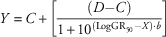 $$Y\,{\equals}\,C{\plus}\left[ {{{(D {\minus} C)} \over {1{\plus}10^{{({\rm LogGR}_{{50}} {\minus} X) \cdot b}} }}} \right] $$
where C and D represent the lower and upper limits of the dose–response curve, respectively, and b represents the slope of the best-fitting curve through the GR50 value. For curve fitting and GR50 estimation, the model was constrained to a maximum of 100 and a minimum of 0. Mean separation of herbicide GR50 values were analyzed by Fisher’s protected LSD test at the 5% level of probability. The average recommended use rate for indaziflam ranges from 83% to 94% (73 and 102 g ai ha−1) of the average recommended aminocyclopyrachlor (70 to 140 g ae ha−1) and aminopyralid (53 to 123 g·ae·ha−1); therefore, PRE control was compared directly using GR50 estimates.
Results and Discussion
Field Experiment
Dalmatian Toadflax Control
At both application timings (June and August), the significant treatment by year interaction (P<0.001) was evaluated (Figure 1). All herbicide treatments except imazapic provided similar Dalmatian toadflax control 1, 2, and 3 YAT. The only treatments providing residual Dalmatian toadflax control above 80% 4 YAT were treatments including indaziflam (Figure 1). At the June and August application timings, aminocyclopyrachlor alone provided 50% and 55% Dalmatian toadflax control, while control with picloram was 68% and 64% 4 YAT, respectively. These same treatments tank mixed with indaziflam resulted in 84% to 91% Dalmatian toadflax control 4 YAT. A previous study conducted by Sebastian et al. (Reference Sebastian, Beck, Sebastian and Rodgers2012) illustrated the importance of residual weed seedling control following the initial year of application. Dalmatian toadflax control with aminocyclopyrachlor was 90% to 97% 1 YAT; however, seedlings appeared in plots as early as 15 mo after treatment, and there was limited control of those individuals (4% to 26%) 2 YAT. Without residual weed seedling control, invasive weeds such as Dalmatian toadflax are able to re-establish via the soil seedbank.
Dalmatian toadflax and downy brome control represented as a percent of nontreated plots 1, 2, 3, and 4 YAT. Application timings were June and August 2010. At the June and August application timings, Dalmatian toadflax was in the flowering and regrowth stages, respectively; however, both timings were prior to downy brome emergence (PRE). Letters indicate differences among herbicide treatments across both timings and years using least-squares means (P<0.05). Herbicide treatment rates are as follows: aminocyclopyrachlor (ACP, 57 g ai ha−1), imazapic (105 g ai ha−1), indaziflam (Indaz, 58 g ai ha−1), picloram (Pic, 227 g ai ha−1), and nontreated.

Downy Brome Control
The treatment by year interaction (P<0.001) was more pronounced for downy brome than for Dalmatian toadflax, and there was no effect of application timing on herbicide efficacy (P=0.830). Compared with the nontreated plots, downy brome control with imazapic and indaziflam treatment outcomes were statistically similar at P<0.05 (84% to 99%) 1 YAT; however, residual downy brome control was greatly reduced for imazapic alone 2 YAT (61% to 64%). By 2014 (4 YAT), the downy brome population had recovered via the soil seedbank and imazapic control was less than 25% (Figure 1). Indaziflam treatments, however, provided significantly greater residual downy brome control 3 (91% to 96%) and 4 YAT (89 to 94%) compared with treatments not including indaziflam.
Response of Co-occurring Perennial Grasses
Visual estimates of perennial grass canopy cover (%) in 2014 revealed 46±4% (mean±SE) cover in nontreated plots. Averaged across the two application timings, picloram and aminocyclopyrachlor applied alone resulted in 65±1% and 61±3% perennial grass canopy cover 4 YAT, respectively. Imazapic and indaziflam treatments applied alone or in a tank mix resulted in 55±4% and 75±2% perennial grass canopy cover, respectively. It is likely the indaziflam treatments provided increased residual control of downy brome and Dalmatian toadflax 4 YAT, resulting in increased perennial grass re-establishment.
Indaziflam has a low water solubility (3.6 mg L−1) and high log Kow (2.8), meaning that all the herbicide is concentrated at the soil surface and is not diluted by leaching through the soil profile. Indaziflam has limited photodegradation, ~150-d soil half-life, and significantly greater relative potency than other PRE herbicides (Sebastian et al. Reference Sebastian, Nissen, Westra, Shaner and Butters2016a). These characteristics work in concert to provide long-term residual control (Sebastian et al. Reference Sebastian, Sebastian and Beck2014, Reference Sebastian, Sebastian, Nissen and Beck2016b). These results support a new management concept, using indaziflam in combination with commonly recommended broadleaf herbicides (e.g., aminocyclopyrachlor and picloram) to significantly decrease weed seeds in the soil seedbank. This could greatly reduce weed seedling pressure in the years following initial treatments, providing the time necessary to facilitate the recovery of co-occurring species (Ball Reference Ball2014; Harmoney et al. Reference Harmoney, Stahlman, Geier and Rupp2012). Reducing yearly applications to potentially every 4 yr, as these data suggest, would decrease herbicide costs, reduce the total amount of herbicide applied, minimize nontarget impacts, and reduce the potential of shifting the native plant community with annual herbicide treatments (DiTomaso Reference DiTomaso2000).
Results from our field experiment established that indaziflam’s control of germinating seeds provided residual Dalmatian toadflax and downy brome control 4 YAT. Based on these data, we hypothesized that indaziflam may also provide residual control of many other invasive weeds found in non-crop areas. This field experiment was used as a foundation for a subsequent greenhouse bioassay comparing the PRE control of aminocyclopyrachlor, aminopyralid, and indaziflam.
Greenhouse Experiment
Dalmatian toadflax and downy brome control with aminocyclopyrachlor, aminopyralid, and indaziflam are presented in Figure 2. The GR50 estimates for downy brome showed that indaziflam was 125 and 99 times more active compared with aminocyclopyrachlor and aminopyralid, respectively (P<0.0001; Table 3). Similarly, indaziflam was 19 and 247 times more active on Dalmatian toadflax PRE compared with aminocyclopyrachlor and aminopyralid, respectively (P<0.0001; Table 3). This is conformational evidence for the cause of extended weed control with indaziflam under field conditions for Dalmatian toadflax and downy brome compared with treatments without indaziflam (Figure 1).
Response of nine invasive species found in non-crop areas to aminocyclopyrachlor, aminopyralid, and indaziflam. Dose–response curves were fit using four-parameter log-logistic regression. Mean values of six replications are plotted. Vertical lines represent the herbicide dose resulting in 50% reduction in dry biomass (GR50) for each species and herbicide.

Aminocyclopyrachlor, aminopyralid, and indaziflam rates resulting in 50% growth reduction of nine common invasive weeds found on non-cropland.Footnote a

a Values were calculated using log-logistic regression. GR50 (herbicide dose resulting in 50% dry biomass reduction) values within each weed (row) followed by the same lowercase letter are not significantly different at the 5% level of probability.
The response of the seven remaining weed species to aminocyclopyrachlor, aminopyralid, and indaziflam are presented in Figure 2, and GR50 estimates are found in Table 3. Indaziflam was 106 (P<0.0001), 4 (P<0.0001), 9 (P=0.0012), and 5 times (P<0.0001) more active than aminopyralid on common mullein, diffuse knapweed, halogeton, and horseweed, respectively; however, these two herbicides had similar activity on curly dock (P=0.3421) and musk thistle (P=0.8674) (Table 3). Aminopyralid was 2 and 9 times more active (lower GR50) on common teasel compared with indaziflam and aminocyclopyrachlor, respectively (P<0.0001) (Table 3). Compared with aminocyclopyrachlor across all nine species, indaziflam was 3 to 145 times more active (P<0.0001, Table 3).
When results were averaged across all nine species, indaziflam was 29 and 52 times more active then aminocyclopyrachlor and aminopyralid, respectively. This indicates that indaziflam appears to provide increased seedling control of these invasive species compared with commonly recommended broadleaf herbicides. These data are consistent with the idea that the long-term residual control by indaziflam observed in the field (Figure 1) could be due to less dilution in the soil profile and increased relative potency (Christensen Reference Christensen1994; Ritz et al. Reference Ritz, Cedergreen, Jensen and Streibig2006; Sebastian et al. Reference Sebastian, Nissen, Westra, Shaner and Butters2016a) as compared with other broadleaf herbicides such as aminocyclopyrachlor and aminopyralid. Indaziflam could be tank mixed with other herbicides commonly used for non-crop weed management (2,4-D, chlorsulfuron, clopyralid, dicamba, glyphosate, imazapyr, metsulfuron, triclopyr). This could extend weed control beyond the initial year of application and provide multiple modes of action in a single application as a tool for resistance management (Lagator et al. Reference Lagator, Vogwill, Mead, Colegrave and Neve2013). Indaziflam has limited POST activity so, tank mixing with herbicides evaluated in this study and those listed above would be needed to control established weeds. Indaziflam could then provide the residual activity necessary to control germinating seedlings that appear as early as the year after initial herbicide application (Sebastian et al. Reference Sebastian, Beck, Sebastian and Rodgers2012).
Tank mixing indaziflam with the suite of primarily broadleaf herbicides provides land managers with an opportunity to consider managing the soil seedbank of invasive weeds in non-crop areas. This could provide time for co-occurring species to respond with increased abundance, increasing the overall resistance and resilience of the dominant native plant community (Chambers et al. Reference Chambers, Pyke, Maestas, Pellant, Boyd, Campbell, Espinosa, Havlina, Mayer and Wuenschel2014). Unfortunately, sites that have been dominated by downy brome for many years may have a limited number of native perennial seeds in the soil seedbank, but unlike downy brome, some native species do establish a persistent seedbank (Thompson and Grime Reference Thompson and Grime1979). The establishment of a persistent or transient seedbank is highly species dependent. For example, one of the most important species in the Great Basin plant community, big sagebrush (Artemisia tridentata Nutt.), does not form a persistent seedbank and relies on annual seed rain and appropriate environmental conditions to establish new individuals (Young and Evans Reference Young and Evans1989). Plants with persistent soil seedbanks will be more likely to respond in an environment without downy brome competition; however, those species with transient seedbanks could already be eliminated from a site (Humphrey and Schupp Reference Humphrey and Schupp2001).
Integrating indaziflam with other mechanical, cultural, and biological tools could also greatly increase the success of long-term management programs (DiTomaso Reference DiTomaso2000). Further tolerance studies should be conducted to determine any potential nontarget impacts. For sites with limited co-occurring species, revegetation studies using various techniques, including drill or broadcast seeding, should be evaluated. In addition, the impact of indaziflam on long-term control of these key invasive weeds needs to be evaluated under field conditions and compared with treatments without indaziflam.
Acknowledgments
The authors would like to thank Drs. David Spak and Harry Quicke of Bayer CropScience for partially funding this work.



