


Introduction
School and societal violence is an enormous problem in Jamaica and the wider Caribbean and the primary prevention of violence is a national and regional public health priority (Meeks-Gardner et al. Reference Meeks-Gardner, Henry-Lee, Chevannes, Thomas, Baker-Henningham and Coore2005). Violence is also recognised as a leading global public health problem and makes a substantial contribution to morbidity and mortality with high social and economic costs (WHO, 2014). Juvenile delinquency and antisocial behaviour in adulthood can often be traced back to early childhood. Young children who have conduct problems (which describes a range of antisocial behaviours including oppositional, aggressive, dishonest and disruptive behaviours) are not only more likely to have continued antisocial and aggressive behaviour in later childhood and adolescence, but they are more likely to experience academic failure and early school drop-out and to engage in crime and violence in adulthood (Moffitt & Scott, Reference Moffitt, Scott, Rutter, Bishop, Pine, Scott, Stevenson, Taylor and Thapar2008). Interventions to prevent and reduce conduct problems in early childhood are thus an integral component of violence prevention programmes.
Schools offer a logical setting for implementing preventative interventions for young children, and school-based violence prevention programmes show significant benefits to children's violent and aggressive behaviour in high-income countries (Hahn et al. Reference Hahn, Fuqua-Whitley, Wethington, Lowy, Crosby, Fullilove, Johnson, Liberman, Moscicki, Price, Snyder, Tuma, Cory, Stone, Mukhopadhaya, Chatopadhyay and Dahlberg2007; Wilson & Lipsey, Reference Wilson and Lipsey2007). One type of violence prevention programme involves training teachers in classroom behaviour management, (for example, how to create a nurturing and supportive classroom environment, how to prevent and manage child behaviour problems and how to promote children's social and emotional competence), and a recent meta-analysis showed that these programs, when implemented in primary school, benefit multiple child outcomes including academic achievement, behaviour, social–emotional skills and motivation (Korpershoek et al. Reference Korpershoek, Harms, de Boer, van Kuijk and Doolaard2016). Benefits of such interventions have also been found in pre-primary contexts: a meta-analysis of interventions focused on training caregivers in centre-based services for preschool children found benefits to caregiver–child interaction, classroom quality and child social–emotional development (Werner et al. Reference Werner, Linting, Vermeer and Van Ijzendoorn2016). Training staff in early childhood centres in low and middle-income countries (LMIC) may be particularly important given the evidence that aggression and disruptive behaviour can increase on exposure to poorer quality preschool environments (Aboud, Reference Aboud2006; Bernal & Fernandez, Reference Bernal and Fernandez2013). There is limited evidence of such interventions from LMIC (Baker-Henningham, Reference Baker-Henningham2014) where schools often have less well-trained teachers and lower levels of resources.
We conducted a pilot study of the Incredible Years (IY) teacher-training programme and a curriculum unit on social–emotional skills in Jamaican preschools and found benefits to teacher practices and classroom atmosphere (Baker-Henningham et al. Reference Baker-Henningham, Walker, Powell and Meeks-Gardner2009a) and to teacher reported behaviour of children with initial higher levels of behaviour problems (Baker-Henningham et al. Reference Baker-Henningham, Walker, Powell and Meeks-Gardner2009b). In-depth interviews with teachers showed that the intervention was acceptable to teachers (Baker-Henningham & Walker, Reference Baker-Henningham and Walker2009). Throughout the pilot study, we documented teachers’ engagement with the programme on an ongoing basis. During each workshop, the co-facilitator recorded information including: (i) how teachers responded to the new material, (ii) any difficulties teachers showed in understanding and performing the skills taught and (iii) teachers’ feedback on their use of strategies. The facilitator and co-facilitator also completed self and peer-evaluations of each workshop that included detailed reflections of teachers’ engagement with the material. In addition, after each in-class support session, the coach documented the strengths and needs of each individual teacher based on her own observations and her discussions with the teacher. These data, combined with the data from the qualitative and quantitative evaluation, were used to adapt the IY teacher-training programme to enhance its relevance to teachers working in low-resource settings. The content was similar to the original programme but significant adaptations were made to the materials and the method of delivery of the intervention. Further details of the rationale for adapting the programme, the source of the evidence underpinning this rationale and the nature of the adaptations made are given in Table 1. This adapted programme was evaluated, in a cluster-randomised trial in 24 preschools, for its effect on the behaviour of children who were at high risk for developing conduct problems. Significant benefits were found in terms of reduced conduct problems by independent observations [effect size (ES) = 0.42], teacher report (ES = 0.47) and parent report (ES = 0.22); increased social skills by independent observations (ES = 0.74) and teacher report (ES = 0.59) and increased school attendance (ES = 0.30) (Baker-Henningham et al. Reference Baker-Henningham, Scott, Jones and Walker2012).
Adaptations made to the Incredible Years teacher-training programme based on the pilot study

In this paper, we report the effects of this intervention on (i) teachers’ interactions with the whole class, (ii) teachers’ interactions with children at high risk for developing conduct problems, (iii) the classroom atmosphere and (iv) the class-wide child behaviour. We also examined whether benefits are sustained at a 6-month follow-up. Finally, we compare this intervention, which has been extensively adapted to the Jamaican preschool context, to the intervention used in the previous study where only minor adaptations were made.
Methods
Study design and participants
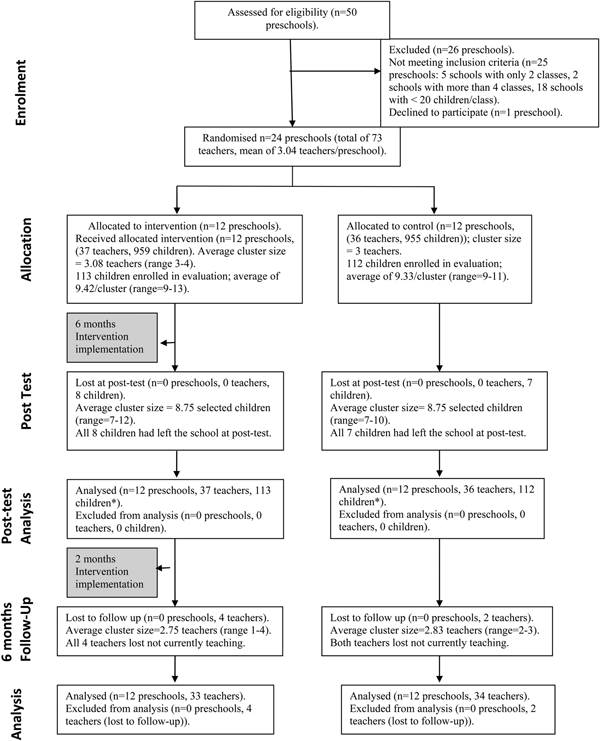
The trial took place in 24 community preschools in inner-city areas of Kingston, Jamaica. The preschools were situated in disadvantaged, low SES areas with high levels of community violence. Community preschools cater to children aged 3–6 years and are provided through a partnership between community organisation (often churches) and the government. Parents are expected to provide school resources (e.g. books, pencils, crayons) in addition to paying a small fee. Preschool was the unit of randomisation to prevent contamination between teachers and because the teacher-training intervention was believed to be more effective if all teachers in a school were trained thus leading to changes in the schools’ culture. Preschools were eligible for inclusion if they had 3–4 classes of children, at least 20 children per class, were situated in a specified geographical area and if all teachers consented to participate in the trial. All community schools in three education zones within Kingston were surveyed and in schools with the required number of classes and children, the PI met with the principal to provide information about the study. If the principal was interested in participating in the trial, a further meeting was held with all teachers in the school to describe the study and address any questions and concerns, prior to asking for teachers’ consent. Twenty-four out of fifty preschools approached met all inclusion criteria and were recruited into the study (Fig. 1).
Trial profile. *Analysis was intention to treat; baseline scores substituted for missing post-test data.

Children with high initial levels of conduct problems were selected for evaluation. An interviewer-administered screening questionnaire was conducted with each class teacher in all study schools. The screen used 10 items from the ICD-10 Diagnostic Criteria for Research for conduct disorder (WHO, 1993), (loses temper, back chats, disobedient/breaks rules, annoys others, blames others, easily annoyed, often angry, spiteful to others, fights or bullies and destroys property), and teachers rated each child in their class according to a four-point scale: not true, just a little true, pretty much true and very much true. The three children with the highest scores on this screen from each class were recruited into the evaluation component of the study. Children were excluded from the evaluation if they had a school attendance <70%, a developmental disability, lived in an institution or if they had a sibling who had already been enrolled into the study. A total of 225 children, aged 3–6 years, were recruited into the study, 113 from intervention schools and 112 from control schools. The focus of this paper is on teacher's behaviour to the whole class and the selected children and to class-wide child behaviour. The effect of intervention on individual child outcomes was reported previously (Baker-Henningham et al. Reference Baker-Henningham, Scott, Jones and Walker2012).
The University of the West Indies Ethics Committee approved the trial. Written informed consent was obtained from the preschool principals, all teachers and from the parents of the selected children prior to recruitment into the study. The study is registered in the International Standard Randomised Controlled Trial Number Register: ISRCTN35476268.
Sample size
The study was powered based on the primary outcome of observed child behaviour (Baker-Henningham et al. Reference Baker-Henningham, Scott, Jones and Walker2012). For measures of teacher's behaviour to the whole class and classroom atmosphere, with 30 teachers per group, a cluster size of three teachers per school and assuming an intra-cluster correlation coefficient of 0.25, we could detect an intervention effect of 1 s.d. with 85% power at 0.05 level of significance. We hypothesised a large ES on these outcomes based on the results of the pilot study (see Table 2). For the measures of teacher behaviour to individual children, with 105 children per group, a cluster size of nine and assuming an intra-cluster correlation coefficient of 0.05, we could detect an intervention effect of 0.5 s.d. with 85% power at 0.05 level of significance.
Comparison of intervention content and process, teacher attendance and satisfaction, and benefits to teachers and children from adapted and unadapted version of the Incredible Years (IY) teacher-training programme

a Structured observations and rating scales conducted over four 15-min periods (total of 1 h observation in the morning session only); 27 teachers/classrooms.
b Structured observations and rating scales conducted over 18 five-min periods (total of 90 min observation over whole school day); 73 teachers/classrooms.
c Structured observations of teacher behaviour to the whole class.
d Observer ratings of teacher behaviour to the whole class.
e Observer ratings of class-wide child behaviour.
Randomisation and masking
Schools were randomised to an intervention or control condition at the start of the intervention year using a computer-generated randomisation sequence by an independent statistician who was blind to the identity of the schools. Children entering the 4- and 5-year-old class in the 2009–2010 academic year were recruited into the study at the end of the previous school year, prior to randomisation. Children entering the 3-year-old class were recruited in October 2009, after randomisation had occurred, by a researcher who was blind to group allocation.
Intervention
Intervention was implemented at the level of the cluster and involved training all teachers, teacher assistants and principals in the intervention schools using an adapted version of the IY teacher-training programme (Webster-Stratton, Reference Webster-Stratton2000). The adaptations for the Jamaican preschool context were based on previous formative and piloting work (Baker-Henningham & Walker, Reference Baker-Henningham and Walker2009; Baker-Henningham et al. Reference Baker-Henningham, Walker, Powell and Meeks-Gardner2009a; Baker-Henningham, Reference Baker-Henningham2011). The intervention was delivered over one school year through eight full-day training workshops and four in-class support sessions for each teacher. Four of the eight training workshops were conducted on in-service teacher-training days and the intervention teachers attended our workshop rather than attending the standard workshop of the Ministry of Education. Schools also received a small amount of educational materials (e.g. blocks, manipulatives, play doh) to facilitate their use of the strategies taught. At the beginning of the following school year, (after post-test measurements), a refresher intervention was conducted in intervention schools consisting of three additional in-class support sessions. The intervention is described in full in Table 3 using the TIDier checklist (Hoffman et al. Reference Hoffman, Glasziou, Boutron, Mine, Perera, Moher, Altman, Barbour, Macdonald, Johnston, Lamb, Dixon-Woods, McCulloch, Wyatt, Chan and Michie2014) and details of the adaptations made are given in Table 1.
An adapted version of the Incredible Years (IY) teacher-training programme

Teachers in control schools attended the standard monthly training workshops provided by the Ministry of Education for all community preschool teachers and received the same educational materials at the same time as the intervention schools.
Outcome measures
All outcome measures involved independent observations of child and teacher behaviours. Structured observations of teachers’ behaviour to the whole class and to the target children, rating scales of class-wide child behaviour and rating scales of classroom atmosphere were completed at baseline (October–November 2009) and post-test (May–June 2010). A further round of measurements was conducted from May–June 2011 and consisted of all previous measures, except for teachers’ behaviour to the target children. All observational assessments were conducted by researchers blind to the study design, hypothesis and group allocation.
Structured observations of teacher behaviour
Observations were conducted over eighteen 5-min periods across one school day and event recording was used to record (1) positive teacher behaviours (use of praise, incentives, describing what children are doing and positive physical behaviours) and (2) negative teacher behaviours (critical comments, negative commands, warnings and negative physical behaviour). The observation schedule and accompanying manual were developed and used previously in Jamaican classrooms (Baker-Henningham et al. Reference Baker-Henningham, Walker, Powell and Meeks-Gardner2009a). The results for the 18 5-min periods were summed to give the total number of each category of behaviours that occurred during 90 min of observation.
Observations of teacher behaviour to the target children
Observations of teacher behaviour to the target children were conducted simultaneously with observations of child behaviour (Baker-Henningham et al. Reference Baker-Henningham, Scott, Jones and Walker2012). Within each class, three children were observed for 5 min each on a rotational basis for a total of 15 min each day per child over 4 days, across different times of the school day giving a total of 1 h of observation per child. Event recording was used for positive behaviours to the target child (e.g. positive attention, praise, incentive) and negative behaviours (e.g. critical comment, negative command) and the results were summed to give the total in 1 h of observation. All behaviours were defined in a manual.
Rating scales of child behaviour and the classroom atmosphere
Two ratings of the behaviour of the children in the class as a whole: level of appropriate behaviour (e.g. no fighting or other aggressive behaviours, children are not disrupting other students), and level of interest and enthusiasm displayed by children (e.g. children are enjoying classroom activities) and two ratings of teacher's behaviour: teacher provides opportunities for children to share and help each other and teacher warmth were developed based on scales used by the Conduct Problems Prevention Research Group (1999) and used previously in Jamaica (Baker-Henningham et al. Reference Baker-Henningham, Walker, Powell and Meeks-Gardner2009a). Ratings were completed at the end of each 5-min teacher observation period using five-point scales (1–5, where 1 is low and 5 is high). The average rating over the 18 observation periods was calculated.
Other measures
Quality of the classroom environment
The quality of the classroom environment was assessed at baseline only using three subscales from the Early Childhood Education Rating Scales – Revised (ECERS-R) (Harms et al. Reference Harms, Clifford and Cryer1998). The ECERS is a commonly used comprehensive measure of early childhood classrooms and higher scores on the ECERS have been shown to be associated with improved child development in several studies (Mashburn et al. Reference Mashburn, Pianta, Hamre, Downer, Barbarin, Bryant, Burchinal and Early2008). The following subscales were used:
Space and furnishings: the adequacy and arrangement of the classroom area and the appropriateness of the furniture (eight items);
Language and reasoning: provision of books and pictures and a range of communicative activities (four items);
Activities: children's involvement in a range of developmentally appropriate activities (e.g. sand and water, block play, dramatic play, fine motor skills) and the variety of opportunities provided within each activity (eight items).
Scores on each subscale range from 1 to 7 with 1 indicating inadequate quality, 3 indicating minimal quality, 5 indicating good quality and 7 indicating excellent quality. In each classroom, the ECERS-R was completed during a 3 h observation period followed by a 20- min interview with the teacher. The observations were conducted by a single observer. Inter-observer reliability between the observer and the trainer were >0.90 for each subscale on 10 consecutive measures prior to the start of the study.
Quality of measures and masking
For all observational data, intra-class correlation coefficients (ICCs) between the observers and trainer and between each pair of observers were calculated for 20 consecutive 5-min observations prior to data collection at each time point and for 10–15% of observations during ongoing data collection. The ICCs during training were: median (range) = 0.89 (0.81–0.97) at baseline, 0.92 (0.86–0.99) at post-test and 0.89 (0.85–0.96) at follow-up. Ongoing reliabilities were: median (range) = 0.90 (0.86–0.93). (Table 4).
Inter-observer reliabilities for each outcome measurement over 5 min intervals [median (range)]

ICC, intra-class correlation coefficient.
a n = 20 observations prior to starting data collection between trainer and each observer and a minimum of 15 between each observer and other observers.
b 15% of all observations between master coder and each observer and a minimum of 10 between each observer and other observers during each data collection period.
Five researchers conducted the observations of the teachers’ behaviour to the target children and three researchers conducted observations of teacher behaviour to the whole class, classroom atmosphere and class-wide child behaviour. Researchers conducted equal numbers of measurements from each group and were blind to the study design and group allocation. To maintain blindness of researchers, teachers were asked at initial contact and prior to each assessment not to reveal intervention status and observers were not informed of the study design, hypothesis or group allocation and were employed during the measurement phases of the study only.
Statistical analysis
The distributions of continuous dependent variables were examined for normality. Normality was rejected for observations of teacher's positive and negative behaviours to the whole class and to target children and for ratings of class-wide child behaviour at baseline and post-test. The two variables measuring teacher's behaviour to the whole class were normalised using a square root transformation, a log transformation was used for the variables measuring teachers’ behaviour to the target children, while the class-wide child behaviour rating was normalised by squaring.
The effect of intervention was examined using multilevel multiple regression models to take into account the hierarchical nature of the data (Hayes & Moulton, Reference Hayes and Moulton2009). For the analyses of the effect of intervention on teacher's behaviour to the whole class, class-wide child behaviour outcomes and ratings of classroom atmosphere at post-test, baseline score and intervention group were entered as fixed effects and school was added as a random effect. In the analyses on teacher behaviour to target children, child age and sex, baseline score and group were entered as fixed effects and school and teacher were entered as random effects. All outcomes at follow-up were at the level of the classroom/teacher; group was entered as a fixed effect and school as a random effect. All multilevel analyses were conducted with MLwiN version 2.10 (Rasbash et al. Reference Rasbash, Charlton, Browne, Healy and Cameron2009).
Results
Sample
All 24 preschools were followed up at post-test and 6-month follow-up and all 73 teachers were followed up at post-test. Six teachers (8.2%) were lost at 6-month follow-up (four intervention, two control) and there were no significant differences on any outcome measures at baseline or post-test between those lost v. those retained. However, teachers lost were significantly younger (p = 0.02) and had been teaching for fewer years (p = 0.006). There were no significant differences between the intervention groups at baseline although number of years teaching in current school was marginally significant (p = 0.06). (Table 5).
Child, classroom, teacher and school characteristics by study group: Values are mean (s.d.) unless otherwise stated

a Early childhood environment research scale-revised.
Few teachers were qualified teachers (9.5%) although almost a quarter were currently attending teacher-training college. The teachers had been teaching for an average of 13 years and were predominantly female (94.5%). The quality of the classrooms as measured by the ECERS was generally in the inadequate range (<3) indicating that the physical conditions of the classrooms were poor (e.g. overcrowded, inappropriate furniture) and play and learning materials were extremely limited.
Findings
Raw scores for all outcomes by group at baseline, post-test and 6-month follow-up are given in Table 6. There were no significant differences between the groups at baseline.
Raw scores of structured observations of teachers’ behaviour, ratings of class-wide child behaviour and ratings of teacher behaviour at baseline and post-intervention by intervention group

a Event sampling over 18 5-min observation periods to give a total of 90 min of observation.
b n = 113 intervention; n = 112 control; Event sampling over 12 5-min periods over four school days to give a total of 1 h of observations.
c Observer ratings over 18 5-min observations periods over 1 school day on a scale of 1–5, where 1 is low and 5 is high.
d Mean (s.d.) (median (range) was used for non-normally distributed variables).
At post-test (Table 7), significant benefits of intervention were found for the number of positive and negative teacher interactions to the whole class (positive: ES = 3.35; negative: ES = −1.29) and the number of positive and negative teacher interactions to the high-risk children (positive: ES = 0.83; negative: ES = −0.50). Furthermore, teachers in intervention classrooms were rated as being more warm (ES = 2.03) and providing more opportunities for children to work together (ES = 5.72). Significant benefits of intervention were also found for class-wide measures of child behaviour including the level of appropriate child behaviour (ES = 0.73) and children's interest and enthusiasm (ES = 0.98).
Multilevel regression analyses of effect of intervention on teacher behaviour to the whole class and classroom ratings and teacher behaviour to the target child

a Intra-cluster correlation coefficient.
b Analysis adjusting for baseline score as a fixed effect and school as a random effect.
c Analysis adjusting for baseline score, child age and sex as fixed effects and school and classroom as random effects.
d Square root of raw score used in the analysis.
e Log of raw score used in the analysis.
f Square of raw score used in the analysis.
At 6-month follow-up (Table 8), significant benefits to all measures were sustained. Intervention teachers continued to have significantly more positive interactions (ES = 2.70) and fewer negative interactions (ES = −0.98) with the whole class and were rated significantly higher on warmth (ES = 0.91) and on provision of opportunities for children to share and help each other (ES = 1.42). The ratings of class-wide child behaviour showed significant benefits to the level of appropriate behaviour (ES = 0.5) and the level of interest and enthusiasm (ES = 0.78).
Multilevel regression analyses of effect of intervention on teacher behaviour to the whole class and classroom ratings at 6-month follow-up

All analyses adjust for school as a random effect.
a Intra-cluster correlation coefficient.
b Square root of raw score used in the analysis.
Comparison to pilot study
Table 2 compares the context, intensity, satisfaction and benefits of the current study with a pilot study we conducted previously. In the pilot study, the IY teacher-training intervention was implemented with few adaptations, unlike in the current study in which significant changes were made. The proportion of trained teachers and class sizes were similar in both studies. The schools in the pilot study scored 0.43 s.d. higher on the space and furnishings subscale of the ECERS and 1.25 s.d. higher on the activities subscale indicating a greater level of resources. However, ECERS scores for both studies were in the minimal range. The intervention used in the pilot study was more intensive and included seven full-day workshops and a total of 21 in-class support sessions with each teacher with 14 of these also working directly with the children teaching a curriculum unit on social and emotional skills (in collaboration with the teacher); in the current study the number of workshops was similar (8 full-day workshops) but teachers received only four in-class support sessions. In both the pilot study and the current study, the intervention was acceptable to teachers as shown by attendance and satisfaction ratings and large benefits were found to teacher behaviour and class-wide child behaviour.
Discussion
An adapted version of an evidence-based programme aimed at training teachers in appropriate classroom management techniques in order to reduce child conduct problems and promote child competencies led to large benefits to Jamaican preschool teachers’ behaviour to the whole class and to children at high risk for developing conduct problems, to class-wide child behaviour and to classroom atmosphere. These benefits were sustained at 6-month follow-up.
The study shows that professional development training in classroom behaviour management for preschool teachers in LMIC has the potential to make large improvements to teachers’ behaviours resulting in a more emotionally supportive classroom environment and reduced harsh punishment by teachers for all children and improved class-wide child behaviour. Violence against children in schools is common in many LMIC and yet the evidence base for effective interventions is sparse. We are aware of only one trial: in primary schools in Uganda, a school-wide intervention involving staff, students and the school administration reduced past week physical violence against children by 42% (Devries et al. Reference Devries, Knight, Child, Mirembe, Nakuti, Jones, Sturgess, Allen, Kyegombe, Parkes, Walakira, Elbourne, Watts and Naker2015). Importantly, benefits in the current study were found not only for teachers’ behaviour to the whole class but also to teachers’ behaviour to children at high risk for developing conduct problems. Increased positive attention and reduced negative attention to these children may have limited the escalating cycles of coercive behaviour between teachers and antisocial children (Patterson et al. Reference Patterson, Reid and Dishion1992), and this is likely to be a key mechanism in the reductions in child conduct problems and increases in social skills found for these children (Baker-Henningham et al. Reference Baker-Henningham, Scott, Jones and Walker2012). In addition, due to the benefits to class-wide child behaviour, children at high risk for developing conduct disorder in intervention schools would be exposed to less aggression and increased appropriate behaviour from peers which may have also contributed to their improved behaviour at school and at home (Kellam et al. Reference Kellam, Ling, Merisca, Brown and Ialongo1998). Benefits were also found to class-wide child interest and enthusiasm in learning activities and this increased participation is likely to lead to greater school bonding and increased learning, which are key predictors of improved behaviour (O'Donell et al. Reference O'Donnell, Hawkins, Catalano, Abbott and Day1995). Benefits to teachers’ behaviours and to class-wide child behaviour were sustained at a 6-month follow-up. This trial is important to the global agenda on violence prevention in two main ways: (i) by reducing harsh punishment by teachers concurrently and at 6-month follow-up and (ii) by reducing conduct problems in children at high-risk of developing antisocial behaviour thus reducing future violence through early prevention. The sustained benefits of the intervention are promising as if teachers continue using the strategies, there are potential benefits to new cohorts of children. It will be important to determine if the benefits to teacher practices from interventions such as this are sustained over the long term and how frequently booster-training sessions may be required to ensure teachers continue to use the skills.
Benefits to teacher behaviour to the whole class were large compared to previous studies. For example, benefits from the IY teacher-training programme in the USA have been in the range 0.49–0.67 for ratings of harsh/critical practices and 0.51 for positive practices (Webster-Stratton et al. Reference Webster-Stratton, Reid and Hammond2001, Reference Webster-Stratton, Reid and Stoolmiller2008), although large benefits were found for ratings of social-emotional teaching (ES = 0.96) and effective discipline (ES = 1.24) (Webster-Stratton et al. Reference Webster-Stratton, Reid and Stoolmiller2008). In the meta-analysis by Werner et al. (Reference Werner, Linting, Vermeer and Van Ijzendoorn2016), training caregivers in early childhood settings led to medium effect sizes for caregiver–child interaction (ES = 0.44) and classroom quality (ES = 0.39). Benefits were likely larger in the current study due to the low level of initial training of the teachers thus widening the differences between the groups with intervention. For example, the largest effect sizes were found for the teacher behaviours that were less common in the Jamaican preschool context (teacher positives to the whole class and teacher provides opportunities to share and help). This explanation is also supported by the finding that in the IY teacher-training programme in the USA, effects sizes on critical behaviour for teachers more than 2 s.d. above the mean at baseline were 1.37 (compared to 0.49 for the entire sample) (Webster-Stratton et al. Reference Webster-Stratton, Reid and Stoolmiller2008). One study examined benefits of teacher training and consultation on teachers’ behaviour to children at high risk for aggression and found benefits to the amount of teacher feedback to these high-risk children with effect sizes of 0.46–0.62 (The Metropolitan Area Child Study Research Group & Gorman-Smith, Reference Gorman-Smith2003), which are in a similar range to those found in this study.
This study also adds to the debate about the transportability of evidence-based child mental health interventions. Although we are aware of no studies empirically investigating the transportability of teacher interventions across cultures and contexts, meta-analytical studies of parenting interventions have mixed results with van Mourik et al. (Reference van Mourik, Crone, de Wolff and Reiss2017) reporting increased effectiveness for ethnic minority families if interventions are adapted to fit the cultural context, whereas Gardner et al. (Reference Gardner, Montgomery and Knerr2016) found that interventions were at least as effective when transported across countries, suggesting that extensive adaption is not required. We chose to use the IY teacher-training programme as its collaborative nature makes it inherently adaptable and culturally sensitive and the IY programmes have been shown to be effective in multiple countries and with a range of ethnic groups (Menting et al. Reference Menting, de Castro and Matthys2013). However, despite this in-built cultural flexibility, we found that an adapted version of the programme required significantly less in-class support for teachers than a minimally adapted version (4 sessions v. 21 sessions), to produce benefits of a similar magnitude to teachers’ classroom practices. Teacher attendance and satisfaction was high with both the minimally adapted and significantly adapted version indicating that participant engagement was not the determining factor. The adaptations were aimed at promoting teacher understanding, confidence and ability to use the strategies in various situations across the school day and ensuring the skills and strategies were introduced in an ecologically valid way (i.e. in a way that was feasible in the Jamaican preschool context). This increased the likelihood that teachers could successfully implement the strategies in the classroom without extensive in-class support and is important for implementation costs if the programme is to be widely disseminated. Other factors that need to be considered in transporting evidence-based interventions are the costs associated with the programme (both the upfront cost involved in purchasing the materials and any ongoing training costs) and its acceptability to policymakers and these factors are key for local adoption of the programme by the Ministry of Education and for ongoing sustainability.
It should be noted that caution needs to be exercised in comparing the results from this study to the results from the pilot study. The trials differed in several ways including different sampling criteria (the pilot study included two larger better resourced schools and three more typical schools), different lengths of observations (observations were conducted in the morning session only in the pilot study and for the whole day in the current study) and in the pilot study the teacher-training programme was supplemented with a structured curriculum unit on social–emotional skills.
The study has several strengths. The trial had high response rates and attrition was low. The randomisation led to balanced groups at baseline with no significant differences between the groups on any variable. All measurements involved independent observations which are less open to bias than teacher reports of their own behaviour, and observations were conducted by research assistants who were blind to the study design, hypothesis and group allocation. Furthermore, the trial included a 6-month follow-up showing that benefits were sustained after the end of the teacher-training period. There are also several limitations. Teachers were aware of their intervention status and it is possible that they behaved differently during observation. However, there is evidence that conducting observations over the whole day increases the reliability of data and minimises reactivity to being observed (Stoolmiller et al. Reference Stoolmiller, Eddy and Reid2000). In addition, community preschools in Jamaica have poor physical conditions including overcrowding, high noise levels, high child–teacher ratios and usually have several classrooms in a shared space and in this context, the observer is unobtrusive. Contamination between groups was minimised through the use of a cluster design; however, it is possible that some sharing occurred as schools were situated in a common geographical area, and over 20% of teachers in both groups were enrolled in teacher-training colleges; however, this would reduce the differences between the groups. The generalisability of the results may be limited by the fact that we excluded schools with fewer than 20 children per class and schools with fewer than three and more than four classrooms. However, as the intervention is delivered to all teachers within the school, we anticipate that teachers in smaller and larger schools would also benefit.
Conclusions
We found large, significant benefits to teachers’ behaviour and class-wide child behaviour from an intervention providing teachers with training in classroom behaviour management and in how to promote children's social–emotional competence. These benefits were assessed by independent, masked observers and sustained at 6-month follow-up. The intervention also led to significant benefits to the behaviour of children at high risk for developing conduct problems at home and at school (see Baker-Henningham et al. Reference Baker-Henningham, Scott, Jones and Walker2012). Furthermore, we report that making substantial adaptations to an evidence-based programme to ensure contextual fit reduced the amount of individual support teachers need in order to use the skills effectively. We used the IY teacher-training programme and the content was relevant and appropriate to the Jamaican context and we believe that the majority of the strategies introduced through the programme are applicable across different cultures and contexts. However, we also found that adaptations to the materials and methods used improved the cultural and contextual fit and we tentatively conclude that although the strategies are generally relevant and applicable, how they are operationalised in practice is likely to differ across different cultures, contexts and situations. The intervention was implemented through the existing educational services and involved training existing staff and hence should be feasible and sustainable at scale. Training teachers has the advantage that multiple high-risk children can be helped and teachers can continue benefiting new cohorts of children over time. The findings have important implications for child mental health in low-resource settings and show that teacher-training programmes are an important component of initiatives to prevent violence against children, promote child well-being and prevent child mental health problems in LMIC.
Acknowledgements
This work was supported by The Wellcome Trust (grant numbers 080534/Z/06/Z and 094307/Z/10/Z). The funder had no role in the conduct of the study, the interpretation of the data or the decision to submit for publication. We thank Yakeisha Townsend for assisting with the intervention; the staff, parents and children of the 24 community preschools for their participation and the research assistants for data collection.
Ethical Standards
The authors assert that all procedures contributing to this work comply with the ethical standards of the relevant national and institutional committees on human experimentation and with the Helsinki Declaration of 1975, as revised in 2008.



 Open access

