


Introduction
Developing countries are characterized by poor reproductive health indicators such as a high maternal mortality ratio like 917 deaths per 100,000 live births in Nigeria (Girum and Wasie, Reference Girum and Wasie2017; Meh et al., Reference Meh, Sharma, Ram, Fadel, Correa, Snelgrove, Shah, Begum, Shah, Hana, Fu, Raveendran, Mishra and Jha2022; Roser and Ritchie, Reference Roser and Ritchie2013; UNFPA, 2021; World Health Organization, 2019). These poor reproductive health indicators are largely driven by less than optimum utilization of reproductive healthcare services which has been linked to various barriers (Adedokun and Yaya, Reference Adedokun and Yaya2020; Babalola and Fatusi, Reference Babalola and Fatusi2009; Bolarinwa, Tessema, et al., Reference Bolarinwa, Tessema, Frimpong, Seidu and Ahinkorah2021; Defar et al., Reference Defar, Okwaraji, Tigabu, Persson and Alemu2021; Doctor et al., Reference Doctor, Nkhana-Salimu and Abdulsalam-Anibilowo2018; Hamal et al., Reference Hamal, Dieleman, De Brouwere and de Cock Buning2020; Singh et al., Reference Singh, Neogi, Hazra, Irani, Ruducha, Ahmad, Kumar, Mann and Mavalankar2019; Yaya, Uthman, et al., Reference Yaya, Uthman, Ekholuenetale and Bishwajit2018). From a social stratification perspective, studies have identified education especially that of women as a determinant of reproductive healthcare utilization – an after-effect of the 1994 International Conference on Population and Development in Cairo, but recent evidence has established partner’s education as important (Adjiwanou et al., Reference Adjiwanou, Bougma and LeGrand2018; Jejeebhoy, Reference Jejeebhoy1995; Simkhada et al., Reference Simkhada, Teijlingen, Porter and Simkhada2008; Tsala Dimbuene et al., Reference Tsala Dimbuene, Amo-Adjei, Amugsi, Mumah, Izugbara and Beguy2018).
Studies have established an association between the level of education and utilization of reproductive healthcare services, with findings showing that individuals with higher levels of education are more likely to use these services effectively (Adjiwanou et al., Reference Adjiwanou, Bougma and LeGrand2018; Greenaway et al., Reference Greenaway, Leon and Baker2012; Kalule-Sabiti et al., Reference Kalule-Sabiti, Amoateng and Ngake2014). Education for women not only enhances the probability of them acquiring and comprehending health information but also empowers them to express themselves more openly about their health concerns. It enables them to make more informed and contemporary decisions while fostering stronger connections within social networks (Adedokun and Yaya, Reference Adedokun and Yaya2020; Adjiwanou et al., Reference Adjiwanou, Bougma and LeGrand2018; Agho et al., Reference Agho, Ezeh, Ogbo, Enoma and Raynes-Greenow2018; Awoleye et al., Reference Awoleye, Chima and Alawode2018; Gabrysch and Campbell, Reference Gabrysch and Campbell2009; Tsala Dimbuene et al., Reference Tsala Dimbuene, Amo-Adjei, Amugsi, Mumah, Izugbara and Beguy2018; Vikram et al., Reference Vikram, Vanneman and Desai2012), but it also determines women’s autonomy in household decision making – an important determinant of reproductive behaviours in many developing countries (Adjiwanou and LeGrand, Reference Adjiwanou and LeGrand2014; Solanke et al., Reference Solanke, Salau, Rahman and Popoola2021).
In patriarchal societies like Nigeria, where the institution of marriage is highly revered by the religious-legal structure (Amzat, Reference Amzat2020; Mobolaji et al., Reference Mobolaji, Fatusi and Adedini2020; Olomojobi, Reference Olomojobi2016; Ononokpono et al., Reference Ononokpono, Adebola, Gayawan and Fagbamigbe2022), the society bestows decision-making power on the man in the household by default. However, the recent rise in women’s empowerment and autonomy – fueled by increasing educational attainment among women has given more prominent roles to women in the household decision-making process. The educational level of an individual married couple has implications for intra-marital educational pairing and subsequently household power dynamics. Intra-marital educational pairing also called educational assortative mating (EAM) in the family research literature, has been defined as the homogeneity or heterogeneity in the matching of couples’ educational attainment (Adebowale et al., Reference Adebowale, Fagbamigbe, Morakinyo, Obembe, Afolabi and Palamuleni2020; Ariyo and Jiang, Reference Ariyo and Jiang2021; Esteve et al., Reference Esteve, Schwartz, van Bavel, Permanyer, Klesment and García-Román2016; Pesando, Reference Pesando2021b; Rauscher, Reference Rauscher2020; Zhang and Tan, Reference Zhang and Tan2021). It has been established in the sociological literature that education is one of the most vital socioeconomic dimensions considered for a wide range of demographic events including marriage as people decide, whether, when, and whom to marry especially in settings where cultural norms popularly approve a marital pairing between higher-status men and lower-status women (Lopus and Frye, Reference Lopus and Frye2020; Raymo et al., Reference Raymo, Musick and Iwasawa2015). For instance, in Nigeria, men traditionally marry ‘down’, i.e., choose women with lower educational attainment; a relationship known as hypergamy (Adebowale et al., Reference Adebowale, Fagbamigbe, Morakinyo, Obembe, Afolabi and Palamuleni2020; Esteve et al., Reference Esteve, García-Román and Permanyer2012, Reference Esteve, Schwartz, van Bavel, Permanyer, Klesment and García-Román2016). On the other hand, recent evidence from some other parts of the world has pointed to ‘rising’ hypogamy; a pattern where men with low educational attainment mate with women of higher educational attainment which is linked to the rising female literacy (Chudnovskaya, Reference Chudnovskaya2017; Corti and Scherer, Reference Corti and Scherer2021; Esteve et al., Reference Esteve, Schwartz, van Bavel, Permanyer, Klesment and García-Román2016; Lin et al., Reference Lin, Desai and Chen2020). Also, there is homogamy – a mating pattern characterized by homogeneity in couples’ educational attainment (Adebowale et al., Reference Adebowale, Fagbamigbe, Morakinyo, Obembe, Afolabi and Palamuleni2020; Chudnovskaya, Reference Chudnovskaya2017; Esteve et al., Reference Esteve, García-Román and Permanyer2012, Reference Esteve, Schwartz, van Bavel, Permanyer, Klesment and García-Román2016; Pesando, Reference Pesando2021a; Vandenberg, Reference Vandenberg1972).
Despite extensive evidence linking education and utilization of reproductive healthcare services in Nigeria, there is a paucity of research on EAM and its links to the utilization of such services, albeit a few studies investigating the relationship between EAM and child mortality (Adebowale et al., Reference Adebowale, Fagbamigbe, Morakinyo, Obembe, Afolabi and Palamuleni2020; Ariyo and Jiang, Reference Ariyo and Jiang2021). The need to examine this relationship stems from the fact that patriarchy-influenced marriage is highly common in Nigeria and decisions within marriage have implications for the health behaviours and outcomes of household members (Behrman, Reference Behrman2016; Lopus and Frye, Reference Lopus and Frye2020; Pyke and Adams, Reference Pyke and Adams2010). Also, Nigeria is a suitable study area given that 70% of women (aged 15–49 years) in the country are currently partnered (Bandyopadhyay and Green, Reference Bandyopadhyay and Green2021; Becker, Reference Becker1981; NPopC, 2019; Shapiro and Gebreselassie, Reference Shapiro and Gebreselassie2014), and most fertility happens in the context of marriage (Feyisetan and Bankole, Reference Feyisetan and Bankole2000; Odusina et al., Reference Odusina, Ayotunde, Kunnuji, Ononokpono, Bishwajit and Yaya2020), but reproductive health care utilization among these women remains low (Awoleye et al., Reference Awoleye, Chima and Alawode2018; Bolarinwa, Fortune, et al., Reference Bolarinwa, Fortune, Aboagye, Seidu, Olagunju, Nwagbara, Ameyaw and Ahinkorah2021). From a broader perspective, this study represents an attempt to investigate the utilization of reproductive healthcare services beyond the preponderant indicators of social stratification and demographic factors in the literature and adds to the existing literature by investigating the influence of EAM on the likelihood of reproductive healthcare utilization.
The family systems theory and reproductive healthcare utilization
The family systems theory opines that the family unit is a complex social system in which members interact to influence each other’s behaviour (Watson, Reference Watson and Ramachandran2012). Hence, it provides the theoretical underpinning of the proposed link between EAM and reproductive healthcare utilization, by suggesting that families operate as a unit where complex interactions and interdependencies occur among members (Pfeiffer and In-Albon, Reference Pfeiffer and In-Albon2021). Members of a family could call forth such interactions and interdependencies to achieve unproblematic health outcomes for family members (Garris and Weber, Reference Garris and Weber2018; Johnson and Ray, Reference Johnson and Ray2016; Minuchin, Reference Minuchin1985). There are two key perspectives to the EAM-reproductive healthcare utilization link; stress/support and pooled resources (Ariyo and Jiang, Reference Ariyo and Jiang2021; Rauscher, Reference Rauscher2020). In the first instance, homogeneity in the couple’s educational attainment, especially higher education, could imply better communication, and understanding between the couple (Barton et al., Reference Barton, Beach, Lavner, Bryant, Kogan and Brody2017; Pesando, Reference Pesando2021b; Williamson et al., Reference Williamson, Altman, Hsueh and Bradbury2016); thus, resulting in both emotional and instrumental support pre-, during and post-pregnancy stages, while this might not be the case for couples with heterogeneous educational pairing (Ahmadi, Reference Ahmadi2015; Gjerdingen et al., Reference Gjerdingen, Froberg and Fontaine1991; Schaffer and Lia-Hoagberg, Reference Schaffer and Lia-Hoagberg1997). Furthermore, considering the correlation between education and income, EAM could also be a pointer to greater family wealth for homogamous highly educated couples who might better communicate in terms of household decision-making and pooling of resources (Choi and Denice, Reference Choi and Denice2023; Niimi, Reference Niimi2022; Pesando, Reference Pesando2021b), thus increasing the likelihood of reproductive and maternal healthcare services utilization to avert adverse reproductive and maternal health outcomes (Ariyo and Jiang, Reference Ariyo and Jiang2021). On this basis, I hypothesized that women in high-education homogamy marriages are more likely to utilize reproductive healthcare services compared to women in hypergamy.
Heterogeneity in intra-martial educational pairing, on the other hand, may be associated with frequent friction between couples (Pesando, Reference Pesando2021a), resulting in a lack of understanding and difficulty in the pooling of resources to rely on by household members including reproductive healthcare utilization. However, an educationally heterogeneous relationship where the woman has higher education could imply more decision-making autonomy for the woman given how higher educational status implies reduced gender inequality and higher income trajectory, which means such women can make important decisions on their health and have the required resources to seek such services which might not be the case in hypergamy (Baliamoune-Lutz and McGillivray, Reference Baliamoune-Lutz and McGillivray2009; Baten et al., Reference Baten, de Haas, Kempter and Meier zu Selhausen2021). It is therefore hypothesized that women in hypogamy will be more likely to utilize reproductive and maternal healthcare services compared to women in hypergamy. Evidence abounds that patriarchy breeds hypergamy which allows for men’s dominance in important decisions such as the reproductive decision (Okunlola, Reference Okunlola2022; Roychowdhury and Dhamija, Reference Roychowdhury and Dhamija2022), can promote the perpetration of violence against their female partners (Sunmola et al., Reference Sunmola, Sambo, Mayungbo and Morakinyo2019), and negatively influence the utilization of reproductive health care among women (Yaya et al., Reference Yaya, Gunawardena and Bishwajit2019).
This study
A review of evidence in the literature shows that there is a dearth of research directly linking EAM to reproductive healthcare, although a few studies have established that there is an indirect link, whereby highly educated women who have more decision-making autonomy in the healthcare utilization in their households are more likely to use reproductive healthcare services (Muyunda et al., Reference Muyunda, Makasa, Jacobs, Musonda and Michelo2016; Tsala Dimbuene et al., Reference Tsala Dimbuene, Amo-Adjei, Amugsi, Mumah, Izugbara and Beguy2018). In sub-Saharan Africa, there is also evidence linking EAM to child survival (Adebowale et al., Reference Adebowale, Fagbamigbe, Morakinyo, Obembe, Afolabi and Palamuleni2020; Ariyo and Jiang, Reference Ariyo and Jiang2021; Pesando, Reference Pesando2021a). but the obvious gap lies in whether EAM determines the utilization of reproductive healthcare services. To fill this gap, I ask a key question: What is the relationship between EAM and reproductive healthcare utilization, is heterogeneity or homogeneity in couples’ educational attainment associated with the utilization of selected reproductive and maternal healthcare services? Therefore, this research investigated the link between EAM and the utilization of reproductive healthcare services through the lens of the family systems theory. Beyond filling the gap in the literature, answering these questions can help us understand how another dimension of the indicators of social stratification – educational pairing, especially in households manifesting through marital power relations and gender inequality determines reproductive healthcare utilization. This will expectedly have implications for programs addressing educational disparities in reproductive healthcare utilization to curb adverse reproductive health outcomes in Nigeria.
Data and methods
Data source
This cross-sectional study analysed the individual recode data file from the 2018 Nigeria Demographic and Health Survey which is a quinquennial nationally representative survey implemented by the National Population Commission with technical and financial support from ICF Marco and the United States Agency for International Development (NPopC, 2019). The survey sampling involved a complex survey design that combines multi-stage stratified (as urban and rural strata) and cluster sampling (as enumeration areas) techniques to select eligible respondents from each of the 36 states and the Federal Capital Territory in the country. More information on the survey design and data can be found in the 2018 Demographic and Health Surveys (DHS) report which is accessible at www.measuredhs.com. In the 2018 DHS, a total of 41,821 women were successfully interviewed but this study focused on partnered women of reproductive age (15-49 years) who gave information about their male partners in the survey, and this resulted in a weighted sample size of 19,950 women.
Variable measurements
Dependent variable
The dependent variable in the study, reproductive healthcare utilization, was measured using the following indicators: 1) current modern contraceptive use, 2) frequency of antenatal care visits during the last pregnancy, and 3) delivery at a health facility for the last birth (Adjiwanou et al., Reference Adjiwanou, Bougma and LeGrand2018). Similar to Adjiwanou (Reference Adjiwanou, Bougma and LeGrand2018), each of these measures was defined as follows: ‘Modern contraceptives’ refers to any modern method (pill, intrauterine device (IUD), injection, male or female condom, diaphragm, or implant) used by the woman at the time of the survey to avoid pregnancy, the usage was coded as 1 and 0 otherwise. Sterilization is a form of modern contraceptive but women or their partners who underwent sterilization are excluded from the analysis because it was impossible to determine when the sterilization occurred (Adjiwanou et al., Reference Adjiwanou, Bougma and LeGrand2018). Following the World Health Organization recommendation (World Health Organization, 2019), the frequency of antenatal care visits was dichotomized, taking the value of 1 for women who underwent at least eight visits, and 0 otherwise. Finally, ‘health facility delivery’ measures whether a woman’s last delivery took place at a public/private health facility (1) or otherwise (0).
Independent variable
The independent variable in this study was EAM, generated from information on the level of education of the women interviewed and their partners. In the survey, the women responded to questions about their highest educational attainment, as well as that of their partners. For both the women and their partners, the responses were in four categories, (1) no education, (2) primary education, (3) secondary education, and (4) tertiary education. To develop the EAM variable, I did an individual matching of women’s education to that of their partners. Although few studies on EAM have used a single homogamy category (Choi and Denice, Reference Choi and Denice2023; Rauscher, Reference Rauscher2020; Zhang and Tan, Reference Zhang and Tan2021), in this study, I divided homogamy into low and high-education homogamy because of the strong association between couples’ level of education and utilization of healthcare services (Adjiwanou et al., Reference Adjiwanou, Bougma and LeGrand2018). Similar to Adebowale et al. (Reference Adebowale, Fagbamigbe, Morakinyo, Obembe, Afolabi and Palamuleni2020), EAM variable with four categories was developed: (1) Low-education homogamy (the partners both have at most primary school education), (2) High-education homogamy (the partners both have at least secondary education), (3) Hypergamy (male partner has at least secondary, and the wife has at most primary), Hypogamy – the husband has at most primary and the wife has at least secondary education (4).
Covariates
Covariates were selected for this study based on similar studies and factors that could have an impact on mating in the context of Nigeria. The age of the women was recoded into 15–24 years (1), 25–34 years (2), and 35–49 years (3). The type of place of residence was coded as urban (1) and rural (2). Parity status was coded as primiparity (1), multiparity (2–4 children) (2), and grand multiparity (5 or more children) (3). Age at first cohabitation of the women was coded as less than 18 (1) and 18 years and older (2). Sex of the household head was coded as male (11) and female (2) (Ahinkorah et al., Reference Ahinkorah, Seidu, Agbaglo, Adu, Budu, Hagan, Schack and Yaya2021; Awoleye et al., Reference Awoleye, Chima and Alawode2018). Household decision-making/power relations was developed from a group of binary variables asking women questions on whether they were involved in decisions on major household purchases, women’s healthcare, daily household need purchases, and visits to family and relatives which was all summed together to generate a composite score, this was later developed into three categories of high (1), medium (2), and low (3). Mass media exposure was developed from binary indicators from questions asking women questions on exposure to radio, television, newspaper/magazine, and the internet, a composite score was computed from a summation of these variables and recoded into three categories: no exposure (1), low exposure (1) and high exposure (2). The perception of women on the distance to a health facility for health services was included as to whether the distance was a big problem (1) or not (2). Finally, the household wealth index was used as generated in the DHS survey; poorest (1), poorer (2), middle (3), richer (4), and richest (5), which has also been used in other similar studies that employed the DHS survey, and asset ownership was used as developed in the DHS survey as (Adjiwanou et al., Reference Adjiwanou, Bougma and LeGrand2018; Awoleye et al., Reference Awoleye, Chima and Alawode2018; Bolarinwa, Fortune, et al., Reference Bolarinwa, Fortune, Aboagye, Seidu, Olagunju, Nwagbara, Ameyaw and Ahinkorah2021; Bolarinwa, Sakyi, et al., Reference Bolarinwa, Sakyi, Ahinkorah, Ajayi, Seidu, Hagan and Tessema2021; Okunlola, Reference Okunlola2022).
Statistical analyses
The data analysis was done in three levels. The univariate level involved presenting the frequency and percentage distributions of selected study variables. At the bivariate level, bar charts of the proportion of reproductive healthcare service utilization by the different categories of EAM were presented. In the multivariate analysis, multivariate binary logistic regression models of the relationship between EAM and the utilization of each of the measures of reproductive healthcare services including antenatal care visits, type of place of delivery, and modern contraceptive use were fitted while controlling for the covariates with adjusted odds ratio presented. The confidence intervals were also presented across all models, and statistical significance was set at p<0.001 and p<0.005. In the analysis, nonresponse and undersampling were accounted for by applying the survey sample weight, while all missing values were excluded from the final analysis, while I employed the Hosmer–Lemeshow test for goodness-of-fit to test the regression models with the statistic reported in the result section.
Results
Table 1 below shows the descriptive characteristics of the respondents. For EAM, the distribution shows that low-education homogamy is the most common pattern (46%) followed by higher-education homogamy (34%). About 15% of the women are in hypergamy while 5.2% are in homogamy. 24% of the women are young adults while 48% are between 25 and 34. More than 61% are rural dwellers while 47% and 38% are multiparous and grand multiparous respectively. More than half of the women got married as child brides (less than 18 years). About 46% of the women belong to the Hausa/Fulani ethnic group, 30% are members of other ethnic groups, and 12% each are Yoruba and Igbo. Most of the women reported that their households are headed by males (93%), although 54% of the women reported that they are involved in household decision-making. It can also be reported that 85% of the women do not personally own assets but 5% jointly own with their partners. Lastly, 43% have low exposure to mass media and in terms of how the women feel about the distance to the nearest health facility, 72% of the women reported that it is not a big problem for them.
Descriptive statistic
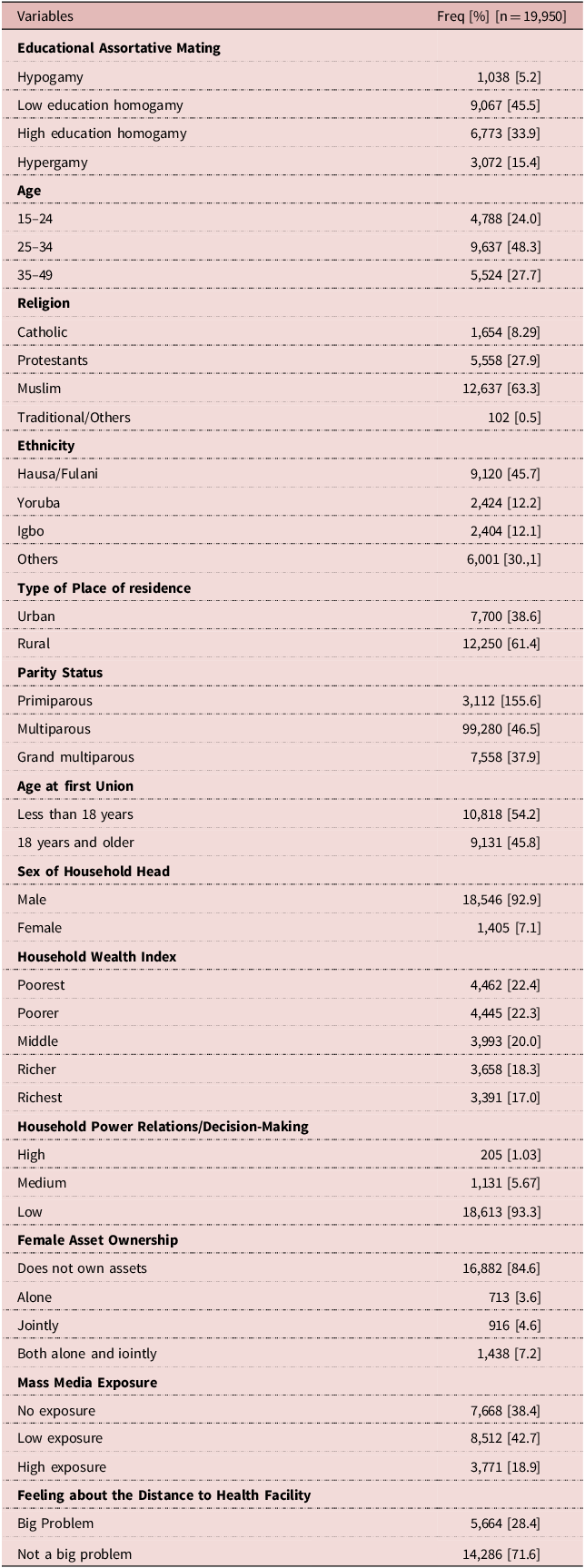
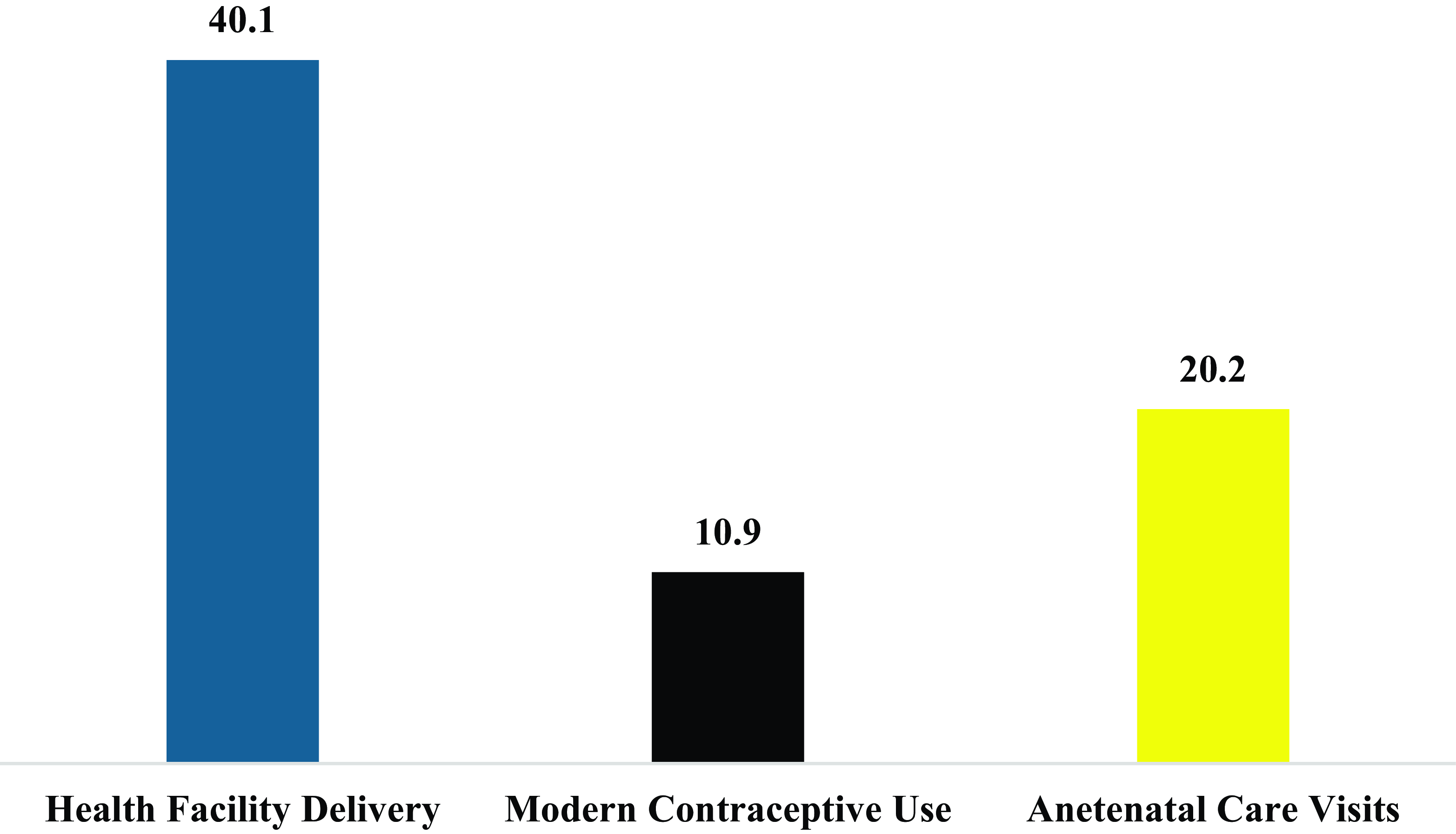
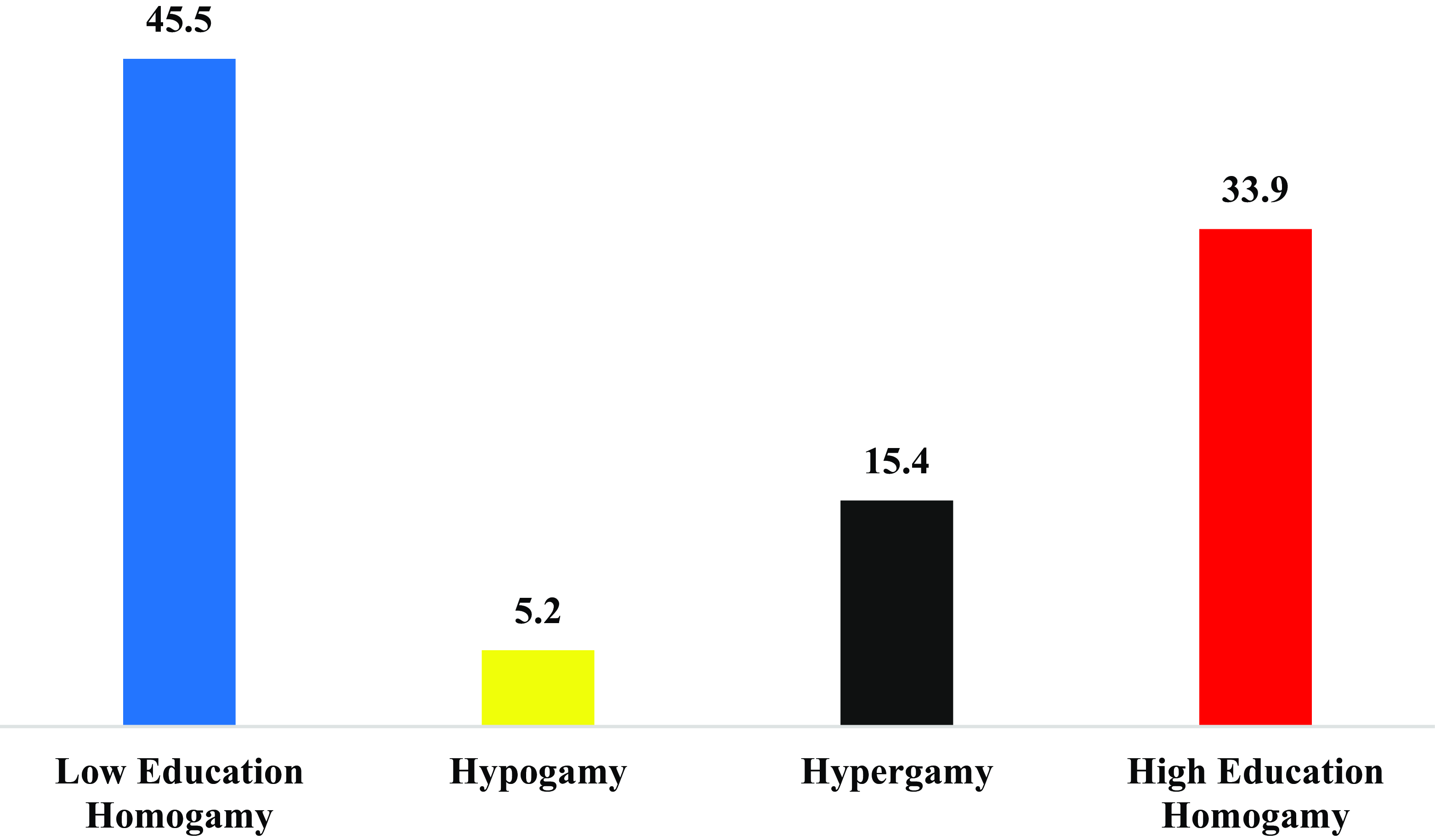
Figure 1 shows the levels of reproductive and maternal healthcare services utilization among partnered women in Nigeria: 40.1% reported that they delivered their last birth in a health facility, and about 20.2% reported attending eight or more ANC visits during pregnancy while utilization of modern contraceptives was low at about 10.9% among this group of women. Figure 2 shows the levels of EAM that low (45.5%) and high-education (33.9%) homogamy are the most common types of EAM among married women in Nigeria while hypogamy is quite low at 5.2%.
Percentage of married who reported utilization of reproductive and maternal health services in Nigeria.
Percentage distribution of various types of EAM.
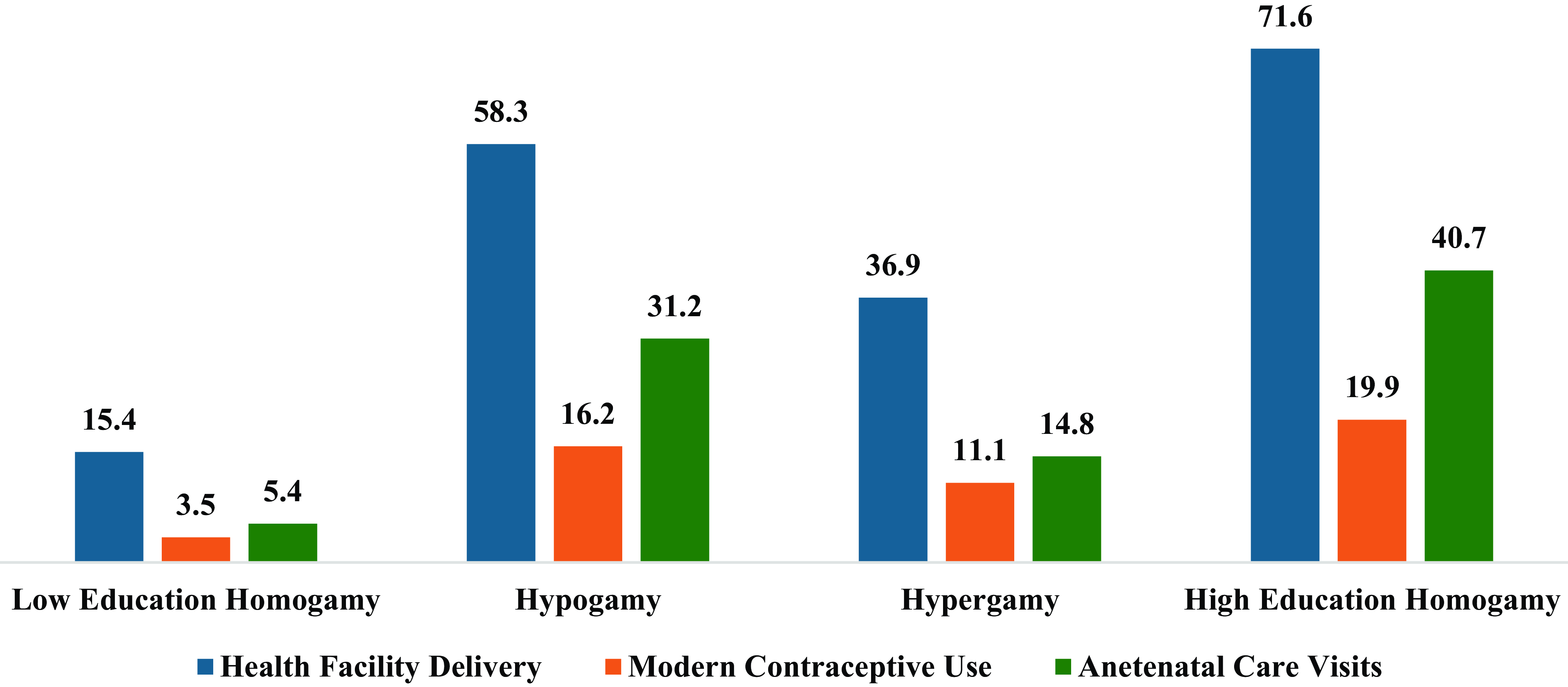
The highest percentage of women utilizing reproductive and maternal healthcare services are those in high-education homogamy relationships; 71.6% have health facility delivery, 19.9% use modern contraceptives, and 40.7% had 8+ antenatal care visits during pregnancy. 58.3% of women in hypogamy had health facility delivery but health facility delivery is lowest among women in low-education homogamy (15.4%). The analysis also showed that 31.2% of the women in hypogamy relationships had 8+ ANC visits during pregnancy, 14.8% for women in hypergamy, and 5.4% for women in low-education homogamy. The prevalence of modern contraceptive use among women in hypogamy is 16.2%, 11.1% for women in hypergamy, and 3.5% for women in low-education homogamy.
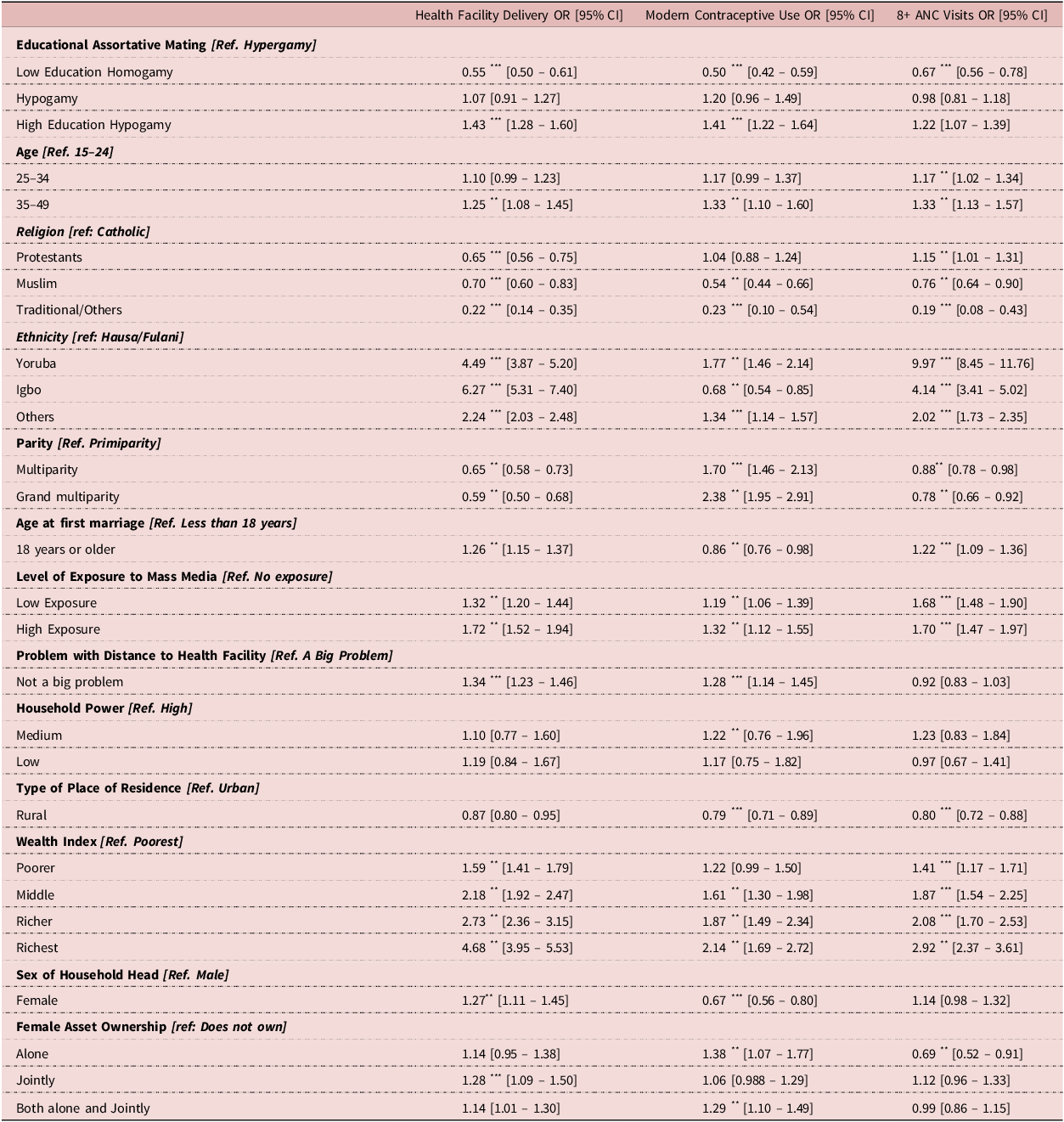
The results at the multivariate level using binary logistic regression (Table 2) are presented in three separate models for each maternal and reproductive healthcare utilization measure: health facility delivery, modern contraceptive use, and antenatal care utilization. For health facility delivery, the results showed that women in low-education homogamy marriages are 45% less likely to deliver at health facilities compared to women in hypergamy (OR=0.55; 95%CI: 0.50 – 0.61); women in hypogamy marriages are 7% more likely to deliver at health facilities compared to women in hypergamy (OR=1.07; 95%CI: 0.91 – 1.27); and women in high-education homogamy marriages have the highest likelihood (43%) of delivering at health facilities (OR= 1.43; 95%CI: 1.28 – 1.60). Age, religion, ethnicity, exposure to mass media, distance to the nearest health facility, parity, age at first marriage, wealth index, sex of household head, and female asset ownership also showed a statistically significant relationship with delivery at a health facility. The analysis showed a statistically significant relationship between EAM and modern contraceptive use. Specifically, it was found that women in low-education homogamy marriages are 50% less likely to use modern contraceptives compared to women in hypergamy (OR=0.50; 95%CI: 0.42 – 0.59). Compared to women in hypergamy, it was found that women in hypogamy marriages are 20% more likely to be modern contraceptive users (OR=1.20; 95%CI: 0.96 – 1.49), and the odds of using modern contraceptives are 41% higher for women in high-education homogamy (OR=1.41; 95%CI: 1.22 – 1.64). The analysis also showed that some covariates are significantly associated with modern contraceptive use. The analysis showed that with increasing age of the women, there is a higher likelihood of utilizing modern contraceptives. Interestingly, marrying at the age of 18 years and above is associated with 14% lower odds of modern contraceptive use compared to being a child bride (OR=0.86; 95%CI: 0.76 – 0.98). and owning a property whether individually or jointly was found to be associated with a higher likelihood of modern contraceptive use.
Binary logistic regression models of the relationship between EAM and reproductive and maternal healthcare utilization in Nigeria
CI: confidence interval; OR: odds ratio,
*** p<0.001,
** p<0.01.
Lastly, the analysis revealed a statistically significant relationship exists between EAM and antenatal care utilization. Women in low-education homogamy marriages are 33% less likely to have 8+ ANC visits during pregnancy compared to women in hypergamy (OR=0.67; 95%CI: 0.56 – 0.78). It was also found that women in high-education homogamy marriages are 22% more likely to have 8+ ANC visits during pregnancy compared to women in hypergamy marriages (OR=1.22; 95%CI: 1.07 – 1.39). The covariates also showed a statistically significant relationship with 8+ ANC visits during pregnancy apart from distance to the nearest health facility, household power relations, type of place of residence, sex of household head, and female asset ownership. I also employed the Hosmer–Lemeshow test for goodness of fit across all three adjusted models for each of the measures of reproductive healthcare utilization, and the p-values for each of the models are greater than 0.05.
Discussion
In many low- and middle-income countries, women’s education is an important correlate of reproductive healthcare utilization (Abraham et al., Reference Abraham, Yitbarek and Morankar2019; Adjiwanou et al., Reference Adjiwanou, Bougma and LeGrand2018; Ayamolowo et al., Reference Ayamolowo, Odetola and Ayamolowo2020; Doctor et al., Reference Doctor, Nkhana-Salimu and Abdulsalam-Anibilowo2018; Okedo-Alex et al., Reference Okedo-Alex, Akamike, Ezeanosike and Uneke2019; Tessema et al., Reference Tessema, Teshale, Tesema and Tamirat2021; Woldegiorgis et al., Reference Woldegiorgis, Hiller, Mekonnen, Meyer and Bhowmik2019). However, there is a paucity of research linking couples’ educational pairing (EAM) to the health behaviours of household members including reproductive and maternal healthcare utilization in a patriarchal society like Nigeria where marriage is universal and decision-making in the household is greatly influenced by the couple’s characteristics. Through the lens of the family systems theory, I filled this gap in the literature by analyzing nationally representative survey data to examine EAM and investigate its influence on the utilization of reproductive healthcare services through the lens of the family systems theory. Findings showed that low-education and high-education homogamy are the most prevalent patterns of EAM in Nigeria. These results are unsurprising because individuals with similar educational attainments are more likely to mate in the marriage market in light of the literacy rate in Nigeria (Adebowale et al., Reference Adebowale, Fagbamigbe, Morakinyo, Obembe, Afolabi and Palamuleni2020; Ariyo and Jiang, Reference Ariyo and Jiang2021; Kollamparambil, Reference Kollamparambil2020). Hypergamy is more prevalent than hypogamy; this is linked to the fact that until recent times, there has been a conventional educational advantage for men in Nigeria which was sustained by the traditional patriarchal practices and beliefs. Hence, in the marriage market, there are more educated men in the higher social class who seek out women in the lower class to hold power in the household, and these women seek these men for social mobility (Pesando, Reference Pesando2021a, Reference Pesando2021b). Similar to previous studies (Bolarinwa, Fortune, et al., Reference Bolarinwa, Fortune, Aboagye, Seidu, Olagunju, Nwagbara, Ameyaw and Ahinkorah2021), less than half of married women reported having their last delivery at a health facility. This is consistent with studies that have reported a low utilization of health facilities for delivery in the study context (Adedokun and Uthman, Reference Adedokun and Uthman2019; Yaya, Bishwajit, et al., Reference Yaya, Bishwajit, Uthman and Amouzou2018).
The study set out to test two key hypotheses, first, that women in high-education homogamy marriages are more likely to utilize reproductive healthcare utilization compared to women in hypergamy. Second, women in hypogamy will be more likely to utilize reproductive healthcare utilization compared to women in hypergamy. The findings of the study showed that EAM is significantly associated with health facility delivery. Women in high-education homogamy relationships have a higher likelihood of delivering at a health facility. Some studies in studies in other parts of SSA and India have also shown that couples who both attained higher education are more likely to have a delivery at a health facility (Adjiwanou et al., Reference Adjiwanou, Bougma and LeGrand2018; Yadav et al., Reference Yadav, Sahni, Kumar, Bala and Kalotra2021). As posited in the family systems theory, couples with higher educational attainment (at least postsecondary) could imply better intramarital communication and more resources as higher education leads to higher income trajectory and better reproductive health knowledge (Choi and Denice, Reference Choi and Denice2023; Kollamparambil, Reference Kollamparambil2020; Pesando, Reference Pesando2021b). In addition, it was found that women in hypogamy relationships exhibit a higher likelihood of delivering at a health facility, a finding that is consistent with empirical evidence that women with higher education exhibit a higher level of household decision-making autonomy (especially for healthcare utilization), which is a function of a higher level of education relative to their partners’ (Andriano et al., Reference Andriano, Behrman and Monden2021; Asaolu et al., Reference Asaolu, Alaofè, Gunn, Adu, Monroy, Ehiri, Hayden and Ernst2018).
In tandem with preponderant evidence reporting a low level of modern contraceptive use in Nigeria (Bolarinwa, Tessema, et al., Reference Bolarinwa, Tessema, Frimpong, Seidu and Ahinkorah2021; Chima and Alawode, Reference Chima and Alawode2019; Johnson, Reference Johnson2017), this study revealed that the proportion of partnered women using modern contraceptives was low. Low modern contraceptive use among married women, in Nigeria, is a major public health challenge for efforts aimed at averting adverse reproductive health outcomes, and this has been linked to low education/knowledge, especially in certain regions of the country (Blackstone and Iwelunmor, Reference Blackstone and Iwelunmor2017; Ukoji et al., Reference Ukoji, Anele and Imo2022). This study found that women in educational hypogamy are more likely to use modern contraceptives compared to women in hypergamy. Women in such relationships usually exhibit higher income trajectories which give them a say in important household decisions and their higher education means they are more knowledgeable about reproductive health issues and rights (Greenwood et al., Reference Greenwood, Guner, Kocharkov and Santos2014; Guner et al., Reference Guner, Kulikova and Llull2018; Muyunda et al., Reference Muyunda, Makasa, Jacobs, Musonda and Michelo2016). Also, women in high-education homogamy showed a higher likelihood of modern contraceptive use, underscoring the importance of homogenous intramarital educational pairing which promotes better understanding, communication, functioning of the household, and pooling of household resources (Behrman, Reference Behrman2016; Pyke and Adams, Reference Pyke and Adams2010). The finding is also consistent with evidence from SSA that has shown that highly educated women and their partners are more likely to be modern contraceptive users (Adjiwanou et al., Reference Adjiwanou, Bougma and LeGrand2018; Colleran and Snopkowski, Reference Colleran and Snopkowski2018).
Moreover, consistent with similar studies in Nigeria the percentage of partnered women reporting the recommended 8+ ANC visits during their last pregnancy is low (Alibhai et al., Reference Alibhai, Ziegler, Meddings, Batung and Luginaah2022; Bolarinwa, Sakyi, et al., Reference Bolarinwa, Sakyi, Ahinkorah, Ajayi, Seidu, Hagan and Tessema2021; Dadjo et al., Reference Dadjo, Ahinkorah and Yaya2022; Fagbamigbe et al., Reference Fagbamigbe, Olaseinde and Setlhare2021). This study found that women in high-education homogamy showed a higher likelihood of at least 8 ANC visits during pregnancy compared to women in hypergamy. This finding is in consonance with the evidence in the literature that higher educational attainment for women boosts autonomy which, in turn, increases the likelihood of more antenatal care visits (Ahmed et al., Reference Ahmed, Creanga, Gillespie and Tsui2010; Barman et al., Reference Barman, Saha and Chouhan2020; Tsala Dimbuene et al., Reference Tsala Dimbuene, Amo-Adjei, Amugsi, Mumah, Izugbara and Beguy2018). Women in low-education homogamy relationships are less likely to have at least 8 ANC visits during pregnancy due to the apparent lack of resources to be pooled at the household level to achieve such compared to women in high-education homogamy couples (Breen and Andersen, Reference Breen and Andersen2012; Carlsson et al., Reference Carlsson, Martinsson, Qin and Sutter2009; Greenwood et al., Reference Greenwood, Guner, Kocharkov and Santos2014).
Besides the influence of education on the utilization of reproductive and maternal health services, the findings of this study underscore the importance of EAM in the household decision to utilize the services, and this advantage is more evident for highly educated couples (McTavish et al., Reference McTavish, Moore, Harper and Lynch2010). In such scenario, the family is likely to function in a way that the pooling of resources for household members to seek healthcare services is prioritized as the resources are available due to the couples’ higher income trajectory (Choi and Denice, Reference Choi and Denice2023; Greenwood et al., Reference Greenwood, Guner, Kocharkov and Santos2014; Marmot, Reference Marmot2002; Pesando, Reference Pesando2021b; Turčínková and Stávková, Reference Turčínková and Stávková2012); however, this cannot be said in the case of households where both couples are lowly educated – a common mating pattern in certain regions of the country like the North where utilization of reproductive and maternal health services have been reported to be low (Bolarinwa, Sakyi, et al., Reference Bolarinwa, Sakyi, Ahinkorah, Ajayi, Seidu, Hagan and Tessema2021). Despite filling an important gap in literature, this study is not without its limitations. Certain socio-cultural factors (cultural and religious beliefs and gender norms) that may be important for marriage as an important aspect of the culture in the study context were not covered in the DHS survey data. The sample was not large enough to permit the estimation of the likelihood of the outcome among women from each of the ‘other’ ethnic groups. Nevertheless, given that the DHS survey data is representative at national and state levels, coupled with the application of complex survey weights, this study presents a reliable picture of EAM and the utilization of reproductive and maternal healthcare services among partnered women in Nigeria and similar contexts in low- and middle-income countries.
Conclusion
From the perspective of the family systems theory, it was hypothesized that women in high-education homogamy and hypogamy will be more likely to utilize reproductive and maternal healthcare services compared to women in hypergamy. The findings of this study support the hypothesis, and it can be concluded that women in high-education homogamy and hypogamy relationships are more likely to deliver at health facilities, utilize modern contraceptives, and have a minimum of 8 antenatal care visits during pregnancy compared to women in hypergamy. Hence, it is noteworthy that higher education homogamy and hypogamy are beneficial for the utilization of these healthcare services for partnered women. In the mate selection process in the marriage market, educational homogamy and hypogamy can only be possible if more programmatic and policy efforts continue to be geared towards increasing the female literacy rate, which will surely have consequences for higher income trajectory and female empowerment in the household, subsequently leading to more utilization of reproductive and maternal healthcare services. This study has explored factors that influence the utilization of reproductive healthcare services beyond the preponderant measures of social stratification, thereby providing an avenue for other studies to continue exploring several other family dynamics determining the utilization of reproductive and maternal healthcare services – an area of research that is exiguous in Nigeria.
Funding statement
This research received no grant from any funding agency, commercial entity, or not-for-profit organization.
Competing interests
The author has no conflicts of interest to declare.
Ethical approval
This study was based on the analysis of publicly available secondary dataset from the DHS Program with all identifier information removed. The Nigeria DHS data were approved by ICF International as well as the Institutional Review Board (IRB) in Nigeria (Fig. 3).
Percentage of married women currently utilizing various reproductive and maternal healthcare services, by type of educational assortative mating.


 Open access

