

Introduction
Material culture can provide valuable insights into social issues. A correlation between objects and identity is evident in all the social practices that surround pottery—such as its selection, demand, adoption, adaptation, and replication—allowing for a deeper understanding of how identity is expressed. It can be argued that those involved in the production and consumption of pottery were engaged in a dynamic process of interaction and ongoing negotiation through their social practices (Renfrew Reference Renfrew, Renfrew and Cherry1986). Additionally, the ways in which pottery was consumed played a significant role in the continuous redefinition of group and community affiliations.
This paper discusses a distinctive class of decorated pottery that belongs to a unique regional ceramic tradition first identified at Gawra, the so-called Impressed Ware (henceforth IW). Here, the term ‘impressed’ is used not in the sense employed by Rothman and Blackman, where it also includes appliqué designs and incised lines (Rothman and Blackman Reference Rothman and Blackman2003: 3), but rather with a more neutral connotation that does not carry the cultural implications associated with labels referring specifically to the site of Gawra. Such terms seem less suitable for describing this ceramic class, as they more or less implicitly strengthen the link with the site of initial discovery and support the idea that Gawra was the most important manufacturing centre. In fact, this class is labelled in many ways that emphasize the relationship with the material culture of Gawra, such as Gawra Ware (Oates Reference Oates1985: 186) – which includes a specific series of types (cannon spouts, impressed decorations, double-rim jars, cross-hatched painted motifs and flange-rim jars) according to some authors (Baldi and Abu Jayyab Reference Baldi, Abu Jayyab and Marro2012: 170; Gülçur and Marro Reference Gülçur, Marro and Marro2012: 323); impressed, bubble or blister ware (Rothman and Blackman Reference Rothman and Blackman2003: 3); and Gawra incised or impressed ware (Baldi Reference Baldi and Iamoni2016: 123). Another term coined to describe the area where this ceramic class is attested is Gawra’s Sphere, which refers to the influence of Gawra’s ceramic traditions on nearby sites (Sconzo and Qasim Reference Sconzo and Qasim2021: 33). However, it is now known that there were different production centres, as demonstrated not only by the archaeometric analysis carried out by Rothman and Blackman (Reference Rothman and Blackman2003) but also by the findings highlighted in this paper. This pottery provides crucial evidence, as its distribution is restricted to the early Late Chalcolithic 2 (henceforth LC 2) levels (Gawra XI-XA) (Rothman Reference Rothman2002: 3, tab. 1.1) and is limited to a specific area in Northern Mesopotamia. Thus, it serves as an excellent case study for examining the role of pottery in building social identity and social practices.
Often, the Late Chalcolithic (henceforth LC) period is viewed as a monolithic phenomenon, with theoretical models based on findings from larger sites across Mesopotamia. These models are then applied to smaller, contextually distinct sites, attributing to them the same evolutionary trajectory. This approach assumes that all sites followed identical processes, including the rise of social and economic imbalances. Where evidence suggests these sites reached higher levels of socio-economic complexity, they are often presumed to have undergone similar processes, reflected in strategies such as social boundaries, economic concentration, and unequal access to resources or knowledge. In such models, as new social structures and institutions emerged, roles became increasingly stratified, evolving from simple divisions to more complex hierarchies (Cerasuolo Reference Cerasuolo and Cerasuolo2021).
Instead, however, the early LC era represents a time of intense social transformation and material culture experimentation, as demonstrated by recent studies that have developed a framework more inclined to interpret socio-cultural phenomena through a multi-model approach. Such an approach avoids summarizing the early LC as ‘a period of increased hierarchization’, thus guarding against oversimplifying this multifaceted scenario (Baldi et al. Reference Baldi, Iamoni, Peyronel, Sconzo, Baldi, Iamoni, Peyronel and Sconzo2022; Iamoni Reference Iamoni and Iamoni2016; Rothman Reference Rothman and Rothman2001; Stein Reference Stein2012).
A fundamental role in defining this dynamic period of progressive social experimentation is played by pottery evidence. Due to its physical durability, pottery not only records finished products but also sheds light on the steps that led to its creation. Shapes themselves are important, but the material also holds significant value for understanding cultural behaviour and human choices (Orton and Hughes Reference Orton and Hughes2013: 69). As highlighted in general discussions on the interpretative models of the evolution of LC society, there is also a tendency towards generalisation in the discourse around craftsmanship and pottery production. It is often stated that during the LC 2 period in Northern Mesopotamia, the increasing standardisation of ceramic craftsmanship was accompanied by a widespread decrease in decorated pottery. LC 2 pottery was markedly different from the extensively decorated vases produced in the Late Neolithic and Early-Mid Chalcolithic periods, such as those found at Gawra XX-XII (Rothman Reference Rothman2002; Tobler Reference Tobler1950) and Arpachiyah TT 1–10 (Mallowan and Cruikshank Rose Reference Mallowan and Cruikshank Rose1935). In a substantially egalitarian society, decorated pottery was a means of representing individual or family identity. By contrast, in a more stratified society, the most powerful members no longer use the aesthetic characteristics of ceramics to consolidate their position within the community but use their capacity to control the different steps of the production chain, favouring the speed of execution, the functionality and the quantity of the shapes (Russo Reference Russo, Abu Jayyab and Baldi2022: 156–157). “It is around this time that pottery loses its role as an aesthetic medium expressing status or group affiliation […] in addition, potters were servicing an increasingly larger population, while the number of potters themselves was dwindling due to the initiation of specialization since the LC 1 and the loss of the industry’s prestige” (Abu Jayyab Reference Abu Jayyab and Marro2012: 103–104). While this may generally be true, it is also important to recognize that the picture should be nuanced through approaches that avoid oversimplifying a more complex mosaic.
The New Data from Asingeran: Contexts of Discovery
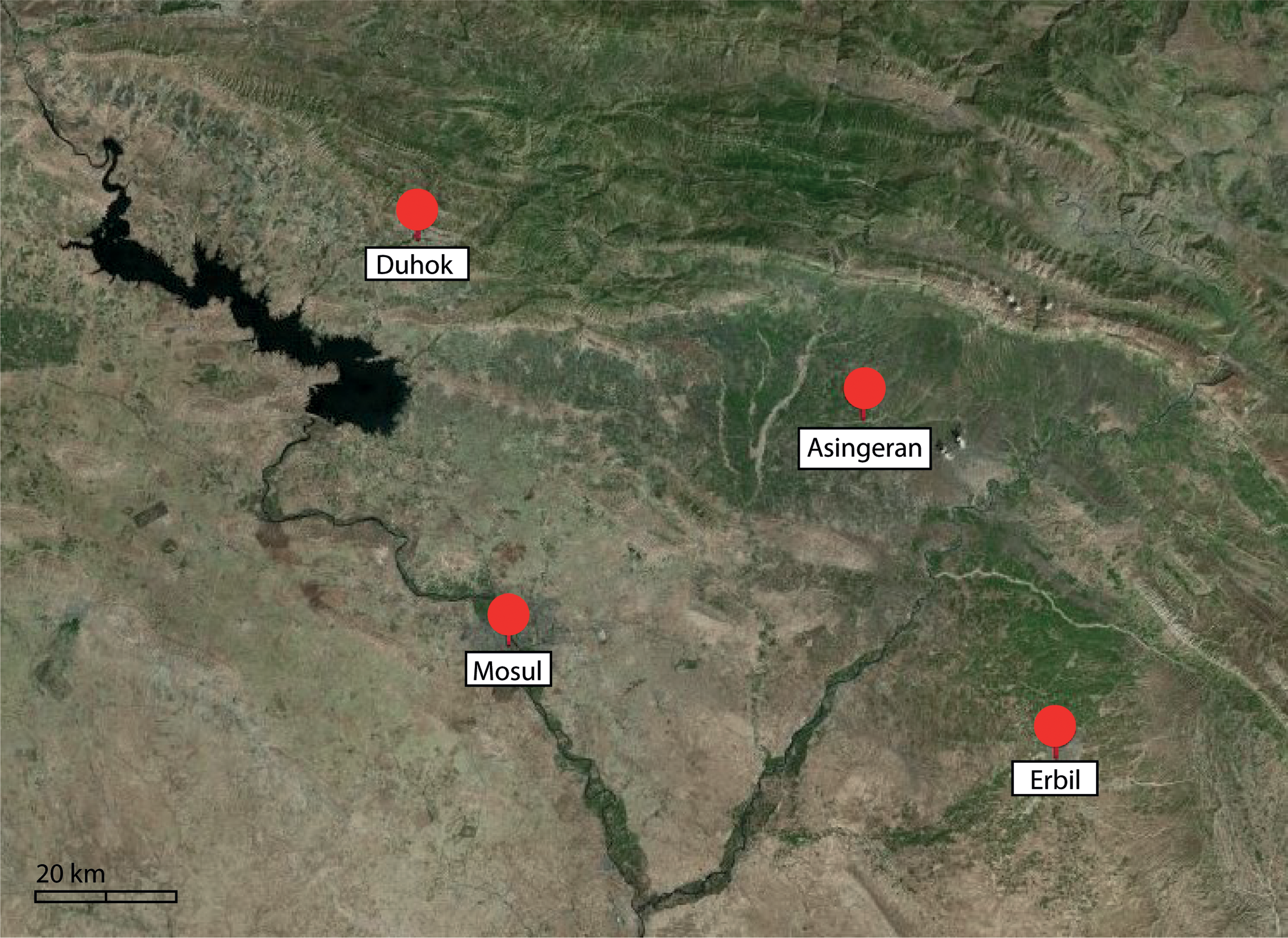
Two sherds of IW come from the early LC 2 assemblage of Asingeran, a site located in the eastern sector of the Plain of Navkur in the Kurdistan Region of Iraq, close to the modern town of Rovia (Fig. 1).
Map with location of Asingeran in relation to the major cities in the area (Bing Map, modified by the author)

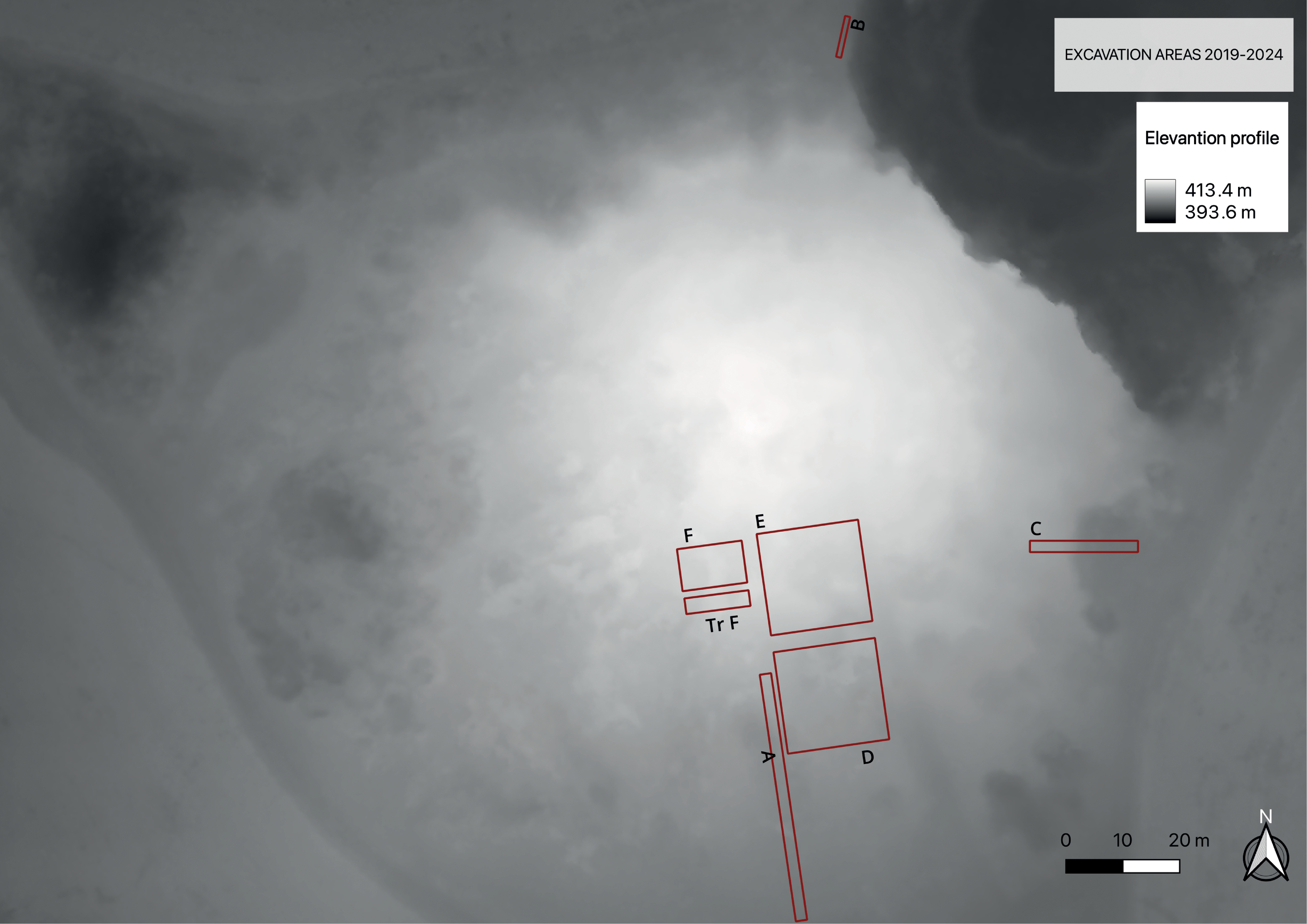
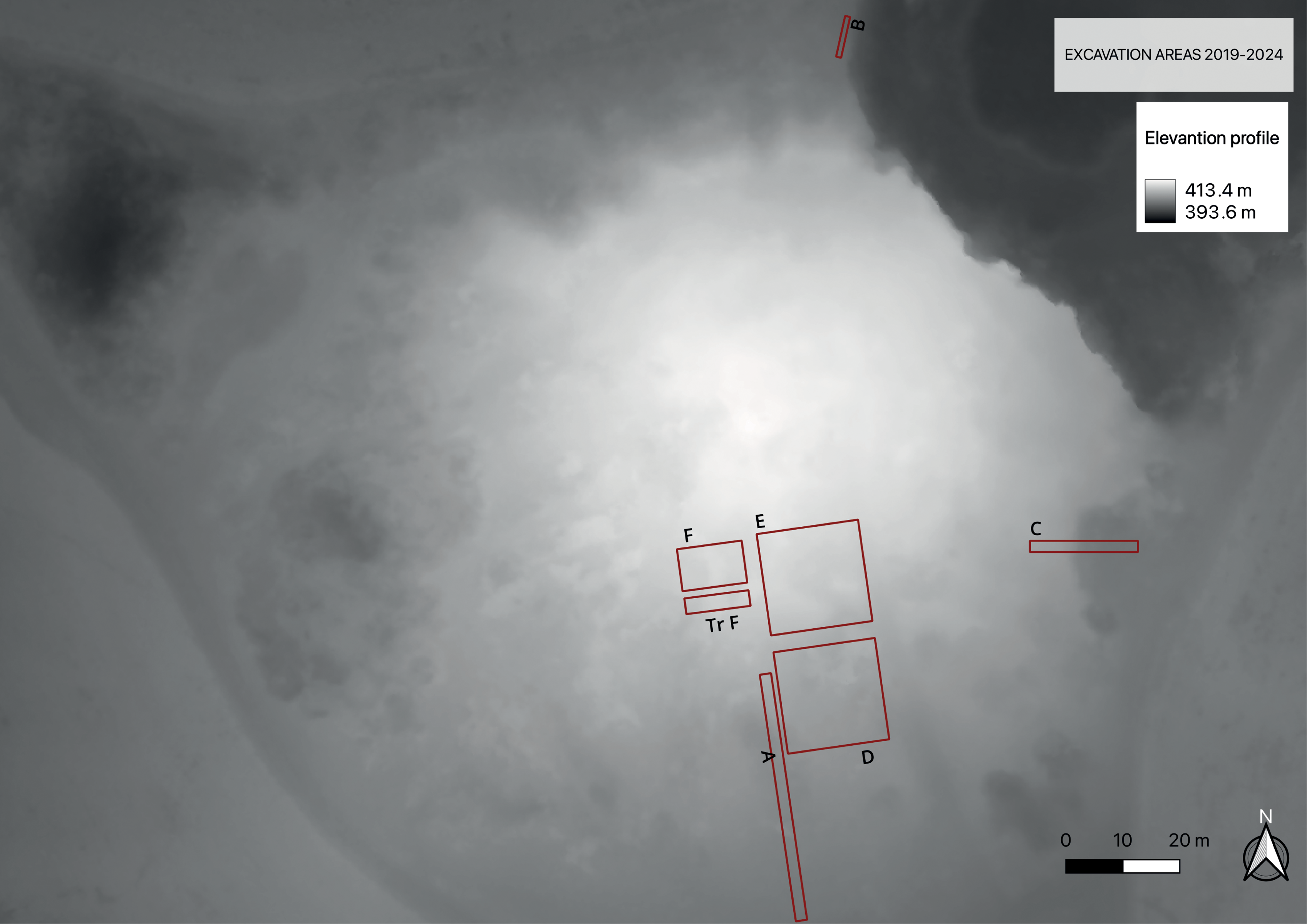
The site, previously identified in 1920s as Girda Asin (Speiser 1927–1928: 24), was first surveyed in 2015 as part of the Land of Nineveh Archaeological Project (Morandi Bonacossi and Iamoni Reference Morandi Bonacossi and Iamoni2015: 7). Since 2018 the site has undergone systematic investigation, with one preliminary operation in 2018 (Iamoni and Qasim Reference Iamoni and Qasim2021: 11), followed by five archaeological campaigns from 2019 to 2024. Six Operations are named A, B, C, D, E and F (Fig. 2). The area surrounding the main mound was investigated through survey operations as part of the Asingeran Excavation Project (AEP) (Valente Reference Valente, Iamoni and Maset2023; Valente et al. Reference Valente, Maset and Iamoni2022: 9; Valente et al. Reference Valente, Maset and Iamoni2024). The main focus of the AEP is reconstruction of the dynamics that led the site (and more generally communities settled in the Plain of Navkur) from a Neolithic village to a Chalcolithic settlement characterized by phenomena of growing social and economic complexity between the seventh and fourth millennia B.C.
DEM of all Asingeran’s Operations (map by S. I. Bortoluzzi)
The mound of Asingeran rises more than thirteen metres above the plain, near a seasonal river that runs east-west across the area, before turning south and joining the River Khazir, which, together with the River Gomel, is the largest watercourse in the region. Asingeran, which expanded to two hectares during the LC period, consists of a main mound formed by the accumulation of archaeological remains and a low settlement located on the north-western side of the mound. The archaeological evidence of funerary and pottery craft installations, as well as the substantial range of pottery types attested, suggests that the settlement of Asingeran was stable and well organized from a social and economic point of view during the entire Chalcolithic period. This stability ensured long-distance contacts, as suggested by the presence of a Dalma Ware (DW) specimen (Iamoni et al. Reference Iamoni, Valente, Scattini and Hasan2023: 44).
The overview of the ceramic data from Asingeran up to now has provided an initial identification of traits shared with pottery traditions already known in the area. During the LC, Asingeran existed within a cultural ceramic koine, as highlighted by the presence of some widespread types, such as inwardly bevelled rim bowls (IBRB), characterised by very standardised mass production with well-defined forms and sizes. Based on the formal characteristics of diagnostic pottery, a model of ‘ceramic provinces’ has been outlined for Northern Mesopotamia, which shows a general tendency towards the progressive expansion of the territories involved, with typological-technological standardisation. For example, the widespread dissemination of IBRBs in the northern regions during the second half of the LC 2 seems to substantially confirm the boundaries of the easternmost province identified by Baldi (Reference Baldi and Iamoni2016: fig. 3).
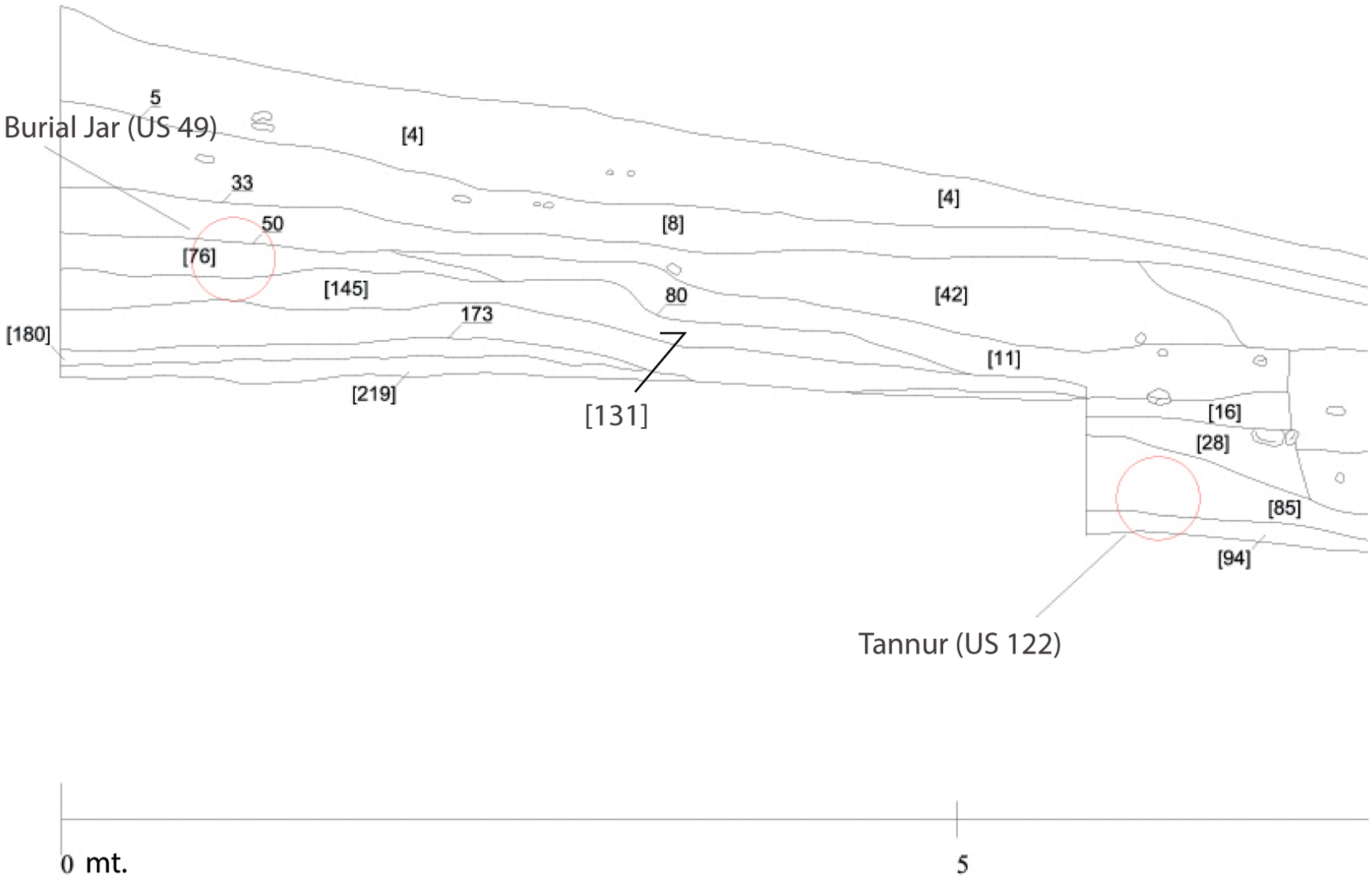
Selected section of Operation A1 (courtesy of AEP mission)
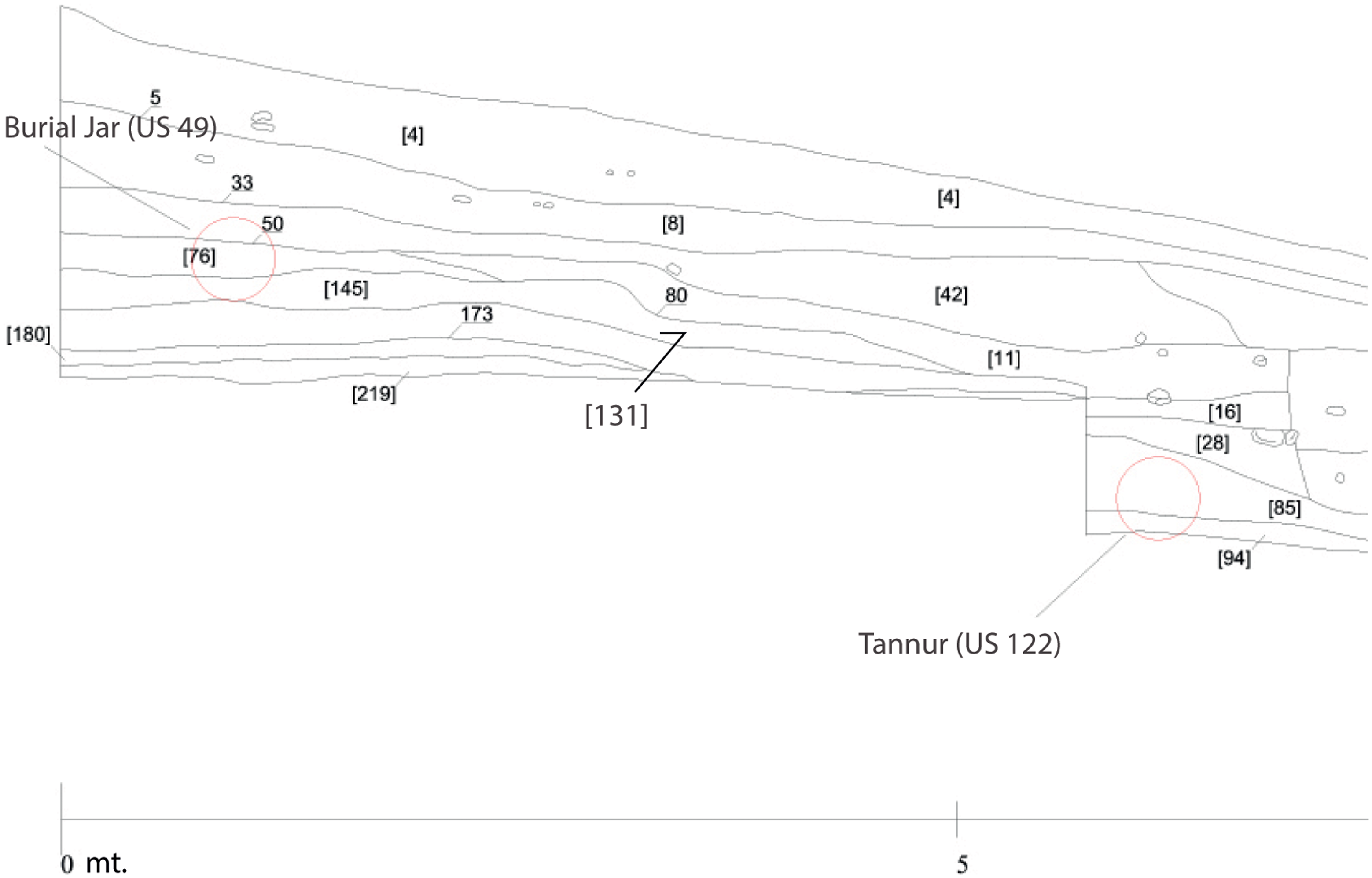
Operation AFootnote 1 is a north-south oriented step trench forty-five meters long and two meters wide, dug in 2019 along the southern slope of the main mound and re-opened in 2021 (Fig. 3). Operation A allowed the identification of nine different chronological phases (from the Late Neolithic to the Medieval-Modern period). The fragment of IW comes from phase A1a, a modern surface deposit (US 131). In phase A1a, associated with the Islamic era, notable features include remnants of stone foundations, alongside various pits and ovens indicative of probable domestic activities. The ceramic assemblage encompasses artifacts from all chronological periods documented at the site (Iamoni et al. Reference Iamoni, Valente, Scattini and Hasan2023: 26–29).
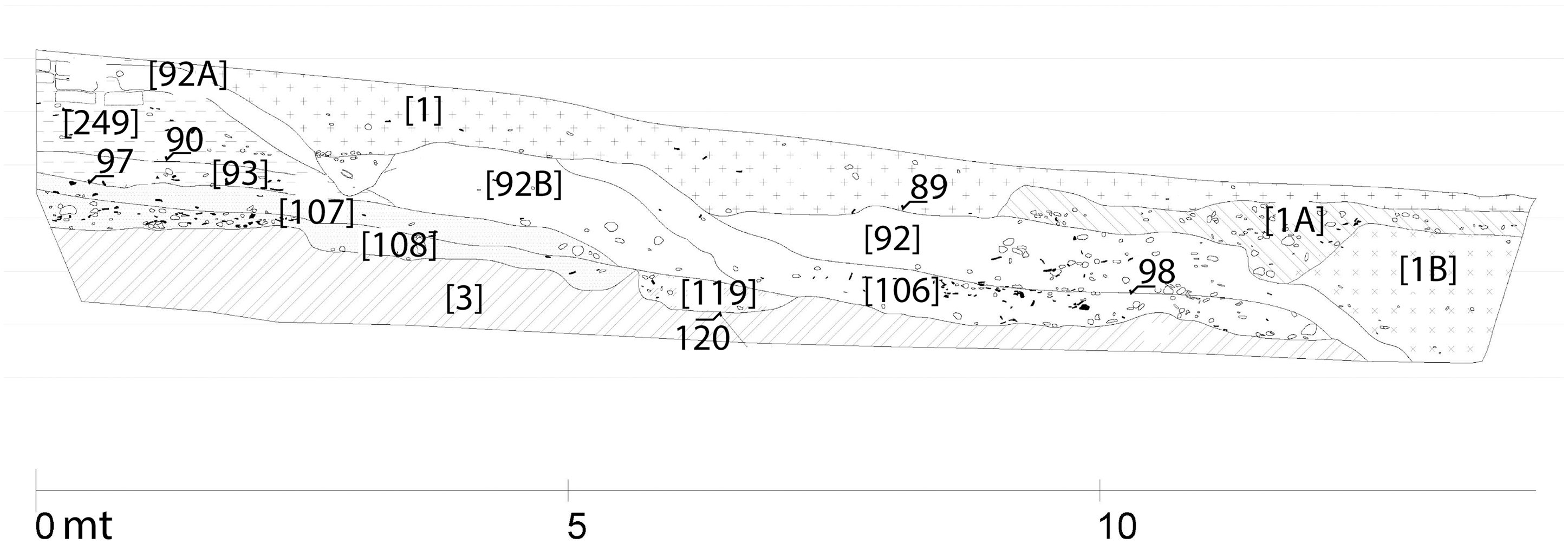
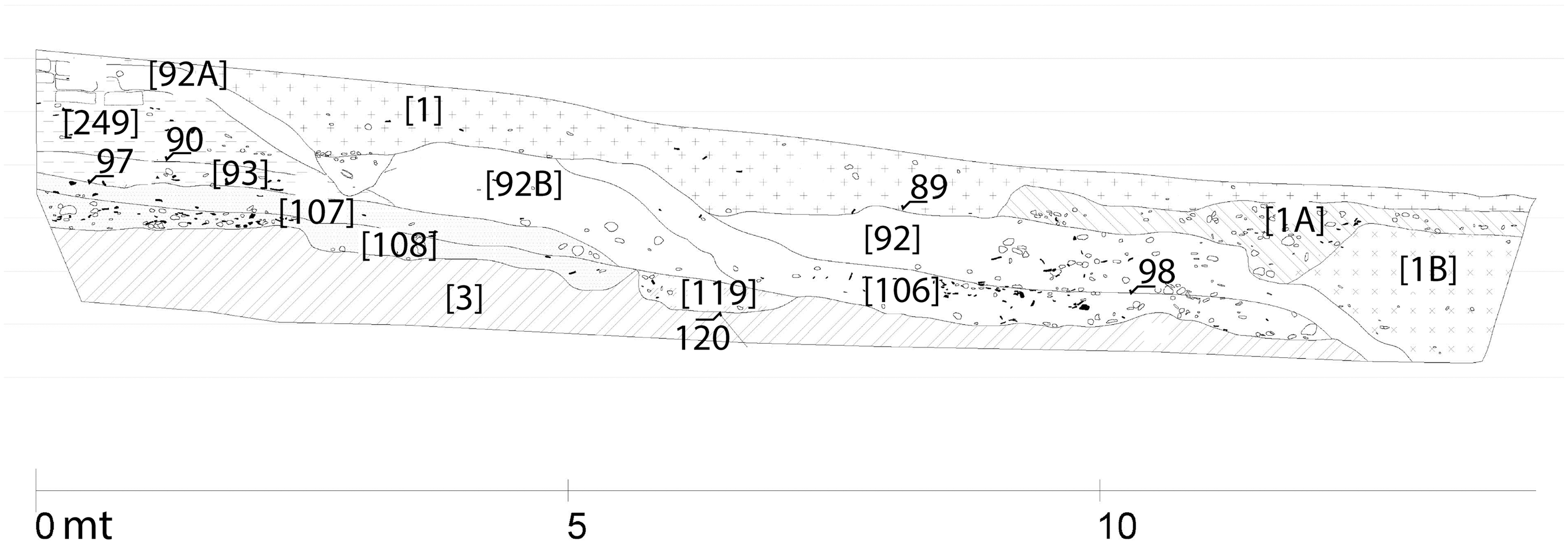
Operation B yielded a north-south fourteen-meter-long section (Fig. 4); it was dug in 2019 in order to collect as much information as possible about the sequence of deposits and the dynamic of development of the settlement in this part of the mound. The archaeological sequence shows five main phases (from early-to-mid Chalcolithic to Middle Islamic). The IW fragment comes from phase B4, corresponding to LC 2 (US 93). Phase B4 marks the initial occurrence of multi-stratified ash layers resulting from repeated dumping actions associated with pottery production activities linked to pottery workshops. The location of Operation B may have functioned as a peripheral dumping area for ceramic and kiln waste (Iamoni et al. Reference Iamoni, Valente, Scattini and Hasan2023: 35).
Section of Operation B (courtesy of AEP mission)
The new data from Asingeran: the IW collection
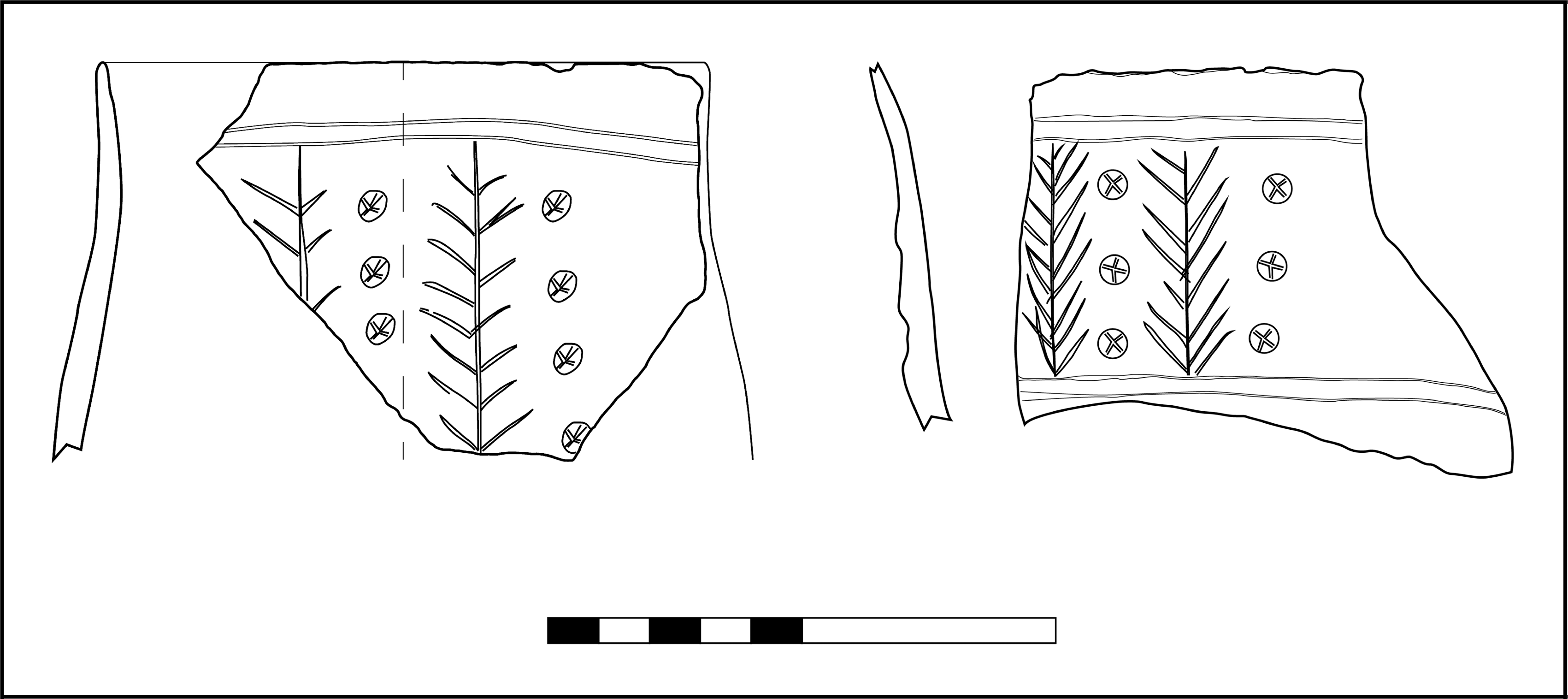
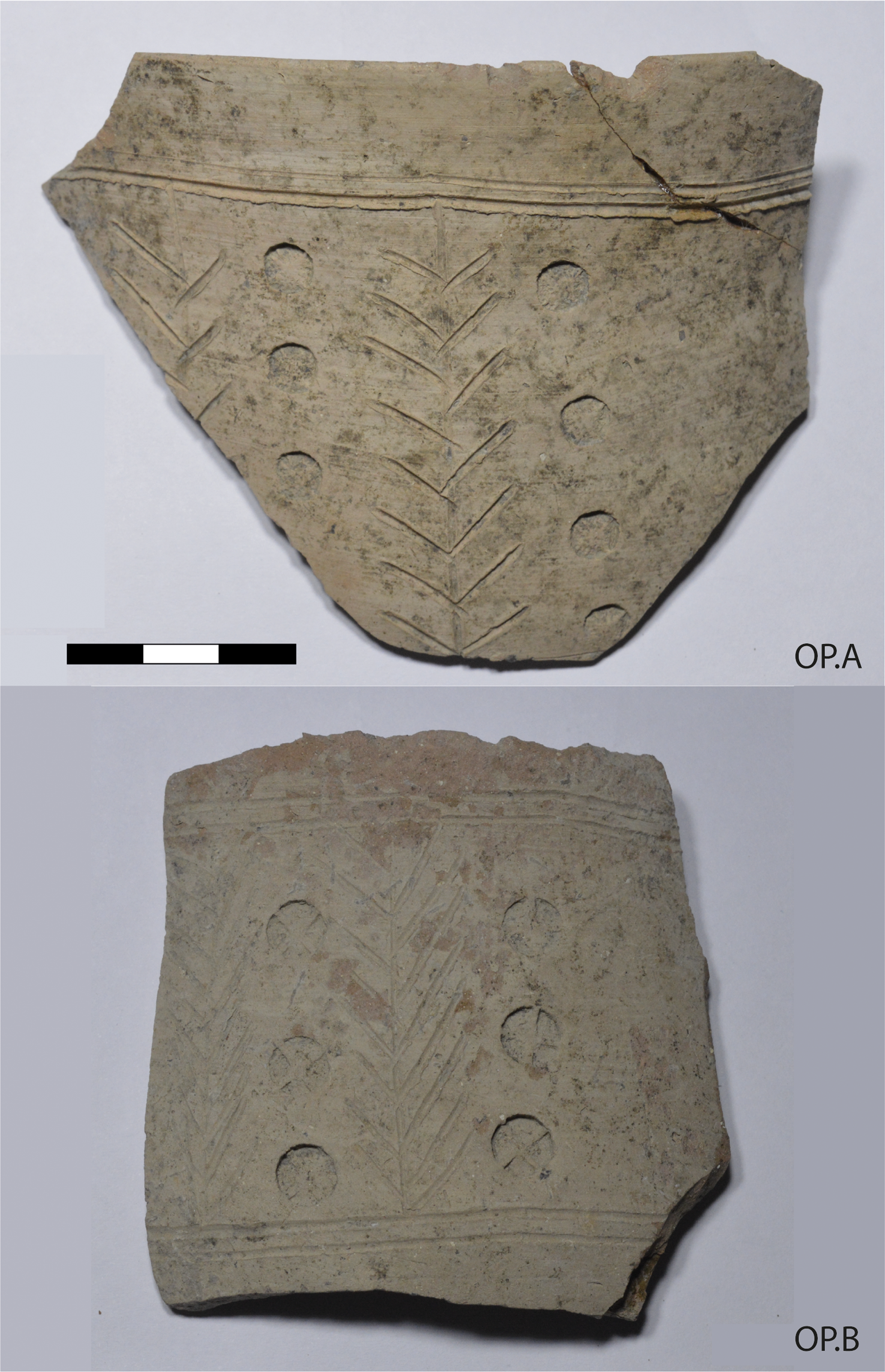
Moving now to the description of the two IW specimens from Asingeran, it can be noted that both sherds (Fig. 5) share some immediately observable characteristics: a similar decoration with impressed crosses inscribed inside circles, arranged in rows and alternating with plant motifs.
IW from Operation A and B (drawing by the author)
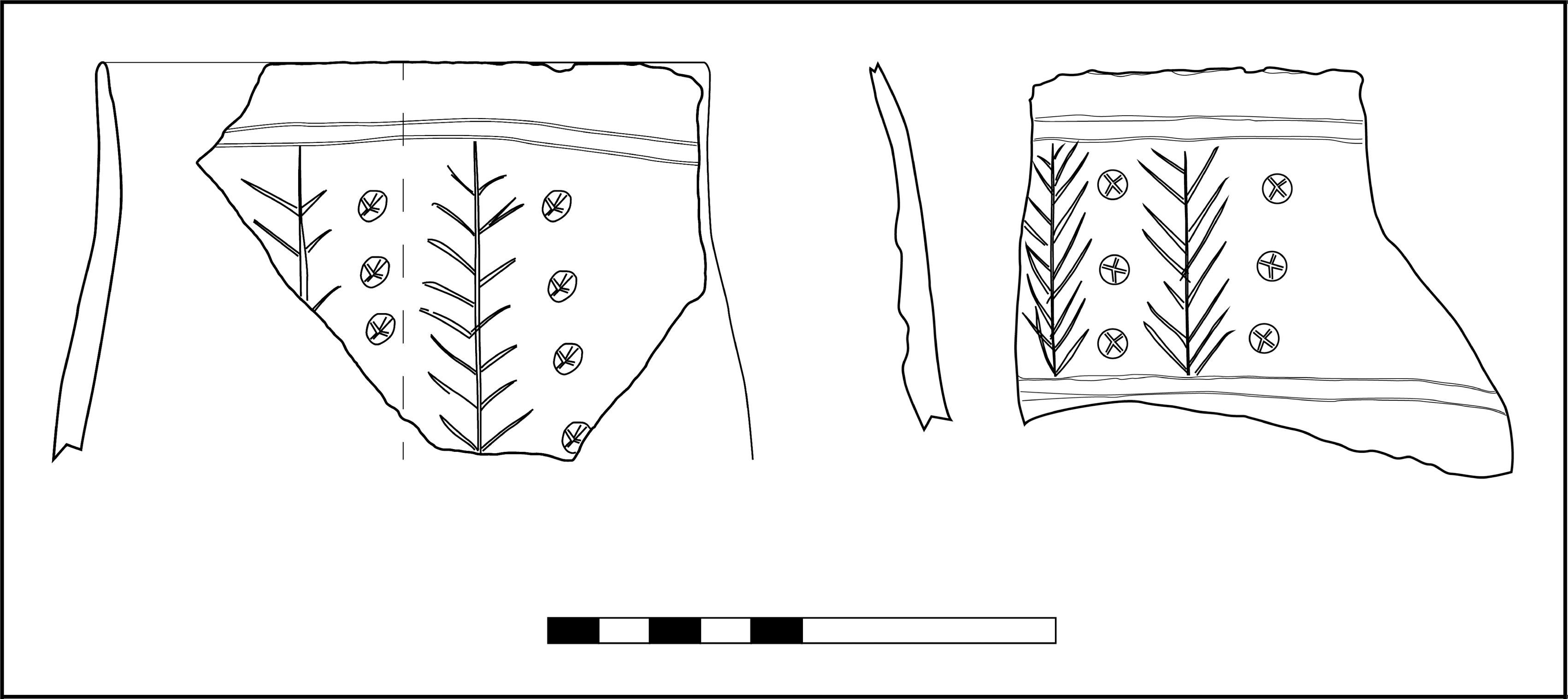
Regarding the morphology of the vessels from which the two fragments originate, it is suggested that the sherd from Operation A (on the left in Fig. 5) comes from an S-shaped cup with a pointed rim, based on its diameter of twelve cm and the thinness of the walls. The second specimen from Operation B (on the right in Fig. 5) lacks a rim, but the inclination of the wall suggests it is closer in shape to a ‘Gawra Beaker’, with an S-shaped profile and flaring, pointed rim. In this context, cups refer to objects that, although characterized by smaller rims relative to the rest of the body, likely served a function similar to open forms, particularly for drinking, possibly in social gatherings. Regarding the quality of decoration, there are some differences: the specimen from Operation A has a rougher decoration technique, while the one from Operation B displays a more refined technique.
The compositions of the fabrics do not differ significantly (Fig. 6). The fabric of the IW from Operation A has a fine-textured plant-tempered composition, while the one from Operation B is also plant-tempered but features coarser plant inclusions. Regarding the manufacturing technique and the firing, data on the chemical composition of the two fragments are currently not available, but from observation under an optical microscope with polarized light some mineralogical components have emerged, suggesting a low firing temperature, less than 700°. The fragments do not exhibit bubbles or cracks inside the section, which is compact, suggesting they were not made using slab techniques. Instead, they were likely made using the coiling technique, although the well-executed smoothing operation makes it difficult to determine this without a detailed analysis of the broken sections. Unfortunately, neither sherd comes from a context associated with architectural structures. The fragment from Operation B was among the ceramic material mixed within the ash dump; that from Operation A was also from a layer not associated with structural remains.
IW from Operation A and B (courtesy of AEP mission)

IW in Upper Mesopotamia: parallels and comparisonsFootnote 2 (Fig. 7)
Tepe Gawra
First and foremost among the sites considered is Tepe Gawra, a two-hectare mound located about twenty-four kilometers north of Mosul and three kilometers east of Khorsabad. Between 1931 and 1938, investigations at Gawra were carried out using the archaeological methods available at the time. This work led to the identification of twenty well-preserved architectural levels/phases dating from the Neolithic to the Bronze Age, which continue to be the subject of investigation (Abu Jayyab et al. Reference Abu Jayyab, Schwartz, Al-Hussainy, Batiuk, Glasser and Hadi2024). Thirteen of these phases pertain to pre- and proto-historic periods (XX-VIII). Gawra has long been the subject of diverse research studies, involving funerary archaeology, weight measurements and chemical characterization studies (Davidson and McKeller Reference Davidson and McKerrell1980; Hafford Reference Hafford, Rahmstorf and Stratford2019; Rothman Reference Rothman2002; Rothman and Blackman Reference Rothman and Blackman2003), as well as a collection of essays focusing on the interpretation of Gawra’s political, religious, social and cultural role in proto-historic Northern Mesopotamia (Butterlin Reference Butterlin2009). Because of its complex archaeological context, and although it has been the subject of several attempts to revise and reinterpret stratigraphic data (Butterlin Reference Butterlin2002; Forest Reference Forest1983; Rothman Reference Rothman2002), Gawra continues to be a reference point for comparative studies. Until 2001, the year of the Santa Fe conference when the period between the middle of the fifth and the end of the fourth millennium B.C. was renamed with the neutral term LC (Rothman Reference Rothman and Rothman2001), these millennia had been called, at least when referring to northern Mesopotamia, Gawra period A and B or Early, Middle and Late Gawra, confirming the exceptional nature of the site (Gut Reference Gut1995; Rothman Reference Rothman and Postgate2012).
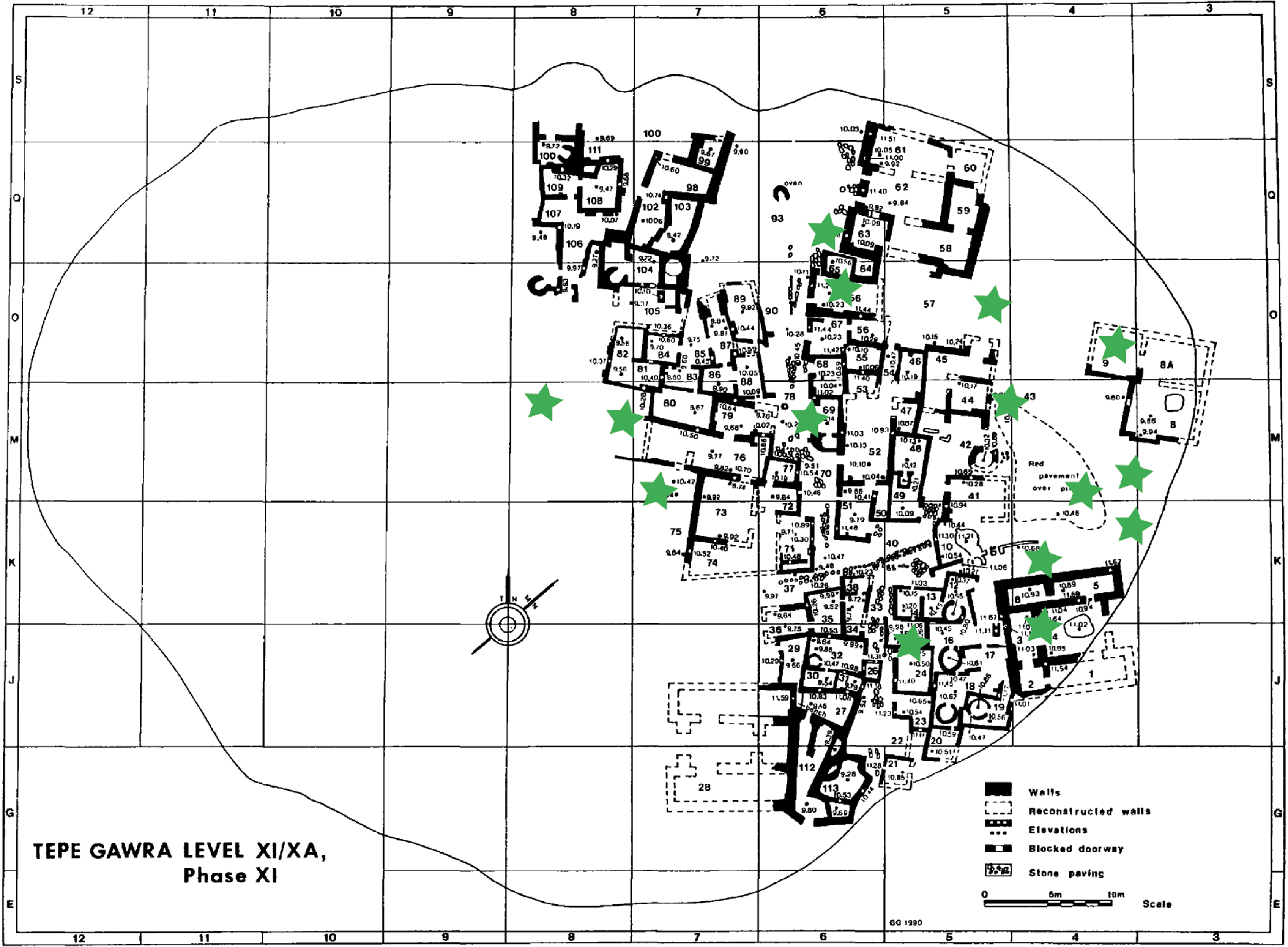
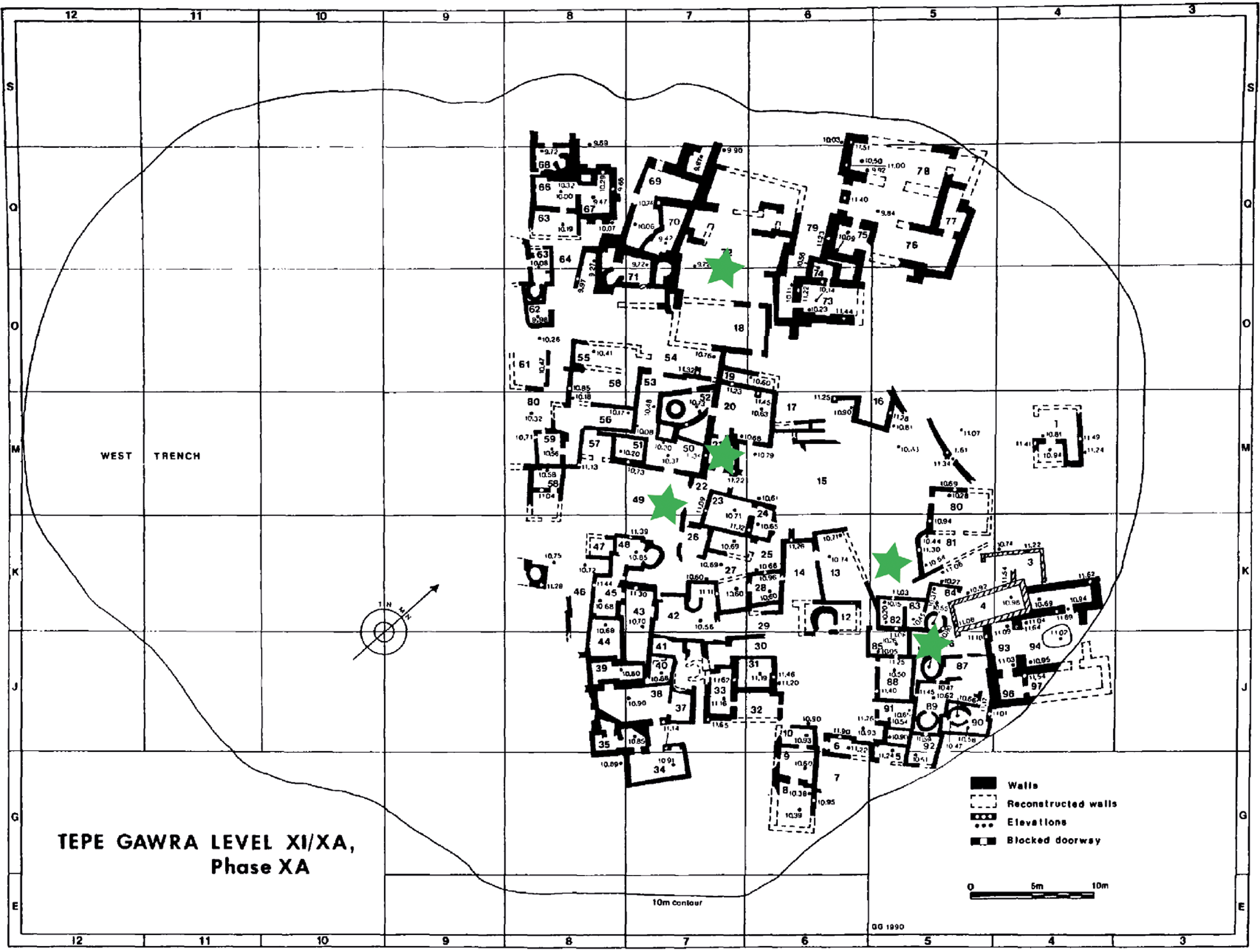
Gawra phases XI and XA, where IW was foundFootnote 3 , correspond to two distinct phases associated with different stratigraphic levels, based on comparison of the standing architectural remains (Rothman Reference Rothman2002: 37–40). The main building discovered in phase XI is a tripartite construction characterised by a central doorway on the north-eastern side flanked by two projecting structures of a likely religious nature (Rothman Reference Rothman2002: fig. 3.9). These characteristics (tripartite plan, central doorway), although with some variation, such as an increase in double recessed niches, the greater overhang of the lateral structures, and extension of the central chamber, were maintained over time until phase VIII, witness to a seamless and standardised architectural tradition – a sort of ‘Gawran’ version of tripartite Southern Mesopotamian ceremonial architecture (Frangipane Reference Frangipane and Butterlin2009: 135). The second most important building of phase XI is a tripartite structure with massive walls but without protruding lateral elements, located north of the settlement. Given the presence of many ovoid clay tokens, it may have had administrative functions (Rothman Reference Rothman2002: fig. 3.9). Phase XA is still characterized by the presence of the two large tripartite buildings located to the north and east of the settlement, which underwent only a partial remodelling and not a complete transformation compared to the previous phase (Rothman Reference Rothman2002: fig. 3.10).
Regarding phase XI, most of the IW recorded was located within or near shrines, the tripartite and administrative buildings and craft-working structures in the north-eastern area (Fig. 8). In phase XA, IW was found (Fig. 9) inside the courtyards and rooms of complexes located at the centre and north of the settlement, as well as in the vicinity of the area occupied by the tripartite building to the east of the settlement (Rothman and Blackman Reference Rothman and Blackman2003: fig. 9). Among the authors who have dealt with IW pottery, there is conflicting information about phase XII. Tobler specifies that the introduction of this decorative impressing technique, together with a certain type of painted decorative motifs and burnishing, does not occur before phase XI. Rothman and Blackman, on the other hand, state that in phase XII there were impressed decorated sherds together with Sprig Ware (SW) ceramics that are known as a hallmark of the LC 1 (Rothman and Blackman Reference Rothman and Blackman2003: fig. 6; Rothman Reference Rothman2002: 37). The same occurs for phase XIA. As already mentioned, in Tobler’s account decorated pottery is basically absent in phase XI, while Rothman and Blackman (Reference Rothman and Blackman2003: fig. 7) and Rothman (Reference Rothman2002: 58) record the presence of impressed pottery and also SW in phase XIA. While for the first type of pottery there is a discrepancy between these authors, in the second case SW could have been redeposited (from LC 1 phase XII and XIIA layers) in more recent phases.
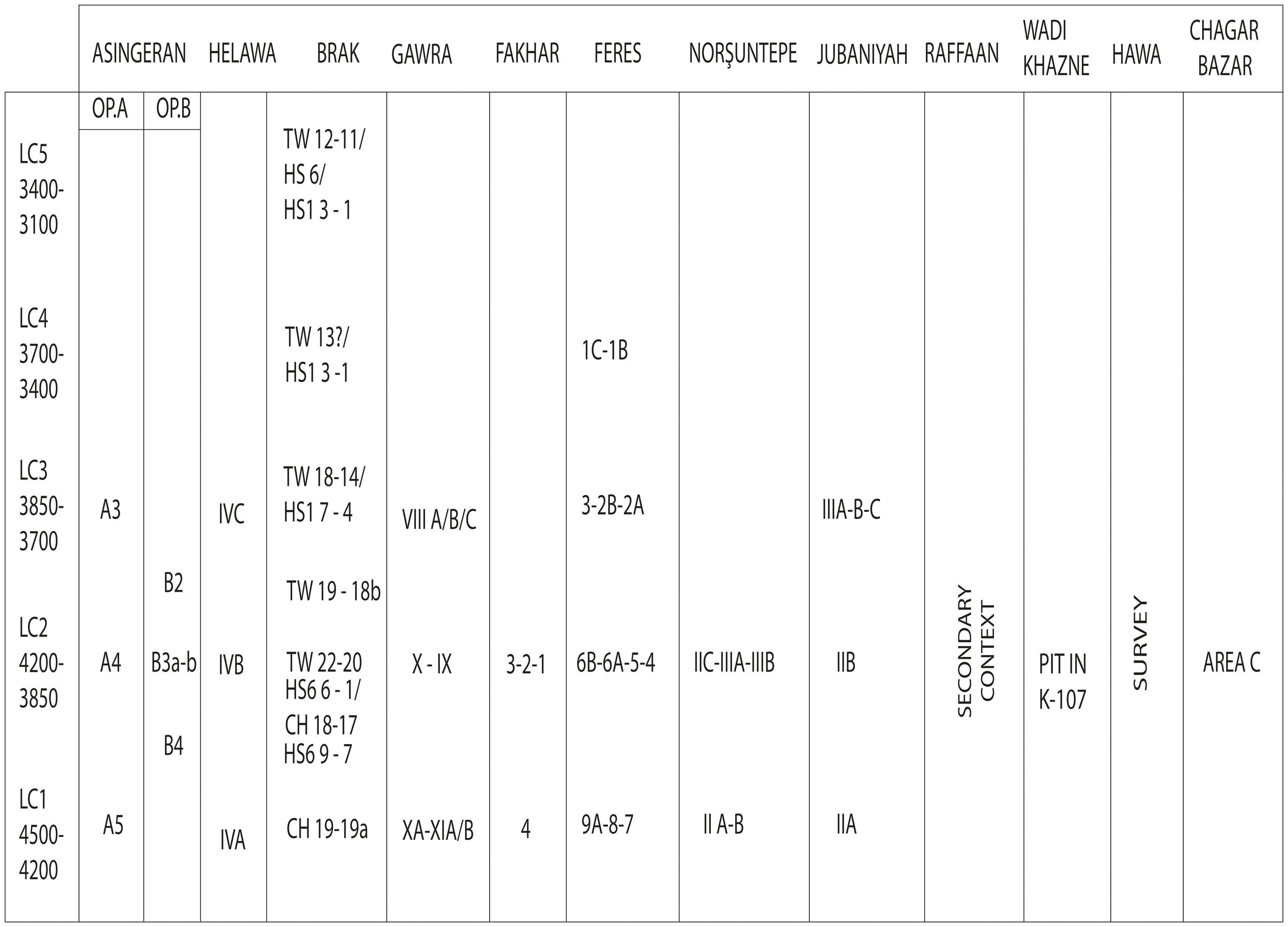
Chronological synchronization between site phases referred to in the text

Plan of Tepe Gawra phase XI (Rothman Reference Rothman2002: fig. 3. 9); stars mark IW finds

Plan of Tepe Gawra phase XA (Rothman Reference Rothman2002: fig. 3. 10); stars mark IW finds

Tell Brak
Tell Brak, a 130-hectare site—its dimensions based on survey operations (Ur et al. Reference Ur, Karsgaard and Oates2011: 4–6)—is located in the Upper Khabur Basin and was first excavated in 1937–1938, following the Khabur region survey conducted by Mallowan (Reference Mallowan1947). The site is considered one of the leading settlements in the region during the LC period, with a long history of excavations (McMahon Reference McMahon, Bonatz and Lutz2013: 65–66). LC levels were recovered in Operation CH (levels 13–14), Operation TW (22–11), Operation HS6 (9–1), Operation HP (various materials) and Operation ST.
Operation CH (Oates Reference Oates1987; Oates and Oates Reference Oates and Oates1993) was conducted in the southern sector of the settlement, an area characterized by architectural continuity over millennia, as demonstrated by the construction of the so-called Eye Temple and Naram-Sin’s palace. There is little information about the LC 2 buildings of levels 13 and 14 investigated in the 1980s, which involved the discovery of two mud columns and a large amount of LC 2 and LC 1 ceramic material, in particular numerous burnished hole-mouth cooking pots and what are known as Wide Flower Pots (WFP), the chaff-tempered coarse ware bowls that bear witness to the mass production of standardised pottery (Oates Reference Oates1985: 177).
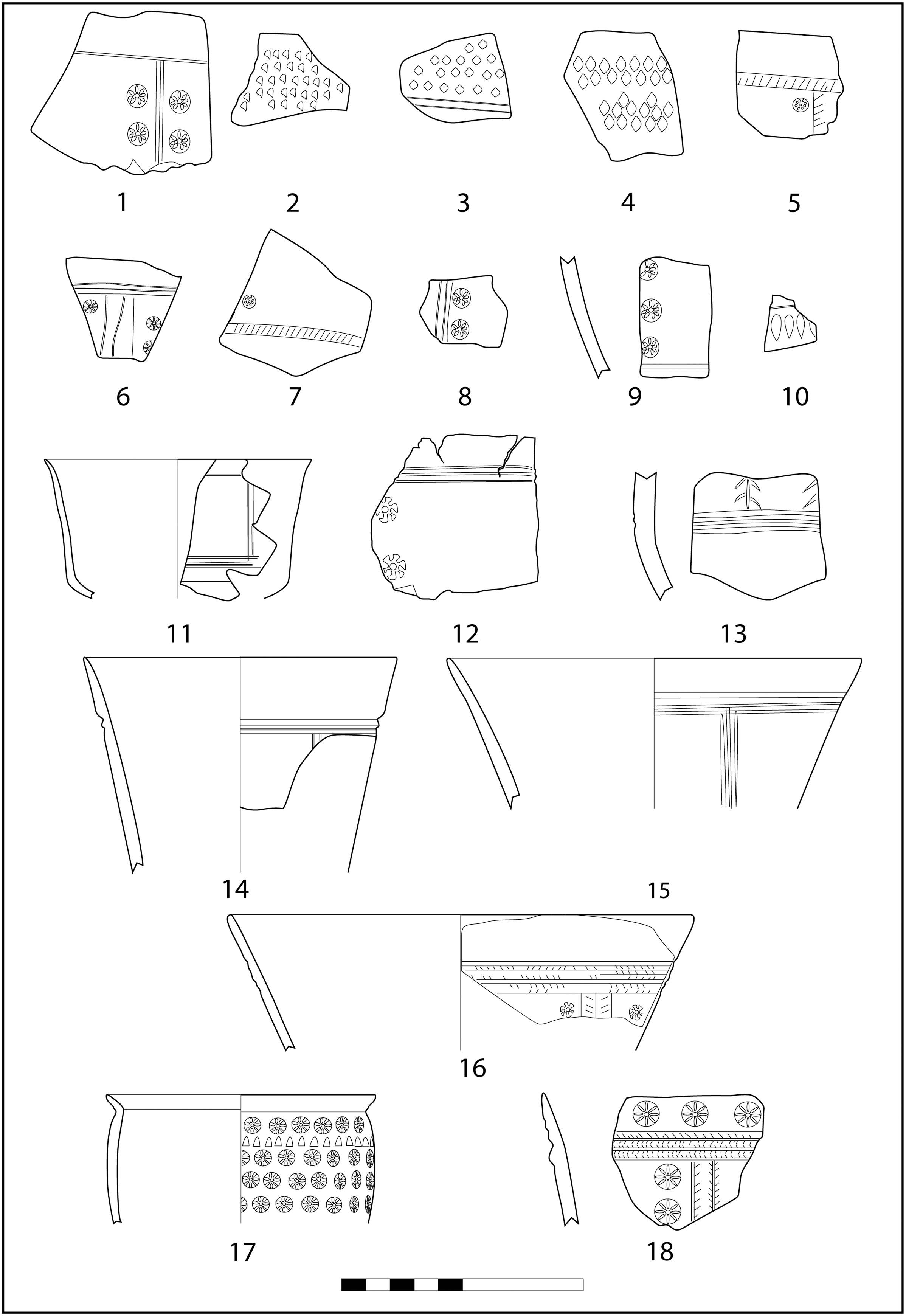
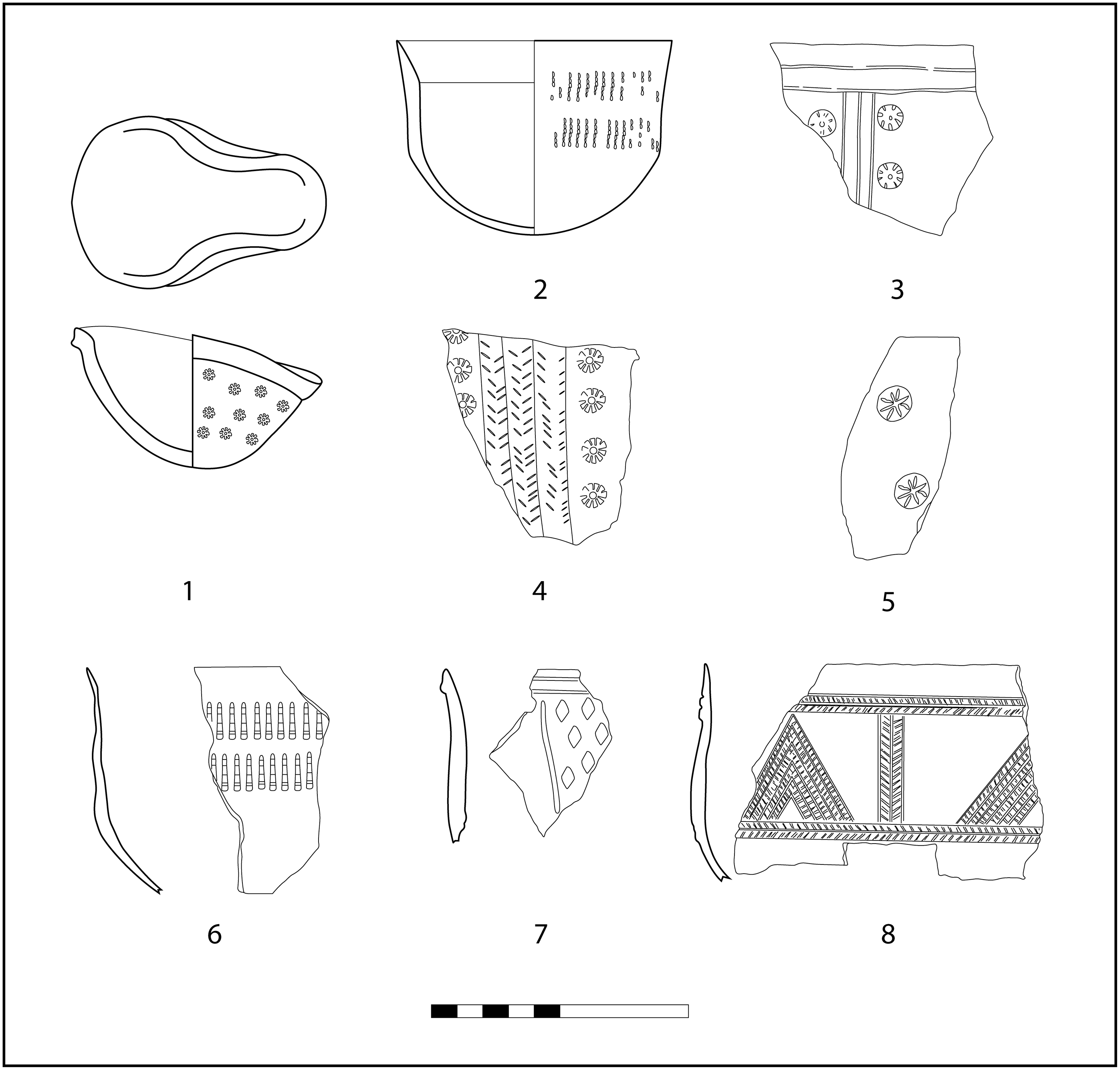
At least eight IWFootnote 4 potsherds were recovered in Operation CH (Fig. 10: 1–8). Oates (Reference Oates1985) gives a detailed indication of the location and characteristics of many of the sherds discovered (while other pieces were unstratified or surface finds or redeposited in later levels). They are variously described as beakers or carinated vessels with flared rim decorated with impressed, stamped ornament or stamped and incised ornament or again with diamond-shaped and triangle stamps. The fabric contains fine grit (Oates Reference Oates1985: 186, pl. 31.b).
Samples of IW from reference contexts (redrawn by the author): Brak (nos. 1–8, Oates Reference Oates1985: pl. 31.b; nos. 9–15: Matthews Reference Matthews and Matthews2003: figs. 3.12.8, 21–22, 3.14.8, 16, 3.15.7, 17; no. 16: Al Quntar and Abu Jayyab Reference Al Quntar, Abu Jayyab, McMahon and Crawford2014: fig. 6.16.12), Chagar Bazar (no.17: McMahon et al. Reference McMahon, Tunca and Bagdo2001: fig. 3.w); Feres (no. 18, Baldi and Abu Jayyab Reference Baldi, Abu Jayyab and Marro2012: fig. 5)

Another part of the site where material of LC date was found is Area HS (Matthews Reference Matthews1995; Reference Matthews1996; Matthews et al. Reference Matthews, Matthews and McDonald2003), in particular the HS6 trench corresponding to LC 1 and 2 (Fig. 10: 9–15). In the HS6 trench, nine stratigraphic and architectural levels were identified, in which ceramic kilns associated with industrial districts are present, as well as buildings with unfired clay walls used for administrative purposes, given the number of items such as cretulae and tokens they contained (Matthews Reference Matthews and Matthews2003: 25). Operation HS6 found three sherds of IW incised and impressed with rosettes and ladder-like decoration in levels 8–7 (Matthews Reference Matthews and Matthews2003: fig. 3.12.8, 21–22), two incised in levels 6–5 (Matthews Reference Matthews and Matthews2003: fig. 3.14.8, 16), and two incised and impressed with rosettes and diamond-like decorations in level 3 (Matthews Reference Matthews and Matthews2003: fig. 3.15.7, 17).
In Operation TW, specimens of IW were also found in level 21. This level is characterized by a series of ovens, kilns, small rooms, and bins, all related to a large-scale complex that served not only for food production but also for manufacture of lithic tools and ornaments (Al Quntar and Abu Jayyab Reference Al Quntar, Abu Jayyab, McMahon and Crawford2014: 90). From this level, an IW specimen was found (Fig. 10: 16), made using the slab technique in fineware, decorated with standardised features such as rosettes and rope-like appliqués (Al Quntar and Abu Jayyab Reference Al Quntar, Abu Jayyab, McMahon and Crawford2014: 98, tab. 6.2, fig. 6.16.12).
Chagar Bazar
A single sherd of IW (Fig. 10: 17) was found at the site of Chagar Bazar, located in the Upper Khabur Valley, which was excavated through ten operations during the 2000s (McMahon et al. Reference McMahon, Tunca and Bagdo2001). The sounding in Area C, opened in the southern mound (four hectares), is the only one that has revealed four Chalcolithic levels, all dated to LC 2 (McMahon et al. Reference McMahon, Colantoni and Semple2005: 3). The four levels identified contain remains of buildings constructed from pisé and mud-brick, which appear to be related to domestic functions, along with pits used for dumping ashes, charred bones, and broken pottery. The IW sherd is a fine-ware small jar with a pale green core and surface, featuring a fine, dense fabric with no visible inclusions. It has a full-field decoration of impressed rosettes and a line of triangles near the rim (McMahon et al. Reference McMahon, Tunca and Bagdo2001: fig. 3.w). This is the only sherd of IW without divisions into metopes and vertical rows, similar to the lamp from Gawra (Tobler Reference Tobler1950: pl. 144.377).
Feres al Sharqi
Feres al Sharqi in the Khabur area is a four-hectare rural site, composed of two small mounds whose archaeological remains suggest residential, productive, redistributive and ceremonial activities of some importance despite its small size (Baldi Reference Baldi and Marro2012: 130). Level 6 marked a significant expansion with large warehouses, granaries, a workshop and an enclosure wall. This wall, not intended for defence, likely held a social or political function, isolating a specific area within the settlement (Vallet Reference Vallet, Bieliński, Gawlikowski, Koliński, Ławecka, Sołtysiak and Wygnańska2014: 273). Towards the end of the LC 2 (levels 5 and 4), a building with a recessed façade and a mud-brick tomb in the vestibule emerged, while dwellings occupied the northern sector (Baldi Reference Baldi and Marro2012: 135–136). Very few pieces of IW (Fig. 10: 18), limited to those with impressed rosettes on appliqued buttons and rope-like appliques, were found at the site in levels 6 and 5 (Baldi and Abu Jayyab Reference Baldi, Abu Jayyab and Marro2012: fig. 5).
Khirbet al-Fakhar
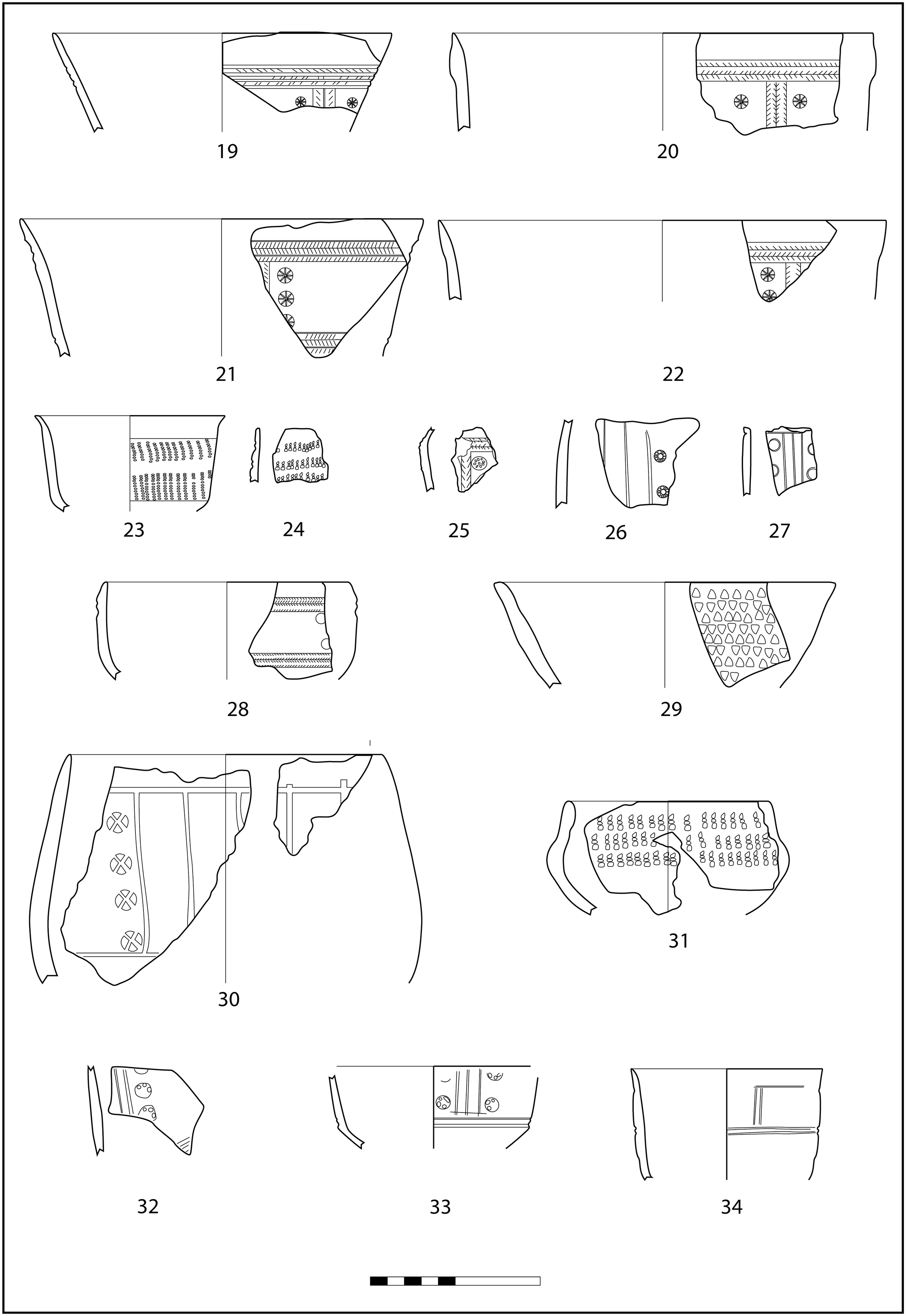
Khirbet al-Fakhar, known as the Southern Extension of Hamoukar, located in the Hassake Province in north-eastern Syria, was surveyed through a series of soundings and excavated since 1999 in order to shed light on the transition from villages to large urban centres (Abu Jayyab Reference Abu Jayyab and Marro2012: 87; Al Quntar et al. Reference Al Quntar, Khalidi and Ur2011: 153). The site was considered a sort of proto-urban experiment because of its unique area of 300 hectares during the LC 1–2 period (Al Quntar et al. Reference Al Quntar, Khalidi and Ur2011: 153; Ur Reference Ur2010: 53, 57, 96–98, fig. 6.5) and its phenomena of obsidian production output, consumption across the entire site and trade (Al Quntar et al. Reference Al Quntar, Khalidi and Ur2011: 162–166). During the excavation, four LC phases were identified. The phase 1 settlement, where IW appears for the first time, consists of limited remains of architectural features likely associated with an encampment. Potsherds are generally found along pathways between empty spaces marked by post-holes. Although it was not possible to trace the specific locus where the IW fragments were discovered, it is noteworthy that the area previously contained the remains of a substantial multi-roomed building, where members of an extended family household engaged in specialized textile and obsidian blade production activities. The frequent modifications made to the facilities in this area, along with the large quantity and nature of production waste during LC 2, may indicate a progressive adaptation of spaces to increasingly specialized operations and social complexity, as evidenced by the presence of sealings. In phase 1, eighteen fragments of IW were identified (Abu Jayyab Reference Abu Jayyab and Marro2012: 96–97), specifically rosette-impressed and appliquéd beakers, as well as ladder-incised beakers (Fig. 11: 19–23). The specimens from this site were made of fine fabric with mineral inclusions using the slab technique. Most were decorated with notched perpendicular lines (ropes) and impressed rosettes arranged in parallel vertical lines (Abu Jayyab Reference Abu Jayyab and Marro2012: fig. 12.1–4; see also Al Quntar and Abu Jayyab Reference Al Quntar, Abu Jayyab, McMahon and Crawford2014: fig. 6.15) while some (though less commonly) featured dot patterns impressed with the end of a stylus-like object or a comb (Abu Jayyab Reference Abu Jayyab and Marro2012: fig. 12.5).
Samples of IW from reference contexts (redrawn by author): Fakhar (nos. 19–23, Abu Jayyab Reference Abu Jayyab and Marro2012: fig. 12.2, 4–5); Hawa (no. 24, Ball et al. Reference Ball, Tucker and Wilkinson1989: fig. 18.19); Helawa (no. 25, Peyronel et al. Reference Peyronel, Minniti, Moscone, Naime, Oselini, Perego and Vacca2019: fig. 31.7); Jubaniyah (nos. 26–27, Sconzo and Qasim 2022: fig. 23.114–115); Raffaan (no. 28, Ławeka 2019: fig. 8.12); Norşuntepe (nos. 29–31, Gülçur and Marro Reference Gülçur, Marro and Marro2012: figs. 7.9, 14.2–3); Wadi Khazne (no. 32–34, Hole Reference Hole2001: fig. 9.10–12)

Tell al-Hawa
The eighty-hectare site of Tell al-Hawa, a thirty meter high mound in northern Jazira within the triangle formed by the Jebel Sinjar to the south, the Tigris to the northeast, and the Syrian border to the northwest, was already known to nineteen century explorers, but the first survey and excavation campaigns were conducted in the late 1980s (Ball et al. Reference Ball, Tucker and Wilkinson1989). The settlement was in use for millennia, as evidenced by the many ceramic periods documented by the survey and excavation (from the seventh millennium B.C. to the modern era). The three IW sherds (Ball et al. Reference Ball, Tucker and Wilkinson1989: fig. 18.19) come from the survey of the main mound in Area B, which corresponds to the external eastern slopes above the village (square B125) (Ball et al. Reference Ball, Tucker and Wilkinson1989: fig. 7). In the publication only one sherd decorated with rows of combed dots is drawn to illustrate the typology (Fig. 11: 24).
Helawa
Helawa is a five-hectare site located in the south-western part of the Erbil Plain, investigated by the MAIPE project conducted by Milan University (Vacca and Peyronel Reference Vacca, Peyronel, Baldi, Iamoni, Peyronel and Sconzo2022: 85). The site was investigated through the excavation of a step trench (Step Trench B) from the top to the foot of the mound, that revealed a long and uninterrupted settlement sequence from the seventh to the fourth millennium B.C. LC levels were characterized by a series of ash dumps suggesting the presence of pottery kilns. The single sherd of IW from Step Trench B, phase IV (Helawa IVB) represents the southernmost occurrence known at present of this production (Peyronel et al. Reference Peyronel, Minniti, Moscone, Naime, Oselini, Perego and Vacca2019: 30). Phase IV is characterized by a well-preserved LC 2 mud-brick residential building with a northwest-southeast orientation and at least five rooms (two of which have entrance thresholds with limestone door sockets). The IW fragment comes from one of these rooms, the least preserved one located furthest south, which shows traces of flooring (L. 49). The finds and the building techniques are evidence of noteworthy socio-economic complexity. There is also clear evidence of an LC 2 centralised foodstuff storage system, as demonstrated by a series of silos. In further confirmation of the site’s importance and its role as a complex centre during LC 2-3, the extension of the Step Trench (B1) brought to light a monumental tripartite building with clear administrative and economic function in which cretulae with seal impressions were found. The IW sherd (Peyronel et al. Reference Peyronel, Minniti, Moscone, Naime, Oselini, Perego and Vacca2019: fig. 31.7) is made of simple ware and has standardised features such as rosettes and rope-like appliques (Fig. 11: 25).
Jubaniyah
The site of Jubaniyah is a four-hectare settlement located on a regularly shaped north-east oriented terrace in the Upper Eastern Tigris area. The excavation was carried out within the Eastern Ḫabur Archaeological Survey reconnaissance project after a severe drought exposed a number of archaeological sites previously submerged by the water of the artificial basin (Pfälzner et al. Reference Pfälzner, Sconzo, Beutelschieß, Edmonds, Glissmann, Herdt, Herrmann, Heydari-Guran, Köhler, Müller-Wiener, Puljiz and Sharp2016). Four main periods of uninterrupted occupation (from Late Ubaid to Ninevite 5) were recognised in the three operations (A, B, C) opened at the site (Sconzo and Qasim Reference Sconzo and Qasim2021: 12). The two trenches excavated in Operation B uncovered LC 2 levels, corresponding to phases 3-1. Operation B is rich in obsidian finds, that – given the quantity of finished products and processing waste found – might perhaps represent a specialized production at the site of stone tools, together with mortars, pestles and spindle whorls for wool processing. Phase 2, where IW was found, is characterized by two levels of debris particularly rich in pottery finds (Sconzo and Qasim Reference Sconzo and Qasim2021: 17–19). The two IW sherds recovered in phase 2 (Sconzo and Qasim Reference Sconzo and Qasim2021: fig. 23.114–115) are characterized by very fine-textured, mineral-tempered fabrics and show circles arranged in rows between incised vertical lines (Fig. 11: 26–27).
Tell Raffaan
Tell Raffaan was explored by a Polish expedition during the international salvage excavation carried out in the early 1980s known as the Eski Mosul Dam Project. The hamlet covered less than one hectare and was located on the west bank of the Upper Tigris, isolated from the rest of the Tigris valley by a range of hills closing the plain to the south, that reach the river east and west of the area (Ławecka Reference Ławecka, Pieńkowska, Szeląg and Zych2019: 394). Study of the pottery and the single burial has led the excavators to hypothesize a single cultural phase for the site, dated to LC 2 (Bieliński Reference Bielinski1987: 18–19). The ceramic types identified at Raffaan, although they come from disturbed contexts and were not associated with any architectural structure, belong to the LC 2 cultural horizon that has exact parallels with the sites located in the Syro-Iraqi Jazira area and in the Upper Tigris area. The fragment of IW present in the site’s pottery assemblage (Fig. 11: 28) is decorated with incised rope decorations and impressed rosettes (Ławecka Reference Ławecka, Pieńkowska, Szeląg and Zych2019: fig. 8.12).
Norşuntepe
Research carried out at the site of Norşuntepe between 1968 and 1974 as part of the Keban Salvage dam project uncovered three sherds of IW. This is a forty-eight-hectare settlement in the Altinova Plain close to the River Murat. Chalcolithic occupation levels were identified in deep soundings called J-K 18–19 (six levels) and J-K 17 (twenty-seven levels), for a total of sixteen metres of archaeological deposits; they preserved traces of a tripartite mudbrick building and a small many-roomed mudbrick building with circular hearths (Gülçur and Marro Reference Gülçur, Marro and Marro2012: 306). In particular, LC remains correspond to levels 11–12 in J-K 17 and levels 10–5 in J-K 18–19. The sherds of IW (Gülçur and Marro Reference Gülçur, Marro and Marro2012: figs. 7.9, 14.2–3) coming from levels 8 and 9 in J-K 18–19 and level 5 in J-K 17 (from phase IIC to phase IIIA) show impressed decoration with triangles (Fig. 11: 29), stamped rosettes inscribed in a circle and arranged in vertical rows between incised vertical and horizontal lines (Fig. 11: 30) and ladder-like impressed decoration (Fig. 11: 31). IW specimens are quite rare and, as expected, the Norşuntepe pottery assemblages share many elements of the LC 2 ceramic horizon of the area between the Khabur Basin and the Upper East Tigris. The IW samples are made of a very fine mixed fabric with little mineral (grit or limestone) or rare chaff temper (Gülçur and Marro Reference Gülçur, Marro and Marro2012: tab.1).
Wadi Khazne
Three fragments of IW were discovered at site K-107 in the Wadi Khazne area, which was excavated in 1988 north of Jebel Abd al Aziz. They are characterized by rows of impressed rosettes between vertical incised lines (Fig. 11: 32–34). The site features a pit filled with ashy remains, pottery, charred bones, and lithics. Additionally, radiocarbon dating confirms an early LC 2 chronology (Hole Reference Hole2001: fig. 9.10–12).
Ovçular Tepesi
Finally, a few words are necessary about Ovçular Tepesi, a small village covering two hectares in the Middle Araxes Basin area (modern Azerbaijan), where three sherds of comb-stamped ware have been found (Marro et al. Reference Marro, Bakhshaliyev and Ashurov2011: fig. 17). The authors state that these sherds do not belong to the local tradition and are well-known from the Gawra XI pottery tradition, which could suggest that the excavators implicitly considered them as part of the IW ceramic class. However, there are characteristics that, when combined, suggest they should be classified in a different pottery group. These sherds are made from chaff-faced ware, which is unusual for IW, as IW is typically made from fineware. Additionally, the wall thickness is greater than what would be expected for fineware pottery used for social consumption. Therefore, these specimens cannot be considered part of the IW class, even though the “ladder” decoration is similar to that found on IW ceramics from Gawra.
Analysing IW: Typological, Decorative and Technical Features
As specified below, IW was only produced for a limited period of time corresponding to the early LC 2. Specimens of this ceramic class have been found exclusively in two phases (XI and XA; early LC 2) at the site of Gawra (Tobler Reference Tobler1950: 154) but disappear completely from phase IX (late LC 2) (Rothman Reference Rothman2002: 58). At Gawra, this kind of decoration is limited to three forms: lamps, small jars or cups with carinated profile and flaring rim, and S-profiled beakers (Fig. 12: 1–8), all with well finished surfaces and finely tempered fabrics (Al Quntar et al. Reference Al Quntar, Khalidi and Ur2011: 161; Baldi and Abu Jayyab Reference Baldi, Abu Jayyab and Marro2012: 168; Rice Reference Rice2015: 137).
Selection of IW from Gawra (redrawn by author): from Tobler Reference Tobler1950: pl. 144.377, 145.393, 514-518, 520

Tobler describes the introduction of three decorative techniques during the LC 2 period (phases XI and XA) after an almost complete absence of any kind of decoration in previous phase XIA (Tobler Reference Tobler1950: 154). The first two decorative techniques are utilized for the IW class. The first belongs to the category of displacement and penetration techniques that involve the removal or displacement of clay, depending on its dryness (Rice Reference Rice2015: 155). The second belongs to the category of surface additions that include the use of shaped clay decorated items attached to the vessel (appliqué) (Rice Reference Rice2015: 159).
The decorations that characterize the first technique are impressed and cut. Impressed decoration includes rosettes (knob-like or punctured petals) inscribed in circles, crosses, triangles, diamonds, ladders, and combed dots. In some cases, impressing may also be described as texturing and not as decoration, but only if it covers the entire vase. Cut includes vegetal and horizontal, vertical and/or diagonal incised lines made while the clay was still relatively wet, as indicated by its displacement. The decorations of the second technique include relief-style circular buttons adorned with rosettes, as well as ropes featuring incised or fish-spine motifs.
The first and second techniques (the latter only for appliqué decorations) were used on the aforementioned three forms. In particular, the lamp is decorated with impressed rosettes, the jar with a carinated profile has rope-like appliqués on the carination, and the beakers with S-shaped profile have combinations of impressed, incised and applied decorations (see the form references above). Some have a sort of applied circular button with impressed rosette. These two techniques are limited to phases XI and XA (Tobler Reference Tobler1950: 155).
It is interesting to note that Tobler considered horizontal incisions as functional and not decorative when added to some specimens belonging to the group of jars or cups with a carinated profile, flaring rim and rounded base. These have a series of lines on the narrower zone that connects the shoulder and flaring rim (Tobler Reference Tobler1950: pl. 145.385–388). In Tobler’s view, this narrow ‘waist’ was a convenient place to hold the vessel and, in order to provide a safer grip, this part of the cup was engraved horizontally with several parallel lines. Tobler’s idea that the incisions on these cups are mainly utilitarian rather than decorative is supported by the fact that they always occur at the narrow waist of the pot, where it would be held (Tobler Reference Tobler1950: 156). In this case, incisions have been classified as functional elements, while in other publications this type is considered a category of what is classified in the present study as IW (i.e. Baldi and Abu Jayyab Reference Baldi, Abu Jayyab and Marro2012: 169).
All the decorative elements present on the IW may be assigned to abstract, iconic, geometric or symbolic visual categories, in contrast with pictorial representations characterized by naturalistic or realistic elements. Also, natural motifs such as the plant motifs are highly synthesized.
Rothman and Blackman (Reference Rothman and Blackman2003) conducted a study on the manufacturing techniques of specimens found at Gawra and Brak to determine how they were produced. Their research demonstrated that the majority of IW was manufactured using slab techniques and contained very finely mineral-tempered clay. When fired at high temperatures, this fabric worked as slab tends to separate, forming characteristic bubbles, also known as blister ware (Rothman and Blackman Reference Rothman and Blackman2003: 3). Furthermore, through chemical analysis of the clay’s provenance, they concluded that the majority of IW specimens found at Brak were likely made from clay originating in Gawra or its immediate vicinity. Based on this evidence, they suggest that Gawra could have been a primary production centre for IW, but not the only one, and that there was likely an exchange of products from Gawra to Brak (Rothman and Blackman Reference Rothman and Blackman2003: 14).
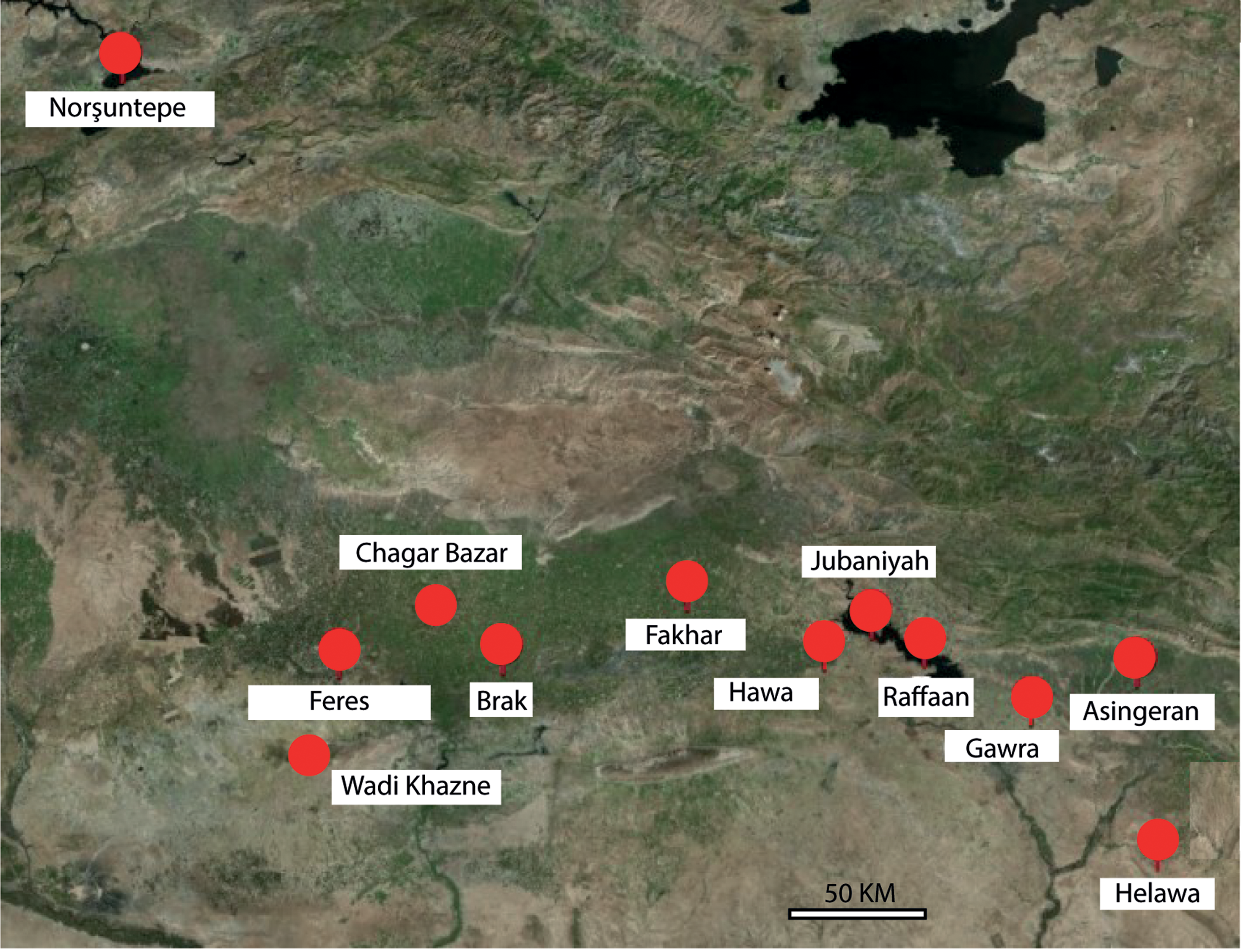
Finally, scholars suggest that this specialized production (Peyronel et al. Reference Peyronel, Minniti, Moscone, Naime, Oselini, Perego and Vacca2019: 30) belonged to the category of prestige or ostentatious ceramics intended for circulation within specific circuits (Baldi and Abu Jayyab Reference Baldi, Abu Jayyab and Marro2012: 168–169). A noticeable concentration of this ceramic class is in the Syro-Iraqi Jazira area and the Upper Eastern Tigris region, while it appears to be absent in the westernmost zones closer to the Euphrates. As mentioned, Helawa represents the southernmost boundary of a potential IW region, while Norşuntepe, Wadi Khazne, and Asingeran define its northwestern, southwestern, and northeastern limits, respectively (Fig. 13). Within this area of distribution, it is observable that Wadi Khazne and Helawa represent the southeastern and southwestern boundaries of what appears to be a nuclear production/distribution area, particularly given the striking similarities among their IW specimens. In contrast, Norşuntepe, located at a greater distance, could belong to a larger distribution area, especially when considering the different decorations applied to its IW.
Map of the distribution of IW sites (Bing Map, modified by the author)

Asingeran presents an interesting case, as, although it seems to be part of this nuclear production/distribution area, its IW specimens resemble those of Norşuntepe more closely than those from the other sites within the core area.
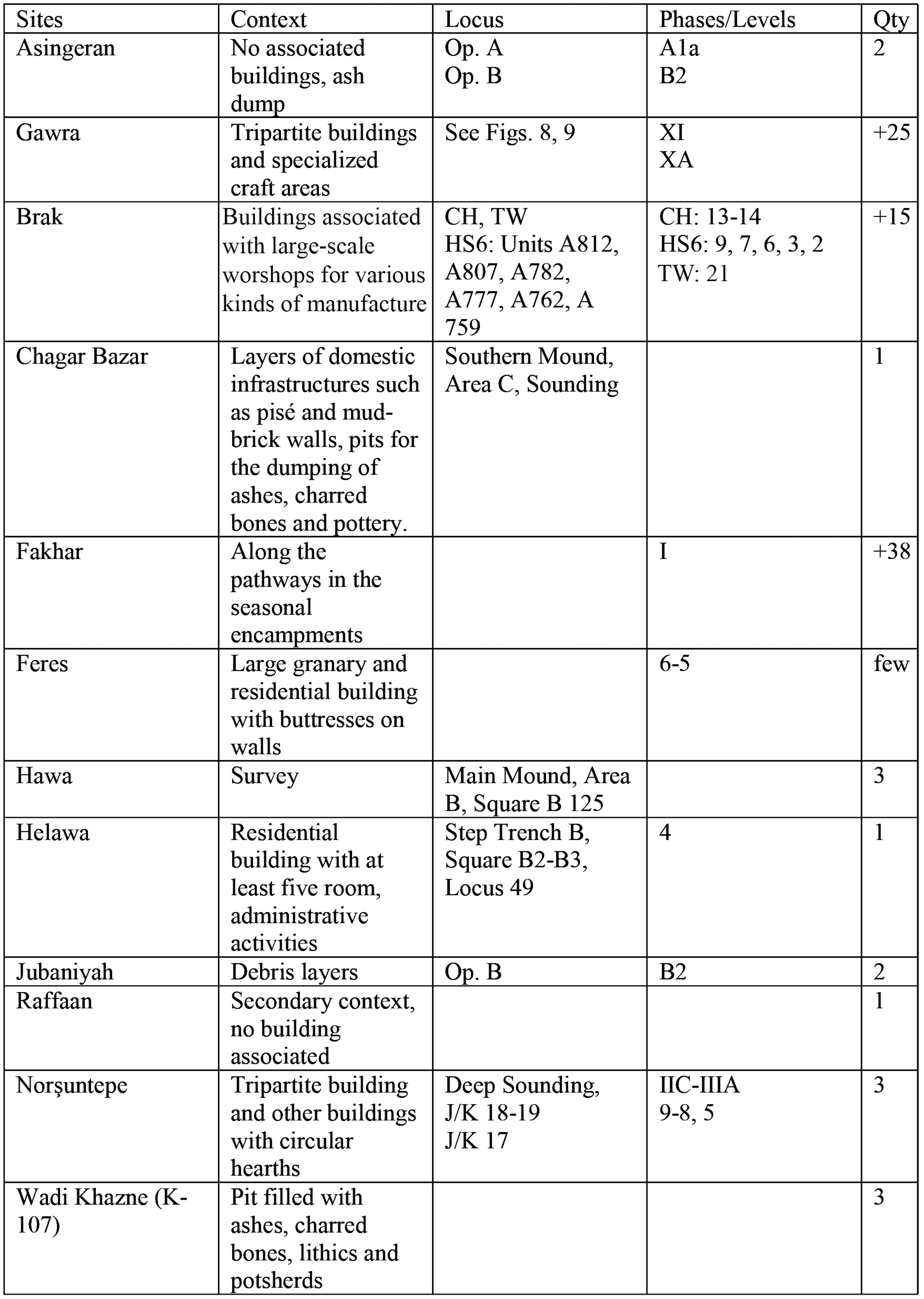
IW and associated contexts (Fig. 14)
Summary of the IW discovery contexts, levels, phases and quantity of specimens

The starting point of this analysis was to identify the sites where sherds of IW were recognized to better understand the types of contexts in which they are found. At the site of Gawra, the fragments are clearly associated with massive tripartite public buildings of both secular and religious natures, as well as with specialized craft areas. The same can be said for the site of Helawa, where the context of discovery suggests a multi-roomed, multi-functional building. Findings recovered from different rooms include many mass-produced bowls, pestles, flint and obsidian blades, and débitage, providing evidence of various specialized craft activities. At the site of Brak, administrative objects such as cretulae and tokens were found in association with IW, in both the CH area and HS6 areas. Finally, the specimens from Norşuntepe were identified in levels that contained evidence of a tripartite building.
There are contexts associated with seasonal encampments that have left scarce architectural remains (Fakhar), as well as domestic contexts without specific signs of administrative activities (Chagar Bazar). There are contexts in which IW is not associated with specific information; in some cases, this is due to secondary context (Raffaan, Asingeran, and Wadi Khazne), while in another case, it results from a survey operation (Hawa).
In some cases, it has been possible to trace the number of IW fragments from the indications given by the authors in publications. These are generally samples ranging from a minimum of one or two, as is the case with Asingeran and Helawa, up to more than thirty, such as at Fakhar. Similarly, it has not always been possible to identify the specific find spots of the individual fragments described here. Data on specific discovery locations have been published for the sites of Gawra, Helawa, Brak and Hawa, while for the other sites a more generic indication of the layer, area, or level of origin has been published.
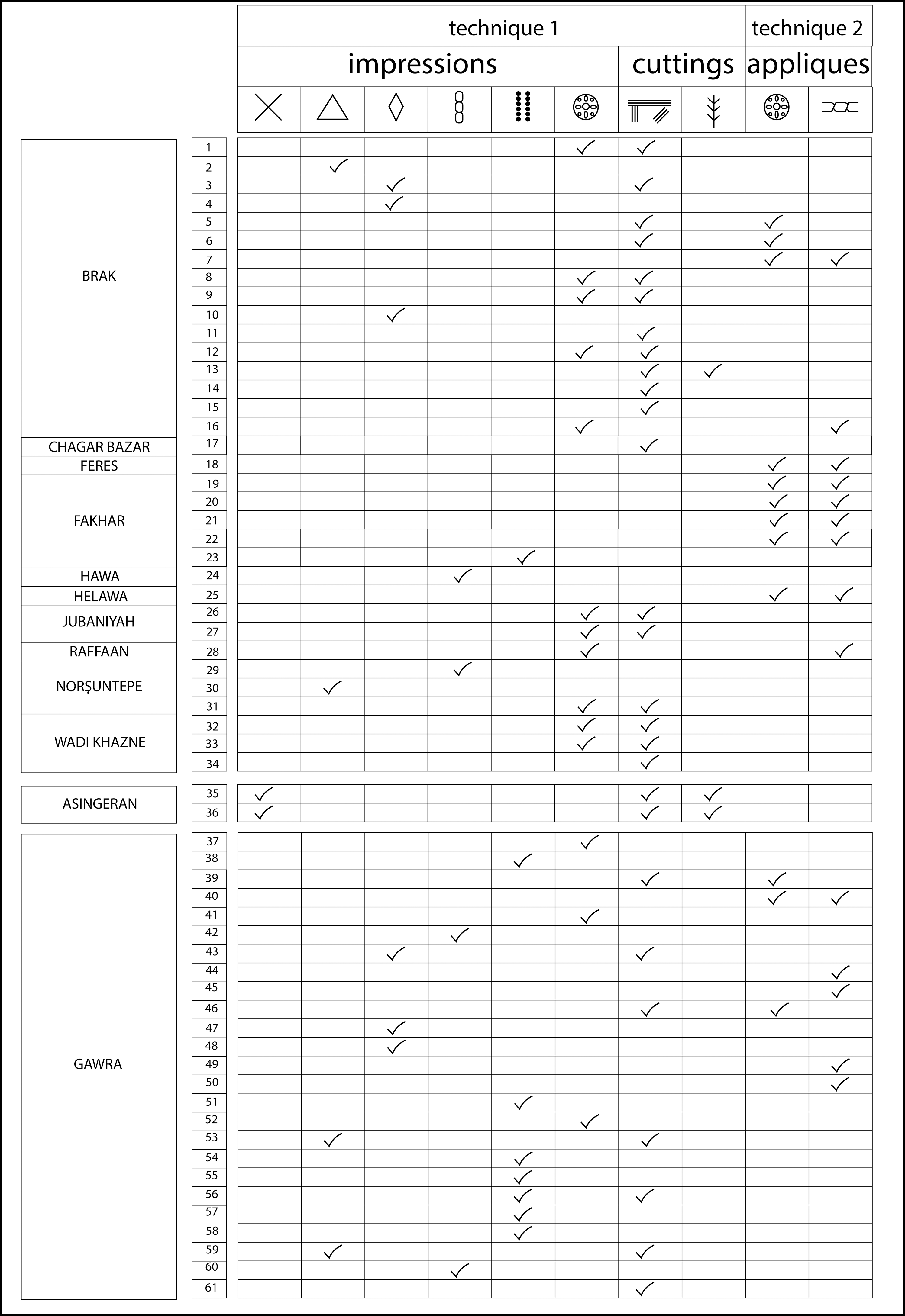
Once a catalogue of sites was compiled, the next step was to verify whether each context displayed all the various decorative techniques and subjects of decoration (Fig. 15 Footnote 5 ). Then there are a series of indirect parameters that can also be understood through analysis of the pottery itself. These are the parameter of standardisation and the degree of regional variation. In this case it may be said that this class of material is a standardised product (both as decorative pattern and as a selection of shapes) with a minimum degree of regional variation, especially in its zone of greatest diffusion, the Syro-Iraqi Jazira area and the Upper Eastern Tigris Basin.
Summary of the decoration designs and decorative techniques present on IW

By contrary, Asingeran seems to be the only site that displays a unique design associated with the IW class, featuring a cross inscribed in a circle, which is not found in any other context. Moreover, the association with the vegetal element (found only at Brak) creates distinct patterns displayed by the IW from Asingeran that are absent in other examined contexts.
IW as product of specific style
The possibilities offered by the modalities of decorative pottery styles and artistic communication to infer information about historical or chronological contexts and about social, economic and cultural interactions between ancient communities have always been part of archaeological discourse. The complex subject of decorative pottery styles and social interactions in archaeology has stimulated a wide-ranging debate about definitions and theoretical approaches (Hegmon Reference Hegmon and Stark1998; Sanz and Fiore Reference Sanz, Fiore and Smith2014).
Scholars who have questioned the concept of style refer to the general assumption that style can be considered a ‘way of doing something’. This approach can refer to formal aspects, such as technical execution and visual characteristics, but it may also serve as a distinctive expression of a particular place or chronological period (Rice Reference Rice2015: fig. 24.9). While the processual approach to the study of decorative style in ceramics often viewed form (visual aspects) and substance (meaning and function) as fundamentally incompatible, post-processual and social theories have sought to overcome this dichotomy by adopting methods that consider both aspects simultaneously (Hodder Reference Hodder1985). In this regard, two theories have been developed: the information theory (DeBoer Reference Deboer and Longacre1991; Wobst Reference Wobst and Cleland1977) and the interaction theory or ceramic sociology (Sackett Reference Sackett1977). The element that links these approaches is that style is always a means of visual communication and has also a social dimension.
The interaction theory approach is based on the principle that it should be possible to track complex interrelatedness through the analysis of design similarities, spatial displacement and hierarchical patterning of pottery decorations. The information theory approach is based on the concept that style, as a means of visual communication, can have the function of reinforcing on one hand differentiations between different social groups and on the other the bonds within the same group. A specific ceramic style has the function of transmitting information on the social, political and economic identity of a group. As a rule, the need for this type of communication increases as societies grow larger and more internally differentiated (Rice Reference Rice2015: 402). The information theory approach effectively could explain why the spread of objects, characterized by a specific style, reinforced social ties within a society that had become strongly hierarchical. These kinds of objects could have played a significant role in the negotiation of power, defining boundaries, and producing social differences (Earle Reference Earle, Conkey and Hastorf1990: 73; Hodder Reference Hodder1985: 4–5). Can these two approaches be used to explore whether IW played a role in producing social differentiation? They could, but with the risk of falling into a “functionalist” perspective, as this would require the notion of value to have been standardised across the entire LC 2 landscape—a claim that is difficult to substantiate and unsupported by the available data. As will be demonstrated in the conclusion, below, there appears to be variation in the patterns of distribution and in the methods of final execution. This variation in production style points to a broader phenomenon that cannot be fully explained by the two theoretical models mentioned.
Is it therefore possible to talk about an actual style for IW? The answer is yes, since it seems possible to recognize in IW some of the components identified by Roe for the identification and definition of a decorative style (Roe Reference Roe, Carr and Neitzel1995: 30–31). A style must be identifiable by certain distinctive traits. The IW has visual features that allow its immediate recognition. The different techniques of execution of the diverse decorations on a single piece show that the time and energy used for its manufacture are greater than would have been used to satisfy merely utilitarian requirements. The style can be so strongly tied to a chronological context as to become a dating element par excellence (index fossil). The decorations on IW are typical of a well-defined time period, in this case the LC 2 in a well-defined area of Northern Mesopotamia. Another useful element for determining the existence of a decorative style is the choice of elements and components. The elements that make up the IW are part of a system of fixed elements that allow the construction of a limited number of alternative combinations. Moreover, the decorations have formal relationships in space, showing regularities in their distribution across the panel or artefact. Style must also meet the expectations of the target audience. This concept fits well with the theory already expressed that decorated IW pottery was a ceramic that moved within well-defined circuits. To provide more detail, hierarchical design structure analysis (HDSA) and symmetry analysis can also be employed (Washburn and Crowe Reference Washburn and Crowe1987). Shared elements such as the type of vessel with which the decorations are associated, as well as the arrangement of the individual basic units and the general spatial organization, for example a similar subdivision of the area, the amount of space covered, and the placement of and relations between different components, demonstrate that the style belongs to the same decorative typology (Friedrich Reference Friedrich1970: 342). It is possible to identify two distinct spatial organizations. The first is characterized by rectangular metopes with a vertical arrangement of circular elements interspersed with additional elements, arranged either vertically or horizontally. The second is defined by a ‘full-field’ decoration. Interestingly, on beakers and cups—forms associated with drinking activities—the first type of spatial distribution is preferred. In contrast, on other closed forms such as lamps or small jars, the second type is favoured.
However, despite the similar spatial organization present in most pieces of this material class, the two IW specimens from Asingeran stand out distinctly from others within this type, especially in terms of decoration. They seem to be, in some respects, less elaborate imitations of the more refined, standardised, and complex ceramics produced in the central part of the IW region.
Conclusion: Local IW Versions as Reflections of Shared Social Practises in a Pottery Region
The vegetal elements along with the crossed patterns inscribed in circles on the Asingeran sherds represent a unique compositional pattern in this context. It can be observed that the Asingeran sherds exhibit the highest level of difference compared to other assemblages. Additionally, another distinguishing feature of the Asingeran specimens, along with their decorative typology, is their manufacturing technique. Unlike the slab techniques used for a substantial number of other IW specimens—particularly those from Gawra and Brak, which are the only ones analysed by Rothman and Blackman (Reference Rothman and Blackman2003: 3)—the Asingeran sherds were produced using coiling. Furthermore, these specimens show differences in the degree of firing (lower in the case of Asingeran pieces) and in fabric composition, characterized by a higher amount of vegetal temper. The only identical shared feature between the Asingeran sherds and the IW collections from other sites is the vessel form, specifically the S-shaped cup.
How can this situation be explained? If the IW style present at Asingeran were considered, for example, a coarse version of that from the Syro-Iraqi region, it could imply that artisans in Asingeran were unable to achieve a specific level of standardisation, refinement, and complexity in IW decoration patterns. This might imply that Asingeran was a smaller, more peripheral, and rural context compared to sites situated along major communication routes, where decorated pottery is characterized by higher levels of standardisation and complexity in decoration patterns. Another consideration regarding the differing levels of standardisation and refinement could involve power imbalances and variations in socio-economic complexity between larger and smaller sites. However, the notion that there is a strong correlation between settlement size and socio-economic complexity is becoming increasingly tenuous, leading to a more nuanced interpretative approach to the developmental dynamics of Chalcolithic contexts (Iamoni et al. Reference Iamoni, Valente, Scattini and Hasan2023: 45). For instance, if there were a relationship between ceramic coarseness and site size, we would expect to see less refined versions in smaller centres such as Gawra, Helawa, and Feres. In fact, these sites, along with larger sites like Brak, Fakhar, and Norşuntepe, exhibit characteristics of socio-economic complexity that are not necessarily linked to their size (Frangipane Reference Frangipane and Butterlin2009: 135). Finally, the concept of coarseness itself presupposes a series of parameters that are relevant to contemporary interpretations of these artifacts but may not necessarily align with the perspectives of their ancient users and producers.
Do the unique characteristics of the Asingeran sherds have anything in common with those from other sites considered to be at the edge of the pottery region, specifically regarding their site positions? Might it be that the peripheral position of Asingeran affected its inhabitants’ ability to access distribution circuits for the standardised version of IW?
Detailed analysis revealed that the sherds from Helawa and Wadi Khazne feature a rosette inscribed in a circle, resembling an appliqued button. Therefore, even though they are not impressed, they can still be included in the IW group found in the central part of the region, despite being on the periphery in some respects. Additionally, the sherd from Helawa also includes a rope motif, which is shared with Feres, Fakhar, and Gawra. This suggests that these sherds can be considered part of the IW style present in the centre of the IW region.
In contrast, Norşuntepe which is farther from Helawa and Wadi Khazne, also shares more elements in common with the central region of the IW than with Asingeran, which is closer to the IW region. To further confirm this, Norşuntepe can be considered an integral part of a complex ceramic industry organized at different levels of production, as well as a growing system of interregional exchange involving Feres, Brak, Hamoukar, and Gawra (Abu Jayyab Reference Abu Jayyab and Marro2012: 103; Baldi Reference Baldi and Marro2012: 142). Norşuntepe not only features rosettes impressed in circles but also includes two other potsherds with impressed triangles and ladder motifs, which are also found at Gawra and Fakhar.
Similar to the concept of coarseness that varies among contemporary and ancient people, or changes geographically and temporally, the notion of peripherality—especially when viewed negatively or reductively—needs to be reevaluated. While it is true that the small-sized Asingeran lies at the edge of the IW region, it nevertheless exhibits several key indicators of socio-economic complexity, such as evidence of social inequalities, artisanal specialisation (including mass craft production), long-distance contacts and space segregation within the settlement’s organisation. However, when viewed through the lens of current theoretical models used to explain the emergence of socio-economic complexity, Asingeran appears somewhat anomalous. Its characteristics call for alternative interpretive frameworks, such as the concept of a “small-scale complexity” (Iamoni et al. Reference Iamoni, Valente, Scattini and Hasan2023: 49) to be more accurately understood. Furthermore, if we consider the relationship between peripherality and the level of similarity in decorative patterns, we would expect the fragments from Norşuntepe to exhibit greater differences compared to those from Asingeran, which is closer to Gawra and appears to be more integrated within the IW region.
If peripherality, differing artisan skills in achieving high levels of standardisation, and a small-scale model of complexity cannot explain the significant differences in decorative patterns between the IW from Asingeran and the IW fragments from other sites, then ‘selected emulation’ also does not seem to provide a satisfactory explanation. Selected emulation refers to the process by which some members of a community choose foreign or alien cultural elements (such as pottery styles or architectural features) to distinguish themselves from other members of the community. This selection is often aimed at aligning more closely with a group that is perceived as superior (Abu Jayyab Reference Abu Jayyab and Marro2012: 102). In the case of the ceramic assemblages from Norşuntepe, this selection process includes both WFP and finer, highly decorated types, such as painted, incised and impressed wares (Abu Jayyab Reference Abu Jayyab and Marro2012: 102–103). These elements may not merely reflect technological adaptation but could represent a conscious choice by the community to express certain identity needs.
The case of Asingeran reveals significant differences in IW patterns that challenge earlier assertions about Norşuntepe. Producers and consumers at Asingeran may have chosen to create items that were more similar to one another, rather than emphasising differentiation, if their intention was to “emulate”. Asingeran sherds substantially differ from the “classic” version of IW not only in stylistic attributes, but also in the vessels’ paste, manufacture, and firing, supporting the hypothesis of a local response to shared social practices conveyed by material culture.
In conclusion, it seems more appropriate to consider variation on the theme of Asingeran sherds as a label to define the differences in decorative patterns within the IW class. This label effectively encompasses all possible variations while emphasizing the connection to a specific pottery region, characterized by a common theme, which in this case could be considered the social function of this class of pottery. The sharing of a specific type of pottery appears to be related to identity needs and the exchange of similar social practices. In this sense also the use of prevalent drinking forms—like beakers and cups—as well as tools like lamps, all made of fineware, does not seem casual. These ceramic forms are clearly associated with social events and gatherings rather than activities such as storage or cooking (Abu Jayyab Reference Abu Jayyab2019: 211). Social identities are often more strongly expressed during festive occasions than through cooking or storage practices, which, while significant, convey different aspects of social life. An identical organization of space on the vessel surfaces, featuring geometric elements like circles within metopes (the rectangular areas divided by incised lines or applied ropes), seems to reflect a similar human organisation of social practices. This design allows those who share similar backgrounds to read and interpret the pottery style’s messages in the same way. In this sense, the IW could serve as a material medium essential for actively constructing social cohesion and continuously redefining group identity.
The differences in decorative patterns can be better understood not as emulations or adaptations yielding coarser or refined results, but as unique local responses to similar or maybe the same social and identity needs of specific community groups. The various groups shaped and reshaped their social identity through unique cultural behaviours and communal practices in their daily activities. This resulted in the blending of different decorative elements to create distinct patterns, all within a unique and well-defined geographic and temporal pottery region in Northern Mesopotamia during the early LC.
Acknowledgments
This being my first sole-authored work, I am deeply grateful to all those who supported me. I would like to thank Dr. B. J. Hasan (Duhok Directorate of Antiquities and Heritage) for granting permission to study the pottery, and Prof. M. Iamoni for his insightful feedback and encouragement. I also appreciate the anonymous reviewers for their invaluable comments, as well as Dr. J.S. Baldi, Dr. A.K. Jayyab, and Prof. F. Balossi Restelli for their direct and indirect contributions to my research. I am also grateful to Dr. S. I. Bortoluzzi for providing the map of Asingeran’s Operations. The work was funded by the University of Udine, MAECI, MUR, and PRIN. Any inaccuracies in the text remain my own responsibility.

 Open access

