





1 Introduction
For a smooth projective variety X the classical Hirzebruch-Riemann-Roch theorem computes the Euler characteristic of a vector bundle in terms of its Chern character with values in singular cohomology. There is a version of Hirzebruch-Riemann-Roch that uses Hochschild homology instead of singular cohomology (see [Reference Căldăraru3], [Reference Markarian13], [Reference Ramadoss17]). Key ingredients for this are Chern characters with values in Hochschild homology and the Mukai pairing. The HKR theorem, which states that for a nonsingular variety X we have

relates the two different settings. Using dg categories, an analogous picture has been developed for categories of matrix factorizations
$MF(X,f)$
 (see for example [Reference Kim and Polishchuk10], [Reference Polishchuk and Vaintrob16], [Reference Chung, Kim and Kim5], [Reference Efimov7]). When the function f is assumed to vanish on its critical locus there is a HKR-type theorem for the
$\mathbb {Z}/2$
(see for example [Reference Kim and Polishchuk10], [Reference Polishchuk and Vaintrob16], [Reference Chung, Kim and Kim5], [Reference Efimov7]). When the function f is assumed to vanish on its critical locus there is a HKR-type theorem for the
$\mathbb {Z}/2$
 -graded Hochschild homology of the dg category of matrix factorizations

Given a morphism
$\varphi :X\to Y$
 between smooth projective varieties, the results in [Reference Ramadoss17] and [Reference Căldăraru3] allow us to understand the map in Hochschild homology induced by the pushforward functor
$\varphi _{\ast }:D^b(\text {coh}Y)\to D^b(\text {coh} X)$
between smooth projective varieties, the results in [Reference Ramadoss17] and [Reference Căldăraru3] allow us to understand the map in Hochschild homology induced by the pushforward functor
$\varphi _{\ast }:D^b(\text {coh}Y)\to D^b(\text {coh} X)$
 in terms of the HKR isomorphism and it is natural to try and understand this for matrix factorizations as well. In this paper we will consider the simplest case. Suppose
$i:Y\hookrightarrow X$
in terms of the HKR isomorphism and it is natural to try and understand this for matrix factorizations as well. In this paper we will consider the simplest case. Suppose
$i:Y\hookrightarrow X$
 is a smooth divisor of a smooth (not necessarily projective) variety X and suppose
$f\in H^0(X,\mathcal {O}_X)$
is a smooth divisor of a smooth (not necessarily projective) variety X and suppose
$f\in H^0(X,\mathcal {O}_X)$
 is a regular function that satisfies
$f|_Y=0$
is a regular function that satisfies
$f|_Y=0$
 . Then we have a pushforward functor
$D^b(\text {coh}Y)\to D^{abs}(MF(X,f))$
. Then we have a pushforward functor
$D^b(\text {coh}Y)\to D^{abs}(MF(X,f))$
 which lifts to a quasi-functor (see Section 2.4 for the definition of a quasi-functor) between their respective dg enhancements
$\text {perf}_{{\check{C}}}(Y)\to \text {vect}_{{\check{C}}}(X,f)$
which lifts to a quasi-functor (see Section 2.4 for the definition of a quasi-functor) between their respective dg enhancements
$\text {perf}_{{\check{C}}}(Y)\to \text {vect}_{{\check{C}}}(X,f)$
 and so it induces a map in Hochschild homology

Because the dg category of matrix factorizations is
$\mathbb {Z}/2$
 -graded we only consider the groups above as
$\mathbb {Z}/2$
-graded we only consider the groups above as
$\mathbb {Z}/2$
 -graded vector spaces. We will denote by
$D_{\mathbb {Z}/2}(\mathbb {C})$
-graded vector spaces. We will denote by
$D_{\mathbb {Z}/2}(\mathbb {C})$
 the derived category of
$\mathbb {Z}/2$
the derived category of
$\mathbb {Z}/2$
 -graded vector spaces whose objects are
$\mathbb {Z}/2$
-graded vector spaces whose objects are
$\mathbb {Z}/2$
 -graded complexes of vector spaces and morphisms are chain maps where quasi-isomorphisms have been inverted. The goal of this paper is to describe the map (3) in terms of the isomorphisms
$(1)$
-graded complexes of vector spaces and morphisms are chain maps where quasi-isomorphisms have been inverted. The goal of this paper is to describe the map (3) in terms of the isomorphisms
$(1)$
 and
$(2)$
and
$(2)$
 above. We show that it can be computed in two steps. First, multiplication by the inverse Todd class of the line bundle
$\mathcal {O}_Y(-Y)$
above. We show that it can be computed in two steps. First, multiplication by the inverse Todd class of the line bundle
$\mathcal {O}_Y(-Y)$
 realized in a Cech resolution of
$\Omega ^{\bullet } _Y$
realized in a Cech resolution of
$\Omega ^{\bullet } _Y$
 . Then, applying the connecting morphism
$\delta $
. Then, applying the connecting morphism
$\delta $
 coming from a short exact sequence of complexes of vector spaces obtained by taking Cech resolutions of the following short exact sequence of complexes of sheaves

Our final formula is summarized in the following theorem.
Theorem 1. Let
$i:Y\hookrightarrow X$
 be a smooth divisor of a smooth complex variety X. Let
$f\in \mathcal {O}_X(X)$
be a smooth divisor of a smooth complex variety X. Let
$f\in \mathcal {O}_X(X)$
 be a global function such that
$f|_Y=0$
be a global function such that
$f|_Y=0$
 and f vanishes on its critical locus. There is a commutative diagram in
$D_{\mathbb {Z}/2}(\mathbb {C})$
and f vanishes on its critical locus. There is a commutative diagram in
$D_{\mathbb {Z}/2}(\mathbb {C})$


1.1 Summary of paper
Here is a summary of the paper. In chapter 2 we collect some facts about cdg categories and Hochschild homology of such. In Section 2.5 we recall the notion of presheaves of cdg and dg categories. We introduce a notion of lax morphisms of presheaves of dg categories and explain how they give rise to morphisms on Hochschild homology after passing to a Cech resolution.
In chapter 3 we recall how the Hochschild homology of
$MF(X,f)$
 is computed. We follow the computation in [Reference Efimov7] closely. The only difference is that we use Cech instead of Godement resolutions as we find them better suited for computations.
In chapter 4 we explain the main problem in more detail and prove the theorem above. In Section 4.5 we define a trace map similar to that in [Reference Chung, Kim and Kim5], Proposition 5.3, except we only consider Hochschild homology and not cyclic homology. Our trace map is also different in that it uses Cech resolutions instead of Godement resolutions and its target is different.
In Section 4.6 we prove the theorem above. The main commutative diagram that goes into proving the theorem above is Lemma 32.
1.2 Notation and conventions
We work over
$\mathbb {C}$
 and all varieties, vector spaces and algebras will be over
$\mathbb {C}$
and all varieties, vector spaces and algebras will be over
$\mathbb {C}$
 .
.
In addition, when X is a scheme with an open cover
$\mathscr {U}$
 and
$(\underline {K},d_K)$
and
$(\underline {K},d_K)$
 is a presheaf of complexes on X we make
${\check{C}}^{\bullet }(\mathscr {U},\underline {K})$
is a presheaf of complexes on X we make
${\check{C}}^{\bullet }(\mathscr {U},\underline {K})$
 into a complex by taking total direct sum complex and altering the sign of
$d_K$
into a complex by taking total direct sum complex and altering the sign of
$d_K$
 . More precisely, we set

where
$\bar {d}_K(\alpha )=(-1)^{deg_{{\check{C}}}(\alpha )}d_K(\alpha )$
 . If
$\underline {K}$
. If
$\underline {K}$
 was a sheaf of dg algebras to begin with we make
${\check{C}}(\mathscr {U},\underline {K})$
was a sheaf of dg algebras to begin with we make
${\check{C}}(\mathscr {U},\underline {K})$
 into a dg algebra using the Alexander-Whitney product which is defined as follows. For
$\alpha \in {\check{C}}^p(\mathscr {U},\underline {K}^q)$
into a dg algebra using the Alexander-Whitney product which is defined as follows. For
$\alpha \in {\check{C}}^p(\mathscr {U},\underline {K}^q)$
 and
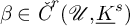
$\beta \in {\check{C}}^r(\mathscr {U},\underline {K}^s)$
and
$\beta \in {\check{C}}^r(\mathscr {U},\underline {K}^s)$
 we set

We will denote by
$D^b(\text {coh}X)$
 the usual derived category of coherent sheaves on X whose objects are bounded
$\mathbb {Z}$
the usual derived category of coherent sheaves on X whose objects are bounded
$\mathbb {Z}$
 -graded complexes. However, we will mostly be concerned with
$\mathbb {Z}/2$
-graded complexes. However, we will mostly be concerned with
$\mathbb {Z}/2$
 -graded dg (or cdg) categories. Categories that are usually
$\mathbb {Z}$
-graded dg (or cdg) categories. Categories that are usually
$\mathbb {Z}$
 -graded, for example a dg enhancement
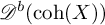
$\mathscr {D}^b(\text {coh}(X))$
-graded, for example a dg enhancement
$\mathscr {D}^b(\text {coh}(X))$
 of
$D^b(\text {coh}X)$
of
$D^b(\text {coh}X)$
 will be implicitly thought of as
$\mathbb {Z}/2$
will be implicitly thought of as
$\mathbb {Z}/2$
 -graded by forgetting the
$\mathbb {Z}$
-graded by forgetting the
$\mathbb {Z}$
 -grading on the hom-spaces (but not on the objects!) and only remembering the parity of the degree of a morphism.
2 Background on cdg categories, modules and Hochschild invariants
Here, we recall some facts about cdg categories and Hochschild-type invariants of such. We will mostly follow the conventions in [Reference Chung, Kim and Kim5] and also in [Reference Polishchuk and Positselski15].
2.1 Cdg categories and functors
Recall that a curved differential graded category
$\mathscr {C}$
 (cdg category for short) is a triple
$(\mathscr {C},d,h)$
(cdg category for short) is a triple
$(\mathscr {C},d,h)$
 where
$\mathscr {C}$
where
$\mathscr {C}$
 is a category enriched over
$\mathbb {Z}/2$
is a category enriched over
$\mathbb {Z}/2$
 -graded vector spaces, d is an assignment of a degree
$1$
-graded vector spaces, d is an assignment of a degree
$1$
 operator (called differential)
$d_{x,y}:\text {Hom}_{\mathscr {C}}(x,y)\to \text {Hom}_{\mathscr {C}}(x,y)[1] $
operator (called differential)
$d_{x,y}:\text {Hom}_{\mathscr {C}}(x,y)\to \text {Hom}_{\mathscr {C}}(x,y)[1] $
 for every pair of objects x and y in
$\mathsf {Ob}(\mathscr {C})$
for every pair of objects x and y in
$\mathsf {Ob}(\mathscr {C})$
 and h is the assignment of a degree
$0$
and h is the assignment of a degree
$0$
 endomorphism
$h_x\in \mathrm {End}_{\mathscr {C}}(x)$
endomorphism
$h_x\in \mathrm {End}_{\mathscr {C}}(x)$
 (called curvature) for every object
$x\in \mathsf {Ob}(\mathscr {C})$
(called curvature) for every object
$x\in \mathsf {Ob}(\mathscr {C})$
 . This structure d and h must satisfy the following, d is a derivation for the composition,
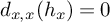
$d_{x,x}(h_x)=0$
. This structure d and h must satisfy the following, d is a derivation for the composition,
$d_{x,x}(h_x)=0$
 and
$d_{x,y}^2(f)=h_y\circ f-f\circ h_x$
and
$d_{x,y}^2(f)=h_y\circ f-f\circ h_x$
 for all
$f\in \text {Hom}_{\mathscr {C}}(x,y)$
for all
$f\in \text {Hom}_{\mathscr {C}}(x,y)$
 . Here are some examples that will be important to us.
Example 2. A dg category can be thought of as a cdg category with
$h_x=0$
 for all objects x.
Example 3. Let A be a
$\mathbb {Z}/2$
 -graded algebra and let h be a degree
$0$
-graded algebra and let h be a degree
$0$
 element of the centre of A. Then
$(A,0,h)$
element of the centre of A. Then
$(A,0,h)$
 is a cdg algebra with only one object.
Example 4. Let
$Com_{cdg}(k)$
 denote the cdg algebra whose objects are pairs
$(C^{\bullet },\delta _C)$
denote the cdg algebra whose objects are pairs
$(C^{\bullet },\delta _C)$
 where
$C^{\bullet }$
where
$C^{\bullet }$
 is a graded vector space and
$\delta _C:C^{\bullet }\to C^{\bullet }[1]$
is a graded vector space and
$\delta _C:C^{\bullet }\to C^{\bullet }[1]$
 is a degree 1 operator. We define
$d_{C,C'}(f):=\delta _{C'}\circ f-(-1)^{|f|}f\circ \delta _C$
is a degree 1 operator. We define
$d_{C,C'}(f):=\delta _{C'}\circ f-(-1)^{|f|}f\circ \delta _C$
 and
$h_C:=\delta _C^2$
and
$h_C:=\delta _C^2$
 . If
$(C^{\bullet },\delta _C)$
. If
$(C^{\bullet },\delta _C)$
 is an object of
$Com_{cdg}(k)$
is an object of
$Com_{cdg}(k)$
 we define the shift
$(C^{\bullet }[1],\delta _C[1]=-\delta _C)$
we define the shift
$(C^{\bullet }[1],\delta _C[1]=-\delta _C)$
 as usual.
Let
$\mathscr {C}$
 and
$\mathscr {C}'$
and
$\mathscr {C}'$
 be two cdg categories. A functor
$F:\mathscr {C}\to \mathscr {C}'$
be two cdg categories. A functor
$F:\mathscr {C}\to \mathscr {C}'$
 of categories enriched over graded vector spaces is called a quasi-cdg functor if
$F_{x,y}\circ d_{x,y}=d_{F(x),F(y)}\circ F_{x,y}$
of categories enriched over graded vector spaces is called a quasi-cdg functor if
$F_{x,y}\circ d_{x,y}=d_{F(x),F(y)}\circ F_{x,y}$
 for all objects x and y. If in addition we have
$F(h_x)=h_{F(x)}$
for all objects x and y. If in addition we have
$F(h_x)=h_{F(x)}$
 for all objects x then we call F a cdg functor.
Remark 5. What we just defined is sometimes called a strict functor but we omit the prefix strict since we will not need the notion of ‘non-strict’ cdg functors.
Cdg (quasi-)modules over a cdg category
$\mathscr {C}$
 are by definition (quasi) cdg functors
$F:\mathscr {C}\to Com_{cdg}(k)$
are by definition (quasi) cdg functors
$F:\mathscr {C}\to Com_{cdg}(k)$
 . If F is a quasi-cdg functor we denote by
$F[n]$
. If F is a quasi-cdg functor we denote by
$F[n]$
 the quasi-cdg functor obtained by composing
$[n]\circ F$
the quasi-cdg functor obtained by composing
$[n]\circ F$
 . The collection of quasi-modules themselves form a cdg category that we will denote by
$mod^{qdg}-\mathscr {C}$
. The collection of quasi-modules themselves form a cdg category that we will denote by
$mod^{qdg}-\mathscr {C}$
 . The objects are quasi-modules. A degree n morphism
$\alpha \in \text {Hom}_{mod^{qdg}-\mathscr {C}}^n(F,F')$
. The objects are quasi-modules. A degree n morphism
$\alpha \in \text {Hom}_{mod^{qdg}-\mathscr {C}}^n(F,F')$
 is a natural transformation
$\alpha :F\implies F'[n]$
is a natural transformation
$\alpha :F\implies F'[n]$
 between functors of categories enriched over graded vector spaces. The differentials
$d_{F,F'}$
between functors of categories enriched over graded vector spaces. The differentials
$d_{F,F'}$
 are given by
$d_{F,F'}(\alpha )_x:=\delta _{F'(x)}\circ \alpha _x-(-1)^n\alpha _x\circ \delta _{F(x)}$
are given by
$d_{F,F'}(\alpha )_x:=\delta _{F'(x)}\circ \alpha _x-(-1)^n\alpha _x\circ \delta _{F(x)}$
 and the curvatures are by definition
$h_F(x):=h_{F(x)}-F(h_x)$
and the curvatures are by definition
$h_F(x):=h_{F(x)}-F(h_x)$
 . The full subcategory of modules inside the cdg category of quasi-modules forms a dg-category which we denote by
$mod^{cdg}-\mathscr {C}$
. The full subcategory of modules inside the cdg category of quasi-modules forms a dg-category which we denote by
$mod^{cdg}-\mathscr {C}$
 . If
$\mathscr {C}$
. If
$\mathscr {C}$
 is a dg category we will write
$mod^{dg}-\mathscr {C}$
is a dg category we will write
$mod^{dg}-\mathscr {C}$
 for the dg category
$mod^{cdg}-\mathscr {C}$
for the dg category
$mod^{cdg}-\mathscr {C}$
 .
.
2.2 Two kinds of Hochschild homology
Let
$\mathscr {C}$
 be a cdg category. We define the Hochschild complex of the first kind
$C_{\bullet }(\mathscr {C})$
be a cdg category. We define the Hochschild complex of the first kind
$C_{\bullet }(\mathscr {C})$
 as follows. As a
$\mathbb {Z}/2$
as follows. As a
$\mathbb {Z}/2$
 -graded vector space it is obtained by taking the direct sum along the diagonal of a bigraded vector space with one grading by
$\mathbb {Z}$
-graded vector space it is obtained by taking the direct sum along the diagonal of a bigraded vector space with one grading by
$\mathbb {Z}$
 and one by
$\mathbb {Z}/2$
and one by
$\mathbb {Z}/2$
 . The
$\mathbb {Z}/2$
. The
$\mathbb {Z}/2$
 -graded vector space in degree n is

The differential is the sum of three differentials on
$C_{\bullet }(\mathscr {C})$
 :
:

The Hochschild homology
$HH_{\bullet }(\mathscr {C})$
 is the object in
$D_{Z/2}(\mathbb {C})$
is the object in
$D_{Z/2}(\mathbb {C})$
 represented by
$C_{\bullet }(\mathscr {C})$
represented by
$C_{\bullet }(\mathscr {C})$
 . Although Hochschild homology is an important invariant of dg categories it turns out that for general cdg categories it is not very useful. For example if
$h\neq 0$
. Although Hochschild homology is an important invariant of dg categories it turns out that for general cdg categories it is not very useful. For example if
$h\neq 0$
 in example 3 then
$HH_{\bullet }(A,0,h)=0$
in example 3 then
$HH_{\bullet }(A,0,h)=0$
 ([Reference Căldăraru and Tu4], theorem 4.2). There is a notion of Hochschild homology of the second kind which in some ways is a better invariant for cdg categories. The Hochschild complex of the second kind associated to a cdg category
$\mathscr {C}$
([Reference Căldăraru and Tu4], theorem 4.2). There is a notion of Hochschild homology of the second kind which in some ways is a better invariant for cdg categories. The Hochschild complex of the second kind associated to a cdg category
$\mathscr {C}$
 , denoted
$C_{\bullet }^{II}(\mathscr {C})$
, denoted
$C_{\bullet }^{II}(\mathscr {C})$
 , is defined from the same bigraded vector space as for the first kind but we take direct products along the diagonal instead of direct sum. The differential is given by the same formulas as for the first kind.
There is a canonical map
$C_{\bullet }(\mathscr {C})\to C_{\bullet }^{II}(\mathscr {C})$
 and it is an interesting question when it is an isomorphism. Both Hochschild complexes of the first and second kind are functorial with respect to cdg functors as defined in this text.
2.3 Pseudo equivalences and projective modules
Let
$\mathscr {D}$
 be a cdg category. We say that an object
$x\in \mathsf {Ob}(\mathscr {D})$
be a cdg category. We say that an object
$x\in \mathsf {Ob}(\mathscr {D})$
 is the direct sum of two objects
$y\oplus z$
is the direct sum of two objects
$y\oplus z$
 if there are degree zero morphisms
$\iota _y:y\to x$
if there are degree zero morphisms
$\iota _y:y\to x$
 and
$\iota _z:z\to x$
and
$\iota _z:z\to x$
 which induce isomorphisms of graded groups
$\text {Hom}(y,w)\times \text {Hom}(z,w)\cong \text {Hom}(x,w)$
which induce isomorphisms of graded groups
$\text {Hom}(y,w)\times \text {Hom}(z,w)\cong \text {Hom}(x,w)$
 and we require that
$d(\iota _y)=0$
and we require that
$d(\iota _y)=0$
 and
$d(\iota _z)=0$
and
$d(\iota _z)=0$
 .
.
If
$y\in \mathsf {Ob}(\mathscr {D})$
 and
$\tau \in \text {Hom}^1(y,y)$
and
$\tau \in \text {Hom}^1(y,y)$
 we say that an object
$x\in \mathsf {Ob}(\mathscr {D})$
we say that an object
$x\in \mathsf {Ob}(\mathscr {D})$
 is a twist of y by
$\tau $
is a twist of y by
$\tau $
 (and we write
$x=y(\tau )$
(and we write
$x=y(\tau )$
 ) if there are degree
$0$
) if there are degree
$0$
 morphisms
$i:y\to x$
morphisms
$i:y\to x$
 and
$j:x\to y$
and
$j:x\to y$
 such that
$ij=\mathrm {id}_x$
such that
$ij=\mathrm {id}_x$
 ,
$ji=\mathrm {id}_y$
,
$ji=\mathrm {id}_y$
 and
$jd(i)=\tau $
and
$jd(i)=\tau $
 .
.
Finally we call an object
$x\in \mathsf {Ob}(\mathscr {D})$
 a degree n shift of another object
$y\in \mathsf {Ob}(\mathscr {D})$
a degree n shift of another object
$y\in \mathsf {Ob}(\mathscr {D})$
 if there are morphisms
$i:y\to x$
if there are morphisms
$i:y\to x$
 and
$j:x\to y$
and
$j:x\to y$
 of degree n and
$-n$
of degree n and
$-n$
 respectively such that
$ij=\mathrm {id}_x$
respectively such that
$ij=\mathrm {id}_x$
 ,
$ji=\mathrm {id}_y$
,
$ji=\mathrm {id}_y$
 ,
$d(i)=0$
,
$d(i)=0$
 and
$d(j)=0$
and
$d(j)=0$
 .
.
We call a cdg functor
$F:\mathscr {C}\to \mathscr {D}$
 pseudo equivalence if it is fully faithful and any object in
$\mathscr {D}$
pseudo equivalence if it is fully faithful and any object in
$\mathscr {D}$
 can be obtained from objects in the image of F in finitely many steps by taking direct sums, twisting, shifting or passing to direct summands.
Proposition 6 [Reference Polishchuk and Positselski15].
If
$F:\mathscr {C}\to \mathscr {D}$
 is a pseudo equivalence, then the induced map on Hochschild homology of the second kind is a quasi-isomorphism.
For a cdg category
$\mathscr {C}$
 we denote by
$\mathscr {C}^\#$
we denote by
$\mathscr {C}^\#$
 the underlying category enriched in graded vector spaces. The category of graded modules on
$\mathscr {C}$
the underlying category enriched in graded vector spaces. The category of graded modules on
$\mathscr {C}$
 (i.e. graded functors from
$\mathscr {C}^\#$
(i.e. graded functors from
$\mathscr {C}^\#$
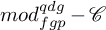
 to graded vector spaces) is an abelian category. The projective modules are precisely those that are direct summands of a direct sum of representable modules. We say that a module P is finitely generated projective if it is a direct summand of a finite direct sum of representable functors. Let’s denote by
$mod^{qdg}_{fgp}-\mathscr {C}$
to graded vector spaces) is an abelian category. The projective modules are precisely those that are direct summands of a direct sum of representable modules. We say that a module P is finitely generated projective if it is a direct summand of a finite direct sum of representable functors. Let’s denote by
$mod^{qdg}_{fgp}-\mathscr {C}$
 the full subcategory of
$mod^{qdg}-\mathscr {C}$
the full subcategory of
$mod^{qdg}-\mathscr {C}$
 consisting of quasi-modules that are finitely generated projective as
$\mathscr {C}^\#$
consisting of quasi-modules that are finitely generated projective as
$\mathscr {C}^\#$
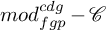
 -modules. Let
$mod^{cdg}_{fgp}-\mathscr {C}$
-modules. Let
$mod^{cdg}_{fgp}-\mathscr {C}$
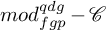
 denote the full subcategory of
$mod^{qdg}_{fgp}-\mathscr {C}$
denote the full subcategory of
$mod^{qdg}_{fgp}-\mathscr {C}$
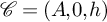
 whose curvature vanishes. Let
$\mathscr {C}=(A,0,h)$
whose curvature vanishes. Let
$\mathscr {C}=(A,0,h)$
 and
$\mathscr {C}'=(A,0,-h)$
and
$\mathscr {C}'=(A,0,-h)$
 . We have a Yoneda functor
$R:\mathscr {C}'\to mod^{qdg}_{fgp}-\mathscr {C}$
. We have a Yoneda functor
$R:\mathscr {C}'\to mod^{qdg}_{fgp}-\mathscr {C}$
 which is a cdg functor. We also have the inclusion functor
$I:mod^{cdg}_{fgp}-\mathscr {C}\to mod^{qdg}_{fgp}-\mathscr {C}$
which is a cdg functor. We also have the inclusion functor
$I:mod^{cdg}_{fgp}-\mathscr {C}\to mod^{qdg}_{fgp}-\mathscr {C}$
 .
.
Proposition 7 ([Reference Polishchuk and Positselski15], Section 2.6).
The functors R and I are pseudo equivalences and hence induce isomorphisms in Hochschild homology of the second kind.
2.4 Quasi-functors between dg categories
Let
$\mathscr {C}$
 be a dg category. The categories
$Z^0(\mathscr {C})$
be a dg category. The categories
$Z^0(\mathscr {C})$
 or
$H^0(\mathscr {C})$
or
$H^0(\mathscr {C})$
 are obtained from
$\mathscr {C}$
are obtained from
$\mathscr {C}$
 by taking degree zero cycles or by taking zeroth homology of all the hom-complexes in
$\mathscr {C}$
by taking degree zero cycles or by taking zeroth homology of all the hom-complexes in
$\mathscr {C}$
 respectively. Recall that the module category
$mod^{dg}-\mathscr {C}$
respectively. Recall that the module category
$mod^{dg}-\mathscr {C}$
 is again a dg category and
$H^0(mod^{dg}-\mathscr {C})$
is again a dg category and
$H^0(mod^{dg}-\mathscr {C})$
 has a standard triangulated structure. If we localize
$H^0(mod^{dg}-\mathscr {C})$
has a standard triangulated structure. If we localize
$H^0(mod^{dg}-\mathscr {C})$
 with respect to quasi-isomorphisms we get the derived category
$D(mod^{dg}-\mathscr {C})$
with respect to quasi-isomorphisms we get the derived category
$D(mod^{dg}-\mathscr {C})$
 . Using Drinfeld quotients ([Reference Drinfeld6]) we get a dg enhancement of
$D(mod^{dg}-\mathscr {C})$
. Using Drinfeld quotients ([Reference Drinfeld6]) we get a dg enhancement of
$D(mod^{dg}-\mathscr {C})$
 , which we denote
$\mathscr {D}(mod^{dg}-\mathscr {C})$
, which we denote
$\mathscr {D}(mod^{dg}-\mathscr {C})$
 whose objects are the same as
$mod^{dg}-\mathscr {C}$
whose objects are the same as
$mod^{dg}-\mathscr {C}$
 . We call an object in
$mod^{dg}-\mathscr {C}$
. We call an object in
$mod^{dg}-\mathscr {C}$
 perfect if it lies in the smallest thick (meaning closed under passage to a direct summand) triangulated subcategory of
$D(mod^{dg}-\mathscr {C})$
perfect if it lies in the smallest thick (meaning closed under passage to a direct summand) triangulated subcategory of
$D(mod^{dg}-\mathscr {C})$
 which contains the image of the Yoneda functor
$H^0(\mathscr {C})\to D(mod^{dg}-\mathscr {C})$
which contains the image of the Yoneda functor
$H^0(\mathscr {C})\to D(mod^{dg}-\mathscr {C})$
 . Let
$\text {perf}(\mathscr {C})\subset \mathscr {D}(mod^{dg}-\mathscr {C})$
. Let
$\text {perf}(\mathscr {C})\subset \mathscr {D}(mod^{dg}-\mathscr {C})$
 be the full sub dg category on the perfect objects in
$mod^{dg}-\mathscr {C}$
be the full sub dg category on the perfect objects in
$mod^{dg}-\mathscr {C}$
 . If
$\mathscr {C}$
. If
$\mathscr {C}$
 is pre-triangulated (meaning
$H^0(\mathscr {C})$
is pre-triangulated (meaning
$H^0(\mathscr {C})$
 is triangulated in a way compatible with the Yoneda embedding
$H^0(\mathscr {C})\to H^0(mod^{dg}-\mathscr {C})$
is triangulated in a way compatible with the Yoneda embedding
$H^0(\mathscr {C})\to H^0(mod^{dg}-\mathscr {C})$
 ) and idempotent complete then the Yoneda functor
$\mathscr {C}\to \text {perf}(\mathscr {C})$
) and idempotent complete then the Yoneda functor
$\mathscr {C}\to \text {perf}(\mathscr {C})$
 is a quasi-equivalence. If
$\mathscr {C}$
is a quasi-equivalence. If
$\mathscr {C}$
 and
$\mathscr {C}'$
and
$\mathscr {C}'$
 are two dg categories, both pre-triangulated then we define a quasi-functor from
$\mathscr {C}$
are two dg categories, both pre-triangulated then we define a quasi-functor from
$\mathscr {C}$
 to
$\mathscr {C}'$
to
$\mathscr {C}'$
 to mean a dg functor
$F:\mathscr {C}\to \text {perf}(\mathscr {C}')$
to mean a dg functor
$F:\mathscr {C}\to \text {perf}(\mathscr {C}')$
 . We will denote a quasi-functor by a dashed arrow
$F:\mathscr {C}\rightarrow \mathscr {C}'$
. We will denote a quasi-functor by a dashed arrow
$F:\mathscr {C}\rightarrow \mathscr {C}'$
 . By a theorem of Keller, (theorem 2.4 in [Reference Keller9]), if
$\mathscr {C}$
. By a theorem of Keller, (theorem 2.4 in [Reference Keller9]), if
$\mathscr {C}$
 is a dg category then the Yoneda functor induces an isomorphism on Hochschild homology
$C_{\bullet }(\mathscr {C})\to C_{\bullet } (\text {perf}(\mathscr {C}))$
is a dg category then the Yoneda functor induces an isomorphism on Hochschild homology
$C_{\bullet }(\mathscr {C})\to C_{\bullet } (\text {perf}(\mathscr {C}))$
 and therefore any quasi-functor
$F:\mathscr {C}\dashrightarrow \mathscr {C}'$
and therefore any quasi-functor
$F:\mathscr {C}\dashrightarrow \mathscr {C}'$
 induces a well-defined map in
$D(k)$
induces a well-defined map in
$D(k)$
 ,
$C_{\bullet }(\mathscr {C})\to C_{\bullet }(\mathscr {C}')$
,
$C_{\bullet }(\mathscr {C})\to C_{\bullet }(\mathscr {C}')$
 .
.
Remark 8. We already had a notion of quasi-cdg functor between cdg categories and now we have also introduced quasi-functors between dg categories. Let us remark here that the former will always be called quasi-cdg functor and by quasi-functor (without the cdg) we will always refer to quasi-functors as defined in this section.
2.5 Presheaves of cdg categories
We will also need presheaf versions of the Hochschild complexes. A presheaf of cdg categories
$\underline {\mathscr {E}}$
 on a scheme X is a contravariant functor from the category of open subsets of X and inclusions of such to the category of small cdg categories with cdg functors as morphisms. If for all U,
$\underline {\mathscr {E}}(U)$
on a scheme X is a contravariant functor from the category of open subsets of X and inclusions of such to the category of small cdg categories with cdg functors as morphisms. If for all U,
$\underline {\mathscr {E}}(U)$
 has only one object we call it a presheaf of cdg algebras and if
$U\mapsto \underline {\mathscr {E}}(U)$
has only one object we call it a presheaf of cdg algebras and if
$U\mapsto \underline {\mathscr {E}}(U)$
 is a sheaf we call it a sheaf of cdg algebras. If for all U,
$\underline {\mathscr {E}}(U)$
is a sheaf we call it a sheaf of cdg algebras. If for all U,
$\underline {\mathscr {E}}(U)$
 is a dg category then we call it presheaf of dg categories. Here is an example that will be important to us later.
Example 9. If f is a global function on X then
$U\mapsto (\mathcal {O}_X(U),0,f|_U)$
 is a sheaf of cdg algebras which we will denote by
$\mathcal {O}_f$
is a sheaf of cdg algebras which we will denote by
$\mathcal {O}_f$
 .
.
A morphism of presheaves of cdg categories
$\varphi :\underline {\mathscr {E}}\to \underline {\mathscr {E}}'$
 is the data a cdg functor
$\varphi _U:\underline {\mathscr {E}}(U)\to \underline {\mathscr {E}}'(U)$
is the data a cdg functor
$\varphi _U:\underline {\mathscr {E}}(U)\to \underline {\mathscr {E}}'(U)$
 for each open set
$U\subset X$
for each open set
$U\subset X$
 such that whenever
$V\subset U\subset X$
such that whenever
$V\subset U\subset X$
 the following diagram commutes on the nose

If
$\underline {\mathscr {E}}$
 is a presheaf of cdg categories we define
$\underline {C}_{\bullet }^{II}(\underline {\mathscr {E}})$
is a presheaf of cdg categories we define
$\underline {C}_{\bullet }^{II}(\underline {\mathscr {E}})$
 to be the presheaf of
$\mathbb {Z}/2$
to be the presheaf of
$\mathbb {Z}/2$
 -graded chain complexes

Similarly one defines
$\underline {C}_{\bullet }(\underline {\mathscr {E}})$
 . Any morphism
$\varphi :\underline {\mathscr {C}}\to \underline {\mathscr {D}}$
. Any morphism
$\varphi :\underline {\mathscr {C}}\to \underline {\mathscr {D}}$
 of presheaves of cdg categories gives rise to a map of presheaves of complexes
$\varphi _{\ast }:\underline {C}_{\bullet }^{?}(\underline {\mathscr {C}})\to \underline {C}_{\bullet }^?(\underline {\mathscr {D}})$
of presheaves of cdg categories gives rise to a map of presheaves of complexes
$\varphi _{\ast }:\underline {C}_{\bullet }^{?}(\underline {\mathscr {C}})\to \underline {C}_{\bullet }^?(\underline {\mathscr {D}})$
 (where
$?=I, II$
(where
$?=I, II$
 ).
).
We will need a weaker notion of morphism between presheaves of cdg categories where the cdg functors are only asked to commute with the restriction functors up to compatible natural isomorphisms. Here is the exact definition. Let
$\underline {\mathscr {C}}$
 and
$\underline {\mathscr {D}}$
and
$\underline {\mathscr {D}}$
 be two presheaves of cdg categories on a scheme X.
Definition 10. A lax morphism
$\varphi :\underline {\mathscr {C}}\to \underline {\mathscr {D}}$
 is a collection of cdg functors
$\{\varphi _U:\underline {\mathscr {C}}(U)\to \underline {\mathscr {D}}(U)| \ U\subset X\text { open}\}$
is a collection of cdg functors
$\{\varphi _U:\underline {\mathscr {C}}(U)\to \underline {\mathscr {D}}(U)| \ U\subset X\text { open}\}$
 together with isomorphisms of functors
$\{\alpha _{UV}:\varphi _{V}\circ \text {Res}_{UV}\implies \text {Res}_{UV}\circ \varphi _U| \ V\subset U\subset X \text { open }\}$
together with isomorphisms of functors
$\{\alpha _{UV}:\varphi _{V}\circ \text {Res}_{UV}\implies \text {Res}_{UV}\circ \varphi _U| \ V\subset U\subset X \text { open }\}$
 which satisfies the following cocycle condition, for all
$c\in \mathsf {Ob}(\underline {\mathscr {C}})$
which satisfies the following cocycle condition, for all
$c\in \mathsf {Ob}(\underline {\mathscr {C}})$
 and all
$W\subset V\subset U$
and all
$W\subset V\subset U$
 we have

Suppose
$X=\cup _{i=1,...,n}U_i$
 is a finite union of affine schemes. We will write
${\check{C}}(\mathscr {U},\underline {C}_{\bullet }^{?}(\underline {\mathscr {C}}))$
is a finite union of affine schemes. We will write
${\check{C}}(\mathscr {U},\underline {C}_{\bullet }^{?}(\underline {\mathscr {C}}))$
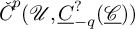
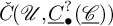 for the total complex obtained by taking the total complex of the bicomplex
${\check{C}}^p(\mathscr {U},\underline {C}_{-q}^{?}(\underline {\mathscr {C}}))$
for the total complex obtained by taking the total complex of the bicomplex
${\check{C}}^p(\mathscr {U},\underline {C}_{-q}^{?}(\underline {\mathscr {C}}))$
 where
$?=I,II$
where
$?=I,II$
 (see Section ?? for our conventions on the differentials in this situation). We will see that lax morphisms induce chain maps on Cech-Hochschild complexes associated to a presheaf of cdg categories as above. To understand this we first introduce some notation. Let
$(\varphi ,\alpha )$
(see Section ?? for our conventions on the differentials in this situation). We will see that lax morphisms induce chain maps on Cech-Hochschild complexes associated to a presheaf of cdg categories as above. To understand this we first introduce some notation. Let
$(\varphi ,\alpha )$
 be a lax morphism. If
$I=\{i_0<...<i_p\}$
be a lax morphism. If
$I=\{i_0<...<i_p\}$
 ,
$J=\{j_1,...,j_q\}$
,
$J=\{j_1,...,j_q\}$
 and
$J\cap I=\emptyset $
and
$J\cap I=\emptyset $
 then we set
$J_s:=\{j_1,j_2,...,j_s,i_0,...,i_p\}$
then we set
$J_s:=\{j_1,j_2,...,j_s,i_0,...,i_p\}$
 for
$0\leq s\leq q$
for
$0\leq s\leq q$
 . With this notation we define the following maps
$h^{q}:{\check{C}}(\mathscr {U},\underline {C}^{?}_{\bullet }(\underline {\mathscr {C}}))\to {\check{C}}(\mathscr {U},\underline {C}^{?}_{\bullet }(\underline {\mathscr {D}}))$
. With this notation we define the following maps
$h^{q}:{\check{C}}(\mathscr {U},\underline {C}^{?}_{\bullet }(\underline {\mathscr {C}}))\to {\check{C}}(\mathscr {U},\underline {C}^{?}_{\bullet }(\underline {\mathscr {D}}))$
 by
by

where the sum is over all ordered
$J=(j_1,...,j_q)$
 disjoint from I and all
$0\leq l_1\leq l_2\leq ...\leq l_q\leq k$
disjoint from I and all
$0\leq l_1\leq l_2\leq ...\leq l_q\leq k$
 . The sign is given by

where
$\sigma (I,J)$
 is the sign of the permutation which arranges
$(j_1,...,j_q,i_0,...,i_p)$
is the sign of the permutation which arranges
$(j_1,...,j_q,i_0,...,i_p)$
 in order. For example if

are three composable arrows in
$\underline {\mathscr {C}}(U_I)$
 and
$j\notin I$
and
$j\notin I$
 then the terms in
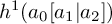
$h^1(a_0[a_1|a_2])$
then the terms in
$h^1(a_0[a_1|a_2])$
 over
$U_{I\cup j}$
over
$U_{I\cup j}$
 are in bijection with paths of length 4 in the diagram

We define
${\check{C}}(\varphi ,\alpha ):{\check{C}}(\mathscr {U},\underline {C}^{?}_{\bullet }(\underline {\mathscr {C}}))\to {\check{C}}(\mathscr {U},\underline {C}^{?}_{\bullet }(\underline {\mathscr {C}}))$
 by
by

and extending over infinite sums in the case
$?=II$
 .
.
Proposition 11. The map
${\check{C}}(\varphi ,\alpha )$
 is a chain map and fits into a commutative diagram in
$D_{\mathbb {Z}/2}(\mathbb {C})$
is a chain map and fits into a commutative diagram in
$D_{\mathbb {Z}/2}(\mathbb {C})$


where the vertical arrows are induced by the restriction functors.
Proof. We first check that
${\check{C}}(\varphi ,\alpha )$
 is a chain map. This follows from the following lemma
Lemma 12. (i)
$d_{{\check{C}}}\circ h^{q-1}+\bar {d}_{2}\circ h^{q}=h^{q}\circ \bar {d}_{2}+h^{q-1}\circ d_{{\check{C}}}$
 for
$q\geq 1$
for
$q\geq 1$
 , (ii)
$\bar {d}_1\circ h^q=h^q\circ \bar {d}_1$
, (ii)
$\bar {d}_1\circ h^q=h^q\circ \bar {d}_1$
 for all
$q\geq 0$
for all
$q\geq 0$
 , (iii)
$\bar {d}_0\circ h^q=h^q\circ \bar {d}_0$
, (iii)
$\bar {d}_0\circ h^q=h^q\circ \bar {d}_0$
 for all
$q\geq 0$
for all
$q\geq 0$
 .
.
Proof of lemma.
For
$(i)$
 we note that
$\bar {d}_{2}\circ h^q(\bar {a})$
we note that
$\bar {d}_{2}\circ h^q(\bar {a})$
 will consist of terms of the following form

The terms in
$(I)$
 cancel with the terms in
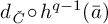
$d_{{\check{C}}}\circ h^{q-1}(\bar {a})$
cancel with the terms in
$d_{{\check{C}}}\circ h^{q-1}(\bar {a})$
 , the terms in
$(II)$
, the terms in
$(II)$
 cancel with terms in
$h^q\circ \bar {d}_2(\bar {a})$
cancel with terms in
$h^q\circ \bar {d}_2(\bar {a})$
 , the terms in
$(III)$
, the terms in
$(III)$
 cancel with the terms in
$(IV)$
cancel with the terms in
$(IV)$
 , the terms in
$(V)$
, the terms in
$(V)$
 cancel with themselves, the terms in
$(VI)$
cancel with themselves, the terms in
$(VI)$
 cancel with the terms from
$h^{q-1}\circ d_{{\check{C}}}$
cancel with the terms from
$h^{q-1}\circ d_{{\check{C}}}$
 and finally the terms
$(VII)$
and finally the terms
$(VII)$
 cancel with the remaining terms in
$h^q\circ \bar {d}_2(\bar {a})$
cancel with the remaining terms in
$h^q\circ \bar {d}_2(\bar {a})$
 .
.
Part
$(ii)$
 and
$(iii)$
and
$(iii)$
 is also just a matter of checking.
Now for the second part of the proposition we note that the two composites are related by a homotopy H which we now describe. On an element
$\bar {a}=a_0[a_1|\cdots |a_k]$
 it is defined to be

where
$\tilde {h}^q:C_k(\underline {\mathscr {C}}(X))\to {\check{C}}^{q-1}(\mathscr {U},\underline {C}_{k+q})$
 are defined exactly like
$h^q$
are defined exactly like
$h^q$
 in (4) with the convention that
$p=-1$
in (4) with the convention that
$p=-1$
 .
.
We say that two lax-morphisms
$(\varphi ,\alpha ),(\psi ,\beta ):\underline {\mathscr {C}}\to \underline {\mathscr {D}}$
 are isomorphic if there are natural isomorphisms
$\tau _U:\varphi _U\overset {\sim }{\implies } \psi _U$
are isomorphic if there are natural isomorphisms
$\tau _U:\varphi _U\overset {\sim }{\implies } \psi _U$
 such that for any
$V\subset U$
such that for any
$V\subset U$
 we have a commutative diagram of natural isomorphisms

Proposition 13. If
$(\varphi ,\alpha )$
 and
$(\psi ,\beta )$
and
$(\psi ,\beta )$
 are isomorphic lax morphisms of presheaves of dg categories
$\underline {\mathscr {C}}\to \underline {\mathscr {D}}$
are isomorphic lax morphisms of presheaves of dg categories
$\underline {\mathscr {C}}\to \underline {\mathscr {D}}$
 then the induced maps are homotopic
${\check{C}}(\varphi ,\alpha )\simeq {\check{C}}(\psi ,\beta )$
then the induced maps are homotopic
${\check{C}}(\varphi ,\alpha )\simeq {\check{C}}(\psi ,\beta )$
 .
.
Proof. Let
$\tau :(\varphi ,\alpha )\to (\psi ,\beta )$
 be an isomorphism. The following is a chain homotopy between
${\check{C}}(\varphi ,\alpha )$
be an isomorphism. The following is a chain homotopy between
${\check{C}}(\varphi ,\alpha )$
 and
${\check{C}}(\psi ,\beta )$
and
${\check{C}}(\psi ,\beta )$
 :
:

where the outer sum is indexed as in the definition of
$h^q$
 (see equation
$(4)$
(see equation
$(4)$
 above) and the inner sum runs from
$0$
above) and the inner sum runs from
$0$
 to
$k+q$
to
$k+q$
 picking out the position for
$\tau ^{-1}$
picking out the position for
$\tau ^{-1}$
 . The sign is

where
$\epsilon $
 is as in the definition of
$h^q$
is as in the definition of
$h^q$
 ,
$a_r$
,
$a_r$
 is the last morphism among
$a_0,...,a_k$
is the last morphism among
$a_0,...,a_k$
 that appear before
$\tau ^{-1}$
that appear before
$\tau ^{-1}$
 and s is the number of
$\alpha ^{-1}$
and s is the number of
$\alpha ^{-1}$
 ’s that appear before
$\tau ^{-1}$
’s that appear before
$\tau ^{-1}$
 .
.
If
$\underline {\mathscr {C}}$
 is a presheaf of dg algebras (recall that this means
$\underline {\mathscr {C}}(U)$
is a presheaf of dg algebras (recall that this means
$\underline {\mathscr {C}}(U)$
 only has one object for all
$U\subset X$
only has one object for all
$U\subset X$
 ), then any two lax morphisms of the form
$(\varphi ,\alpha ),(\varphi ,\beta ):\underline {\mathscr {C}}\to \underline {\mathscr {D}}$
), then any two lax morphisms of the form
$(\varphi ,\alpha ),(\varphi ,\beta ):\underline {\mathscr {C}}\to \underline {\mathscr {D}}$
 are isomorphic. Indeed, lets call the object in
$\underline {\mathscr {C}}(X)\, c$
are isomorphic. Indeed, lets call the object in
$\underline {\mathscr {C}}(X)\, c$
 . Then we can define
$\tau _{U,c|_U}:=(\beta ^X_U)^{-1}\circ \alpha ^X_U$
. Then we can define
$\tau _{U,c|_U}:=(\beta ^X_U)^{-1}\circ \alpha ^X_U$
 . Now if
$\varphi $
. Now if
$\varphi $
 is an actual morphism of presheaves of dg categories then
$(\varphi ,\mathrm {id})$
is an actual morphism of presheaves of dg categories then
$(\varphi ,\mathrm {id})$
 is a lax morphism and if
$\underline {\mathscr {C}}$
is a lax morphism and if
$\underline {\mathscr {C}}$
 is a presheaf of dg algebras then any other lax morphism
$(\varphi ,\alpha )$
is a presheaf of dg algebras then any other lax morphism
$(\varphi ,\alpha )$
 is isomorphic to
$(\varphi ,\mathrm {id})$
is isomorphic to
$(\varphi ,\mathrm {id})$
 . Note that a morphism of presheaves of dg categories
$\varphi $
. Note that a morphism of presheaves of dg categories
$\varphi $
 induces a morphism

by taking
$(\varphi _{U_I})_{\ast }$
 on the summand
$C_{\bullet }(\underline {\mathscr {C}}(U_I))$
on the summand
$C_{\bullet }(\underline {\mathscr {C}}(U_I))$
 .
.
Lemma 14. If
$\varphi :\underline {\mathscr {C}}\to \underline {\mathscr {D}}$
 is a morphism of presheaves of dg categories, then the maps
${\check{C}}(\varphi )$
is a morphism of presheaves of dg categories, then the maps
${\check{C}}(\varphi )$
 and
${\check{C}}(\varphi ,\mathrm {id})$
and
${\check{C}}(\varphi ,\mathrm {id})$
 are chain homotopic.
Proof. Note that with
$\alpha $
 being the identity natural transformation all the
$h^q$
being the identity natural transformation all the
$h^q$
 ’s in the definition of
${\check{C}}(\varphi ,\mathrm {id})$
’s in the definition of
${\check{C}}(\varphi ,\mathrm {id})$
 , with
$q>1$
, with
$q>1$
 , vanish. Therefore
${\check{C}}(\varphi ,\mathrm {id})-{\check{C}}(\varphi )=h^1$
, vanish. Therefore
${\check{C}}(\varphi ,\mathrm {id})-{\check{C}}(\varphi )=h^1$
 . Let
$\bar {a}=a_0[a_1|\cdots |a_k]\in C_k(\underline {\mathscr {C}}(U_I))$
. Let
$\bar {a}=a_0[a_1|\cdots |a_k]\in C_k(\underline {\mathscr {C}}(U_I))$
 , where
$I=\{i_0<...<i_p\}$
, where
$I=\{i_0<...<i_p\}$
 and define

where the sum is over all
$j\notin I$
 , and
$0\leq l_1\leq l_2\leq k$
, and
$0\leq l_1\leq l_2\leq k$
 and the sign is given by

Then
$(\bar {d}_1+\bar {d}_2+d_{{\check{C}}})H+H(\bar {d}_1+\bar {d}_2+d_{{\check{C}}})=-h^1={\check{C}}(\varphi )-{\check{C}}(\varphi ,\mathrm {id})$
 .
.
3 Hochschild homology of category of matrix factorizations
In this section we introduce matrix factorizations and recall the Hochschild homology for some categories of matrix factorizations.
3.1 Affine matrix factorizations
Let A be a commutative ring and
$h\in A$
 and consider the cdg algebra
$A_h=(A,0,h)$
and consider the cdg algebra
$A_h=(A,0,h)$
 from Example 3. Then a matrix factorization of h is nothing but an object in
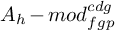
$A_h-mod^{cdg}_{fgp}$
from Example 3. Then a matrix factorization of h is nothing but an object in
$A_h-mod^{cdg}_{fgp}$
 . More precisely, such an object consists of the following data

where
$P^0,P^1$
 are projective A-modules,
$\delta ^0,\delta ^1$
are projective A-modules,
$\delta ^0,\delta ^1$
 are A-module homomorphisms such that the composites
$\delta ^1\delta ^0$
are A-module homomorphisms such that the composites
$\delta ^1\delta ^0$
 and
$\delta ^0\delta ^1$
and
$\delta ^0\delta ^1$
 are both multiplication by h.
3.2 Global matrix factorizations
Now let X be a smooth quasi-compact scheme and
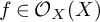
$f\in \mathcal {O}_X(X)$
 a global function. We will define the derived category of coherent matrix factorizations and a dg enhancement of this. First, consider the dg category
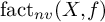
$\text {fact}_{nv}(X,f)$
a global function. We will define the derived category of coherent matrix factorizations and a dg enhancement of this. First, consider the dg category
$\text {fact}_{nv}(X,f)$
 whose objects consist of the following data

where
$\mathcal {F}^0,\mathcal {F}^1$
 are coherent
$\mathcal {O}_X$
are coherent
$\mathcal {O}_X$
 -modules and
$\delta ^0,\delta ^1$
-modules and
$\delta ^0,\delta ^1$
 are
$\mathcal {O}_X$
are
$\mathcal {O}_X$
 -module homomorphisms such that
$\delta ^0\delta ^1 $
-module homomorphisms such that
$\delta ^0\delta ^1 $
 and
$\delta ^1\delta ^0$
and
$\delta ^1\delta ^0$
 both equal multiplication by f. The hom spaces are defined as the usual ‘naive’ hom spaces between complexes:

with differential
$\partial (\alpha ):=\delta _{\mathcal {G}^{\bullet }}\alpha -(-1)^{|\alpha |}\alpha \delta _{\mathcal {F^{\bullet }}}$
 . The category
$Z^0(\text {fact}_{nv}(X,f))$
. The category
$Z^0(\text {fact}_{nv}(X,f))$
 is abelian and
$H^0(\text {fact}_{nv}(X,f))$
is abelian and
$H^0(\text {fact}_{nv}(X,f))$
 is triangulated. We define
$D(\text {fact}_{nv}(X,f))$
is triangulated. We define
$D(\text {fact}_{nv}(X,f))$
 as the Verdier quotient of
$H^0(\text {fact}_{nv}(X,f))$
as the Verdier quotient of
$H^0(\text {fact}_{nv}(X,f))$
 by the full thick triangulated subcategory generated by all totalizations of short exact sequences in
$Z^0(\text {fact}_{nv}(X,f))$
by the full thick triangulated subcategory generated by all totalizations of short exact sequences in
$Z^0(\text {fact}_{nv}(X,f))$
 .
.
Next we define
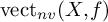
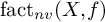
$\text {vect}_{nv}(X,f)$
 to be the full dg subcategory of
$\text {fact}_{nv}(X,f)$
to be the full dg subcategory of
$\text {fact}_{nv}(X,f)$
 on the objects whose underlying sheaves
$\mathcal {F}^0,\mathcal {F}^1$
on the objects whose underlying sheaves
$\mathcal {F}^0,\mathcal {F}^1$
 are vector bundles. We define as well
$D(\text {vect}_{nv}(X,f))$
are vector bundles. We define as well
$D(\text {vect}_{nv}(X,f))$
 to be the Verdier quotient of
$H^0(\text {vect}_{nv}(X,f))$
to be the Verdier quotient of
$H^0(\text {vect}_{nv}(X,f))$
 by the full thick triangulated subcategory generated by all totalizations of short exact sequences in
$Z^0(\text {vect}_{nv}(X,f))$
by the full thick triangulated subcategory generated by all totalizations of short exact sequences in
$Z^0(\text {vect}_{nv}(X,f))$
 . There is a canonical functor
$D(\text {vect}_{nv}(X,f))\to D(\text {fact}_{nv}(X,f))$
. There is a canonical functor
$D(\text {vect}_{nv}(X,f))\to D(\text {fact}_{nv}(X,f))$
 which is an equivalence by [Reference Ballard, Favero and Katzarkov1] proposition 3.14.
If
$X=\text {Spec}(A)$
 is affine then this is the category
$mod^{cdg}_{fgp}-A_f$
is affine then this is the category
$mod^{cdg}_{fgp}-A_f$
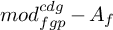 defined earlier and if X is smooth and affine then
$H^0(\text {vect}_{nv}(X,f))\simeq D(\text {fact}_{nv}(X,f))$
defined earlier and if X is smooth and affine then
$H^0(\text {vect}_{nv}(X,f))\simeq D(\text {fact}_{nv}(X,f))$
 . Under some extra assumptions on f this gives an important example where the two kinds of Hochschild homology agree.
Proposition 15 ([Reference Polishchuk and Positselski15], corollary A section 4.7).
If X is a smooth affine variety and
$f|_{X\setminus V(f)}$
 is smooth then the natural map
$C_{\bullet }(\text {vect}_{nv}(X,f))\to C_{\bullet }^{II}(\text {vect}_{nv}(X,f))$
is smooth then the natural map
$C_{\bullet }(\text {vect}_{nv}(X,f))\to C_{\bullet }^{II}(\text {vect}_{nv}(X,f))$
 is a quasi-isomorphism.
If X is not affine the category
$\text {vect}_{nv}(X,f)$
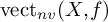 will not work as a dg enhancement for
$D(\text {fact}_{nv}(X,f))$
will not work as a dg enhancement for
$D(\text {fact}_{nv}(X,f))$
 . Instead we have to introduce the dg category
$\text {vect}_{{\check{C}}}(X,f)$
. Instead we have to introduce the dg category
$\text {vect}_{{\check{C}}}(X,f)$
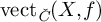 . Let
$\mathscr {U}$
. Let
$\mathscr {U}$
 denote a finite affine cover of X. Then we define
$\text {vect}_{{\check{C}}}(X,f)$
denote a finite affine cover of X. Then we define
$\text {vect}_{{\check{C}}}(X,f)$
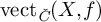 to have objects same as
$\text {vect}_{nv}(X,f)$
to have objects same as
$\text {vect}_{nv}(X,f)$
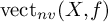 but for the hom complexes we take

Composition is defined using the Alexander-Whitney product from Section 1.2. This is a dg enhancement of
$D(\text {fact}_{nv}(X,f))$
 when X is smooth (see [Reference Lin and Pomerleano11] Proposition 2.11).
We will also need the cdg category
$\text {qfact}_{nv}(X,f)$
 . Its objects are defined exactly as the objects of
$\text {fact}_{nv}(X,f)$
. Its objects are defined exactly as the objects of
$\text {fact}_{nv}(X,f)$
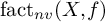 except we don’t require anything about the composites
$\delta ^0\delta ^1$
except we don’t require anything about the composites
$\delta ^0\delta ^1$
 or
$\delta ^1\delta ^0$
or
$\delta ^1\delta ^0$
 . The hom-spaces and the differentials are defined in the same way as for
$\text {fact}_{nv}(X,f)$
. The hom-spaces and the differentials are defined in the same way as for
$\text {fact}_{nv}(X,f)$
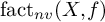 and the curvature of an object
$\mathcal {F}^{\bullet }$
and the curvature of an object
$\mathcal {F}^{\bullet }$
 is the endomorphism
$\delta ^2-\rho _f$
is the endomorphism
$\delta ^2-\rho _f$
 . We define
$\text {qvect}_{nv}(X,f)$
. We define
$\text {qvect}_{nv}(X,f)$
 to be the full sub cdg category of
$\text {qfact}_{nv}$
to be the full sub cdg category of
$\text {qfact}_{nv}$
 whose underlying sheaves are vector bundles. We define the cdg category
$\text {qvect}_{{\check{C}}}(X,f)$
whose underlying sheaves are vector bundles. We define the cdg category
$\text {qvect}_{{\check{C}}}(X,f)$
 by altering the hom complexes as in (5).
Finally we will also need presheaf versions of some of these. We define the following presheaf of dg categories

The presheaves of cdg categories
$\underline {\text {qvect}}_{{\check{C}}}(X,f)$
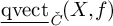 ,
$\underline {\text {vect}_{nv}}(X,f)$
,
$\underline {\text {vect}_{nv}}(X,f)$
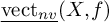 and
$\underline {\text {qvect}_{nv}}(X,f)$
and
$\underline {\text {qvect}_{nv}}(X,f)$
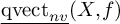 are defined similarly.
Remark 16. Note that a lot of the dg and cdg categories introduced in this section are not small. In order to still make sense of the standard complexes computing their Hochschild homology we therefore have to restrict to some small subcategories containing at least one object from each isomorphism class. In what follows we will do this implicitly and will assume all categories to be small.
3.3 Hochschild homology of
$\text {vect}_{{\check{C}}}(X,f)$

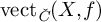
The Hochschild homology of
$\text {vect}_{{\check{C}}}(X,f)$
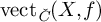 will be denoted
$HH_{\bullet }(X,f)$
will be denoted
$HH_{\bullet }(X,f)$
 . For a smooth variety X where
$f|_{X\setminus V(f)}$
. For a smooth variety X where
$f|_{X\setminus V(f)}$
 is smooth this was computed in [Reference Efimov7], it is derived global sections of the complex of sheaves
$(\Omega ^{\bullet }_X,-df\wedge (-))$
is smooth this was computed in [Reference Efimov7], it is derived global sections of the complex of sheaves
$(\Omega ^{\bullet }_X,-df\wedge (-))$
 . Below is a slight adaption of the computation in [Reference Efimov7].
There is a sequence of maps which we will show are all quasi-isomorphisms.

We will first discuss
$(6)$
 (see [Reference Căldăraru and Tu4], Theorem 4.2(b)).
Proposition 17. The following defines a quasi-isomorphism

To prove this we will need two lemmas.
Lemma 18. Suppose that we have an unbounded exact chain complex of inverse systems of abelian groups

and that each term is Mittag-Leffler. Then the complex

is exact.
Proof of lemma.
Split the long exact sequence into short exact sequences

Now the inverse systems
$B_k=Z_{k-1}$
 are quotients of Mittag-Leffler systems and are therefore themselves Mittag-Leffler. It follows that after applying
$\underset {\leftarrow }{\lim }$
are quotients of Mittag-Leffler systems and are therefore themselves Mittag-Leffler. It follows that after applying
$\underset {\leftarrow }{\lim }$
 termwise the diagonal short exact sequences remain exact and then it follows that the middle long exact sequence remains exact.
Lemma 19. Let
$A_{\bullet ,\bullet }$
 and
$B_{\bullet ,\bullet }$
and
$B_{\bullet ,\bullet }$
 be two bicomplexes whose vertical and horizontal differentials both decrease the degrees. For each n let
$A_{\leq n,\bullet }\subset A_{\bullet ,\bullet }$
be two bicomplexes whose vertical and horizontal differentials both decrease the degrees. For each n let
$A_{\leq n,\bullet }\subset A_{\bullet ,\bullet }$
 denote the subcomplex truncated horizontally at n. Let
$A_{\geq n,\bullet }$
denote the subcomplex truncated horizontally at n. Let
$A_{\geq n,\bullet }$
 be the quotient of
$A_{\bullet ,\bullet }$
be the quotient of
$A_{\bullet ,\bullet }$
 by
$A_{\leq n-1,\bullet }$
by
$A_{\leq n-1,\bullet }$
 . Suppose further that for each n, the diagonals of
$A_{\geq n,\bullet }$
. Suppose further that for each n, the diagonals of
$A_{\geq n,\bullet }$
 and
$B_{\geq n,\bullet }$
and
$B_{\geq n,\bullet }$
 only have finitely many nonzero terms. If
$\alpha :A_{\bullet ,\bullet }\to B_{\bullet ,\bullet }$
only have finitely many nonzero terms. If
$\alpha :A_{\bullet ,\bullet }\to B_{\bullet ,\bullet }$
 is a morphism of bicomplexes which is a quasi-isomorphism with respect to the vertical differentials, then
$Tot^{\prod }(\alpha ):Tot^{\prod }(A_{\bullet ,\bullet })\to Tot^{\prod }(B_{\bullet ,\bullet })$
is a morphism of bicomplexes which is a quasi-isomorphism with respect to the vertical differentials, then
$Tot^{\prod }(\alpha ):Tot^{\prod }(A_{\bullet ,\bullet })\to Tot^{\prod }(B_{\bullet ,\bullet })$
 is a quasi-isomorphism.
Proof. Consider the inverse systems of chain complexes

where the maps are induced by canonical quotient maps of bicomplexes. The map
$\alpha $
 induces a morphism
$S(\alpha ):S(A)\to S(B)$
induces a morphism
$S(\alpha ):S(A)\to S(B)$
 of complexes of inverse systems. The assumption on
$\alpha $
of complexes of inverse systems. The assumption on
$\alpha $
 and the Mapping Theorem for filtered modules ([Reference Mac Lane12], Theorem XI.3.4) imply that
$S(\alpha )$
and the Mapping Theorem for filtered modules ([Reference Mac Lane12], Theorem XI.3.4) imply that
$S(\alpha )$
 is a termwise quasi-isomorphism, in other words a quasi-isomorphism of complexes of inverse systems. But then
$Cone(S(\alpha ))$
is a termwise quasi-isomorphism, in other words a quasi-isomorphism of complexes of inverse systems. But then
$Cone(S(\alpha ))$
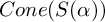 is an acyclic complex of inverse systems of abelian groups, all of whose terms are Mittag-Leffler and therefore, by the previous lemma,

We see that
$\underset {\leftarrow }{\lim }S(\alpha ):\text {Tot}^{\prod }A_{\bullet ,\bullet }\to \text {Tot}^{\prod }B_{\bullet ,\bullet }$
 is a quasi-isomorphism.
Proof of proposition.
The affine case follows from the classical HKR theorem and by applying the previous lemma to the bicomplexes

and

For the non-affine case, think of
$\text {Tot}^{\prod }A_{\bullet ,\bullet }$
 and
$\text {Tot}^{\prod }B_{\bullet ,\bullet }$
and
$\text {Tot}^{\prod }B_{\bullet ,\bullet }$
 as presheaves of complexes. We want to show that

is a quasi-isomorphism. By considering total complexes and filtering this in the p-direction we obtain a map of filtered complexes. It then follows from the Mapping Theorem of filtered complexes and the affine case already considered that this map of bicomplexes gives rise to a quasi-isomorphism of total complexes. This proves the proposition.
Now
$(5)$
 is a quasi-isomorphism because for any
$U_I=U_{i_0\cdots i_p}$
is a quasi-isomorphism because for any
$U_I=U_{i_0\cdots i_p}$
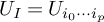 the map
$C^{II}_{\bullet }(\mathcal {O}_{U_I,-f|_{U_I}})\to C^{II}_{\bullet }(\text {qvect}_{nv}(U_I,f|_{U_I}))$
the map
$C^{II}_{\bullet }(\mathcal {O}_{U_I,-f|_{U_I}})\to C^{II}_{\bullet }(\text {qvect}_{nv}(U_I,f|_{U_I}))$
 is a quasi-isomorphism by Proposition 7. The map
$(4)$
is a quasi-isomorphism by Proposition 7. The map
$(4)$
 is a quasi-isomorphism for exactly the same reasons. The map
$(3)$
is a quasi-isomorphism for exactly the same reasons. The map
$(3)$
 is a quasi-isomorphism because each
$C_{\bullet }(\text {vect}_{nv}(U_I,f|_{U_I}))\to C^{II}_{\bullet }(\text {vect}_{nv}(U_I,f|_{U_I}))$
is a quasi-isomorphism because each
$C_{\bullet }(\text {vect}_{nv}(U_I,f|_{U_I}))\to C^{II}_{\bullet }(\text {vect}_{nv}(U_I,f|_{U_I}))$
 is a quasi-isomorphism by Proposition 15. The map
$(2)$
is a quasi-isomorphism by Proposition 15. The map
$(2)$
 is a quasi-isomorphism because for each
$U_I$
is a quasi-isomorphism because for each
$U_I$
 we have a quasi-equivalence
$\text {vect}_{nv}(U_I,f|_{U_I})\to \text {vect}_{{\check{C}}}(U_I,f|_{U_I})$
we have a quasi-equivalence
$\text {vect}_{nv}(U_I,f|_{U_I})\to \text {vect}_{{\check{C}}}(U_I,f|_{U_I})$
 which induces quasi-isomorphisms on standard complexes. The proof that the map
$(1)$
which induces quasi-isomorphisms on standard complexes. The proof that the map
$(1)$
 is a quasi-isomorphism is similar to the proof of Proposition 5.1 in [Reference Efimov7]. We include the proof here with some adjustments to make it fit our situation.
Proposition 20. Let
$\mathscr {C}$
 be one of the two presheaves of dg categories
$\underline {\text {perf}}_{{\check{C}}}(X)$
be one of the two presheaves of dg categories
$\underline {\text {perf}}_{{\check{C}}}(X)$
 or
$\underline {\text {vect}}_{{\check{C}}}(X,f)$
or
$\underline {\text {vect}}_{{\check{C}}}(X,f)$
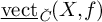 . The natural map
$C_{\bullet }(\mathscr {C}(X))\to {\check{C}}(\mathscr {U},\underline {C}_{\bullet }(\mathscr {C}))$
. The natural map
$C_{\bullet }(\mathscr {C}(X))\to {\check{C}}(\mathscr {U},\underline {C}_{\bullet }(\mathscr {C}))$
 is a quasi-isomorphism.
Proof. We prove it for
$\mathscr {C}=\underline {\text {vect}}_{{\check{C}}}(X,f)$
 . Recall that
$\mathscr {U}$
. Recall that
$\mathscr {U}$
 is referring to a fixed affine open covering
$X=U_1\cup ...\cup U_n$
is referring to a fixed affine open covering
$X=U_1\cup ...\cup U_n$
 . Let
$U=U_n$
. Let
$U=U_n$
 and
$V=U_1\cup ...\cup U_{n-1}$
and
$V=U_1\cup ...\cup U_{n-1}$
 . Let
$Z=X\setminus U$
. Let
$Z=X\setminus U$
 . For any open
$W\subset X$
. For any open
$W\subset X$
 let
$\mathscr {C}(W)_{Z\cap W}\subset \mathscr {C}(W)$
let
$\mathscr {C}(W)_{Z\cap W}\subset \mathscr {C}(W)$
 denote the full sub dg category on the objects which become acyclic in
$\mathscr {C}(W\cap U).$
denote the full sub dg category on the objects which become acyclic in
$\mathscr {C}(W\cap U).$
 Let
$\mathscr {V}$
Let
$\mathscr {V}$
 denote the open covering
$V=U_1\cup U_3\cup ...\cup U_{n-1}$
denote the open covering
$V=U_1\cup U_3\cup ...\cup U_{n-1}$
 . Let
$\mathscr {C}'$
. Let
$\mathscr {C}'$
 denote the presheaf of dg categories on V

We have a natural functor
$\mathscr {R}es: \mathscr {C}(X)\to \mathscr {C}'(V)$
 which restricts objects on X to V and which is defined on homomorphism complexes by

After passing to homotopy categories this functor fits into a commutative diagram

We have the following diagram in
$D_{Z/2}(\mathbb {C})$

![Commutative diagram of chain complexes. Top row: C dot (C(X) sub Z) to C dot (C(X)) to C dot (C(U)) to C dot (C(X) sub Z)[1]. Bottom row: C dot (C prime (V) sub Z) to C dot (C prime (V)) to C dot (C prime (V intersect U)) to C dot (C prime (V) sub Z)[1].](https://static.cambridge.org/binary/version/id/urn:cambridge.org:id:binary:20260619063214250-0164:S1474748026101820:S1474748026101820_eqnu41.png?pub-status=live)
where the rows are distinguished. (See [Reference Efimov7], Proposition 5.1 and its proof.) Since
$Z\subset V$
 the leftmost and the rightmost vertical arrows are quasi-isomorphisms. Therefore we get a Mayer-Viertoris exact triangle
![C bullet (C(X)) arrows to C bullet (C(U)) direct sum C bullet (C prime (V)) arrows to C bullet (C prime (V intersect U)) arrows to C bullet (C(X)) [1] arrows to ellipsis.](https://static.cambridge.org/binary/version/id/urn:cambridge.org:id:binary:20260619063214250-0164:S1474748026101820:S1474748026101820_eqnu42.png?pub-status=live)
We now claim that there is an exact triangle of the form
![Cech(U, C dot(C)) alpha arrow Cech(U cap U, C dot(C)) direct sum Cech(V, C dot(C prime)) beta arrow Cech(V cap U, C dot(C prime)) diagonal arrow Cech(U, C dot(C))[1] arrow ellipsis.](https://static.cambridge.org/binary/version/id/urn:cambridge.org:id:binary:20260619063214250-0164:S1474748026101820:S1474748026101820_eqnu43.png?pub-status=live)
to which the first exact triangle naturally maps. Assuming this claim for now the rest of the proof goes as follows. Because the open covering
$\mathscr {U}\cap U$
 of U has U itself as one of its open sets the map
$C_{\bullet }(\mathscr {C}(U))\to {\check{C}}(\mathscr {U}\cap U,\underline {C}_{\bullet }(\mathscr {C}))$
of U has U itself as one of its open sets the map
$C_{\bullet }(\mathscr {C}(U))\to {\check{C}}(\mathscr {U}\cap U,\underline {C}_{\bullet }(\mathscr {C}))$
 is a quasi-isomorphism. By induction on the number of open sets the maps
$C_{\bullet }(\mathscr {C}'(V))\to {\check{C}}(\mathscr {V},\underline {C}_{\bullet }(\mathscr {C}'))$
is a quasi-isomorphism. By induction on the number of open sets the maps
$C_{\bullet }(\mathscr {C}'(V))\to {\check{C}}(\mathscr {V},\underline {C}_{\bullet }(\mathscr {C}'))$
 and
$C_{\bullet }(\mathscr {C}'(V\cap U))\to {\check{C}}(\mathscr {V}\cap U,\underline {C}_{\bullet }(\mathscr {C}'))$
and
$C_{\bullet }(\mathscr {C}'(V\cap U))\to {\check{C}}(\mathscr {V}\cap U,\underline {C}_{\bullet }(\mathscr {C}'))$
 are quasi-isomorphisms. The proposition then follows by the five lemma.
To construct the second distinguished triangle, we first define what the two maps
$\alpha $
 and
$\beta $
and
$\beta $
 are. First, let
$A\subset {\check{C}}(\mathscr {U},\underline {C}_{\bullet }(\mathscr {C}))$
are. First, let
$A\subset {\check{C}}(\mathscr {U},\underline {C}_{\bullet }(\mathscr {C}))$
 be the subcomplex consisting of all summands
$C_{\bullet }(\mathscr {C}(U_I))$
be the subcomplex consisting of all summands
$C_{\bullet }(\mathscr {C}(U_I))$
 with
$n\in I$
with
$n\in I$
 and
$B=C_{\bullet }(\mathscr {C}(U_I))/A$
and
$B=C_{\bullet }(\mathscr {C}(U_I))/A$
 so that as a vector space we have
$C_{\bullet }(\mathscr {C}(U_I))=A\oplus B$
so that as a vector space we have
$C_{\bullet }(\mathscr {C}(U_I))=A\oplus B$
 . Similarly let
$E\subset {\check{C}}(\mathscr {U}\cap U,\underline {C}_{\bullet }(\mathscr {C}))$
. Similarly let
$E\subset {\check{C}}(\mathscr {U}\cap U,\underline {C}_{\bullet }(\mathscr {C}))$
 be the sub complex consisting of the summands
$C_{\bullet }(\mathscr {C}(U_I\cap U_n))$
be the sub complex consisting of the summands
$C_{\bullet }(\mathscr {C}(U_I\cap U_n))$
 with
$n\in I$
with
$n\in I$
 and
$F={\check{C}}(\mathscr {U}\cap U,\underline {C}_{\bullet }(\mathscr {C}))/E$
and
$F={\check{C}}(\mathscr {U}\cap U,\underline {C}_{\bullet }(\mathscr {C}))/E$
 and
$G={\check{C}}(\mathscr {V},\underline {C}_{\bullet }(\mathscr {C}'))$
and
$G={\check{C}}(\mathscr {V},\underline {C}_{\bullet }(\mathscr {C}'))$
 so that as vector spaces we have
${\check{C}}(\mathscr {U}\cap U,\underline {C}_{\bullet }(\mathscr {C}))\oplus {\check{C}}(\mathscr {V},\underline {C}_{\bullet }(\mathscr {C}'))=E\oplus F\oplus G$
so that as vector spaces we have
${\check{C}}(\mathscr {U}\cap U,\underline {C}_{\bullet }(\mathscr {C}))\oplus {\check{C}}(\mathscr {V},\underline {C}_{\bullet }(\mathscr {C}'))=E\oplus F\oplus G$
 . Finally let
$H={\check{C}}(\mathscr {V}\cap U,\underline {C}_{\bullet }(\mathscr {C}'))$
. Finally let
$H={\check{C}}(\mathscr {V}\cap U,\underline {C}_{\bullet }(\mathscr {C}'))$
 . In this notation, the maps
$\alpha $
. In this notation, the maps
$\alpha $
 and
$\beta $
and
$\beta $
 can be described by matrices


where
$\alpha _0$
 is made up by the restrictions
$C_{\bullet }(\mathscr {C}(U_I))\to C_{\bullet }(\mathscr {C}(U_I\cap U))$
is made up by the restrictions
$C_{\bullet }(\mathscr {C}(U_I))\to C_{\bullet }(\mathscr {C}(U_I\cap U))$
 (
$n\notin I$
(
$n\notin I$
 ),
$\alpha _1$
),
$\alpha _1$
 is a quasi-isomorphism which is induced by the quasi-equivalences
$\mathscr {C}(U_I)\to \mathscr {C}'(U_I)$
is a quasi-isomorphism which is induced by the quasi-equivalences
$\mathscr {C}(U_I)\to \mathscr {C}'(U_I)$
 (
$n\notin I$
(
$n\notin I$
 ). The map
$\beta _0$
). The map
$\beta _0$
 is also a quasi-isomorphism, it’s induced by the quasi-equivalences
$\mathscr {C}(U_I\cap U)\to \mathscr {C}'(U_I\cap U)$
is also a quasi-isomorphism, it’s induced by the quasi-equivalences
$\mathscr {C}(U_I\cap U)\to \mathscr {C}'(U_I\cap U)$
 (
$n\notin I$
(
$n\notin I$
 ) and
$\beta _1$
) and
$\beta _1$
 is
$-1$
is
$-1$
 times the map induced by the restrictions
$\mathscr {C}'(U_I)\to \mathscr {C}'(U_I\cap U)$
times the map induced by the restrictions
$\mathscr {C}'(U_I)\to \mathscr {C}'(U_I\cap U)$
 (
$n\notin I$
(
$n\notin I$
 ). In this situation one can show that the canonical map
$Cone(\alpha )\to H$
). In this situation one can show that the canonical map
$Cone(\alpha )\to H$
 is a quasi-isomorphism and therefore we obtain the required distinguished triangle.
3.4 The case
$f=0$

When
$f=0$
 we have two interesting categories.
On the one hand the
$\mathbb {Z}$
 -graded dg-category
$\text {perf}_{{\check{C}}}(X)$
-graded dg-category
$\text {perf}_{{\check{C}}}(X)$
 whose objects are finite
$\mathbb {Z}$
whose objects are finite
$\mathbb {Z}$
 -graded complexes of vector bundles and whose morphism complexes are defined as

We can then think of
$\text {perf}_{{\check{C}}}(X)$
 as a
$\mathbb {Z}/2$
as a
$\mathbb {Z}/2$
 -graded category by forgetting the
$\mathbb {Z}$
-graded category by forgetting the
$\mathbb {Z}$
 -grading on the homomorphism complexes and only remembering the parity of each degree.
On the other hand we can consider the
$\mathbb {Z}/2$
 -graded category
$\text {vect}_{{\check{C}}}(X,0)$
-graded category
$\text {vect}_{{\check{C}}}(X,0)$
 defined in Section 3.2. Note that we have a fully faithful dg functor
$\text {perf}_{{\check{C}}}(X)\to \text {vect}_{{\check{C}}}(X,0)$
defined in Section 3.2. Note that we have a fully faithful dg functor
$\text {perf}_{{\check{C}}}(X)\to \text {vect}_{{\check{C}}}(X,0)$
 which forgets the
$\mathbb {Z}$
which forgets the
$\mathbb {Z}$
 -grading on the objects and only remembers the parity of each term of a complex. In fact, we have the following proposition.
Proposition 21. If X is a nonsingular variety, then any object in
$\text {vect}_{{\check{C}}}(X,0)$
 is homotopy equivalent to an object in
$\text {perf}_{{\check{C}}}(X)$
is homotopy equivalent to an object in
$\text {perf}_{{\check{C}}}(X)$
 and hence they are quasi-equivalent.
Proof. Let
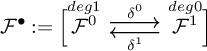 . Let
$\mathcal {K}^i=\ker (\delta ^i)$
. Let
$\mathcal {K}^i=\ker (\delta ^i)$
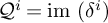
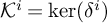 and
$\mathcal {Q}^i=\text {im }(\delta ^i)$
and
$\mathcal {Q}^i=\text {im }(\delta ^i)$
 . Then the following is an exact triangle in
$D(\text {fact}_{nv}(X,0))$
. Then the following is an exact triangle in
$D(\text {fact}_{nv}(X,0))$


Both
$(\mathcal {K}^{\bullet },0)$
 and
$(\mathcal {Q}^{\bullet },0)$
and
$(\mathcal {Q}^{\bullet },0)$
 are isomorphic to objects in
$H^0(\text {perf}_{{\check{C}}}(X))$
are isomorphic to objects in
$H^0(\text {perf}_{{\check{C}}}(X))$
 . The reason is because X is non-singular the components of
$\mathcal {K}^{\bullet }$
. The reason is because X is non-singular the components of
$\mathcal {K}^{\bullet }$
 and
$\mathcal {Q}^{\bullet }$
and
$\mathcal {Q}^{\bullet }$
 have finite resolutions by locally free sheaves. It follows that
$\mathcal {F}^{\bullet }$
have finite resolutions by locally free sheaves. It follows that
$\mathcal {F}^{\bullet }$
 too is isomorphic to an object in
$H^0(\text {perf}_{{\check{C}}}(X))$
too is isomorphic to an object in
$H^0(\text {perf}_{{\check{C}}}(X))$
 .
.
Now let’s consider the sequence

From each term in the above sequence there is a natural map to the corresponding term of (6) forming commutative squares, the map
${\check{C}}(\mathscr {U},\Omega _X^{\bullet })\to {\check{C}}(\mathscr {U},\Omega _X^{\bullet })$
 being the identity. All of the maps above are quasi-isomorphisms and this forces all of the maps from this sequence to (6) to be quasi-isomorphisms
Finally we record here also the following fact.
Lemma 22. Let X be a smooth variety. Let
$\mathcal {F}\in \text {vect}_{nv}(X,0)$
 (which just means it’s a
$\mathbb {Z}/2$
(which just means it’s a
$\mathbb {Z}/2$
 graded complex of finite rank vector bundles). There is a natural isomorphism

Proof. First, we claim that there is an injective chain map
$\mathcal {F}\to \mathcal {I}$
 where
$\mathcal {I}$
where
$\mathcal {I}$
 is a
$\mathbb {Z}/2$
is a
$\mathbb {Z}/2$
 -graded complex of injective sheaves on X whose cone is absolutely acyclic. Indeed this is completely dual to the argument in the proof of proposition 3.24 of [Reference Ballard, Favero and Katzarkov1]. This gives the first map below. The second isomorphism follows from lemma 2.22 in [Reference Ballard, Deliu, Favero, Isik and Katzarkov2]. We get

But we also have
$H^0(\Gamma (X,\mathcal {I}^i))\overset {\sim }{\to }H^0({\check{C}}(\mathscr {U},\mathcal {I}^i))$
 for
$i=0,1$
for
$i=0,1$
 since
$\mathcal {I}^i$
since
$\mathcal {I}^i$
 are injective and because the covering is finite a spectral sequence argument gives a quasi-isomorphism of
$\mathbb {Z}/2$
are injective and because the covering is finite a spectral sequence argument gives a quasi-isomorphism of
$\mathbb {Z}/2$
 -graded complexes
$\Gamma (X,\mathcal {I})\overset {\sim }{\to } {\check{C}}(\mathscr {U},\mathcal {I})$
-graded complexes
$\Gamma (X,\mathcal {I})\overset {\sim }{\to } {\check{C}}(\mathscr {U},\mathcal {I})$
 . Finally over each affine open V we have a quasi-isomorphism
$\Gamma (V,\mathcal {F})\overset {\sim }{\to } \Gamma (V,\mathcal {I})$
. Finally over each affine open V we have a quasi-isomorphism
$\Gamma (V,\mathcal {F})\overset {\sim }{\to } \Gamma (V,\mathcal {I})$
 and these assemble to a quasi-isomorphism
${\check{C}}(\mathscr {U},\mathcal {F})\overset {\sim }{\to } {\check{C}}(\mathscr {U},\mathcal {I})$
and these assemble to a quasi-isomorphism
${\check{C}}(\mathscr {U},\mathcal {F})\overset {\sim }{\to } {\check{C}}(\mathscr {U},\mathcal {I})$
 . The desired map is the zig-zag of isomorphisms

4 Main problem
In this section we discuss the main problem.
4.1 Setup
Let X be a smooth complex variety and let us fix a finite affine covering
$\mathscr {U}$
 of X. Let
$f\in H^0(X,\mathcal {O}_X)$
of X. Let
$f\in H^0(X,\mathcal {O}_X)$
 and suppose
$Y\subset X$
and suppose
$Y\subset X$
 is a smooth divisor such that
$f|_Y=0$
is a smooth divisor such that
$f|_Y=0$
 . We assume also that
$f|_{X\setminus f^{-1}(0)}$
. We assume also that
$f|_{X\setminus f^{-1}(0)}$
 is smooth. The categories we are mostly interested in are
$D^b(Y):=D^b(\text {coh}Y)$
is smooth. The categories we are mostly interested in are
$D^b(Y):=D^b(\text {coh}Y)$
 (usual derived category) and
$D(\text {fact}_{nv}(X,f))$
(usual derived category) and
$D(\text {fact}_{nv}(X,f))$
 .
.
We have dg enhancements for both
$D^b(Y)$
 and
$D(\text {fact}_{nv}(X,f))$
and
$D(\text {fact}_{nv}(X,f))$
 . For
$D^b(Y)$
. For
$D^b(Y)$
 we take the category
$\text {perf}_{{\check{C}}}(Y)$
we take the category
$\text {perf}_{{\check{C}}}(Y)$
 described in Section 3.4 and for
$D(\text {fact}_{nv}(X,f))$
described in Section 3.4 and for
$D(\text {fact}_{nv}(X,f))$
 we take
$\text {vect}_{{\check{C}}}(X,f)$
we take
$\text {vect}_{{\check{C}}}(X,f)$
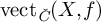 described in Section 3.2. We have a functor
$i_{\ast }:D^b(Y)\to D(\text {fact}_{nv}(X,f))$
described in Section 3.2. We have a functor
$i_{\ast }:D^b(Y)\to D(\text {fact}_{nv}(X,f))$
 .
.
We now explain how
$i_{\ast }$
 lifts to a quasi-functor
$\underline {i}_{\ast }:\text {perf}_{ {\check{C}}}(Y)\dashrightarrow \text {vect}_{ {\check{C}}}(X,f)$
lifts to a quasi-functor
$\underline {i}_{\ast }:\text {perf}_{ {\check{C}}}(Y)\dashrightarrow \text {vect}_{ {\check{C}}}(X,f)$
 . Recall that by quasi-functor we mean a dg functor
$\underline {i}_{\ast }:\text {perf}_{ {\check{C}}}(Y)\to \text {perf}(\text {vect}_{ {\check{C}}}(X,f))$
. Recall that by quasi-functor we mean a dg functor
$\underline {i}_{\ast }:\text {perf}_{ {\check{C}}}(Y)\to \text {perf}(\text {vect}_{ {\check{C}}}(X,f))$
 (see Section 2.4). To define it we need to introduce the dg category
$\text {fact}_{{\check{C}}}(X,f)$
(see Section 2.4). To define it we need to introduce the dg category
$\text {fact}_{{\check{C}}}(X,f)$
 which has the same objects as
$\text {fact}_{nv}(X,f)$
which has the same objects as
$\text {fact}_{nv}(X,f)$
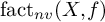 but the homomorphism complexes are computed as in
$\text {vect}_{{\check{C}}}(X,f)$
but the homomorphism complexes are computed as in
$\text {vect}_{{\check{C}}}(X,f)$
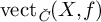 . This dg category is not the dg enhancement of any interesting triangulated category and we only introduce it to simplify notation in what follows. Now the dg functor
$\underline {i}_{\ast }$
. This dg category is not the dg enhancement of any interesting triangulated category and we only introduce it to simplify notation in what follows. Now the dg functor
$\underline {i}_{\ast }$
 is defined on
$\mathcal {F}\in \text {perf}_{{\check{C}}}(Y)$
is defined on
$\mathcal {F}\in \text {perf}_{{\check{C}}}(Y)$
 by
by

To see that this is perfect we use that there is a resolution, by which we mean a degree zero cycle in
$\text {fact}_{nv}(X,f)$
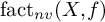 whose cone is absolutely acyclic,
$\mathcal {V}\overset {\sim }{\to }i_{\ast }\mathcal {F}$
whose cone is absolutely acyclic,
$\mathcal {V}\overset {\sim }{\to }i_{\ast }\mathcal {F}$
 from an object in
$\mathcal {V}\in \text {vect}_{{\check{C}}}(X,f)$
from an object in
$\mathcal {V}\in \text {vect}_{{\check{C}}}(X,f)$
 (see for example proposition 3.14 of [Reference Ballard, Favero and Katzarkov1] and its proof). This induces a morphism

which is a quasi-isomorphism because we only plug in objects of
$\text {vect}_{{\check{C}}}(X,f)$
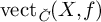 into the first slot.
Now recall that
$\text {fact}_{nv}(X,f)$
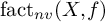 ,
$\text {vect}_{nv}(X,f)$
,
$\text {vect}_{nv}(X,f)$
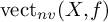 denote the ‘naive’ dg categories whose homomorphism complexes are just the usual
$Hom$
denote the ‘naive’ dg categories whose homomorphism complexes are just the usual
$Hom$
 -complexes between complexes (see Section 3.2). Similarly, we will denote by
$\text {perf}_{nv}(Y)$
-complexes between complexes (see Section 3.2). Similarly, we will denote by
$\text {perf}_{nv}(Y)$
 the dg category whose objects are finite complexes of vector bundles and whose homomorphism complexes are the ‘naive’ hom-complexes. Recall also from Section 3.2 that
$D(\text {fact}_{nv}(X,f))$
the dg category whose objects are finite complexes of vector bundles and whose homomorphism complexes are the ‘naive’ hom-complexes. Recall also from Section 3.2 that
$D(\text {fact}_{nv}(X,f))$
 and
$D(\text {vect}_{nv}(X,f))$
and
$D(\text {vect}_{nv}(X,f))$
 are the triangulated categories obtained as Verdier quotients of
$H^0(\text {fact}_{nv}(X,f))$
are the triangulated categories obtained as Verdier quotients of
$H^0(\text {fact}_{nv}(X,f))$
 and
$H^0(\text {vect}_{nv}(X,f))$
and
$H^0(\text {vect}_{nv}(X,f))$
 by the subcategories of absolutely acyclic objects. Similarly, we define
$D(\text {perf}_{nv}(Y))$
by the subcategories of absolutely acyclic objects. Similarly, we define
$D(\text {perf}_{nv}(Y))$
 to be the Verdier quotient of
$H^0(\text {perf}_{nv}(Y))$
to be the Verdier quotient of
$H^0(\text {perf}_{nv}(Y))$
 by the subcategory of acyclic complexes and note that the canonical functor
$D(\text {perf}_{nv}(Y))\to D^b(Y)$
by the subcategory of acyclic complexes and note that the canonical functor
$D(\text {perf}_{nv}(Y))\to D^b(Y)$
 is an equivalence.
In the following lemma we explain in what sense the quasi-functor
$\underline {i}_{\ast }$
 lifts the exact functor
$i_{\ast }$
lifts the exact functor
$i_{\ast }$
 .
.
Lemma 23. There is a commutative (up to isomorphism) diagram of exact functors

where the arrows labelled
$\sim $
 are equivalences. Moreover,
$Yoneda$
are equivalences. Moreover,
$Yoneda$
 and the functor
$Y'$
and the functor
$Y'$
 induce isomorphisms in Hochschild homology.
Proof. Before dealing with commutativity we need to explain what the vertical arrows are.
The leftmost vertical arrow comes from identifying
$D^b(cohY)$
 with the full subcategory on the perfect complexes,
$D(perf_{nv}(Y))\subset D^b(cohY)$
with the full subcategory on the perfect complexes,
$D(perf_{nv}(Y))\subset D^b(cohY)$
 . Now,
$D(\text {perf}_{nv}(Y))=H^0(\text {perf}_{nv}(Y))/Acyc(\text {perf}_{nv}(Y))$
. Now,
$D(\text {perf}_{nv}(Y))=H^0(\text {perf}_{nv}(Y))/Acyc(\text {perf}_{nv}(Y))$
 . The obvious dg functor
$\text {perf}_{nv}(Y)\to \text {perf}_{{\check{C}}}(Y)$
. The obvious dg functor
$\text {perf}_{nv}(Y)\to \text {perf}_{{\check{C}}}(Y)$
 induces an exact functor
$H^0(\text {perf}_{nv}(Y))\to H^0(\text {perf}_{{\check{C}}}(Y))$
induces an exact functor
$H^0(\text {perf}_{nv}(Y))\to H^0(\text {perf}_{{\check{C}}}(Y))$
 and this descends to the Verdier quotient
$D(\text {perf}_{nv}(Y))\to H^0(\text {perf}_{{\check{C}}}(Y))$
and this descends to the Verdier quotient
$D(\text {perf}_{nv}(Y))\to H^0(\text {perf}_{{\check{C}}}(Y))$
 .
.
To define the middle vertical arrow we first observe that there is a dg functor
$\text {fact}_{nv}(X,f)\to \text {perf}(\text {vect}_{{\check{C}}}(X,f))$
 defined by
$\mathcal {H}\mapsto \text {Hom}_{\text {fact}_{{\check{C}}}(X,f)}(-,\mathcal {H})$
defined by
$\mathcal {H}\mapsto \text {Hom}_{\text {fact}_{{\check{C}}}(X,f)}(-,\mathcal {H})$
 . This induces an exact functor
$H^0(\text {fact}_{nv}(X,f))\to H^0(\text {perf}(\text {vect}_{{\check{C}}}(X,f)))$
. This induces an exact functor
$H^0(\text {fact}_{nv}(X,f))\to H^0(\text {perf}(\text {vect}_{{\check{C}}}(X,f)))$
 which descends to a functor out of the Verdier quotient
$D(\text {fact}_{nv}(X,f))\to H^0(\text {perf}(\text {vect}_{{\check{C}}}(X,f)))$
which descends to a functor out of the Verdier quotient
$D(\text {fact}_{nv}(X,f))\to H^0(\text {perf}(\text {vect}_{{\check{C}}}(X,f)))$
 .
.
For the right vertical map, we note that there is a dg functor
$\text {vect}_{nv}(X,f)\to \text {vect}_{{\check{C}}}(X,f)$
 . This gives a map
$H^0(\text {vect}_{nv}(X,f))\to H^0(\text {vect}_{{\check{C}}}(X,f))$
. This gives a map
$H^0(\text {vect}_{nv}(X,f))\to H^0(\text {vect}_{{\check{C}}}(X,f))$
 which descends to a functor out of the verdier quotient
$D(\text {vect}_{nv}(X,f))\to H^0(\text {vect}_{{\check{C}}}(X,f))$
which descends to a functor out of the verdier quotient
$D(\text {vect}_{nv}(X,f))\to H^0(\text {vect}_{{\check{C}}}(X,f))$
 .
.
Now the left square commutes on the nose if we start with something in
$D(\text {perf}_{nv}(Y))$
 .
.
The rightmost square too commutes on the nose.
Next, the fact that the leftmost vertical functor is an equivalence is well known. That the bottom right horizontal functor is an equivalence is for example in Proposition 3.14 in [Reference Ballard, Favero and Katzarkov1]. That the right vertical arrow is an equivalence follows from the fact that the map on hom spaces factors as two isomorphisms

where the first isomorphism comes from the adjunction in Corollary 3.28 of [Reference Ballard, Favero and Katzarkov1] and the second isomorphism is Lemma 22.
Finally, the fact that
$Yoneda$
 induces an isomorphism in Hochschild homology has been discussed in Section 2.4 and then
$Y'$
induces an isomorphism in Hochschild homology has been discussed in Section 2.4 and then
$Y'$
 is forced to induce an isomorphism in Hochschild homology by the commutativity of the right square in the diagram of the lemma.
Now the quasi-functor
$\underline {i}_{\ast }$
 induces a map in Hochschild homology as described in Section 2.4. We will compute this map in terms of the identifications

and

4.2 Replacing
$\underline {i}_{\ast }$
by a dg functor

Consider the following matrix factorization

where
$x\in H^0(X,\mathcal {O}_X(Y))$
 is an equation for Y and
$g\in H^0(X,\mathcal {O}_X(-Y))$
is an equation for Y and
$g\in H^0(X,\mathcal {O}_X(-Y))$
 is such that
$gx=f\in H^0(X,\mathcal {O}_X)$
is such that
$gx=f\in H^0(X,\mathcal {O}_X)$
 . In
$D(\text {fact}_{nv}(X,f))$
. In
$D(\text {fact}_{nv}(X,f))$
 we have
$i_{\ast }\mathcal {O}_Y\cong P$
we have
$i_{\ast }\mathcal {O}_Y\cong P$
 . Indeed, the kernel of the canonical map
$P\to i_{\ast }\mathcal {O}_Y$
. Indeed, the kernel of the canonical map
$P\to i_{\ast }\mathcal {O}_Y$
 is the matrix factorization
![[ O sub X (- Y) super d e g 1 right arrow labeled dot 1 and left arrow labeled dot f O sub X (- Y) super d e g 0 ]](https://static.cambridge.org/binary/version/id/urn:cambridge.org:id:binary:20260619063214250-0164:S1474748026101820:S1474748026101820_eqnu59.png?pub-status=live)
which is zero in the derived category because it maps to zero under the equivalence
$\text {Cok}:D(\text {fact}_{nv}(X,f))\to D^b_{sing}(V(f))$
 (see [Reference Orlov14] for details about this equivalence).
Consider also the sheaf of dg algebras
$\mathcal {A}:=[\mathcal {O}_X(-Y)\cdot e\overset {x}{\to } \mathcal {O}_X]$
 where e is a formal variable that squares to zero. It is quasi-isomorphic to
$\mathcal {O}_Y$
where e is a formal variable that squares to zero. It is quasi-isomorphic to
$\mathcal {O}_Y$
 as sheaves of dg algebras on X. The quasi-isomorphism
$\mathcal {A}\to \mathcal {O}_Y$
as sheaves of dg algebras on X. The quasi-isomorphism
$\mathcal {A}\to \mathcal {O}_Y$
 also induces a quasi-isomorphism on Hochschild complexes for any affine open
$V\subset X$
also induces a quasi-isomorphism on Hochschild complexes for any affine open
$V\subset X$
 ,
$C_{\bullet }(\mathcal {A}|_V)\overset {\sim }{\to }C_{\bullet }(\mathcal {O}_Y|_V)$
,
$C_{\bullet }(\mathcal {A}|_V)\overset {\sim }{\to }C_{\bullet }(\mathcal {O}_Y|_V)$
 .
.
We define the dg category
$\text {perf}_{{\check{C}}}(\mathcal {A})$
 to have objects, same as
$\text {perf}_{{\check{C}}}(X)$
to have objects, same as
$\text {perf}_{{\check{C}}}(X)$
 . The homomorphism complexes are given by

We now introduce a dg functor
$\text {Ind}:\text {perf}_{{\check{C}}}(\mathcal {A})\to \text {perf}_{{\check{C}}}(Y)$
 . On objects it is defined by

The chain maps on homomorphism complexes are induced by the following morphism of complexes of sheaves

Lemma 24. The functor Ind defined above induces an isomorphism in
$D_{Z/2}(\mathbb {C})$


Proof. For a dg category
$\mathscr {C}$
 , let
$\tilde {\mathscr {C}}$
, let
$\tilde {\mathscr {C}}$
 denote its pretriangulated hull. We get a strictly commutative diagram of dg functors

where the vertical functors induce isomorphisms in Hochschild homology ([Reference Keller9]) and the right vertical arrow is a quasi-equivalence since
$\text {perf}_{{\check{C}}}(Y)$
 is pretriangulated. Therefore it is enough to check that
$\widetilde {\text {Ind}}$
is pretriangulated. Therefore it is enough to check that
$\widetilde {\text {Ind}}$
 induces an isomorphism in Hochschild homology. We show that
$\widetilde {\text {Ind}}$
induces an isomorphism in Hochschild homology. We show that
$\widetilde {\text {Ind}}$
 is in fact a quasi-equivalence. To see that
$\widetilde {\text {Ind}}$
is in fact a quasi-equivalence. To see that
$\widetilde {\text {Ind}}$
 induces a quasi-isomorphism on homomorphism complexes we note that
$\text {Ind}$
induces a quasi-isomorphism on homomorphism complexes we note that
$\text {Ind}$
 applied to hom-complexes can be factored as a composite of quasi-isomorphisms:

This means that
$H^0(\text {Ind})$
 is fully faithful and therefore so is
$H^0(\widetilde {\text {Ind}})$
is fully faithful and therefore so is
$H^0(\widetilde {\text {Ind}})$
 . Therefore, to show that
$H^0(\widetilde {\text {Ind}})$
. Therefore, to show that
$H^0(\widetilde {\text {Ind}})$
 is essentially surjective it is enough to check that the smallest triangulated subcategory of
$H^0(\widetilde {\text {perf}_{{\check{C}}}(Y)})$
is essentially surjective it is enough to check that the smallest triangulated subcategory of
$H^0(\widetilde {\text {perf}_{{\check{C}}}(Y)})$
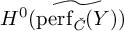 containing the image of
$H^0(\widetilde {\text {Ind}})$
containing the image of
$H^0(\widetilde {\text {Ind}})$
 is all of
$H^0(\widetilde {\text {perf}_{{\check{C}}}(Y)})$
is all of
$H^0(\widetilde {\text {perf}_{{\check{C}}}(Y)})$
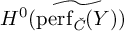 . Let
$\mathcal {O}_X(1)$
. Let
$\mathcal {O}_X(1)$
 denote a very ample line bundle on X and let
$\mathcal {O}_Y(1)=\mathcal {O}_X(1)|_Y$
denote a very ample line bundle on X and let
$\mathcal {O}_Y(1)=\mathcal {O}_X(1)|_Y$
 . We know that
$\{\mathcal {O}_Y(n)\}_{n\in \mathbb {Z}}$
. We know that
$\{\mathcal {O}_Y(n)\}_{n\in \mathbb {Z}}$
 classically generates
$H^0(\text {perf}_{{\check{C}}}(Y))\simeq \widetilde {H^0(\text {perf}_{{\check{C}}}(Y)})$
classically generates
$H^0(\text {perf}_{{\check{C}}}(Y))\simeq \widetilde {H^0(\text {perf}_{{\check{C}}}(Y)})$
 . Essential surjectivity then follows from the observation that

Let
$\mathcal {A}^\#$
 denote the underlying sheaf of graded algebras of
$\mathcal {A}$
denote the underlying sheaf of graded algebras of
$\mathcal {A}$
 and
$P^\#$
and
$P^\#$
 denote the underlying sheaf of
$\mathbb {Z}/2$
denote the underlying sheaf of
$\mathbb {Z}/2$
 -graded
$\mathcal {O}_X$
-graded
$\mathcal {O}_X$
 -modules of P. As graded
$\mathcal {O}_X$
-modules of P. As graded
$\mathcal {O}_X$
 -modules we have
$\mathcal {A}^\#=P^\# $
-modules we have
$\mathcal {A}^\#=P^\# $
 and this gives us a multiplication
$\mu :\mathcal {A}^\#\otimes P^\#\to P^\#$
and this gives us a multiplication
$\mu :\mathcal {A}^\#\otimes P^\#\to P^\#$
 . If
$\mathcal {M}$
. If
$\mathcal {M}$
 is an
$\mathcal {A}$
is an
$\mathcal {A}$
 -module we can thus make sense of the tensor product
$\mathcal {M}\otimes _{\mathcal {A}} P$
-module we can thus make sense of the tensor product
$\mathcal {M}\otimes _{\mathcal {A}} P$
 as a graded
$\mathcal {O}_X$
as a graded
$\mathcal {O}_X$
 -module. In fact, the morphism

whose cokernel by definition is the tensor product
$\mathcal {M}\otimes _{\mathcal {A}} P$
 is a morphism of matrix factorizations of f. Therefore the product
$\mathcal {M}\otimes _{\mathcal {A}} P$
is a morphism of matrix factorizations of f. Therefore the product
$\mathcal {M}\otimes _{\mathcal {A}} P$
 is naturally a matrix factorization of f. We get a dg functor

which on objects is defined by
$\mathcal {V}\mapsto \mathcal {V}\otimes _X P$
 and the chain maps on hom complexes are induced by the morphism of complexes of sheaves

Recall that
$\underline {i}_{\ast }:\text {perf}_{{\check{C}}}(Y)\to \text {perf}(\text {vect}_{{\check{C}}}(X,f))$
 was defined in Section 4.1.
Lemma 25. The following diagram commutes up to natural quasi-isomorphism

Proof. For any
$Q\in \text {vect}_{{\check{C}}}(X,f)$
 , the natural map

is a quasi-isomorphism where we recall that
$\text {fact}_{{\check{C}}}(X,f)$
 is the DG category with objects same as
$\text {fact}_{nv}(X,f)$
is the DG category with objects same as
$\text {fact}_{nv}(X,f)$
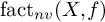 and whose homomorphism complexes are defined in the same way as in
$\text {vect}_{{\check{C}}}(X,f)$
and whose homomorphism complexes are defined in the same way as in
$\text {vect}_{{\check{C}}}(X,f)$
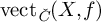 .
.
In fact, we can define similar functors

for any open set U and assemble them into lax morphisms of presheaves of dg categories.
Proposition 26. There are natural isomorphisms

and

making

and

into lax morphisms of presheaves of dg categories.
Proof. For
$Ind$
 this is just the statement that for
$W\subset U\subset V$
this is just the statement that for
$W\subset U\subset V$
 we have a commutative diagram of natural isomorphisms

It may be easier to see that the following diagram commutes

where
$j_W:W\to U$
 and
$j_V:V\to U$
and
$j_V:V\to U$
 are the inclusions.
The case of
$\otimes _{\mathcal {A}} P$
 is similar.
4.3 HKR-type map for
$\mathcal {A}$

Let
$\Omega ^k_X(\log Y)$
 denote the algebraic k-forms on X with logarithmic poles along Y. It is a subsheaf of
$\Omega _X^k(Y)$
denote the algebraic k-forms on X with logarithmic poles along Y. It is a subsheaf of
$\Omega _X^k(Y)$
 whose sections locally look like
$\omega +\frac {dx}{x}\wedge \omega '$
whose sections locally look like
$\omega +\frac {dx}{x}\wedge \omega '$
 where
$\omega \in \Omega _X^k$
where
$\omega \in \Omega _X^k$
 ,
$\omega '\in \Omega ^{k-1}_X$
,
$\omega '\in \Omega ^{k-1}_X$
 and x is a local equation for Y. There is a short exact sequence of complexes
![0 arrow (Omega dot sub X, minus d f wedge) [-1] arrow with L (Omega dot sub X (log Y), minus d f wedge) [-1] arrow (Omega dot sub Y, 0) arrow 0](https://static.cambridge.org/binary/version/id/urn:cambridge.org:id:binary:20260619063214250-0164:S1474748026101820:S1474748026101820_eqn8.png?pub-status=live)
where the first map is the inclusion and the second map is locally defined by
$\beta +\frac {dx}{x}\wedge \alpha \mapsto \alpha |_Y$
 . It gives rise to a quasi-isomorphism

We will construct a commutative diagram

The horizontal arrows are induced by the quasi-isomorphisms
$\mathcal {A}\to \mathcal {O}_Y$
 and (9) respectively and the left vertical arrow comes from the classical HKR theorem. It remains to define the map
$HKR_{\mathcal {A}}$
and (9) respectively and the left vertical arrow comes from the classical HKR theorem. It remains to define the map
$HKR_{\mathcal {A}}$
 . Let
$x_i\in \mathcal {O}_X(U_i)$
. Let
$x_i\in \mathcal {O}_X(U_i)$
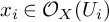 be local equations for
$Y\subset X$
be local equations for
$Y\subset X$
 . Let
$u_{ij}=x_jx_i^{-1}$
. Let
$u_{ij}=x_jx_i^{-1}$
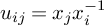 on the intersections
$U_{ij}$
on the intersections
$U_{ij}$
 . Then we identify
$\mathcal {A}|_{U_j}\cong [\mathcal {O}_{U_i}\epsilon _i\to \mathcal {O}_{U_i}]$
. Then we identify
$\mathcal {A}|_{U_j}\cong [\mathcal {O}_{U_i}\epsilon _i\to \mathcal {O}_{U_i}]$
 where
$\epsilon _i$
where
$\epsilon _i$
 is in degree
$-1$
is in degree
$-1$
 and the differential maps
$\epsilon _i$
and the differential maps
$\epsilon _i$
 to
$x_i$
to
$x_i$
 . Note that on the intersections we have
$u_{ij}\epsilon _i=\epsilon _j$
. Note that on the intersections we have
$u_{ij}\epsilon _i=\epsilon _j$
 . Let
$U_I=U_{i_0\cdots i_p}$
. Let
$U_I=U_{i_0\cdots i_p}$
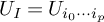 and let
$\bar {a}:=a_0[a_1|\cdots |a_k]\in {\mathcal {A}^0(U_I)}^{\otimes k+1}\subset C_k(\mathcal {A}(U_I))$
and let
$\bar {a}:=a_0[a_1|\cdots |a_k]\in {\mathcal {A}^0(U_I)}^{\otimes k+1}\subset C_k(\mathcal {A}(U_I))$
 . Then define

and

and
$HKR_{\mathcal {A}}$
 vanishes on elements which have two or more factors from
$\mathcal {A}^{-1}$
vanishes on elements which have two or more factors from
$\mathcal {A}^{-1}$
 .
.
Proposition 27. The following is true about the map
$HKR_{\mathcal {A}}$

1)
$HKR_{\mathcal {A}}$
 is a chain map.
2) The diagram (10) commutes.
3)
$HKR_{\mathcal {A}}$
 is a quasi-isomorphism.
Proof. We check that
$HKR_{\mathcal {A}}$
 is a chain map at the level of presheaves. We do this first on elements of internal degree zero. As before let
$U_I=U_{i_0\cdots i_p}$
is a chain map at the level of presheaves. We do this first on elements of internal degree zero. As before let
$U_I=U_{i_0\cdots i_p}$
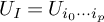 and let
$\bar {a}:=a_0[a_1|\cdots |a_k]\in \mathcal {A}^0(U_I)^{\otimes k+1}\subset C_k(\mathcal {A}(U_I))$
and let
$\bar {a}:=a_0[a_1|\cdots |a_k]\in \mathcal {A}^0(U_I)^{\otimes k+1}\subset C_k(\mathcal {A}(U_I))$
 .
.

On the other hand we have

and

From here one can check that
$(\bar {d}_{Cone}+d_{Cech})HKR_{\mathcal {A}}(\bar {a})=HKR_{\mathcal {A}}(d_{Cech}+\bar {d}_1+\bar {d}_2)(\bar {a})$
 . Indeed the first sum in (11) cancels with the first sum in (12) and the last sum in (13). The second sum in (11) cancels with the second sum in (12) and the sum on the third row of (13). The third sum in (11) cancels with the third sum in (12). The last sum in (11) cancels with the last sum in (12). Finally the first two terms in (13) cancel with each other.
Next, let’s check that
$(\bar {d}_{Cone}+d_{Cech})HKR_{\mathcal {A}}(\bar {b})=HKR_{\mathcal {A}}(d_{Cech}+\bar {d}_1+\bar {d}_2)(\bar {b})$
 where
$\bar {b}=b_0[b_1|\cdots |b_l\epsilon _{i_0}|\cdots |b_k]$
where
$\bar {b}=b_0[b_1|\cdots |b_l\epsilon _{i_0}|\cdots |b_k]$
 has internal degree
$-1$
has internal degree
$-1$
 . We have

On the other hand we have

Again the relevant equality can be checked from these formulas. This proves the first part of the proposition. The last thing one has to check for the first part is that
$HKR_{\mathcal {A}}\circ \bar {d}_1$
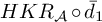 vanishes on elements with two factors from
$\mathcal {A}^{-1}$
vanishes on elements with two factors from
$\mathcal {A}^{-1}$
 .
.
The second part can be checked from the definitions. The last part then follows from the second because all the other arrows in the diagram are quasi-isomorphisms.
4.4 Multiplying by the Todd class
We have the wedge product map
$\Omega ^{\bullet }_X\otimes \Omega _X^{\bullet }\to \Omega _X^{\bullet }$
 which we can use to make
${\check{C}}(\mathscr {U},\Omega _X^{\bullet })$
which we can use to make
${\check{C}}(\mathscr {U},\Omega _X^{\bullet })$
 into a dg algebra (see Section ?? for the precise formula). The natural map
${\check{C}}(\mathscr {U},\Omega _X^{\bullet })\to {\check{C}}(\mathscr {U},\Omega _Y^{\bullet })$
into a dg algebra (see Section ?? for the precise formula). The natural map
${\check{C}}(\mathscr {U},\Omega _X^{\bullet })\to {\check{C}}(\mathscr {U},\Omega _Y^{\bullet })$
 is a dg algebra homomorphism. We make
${\check{C}}(\mathscr {U},\Omega _{\mathcal {A}}^{\bullet })$
is a dg algebra homomorphism. We make
${\check{C}}(\mathscr {U},\Omega _{\mathcal {A}}^{\bullet })$
 into a left dg
${\check{C}}(\mathscr {U},\Omega _X^{\bullet })-$
into a left dg
${\check{C}}(\mathscr {U},\Omega _X^{\bullet })-$
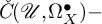 module as follows. For
$\alpha \in {\check{C}}^p(\mathscr {U},\Omega _X^q)$
module as follows. For
$\alpha \in {\check{C}}^p(\mathscr {U},\Omega _X^q)$
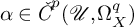 ,
$\beta \in {\check{C}}^a(\mathscr {U},\Omega _X^b)$
,
$\beta \in {\check{C}}^a(\mathscr {U},\Omega _X^b)$
 and
$\gamma \in {\check{C}}^{a'}(\mathscr {U},\Omega _X^{b'}(\log Y))$
and
$\gamma \in {\check{C}}^{a'}(\mathscr {U},\Omega _X^{b'}(\log Y))$
 we define

and

The Cech cocycle
$(u_{ij})_{j<i}\in {\check{C}}{^1}(\mathscr {U},\mathcal {O}_X^\times )$
 corresponds to the line bundle
$\mathcal {O}_X(-Y)$
corresponds to the line bundle
$\mathcal {O}_X(-Y)$
 . The Chern class
$c_1(-Y)$
. The Chern class
$c_1(-Y)$
 is the Cech cocycle
$(u_{ij}^{-1}{du_{ij}})_{j<i}\in {\check{C}}{^1}(\mathscr {U},\Omega ^1_X)$
is the Cech cocycle
$(u_{ij}^{-1}{du_{ij}})_{j<i}\in {\check{C}}{^1}(\mathscr {U},\Omega ^1_X)$
 . The relative Todd class of
$Y\subset X$
. The relative Todd class of
$Y\subset X$
 , denoted
$Td_{Y/X}$
, denoted
$Td_{Y/X}$
 is defined as the formal power series
$\frac {x}{1-e^{-x}}$
is defined as the formal power series
$\frac {x}{1-e^{-x}}$
 evaluated at
$c_1(-Y)$
evaluated at
$c_1(-Y)$
 . Its inverse is

Proposition 28. The map

commutes with the differentials and gives rise to a commutative diagram

Proof. This is just a matter of keeping track of the signs.
4.5 Trace map for a small cdg category of quasi-modules
Let
$\{P_1,...,P_r\}$
 be a collection of objects in
$\text {qvect}_{nv}(X,f)$
be a collection of objects in
$\text {qvect}_{nv}(X,f)$
 and let
$\mathscr {C}$
and let
$\mathscr {C}$
 be the presheaf of cdg categories defined by
$U\mapsto \langle P_1|_U,...,P_r|_U\rangle $
be the presheaf of cdg categories defined by
$U\mapsto \langle P_1|_U,...,P_r|_U\rangle $
 where the latter refers to the full sub cdg category of
$\text {qvect}_{nv}(U,f|_U)$
where the latter refers to the full sub cdg category of
$\text {qvect}_{nv}(U,f|_U)$
 . Assume that we have trivializations
$P_i|_{U_j}\cong \mathcal {O}_{U_j}^{n_i}\oplus \mathcal {O}_{U_j}^{m_i}$
. Assume that we have trivializations
$P_i|_{U_j}\cong \mathcal {O}_{U_j}^{n_i}\oplus \mathcal {O}_{U_j}^{m_i}$
 . Our goal is to define a map

such that if
$(P_i,\delta _{P_i})=(\mathcal {O}_X,0)$
 for some
$1\leq i\leq r$
for some
$1\leq i\leq r$
 then
$\phi $
then
$\phi $
 is a quasi-inverse to the quasi-isomorphism

induced by the Yoneda functor.
Given a morphism
$\alpha :P_i(U_l)\to P_j(U_l)$
 we will denote by
$(\alpha )_l$
we will denote by
$(\alpha )_l$
 the matrix defined by

Let
$g_{kl}$
 denote the change of basis matrix such that

on
$U_k\cap U_l$
 .
.
We will also need the preasheaf of cdg categories
$\mathscr {F}$
 which to an open set U assigns the subcategory of
$\text {qvect}_{nv}(U,f|_U)$
which to an open set U assigns the subcategory of
$\text {qvect}_{nv}(U,f|_U)$
 on all objects of the form
![[ O sub U super direct sum n right arrow 0 and left arrow 0 O sub U super direct sum m ]](https://static.cambridge.org/binary/version/id/urn:cambridge.org:id:binary:20260619063214250-0164:S1474748026101820:S1474748026101820_eqnu91.png?pub-status=live)
We will define a collection of maps

Let
$\bar {\alpha }:=\alpha _0[\alpha _1|\cdots |\alpha _k]\in C_{\bullet }^{II}(\mathscr {C})(U_{i_0\cdots i_p})$
 and define

where the sum is over all q-tuples
$1\leq i_{-q}<i_{1-q}<i_{2-q}<...<i_{-1}<i_{0}$
 and all q-tuples
$0\leq l_1\leq ...\leq l_q\leq k$
and all q-tuples
$0\leq l_1\leq ...\leq l_q\leq k$
 . The sign is given by

Lemma 29. We have

Proof. We apply both sides to
$\bar {\alpha }=\alpha _0[\alpha _1|\cdots |\alpha _k]$
 which is a section over
$U_{i_0...i_p}$
which is a section over
$U_{i_0...i_p}$
 . First,
$\bar {d}_2h^q(\bar {\alpha })$
. First,
$\bar {d}_2h^q(\bar {\alpha })$
 will consist of terms of the form

Next,
$d_{Cech}h^{q-1}$
 will consist of terms of the form

Also,
$h^{q-1}d_{Cech}$
 will consist of terms of the form

Finally,
$h^q\bar {d}_2$
 will contain terms of the form

Here the
$\epsilon '$
 in the signs are all different. The first term in (16) will cancel with the first term in (17). The second term in (16) cancels with the second term in (17). The third term in (16) cancels with the first term in (19). The fourth and fifth terms in (16) cancel. The sixth term in (16) cancels with the second term in (18). The last term in (16) cancels with the last term in (19). Finally the last term in (17) cancels with the first term in (18).
Now we introduce the second ingredient to the map (14). Suppose R is a commutative ring and
$P_0,...,P_m$
 are a collection of
$\mathbb {Z}/2$
are a collection of
$\mathbb {Z}/2$
 -graded free modules. Pick homogeneous bases
$\{e_i^j\}$
-graded free modules. Pick homogeneous bases
$\{e_i^j\}$
 for each
$P_i$
for each
$P_i$
 . Let
$F^0\in \text {Hom}(P_1,P_0)$
. Let
$F^0\in \text {Hom}(P_1,P_0)$
 ,
$F^1\in \text {Hom}(P_2,P_1)$
,
$F^1\in \text {Hom}(P_2,P_1)$
 ,...,
$F^m\in \text {Hom}(P_0,P_m)$
,...,
$F^m\in \text {Hom}(P_0,P_m)$
 be endomorphisms which we can think of as matrices with the fixed choice of bases. We define

where the sum is over all
$j_0,...,j_m$
 and the sign is given by

Extending this over infinite sums gives a map of presheaves
$\underline {C}^{II}_{\bullet }(\mathscr {F})\to \underline {C}^{II}_{\bullet }(\mathcal {O}_{-f})$
 from which we obtain a map
${\check{C}}(\mathscr {U},\underline {C}^{II}_{\bullet }(\mathscr {F}))\to {\check{C}}(\mathscr {U},\underline {C}^{II}_{\bullet }(\mathcal {O}_f))$
from which we obtain a map
${\check{C}}(\mathscr {U},\underline {C}^{II}_{\bullet }(\mathscr {F}))\to {\check{C}}(\mathscr {U},\underline {C}^{II}_{\bullet }(\mathcal {O}_f))$
 .
.
We have to introduce one more bit of notation before defining the map
$\phi $
 . For
$\bar {\alpha }:=\alpha _0[\alpha _1|\cdots |\alpha _k]\in C^{II}_{\bullet }(\mathscr {C}(V))$
. For
$\bar {\alpha }:=\alpha _0[\alpha _1|\cdots |\alpha _k]\in C^{II}_{\bullet }(\mathscr {C}(V))$
 let
let

For each
$n\geq 0$
 , this defines a map of presheaves
$\underline {C}^{II}_{\bullet }(\mathscr {C})\to \underline {C}^{II}_{\bullet }(\mathscr {C})$
, this defines a map of presheaves
$\underline {C}^{II}_{\bullet }(\mathscr {C})\to \underline {C}^{II}_{\bullet }(\mathscr {C})$
 and from it we obtain a map
${\check{C}}(\mathscr {U},\underline {C}^{II}_{\bullet }(\mathscr {C}))\to {\check{C}}(\mathscr {U,}\underline {C}^{II}_{\bullet }(\mathscr {C}))$
and from it we obtain a map
${\check{C}}(\mathscr {U},\underline {C}^{II}_{\bullet }(\mathscr {C}))\to {\check{C}}(\mathscr {U,}\underline {C}^{II}_{\bullet }(\mathscr {C}))$
 .
.
Definition 30. We define

by

Theorem 31.
(i)
$\phi $
 is a chain map.
(ii) If
$(P_i,\delta _i)=(\mathcal {O}_X,0)$
 for some i then
$\phi $
for some i then
$\phi $
 is a quasi-inverse to the quasi-isomorphism (15).
Proof. First note that
$\bar {d_0}+\bar {d_2}+d_{Cech}$
 commutes with
$sTr$
commutes with
$sTr$
 . It suffices to check that

Comparing Cech-Hochschild bidegree this equality comes down to

Then using Lemma 29

One can compute that the composite
$\underline {{\check{C}}}(\mathscr {U},\underline {C}_{\bullet }^{II}(\mathcal {O}_{-f}))\to \underline {{\check{C}}}(\mathscr {U},\underline {C}^{II}_{\bullet }(\mathscr {C}))\to \underline {{\check{C}}}(\mathscr {U},\underline {C}_{\bullet }^{II}(\mathcal {O}_{-f}))\to \underline {{\check{C}}}(\mathscr {U},(\Omega _X^{\bullet },-df\wedge -))$
 equals the map
$HKR_{(X,-f)}$
equals the map
$HKR_{(X,-f)}$
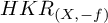 from Proposition 17. From this the second part follows.
4.6 Main theorem
Recall that
$Y\subset X$
 is locally cut out by
$x_i\in \mathcal {O}_X(U_i)$
is locally cut out by
$x_i\in \mathcal {O}_X(U_i)$
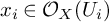 and that
$u_{ij}x_i=x_j$
and that
$u_{ij}x_i=x_j$
 over
$U_{ij}$
over
$U_{ij}$
 . Recall also the matrix factorization P from Section 4.2. Over each of the open sets
$U_i$
. Recall also the matrix factorization P from Section 4.2. Over each of the open sets
$U_i$
 we can identify
$P=\mathcal {O}_X\epsilon _i\oplus \mathcal {O}_X$
we can identify
$P=\mathcal {O}_X\epsilon _i\oplus \mathcal {O}_X$
 . Suppose
$F_i$
. Suppose
$F_i$
 is a matrix describing the action of an element of
$\mathrm {End}(P|_{U_i})$
is a matrix describing the action of an element of
$\mathrm {End}(P|_{U_i})$
 in this basis. If
$F_j$
in this basis. If
$F_j$
 denotes the matrix of the same endomorphism but with respect to the basis
$P=\mathcal {O}_X\epsilon _j\oplus \mathcal {O}_X$
denotes the matrix of the same endomorphism but with respect to the basis
$P=\mathcal {O}_X\epsilon _j\oplus \mathcal {O}_X$
 over
$U_{ji}$
over
$U_{ji}$
 then
$g_{ij}F_jg_{ij}^{-1}=F_i$
then
$g_{ij}F_jg_{ij}^{-1}=F_i$
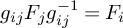 where the change of basis matrix is

Lemma 32. The following diagram commutes in
$D_{Z/2}(\mathbb {C})$


Proof. Start with an element
$a_0[a_1|\cdots |a_k]$
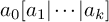 of internal degree zero over
$U_{I}$
of internal degree zero over
$U_{I}$
 ,
$I=\{i_0<i_1<...<i_p\}$
,
$I=\{i_0<i_1<...<i_p\}$
 . Note that the only terms from
$\phi $
. Note that the only terms from
$\phi $
 which do not vanish under
$HKR_{\mathcal {O}_{-f}}$
which do not vanish under
$HKR_{\mathcal {O}_{-f}}$
 are those where
$n=0$
are those where
$n=0$
 and
$q\geq 1$
and
$q\geq 1$
 or
$n=2$
or
$n=2$
 and
$q\geq 0$
and
$q\geq 0$
 . These are mapped to

where the second sums are over all
$\{(i_{-q},...,i_{-1})|i_{-q}<i_{1-q}<...<i_{-1}<i_0\}$
 . This is precisely what we get when going down first and then to the right twice.
Now let’s start with an element with precisely one factor from
$\mathcal {A}^{-1}$
 ,
$\bar {b}=b_0[b_1|\cdots |b_l\epsilon _{i_0}|\cdots |b_k]$
,
$\bar {b}=b_0[b_1|\cdots |b_l\epsilon _{i_0}|\cdots |b_k]$
 and first go to the right twice and then down. This time, the only terms in the definition of
$\phi $
and first go to the right twice and then down. This time, the only terms in the definition of
$\phi $
 which don’t vanish under
$HKR_{\mathcal {O}_{-f}}$
which don’t vanish under
$HKR_{\mathcal {O}_{-f}}$
 are those with
$n=1$
are those with
$n=1$
 and
$q\geq 0$
and
$q\geq 0$
 . We get

which agrees with what we get going down and then to the right.
Finally if we start with an element with two or more factors from
$\mathcal {A}^{-1}$
 , then going either direction is zero. This is clear if we go down first because
$HKR_{\mathcal {A}}$
, then going either direction is zero. This is clear if we go down first because
$HKR_{\mathcal {A}}$
 vanishes on such elements by definition. For the other direction note that the only terms in the definition of
$\phi $
vanishes on such elements by definition. For the other direction note that the only terms in the definition of
$\phi $
 which are non-zero on such an element are the ones where n equals the number of factors from
$\mathcal {A}^{-1}$
which are non-zero on such an element are the ones where n equals the number of factors from
$\mathcal {A}^{-1}$
 so
$n\geq 2$
so
$n\geq 2$
 . Each such term will contain two or more factors
$x_i$
. Each such term will contain two or more factors
$x_i$
 and will therefore vanish when we apply
$HKR_{\mathcal {O}_{-f}}$
and will therefore vanish when we apply
$HKR_{\mathcal {O}_{-f}}$
 because
$dx_i\wedge dx_i=0$
because
$dx_i\wedge dx_i=0$
 .
.
Lemma 33. There is a commutative diagram in
$D_{Z/2}(\mathbb {C})$


Proof. We will divide the diagram into smaller commutative pieces where each arrow is a chain map

Note first that all the vertical arrows on the left are quasi-isomorphisms by the discussion in Section 3.4. We will see below that the horizontal arrows in the squares
$(A)-(C)$
 are quasi-isomorphisms and then it follows from commutativity (which is also dealt with below) that the vertical arrows on the right too are quasi-isomorphisms.
In the square labeled
$(A)$
 the top arrow is a quasi-isomorphism by lemma 24. The bottom arrow in this square is
${\check{C}}(\text {Ind},\alpha )$
the top arrow is a quasi-isomorphism by lemma 24. The bottom arrow in this square is
${\check{C}}(\text {Ind},\alpha )$
 where
$(\text {Ind},\alpha )$
where
$(\text {Ind},\alpha )$
 is the lax morphism of presheaves of dg categories from proposition 26. Commutativity of
$(A)$
is the lax morphism of presheaves of dg categories from proposition 26. Commutativity of
$(A)$
 is precisely proposition 11. The bottom arrow in this square can be shown to be a quasi-isomorphism by filtering both complexes by Cech degree and using the mapping theorem ([Reference Mac Lane12],theorem XI.3.4).
To see that the square
$(B)$
 commutes, we first note that we can assume that in the diagram below, we have
$(\text {Ind},\alpha )\circ Yoneda=(Yoneda\circ q,1)$
commutes, we first note that we can assume that in the diagram below, we have
$(\text {Ind},\alpha )\circ Yoneda=(Yoneda\circ q,1)$
 as lax morphisms of presheaves of dg categories

Commutativity then follows from Lemma 14.
Commutativity of the square
$(C)$
 is part of Proposition 27.
Lemma 34. There is a commutative diagram in
$D_{Z/2}(\mathbb {C})$


Proof. We will divide the diagram into smaller commutative pieces where each arrow is a chain map:

We already know that the vertical arrows on the left and right are quasi-isomorphisms. Indeed, on the left hand side this was dealt with in the proof of the previous lemma. Those on the right hand side were dealt with in section 3.3.
The bottom arrow of the square
$(A)$
 is
${\check{C}}(-\otimes _{\mathcal {A}} P,\beta )$
is
${\check{C}}(-\otimes _{\mathcal {A}} P,\beta )$
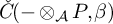 where
$(-\otimes _{\mathcal {A}} P,\beta )$
where
$(-\otimes _{\mathcal {A}} P,\beta )$
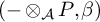 is the lax morphism of presheaves of dg categories from Proposition 26. Commutativity of the square (A) is exactly Proposition 11. Commutativity of (B) is similar to commutativity of the square (B) in the previous lemma. Note that all arrows except the top horizontal one are induced by morphisms of presheaves of dg categories and the top map is induced by a lax morphism. In the square
$(C)$
is the lax morphism of presheaves of dg categories from Proposition 26. Commutativity of the square (A) is exactly Proposition 11. Commutativity of (B) is similar to commutativity of the square (B) in the previous lemma. Note that all arrows except the top horizontal one are induced by morphisms of presheaves of dg categories and the top map is induced by a lax morphism. In the square
$(C)$
 ,
$\mathscr {C}$
,
$\mathscr {C}$
 denotes the presheaf of cdg categories
$\langle P,\mathcal {O}_X\rangle \subset \underline {\text {qvect}}_{nv}(X,f)$
denotes the presheaf of cdg categories
$\langle P,\mathcal {O}_X\rangle \subset \underline {\text {qvect}}_{nv}(X,f)$
 . All the arrows in
$(C)$
. All the arrows in
$(C)$
 are induced by morphisms of presheaves of cdg categories and the diagram commutes already at the level of presheaves of cdg categories. The same holds for the square (D). In the triangle (F) all the arrows are quasi-isomorphisms and the two diagonal arrows are quasi-inverses to each other. If we choose the diagonal arrow going up then (F) clearly commutes because it comes from a commutative diagram of presheaves of cdg categories and morphisms of such. Finally the triangle (E) commutes if we choose the diagonal arrow going down by the definition of the map
$\phi $
are induced by morphisms of presheaves of cdg categories and the diagram commutes already at the level of presheaves of cdg categories. The same holds for the square (D). In the triangle (F) all the arrows are quasi-isomorphisms and the two diagonal arrows are quasi-inverses to each other. If we choose the diagonal arrow going up then (F) clearly commutes because it comes from a commutative diagram of presheaves of cdg categories and morphisms of such. Finally the triangle (E) commutes if we choose the diagonal arrow going down by the definition of the map
$\phi $
 from Section 4.5.
Now we are ready to prove that the map on Hochschild homology induced by the pushforward functor
$i_{\ast }:D^b(\text {coh}Y)\to D(\text {fact}_{nv}(X,f))$
 is given by first multiplying by the inverse Todd class described in section 4.4 and then applying the connecting homomorphism
$\delta $
is given by first multiplying by the inverse Todd class described in section 4.4 and then applying the connecting homomorphism
$\delta $
 coming from the short exact sequence (8). We formulate this in a precise way in the following theorem (which is the same as theorem 1 from the introduction).
Theorem 35. Let
$i:Y\hookrightarrow X$
 be a smooth divisor of a smooth complex variety X. Let
$f\in \mathcal {O}_X(X)$
be a smooth divisor of a smooth complex variety X. Let
$f\in \mathcal {O}_X(X)$
 be a global function such that
$f|_Y=0$
be a global function such that
$f|_Y=0$
 and f vanishes on its critical locus. There is a commutative diagram in
$D_{Z/2}(\mathbb {C})$
and f vanishes on its critical locus. There is a commutative diagram in
$D_{Z/2}(\mathbb {C})$


Proof. Again we break it into smaller commutative pieces.

The top left triangle commutes by Lemma 25. The top left square commutes by Lemma 33. The bottom left square commutes by Lemma 28. The bottom left triangle commutes by definition of the connecting morphism
$\delta $
 . The part on the right commutes by Lemmas 32 and 34.
Acknowledgements.
I wish to thank my advisor Alexander Polishchuk for all his help with this project.
Competing interests
The author declares that there are no competing interests.
Data availability statement
No datasets were generated or analyzed during the current study. Data sharing is not applicable to this article.

 Open access

