


1. Introduction
Classical economic frameworks offer clear predictions about retirement saving behaviour of citizens all over the world and offer clear prescriptions for retirement planning through two foundational frameworks. One such theory, the life-cycle hypothesis, posits that rational individuals smooth consumption across their lifespan by accumulating savings during their working years and decumulating these assets during retirement (Modigliani, Reference Modigliani1966). Complementing this, the permanent income hypothesis suggests that consumption decisions are based on expected lifetime income rather than current income fluctuations, leading individuals to save proportionally during high-earning periods to maintain stable consumption in retirement (Friedman, Reference Friedman1957). These frameworks predict that rational agents should independently save adequate amounts for retirement based purely on economic self-interest. Again, rational pension scheme selection is typically grounded in considerations of pension adequacy, long-term retirement preparedness, intertemporal optimisation, and lifetime utility maximisation (Barr and Diamond, Reference Barr and Diamond2009; Bodie, Merton and Samuelson, Reference Bodie, Merton and Samuelson1992). Under this framework, individuals are assumed to evaluate retirement instruments primarily on their capacity to deliver sufficient post-retirement income relative to future consumption needs. In practice, however, behavioural factors systematically impede such optimal outcomes, as individuals often exhibit a myopic orientation that prioritises current consumption, procrastination despite good intentions, and inadequate financial comprehension (Benartzi and Thaler, Reference Benartzi and Thaler2007). The persistent gap between rational predictions and observed behaviour reflects specific psychological mechanisms that interfere with retirement planning. This raises the question of whether individuals who save for retirement are driven by rational thought or if their decisions are shaped by the psychological influences embedded in retirement plans.
To address these behavioural biases of people, Thaler and Sunstein (Reference Thaler and Sunstein2008) proposed that subtle behavioural interventions, known as nudges, can effectively steer individuals towards decisions that augment their well-being. Modifications in choice architecture, such as setting default enrolment options in retirement savings plans, simplifying the enrolment process, and providing financial incentives for contributions, significantly boost participation rates, particularly among individuals who might otherwise delay or overlook such decisions (Benartzi et al., Reference Benartzi, Beshears, Milkman, Sunstein, Thaler, Shankar, Tucker-Ray, Congdon and Galing2017).
Several researchers have examined the influence of nudges on retirement plan enrolment. Key studies include Thaler and Benartzi (Reference Thaler and Benartzi2004), Madrian and Shea (Reference Madrian and Shea2001), Choi et al. (Reference Choi, Laibson, Madrian and Metrick2004), Carroll et al. (Reference Carroll, Choi, Laibson, Madrian and Metrick2009), Beshears et al. (Reference Beshears, Choi, Laibson and Madrian2013), Goldin et al. (Reference Goldin, Homonoff and Tucker-Ray2017) and Benartzi and Thaler (Reference Benartzi and Thaler2013). These authors documented how various nudge strategies, from automatic enrolment to simplified processes and strategic information framing, significantly increased participation rates in retirement plans across diverse contexts. Benartzi and Thaler (Reference Benartzi and Thaler2013) and Clark et al. (Reference Clark, Hammond, Morrill and Khalaf2017) specifically investigated the effectiveness of nudging by conducting controlled experiments among employees in the USA. Most of the studies on behavioural interventions have been conducted in developed nations, often using experimental designs to pretest nudges before integrating them into public policies.
In the case of Asian economies, both Japan and China have experienced a severe pension crisis due to a rapidly ageing population and declining childbirth rate (Zhou, Reference Zhou2022). India, although currently enjoying a demographic dividend with a substantial working-age population, is projected to experience a sharp rise in the elderly population in the coming decades (Sekher and Gupta, Reference Sekher, Gupta, James and Sekher2024). Furthermore, the citizens of India demonstrate varied financial decision-making patterns influenced by diverse cultural, educational, and socioeconomic factors, which challenge the universal application of nudge theory without contextual adaptation to local conditions and behavioural tendencies. Anticipating these demographic shifts, the Government of India has proactively introduced a behaviourally informed policy framework through the establishment of the Behavioural Insights Unit. Unlike many other Asian nations, India has emerged as a forerunner in integrating behavioural science into public policy, with an emphasis on redesigning interventions to reflect the behavioural realities of a diverse and heterogeneous population.
In India, the National Pension System (NPS) is a strategic initiative by the government to advance the goal of universal social security. The scheme comprises four distinct models: the Central Government model, the State Government model, the Corporate model and the All Citizens Model. Among these, the All Citizens Model stands out as the only fully voluntary framework, offering individual subscribers’ substantial autonomy over both contribution levels and investment decisions. In contrast, the other three models operate as defined contribution systems where both employers and employees contribute to a mandatory retirement savings pool, limiting individual discretion in financial decision-making. The All Citizens Model, however, has witnessed remarkable adoption, with a subscriber base exceeding 4.2 million, highlighting its growing appeal as a voluntary retirement planning mechanism. Its success can be attributed to the thoughtfully crafted choice architecture embedded within the system, which leverages behavioural insights such as tax incentives, procedural simplicity, and the institutional trust associated with government backing, to encourage voluntary enrolment and sustained participation, all while preserving individual agency (Aparna and Biju, Reference Aparna and Biju2024). In this study, nudges and choice architecture refer to design features of the NPS that encourage retirement saving through subtle, non-coercive interventions, while fully preserving individuals’ freedom to opt out or revise their choices. Pension Fund Regulatory and Development Authority (PFRDA) has explicitly framed NPS features such as tax incentives and default investment scheme option as nudges inspired from international practices (PFRDA, 2015).
Previous research on the NPS has predominantly concentrated on evaluating the performance of pension fund managers and the risk–return profiles of various asset classes (Murari, Reference Murari2020). Another study by Murari et al. (Reference Murari, Shukla and Adhikari2021) revealed that psychological, social, and financial perceptions have an impact on retirement planning behaviour. In the present study, we examine whether enrolment in the NPS is primarily driven by considerations of retirement preparedness and pension adequacy, or whether decisions are shaped by specific scheme features that constitute elements of choice architecture. The prior studies on the determinants of retirement planning have largely drawn upon established theoretical frameworks and relied on quantitative methods to demonstrate the role of financial literacy and knowledge in shaping retirement-related behaviours (Tomar et al., Reference Tomar, Kent Baker, Kumar and Hoffmann2021; Guo et al., Reference Guo, Nazri and Fernandez2024). There exists a noticeable gap in the literature regarding the influence of psychological interventions on such decisions. This research represents a novel inquiry by qualitatively examining the role of behavioural factors influencing NPS enrolment in the context of an emerging economy. Unlike earlier studies that tested behavioural interventions in controlled experimental settings (Benartzi and Thaler, Reference Benartzi and Thaler2013; Goldin et al., Reference Goldin, Homonoff and Tucker-Ray2017), the current study explores the real-world effectiveness of choice architecture as they operate within the institutional framework of the NPS. Through the theoretical lenses of behavioural economics, the analysis aims to uncover the psychological and economic considerations that guide enrolment decisions. The influencing factors identified in this study may reflect both economic and psychological dimensions, yet still operate through psychological channels rather than through fully articulated lifecycle planning. Rubaltelli and Lotto (Reference Rubaltelli and Lotto2021) demonstrated that tax incentives in pension systems work through dual mechanisms by offering financial benefits and shaping behaviour via information framing. This dual pathway shows the broader nature of pension policy instruments where multiple channels operate simultaneously rather than in isolation. This paper investigates the determinants of enrolment through an integrated framework, with particular emphasis on the structural architecture of NPS, aiming to evaluate whether such mechanisms enhance the long-term retirement security of individuals.
The paper is structured as follows: The first section outlines the related literature, and the second section details the methodology employed in the study, detailing the data collection and analytical approach. The third section presents a thematic analysis based on qualitative data, with subsections discussing the themes emerging from the analysis. This is followed by a summary of key features of NPS and their respective behavioural impact on enrolment decisions. Finally, the paper highlights identifiable patterns from the analysis and discusses the broader implications of the findings in the context of prospect theory and bounded rationality theory.
2. Review of literature
Cognitive barriers create a persistent gap between retirement saving intentions and actual behaviour, leading to widespread under-preparation for retirement across both developed and developing economies. Recognising these systematic deviations from rational choice models, behavioural economists have developed the concept of ‘nudging’ – subtle modifications to choice architecture that guide individuals towards better long-term decisions while preserving freedom of choice (Thaler and Sunstein, Reference Thaler and Sunstein2008). The influence of nudges in NPS enrolment can be elucidated through the extensive literature review on behavioural interventions in retirement savings. Default as a nudge has been proven successful, as Madrian and Shea (Reference Madrian and Shea2001), Choi et al. (Reference Choi, Laibson, Madrian and Metrick2004), and Beshears et al. (Reference Beshears, Choi, Laibson and Madrian2009) have illustrated that automatic enrolment has significantly raised participation rates in employer-sponsored retirement plans across extended scenarios. The role of decision structure in enrolment was investigated by Carroll et al. (Reference Carroll, Choi, Laibson, Madrian and Metrick2009), by comparing automatic enrolment to required active decisions, and VanDerhei (Reference VanDerhei2012) used a large-scale simulation to measure the impact of automatic enrolment and escalation on retirement income adequacy.
Apart from the extensive study on the default nudges, Thaler and Benartzi (Reference Thaler and Benartzi2004) introduced the ‘Save More Tomorrow’ (SMarT) program, which incorporated several nudges motivating individuals to enrol and contribute towards 401(K) retirement plans in the USA. Along with automatic enrolment, this choice architecture of the scheme integrated and tested precommitment devices, future self-projection, and social influence nudges in a controlled experimental environment to know how these nudges enable individuals to overcome the biases hindering retirement planning decisions.
Other studies on choice architecture highlighted the significance of simplification and framing in enrolment decisions. Iyengar and Lepper (Reference Iyengar and Lepper2000) introduced the ‘paradox of choice’, demonstrating that excessive options can lead to decision paralysis, a concept later applied to retirement planning by Iyengar et al. (Reference Iyengar, Huberman, Jiang, Mitchell and Utkus2004). Similarly, Cronqvist and Thaler (Reference Cronqvist and Thaler2004) proved that Sweden’s social security system, with over 750 available funds, led to suboptimal decisions due to choice overload. To overcome such barriers, Beshears et al. (Reference Beshears, Choi, Laibson and Madrian2013) advocated that simplifying the procedure through quick enrolment forms with pre-selected contribution rates considerably boosted participation. Benartzi and Thaler (Reference Benartzi and Thaler2007) established that framing retirement income as consumption instead of savings amplified perceived adequacy and willingness to save.
In the technology era, digital nudges offer quick and efficient means for informed decision-making. Goda et al. (Reference Goda, Manchester and Sojourner2014) found that providing individualised projections of future account balances improved both participation and contribution rates, highlighting the role of informational nudges. Benartzi et al. (Reference Benartzi, Beshears, Milkman, Sunstein, Thaler, Shankar, Tucker-Ray, Congdon and Galing2017) introduced robo-saving apps and e-mail driven enrolment and contribution prompts for enhancing participation in retirement plans. More recently, Clark et al. (Reference Clark, Morrill and Vanderweide2021) explored how digital tools and visualisation techniques impact retirement decisions, finding that interactive planning tools significantly improve comprehension and engagement.
Together, these studies underscore the behavioural foundations of nudges in pension enrolment, providing a robust framework for examining how defaults, simplification, framing, and digital interventions influence NPS enrolment decisions. While choice architecture and nudging strategies have been successful in retirement planning decisions, their role in NPS enrolment remains underexplored. While research on behavioural interventions in retirement planning is well-established in developed countries (Thaler and Benartzi, Reference Thaler and Benartzi2004; OECD, 2018), there is a paucity of empirical studies examining how choice architecture and nudges influence retirement savings behaviour in the Indian context. The existing literature on financial decision-making in India primarily focuses on macroeconomic factors, investment preferences, and risk perceptions (Sivaramakrishnan et al., Reference Sivaramakrishnan, Srivastava and Rastogi2017; Agarwalla et al., Reference Agarwalla, Jacob and Varma2019), with limited emphasis on the psychological and behavioural aspects of pension enrolment.
3. Materials and methods
This study employs a qualitative research design to explore the behavioural factors influencing the enrolment decisions of NPS All Citizens Model subscribers. Qualitative methods allow for the exploration of context-dependent influences such as the role of emotions, the building of trust, and the impact of prevailing social norms, all of which are critical factors that quantitative metrics alone cannot adequately capture (Braun and Clarke, Reference Braun and Clarke2006). The study adopted Standards for Reporting Qualitative Research (SRQR) guidelines for reporting the qualitative research findings (O’Brien et al., Reference O’Brien, Harris, Beckman, Reed and Cook2014).
3.1. Qualitative approach and research paradigm
Reflexive thematic analysis within the research paradigm of pragmatic-constructivism has been used as a systematic and rigorous approach to identifying recurring patterns within qualitative data, providing interpretive, meaning-centred inquiry with orientation towards practical policy implications regarding participant’s narratives on retirement planning and their behavioural responses to carefully developed choice architecture of NPS (Braun and Clarke, Reference Braun and Clarke2019; Nørreklit, Reference Nørreklit2020 Nowell et al., Reference Nowell, Norris, White and Moules2017).
3.2. Researcher characteristics and reflexivity
The study was conceptualised and conducted by two researchers with complementary expertise in behavioural finance and retirement planning. The semi-structured interview guide was developed following an extensive review of relevant literature and iterative consultation with subject-matter experts to ensure content validity and contextual appropriateness. Both researchers maintained no prior personal or professional relationship with the respondents, thereby minimising potential bias arising from pre-existing connections. Throughout the study, reflexive practices such as maintaining analytic memos, engaging in critical peer-debriefing sessions, and documenting decision-making processes were employed to acknowledge and critically examine how the researchers’ backgrounds, assumptions, and perspectives may have influenced data collection, interpretation, and theme development. In particular, to mitigate potential bias stemming from the researchers’ finance-related expertise, emerging codes and themes were continuously cross-checked against respondents’ verbatim accounts to ensure that interpretations remained grounded in the data rather than in disciplinary preconceptions.
3.3. Sampling strategy and participant recruitment
Both purposive sampling and snowball sampling are employed in the study as random sampling feels unsuitable due to the requirement of information-rich cases for a deep understanding of the influence of choice architecture of NPS on enrolment rather than focusing on generalisability (Patton, Reference Patton2015). A purposive sampling technique, as suggested by Creswell and Poth (Reference Creswell and Poth2018) is employed to ensure that the study captures insights from voluntary NPS subscribers who have been enrolled for at least two years. This time frame allows respondents to reflect on their decision-making process and engagement with the pension system. As Naderifar et al. (Reference Naderifar, Goli and Ghaljaie2017) recommended the snowball sampling strategy is also adopted asking the initial respondents to bring up further potential respondents who fulfilled the requirements for inclusion. A theoretical sampling approach is further adopted, allowing participant selection to evolve as data collection progresses, ensuring that emerging themes are explored in depth (Strauss and Corbin, Reference Strauss and Corbin1998). We recruited a diverse pool of participants from various socioeconomic backgrounds, age groups, and employment sectors across multiple urban and semi-urban regions in India. Representation across income brackets to capture heterogeneous financial decision-making patterns.
3.4. Ethical approval and participant consent
The study was approved by the University Ethics Committee, University of Kerala, following a stringent review of research design, data collection, consent, and confidentiality procedures to ensure compliance with ethical standards and safeguard participants’ rights and well-being (Wiles, Reference Wiles2012). Informed consent was obtained from all respondents before their involvement in the study, ensuring they were fully aware of the research objectives, potential risks, and their right to withdraw at any stage (Creswell and Poth, Reference Creswell and Poth2018). Even though qualitative research is often non-invasive, ethical approval ensures that researchers take precautionary measures to minimise psychological, social, or reputational harm (Tracy, Reference Tracy2019). The study adhered to ethical guidelines set forth by the university and followed principles outlined in the Research protocol of the University for conducting research with human participants.
3.5. Data collection methods
Semi-structured in-depth interviews were conducted to explore participants’ reasons for enrolling in the NPS, allowing flexibility to probe emerging insights (DiCicco-Bloom and Crabtree, Reference DiCicco-Bloom and Crabtree2006; Kvale and Brinkmann, Reference Kvale and Brinkmann2015). The interview guide incorporated open-ended questions. The selected individuals were personally contacted via telephone and WhatsApp, where they were provided with a detailed explanation of the study objectives, their rights to withdraw and assured on confidentiality of their personal information. Upon obtaining their informed consent, interview dates and times were scheduled. The interviews were primarily conducted in English; however, respondents had the option to speak their mother tongue if they preferred. Each interview spans approximately 1 hour over the telephone. The data collection was undertaken from December 2024 to February 2025.
To enhance the quality of interview data and obtain additional insights, the interviewer encouraged respondents to elaborate on their responses whenever necessary. Furthermore, insights from the initial interviews were used to refine the interview guide and incorporate new questions, enriching subsequent discussions. All telephone interviews were recorded using an audio recorder for accuracy and analysis. In this study, thematic saturation was observed after 13 interviews, with no new themes emerging in interviews 14 and 15. This is consistent with previous research suggesting that saturation often occurs within the first 12–15 interviews for relatively homogeneous populations (Guest et al., Reference Guest, Bunce and Johnson2006, Saunders et al., Reference Saunders, Sim, Kingstone, Baker, Waterfield, Bartlam, Burroughs and Jinks2018). Beyond thematic saturation, a larger and more diverse sample may help capture finer demographic differences in future research.
3.6. Data processing
Interview audio recordings were transcribed into English, making them ready for analysis. Clean verbatim has been adopted for transcription as the focus is on content, meaning and themes, not on the speech hesitations and fillers. To ensure the confidentiality of respondents, security protocols and data management procedures were implemented. These measures included anonymising interview transcripts and restricting access to the collected data to prevent unauthorised viewing (Liamputtong, Reference Liamputtong2020).
The study adopts a hybrid thematic coding approach, combining deductive and inductive coding for structured yet flexible analysis (Fereday and Muir-Cochrane, Reference Fereday and Muir-Cochrane2006). It applies theory-driven coding alongside participant-driven insights to achieve research objectives. Thematic coding identifies recurring themes (Braun and Clarke, Reference Braun and Clarke2006), followed by axial coding to group them logically (Strauss and Corbin, Reference Strauss and Corbin1990). Finally, selective coding integrates these themes with existing theory (Strauss and Corbin, Reference Strauss and Corbin1998).
3.7. Data analysis
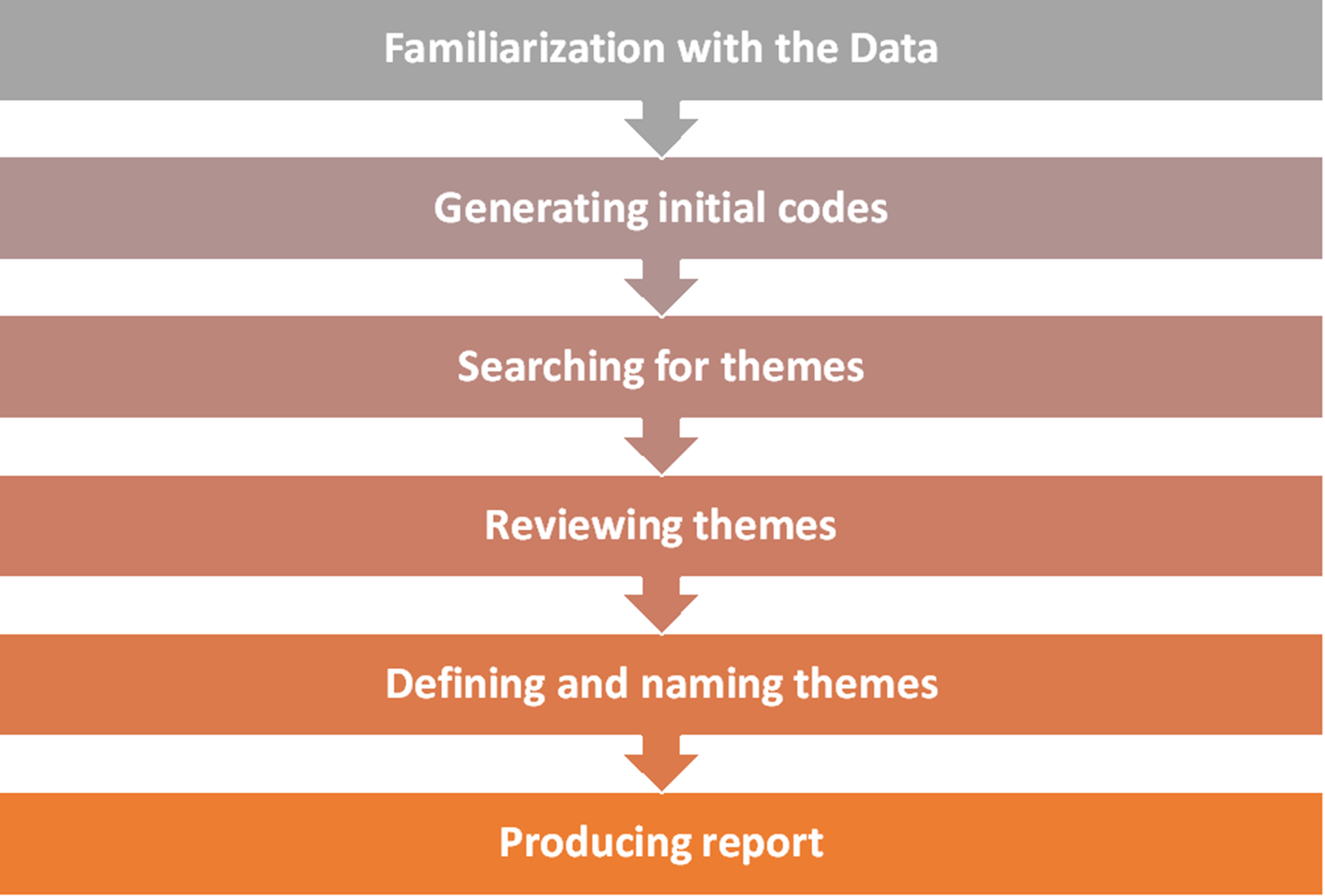
Braun and Clarke’s (Reference Braun and Clarke2006) six-phase framework for thematic analysis, the most widely adopted and methodologically rigorous approaches in qualitative research for identifying, analysing, and interpreting themes within data, has been adopted in the current study (Refer Figure 1). This technique facilitates the systematic exploration of latent and manifest themes emerging from interview transcripts to know what motivated the subscribers of the NPS All Citizens Model to get enrolled. This six-phase technique entails a methodical process of familiarisation with the data, generating initial codes, searching for themes, reviewing themes, defining and naming themes, and finally producing reports.
Braun and Clarke’s six-phase thematic analysis framework.

The analysis commenced with an in-depth reading of the interview transcripts. Both researchers have reviewed each transcript multiple times, and initial codes were generated through line-by-line examination independently. This iterative reading facilitated a comprehensive understanding of the data and enabled the identification of salient features. Then, these researchers met to discuss the codes and generated themes after reaching consensus on the separately coded items. A systematic coding procedure was then employed, grounded in the data itself, to extract codes reflective of the respondents’ articulated reasons for enrolment. Upon further examination, recurring patterns emerged, and related codes were grouped into broader potential themes. Thematic coding was aided by MAXQDA, which ensured efficiency and consistency in discovering recurrent themes throughout the transcripts. The thematic structure was further refined, and themes were clearly defined and appropriately named to represent the key motivational factors underlying enrolment decisions. Also, Code Matrix Browser (CMB) has been used to visualise the code distribution among documents, while code trends depict the frequency of codes.
3.8. Validity and reliability measures
In the present study, multiple strategies were implemented to ensure the credibility, dependability, and confirmability of the qualitative findings. Member checking, in which respondents were given the chance to examine and confirm the interpreted themes, was used to guarantee the analysis’s reliability and credibility (Birt et al., Reference Birt, Scott, Cavers, Campbell and Walter2016). Peer debriefing was done by consulting an expert colleague to review the research process, ensuring the credibility and trustworthiness of the process and findings (Lincoln and Guba, Reference Lincoln and Guba1985). The researcher maintains a journal to document biases and reflections throughout data collection.
For intercoder reliability, two researchers independently coded 20 per cent of the text data to assess the consistency of coding. The Cohen’s Kappa coefficient (κ) calculated from this process was 0.82, which, based on the guidelines of Landis and Koch (Reference Landis and Koch1977), indicates ‘almost perfect agreement’ (κ > 0.80). This value demonstrates that the coding process achieved a sufficient and robust level of reliability, ensuring the rigour of the thematic analysis.
4. Results and discussion
Table 1 shows the respondents’ information and Figure 2 illustrates the key reasons for enrolment to NPS after conducting thematic analysis of responses from interviewees. Thematic analysis starts with dotting down first-order concepts, which are informant-centred and align with the open coding approach in grounded theory (Strauss and Corbin, Reference Strauss and Corbin1990).
Key reasons for enrolment.

Respondents’ information

Source: Authors’ compilation based on semi-structured interviews conducted with NPS subscribers.
Table 2 shows those codes generated from the interview transcript itself. Next, these first-order concepts are grouped into more abstract categories or themes – thus theory-centric second-order concepts are generated. This process, also known as axial coding, helps to recognise key concepts for theoretical analysis, enriching the depth and soundness of the data interpretation (Gioia et al., Reference Gioia, Corley and Hamilton2013). Finally, after multiple rounds of reviewing the codes and themes in relation to existing theories on behavioural aspects of financial decision-making, the aggregate dimensions were identified within the theoretical framework.
Conceptualising the key reasons for enrolment

4.1. Tax benefits as the primary driver for enrolling in NPS
In the case of NPS, one of the key motivations for individuals to enrol is the tax benefits associated with the scheme. The scheme provides an additional ₹50,000 tax deduction under Section 80CCD(1B) over and above the existing ₹1.5 lakh deduction under Section 80C of the Income Tax Act. Most of the respondents view NPS as a tax-saving instrument rather than a dedicated retirement planning tool. The financial incentive offered by tax deductions plays a crucial role in influencing their investment decisions, particularly among salaried individuals and professionals seeking to optimise their tax liabilities.
NCNPS-04 said, ‘To be completely candid, retirement planning wasn’t my primary motivation for starting NPS. The main driving factor was tax deduction, pure and simple. I discovered NPS while specifically researching ways to reduce my tax burden, and a friend who handles ITR filing suggested it as a tax-saving option.’
Many subscribers were introduced to NPS during tax planning discussions with colleagues, financial advisors, or employers. Banks and financial service providers also actively promoted NPS as a tax-efficient investment, further increasing awareness among potential investors.
With the introduction of the new tax regime, which offers lower tax rates but removes most deductions, many subscribers have reduced their NPS contributions. Since the primary driver for enrolment was the tax benefit, some subscribers chose to pause or lower their contributions when the tax-saving advantage was no longer applicable. Some respondents expressed their discontent about this shift, highlighting the significance of fiscal incentives in investment decisions, as opposed to long term retirement planning motives.
NCNPS_12 stated, ‘I’ve even reduced my NPS contributions this year to just ₹5,000 since I’m not getting the tax benefits under the new regime.’
Although NPS is inherently structured as a retirement savings mechanism, its appeal for many subscribers has been largely driven by tax advantages. However, shifts in tax policies have reshaped investor tendencies, resulting in diminished contributions.
4.2. Government backing as a trust factor
NPS, being a government-sponsored scheme, influenced the people to get enrolled. The trust factor associated with government involvement plays a significant role in shaping decisions of the public (Chen et al., Reference Chen, Zhang, Hu and Luo2024). It is particularly relevant in a country where financial security and risk aversion are major concerns for individuals planning for retirement (Mahmood and Ahmad, Reference Mahmood and Ahmad2020; Geetha et al., Reference Geetha, Matha, Kishore and Dmello2023). Government-backed financial instruments enjoy a high level of credibility due to their association with a sovereign entity.
NCNPS_05 said, ‘I chose NPS primarily because it’s a government scheme, which gives me much more trust compared to private plans. Let me explain why – with private pension plans, there’s always this uncertainty about whether they’ll still be operating when we reach retirement age.’
The respondents perceived state-supported schemes as more reliable and less prone to fraudulent activities compared to private alternatives. Private pension providers may face financial difficulties, market downturns, or even closure, which could put investors’ retirement savings at risk. In contrast, government-backed pension schemes are perceived as safer because of their structural stability and regulatory oversight.
NCNPS_10 expressed her enthusiasm towards the government-supported scheme by stating, ‘Well, being a government scheme was a huge factor for me. I feel there’s just that extra layer of security there. You know how private companies can sometimes have hidden clauses or agendas? With the government running NPS, I feel more confident that everything is straightforward and transparent.’
Most of the respondents view NPS as a long-term, low-risk sustainable retirement plan backed by the government. Government involvement signals that the NPS will not be abruptly discontinued or rendered ineffective due to financial instability. The structured withdrawal options further reinforce confidence in the scheme’s sustainability. While tax incentives may serve as an initial behavioural lever for participation, it is the underlying assurance of safety, transparency, and long-term viability that sustains investor confidence in the scheme.
NCNPS_05 explicitly stated her confidence in the sustainability of the scheme:
What I particularly like about NPS is that it’s a corporation that pools contributions from employees across the country and invests in the stock market. This gave me confidence in the scheme’s stability. Even when I hear criticism from government employees about NPS, it hasn’t affected my trust in the scheme. I believe only those who don’t understand how it works might have concerns about its survival.
4.3. Social influence as a nudge
In behavioural finance, peer influence is vital in shaping financial decisions, particularly in long-term investment choices such as retirement savings (Das and Banerjee et al., Reference Das and Banerjee2023). The majority of respondents came to know about NPS through their colleagues and workplace discussions rather than through direct government outreach or financial advisors.
When peers discuss their positive experiences with NPS, such as tax benefits, long-term savings potential, investment choices, or growth prospects, it creates a social reinforcement effect, making non-subscribers more likely to consider enrolling.
NCNPS_07 said, ‘I first came to know about NPS through my friends.’
NCNPS_12 responded like ‘I came to know about NPS through my colleagues at work.’
The workplace is a powerful environment where financial decisions, including retirement planning, are shaped by peer interactions, employer policies, and social norms (Duflo and Saez, Reference Duflo and Saez2002). This social influence acts as a nudge, subtly encouraging employees to make long-term financial commitments by reducing uncertainty and reinforcing the benefits of NPS enrolment.
NCNPS_11 said, ‘It was only after attending an awareness class by the Kotak Mahendra team at the office that I got a complete picture of NPS. These awareness sessions were very helpful in clarifying the benefits and workings of the scheme.’
Beyond structured workplace initiatives, peer recommendations and social media play a significant role in driving individuals towards NPS enrolment. The finfluencers are endorsing NPS as a viable retirement option through social media platforms like YouTube, Facebook, X, Instagram, etc., which caught the attention of many.
NCNPS_07 said, ‘I learned about NPS through social media, especially YouTube finfluencers.’
4.4. Professional fund management
Another reason for respondents to enrol in NPS is the assurance of professional fund management. The responses from the subscribers exhibit delegation bias as they tend to trust experts in fields where they lack knowledge, preferring professional decision-making over personal financial management (Benartzi and Thaler, Reference Benartzi and Thaler2007). Most of the respondents find retirement planning and management challenging due to time constraints, knowledge gaps, or lack of expertise. Entrusting funds to professional managers can increase confidence, as these experts possess specialised knowledge in financial markets, risk assessment, and asset allocation. The presence of multiple fund managers offers subscribers an option to choose based on past performance and trust factor.
NCNPS_15 stated, ‘The structured nature of NPS, with its professional fund management and government oversight, gives me peace of mind. I appreciate that I don’t have to actively manage the investments while still benefiting from market-linked returns within a regulated framework.’
NPS follows a structured and disciplined investment approach, which appeals to individuals seeking stable, long-term wealth accumulation. The NPS portfolio is diversified across equity, corporate bonds, and government securities, ensuring risk-adjusted growth. Auto Choice and Active Choice models allow subscribers to select an investment approach that aligns with their risk tolerance. The lifecycle fund option automatically adjusts asset allocation as the subscriber ages, reducing exposure to volatile assets over time. The respondents really appreciate the choice architecture of NPS.
NCNPS_06 quoted ‘As someone who enjoys exploring innovative investment methods, I viewed NPS as a stable mutual fund option. My experience with stock market investments helped me appreciate the professional fund management aspect of NPS, making it an attractive addition to my investment portfolio.’
Individual investors may lack the discipline to regularly rebalance their portfolios, whereas professional managers ensure optimised asset distribution based on risk profiles. Some are prone to emotional investing, whereas some believe NPS fund managers follow a strategic, long-term investment approach. The presence of qualified fund managers who actively manage risk increases subscriber confidence. Also, the subscribers prefer avoiding self-made investment mistakes and feel more comfortable relying on professional fund managers. NCNPS_13 clearly stated, ‘I have bad luck in stock market, but I have strong trust in the management of NPS funds. Even though the returns are market-linked, knowing that experienced professionals are managing our investments gives me confidence in the system.’
Unlike unregulated private pension plans or self-managed investments, NPS funds are subject to continuous regulatory oversight by PFRDA. Respondents believe that PFRDA mandates strict investment guidelines, preventing high-risk exposure in pension funds. Subscribers have the option to switch fund managers, adding an extra layer of accountability. Continuous monitoring by regulatory authorities, ensuring transparency and investor protection.
4.5. Simplification, flexibility, and ease of access
Another reason to get enrolled on NPS is its ease of access and user-friendly enrolment process. The choice architecture of NPS has been devised with a simple enrolment process, multiple access points, online management features, and flexible contribution options, making it an attractive retirement savings vehicle for a broad range of investors. Enrolling in NPS is a hassle-free process, as they can open an account either through the official NPS website or by visiting a nearby Point of Presence.
NCNPS_04 said ‘The actual enrolment process was straightforward – I did it myself by logging into the NPS website.’
Contributions can be made online through the website or mobile application, and the amount can be decided based on affordability. This ease of contributing at one’s convenience ensures greater participation, as potential investors do not feel pressured by rigid payment schedules.
Respondents expressed confidence in the NPS, attributing it to the convenience of online access, which facilitates seamless management of their pension accounts. The system’s transparency is also appreciated, particularly the regular receipt of monthly transaction statements via email. Younger respondents specifically emphasised the simplicity of the application process, identifying it as a factor that enhances the appeal of NPS as an investment option. This up-front process might encourage wider participation, ensuring that individuals from various backgrounds can easily start their retirement savings journey without complex procedures.
4.6. Supplementary retirement planning
Many respondents have considered NPS as a supplementary retirement planning tool, providing an additional layer of financial security alongside existing pension schemes, savings accounts, or employer-provided benefits. The respondents consider NPS particularly attractive for individuals seeking to diversify their retirement portfolios, adopt structured savings approaches, and secure long-term investment avenues. Their justifications for enrolment highlight how NPS effectively compensates for gaps in other retirement benefits, ensuring better financial preparedness. They recognise that factors such as inflation, rising healthcare costs, and lifestyle changes can significantly impact financial security. Notably, the NPS structure allows partial withdrawals for medical emergencies, home purchases, or higher education expenses, offering necessary liquidity when needed.
NCNPS_15 stated, ‘NPS serves as a supplementary retirement fund alongside my government pension scheme.’
Relying on a single retirement savings scheme exposes an individual to market fluctuations, policy changes, and inflation risks. NPS offers exposure to multiple asset classes, improving overall portfolio balance. Diversifying with NPS minimises the risk of over-dependence on a single pension scheme, providing a buffer against inflation and market volatility.
NCNPS_08, who is a financial enthusiast, said, ‘My experience with stock market investments helped me appreciate the professional fund management aspect of NPS, making it an attractive addition to my investment portfolio.’
4.7. Market returns with security
One of the factors influencing individuals to enrol in NPS is the combination of market-linked returns and security. Unlike traditional retirement savings instruments offering fixed returns, NPS allows market participation while maintaining regulatory oversight and risk-adjusted investment options. NPS strikes a balance between return potential and financial security, making it an attractive choice for individuals looking for growth-oriented yet stable retirement savings.
FDs are preferred for capital protection and guaranteed returns, but respondents acknowledge their low post-tax, inflation-adjusted returns. In contrast, NPS offers market-linked returns, outperforming traditional fixed-income options long-term. With investments in equity, corporate bonds, and government securities, NPS enables better wealth accumulation than FDs.
NCNPS_01 explicitly pointed out, ‘In terms of performance, NPS has been delivering better returns compared to FDs, though it may not match the returns of certain mutual funds.’
A longer investment period smooths volatility, ensuring consistent returns. Respondents agree that long-term equity exposure outperforms fixed-income instruments, driving wealth accumulation. Compounding amplifies growth, building a strong retirement corpus. Unlike direct stock investments, NPS offers structured, regulated investing, making it a balanced choice for those seeking returns with controlled risk.
NCNPS_09 quoted ‘It is a balanced approach, combining equity and debt exposure, aligns well with my long-term retirement goals and risk appetite.’
NPS investments, managed by PFRDA-regulated fund managers, ensure risk management and compliance. Government securities reduce portfolio risk, while 40 per cent annuitisation guarantees post-retirement income. Respondents value NPS’s customised risk exposure, aligning investments with financial goals. Young investors (25–40) favour equity for growth, mid-career (40–50) prefer a balanced mix, and pre-retirement (50–60) shift to securities for stability. This flexibility appeals to both aggressive and conservative investors, ensuring risk-optimised strategies.
5 CMB and code trends for enrolment decisions in NPS
Figure 3 provides the CMB exported from MAXQDA, which visualises the code frequencies of interview records to find out the key reasons for enrolment in NPS. In the matrix, documents are displayed in the columns and codes are displayed in the rows. At the intersections, circle symbols display the number of segments coded with a particular reason. The larger the symbol, the more the segments are coded. The size and colour intensity of the dots indicate the prominence or strength of each reason in the participant’s interview. It provides an effective way to interpret patterns and relationships in qualitative datasets, particularly in interview-based research (Kuckartz and Rädiker, Reference Kuckartz and Rädiker2019).
Code Matrix Browser of reasons for enrolment to NPS.

In the given context, the CMB has been used to analyse interview responses to identify the key reasons behind individuals enrolling in the NPS. Each interview represents a document, and the reasons for enrolment are coded based on the interview content. The visualisation helps to uncover patterns in respondents’ motivations, making it easier to draw conclusions about the most influential factors.
From Figure 3 tax benefits emerged as the most dominant reason for enrolment as indicated by the largest and most intense circles at the respective intersections. This suggests that most respondents prioritised tax-saving opportunities when opting for NPS. It is followed by Government backing as another significant factor, showing a distinct pattern across multiple respondents. The perception of NPS as a secure and government-supported scheme appears to influence many respondents’ decisions. Social influence and supplementary retirement planning are also common themes, though its prominence varies across individuals. Other factors, such as security combined with market-linked returns and professional fund management, are also evident in the CMB. These themes, though not as dominant, still contribute to individuals’ decision-making processes.
Figure 4 shows code trends generated using MAXQDA software based on the interview data. The visualisation illustrates how frequently the specific reasons for enrolment were mentioned across multiple interview documents. The x-axis shows the respondents, while the y-axis shows the absolute frequency of coded references, showing how often each code is used. Different colours have been used to represent different codes (reasons for enrolment) to enhance the clarity of identifying the recurrent codes. The figure explicitly shows that Tax Benefits is the most trending code from the multiple interview documents. This is a clear indication of the power of financial prompting in the enrolment decision of NPS, as tax benefits emerged as the most frequently mentioned reason for subscription. This is followed by Government backing, indicating that trust and confidence in government sponsorship motivate individuals to get enrolled. Social influence is the next recurring code, as the subscribers are largely influenced by their peers and colleagues.
Code trends.

6 Discussion
Most of our respondents exhibited a similar attitude towards the NPS, perceiving it primarily as a tax-saving instrument rather than a dedicated retirement planning tool. The findings extend prospect theory (Kahneman and Tversky, Reference Kahneman and Tversky1979) to the context of retirement planning in an emerging market, demonstrating how loss aversion, reference point dependence, and the certainty effect shape the investment behaviour. These patterns contrast with evidence from developed markets, where automatic enrolment and employer matching (Chetty et al., Reference Chetty, Friedman, Nielsen and Olsen2014) often overshadow tax subsidies as behavioural levers. The analysis also strengthens the role of bounded rationality (Simon, Reference Simon, Eatwell, Milgate and Newman1990; Thaler and Sunstein, Reference Thaler and Sunstein2008) rather than rationality in retirement savings decisions. Rather than optimising expected lifetime utility, individuals respond to heuristics and salient nudges such as trust in public institutions, peer influence, professional fund management, simplified processes, and balanced equity-debt allocation over rational, long-horizon planning. The behavioural framing of NPS adoption aligns with global findings on choice architecture (Thaler and Sunstein, Reference Thaler and Sunstein2008; Beshears et al., Reference Beshears, Choi, Laibson and Madrian2013) and social proof (Cialdini, Reference Cialdini2001), while also revealing India-specific nuances such as the dominance of tax-related motivations and the reliance on sovereign credibility.
Choi et al. (Reference Choi, Laibson, Madrian and Metrick2004) have already provided evidence for the influence of tax incentives on higher participation rates in the case of 401(k) plan in USA. In the case of NPS, the enrolment was largely driven by the search for strategies to minimise tax liability, with the long-term benefits of retirement savings taking a secondary role in their decision-making process. More recently, Chen et al. (Reference Chen, Cai, Lin, Liu and Meng2025) revealed that nudges emphasising tax benefits and compound interest significantly enhance attention and engagement in China’s Personal Pension Program compared to standard bonus incentives. Buttigieg et al. (Reference Buttigieg, Consiglio and Sapiano2020) have stated that financial regulations aim to maintain fair, honest, and reliable financial markets, which is crucial for investor confidence and market stability. Like Choi et al. (Reference Choi, Laibson, Madrian and Metrick2004) pointed out, people are more likely to trust financial products when they are linked to government entities, as they believe these schemes are less likely to fail due to political and regulatory backing. The presence of strong regulatory oversight by the PFRDA adds another layer of trust for the subscribers. It happens particularly in markets where individuals are hesitant to invest due to fears of mismanagement or fraud (Merton, Reference Merton1995).
Cialdini (Reference Cialdini2001) suggested social proof as a motivator for decision-making, where individuals look to others in their peer group to determine what is beneficial. Employees tend to share financial information informally, discussing tax-saving strategies, investment options, and retirement planning (Ouimet and Tate, Reference Ouimet and Tate2020). It is also supplemented by herd behaviour, which implies that when a group adopts a particular financial decision, others tend to follow due to the perceived safety in collective action (Banerjee, Reference Banerjee1992). Many individuals avoid making decisions due to choice overload, as there are too many investment options. Workplace discussions and structured awareness programs simplify the process, reducing decision fatigue (Iyengar and Lepper, Reference Iyengar and Lepper2000). In many workplaces, financial literacy sessions, HR-led awareness programs, and peer discussions play a significant role in shaping financial decisions. It helps in choice overload reduction.
Our study contributes by focusing specifically on the behavioural and psychological dimensions, while deliberately setting aside the economic and financial aspects that fall beyond the scope of this work. Based on the findings from our thematic analysis of interview transcripts, we have identified several design features and their theoretical contextualisations, which are further detailed in Sections 6.1 and 6.2. Table 3 provides a comprehensive explanation of the key factors operating within the interplay of the NPS retirement system.
Key factors in NPS enrolment

Note: Based on the thematic analysis.
6.1. Factors influencing enrolment and prospect theory
Prospect theory, developed by Kahneman and Tversky (Reference Kahneman and Tversky1979), offers a valuable framework for understanding the enrolment decisions and behaviours of NPS subscribers. The theory suggests that people make decisions based on potential gains and losses relative to a reference point, rather than absolute outcomes. The key aspects of the theory evident in NPS enrolment are as follows:
1. Loss Aversion and Tax Benefits
2. A substantial proportion of subscribers emphasised tax savings as a primary motivation, often giving greater weight to immediate tax relief than to potential long-term retirement gains. This pattern may be interpreted as being consistent with the idea of loss aversion, in the sense that tax payments could be perceived as immediate and certain outflows that individuals prefer to avoid. However, the findings do not directly test loss aversion, and the observed preference for tax benefits may also reflect conventional rational considerations, such as liquidity needs or short-term financial planning priorities.
2. Reference Point Dependence and New Tax Regime
4. The behavioural changes observed following the introduction of the new tax regime may be interpreted through the lens of reference point dependence. Many subscribers appeared to evaluate the attractiveness of NPS contributions relative to the earlier tax structure, which functioned as a familiar benchmark. When the new regime reduced or removed certain tax incentives, contributions declined for some respondents. While this pattern is broadly consistent with reference-dependent evaluation, it may also reflect straightforward economic recalculations of the relative advantages of the scheme under different tax conditions.
3. Certainty Effect and Government Backing
6. Respondents frequently mentioned trust in government backing as an important factor influencing their decisions. This preference for perceived institutional reliability may align with the certainty effect, whereby individuals place greater weight on outcomes they view as secure rather than probabilistic. At the same time, such preferences may also be interpreted as rational responses to perceived differences in institutional risk between public and private financial options.
4. Reduced Sensitivity and Engagement Levels
8. The findings suggest that subscriber engagement was initially high when immediate tax benefits were salient but declined when these benefits became less prominent under the new tax regime. This pattern may be loosely interpreted in relation to reduced sensitivity as outcomes move away from a salient reference point.
6.2. Factors influencing enrolment and bounded rationality theory
Understanding human decision-making requires engagement with both normative and behavioural theories of choice, particularly in contexts involving complex, long-term financial decisions such as retirement planning. Expected Utility Theory and bounded rationality represent two influential and contrasting perspectives that explain how individuals evaluate alternatives, form preferences, and make choices under uncertainty. Together, these frameworks provide a useful lens for examining whether financial decisions are guided by forward-looking utility maximisation or shaped by cognitive limitations, heuristics, and contextual cues.
Expected Utility Theory posits that individuals make decisions by evaluating potential outcomes based on their probabilities and associated utilities, ultimately choosing the option that maximises their expected utility (Von Neumann and Morgenstern, Reference Von Neumann and Morgenstern1944). On the contrary, most of the subscribers enrol on NPS for availing tax benefits rather than focusing on the long-term benefits of retirement plans. This behaviour suggests bounded rationality, where individuals do not necessarily optimise long-term expected utility but rather respond to immediate incentives (Thaler and Sunstein, Reference Thaler and Sunstein2008). Their decisions are shaped mostly by relying on heuristics and behavioural interventions such as tax benefits, peer influence, and government trust, than by a rational assessment of utility maximisation.
7. Practical implications of the study
The facility of availing tax benefits accelerated the NPS enrolment by overshadowing the retirement planning aspect. The prime literature on pension economics emphasised such systems as the retirement security vehicles with the ultimate objective of securing the later life (Barr and Diamond, Reference Barr and Diamond2025). But our findings align more with the impact of immediate financial incentive in retirement planning, giving more attention to taking advantage of heuristics and behavioural biases (Benartzi and Thaler, Reference Benartzi and Thaler2007).
The findings of the study contradict Chetty et al. (Reference Chetty, Friedman, Nielsen and Olsen2014) as they compared nudges and observed that tax subsidies are not a prominent nudge in retirement planning when compared to automatic contributions, which is a default nudge. The present study explicitly confirmed the relevance of tax deduction facility as a prime determinant by insisting the subscribers to reduce or cease contributions when the tax privilege has been partially removed. Tax benefits were mentioned by the majority of respondents as an important enrolment consideration, with half of the respondents citing tax savings spontaneously before being asked specific questions about taxation. While the influence of government backing as a trust factor for getting enrolled to NPS aligns with the findings of Gaurav (Reference Gaurav2019) Sunstein et al., Reference Sunstein, Reisch and Kaiser2018. Like Thaler and Sunstein (Reference Thaler and Sunstein2008) argued, social influence acted as an effective nudge in NPS enrolment by taking advantage of the human tendency to follow their peers and seek validation from their reference group. Also, the simplified procedure and ease of accessing the NPS account have influenced the respondents to consider NPS as an option for retirement planning as suggested by Beshears et al. (Reference Beshears, Choi, Laibson and Madrian2013). Simplification has helped them to overcome the barriers of procrastination and effort bias.
The present study helps policymakers to identify the behaviour actor models to be considered while designing and modifying the pension systems. Emphasis should be given to cognitive, informational, and temporal constraints of humans while working on the policy formulation and implementation.
8. Policy recommendations
Policymakers should focus on retirement preparedness and adequacy for developing effective behavioural interventions rather than on immediate incentives. The analysis indicates that tax incentives constitute the most influential determinant in motivating participation in the NPS. Conversely, the withdrawal of such benefits has been associated with heightened dissatisfaction among subscribers. Considering these findings, policy efforts should prioritise the design and maintenance of welfare-enhancing nudges, rather than relying on coercive mandates or penal measures. Leveraging the trust factor in government-backed schemes and emphasising low-cost fund management represent additional strategic nudges that can enhance participation. Furthermore, providing a balanced exposure to both equity and government securities within the same investment option offers an added layer of assurance to risk-averse investors.
From a research-informed perspective, several policy directions are recommended for the PFRDA to enrich the choice architecture of the NPS. One such measure is the introduction of a default enrolment mechanism, conditional upon the completion of informed consent, for individuals opening savings bank accounts, while preserving their autonomy through a clearly articulated opt-out option for those who choose not to participate. This approach mirrors the success of opt-out systems in organ donation schemes in Belgium and Austria (Beraldo and Karpus, Reference Beraldo and Karpus2021), which have demonstrated significant behavioural impact through default choice architecture.
Another suggestion is offering guaranteed returns that are indexed to inflation upon maturity. This measure could relieve concerns regarding market volatility and provide greater predictability in retirement income. Establishing a pooled contingency reserve to provide financial relief to subscribers during exceptional crisis situations, thereby increasing scheme resilience and subscriber trust. Collectively, these subtle interventions could create a supportive, trust-based, and behaviourally informed policy environment that fosters voluntary long-term retirement savings while safeguarding subscriber interests.
9. Transferability of findings
Our findings should be interpreted in light of India’s specific institutional and cultural context of an emerging economy side. The salience of tax incentives, for instance, stems from provisions such as Section 80CCD, which may not exist in other tax regimes. Similarly, the role of trust in government reflects India’s historical record of reliable public pension schemes and may not transfer to contexts with weaker institutional credibility. The effectiveness of interventions is also likely to depend on local financial literacy, retirement savings infrastructure, and cultural attitudes towards government involvement. These considerations underscore that while some mechanisms may generalise, others are context-bound. In particular, financial incentives and trust in government appear more readily transferable across developing economies. Future research should test which drivers of retirement savings behaviour extend across emerging markets with varying levels of institutional trust, financial literacy, and regulatory structures.
10. Conclusion and future research
This study reveals that NPS enrolment is predominantly driven by immediate, tangible benefits, most notably tax incentives, while the long-term goal of retirement security remains secondary for many subscribers. Subscribers motivated by tax benefits demonstrate that the fear of losing tax exemption opportunities (Section 80CCD benefits) outweighs the attraction of equivalent financial gains, validating the asymmetric value function where losses loom larger than gains. This has important policy implications for pension scheme marketing by framing messages around ‘avoiding loss of tax benefits’ may be more effective than highlighting ‘gaining of tax advantages’. Subscribers see tax payments as losses to be avoided, base their decisions relative to prior tax regimes, and place disproportionate weight on the certainty of government-backed guarantees.
The findings emphasise the centrality of choice architecture in financial decision-making; while tax-based nudges can be highly effective, their impact may not be sustained without complementary design features that enhance trust and reduce complexity. While our findings show that tax considerations are highly salient to NPS subscribers, we cannot determine from the present data whether this reflects rational optimisation of after-tax returns, psychological salience of immediate tax savings, or some combination of both. Further research using experimental designs would be needed to isolate these mechanisms.
From a policy perspective, the results call for a shift from transactional incentives to a more holistic, behaviourally informed design. While maintaining tax benefits is crucial, complementary measures can enhance sustained participation. One among them is auto-enrolment with opt-out provisions for new savings account holders, as default nudge emerged as the most influential intervention in retirement planning decisions. Another one is a pooled contingency reserve to provide emergency liquidity during crises, reinforcing scheme resilience and trust nudge. Policymakers should design nudges that emphasise retirement adequacy and long-term preparedness, rather than allowing individuals to perceive the scheme merely as a supplementary tax-saving option.
This study doesn’t claim universal applicability of our findings. Future research should adopt longitudinal and experimental approaches to test the persistence of behavioural nudges, explore differential effects across demographic segments, and conduct cross-country comparisons to identify which behavioural levers are most transferable. Generating such evidence would facilitate the evolution of an emerging economy pension policy from stimulating short-term enrolment surge towards fostering sustained, well-informed, and resilient retirement savings behaviour.


 Open access

