


Studies dealing with Japanese uniqueness thrived in the 1980s, when scholars marvelled at how the Japanese people had rebuilt their society from the ashes of World War II into what then was the second largest economy of the world. One unique feature that had drawn much attention was how the Japanese distinguished their behaviour between social circles, typically depending on the degree of intimacy (Hamaguchi, Reference Hamaguchi1982). Japanese people have been known to relate strongly to intimate groups rather than distant ones, as demonstrated in Williams and Sogon's (Reference Williams and Sogon1984) study with the Asch paradigm. Along the same lines, Yuki (Reference Yuki2003) noted that Japanese people identify themselves more strongly with groups based on an interpersonal network among members rather than social categories. In this study, we expanded on these well accepted cultural expectations by focusing on Japanese students and how they would apply social projection to opinions regarding social issues.
According to Japanologists, the social layer known as seken, which is best exemplified by neighbours (neither too intimate or too involved), may be their major reference group, influencing their perception of societal norms (Abe, Reference Abe1995; Inoue, Reference Inoue1977; Nakamura, Reference Nakamura2011). Inoue (Reference Inoue1977) locates seken between intimate groups such as miuchi (身内: kin), nakamauchi (仲間内: colleagues), and unrelated groups, tanin (他人: others), and yoso no hito (よその人: strangers). The Japanese language also has proverbs involving seken, such as ‘there are no demons in seken’ (「渡る世間に鬼はなし」: wataru seken ni oni wa nashi = Strangers can be very kind), and such expressions illustrate how much the Japanese pay attention to this group in their daily lives. As Inoue (Reference Inoue1977) asserts, the reference group of the Japanese may not always be the group that one identifies closest to, but to distant people such as seken.
Shimotomai (Reference Shimotomai2004) asked college students who they would refer to when seeking a reference point and found that not only did they choose intimate groups, but various outgroups as well. He looked at the instrumental function of their interpersonal networks (e.g., Hollander & Webb, Reference Hollander and Webb1955) and investigated how students might refer to 12 groups based on relational and social categories over 13 domains of reference, including self-identity, family life, friendship, personality, and abilities. Results showed that reference groups differed by domain, from intimate groups including classmates and family to more distant groups, such as formal groups including neighbours and teachers, and intellectual groups such as those created through the media. Shimotomai's study indicated that for each facet of the self, their reference group can differ, and these included complete outgroups, such as those based on the media. He referred to these as the seken group. In particular, the advent of the internet has made young people more dependent on the opinions of those they encounter through social media and less dependent on face-to-face others, attesting to the fact that outgroups have much influence on their thinking.
The theory of social comparison processes (Festinger, Reference Festinger1954) predicted that if the opinion or ability is highly relevant to one's group as well as to themselves, people generally prefer to relate it to those of their group members. In general, people seek positive reinforcement from making decisions consistently to their reference person. For instance, a college student may seek confirmation of his/her career choice from a former student who had already graduated and experienced the working world. Such confirmation from an older, more experienced adult serves to give the younger student more confidence in their worldly decisions. Subsequently, when faced with a particular decision, students will turn to confirmation from a person who has instrumental function, even if that person may be an outgroup member, and this will give him/her positive reinforcement. This study extends the findings of consensus estimation toward ingroups (false consensus effects, or social projection), and probes into how social projection (SP) can go beyond the ingroup onto outgroups, which can be expected to perform an instrumental function.
Social Projection to Ingroups and Outgroups
SP is defined as ‘a process, or a set of processes, by which people come to expect others to be similar to themselves’ (Robbins & Krueger, Reference Robbins and Krueger2005, p. 32). Studies on consensus estimates have compared SP of ingroups to outgroups and consistently found that SP to the former is greater than to the latter. For instance, Clement and Krueger (Reference Clement and Krueger2002) tentatively created two social groups in a minimal group paradigm, and then participants’ group membership was either confirmed (the initial membership was retained) or disconfirmed (resulting in new membership with what used to be an outgroup). After manipulating the perceived group membership, they measured participants’ SP to ingroups and outgroups. The result showed that ingroup projection was greater than outgroup projection even after the perceived membership has been altered. Their results supported the anchoring hypothesis, which predicts that projection to the outgroup is nearly zero, and they rejected the differentiation hypothesis (predicting negative outgroup SP) and the induction hypothesis (predicting reduced, positive outgroup SP). However, in their Study 3, they created value-tagged social categories, in which they informed participants that contrary to what they were made to think, they belonged to an inferior group rather than the superior, which they were at first made to think. These participants engaged in SP to the latter as being more similar to themselves. This result suggests that SP to a more valued group is greater when an individual's self-appraisal is threatened.
Robbins and Krueger (Reference Robbins and Krueger2005) conducted a meta-analysis of studies published from 1963 to 2003 and confirmed that ingroup SP is a robust phenomenon relative to outgroup projection. However, they also found support for the induction hypothesis, which implies that SP to outgroups would occur despite the smaller effect to ingroups. DiDonato, Ullrich, and Krueger (Reference DiDonato, Ullrich and Krueger2011) also support the induction hypothesis.
Tamura (Reference Tamura2011) measured consensus estimates of ingroup and outgroup gender categories that have a hierarchical relationship along with a superordinate category (all of them). The results showed that participants manifested SP to the outgroup (people of the opposite sex) and the superordinate group, as well as to the ingroup (people of the same-sex), although men were more likely than women to show this tendency. Men exhibited SP to the ingroup (men), the outgroup (women), and the superordinate group when they estimated the consensus of opinions about gender inequality. In comparison, women showed a different pattern. Their SP to the ingroup (women) was greatest, followed by SP to the superordinate group and to a lesser degree to the outgroup (men); there were significant differences between SP to each target group. Tamura suggested that men engaged in SP of their attitudes onto the outgroup (women) and the superordinate group (the society as a whole) in order to justify their superior societal position. In contrast, women were in a relatively inferior position, and they were sensitive to the gender gap in society.
Taking these findings together, it can be said that people estimate consensus to outgroups in order to attain some kind of reward; for example, validity of their own opinions, or maintaining their self-esteem or social status.
Is Social Projection Dependent on Perceived Social Distance?
There can be conditions where SP is not only aimed at ingroups, but also at outgroups. In some situations, SP can be targeted to outgroups with a large perceived social distance (PSD), which is defined as ‘the overall level of perceived similarity between the self and a typical target group member and reflect the degree to which one perceives oneself to be generally representative of the group’ (Jones, Reference Jones2004, p. 418). Jones (Reference Jones2004) reported associations between PSD and the false consensus effect (FCE), defined as: ‘to see their own behavioral choices and judgments as relatively common and appropriate to existing circumstance while viewing alternative responses as uncommon, deviant, or inappropriate’ (Ross, Green, & House, Reference Ross, Green and House1977, p. 280). He predicted that because the PSD of an ingroup is smaller than that of an outgroup, people assume that they share a similar view (e.g., opinions) with ingroup members. Consequently, ingroup FCE was expected to be greater than outgroup FCE. Jones's results confirmed this prediction, indicating that the FCE was mediated by the PSD. Jones suggested that whereas an ingroup with a closer (smaller) PSD will elicit SP, outgroups with a distant (greater) PSD will not elicit SP. Therefore, if SP is dependent on the perceived social distance, then SP to outgroups would be less robust.
Definitions of Ingroups and Outgroups
Jones (Reference Jones2004) recruited participants from three established groups: undergraduate students (psychology majors), economics lecturers/researchers, and commercial IT analysts. By using existing groups that were not associated with obvious antagonism, it was not necessary to manipulate group membership as is done in the minimal group paradigm. The study was able to examine effects of the self-group comparison rather than comparisons of ingroups and outgroups in a particular intergroup context. Thus, Jones (Reference Jones2004) created ingroups and outgroups that were not in conflict and examined how others influence the individual's false consensus estimates mediated by PSD.
The purpose of our present study was to examine processes of SP in a diverse context. As Yuki (Reference Yuki2003) claims, Japanese people establish their identity not in intergroup contrasting relationships, but in interpersonal networks among ingroup members. From this, it does not seem meaningful to set contrasting groups for Japanese people in social life. Moreover, as the concept of seken indicates, they sometimes regard persons who are psychologically distant as reference targets, rather than those with whom they enjoy an intimate relationship. In this study, reference to others who are psychologically distant is predicted to be produced by the tasks that emerge on each occasion, even though Jones (Reference Jones2004) hinted that PSD affects SP. Using the study design used by Jones (Reference Jones2004), we chose established social groups to define ingroups and outgroups, and these groups were not associated with any intergroup competition. Our study examines the following hypothesis, which was constructed based on the above discussion.
Hypothesis: SP to members of an outgroup will be greater than SP to members of an ingroup if the issue is more relevant to the outgroup than to the ingroup. This projection pattern is reversed when the issue is more relevant to the ingroup.
By testing this hypothesis, this study aimed to examine whether Japanese people use SP for outgroups (distant others) in order to validate their opinion.
STUDY 1
Method
Using part of the questionnaire from Jones (Reference Jones2004), we recruited undergraduate students and measured their opinions about various issues, consensus estimates of the ingroup and outgroups’ opinions, and PSD to the ingroup and the outgroup. The questionnaire was administered during a research seminar class.
Participants
Out of 93 undergraduate students, one mature student was excluded due to outlier age, leaving 92 participants for analysis (33 men, 59 women). The average age was 19.4 years old (SD = 0.60). They were undergraduate students in the Department of Clinical Psychology.
Procedure and Materials
First, participants answered nine items that assessed their opinions about various issues (Table 1) on 8-point rating scales (from 1 = strongly disagree to 8 = strongly agree). We translated the four items used by Jones (Reference Jones2004) into Japanese. Three out of the four items (items 2, 3, 4) were Jones’ original items, and one item (item 5) was modified for Japanese respondents. Jones had an item, ‘More people should read the Bible’, but this was removed, given that Christianity is not the predominant religion in Japan and that students are not likely to read the Bible. With this in mind we replaced ‘Bible’ with ‘more books’. Another five items were included to cover timely topics that were relevant to working adults or topics that were relevant to students, allowing them to talk in informal conversations. Finally, four items (2, 3, 8, 9) were assumed to be relevant to students, and five items (1, 4, 5, 6, 7) were assumed to be relevant to working adults.
Items for Assessment of Opinions
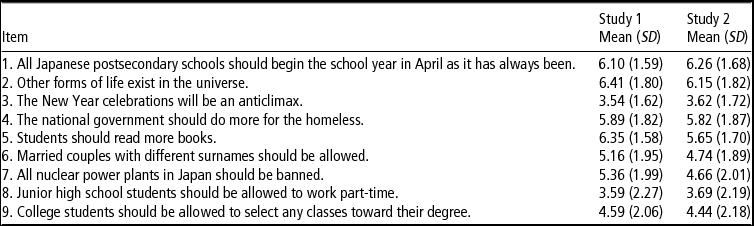
Participants responded to items that measured how important the nine items were for them, using 8-point rating scales (from 1 = not at all important to 8 = very important). Next, participants estimated the percentage sharing their opinion about each item for students who were in the same department (ingroup) and full-time workers in an information technology (IT) company (outgroup), following Jones’ (Reference Jones2004) study. Finally, participants responded to six items that measured the ingroup and outgroup PSD on 8-point scales (from 1 = absolutely not to 8 = absolutely; Table 2). These six items were used by Jones (Reference Jones2004), and we used the Japanese version of the scale. Item 1 measures familiarity (the main precursor of PSD); items 2, 5, and 6 measure anticipated ease of social interaction; and items 3 and 4 measure perceived similarity. We counterbalanced the order of the target groups.
Items for Assessment of PSD

Note: ‘Psychology students’ shown in bold type have been replaced by other target groups.
Results
The PSD Scores
First, we evaluated the internal consistency of the PSD, which was .74 for the ingroup and .72 for the outgroup. The internal consistency in Jones’ study (Reference Jones2004) was .78. We computed ingroup and outgroup PSD scores, with higher scores indicating smaller social distance, and then computed the averages. There was a significant difference between the ingroup PSD and the outgroup PSD, t(91) = 12.93, p < .001 (ingroup PSD: M = 5.83, SD = 1.07; outgroup PSD: M = 3.64, SD = 1.14), indicating that the participants perceived more familiarity and similarity with the ingroup than the outgroup.
Comparisons of Ingroup and Outgroup FCE Scores
The lowest score of the mean importance evaluation of opinions was 3.23 (SD = 2.11: item 3). However, the other items were 4.0 or greater, and this indicates the measure of the opinions was adequate. In the same manner as Jones (Reference Jones2004), the FCE was computed by subtracting from the participant's consensus estimate of his/her position, the mean consensus estimate of that position made by members with an opposing position. The equation below gives the FCE score for those in favour of a particular opinion.
 $$\begin{equation*}
{\rm{FCE}} = {x_i} - \left( {100 - \frac{1}{n}\sum\limits_{j = 1}^n {{y_j}} } \right)
\end{equation*}$$
$$\begin{equation*}
{\rm{FCE}} = {x_i} - \left( {100 - \frac{1}{n}\sum\limits_{j = 1}^n {{y_j}} } \right)
\end{equation*}$$
xi: % consensus for those in favour
n: number in opposition
yj: % consensus for those in opposition
In order to verify which group was relevant regarding each topic, two judges categorised nine items into two categories, namely topics that were relevant to students and working adults. Each item was judged from the perspective of whether it might be a topic familiar to the students or a topic that should be socially discussed. The judges included the first author and another professor specialising in Business. The judges agreed that items 2, 3 and 9 were relevant to students (ingroup), while items 4, 5 and 6 were relevant to working adults (outgroup). Judges did not reach an agreement on the other items (items 1, 7, 8), since they pertained to current topics in Japanese society at the time of the survey (e.g., the Fukushima Daiichi nuclear accident). These items were assumed to be actively discussed topics among both students and working adults, so they did not serve to typify either group. Furthermore, although item 5 dealt with students’ reading habits, the alienation of students toward books has been a contemporary social issue and was regarded as a social topic. Items on which judges did not reach an agreement were not used in the following analyses. These were correlated in each category (mean correlation coefficient of items 2, 3, 9: ingroup FCE was r = .28, outgroup FCE was r = .23; mean correlation coefficient of items 4, 5, 6: ingroup FCE was r = .35, outgroup FCE was r = .31). Therefore, we utilised these six items in following analysis.
Table 3 depicts the ingroup and outgroup FCE scores averaged across three items each, and the results of a two-way repeated measures ANOVA. The results showed that the main effect of relevance to the topic and the interaction effect was significant, F(1, 91) = 39.73, p < .001, η2p = .30; F(1, 91) = 18.73, p < .001, η2p = .17 respectively. Analysis of simple main effects confirmed that outgroup FCE was significantly higher than ingroup FCE when the topics were relevant to the outgroup, F(1, 91) = 16.68, p < .001, η2p = .16. In addition, FCE scores for the topics that were relevant to the outgroup were higher than those to the ingroup in both FCE scores on the ingroup and outgroup, F(1, 91) = 8.15, p = .005, η2p = .08; F(1, 91) = 64.61, p < .001, η2p = .42 respectively. The FCE scores that were relevant to the outgroup were also significantly different from zero; ingroup: t(91) = 4.59, p < .001; outgroup: t(91) = 7.83, p < .001. Therefore, FCE to the outgroup occurred, and when the topic was relevant to the outgroup, outgroup FCE was higher than ingroup FCE. However, there was no significant difference between ingroup and outgroup FCE scores of which topics were relevant to the ingroup. Also, FCE scores were not significantly different from zero, and FCE did not occur on this topic. These results showed that the hypothesis was partly supported.
FCE Scores on Both Target Groups
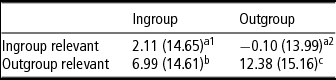
Note: SDs are in parentheses.
a1 < b, p < .01; a2 < c, p < .001; b < c, p < .001 .
Discussion
The PSD Scores
The alpha coefficient of the six-item PSD was similar to Jones’ data (Reference Jones2004), so we assumed that the reliability was adequate. In the same manner as Jones, we created an outgroup that was not perceived as competitive by the ingroup (university students), and the groups were not created using the minimal group paradigm. There was a significant difference between ingroup PSD and outgroup PSD, suggesting that the ingroup was perceived as more similar and familiar than the outgroup. This result can be interpreted as participants perceiving students who belong to the same department as members of the ingroup. In comparison, full-time workers at an IT company were perceived as members of an outgroup (see Turner, Hogg, Oakes, Reicher, & Wetherell, Reference Turner, Hogg, Oakes, Reicher and Wetherell1987). In this study, participants were undergraduate students in the Department of Clinical Psychology. Many of them felt that they were not good at computer science, and none of them had pursued a career in IT. Therefore, a significant number of participants may have perceived the outgroup as being opposite to themselves. It might be possible that the survey conditions were not appropriate for examining the process of broader social effects of outgroups that are not specified as contrasting groups.
Ingroup and Outgroup FCE Scores
The results showed that outgroup FCE occurred as well as ingroup FCE when the topic was relevant to the outgroup and also when outgroup FCE was higher than ingroup FCE. On the other hand, when the topic was highly relevant to the ingroup, neither ingroup FCE nor outgroup FCE occurred, and there were no significant differences between ingroup FCE and outgroup FCE. Therefore, it can be said that results partly supported the hypothesis. We assumed that the groups in Study 1 were not in a conflict situation. However, considering their university major, there may have been a fair number of participants who perceived the outgroup as being opposite to themselves. Previous studies considered that showing more SP to an ingroup than to an outgroup is a robust result in intergroup relationships between contrasting groups. It should be accurately confirmed whether respondents might have regarded working adults of an IT company as a group opposite to themselves. However, if that were the case, the results of this study would be different from those of previous studies. When the topic was highly relevant to an outgroup, SP to the outgroup would have occurred even if the outgroup had contrasting characteristics. Moreover, predicting the similarity with the opinion of outgroup members with a large PSD could increase the validity of one's own opinion. Kanbara and Endo (Reference Kanbara and Endo2013) noted that high consensus estimates restores positive self-views against self-threats. Therefore, consensus estimates with others itself strengthens the validity of self-judgment, and consensus with group members who are more fitting of the topic heightens validity of one's own opinion.
On the other hand, FCE did not occur to ingroups and outgroups about the topic highly relevant to the ingroup. This result also differs from previous studies (e.g., Clement & Krueger, Reference Clement and Krueger2002; Jones, Reference Jones2004). PSD to the ingroup was smaller than PSD to the outgroup, and there was awareness of being an ingroup member. However, the range in FCE scores for each topic for both ingroups and outgroups were relatively large, indicating that there may have been a good deal of individual differences (Kanbara & Endo, Reference Kanbara and Endo2013), while our sample was not big. Furthermore, the sample consisted of clinical psychology majors who may have had low evaluations of themselves and of ingroup members. Pertaining to this, Kato, Nakajima, and Ito (Reference Kato, Nakajima and Ito2015) found that psychology majors, because of higher anxiety and self-esteem protectiveness, prefer to maintain more physical distance between themselves and others. They concluded that psychology majors were more sensitive to self-evaluation threats and hence prefer greater personal space. In addition, Vedel (Reference Vedel2016) discovered that psychology majors scored higher on the neuroticism scale of the Big Five relative to other majors. Furthermore Judge, Locke, and Durham (Reference Judge, Locke and Durham1997) pointed out that self-esteem, generalised self-efficacy, locus of control, and low neuroticism were sufficiently related as a core self-evaluation construct. Of course, this may not be fully valid for the purpose of this study, so further investigation is warranted, especially with a bigger sample.
Moreover, clinical psychology majors may have perceived that working adults of an IT company were not the least bit similar to themselves, which is counter to the assumption of this study. It should be confirmed whether FCE might occur to more general groups without especially opposing characteristics. This could be a limitation when we examine the broader, social influences of SP and its processes. In Study 2, the group that was not assumed to have contrasting characteristics was developed with the goal of clarifying the relationship between PSD and FCE. Also, we set up two ingroups that had different PSDs from each other. Further, consciousness of ingroup membership was confirmed, and the hypothesis was verified by collecting a larger number of data.
STUDY 2
Using the same procedure as used by Jones (Reference Jones2004), in Study 1 we chose existing social groups, neither competitive nor contrasting. We defined the ingroup as students who belonged to the same department and the outgroup as employees of an IT company. However, the participants in Study 1 were undergraduate students in the Department of Clinical Psychology, and very few of them wished to pursue a career in IT. Therefore, they may have contrasted themselves with those who work for an IT company. In addition, there is the possibility that the low self-evaluation of students in the Department of Clinical Psychology might have suppressed FCE to the ingroup (Judge et al., Reference Judge, Locke and Durham1997; Kato et al., Reference Kato, Nakajima and Ito2015; Vedel, Reference Vedel2016). Therefore, it is conceivable that the results of Experiment 1 were influenced by the attributes of the participants being sampled.
In Study 2, the participants were undergraduate students in the Faculty of Health Science. The faculty is composed of two departments: Department of Rehabilitation and Department of Human Care Engineering. As a follow-up to Study 1, we defined Ingroup 2 as consisting of students who belong to another academic department and the outgroup as consisting of working adults in companies. Ingroup 2 consisted of students who had the identical attribution to respondents. Therefore, they might be regarded as the ingroup. However, because they were in different departments, the PSD between the participants and Ingroup 2 were farther than that with Ingroup 1. Moreover, compared to the participants in Study 1, those in Study 2 were not likely to perceive working adults as belonging to a contrasting group. We assumed that the PSD of Ingroup 2 would be closer than Outgroup, and also Ingroup 1 would be closer than Ingroup 2. As Jones (Reference Jones2004) pointed out, if PSD mediates FCE, it is expected that a FCE difference between Ingroup 1 and Ingroup 2 would be observed. However, if the FCE is regulated by relevance of the topic, it is predicted that no difference in FCE will be seen between the two groups, especially since both are student groups. Furthermore, we aimed to confirm the ingroup membership, as well as collect and compare more data than in Study 1. We re-examined the hypothesis and also investigated the relationship between PSD and FCE.
Method
Participants
The participants were 216 undergraduate students in the central part of Japan. After excluding respondents who perceived low membership to their Ingroup 1, 203 participants (108 men, 93 women, 2 unknowns; M = 19.1 years old, SD = 1.12) were included in the analysis. The judgment criteria for exclusion was that the average score of belonging to Ingroup 1 was 2.0 or less, and the PSD score of Ingroup 1 was lower than the PSD score of Ingroup 2 or Outgroup.
Procedure and Materials
Participants were asked to select an enrolled major from a list in order to identify which department they belonged to. They also answered three short answer questions: reasons for choosing their major, their expectations for the department, and common characteristics of students who belong to the same department. This procedure purports to heighten the perceived similarity of students in the same department (i.e., Ingroup 1 members). Next, participants responded to two items that measured how positively they felt about belonging to Ingroup 1, using 5-point rating scales.
As in Study 1, the participants answered nine questions (Table 1) about various topics on scales ranging from 1 (strongly disagree) to 8 (strongly agree). Participants responded to items that measured how important the nine items were for them, using 8-point rating scales (from 1 = not at all important to 8 = very important). Next, participants estimated the percentages of Ingroup 1 (students who belong to the same department), Ingroup 2 (students who belong to a different department), and Outgroup members (working adults) who would agree with their opinion (0–100%). Finally, participants responded to the same six items used in Study 1 that measured each group's PSD (Table 2). We counterbalanced the order of the target groups.
Results
The PSD scores
The internal consistencies of the six-item PSD for each target group were: Ingroup 1, α = .71; Ingroup 2, α = .67; Outgroup, α = .48. Although the internal consistency for Outgroup was marginal, the six-item PSD was used for data analysis in order to compare the three target groups, and to compare the results of Study 1.
We computed the PSD score for the three target groups, higher scores indicating closer social distances. The results of the one-way repeated ANOVA, revealed that there was a significant main effect of group membership, F(2, 402) = 84.13, p < .001, η2p = .30. The assumption of sphericity had not been violated. A Bonferroni post-hoc test showed that the score for PSD for Ingroup 1 was significantly greater than for Ingroup 2 (p < .001) and Outgroup (p < .001), and PSD for Ingroup 2 was also significantly greater than for Outgroup (p < .001; Figure 1).
PSD scores for each target group (Error bars show standard errors.).
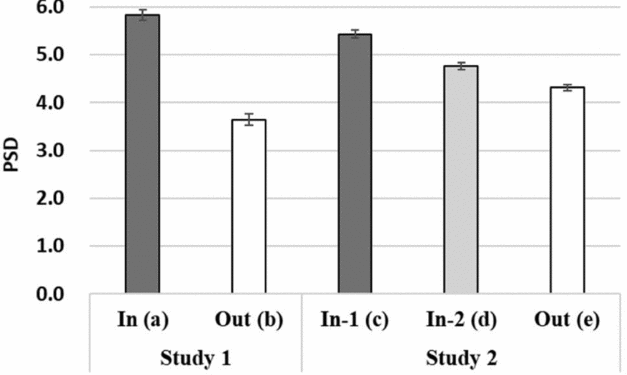
These results showed that the participants perceived the social distance to Ingroup 1 as smaller than to the other two groups. Moreover, the social distance for Ingroup 2 was perceived as smaller than for Outgroup. Comparing Study 2 with Study 1, the Ingroup 1 PSD scores in Study 2 were significantly smaller than the Ingroup PSD scores in Study 1, t(293) = 2.79, p = .006. Additionally, the PSD scores for Outgroup were significantly greater in Study 2 than for Outgroup in Study 1, t(151.29) = 4.84, p < .001.
These results suggest that compared to participants in Study 2, those in Study 1 perceived a smaller social distance to the ingroup, and a greater social distance to the outgroup. Participants in Study 2 perceived working adults as more similar and familiar than in Study 1. Therefore, compared to Study 1, we could have created intergroup relationships that were not competitive.
The FCE Scores
The lowest score of the mean importance evaluation of opinions was 3.09 (SD =1.79: item 3), and the same tendency as in Experiment 1 was confirmed.
Using the same calculation method used by Jones (Reference Jones2004) and in Study 1, we calculated the FCE scores. We used the same three items for each category (students vs. working adults) as in the Study 1 for the topics. Table 4 shows ingroup and outgroup FCE mean scores and the results of a two-way repeated measures ANOVA. Since the assumption of sphericity had been violated for main effect of the target groups and interaction effect, the multivariate criterion of Wilks’ lambda (λ) was used for these analyses. Results showed significant main effects and interaction effect; target groups: λ = .88, F(2, 201) = 13.67, p < .001, η2p = .12; topics: F(1, 202) = 8.83, p = .003, η2 = .04; interaction: λ = .46, F(2, 201) = 120.44, p < .001, η2p = .55. Wilks’ lambda was also used in analysis of simple main effect in which sphericity was not assumed. In the topic which was relevant to the student, the FCE scores were significantly different among the target groups, λ = .47, F(2, 201) = 114.53, p < .001, η2p = .53. The results of a Bonferroni post-hoc test showed that there were significant differences between Ingroup 1, Ingroup 2 FCEs, and Outgroup FCE (p < .001). Ingroup 1 and Ingroup 2 FCEs were higher than Outgroup FCE for the topics that were relevant to the students. These three scores were all significantly different from zero: t(202) = 3.35, p < .001; t(202) = 3.40, p < .001; t(202) = 8.64, p < .001 respectively. Ingroup 1 and Ingroup 2 FCEs were higher than zero, and Outgroup FCE was lower than zero. Next, there were also significant differences of FCE scores among target groups when the topic was relevant to the working adults, λ = .84, F(2, 201) = 19.88, p < .001, η2p = .17. The results of a Bonferroni post-hoc test showed that Outgroup FCE was higher than Ingroup 1 and Ingroup 2 FCEs for the topics that were relevant to the working adults (p < .001). Only Outgroup FCE score was significantly different from zero, t(202) = 5.30, p < .001, and this score was higher than zero. These results supported the hypothesis. Also, FCE scores for Ingroup 1 and Ingroup 2 about the topics relevant to the students were significantly higher than FCE scores about topics relevant to the working adults: F(1, 202) = 14.83, p < .001, η2 = .07; F(1,202) = 7.64, p = .006, η2p = .04 respectively. The FCE score for Outgroup was significantly higher for the topic, which was more relevant to the working adults than to the topic relevant for students, F(1,202) = 159.79, p < .001, η2p = .44.
FCE Scores on Each Target Group

Note: SDs are in parentheses.
a1, a2 > b, p < .001; c1, c2 < d, p < .001; a1 > c1, p < .001; a2 > c2, p < .01; b < d, p < .001.
Discussion
The PSD Scores
The PSD scores were significantly different among target groups. For the three groups, the perceived social distance of Ingroup 1 was the smallest, followed in order by Ingroup 2 and Outgroup. In addition, since respondents with low group membership were excluded, recognition as an Ingroup 1 member was considered to have been confirmed. Members of Ingroup 2 were undergraduate students at the same university, but they majored in different subjects. Therefore, it is supposed that students in Ingroup 2 would be recognised as ingroup members regarding topics that are familiar to the students. Among the three groups, the perceived social distance of Outgroup was the greatest, and we assumed that participants clearly distinguished the outgroup from the other student groups. Moreover, respondents in Study 2 showed significantly greater PSD scores to the working adult group, and significantly smaller PSD scores to the student group of the same department, compared to the respondents of Study 1. Ingroup 1 and Outgroup were less contrasting than in Study 1, and these results may have reflected on this study's purpose to measure SP to outgroups in a broad social context.
Ingroup and Outgroup FCE Scores
The results of Study 2 showed that FCE to the outgroup was confirmed, and that the FCE score differed from student groups. As we assumed, SP to the outgroup occurred, and the outgroup score was greater than the other two groups when the topic was relevant to working adults. In the case of Ingroup 2, although the PSD score was significantly smaller than for Ingroup 1, FCE scores were not different from Ingroup 1. Furthermore, FCE to Ingroup 1 and Ingroup 2 occurred and the scores were different from Outgroup when the topic was relevant to students (see Table 4).
These results indicate that SP is defined by the relevance of the topic, not the PSD. The results supported the hypothesis. In Study 1, FCE to the ingroup did not occur, and the result of topics that were highly relevant to the ingroup did not support the hypothesis. On the other hand, the results of Study 2 supported this hypothesis. The results of Study 1 might have resulted from insufficient data, because the range in FCE scores were large and there may have been a good deal of individual differences (Kanbara & Endo, Reference Kanbara and Endo2013), or because of the low evaluation of self and of the ingroup by students enrolled in the clinical psychology department (Judge et al., Reference Judge, Locke and Durham1997; Kato et al., Reference Kato, Nakajima and Ito2015; Vedel, Reference Vedel2016). Further study is required about these issues.
Also, when the topic was relevant to the outgroup, FCE to ingroups did not occur. This result suggests that SP to an ingroup does not always occur. The results above cannot be explained by the anchoring hypothesis, the differentiation hypothesis, or the induction hypothesis (Robins & Krueger, Reference Robbins and Krueger2005), which predicted that SP to an ingroup would be always greater. Moreover, according to the reduction hypothesis, SP to actual groups is weaker than SP to experimental groups. If that is the case, SP in the present study is considered sufficiently large, as it occurred to actual groups.
General Discussion
The results of these studies attest to Japanese participants’ overestimation of the extent to which their opinions are shared by members of the group when the topic is relevant to that group. This suggests that Japanese students project themselves onto the group members who are relevant to the topic, and overestimation of consensus leads to the feeling of security that one's opinion is shared by the relevant group. This tendency was observed irrespective of the target group, so the hypothesis was supported. The literature indicates that Japanese show stronger compliance to those with whom they have more intimate relationships (e.g., Williams & Sogon, Reference Williams and Sogon1984), but our findings suggest that they have a broader reference group or network. This pattern had also been noted by Shimotomai (Reference Shimotomai2004), and it appears that the compliance network of Japanese college students also includes people who are psychologically distant. Our results supported the hypothesis and implied that SP occurs within a broader range of relationships in order to reinforce the validity of one's opinion. Is this phenomenon characteristic to Japanese people who have been living by considering the perspectives of the seken, or is it universally observed?
Most previous studies about the FCE or SP focused on competitive intergroup relations. In response to this, Jones (Reference Jones2004) created outgroups without conflict in a more ordinary social context by using a procedure other than the minimal group paradigm, in order to investigate differences between ingroup and outgroup FCE. Our study also aimed to understand the process of social influence in broader social relationships and used Jones’ method to create ingroups and an outgroup that were not in conflict.
Compared to participants in Study 2, those in Study 1 perceived a greater social distance between themselves and those in the outgroup who worked for an IT company. There is a possibility that the participants in Study 1 may have perceived a greater contrast between the ingroup and the outgroup than the contrast in Study 2. Participants in Study 2 were more likely than those in Study 1 to perceive familiarity and similarity with members of the outgroup. Therefore, the categorical boundary between the groups was ambiguous. This is in accord with our assumption about the world, at least in East Asia. On the other hand, universal changes have been occurring with the spread of the internet. Not only do people exist in close social relationships, but also in recent years, they exist in relation to distant others. Therefore, it is valuable to better understand relationships between the self and distant others. Global communication is becoming more common, and communication between those who live across borders may influence individuals’ opinions about social issues. The SP depicted in this study seems to indicate SP onto a personally irrelevant group. Obvious SP to an outgroup might be characteristic of Japanese people. However, it might occur without regard to cultural differences.
Further, these results showed that PSD and SP were not simply correlated and SP is defined by the relevance of the topic, not the PSD, even if outgroups’ members are psychologically distant, with groups having superior resources depending on the topic. If the similarity of one's opinion to the opinions of such group members is recognised, the validity of one's opinion would be reinforced through a self-protective function (Clement & Krueger, Reference Clement and Krueger2002). If that were the case, we would be affected by outgroup members with whom we have a distant relationship, and we would live in social relationships broader than our assumption.
As a future directive, it is necessary to determine whether our findings only apply to Japanese or whether they can be generalised as a global phenomenon, regardless of culture. Even if they were deemed universal, there might be differences between Japanese people with their sense of seken versus Western people with their individualistic perspectives in their basic reactions toward intergroup relationships (e.g., Yuki, Reference Yuki2003). Therefore, further investigations should be conducted surrounding these possibilities.


 Open access

