


INTRODUCTION
Legionella pneumophila is a microorganism present in water that may cause pneumonia when contaminated aerosols are inhaled. Since L. pneumophila was first identified in 1976, the diagnosis of Legionnaires' disease (LD) has increased considerably. It is considered as an emerging disease and a major cause of hospitalization [Reference Bartlett1, Reference Smolinski, Hamburg and Ledergerg2], being the second most commonly identified pathogenic agent, after Streptococcus pneumoniae [Reference Sopena3, Reference Alvarez-Sánchez4] in patients admitted to intensive care units. Clinical data can not discriminate between pneumonia due to Legionella and other aetiologies [Reference Benin, Benson and Besser5]. The culture technique is the diagnostic gold standard, but it is not always possible to obtain adequate clinical samples and not all laboratories are equipped to perform the technique [Reference Fernandez6].
Fortunately, the introduction of the urine antigen test has increased the detection of this disease [Reference Carbonne and Astagneau7]. Systematic study of Legionella in cases of community-acquired pneumonia attended in general hospitals has demonstrated that there is not always a history of classical epidemiological risk factors such as travel [Reference Schlech8, Reference Castellani Pastoris9], exposure to cooling towers [Reference Dondero10, Reference Brown11], evaporative condensers [Reference Cordes12, Reference Breiman13] or whirlpools [Reference Jernigan14, Reference Benkel15].
In Catalonia, a region located in the northeast of Spain with seven million inhabitants, notification of LD cases has been mandatory since 1988. Large outbreaks in Catalonia [Reference Sabria16–Reference Sala Ferré18] and other Spanish regions [Reference Fernández19–Reference Castilla21] in recent years have resulted in greater physician awareness with a resulting increase in diagnoses and reported cases [Reference Alvarez22].
Reporting a case triggers a series of epidemiological and environmental activities which can allow earlier identification of the source of the infection, but identification of the source of LD is anecdotal in isolated cases, and outbreaks provide the best opportunity to determine the mechanisms of disease transmission and the risk of exposure posed by the appearance of new cases.
In September 2006, the occurrence of three LD cases in people who resided in or had visited Vilafranca, a town with 36 687 inhabitants in Catalonia (Spain), was reported to the Epidemiological Surveillance Unit of Costa Ponent. This public governmental unit performs the epidemiological surveillance of a region with 1 355 011 inhabitants, located in the south of Barcelona. Onset of illness of cases was between 24 August and 21 September. In this area, where very few or no cases had been reported previously, three cases in this short period of time was much greater than the expected number of LD cases and thus was considered an outbreak. The aims of this study were to describe the epidemiological investigation of a community outbreak of LD, to identify the source of the outbreak, and to prevent additional cases.
METHODS
Epidemiological investigation
A confirmed case of LD was defined as a patient with clinical-radiological criteria of pneumonia, positive Legionella urinary antigen and/or isolation of Legionella in respiratory samples who developed symptoms during or after August 2006, and who resided in or had visited Vilafranca del Penedès during the disease exposure period.
All cases were interviewed by trained public health practitioners either in person during hospital admission or by telephone at home, using a standardized questionnaire concerning demographic data, personal risk factors (cigarette smoking, diabetes mellitus, chronic lung diseases, immunosuppression, renal failure or other medical conditions), and activities during the 15 days before onset of illness (visits or stays in hospitals, stays in hotels or cruise ships, use of whirlpool spas, itineraries, etc.).
To enhance surveillance of additional cases of LD, the increase of cases was reported to healthcare centres and laboratories in the area.
Supermarket workers were interviewed to determine whether they had experienced respiratory symptoms compatible with a non-diagnosed legionellosis, and reasons for their absence from work were reviewed.
The ratio of customers buying products in the supermarket's fish section to all supermarket customers was calculated using the number of supermarket till receipts issued between 14 August and 31 October 2006 as the denominator.
Environmental investigation
A search was made for probable sources within a radius of 3 km of patients' homes. Site inspections, record reviews and water sampling were performed in facilities generating aerosols. No hot springs, whirlpool spas or other water leisure facilities were present in the area or had been visited by the patients in the 15 days prior to onset of symptoms.
All cases received direct water from the distribution system at home and none had used any kind of domestic humidifiers.
Installations with a low-risk for Legionella dispersion (car wash, ornamental fountains, etc.) were considered when high-risk systems were ruled out.
As the preliminary investigation showed that all patients had visited a supermarket in the town, an inspection of this store was carried out, where a mist machine in the fish section was found. The establishment was a medium-sized supermarket in the outskirts of Vilafranca frequented by local people and by people from nearby small villages.
On 31 October, water samples were collected from the mist machine and the installation was closed. Moreover, water samples were collected from the potable water of the supermarket.
Water samples were collected in 1-litre polypropylene bottles containing a 0·1% sodium thiosulfate solution according the Spanish Regulation [23] and processed following to the directives established in the international standard ISO 11731:98 [24].
Molecular investigation
Clinical and environmental L. pneumophila serogroup 1 isolates were analysed by pulsed-field gel electrophoresis (PFGE) subtyping. Genomic DNA was prepared as described previously with some modifications [Reference Jernigan14]. Restriction fragments of DNA were separated in a 1% agarose gel prepared and run in 0·5× Tris-borate-EDTA buffer (pH 8·3) in a contour-clamped homogeneous field apparatus (CHEF DR II system; Bio-Rad, France) with a constant voltage of 5 V/cm and increasing switch time of 5·6–50·6 s for 24 h at 14°C. The lambda ladder PFGE marker (New England Biolabs) was included as a molecular-weight marker. Band pattern analysis was carried out by the unweighted pair-group method using arithmetic averages (UPMGA) with Finger Printing II software (Bio-Rad).
RESULTS
Epidemiological results
Between August and November 2006, 12 patients fulfilled the case definition. Five were residents of Vilafranca and seven lived in neighbouring towns but had visited Vilafranca during the incubation period.
There were seven males and five females (male/female ratio: 1·4). The median age was 66·4 years (range 55–80 years).
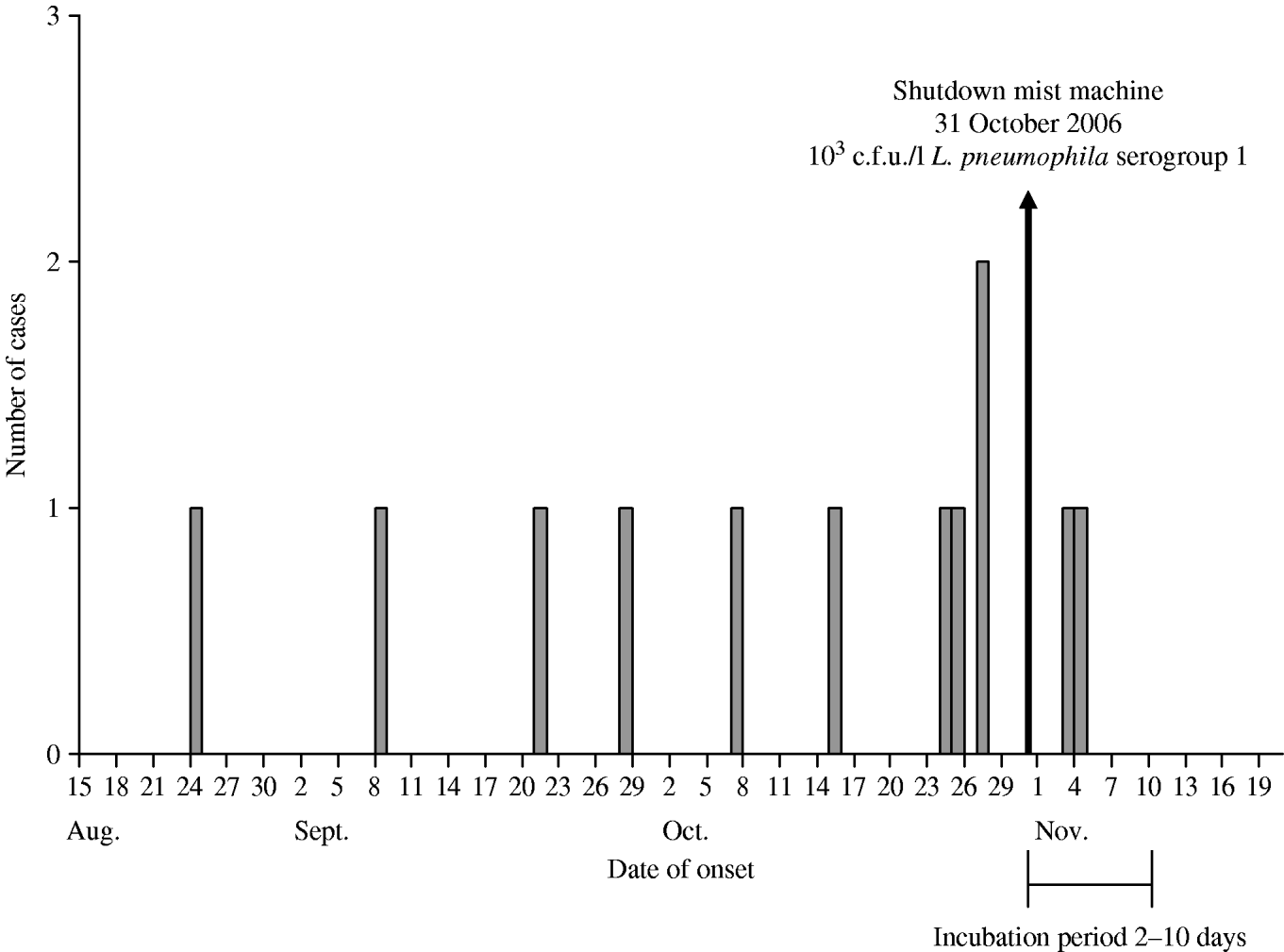
Their dates of onset of illness were between 24 August and 4 November. No new cases were detected more than 4 days after the mist machine was closed (Fig. 1).
Epidemiological curve of case onsets of LD in Vilafranca del Penedès, August–November, 2006.
Eleven cases required hospitalization, with a duration of 3–11 days and no deaths occurred. Associated medical risk-factor cases were: smoking (two cases) and diabetes mellitus (three cases). Seven cases (58%) had no underlying medical conditions known to be associated with LD.
The Legionella urinary antigen test was positive in all patients. Sputum specimens from six patients were cultured and L. pneumophila serogroup 1 was isolated in two cases. All patients had been in the fish section of the supermarket (eight had bought products and four were just looking); three cases had only gone once to the supermarket during their incubation period and the nine remaining cases had gone to the supermarket more than once.
The attack rate was 14/100 000 inhabitants in residents of Vilafranca, and ratios calculated were 1 case/1343 fish section receipts and 1 case /4983 total supermarket receipts.
During the study period, six women worked full time in the fish section with a median age of 38 years (range 31–49 years). No cases occurred in these women or in any of the other 80 supermarket employees.
Environmental results
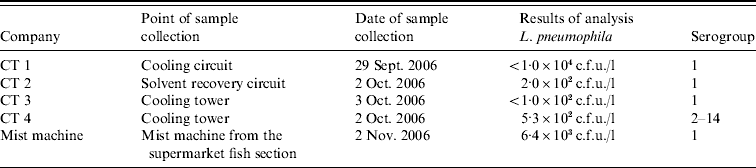
Sixteen possible sources were investigated (13 cooling towers, two ornamental fountains and one mist machine). L. pneumophila was isolated in five facilities and L. pneumophila serogroup 1 was found in four of them: three cooling towers and the mist machine from the supermarket fish section (Table 1). L. pneumophila was not isolated in the water distribution system of the supermarket that supplied the system.
Aerosol-producing systems with Legionella pneumophila isolates
Molecular results
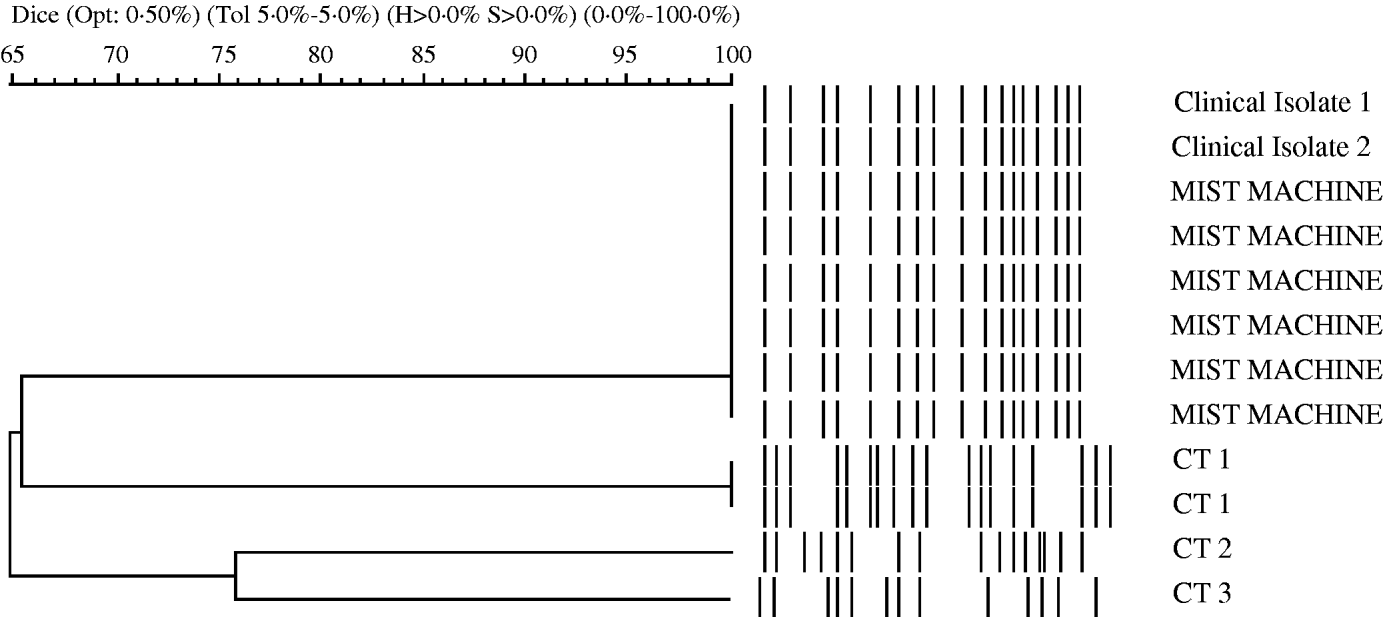
The molecular study showed that the two clinical strains and the environmental strains isolated in the humidifier of the supermarket's fish section had the same pattern. The environmental strains isolated in the other installations investigated had different molecular patterns (Fig. 2).
Dendrogram of pulsed-field gel electrophoresis: analysis of Legionnella pneumophila serogroup 1. Isolates with an indistinguishable PFGE pattern are considered to belong to the same PFGE genotype and are designated with capital letters.
DISCUSSION
A community outbreak of Legionnaires' disease was detected in customers of a supermarket between August and November 2006, with a total of 12 cases.
The initial investigation showed that four companies had L. pneumophila in their circuits. Although all these facilities carried out shock disinfection (29 and 30 September, 4 and 7 October), new cases continued to be detected during October. For this reason, the supermarket which all patients had visited was inspected.
L. pneumophila serogroup 1 exhibiting the same molecular PFGE pattern observed in isolates from patients was detected in water samples from a mist machine located in the supermarket's fish section. The PFGE pattern detected in the clinical and mist-machine isolates had never previously been identified in Catalonia before the outbreak and has not been identified since (from a total of 1646 isolates analysed of the Legionella bacterial collection of the Study Group of Legionnaires' disease) [Reference Ragull25, Reference Sanchez26].
This, together with the disappearance of cases once the mist machine was closed down, led to the conclusion that this machine was very likely the source of the outbreak.
The mist machine was installed in April 2006 in order to maintain fish fresh through aerosol production of cold water (drops between 40 and 70 μm) on the fish counter. It had been disinfected with chlorine before it was used. Subsequently, the machine had functioned during the supermarket opening hours with no maintenance until it was closed as a precautionary measure.
With regard to the supermarket workers, we believe there were no symptomatic cases because they were young people, without risk factors for this disease, and because the low attack rate of LD makes it unlikely to cause a case in such a relatively small number of workers.
Mahoney et al. [Reference Mahoney27] were the first to describe an outbreak of LD associated with a grocery store humidifier that occurred in Louisiana in 1989. A case-control study was fundamental in establishing the cause. Another outbreak, in 2000 in the UK, which affected five people of whom two died, was also associated with a food display humidifier in the dining room of a hotel: the involvement of the humidifier was established due to a molecular study [Reference Hahné and Pankhania28].
In the outbreak described in the current study, the main element in establishing causality was the results of the molecular epidemiology analysis, but the importance of the epidemiological surveys performed should not be underestimated. As indicated by Mahoney et al. [Reference Mahoney27], there may be apparently sporadic cases caused by these types of humidifiers, but epidemiological survey of individual cases does not allow the establishing of an hypothesis about the source of infection. In addition, possible epidemiological associations between all apparently unrelated cases of LD known should be evaluated, in order to identify a possible common origin.
As observed by Yu & Stout [Reference Yu and Stout29], it is still common for LD to be suspected only in high-risk patients, leading to some cases not being diagnosed. A recent prospective study showed that the incidence of L. pneumophila in ambulatory patients is the same as that in hospitalized patients, when the same diagnostic options are available for all patients (3·7% and 3·8%, respectively) [Reference von Baum30]. Therefore, it is recommended that rapid diagnostic tests should be used in any suspected case of pneumonia, whether hospitalization is required or not [Reference Yu and Stout29]. Another fundamental aspect is to obtain respiratory specimens to isolate the strain in all atypical pneumonias: to confirm LD cases caused by other species different from L. pnemophila serogroup 1 and to prove the source of infection involved by the epidemiological studies.
One limitation of this study is that no case-control study was performed as it was considered that there was sufficient clinical, microbiological, epidemiological and environmental evidence to explain the outbreak.
LD is a complex, difficult-to-control emerging disease in developed countries. Therefore, disease surveillance by all physicians should be improved in suspected cases in order to ensure that the correct diagnostic tests are made [Reference Yu and Stout29, Reference von Baum30] and greater use made of specialized laboratories using molecular epidemiology, which in some cases may complement the epidemiological analysis, but may, as in the outbreak described here, hold the key to determine the source of the infection. We consider it of key importance to include exposure to mist machines in the legionellosis epidemiological survey, as their use in stores is currently increasing in order to preserve fruits, vegetables, plants, etc. This step will allow researchers to evaluate this exposure as a source of infection and possibly help to reveal non-detected outbreaks, in order to prevent new cases.
ACKNOWLEDGEMENTS
We thank H. Prellezo, A. Escofet, M. Amat, for their participation in the environmental investigation and the physicians of Hospital of Vilafranca for their reporting and collaboration in the outbreak. CIBERES and CIBERESP are initiatives of ISCIII.
DECLARATION OF INTEREST
None.



