





1. Introduction
1.1 Background
In the near future, remote pilots will be vital in ensuring the safety of maritime traffic. The International Maritime Organization (2019) proposed the implementation of remote pilots to operate maritime autonomous surface ships (MASS) for the regulatory scoping exercise to utilise them, which is more efficient and safer as it prevents human errors and reduces the occurrence of accidents at sea. In addition, remote guidance can aid in emergency situations and enhance the safety of MASS (MacKinnon et al., Reference MacKinnon, Man and Baldauf2015). However, during its introduction, there will be a mix of ships operated by remote pilots and on-board seafarers because at the moment, most ships will be on-board seafarers’ ships. This mix will make it difficult to prevent collisions between ships.
International agreement on the conduct of vessels according to the Convention on the International Regulations for Preventing Collisions at Sea (COLREG, 1972; International Maritime Organization, 2003) prescribes COLREG Rule 5 to maintain situational awareness and provide warning of the risk of collision and other navigational dangers through the use of ‘sight and hearing as by all available means’, which includes the effective use of available instruments and equipment. With easy access to a wide array of information sources, on-board seafarers nowadays are highly dependent on information obtained by directly observing surroundings (e.g. landscape information), in addition to other sources of information (Gilbert, Reference Gilbert2001). In contrast, remote pilots do not have access to as many sources of information and therefore have relied on the information obtained from various sensors displayed on the control panel (e.g. radar information). These two sources of information differ greatly in terms of perspective, field of view and available data type (qualitative or quantitative). Thus, these can lead to differences in situational awareness and decision-making. Therefore, to guarantee safety of maritime traffic in the near future, the differences between their perceptions must be compensated. To do so, it is necessary to clarify the nature of each information source and how it may affect the perception of the situation and decisions made.
The effects of differences in information on situational awareness and decision-making in collision-avoidance judgements – specifically between the landscape information and radar information – were not yet clarified; hence, a literature review was conducted (Kato et al., Reference Kato, Fuchi, Kubono, Fujii, Konishi, Fujimoto and Hirono2017a, Reference Kato, Fuchi, Fujii and Kubono2017b, Reference Kato, Murai, Horiguchi, Morishita and Fuchi2020a, Reference Kato, Horiguchi, Murai and Fuchi2020b). Specifically, participants were asked to make collision avoidance judgements based on landscape information alone or radar information alone, and the extent of their attention and judgements were investigated (details are given in Appendix A1). These studies showed a significant difference in collision avoidance judgements of inexperienced and less-experienced seafarers between landscape and radar information, suggesting that different information sources may have a significant effect on the perception of safety and efficiency in navigation (Kato et al., Reference Kato, Fuchi, Kubono, Fujii, Konishi, Fujimoto and Hirono2017a, Reference Kato, Horiguchi, Murai and Fuchi2020b). These studies also revealed that the range of attention (local and global) differed between information sources not only in both types of seafarers but also proficient seafarers. It was suggested that the use of landscape information tended to produce a localised situation awareness concentrated on the front, while the use of radar information tended to produce a wide-area situation awareness including the rear apart from the front (Kato et al., Reference Kato, Fuchi, Kubono, Fujii, Konishi, Fujimoto and Hirono2017a, Reference Kato, Fuchi, Fujii and Kubono2017b, Reference Kato, Murai, Horiguchi, Morishita and Fuchi2020a, Reference Kato, Horiguchi, Murai and Fuchi2020b).
As a characterisation of previous studies, it is noted that each information source is only a specific combination of the type of target information and display method. For example, radar information is the information about other ships in the vicinity, which is selected, processed, and displayed (third-person view, symbolisation, addition of quantitative data, etc.) in accordance with the actual radar system. To develop a method to compensate for differences in the cognitive properties of the various sources of information used in ship handling, the influence of each factor on situational awareness and judgement should be clarified as much as possible.
The difference in perspective can be one of the causes of different situation perceptions, as shown in Figure 1, because it significantly changes the image and arrangement of the object projected on the retina (details are given in Section 1.3). Symbols indicating objects and quantitative information are arranged according to the reference axis defined by the perspective, which highly influences the perception of the external world. In addition, the direct vision of on-board seafarers is fixed from the first-person perspective (FPP) (e.g. landscape vision), whereas the sensor information relied on by remote pilots can be conveniently transposed into a third-person perspective (TPP), such as the view on the radar screen of a ship. For these reasons, the focus of the current study is on the ‘perspective’: this involves clarifying the effects of differences in FPPs and TPPs on situational awareness and judgement in ship handling, with the resultant improved understanding enabling weaknesses associated with various perspectives to be compensated for.
FPPs and TPPs in ship manoeuvring

1.2 Purpose
The purpose of this study is to clarify the cognitive effects of the FPPs and TPPs on ship handling via empirical experiments. Based on predecessor studies to the current study and on previous findings of visual information processing, the working hypothesis here is that first-person navigation is safety oriented because it is suitable for obtaining local information in the ship vicinity, while third-person navigation is efficiency oriented because it is suitable for obtaining global information.Footnote 1 The working hypothesis was tested in this study using a ship handling simulator developed as part of the overall work program the study belongs to. In Section 1.3, the investigated cognitive properties of the two perspectives are shown, considering their strengths and weaknesses in acquiring local and global situational awareness. In Section 1.4, the findings are interpreted in terms of safety and efficiency in ship handling to formulate the hypotheses.
1.3 Cognitive characteristics of FPPs and TPPs
Kosslyn (Reference Kosslyn1994) identified five properties of shape perception: (1) independence of position or size of the image on the retina; (2) recognition of the object as-is, regardless of the variations in the shape of its retinal image owing to perspective alteration, object rotation, deformation, and addition or subtraction of parts; (3) recognition of an object shape even if the sensory input is degraded by shielding or noise; (4) identification of a specific object based on its shape and (5) simultaneous and autonomous recognition of multiple objects. Thus, the human visual information processing function identifies a ship as a ship and a landmark as a landmark in both FPPs and TPPs. However, the information obtained from each perspective of the same object is not the same because the image projected onto the retina varies according to perspectives.
In the FPP, the surrounding objects are visually recognised horizontally from the bridge of the ship (Figure 1). The image on the retina is a perceptual projection that varies in shape and size as the object approaches or the ship alters its course. Moreover, temporal variations in the image size on the retina can be used to estimate the object distance, whereas those in the image shape can be used to determine the changes in the direction of the object. In addition, the object speed can be recognised from the temporal variation of perspective. The ‘time to contact’ calculated based on this recognition is called the ‘visual tau’ (Lee, Reference Lee, MacLeod and Pick1974, Reference Lee1976, Reference Lee, Stelmach and Reguin1980). Therefore, an image can contain various types of information (e.g. distance, direction and speed). In terms of perspective, the information concentrated in an image of proximate objects can be conveniently read as the image is enlarged. However, the information from a distant object is challenging to read because of its small size. Schiff and Detwiler (Reference Schiff and Detwiler1977) reported that the visual tau develops inaccuracy at a distance. In addition, owing to the characteristics of the human field of view, the surroundings cannot be isotopically mapped (Wertheim, Reference Wertheim1894). Furthermore, the acquired information is relative in all instances. According to reports, cognitive maps are more distorted in the FPP with its subjective and local frame of reference, as compared with being less distorted in the TPP with its objective and global frame of reference (Lloyd, Reference Lloyd1989; Wakabayashi and Suzuki, Reference Wakabayashi and Suzuki2003; Wakabayashi, Reference Wakabayashi2008; Karim and Kojima, Reference Karim and Kojima2010; Burigat et al., Reference Burigat, Chittaro and Sioni2017).
The TPP orthographically views the surrounding objects (Figure 1). At a sufficiently high viewpoint, the image on the retina is parallel to the projection, and its shape and size is uniform, regardless of the distance, relative direction, and relative speed between the concerned ship and another ship. Accordingly, the positional information and its temporal variation can aid in describing the relationship between the ship and its surrounding objects, including that between several objects around the ship based on the plane coordinates outside its frame of reference. This relationship can be more objectively and globally understood than the FPP owing to the characteristics of the cognitive map described previously (Lloyd, Reference Lloyd1989; Wakabayashi and Suzuki, Reference Wakabayashi and Suzuki2003; Wakabayashi, Reference Wakabayashi2008; Karim and Kojima, Reference Karim and Kojima2010; Burigat et al., Reference Burigat, Chittaro and Sioni2017). According to reports, third-person judgement may be more demanding than first-person judgement, as it requires a mental rotation and transformation to the FPP used in daily spatial operations (Aretz and Wickens, Reference Aretz and Wickens1992; Goodman et al., Reference Goodman, Brewster and Gray2005; Oulasvirta et al., Reference Oulasvirta, Nurminen and Nivala2007). However, the image on the retina, which remains constant with the approach or rotation, does not have the aggregated information pertaining to the FPP.
1.4 Hypothesis
The distance to passing vessels should be as large as possible to ensure maximum safety and prevent collision. Conversely, the shortest possible route should be followed to reach the destination for the most fuel-efficient navigation. However, over-emphasis on safety often results in following a less efficient route to the destination, while over-emphasis on efficiency often results in a less safe route as the distance to other vessels is minimised. Therefore, a trade-off between safety and efficiency is important to balance these two aspects in navigation.
The discussion in Section 1.3 allowed us to consider the following cognitive characteristics of the FPPs and TPPs: (1) The FPP can swiftly and comprehensively understand the local information (i.e. the relationship of each nearby ship to the frame-of-reference ship; hereinafter the ‘frame of reference’) but not the global information; (2) the TPP can obtain global information (i.e. the relationship of the traffic flow in the entire target area) and the relationship between the multiple objects (including the frame of reference), but it is not suitable for obtaining detailed information on individual ships in the vicinity.
By applying these cognitive characteristics to the problem of safety/efficiency, it was determined that:
(1) Avoiding approaching vessels requires local information, which is better obtained from the FPP than from the TPP.
(2) Determining the shortest route requires global information, which is better obtained from the TPP than from the FPP.
These findings are the basis for proposing the following hypothesis.
Hypothesis 1. (i) The FPP allows safer manoeuvring of the frame of reference among individual vessels in comparison with the TPP (H1-1). (ii) The TPP is more efficient than the FPP (H1-2).
The prior research indicates that Hypothesis 1 is not always true. If it were always true, then the FPP would always be safer than the TPP. However, in prior research, less-experienced or inexperienced pilots initiated major course corrections much earlier to avoid collisions when solely relying on radar information as compared with landscape information (Kato et al., Reference Kato, Fuchi, Kubono, Fujii, Konishi, Fujimoto and Hirono2017a, Reference Kato, Horiguchi, Murai and Fuchi2020b). Moreover, the judgement of experienced pilots did not waver with information sources (Kato et al., Reference Kato, Fuchi, Fujii and Kubono2017b, Reference Kato, Horiguchi, Murai and Fuchi2020b). Generally, an early major course correction indicates the pilot's intention to maintain a large distance from a neighbouring or oncoming ship for safety. In line with this observation, previous studies demonstrated that radar information yielded safer decisions than did landscape information for less-experienced pilots, although the landscape and radar information were characterised by the FPPs and TPPs.
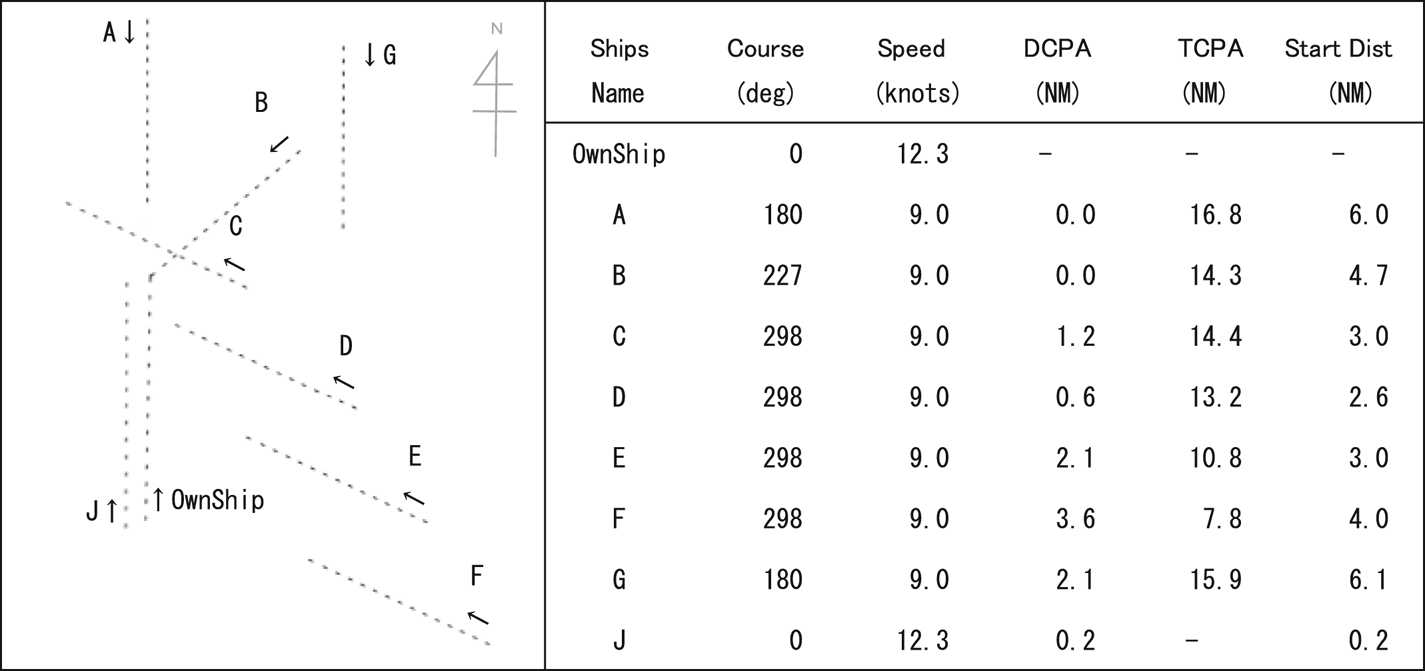
The radar information allowed pilots to correct the course earlier than did the landscape information, which is probably because the priority target ships for safety awarenessFootnote 2 varies from the special characteristics of traffic flow, including numerical information. For instance, in a previously reported scenario depicted in Figure A1 (Appendix A), early major course correction increased the safety of ships that could collide into approaching ships (Ships A and B), but it decreased that of slower ships that would not have collided on the starboard side (Ships D, E and F). The opposite is true in the case of a subsequent minor course correction; the slower ships on the starboard side of the frame of reference (Ships D, E and F) can pass behind it, whereas those ahead of it (Ships A and B) approach. Thus, either an ‘early major course change’ or a ‘late minor course change’ must be executed to avoid collision with the oncoming Ships A and B and continue north towards the destination. Therefore, this is a useful scenario that can aid in understanding the difference in situational recognition and judgement between the sources of information. However, the underlying cause of the variation is not revealed, owing to the large dataset of ships. For instance, the scenario cannot assist in determining if a manoeuvre performed to pass 0⋅3 miles behind Ship D can ensure the safety of Ships D, B or J, or all of them. Thus, safety and efficiency cannot be discussed through the unclear relationship between the target ship and the manoeuvre in congested waters.
In contrast, only a single vessel is involved in the scenario of crossing a straight line in a particular direction (Figure 4), irrespective of the point on the line it passes, as no other ships exist on the line (as long as the row spacing remains constant, and no other ship arrives in the vicinity of the target ship). Moreover, this scenario does not prevent the ship (e.g. Ship J in Figure A1) from altering its course (the 2nd row in Figure 4 is not an obstacle, as it is adequately afar). Hereinafter, this scenario shall be called ‘the scenario of crossing a line of ships’, wherein the involved ships are identifiable. Thus, pilots manoeuvring for safety to maintain a large distance from other ships is expected, just like it is expected that pilots manoeuvring for efficiency seek to reach the destination following the shortest route. In the previous study scenario, it was ambiguous whether the pilot was manoeuvring for safety or for efficiency. Overall, ‘crossing a line’ is a traditional research topic in the fields of automotive research (Kamal et al., Reference Kamal, Imura, Hayakawa, Ohata and Aihara2015) and maritime sciences research (Nagahata, Reference Nagahata1976; Zhang et al., Reference Zhang, Hao, Xu and Qin2021).
In most scenarios, including the discussed ones, successfully avoiding nearby ships as safely as possible and reaching the destination as efficiently as possible require the initiation of three parallel processes: (1) predicting the behaviour of other ships in motion, (2) avoiding collisions, and (3) reaching the destination. Processes (2) and (3) can be associated with safety and efficiency, respectively. However, Process (1) cannot be simply classified as either safety or efficiency, as it may be strongly influenced by the perspective because the method of calculating the time to collision varies for FPPs and TPPs, as described in Section 1.3. In general navigation, stationary objects are easier to avoid than moving ones as the actions of the former are easier to predict. Thus, Hypothesis 1 is more applicable in a static condition (neighbouring ships are at rest) than in a dynamic one (in motion). Based on this finding, an additional hypothesis is proposed here.
Hypothesis 2. The effect of the FPPs and TPPs is more apparent for the more easily predictable behaviour of the neighbouring ships.
2. Methods
2.1 Participants and surveys
Thirty-two undergraduate and postgraduate science and engineering volunteers (19–25 years old) with no professional maritime knowledge (e.g. maritime traffic rules) and no experience in ship operation were arbitrarily selected to eliminate the experience bias.
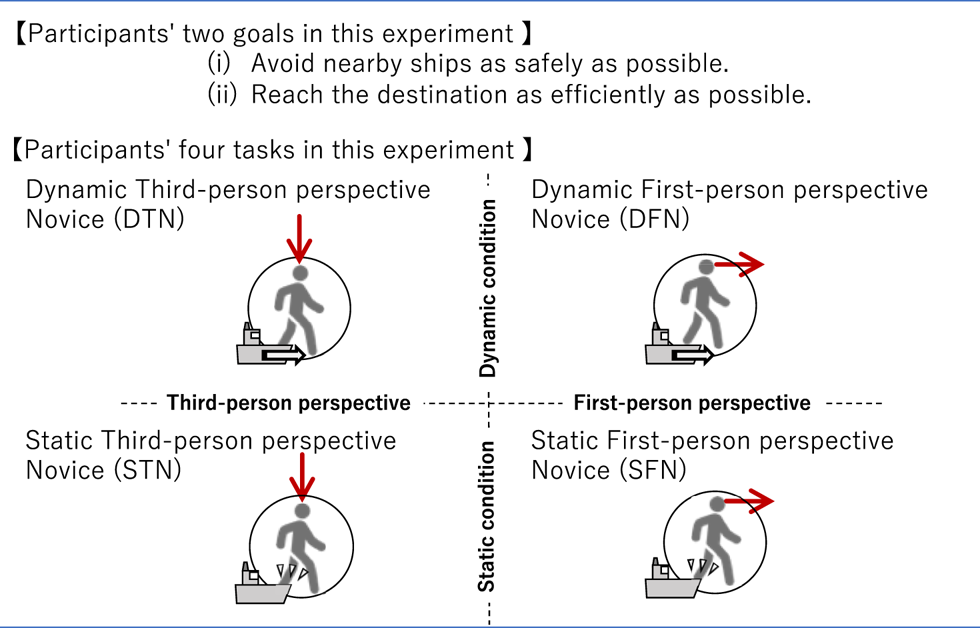
The participants were provided two goals for four tasks in the scenario of crossing a line of ships (Section 2.2), as depicted in Figure 2. They were surveyed on ‘manoeuvring behaviour’ and ‘manoeuvring background’. The four tasks – Dynamic Third-person-perspective Novice (DTN), Dynamic First-person-perspective Novice (DFN), Static Third-person-perspective Novice (STN), and Static First-person-perspective Novice (SFN) – comprised a combination of two perceptual conditions (FPP or TPP) and two situational conditions (static or dynamic).
Two goals and four tasks assigned to participants of experiment

The experiment was conducted in a simple ship handling simulator developed by the authors, named ‘SHITENsim’. It was specifically designed to investigate the perspective influence on the ship handling behaviour. The influences of the variations in numerical data, symbolisation and colour were eliminated. An example of the interface of SHITENsim is illustrated in Figure 3, and its configuration is detailed in Appendix B.
Example of user interface of SHITENsim

Manoeuvring behaviour: Based on the log data of SHITENsim, the survey data collected included ‘Collisions’, ‘Total distance’, ‘Names of ships sighted and distances to them during course correction’, ‘Selected route’, and ‘Distance to collision ship’.
Manoeuvring background: Subjective evaluations were obtained from the following two questionnaires. Questionnaire 1: ‘Difficulty of the four tasks’ and ‘Intensity of awareness of the two aims’ (Figure 2). Questionnaire 2: ‘Comprehensibility of distance’ and ‘Careful approaching.’ Questionnaire 1 was completed at the end of each scenario, whereas Questionnaire 2 was completed after the experiment. The ‘Difficulty of the four tasks’ was assessed using a seven-point scale ranging from ‘1. easy’ to ‘7. hard’ (4. neutral). Similarly, the ‘Intensity of awareness of the two aims’ was assessed using a seven-point scale ranging from ‘1. reaching the goal’ to ‘7. avoiding collisions’ (4. neutral). In addition, the ‘Comprehensibility of distance’ was assessed from three options: ‘FPP’, ‘TPP’, and ‘both are approximately same’. Similarly, the ‘careful approaching’ was assessed from four aspects: ‘FPP’, ‘TPP’, ‘both are approximately same’, and ‘not a comparable condition’.
2.2 Scenario of crossing a line of ships
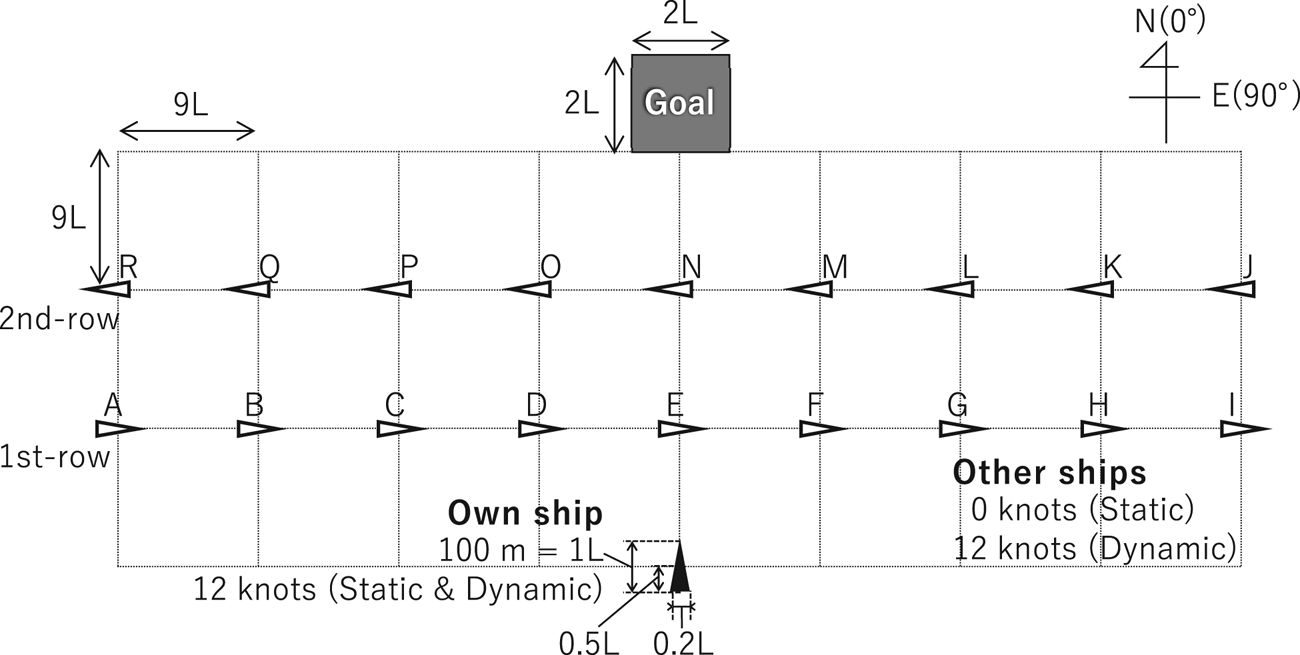
The scenario of ‘crossing a line of ships’ is illustrated in Figure 4, wherein each square in the figure is 9 L × 9 L (where the length of the ship L = 100 m), the top-centre square denotes the destination, the black triangle represents the own ship (the frame of reference), the white triangles represent passing ships (the apex is the bow) and the top portion of the figure is the true north (0°). The ships in the 1st row face east, whereas those in the 2nd row face west. The horizontal spacing between the other ships is 9 L (900 m), which is set to be passable and required evasive action, according to Nagahata (Reference Nagahata1976). The vertical spacing, which applies to the distances between the start and the 1st row, between the 1st row and the 2nd row, and between the 2nd row and the goal is also 9 L. This value of this setting is greater than the local information area.Footnote 1
Scenario of ‘crossing a line of ships’

In the scenario, the other ships were at 0 knots (0 km/h) in the static condition and at 12 knots (22⋅2 km/h) in the dynamic condition, which was the same as that of the frame of reference. In both conditions, the frame of reference was set to collide if it maintained its initial course for 138 s (hereinafter, this type of ship will be called a ‘collision ship’). In particular, the collision ship was Ship E in the static condition and Ship D in the dynamic condition. In both conditions, the speeds of the other ships were not disclosed to the participants, because the strategies used to manoeuvre the ship could be qualitatively different when the other ships were assumed as moving or stationary, which could pose a greater influence than that posed by the perspective variation.
The setup of the scenario is completed here by considering the own ship as the stand-on vessel (the vessel with the right-of-way according to the rules, in contrast to the other give-way vessel) in both dynamicFootnote 3 and staticFootnote 4 situations, and then applying the following parts of COLREG Rule 17 ‘Action by Stand-on Vessel’ to the 1st row: (a) Rule 17(a)(i), where the stand-on vessel shall maintain her course and speed; (b) Rule 17(a)(ii), the stand-on vessel may, however, take action to avoid collision by her manoeuvre alone, as soon as it becomes apparent to her that the give-way vessel is not taking appropriate action.
2.3 Experimental procedure
This experiment was approved by the ethical review of the Graduate School of Maritime Science, Kobe University, where the present authors are associated, and the study was conducted maintaining ethical considerations.
Prior to the experiments, participants were informed about the goals (Figure 2) and test conditions, both in writing and orally. The test conditions were as follows: details of the frame of reference (model: 5,000-DWT tanker with dynamic characteristics, size: 100 m, speed: 12 knots), and no external forces (wind, tide, waves, fog). All other ships exhibited the same specifications as the frame of reference, except for speed information, and there was no communication channel between the ships. Participants were trained to operate SHITENsim (both first- and third-person) until becoming proficient.
Thereafter, the participants performed the four tasks (Figure 2) in an unspecified order. During the task, the participants were required to enter the name(s) of the spotted ship(s) into the textbox on the top-right of the screen (see Figure 3) whenever they corrected the course of their frame of reference. Each task ended when the ship reached its destination or collided with another ship. The participants were asked to answer Questionnaire 1 after each task and Questionnaire 2 after completing all the scenarios. The average time required for a participant to answer the questionnaires was approximately one hour.
2.4 Analysis
Safety was assessed based on the ‘Collisions’, and the efficiency was evaluated based on the ‘Total distance’ travelled. The details of these evaluations were examined by ‘Name of ships sighted and distances to them during course correction’, ‘Selected route’, and ‘Distance to collision ship’. The relationship between these manoeuvring behaviours and cognitive characteristics of the participants were examined using a questionnaire for subjective evaluation (see Section 2.1). In this analysis, the significance level for all the tests was set to less than 5%.
In addition, the analyses were performed in the 1st row because it significantly influenced the manoeuvring behaviour of the 2nd row. In the dynamic condition analysis, the datum of a participant's dynamic condition was lost after system malfunction. In total, 31 dynamic conditions and 32 static conditions were simulated.
3. Results
3.1 Collisions
The number of participants whose ships collided with the neighbouring ships was calculated for each task and compared between the two perspectives using McNemar's test. The participants who reached the goal without collision in a task were named ‘finishers’.
In the dynamic condition, the number of collisions from the TPP was 7 of 31 (24 finishers) and that in the FPP was 9 of 31 (22 finishers), indicating no significant variation between the perspectives [McNemar's chi-squared (1) = 0⋅4, p = 0⋅527].
In the static condition, the number of collisions was 11 of 32 (21 finishers) in the TPP and 1 of 32 (31 finishers) in the FPP, implying a significant variation between the perspectives [McNemar's chi-squared (1) = 8⋅3, p < 0⋅001].
3.2 Total distance
The total distance travelled by the ships that reached the destination was calculated from the log data (collisions were excluded).
In the dynamic condition, the means of the total distance in the TPPs and FPPs were 28⋅9 L (24 finishers; see Section 3.1) and 29⋅7 L (22 finishers), respectively, indicating no significant variation between the perspectives [Welch's t-test; t (24⋅3) = −0⋅837, p = 0⋅411].
In the static condition, the means of total distance in the TPPs and FPPs were 28⋅1 L (21 finishers) and 27⋅8 L (31 finishers), respectively, implying no significant variation between them [Welch's t-test; t (49⋅7) = 0⋅554, p = 0⋅582].
3.3 Names of ships sighted and distances to them during course correction
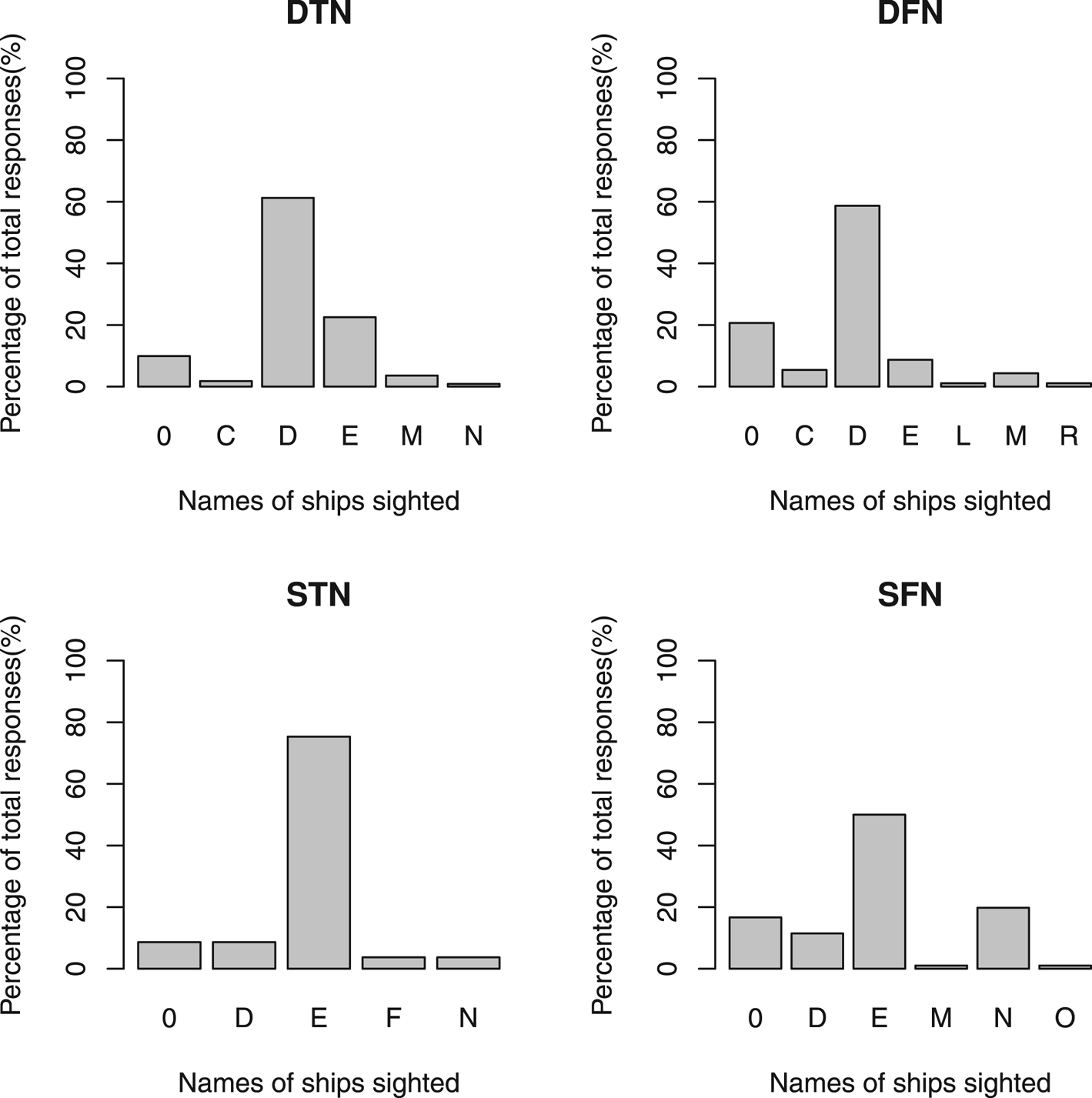
The ratio of the names of sighted ships during course correction from the start of the experiment to the 1st row (Figure 4) is presented in Figure 5. The letter indicates the name of the ship, and 0 indicates that there were no target ships. Irrespective of the viewpoint, most participants sighted the collision ship. In the dynamic condition, more than 60% of the participants sighted the collision ship (Ship D) from both the perspectives. In the static condition, more than 75% and 50% of the participants sighted the collision ship (Ship E) from the TPPs and FPPs, respectively.
Names of ships sighted during course correction

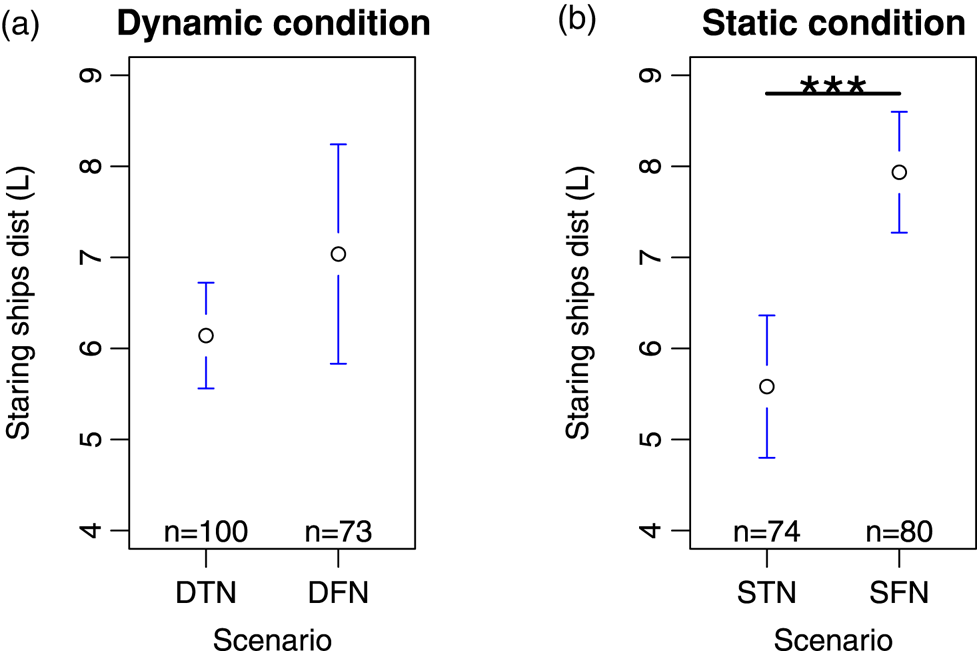
The distances of ships sighted during course correction from the start of the experiment to the 1st row (Figure 4) are illustrated in Figure 6: the symbol ‘n’ refers to the number of times the course was altered in the task (effectively the sample size), the points refer to the mean of the data for the task, and the error bars identify the 95 percent confidence interval. The vertical axis (unit: L) is the measured distance divided by the length of the own ship. In the dynamic condition, no significant difference was observed between the perspectives [t (105⋅5) = –1⋅334, p = 0⋅185]. In the static condition, a significant variation existed [t (152) = –4⋅597, p < 0⋅001], and the distance to the sighted ship tended to be greater in the FPP.
Distance of ship sighted during course correction

3.4 Selected route
Table 1 lists the number of routes selected. The ‘aft-pass route’ indicated that the participant passed behind the collision ship, and the ‘head-pass route’ indicated that they passed in front of it. The log data were divided into four parts: (a) selected aft-pass route in dynamic condition, (b) selected head-pass route in dynamic condition, (c) selected aft-pass route in static condition, and (d) selected head-pass route in static condition.
Selected routes

In the dynamic condition, no significant variation was observed between the perspectives [McNemar's chi-squared (1) = 0⋅222, p = 0⋅637]. Regardless of the perspective, the selected route was divided almost in half between the TPP (aft-pass: 52%; head-pass: 48%) and the FPP (aft-pass: 45%; head-pass: 55%).
In the static condition, no significant variations were observed between the perspectives [McNemar's chi-squared (1) = 1⋅8, p = 0⋅180]. Regardless of the perspective, most participants in this case followed the aft-pass route: the FPP (aft-pass: 84%; head-pass: 16%) and the TPP (aft-pass: 94%; head-pass: 6%). (The reasons for these trends are unknown and not elucidated in this experiment.)
3.5 Distance to collision ship
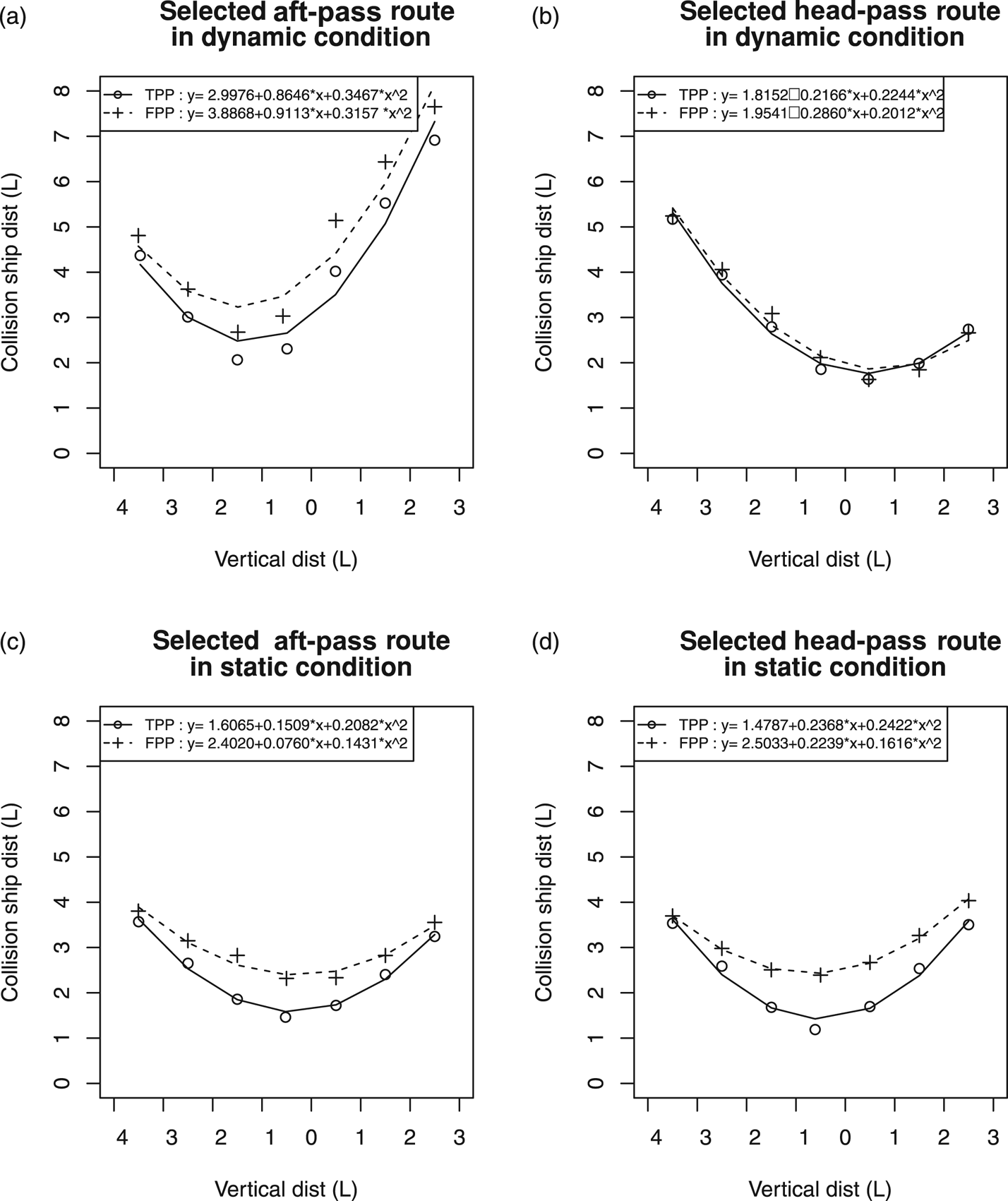
Figure 7 depicts the distance to the collision ship for the linear distance to the 1st row (Figure 4); the circles refer to TPP, and the crosses to FPP. The analysis covered all the relevant data, including the collisions (see Table 1). The horizontal axis represents the straight-line distance to the 1st row, whereas the vertical axis the straight-line distance to the collision ship. In addition, the height of a plotted point indicates the average distance to the collision ship within the corresponding 1-L interval on the horizontal axis. Moreover, the solid line denotes the TPP, whereas the dashed line represents the FPP. All the estimated nonlinear models exhibited a convex parabola with vertices ranging from 1⋅6–3⋅5 L. This result partially supported Inoue's bumper model (Inoue et al., Reference Inoue, Usami and Shibata1994).
Distance to collision ship

Beyond the graphical analysis, a statistical analysis was formulated to include an uncorrelated Welch's t-test and an effect size analysis of Cohen's d for each interval. As for the route portrayed in Figure 7(a), (c) and (d), the results for the FPP were higher than the TPP at all intervals. Moreover, significant variations existed between the two perspectives as well as the intermediate- to large-effect sizes in all the sections [p < 0⋅001, d (Cohen's d) = 0⋅25–2⋅38]. In contrast, the nonlinear models of the forward passage in the dynamic condition (the route presented in Figure 7(b)) almost overlapped. Despite the large sample size, no significant variations existed between the perspectives [t (28658⋅1) = 0⋅645, p = 0⋅519], and the effect size was small [d (Cohen's d) = 0⋅01 (Small)] in the value of the section (0 L < x ≤ 1 L) nearest to the collision ship. This signified that the distance to the collision ship in the head pass under the dynamic condition (b) did not vary between the two perspectives. However, in the other routes ((a), (c) and (d)), the distance was greater in the FPP.
3.6 Difficulty of the four tasks
In the TPP, the mean values of DTN and STN (Figure 2) were 4⋅5 and 3⋅2, respectively. The corresponding t-test displayed a significant difference [t (30) = 3⋅798, p < 0⋅001], indicating that the TPP rated the static condition as easier than the dynamic one.
In the FPP, the mean values of DFN and SFN (Figure 2) were 4⋅5 and 2⋅5, respectively. The corresponding t-test exhibited a significant difference [t (30) = 5⋅1793, p < 0⋅001], indicating that the static condition was easier than the dynamic one from the FPP.
Thus, the difficulty of the task was rated as ‘easier’ in the static condition than in the dynamic one, regardless of the perspective.
3.7 Intensity of awareness of two goals
In the dynamic condition, the mean values of DTN and DFN were 4⋅9 and 5⋅1, respectively, and no significant variation existed between the perspectives [t (30) = –0⋅468, p = 0⋅643]. Moreover, the mean rating was on the ‘safe’ side.
In the static condition, the mean values of STN and SFN were 3⋅5 and 4⋅1, respectively, and no significant variation existed between the perspectives [t (30) = –1⋅656, p = 0⋅108]. In addition, the mean rating was approximately ‘neutral position between safety and efficiency’.
3.8 Comprehensibility of distance
In total, 24 out of 32 participants were analysed (excluding five who did not answer and three who answered ‘both are approximately the same’) to determine the comprehensibility of the distance. Amongst these 24 participants, 17 preferred the TPP, and the remaining seven preferred the FPP. A chi-square test demonstrated a significant difference [chi-squared (1) = 4⋅167, p = 0⋅041]. Therefore, the TPP was evaluated as ‘easier to understand the distance’.
3.9 Careful approaching
In total, 24 out of 32 participants were analysed (excluding five who did not answer, two who answered ‘both are approximately the same’, and 1 who answered ‘no comparison was possible’). Amongst the 24 participants, two preferred the TPP, and the remaining 22 preferred the FPP. A chi-square test displayed a significant difference [chi-squared (1) = 16⋅667, p < 0⋅001]. Therefore, the FPP was rated as ‘wary when approached.’
4. Discussion
4.1 Static condition
In the static condition, the FPP was more collision-free than the TPP (as discussed in Section 3.1). In addition, the movements in the FPP tended to be farther away from the ship than the TPP [Section 3.3: Figure 6(b) and Section 3.5: Figure 7(c) and (d)]. These results indicated that the first-person viewers manoeuvred at a greater distance from the other ship, and therefore collisions were less frequent. Therefore, the first statement of Hypothesis 1 (H1-1) is verified.
Nonetheless, no significant difference existed between the perspectives in terms of the total distance (Section 3.2), which was used to evaluate the efficiency. In comparison with the FPP, the TPP exhibited greater tendency of the ship to manoeuvre in vicinity of the other vessel, which did not yield an improvement in the efficiency.
The variation between the aft and head passes determined the safe distance because the head pass is at a higher risk of collision than is the aft pass. However, the results for the ‘selected route (Section 3.4: Table 1)’ did not vary significantly between the two perspectives, and most participants opted the aft-pass route. Furthermore, according to discussion in Section 3.5 (Figure 7(c) and (d)), the mean difference of distance between the two perspectives increased as the main ships approached collision ships, but it decreased as they entered the 2nd row, irrespective of the aft-pass/head-pass route. Initially, the mean difference was small (aft pass of 0⋅2 L, effect size of 0⋅59/head pass of 0⋅2 L, effect size of 0⋅61), and thereafter, it was large in the middle of the route (aft pass of 1⋅0 L, effect size of 0⋅7/head pass of 1⋅2 L, effect size of 2⋅14), and lastly, it was small after the passage (aft pass of 0⋅3 L, effect size of 0⋅25/head pass of 0⋅5 L, effect size of 0⋅67).
The aforementioned observations imply that the distance of the main ship to the neighbouring ship increased significantly in the FPP only when it was passing in the vicinity of the collision ship. Thus, the ship in the TPP did not consistently navigate the shortest route with a global plan, although all the other vessels were stationary. Therefore, the tendency for the ship to have a larger separation from its neighbour in the FPP than that in the TPP was not caused by deliberate variations in route planning. This is corroborated with the results of the manoeuvring background. The results of ‘Intensity of awareness of the two goals’ (Section 3.7) between the two perspectives did not vary significantly, and the mean rating was around ‘4. neutral’. Thus, the tendency for the FPP to be separated by a greater distance was neither caused by a difference in the awareness of the need to mitigate the collision risk nor a difference in the awareness of the need to follow the shortest route to the destination. In contrast, the results of the ‘Comprehensibility of distance’ (Section 3.8) and ‘Careful approaching’ (Section 3.9) showed significant variations between the perspectives; the TPP was evaluated as ‘easier to understand the distance’, the FPP was rated as ‘wary when approached’.
In attributing causes to the observations made from different perspectives, the TPP facilitated a greater distance for convenient understanding which may be attributed to the cognitive characteristics that enable the TPP for acquiring global information and understanding the relationship between multiple objects. The FPP resulted in a warier approach which can be attributed to the cognitive characteristics that enable the FPP to acquire local information more rapidly and comprehensively in the vicinity of the ship (relationship between the ship and each neighbouring ship) (Section 1.3). These results suggested that the FPP was safer because of the unconscious differences between the cognitive characteristics of the two perspectives. Consequently, the difference in distance between the perspectives was most pronounced when the ship passed in the vicinity of the collision ship. Therefore, the behaviour of the first-person viewers manoeuvred at a greater distance from the other ship than that of the third-person viewers, which was not caused by the intention to follow the shortest route to the destination but by the unconscious difference between the cognitive characteristics in the perspectives. Thus, even though the first statement of Hypothesis 1 (H1-1) had been accepted, the second statement of Hypothesis 1 (H1-2) was rejected. The experiment revealed that the differences between the cognitive characteristics of the perspectives is effective in producing unconscious differences in manoeuvring behaviour (condition awareness and judgement), that is the cognitive characteristics of the FPP resulting in a safer navigation behaviour than those of the TPP.
4.2 Dynamic condition
Unlike the static condition, there were no significant variations in the results of ‘Collisions’ (Section 3.1) and ‘Names of ships sighted and distances to them during course correction’ (Section 3.3–Figure 6(a)) under the dynamic condition. Similar to the static condition, no significant differences were found in the results of ‘Selected route’ (Section 3.4) and ‘Total distance’ (Section 3.2) in the dynamic condition. Therefore, no variations were observed in the efficiency assessment between the static and dynamic conditions. However, a significant variation was observed between the two conditions in the safety assessment, indicating that the variation between the perspectives was more pronounced in the static condition than in the dynamic condition. In addition, the subjective evaluation of the ‘Difficulty of the four tasks’ (Section 3.6) implied that the static condition was easier to analyse than the dynamic condition, regardless of the perspective. These results confirm Hypothesis 2.
In contrast, the absence of any significant difference in the safety evaluation raises the following question: Is the influence of perspectives on the behaviour caused by the difference in their cognitive characteristics specific to the static condition? This can be explained based on the results of the ‘Distance to the collision ship’ (Section 3.5). In the nonlinear model with aft pass (Figure 7(a)), the FPP was located above the TPP at all intervals. In particular, a significant difference existed between the perspectives for a medium effect size. Despite the large sample size, the nonlinear model of the head pass (Figure 7(b)) overlapped with no significant difference [t (28,658⋅1) = 0⋅645 (p = 0⋅519)] and a small effect size [d (Cohen's d) = 0⋅01 (small)] in the value of the section (0 L < x ≤ 1 L) nearest to the collision ship. Although the accuracy of collision prediction is important for the head pass, it is less vital for the aft pass, where the neighbouring ship moves away from the frame of reference. Thus, the FPP tends to be safer when it is easy to avoid collisions even in dynamic conditions.
Therefore, the tendency for the ship in the FPP to separate from an oncoming ship by a greater distance was more pronounced when collision avoidance was easy even in dynamic conditions. Moreover, the variation in the manoeuvring tendency caused by the differences between the cognitive characteristics of the two perspectives was not limited to the special traffic conditions under which other vessels were halted.
These discussions suggested that the cognitive characteristics of the FPP were effective in guiding safe ship handling. Thus, the cognitive characteristics of the TPP may induce less safe manoeuvring behaviour than that of the FPP. However, these differences in cognitive characteristics become more pronounced for easy collision avoidance and less apparent for more difficulty task. (It is unclear when the difficulty of a task can be considered significantly high).
5. Conclusions
This study aimed to clarify the influences of various perceptions between FPPs and TPPs on the local and global situational recognition in ship handling. These effects were analysed by inexperienced subjects via ship handling behaviour and subjective evaluation in the scenario of crossing a line of ships. The findings of the study can be concluded as follows:
(1) The cognitive characteristics of the FPP were more effective as compared with that of the TPP in safely guiding the ship handling behaviour.
(2) The difference between the cognitive characteristics of the two perspectives is prominent in case of easy collision avoidance.
These findings suggest that the differences between the behaviour caused by the two perspectives were strongly influenced by those in the safety sensitivity in local situational recognition. In general, collision avoidance is an instinctive behaviour. In most cases, the perception of avoidance is based on the FPP as it is prevalent in daily activities. People seldom act based on the TPP in daily movement, and the present findings suggest that instinctive collision avoidance may be impossible from this perspective. In future, a remote control and monitoring system that can avoid collisions must be introduced to ensure safety in a mixed environment of conventional on-board piloted vessels and remotely piloted vessels. To achieve this, the control screen must be carefully designed, such that if a TPP is adopted, it forces the user to utilise the cognitive characteristics of a FPP. For example, given the finding from the current study that the TPP is less likely to instinctively detect danger in low-risk situations, system design should ideally enable automatic switching from the TPP to the FPP when the user approaches a certain distance (such as the 4 L threshold assumed in Figure 7). The findings of this study will aid the development of such vessels and ensure the safety of on-board crew.
Beyond the current study, continuous avoidance behaviour is an expected priority topic for investigation in future studies. The plan had been to study it here using the 2nd row from the crossing a line of ships scenario (Figure 4), but excluded it from our analysis owing to the large individual differences in the behaviour of the participants after passing the 1st row. Similarly, an analysis of the variations between the viewpoints in the continuous behaviour of the 1st and 2nd row avoidance could not be conducted here. In addition, participants informed us regarding the difficulty in experiencing speed during the experiment. This is an important issue that must be addressed for remotely piloted ships.
Competing interests
The authors declare no conflicts of interest.
Acknowledgements
The authors are grateful to Professors Masao Furusho, Katsutoshi Hirayama, and Makoto Uchida for their insightful advice. In addition, the authors thank Mr. Takuma Yamada and Mr. Akio Kobashi for technical assistance with the experiments and discussions.
Funding statement
This work was partly supported by JSPS KAKENHI Grant Number JP22K17934.
APPENDIX A: Scenario of previous studies
We conducted a series of studies to clarify the effects of difference of information on situational awareness and decision-making in collision-avoidance judgements between landscape and radar information. Specifically, participants were asked to make collision avoidance judgements based on landscape information alone or radar information alone, and the extent of their attention and their judgements was investigated using a large ship handling simulator. In addition, the traffic was treated using general patterns of relationships in congested waters near the coastlines of major ports with a high probability of accidents. The scenarios presented in previous studies are shown in Figure A1, where the points indicate the wake per minute for each ship (initial position is on the side with the name of the ship), and the values represent the initial values of the scenario (course, speed, distance of the closest point of approach (DCPA), time of closest point of approach (TCPA) and distance). In particular, Ship J was set as the vessel travelling in the same direction, Ship A as the vessel travelling in the opposite direction, Ships B, C, D, E and F as the vessels crossing the path of the main ship, and Ship G as the vessel outside the current course (i.e. to reach the destination due north), participants had to be aware of the condition of the other ship, and accordingly, decide to whether collide or involve. In such situations, the actual ship manoeuvres combined the landscape and radar information. In this experiment, the timing and direction of course changed, as well as the other vessels reported to be ‘concerned’, and their rankings were investigated for various subjects with different experience. The interpretation of ‘concerned’ was left to each subject and scored in the analysis (the higher the score, the greater the concern).
Scenarios of previous studies

APPENDIX B: Details of SHITENsim
This section describes the SHITENsim, a ship handling simulator developed by the present authors to clarify the influence of perspectives. It was developed to control the influences of non-perspective factors on ship handling. SHITENsim can function on a personal computer with standard performance (screen size: 21⋅5″).
SHITENsim performed the following functions: (1) display the surrounding condition from the FPP or TPP, (2) alter the course according to the course input by the participant and perform ship manoeuvres that simulate the dynamic characteristics of a real ship, (3) input names of ships that the participant observed during course correction (hereinafter called ‘ship sighted’), (4) reproduce the left-head turn occurring when the simulator is idling,Footnote 5 (5) review blind spots (ship's course was maintained as-is, and the surrounding area can be horizontally rotated by 360° using the left and right keys; hereafter, this function is called ‘look-around function’), and (6) record keyboard input, coordinates of each ship and collisions every 20 ms as the log data.
Motion of ships in SHITENsim

The detailed settings of the simulator can be described as follows: the examples of FPP and TPP scenarios are illustrated in Figure 3(a) and (b), respectively. The FPP was set in the middle of the ship. The TPP was set at 27 L above the ship and 14 L ahead of it. The frame-of-reference ship was a 5,000-DWT tanker model with a uniaxial right-handed propeller. For the ship, the total length was set to 1 L, the width to 0⋅2 L and the forward speed to 12 knots (22⋅2 km/h). Moreover, the course correction involved the mode to control the ship (i.e. speed reduction, communication and whistle signals) could not be used. The course was corrected by specifying the target course instead of the rudder angle, assuming an automatic steering system.Footnote 6 The target course was an absolute heading (true north is 0° and the rightward is positive), which could be verified using a compass (Figure 3). The turning motion follows Equation (B1):

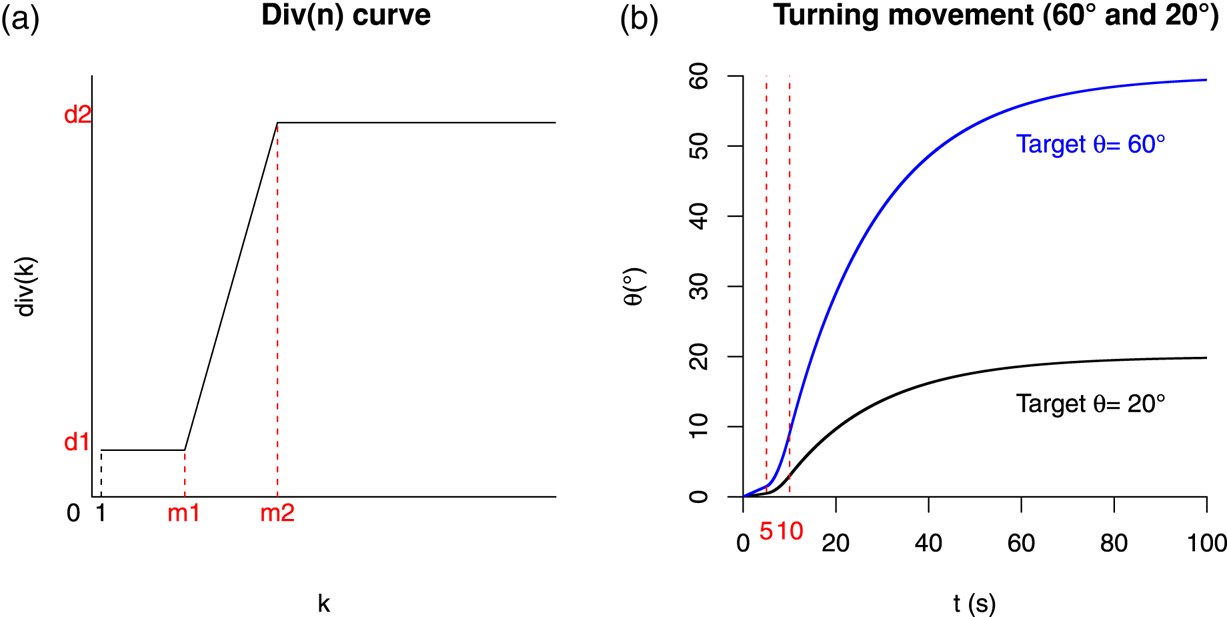
where θ denotes the input target course (°); k represents the number of logged frames, incrementing by one every 20 ms; and θ(k) denotes the heading (°) after 20 k (ms) from the initiation of course correction. The calculation was terminated when |θ–θ(n)| <ε (k = n, ε = 1 (°)), where point θ(n) = θ. The div(k) is the reciprocal of the number of divisions of the variations between θ(k–1) and θ, which was set as depicted in Figure B1(a) ((m1, d1) = (250, 0⋅0001), (m2, d2) = (500, 0⋅001)). Equation (B1) produces a delay factorFootnote 7 in the response of the ship as it alters the course toward the target heading. The turning movements for the 60°– and 20°–target courses are depicted in Figure B1(b).
The 3D models of the frame-of-reference ship and neighbouring ships were identical, and the direction was visible from both the perspectives.




 Open access

