


Introduction
Contemporary research highlights global concerns around misuse of prescribed and over the counter codeine as the most commonly consumed opiate (Van Hout et al. Reference Van Hout, Bergin, Foley, Rich, Rapca, Harris and Norman2014). Global demand for codeine preparations has increased by 27% in the previous decade (INCB, 2012). Prescription of codeine for pain relief is increasing in Europe (Fredheim et al. Reference Fredheim, Skurtveit, Moroz, Breivik and Borchgrevink2009). Misuse of non-prescription codeine containing medicines is increasing, particularly where available in over the counter available combination products (McAvoy et al. Reference McAvoy, Dobbin and Tobin2011) amid calls for stronger regulatory responses to tackle over the counter codeine analgesic misuse (Tobin et al. Reference Tobin, Dobbin and McAvoy2013). Quantifying the extent of such misuse centres on varies by country surveillance and methodological approaches utilised, and is complicated by public availability and the hidden and heterogeneous characteristics of codeine misuse and dependence (UNODC, 2011, 2013).
Codeine or 3-methylmorphine is a methylated morphine derivative occurring naturally with morphine in the poppy seed. It is a short acting, weak to mid-range opiate and commonly used to manage mild to moderate pain in adults as well as for its antitussive and antidiarrheal properties (Tremlett et al. Reference Tremlett, Anderson and Wolf2010). Recommended daily oral dose for adults is between 30 and 60 mg every 4 hours and to a maximum of 240 mg (Derry et al. Reference Derry, Karlin and Moore2013). Conversion to morphine by endogenous enzymes causes altered perceptions and emotional responses to pain (Kelly & Madadi, Reference Kelly and Madadi2012). Administration of codeine incurs common opioid-typical side effects, which include sedation, euphoria and constipation. Of note is that patient responses to codeine and risk of intoxication vary due to genetic variations in metabolism (Ingelman-Sundberg et al. Reference Ingelman-Sundberg, Sim, Gomez and Rodriguez-Antona2007; Zhou, Reference Zhou2009).
Codeine has an identified abuse potential evident in drug administration research (Babalonis et al. Reference Babalonis, Lofwall, Nuzzo, Siegel and Walsh2013), and multiple reportings of case dependence (Sproule et al. Reference Sproule, Busto, Somer, Romach and Sellers1999; Frei et al. Reference Frei, Nielsen, Dobbin and Tobin2010). Tolerance develops on repeated administration of codeine within a relatively short time frame, with increasing doses whether legitimate (therapeutic) or intoxicating (non-therapeutic) increasing likelihood of neuro-adaptation and dependence symptomatology (Dobbin & Tobin, Reference Dobbin and Tobin2008; Nielsen et al. Reference Nielsen, Cameron and Pahoki2010; Reed et al. Reference Reed, Bond, Witton, Cornish, Hickman and Strang2011). Excessive and/or long-term consumption of combination products containing additives (ibuprofen, paracetamol) carries risk of adverse health consequences such as nephro-toxicity, hypokalaemia, gastrointestinal haemorrhage, acute haemorrhagic necrotising pancreatitis and brain damage, often occurring in individuals with no history of substance use disorders or co-morbidity (for a comprehensive review of clinical case presentations see Van Hout et al. Reference Van Hout, Bergin, Foley, Rich, Rapca, Harris and Norman2014). Furthermore, misuse of codeine may be an iatrogenic cause of psychiatric disturbances (Manchia et al. Reference Manchia, Alda and Clakin2013) with paranoid psychosis frequently associated with codeine cough mixture abuse and symptoms of anxiety and depression occurring with long-term use (Romach et al. Reference Romach, Sproule, Sellers, Somer and Busto1999; Dobbin & Tobin, Reference Dobbin and Tobin2008).
Within trajectories of codeine misuse and dependence, a wide ranging profile of codeine user exists; for example, the elderly (Roumie & Griffin, Reference Roumie and Griffin2004; Agaba et al. Reference Agaba, Agaba and Wigwe2004); youth (Elwood, Reference Elwood2001; Lam & Shek, Reference Lam and Shek2006; Peters et al. Reference Peters, Amos, Meshack, Savage, Sinclair, Williams and Markham2003, Reference Peters, Yacoubian, Rhodes, Forsythe, Bowers, Eulian, Mangum, O’Neal, Martin and Essien2007a , 2007Reference Peters, Kelder, Markham, Yacoubian, Peters and Ellis b , 2007Reference Peters, Williams, Ross, Atkinson and Yacoubian c ; Shek & Lam, Reference Shek and Lam2006, Reference Shek and Lam2008; Ford, Reference Ford2009; Lao et al. Reference Lao, Jiang, Tong, Pang and Xu2010; Wilson et al. Reference Wilson, Singh, Blumkin, Dallas and Klein2010; Tang et al. Reference Tang, Tang, Liang, Chan, Mak and Ungvari2012; Agnich et al. Reference Agnich, Stogner, Miller and Marcum2013); parents (Allotey et al. Reference Allotey, Reidpath and Elisha2004); students (Acocella, Reference Acocella2005); pharmacy customers (Sweileh et al. Reference Sweileh, Arafat, Al-Khyat, Al-Masri and Jaradat2004; Albsoul-Younes et al. Reference Albsoul-Younes, Wazaify, Yousef and Tahaineh2010); drug and psychiatric treatment patients (Agyapong et al. 2013); addiction treatment patients (Akram & Roberts, 2003; Myers et al. Reference Myers, Siegfried and Parry2003; Yang & Yuan, Reference Yang and Yuan2008; Cohen et al. Reference Cohen, Unoh, Barry and O’Connor2009; Thekiso & Farren, Reference Thekiso and Farren2010; Nielsen et al. Reference Nielsen, Cameron and Lee2011; Cooper, Reference Cooper2013b ) and internet drug forum users (Van Hout, Reference Van Hout2015) each with their own motives, patterns and outcomes for use. However, there is a lack of consensus around a definition of misuse of pharmaceutical opioid narcotics (Barrett et al. Reference Barrett, Meisner and Stewart2008; Casati et al. Reference Casati, Sedefov and Pfeiffer-Gerschel2012; Cooper, Reference Cooper2013a ) with broad misuse of pharmaceutical definitions including incorrect but legitimate use for medical purposes; use outside of acceptable medical guidelines when self-medicating at higher doses and for longer than advised; use for reasons other than for the instructions on the label or the intended purpose; recreational use for intoxication purposes; and where risks and adverse consequences outweigh the benefits (Nielsen et al. Reference Nielsen, Bruno, Carruthers, Fischer, Lintzeris and Stoove2008; Casati et al. Reference Casati, Sedefov and Pfeiffer-Gerschel2012).
Prevalence of codeine misuse and dependence is difficult to monitor and quantify, and relies on indicators based on surveillance of treatment cases for codeine dependence (Pates et al. Reference Pates, McBride, Li and Ramadan2002; Skurtveit et al. Reference Skurtviet, Faru, Borchgrevink, Handal and Fredheim2011; Roussin et al. Reference Roussin, Bouyssi, Pouche, Pourcel and Lapeyre-Mestre2013). Codeine dependence is generally treated in residential detoxification programmes, with opiate substitution therapy (methadone or buprenorphine) or lofexidine in community detoxification (Frei et al. Reference Frei, Nielsen, Dobbin and Tobin2010; Mattick et al. Reference Mattick, Kimber, Breen and Davoli2008; Kelly & Madadi, Reference Kelly and Madadi2012). Clinical profiles vary, with majority representation of those in middle to late age, females, poly substance users, alcohol users and those with underlying psychiatric conditions (Myers et al. Reference Myers, Siegfried and Parry2003; Johansson et al. Reference Johansson, Berglund, Hanson, Pohlen and Persson2003; Thekiso & Farren, Reference Thekiso and Farren2010; Robinson et al. Reference Robinson, Robinson, McCarthy and Cameron2010; Agyapong et al. Reference Agyapong, Singh, Savage, Thekiso, Finn, Farren and McLoughlin2013). Other studies report on characteristics of individuals dependent on codeine as young, with lower levels of education and employment, reporting chronic pain, family history of problematic substance use and with greater proportions female when compared with other cohorts of opiate dependent individuals (Nielsen et al. Reference Nielsen, Cameron and Lee2011). For those seeking treatment for codeine dependence in Australia, primarily older females are reported which distinguish from other groups of opiate dependents, although this trend is now changing to reflect younger males (Nielsen et al. Reference Nielsen, Roxburgh, Bruno, Lintzeris, Jefferson and Degenhardt2015).
Recent formal drug treatment data involving codeine misuse and dependence indicates that 1.9% of persons in drug treatment in Ireland (personal communication from the National Drug Treatment Reporting System) reported codeine as a primary or secondary drug of abuse in the time period 2008–2012. Irish studies suggest that misusers of codeine are more likely to be male, older, with co-morbid psychiatric, physical and poly substance illness and with a longer drug dependence history (Cohen et al. Reference Cohen, Unoh, Barry and O’Connor2009; Thekiso & Farren, Reference Thekiso and Farren2010). The covert nature of codeine misuse and dependence with the co-occurrence of serious co-morbidity and complexity of cases highlights the need for further research within an Irish context (Thekiso & Farren, Reference Thekiso and Farren2010). This is timely given the changes employed by the Irish pharmacy regulator (Pharmaceutical Society of Ireland) in 2010 to regulate safe supply of non-prescription combination products containing codeine and paracetamol, aspirin or ibuprofen for supply only as ‘second line’ products for the treatment of pain relief; with comprehensive patient advice provided around correct use for short-term use (no longer than 3 days and with products in-accessible to the public for self-selection). Arguably, more stringent regulations for safe supply could potentially reduce misuse of codeine medicines among psychiatric patients (Agyapong et al. Reference Agyapong, Singh, Savage, Thekiso, Finn, Farren and McLoughlin2013).
Therefore, the aim of this study is to gain an understanding of individual and collective experiences of codeine use, pathways to misuse and dependence and experiences of treatment services in Ireland following the introduction of such guidelines for the safe supply of over the counter codeine-based products.
Methods
In-depth interviews were conducted with a purposive sample of adult codeine misusers and dependents (n=21), both actively using, in treatment and in recovery. In order to distinguish between dependent and non-dependent use, participants completed the severity of dependence screener (SDS) (Gossop et al. 1995), which is a five-item questionnaire, with scores of over five indicating dependence use in the past 12 months. Each item addresses the psychological components of dependence, particularly relating to lack of control, preoccupation and anxieties about the drug used. Items are scored along a four-point scale, and aggregated, with a high score indicating a high level of dependence. Nielsen et al. (Reference Nielsen, Cameron and Pahoki2010) in their research on codeine dependence in Australia have suggested a SDS cut off of five has reasonable sensitivity and specificity in identifying problematic users of codeine containing products.
Recruitment was facilitated by selected gatekeepers (specialist medical doctors) within the National Drug Treatment Reporting System. These gatekeepers assisted in the recruitment of individuals in the centres by identifying codeine misusers and dependent patients and providing information on the study to these patients before their participation in the study. All participants received an information sheet and completed a consent form, which was explained verbally by the interviewer before the interview. All participants were assured of confidentiality and anonymity, and that they could withdraw from the study if they so wished. Interviews lasted between 30 and 90 minutes and were audio-recorded with permission. Participants’ anonymity was protected by removal of personal identifiers (Wilkinson & Thelwall, Reference Wilkinson and Thelwall2011).
Audio-files were transcribed and transferred to a Word document that was password-protected and analysed in accordance with the Empirical Phenomenological Psychological (EPP) five-step method (Karlsson, Reference Karlsson1995) (Table 1). This method is underpinned by Husserl’s (1970) phenomenology theory and strongly aligned with Giorgi’s (1997) principles by facilitating the interpretation of meaning of lived phenomena, in this instance the ‘life world’ experience of codeine misuse and dependence. It is an analytic process based on the interpretation of a dialectic understanding of the hermeneutical circle and its dynamic movement between a sense of the whole picture and of its parts in order to achieve an incremental understanding of the lived phenomenon (Karlsson, Reference Karlsson1995). The EPP method ensures high validity by emphasising an open, non-judgemental and bias free attitude in interpretation of the data and respect of the experiential perspectives of the individuals (Maxwell, Reference Maxwell1992). It aims to explore subjective experiences by ‘describing the meaning-structure of a psychological phenomenon. This method yields descriptive results, which disclose the intentional relationship between the subject and the object of experience’ (Karlsson, Reference Karlsson1995: 78).
Empirical Phenomenological Psychological five-step method (Karlsson, Reference Karlsson1995)
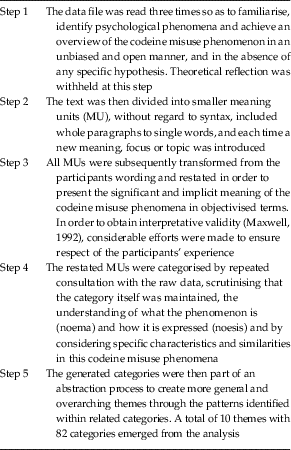
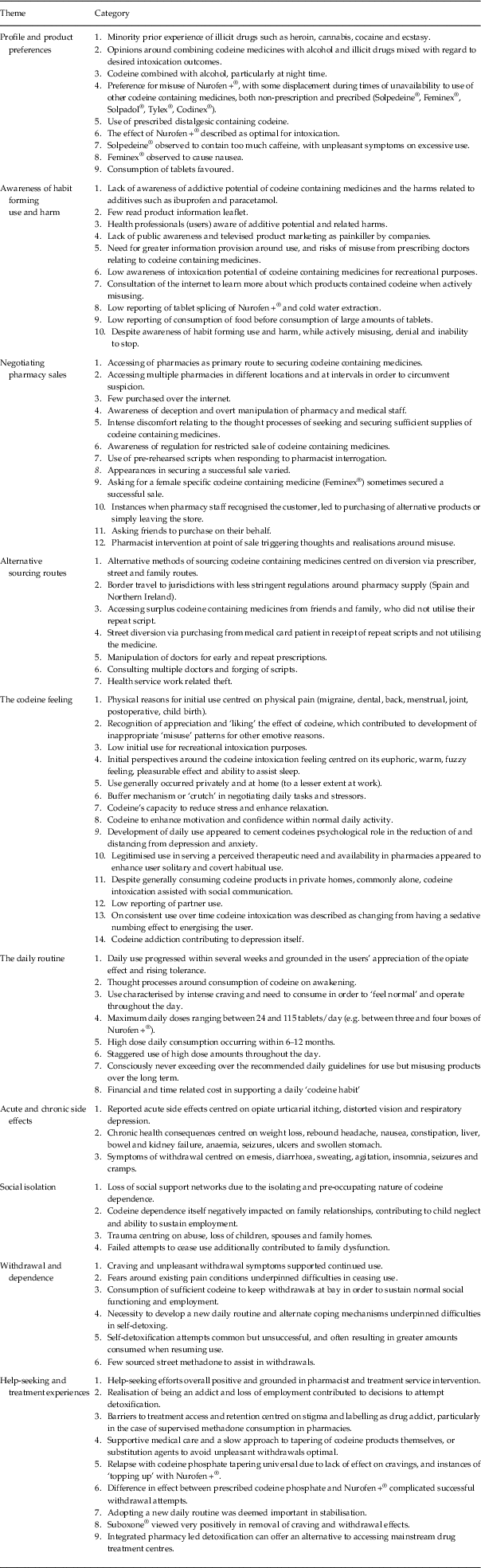
Table 2 illustrates the emergent 10 themes and 82 categories. During the final step in the analysis process, two concepts at a higher level of abstraction above the theme-level (Table 2) emerged. These concepts centred on the interplay between ‘emotional pain and user self-legitimization of use’ and ‘entrapment into habit-forming and invisible dependent use’. For example ‘Pain killers are not just for what is written on the back of the pack, muscle pain, period pain, toothache, migraine, they should add also pain relief from anxiety, depression and heartache’. and ‘Codeine is my invisible friend It’s a very powerful drug, I never expected it to take me where it did, which was the highest of highs and the lowest of lows’. All raw data were re-read with these two concepts described by a majority participants in distinct ways.
Themes and categories
Results
Profile and product preferences
A total of 57% (n=12) of the sample were female and 43% (n=9) male. Participants ranged from 26 to 62 years old (mean age=39) with 71% (n=15) aged between 30 and 49 years. A total of 52% (n=11) of participants were unemployed. A total of 15 participants admitted to using codeine within the last 12 months and with a majority scored 10 or above (80%, n=12) in the SDS. A total of 18 of the 20 participants reported codeine-based medications (e.g. Solpadol®, Nurofen Plus® or Solpadeine®) as their primary problematic drug, with the remainder reporting heroin (n=1) and distalgesic (n=1) as primary. A total of 62% (n=13) reported Nurofen Plus® was their primary drug of use with 67% (n=14) of participants reporting that they were currently on methadone maintenance treatment and 14% (n=3) on Suboxone®.
Some participants had prior experience of illicit drugs such as heroin, cannabis, cocaine and ecstasy. Opinions around mixing codeine medicines with alcohol and illicit drugs were mixed with regard to desired intoxication outcomes. Many combined codeine with alcohol, particularly at night time.
Every weekend I would combine my codeine use with alcohol and or weed for the extra ‘buzz’. I really liked misxing the diazepam with the codeine, it made the high more intense or lasted longer.
Displacement to more serious opioids (‘Oxycontin®’ and heroin) was reported by two participants.
The majority of participants reported preference for misuse of Nurofen Plus®, with some displacement during times of unavailability to use of other codeine containing medicines, both over the counter and prescribed (Solpadeine®, Feminex®, Solpadol®, Tylex®, Codinex®). A minority reported use of prescribed distalgesic containing codeine.
I have used them [Solpadeine] as a last resort. If I was going to be sick and if I couldn’t get Nurofen Plus ®. Just to stop the withdrawal, I would take the cough syrup and the Solpadeine.
The effect of Nurofen Plus® was described by many participants as optimal for intoxication purposes. Solpadeine® was observed to contain too much caffeine, with unpleasant symptoms on excessive use while Feminex® was reported to cause nausea. Consumption of tablets was favoured.
Awareness of habit forming use and harm
The majority of participants were not aware of the addictive potential of codeine containing medicines and the harms related to additives such as ibuprofen and paracetamol. A minority (two) reported reading the product information leaflet. Two participants were health professionals and were aware of addictive potential and related harms.
You were never told. Now you know that it’s not the codeine that is the problem, it’s the Ibuprofen that is the problem.
One participant commented on a lack of public awareness and televised product marketing as painkiller by companies.
I really don’t think people know the danger of codeine, but the ads are back on the television now.
The majority of participants commented on the need for greater information provision around use, and risks of misuse from prescribing doctors relating to codeine containing medicines.
If it was explained to me properly by the doctor what the risks could be, I may not have even gone down that road in the first place, the predictability and how quickly it would take for you to get addicted on it. I think patients should be told more about what the symptoms are and what can happen.
A minority of participants were aware of intoxication potential of codeine containing medicines for recreational purposes, but were unaware of addiction risk.
My cousin said that we could get it [codeine] from Nurofen Plus®. At that time we didn’t know it was addictive.
Nearly all participants reported consulting the internet to learn more about which products contained codeine when actively misusing. In terms of optimising the effect and reduction of harm by removal of additives, two participants reported tablet splicing of Nurofen Plus® and cold water extraction. One reported eating food before consumption of large amounts of tablets.
The best part was that the paracetemol would freeze and all the rest of the water was just golden heaven to drink off.
Despite becoming aware of habit forming use and harm, while actively misusing, participants described denial and were unable to stop.
… to be honest I don’t think it would have changed, I knew what was in them, I knew they were addictive.
Negotiating pharmacy sales
All reported accessing pharmacies as their primary route to securing codeine containing medicines. All described accessing multiple pharmacies in different locations and at various intervals in order to circumvent suspicion. One participant described purchasing over the internet.
… you would have to travel wider, and just go to pharmacies less frequently. An addiction will find a way, there’s always a way. When you want something you will always find a way to get it.
Awareness of deception and overt manipulation of pharmacy and medical staff was described.
In my time of addiction, I knew what pharmacist was on and in what place and what name/s I used last time. Addiction teaches you master manipulation. No matter what barriers you build an addicts mind goes far beyond it.
Many described intense discomfort relating to the thought processes of seeking and securing sufficient supplies of codeine containing medicines.
I get so worked up that I am going to get them … and something pulls me back coz I really don’t really want to get them … I’m emotionally drained.
All participants were aware of PSI 2010 regulation for restricted sale of codeine containing medicines, and employed pre-rehearsed scripts when responding to pharmacist interrogation. Opinions around appearances varied, from ‘looking dishevelled and in pain’ to appearing “professional” (particularly relating to health professional attire, I would go in there with my nurses uniform and they would never refuse.)
I probably looked like I let go of my appearance, I really didn’t care. I got up in the morning and the first thing on my mind was where was I going to go today to get the codeine.
Asking for a female specific codeine containing medicine (Feminexs®) sometimes secured a successful sale.
When it was men, I would deliberately embarrass them so that I’d get them (Nurofen Plus®), and if he tried to make me elaborate, he wasn’t long blushing and going behind and getting the box for me.
Instances when pharmacy staff recognised the customer, led to purchasing of alternative products or simply leaving the store. Some described asking friends to purchase on their behalf. Pharmacist intervention at point of sale was described by many as triggering thoughts and realisations around misuse.
Alternative sourcing routes
Alternative methods of sourcing codeine containing medicines centred on diversion via prescriber, street and family routes. Border travel to jurisdictions with less stringent regulations around pharmacy supply was reported by two participants (Spain and Northern Ireland).
A minority reported accessing surplus codeine containing medicines from friends and family, who did not utilise their repeat script.
Easy enough to come by, I know a friend who got boxes and boxes of it, so she never used to take them.
One participant described street diversion via purchasing from a medical card patient who was in receipt of repeat scripts and not utilising the medicine.
The only place you can get it is from somebody who has a medical card, you can buy it off them. I think they give out medicines too freely on a medical card.
The manipulation of doctors for early and repeat prescriptions was described by several participants.
After going through a monthly prescription in a week, I decided it was time to manipulate some doctors about the “pain” I was in.
Consulting multiple doctors and forging of scripts was described by one participant.
This is when I was cunning and had an addictive mind, I would go to different doctors and I would come with everything and all sorts to get them. I would have 5 or 6 doctors at a time and the scripts I would get, I would copy them at least 5 times.
Two health professionals described stealing at work when having access to secured storage for medicines.
I just thought about codeine all day long. I stole a few from work but soon it was noticed and I never took from work again [nurse].
The codeine feeling
Physical reasons for initial use centred on physical pain (migraine, dental, back, menstrual, joint, postoperative, child birth). Displacement toward recognition of codeine’s pleasurable effect and administration for emotional distress and as a coping mechanism (in some instances postnatal depression) was reported by a majority.
Very quickly it was not enough in the morning to have me floating, feeling euphoric, and care free really. I was numb and I liked that. Nothing stressed me when it worked, codeine filled a void.
Several participants described recognition of appreciation and ‘liking’ the effect of codeine, which contributed to development of inappropriate ‘misuse’ patterns for other emotive reasons.
I wasn’t expecting the high I got but I was very happy with its effects, it felt like the missing piece to my life. I didn’t share my codeine addiction with anyone and I truly believe I became an addict straight after feeling its effects.
One participant described initial use for recreational intoxication purposes.
I used to look forward to it throughout the week … to treat myself on Friday.
Initial perspectives around the codeine intoxication feeling centred on its euphoric, warm, fuzzy feeling, pleasurable effect and ability to assist sleep. Use generally occurred privately and at home (to a lesser extent at work), and appeared to act as buffer mechanism or ‘crutch’ in negotiating daily tasks and stressors.
Back then it was simply for the feeling of the drug alone, not for what the drug gave me.
I wasn’t in any pain, I would take them to make me in better form, get through the day, just purely for buzz, just to give me a feeling of euphoria.
Comments emphasised codeine’s capacity to reduce stress and enhance relaxation, and enhance motivation and confidence within normal daily activity.
For more of a normal feeling, it gave me that sense of de-stressing the body, emotional relief from emotional stress.
Development of daily use appeared to cement codeines psychological role in the reduction of and distancing from depression and anxiety.
I had really no treatment [for depression] but I was totally dependent on the codeine, codeine was my treatment, codeine was my life.
Legitimised use in serving a perceived therapeutic need and availability in pharmacies appeared to enhance user solitary and covert habitual use.
It’s very socially acceptable because nobody knows you’re doing it.
Despite generally consuming codeine products in private homes, commonly alone, some participants observed how codeine intoxication assisted with social communication.
I wouldn’t be sociable if I didn’t have them in my system.
Two participants described using with a partner.
We [husband] did do it together but it wasn’t a shared thing, it was a need.
With consistent use over time codeine intoxication was described as changing from having a sedative numbing effect to energising the user.
The drug itself, started to change, it was no longer giving me a downer; it was giving me a booster. That’s why it has been so hard; it lifts your spirit.
Codeine addiction was also viewed by some as contributing to depression itself.
It gave me direct depression … from coming off such a euphoric feeling to just living in the real world.
The daily routine
Daily use for all progressed within several weeks and grounded in the user’s appreciation of the opiate effect and rising tolerance. The majority of participants described thought processes around consumption of codeine on awakening.
I took four and I got a little feeling off of them and I liked it, so then I gradually increased to six and then I just kept going up and up, I just kept taking them all the time.
It slowly expanded pace really rapidly were I was taking three boxes in the morning. I would get all the usual feelings.
Use was characterised by intense craving and need to consume in order to ‘feel normal’ and operate throughout the day.
I was taking 28 tablets a day. I was taking them to feel normal initially and then the more you take the worse you feel, you end up feeling sick from them but yet you couldn’t be without them.
Maximum daily doses were reported to range between 24 and 115 tablets/day (e.g. between three and four boxes of Nurofen Plus®) and with high dose daily consumption occurring within 6–12 months. Staggered use of high dose amounts throughout the day was common. One participant reported use of 96 tablets of Nurofen Plus® in one go.
I’d take 24 at once and then at lunch time take the other 24 and then in the evening then take the other 24 so that was a ritual of things, gradually I had to take more because I’d take 24 and I wouldn’t feel anything.
Some reported consciously never exceeding over the recommended daily guidelines for use but misusing products over the long term, and recognising dependence within 3 months.
Never took more than eight, always within recommended guidelines, but dependent within three months.
Participants commented on financial and time related cost in supporting a daily ‘codeine habit’.
It’s an expensive little endeavour.
Acute and chronic side effects
Reported acute side effects centred on opiate urticarial itching, distorted vision and respiratory depression.
We got really itchy, the blotchy skin and the heat flush; the typical Codeine symptoms. As in go to sleep and not breath and then wake up. That’s why you can’t really take too much. You realise you’re so short of breath.
Chronic health consequences centred on nausea, constipation, liver, bowel and kidney failure, anaemia, seizures, ulcers and swollen stomach.
The real physical affect codeine has had on me is bowel failure. I now take 3 different types of medications for my bowels alone.
Several participants described loss of appetite and weight. Rebound headaches were described by half of participants. Symptoms of withdrawal centred on emesis, diarrhoea, sweating, agitation, insomnia, seizures and cramps.
I’d get withdrawals, I’d get very, very agitated and pains in my legs and my arms and my stomach. I’d get blinding head aches and loss of appetite, restlessness, couldn’t sleep, I wasn’t eating, complete shutdown.
Social isolation
Loss of social support networks due to the isolating and pre-occupating nature of codeine dependence was described by some participants.
I don’t really have friends any more. My friends are gone and it’s more a companion addiction. It feels like it has its arm around you. That’s how it is for me now. It gives me that sense of security and that’s what I’m struggling with at the moment, it’s to break that cycle.
Codeine dependence itself was viewed by many as negatively impacting on family relationships, contributing to child neglect and ability to sustain employment. Trauma centring on abuse, loss of children, spouses and family homes were common. Failed attempts to cease use additionally contributed to family dysfunction.
My life has become unmanageable, every penny I have has gone to this tablets, I’ve lost my job, I’ve lost my partner and kids, I had a nice home, its actually destroyed my life, it’s taken everything, it’s taken away my self-respect.
Withdrawal and dependence
Craving and unpleasant withdrawal symptoms were described as supporting continued use. Fears around existing pain conditions underpinned difficulties in ceasing use for some participants.
It causes horrible dependence, physical and mental dependence. It just destroys your life basically.
Many tried to consume sufficient codeine to keep withdrawals at bay in order to sustain normal social functioning and employment.
I was taking it almost to work because of the withdrawal symptoms. Once I realised I was addicted to something, I realised I’d have to take too much time off work. So it would end up being a vicious circle.
The necessity to develop a new daily routine and in many instances alternate coping mechanisms underpinned difficulties in self-detoxing.
When I used to get up and feel crap, I’ll take it and feel instantly better. Now it has become part of my daily routine in my daily life. Trying to break that is really hard.
Self-detoxification attempts were common but unsuccessful, and often more excessive in amounts consumed thereafter. One participant described sourcing street methadone to assist in withdrawals.
I tried to cut down on it, gradually cut down, and then I’d just have a bad day and I’d be straight back up to 24 [tablets].
Help-seeking and treatment experiences
Help-seeking efforts were overall positive and grounded in pharmacist and treatment service intervention. Realisation of being an addict and loss of employment was described by several as contributing to decisions to attempt detoxification.
The person who becomes addicted to pain killers and over the counter drugs wouldn’t necessary see themselves as a drug addict.
There is no difference between a heroin addict and some who’s been taking Nurofen Plus®. Because at the end of the day, it’s not the substance they’re treating, it’s the person.
Barriers to treatment access and retention centred on stigma and being labelling as a drug addict, particularly in the case of supervised methadone consumption in pharmacies.
It made me feel very shameful and my picture was on the wall with methadone, I just felt very ashamed.
Supportive medical care and a slow approach to tapering of codeine products themselves or substitution agents to avoid unpleasant withdrawals were advised.
If you are taking four boxes it would take you two and a half years to come down. You can’t go down too fast, the body needs time to catch up.
For a minority of participants with experience (all unsuccessful) of codeine phosphate withdrawal, the sedative effect of codeine phosphate tapering treatment form contrasted with the Nurofen Plus® energising effect, which patients found complicated their successful detox.
There is a huge difference. The over the counter codeine phosphate makes you feel down and sleepy, Nurofen Plus® makes you the opposite, gives you uplift.
Relapse with codeine phosphate tapering was universal due to lack of effect on cravings, and instances of ‘topping up’ with Nurofen Plus®.
I wouldn’t even say I lasted a day or two on that. I felt a huge overwhelming need, even when I was taking them [codeine phosphate].
Particularly for those on methadone, while managing unpleasant withdrawals, adopting a new daily routine was deemed important.
I realised that routine is very important in my addiction, so I had to start my own new routines.
Suboxone® in particular was viewed very positively in removal of craving and withdrawal effects.
From the very first day I put a Suboxone in my body, I have no jitter, I have no side effects, I never ever took a codeine since the first day I took Suboxone.
It was a miracle, a door was opened for me, I was able to function, I was on no codeine. I actually walked into the chemist and I apologized to everyone who I had fooled.
Some participants suggested that the pharmacist could support them in tapering down from over the counter codeine containing products, as an alternative to accessing mainstream drug treatment centres.
I think they would appreciate a different approach, if there was in the middle place where people using over the counter drug could go, instead of going to the main drug centres.
Discussion
This study presents unique qualitative insights around codeine misuse and dependence within an Irish context following the PSI’s regulatory restrictions in 2010 to promote safe supply of non-prescription codeine containing products in Ireland. ‘Trustworthiness’ of the data (Lincoln & Guba, Reference Lincoln and Guba1985) is promoted by verification of extensive similarities across the lived experience of participants, along with horizontal and vertical consistency in the interpretation of the data, and partial phenomenological psychological reduction (Karlsson, Reference Karlsson1995).
The study builds on findings reported in earlier qualitative studies with codeine dependents in the United Kingdom (Cooper, Reference Cooper2011, 2013a), Australia (Nielsen et al. Reference Nielsen, Cameron and Pahoki2010, Reference Nielsen, Cameron and Lee2011, Reference Nielsen, Cameron and Pahokia2013) and active online drug users (Van Hout, Reference Van Hout2015). Given the covert nature of this issue, confounded by withdrawals, emotional distress and potential for serious co-morbidity, this study presents novel and meaningful illustration of the codeine misuse phenomenon, particularly within the Irish context. Multiple routes to access centred on the easy availability of codeine-based products within pharmacies, when prescribed via repeat or through the forging of scripts, over the counter and diversionary means. All contributed to the misuse of codeine in individuals largely unaware of potential for habit forming use, craving and withdrawals. Two way displacements between prescribed codeine for physical pain management and over the counter sourcing were observed and similar to that illustrated in Cooper’s study in the United Kingdom (2013a). Similar to extant research (Inciardi et al. 2009, Reference Inciardi, Surratt, Cicero, Rosenblum, Ahwah, Bailey, Dart and Burke2010; Wilsey et al. Reference Wilsey, Fishman, Gilson, Casamalhuapa, Baxi, Zhang and Li2010; Hamer et al. Reference Hamer, Spark, Wood and Roberts2013) online sourcing of codeine rarely occurred in preference for pharmacies, and prescribers.
This study supports the distinction of three broad categories of codeine misuse identified in Australia (Nielsen et al. Reference Nielsen, Cameron and Pahoki2010) and the United Kingdom (Cooper, Reference Cooper2011): (1) use which never exceeds the maximum recommended dose, but in terms of duration and nature of use meets criteria for dependence, (2) consumption of slightly higher than the recommended dose (for therapeutic or non-therapeutic reasons) and (3) consumption of doses which substantially exceed recommended doses (generally in the context of serious opioid dependence). Daily doses were described as over the recommended daily dose of 240 mg, and higher than other studies reporting ranges of 21–65 tablets daily (Brands et al. Reference Brands, Blake, Sproule, Gourley and Busto2004; McAvoy et al. Reference McAvoy, Dobbin and Tobin2011; Van Hout, Reference Van Hout2015). Adverse health consequences on sustained long-term codeine use were similar to those reported earlier in the literature, with withdrawal-based medication overuse headache (Katsarava & Jensen, Reference Katsarava and Jensen2007; Bendtsen et al. Reference Bendtsen, Birk, Kasch, Aegidius, Sørensen, Thomsen, Poulsen, Rasmussen, Kruuse and Jensen2012) common.
The phenomenon of codeine misuse appeared closely situated within the ‘blurring’ of therapeutic self-medication for legitimate medical reasons (chronic pain), and misuse for iatrogenic dependence (Sproule et al. Reference Sproule, Busto, Somer, Romach and Sellers1999; Nielsen et al. Reference Nielsen, Cameron and Pahoki2010; Hamer et al. Reference Hamer, Spark, Wood and Roberts2013; Roussin et al. Reference Roussin, Bouyssi, Pouche, Pourcel and Lapeyre-Mestre2013; Nielsen et al. Reference Nielsen, Murnion, Dunlop, Degenhardt, Demirkol, Muhleisen and Lintzeris2014), alongside individual difficulties in self-identifying problematic use along their own trajectory of use (Pates et al. Reference Pates, McBride, Li and Ramadan2002; Nielsen et al. Reference Nielsen, Cameron and Pahoki2010). Of note were the invisible and covert characteristics of dependent use, combined with social isolation over time. Use of codeine products was described as facilitating the individuals’ capacity to operate quasi-normally within life and work stressors and relationships. The research supports that individuals dependent on codeine largely differ from other population’s dependent on prescription opioids by higher employment rates (Nielsen et al. Reference Nielsen, Cameron and Lee2011, Reference Nielsen, Murnion, Dunlop, Degenhardt, Demirkol, Muhleisen and Lintzeris2014). Recognition of needing help for codeine dependence or identification as ‘drug addict’ (Dobbin & Tobin, Reference Dobbin and Tobin2008; Nielsen et al. Reference Nielsen, Cameron and Pahoki2010; Cooper, Reference Cooper2013a , 2013Reference Cooper b ) occurred when adverse effects and socio-economic problems relating to codeine misuse became intolerable. Help seeking was positive, despite some reporting of stigma relating to methadone maintenance treatment. Use of Suboxone (buprenorphine and naloxone) showed promise in stabilisation and recovery.
Conclusion
This study highlights the unique and hidden nature of the codeine misuse phenomenon and with trajectories of habit forming use and dependence particularly underpinned by presence of emotional distress and self-medication. Interventions for referral, treatment and management of codeine misuse remain limited given it’s heterogeneous nature, over the counter availability and lack specificity for this distinct group of opiate dependents despite extrapolation from extant evidence-based opioid policies and protocols (Myers et al. Reference Myers, Siegfried and Parry2003; Thekiso & Farren, Reference Thekiso and Farren2010; Cooper, Reference Cooper2011, Reference Cooper2013a ; Reed et al. Reference Reed, Bond, Witton, Cornish, Hickman and Strang2011). Access to existing treatment systems is hampered by stigma and poor consideration of needs, with pathways and outcomes complicated by requirements for the co-existing management of physical pain (Dobbin & Tobin, Reference Dobbin and Tobin2008; Fishbain et al. Reference Fishbain, Cole, Lewis, Rosomoff and Rosomoff2008; Reed et al. Reference Reed, Bond, Witton, Cornish, Hickman and Strang2011). There is a public health and regulatory imperative to develop proactive responses tackling public availability of codeine containing medicines, risk minimisation in consumer self-treatment for physical and emotional pain, need for enhanced patient awareness of habit forming use and its consequences, and continued health professional screening and pharmacovigilence (Casati et al. Reference Casati, Sedefov and Pfeiffer-Gerschel2012; Cooper, Reference Cooper2013b ; Agnich et al. Reference Agnich, Stogner, Miller and Marcum2013; Van Hout et al. Reference Van Hout, Bergin, Foley, Rich, Rapca, Harris and Norman2014).
Financial Support
The research leading to these results has received funding from the European Community’s Seventh Framework Programme FP7/2007-2013 under grant agreement no 611736.
Conflicts of Interest
None.
Ethical Standards
The authors assert that all procedures contributing to this work comply with the ethical standards of the relevant national and institutional committee on human experimentation with the Helsinki Declaration of 1975, as revised in 2008. The study protocol was approved by the institutional review board of each participating institution. Written informed consent was obtained from all participating patients.



