


People with intellectual disabilities experience health and healthcare inequalities, and a different pattern of diseases compared with the general population.Reference Ali and Hassiotis1, Reference Cooper, Melville and Morrison2 Affective disorders are prevalent among adults with intellectual disabilities.Reference Cooper, Smiley, Morrison, Allan and Williamson3 Two general population longitudinal cohort studies suggest a higher prevalence of depressive and anxiety symptoms in adults with mild intellectual disabilities across the life course compared with the general population; both studies also reported significantly higher prevalence of problem behaviours and emotional problems in adolescence.Reference Maughan, Collishaw and Pickles4–Reference Richards, Maughan, Hardy, Hall, Strydom and Wadsworth6 However, both contain small numbers with mild intellectual disabilities (100,Reference Maughan, Collishaw and Pickles4 then 60Reference Collishaw, Maughan and Pickles5 and 41Reference Richards, Maughan, Hardy, Hall, Strydom and Wadsworth6), have substantial cohort attrition for this subgroup (retention rates of 36%,Reference Maughan, Collishaw and Pickles4 then 22%Reference Collishaw, Maughan and Pickles5 and 29%Reference Richards, Maughan, Hardy, Hall, Strydom and Wadsworth6), and biased cohort retention, and excluded individuals with moderate to profound intellectual disabilities. They did not report findings for mania. No statistically significant factors predictive of higher depression scores were found within the mild intellectual disabilities group, other than having attended a special school, although the study was probably underpowered to investigate this.
A large record linkage study in Australia reported much lower rates of unipolar depression and similar rates of bipolar affective disorder in people with intellectual disabilities compared with published general population rates, although the authors acknowledged that people with intellectual disabilities are less likely to have been assessed and treated for mental ill health, and the database excluded contacts with primary care and private psychiatrists who are responsible for a notable quantity of services in Australia.Reference Morgan, Leonard, Bourke and Jablensky7 Affective disorders in adults with intellectual disabilities remains a very understudied area, and its incidence and determinants are unknown. We do not know if it is appropriate to generalise findings on affective disorders from the general population to people with intellectual disabilities, and need to understand its epidemiology in order to effectively influence service developments and psychiatric practice.
Research questions
This study was undertaken to answer the following research questions.
(a) What is the incidence of affective disorders in adults with mild to profound intellectual disabilities, and compared with that previously reported for the general population?
(b) What demographic, lifestyle, and health and disability factors predict incident unipolar depressive episodes in the population with intellectual disabilities, and are they similar to, or different from, those previously reported for the general population?
Method
Participants
The adult population with intellectual disabilities (≥16 years) in Greater Glasgow, UK had previously been identified. The process identified all adults with intellectual disabilities who were registered with a general practitioner in Greater Glasgow (all 631 general practitioners contributed to the ascertainment process: they were incentivised by the Health Board establishing an additional annual capitation payment for each person with intellectual disabilities who was registered with them, in view of the associated additional workload), and adults who were receiving support of any type paid for, or provided by, the social work department and adults with intellectual disabilities using health services. The identified rate was 3.33 per 1000 general population, which is comparable with ascertainment rates for the adult population with intellectual disabilities conducted elsewhere.8 Greater Glasgow includes both an urban area (Glasgow city) and rural areas (the surrounding countryside). It includes areas of affluence and deprivation, i.e. across all the neighbourhood deprivation gradient.
The adults with intellectual disabilities (n = 1023) were recruited into a longitudinal cohort at the first time point in 2002–2004 (T 1).Reference Cooper, Smiley, Morrison, Williamson and Allan9 Measurements were repeated to collect information for the following 2-year period in 2004–2006 (T 2). This study presents new analyses from this cohort. Research ethics committee approval was gained. Consent was taken from each participant with capacity to decide to consent, or otherwise from their nearest relative, in keeping with Scottish law.
T 1 and T 2 data-collection process
Face-to-face interviews were completed with each person supported by their carers. Information was also collected from a relative. At T 1 and T 2, following each interview, health data was discussed with a doctor. Individuals who had two or more, or one ‘high-risk’ symptom at the interview on the Psychiatric Assessment Schedule for Adults with Developmental Disability (PAS-ADD) checklist,Reference Moss, Prosser, Costello, Simpson, Patel and Rowe10 each had a second face-to-face comprehensive psychiatric assessment by the Glasgow University Centre for Excellence in Developmental Disabilities (UCEDD), which is run by two academics who are also qualified consultant psychiatrists specialised in working with adults with intellectual disabilities. In all cases, the findings were case conferenced by the consultant members of the research team. At T 2, in addition, any episodes of mental ill health that occurred between T 1 and T 2 were identified at the face-to-face interview by a series of semi-structured questions, and a PAS-ADD checklist was completed for that episode at the interview with the person, supported by their carers. The same thresholds were used to identify people for the second face-to-face comprehensive psychiatric assessment by the UCEDD. Individuals requiring diagnostic clarification of problem behaviours also received a comprehensive psychiatric assessment by the UCEDD, as did people who scored on items of mental ill health on the C21st Health Check.11
Medical and psychology case notes were reviewed for all participants. Episodes of mental ill health were classified according to the psychiatrists' clinical opinion (i.e. clinically significant mental ill health whether or not it fully met the operationalised criteria outlined in the standard diagnostic manuals), the Diagnostic Criteria for Psychiatric Disorders for use with Adults with Learning Disabilities/Mental Retardation (DC-LD),12 the ICD-10 Diagnostic Criteria for Research (ICD-10-DCR),13 and the DSM-IV-TR14 diagnostic criteria. This approach was used in view of the well-known limitations of using ICD-10-DCR and DSM criteria with people with intellectual disabilities, because of their impaired verbal communication/understanding skills, and pathoplasticity of psychopathology at more severe levels of intellectual disabilities.
Materials
The same instruments were used at T 1 and T 2 interviews as follows.
(a) PAS-ADD checklist.Reference Moss, Prosser, Costello, Simpson, Patel and Rowe10 This is a screening tool for mental ill health designed for use with adults with intellectual disabilities. However, when using the published threshold scores its sensitivity is only about 66%. Simpson studied its psychometric properties using receiver operating characteristic analyses, and reported that when completed with the individual's main carer and a threshold of any two positive items was used, the tool had 100% sensitivity to detect individuals meeting criteria for ICD-10 diagnoses with a false-positive rate of 58%, and 95% sensitivity to detect individuals meeting criteria for DSM-IV diagnoses with a false-positive rate of 53%.Reference Simpson15 Consequently we used this threshold to trigger the second-stage full psychiatric assessment, as false-positives were detected and removed at the second stage. Additionally, we used a threshold of needing only one positive item if it was attempted suicide or talk of suicide, or any of the four psychosis items, and added six items after a pilot study with 50 individuals: (i) lability of mood, (ii) loss of social inhibitions/onset of inappropriate social behaviour, (iii) increased interest in sex/sexual indiscretions, (iv) excessive talking, laughing or singing, (v) tearfulness, (vi) thinking that people or the television are referring to the person or giving messages or instructions. This instrument was also used to collect life events data.
(b) Purpose-designed semi-structured demography and supports questionnaire, including post-code data to allocate individuals to quintiles of the Carstairs Deprivation Index, a Scottish area-based measure of neighbourhood deprivation.Reference Carstairs and Morris16
(c) Purpose-designed lifestyle and supports questionnaire.
(d) Vineland Scale (survey form),Reference Sparrow, Balla and Cicchetti17 to measure ability.
Psychiatrist assessment followed a comprehensive semi-structured assessment format, which included using the Present Psychiatric State for Adults with Learning Disabilities (PPS-LD).Reference Cooper18 This semi-structured psychopathology schedule for use with adults with intellectual disabilities measures the comprehensive range of psychopathology required for classification by clinical diagnosis and DC-LD, ICD-10-DCR and DSM-IV-TR criteria.
Additionally, at T 1, physical health was comprehensively measured using:
(a) The C21st Health Check.Reference Moss, Prosser, Costello, Simpson, Patel and Rowe10 This was necessary to exclude any possible physical cause of apparent psychiatric presentation, and to provide measurement of physical health items for statistical investigation of putative predictors of unipolar depression. The C21st Health Check has been demonstrated to have good utility. It includes sections to collect data on prescribed medication, developmental level and support needs, as well as general physical health including epilepsy status, and includes a selected physical examination and phlebotomy protocol. For example:
(i) Vision is assessed by asking a series of nine questions to help detect any possible problems (for example for individuals unable to self-report, carers were asked whether the person screws up his/her eyes in bright sunlight), then measured using Kay's pictures at 33 cm and 3 m. Participants so detected with possible visual impairment were then referred to the University Visual Sciences Department for more detailed, specialist assessment. In this study, individuals with refractive errors not corrected by spectacles (for example because the person would not wear them) were also included in the category of having a visual impairment, but those with a refractive error that was corrected by spectacles were not.
(ii) Hearing is assessed through a series of questions, then otoscopy and if the tympanic membrane could be visualised, examination using Warblers at 1/2 m at the level of 30 db/500 Hz, 30 db/1000 Hz, 30 db/2000 Hz and 30 db/4000 Hz, with referral for specialist assessment if there was any suggestion of possible hearing impairment. If the tympanic membrane could not be visualised because of impacted cerumen, drops were first used, to clear it. In the analyses, individuals were not included in the category of hearing impairment if it was fully corrected with hearing aids, but they were included if hearing remained impaired despite the use of aids, or if the person would not wear aids.
(iii) Mobility is assessed through discussion with the person and their relative/support worker, to determine whether the person was fully mobile, walks with stick/s, frame or assistance, required a wheelchair outside only, required a wheelchair in and outside, could weight bear to transfer only, or could not weight bear. In the analyses, this was dichotomised to whether or not the person was fully mobile.
Statistical analyses
Data were analysed using the Statistical Package for the Social Sciences Version 22. Potential bias among participants who participated at T 1 but for whom consent was refused at T 2 was examined using t-tests and χ2-tests, with regards to age, gender, level of ability, type of accommodation/support and prevalence of mental ill health at T 1.
The 2-year incidence of affective disorders was defined as the proportion of individuals with the onset of a new episode at any time in the 2-year period. The standardised incidence ratios (SIRs) and 95% confidence intervals were then calculated, using published general population data.Reference Lehtinen, Sohlman, Nummelin, Salomaa, Ayuso-Mateos and Dowrick19–Reference Regier, Narrow, Rae, Manderscheid, Locke and Goodwin22 Mania is known to be particularly rare in adults with Down syndrome,Reference Mantry, Cooper, Smiley, Morrison, Allan and Williamson23 and therefore, we then recalculated the SIRs having excluded people with Down syndrome.
The frequency of prescription of mood stabilising drugs and lithium was then calculated, in view of the known high prevalence of epilepsy in this population, and the mood stabilising properties of several of the antiepileptic drugs.
Putative predictors of incident episodes of unipolar depression were then investigated. (The people with incident bipolar affective disorder depression were excluded from this analysis.) Seventeen factors were investigated:
(a) Personal factors (four items): older age; female gender; more severe intellectual disabilities; Down syndrome.
(b) Lifestyle and supports measured at T 1 (six items): type of accommodation/support (not living with a family carer); having no employment/day opportunities; Carstairs quintile (living in more deprived areas); single status; smoking; experiencing preceding life events.
(c) Health and disabilities measured at T 1 (six items): visual impairment; hearing impairment; urinary incontinence; impaired mobility; epilepsy; problem behaviours.
Initially, the distribution of the outcome (incident unipolar depression) and each factor was assessed individually using χ2-tests and t-test (after checking distributions for normality). Next, the individually related factors (P<0.1) were entered into a multivariate model and a backward stepwise method was used to retain independently predictive factors within the model. Likelihood ratio tests were used in the stepwise procedures to determine statistical significance for removal of each factor (the removal criterion was set at 0.05). The final model was checked for goodness-of-fit using the Hosmer–Lemeshow test, in which the study sample is divided into deciles of predicted risk and the numbers of observed and expected events compared using a χ2-test.
Involvement of people with intellectual disabilities and their carers in the study
The C21st Health Check was developed and piloted in a separate study funded by Greater Glasgow Primary Care NHS Trust R&D Department. This included eliciting the views of 32 people with intellectual disabilities on the experience of having the health check and its outcomes through semi-structured interviews, and the views of their 42 family and paid carers via postal questionnaire. This information led to refinements to the health check. Results from the study were disseminated to study participants and carers by sending them a purpose-made DVD as well as paper-copy information (easy-read) about the results, and also via the Scottish Consortium for Learning Disabilities. Participants and their carers are acknowledged for their contribution to the study.
Results
Cohort at T 2
At T 2, the potential cohort size was 936 (excluding 266 people who had died or for whom Adults with Incapacity (Scotland) Act requirements could not be met), of whom 651 (69.6%) participated. In total, 142 people with intellectual disabilities declined to participate, and 143 carers declined participation. (The T 1 characteristics of the whole T 2 cohort are shown in Table 2). There was no difference between participants and those for whom consent was not gained at T 2, in terms of T 1 age (P = 0.76), gender (P = 0.95), level of intellectual disabilities (P = 0.13), type of accommodation/support (P = 0.67) or prevalence of mental ill health (P = 0.73).
Incidence of affective disorders
Table 1 reports the incidence of affective disorders. A total of 42 (6.5%) individuals had a unipolar depression incident, and 13 (2.0%) a bipolar affective disorder incident. In addition to having an incident affective disorder, seven people had another separate incident of mental ill health (unipolar depression and agoraphobia; unipolar depression and dementia; unipolar depression and general anxiety disorder; unipolar depression and problem behaviour; bipolar affective disorder depression and mania; mania and problem behaviours, mania and delirium), and one person had three other incident episodes of mental ill health (unipolar depression, agoraphobia, problem behaviour and substance misuse)
The number and proportion of people with 2-year incidence of affective disorders as defined by clinical, Diagnostic Criteria for Psychiatric Disorders for use with Adults with Learning Disabilities/Mental Retardation (DC-LD), ICD-10 Diagnostic Criteria for Research (ICD-10-DCR) and DSM-IV diagnostic criteria

a. Figures for ‘any incident affective episode’ are not the sum of all the types of episodes in the table, as one person had both bipolar depression and mania during the period.
.
Within the general population, for 18- to 64-year-olds, the annual incidence for depressive disorders (unipolar and bipolar combined) has been reported to be 28.5/1000.Reference Lehtinen, Sohlman, Nummelin, Salomaa, Ayuso-Mateos and Dowrick19 For the 16- to 64-year-old general population, the incidence of a first episode of mania was 4.0/100 000 person-years, of whom 33% had previously had a depressive episode.Reference Lloyd, Kennedy, Fearson, Kirkbride, Mallet and Leff20, Reference Kroon, Wohlfarth, Dieleman, Sutterland, Storosum and Denys21 For the ≥18-years general population, the annual incidence of bipolar disorders (new and recurrent episodes) is reported to be to be 0.5%.Reference Regier, Narrow, Rae, Manderscheid, Locke and Goodwin22 For this intellectual disabilities population, the SIR for depression (unipolar and bipolar combined) is therefore 1.19 (95% CI 0.85–1.93: clinical diagnosis) or 1.07 (95% CI 0.76–1.48: DC-LD criteria). The SIR for first-episode mania is 41.5 (95% CI = 5.0–149.8: clinical diagnosis and DC-LD criteria). The SIR for bipolar affective disorder episode (new and recurrent episodes) is 2.00 (95% CI 1.06–3.41: clinical diagnosis) or 1.84 (95% CI 0.95–3.22: DC-LD criteria).
A total of 186 of the cohort at T 1 and 134 at T 2 had Down syndrome. Their point prevalence of depression (unipolar and bipolar combined) was 2.7% and the 2-year incidence was 5.2%; their point prevalence of mania was 0%, and 0% had incident mania. Excluding people with Down syndrome from the cohort, 474 were in the age range 16–64 years: for this group the SIR for first-episode mania is 52.7 (95% CI 6.4–190.5: clinical diagnosis and DC-LD criteria). For the 511 individuals aged ≥18 years of age without Down syndrome: the SIR for a bipolar affective disorder episode is 2.35 (95% CI 1.21–4.10: clinical diagnosis) or 2.54 (95% CI 1.35–4.35: DC-LD criteria).
For 28 (51.9%) of the 54 people with incident affective disorder, the episode had both incidence and recovery within the 2-year period; 26 had incidence and were still in the episode at T 2. As expected, the cohort of 651 individuals had a high use of mood stabilisers at T 1 of 146 (22.4%): 10 (1.5%) lithium, 139 (21.4%) other mood stabiliser(s) (prescribed for epilepsy for 126 people, and problem behaviours for 2 people), and 3 people took both. In total, 72 (11.1%) were taking an antidepressant. There were 134 (20.6%) individuals who were taking antipsychotic drugs at T 1, considerably higher than the proportion with psychosis. Of the 146 people taking mood stabilisers at T 1, 12 (8.2%) had incident unipolar depression, 2 (1.4%) had incident bipolar depression, 3 (2.1%) had incident mania and 0 (0%) had incident mixed affective disorder. These frequencies are not statistically different from those of the rest of the cohort who were not taking mood stabilising drugs at T 1.
Factors related to incidence of unipolar depression
The characteristics of the persons who had incident unipolar depression are shown in Table 2. Table 2 also shows results from the initial univariate analyses, exploring the relationship of each individual variable of interest with incident unipolar depression. As can be seen from Table 2, data was missing on daytime job/occupation for one person, marital status for 4 people, smoking status for 3 people, urinary incontinence for 1 person, mobility for 1 person, epilepsy for 14 people and life events for 1 person. The data-set was otherwise complete.
Relationship between individual factors at T 1 and incident unipolar depression by T 2a
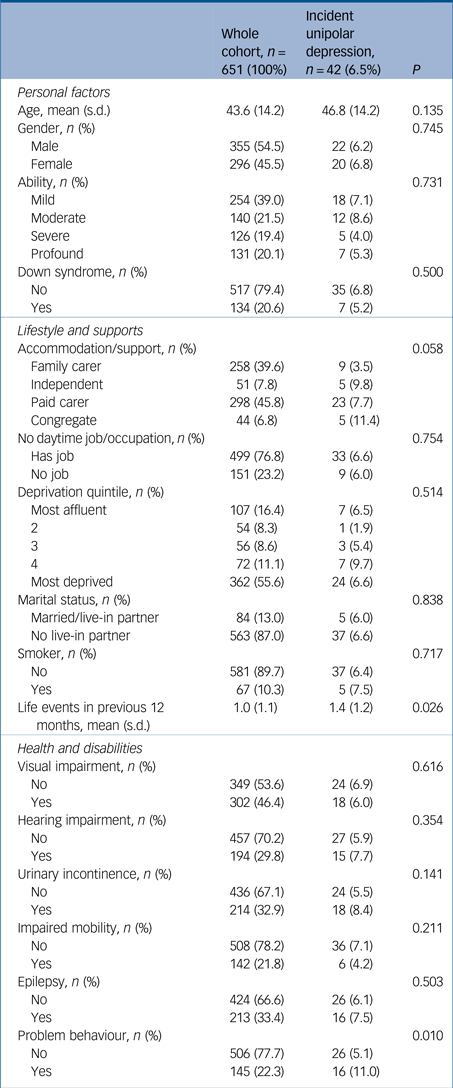
a. For the whole cohort, percentages refer to the proportion of the cohort with that characteristic; for the incident depression group, percentages refer to the proportion with incident depression out of the whole cohort with that characteristic.
For incident episodes of unipolar depression, at the second stage of analyses, type of accommodation/support, problem behaviours and preceding life events were entered into the regression. One participant had an incomplete data-set (life events), did not have incident unipolar depression and was excluded from the analysis. Factors at T 1 that predicted incident episode of unipolar depression by T 2 were: preceding life events (odds ratio (OR) = 1.30, 95% CI = 1.02–1.65) and problem behaviours (OR = 2.27, 95% CI 1.18–4.37). The Hosmer–Lemeshow statistic was χ2 = 7.68 (d.f.=5), P = 0.18, giving no indication of lack of fit.
Discussion
Principal findings and comparison with the existing literature
Depression has a similar incidence in adults with intellectual disabilities as the general population, which, given its higher prevalenceReference Cooper, Smiley, Morrison, Allan and Williamson3 suggests it is more enduring and perhaps undertreated. Mania occurs at a considerably higher incidence in adults with intellectual disabilities than the general population. This latter finding has not been previously reported, as far as we are aware. Both these findings are further surprising, given the high proportion of the population who were prescribed mood stabilisers (mostly for epilepsy). It is important that clinicians have a heightened awareness of these facts and treat depression thoroughly, and consider mania in their differential diagnosis, given the potential misdiagnosis with ADHD and problem behaviours that are common in adults with intellectual disabilities.Reference Cooper, Smiley, Morrison, Williamson and Allan9 Differential diagnosis is of fundamental importance in intellectual disabilities psychiatry because of the substantial comorbidity of physical ill health, mental ill health and sensory impairments. This can be diagnostically challenging, particularly in the non-verbal population, and care is needed given that some symptoms are similar across diagnostic categories, such as distractibility, impulsivity and overactivity, which can be prominent features of all of mania, ADHD and problem behaviours. Heightened awareness of mania should improve diagnostic accuracy.
There has been remarkably little attention on mania in this population, although schizophrenia is known to be more common in adults with intellectual disabilities. We previously reported a high point prevalence of mania at 0.6% (clinical, DC-LD and ICD-10-DCR criteria), with an additional 0.5% with bipolar affective disorder in episode with depression, and 1.2% with bipolar affective disorder in remission, which is a point prevalence of 2.3% with bipolar affective disorder in total.Reference Cooper, Smiley, Morrison, Allan and Williamson3 This is considerably higher than lifetime prevalence rates of 1.0% reported for the general population.Reference Merikangas, Akiskal, Angst, Greenberg, Hirschfeld and Petukhova24 These proportions are very similar to those found by Corbett in his study of 402 people with intellectual disabilities aged ≥15 years: 1.5% had ICD-8 manic–depressive psychosis at the time of his study, and although he did not report the total proportion with manic–depressive psychosis, there is sufficient information in his Table III to calculate that it was 2.2%.Reference Corbett, James and Snaith25 A lower rate of 1.2% (by the age of 38–52 years) and 1.0% (by the age of 23–37 years) was reported in the record linkage study, but with likely underrecording due to the methodology.Reference Morgan, Leonard, Bourke and Jablensky7 There have been few other population-based observational studies with adults with intellectual disabilities, and all are limited by small numbers of participants (n = 73, n = 121, n = 101), which may explain why the high prevalence and incidence of mania in this population has previously been overlooked.Reference Cooper and Bailey26–Reference Deb, Thomas and Bright28
Some genetic syndromes that cause intellectual disabilities are specifically associated with psychosis, such as velo-cardio-facial syndrome and Prader–Willi syndrome. Conversely, both mania and schizophrenia are rare among individuals with Down syndrome. At T 2 in our study, only one person had Prader–Willi syndrome and did not have any mental illness (because of their relatively young age; 25 years), and none had velo-cardio-facial syndrome, given the rarity of these syndromes. Hence, these rare syndromes do not account for our study findings.
There is no existing literature regarding incidence, and predictors, of unipolar depression for the intellectual disabilities population with which we can draw comparisons, as far as we are aware. We found that preceding life events predicted onset of unipolar depressive episodes. This is similar to general population findings. Unlike the general population, female gender, living in more deprived areas, not having a daytime occupation and being a smoker were not predictive of incident unipolar depression. Age and urinary incontinence were also not statistically predictive of unipolar depression, although this is possibly because of the cohort size. This suggests it is therefore inappropriate to generalise findings from general population studies to the population with intellectual disabilities. Given the higher rate of affective disorders, this has implications for services and policymakers, and highlights the need for more health services research with this population.
Our study additionally addresses the long-running debate regarding whether or not adults with problem behaviours and intellectual disabilities are at greater risk of developing unipolar depression than other adults with intellectual disabilities. Several cross-sectional studies have reported an association between problem behaviours and depression in this population. Given the prospective cohort design of our study, we have shown that the risk for unipolar depression is higher for adults with pre-existing problem behaviours. This may be because problem behaviours and unipolar depression having similar aetiologies, or because of problem behaviours resulting in stress, limitations and restrictions to the adult's life, predisposing individuals to depression.
Strengths and limitations of the study
Although we have presented SIRs, it is important to note that there are differences in the studies, because of different methods of assessment and different instruments. Our confidence interval for first-episode mania is very wide, as a result of the cohort size; however, the lower limit of the confidence interval is 5.0 or 6.4 excluding people with Down syndrome, well above 1.0 and so gives credence to the finding of the higher level of mania in people with intellectual disabilities. The American study we used as the comparator for bipolar affective disorder episodes found higher rates than European studies, and has been criticised for the use of lay interviewers, likely to overestimate rates of mania. However, we had difficulty identifying more suitable European general population data to use as the comparator for incident episodes that were not only first episodes. This may mean we have underestimated the extent of the higher incidence of mania in adults with intellectual disabilities.
It is possible the study was underpowered to detect all predictive variables for unipolar depression: there appears to be a trend towards a relationship for type of accommodation/support, age and urinary incontinence, all of which we had expected to be related to incident unipolar depression. Additionally, the statistical relationships we found do not necessarily mean that there is a causal relationship between the T 1 variables and incidence of unipolar depression, although the findings are credible. A further limitation was that cohort size precluded investigating the predictors of bipolar episodes.
Strengths of the study include the comprehensiveness of data collection and detailed psychiatric phenotyping, and longitudinal design. Studies with this population are more resource intensive than with the general population, as participants cannot easily self-report nor complete questionnaires unlike the general population, requiring data to be collected from multiple informants as well as from lengthy meetings with the participant with intellectual disabilities. This, together with the need to initially ascertain the population with intellectual disabilities from the base population, accounts for the lack of previous literature studying mental ill health incidence in this population. With the general population it is reasonable to suspect that most episodes of mania are presented to mental health services, and hence case identification is straight-forward. However, this assumption cannot be made for the population with intellectual disabilities, as most do not hold down positions of responsibility or have partners, are subject to diagnostic overshadowing (where symptoms of ill health are wrongly attributed to the person's underlying intellectual disabilities by paid carer and professionals), and are known to have poor access to services for a range of reasons. Hence there is no easy short-cut to identifying the incidence of affective disorders, unlike for the general population: that our methodology has fully addressed these issues is a strength of the study.
Cohort retention is known to be less successful with the intellectual disabilities population than the general population, hence the high participation at T 2 is a further strength. T 1 and T 2 are close enough in time to reduce the likelihood of missing interim period data, which is an important consideration in study design given the population's known poor access to services when ill, the high job mobility of paid carers, and limitations in communication skills and retention of information by many individuals with intellectual disabilities themselves. Although there was loss to follow-up between T 1 and T 2, there was no difference between participants for whom consent was, and was not, gained to participate at T 2, suggesting the loss to follow-up did not introduce bias to the results.
We are confident that our ascertainment of the population with intellectual disabilities was comprehensive. It will not have identified all people with an IQ less than 70, because some such people on reaching adult life have successfully learned the necessary life skills to live independently of any support, marry, raise children and hold paid employment. Such people are not readily identified by general practitioners as having intellectual disabilities, will not be using services, and indeed do not meet ICD-10 criteria for ‘mental retardation’, as this is a social and not purely statistical construct, being based on impaired adaptive functioning and need for support, in addition to IQ level. Reported prevalence of intellectual disabilities varies with the country of study, the sampling frame particularly age range (child or adult), the definition used for intellectual disabilities, methods of assessment and ethnic composition. Our rate is in keeping with other large-scale ascertainments of adult populations in high-income countries.8 We consider that these results are generalisable within other high-income countries, in view of the robust case identification for intellectual disabilities, the comprehensive and complete assessments, and the extent/non-bias of cohort retention.
Future research
Future study design should include more person-years. We have demonstrated that results from studies with the general population cannot be generalised to the population with intellectual disabilities, and that depression in this population is more enduring (despite high use of mood stabilisers), hence warranting further investigation of causation and interventions. This is a high-risk group for mania, warranting more detailed genetic investigation, in addition to further health services research. Inter-episode symptoms frequently occur in affective disorders in the general population; investigation of subsyndromal symptoms and the effectiveness of affective disorder treatments for people with intellectual disabilities are clearly warranted.
Funding
The research at T 1 was funded by Greater Glasgow Health Board and the West of Scotland R&D Mental Health Programme. At T 2 the research was funded by the Chief Scientist Office (reference CZH/4/96).
Acknowledgements
We thank Patricia Peters, Andrew Williamson, Janet Finlayson, Alison Jackson and the staff of the NHS Greater Glasgow primary care learning disabilities liaison team. We thank study participants, and their paid and family carers.




eLetters
No eLetters have been published for this article.