


Introduction
In 2009, Russia overtook Saudi Arabia, temporarily becoming the world's largest oil producer, while remaining one of the countries with the largest unsurveyed areas in the world. And yet, the Russian ‘oildorado’ seemed to be slipping out of reach for international companies, as a series of events with negative implications for foreign investors had occurred in the preceding years. First, one reason behind the crackdown on Russia's formerly largest oil company Yukos and its main shareholder M. Khodorkovskiy, apart from his intention of using his fortune to gain influence in Russian politics, was thought to be his plan to sell a major stake in the company to ExxonMobil, and to build an Arctic oil pipeline from Ukhta to Murmansk that would challenge Transneft's near monopoly on Russian oil exports. Second, the largest projects involving foreign companies, Sakhalin II and Kovykta, had evolved into legal and bureaucratic gauntlet runs (Overland Reference Overland, Wilhelmsen and Rowe2011). Third, when Gazprom in 2007 finally settled on Total and Statoil as international partners for its Shtokman project in the Barents Sea, these companies found themselves restricted to a minority shareholder role in SDAG, the special-purpose company that was to develop and operate phase one of the Shtokman field. Gazprom would retain exclusive ownership over the field as such, possibly denying the foreigners the much wanted right to book the reserves; it would also sell the gas (Moe Reference Moe2010). Lastly, new legislation on strategic resources was introduced in 2008, restricting the access of foreign companies to Russia's largest oil and gas fields (Adachi Reference Adachi2009).
Many international oil companies started asking themselves, as oil prices boomed and as their own reserves dwindled, whether, when, and on what premises Russia might again welcome foreign investment in its petroleum industry. Interest in Russia's offshore and Arctic resources was particularly keen (Topalov Reference Topalov2011), as Russian companies were assumed to be dependent on foreign technology and capital to develop the abundant but technologically and climatically challenging reserves in its northern seas (Guseinov and others Reference Guseinov, Denisov and Goncharenko2007). Russia has by far the largest Arctic continental shelf of the littoral states, and, as Young (Reference Young2009: 75) has argued, the extraction of Arctic offshore oil and gas beyond the continental shelves ‘is highly unlikely during the foreseeable future’. As yet, no Arctic offshore oil or gas fields in Russia had been developed (Palmer 2008: 116).
These questions apparently received a clear answer with the six agreements announced in 2010 and 2011. The response came from unexpected quarters: five of the six involved Rosneft and were personally facilitated by I. Sechin, thought to have been behind the dismemberment of Yukos (Bremmer and Charap Reference Bremmer and Charap2006). Now, Sechin was seen hugging R. Tillerson, the ExxonMobil CEO, at the World Economic Forum in Davos (CNBC 2011).
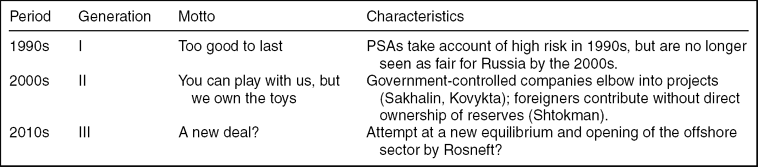
The flurry of agreements in 2010–2011 amounted to an admission by Rosneft that it could not explore and develop its vast but inaccessible resources without western know-how and project management skills. In addition, it could be viewed as an attempt by Rosneft to complete its own modernisation, which had started with the 2006 initial public offering of 15% of its stock, while at the same time matching and surpassing the offshore strategy of its rival Gazprom. Rosneft, it seemed, was trying to better the design of both Gazprom's Shtokman partnership and that of the production-sharing agreements (PSAs) of the 1990s. The PSAs had provided scant protection for Russian interests in the case of cost overruns, and were at one point characterised by V. Putin as ‘colonial’ (Der Spiegel 2007). The new deals appeared to entail a better balance between Russian and foreign interests, thereby offering more stability than previous agreements while remaining attractive to international oil companies.
In this view, Rosneft's new agreements could constitute a new and third generation of cooperative relationships with foreign companies in the post-Soviet petroleum sector, as outlined in Table 1.
Cooperative relationships in the Russian petroleum sector: a new generation?

During the same period, Rosneft also entered a partnership with the Russian oil company Lukoil; while the French company Total acquired a stake in Russia's largest independent gas company, Novatek. Although these two do not fit the pattern of pairing Rosneft and foreign companies, we include them in our analysis for purposes of comparison and contrast. Some of the six agreements covered in this article include non-Arctic oil and gas provinces. They are included here because developments in Russia's Arctic offshore petroleum need to be seen in the context of the evolution of the country's broader petroleum sector. Although Arctic assets are the grand prizes of Russian petroleum, what happens in the Arctic is linked to what happens elsewhere in the country.
The aim of this article is to examine to what extent the hypothesis about a new generation of offshore development projects fits with the agreements spearheaded by Rosneft (and Novatek), by answering the following questions: Why were these agreements made? How have they evolved? What do they say about the influence of competing political actors over the Russian petroleum sector? Before attempting any answers, we provide an overview of the six, first in Table 2, then in a review of each agreement.
Substance and geography of deals.
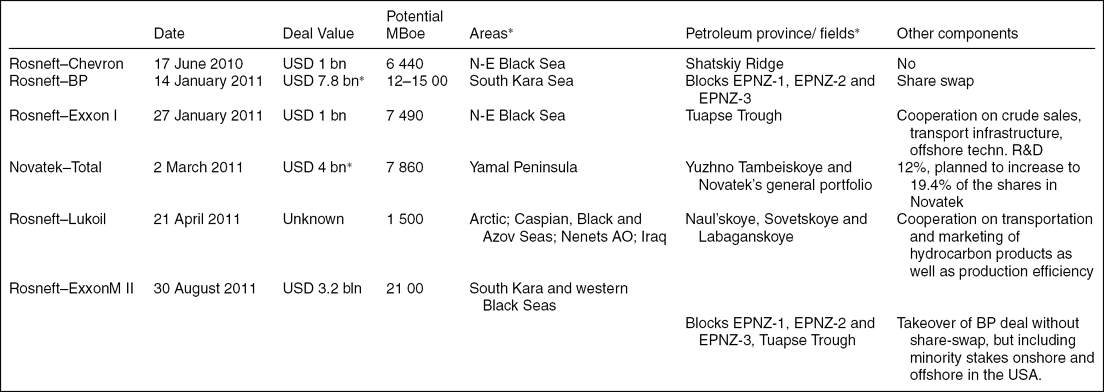
* Value of share swap/purchase only
Sources: Jagova Reference Jagova2011; Korsunskaya and Redall Reference Korsunskaya and Redall2011; Rosneft 2010; BP 2011a; Reed and Swint Reference Reed and Swint2011; BP 2011b; Rosneft 2011b; Strukova Reference Strukova2011; Rosneft 2011c; Total 2011; Rosneft 2011d; ExxonMobile 2011d; BP 2011b.
Rosneft–Chevron
On 17 June 2010, Rosneft and Chevron agreed to cooperate on the exploration and development of the Shatskiy Ridge in the northeastern Black Sea. Rosneft had been looking for a partner for the exploration phase since 2008, and several other western companies (Shell, Total and Statoil) had been considered before an agreement was reached with Chevron (Kisin Reference Kisin2010).
Prime Minister Putin and Deputy Prime Minister Sechin were present at the signing ceremony, which took place at Putin's Novo-Ogaryovo Residence (ExxonMobile 2011a). Putin praised Chevron for its engagement in Russia, expressed his satisfaction that Chevron had decided to join despite some risks, including geological uncertainties, and pledged governmental support for the project (Putin Reference Putin2011b). In December 2010, Ambassador R. Morningstar, the US Special Envoy for Eurasian Energy, also expressed his support for the cooperation and underlined the importance of trust and openness in the relationship (Interfax December 2010c).
The deal, merely a ‘heads of agreement’, did not imply any obligations, only good intentions (Chevron 2011). Chevron was to cover the costs for initial exploration activities, seismic surveys and exploration drilling of two wells (Kiselyova Reference Kiselyova2011). The costs for the exploration phase were expected to reach USD 1 billion, whereas the development costs were estimated at USD 32 billion (Kiselyova Reference Kiselyova2011). Projects on the Black Sea shelf were to pay a reduced natural resource extraction tax (Interfax 2010c: 17 June–23 June). This agreement was the first sign of a new thaw in Russia's relations with major oil companies. It implied that Rosneft had admitted it could not develop its offshore reserves without western expertise, technology and capital (Chazan and Gronholt-Pedersen Reference Chazan and Gronholt-Pedersen2011), and also that the government was ready to give tax concessions for such projects.
In June 2011, Chevron withdrew from the project, citing the imbalance between having to shoulder the entire cost of exploration while receiving only one third of any discoveries (Chazan and Gronholt-Pedersen Reference Chazan and Gronholt-Pedersen2011). Moreover, the geologists of Rosneft and Chevron ‘categorically disagree[d]’ about the area's potential (Gazeta.ru 2011). During 2010, a nearby area in the Turkish part of the Black Sea had been drilled and found dry, and now Chevron apparently believed the Shatskiy Ridge had similar characteristics (Gazeta.ru 2011). In addition, there were also some commonplace business problems related to operating in Russia: contractor selection (controlled by Rosneft) (RiaNovosti 2011b), domiciliation of the joint venture (Rosneft insisting on registration in Russia) and the jurisdiction of arbitration (Melnikov Reference Melnikov2011). Although the project was abandoned, Chevron did not rule out joint efforts in other areas, especially in the Arctic (Berman and Shiryaevskaya Reference Berman and Shiryaevskaya2011).
Rosneft–BP
The alliance between BP and Rosneft was announced on 14 January 2011. This was the most spectacular of the six partnerships: it included a USD 7.8 billion share-swap (BP 2011a), a programme for general cooperation in the Arctic, three specific offshore blocks in the Kara Sea, a refining partnership in Germany, and the continuation of exploration off Sakhalin (BP 2011b). The Kara Sea blocks constituted an area of roughly the same size and prospects as the UK North Sea (BP 2011b). This part of the deal was similar in structure to that between Chevron and Rosneft. BP was to cover the initial exploration costs in exchange for a share of the offshore blocks (Pfeifer Reference Pfeifer2011). The share-swap involved BP acquiring a further 9.5% stake in Rosneft; in return, Rosneft would receive 5% of ordinary voting shares in BP, giving it a representative on the board of one of the world's oldest, largest and most prestigious oil companies.
BP and Rosneft had first established an alliance in 1998, followed by the formation of three joint ventures to explore the continental shelf off Sakhalin. In January 2006, BP and Rosneft initiated a joint scientific study of Russia's Arctic continental shelf (BP 2011a). The same year, BP bought USD 1 billion worth of stock in Rosneft's IPO (equal to 1.25% of the company) (Chazan Reference Chazan2011).
This was not only the biggest, but also the most politicised of the six agreements. Sechin had personally proposed and negotiated the agreement (Chazan Reference Chazan2011; Webb Reference Webb2011), which was presented at three widely publicised meetings over a period of less than two weeks: a meeting at Vladimir Putin's Novo-Ogaryovo residence in Moscow on 14 January 2011, followed by a signing ceremony and press conference in London the same evening, followed by another public signing ceremony for expanded areas of cooperation at the World Economic Forum in Davos less than two weeks later. Sechin attended all three events in person. BP's CEO Robert Dudley met Putin again on 15 April, after the ruling of the arbitration panel against the deal (see below), and Putin reiterated his support for the partnership (RiaNovosti 2011d). The then UK Energy Secretary C. Huhne ‘enthusiastically blessed’ the alliance between the two companies (Macalister Reference Macalister2011).
During the months prior to the deal, the possible costs of the Macondo accident in the Gulf of Mexico were beginning to become clear, seriously damaging BP's finances, stock price and reputation. At the time of the deal with Rosneft, BP was valued at USD 13.2 per boe (barrels of oil equivalents) while Rosneft's implied share value per boe was USD 5.3 (Reed and Swint Reference Reed and Swint2011). Although Rosneft, like most national oil companies, was traded at a discount compared to its international peers, it seemed like a good time for Rosneft to capitalise on a unique opportunity to buy into a western super-major. Evidencing the rationale for the deal, upon its announcement BP's share price increased by 2.5% and Rosneft's by 5.4% (Reed and Swint Reference Reed and Swint2011). Moreover, the resulting alignment of interests between the two companies reduced the risk of Rosneft making life difficult for BP in Russia, as any negative impact on BP would inevitably lower the value of Rosneft's stake in BP.
However, other problems loomed. Prior to the deal with Rosneft, BP had for several years been heavily involved in a 50/50 joint venture TNK–BP with the Russian consortium Alfa-Access-Renova (AAR), owned by four Russian businessmen, with M. Fridman as the largest shareholder. AAR quickly challenged the new alliance between BP and Rosneft, pointing to the TNK–BP shareholder agreement, which stated that BP could not do any business in Russia without first offering to involve TNK–BP. In March, an arbitration panel in Stockholm declared that AAR's complaint was well founded, and blocked the deal (Starinskaya and Koritina Reference Starinskaya and Koritina2011). In July 2011, minority shareholders of TNK–BP won a court ruling in Russia according to which BP might have to compensate them USD 5–10 billion for damages in the form of lost opportunities in connection with the Rosneft deal. AAR claimed not to be involved in the litigation, although it followed a well established pattern of minority shareholder lawsuits against the foreign business partners of M. Fridman and AAR (Starinskaya Reference Starinskaya2011; Soldatkin Reference Soldatkin2011).
Rosneft–ExxonMobil I
Rosneft's first deal with ExxonMobil was announced on 27 January 2011 and involved the Tuapse Trough, situated in the Black Sea close to the Krasnodar Region (Rosneft 2011b). According to the agreement, Rosneft and ExxonMobil were to establish a joint venture, in which they owned two thirds and one third respectively (RiaNovosti 2010). It was envisaged that the partners would spend USD 500 million annually, the seismic surveys alone were to cost USD 1.3 billion, and ExxonMobil pledged to invest up to USD 1 billion to cover the cost of the exploration phase (Aliyev Reference Aliyev2011). In 2010, seismic surveys were conducted over an area of 1,200km2 and some preparations were made for the first exploration well, the Osipovskaya (Rosneft 2011f). Rosneft and ExxonMobil were also to extend their cooperation to additional upstream activities, crude sales to Rosneft's Tuapinskiy refinery and other parts of the Black Sea market, regional transportation infrastructure and the development of new deepwater offshore technology (ExxonMobile 2011a).
Rosneft had been looking for a western partner since 2006 and Shell, ConocoPhillips and Chevron were all on the initial list (Interfax 2010c: 10–16 June). An important circumstance that facilitated the choice of partner was the fact that ExxonMobil had managed to start production at the Odoptu field (Sakhalin-1) where others had not dared or managed to go (Kisin Reference Kisin2010). The deal was announced at the World Economic Forum, and signed by the CEOs of the companies in the presence of Sechin who ‘welcome[d] here our American friends’ (RiaNovosti 2011a; Rosneft 2011a, 2011e). The question of cooperation between Russian and US energy companies was also discussed during US Vice-President J. Biden's visit to Moscow in March 2011 (Medetsky Reference Medetsky2011).
Interestingly, ExxonMobil (along with Total, among others) was mentioned as a potential successor to Chevron in the Shatskiy Ridge deal presented above when that alliance collapsed (RBC 2011). Rosneft CEO Khudaynatov said that it would make sense to have a single partner to explore the Black Sea ‘since it's cheaper’ (RBC 2011). However, the Shatskiy Ridge did not figure when ExxonMobil and Rosneft expanded their cooperation in the last of the six agreements (see below), and Rosneft has since submitted an application to postpone further drilling in the Black Sea from 2012 to 2017 while various seismic and geological surveys are conducted (Starinskaya Reference Starinskaya2011). The postponement is believed to stem partly from the current lack of clarity surrounding the fiscal framework (Starinskaya Reference Starinskaya2011).
Rosneft–Lukoil
This agreement between Russia's two largest oil companies was announced on 21 April 2011 and points towards extensive cooperation in Russia and internationally. The companies have collaborated for several years, also in the offshore sector. Rosneft and Lukoil have equally large stakes (42.5%) in Priazovneft, the company developing the Temryuksko-Akhtarsk offshore license area in the Azov Sea, and are currently engaging in seismic work in the area. Likewise, Rosneft and Lukoil have a 49.9% stake each in the Caspian Oil Company, which discovered the Zapadno-Rakushechnoye oilfield in the northern Caspian Sea in 2008.
In a meeting with Putin two days after the agreement was signed, Lukoil's CEO Alekperov suggested that the companies initiate their cooperation with a number of Rosneft's fields in the Black and Caspian Seas, as well as further work in the Timan-Pechora petroleum province in northern Russia (Putin Reference Putin2011b). In terms of new projects, the agreement emphasises the exploration and development of licensing areas in the Nenets Autonomous Okrug and the exploration and/or development of already discovered fields in Rosneft's Arctic shelf licence areas. One report held more specifically that Rosneft would open its licensing zones off the Yamal Peninsula to Lukoil (Bachman and de Carbonnel Reference Bachman and de Carbonnel2011); however, public statements from company leaders lacked a clear Arctic emphasis. The two companies also planned to cooperate on transporting and marketing natural gas from east Siberia and Timan-Pechora (Rosneft 2011d). The companies agreed to form a working group by 15 May 2011 and to submit a list of projects (including onshore projects) by 1 September 2011 (Rosneft 2011d). However, on 16 September, Alekperov stated that the list would not be published until the end of 2011. He mentioned that they had been in contact with Sechin, thus implying that Sechin's endorsement was required to be able to postpone the project list (Oil Capital 2011). Alekperov also denied that the Shatskiy Ridge was included in the list, stating that the negotiations with Rosneft were not tied to ‘specific deposits’.
The terms under which the companies would work were not disclosed. Sharing oil pipelines can however clearly generate mutual benefits in terms of lower unit costs. In the words of Alekperov: ‘We have undeveloped fields, Rosneft also has undeveloped fields. The construction of separate small-diameter oil pipelines is not profitable for the companies on their own’ (RiaNovosti 2011e).
Cooperating on gas pipelines will also become more important if and when stricter regulations on flaring are introduced. (A government resolution, intended to enter into force in 2012, would limit flaring of associated gas to 5%.) Rosneft has historically had one of the worst records on flaring; Lukoil, too, has a poor record (Neft Reference Neft2011). The CEOs of Lukoil and Rosneft also stressed tax conditions and an increasing share of challenging projects as reasons for collaboration (Bachman and de Carbonnel Reference Bachman and de Carbonnel2011).
Rosneft–ExxonMobil II
A month after the final collapse of the BP deal, ExxonMobil and Rosneft announced a similar Arctic partnership. ExxonMobil had replaced BP, except for the share-swap. In this respect ExxonMobil got a better deal, because unlike BP it did not offer billions of dollars’ worth of its own shares, and thus hoped to avoid getting the Kremlin in the boardroom. Instead of shares, Rosneft was to be offered access to minority stakes in fields onshore in Texas and deepwater in the Gulf of Mexico. Six fields for this purpose were to be identified later on. The deal also covered the Tuapse Trough in the Black Sea, confirming Exxon's commitment to that endeavour; as well as unidentified high viscosity projects in eastern Siberia and a 500-million-dollar training and research centre in St. Petersburg. However, the deal did not make ExxonMobil a partner at Shatskiy Ridge, where it had been speculated that ExxonMobil might replace Chevron.
In contrast to the BP and Chevron deals, in both of its deals ExxonMobil put a figure on how much was to be spent on exploration. This time round, the press releases from both ExxonMobil and Rosneft mentioned a dazzling USD 3.2 billion exploration programme (ExxonMobile 2011b; Rosneft 2011c). Upon signing the agreement, Sechin commented that Russia foresaw USD 200–300 billion in direct investment, an enormous amount, tied to construction of no less than ten ice-proof platforms. R. Tillerson, the ExxonMobil CEO, stressed that his company had been encouraged by the Russian government's pledge to reform oil taxation and improve the climate for foreign investment (The Times (London) 2011). As with the other Rosneft deals, ExxonMobil II was presented as being orchestrated by Sechin, and was signed in the presence of both Putin and Sechin.
Total–Novatek
The deal between Novatek and Total, announced on 2 March 2011, differed from Rosneft's partnerships in that it involved a cash acquisition of nearly one fifth of Russia's second-largest gas producer by a major foreign company. It was also the only deal in which Sechin did not take part, and the one deal in which President Medvedev was depicted as playing an active role.
Total paid USD 4 billion for 12% of Novatek, a stake that was to increase to 19.4% in the course of the ensuing 36 months (Total 2011). This price was calculated as an average of Novatek's share price three months prior to the announcement of the deal (Kristalinskaya Reference Kristalinskaya2011). The stake was valued at USD 4.7 billion based on the closing stock price on the day of signing (Shiryaevskaya and Bierman Reference Shiryaevskaya and Bierman2011), thus implying an immediate gain for Total of USD 0.7 billion.
Novatek is the main independent gas company in Russia, supplying around 10% of the domestic market (Total 2011). Its resource portfolio consists of gas fields predominately located onshore in the Yama-Nenets Autonomous Okrug. Prior to the deal, Novatek was owned 19.4% by Gazprom, of which 9.4% of the shares were held through Gazprombank (Gazprom 2006). Novatek Chairman L. Mikhelson and member of the board G. Timchenko, widely considered Putin's protégé, jointly controlled just over 50%. The remaining 30% were freely traded.
Total also acquired, on undisclosed terms, a 20% stake in the Yamal LNG project, at the time owned 51% by Novatek. On 20 July the government commission on foreign investments approved Total's acquisition in Yamal LNG (RiaNovosti 2011c). Novatek increased its share to 100% on 30 September 2011 by exercising two call options purchased in July 2009 and in March 2011 (Novatek 2011). That same day, Sechin made a public statement: ‘Our Arab partners are holding negotiations with Novatek and a Qatari oil and gas producer is asking to be included in the list of shareholders, but there are other partners as well’, thus implying his own involvement in Novatek's affairs (Watkins Reference Watkins2011). This project is based on the Yuzhno-Tambeiskoe gas and condensate field, and is one of three current LNG projects in Russia (LNG Journal 2010). Investments are expected to be around USD 20 billion, excluding investments in LNG tankers and port facilities (RiaNovosti 2011g). The stock transaction implied that Total would arrive at the equivalent of an approximate 30% share in Yamal LNG (20% directly, plus around 10% via its ownership in Novatek).
Total had long been interested in Novatek, and Putin had long seemed positive towards Total. In June 2010, for example, he promised Total that he would ‘continue supporting your efforts in the Russian market just as I always have’ (Putin Reference Putin2011a). Total CEO de Margerie was at pains to stress that the Shtokman and Yamal LNG projects were not in competition with another and that Putin should work to encourage progress on both. The agreement was signed in Putin's presence, at his residence. One source indicates that Putin is highly positive towards the Yamal LNG project on the whole (Socor 2011). The government has been ready to give tax concessions; the project has achieved an extraction tax holiday for the first 250 bcm (billion cubic metres) of natural gas for the first 12 years (Shirayevskaya Reference Shirayevskaya2011), and has also offered to pay for the port infrastructure essential to the project. These developments fit a broader picture of good relations between Total and the French authorities on the one hand, and the Russian authorities on the other (for an overview of Franco-Russian relations and Total's engagement in the Russian petroleum sector, see Jensen and Overland Reference Jensen and Overland2011).
It was not clear whether Gazprom would continue to be part of the Novatek consortium or not, and the deal reeked of financial acrobatics (only a summary of the complex transactions is included here). The stake in Novatek to be acquired by Total corresponded exactly to the stake previously controlled by Gazprom. Nonetheless, the first 12% was reported to come from from Mikhelson and Timchenko, depriving them of their shared majority in the company (Wagstyl Reference Wagstyl2011). However, Mikhelson and Timchenko had retained an option to buy back the 9.4% share controlled by Gazprombank (Wagstyl Reference Wagstyl2011). If the same could be achieved for Gazprom's remaining 10%, Timchenko and Mikhelson could regain their previous positions and undoubtedly profit from acting as middlemen for Gazprom's shares without the cost of losing majority control over the company. The end-sum would also be the creation of a first potential real competitor to Gazprom with significant foreign ownership.
What got Rosneft rolling? Deal-specific and contextual drivers
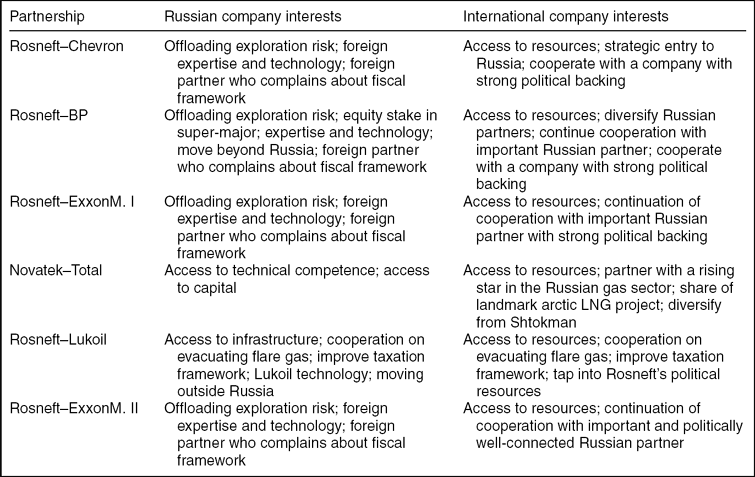
The possible specific drivers for each of the agreements are summarised in Table 3. We have deduced these drivers from the contents of the agreements.
Specific drivers of agreements.
Firstly, and most obviously, Rosneft lacked the expertise and technological capacity to develop major offshore projects on its own, especially under difficult Arctic conditions. The effects of the gradual crackdown on foreign ownership and influence in the oil and gas sector, especially as regards the lack of investment in new fields, were starting to become evident. Both the state and Russian companies have recognised the need to attract foreign companies, in order to accelerate activity.
Secondly, Rosneft was following a standard oil-industry strategy of reducing risk and capital exposure by inviting foreign partners into licences. Similar agreements were made with all three foreign partners: Rosneft would keep two thirds of the oil fields, while the foreign company would cover most or all expenses for exploration in exchange for the remaining one third of any finds.
Thirdly, the deals with the super-majors reflected a broader trend in Russian business. Russian companies and politicians want to stop being seen as a passive emerging market into which western companies can choose to invest or not. Instead, these companies want to be considered equals, in partnership with western companies around the world. In particular the alliance with BP would have satisfied this desire, as it would have made Rosneft the biggest single shareholder in the world's third largest oil company with a history going back to 1909 (Chazan Reference Chazan2011).
Fourthly, the need for fiscal reform has been stressed in statements from the partners in all deals involving Rosneft. Why then are deals launched with such fanfare for areas and fields that may be unprofitable in a tax system that does not offer incentives for new investment? Part of the explanation could be that Rosneft wanted to use its foreign partners to help stress the inadequacies of the existing taxation system in order to spur reform.
In addition to these deal-specific drivers, there are several other factors that were part of the broader context and may have acted as drivers. Although it is difficult to find empirical evidence for these drivers, we cannot exclude them either.
Firstly, Gazprom and Rosneft were under pressure from the Russian authorities to make use of the numerous attractive licences they had received on the Russian shelf, especially in the Arctic. The companies were given a near-monopoly on new offshore projects by law in 2008 and have stockpiled licenses since, for later development (Moe and Wilson Rowe Reference Moe, Rowe and Wilson Rowe2009). But more recently, the development of offshore resources has attracted greater attention as an important element in sustaining Russian petroleum production and thus the state revenues, resulting in criticism of the relatively low activity level of the duopolists. Rosneft had reason to worry that they might lose control of their huge offshore licence reserve. For example, in 2009 Rosnedra decided not to prolong Rosneft's licence off western Kamchatka (Klimov Reference Klimov2011). It thus made sense to bring in foreign companies in order to speed up offshore work and avoid the loss of licences. Two events suggest that this tactic was successful: as mentioned above, shortly after the second deal with ExxonMobil, Rosneft won an extension of its licences in the Black Sea, as well as government approval of its purchase of Sintezneftegas and Chernomorneftegas, thus accumulating even more offshore licences (Gelitshchev Reference Gelitshchev2011).
Secondly, as conjectured in the introduction, the agreements may have sprung partly from Rosneft's desire to compete with Gazprom. Rosneft had been lagging behind Gazprom in the strategically important offshore sector, as Gazprom had already chosen its partners for the Shtokman project in the Barents Sea. Instead of placing a big bet on one project, Rosneft launched several parallel strategic partnerships loosely oriented towards specific areas, but without obligations as to which exact fields would be developed.
Thirdly, the so-called ‘reset’ in Russian–US relations may have played a role in promoting partnerships with American oil companies. Here one might argue that the reset is focused on the new START agreement and is otherwise a largely symbolic and rhetorical diplomatic construct, irrelevant for such large-scale, profit-driven projects. Nevertheless, the timing of the deal between Rosneft and ExxonMobil fits nicely with the thaw in political relations.
Fourthly, cooperation with western companies could help polish Rosneft's rogue image after it took over assets confiscated from Yukos. The deals came in the wake of the financial crisis, and Russian companies were starved for capital. An improved image and a global alliance with a strong western partner would probably make it easier for Rosneft to access foreign capital for its projects.
Fifthly, by launching multiple, high profile joint projects with international companies to expand onto the Russian continental shelves, Sechin may have hoped to silence the calls from, inter alia, the Ministry of Natural Resources to give offshore access to more players, both private Russian and foreign, by changing current legislation on strategic resources. Similarly, the agreements could also serve to show that the existing strategy for the Russian petroleum sector was sufficient, thereby fending off calls from various actors for further privatisation of Rosneft. Or to the contrary, the purpose of the deals could have been to increase Rosneft's value before it is further privatised. That would benefit both the Russian state and the investors who have already bought 15% of the company.
Combined, the elements in Rosneft's approach amounted to a two step risk management strategy: if resources were not found, it was the foreign company that had paid for exploration and would lose its money; if resources were found, Rosneft would own the lion's share; subsequently either the tax framework might be improved sufficiently for the project to move forward, or the foreign company might pull out, citing the unconducive framework, thus helping Rosneft accumulate pressure on the tax framework in the long term, as well as leaving Rosneft with a petroleum discovery that could be developed later on. This reasoning would also assume that the foreign partners expected the legislation to be changed in the future. According to the Ministry of Natural Resources, the model under discussion in the recent deals is similar to the Shtokman arrangement (Razvedka i dobycha 2011).
While the drivers listed here provide some insight into why Russian and international companies pursued joint offshore deals, their fate has depended in part on the influence and conflicts of key actors among the Russian elite. The next section examines this aspect.
The political interface
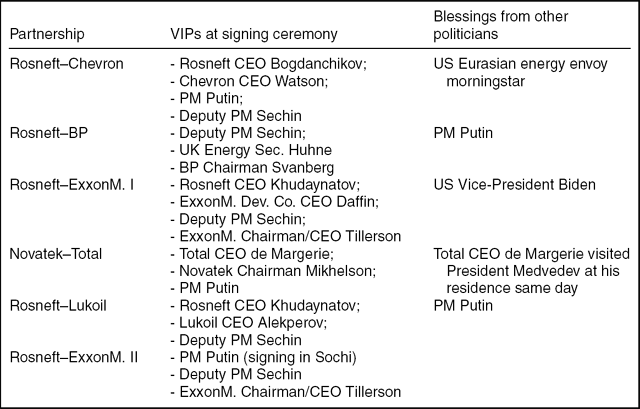
Sechin was chairman of Rosneft's board until 11 April 2011, and his personal involvement in the company's deals is illustrated by his presence at the signing ceremonies for all five Rosneft partnerships (see Table 4). His hand was particularly visible in the partnership between BP and Rosneft. The combination of Sechin's high-profile involvement in this deal and its equally high-profile failure can provide important clues to the political backdrop for the deal making during this period. Here we base our analysis on the assumption that Russian society is characterised by exceptionally deep entanglement of its formal and informal levels, which is supported by an extensive literature on Russian politics and society, including Sakwa (2010), Ledeneva (Reference Ledeneva2006), Kryshtanovskaya (Reference Kryshtanovskaya2011) and Pribylovskiy (Reference Pribylovskiy2010).
Patterns of political support.
Sources: Interfax 2010; Blackhurst Reference Blackhurst2011; Rozhnov Reference Rozhnov2011; Medetsky Reference Medetsky2011; Korsununskaya and Redall 2011.
Two of Rosneft's Sechin-backed partnerships quickly turned sour: the Chevron deal, predominantly because of geological disappointments, and the BP deal more spectacularly, because the AAR consortium shot it down. We see two possible explanations of how BP and Sechin could launch such a big agreement with such fanfare, only to have it ripped to shreds: either BP simply forgot that it had an exclusivity clause in its agreement with AAR, or BP ignored the clause, hoping that AAR would not dare to protest against the powerful Sechin.
In light of the stakes involved in BP's relationships with both AAR and Rosneft, it is implausible that BP could simply have forgotten: AAR and BP's jointly owned company, TNK–BP, stood for 35% of BP's global output and 25% of its income (Korsunskaya and Redall Reference Korsunskaya and Redall2011), and just the share-swap component of the deal with Rosneft was worth USD 7.8 billion. In addition, AAR had previously used all means available to pressure BP in no-holds-barred fights over the details over the TNK–BP shareholder agreement (Claus Reference Claus2007). Thus BP must have made a conscious bet that AAR would not challenge a deal that was not only backed by Sechin, considered one of the most powerful actors in the country, but also blessed by Putin himself.
This gives rise to the opposite question: how could AAR make such a bold move? Tripping up the joint BP–Rosneft Arctic adventure amounted to a severe public humiliation for Sechin, and to some extent Putin, as they had both put their personal stamp of approval on the deal in very public ways, at the same time signalling their roles as key decision-makers for the Russian petroleum sector. The fall of the deal indicates that this power may be more limited than the two men prefer to indicate. One might have expected Russian businesspeople to be wary of crossing Sechin, who was thought to have finished off the country's previously richest and most powerful oligarch M. Khodorkovskiy.
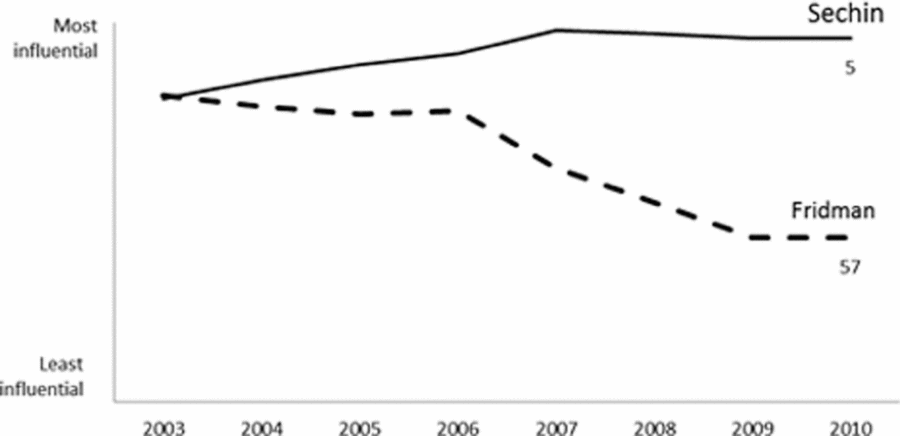
The biggest owner of AAR was Fridman, who was also seen as the most politically powerful of the oligarchs involved in the consortium. He was thus the most prominent representative of AAR, but in the seven years preceding this event, the general perception had been that Fridman's political influence was declining, in contrast to Sechin's (Fig. 1).
Fridman and Sechin, ranking among perceived 100 most influential Russians. Source: Novaya gazeta (The New Newspaper) 2003–2010, Top 100 Rankings of the most powerful people in Russia
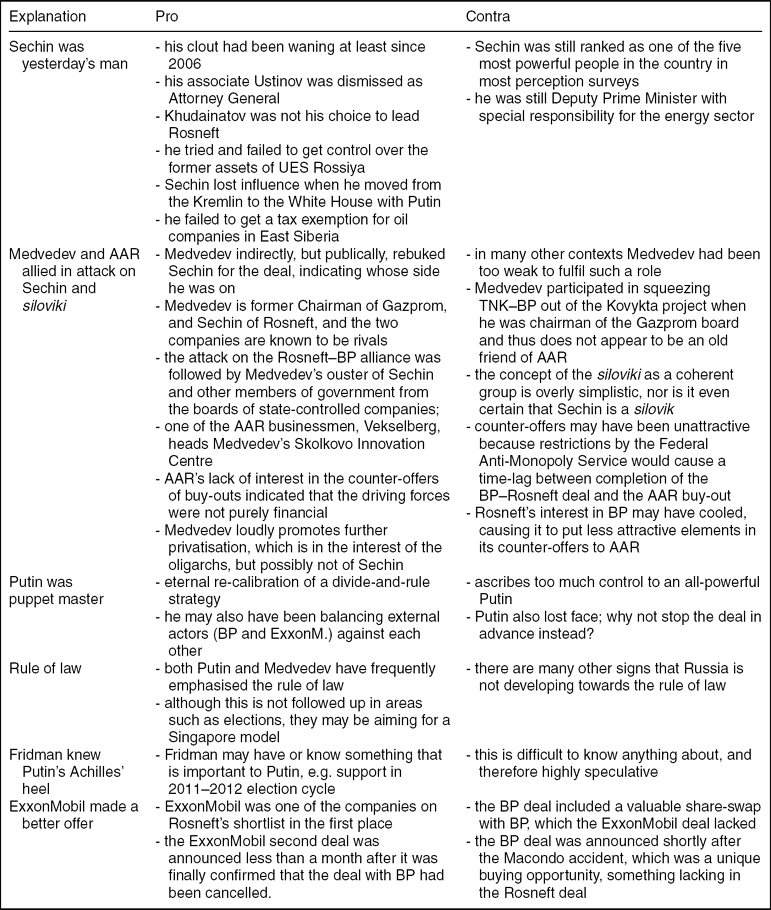
Although AAR's collective influence would be greater than that of Fridman alone, it is still not evident how AAR could handle Sechin in the way it did. We have considered six possible explanations, based on our own brainstorming and the input of the approximately 20 people who have either read this article or participated in the three seminars where it has been presented. It would take too much space to enter into a full discussion of each of these explanations here, but Table 5 provides an abbreviated overview. Here we limit ourselves to the tentative conclusion that several of these factors have probably worked together to bring about the outcome, although it is difficult to know exactly which ones.
Conjectural explanations of why AAR attacked the BP–Rosneft deal despite Sechin's perceived power.
Conclusions
This paper has attempted to interpret the role of Rosneft's new agreements in a possible opening of the Russian offshore sector, emphasising the Arctic offshore, by answering the following questions: Why were these deals made? How have they evolved? What do they say about the influence of competing political actors over the Russian petroleum sector?
Our understanding is that the new partnerships did represent an intention to open Russia's offshore resources to foreign investment. The agreements were probably driven and shaped by various factors on the part of Rosneft: the need to secure foreign capital and competence; the need to reduce exploration risk; a strategy of lobbying for a better tax framework; the desire to show the government that necessary action was being taken to launch exploration activities; the desire to improve Rosneft's international image and to show that the company did not need to be privatised in order to become dynamic, or, alternatively, to increase the value of the company before privatisation.
Of the five Rosneft partnerships, two foundered within months and the agreed activity in the Black Sea deal with ExxonMobil was postponed. The two most recent Rosneft agreements could thus be read as compensations for the failure of the other three. By the time of the Rosneft–Lukoil deal, it was common knowledge that the agreements with Chevron and BP were in trouble, but Lukoil could clearly not compensate for the capital, technology or prestige of the super-majors.
Until the second deal with ExxonMobil, it seemed that Rosneft's offshore surge had lost momentum; Sechin had been politically damaged and faith in his powers was shaken. The second deal with ExxonMobil put Sechin and Rosneft back on the map, although one may question whether this fully compensated for the humiliating wreckage of the Rosneft–BP partnership, as the new deal lacked the share-swap component and the associated benefits.
The Medvedev-blessed Novatek deal, on the other hand, was more concrete than the surviving Rosneft deals. Part of the transaction was quickly carried through with the purchase of the first 12% tranche of Novatek stock, and the acquisition of 20% of the Yamal LNG project was swiftly approved by the government. The Yamal LNG project also managed to secure tax holidays and an agreement with Gazprom on an exemption from its export monopoly.
The rise and fall of the BP–Rosneft deal and the contrasting fate of the Medvedev blessed Novatek–Total deal may say something about the influence of different parts of the political elite as regards the petroleum sector. Above all, we see what a risk BP had taken in placing its bets on an omnipotent Putin–Sechin power vertical. It may also be that the troubles that bedevilled Rosneft's deal with BP could have something to do with President Medvedev, who as a former Chairman of the Board of Gazprom is associated with that company. Unlike the BP deal, the Novatek deal had Medvedev's public blessing and Gazprom was likely also involved in the arrangement by providing Mikhelson and Timchenko an option to purchase some of its shares in Novatek. Our analysis thus falls squarely within the existing literature on the relationship between formality and informality in Russian politics, economics and society, including authors such as Ledenova (2006), Pribylovskiy (Reference Pribylovskiy2010), Sakwa (Reference Sakwa2011) and Kryshtanovskaya (Reference Kryshtanovskaya2011).
So what are the lessons learned for companies eager to enter the Russian market? Of the companies involved, the Total and ExxonMobil have been relatively successful, while BP had to walk away from the Russian Arctic empty handed. High level political endorsement is no guarantee for success. There is also probably little to gain from arguing that a specific project is ‘in the interest of Russia’. All potential projects are connected to specific business interests, and Russian business actors are fiercely competitive and frequently hostile towards each other. But it is nevertheless difficult to predict in advance exactly what will be the interests surrounding a given deal or project. Such conflicts are likely to play out only once a deal has become public. The upshot here is that the foreign partner must be sure to have an exit strategy he can implement if the friction becomes too great, and before he starts to invest real money.
Another important lesson from these deals, and in particular from the BP–Rosneft debacle, is that the particular challenges for foreign companies working in Russia demand that they be as thorough, law-abiding and long-term in their approach as possible, and avoid all shortcuts.
Acknowledgements
This article is a product of the RussCasp project, which is funded by the Research Council of Norway. We would like to thank the following people for input and feedback: Pavel Baev, Julia Kusznir, Nikita Lomagin, Arild Moe, Robert Orttung, Alesia Prachakova, Pavel Prokhorov, Sean Roberts, Elana Wilson Rowe, and the participants in seminars in St. Petersburg on 14 September 2011 and in Oslo on 4 and 7 November 2011. Not only are the authors alone responsible for the contents of the article, but some of our readers have disagreed explicitly with certain of our points.


 Open access

