

Introduction
The ubiquity of the phrase “tragedy of the commons” signals its wide, and often uncritical, acceptance.Footnote 1 Without predictable and enforceable property rights, who will maintain or improve their land? Elinor Ostrom offered an eloquent answer to this question, suggesting that governance of commons may occur on the basis of informal rules that can be effective when stakeholders believe they are fairly adaptable to changing conditions.Footnote 2 Intellectual property has attracted a similar assumption that in the absence of exclusionary rights to prevent others from copying, making, or using inventions without permission, owners will no longer engage in innovative or creative endeavors.Footnote 3 However, as Frischmann, Madison, and Strandburg have demonstrated, socially beneficial governance of intangible, intellectual resources too may be effective without recourse to traditional intellectual property, via norms, community standards, and democratized participation.Footnote 4 The assumption that commons tend to descend into tragedy is difficult to test empirically, which has made it challenging to evaluate claims concerning that assumption. This chapter presents a case study that offers a rare opportunity to evaluate what can happen to rates of innovation in the absence of intellectual property protection.
The emerging scientific field of synthetic biology offers an array of technical and scientific approaches new to the biological sciences. In addition, the community of scientists leading synthetic biology tends to agree on an ethos of openness and collaboration that marks a departure from the previous proprietary norm predominant in biology. While traditional biologists have long relied upon the patent system to protect and foster commercialization of their inventions, the synthetic biology community has tended to promote the very different ethos of open innovation and has created knowledge commons governance institutions to support that ethos.Footnote 5 In fact, many in the field suspect patents of chilling research and believe that patenting ought to be avoided.Footnote 6 Instead, many synthetic biologists prefer to contribute the new strands of DNA that they create to a commons, whose contents are available to all. This chapter first provides some background on the field of synthetic biology. It next describes some of the institutions that synthetic biologists have put in place to create and maintain a synthetic biology commons. It then shares the first empirical evidence from synthetic biology that in the synthetic biology commons, giving behavior is overwhelmingly more frequent than taking behavior. In other words, instead of being dominated by free riders, the synthetic biology knowledge commons appears to offer free rides.
9.1 Synthetic Biology: A Hybrid of Science and Engineering
Over the past decade synthetic biology has emerged as a distinctive scientific discipline. A hybrid of biology and engineering, synthetic biology has grown rapidly in terms of its institutions, its adherents, and its scientific output. Understanding the foundations and growth of the field of synthetic biology provides historical and institutional context for understanding the empirical results presented in this chapter.
Synthetic biology may be understood in both weaker and stronger senses. Until now the weaker sense has predominated, largely involving the redesign and fabrication of existing biological components and systems. Here, living organisms and their constituent genes, proteins, and other biochemicals serve as templates for improvements in structure or function, leading to modifications, rather than creations made from scratch.Footnote 7 The stronger sense of synthetic biology focuses on the de novo design and fabrication of biological components and systems that do not already exist in the natural world.Footnote 8 Limited by current technology, current practitioners of synthetic biology generally hope to use advances developed while pursuing the weaker sense of synthetic biology as springboards eventually to achieve the strong sense.
In 1958, Edward L. Tatum used his speech accepting the Nobel Prize in Physiology or Medicine to articulate an optimistic vision of how the focus of biology might be transformed from description to modification. As he explained,
It does not seem unrealistic to expect that as more is learned about control of cell machinery and heredity, we will see the complete conquering of many of man’s ills, including hereditary defects in metabolism, and the momentarily more obscure conditions such as cancer and the degenerative diseases, just as disease of bacterial and viral etiology are now being conquered.
With a more complete understanding of the functioning and regulation of gene activity in development and differentiation, these processes may be more efficiently controlled and regulated, not only to avoid structural or metabolic errors in the developing organism, but also to produce better organisms.
Perhaps within the lifetime of some of us here, the code of life processes tied up in the molecular structure of proteins and nucleic acids will be broken. This may permit the improvement of all living organisms by processes which we might call biological engineering. [Emphasis added.]Footnote 9
By suggesting a future in which biology might emerge as an engineering science, Tatum presaged the development of synthetic biology.
It was not long after Tatum’s Nobel speech that powerful and precise methods were developed for transferring DNA from one organism or species to another. In 1973, Stanley Cohen and Herbert Boyer successfully transferred DNA from one species to another, yielding “recombinant” organisms capable of replicating their recombinant genomes.Footnote 10 The turn of the millennium witnessed the successful completion of the Human Genome Project (HGP), when public and private research initiatives revealed the specific nucleotide sequences of nearly complete human genomes.Footnote 11 Only eight years later, in 2008, Craig Venter and his colleagues announced not only the de novo synthesis of a complete Mycoplasma genitalium genome, but also its insertion, to the astonishment of many, into the cell of a different species of Mycoplasma, whose own genome had been removed. The combined cell was then exposed to electrochemical stimuli to “boot up” what was largely a synthetic cell.Footnote 12
Meanwhile, a group of University of California, Berkeley, researchers, led by Jay Keasling, used synthetic biological approaches to produce artemisinin.Footnote 13 This chemical, a sesquiterpene lactone, acts as a potent treatment for malaria but had previously only been available as an expensive tree bark extract.Footnote 14 Keasling and his group, in cooperation with the Bill and Melinda Gates Foundation, developed a process for synthetic production of a precursor of artemisinin useful for making a relatively inexpensive synthesized version of the drug.Footnote 15 Another, more quixotic, advance occurred when George Church encoded the entire text of his 2012 book Regenesis: How Synthetic Biology Will Reinvent Nature and Ourselves in 5.3 Mb of synthetic DNA sequence.Footnote 16 Since the hopeful vision of Edward Tatum, accelerating advances in biological engineering have increasingly been realized by synthetic biology.
The field of synthetic biology also draws inspiration from the field of engineering, and in particular from the field of software engineering. This conscious reliance on engineering approaches includes widespread adoption of the principles of (1) standardization, (2) decoupling, and (3) abstraction.Footnote 17 Just as software engineers compose large modules of algorithmic code capable of carrying out specified functions, synthetic biologists synthesize large DNA molecules whose specified nucleotide sequences encode functional or structural polypeptides, which, in turn, express physical, physiological, or behavioral characteristics in host cells or organisms. Comprehensive software programs usually include many algorithmic modules that work together to accomplish complex tasks. Similarly, one of the aims of synthetic biology is to design and implement genetic circuits constructed from basic genetic components composed of discrete DNA molecules.
9.2 Synthetic Biology, Open Source, and Knowledge Commons Governance
The open source software movement has frequently been invoked by those within the synthetic biology community not only as a metaphor but also as a practical model for the field to emulate. It is no coincidence that many leading synthetic biologists are relatively recent converts to biology, whose academic and professional origins lie within engineering and computer science.Footnote 18 Their comfort with, and even affirmative preference for, open source software has strengthened the ethos of openness that pervades synthetic biology.
Early in its development as a field, synthetic biology was fostered by the deliberate creation of formal supporting institutions aimed at fostering and facilitating an open commons–based approach. These institutions include, most notably, the BioBricks Foundation (BBF), the Registry of Standard Biological Parts (the Registry), and the annual International Genetically Modified Machines (iGEM) competition. Each member of this trio is discussed in more detail later. These three institutions have adopted a common standard for describing synthetic biology parts, or BioBricks, that serve as an important infrastructure for a commons-based approach. Although not discussed further in this chapter, several additional institutions merit mention, notably the Synthetic Biology Engineering Research Center (SynBERC), the International Open Facility Advancing Biotechnology (BIOFAB), the Synthetic Biology Open Language Team (SBOL), the International Association of Synthetic Biology (IASB), the International Consortium for Polynucleotide Synthesis (ICPS), and the semiannual International Meeting on Synthetic Biology conference series (e.g., SB1.0, SB2.0). This embarrassment of institutional richness at the foundation of a field is unique.
Perhaps also because of its roots in open source software, the field of synthetic biology has been unusually open to contributions from amateur participants, in addition to credentialed researchers. This push for democratization of biological innovation, sensu von Hippel,Footnote 19 has encouraged open disclosure of scientific results, free availability of basic genetic parts through the Registry, and enthusiastic sharing of information during the annual iGEM jamborees. In a notable and amusing first for any scientific field, synthetic biology was featured in the leading scientific journal Nature, both on its cover and in a lengthy feature article within, in the form of a comic strip designed to be accessible and attractive to readers spanning many levels of technical sophistication.Footnote 20
9.2.1 The Biobricks Standard
The BBF, the Registry, and iGEM all specify BioBricks as the standard for genetic parts. Researchers have suggested other standards,Footnote 21 but BioBricks have become the most popular format of DNA parts because of their universality, compatibility, and ease of use.Footnote 22 In an analogous manner to how Lego® bricks click together predictably, BioBricks designs are standardized so as to allow multiple BioBrick parts to be linked together in a relatively straightforward manner.Footnote 23 Just as the former plug into each other physically, BioBricks that conform to the intended standard can be linked together via chemical bonds and coupled functionally with other BioBricks.Footnote 24 There has been a profusion of proposed standards for the physical composition, units of measurement, and functional composition of DNA parts, as well as relating to data exchange, software tools, and legal standards governing the use and contribution of parts, proposed by various researchers and institutions.Footnote 25 Interestingly, the most successful proposed standards in synthetic biology have concerned biosafety and biosecurity and resulted in large part because of pressure from the US government.Footnote 26
Each conforming BioBrick is a standardized, continuous DNA sequence encoding a basic biological function.Footnote 27 Each individual BioBrick part is defined by its unique DNA sequence.Footnote 28 If two genetic parts having identical DNA sequences are designed independently, the standard requires that they be synonymized to avoid duplication and confusion. Composite BioBricks are composed of linear arrays of individual BioBrick parts separated by intervening chemical “scars” produced by their interlinkage. Proper BioBrick standard biological parts should conform to the BioBrick part assembly standard.
One example of a BioBrick from the Registry is Part:BBa_CO179.Footnote 29 This part is functionally categorized as a lasR activator.Footnote 30 A lasR activator is a 781 basepair transcriptional activator of an elastase structural gene that binds to the PAI autoinducer.Footnote 31 Figure 9.1 shows its DNA sequence.
Part:BBa_C0179 (lasR activator).
Using its precise DNA sequence and functional description, researchers, do-it-yourself bio hobbyists (DIYbio), and even iGEM teams can synthesize, insert, express, and even modify this BioBrick using standard molecular biological techniques.
9.2.2 BioBricks Foundation
The BBF began its existence in 2005 as an informal group of leading synthetic biologists intent on fostering the success of their nascent field.Footnote 32 Given the ambitious, but somewhat unorthodox, aims and methods of synthetic biology, the group sought to promote two goals that are sometimes in tension: (1) scientific and technical advances and (2) ethical and responsible practices.Footnote 33 One purpose of their strategy was to avoid the sorts of controversy that bedeviled early recombinant DNA research, ultimately necessitating the Asilomar Conference and the self-regulatory measures adopted there by members of the biological science community.Footnote 34
In addition to fostering interest in synthetic biology in general, the BBF undertook two specific practical roles. It managed the Registry, which was originally housed in a hallway at MIT, which both accepted and disbursed BioBrick standard parts.Footnote 35 It also organized and ran the annual iGEM competition, which quickly became a highly successful venue for encouraging and expanding participation in synthetic biology research.
The iGEM competition and the BBF both grew out of intercession classes taught by MIT professors in January 2003 and 2004.Footnote 36 The professors quickly learned that students were spending too much time recreating simple parts, which inspired the creation of a parts registry.Footnote 37 Furthermore, popularity of these classes quickly outgrew their month-long format, leading synthetic biology leaders to form the BBF and iGEM competition to allow more students at more universities to participate in the field.Footnote 38 In 2006, the BBF formally became an independent foundation, complete with a charter, officers, board of directors, headquarters, and endowment.Footnote 39 The board of directors currently includes MIT and Stanford University professors, various other synthetic biology scholars, and biotechnology industry leaders.Footnote 40 The BBF is funded by industry partners, individual donations, and grants from the National Science Foundation.Footnote 41 However, its ethos remains similar to the founding ethos of the field of synthetic biology: open works better than proprietary, especially for basic DNA building blocks and methods.Footnote 42 To quote from the front page of the BBF website, “The BBF’s mission is to ensure that the engineering of biology is conducted in an open and ethical manner to benefit all people and the planet. We believe fundamental scientific knowledge belongs to all of us and must be freely available for ethical, open innovation. This is a new paradigm.”Footnote 43
9.2.3 Registry of Standard Biological Parts
The Registry originated informally in 2003, as a repository for the standard biological parts, or BioBricks, contributed and used by students and researchers.Footnote 44 Later, participants in iGEM began to make use of the existing Registry as well.Footnote 45 The Registry facilitated the progress of synthetic biology because it provided a central site for making previously designed and characterized parts, along with related documentation, available to other researchers in a standardized form. The early rules governing access to these parts were relatively informal, and largely entailed following professors’ instructions and putting DNA samples into, and taking them out of, a freezer located in an easily accessible corridor in a building at MIT.Footnote 46 As the popularity of the Registry grew, the BBF was formed to adopt more formal policies and establish the iGEM competition that helped spread access to, and awareness of, the Registry beyond MIT.
Policies established by the BBF, iGEM, and the Registry included an official submission standard so that each part works with every other part, as well as the “Get & Give” philosophy.Footnote 47 The iGem competition formally enforces the Get & Give philosophy by requiring that each team submit a sample of its parts along with information such as their origin, function, and experimental information.Footnote 48 Outside of the context of the iGEM competition, academic research labs can also access the Registry, but they are not bound formally by the Get & Give philosophy.Footnote 49 Instead, they are supposed to be guided by the admonishment, on the Registry’s “Labs Program” homepage, that “the Registry depends on the contributions of its users to increase the quality of its samples and information.”Footnote 50
From its inception in 2003, the Registry has grown rapidly in size and sophistication, with the number of BioBricks in its catalog having grown from fewer than 1000 parts in 2004 to more than 20,000 parts in 2015.Footnote 51 These parts can be mixed, matched, and modified to build synthetic biological “devices” and “systems.” The Registry has provided a valuable and rapidly growing resource of free genetic parts to iGEM teams and academic research laboratories. The Registry supports a website, from which parts are easily searchable, and considerable data about each part is available on the part’s Registry webpage, including its name, DNA sequence, classification category, year created, year submitted to the Registry, creators, and the number of times the part has been used.
The guiding philosophy of the Registry has always been Get & Give.Footnote 52 This philosophy is similar to the “viral” General Public License (GPL) of open source software, which ensures that users can change all aspects of a software program and that any work derived using the GPL will itself remain open source. Correspondingly, the Get & Give principle was designed to encourage synthetic biologists to use and reuse what others had already created, and then to give back to the community any new genetic variations they subsequently created.Footnote 53 Similarly, the BioBrick™ Public Agreement encourages open and responsible usage and contribution of BioBricks.Footnote 54 The stated expectations of the Registry, iGEM, and the BBF have been that users of BioBricks will contribute back both (1) new genetic parts, devices, and systems and (2) information and data on existing and novel genetic parts, devices, and systems, so as to expand the scope and improve the usefulness of research in the synthetic biology community.Footnote 55 Though patenting is not explicitly forbidden, strong community norms favoring openness and sharing have discouraged patenting parts derived from, or submitted to, the Registry.
Despite the goals of openness, sharing, and documentation of accurate information underlying the Registry, the reality has been messier. Many users have failed to give back their modified BioBricks to the Registry, and those who have made contributions have often supplied poor-quality samples described with incomplete or inaccurate information. This has likely stemmed, in part, from lack of enforcement capacity and a desire not to alienate participants by iGEM organizers. In addition, participants may intend, initially, to contribute their new parts to the Registry, but then they fail to do so because of apathy, forgetfulness, or insufficient commitment to the openness ethos. Despite these problems, the Registry has grown rapidly in size and sophistication, with the number of BioBricks in its catalog having grown more than twenty-fold from 2004 to 2015. To counter the leakiness of new Biobricks contribution by iGEM teams, the iGEM competition now requires each team to set up a webpage detailing all new BioBricks used in its project.Footnote 56 A technical development may also increase compliance. Previously, fragments of DNA were exchanged in physical form, with these fragments then amplified into large enough samples to be used by their receivers. However, the ease and cost of synthesizing DNA have improved rapidly to the point where only the sequence, rather than a physical sample, of a DNA fragment is needed to allow automated synthesis. Thus, costs of compliance with the iGEM rules have fallen considerably in a short period of time, boding well for increased compliance with the Get & Give principle.
9.2.4 iGEM Competition
Prizes, and reputational gains that accompany them, may be an effective means of fostering interest and innovation in a particular technological field. Synthetic biology has its own annual competition: iGEM. Held annually since 2004, the iGEM jamboree functions as the Olympic Games of synthetic biology.Footnote 57 The iGEM competition has been growing in popularity, with the number of iGEM teams expanding from 5, in its first year, to 245 teams, and more than 2700 attendees, from more than 32 countries, in 2015.Footnote 58 Originally, iGEM allowed only undergraduate teams to compete, in part to take advantage of the supervision and legal indemnification provided by their sponsoring home universities. Recently, undergraduate teams have been joined by teams composed of high school students.Footnote 59 In 2014, do-it-yourself biology (DIYbio) teams of amateur citizen scientists were also welcomed.Footnote 60 Originally, “The competition founders consciously decided to target undergraduates since, as Randy Rettberg, the director of iGEM puts it, “undergraduates don’t know what you can’t do.”Footnote 61 As multiple iGEM competitions have been held without health or environmental consequences, it may be that the organizers have become comfortable enough with the competition’s safety to expand participation.
The teams in the competition compete for different awards depending on the project they complete and their education level, separating undergraduate and overgraduate (graduate student–level) teams.Footnote 62 The first level of award is a medal, which is offered to every team that achieves certain criteria.Footnote 63 The better a team performs, the better medal that team will earn from bronze, to silver, to gold.Footnote 64 There are also Special Awards, open across all projects but separated by education level, such as Best New Basic Part, Best New Composite Part, and Best Innovation in Measurement.Footnote 65 These trophies are given “to honor specific innovative and unique contributions to iGEM.”Footnote 66 Next, there are Track Awards, which are trophies awarded to the team that designs the best project in each category, such as Best Energy Project, Best Health and Medicine Project, and Best Manufacturing Project.Footnote 67 Finally, the most prestigious trophy goes to the grand prize winners for best undergraduate and best overgraduate project.Footnote 68
Each registered team is given a kit containing biological parts from the Registry.Footnote 69 Teams use these parts, and new parts of their own design and fabrication, to build biological devices or systems and usually “operate” them in living cells.Footnote 70
At the 2015 iGEM competition, a team from Delft University of Technology (TU Delft), in the Netherlands, was the grand prize winner in the Overgrad (i.e., graduate student–level) category. The project for which TU Delft won, entitled Project Biolink, involved “3D-printing of biofilms, linked together through nanowires.”Footnote 71 The TU Delft team described its project as follows:
Our printing system, called Biolink, can be summarized in the following sentence: biofilm producing bacteria are printed with the help of a flexible scaffold hydrogel. First of all, our homemade bacteria (modified to make biofilms) are mixed with a solution of sodium alginate and subsequently with calcium chloride. There, the Ca2+ molecules keep the structure fixed creating a stable gel. This hydrogel-bacteria mixture is then induced with rhamnose, a sugar specific for our promoter, which makes them synthesize CsgA, the linking molecule. CsgA proteins polymerize to an amyloid structure surrounding the cells and connecting them to each other through the scaffold. Once the cells are all attached in the structure defined by the gel scaffold, it is no longer necessary. Consequently, the hydrogel is dissolved with sodium citrate. But the cells are still connected due to the curli amyloid! So, we obtain a perfectly defined 3D structure made of bacteria.Footnote 72
Not all projects entered into iGEM competitions are as scientifically sophisticated or technically successful as Project Biolink. However, many teams enter projects that improve the scientific bases of synthetic biology, and, in aggregate, the many projects entered since 2004 have contributed not only the raw materials (i.e., more than 20,000 BioBricks) but also myriad devices and methods based on these raw materials that accelerated advances in the field.
All of this has been accomplished through an expressly open, not proprietary, model of innovation. As noted earlier, iGEM competition rules require teams to contribute back to the Registry all new BioBrick parts and devices they design, along with formal documentation of their structure, function, and methods of making and using if the team wants to compete for a medal or trophy.Footnote 73 But reality has been different, with many genetic parts either not contributed back to the Registry or submitted to it without full or accurate documentation.
9.3 Sustainability of the BioBricks Knowledge Commons: Some Empirical Evidence
The acknowledged difficulties in ensuring that those who use BioBrick parts make the expected contributions of their own work back to the commons raise the question whether the BioBrick institutions are collecting new knowledge sustainably, such that the commons-based approach will continue to be viable or whether, instead, it is threatened by free riding. One way to approach this question is to determine, as an empirical matter, the extent to which free riding dominates the behavior of those who have used BioBrick parts. This section describes such an empirical study, based primarily on BioBrick parts involved in the iGEM competitions spanning 2009 to 2013.
9.3.1 Data and Methods
iGEM categorizes team projects by their intended function. This study focused on the iGEM-determined Health and Medicine category. Health and Medicine projects were further classified in this study as follows: therapeutic (treatments for diseases and gene/drug therapy), diagnostic (disease and cancer detection), prevention (probiotics and nutrient delivery), and general (production of antibodies and peptides and elucidating certain pathways).
Competitions are organized on the iGEM competition website (igem.org).Footnote 74 The 2014 iGEM website, which was the source of the data for this study, included a series of world maps, each corresponding to a competition category, indicating which BioBrick parts were involved in each iGEM team’s project and whether such parts were (1) derived from the Registry and simply used or (2) newly created and then contributed back to the Registry.
Every competition team is marked on the categorical map; each mark indicates a team’s home location (e.g., BYU’s team mark is Provo, UT).Footnote 75 Hyperlinked to each team’s mark is the following information, if available: (1) every year the team competed, (2) corresponding documents submitted for each competition, and (3) the team website. Newly designed parts created by iGEM teams for the competition (“contributed parts”) were described in each team’s corresponding documents. Corresponding documents generally included a PowerPoint presentation and/or a research poster. Some team projects offered both, while other team projects offered neither on the iGEM website. The corresponding documents and team website offered the only online access points to each team’s project information, specifically the synthetic parts the teams used from and contributed back to the Registry.
For the study, corresponding documents were examined when available, and each team’s contributed parts were recorded. If a team did not have any corresponding documents linked to its mark on the iGEM map, the team’s website was examined for project information. Any identified contributed parts were recorded.
Previously designed parts from the Registry that were used by iGEM teams for the competition (“used parts”) were located and recorded using the same basic process as described. If used parts were not listed in the corresponding documents, which frequently occurred, the team’s contributed parts were examined for used part components using the Registry. It is common that contributed parts are composed of, or based upon, several previously designed parts.
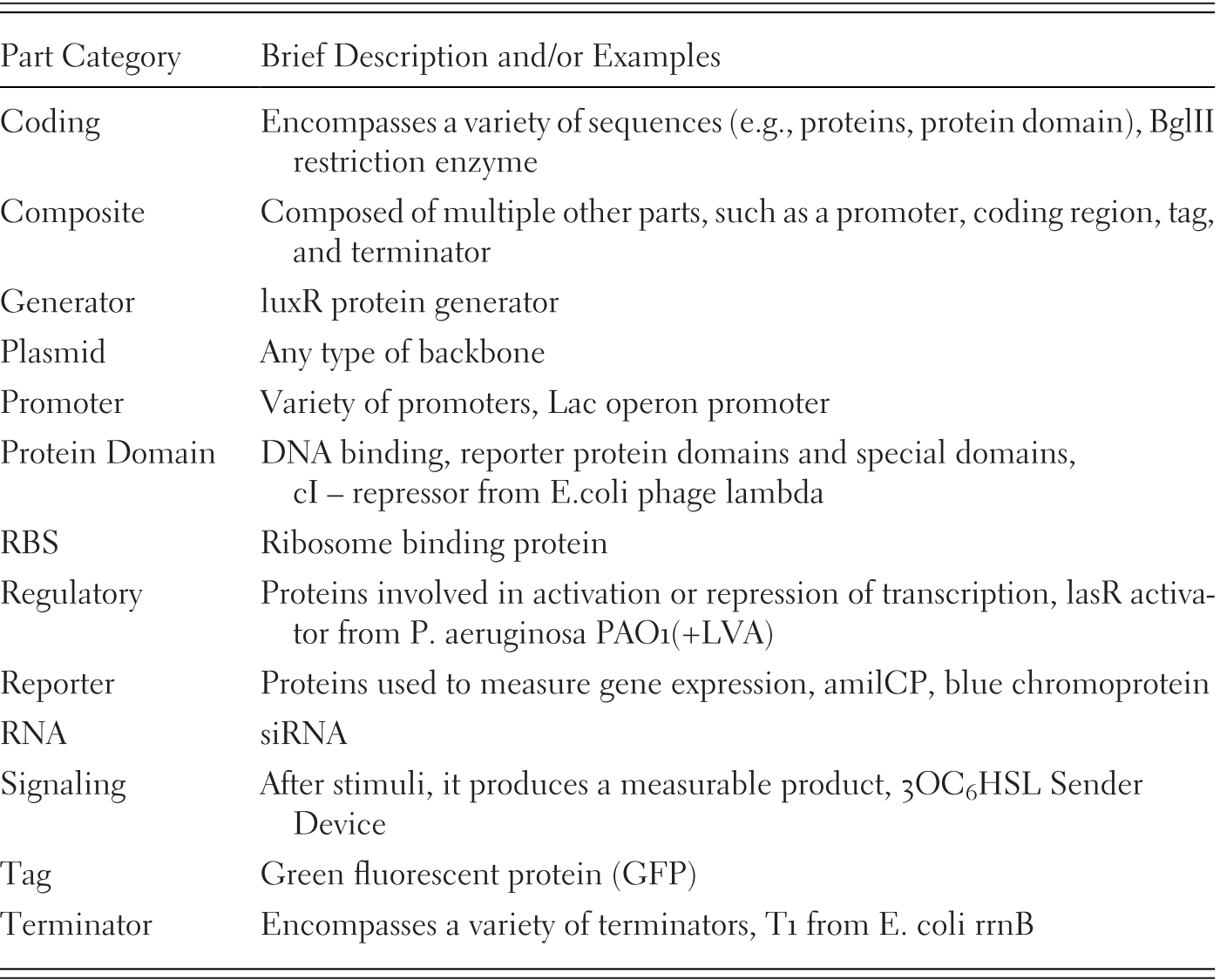
The Registry organizes parts in a variety of ways, including by curated collection, biological function, chassis, and category. The Registry categorizes parts into 13 main categories: coding, composite, generator, plasmid, promoter, protein domain, ribosome binding site (RBS), regulatory, reporter, RNA, signaling, tag, and terminator (Table 9.1). This study focused on part categories as the main way of organizing the analysis for both used and contributed parts.
9.3.2 Results
9.3.2.1 Characteristics of iGEM Competition Entrants
Teams from all over the world enter the iGEM competition every year to demonstrate the value of their synthetic parts and devices. This study specifically focused on the Health and Medicine track. Within this track were 100 entrants from 2009 to 2013. Entrants were divided geographically into major geographic or political units: United States, Europe, Asia, and Other (Figure 9.2). “Other” includes multiple continents, regions, and countries, including Canada, Central America, the Caribbean, South America, Africa, and Australia.
Number of entrants geographically divided from 2009 to 2013. Data was acquired from the iGEM competition website focusing on the Health and Medicine track. Entrants (n=100) are divided geographically (left to right: US (black), Europe (white), Asia (gray), and Other (diagonal pattern). The other category includes entrants from Canada (n=4), Central America (n=2), South America (n=2), Africa (n=1), and Australia (n=1).
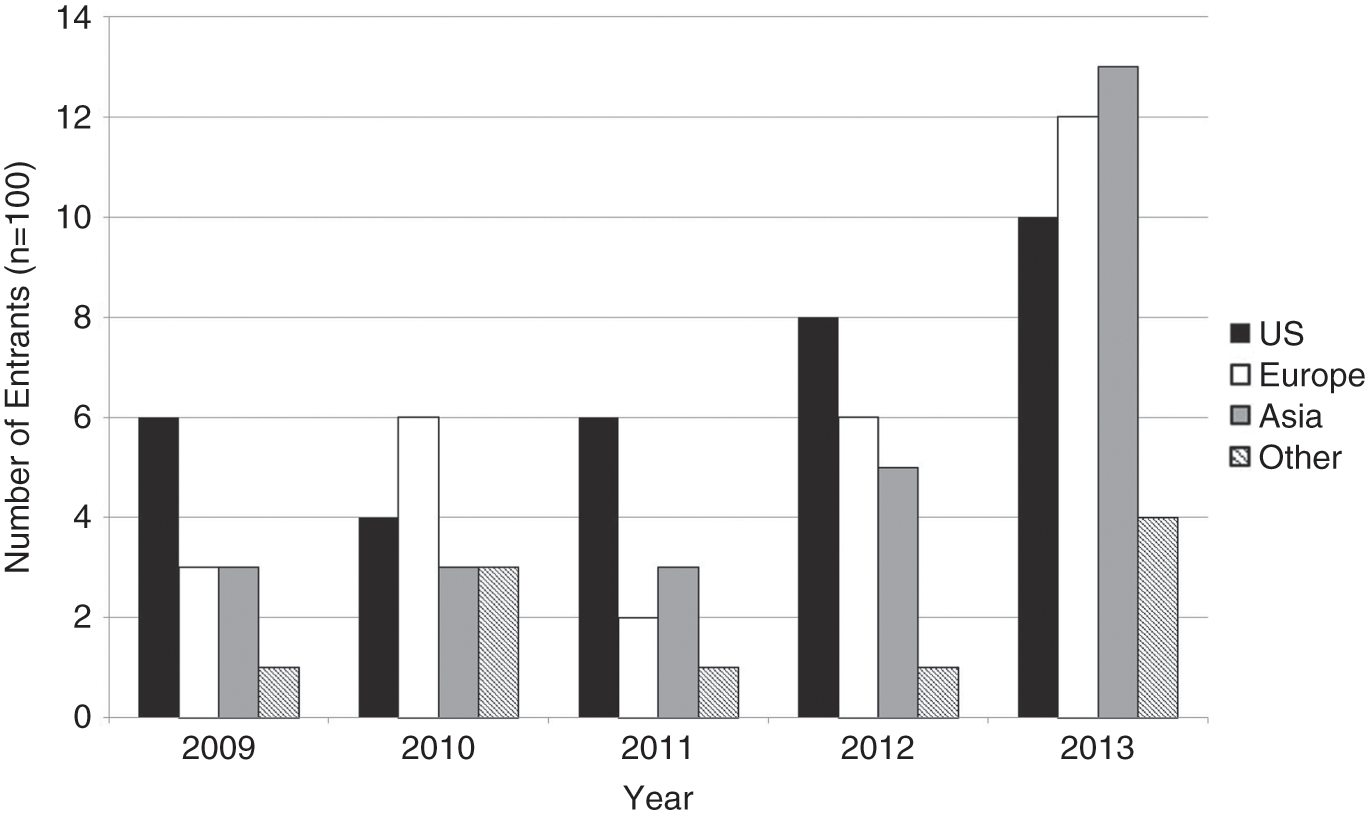
Overall, entries gradually increased for all geographic categories between 2009 and 2013. In 2009, the total number of teams was 13. In 2010, entries increased to 16. Entries slightly decreased in 2011 to 12 but then increased 20 in 2012. By 2013, entries had greatly increased to 39 teams. The number of entries in the United States, Europe, and Other categories each increased gradually from 2009 to 2013. The most dramatic increase of entries came from Asia, which grew from a mere 3 entries in 2009 to 13 in 2013 (Figure 9.2).
9.3.2.2 Project Types
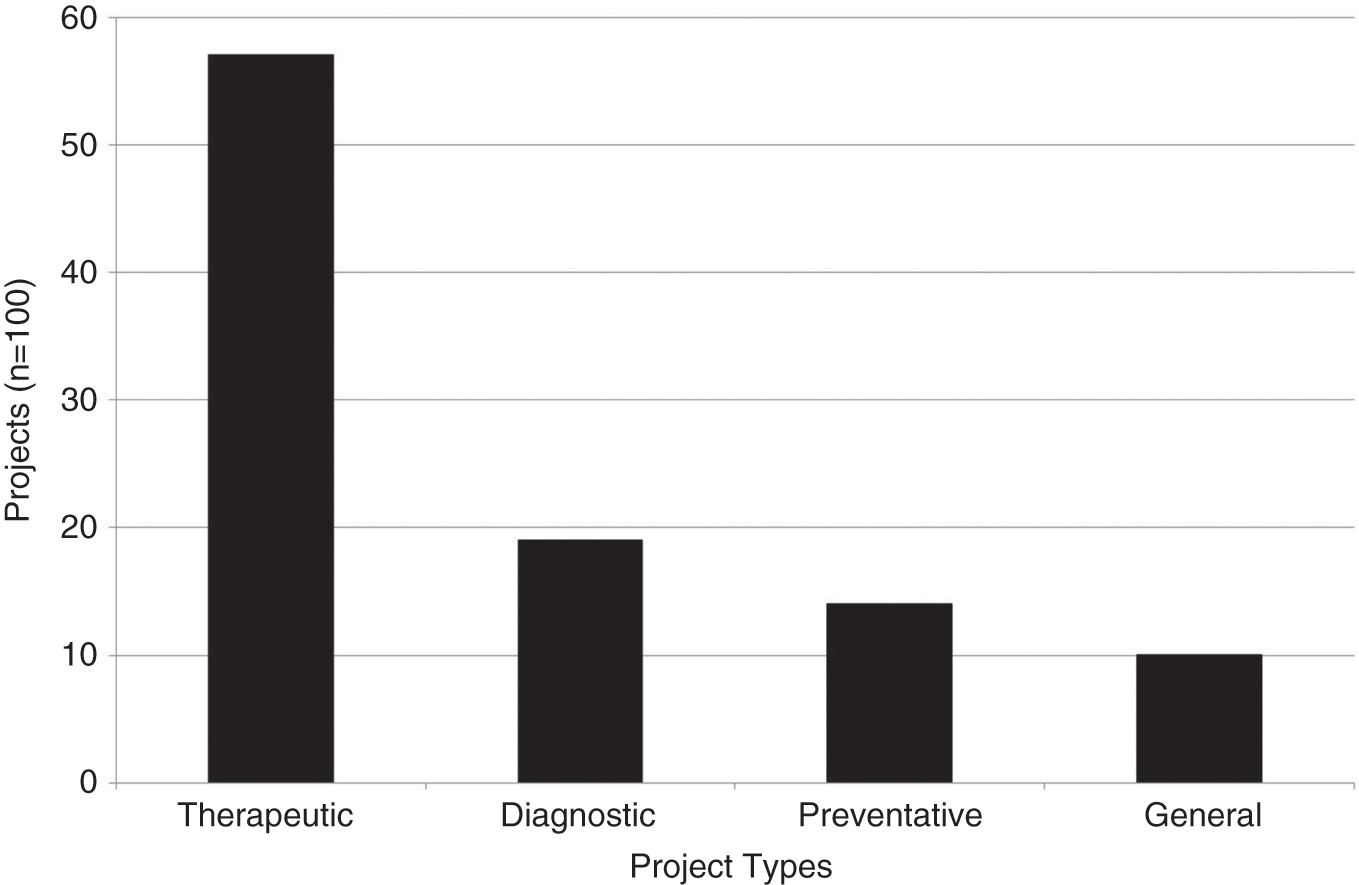
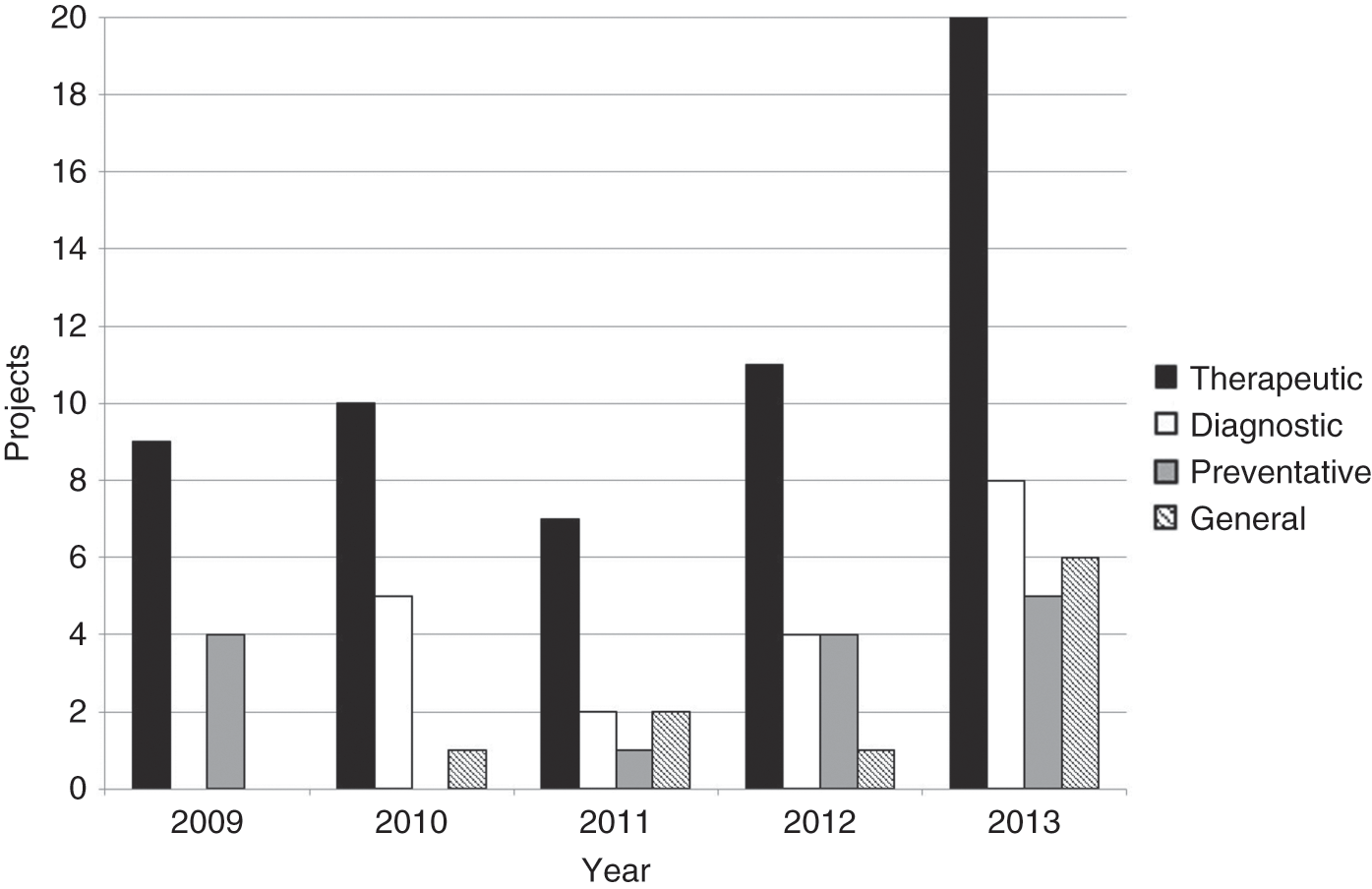
Projects within the Health and Medicine track were divided into four categories: therapeutic, diagnostic, preventative, and general.Footnote 76 The majority of the projects from 2009 to 2013 were therapeutic (n=57). The remaining 43 projects fell into the following categories: diagnostic (n=19), preventative (n=14), and general (n=10) (Figure 9.3).
Project types. Data was acquired from the iGEM competition website focusing on the Health and Medicine track. Therapeutic categories include treatments for diseases and gene and drug therapy. Diagnostic projects include both disease and cancer detection. Preventative projects include probiotics and nutrient delivery. General projects include production of antibodies and peptides and elucidating certain pathways.
Therapeutic projects were the most prevalent category during each year from 2009 to 2013, while the other categories’ prevalences varied from year to year (Figure 9.4). Indeed, there were at least twice as many therapeutic projects each year as there were projects in any other category (Figure 9.4).
Project types from 2009 to 2013. Data was acquired from the iGEM competition website focusing on the Health and Medicine track. Therapeutic projects are indicated by black bars (n=57). Diagnostic projects are indicated by white bars (n=19). Preventative projects are indicated by gray bars (n=14). General projects are indicated by diagonal pattern bars (n=10).
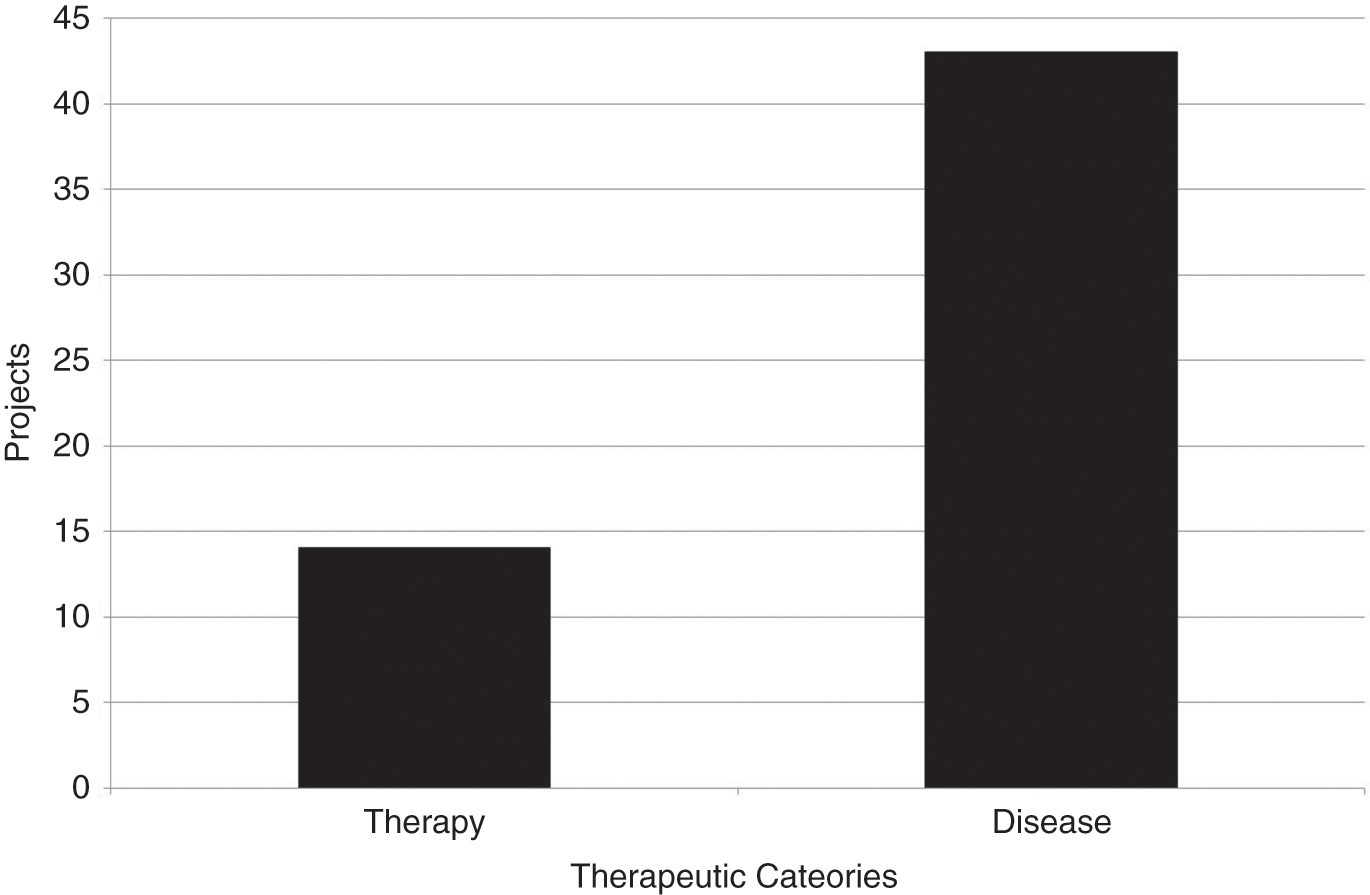
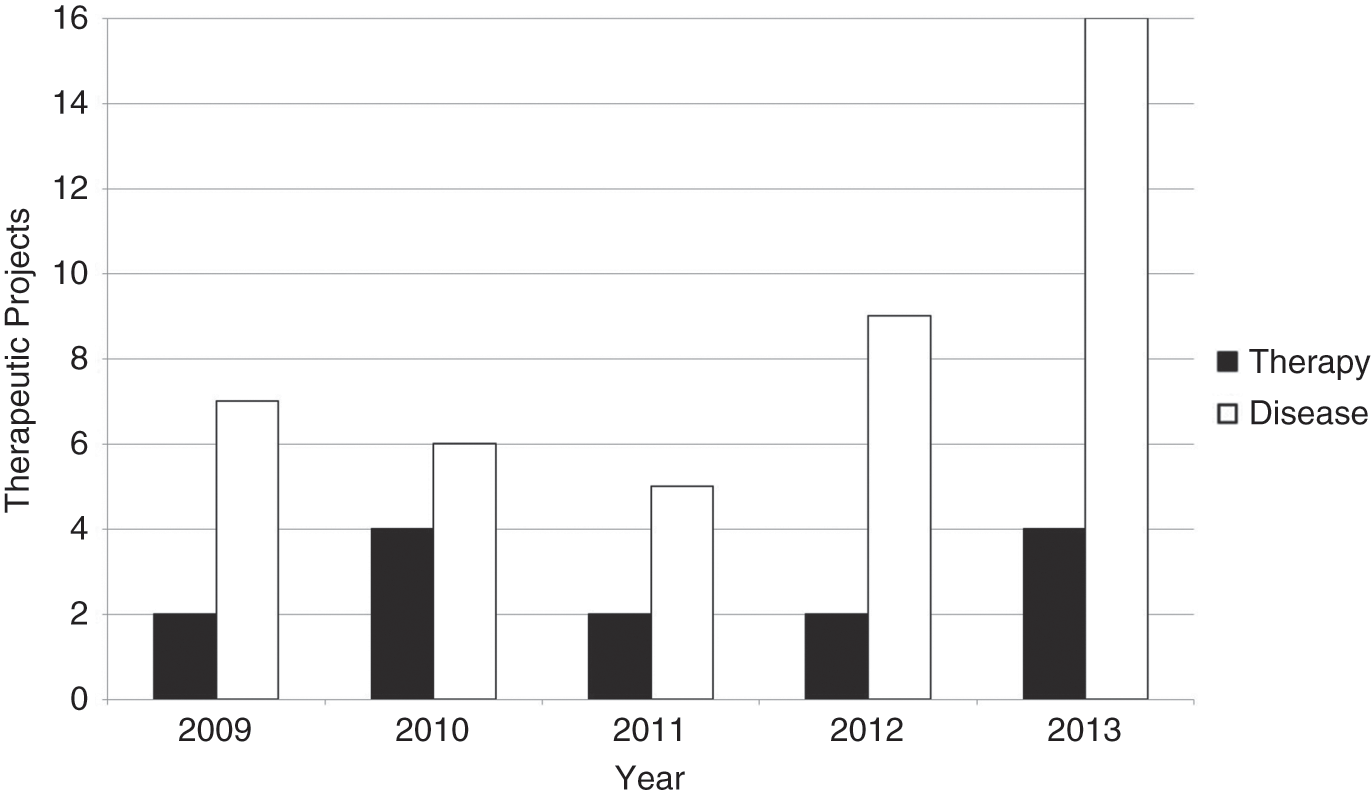
The therapeutic category includes projects focused on treatments for diseases (n=43) and projects focused on gene and drug therapy (n=14) (Figure 9.5). The number of gene and drug therapy project entries stayed steady from 2009 to 2013, while the number of disease projects dramatically increased over the same period of time (Figure 9.6). Gene and drug therapy is a relatively new area of biological research as opposed to research concerning the general treatment of disease, which may help explain this discrepancy. Another possible explanation for the discrepancy in project numbers is that the disease category encompasses a much wider variety of projects, including projects focused on bacterial and parasitic disease, heart and autoimmune disease, and cancer.
Therapeutic projects categories. Data was acquired from the iGEM competition website focusing on the Health and Medicine track. Therapeutic projects were divided into two categories: therapy (n=14) and disease (n=43).
Therapeutic projects categories from 2009 to 2013. Data was acquired from the iGEM competition website focusing on the Health and Medicine track. Therapy projects are indicated by a black bar (n=14). Therapy projects include gene and drug therapy. Disease projects are indicated by a white bar (n=43). Disease projects include bacterial, heart, autoimmune, and parasitic disease and cancer.
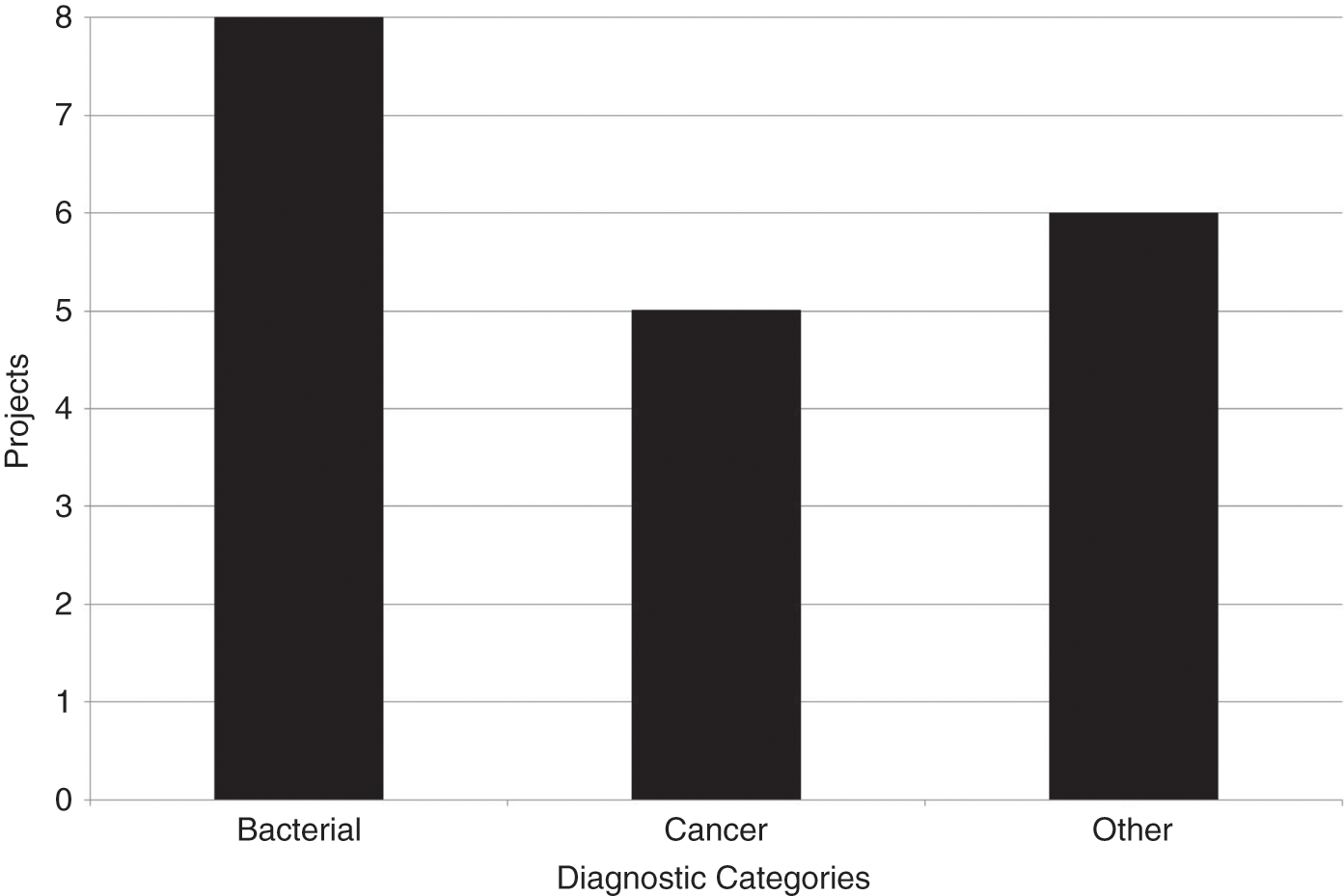
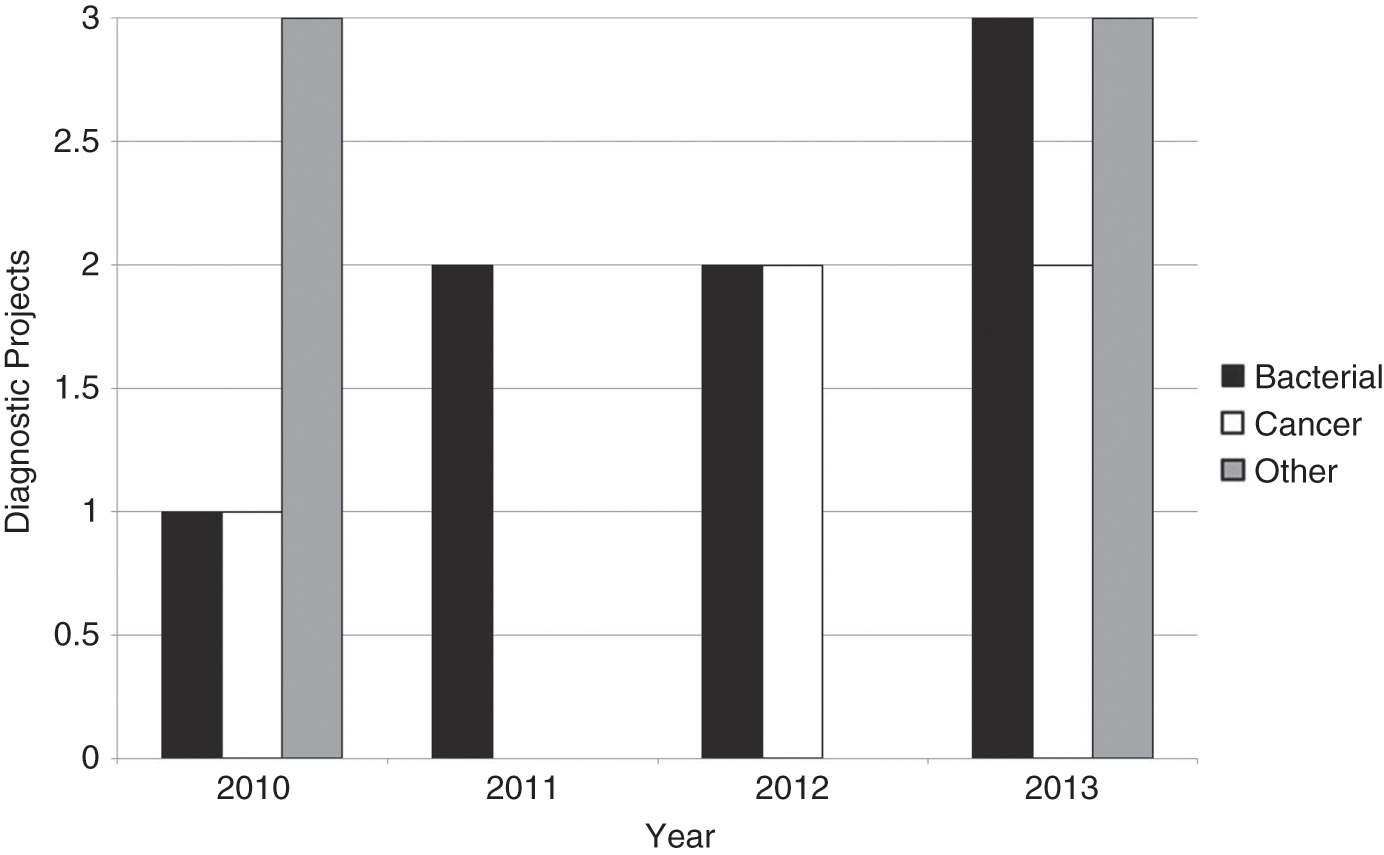
The diagnostic category is the second-largest category and was divided into subcategories based on what the project aimed to diagnose: bacterial disease, cancer, or other (which includes diseases that are not bacterial). Project numbers for each subcategory were similar, with bacterial disease projects comprising a slightly larger group than those of the cancer and other categories (Figure 9.7). Diagnostic projects focused on bacterial disease were a slightly larger group, and this subcategory had entries each and every year diagnostic projects were present in the competition (i.e., 2010–2013). The other subcategories were not represented every year. Cancer projects were absent in 2011, and other projects were absent in both 2011 and 2012 (Figure 9.8). This data may indicate a slight preference among teams for carrying out bacterial diagnostic research using synthetic parts.
Diagnostic projects categories. Data was acquired from the iGEM competition website focusing on the Health and Medicine track. Diagnostic projects were divided into three categories: bacterial, cancer, and other. Other includes diseases that are not bacterial infections.
Diagnostic projects categories from 2009 to 2013. Data was acquired from the iGEM competition website focusing on the Health and Medicine track. There were no diagnostic entries in 2009. Bacterial diagnostic projects are indicated by a black bar (n=8). Cancer diagnostic projects are indicated by a white bar (n=5). Other projects are indicated by a gray bar (n=6).
9.3.3 Numbers of Parts Used and Contributed
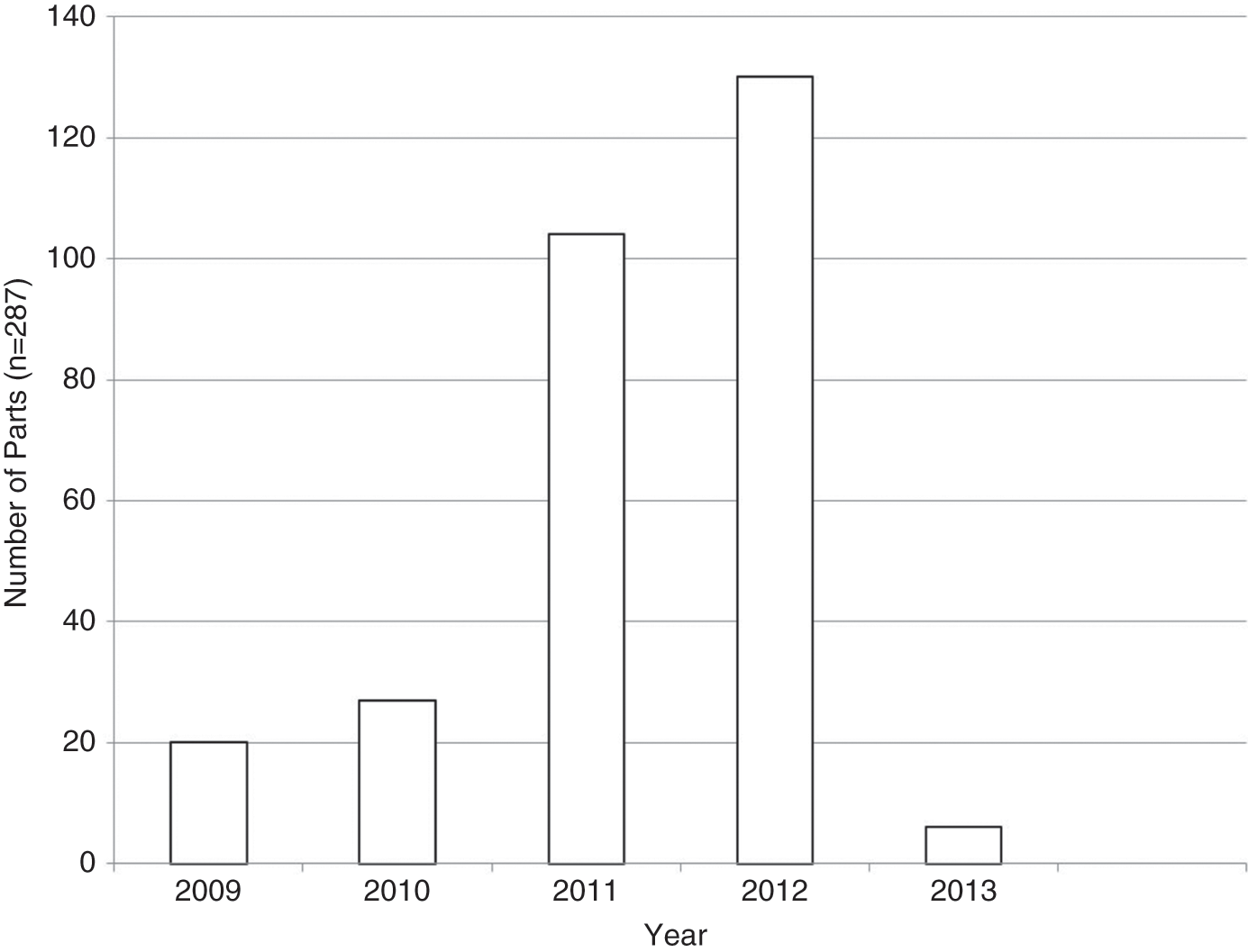
In general, the quality of Biobricks and the information describing them vary widely, with some BioBricks functioning as described in their documentation, but many neither functioning nor well described.Footnote 77 Comprehensive examination was made of the numbers and categories of parts used and contributed by iGEM teams from 2009 to 2013 within the Health and Medicine track. Given that much scientific research builds on previous scientific results, it is not surprising that iGEM teams used many parts from the Registry to build new parts that performed new functions. However, it is remarkable, particularly in light of the concerns about inadequate contribution discussed earlier, that iGEM teams contributed far more new parts to the Registry than they used from the Registry, especially in the years 2011 and 2012 (Figure 9.9). Although the number of parts used by iGEM teams remained relatively steady from 2009 to 2012 (Figure 9.10), there was a large increase in parts teams contributed back to the Registry in 2011 and 2012. For example, in 2011, iGEM teams used 27 parts and contributed back 104 parts, a ratio of about 1:4, and, in 2012, iGEM teams used 16 parts and contributed back 130 parts, a ratio of about 1:8. Not all teams contributed back significantly more parts than they used, however. Rather, contributions back to the Registry can be accounted for by specific teams that contributed large numbers of parts (Figure 9.11). The teams accounting for a higher number of contributions typically had a higher chance of reaching the finals.Footnote 78
Number of used and contributed parts from 2009 to 2013 by entrants (n=381). Data was acquired from the iGEM competition website focusing on the Health and Medicine track. Used parts are indicated in black (n=94), and contributed parts are indicated in white (n=287).
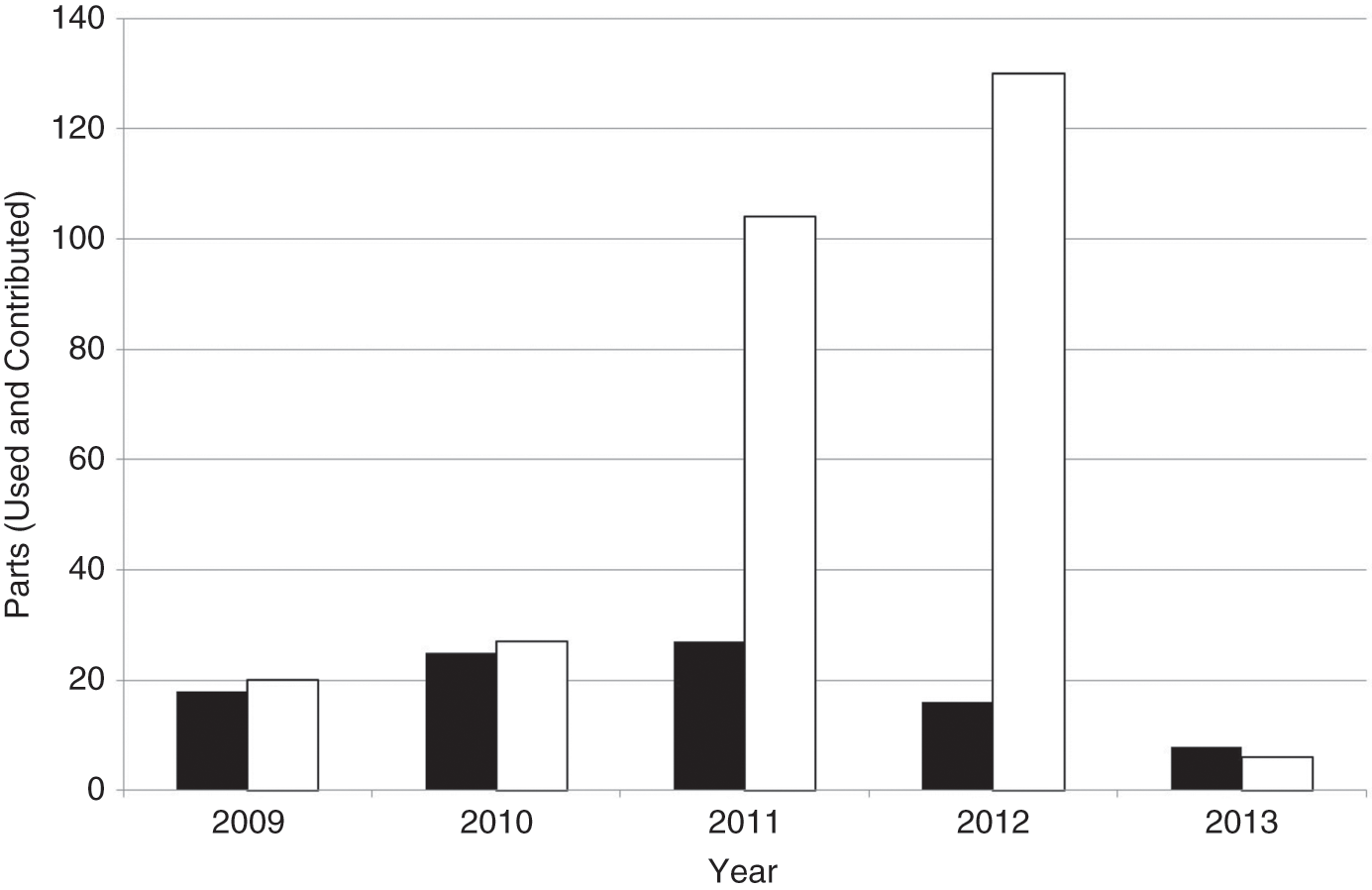
Number of used parts from 2009 to 2013 by entrants. Data was acquired from the iGEM competition website focusing on the Health and Medicine track. Only parts used (n=94) are indicated on this graph.
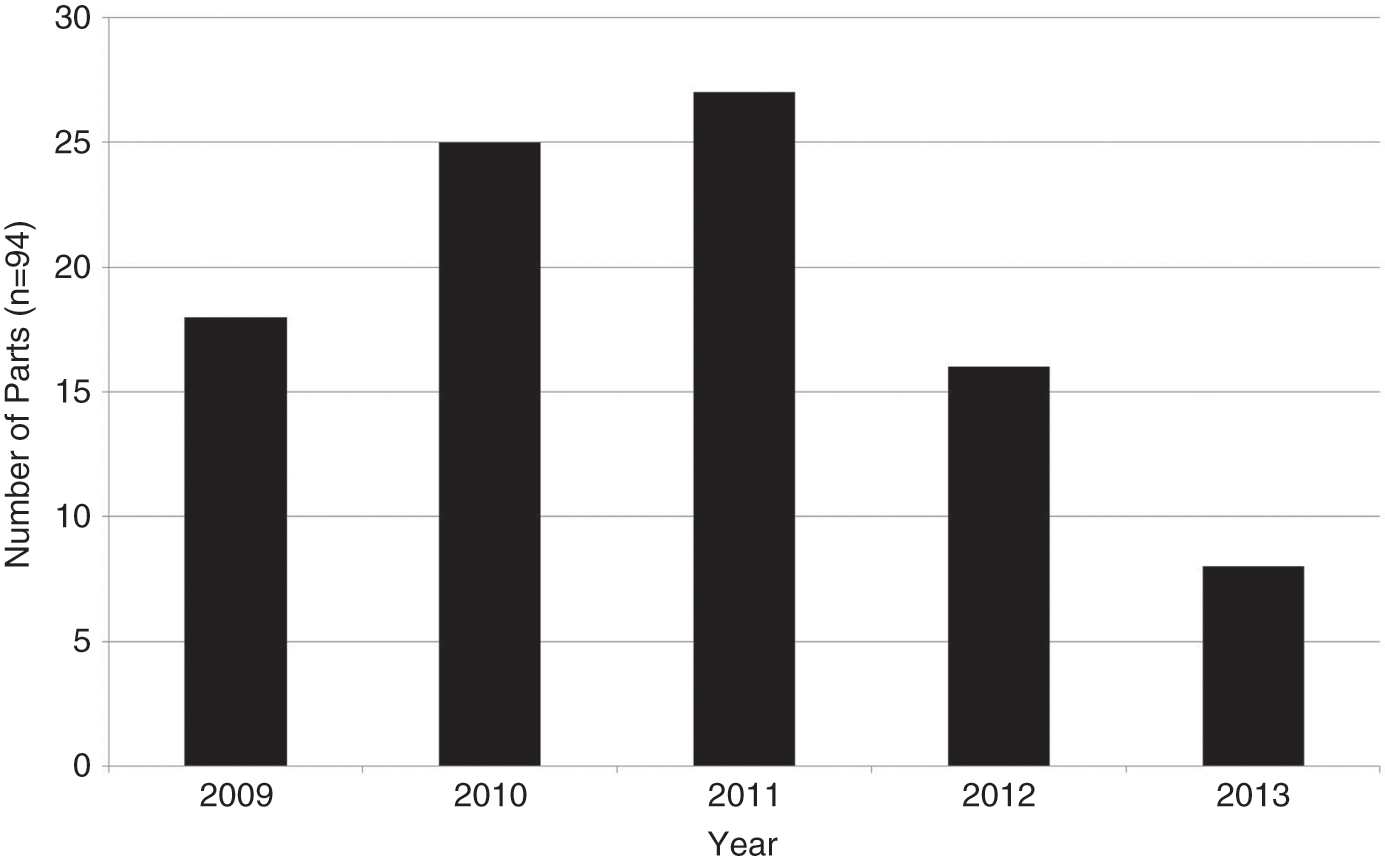
Number of contributed parts from 2009 to 2013 by entrants. Data was acquired from the iGEM competition website focusing on the Health and Medicine track. Only parts contributed (n=287) are indicated on this graph. This data represents two large contributions: from MIT in 2011; and from Slovenia in 2012.
The 2013 iGEM competition warrants special discussion. Parts used and contributed decreased dramatically during this year (n=14) (Figure 9.9). However, it is highly likely that this observation is explained by a lack of full data for this year having been posted to the iGEM website. This limitation should be corrected once full data become available for the 2013 iGEM competition. In addition, this study will be expanded to include the 2014 and 2015 iGEM competitions once data for these years has similarly become available. It is predicted that data from these years will bolster the finding that iGEM teams tend to contribute parts back to the Registry at much higher rates than they use parts taken from the Registry.
Overall, from 2009 to 2013, iGEM teams used 94 parts and contributed 287 parts, which is a more than threefold difference. It provides vivid evidence that synthetic biologists involved in the iGEM competition appear to prefer contribution of BioBricks to the Registry over mere usage of parts. Rather than taking free rides, this portion of the synthetic biology community seems to give free rides to future iGEM teams and any other biologists interested in using BioBricks in their research. There is evidence that iGEM increasingly lacks the capacity to verify all BioBricks contributed by iGEM participants.Footnote 79 In addition, teams may be synthesizing more and more of their own parts as a result of improvements in DNA synthesis technology.
9.3.4 Categories of Parts Used and Contributed
The Registry categorizes parts. There are 13 main categories (Table 9.1 has a brief description and example for each category). Certain categories tend to encompass more complexity, and their constituent parts often serve relatively specific physiological or structural functions. Such parts include generator and composite parts. In contrast, other categories tend to contain simpler synthesized parts serving more general functions, such as RBS, promoters, and terminators. iGEM teams frequently use simpler parts to build more complex composite parts. This tendency is reflected in the relative frequency of contribution and use for parts in various categories.
This study analyzed the use and contribution of parts by category. Contributed parts most often fell into the categories of coding (n=87), composite (n=52), generator (n=38), and reporter (n=49) parts. Used parts most often were taken from the coding (n=21), promoter (n=20), RBS (n=14), and terminator parts (n=15) categories (Figure 9.12).
Categories of used and contributed parts. Data was acquired from the iGEM competition website focusing on the Health and Medicine track. Used parts are indicated by black bars and divided into 12 categories. There are no used parts categorized as a generator. Contributed parts are indicated by white bars and divided into 12 categories. There are no contributed parts categorized as a terminator. There are 13 total categories and 381 parts.
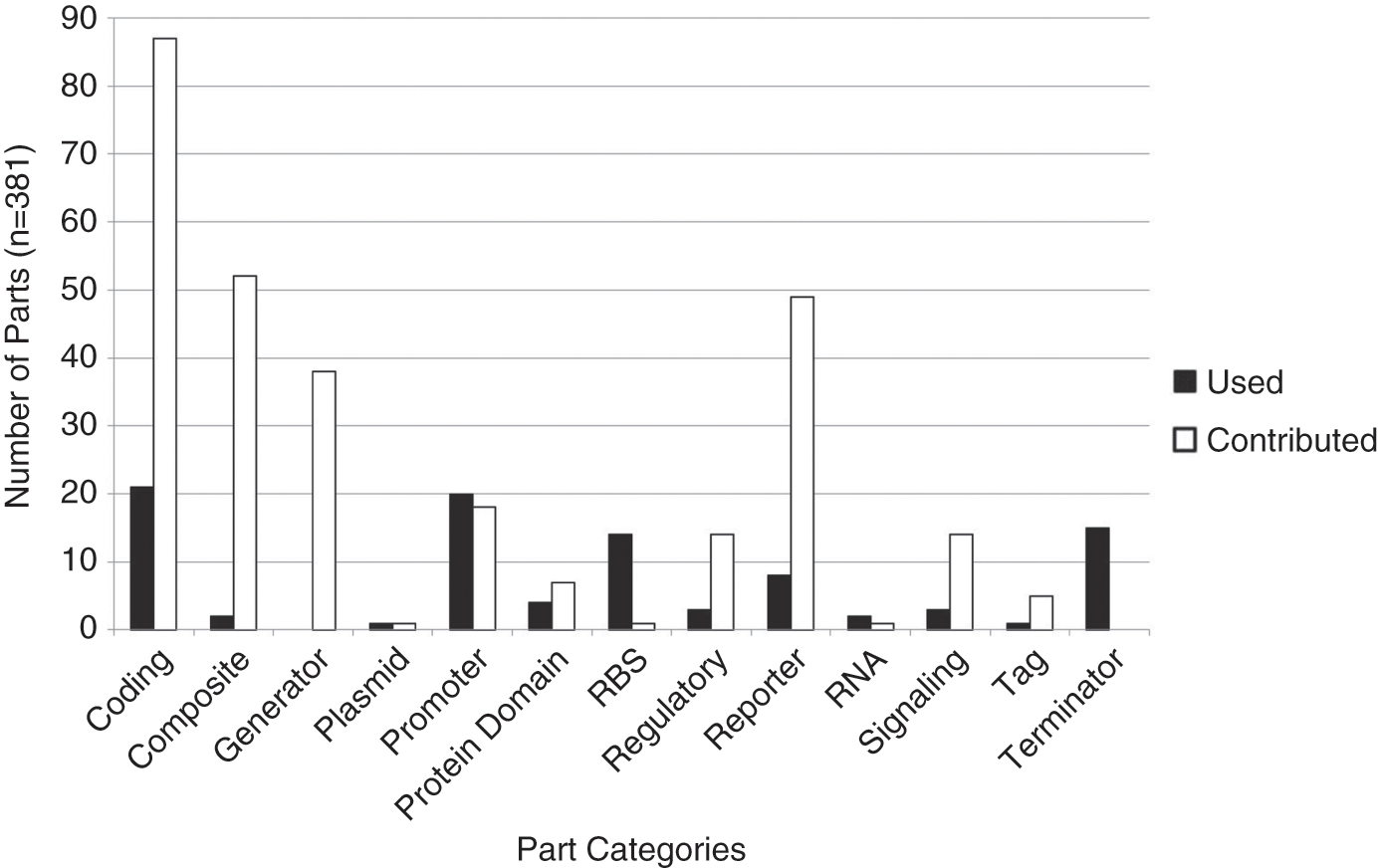
Some part categories showed similar levels of use and contribution, including promoters (20 parts used and 18 parts contributed), protein domains (4 parts used and 7 parts contributed), and plasmids (1 part used and 1 part contributed) (Figure 9.12). In some categories, however, parts were much more frequently contributed than they were used; in other categories, parts were much more frequently used than contributed. For example, more than four times as many coding parts were contributed (n=87) as were used (n=21), more than 25 times as many composite parts were contributed (n=52) as were used (n=2), and 6 times as many reporter parts were contributed (n=49) as were used (n=8). Indeed, while 38 generator parts were contributed, none were used (Figure 9.12). In other categories, the converse was true. Thus, many more RBS parts were used (n=14) than were contributed (n=1), and there were no terminator parts contributed but 15 terminator parts were used (Figure 9.12). This data suggests that teams often use simple, more generalized parts, many of which are considered “antiquity” parts by the Registry, to construct complex, more specific parts.
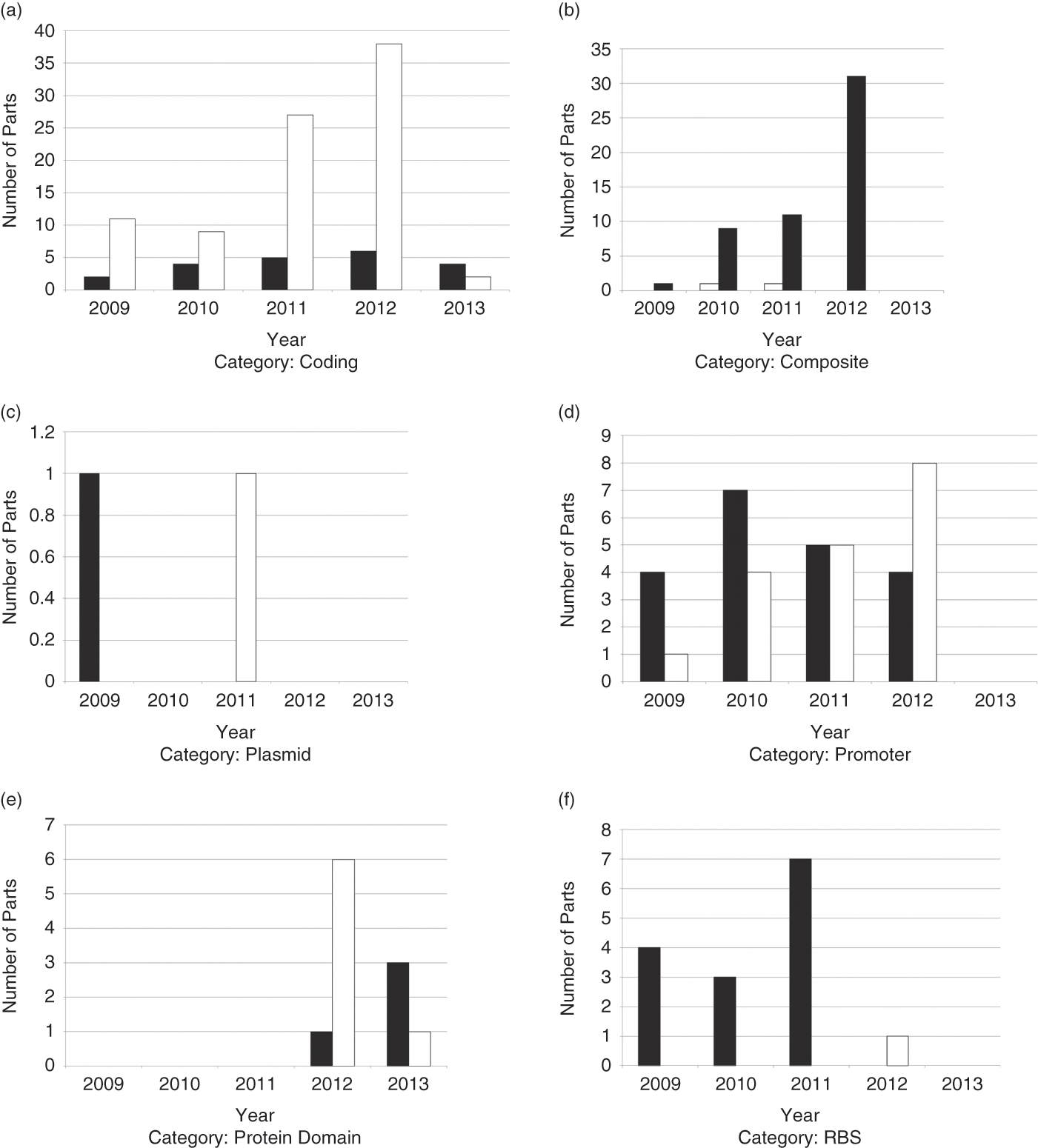
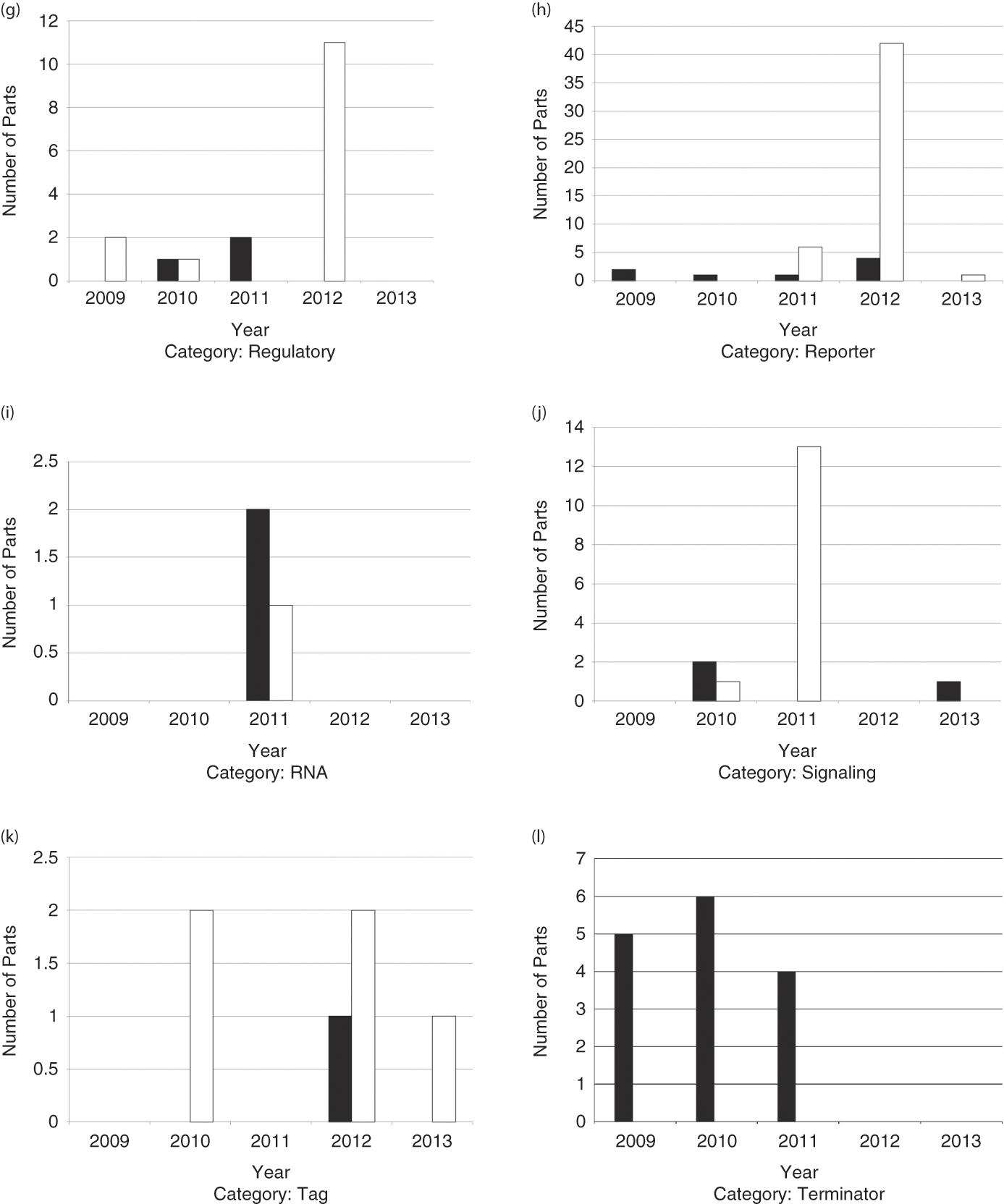
Each category of parts was also individually analyzed for the 2009 to 2012 time period. (Data from 2013 is excluded from consideration, because of likely lack of data availability.) Dramatic increases in coding, composite, protein domain, regulatory, reporter, and signaling parts contributed were observed by 2012, even though project numbers had not increased at nearly the same rate (Figures 9.13a–9.13l); in 2009, there were 13 entries, and by 2012 there were 20 entries (Figure 9.2). Teams were certainly utilizing modestly more parts over this time period, but they were also synthesizing, and subsequently contributing, brand new parts at a markedly faster rate.
Categories of used and contributed parts compared from 2009 to 2013. Data was acquired from the iGEM competition website focusing on the Health and Medicine track. Black bars indicate used parts and white bars indicate contributed parts. Parts are divided into 13 categories. The generator category is not graphed because all 38 parts were contributed in 2011.
9.3.5 Reuse of Parts Contributed by Previous iGEMs Teams
Though not illustrated in a graph, it was found that iGEM teams often used parts previously contributed by teams that had competed in prior iGEM if their projects had similar goals.
9.4 Discussion
9.4.1 Open versus Proprietary Innovation
For most of its modest history, the field of biotechnology has innovated in a largely proprietary manner. Trade secrecy and patents have been standard approaches for protecting inventions relating to new vaccines, genes, polypeptides, cells, and organisms. In fact, a major impetus for the biotechnology industry was the 1980 landmark US Supreme Court patent decision Diamond v. Chakrabarty, which confirmed the availability of patent protection for “anything under the sun that is made by man,” and specifically biotechnological inventions.Footnote 80 Since Chakrabarty, patents have generally been considered crucial to biotechnological innovation.Footnote 81
The case that patent protection drives innovation and has positive social utility is strongest for the pharmaceutical and biotechnological industries.Footnote 82 The standard narrative suggests that patent protection for biomedical inventions is necessary for attracting capital to research and development projects that must not only produce working inventions but also successfully navigate these inventions through expensive and time-consuming regulatory approval by the Food and Drug Administration (FDA). It has been widely assumed that without patents, such efforts would not be sustainable by private firms.
Synthetic biology has begun to challenge these assumptions. As noted earlier, an ethos of openness pervades the field. Many synthetic biologists view patents with suspicion, at best, and as substantial impediments to innovation, at worst. The assumption that patents claiming molecular building blocks, such as DNA sequences, or basic molecular techniques, such as the polymerase chain reaction (PCR), cause a “tragedy of the anticommons”Footnote 83 is widely believed within synthetic biology. The concept of the tragedy of the anticommons envisions an excess of patent rights creating substantial barriers to innovation because any making or using of molecular building blocks or techniques risks triggering expensive, even ruinous, infringement litigation.Footnote 84 Consequently, open access to such building blocks or techniques, akin to the model provided by open source software, is viewed as crucial for ensuring that biological innovation avoids impediments and thrives.Footnote 85
Theory and assumptions notwithstanding, little empirical evidence exists with which to evaluate whether or not proprietary or open modes of innovation lead to more innovation. Several experimental studies have suggested that innovations in open systems lacking patent protection outperform those in which patent protection is available.Footnote 86 In addition, historical analyses of technologies and industries, across different time periods and countries, have suggested that patent protection does not tend to be associated with greater levels of innovation than does the lack thereof.Footnote 87 However, definitive evidence has yet to accumulate.
One of the key claims made by supporters of patent protection is that, without the availability of property rights in inventions, innovation will suffer because of a preference for free riding upon existing innovations. However, Wikipedia, open source software regimes, and the Associated Press are all examples of communities forming knowledge commons without formal property rights.Footnote 88 Each of these communities offers different incentives to its members, from interest in the subject to the ability to use shared knowledge.Footnote 89 Synthetic biology offers another challenge to this view. Together, the BioBricks Foundation, Registry of Standard Biological Parts, and iGEM have generated substantial data on whether participants in iGEM simply avail themselves to preexisting BioBricks or, alternatively, generate new BioBricks and then contribute those new BioBricks back to the Registry for future use by others. Contrary to the assumptions of those in the proprietary innovation camp, data from iGEM competitions presented in this study strongly suggests that the generation and contribution of new BioBricks far outweigh any free riding on existing BioBricks.
9.4.2 Open Culture of Synthetic Biology
As noted, synthetic biology, from its conception as a distinct field, has been characterized by a strong commitment to open innovation, including openness with respect to the participants in synthetic biology innovation. Biological knowledge tends to be viewed within the synthetic biology community as something that should be made widely available to anyone with interest, with the hope that interested individuals will not only learn about and benefit from the output of the research enterprise but also contribute to it. Contrast this to the more traditional approach of academic biology, in which, despite open publication of research results, access to knowledge, expertise, and laboratories has tended to be limited to those possessing the correct credentials. These credentials include PhDs, postdoctoral fellowships, and professorships, as well as ancillary staff, such as undergraduate students and laboratory technicians who work under the supervision of the former. In synthetic biology, knowledge is made available not only in published journal articles but also in more accessible forms, such as comic books,Footnote 90 blogs,Footnote 91 and wikis.Footnote 92 Expertise can be gained from mentors, such as iGEM team faculty supervisors, from laboratory technique wikis, and even from the many biotechnique video tutorials available from sources such as YouTube. Perhaps most distinctly, aspiring synthetic biologists have access to community laboratories, such as BioCurious, or even to used laboratory equipment (often from failed biotechnology companies) available inexpensively on online auction sites, such as eBay. In principle, anyone can now obtain access to the myriad BioBrick DNA building blocks available from the Registry simply by participating in iGEM, or registering as an iGEM academic research lab – and the number of these free BioBricks has been rising rapidly for a decade. As a cognate of “Maker” culture, synthetic biology thus is relatively democratized, but this has led to one major problem with the Registry: some parts are not fully characterized.Footnote 93 Many research groups end up moving from the public Registry to other professional registries that fully characterize parts and how they are supposed to be used.Footnote 94
The data presented in this chapter confirms at least one part of the story that synthetic biology is characterized by open innovation. As part of iGEM competitions, participating teams not only receive free access to thousands of BioBricks from the Registry, but there is also a prevailing normative expectation that any new parts teams develop should be contributed back into the Registry. Such contributions have helped the Registry grow rapidly in the number of BioBricks. If iGEM participants behaved in conformance with simplistic versions of conventional economic theory, one would expect free riding to have stunted growth in the Registry. The truth is stranger, at least as judged from a traditional economic perspective. Far from free riding, our data (e.g., in Figures 9.9–9.13), suggest that iGEM participants give back to the Registry at a much higher rate than they use existing BioBricks originating in the Registry.
Why would iGEM participants contribute back to the Registry more BioBricks than they receive from it? There may be several reasons. Teams competing at iGEM want to do well and hope to win a prize in one of the several competition categories (e.g., Best Health and Medicine Project, Best Environment Project). To do this, and to distinguish their projects from those of similarly striving competitors, it is likely necessary for them to design new BioBrick parts. In fact, several prizes are explicitly awarded for new BioBricks (e.g., Best New Basic Part, Best New Composite Part). Nevertheless, for most competition categories, it is possible to design a new system or organism relying only on BioBricks already available from the Registry simply by remixing multiple existing individual parts into new combinations.
The prevailing ethos of synthetic biology may also influence the contribution of new parts to the Registry. As discussed earlier, the founding culture of synthetic biology emphasized openness and sharing as important community values. High rates of contribution of parts back to the Registry may suggest that those values are widely shared among iGEM participants. Though difficult to document, stories have circulated within the synthetic biology community of violations of openness and sharing norms leading to shaming of alleged violators. For example, in 2009 when a team competing in iGEM announced to the crowd that it had applied for three patents, loud boos were heard throughout the audience.Footnote 95
Traditional assumptions about free riding and tragedies of the commons have been forcefully challenged in recent years, most notably by Nobel Prize–winning economist Elinor OstromFootnote 96 and, in the context of scientific knowledge and information, via the related knowledge commons research framework proposed by Brett Frischmann, Michael Madison, and Katherine Strandburg.Footnote 97 Among other insights, Ostrom demonstrated that particular norms and institutions appear to explain openness and sharing within some communities, such as Maine lobstermen and high-alpine Swiss cattle grazers.Footnote 98 Synthetic biologists attracted to iGEM, the BBF, and the Registry may tend to be influenced to be more open and sharing by the founding cultures of these institutions. The incentive of winning prizes may act to promote some contribution of BioBricks parts. However, most prizes are awarded for projects in which the overall result, not individual BioBrick parts, matters to success. Although the rules have become stricter recently, in previous years, it may have been possible to win without contributing back truly new or well-functioning BioBrick parts to the Registry. This large surplus of contribution over usage may suggest that the synthetic biology community shares predominantly contributory norms. However, the give-more-than-get pattern observed in iGEM may also have resulted, at least in part, from the extensive infrastructure the founders of the BBF, iGEM, and the Registry carefully planned and carefully put in place to encourage participation in synthetic biology and the contribution and usage of genetic parts.Footnote 99
These predominantly contributory norms are substantially aided by the ease with which users of the Registry can contribute back their parts. Knowledge commons tend to depend on the ease of sharing knowledge by members of the community.Footnote 100 If it was difficult to edit a Wikipedia page or share jamband recordings, fewer people would contribute to those communities and they would be much less successful.Footnote 101 The Registry has dedicated pages on how to contribute parts including tutorials for adding basic parts, adding composite parts, and improving existing parts.Footnote 102 Further, participants in iGEM are provided with a submission kit to facilitate the process of sending DNA samples to the Registry.Footnote 103
9.4.3 Relevance to Other Areas of Innovation
Evidence that the synthetic biology community – at least that portion of it that competes in iGEM – tends to share genetic inventions, rather than free riding on what is available or keeping their inventions secret, has precedents in other areas of innovation. The open source software community has long shared computer code, whether freely and without restrictions or within the context of open source software licenses. Far from stifling innovation, open source software has thrived, even becoming dominant for applications such as Apache, for server management. Similarly, the Nightscout community has demonstrated that substantial innovation in medical devices that matter tremendously to their users can take place without patents, copyrights, or trade secrecy.Footnote 104 Even in the face of firm worries and FDA resistance, innovation in continuous glucose monitoring has improved rapidly under the auspices of Nightscout.
Traditional pharmaceutical and biotechnological research has a very different approach. In these industries, strong patent rights have tended to be sought and vigorously enforced against competitors. One of the prominent justifications for this proprietary approach involves the need for FDA approval, which can take years, and, during which, patents may help companies attract the large amounts of capital necessary to develop, test, and propagate new biopharmaceutical inventions.Footnote 105 Even otherwise critical assessments of the net benefits of patents often cite the biotechnology industry as being especially dependent on patents, which can be used to attract investment. Synthetic biology, at least in its current incarnation, appears to offer an intriguing challenge to this proprietary paradigm.
9.4.4 Future Directions
The field of synthetic biology has been strongly influenced by attempts to establish an ethos of openness and sharing deliberately differing from the proprietary ethos that tends to prevail in the existing fields of biotechnology and pharmaceutical research. As recently as 2005, the synthetic biology community consisted of a handful of founding researchers well known to, and in close cooperation with, one another. Their deliberate efforts led to the iGEM competition, which has witnessed rapid growth in participation. In 2015, the number of people competing at iGEM approached 3000 and warranted a move in venues from the MIT campus to the Hines Convention Center in Boston. The number of biologists who describe themselves as synthetic biologists, scientific publications describing synthetic biological research, and students taking classes in synthetic biology are all on a sharply upward trajectory. Synthetic biology is a field experiencing a rapid increase in popularity, participation, and influence.
It is possible that such growth will occur without weakening the prevailing ethos of openness and sharing. Perhaps these principles will bleed into other fields of biology, leading to erosion of the traditional emphasis on proprietarity. On the other hand, the ethos of synthetic biology may itself be challenged and eroded by the proprietary practices of the wider field of biology that encompasses it. It is too early to know how this clash of ethos will resolve itself. Nevertheless, the evidence discussed in this chapter suggests the openness and sharing characteristic of synthetic biology remains robust more than a decade after the founding of the field. As the field continues to growth in participation and influence, it is likely that the rest of biology will absorb at least some of the practices that have made synthetic biology so successful in such a short time. Free riding may continue to be challenged by the voluntary giving of free rides.


 Open access