

Introduction
Indigenous communities in the Arctic have been identified as being particularly sensitive to climatic changes due to a high dependence on the environment for their livelihoods (Larsen et al., Reference Larsen, Anisimov, Constable, Hollowed, Maynard, Prestrud, Stone, Barros, Field, Dokken, Mastrandrea, Mach, Bilir and White2014). Recognition of the sensitivity of these communities to climate change has led to a broad body of scholarship focused on climate change impacts, adaptation and vulnerability (IAV). Much of this research employs the concepts of vulnerability, adaptation or resilience, and draws upon interviews with community members to identify and characterise community-relevant risks and adaptive responses (Ford & Smit, Reference Ford and Smit2004). This work has provided substantial information on how Indigenous communities across the Arctic are experiencing and responding to climatic changes (e.g. Brannlund & Axelsson, Reference Brannlund and Axelsson2011; Huntington et al., Reference Huntington, Begossi, Gearheard, Kersey, Loring, Mustonen, Paudel, Silvano and Vave2017; McNeeley & Shulski, Reference McNeeley and Shulski2011; Nuttall, Reference Nuttall2017; Tyler et al., Reference Tyler, Turi, Sundset, Strom Bull, Sara, Reinert and Corell2007). A significant portion of this work focuses on Inuit communities in the Canadian Arctic, their subsistence activities, and opportunities and barriers to adaptation (Ford, Pearce, Duerden, Furgal, & Smit, Reference Ford, Pearce, Duerden, Furgal and Smit2010; Pearce et al., Reference Pearce, Ford, Duerden, Furgal, Dawson, Smit, Stern and Gaden2015a). Most studies have been conducted at the settlement scale, having Inuit identify what climate conditions are relevant and important to them, and what adaptations are realistic and desirable (McDowell, Ford, & Jones, Reference McDowell, Ford and Jones2016). This research suggests that subsistence activities, including hunting, fishing, trapping and gathering, are adversely affected by climate change, and that adaptability is influenced by a suite of socio-economic, cultural and environmental conditions operating at multiple spatial and temporal scales (Ford et al., Reference Ford, Bolton, Shirley, Pearce, Trembley and Westlake2012; Pearce et al., Reference Pearce, Ford, Duerden, Smit, Andrachuk, Berrang-Ford and Smith2011a). Despite the notable challenge of climate change, adaptations are available and feasible, and Inuit have considerable adaptive capacity. Pearce et al. (Reference Pearce, Ford, Duerden, Furgal, Dawson, Smit, Stern and Gaden2015a) describe policy interventions for realising this adaptive capacity and overcoming adaptation barriers.
Current understanding of climate change IAV in Inuit communities and across the Arctic, however, is relatively static, rooted in the place and time that individual studies were conducted. Our understanding of the dynamism of Inuit–climate relationships, including the nature of climatic risks and the processes by which people cope with and adapt to changing conditions, is thus limited (Archer et al., Reference Archer, Ford, Pearce, Kowal, Gough and Allurut2017; Ford & Pearce, Reference Ford and Pearce2012). Static understanding of long-term climate trends and the related human processes that shape risk and adaptation may ultimately limit the efficacy of adaptation interventions and potentially lead to maladaptive outcomes (Barnett & O'Neill, Reference Barnett and O'Neill2010; Bennett, Blythe, Tyler, & Ban, Reference Bennett, Blythe, Tyler and Ban2016; Birkenholtz, Reference Birkenholtz2012). Existing studies point to some important questions: How do changing climatic and non-climatic factors intersect to affect Inuit over time? How have coping mechanisms to deal with changing environmental conditions manifested over time? And how do adaptation pathways influence sensitivity and adaptability to future changing conditions?
In this article, we begin to address the recognised need for a more dynamic understanding of climate change impacts, vulnerability and adaptation by examining how Inuit in Ulukhaktok, Northwest Territories (NT), Canada adapt to changing environmental conditions over time. We conducted interviews in the settlement, and we compare our findings with interview data collected in 2005 (Pearce et al., Reference Pearce, Smit, Duerden, Ford, Goose and Kataoyak2010) and longitudinal subsistence economics and harvest datasets. We take a specific focus on subsistence activities, consistent with the original 2005 study. The following section provides a brief description of Ulukhaktok and the methods used, including the longitudinal study design. Results are then presented and discussed, and adaptation opportunities are identified that address longer-term trends in climate and society.
Case study: Ulukhaktok, NT
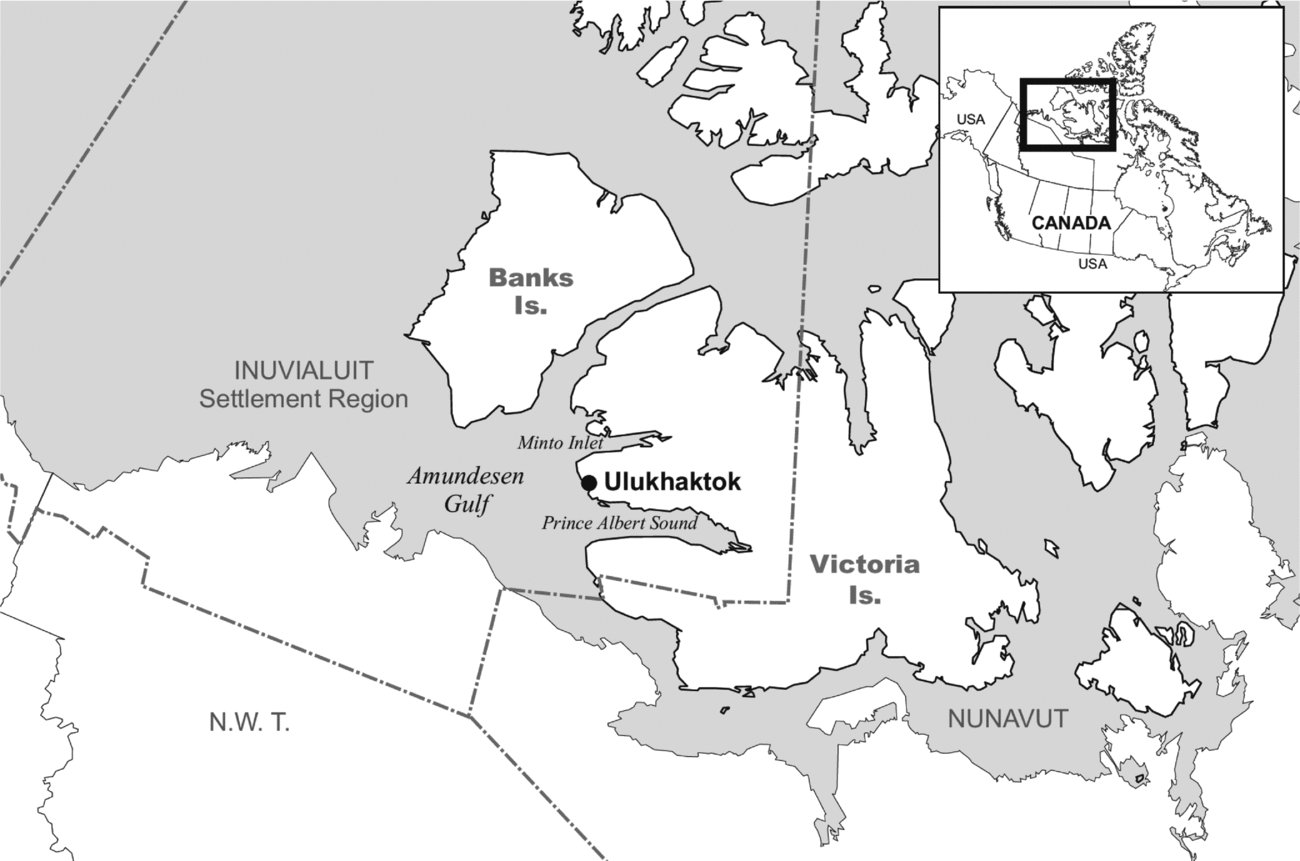
Ulukhaktok is an Inuit community of approximately 400 located in the Inuvialuit Settlement Region (ISR) in the Western Canadian Arctic. Ulukhaktok is located at the mouth of Prince Albert Sound (PAS) on the west coast of Victoria Island (70°45'42''N, 117°48'20''W) (Fig. 1) in the region that was historically home to the Northern Copper Inuit, who were migratory seasonal hunters (Damas, Reference Damas and Bicchieri1972). The settlement was established in 1939 with the Hudson's Bay Company installing a trading post in the area, followed by a Roman Catholic mission; however, concentrated settlement did not occur until the late 1950s (Damas, Reference Damas2002). During this time, trapping and subsistence hunting remained central to livelihoods (Condon, Reference Condon1996), but there was also a growing reliance on modernised hunting equipment and external markets for imports and exports, largely due to the shift from migratory seasonal hunting to settlement (Condon, Collings, & Wenzel, Reference Condon, Collings and Wenzel1995). Because of this, Ulukhaktok, like much of the Canadian Arctic, was heavily impacted by international bans on the importation of seal pelts throughout the 1970s and 1980s (Condon et al., Reference Condon, Collings and Wenzel1995). The loss of a key subsistence-compatible source of income crippled the ability of many hunters to engage in subsistence hunting to the same degree as they had previously, and has had lasting adverse effects on the community.
Location of Ulukhaktok in the Inuvialuit Settlement Region (ISR) in the Western Canadian Arctic.
Since settlement in the 1960s, cash has become increasingly important in the mixed economy, necessary for the purchase of hunting equipment and supplies. Access to income is a barrier for many hunters to access the land, as are the time constraints of wage employment, both of which have resulted in some Inuit spending less time involved in subsistence production. Less time on the land has also affected the generation and transmission of environmental knowledge and land skills among some Inuit (Pearce et al., Reference Pearce, Smit, Duerden, Ford, Goose and Kataoyak2010, Reference Pearce, Wright, Notaina, Kudlak, Smit, Ford and Furgal2011b), with implications for adaptability to changing environmental conditions (Pearce, Ford, Willox, & Smit, Reference Pearce, Ford, Willox and Smit2015b). Despite changes in environment and society, subsistence hunting, fishing and trapping continue to have strong economic, dietary and cultural importance for Inuit in Ulukhaktok (Collings, Reference Collings2014; Pearce et al., Reference Pearce, Wright, Notaina, Kudlak, Smit, Ford and Furgal2011b).
Research approach
This research employed a modified vulnerability framework, described by Smit and Wandel (Reference Smit and Wandel2006) and employed by Pearce et al. (Reference Pearce, Smit, Duerden, Ford, Goose and Kataoyak2010) in the original 2005 study, to examine how Inuit are adapting to changing environmental conditions over time. The framework is used to guide data collection by having respondents identify the conditions and adaptive strategies that are relevant and important to them, beyond those often identified a priori by researchers, and to help structure data analysis. This paper builds upon previous vulnerability research on the seasonality of risk in Alaska (McNeeley & Shulski, Reference McNeeley and Shulski2011; Penn, Gerlach, & Loring, Reference Penn, Gerlach and Loring2016), and longitudinal vulnerability assessments in Nunavut, Canada (Archer et al., Reference Archer, Ford, Pearce, Kowal, Gough and Allurut2017; Ford et al., Reference Ford, McDowell, Shirley, Pitre, Siewierski, Gough, Pearce, Adams and Statham2013). Like Archer et al. (Reference Archer, Ford, Pearce, Kowal, Gough and Allurut2017) with Inuit in Ikpiarjuk, Nunavut, this study applied aspects of both cohort and trend longitudinal vulnerability assessments (see Fawcett, Pearce, Ford, & Archer, Reference Fawcett, Pearce, Ford and Archer2017). This included re-interviewing as many people from the original sample as possible, using the findings from 2005 to frame the 2016 interviews, and considering interview data together with longer-term trends in climate and society.
Methods
Data collection
Data for this article were collected in Ulukhaktok over a ten-week period between June and August 2016 by Fawcett, Pearce and two local research assistants, Roland Notaina and Patrick Akhiatak. Protocols for data collection were approved by the Human Research Ethics Board at the University of Guelph (#16MR034), and the research was licensed by the Aurora Research Institute (#15913), which oversees research in the Northwest Territories. Data were collected in a manner consistent with the 2005 study (Pearce et al., Reference Pearce, Smit, Duerden, Ford, Goose and Kataoyak2010) and included semi-structured interviews and participant observation. There was a particular emphasis during interviews on documenting each individual's knowledge of changing conditions and this followed the recommendations for documenting traditional ecological knowledge using semi-structured interviews described by Collings (Reference Collings2009b) and Huntington et al. (Reference Huntington, Gearheard, Mahoney and Salomon2011). Two sets of longitudinal data were also collected: harvest data for key species of wildlife important for subsistence, and economic data associated with the costs of subsistence activities.
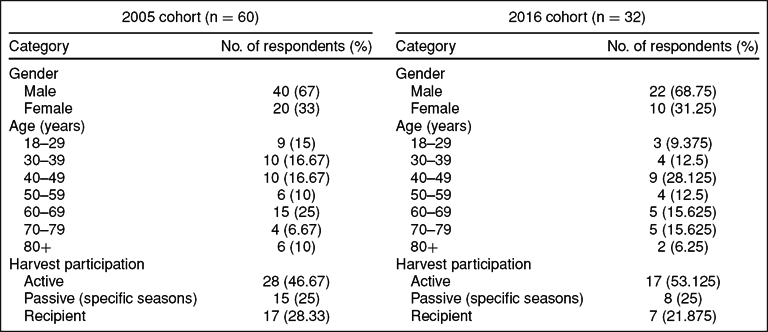
Sampling was undertaken with a focus on community members engaged in land-based activities. A purposive sampling strategy was used to include as many respondents as possible from the 2005 study and identify new respondents who actively participate in subsistence but were unavailable or under 18 years of age in 2005. A description of the research sample is provided in Table 1. Thirty-two respondents, men and women, of varying ages were recruited, comprising 14 respondents from the 2005 cohort and 18 new respondents. The inclusion of more respondents from the original cohort would have been ideal, but was not feasible due to participant attrition. Sixteen respondents from the 2005 cohort had passed away, ten were not living in the settlement at the time of the research, and four declined to participate in the new study. The male bias (22/10) is consistent with the 2005 sample and may be due to a higher proportion of males being actively involved in land-based activities and the research team being entirely male.
Demographics of the 2005 and 2016 cohorts of respondents in Ulukhaktok.
Semi-structured interviews
Interview questions were open-ended and guided by a semi-structured interview guide (see Supplementary Material 1 & 2). The open-ended structure was used to minimise interview bias and allow respondents to discuss issues that were important to them and in terms that made sense to them and reflected their priorities. Interview questions focused on what conditions were relevant and important to the respondents, whether these conditions had changed and, if so, in what ways, how respondents were dealing with these changes, and what was making it easier or more difficult for them to cope or adapt. Interviews were conducted by the authors together with a local Inuit researcher in English or Inuinnaqtun at the respondent's house or the house that the research team was staying at. Written or oral consent was obtained from each respondent prior to interviews and for the purposes of audio recording (all interviews were recorded). After each interview, draft transcripts were reviewed and verified by the research team.
Interviews were supplemented by informal discussions and experiential trips on the land, ice and sea (referred to hereafter together as ‘the land’) with community members, and participation in community life and activities. Informal discussions with community members helped clarify and expand upon what was shared during interviews. In particular, during activities on the land, the researchers observed hunter behaviour, including pre-trip preparations and real-time responses to changing conditions. Participating in community life and activities, such as meal preparation, drum dances, organised sport, and vehicle maintenance and repair helped the researchers build rapport with community members and develop a better understanding of the broader societal context for the research. Daily observations were recorded as field notes and in a reflexive journal that considered researcher experiences and positionality.
Longitudinal datasets
Two types of longitudinal data were collected to complement and expand upon the interview data. Wildlife harvest data were obtained from the Government of the Northwest Territories (GNWT) and the Ulukhaktok Hunters and Trappers Committee (HTC). These data include commercial and subsistence hunting data for muskox and polar bear (number of animals taken for each type of hunt) from 2006 to 2016, and the number of allocations and quantity of each allocation for the commercial char fishery in Ulukhaktok from 2008 to 2016.
The economic costs of subsistence activities included detailed prices for individual items important for these activities (e.g. costs of equipment, fuel and supplies) and the cost of specific hunts (e.g. muskox hunt, caribou hunt) in 2005, 2009, 2013 and 2016. Data from the Inuvialuit Harvesters Assistance Program (IHAP) were also collected and included the number of applications, total funding available, and number and dollar amount of allocations from 2005 and 2010–2016.
Data analysis
The interview data were analysed using the principles of content analysis (Bernard, Reference Bernard2012). First, the interviews were transcribed and scanned to identify common or recurring themes related to exposure-sensitivities and adaptation to changing environmental conditions. The interview data were then coded and analysed based on these themes using the NVivo 10 qualitative data analysis software (QSR International). Each coding scheme was cross-referenced to identify connections between themes. Next, the longitudinal part of the analysis involved comparing the findings from the 2005 and 2016 studies. Key themes from the two studies were compared, including direct comparisons between interview transcripts of respondents who participated in both studies. Interview data are complemented, when relevant, with data from longitudinal datasets to better understand key changes between the two studies. In particular, hunting and economics data were analysed with interview and participant observation data to generate basic quantification of some of the changes discussed by community members. These included, for example, the costs of hunting supplies and estimates for specific hunting trips in different seasons, and how key changes at specific points in time affected hunting behaviour and the number of species hunted.
Limitations
There are two limitations to the research approach and methods worth noting. First, the size difference and attrition rate between the samples limited the scale at which changes could be tracked. That said, efforts were made to capture a sample that included participants who were actively engaged in subsistence at the time of the research, consistent with the 2005 study. Second, despite efforts to uncover what took place during the time between the two case studies, the methods employed remain temporally bound.
Results
The findings from the original 2005 study are included here with the analysis of the 2016 data for the purpose of comparison.
Exposure-sensitivities
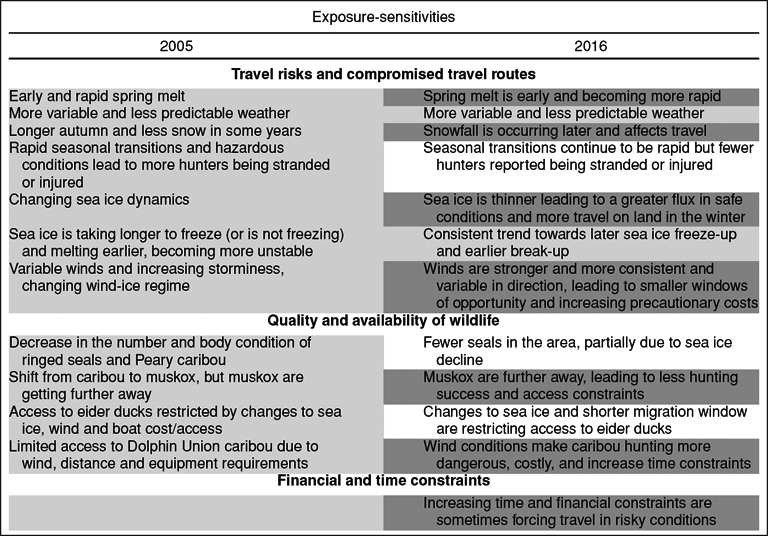
Respondents described several climatic and non-climatic factors that are affecting subsistence activities, acknowledging both the biophysical and social components of risk. These are characterised here as exposure-sensitivities and include (1) compromised travel routes and increased travel risk, (2) declining quality and availability of wildlife, and (3) financial and time constraints (Table 2). These findings are similar to those from 2005, but here increasing travel risks and compromised travel routes have been combined, and hunting-related time and economic concerns have been added because they emerged as key issues in 2016.
Description of key exposure-sensitivities documented during interviews with respondents in Ulukhaktok in 2005 and 2016. A dark grey background indicates an increase (e.g. more, later) between 2005 and 2016; white indicates a decrease (e.g. fewer, earlier); and pale grey indicates factors or conditions that remained relatively consistent between 2005 and 2016 or were reported for the first time in 2016.
Compromised travel routes and increasing risk
In 2005, respondents reported an increase in the frequency and magnitude of climate events that had increased travel risks and compromised access to some hunting grounds (Pearce et al., Reference Pearce, Smit, Duerden, Ford, Goose and Kataoyak2010). In 2016, many of these hazards had persisted or progressed. In particular, increasing variability, unpredictability and speed of onset of weather continues to be problematic for hunters: hunters perceived snow and river and lake ice to be melting earlier and over a shorter time period (within a few hours or days) during the spring season; snow to be falling later, and river and sea ice taking longer to freeze-up in the autumn; and stronger, less predictable winds becoming more common throughout the year. A rapid and unpredictable melt can leave hunters stranded on the land, with few options but to take risks and travel in melting conditions, exposing their snowmobiles to damage from rocks. In 2005, many respondents reported that these conditions were contributing to their snowmobiles getting stuck and/or damaged. In 2016, respondents reported that conditions had worsened, but few reported being stranded due to unpredictable spring melts, noting that they had learned to avoid these conditions, even if it restricted their access to certain hunting areas. In the autumn, if lake ice is not sufficiently thick for snowmobile travel, hunters must travel around the lakes (assuming there is enough snow), which takes more time and fuel, and exposes their equipment to wear and damage from rocks. These conditions are problematic for spring and autumn ice fishing at inland lakes, including, for example, the annual trip to Fish Lake (Tahiq, ca. 80 km northeast) for autumn ice fishing. Hunters usually travel to Fish Lake by snowmobile in early October, although in 2016 many respondents said that they had started to make the trip later in October or in early November to allow the ice on Fish Lake and other lakes to freeze. However, respondents reported that there can still be a lack of adequate snow cover by this time, increasing wear on snowmobiles. The regulated fishing season at Fish Lake closes at the end of November and later trips have started to conflict with the timing of the fishing season. All-terrain vehicles (ATVs) were used as an alternative to snowmobiles to travel to Fish Lake when there was a lack of adequate snow cover even before 2005. As snow cover becomes more variable and snow falls later, this is becoming a more common strategy, which is beneficial because ATVs use less gas than snowmobiles, but they also have less hauling capacity.
Respondents explained that they had observed geographical variations in the timing of sea ice freeze-up and break-up among years but that the trend has been towards later freeze-up and earlier break-up, and overall thinner sea ice. Thinner sea ice is also more susceptible to strong winds and ocean currents, which hinders ice formation. For example, the increasing frequency and intensity of wind in the winter months, together with later freeze-up, prevents ‘old’ thick ice from forming. Previously, sea ice would set at approximately 5–9 feet thick, but respondents reported that by 2016 sea ice was mostly 2–3 foot ‘young’ ice.
“Now it's really thin, we know that. Out there in the open sea, winter time, ice must be only a little over two feet sometimes. Old ice, like uh, quite a few months, like three, four months ice never move and stays thick. It's really changed.” (Pat Ekpakohak, 2016)
Respondents articulated that young ice is more susceptible to strong winds, resulting in broken ice piling, making travel on the sea ice more difficult, if not impossible. As a result, many respondents now travel on the land along the coast in the winter months rather than on the sea ice. Doing so requires more time and gasoline, and leads to greater wear on snowmobiles and sleds from rocks. These observations are consistent with 2005 and point to a continuing downward trend in the timing of sea ice freeze-up and break-up, and ice conditions.
In 2005, respondents noted that winds were becoming more of a problem in the summer months when people travel to hunting areas by boat. In 2016, wind conditions continued to change and exacerbate travel risks. Many respondents and other community members expressed that summer winds have become consistently stronger, with greater directional variability, making windows of opportunity for boating more narrow and unpredictable. Wind can create wave activity that makes boating difficult, if not impossible, and makes some hunting areas inaccessible. Because of more variable wind direction, broken sea ice can be pushed back into the community's bays or into PAS more often, restricting travel by boat. Even if wave conditions are manageable, increased wave activity results in greater risk and can directly (e.g. wave versus travel direction) and indirectly (e.g. larger boats and motors) influence higher fuel consumption. Due to the variability of wind conditions there is now an ever-present risk of being stuck on the land while waiting for the wind to subside, which can sometimes take weeks.
Declining quality and availability of wildlife
In 2005, observed changes to the quality and availability of wildlife included a decrease in the number of young ringed seals, poor body condition of adult ringed seals, a decline in the number of Peary caribou, and changing summer wind patterns restricting access to caribou hunting grounds in PAS (Pearce et al., Reference Pearce, Smit, Duerden, Ford, Goose and Kataoyak2010). In 2016, hunters reported a decline in the presence of ringed seals, young and adult, in the area (congruent with Harwood et al., Reference Harwood, Smith, George, Sandstrom, Walkusz and Divoky2015), and believe that this is related to seals following food sources into PAS and seal dens being affected by sea ice piling. Peary caribou remain far from Ulukhaktok, although a few individuals have been harvested near the community in recent years, generating hope among respondents that they will eventually return, and wind conditions continue to challenge boat travel to caribou hunting areas in PAS (Dolphin-Union herd).
Ulukhaktok is one of two communities in the Arctic that hunt the western population of king eider duck. Hindered access to the ducks due to early break-up of sea ice was reported as a key issue in 2005 and 2016, with people more often hunting ducks by boat rather than snow machine, and with varying degrees of success. Calm winds, light fog and a stable sea ice platform are ideal duck hunting conditions, but respondents explained that they are not seeing the combination of these conditions as often anymore. In 2016, many respondents observed that ducks migrated past the community earlier, in a shorter time frame, and in fewer large groups. Even with adequate sea ice conditions in 2016, many respondents missed the hunt because of the concentrated migration.
“Ducks season used to be one season, maybe three times - they would run maybe three times. . .Now it's like only one bunch just fly for how many days of the year, and you never see them again. . .people used to quit before the ducks stopped flying. They had enough. Used to get more than what we get now.” (Anonymous, 2016)
Another change between 2005 and 2016 was a reported decrease in the number of muskox near the community.
“Yeah, especially the muskox now. They're starting to get further and further. You've got to get more than five gallons to go out there and back, unless you get lucky and it's like two or three miles out of town.” (Isaac Inuktalik, 2016)
In the late 1990s muskox had replaced caribou as the primary source of meat because of the scarcity of caribou and the close proximity and abundance of muskox. In 2005, respondents reported that they were starting to see a slight decline in muskox and they had to travel a little further to hunt them. At the time, respondents suggested that this was due to over-harvesting driven by their emergence as a key species important for subsistence, and the cash incentives that were being offered for their hides. Eleven years later, respondents reported that there were even fewer muskox and that they were moving progressively further away from the community. Respondents attributed the decline to natural cycles, the presence of more wolves, grolar (grizzly–polar hybrid) and grizzly bears, and increased harvest pressure as muskox have become a focus of subsistence hunting and income (e.g. sport hunting, meat resale, and the sale of horns and hides). This decline has made muskox more difficult and expensive to hunt, with reduced chance of hunting success. Hunters now have to travel as far as Minto Inlet or Walker Bay to find muskox, and one respondent reported travelling 120 km by ATV one day in July 2016 without seeing any muskox (Adam Kudlak, personal correspondence, 4 July 2016). As a result, hunting muskox now requires more extensive knowledge of areas on the land further from the community, and with increased fuel costs and greater uncertainty for a successful hunt, some hunters are choosing not go.
Respondents also reported the occurrence of new species of wildlife and increases in the populations of some predators since 2005. There have been documented observations and successful hunts of grizzly and grolar bears on Victoria Island. Grizzly bears are thought to be competing with polar bears for food, and there have been observed kill sites where a grizzly was believed to have killed several muskox but eaten only specific pieces of select animals. There has also been a noted increase in the presence of wolves, near the community and further inland, adding another hunting pressure for muskox. In 2014 there was an unprecedented hunt of 32 beluga whales in waters near the community, producing large amounts of food and excitement. Several respondents expressed that they hoped this trend would continue in the future – although the whales have yet to return in such numbers – and perhaps also include other species migrating north, such as elk and moose.
Financial and time constraints
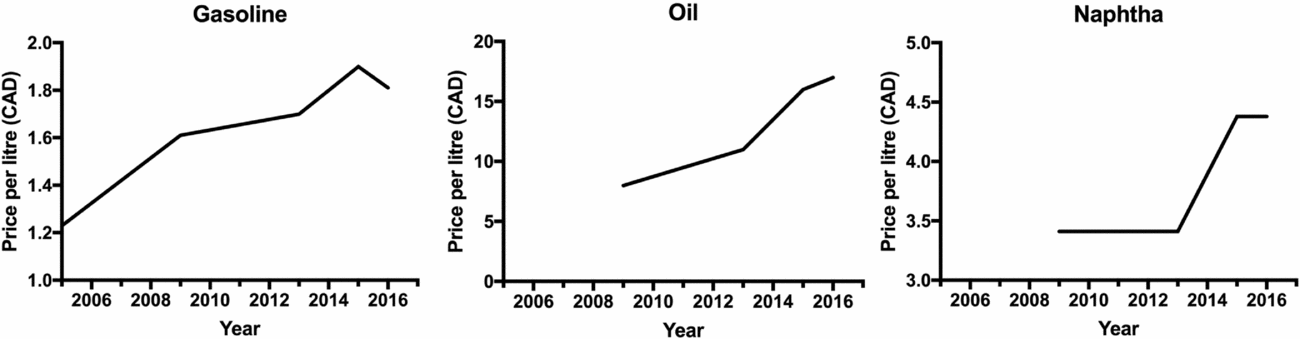
Increased time constraints due to wage employment and/or schooling have forced some hunters to make shorter trips and sometimes travel back to the community in risky conditions. Other hunters noted being unable to afford the high costs of some supplies, and have run out of supplies while on the land, also resulting in them travelling back to the community in risky conditions. Gas prices were of particular concern for respondents, having increased from CAD1.23 per litre in 2005 to CAD1.81 per litre in 2016, as were the cost of oil and naphtha, which were CAD7.99 per litre and CAD3.41 per litre, respectively, in 2009 and increased to CAD16.99 per litre and CAD4.38 per litre, respectively, in 2016 (Fig. 2). These rising costs are compounded by the need to travel further to access some species, especially muskox, requiring more fuel and supplies, and more time. A day trip to hunt muskox in the summer now uses an average of 4 litres more gas, according to one respondent who actively hunts muskox (Adam Kudlak, personal correspondence, 29 July 2016). Hunters now take an extra jerry-can of gas (23 litres) for a muskox hunting trip in the winter, bringing gas costs for a trip to ca. CAD166.52 (92 litres at CAD1.81 per litre). In 2013, gas for such trips was estimated to cost CAD117.30 (69 litres at CAD1.70 per litre), with the increase being driven by rising gas prices and longer travel distances. Another example of how time and financial constraints have combined to adversely affect subsistence is caribou hunting in PAS. Summer caribou hunting by boat has always been expensive but can now cost as much as CAD2000 per boat because of the need for extra gas and supplies in preparation for unpredictable wind and ice conditions.
Changes in gasoline, oil and naphtha prices (in Canadian dollars per litre) in Ulukhaktok during the study period.
Wear on vehicles can constrain consistent participation in subsistence hunting and enhance exposure to hazards on the land, and was consistently mentioned as an increasing problem.
“I have to go further and I spend more on gas. Sometimes your quads go down and you gotta order more parts and wait, and wait, and wait.” (Jack Akhiatak, 2016)
Due to changes in snow and ice conditions, especially during the shoulder seasons, hunters have to replace parts and maintain their equipment at greater expense, limiting how they can prepare for hunts. In 2016, one respondent had to replace five sets of carbides (steel runners on the bottom of the skis) on his snowmobile at CAD100 per set due to a lack of snow on the rocky land (Roland Notaina, personal correspondence, 11 July 2016). These challenges are further compounded by the lower success rates of some hunts.
Adaptive strategies
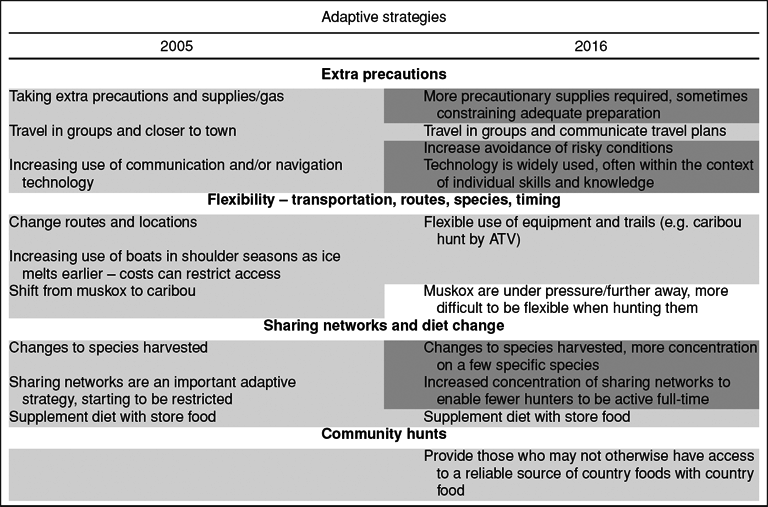
Four main themes emerged from the interview data about how Inuit are responding to these changing climatic conditions: (1) extra precautions, (2) flexibility, (3) sharing networks, and (4) community hunts (Table 3). Consistent with the adaptive strategies documented in 2005, adaptive strategies employed in 2016 were largely autonomous and reactive, with emerging roles for institutions at the community and regional scales.
Description of key adaptive strategies documented in Ulukhaktok in 2005 and 2016. A dark grey background indicates an increase (e.g. more, later) between 2005 and 2016; white indicates a decrease (e.g. fewer, earlier); and pale grey indicates factors or conditions that remained relatively consistent between 2005 and 2016 or were reported for the first time in 2016.
Extra precautions
In 2005, hunters reported taking extra precautions before and during travel, in anticipation of encountering problematic conditions. In 2016, most hunters continued to take these precautions, but some expressed concern that the increased costs of hunting sometimes limited their ability to take adequate precautions such as travelling with extra fuel and supplies. In some cases where the wind had not let up for extended periods of time, some respondents took extreme risks to travel back to the community by boat in dangerous wave conditions because they had run out of supplies or needed to make it back for work or school commitments.
The uptake of new communication and navigation technologies continued in 2016; many hunters now commonly carry satellite phones, global positioning systems (GPS) and cell phones. Financial constraints, however, limit who can access these technologies, with some hunters sharing equipment and others relying on the Canadian Rangers' equipment. The unreliability of GPS has led many hunters to mistrust this technology for navigation, and several respondents said that they take a GPS with them as a fall-back in case they get caught in a difficult situation such as a whiteout, or temporarily lose their bearings and need to reorient themselves. It seems these technologies are often used, but not overly relied upon. Hunters try to be prepared to camp temporarily if they are stranded and are otherwise prepared with a VHF radio or satellite phone.
A major change in communication technology since 2005 has been the diffusion of high-speed internet in the settlement and the installation of a cellular reception tower in September 2014. Many people who travel close to Ulukhaktok now use cell phones to communicate with people in the community and beyond. Some experienced hunters leverage social media as a form of communication, especially with younger community members. Almost everyone in the community uses Facebook, either directly or indirectly through a family member. Some people use Facebook as a means to communicate environmental conditions and share reports from hunters who are on the land.
Flexibility
Inuit have always used flexibility as an adaptive response to the Arctic environment, and flexibility continues to be important in adaptation to recent environmental changes. In 2005 and 2016, several flexible responses to changing conditions were documented, including the use of alternative equipment to continue pursuing specific subsistence activities, and using alternative travel routes to access hunting areas. Respondents also articulated the importance of flexibility in the timing of subsistence activities (e.g. travelling to Fish Lake later in the autumn when river and lake ice is frozen) and in the species of wildlife harvested (e.g. the switch from caribou to muskox, or hunters learning about and hunting other predators, such as grizzly bears). The ability of hunters to be flexible depends on their access to income and freedom from work and other social commitments, and their knowledge of the environment and land skills.
Sharing networks
In 2005, food-sharing networks were identified as providing community members with country foods in spite of factors that may affect their involvement in subsistence. It was perceived, however, that food-sharing networks were not functioning as they did in the past, and food sharing had become more restricted to immediate family members. Respondents perceived this trend to be continuing in 2016 and reported that these networks now included cash exchanges. Based on interviews and observational data, an emerging trend in Ulukhaktok is families pooling financial resources to support one or two members to hunt and provide country food. This investment in one or two members to do the hunting for the family reflects the high costs of hunting and the need for wage employment to pay for travel equipment, fuel, and supplies. One active hunter noted that his mother purchased a snowmobile for him because he provides country food for her and his family network. Without this help he would not have been able to afford a new snowmobile, which would have limited his ability to actively engage in subsistence production during the winter and therefore his family's access to country foods.
Community hunts
Community-sponsored hunts have been organised recently to help provide country foods for community members who may not otherwise have access to them. These hunts have involved the local HTC and Community Corporation hiring local hunters to harvest wildlife (mainly muskox), which is then shared with elders, single mothers, and other marginalised groups in the community. Thirty-two muskox were hunted over the course of two community hunts in 2015/2016 and the meat was distributed to households throughout the community. The hunts have been well received by community members, many of whom would not otherwise have had access to country foods at those times of the year. Some respondents, however, emphasised that it is important to consider the health of the wildlife species being hunted, and to avoid depleting a population that is already stressed.
Adaptation constraints
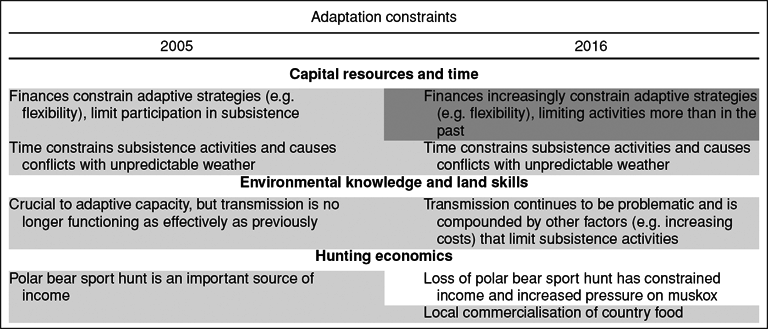
Key constraints to adaptation documented in 2016 include (1) capital resources and time, (2) hunting economics, and (3) environmental knowledge and land skills (Table 4). These findings are similar to those of 2005, but also include hunting economics.
Description of key adaptation constraints documented in Ulukhaktok in 2005 and 2016. A dark grey background indicates an increase (e.g. more, later) between 2005 and 2016; white indicates a decrease (e.g. fewer, earlier); and pale grey indicates factors or conditions that remained relatively consistent between 2005 and 2016 or were reported for the first time in 2016.
Capital resources and time
In both 2005 and 2016, access to capital resources and time constraints due to wage employment and/or school were highlighted as constraints to adaptation. There is limited access to income in Ulukhaktok, as there are few economic opportunities, and constraints on subsistence-compatible sources of income. Two members of the local HTC even noted that programmes such as the IHAP and the Community Harvesters Assistance Program (CHAP) are receiving more applications due to increased financial pressure on hunters, but the amount of funding available to the programmes has not increased for several years. Financial pressures are problematic, as access to equipment and alternative modes of transportation are essential to enable flexibility to adapt to changing conditions. For example, in response to more open water and stronger and more consistent winds and waves, some hunters have purchased larger boats, but winds in the summer months have become so strong and consistent that even hunters with the largest boats have difficulties finding opportunities to travel. As a result, in 2016 some hunters leveraged their access to ATVs and barrels of gasoline stored on the land to go caribou hunting by ATV. The development of this adaptation pathway required access to multiple modes of transportation, and the money and time in the winter to buy and position barrels of gas at strategic locations on the land.
Hunting economics
The economics of subsistence can both facilitate and constrain adaptation. Several hunters access financial capital through subsistence, including trapping (mostly foxes), hunting wolves (biological samples and pelts can be worth CAD600–950 per animal), the commercial char fishery, selling muskox hides, horns and meat, and muskox sport hunt guiding. Alternatively, the economics of subsistence can constrain adaptation as hunting is more expensive and hunters are travelling longer distances to find wildlife, with lower rates of success. Since 2005, there have been three major developments that have impacted the economics of subsistence in Ulukhaktok: (1) the ‘end’ of the polar bear sport hunt, (2) the rise of the muskox sport hunt, and (3) commercialisation of country foods.
Prior to 2008, the polar bear sport hunt provided important financial resources to the community via income for Inuit guides and helpers. In Ulukhaktok, each polar bear sport hunt was typically worth approximately CAD3,000 to the Inuit helper and CAD8,000 to the Inuit guide, who provided a dog team, travel equipment and supplies. In 2008, however, the U.S. Fish and Wildlife Service (USFWS) banned the importation of polar bear trophies under the Endangered Species Act. Because the majority of sport hunters visiting Ulukhaktok were American, the number of polar bear sport hunts in the community dropped from 10 in 2007/2008 to three in 2008/2009, and down to 0 in 2009/2010 (GNWT, 2011). Some respondents explained that this has led to a loss of an important source of subsistence-compatible income, and several hunters who once guided polar bear sport hunts noted that this has affected their ability to purchase and maintain large equipment (e.g. snowmobiles, ATVs) and to train and keep dog teams.
Some respondents reported that since the polar bear ban in 2008, the muskox sport hunt, which has historically fluctuated, has become a more important source of income, resulting in greater competition for guide and helper commissions. The HTC selects guides and helpers for muskox sport hunts, and there are a limited number of hunts and an increasing number of applicants, making it more difficult to be awarded a commission as a guide or helper. Guides earn approximately CAD1,500 on muskox sport hunts, substantially less than a polar bear sport hunt, and some guides reported a net loss after paying for fuel and supplies because muskox are now further from the community and more difficult to find. One hunter suggested that they might have to look for new hunting grounds as current areas have been depleted.
“The last couple summers we've been lucky to get some muskox for the [sport] hunters, but we had to kind of go more-further from our camping areas, base camp. So I think we're gonna have to start looking at alternate hunting grounds, cause we've been hunting in the same areas for a while now. I think we're going to have to go further up the island” (Jack Akhiatak, 2016)
A third emergent theme related to hunting economics is the commercialisation of some country foods. Some local businesses, including the convenience store and hotel, buy meat, mostly muskox, from local hunters for resale, and in 2016 the community was testing the feasibility of expanding their commercial char fishery to support a local processing plant by increasing commercial char tags from the standard 500 to 700. Several hunters have also started to market country food independently on social media. For example, one hunter shared that he sells medium-sized Ziploc bags of ground muskox meat for CAD40 each, almost exclusively to people who are unable to hunt themselves for a variety of reasons. The commercialisation of country foods has implications for local sharing networks, which play an important role in supporting local food security, and potential implications for the health of the food source itself.
Environmental knowledge and land skills
In 2005, respondents expressed concern that some environmental knowledge and land skills were not being shared with younger generations, resulting in some younger Inuit not being well-equipped to engage in subsistence activities, especially under changing conditions. These observations were later substantiated with evidence of changes in the transmission of environmental knowledge and land skills among Inuit men in Ulukhaktok (Pearce et al., Reference Pearce, Wright, Notaina, Kudlak, Smit, Ford and Furgal2011b). To what extent this has changed is beyond the scope of this research, but in 2016 some respondents, especially from older generations, expressed concerns that some environmental knowledge and land skills were not being transmitted to younger generations. Commonly reported stresses to transmission included time constraints due to wage employment and schooling, increased costs of hunting, changing motivations for some youth, and compromised travel conditions limiting time on the land.
Discussion
The research findings show the evolution of climate change impacts, adaptations and vulnerability over time. From 2005 to 2016 there was an observed progression, or at least a consistent directional trend, in the evolution of some climate conditions that are relevant to subsistence activities. The evolution of these changes together with evolving socio-economic changes have created conditions that are beyond the scope of what hunters are used to, and thus necessitate new responses. An example of this is the evolution of the summer caribou hunt. Stronger, less predictable winds have restricted access to caribou hunting grounds in PAS by making travel unpredictable due to dangerous wave activity and/or shifting ice conditions. Trips are more difficult to time for those who work, and more expensive due to the increasing cost of fuel and supplies. Since 2005, some hunters have purchased larger boats and motors, in part to try to accommodate rougher seas and carry more weight. For the purposes of overcoming rougher water, this strategy proved temporarily successful, and reduced the risk of being stranded due to rough ocean conditions. However, with particularly strong and consistent winds the last few summers, even larger boats have been unable to travel. In 2016, several hunters, frustrated by the consistently windy conditions, abandoned their boats and elected to travel overland by ATV. When this proved successful for some hunters, others also altered their plans to travel overland by ATV. Travelling overland eliminates exposure to ocean conditions, and ATVs use less fuel than boats. However, ATVs also have a reduced hauling capacity compared to boats, meaning fewer caribou can be transported. This means less meat for the hunter and less meat to share. The use of ATVs to travel overland to hunt caribou is not new, but until now has been a less desirable option, and may be used as a coping strategy until a longer-term adaptive strategy is developed.
The finding that climate change is being experienced in the context of multiple social and ecological stressors is consistent with other IAV studies in the Canadian Arctic (Archer et al., Reference Archer, Ford, Pearce, Kowal, Gough and Allurut2017; Clark, Ford, Pearce, & Berrang-Ford, Reference Clark, Ford, Pearce and Berrang-Ford2016; Ford, McDowell, & Pearce, Reference Ford, McDowell and Pearce2015), across the Arctic more broadly (Loring, Gerlach, & Penn, Reference Loring, Gerlach and Penn2016; Nuttall, Reference Nuttall2017; Tyler et al., Reference Tyler, Turi, Sundset, Strom Bull, Sara, Reinert and Corell2007) and with Indigenous populations in non-polar regions (McCubbin, Smit, & Pearce, Reference McCubbin, Smit and Pearce2015). In particular, the research findings show a growing tension between the subsistence and wage economies in Ulukhaktok. The capital costs of subsistence hunting rose between 2005 and 2016, and responses indicated that changing climatic conditions have further exacerbated these costs by increasing exposure to risks on the land and affecting travel routes to some hunting areas. Some hunters are unable to adapt to the longer time requirements needed to travel further and cope with changing trail conditions due to employment commitments, and others are unable to afford the costs of extra gas and supplies. Still others are forgoing travel altogether because they do not feel confident travelling in uncertain conditions, particularly during shoulder seasons and on the sea ice. The end of the polar bear sport hunt reduces the flow of external money into the community and further restricts access to subsistence activities; some hunters have lost their primary source of income, and others no longer have the opportunity to travel and hunt with experienced teachers as they did during the sport hunts (e.g. helpers and guides). Taken together, these changes appear to have exacerbated existing tensions between the subsistence and wage economies previously discussed in a broader Arctic context by Wenzel (Reference Wenzel2013). This has implications in relation to findings that the coping strategies of ‘wage earners’ in Ulukhaktok differ from those of ‘hunters’. Collings (Reference Collings2011) found that ‘wage earners’ had more financial flexibility but experienced greater environmental risk because of less engagement with the environment and a smaller information network, whereas full-time hunters were better prepared for environmental changes but were more sensitive to economic and political changes. The increasing tension between the subsistence and wage economies appears to put pressure on full-time hunters' engagement with the environment and preparedness for environmental changes.
Inuit in Ulukhaktok are showing ingenuity in their responses to changing conditions, often being opportunistic in both the subsistence and wage economies. One way this is occurring is through the adjustment of social networks to include new modes of interaction. Similar responses have been recorded by Huntington et al. (Reference Huntington, Begossi, Gearheard, Kersey, Loring, Mustonen, Paudel, Silvano and Vave2017) among Inupiat in Nuiqsut, Alaska and Sami living near the Näätämö River in Finland. In Ulukhaktok, some families have directed financial resources to a full-time hunter, and some country foods are being sold for cash income. Changing demographics in Ulukhaktok have probably contributed to these responses, such as the increase in the number of single female- and male-headed households, many who have full-time wage employment and do not have an active hunter in their immediate network or access to a spouse's network (see Collings, Marten, Pearce, & Young, Reference Collings, Marten, Pearce and Young2016). As Collings et al. (Reference Collings, Marten, Pearce and Young2016) note, these demographic shifts can reduce direct access to a hunter or to country food through kinship networks, which has also created a new demand for country foods and financial incentives, something that is controversial for some community members who believe that country foods should be shared and not sold. Similar concerns have also been documented in Nunavut (Ford, Petrasek Macdonald, Huet, Statham, & MacRury, Reference Ford, Petrasek Macdonald, Huet, Statham and MacRury2016).
The data on how Inuit are responding to changing conditions advances our understanding of adaptation pathways. In 2005, hunters were largely participating in what Pahl-Wostl (Reference Pahl-Wostl2009) refers to as single-loop social learning, making incremental alterations to their routines. This included adaptive strategies such as taking greater pre-trip precautions. Hunters were also undertaking what Pahl-Wostl (Reference Pahl-Wostl2009) defines as double-loop learning, and were beginning to reframe the problem and their responses to achieve their goals, such as with the switch from hunting caribou to muskox. In 2016, single-loop responses continued, as did some double-loop responses (e.g. hunting caribou overland by ATV). However, the commercialisation of country food and a greater inclusion and pooling of financial resources in sharing networks can be characterised as what Pahl-Wostl (Reference Pahl-Wostl2009) calls triple-loop responses to multiple dynamic conditions. Triple-loop responses involve changes to the structural context of adaptation. The commercialisation of country food and greater inclusion and pooling of financial resources in sharing networks represent shifts in how the subsistence and market economies are engaged to adapt to environmental and socio-economic changes. The commercialisation of certain country foods also represents a shift in how some hunters approach food distribution and how they finance their hunting operation. It is worth noting, however, that these types of changes are not entirely novel: Chabot (Reference Chabot2003) found a similar use of monetary resources in Inuvik, and Collings (Reference Collings2009a) found that money was typically viewed and shared as a capital resource similar to tools or equipment within sharing networks in Ulukhaktok.
The uptake of communication and navigational technology is part of a larger process of technological uptake, and these findings connect to non-IAV scholarship. Technological uptake in Inuit and other Arctic Indigenous communities is a process embedded within socio-cultural context, and there is ample literature that focuses on this process, particularly in the case of snowmobiles and settlement, and the trade-offs that come with mechanised transportation (Kemp, Reference Kemp1971; Pelto, Reference Pelto1987; Tyler et al., Reference Tyler, Turi, Sundset, Strom Bull, Sara, Reinert and Corell2007; Usher, Reference Usher1972; Wenzel, Reference Wenzel1995). The uptake of GPS has also been studied in Inuit communities and has been perceived as undermining traditional wayfinding, but also sometimes a necessity based on how settlement acts as a constraint to engagement with the environment (Aporta & Higgs, Reference Aporta and Higgs2005; Gearheard, Aporta, Aipellee, & O'Keefe, Reference Gearheard, Aporta, Aipellee and O'Keefe2011). In Ulukhaktok, both GPS and cell phones have recently been adapted within the socio-cultural context for hunting. Neither represents a direct adaptation to climate change, but climate considerations have had an influence in how each has been adopted and the niche they fill within a hunting context, which may speak to climate change becoming a greater factor within the context and process of technological uptake. A similar relationship between technology and climate change adaptation has been found in rural and Indigenous communities throughout the Arctic and in other places around the world (Huntington et al., Reference Huntington, Begossi, Gearheard, Kersey, Loring, Mustonen, Paudel, Silvano and Vave2017).
The findings also point to examples of cascading effects. Some exposure-sensitivities are creating what has been termed a ‘ratchet effect’ in hazards (Chambers, Reference Chambers1989) and climate change vulnerability literature (Ford et al., Reference Ford, McDowell, Shirley, Pitre, Siewierski, Gough, Pearce, Adams and Statham2013). A ‘ratchet effect’ occurs when the accumulative effects of conditions, responses or specific successive events reduce the ability of a group or an individual to respond to future stressors. For example, some Inuit in Ulukhaktok are engaging in subsistence activities less than they would like to because of financial and time constraints. This has serious implications for the generation and transmission of traditional ecological knowledge and the capacity of these hunters to travel safely and ultimately deal with changing conditions on the land. Other hunters tend to be relying heavily on a few species, or even specialising in one or two species (e.g. wolves, muskox) as a flexible response to changing wildlife quality and availability and as an opportunistic source of income. This focused pressure, in turn, could have negative consequences for the population health of the targeted species.
Conclusion
This paper applies a longitudinal approach to examining how Inuit in Ulukhaktok adapt to changing environmental conditions over an eleven-year period. Taking a longitudinal approach enhanced our understanding of the interactions between climatic and non-climatic factors, and revealed that since 2005 climate change has had an increasing impact on the ability of Inuit to participate in subsistence activities, or carry them out as effectively and safely. The temporal dimension of the research also highlights the importance of the socio-economic environment in shaping how climate change is experienced and responded to. Adaptive responses in Ulukhaktok have varied in nature and success over time, but are increasingly being affected by the growing tension between subsistence activities and the increasing level of financial resources required to participate in subsistence and respond to changes in the environment, and the time restraints these requirements can place on subsistence in the context of the mixed economy. Efforts to support adaptation to climate change in Ulukhaktok, and elsewhere in the Arctic, need to address the dynamic socio-economic context of adaptation, particularly the tension between the wage and subsistence economies, and its effects on participation in subsistence and related potential ‘ratchet’ effects. Entry points for adaptation could include increasing or renewing harvesters' assistance programmes and programmes focused on the generation and transmission of environmental knowledge and land skills. Alternatively, there may be potential to creatively combine programmes and streams of funding for an array of benefits, such as combining nutritional subsidies, community hunts, and environmental knowledge and land skills programmes for youth.
Acknowledgements
The insights and generous hospitality provided by the people of Ulukhaktok are gratefully acknowledged, particularly the contributions of Patrick Kitok Akhiatak, Adam Kudlak, Robert and Agnes Kuptana, Jack Akhiatak and Patrick Joss. We thank Dr Ben Bradshaw for his valuable insights and contributions, and Marie Puddister for Figure 1.
Financial support
The research was supported by ArcticNet Project 1.1: Community Vulnerability, Adaptation and Resilience to Climate Change in the Arctic, a Social Sciences and Humanities Research Council Insight Grant, the Northern Scientific Training Program, an Arthur D. Latornell Travel Grant, an Aurora Research Institute Research Fellowship, and University of Guelph graduate scholarships.
Conflict of interest
The authors declare that they have no conflicts of interest.
Compliance with ethical standards
This research involved an informed consent process for all respondents, and was conducted under Aurora Research Institute Scientific Research License #15913 and Human Research Ethics Approval, University of Guelph #16MR034.



