




Introduction
Archaeological dating relies on absolute and relative chronologies constructed based on information accumulated and debated over many years. These chronologies may change from one area to another and are refined and re-evaluated based on new finds and contexts. This makes up a complex system that is fundamental to archaeological methodology (Sherratt Reference Sherratt, Levy and Higham2005). Analysis of 14C has revolutionized the way archaeological layers and contexts are dated and is commonly considered a standard for robust and reliable dating of archaeological findings. In many cases, radiocarbon dates allow archaeologists to refine chronologies based on other sources of information (Boaretto Reference Boaretto2015). Yet there are cases where 14C dates conflict with dates based on historical and cultural examination of archaeological finds from the same contexts. Unfortunately, studies that find such conflicts cannot explain or reconcile them and thus choose to leave them unmentioned or buried in the supplementary material of the published text. Faced with conflicting time estimates, researchers need to choose whether to trust 14C results or the archaeological dates, but they often refrain from doing so and prefer to let sleeping dogs lie.
In a recent ancient DNA study of Phoenician tombs in Sicily, we encountered substantial conflicts between 14C dates and archaeological dates, which lead to very different interpretations of our genetic analysis. This prompted us to look for possible explanations for the discrepancies between the two sources of information on dates. In this article we present the discrepancies found in our study, and survey other examples of date conflicts reported in recent studies. We use this survey to highlight this important issue.
Our study of Phoenician tombs in Sicily
Our research team studies the expansion of Phoenician people and their culture in the central Mediterranean, and we used Sicily as our primary sampling location. Canaanite-Phoenician people played a very central role in establishing early trade routes in the Mediterranean. Canaanite trade with Egypt and Hatti flourished already in the early Late Bronze Age in the 16th–15th centuries BCE and continued also in the eastern and central Mediterranean until the end of the Late Bronze Age around 1200 BCE. Phoenician international trade reached another peak in the 8th and 7th centuries BCE, when it covered the entire Mediterranean as well as the Iberian and North African Atlantic coasts. During this later period, Sicily had been a major hub of Phoenician maritime routes, with clear Phoenician features found in several prominent sites along the island’s coast, such as Motya, Birgi, and Palermo. The main aim of our study was to understand the genetic ancestry of people in these sites and to see whether genetic ancestry tends to correlate with cultural variation. To this end, we sampled tombs in prominent Phoenician sites in Sicily, collecting bones for ancient DNA analysis (to estimate genetic ancestry) and documenting tomb goods (indicative of culture). The chronological context of our findings was provided by 14C analysis of the sampled bones as well as comparison of the tomb goods with published material.
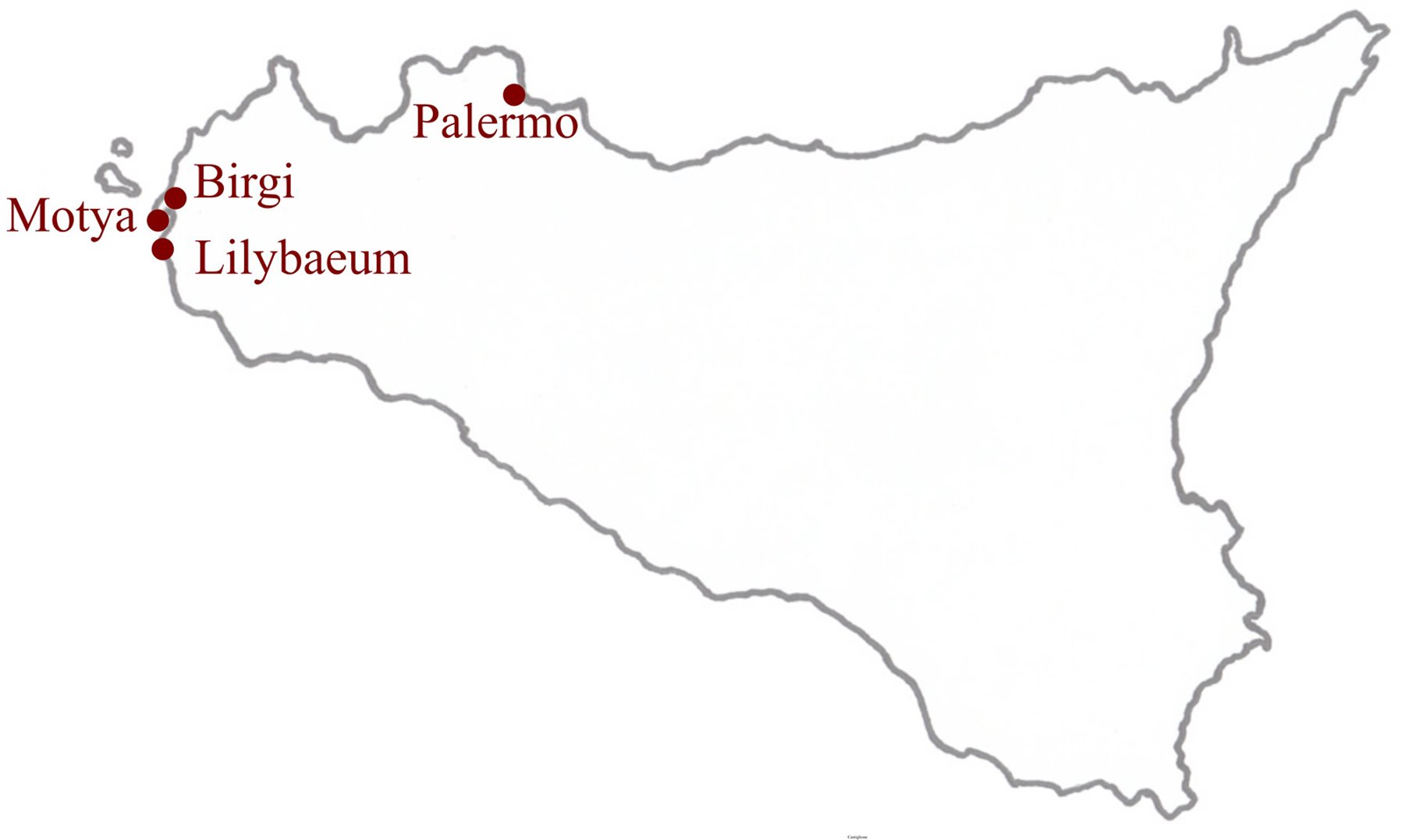
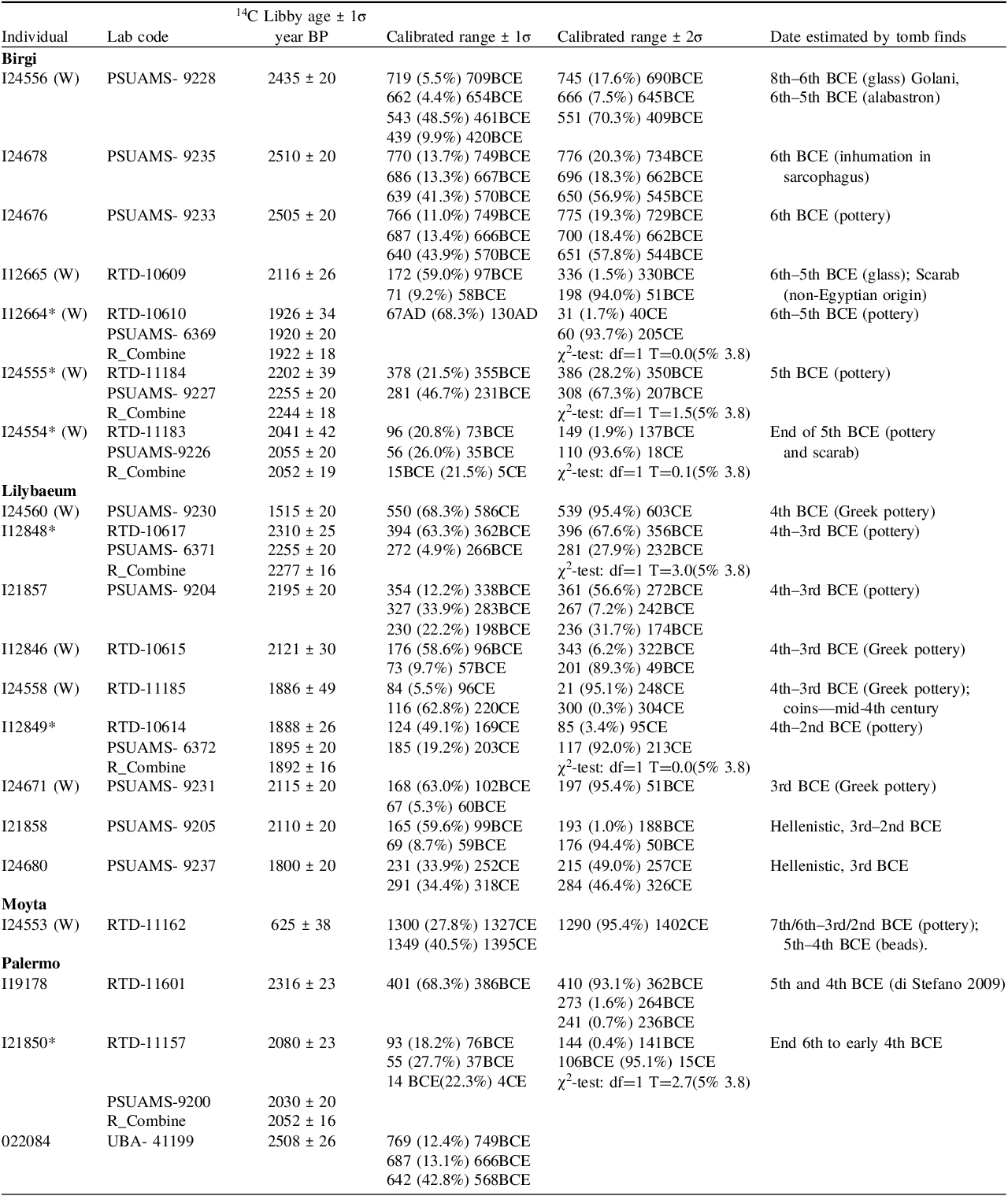
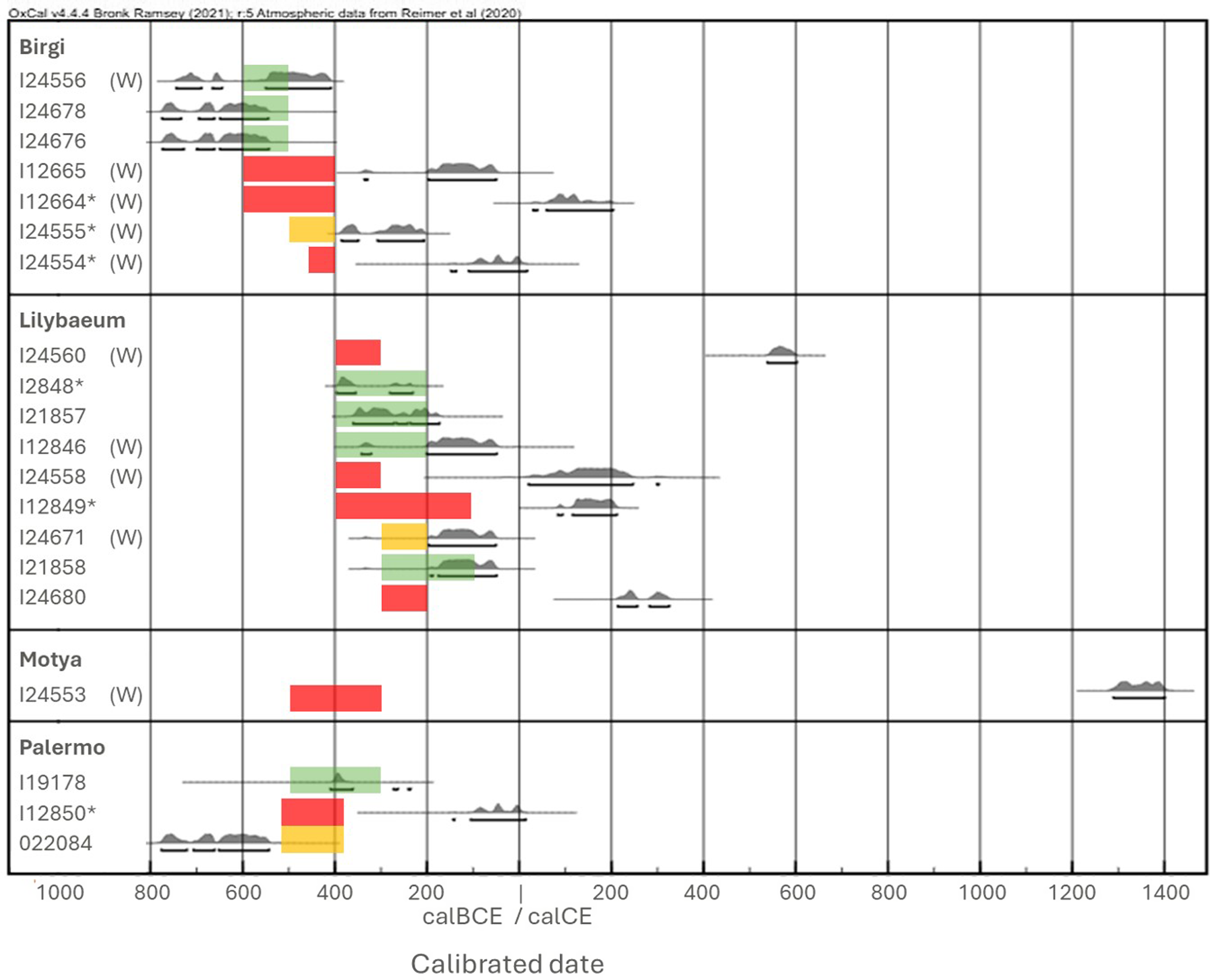
We collected samples from 48 tombs in four different sites (Figure 1). The accepted standard in ancient DNA studies is to establish chronology using radiocarbon dating of the analyzed bones. We thus performed 14C analysis even for bone samples taken from 19 tombs for which we had a date range based on well-documented tomb finds (Table 1 and Supplementary Table S1). Our expectation was that the time ranges based on tomb finds and 14C analysis would largely agree with each other. However, for nine of these 19 tombs, the two time ranges did not overlap (Figure 2). While overlapping ranges do not always suggest agreement, non-overlapping ranges suggest a clear conflict and preclude us from confidently dating the tomb. In all nine cases, the radiocarbon date range was more recent than the date range estimated from the finds, with gaps ranging between 70 and 1400 years, and the radiocarbon dates associated the individuals with later phases of the Roman expansion into Sicily. Thus, the different time ranges lead to a very different interpretation of the results obtained in the genetic analysis of the ancient DNA sampled from these individuals (see below).
A map of Sicily showing the four sites from which samples were collected for this study.
Dates determined for 19 tombs based on 14C and tomb finds. Locations of the four sampled sites in Sicily are marked in Figure 1. Complete information on 14C analysis of samples from these individuals is provided in Supplementary 1. Calibrated ranges are given for ± 1σ and ± 2σ. For the six individuals who were dated by two laboratories (marked by an asterisk), we show date ranges combined using the R_Combine method with the results of the chi-squared statistical test. For seven tombs, the two ranges overlap, for three the ranges are very close (gap < 50 years), and for the remaining 10 tombs, the radiocarbon calibrated range was more recent than the date range estimated by the finds, with gaps ranging from 70 years to more than 1000 years. A graphical summary of the date ranges is given in Figure 2. Tombs excavated by Joseph Whitaker are marked with (W). Individuals I21850 and 022084 were sampled from the same tomb, with 022084 being sampled and sequenced by a separate research group
A graphical description of the date ranges estimated by 14C and those estimated by tomb finds. Calibrated date ranges are depicted using posterior densities and 95.4% credible intervals. For the six individuals who were dated by two laboratories (marked by an asterisk), we show date ranges combined using the R_Combine method. Date ranges corresponding to tomb finds are depicted by colored blocks: green indicates agreement with the 14C range, orange indicates a small gap (<50 year) and red indicates a large gap (>50 years). For more details about the date ranges, see Table 1 and Supplementary 1.
Four examples of specific studied tombs
To demonstrate the puzzles posed by these conflicting dates, we start by presenting the findings related to several representative tombs in Birgi, the Phoenician cemetery across Motya that was in use from the 7th century BCE. There have been continuous excavations in the cemeteries of Motya and Birgi by several delegations for more than a century. The samples we analyzed are among the earliest excavated, collected more than 100 years ago by Joseph Whitaker. The tombs of Birgi were excavated by Whitaker, Salinas and Lipari between 1908 and 1913 (Whitaker Reference Whitaker1921). As in Motya, the burials in Birgi were made in sarcophagi, stone cut coffins covered by stone slabs. Such structures make the tombs a relatively closed archaeological context, with grave goods lying inside the sarcophagus next to the buried individual. Whitaker controlled the excavation and registration of all finds, which were then moved to his house on Motya island, where they are still stored today (Whitaker’s house is currently used as a museum). Ten of the tombs we sampled were from Whitaker’s collection (Table 1; marked with W), with seven of them having conflicting radiocarbon and archaeological dates and two with very small overlaps.
Individual I24556 (sampled from tomb 14 in Birgi) was an adult man buried in a tomb housing several objects, including stone and clay alabastra of the 6th century, and glass beads with the typical Phoenician man’s head, of the 7th–5th century BCE (Figure 3a) (Schlick-Nolte Reference Schlick-Nolte, Bianchi, Schlick-Nolte, Bernheimer and Barag2002). Thus, using the tomb finds, we date the tomb to the 6th century BCE. Radiocarbon dates during this period typically have very wide ranges, due to the long Halstatt plateau in the calibration curve (see Methods and Supplementary Figure S1). Because ancient DNA studies rely on radiocarbon dates, we analyzed the bone for 14C and indeed obtained a date range between the 8th and 5th centuries BCE (Table 1 and Figure 2). In this case, the two date ranges overlap and there is no conflict.
(a) A Phoenician alabastron and a bead necklace found in tomb 14 from Birgi alongside individual I24556. (b) Two Phoenician jugs and a Greek cup found in tomb 2 from Birgi alongside individual I12664. (c) A bronze ring with scarab and a glass bottle found in tomb 16 from Birgi alongside individual I12665.
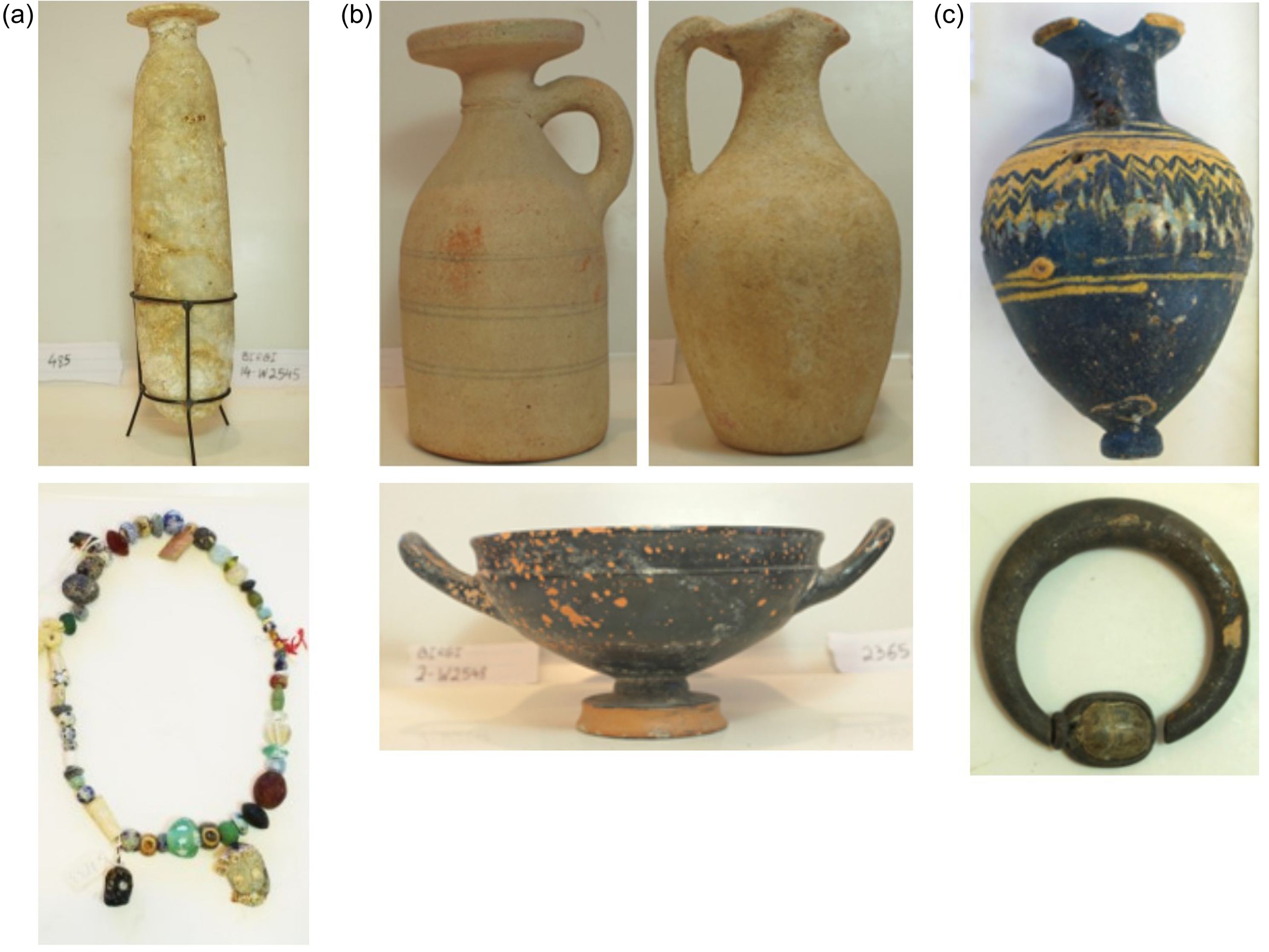
For examples of dating conflicts, we examine individuals I12664 and I12665 (sampled from tombs 2 and 16 in Birgi). These two individuals were buried with finds that date to a similar time range between the 6th and 5th centuries BCE: two different forms of Phoenician jugs, a Greek cup, a glass bottle, and a bronze ring with a scarab (Figure 3b–c) (For dates of similar finds see throughout Di Stefano and Di Salvo Reference Di Stefano and Di Salvo2009). The small number of finds in these tombs are quite rich in features and offer important cultural context. The type of pottery found in these tombs has been found in tombs and residents in Phoenician sites throughout Sicily (Sconzo Reference Sconzo, Celestino Pérez and Rodríguez González2020). Similar rings with scarabs and the same type of glass bottles have been found in Phoenician sites throughout the Mediterranean (Boschloos Reference Boschloos and Lohwasser2014, Reference Boschloos2018; Triantafyllidis Reference Triantafyllidis2009). However, the bones associated with these finds tell a very different story. Individual I12665 was an adult man, whose bones were dated from the mid-4th to mid-1st centuries BCE, which is more than 70 years later than the tomb finds (Table 1). Individual I12664 was an adult woman, whose bones were dated to an even later period in the 1st-2nd centuries CE, which is 400–500 years after the tomb finds. Importantly, while the radiocarbon dates of the two individuals associate them with the Roman period, none of the items from the tombs could be registered with the Roman period. Some other tombs excavated by Whitaker show a similar pattern of clear Phoenician finds and a much later date (see Table 1 and Figure 2).
Another interesting example comes from individual I21850 sampled from the cemetery of Caserma Tukory in Palermo. This Phoenician necropolis was first discovered in the mid-18th century and excavated bit by bit throughout the years. Extended excavations were made by Di Stefano in the 1990s and fully published in 2009. Further large-scale excavations were carried out by Francesca Spatafora between 2001-2005, with only preliminary publication. About 150 undisturbed pit and chamber tombs were unearthed with inhumation and cremation burials from the early 6th to mid-3rd century BCE. The combined practice of cremation and inhumation is typical to the early Phoenician cemeteries dated up to the late 7th–early 6th centuries BCE, like those in Tyre, Motya and Carthage, as well as sites in Sardinia and Iberia. However, starting from the 6th century BCE, cremation is much less observed, as inhumation became the dominant burial method in Phoenician cemeteries (Di Stefano and Di Salvo Reference Di Stefano and Di Salvo2009; Spatafora Reference Spatafora2014).
Tomb 15 in Caserma Tukory housed the buried remains of two adults and one baby. The two adults were buried in sarcophagi and were found in supine position and undisturbed, with a scarab dated to the late 6th–5th centuries BCE attached to one of them. The baby was buried inside a Phoenician amphora dated to the 4th century BCE, and other finds in this tomb were dated from the end of 6th to the early 4th centuries BCE (Di Stefano and Di Salvo Reference Di Stefano and Di Salvo2009). We sampled a bone from one of the adults (individual I21850), which was radiocarbon dated between the 1st century BCE to 1st century CE, resulting in a gap of more than 250 years. Interestingly, the other adult (022084) was sampled by another research group conducting a separate ancient DNA study, and it was dated between the 8th and 6th centuries BCE, which is more compatible with the dates associated with the grave goods.
Implications of dating discrepancies on interpretation of ancient DNA results
Correct interpretation of ancient DNA analysis relies on correct chronology. For this reason, the accepted standard is to rely on radiocarbon dates obtained from the bones from which DNA is extracted. Our ancient DNA analysis focused on the ancestry makeup of 18 individuals sampled from Motya, Birgi, Palermo, and Lilybaeum, whose bones were radiocarbon dated to time ranges before the 2nd century BCE. For seven of these individuals (including I24556 from Birgi mentioned above), we have tomb finds corroborating their radiocarbon dates (Table 1 and Figure 2). Analysis of these 18 individuals suggests that they derive most of their ancestry from a central Mediterranean source, with some minor contribution from North Africa and the western Mediterranean (Figure 4a). Moreover, we find no evidence in any of these 18 individuals of significant ancestry originating in the Levant. This is consistent with what we find in Phoenician sites in North Africa, Sardinia, and the Iberian Peninsula (Ringbauer et al. Reference Ringbauer, Salman-Minkov, Regev, Olalde, Peled and Sineo2025).
Summary of ancestry inference obtained from ancient DNA samples taken from 25 individuals sampled in Phoenician sites in Sicily. (a) Ancestry inference for 18 individuals who are radiocarbon dated before 200 BCE. Seven of these individuals (marked in green) were buried alongside tomb finds associated with consistent dates (see Figure 2 and Table 1). (b) Ancestry inference for seven individuals whose tombs contained items dated to before 200 BCE, but whose radiocarbon dates were later (see Figure 2 and Table 1). Ancestry inference was conducted using qpAdm (Harney et al. Reference Harney, Patterson, Reich and Wakeley2021), with the complete analysis described in (Ringbauer et al. Reference Ringbauer, Salman-Minkov, Regev, Olalde, Peled and Sineo2025).
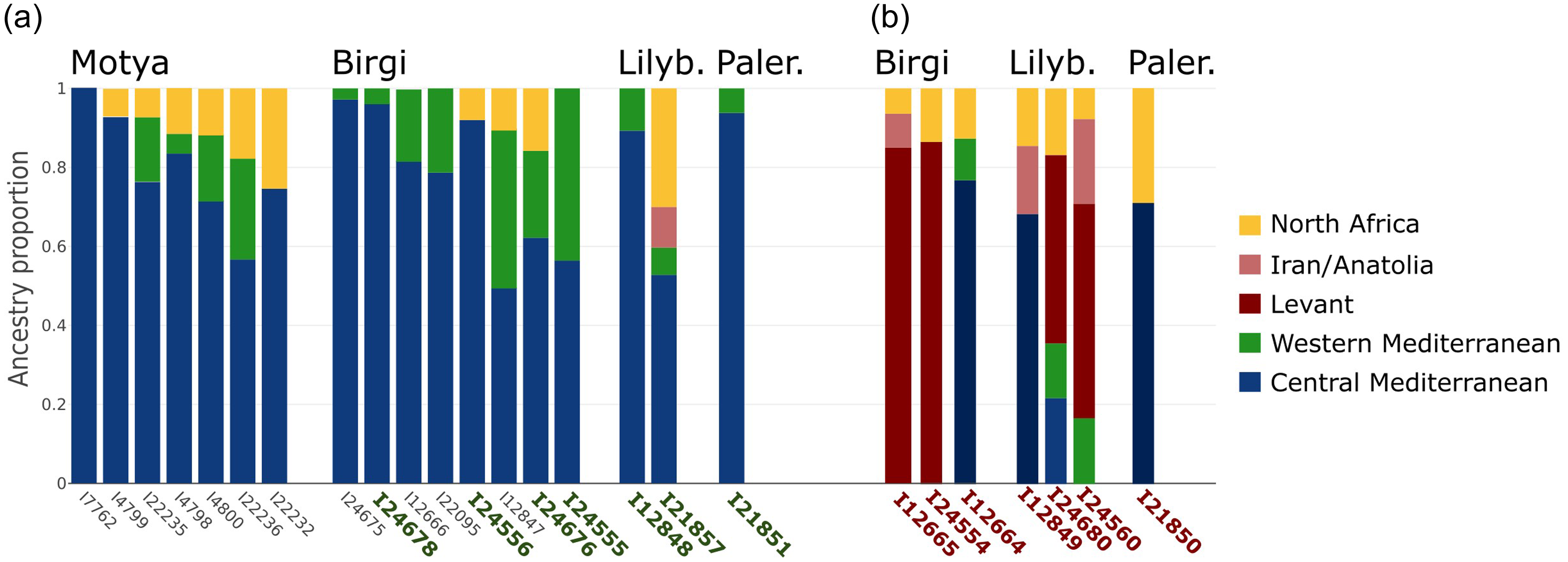
We conducted the same analysis of genetic ancestry on seven individuals for which the tomb finds are dated before the 2nd century BCE, but radiocarbon dates suggest later dates (and for which we could obtain viable ancestry models). Three of these individuals (including I12664 from Birgi and I21850 from Palermo mentioned above) derived most of their ancestry from a central Mediterranean source, as inferred for the core set of 18 individuals. However, the remaining four (including I12665 from Birgi mentioned above) were inferred to have a large contribution from a Levantine source (Figure 4b). These results can be interpreted in two very different ways, depending on which date range we choose to adopt. If we rely on the archaeological dates, the inferred ancestries suggest close connections between Phoenician settlements in the Levant and Phoenician settlements in the central Mediterranean. However, if we rely on the radiocarbon dates, then a likely interpretation for this is a shift in ancestry possibly associated with the Roman conquest of Sicily in the Punic wars. This example demonstrates that incompatible dates for even a few tombs can lead to very different historical interpretations of the data and thus considerably harm our ability to tell a complete story.
Ensuring validity of the 14C measurements and association between bones and the archaeological context
We wanted to rule out the possibility that the conflicting time ranges were a result of noise in the measurement of the amount of 14C in the extracted collagen from sampled bones. The 19 individuals in our data set (excluding sample 022084 which was dated by a different group) were analyzed for 14C in two different radiocarbon laboratories: D-REAMS at the Weizmann Institute of Science and PSUAMS in Pennsylvania State University (Supplementary1). Six of the individuals were analyzed by both laboratories, allowing us to examine the possibility of bias in the experimental protocol. In all six cases, including that of individual I12664 from Birgi, very similar time ranges were produced by the two labs (Table 1), ruling out the possibility of experimental bias.
To further reduce the influence of noise on our measurements, a strict prescreening procedure was applied to bones analyzed in the D-REAMS laboratory before they were measured for 14C (see Methods section). Following these steps provided us with confidence that the measured amounts of 14C were indeed associated with the analyzed bone, and that there is no notable source of environmental contamination (e.g. clay sediments). In particular, we ensured that sufficient amounts of pure collagen were extracted from the bones and that they were not treated by glue or other preservatives after their excavation, which could influence the 14C analysis. We note that our prescreening methods cannot exclude the presence of collagen-based animal glues, which were used during the 19th and early 20th centuries. However, since most of the bones we analyzed were petrous bones that were found intact in complete skulls, it is unlikely that collagen-based glue was applied to the skull in a way that would affect the petrous bones. We thus conclude that the dating discrepancies we observe are not likely caused by contamination caused by bone preservation.
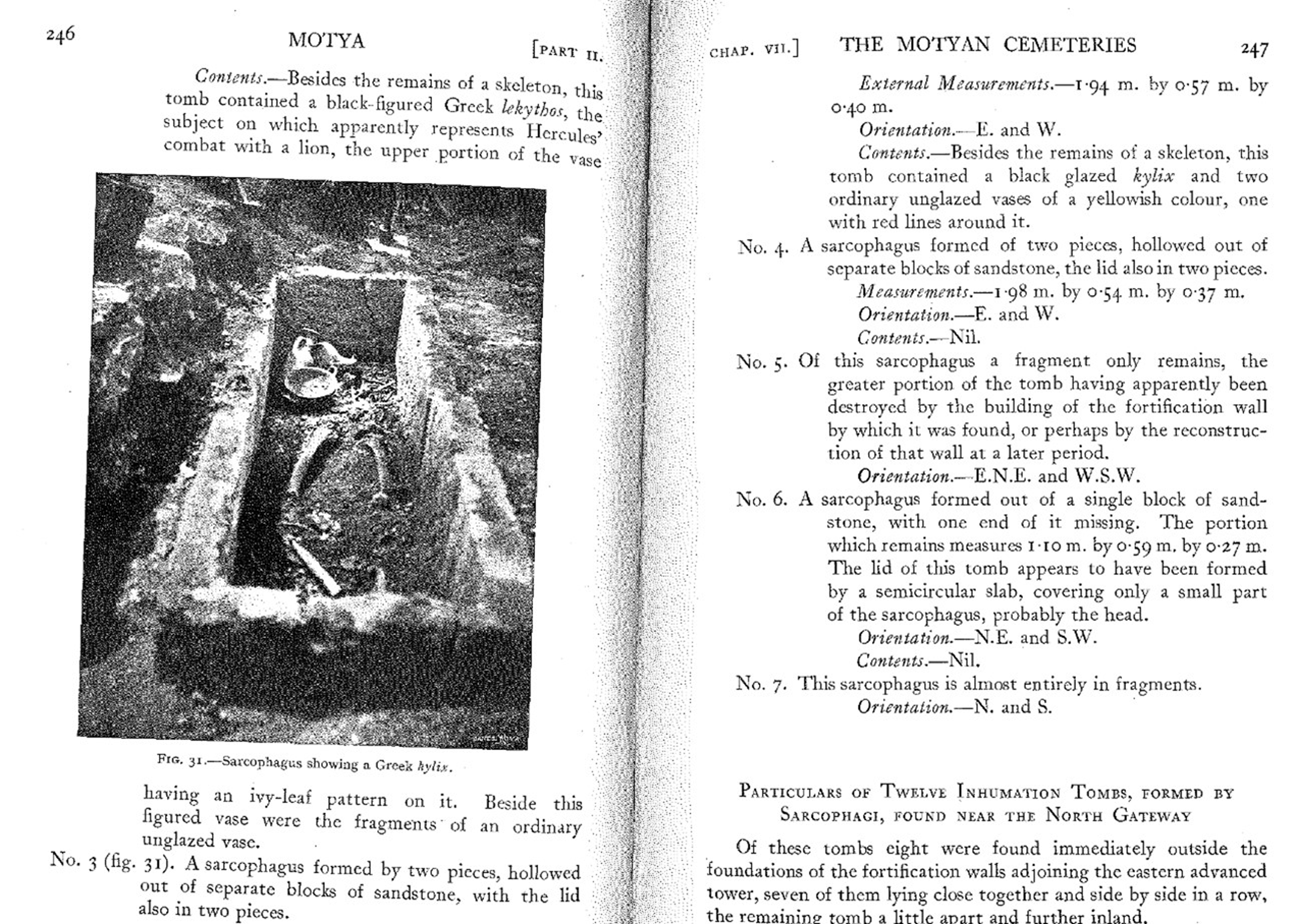
The archaeological dating of tombs is based on the tomb architecture and items found within the tomb (see Methods section). One possible cause for mismatch is disturbance of the original burial. Evidence of disturbance can typically be found in the layout of the corps (whether in the original position or scattered around), and in the condition of the sealing materials of the tomb (whether a cave door, sarcophagus top, jar seal or the arrangement of stones and earth around the burial). In the case of tomb 15 from Caserma Tukory, the tomb and its content were sealed and undisturbed (Di Stefano and Di Salvo Reference Di Stefano and Di Salvo2009). In the case of tombs from Motya and Birgi, the photographs in Whitaker’s book, as well as documentation from later excavations of Motya’s cemetery, show that many of the tombs in these cemeteries were found sealed (Ciasca et al. Reference Ciasca, Coacci Polselli, Cuomo Di Caprio, Amadasi Guzzo, Matthiae Scandone and Tusa1978; Whitaker Reference Whitaker1921). We tried to match the tombs in our dataset (Table 1) to those documented by Whitaker but found only partial matches. For example, tomb 4 in Motya is probably Whitaker’s Motya T2 on pp. 245–246 (Whitaker Reference Whitaker1921), based on the Greek vase depiction (Hercules combat with a lion). Unfortunately, this tomb is not in our dataset because the bones from this tomb did not produce reliable DNA sequences and were thus not radiocarbon dated. The finds we recorded of tomb 2 in Birgi (individual I12664 in our dataset) are identical to the ones documented by Whitaker from Motya T3 (Whitaker Reference Whitaker1921, 246–247, their fig. 31; see also Figure 5), which seems undisturbed. This shows that the set of tomb finds in tomb 2 in Birgi was common in 6th century BCE tombs. Thus, while we do not have direct evidence that the specific tombs in our data set excavated by Whitaker were undisturbed, we have clear evidence that Whitaker’s documentation is comprehensive and reliable.
Documentation of tombs 2–3 from Motya (Whitaker Reference Whitaker1921, 246–247). The image on the left (Whitaker Reference Whitaker1921, Fig. 31) shows a photograph of the tomb during excavation, including the undisturbed remains and several tomb finds.
Mismatch between bones and finds could still potentially be caused by misplacement during or after the excavation. Whitaker’s excavations, which took place more than a century ago, were undertaken under scientific standards that were well ahead of their time. Whitaker meticulously documented both finds and bones and described them in detail, including references and discussion on chronology (Whitaker Reference Whitaker1921). As far as we can tell, the small amount of material from these tombs was carefully handled and kept in storage on the island of Motya for the past 100 years, which should reduce the chance for misplacement. The finds were not removed or sent out from Motya museum since it was founded by Whitaker (personal communication, Pamela Toti and Francesca Oliveri). Still, due to the long time that has passed since the excavation, we cannot completely rule out the chance of misplacement.
Mismatch is significantly less likely in the case of Tomb 15 in Caserma Tukory (individual I21850), which was excavated in the 1990s, and documented with great level of detail (Di Stefano and Di Salvo Reference Di Stefano and Di Salvo2009). While tomb reuse is not rare, the fact that we did not observe tomb finds from the Roman period in this tomb, as in other tombs we examined from Sicily, makes it unlikely. In other cases, an individual might be buried with heirlooms from older times. However, the pottery items found in this tomb, as well as items found in tombs from Motya and Birgi, would not likely serve as heirlooms. Heirlooms are typically expensive or unique items, mostly jewelry, special stone vessels, and not common everyday items. Most tomb finds in our dataset were pottery items, which cannot endure for long in an active environment and be reused hundreds of years later. Therefore, the presence of heirlooms is not a likely explanation of the large dating discrepancy that we see in many tombs in our dataset.
Examples of conflicting dates found in other recent publications
To put our findings into broader context, we examined other cases in recent published studies that show conflicts between radiocarbon dates and dates obtained by other archaeological practices (Table 2). One example, from a similar time period in Sicily, came from a recent study analyzing bone samples from mass graves associated with the battles of Himera from 480 and 409 BCE in northwestern Sicily (Reitsema et al. Reference Reitsema, Mittnik, Kyle, Catalano, Fabbri and Kazmi2022). Three samples extracted from the 409 BCE burials produced reliable 14C measurements, with two resulting date ranges ending before 490 BCE (an 80-year gap), and one range ending before 540 BCE (a 150-year gap). As all estimated time ranges span within the Hallstatt plateau, they are very wide (spanning 3–4 centuries), but despite this, they still conflict with the clear historical record for this battle. The radiocarbon dates were reported in the supplementary information of the ancient DNA study (Reitsema et al. Reference Reitsema, Mittnik, Kyle, Catalano, Fabbri and Kazmi2022) and the study itself did not address this gap. One important issue one has to consider is the fact that the bones analyzed here were petrous bones, implying that the date corresponds to time of birth. Thus, time of death could potentially be several decades later. Indeed, shifting the uncalibrated dates of these samples by 50 years seems to eliminate the gap and brings the upper boundary of the wide time range to 409 BCE (Supplementary Figure S2).
Examples of incompatible radiocarbon dates recently published in the literature. For each case, we provide the date range based on archaeological or historical context as well as the date range(s) provided by radiocarbon analysis of material from the same context. In Himera, Ashkelon, and Tell el-D’aba, the radiocarbon dates are earlier than expected, and in all other cases they are later, as observed in our study
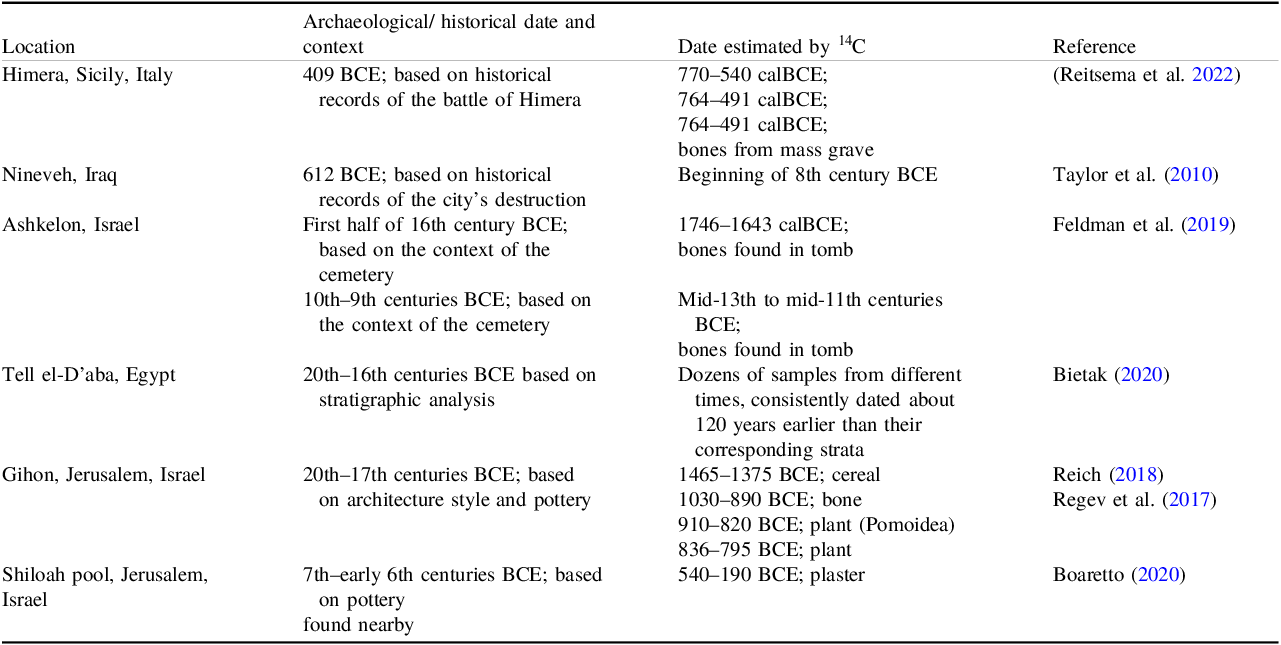
Another example of conflict between a collagen-based radiocarbon date and the historical date is given in Nineveh (Taylor et al. Reference Taylor, Beaumont, Southon, Stronach and Pickworth2010). The destruction of Nineveh is attributed to an attack that took place in 612 BCE by a coalition of people that included large contingents of Babylonians and Medes (Sinha et al. Reference Sinha, Kathayat, Weiss, Li, Cheng and Reuter2019). The bones recovered from an in-situ context were all radiocarbon dated to the beginning of the 8th century BCE, about 200 years earlier (Table 2). The possibility of contamination or reservoir age input in the collagen were all excluded as possible causes for this 200-year gap, leaving it an open question. So far, no explanation has been suggested for this gap, and it remains unresolved.
We found another example of incompatible dates in recently published analysis of skeletal remains from a Middle Bronze Age IIC (1600–1550 BCE) cemetery in Ashkelon (Feldman et al. Reference Feldman, Master, Bianco, Burri, Stockhammer and Mittnik2019). One skeleton was dated within the expected range (1622–1522 BCE), but the other was dated more than 40 years earlier (1746–1643 BCE). Another sample came from an Iron IIA cemetery dated between the 10th and 9th centuries BCE, but the radiocarbon dates estimated for this sample were from the mid-13th to mid-11th centuries BCE, a gap of more than 100 years. This earlier date was justified by the assumed impact of local marine diet, but zooarchaeological reports of the site shows that sea food was hardly consumed at Ashkelon during the early period (Feldman et al. Reference Feldman, Master, Bianco, Burri, Stockhammer and Mittnik2019; Wapnish and Fulton Reference Wapnish, Fulton, Stager, Schloen and Voss2018). Other samples from infant tombs examined in the same study were dated based on archaeological context to “Iron I, post Ramses III” (after the mid-12th century BCE) and carbon dated from the 14th to the 12th centuries BCE. The two ranges have a very small overlap (Table 2), so they are not strictly conflicting, but the difference between the ranges still indicates some open questions. Note that unlike in the case of our samples, the radiocarbon dates in Himera, Nineveh and Ashkelon are older than the archaeological and historical context.
There are also some compelling examples of date discrepancies that do not come from tombs, but from well-defined archaeological strata. A recent study describes such discrepancies in archaeological sites in Egypt (Stantis et al. Reference Stantis, Kharobi, Maaranen, Nowell, Bietak and Prell2020). One example was from Tell el-D’aba, a site from the Second Intermediate Period of the Middle Kingdom in Egypt (20th–16th centuries BCE). In this site, the date ranges of dozens of bone samples were consistently offset back 120 years, relative to their expected time based on the stratigraphic chronology (Table 2; see Figure 1 in Bietak Reference Bietak, Kamrin, Bárta, Ikram, Lehner and Megahed2020). Similar offsets were found in other Egyptian sites of similar periods (Bietak Reference Bietak, Kamrin, Bárta, Ikram, Lehner and Megahed2020; Höflmayer Reference Höflmayer2016). In all cases, radiocarbon dates were estimated by analyzing bones or other organic material (such as seeds) found in the relevant strata. Bietak suggested that such discrepancies could be explained by the fact that construction of tombs and foundation trenches tended to move organic material upward from earlier layers. This may lead to a faulty association of older samples with more recent layers, which results in a systematic over-estimation of the age of each layer when done using radiocarbon analysis. However, Bietak pointed out that older strata should be less affected by this phenomenon, since there is less material below these layers that can push their date back. Thus, it seems somewhat unlikely that the consistent 120 year offset observed in Tell el-D’aba is fully explained by upward shift of material across layers.
There are also interesting examples of date conflicts in several excavations in the Jerusalem area. The tower built to protect the Gihon Spring in Jerusalem has been assumed since its discovery about 150 years ago to belong to the Middle Bronze Age (20th – 17th centuries BCE) based on its architecture and pottery found in the area (Reich and Shukron Reference Reich and Shukron2010). In 2017, Regev and colleagues conducted radiocarbon analysis of bones and seeds collected from a stratigraphic sequence of well identified deposition layers, using a micro-archaeology approach, from two sections beneath the tower’s foundation. The radiocarbon dates produced by this analysis follow a consistent chronostratigraphic sequence which associates the foundation of the tower with Iron Age II (9th century BCE) (Regev et al. Reference Regev, Uziel, Szanton and Boaretto2017). Interestingly, different organic material from the same location produced vastly different radiocarbon date ranges (Table 2; see Discussion section). Later, Reich explained the incompatible 14C dates on the ground of inclusion of younger material into the sediments under the tower perhaps the result of water contamination (Reich Reference Reich2018), but this specific explanation is contested by the chronostratigraphic sequence of consistent radiocarbon dates of upper layers. Reich reinforced previous arguments that the structure should confidently be dated to the Middle Bronze Age, due to the robust character of its architecture and the style of pottery found on floor level of the adjacent contemporaneous corridor. In later publications, the authors of the radiocarbon dating results are much more careful in their interpretation and dating of the tower to the 9th century. Uziel and colleagues suggest it might be a continuation of MB and LB phases (Uziel, Baruch, and Szanton Reference Uziel, Baruch, Szanton, Maeir, Shai and McKinny2019), and Regev and colleagues suggest the tower was rebuilt in the 9th century and mention a burnt layer beneath it dated to the 12th century BCE (Regev et al. Reference Regev, Gadot, Uziel, Chalaf, Shalev and Roth2024). In the nearby Shiloah Pool in the City of David, a single sample of plaster was radiocarbon dated to 540–190 BCE, but pottery in the same area was dated to the 7th–early 6th century BCE (Boaretto Reference Boaretto2020), resulting in a gap of more than 50 years (Table 2).
Methods
Prescreening before 14 C analysis
The 11 samples analyzed at the D-REAMS radiocarbon laboratory at the Weizmann Institute of Science were prescreened using the following procedure, as described in (Yizhaq et al. Reference Yizhaq, Mintz, Cohen, Khalaily, Weiner and Boaretto2005). The amount of collagen in each bone was assessed by examining a small amount of mineral from the bone using Fourier Transform Infrared (FTIR) spectroscopy (Boaretto et al. Reference Boaretto, Wu, Yuan, Bar-Yosef, Chu and Pan2009). If the FTIR spectrum showed the presence of collagen (by the identification of the Amide I, Amide II and Hydroxyproline peaks), the bone was qualified for the full collagen extraction procedure. A sufficient amount of bone was prepared for the acid-base-acid steps, gelatinization and filtration for the elimination of contaminant like humic acid and small organic molecules (Yizhaq et al. Reference Yizhaq, Mintz, Cohen, Khalaily, Weiner and Boaretto2005). FTIR analysis was applied to check for the presence of other material beside collagen, to help detect the use of glue or preservatives when treating the bones after they were excavated. This analysis was performed after the collagen extraction and purification, but before the final step of oxidation and graphitization. Only if the FTIR spectrum did not show the presence of any other carbon bearing substance except collagen, then the sample material was oxidized, and the CO2 is graphitized. Next, the carbon-to-nitrogen ratio in the oxidized sample was examined to ensure that the collagen contained adequate amounts of carbon (35%-45%). Only samples that passed all these prescreening steps were graphitized and analyzed for 14C by an accelerator mass spectrometer (AMS).
The Hallstatt Plateau
Radiocarbon dating in the first millennium BCE is associated with high levels of uncertainty due to the Hallstatt Plateau in the radiocarbon calibration curve (Reimer et al. Reference Reimer, Austin, Bard, Bayliss, Blackwell and Ramsey2020). This plateau typically implies that any measured uncalibrated date around 2500–2400 14C BP will have a wide calibrated range that between 700 BCE to 500–400 BCE (Supplementary Figure S1). It is practically very difficult to reduce the length of these ranges, unless there is dense stratigraphy with corresponding radiocarbon determinations, which was not the case for any of the samples analyzed in this study.
Archaeological dating of tombs
Tomb finds are dated by experts of the specific items (inscriptions, pottery, glass, coins etc.), often by several experts working on one single tomb. There is a longstanding and constantly reevaluated chronology for the various finds of all periods and geographical locations. In the case of the tombs we examined in Sicily, we measured and documented each item of the relevant tomb finds and compared them to similar finds from other tombs in Sicily and other locations, depending on their origin. Different members of our team are responsible for pottery, jewelry and coins.
Ancient DNA analysis and ancestry inference
Ancestry was inferred for 25 individuals using qpAdm (Harney et al. Reference Harney, Patterson, Reich and Wakeley2021), as described in (Ringbauer et al. Reference Ringbauer, Salman-Minkov, Regev, Olalde, Peled and Sineo2025).
Discussion and conclusion
We found many cases in our study as well as other recent studies, where radiocarbon dates were incompatible with dates produced by other established archaeological methods. In many of these cases, the radiocarbon dates were later than expected according to the archaeological context. This is true for all nine samples in our data set for which we find conflicting dates (Table 1), as well as several previously reported cases in Jerusalem. However, examples from Himera, Nineveh, Ashkelon, and Egypt show radiocarbon dates that are earlier than the archaeological context (Table 2). Some of the cases, such as the ones in our study, involved samples from undisturbed tombs. Other cases come from more open contexts, but still with strong association between the archaeological context and the bones or material analyzed for 14C. While undisturbed tombs provide high confidence in the association between bones and the tomb finds, some archaeological strata can also be very precisely dated. Conflicts found between archaeological and 14C dates of tombs imply that the finds are disconnected from the buried individual. This challenges the basic premise of the archaeological study of excavated tombs. We thus argue that such discrepancies cannot be ignored and need to be addressed by the scientific community.
The issue of conflicts between archaeological dating and radiocarbon dating has been debated in recent years in the context of Neolithic Central European. The debate started by Strien, who highlighted some incompatibilities and connected them to systematic differences between 14C dates obtained by analyzing charcoal, seeds and bone collagen from the same context (Strien Reference Strien2017; see, e.g., their fig. 1). His comparisons reveal that bone collagen systematically produces much younger dates than the other two sources, with an offset of up to 500 years. There was only one case in his study (the site in Szederkény), in which the bone samples produced older dates. Strien supports his argument for bias in the radiocarbon dates by presenting demographic and typological arguments regarding the span of time that should be assigned for the stages of the Central European Neolithic age. He then suggests an explanation for the observed discrepancies due to environmental conditions in the soil at the sampling point. In particular, he suggests that water can deteriorate the quality of the sample and lead to later dates, and that this is expected to affect bone samples more than other organic material.
A year later, a strong rebuttal to the ideas raised by Strien was published (Bánffy et al. Reference Bánffy, Bayliss, Denaire, Gaydarska, Hofmann and Lefranc2018). The rebuttal argued that a Bayesian framework should be used to combine all the date ranges for a given site, but it did not address the main point that the Bayesian framework is not well-suited to deal with conflicting date ranges. Moreover, the rebuttal does not offer any explanation for the discrepancy found between different types of samples used for radiocarbon dating. The debate then continued in a published response (Bánffy et al. Reference Bánffy, Bayliss, Denaire, Gaydarska, Hofmann and Lefranc2018; Strien Reference Strien2017, Reference Strien2019), and it appears to remain open. However, as far as we know, this debate has not been extended beyond the Neolithic European circle. The results we present here suggest that this debate may be relevant also for the Bronze and Iron Age Mediterranean.
A recent example of how radiocarbon dating should be applied is the Iron age chronology in the Gihon Spring in Jerusalem (Regev et al. Reference Regev, Gadot, Uziel, Chalaf, Shalev and Roth2024), where microarchaeology approach was applied to a dense well-defined in situ strata (Weiner Reference Weiner2010). This approach obtained a high-resolution chronology for the pottery typology (also in the Hallstatt Plateau) and identified offsets of radiocarbon concentration in the region. However, this rigorous approach and high-resolution chronology still left an unresolved discrepancy with the archaeological dating of the tower. Interestingly, we note that there are samples taken from the same stratigraphic context in this site (locus 14705, basket 147010), which show a wide discrepancy in dates (Table 2): a bone dated to 1030–890 BCE, a sampled cereal dated to 1465–1375 BCE, and two plants dated to 910–795 BCE. Thus, it appears as if the type of organic material analyzed may have a strong influence on the resulting date also in the Bronze and Iron Age.
This discussion regarding radiocarbon (14C) dating is not intended as a critique of the academic validity of this methodology and research. Instead, our questions and observations stem from the significant implications that 14C dating holds for our research on Phoenician ancient DNA. To be more precise, it directly impacts our understanding of the potential migration and movement of Phoenician people throughout the Mediterranean. It raises questions about whether we possess data that aligns with such movements during the time period defined by archaeological discoveries, which is notably early. Conversely, it also prompts consideration of the timing suggested by the current 14C results, which indicates a much later timeframe.
Moreover, it prevents us from finding direct connections between Phoenicians in Sicily and Phoenicians in the Levant. This is not a minor matter but rather one that can reshape our historical narratives significantly. We argue here that ancient DNA studies should not rely solely on radiocarbon dates and ignore strong evidence of alternative dates posed by tomb finds. Since we cannot ignore such discrepancies, we have to find a way to reconcile them or at least report the two conflicting time-ranges when publishing the material.
Supplementary material
To view supplementary material for this article, please visit https://doi.org/10.1017/RDC.2025.17
Acknowledgments
This research was supported by the Israel Science Foundation (ISF) grant no. 1045/20.


 Open access

