


Introduction
Raptors are more threatened than other avian guilds, and along with biodiversity in general (Leclère et al. Reference Leclère, Obersteiner, Barrett, Butchart, Chaudary and De Palma2020; Sánchez-Bayo and Wyckhuys Reference Sanchez-Bayo and Wyckhuys2019) are declining globally (McClure et al. Reference McClure, Westrip, Johnson, Schulwitz, Virani, Davies, Symes, Wheatley, Thorstrom, Amar and Buij2018). In Africa, conservation organisations have largely been focused on Old World vultures, which have declined at a catastrophic rate (McClure et al. Reference McClure, Westrip, Johnson, Schulwitz, Virani, Davies, Symes, Wheatley, Thorstrom, Amar and Buij2018). This ongoing African vulture crisis has to some extent overshadowed declines in other African raptors, notably the unique Secretarybird Sagittarius serpentarius, which is the only member of its monophyletic family, Sagittariidae, and has been declining rapidly across its range.
Secretarybirds were initially uplisted to “Vulnerable” status by the International Union for the Conservation of Nature (IUCN) in 2011 but increasing evidence of widespread declines across their sub-Saharan African range resulted in their being designated as “Endangered” in 2020 (BirdLife International 2020). The species is now likely locally extinct in many parts of West Africa (Thiollay Reference Thiollay2006, Reference Thiollay2007), and observations in East Africa indicate that the species is almost completely restricted to protected areas (Ogada et al. Reference Ogada, Virani, Thiollay, Kendall, Thomsett and Odino2022). A comparison of road counts conducted in Botswana during 1991–1995 and 2015–2016 indicated a 78% decline in Secretarybirds sightings (Garbett et al. Reference Garbett, Herremans, Maude, Reading and Amar2018). Comparisons of citizen science projects in South Africa indicated that Secretarybird reporting rates had declined across 74% of the surveyed area over a 30-year period (Hofmeyr et al. Reference Hofmeyr, Symes and Underhill2014).
The extinction of this species would be a significant loss as Secretarybirds are the only extant species of the family Sagittariidae (Urantówka et al. Reference Urantówka, Kroczak, Strzała, Zaniewicz, Kurkowski and Mackiewicz2021). Unlike other raptors, which conduct aerial pursuits and seize prey using their long sharp talons, Secretarybirds hunt on foot, with long stilt-like legs and short stubby toes and dispatch their prey with powerful kicks (Dean and Simmons Reference Dean, Simmons, Hockey, Dean and Ryan2005). They can breed throughout the year but in South Africa there is a peak from late winter to early summer, which coincides with seasonal rainfall and the emergence of arthropods, including the locusts that make up a significant proportion of their diet (c.86%) (Dean and Simmons Reference Dean, Simmons, Hockey, Dean and Ryan2005; Kemp and Kemp Reference Kemp, Kemp and Kemp1977). Secretarybirds form monogamous pairs and are territorial during the breeding season, when they nest on top of small trees with dense canopies and can raise up to three chicks per clutch (Dean and Simmons Reference Dean, Simmons, Hockey, Dean and Ryan2005). They prefer open habitats such as grassland, dwarf shrubland (including Renosterveld and Karoo ecosystems), savanna, and open woodland and they avoid thickly vegetated areas such as forest, thicket, and dense woodland, as well as steep mountainous areas (Dean and Simmons Reference Dean, Simmons, Hockey, Dean and Ryan2005).
Secretarybirds occur throughout much of sub-Saharan Africa but have a notable stronghold in southern Africa (Taylor et al. Reference Taylor, Peacock and Wanless2015), where there are signs of dramatic declines in recent years (Ogada et al. Reference Ogada, Virani, Thiollay, Kendall, Thomsett and Odino2022). They can be hard to detect because they occur at low densities (Hofmeyr et al. Reference Hofmeyr, Symes and Underhill2014), a situation further complicated by nomadic movements dependent on local conditions largely linked to rainfall (Dean and Simmons Reference Dean, Simmons, Hockey, Dean and Ryan2005). Determining population trends and estimates can therefore present a challenge to conservation managers.
Citizen science data sets present an opportunity to overcome this challenge as they greatly enhance the scale at which data can be collected (Callaghan et al. Reference Callaghan, Bino, Major, Martin, Lyons and Kingsford2019). The resulting data set may provide insights into the biology, population dynamics, and ecology of a species that would otherwise not have been possible for individual researchers to sufficiently survey when carrying out their own data collection (Callaghan et al. Reference Callaghan, Bino, Major, Martin, Lyons and Kingsford2019). Some of the largest citizen science projects in the world focus on avian occurrence records and these projects provide an ideal opportunity for assessing population trends, particularly for large, threatened, and unmistakeable terrestrial bird species such as Secretarybirds (Hofmeyr et al. Reference Hofmeyr, Symes and Underhill2014), which are more easily spotted and less likely to be misidentified by citizen scientists than smaller species with less distinctive characteristics. One such project is the second Southern African Bird Atlas Project (SABAP2) (see Supplementary material Appendix Figure A1) using the BirdMap monitoring protocol (Brooks et al. Reference Brooks, Rose, Altwegg, Lee, Nel, Ottosson, Retief, Reynolds, Ryan, Shema and Tende2022). The Hofmeyr et al. (Reference Hofmeyr, Symes and Underhill2014) study conducted a comparison between SABAP2 and the first Southern African Bird Atlas Project (SABAP1), finding a reported decline between the periods 1987–1992 (SABAP1) and 2007–2012 (SABAP2). This study was an integral part of the evidence presented during the IUCN Red List re-assessment for Secretarybirds in 2020 (Hofmeyr et al. Reference Hofmeyr, Symes and Underhill2014). In this study we aimed to update this 2013 assessment and follow a similar population assessment approach, while also taking advantage of additional and more recent data from SABAP2 and utilising new statistical approaches that have developed more recently. Hofmeyr et al. (Reference Hofmeyr, Symes and Underhill2014) used data from the Coordinated Avifaunal Roadcounts (CAR) project, a citizen science project using a line transect survey method, to examine habitat associations of large terrestrial birds, including the Secretarybird. Here we use count data from CAR to examine population trends and to cross-validate population trends from SABAP2, while also modelling the probability of occurrence based on this data. Together, these analyses provide updated insights into the South African Secretarybird population, which we expected to concur with the last assessment (Hofmeyer et al. 2014), and report continued declines in recent years. The findings of this study hold important considerations for the conservation status and management of Secretarybirds.
Methods
Standard range and abundance change metrics from SABAP
We used data from the ongoing SABAP2 from 2007 to 2023, together with SABAP1 (1987–1992), to examine the metrics of Secretarybird abundance and distribution range change. These are citizen science projects using the BirdMap protocol (Brooks et al. Reference Brooks, Rose, Altwegg, Lee, Nel, Ottosson, Retief, Reynolds, Ryan, Shema and Tende2022). In short, birders submit bird lists using a set protocol that involves a minimum of two hours of birding effort in a geospatial cell known as a pentad (a grid cell measuring 5′ of latitude by 5′ of longitude). However, SABAP1 differed in that the spatial sampling scale was a quarter-degree grid cell (QDGC), each of which contains nine pentads, hence summarising the data to the coarse scale is required for comparisons between projects. Furthermore, it should be noted that the SABAP1 protocol did not include the minimum monitoring-time requirement, nor was it a requirement to attempt to visit all habitats contained within a single QDGC. Pentads with multiple lists allow indices of abundance to be calculated, as well as abundance change if examined over time (Lee et al. Reference Lee, Fleming and Wright2018). The simplest measure of abundance is “reporting rate”, which is the number of times a species appears in lists made at a specific pentad expressed as a proportion.
To compare distribution range and relative abundance between SABAP1 and SABAP2, as well as within SABAP2 (we consider the two periods 2007–2014 and 2015–2022), we present the summarised population-change metrics from these publicly available databases (SABAP2 2022). Note that SABAP1 changes are compared with the first SABAP2 period (2007–2014), so that sampling effort and time periods are more comparable (Lee et al. Reference Lee, Fleming and Wright2018), given the extended timeframe over which SABAP2 has been running. To create confidence intervals of reporting rate change and range changes between these projects that account for spatial sampling bias, we used the random sampling strategy of Brown et al. (Reference Brown, Arendse, Mels and Lee2019). In essence, a bootstrap of 1,000 draws of 10% of pentads from across the species range was performed, and 95% confidence intervals calculated. We considered only QDGCs with more than four lists, and used only those within South Africa, Lesotho, and Eswatini. We also did this for two derived reporting rate statistics, the Z and the C scores. The Z score (Underhill and Bradfield Reference Underhill and Bradfield1998) is used as a measure of confidence in change, while the C scores accounts for abundance change through a log transformation and standardisation considering the non-linear relationship between abundance and reporting rates (see Underhill and Brooks (Reference Underhill and Brooks2016) for initial C score description and Lee and Hammer (Reference Lee and Hammer2022) for implementation and a modification of the original formula, which we used here). “Reporting rate change” is simply (SABAP2 reporting rate/(SABAP1 reporting rate + SABAP2 reporting rate)) – 0.5 (Lee et al. Reference Lee, Fleming and Wright2018).
Detection–non-detection dynamic occupancy model for probability of occupancy across the predicted range from SABAP2
To examine population change over time we examined trends in colonisation and extinction rates (MacKenzie et al. Reference MacKenzie, Nichols, Hines, Knutson and Franklin2003) using dynamic occupancy models that account for detection covariates, including season, observer experience, and sampling time using data from 2008 to 2022. These models were implemented through the “colext” function in the unmarked package (Fiske and Chandler Reference Fiske and Chandler2011) in R 4.1.1 (R Core Team 2021). The data were analysed using the Broyden–Fletcher–Goldfarb–Shanno (BFGS) maximum likelihood estimation method. Checklist contributions were concentrated around urban and protected areas. To account for the potential spatial bias this may cause we randomly sampled only 150 checklists for such “hyper sampled” pentads (Appendix Figure A2). The following were entered as “detection” covariates: season was entered as a Julian day value; sampling time was the number of hours of surveying conducted for a given list; observer experience was based on the log-transformed number of contributions to the SABAP2 project as of May 2022. Probability of presence was modelled as a function of year, as well as the normalised difference vegetation index (NDVI), calculated using the ABAP package (BIRDE Development Team 2022). Mean NDVI for each sampling period was extracted using the Google-Earth Engine. This was undertaken because Secretarybirds are nomadic and may move between areas in response to this variable, therefore affecting local colonisation and extinction rate estimates. The Akaike information criterion (AIC) value was used to assess model fit.
Time-to-detection occupancy model
During the creation of a SABAP2 checklist, the sampling hour (e.g. first hour, second hour, etc., independent of time of day) in which a species was recorded was noted. This allowed us to exploit an additional modelling pathway developed by Priyadarshani et al. (Reference Priyadarshani, Altwegg, Lee and Hwang2022) involving time-to-detection (TTD) theory. In essence, it should take longer for an observer to record a rare species and this measure can thus be used as a proxy for abundance. Increased time to a first detection of a target species would thus suggest decreased abundance. We utilised a discretised version of the mixed exponential TTD occupancy model to examine potential variations in occupancy probability over time. This methodology was particularly well suited to our study because we had access to hourly TTD data that were not continuous. In Appendix Description A1, we describe the models developed for both the probability of occupancy and detection rate, which was modelled as a function of year for both urban and non-urban areas, respectively. We used the Landuse–Landcover database (DFFE 2020) to determine the proportion of a pentad classified as urban, centred and scaled resulting values, and classified all pentads with values >0 as urban. Appendix Figure A3 shows the locations of the checklists which were considered to be in urban or non-urban sites. We present the estimates obtained using both the mixed exponential TTD models and naïve estimates obtained using linear regression models. Note that the locations and number of surveyed pentads differ in some years, but on average, we included 146 urban and 346 non-urban sites annually. Since the detection rate can serve as a proxy for abundance, our approach provided insights into occupancy and abundance patterns in urban and non-urban areas throughout the year.
Population trend validation using CAR project data
To cross-validate our findings from the SABAP2 analysis, we investigated Secretarybird population trends from the CAR project. The project collates data collected by volunteers who drive set routes twice a year, during January (summer) and July (winter), to record targeted large bird species, including Secretarybirds. The project was initiated in 1993, with routes added over several years, so most of the data were recorded from 1998 onwards. There has been a decline in participation in recent years, starting in 2015, and we consequently only used the data collected up until 2020 (Young and Harrison Reference Young and Harrison2020).
Routes cover seven of South Africa’s nine provinces, including the Western Cape, Free State, Gauteng and northern parts of the Eastern Cape and KwaZulu-Natal, western Mpumalanga, and a small section of the Northern Cape (for maps of geographical coverage see Young and Harrison Reference Young and Harrison2020). Routes are divided into zones of similar habitat, called “precincts”, to enable detection of trends in habitat preference by CAR target species. CAR routes are usually undertaken by the same leader each year, but the number of observers per vehicle can vary.
As Secretarybirds are rarely recorded, we modelled probability of encounter as a function of time (year), season, log of distance travelled as an offset, and number of observers in a vehicle, using route nested in precinct as random effects in a logistic regression generalised linear mixed effects model implemented using the lme4 package (Bates et al. Reference Bates, Maechler, Bolker and Walker2015), with P values calculated using lmerTest (Kuznetsova et al. Reference Kuznetsova, Brockhoff and Christensen2017). We also modelled total counts using a similar approach, but used a negative binomial model (glmer.nb). Our initial data consisted of 12,409 surveys covering 655 routes across 52 precincts, although many of these routes were covered on only a single occasion between 1998 and 2018 (there were 40 precincts in 2013). We considered only routes where Secretarybird had been recorded at least once (534 routes, 11,441 counts). To account for data entry error for single count routes and cross check the impact of irregular counts, we also repeated the analysis for the top 29 most frequently counted routes within the range (1,267 counts, 5 precincts).
Range prediction
To map the current potential distribution range of Secretarybirds, we used the random forest machine learning methods as implemented through the ranger package in R (Wright and Ziegler Reference Wright and Ziegler2017) using presence and absence from SABAP2 pentad data. Using information from the South African Land Cover Map (DFFE 2020), we calculated the percentage cover of each land-use type (i.e. water, wetlands, rivers, forests, agriculture, fallow lands, urban areas, residential areas, and mining) for each pentad. Using these values and Worldclim variables (Fick and Hijmans Reference Fick and Hijmans2017), we constructed predictive models for probability of Secretarybird presence. Model validation was performed using the yardstick package in R (Kuhn et al. Reference Kuhn, Vaughan and Hvitfeldt2022), classifying pentads with >0.5 probability of occurrence as predictions of presence. A 25% random subset of our data was excluded from model training and this subset was used to test model performance by comparing predicted values to this test data set. Below we report measures for model accuracy, sensitivity, and specificity, as well as the area under the curve of the receiver operating characteristic curve (AUC ROC).
Population estimation using historic density estimates
There are various methods which can be used to estimate population size based on SABAP2 data (Cervantes et al. Reference Cervantes, Martins and Simmons2022; Lee et al. Reference Lee, Whitecross, Smit-Robinson, Van den Heever, Retief and Colyn2023). These methods require an estimation of “ideal” population density in a pentad. We used density estimates from the Kgalagadi National Park in the Northern Cape (Herholdt and Anderson Reference Herholdt and Anderson2006), the Wakkerstroom area on the border of the Free State and KwaZulu-Natal (Strydom Reference Strydom2016), and from across South Africa’s former Transvaal Province (Tarboton and Allan Reference Tarboton and Allan1984), which typically varied between 0.2 (lower bound) and 3 (upper bound) individuals per 100 km2. For a proxy of density (rather than relative abundance), we transformed the birds/km values from Herholdt and Anderson (Reference Herholdt and Anderson2006) into a birds/km2 measure as follows: we took the values as indicative of detection within 1,000 m of the transect line, or 2 km total width. For the 1993 survey this translated to 3 birds/100 km2 as an upper limit for population density. Using the probability of abundance from the random forest models predicting reporting rate, we then multiplied the probability surface from the random forest models in those pentads with a presence >0.5 by 3, the upper bound of the density estimate (Tarboton and Allan Reference Tarboton and Allan1984), and presented a population estimation range based on 2–4 birds/pentad.
Results
SABAP1 and SABAP2 change
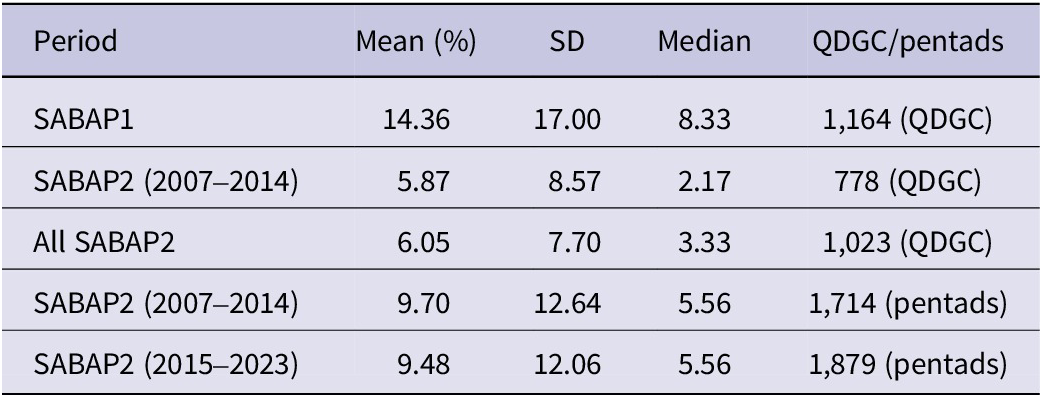
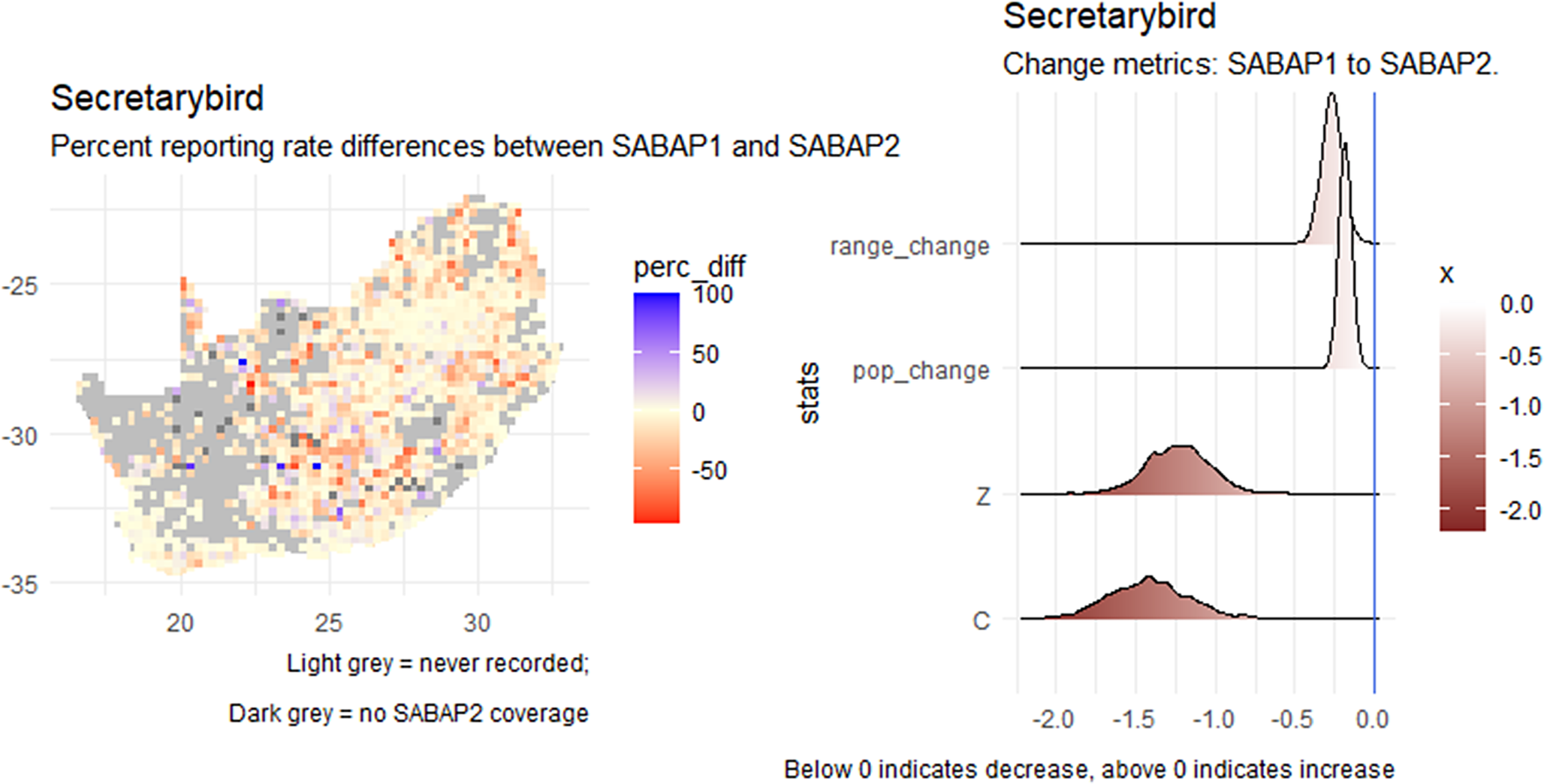
Secretarybirds were recorded from 1,164 QDGCs for SABAP1, and 1,023 for SABAP2 as of April 2023, a difference of -12% (Table 1). Our results concurred with previous publications noting significant declines in measures of relative abundance (reporting rate change, Z score, C score), as well as range between the SABAP1 and SABAP2 period using data until 2014 (Figure 1, Appendix Table A1). In all cases, the values and their confidence intervals were negative. Mean reporting rate in QDGCs for SABAP1 was 14.4 ± 17%, while for SABAP2 it was 6 ± 7.8% (all data). However, given these are derived from highly left skewed data (most values close to 0), a linear difference is inappropriate to report abundance change. The median bootstrapped relative reporting rate change value was -18.4% with an interquartile range of -20.4 to -16.1% (Figure 1).
Summary of SABAP1 and SABAP2 reporting rate metrics for Secretarybird Sagittarius serpentarius reporting rates (as percentage). QDGC = quarter-degree grid cell; SABAPI = Southern African Bird Atlas Project 1; SABAP2 = Southern African Bird Atlas Project 2
Map of South Africa indicating pentad-level changes in Secretarybird Sagittarius serpentarius reporting rates between SABAP1 (1987–1994) and early SABAP2 (2007–2014) (left panel) and density plots of bootstrapped population samples indicating overall changes in range, reporting rate, Z score, used as a measure of confidence in change, and C score, change in abundance (right panel).
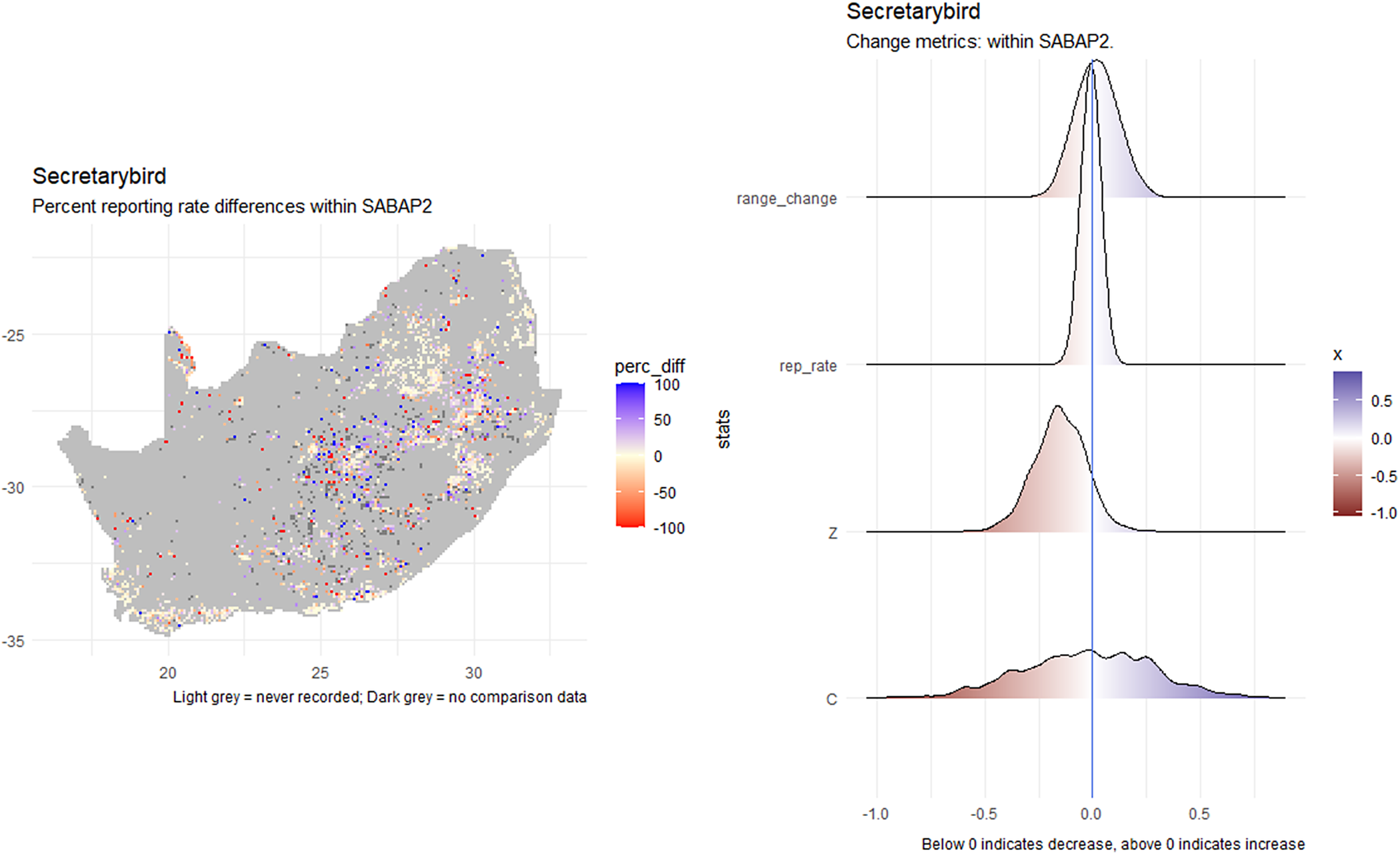
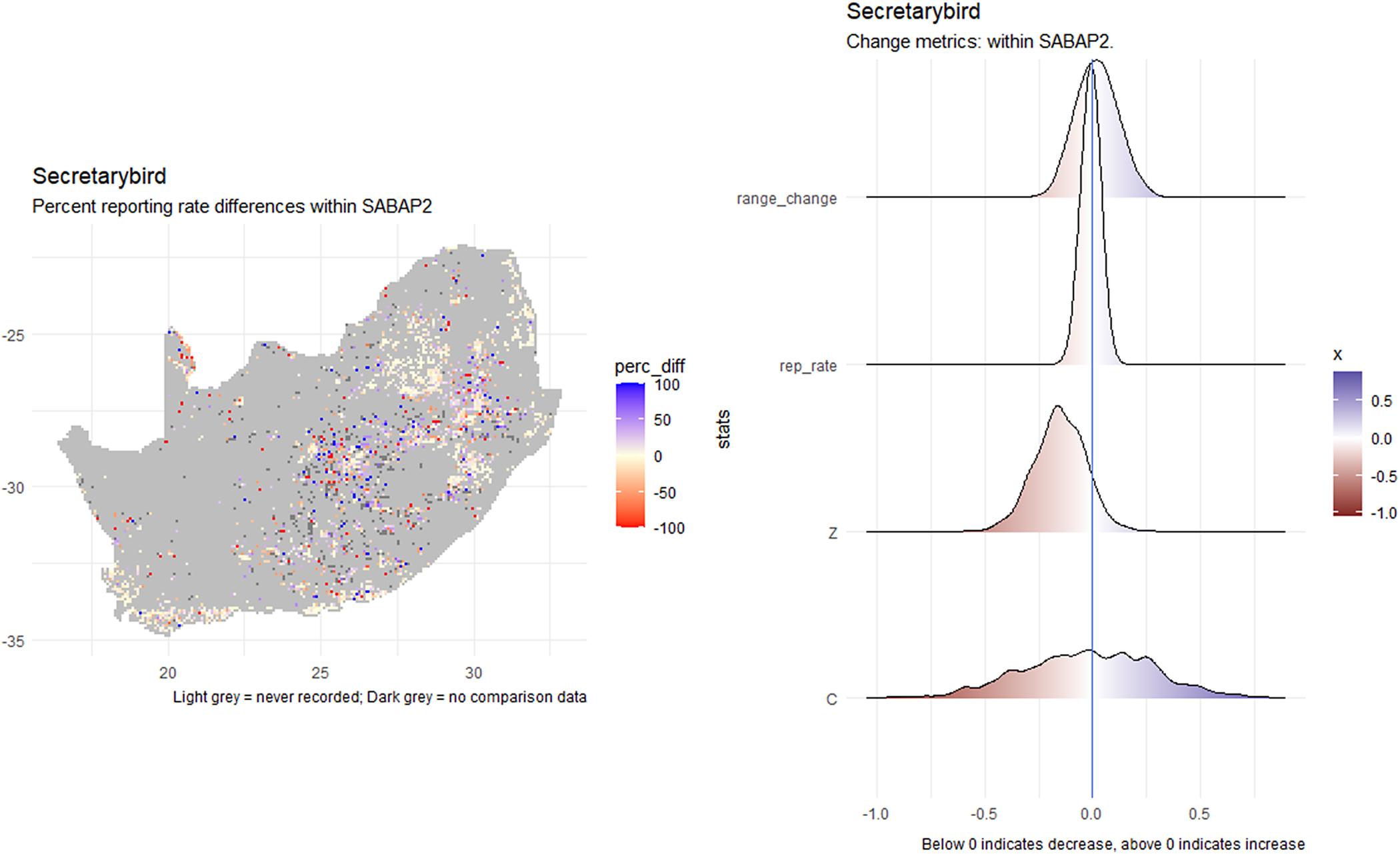
However, this strong decline trend was not apparent within our analysis examining only SABAP2. Secretarybirds were recorded from 1,714 pentads for the 2007–2014 period, and 1,879 pentads for January 2015 to April 2023, although increased project participation with the “BirdLasser” digital application likely accounts for this, as bootstrapped range change metrics indicate no difference between periods, with a mean range change of 5.7 ± 9% and reporting rate change value of 0.5 ± 3.5% (median: 0.5%, quartile range: -1.9% to 2.8%) (Figure 2, Appendix Table A2). This suggests no significant changes in relative abundance or range when comparing the 2007–2014 and 2015–2022 periods. Where declines were observed, the absolute values of Z scores tended to be higher, providing greater confidence that the changes were not the result of chance (quartile range: 0.06–0.2), indicating higher confidence in declines where these are occurring (i.e. urban pentads).
Map of South Africa indicating pentad-level changes in reporting rates of Secretarybird Sagittarius serpentarius within SABAP2 (comparing 2007–2014 period with 2015–2022) (left panel) and population change measures as shown in Figure 1 (right panel).
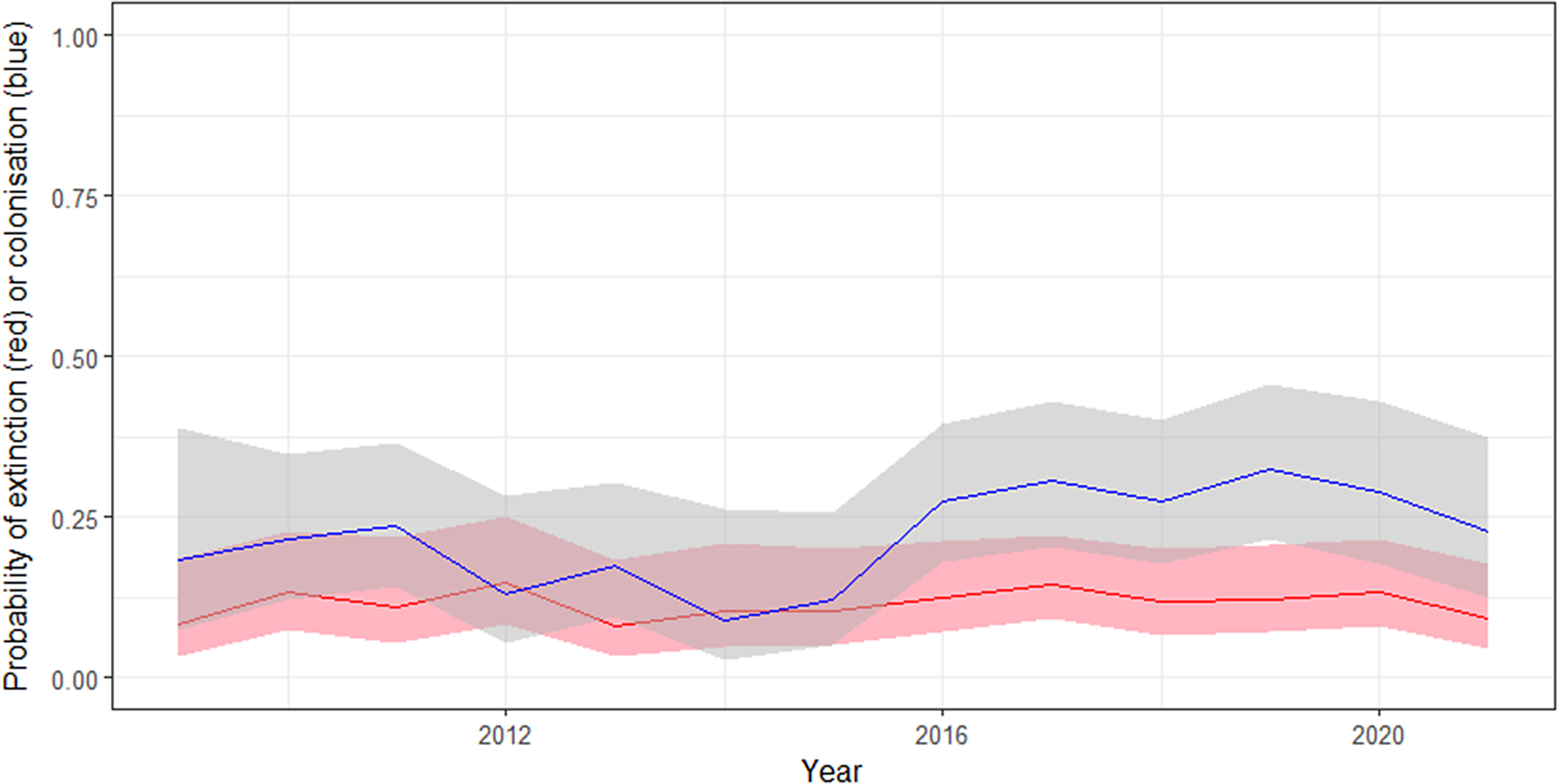
The base change metrics results are supported by separate detection–non-detection dynamic occupancy models of Secretarybirds, which suggest there were no differences in colonisation and extinction rates over the examined period (Figure 3), although all probability of detection covariates were flagged as being significant (P <0.02 for all). Year was not a significant covariate explaining a trend over time in these models (beta parameter estimate: 0.01 ± 0.005, z = 2.08, P = 0.06). The NDVI was negatively correlated with colonisation, but not significantly so (-0.06 ± 0.05, z = -1.13, P = 0.26), and positively correlated with extinction (0.27 ± 0.05, z = 4.97, P <0.01).
Dynamic occupancy model output showing probability of extinction and colonisation per year across the Southern African Bird Atlas Project 2 (SABAP2) period (2007–2022) for Secretarybirds Sagittarius serpentarius for pentads with more than 10 lists across South Africa, Lesotho, and Eswatini. Grey shading is the confidence interval for each prediction.
Our TTD models indicated an increasing trend in non-urban areas for both occupancy probability and detection rate (a proxy for abundance) over the years, but the slope coefficient estimates for these increases were not significantly different from zero at the 0.05 level (Table 2, Appendix Figure A4). The models also indicated an increase in occupancy probability for Secretarybirds in urban areas, which was also not significant (Table 2). However, our only statistically significant result for these TTD models, indicated a declining trend in detection rate in urban areas with a slope coefficient of -0.056 (P = 0.015) (Table 2, Appendix Figure A5). These models therefore provide evidence for a declining abundance in urban areas, but no change elsewhere.
Estimates of occupancy (logit scale) and detection rate (abundance, log scale) for mixed exponential time-to-detection models in non-urban and urban areas for Secretarybirds Sagittarius serpentarius. SE = the standard error of the estimates in brackets

* Indicates a slope coefficient that is significant at the 5% level.
However, the TTD model estimates showed an increasing trend over time (decreasing abundance), while the naïve estimates showed a decreasing trend (increasing abundance) (Appendix Figure A5). It should be noted that the discrepancy between the TTD models and the naïve linear regression models may be attributed to additional covariates we did not consider (e.g. bush encroachment or observer-specific parameters), and additional information is required to verify this.
Trend data from CAR
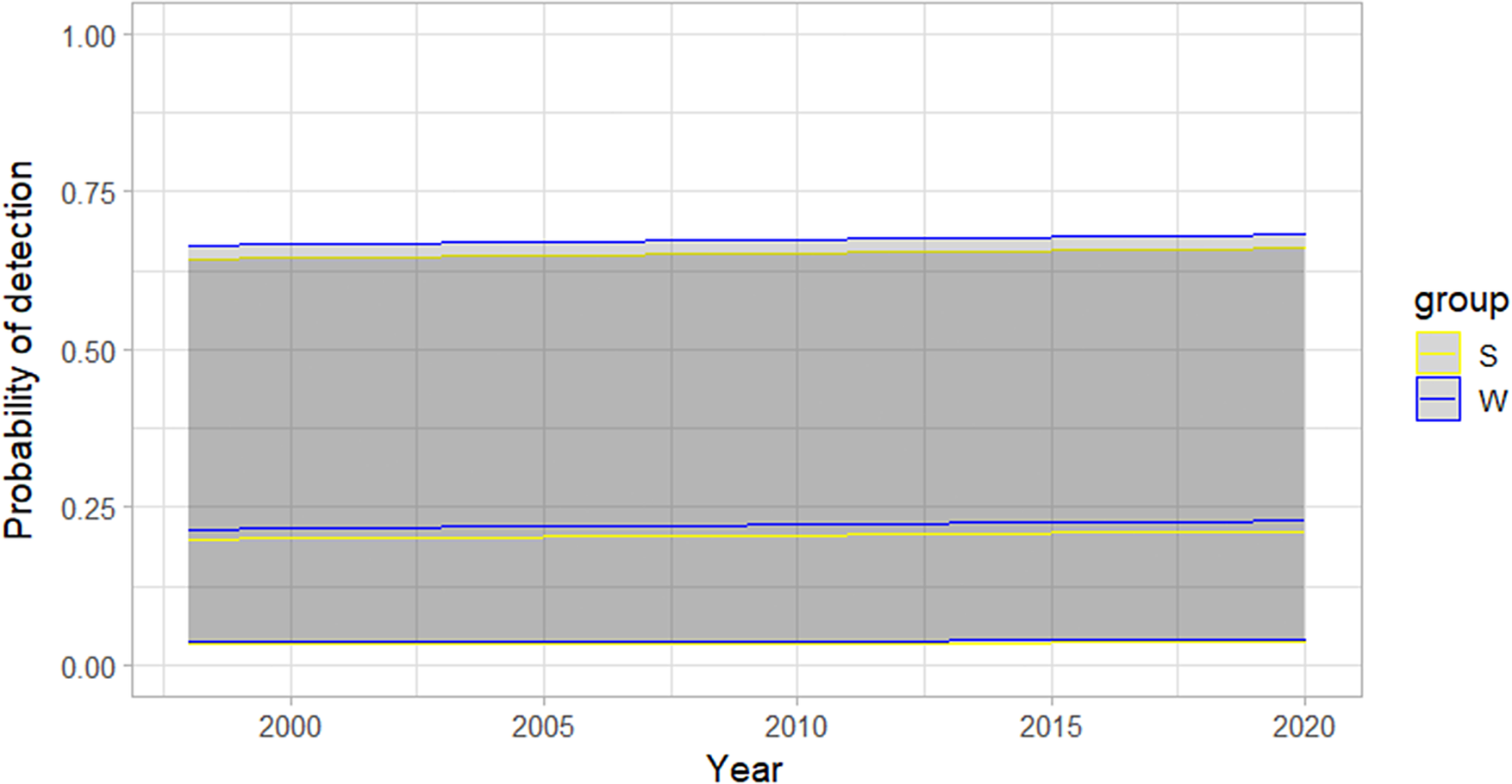
The models examining change in probability of encountering Secretarybirds over the 20-year period 1998–2018 did not indicate year to be a significant variable either in the full data set (parameter estimate: 0.0006 ± 0.004, z = 0.154, P = 0.88) nor the data set of the 29 most consistently counted routes (0.001 ± 0.005, z = 0.196, P = 0.84) (Figure 4). This was also the case for the model examining the number of birds encountered (glm.nb results: full data parameter estimate: 0.0009 ± 0.0033, z = 0.28, P = 0.77; subset model: 0.001 ± 0.005, z = 0.196, P = 0.84). The probability of encountering a Secretarybird increased significantly with numbers of observers in the team (full data parameter estimate: 0.11 ± 0.03, z = 4.71, P <0.001), and was also marginally linked to season, with probability of encounters higher in winter compared with summer (winter: 0.11 ± 0.04, z = 2.47, P = 0.013).
Modelled probability of recording Secretarybirds Sagittarius serpentarius during Coordinated Avifaunal Roadcounts (CAR) project counts from across South Africa for the 1998–2018 period by season (S = Summer, W = Winter), accounting for route length and number of observers (longer routes and those with larger numbers of observers had higher probability of detecting Secretarybird). Grey shading is the 95% prediction interval.
Predicted range and population size
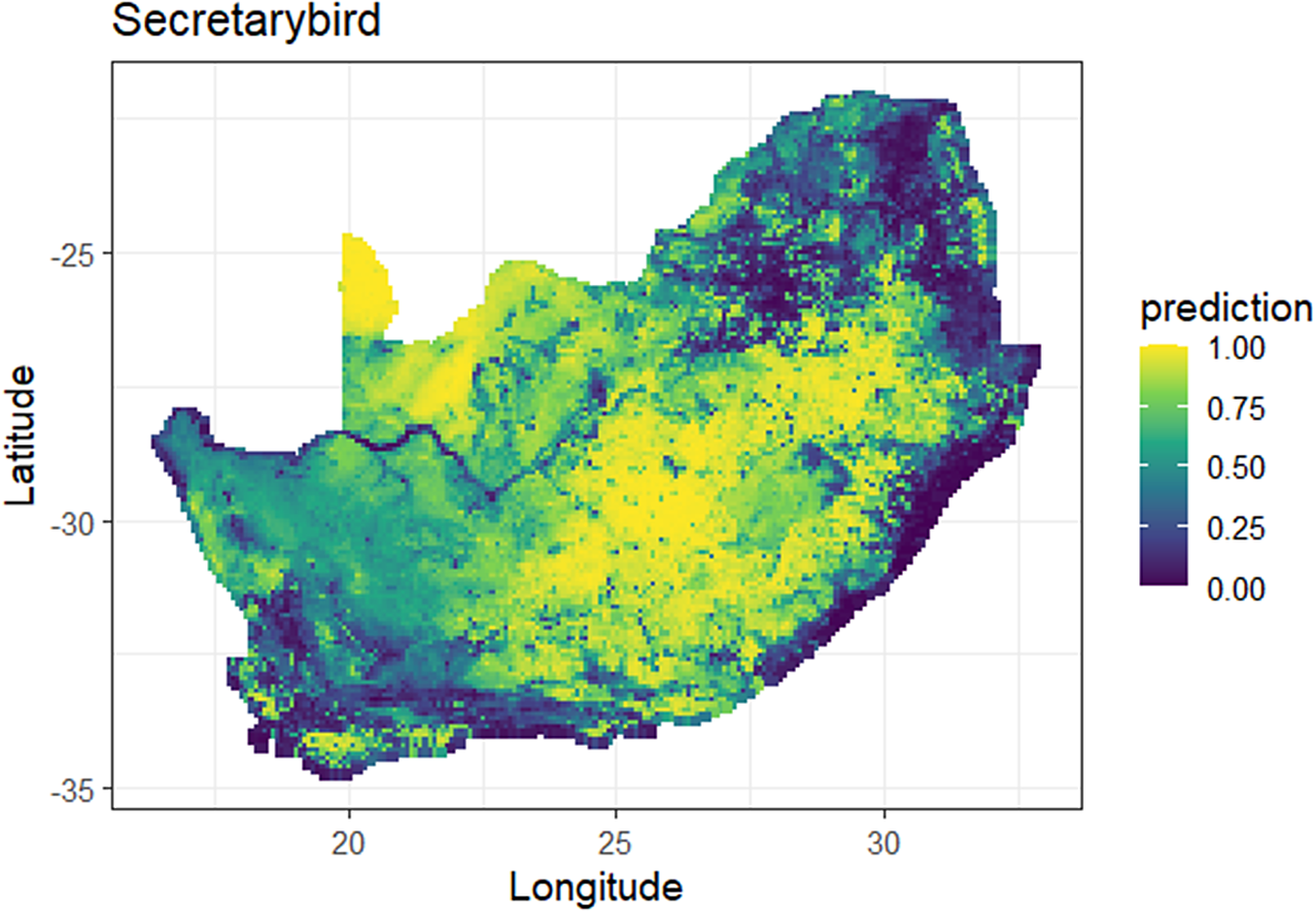
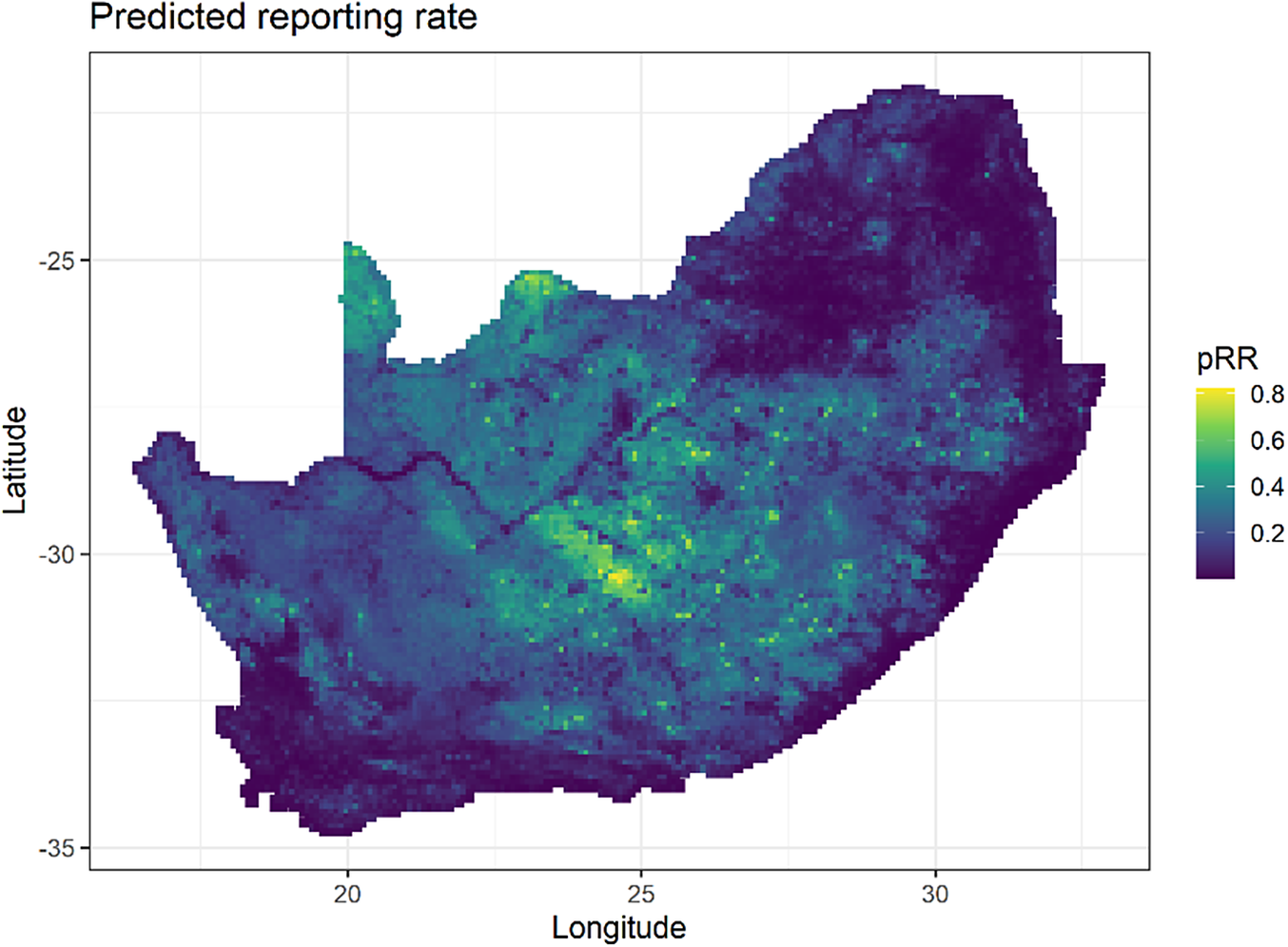
Our model predicted that it is possible to record Secretarybirds, using the BirdMap monitoring protocol, over the majority of the assessed region (Figures 5 and 6). The ROC AUC score of 86.9% indicated that the model performed well in distinguishing between presence and absence. Notable areas of absence are the Cape Fold Mountains of the Western Cape, the region associated with the Gariep (Orange) River, the coastal belt of KwaZulu-Natal, the escarpment region to the west of the Kruger National Park, and areas of dense human occupation associated with the urban footprint located within Gauteng Province and surrounding area where natural, indigenous grasslands have been converted to densely wooded suburbs (Symes et al. Reference Symes, Roller, Howes, Lockwood, Van Rensburg, Murgui and Hedblom2017). The predicted population size based on the reporting rate prediction model was 8,375 ± 2,791. There was also no difference in probability of reporting from prediction models for the two SABAP2 periods from random forest models, although a visual inspection of that model suggested some regional changes, e.g. lower probability of reporting in the arid regions of the country for the 2014–2022 period (Appendix Figure A6), where a widespread drought impacted the area until late 2020 (Milton et al. Reference Milton, Petersen, Nampa, van der Merwe and Henschel2022).
Pentad-scale random forest model for probability of presence of Secretarybird Sagittarius serpentarius: i.e. the probability that at least one bird was or could have been recorded in a pentad for the 2007–2022 period based on the given set of environmental variables (see Lee et al. Reference Lee, Whitecross, Smit-Robinson, Van den Heever, Retief and Colyn2023 for the full list of these).
Pentad-scale random forest model for predicted reporting rate (proxy of abundance) of Secretarybird Sagittarius serpentarius. The standard deviation of the predictions is indicated in Supplementary material Appendix A7.
Discussion
We applied a variety of analytical methods to citizen science databases, SABAP1 and SABAP2, to assess the population trends of Secretarybirds in South Africa and corroborated our findings using the transect-based CAR data set. Our results concurred with previous findings indicating widespread Secretarybird declines between the periods 1987–1992 and 2007–2022. However, when analysing the SABAP2 period in isolation, which spans the last two decades, we were unable to find strong evidence for continued overall declines, suggesting a more or less stable population during this latter period. This was an unexpected result given our experience in the field and further investigation is warranted.
There are some caveats regarding the use of SABAP2 data for our analyses that need to be considered. For sparsely distributed species, spatial sampling effects can exaggerate change (Bonnevie Reference Bonnevie2011). This was seen here when comparing reporting rates for SABAP2 at the QDGC level and pentad level, where the QDGC reporting rate was lower because it included more “empty” space, while it was higher for SABAP2 because this value was derived only from those pentads where the species was recorded as present during SABAP2, ignoring “empty” space pentads. The c.9% reporting rate for SABAP2 was the reporting rate for within the species’ current SABAP2 range (i.e. where it was recorded at least once) for those pentads sampled five or more times between 2007 and 2022. The observer effect cannot be discounted, nor the introduction of the BirdLasser app for data collection (Lee and Nel Reference Lee and Nel2020), which has resulted in more contributions, but of lists compiled over less time. Dynamic detection–non-detection occupancy models suggested little change in probability of colonisation or extinction during the SABAP2 period. However, only SABAP2 locations with reasonable sample effort (10 or more lists) were used for this analysis. These areas tend to be associated with either urban or protected areas, and thus did not cover the entire Secretarybird distribution range. However, TTD models found evidence for a decline in abundance in urban areas specifically. Likewise, CAR data, while impressive in extent, also only represented approximately a third of the species’ modelled distribution range, with no routes in the recognised hotspot of disappearance – the Kruger National Park (Hofmeyr et al. Reference Hofmeyr, Symes and Underhill2014). Thus, despite relative strengths and weaknesses, all analytical avenues pursued supported the conclusion that the population is presently mostly stable across the majority of its South Africa range. However urban populations were flagged as being of concern and will likely experience growing pressures from continued human population growth and the associated and predicted urban expansion across South Africa (United Nations 2018).
Our modelling did not identify a reason associated with overall Secretarybird population stabilisation but declines have been associated with bush encroachment. Owing to its negative impacts on the livestock industry, there has been a substantial effort to address bush encroachment over the last two decades (Stafford et al. Reference Stafford, Birch, Etter, Blanchard, Mudavanhu and Angelstam2017), this may have benefitted Secretarybirds, which have been shown to persist in areas where woody density is less than 10% of a given area (Loftie-Eaton Reference Loftie-Eaton2018). The grassland biome comprises roughly 30% of terrestrial South Africa but is considered one of the most transformed and least protected biomes in the country (Skowno et al. Reference Skowno, Poole, Raimondo, Sink, Van Deventer and Van Niekerk2019). Grasslands are a core region for the Secretarybird and recorded historic declines can be attributed to the loss of grasslands nationally (Taylor et al. Reference Taylor, Peacock and Wanless2015). However, efforts in the last two decades to identify and safeguard intact grasslands through protected area expansion mechanisms, such as biodiversity stewardship, has resulted in 1,372,000 ha (3.8% of the biome) being formally protected (Skowno et al. Reference Skowno, Poole, Raimondo, Sink, Van Deventer and Van Niekerk2019). A concerted effort from the South African National Biodiversity Institute (SANBI), local non-governmental organisations (NGOs), and provincial government to prioritise conservation of grasslands has also likely contributed to securing sufficient open habitats that have supported the stabilisation of the Secretarybird population (Skowno et al. Reference Skowno, Poole, Raimondo, Sink, Van Deventer and Van Niekerk2019). Hofmeyr et al. (Reference Hofmeyr, Symes and Underhill2014) found that Secretarybirds were using agriculturally modified landscapes in the Western Cape, despite avoidance of these over the majority of their South African range. The Nama Karoo biome comprises roughly 25% of South Africa’s landmass and is associated with Secretarybird presence (Dean and Simmons Reference Dean, Simmons, Hockey, Dean and Ryan2005). Over the last 100 years cultivation and domestic livestock production has declined significantly throughout this region and in 2014 approximately 98% of the Nama Karoo and about 96% of the Succulent Karoo biome were classified as natural (Hoffman et al. Reference Hoffman, Skowno, Bell and Mashele2018). This large-scale change may have helped to bolster Secretarybird numbers more recently, through increasing the availability of suitable habitat and lowering levels of disturbance and persecution by agricultural affiliated activities (Mikula et al. Reference Mikula, Tomášek, Romportl, Aikins, Avendano and Braimoh-Azaki2023).
Continued declines of Secretarybirds may to some extent be masked by the longevity of these birds, who have been recorded to live over 30 years in captivity (European Association of Zoos and Aquaria, unpublished data), and recruitment and survival rates remain largely unstudied. Secretarybirds are capable of successfully breeding within their first three years for males (Whitecross et al. Reference Whitecross, Retief and Smit-Robinson2019) and four years for females, which is quicker than many other large terrestrial birds (Dean and Simmons Reference Dean, Simmons, Hockey, Dean and Ryan2005), thus Secretarybird population numbers could potentially rapidly recover under good conditions where prey abundance is bolstered by good seasonal rainfall. Secretarybirds are also capable of successfully rearing up to three chicks in a single breeding attempt with no siblicide observed (Dean and Simmons Reference Dean, Simmons, Hockey, Dean and Ryan2005). Long-term tracking studies do not indicate exceptionally large mortality rates for juvenile birds: of the 20 wild juvenile birds tracked, only 25% died in their first three years, albeit 15% because of anthropogenic causes (Whitecross et al. Reference Whitecross, Retief and Smit-Robinson2019; BirdLife South Africa, unpublished data). Raptors generally experience higher mortality rates in their first year and the survival rates observed by Whitecross et al. (Reference Whitecross, Retief and Smit-Robinson2019) are better than for many other raptors (Newton et al. Reference Newton, McGrady and Oli2016). Adult raptor survival rates tend to be 7–48% higher than those of juvenile birds (Newton et al. Reference Newton, McGrady and Oli2016).
If the Secretarybird population in South Africa has indeed been stable over the past two decades this is positive news and reinforces the perspective that South Africa is a stronghold for this globally threatened species. The steep declines observed elsewhere across the species’ African distribution range provide further motivation for concentrated conservation efforts to safeguard the South African population and ultimately take lessons learned within a South African context elsewhere on the continent to support declining subpopulations. However, the recorded declines between SABAP1 and SABAP2 and pressure on urban birds remain a concern. Continued conservation efforts are therefore warranted to reverse these historical declines and ensure the future of this globally threatened species in the long term. Secretarybirds have been listed as “Vulnerable” in South Africa since 2015 (Taylor et al. Reference Taylor, Peacock and Wanless2015). During that uplisting, the justification was the reduction in population size of over 30% during the past 10 years. The population was also estimated to be below 10,000, supported by our study, and a 10% decline is expected within the following two generations (Shaw et al. Reference Shaw, Ogada, Dunn, Buij, Amar and Garbett2024), especially associated with human population growth and urban expansion, suggesting “Vulnerable” is presently appropriate as a regional status listing (IUCN Category C1).
We present a revised South African, Lesotho, and Eswatini Secretarybird population estimate of c.8,000 based on our modelling of reporting rates. However, like the previous population estimate of 3,500–5,000 (Taylor et al. Reference Taylor, Peacock and Wanless2015), confidence in this estimate is low and we need to emphasise that the methods to derive these estimates are not the same and based on different assumptions, we are thus not claiming the population has increased. The population estimate we present is based on the untested assumption that reporting rate is strongly correlated to density. While there is some support for this (Lee et al. Reference Lee, Fleming and Wright2018, Reference Lee, Whitecross, Smit-Robinson, Van den Heever, Retief and Colyn2023), exactly how still needs to be modelled based on density estimates calculated for pentads with sufficient checklists to calculate reporting rates. We would also strongly recommend the expansion of population and biodiversity monitoring initiatives such as the BirdLife South Africa nest monitoring protocol (unpublished) and the CAR project.
Our results still beg the question: what has changed, if anything, between SABAP1 and SABAP2 across South Africa to have caused the observed long-term, in-field Secretarybird declines? Kruger National Park is experiencing bush encroachment, and this may be a contributing factor to Secretarybird declines as this species prefers open habitats (Loftie-Eaton Reference Loftie-Eaton2018). Juvenile Secretarybirds are also known to disperse significant distances away from their natal territories placing them at increased risk if suitable habitat in the areas adjacent to their natal regions is transformed or lost (Whitecross et al. Reference Whitecross, Retief and Smit-Robinson2019). Understanding presence, population dynamics, and habitat use of Secretarybirds presents a strong keystone species lens through which to measure and monitor the state and health of open landscapes across Africa. Determining the causes of declines and stability throughout the African range should be the priority for Secretarybird research and conservation as it will hopefully enable the determination of strategies to reverse the historic declines and provide insights to assist in bolstering sub-populations throughout Africa.
Supplementary material
The supplementary material for this article can be found at http://doi.org/10.1017/S0959270924000157.
Acknowledgements
BirdLife South Africa would like to thank the Ingula Partnership made up of Eskom Holdings SOC, BirdLife South Africa, and the Middlepunt Wetland Trust for supporting the Secretarybird Conservation Project and this research, as well as all the citizen scientists that contributed to the various sources used in this paper. We are grateful for the funding support received towards BirdLife South Africa’s Secretarybird Conservation Project from Francois van der Merwe, Laetitia Steynberg, Uda Strydom, Nick and Jane Prentice, BirdLife Northern Gauteng, Wits Bird Club, BirdLife Midlands, and the Rupert Nature Foundation. ATKL thanks his sponsors: Ekapa Minerals, Eskom Holdings SOC, Afrit, and the Italtile and Ceramic Foundation Trust. Pachi Cervantes is thanked for assistance with the occupancy models.




 Open access

