Introduction
A continuous 1 375 m ice core was recovered in 1966 from Camp Century, Greenland (lat. 77º 10’ N., long. 61º 08’ W., elevation 1 885 m). The basal zone of this ice core contains numerous silt bands and small pebbles underlain by several meters of a till-like sub-ice material. This basal zone represents the first observed contact with debris-laden ice from the interior of an ice sheet and as such provides an excellent opportunity to observe the effects of basal processes on glacier ice. Several mechanisms have been proposed for the incorporation of basal debris. Among these are the transportation of material along shear planes (Reference GoldthwaitGoldthwait, 1951, Reference Goldthwait1960; Reference BishopBishop, 1957), regelation (Reference Kamb and LaChapelleKamb and LaChapelle, 1964; Reference Boulton, Wright and MoseleyBoulton, [c1975]), dispersion of solid material due to the interactions between particles embedded in the ice and particles on the bed (Reference BoultonBoulton, 1967, Reference Boulton, Price and Sugden1972, [Reference Boulton, Wright and Moseley c1975]; Reference WeertmanWeertman, 1968; Reference HoldsworthHoldsworth, 1974), and surficial deposition on the ice sheet. However, a more commonly accepted concept is the freeze-on model, which postulates that the inclusion of debris in basal ice is due to a process of melting and subsequent refreezing of water at the base of an ice sheet (Reference WeertmanWeertman, 1961, Reference Weertman1964, Reference Weertman1966, Reference Weertman1972). A detailed investigation of the structure and composition of the Camp Century basal debris-laden ice was conducted in order to determine which of these mechanisms may have been responsible for the incorporation of debris. The investigation was divided into several component studies: (1) the stratigraphy of the basal ice, (2) the size, concentration, and composition of the embedded debris, (3) the ice textures and fabrics, and (4) the volume and composition of gas inclusions. Evidence revealed through a laboratory investigation that any of these conditions ever existed in the basal ice, would contribute greatly to the development of flow laws for ice and the interpretation of its dynamic behavior. This in turn would provide greater accuracy in the dating of an ice-core sample from any given depth and would thus enhance the value of ice cores as paleoenvironmental indicators (Reference Dansgaard and JohnsenDansgaard and Johnsen, 1969).
Glaciological setting
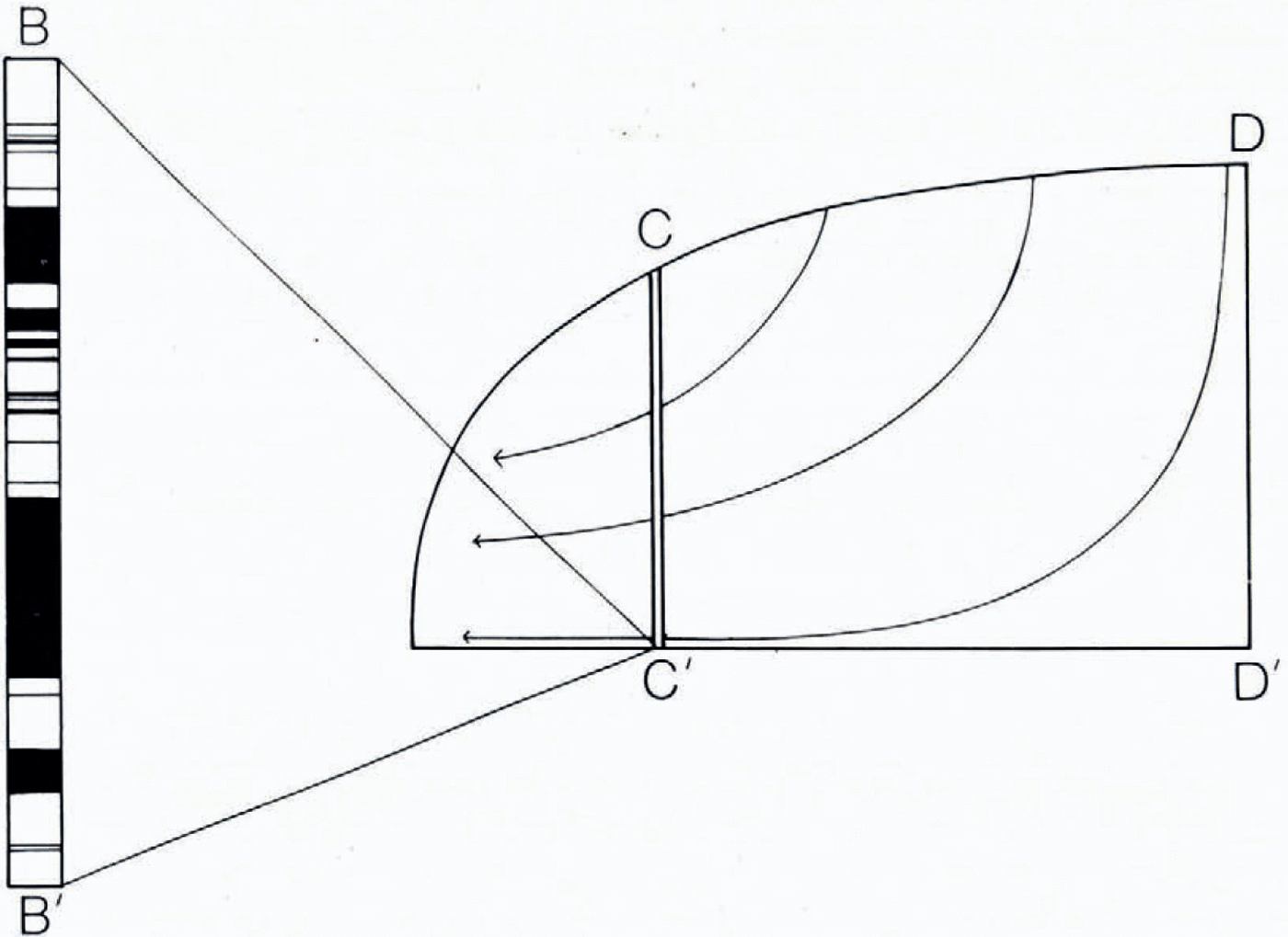
Camp Century is located in north-west Greenland at approximately 200 km from the west coast and 500 km from the present central ice divide. It is in the net accumulation zone of the ice sheet in an area where there is some summer melt (Reference BensonBenson, 1959; Reference MockMock, 1965). The length of the original Camp Century core was 1 375 m; the visible silt bands and pebbles were observed only in the bottom 16 m (<1%) of the core. The temperature at the base of the ice sheet is — 13°C Reference Hansen and Langway(Hansen and Langway, 1966). Figure 1 shows the position of the Camp Century core and the zone of debris-laden ice with respect to an ideal ice sheet.
Glaciological setting of the Camp Century core. D–D’ represents the ice-sheet divide; C–C’ represents the Camp Century core; B–B’ represents the debris-laden zone.
Estimated age of Camp Century ice core
The origin of the debris at the base of an ice sheet and the mechanism by which it was emplaced are critical elements in estimating ice-core age. The Camp Century core spans an estimated time period of about 125 000 years (Reference Dansgaard, Dansgaard, Johnsen, Moller and LangwayDansgaard and others, 1969). This age estimation is based on the model of Reference Dansgaard and JohnsenDansgaard and Johnsen (1969), which assumes that the ice sheet is frozen to its bed and that melt water has never existed at the base of the ice sheet. If this assumption is correct, then the freeze-on mechanism proposed by Reference WeertmanWeertman (1961) does not apply to the Camp Century core. However, if a layer of water did exist at any time during the glacial regime, then the age determination of Reference Dansgaard and JohnsenDansgaard and Johnsen (1969) may be greatly underestimated (Reference WeertmanWeertman, 1976). The magnitude of the error near the bottom of the ice sheet would be of the order of (h/a)(h/y), where h is the thickness of the ice sheet, a is the accumulation rate, and y is the elevation of an ice particle above the bed. For Camp Century, using an accumulation-rate of 35 cm/year of ice (Reference Crozaz and LangwayCrozaz and Langway, 1966), the age of an ice particle 20 m above the bed could be underestimated by over 300 000 years.
Core sample
A total of 16 core samples was selected for the component analyses. Three of the 16 samples were selected over a 3 m interval of clear glacier ice immediately overlying the debris-laden zone (i.e. above 16 m from the ice/sub-ice interface). The remaining 13 samples were selected from various layers in the debris-laden zone. The core was originally 10.2 cm in diameter; the samples used here consisted of 8 cm lengths of quarter core. Each sample was subdivided into pieces which were used for ice texture and fabric analyses, and for gas- and debris-concentration measurements. Gas-composition analyses were performed on four samples which were selected from intervals adjacent to those used for other studies reported here. Of these samples, one was taken from clear ice above the debris-laden zone; three were taken from within the debris-laden zone.
Results and discussion
Ice stratigraphy
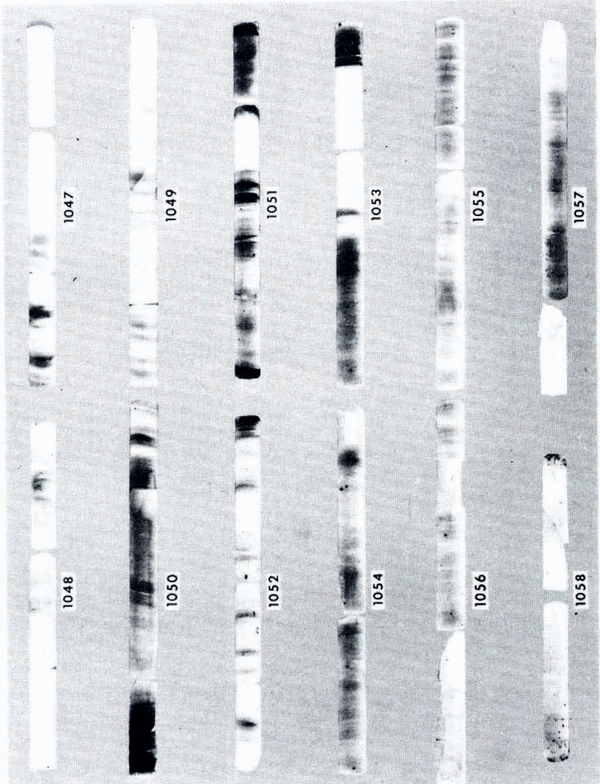
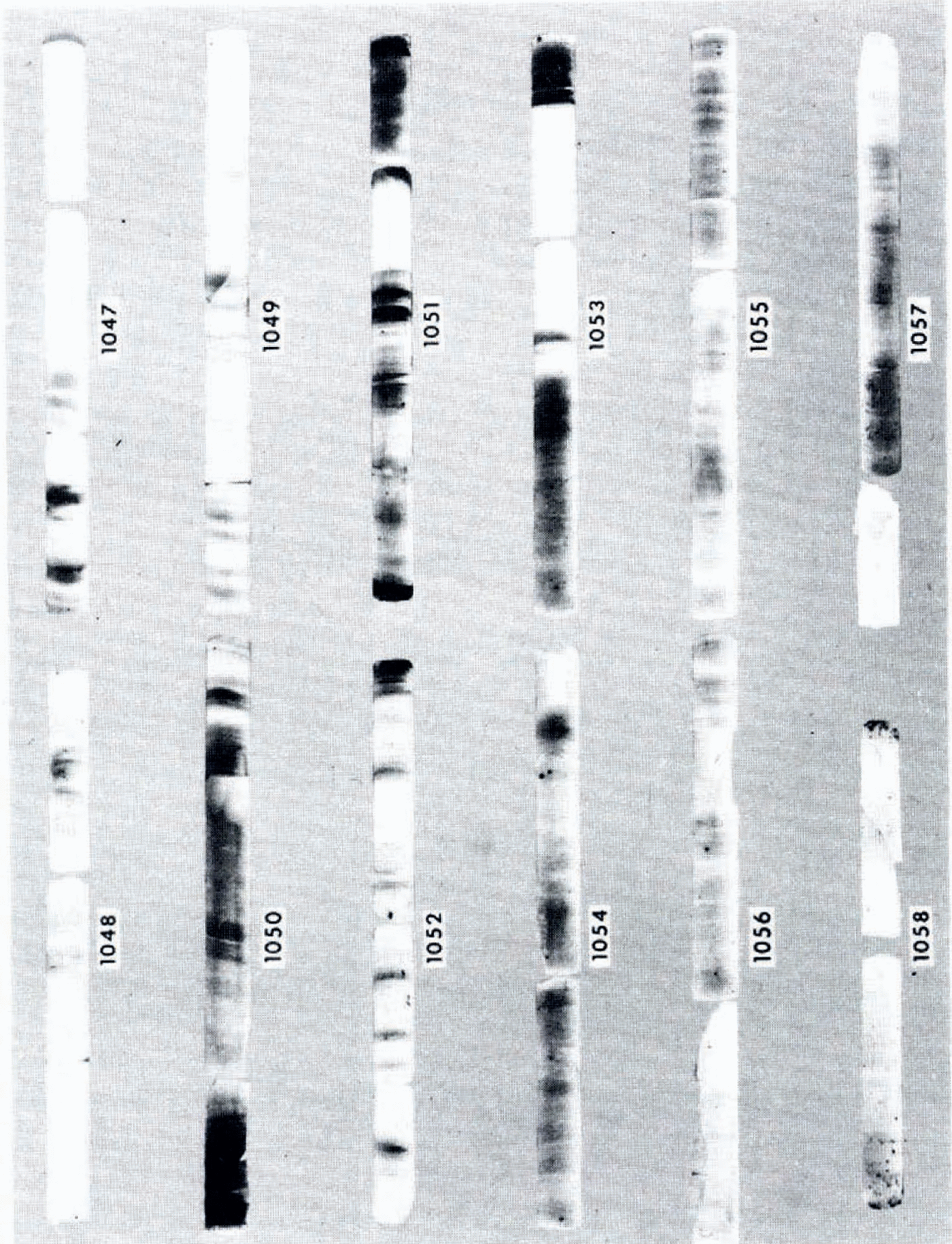
A detailed inspection of the debris-laden zone was performed by transmitting light through the core in a cold laboratory where the temperature is maintained at — 10°C. Megascopic features observed were air bubbles, debris particles and aggregates, debris bands, and clear ice layers. It was observed that the basal 15.7 m of the Camp Century ice core contain over 300 alternating bands of clear and debris-laden ice (Fig. 2). The debris bands and the clear ice layers range from less than a millimeter to over a meter in thickness and in the debris layers from light amber to dark brown in color. The embedded solid material ranges in size from particles so small that their presence is detected only by the color they impart to the ice to particle aggregates or blebs which are a maximum of 2–3 cm in diameter. The attitude of approximately 90% of the debris bands is within 5º of horizontal; the remaining bands are inclined at angles up to about 15º. Only 2º of the inclination can be due to the inclination of the core hole (personal communication from B. L. Hansen). Nearly spherical air bubbles are visible throughout the entire zone, as are numerous disc-shaped bubbles similar to those described by Reference LangwayLangway (1958[a]) and Reference GowGow (1971).
Photograph of the bottom 17.1 m of the Camp Century ice core. Numbers represent the core tube numbers.
Various types of ice within the debris-laden zone were qualitatively classified according to color or light transmission. The categories consisted of clear, light, medium, and dark. The term “clear” is here used to refer to ice within the debris-laden zone which shows no discoloration due to debris and which has only a few visible particles. Using this light-transmission classification, the following distribution was observed in the 15.7 m debris-laden zone:
-
10º º Clear.
-
35º º light.
-
53º º medium.
-
2º º dark.
In the zones designated light or medium, about 20º ° of the debris-laden ice is interspersed with numerous lenses of clear ice. The transitions between bands are usually quite distinct; the order and thickness of the bands vary in a random manner.
On the basis of the banded structure and the distinct boundaries between the debris bands, it is possible to reject any type of dispersion or diffusion along temperature, pressure, or concentration gradients as the primary mechanism for the emplacement of the basal debris. By definition, such processes would be expected to produce a gradation of uniformly decreasing debris concentrations rather than the bands of debris present here. Plain observation of the basal stratigraphy does not provide clear evidence enabling differentiation between possible shear, freeze-on, and surficial deposition mechanisms.
Debris analysis
The samples used in the debris analysis were the residue collected from core samples of the debris-laden ice which were melted during a previous study. Due to the low concentrations of debris in the ice and limited sample size, it was necessary to choose samples from the areas of highest particle concentration. Twenty-one samples were chosen on the basis of the amount of debris and the distribution throughout the basal zone. The average sample weighed about 0.35 g and it was separated by sieving and gravitational settling into three size categories:
-
(1) clay size (<2 μm),
-
(2) silt size (2 μm 62 μm),
-
(3) sand size (>62 μm with an observed upper limit of 2.0 mm).
The sample recovery during the size-separation procedure averaged 98.7º º. For each sample the relative percentage of each size fraction was calculated and normalized to 100º º. The data for each size fraction were fitted to a least-squares linear regression where the relative percentage (y i) of material present in a given size category is a function of distance (x i) from the bottom of the ice. The results obtained were:
-
clay-size fraction y i = 6.63 + 1.64 x i,
-
silt-size fraction y i = 30.12 + 1.07 x i,
-
sand-size fractional y i = 63.25 − 2.71 x i,
An analysis of variance was performed and it was found that the increase in clay-size material with increasing distance from the bottom and the corresponding decrease in sand-size material are statistically significant at a 99º º confidence level. In the silt-size category, it was found that the amount of material does not vary significantly from the mean value of y i = 39.30. The particle-size distribution and the significant regression lines are shown in Figure 3.
Debris particle-size distribution.

The presence of a regular variation in grain-size with depth raises the question of whether the debris layers are a conformable sequence in which the uppermost material was the first to be emplaced at the farthest point up-stream and the lowest debris layer was more locally derived and recently emplaced. Reference BoultonBoulton (1970) stated that this would be the case for the freezing hypothesis, whereas a shearing mechanism might produce a random pattern of debris layers. Reference SouchezSouchez (1967) provided evidence supporting the idea that shearing results in a mixed sequence. If true, the grain-size gradation in the Camp Century ice might support a freezing mechanism. However, it is not possible to determine whether the decrease in particle size near the top of the debris-laden ice reflects a grain-size zonation in the sub-ice material, a geographic variation on the sub-ice material, or a selective mechanism of incorporation.
The grain-size of the embedded particles in the Camp Century basal ice ranges from less than 2 µm to about 2.0 mm in diameter. A single pebble about 2 cm in length was observed. These particles are considerably larger than the atmospheric dust particles found in modern Greenland snow and Holocene and Wisconsin ice. The particulates in the upper 1 355 m of the Camp Century ice core range from 0.04 µm to 8 µm (Reference KumaiKumai, 1977). This size difference supports the hypothesis that the basal debris originated as subglacial material rather than as atmospherically transported debris.
While the particle sizes are large compared to atmospheric dust, they are extremely small when compared to the cobbles and boulders often associated with glacial debris. These relatively small grain-sizes imply that some type of selective process is operating in the basal ice. For example, Reference SouchezSouchez (1967) and Reference Boulton, Wright and MoseleyBoulton ([c1975]) have both suggested that the incorporation of small particles and the exclusion of large ones may occur during the formation of regetation ice. A zone of individual particles suspended in the ice may result from the erosion of lithified bedrock, whereas ice containing particle aggregates may result from the incorporation of unconsolidated sediments (Reference BoultonBoulton, 1970). In the Camp Century basal ice there are many particle aggregates and the material directly beneath the debris-laden ice horizon consists of an unconsolidated frozen till-like material Reference Hansen and Langway(Hansen and Langway, 1966). This implies that a selective freezing mechanism is responsible for the incorporation of debris in the Camp Century core.
The concentration of debris in the ice was determined for the 16 core samples by filtering melt water through a 0.45 µm “Millipore” filter. The values range from less than 0.001% by weight in ice above the debris-laden zone to a maximum of 0.9% in a sample taken from one of the dark-colored bands; the concentrations show no correlation with distance from the bottom. The debris-concentration values were compared with the ice-color designations of clear, light, medium, and dark that were assigned during the visual inspection of the core. On the basis of measured values, debris-concentration limits were established for the color classes. The average solid debris concentration in each color category was calculated. These averages were multiplied by the relative amount of ice present in each color class, thus yielding an average debris concentration of 0.24% by weight for the entire 15.7 m zone of debris-laden ice. The results are presented in Table I. The average debris concentration of 0.024% obtained for the clear ice bands within the debris-laden zone compares favorably with the silicate mineral concentration of 0.027% estimated by Reference KumaiKumai (1977) in his study on the Camp Century basal ice. This concentration is approximately four orders of magnitude greater than that in modern Greenland snow (Reference Murozumi, Murozumi, Chow and PattersonMurozumi and others, 1969; Reference KumaiKumai, 1977) and Holocene ice Reference Kumai(Kumai, 1977), and three orders of magnitude greater than that in Wisconsin ice (Reference Cragin, Cragin, Herron, Langway, Klouda and DunbarCragin and others, 1977). These high debris concentrations support a sub-ice origin for the debris as also concluded by Reference KumaiKumai (1977).

A microscopic examination of the debris revealed grain shapes and textures ranging from highly angular and pitted to well-rounded and smoothly ground. A scanning electron microscopic examination of quartz and feldspar particles from the Camp Century debris-laden zone by Whalley and Langway (in press), and Reference Woo, Woo, Commeau and LangwayWoo and others (1976), revealed similar textural observations. In both of these studies it was concluded that the rounded grains are probably the end products of glacial abrasion. It appears that the embedded particle shapes and textures reflect those of the underlying till-like material and reveal little about the mechanism by which they were emplanted.
An X-ray analysis was performed on six samples located at distances of 0.61, 3.86, 8.35, 15.42, and 15.71 m above the base of the ice sheet. The predominant mineral in each sample was found to be quartz; each sample also contains a plagioclase mineral identified as albite, some orthoclase, kaolinite, and hornblende. The similarity of all the X-ray patterns indicates that there is no significant mineralogical change over the entire 16 m debris-laden profile. This leads to the conclusion that either the sub-ice source material is of local origin or that it is uniform in nature on a larger or regional basis.
Ice texture and ice fabric
Vertical sections (4 mm thick) of the 16 ice-core samples were prepared and photographed in transmitted light using the method described by Reference LangwayLangway (1958[a]). In thick section it was often difficult to differentiate between the gaseous and solid inclusions. Where air bubbles are easily recognized, they appear spherical to slightly elongated in the horizontal direction parallel to the base of the ice sheet; they exhibit a maximum length of about 0.7 mm. The stretching of air bubbles has been attributed to shear deformation of ice but the degree to which this occurs and the statistical reliability of elongation as an indicator of shear strain has not been established Reference Kamb, Heard, Heard, Borg, Carter and Raleigh(Kamb, 1973). In addition to the air bubbles, about 50% of the samples contain numerous disc-shaped inclusions, which are about 0.5–2 mm in diameter and are oriented parallel to the near-horizontal debris bands. In a few instances they form a swirling turbulent orientation. Although the inclusions appeal to be similar to the vapor figures described by Reference NakayaNakaya (1956), vapor figures are air-free, whereas these disc-shaped inclusions were observed to produce air bubbles during melting. Similar features have been previously described in both Greenland Reference Langway(Langway, 1958[a]) and Antarctic Reference Gow(Gow, 1971; Reference Gow and WilliamsonGow and Williamson, 1975) ice cores. They are attributed to the relaxation of the ice core after recovery from its in situ confining stress environment.
It was also observed in thick section that there is neither a bubble stratification in the basal ice as would be expected if the bubbles were entrapped during the freezing of water (Corte, 1962; Reference Kamb and LaChapelleKamb and LaChapelle. 1964; Reference Bari and HallettBari and Hallett, 1974), nor is there any apparent relationship between the position of the air bubbles and the embedded particles. If the ice had been formed by a refreezing process, it would be expected that the particulate matter would act as sites for bubble nucleation and that bubbles would be present both on the surface of the particles and in lines extending from the particle surface (Corte, 1962; Reference Bari and HallettBari and Hallett, 1974).
The thick sections were reduced to thin sections of approximately 0.3 mm thickness using a microtome and were photographed between crossed polarizing filters. In thin section it was observed that the ice crystals were very small and the crystal orientation was highly preferred. Consequently, the ice-crystal boundaries were not well defined and the average crystal area could not be measured in the manner described by Reference LangwayLangway (1958[b]). In this study an estimate of average crystal diameter was obtained by determining the crystal-boundary density in at least six traverses of the section. The small crystal size and the highly preferred orientation also prevented measurement of individual crystal orientations using the Rigsby-type universal stage. A qualitative fabric analysis was therefore made on these sections by estimating the percentage area which went to extinction at one position.
The average ice-crystal diameters from a single traverse of a thin section ranged from 0.47 to 6.14 mm; the average diameter per section ranges from 0.62 to 3.84 mm. The average diameters for each sample are shown in Figure 4. A significant break in ice-crystal size diameter occurs at a distance of approximately 10 m from the bottom of the ice sheet. In the lower 10 m of the core, the ice is uniformly fine-grained with an average crystal diameter of only 0.79 mm. Within the next 8 m there is a four-fold increase in crystal size. Similar changes in ice-crystal size were reported to occur at the boundaries between clear and debris-laden ice in basal ice from Terre Adélie, Antarctica Reference Lorius(Lorius, 1967), and from the base of Meserve Glacier, Antarctica (Reference AndertonAnderton, 1974). Reference LoriusLorius (1967) attributed the change to an increase in the stresses in zones where small crystals were observed. Such a change in stresses, possibly due to bedrock irregularities, could also explain the crystal-size change observed here.
Average ice-crystal diameter.

A second element, which appears to be related to ice-crystal size, is the uniformity of the debris concentration. Samples with uniform debris concentrations, as determined by sample color, exhibit uniform textures regardless of whether the ice is light or dark, or whether the ice crystals are large or small. On the other hand, in areas where debris is concentrated in bands, the ice crystals in those bands are consistently smaller than in the adjacent ice. Similar results were reported in his Meserve Glacier report by Reference AndertonAnderton (1974), who attributed the fine crystal size to differential shear acting across the debris-laden zone. Reference ShumskiyShumskiy (1958) and Reference SwinzowSwinzow (1964) also attributed small crystal sizes in debris-laden ice to the existence of differential shearing within those layers.
The changes in crystal size are associated with changes in the ice fabrics. In the bottom 10 m, where the ice is fine-grained, the ice exhibits a highly preferred vertical orientation of optic axes. In all the samples from this zone it was estimated that 75–95º º of the ice crystals were extinct within a rotation of only a couple of degrees. Above this bottom 10 m, the degree of preferred orientation diminishes rapidly to less than 50º º. The ice crystals in the debris bands do exhibit a preferred orientation but in some cases it is less extreme than in the adjacent ice.
On the basis of the grain-size and fabrics in the Camp Century basal ice core, it is possible to make a conjecture about the existing stress–strain conditions (Reference ShumskiyShumskiy, 1958; Reference SteinemannSteinemann, 1958; Reference RigsbyRigsby, 1960; Reference Kamb, Heard, Heard, Borg, Carter and RaleighKamb, 1973). The zone of extremely fine-grained ice and the presence of highly preferred orientations in this lower basal zone indicate that it is a zone of relatively high shear deformation. The larger ice crystals and the weaker crystal orientations of the overlying basal ice imply that the shear stress and total strain are less than in the bottom ice. It is not possible to determine whether the relatively fine-grained nature of ice within the debris bands is due to the existence of relatively high shear deformation or whether the solid particles inhibit grain recrystallization.
It is interesting to note the difference between the size and orientation of ice crystals at the base of Camp Century where, in 1966, the temperature was measured to be —13°C (Reference Hansen and LangwayHansen and Langway, 1966) and those from the base of Byrd Station, Antarctica, where the ice was at its pressure-melting temperature and melt water was present at the time of drilling in 1968 (Reference GowGow, 1970). The ice crystals from Byrd Station are about two orders of magnitude larger than those at Camp Century, and the fabric orientation is much weaker than observed in overlying ice (Reference GowGow, 1970, Reference Gow1971). Gow attributed this situation to annealing of the ice occurring at temperatures near melting. The striking difference between the two reflects the vast difference in thermal conditions between the two locations.
Gas analysis
Density and total gas-content measurements were performed on the 16 core samples following the procedures used by Reference LangwayLangway (1958[a]). Gas-composition analyses were performed on four samples at the University of Bern, Switzerland, under the direction of H. Oeschger.
The density of all core samples was less than that of bubble-free ice, despite the presence of visible debris in many of the samples. This is readily explained by the low concentration of debris and the amount of air in the samples which counteracts the higher density of the debris. There was no correlation between the amount of debris and density, nor was there a correlation between amount of debris and volume of air. The volume of gas, corrected to s.t.p., in the 16 samples ranged between 34 and 64 ml/kg ice with an average of 51 ml/kg ice. These gas concentrations are on average about 50% lower than those in the rest of the Camp Century core where the average gas concentration is 108 ml/kg ice in the upper 1 100 m and 101 ml/kg ice in the 1 100–1 300 m interval Reference Herron, Hoar and Langway(Herron and Langway, 1978).
One explanation for the low air content in the basal ice is that it may have originated at a higher elevation during a previous glaciation. Reference Dansgaard, Dansgaard, Johnsen, Moller and LangwayDansgaard and others (1969) have suggested that the oxygen-isotope data from the lowest 20 m of the ice core may represent periods of glaciation. Reference Raynaud and LoriusRaynaud and Lorius (1973) have reported that a decrease in air content may reflect altitudinal increases during glaciation. Assuming their values of 7 mm Hg/100 m for the pressure-elevation gradient and 0.9 deg/100 m for the temperature-elevation gradient, it would require a 5 000 m increase above the present-day Camp Century elevation to explain the low gas content in the Camp Century basal ice. Such an elevation increase is a factor of 4 greater than that proposed by Reference Raynaud and LoriusRaynaud and Lorius (1973) for the Wisconsinan glaciation, and it is probably unrealistic.
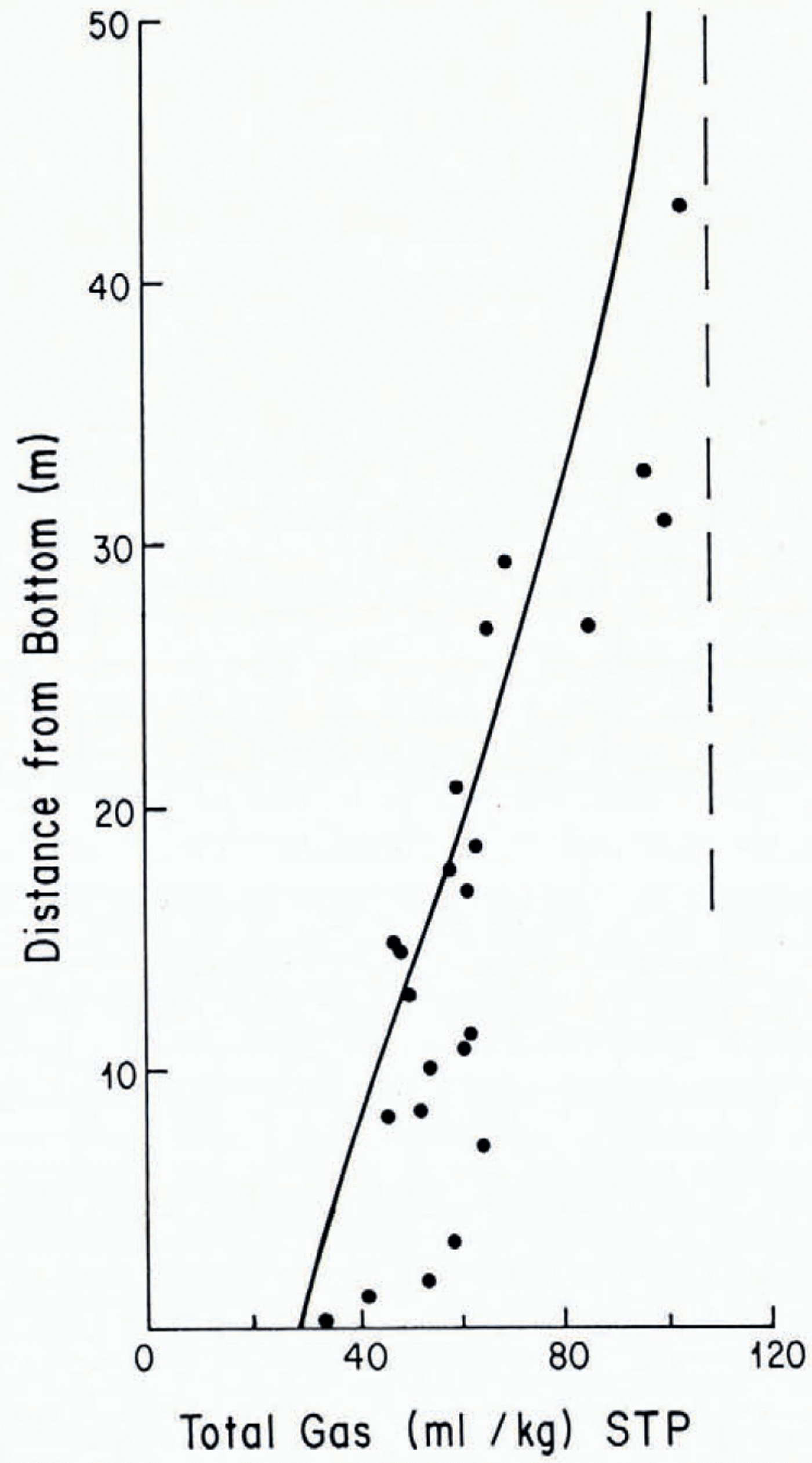
The amount of air present in these samples is also incompatible with a simple freeze-on process during which gases would be expelled (Reference Coachman, Coachman, Hemmingsen, Scholander, Enns and De VriesCoachman and others, 1958; Reference Bari and HallettBari and Hallett, 1974). The average total gas content of 51 ml/kg ice is approximately half-way between the expected values of near zero for a simple freezing model and near 100 for the overlying glacier ice. The abnormal gas content may be explained by a model in which bubble-free debris-laden ice was originally incorporated at the base of the ice sheet by a simple freeze-on mechanism. If the base of the ice sheet remained near its pressure-melting point, it would then be possible for the soluble gas to diffuse (Reference Weiss, Weiss, Bucher, Oeschger and CraigWeiss and others, 1972; Reference Berner, Berner, Bucher, Oeschger and StaufferBerner and others, 1977) downward along a three-dimensional vein network such as that predicted by Reference Nye and FrankNye and Frank (1973) and observed by Reference Raymond and HarrisonRaymond and Harrison (1975). In this manner, air might be introduced to the debris-laden ice. A gas-concentration profile which might result from such a process is shown in Figure 5. The assumptions made in the calculation of this profile were that 16 m of debris-laden ice were originally air-free, the overlying ice had an air content of 110 ml/kg ice, the diffusion continued through the ice/sub-ice interface, the diffusion constant was 10−5 cm2/s, and the time was 10 000 years. In each case the assumptions made were those least favorable to the diffusion model, and changing any of them would reduce the time necessary to reach the measured gas levels in the basal ice.
Gas-concentration profile.
If gaseous diffusion has occurred, then it should be reflected in the gas composition. The gas-composition data presented in Table II (personal communication from H. Oeschger) appear to be somewhat complicated by the oxidation of methane in samples containing debris. Samples B and C, which contain debris, both contain a trace of methane, and both display low O2 levels and high CO2 levels with respect to atmospheric air. Original gas compositions were calculated assuming that the original CO2 content was its present-day value of 0.03% and that the excess CO2 was produced either by a simple oxidation of methane:

or by the oxidation scheme described by Reference Robbins, Robbins, Cavanagh, Salas and RobinsonRobbins and others (1973):

(Table II). Identical calculations were performed assuming an original CO2 content of 0.2%. In all cases, the calculations produced a composition similar to atmospheric.
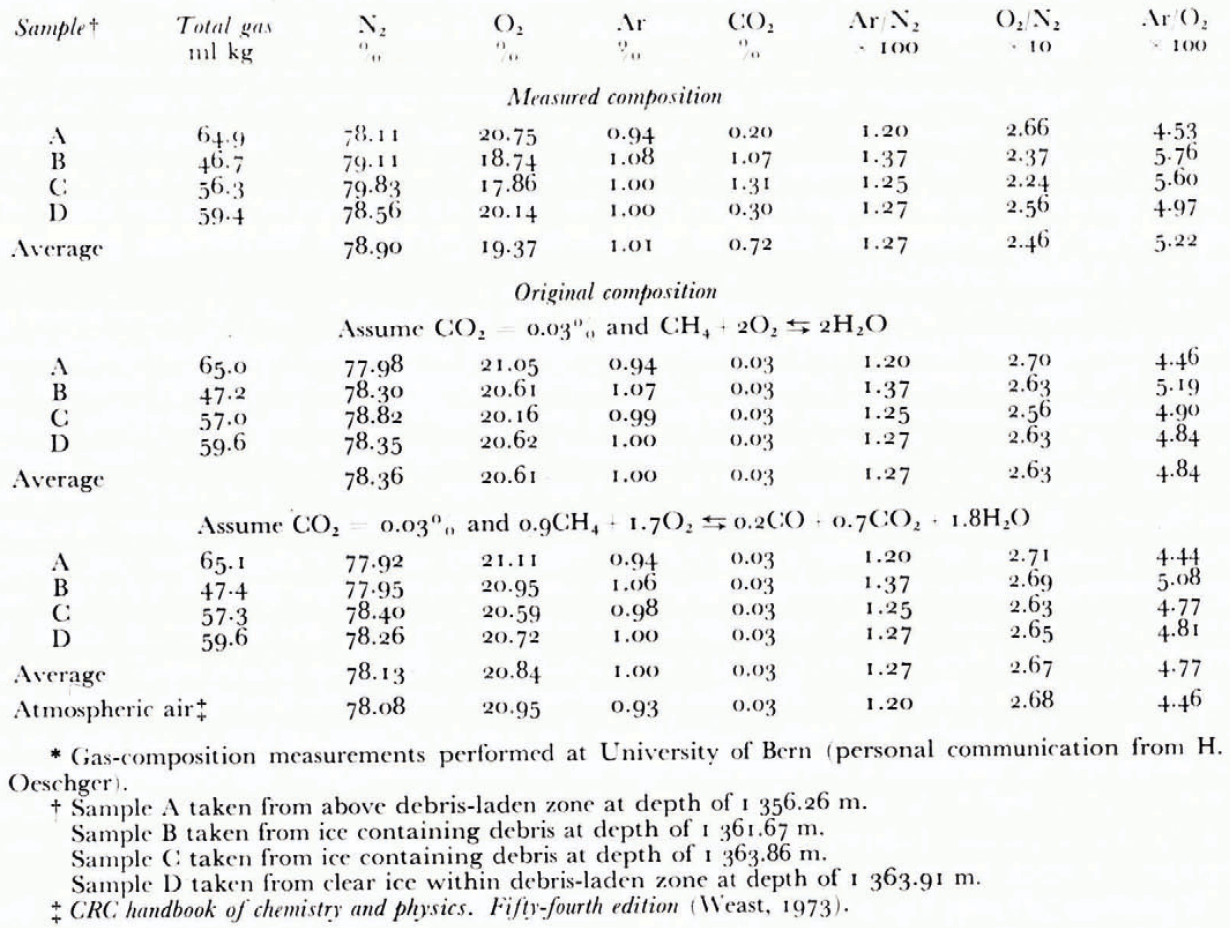
Regardless of these complications in the gas composition, the most soluble gas component, Ar, does exhibit behavior which is compatible with gaseous diffusion. There is a relationship between per cent Ar and total gas content such that Ar is most enriched in samples with the least amount of air. The enrichment of Ar in the debris-laden zone ought to be coupled with a depletion of Ar in the upper zone where diffusion originated. This is the combined effect of the relatively high solubility of Ar in water and the relatively fast diffusion of Ar with respect to N2. The process of selective gaseous transport envisioned here is similar to the selective gaseous removal model for temperate glaciers proposed by Reference Berner, Berner, Bucher, Oeschger and StaufferBerner and others (1977).
Summary and conclusions
The debris-laden zone in the Camp Century basal ice represents the first observed contact with debris-laden ice from the interior of a continental ice sheet. The presence of debris within the lowest 15.7 m of ice suggests that debris incorporation is not confined to ice marginal areas. An investigation of the structure and composition of the ice and its solid and gaseous inclusions provides valuable information concerning the origin and deformational history of the basal ice.
On the basis of the debris analysis, it is concluded that the source of the debris is the frozen till at the base of the ice sheet rather than surficial deposits. This conclusion is based on (a) large particle sizes relative to atmospherically transported dust, (b) high debris concentrations relative to atmospherically transported debris, and (c) textural features indicating glacial abrasion. In addition, the mineralogical composition of the debris is compatible with a till-like origin, and the color of the debris-laden ice is similar to the color of the underlying till material.
The gas analysis provides evidence which supports the freezing-on mechanism for the origin of the Camp Century basal ice. Although the gas composition has been somewhat modified, the argon content and the gas concentration in the debris-laden zone indicate that gaseous diffusion has occurred. The diffusion model accounts for the presence of gas inclusions in the ice, the lack of bubble stratification, and the lack of spatial relationship between bubbles and solid particles without discrediting the freeze-on model. The selective mechanism of freezing can account for the small particle sizes in the debris-laden zone. While other mechanisms, in particular regelation, may play a role in the incorporation of debris at the base of the Camp Century core, it appears that freeze-on is the dominant process. The ice texture and fabrics in the Camp Century basal ice provide valuable information concerning recent conditions at the base of the ice sheet. The extremely fine-grained highly oriented ice crystals in the lowest 10 m imply that it is a zone of high deformation.
Acknowledgements
This research was sponsored by the National Science Foundation's Department of Polar Programs. The work was performed at the State University of New York at Buffalo as part of the Polar Ice Core Analysis Program (PICAP) of the Ice Core Laboratory, Department of Geological Sciences, and was submitted (by S.L.H.) in partial fulfillment of the requirements for the degree of Master of Arts.
Discussion
L. A. Lliboutry: Did you make any comparison with the shear moraines of the TUTO ramp?
S. L. Herron: We have not examined material from the shear moraines; however, there are vast differences between these and the Camp Century debris-laden ice. For example, the shear moraines have bands of bubble-free ice and zones with large particles and boulders, none of which are present in the Camp Century core.
T. J. Hughes: There is a controversy among glacial geologists as to whether the Greenland ice sheet was larger and merged with Ellesmere Island ice 20 000 years ago. If not, then your postulated basal-melting event occurred in a present basal melting zone somewhere between Camp Century and the Greenland ice divide. But, if merger occurred, your basal-melting event may have occurred in a former basal-melting zone that was much closer to Camp Century, with ice moving from a more north-eastern ice divide. Is there anything in your analysis, in conjunction with other work, that would allow you to distinguish between these two possibilities? In particular, simple-shear creep tests on your ice cores at the pressure-melting point and at the present basal temperature should tell you the maximum distance from Camp Century at which the basal-freezing event could have taken place 20 000 years ago. Was it 10 km, 100 km, or what?
Herron: Our present model requires about 10 000 years of diffusion to introduce air into the debris-laden zone. Aside from this, it is impossible to tell when and where basal melting occurred.
D. A. Fisher: Do you know what sized particles are mainly responsible for your discoloured layers, i.e. have you any size distribution?
Herron: It appears that the clay-size particles are largely responsible; however, a systematic study of colour versus particle size has not been done.